European Lens
Greek, Roman, and Celtic folklore blended with Western classical thought.
Understanding the European Tradition
European dream interpretation represents a fascinating synthesis of Classical wisdom, Celtic mysticism, Christian theology, and emerging rationalist thought. This tradition evolved over millennia, incorporating everything from Greek philosophical inquiry to medieval vision literature, creating one of the most intellectually diverse approaches to understanding the language of sleep.
The Classical Greek tradition, epitomized by Artemidorus's Oneirocritica, approached dreams with systematic rigor, cataloging symbols and their meanings based on empirical observation rather than pure mythology. Greeks distinguished between significant dreams (those requiring interpretation) and ordinary ones (products of digestion or daily worry). This analytical framework valued dreams as potential sources of insight while maintaining healthy skepticism.
Medieval European Christianity added another layer, viewing dreams through the lens of spiritual warfare and divine providence. Saints received visions, while demons were believed to attack through nightmares. The mystical tradition, exemplified by figures like Hildegard of Bingen, saw dreams as vehicles for experiencing divine reality directly, bypassing ordinary rational thought.
Celtic and Nordic traditions contribute a more animistic dimension, where dreams serve as portals to otherworlds inhabited by spirits, faeries, and ancestors. The Celtic concept of the "thin places" where the veil between worlds grows gossamer extends naturally to the dream state, where boundaries between seen and unseen realms become permeable.
European symbolism draws heavily from this region's distinctive environment and cultural heritage. Dense forests represent the unconscious—mysterious, dangerous, yet potentially transformative. Castles symbolize the defended ego or social structures of power. The alchemical tradition contributes its own vocabulary: gold represents spiritual perfection, lead indicates base matter or unrealized potential, and the philosopher's stone embodies the culmination of inner transformation.
The Renaissance and Enlightenment brought increasing rationalization, with dreams viewed more skeptically as tricks of an overactive imagination. Yet this very tension between rational analysis and mystical experience creates European dream interpretation's distinctive character—constantly balancing empirical observation with acknowledgment of mystery, intellectual rigor with intuitive knowing, skepticism with wonder.
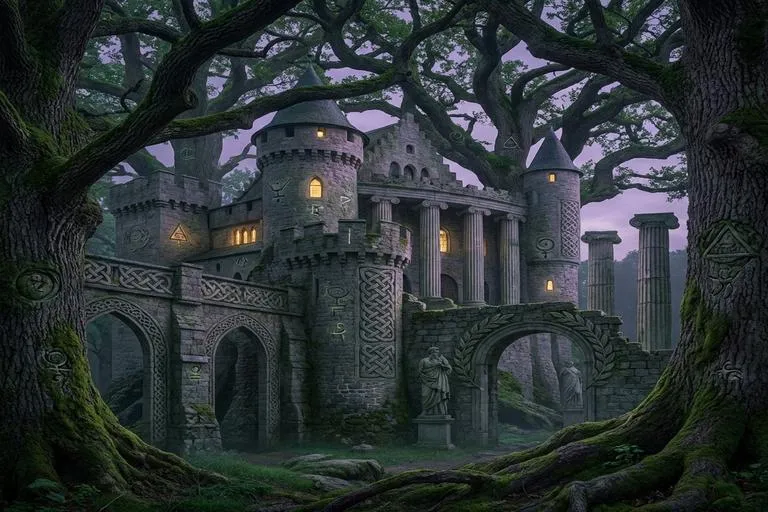
Visual summary of European dream wisdom
Mythological Resonance
Ancestral stories that anchor the European symbolic landscape.
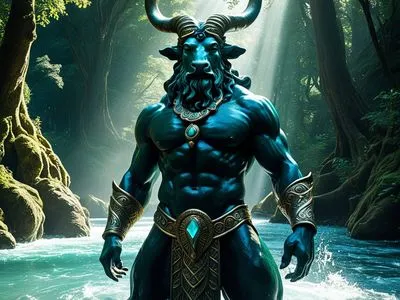
Achelous Myth Meaning & Symbolism
The shape-shifting river god Achelous battles Heracles for the hand of Deianeira, embodying the primal, untamed power of water and the psyche's fluid nature.
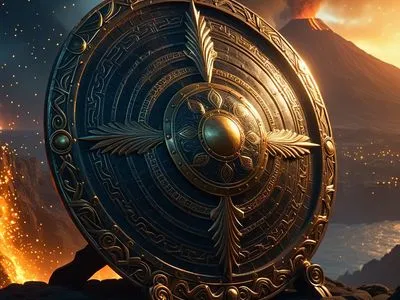
Achilles' Shield Myth Meaning & Symbolism
The god Hephaestus forges a shield for Achilles, depicting the entire cosmos, transforming a tool of war into a profound meditation on life itself.

Achilles' Spear Myth Meaning & Symbolism
The spear that wounded Telephus could also heal him, embodying the paradox that the source of our deepest pain holds the key to our wholeness.

Achilles Myth Meaning & Symbolism
A hero forged by divinity and mortality, whose legendary power was undone by a single point of hidden, human weakness.

Adonis Myth Meaning & Symbolism
A mortal of divine beauty loved by Aphrodite and Persephone, Adonis is slain by a boar, his blood giving rise to the anemone, symbolizing ephemeral life and cyclical renewal.
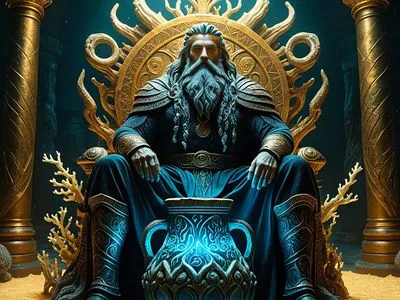
Aegir Myth Meaning & Symbolism
The myth of Aegir, the deep-sea host, where gods confront the primal chaos of the unconscious in a hall lit by liquid gold.
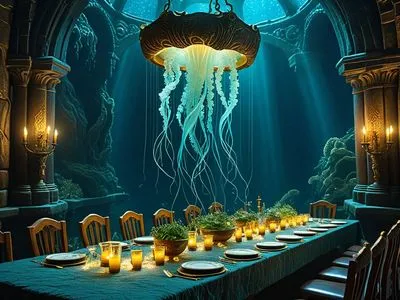
Aegir's Feast Myth Meaning & Symbolism
The gods demand a feast from the sea-giant Aegir, who lacks a cauldron large enough to brew mead for all, forcing Thor on a perilous quest to acquire one.
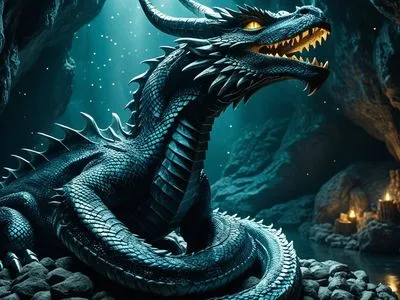
Aegishjalmur Myth Meaning & Symbolism
A myth of primal terror and the power to master it, where a symbol born from a dragon's hoard becomes a key to the self.
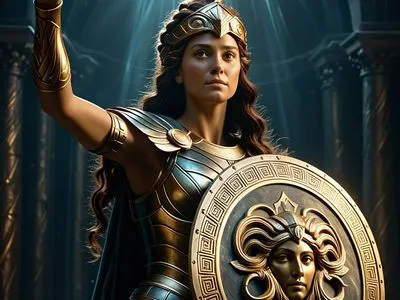
Aegis Myth Meaning & Symbolism
The Aegis is the storm-shield of Zeus, a divine artifact of terrifying power, later wielded by Athena as a symbol of strategic, awe-inspiring authority.
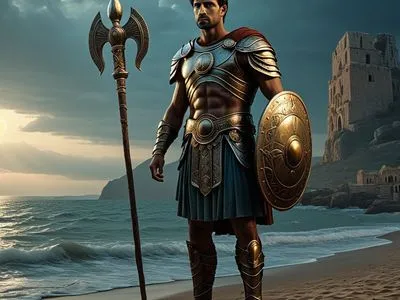
Aeneas Myth Meaning & Symbolism
A Trojan prince, guided by fate and burdened by duty, endures exile, loss, and war to plant the seed from which the Roman Empire would grow.
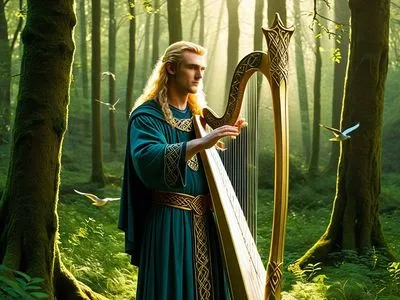
Aengus Óg Myth Meaning & Symbolism
The Celtic god of love embarks on a timeless quest for a woman he sees only in dreams, navigating the liminal spaces between vision and reality.
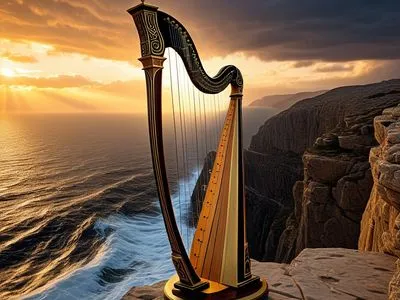
Aeolian Harp Myth Meaning & Symbolism
The story of the harp that plays not by human hand, but by the breath of the wind, revealing the hidden music of the world and the soul.
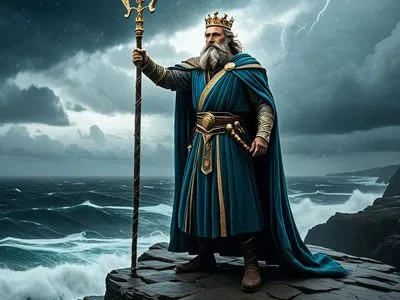
Aeolus Myth Meaning & Symbolism
The story of the mortal king gifted stewardship of the tempests, a timeless allegory for the power and peril of controlling primal forces.
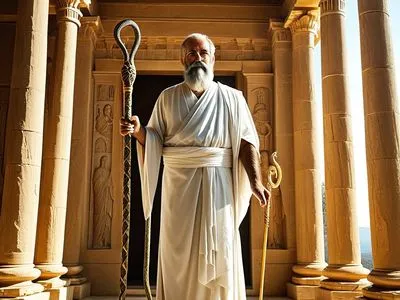
Aesculapius Myth Meaning & Symbolism
The son of Apollo, a mortal healer who learned to resurrect the dead, was struck down by Zeus and later reborn as a god of medicine.

Aesir & Vanir Myth Meaning & Symbolism
A myth of war and sacred truce between two god-tribes, forging a unified pantheon from the marriage of order and wild fertility.
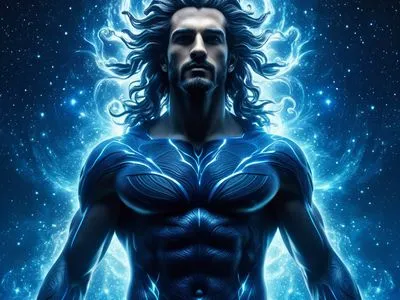
Aether Myth Meaning & Symbolism
The story of Aether, the first-born god of the shining upper sky, who embodies the pure, conscious space from which all life emerges.
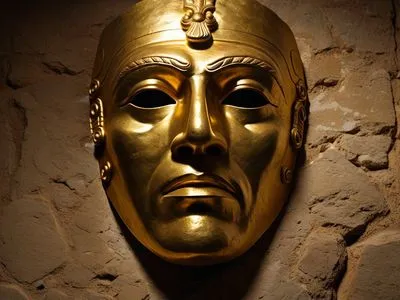
Agamemnon's Death Mask Myth Meaning & Symbolism
A king returns triumphant from war only to be murdered by his queen, his legacy sealed by a golden mask that hides a terrible truth.
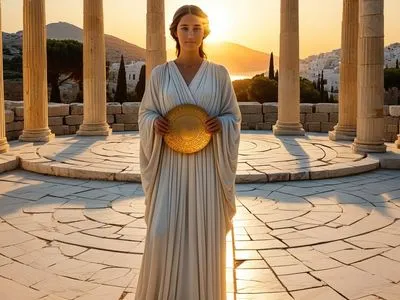
Agora Myth Meaning & Symbolism
The story of Agora, the divine personification of the public assembly, where human voices and divine will intertwined to forge the soul of the city.
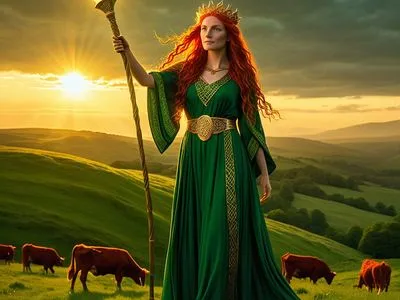
Aine Myth Meaning & Symbolism
Aine, the radiant sun goddess of sovereignty, is assaulted by a mortal king, reclaiming her power through a transformative act of vengeance and renewal.

Airmid Myth Meaning & Symbolism
A healer's grief scatters sacred herbs, transforming loss into the wild, living pharmacopoeia of the world.
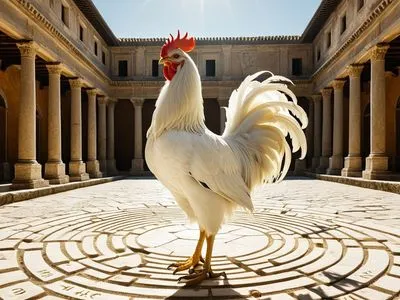
Alectryomancy Myth Meaning & Symbolism
A sacred rooster, a circle of grain, and the silent gods. The ancient Roman art of divination through a bird's path reveals fate in the mundane.
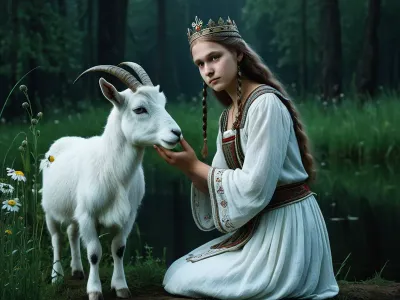
Alenushka and Her Brother Myth Meaning & Symbolism
A sister's love endures her brother's transformation into a goat, a witch's treachery, and a watery grave, culminating in a miraculous return to human form.

Aletheia Myth Meaning & Symbolism
Aletheia is not a goddess but the forgotten spirit of truth, daughter of Zeus, who must be actively remembered and unveiled from the river of oblivion.
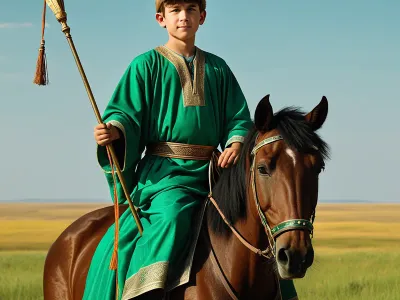
Alyosha Popovich Myth Meaning & Symbolism
The tale of the youngest and cleverest of the three great Bogatyrs, whose wit and cunning triumph over brute strength, embodying the trickster's path to wisdom.
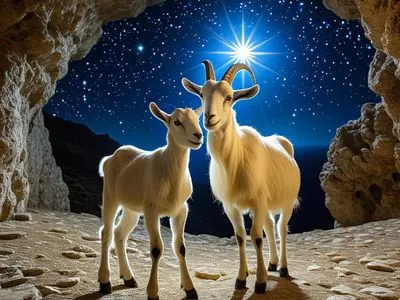
Amalthea Myth Meaning & Symbolism
The nurturing goat whose horn became the Cornucopia, a symbol of endless abundance born from a primal act of care and a sacred break.
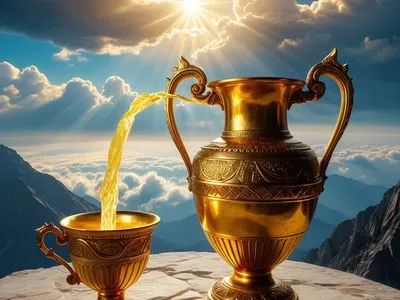
Ambrosia Myth Meaning & Symbolism
The divine substance of the Greek gods, conferring immortality and eternal youth, guarded fiercely from mortal grasp.
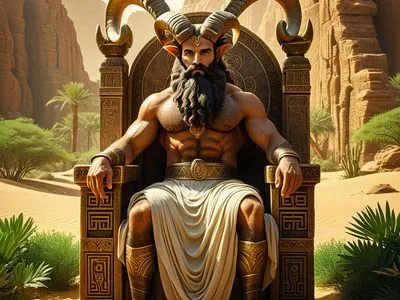
Ammonites Myth Meaning & Symbolism
The myth of the horned god Ammon, his hidden oasis sanctuary, and the sacred ram that embodies divine power and the soul's hidden resilience.

Amphitrite Myth Meaning & Symbolism
The myth of the Nereid Amphitrite, who fled the god Poseidon's courtship, was persuaded to return, and became the revered Queen of the boundless Sea.
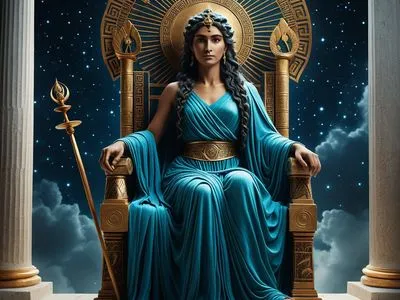
Ananke Myth Meaning & Symbolism
Ananke, the primordial goddess of necessity, binds the cosmos with her coils of inevitability, a force older than the gods themselves.
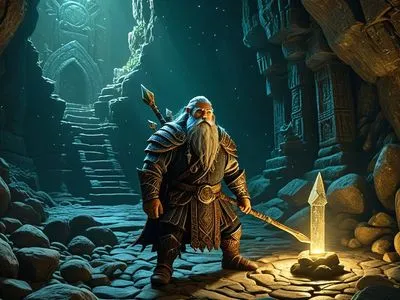
Andvaranaut Myth Meaning & Symbolism
A cursed ring of power, forged from dragon's gold, that binds its bearers to a tragic fate of greed, vengeance, and ruin.
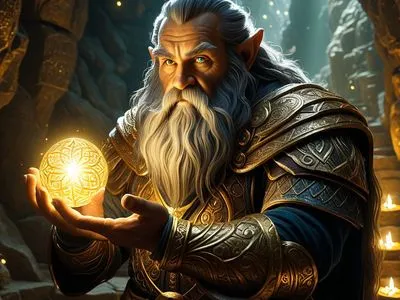
Andvari's Ring Myth Meaning & Symbolism
A cursed ring of power, forged from greed and stolen from a shape-shifting dwarf, unleashes a cycle of betrayal, murder, and doom upon gods and heroes.
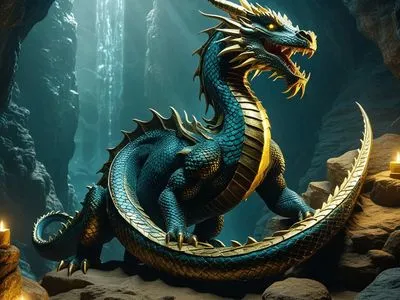
Andvari's Hoard Myth Meaning & Symbolism
A tale of cursed gold, a stolen ring, and a dragon's wrath, revealing the inescapable price of stolen power and the shadow that follows wealth.
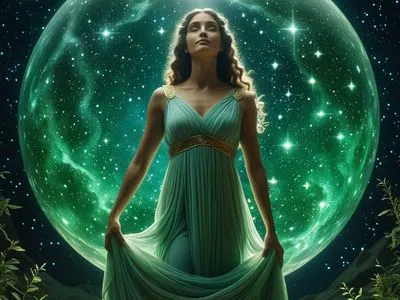
Anima Mundi Myth Meaning & Symbolism
The ancient Greek vision of a living, ensouled cosmos, where the divine breath weaves spirit into matter, binding all creation into a single, sacred being.
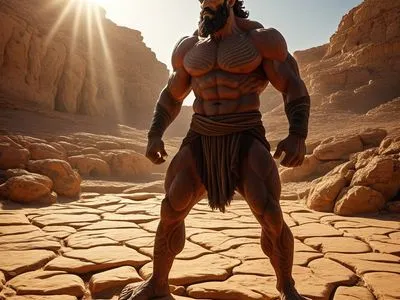
Antaeus Myth Meaning & Symbolism
A Libyan giant, son of Gaia, invincible while touching his mother Earth, until Heracles lifts him into the air and crushes him.

Antigone Myth Meaning & Symbolism
A princess defies a king's edict to bury her traitor brother, choosing sacred duty over political law, and becomes an eternal symbol of conscience.
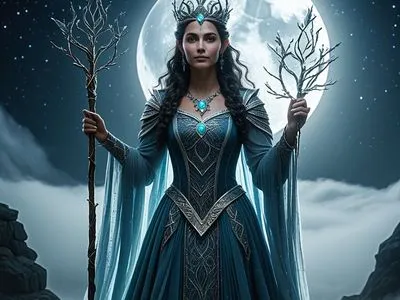
Aos Sí Myth Meaning & Symbolism
The story of the Aos Sí, the hidden folk of the hollow hills, who guard the threshold between the human world and the timeless, perilous Otherworld.
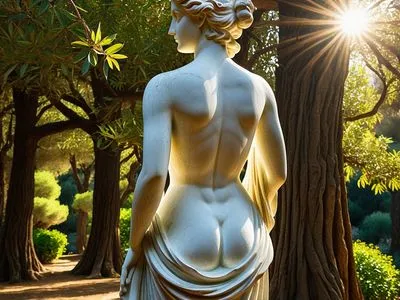
Aphrodite Kallipygos Myth Meaning & Symbolism
A myth where two sisters' rivalry leads to a temple for Aphrodite, celebrating divine beauty found in the human form's natural grace.
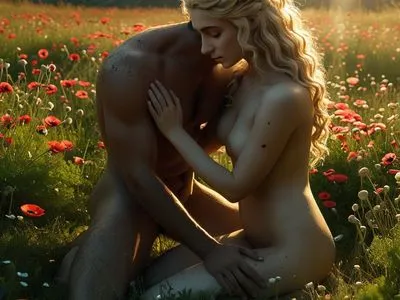
Aphrodite/Adonis Myth Meaning & Symbolism
The goddess of love falls for a mortal youth, whose tragic death and rebirth embody the fragile, cyclical nature of beauty and desire.

Aphrodite's Beauty Rituals Myth Meaning & Symbolism
A myth of divine allure, where beauty is not vanity but a sacred, terrifying force of creation and dissolution, forged in the sea's dark heart.

Aphrodite's Birth Myth Meaning & Symbolism
The goddess of love and beauty is born from the severed genitals of the sky god, cast into the sea, rising on a seashell amidst divine foam.
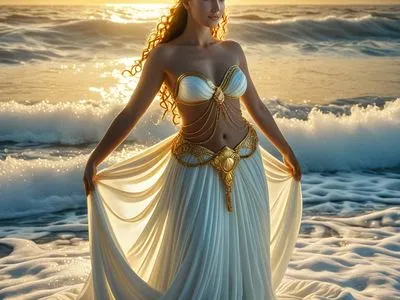
Aphrodite's Cestus Myth Meaning & Symbolism
The myth of the magical girdle that holds the power of all desire, revealing the deep forces of attraction, vulnerability, and psychic wholeness.

Aphrodite's cosmetics Myth Meaning & Symbolism
Aphrodite's secret cosmetics, born of divine essence, reveal the perilous alchemy where beauty, artifice, and true self converge.
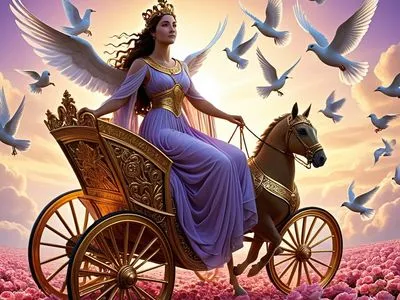
Aphrodite's Chariot Myth Meaning & Symbolism
Aphrodite, wounded by Diomedes, flees to Olympus in her chariot drawn by doves, a myth of love's vulnerability and triumphant return to source.
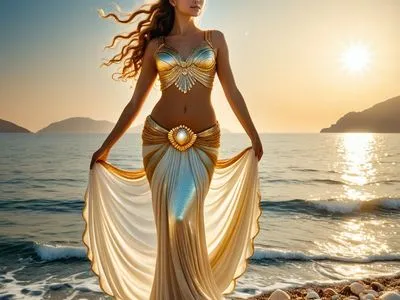
Aphrodite's Girdle Myth Meaning & Symbolism
The myth of the magical girdle that holds the power of irresistible desire, revealing the primal force of attraction and its role in cosmic order.

Aphrodite's Sea Foam Myth Meaning & Symbolism
The goddess of love and beauty is born from the foam of the severed genitals of Ouranos, cast upon the primordial sea.

Aphrodite's Shell Myth Meaning & Symbolism
The goddess of love is born from sea-foam in a giant scallop shell, emerging as the first conscious principle from the primordial, formless waters of chaos.

Aphrodite/Venus Myth Meaning & Symbolism
Born from sea foam and severed divinity, Aphrodite is the cosmic force of irresistible attraction, binding chaos into creation through beauty and desire.
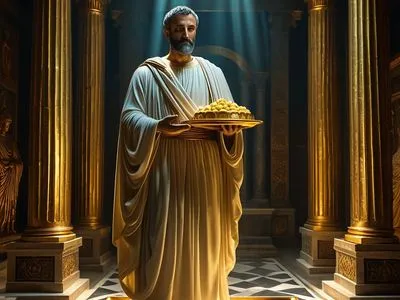
Apicius Myth Meaning & Symbolism
The tale of the mortal chef who became a god of culinary excess, whose insatiable hunger led to a feast with his own soul as the final course.
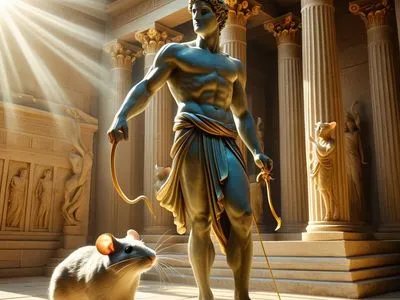
Apollo Smintheus Myth Meaning & Symbolism
A tale of Apollo's plague as a mouse god, sent to humble a proud king, revealing the divine in the lowly and the necessity of atonement.
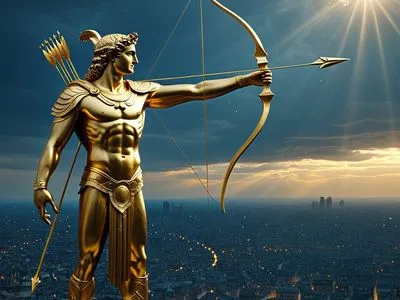
Apollo's Arrow Myth Meaning & Symbolism
A myth of divine retribution and sacred healing, where a god's arrow brings plague and a mortal's suffering becomes a path to purification and wisdom.

Apollo's Bow Myth Meaning & Symbolism
The sun god Apollo wields his silver bow to bring plague and healing, embodying the terrifying, clarifying power of focused truth.
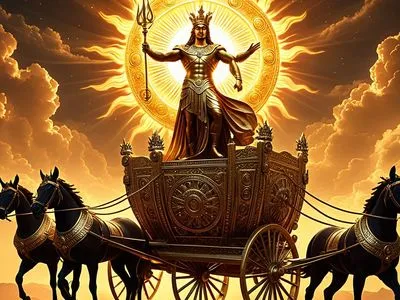
Apollo's Chariot Myth Meaning & Symbolism
A myth of divine responsibility, where Apollo's son, Phaethon, loses control of the sun chariot, scorching the earth and revealing the peril of unearned power.
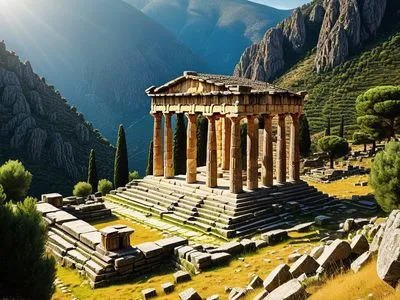
Apollo's Grove at Delphi Myth Meaning & Symbolism
The myth of Apollo slaying the serpent Python to claim the prophetic oracle at Delphi, establishing divine order over primal chaos.
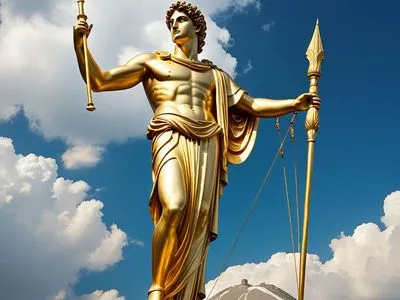
Apollo's Kithara Myth Meaning & Symbolism
The god Apollo wins the golden kithara from Hermes, transforming a trickster's theft into the divine instrument of cosmic order and prophetic truth.

Apollo's Lyre Myth Meaning & Symbolism
The trickster god Hermes steals Apollo's cattle, invents the lyre, and trades it for peace, transforming discord into divine music and order.
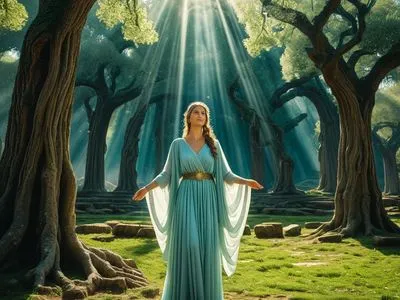
Aqua Virgo Myth Meaning & Symbolism
A Roman myth where a divine maiden reveals a hidden spring to thirsty soldiers, symbolizing the emergence of life-giving purity from the unconscious.
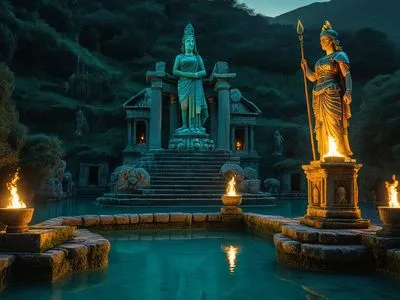
Aquae Sulis Myth Meaning & Symbolism
The myth of the sacred hot springs where the Roman goddess Sulis Minerva presides, blending cultures and healing wounds in steaming, mineral-rich waters.
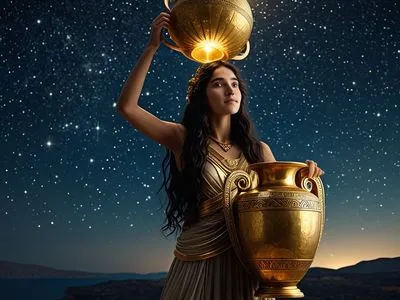
Aquarius Myth Meaning & Symbolism
The story of Ganymede, the mortal youth chosen by Zeus to be the divine cupbearer, immortalized as the constellation Aquarius pouring the waters of life.
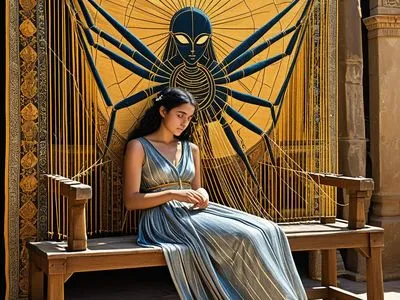
Arachne Myth Meaning & Symbolism
A mortal weaver of supreme skill challenges the goddess Athena to a contest. Her hubris leads to a divine curse, transforming her into the first spider.
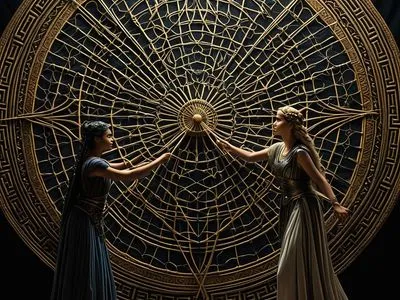
Arachne's Loom Myth Meaning & Symbolism
A mortal weaver's hubristic challenge to the goddess Athena results in a contest of divine artistry and a fateful, transformative punishment.

Arcadia Myth Meaning & Symbolism
The myth of a primordial, mountainous paradise, ruled by the god Pan, where humanity lived in perfect, untroubled harmony with the wild earth.
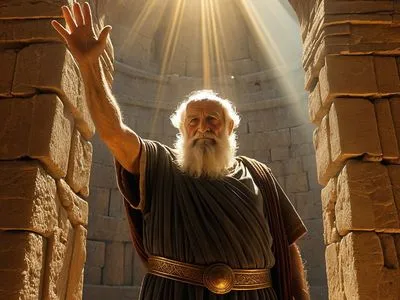
Archimedes Myth Meaning & Symbolism
The story of a mind so brilliant it could defend a city with mirrors and move the world with a lever, yet was undone by the very curiosity that defined it.
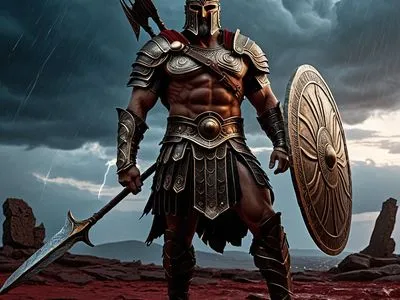
Ares Myth Meaning & Symbolism
The myth of Ares, god of war, reveals the terrifying yet essential archetype of raw, untamed instinct, chaos, and the shadow's vital, disruptive power.

Ares/Mars Myth Meaning & Symbolism
The volatile god of war, embodying raw conflict and the terrifying, necessary chaos that precedes order and authentic courage.

Argo Myth Meaning & Symbolism
The story of the first ship, Argo, built to carry Jason and his heroes on the impossible quest for the Golden Fleece, a vessel imbued with divine will.

Argonauts Myth Meaning & Symbolism
A band of legendary heroes sails on the Argo to retrieve the Golden Fleece, a perilous quest testing their unity, courage, and relationship with the gods.

Argos Myth Meaning & Symbolism
The tale of Argos Panoptes, the hundred-eyed giant tasked by Hera with guarding Io, a story of relentless watchfulness and ultimate, poignant sacrifice.
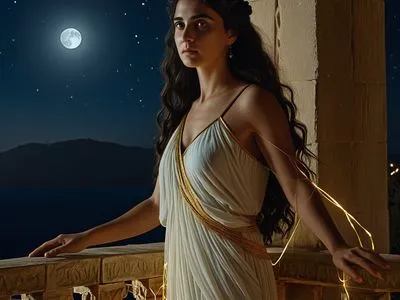
Ariadne Myth Meaning & Symbolism
A princess offers a hero a thread to navigate a deadly labyrinth, only to be abandoned on a shore, finding ultimate transformation in divine love.

Ariadne's Crown Myth Meaning & Symbolism
A mortal princess betrayed by a hero is found by a god, her bridal crown transformed into a constellation of eternal, radiant wholeness.
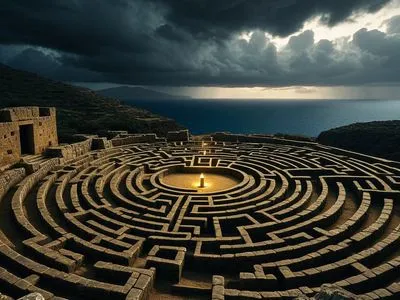
Ariadne's Thread Myth Meaning & Symbolism
A princess's gift of a thread guides a hero through a monstrous labyrinth, becoming an eternal symbol of finding one's way through inner darkness.
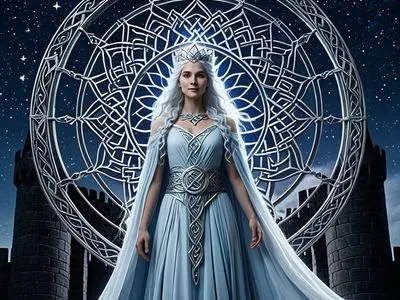
Arianrhod Myth Meaning & Symbolism
A goddess of sovereignty is tested, her fate declared, and her hidden sons emerge to claim their destiny from the spiral castle of stars.
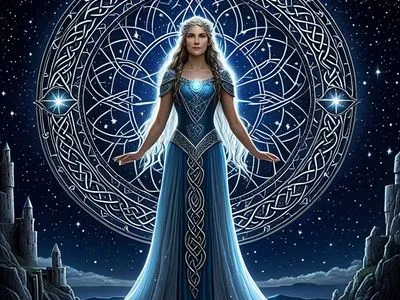
Arianrhod's Silver Wheel Myth Meaning & Symbolism
A goddess's fateful words curse her son, who must overcome impossible tasks to claim his name, arms, and a bride, guided by a silver wheel of stars.

Arion Myth Meaning & Symbolism
A legendary poet, betrayed at sea, is saved by music and a dolphin, returning to enact justice through the power of his art and testimony.

Aristaeus Myth Meaning & Symbolism
A god of rural arts loses his bees, journeys to the watery underworld, and learns that creation requires sacrifice and sacred knowledge.
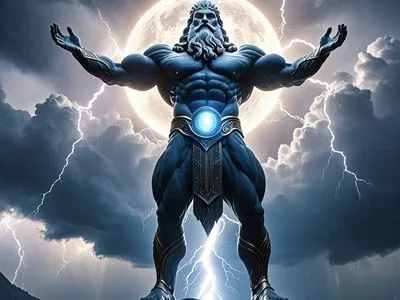
Aristophanes Myth Meaning & Symbolism
A story of primal, spherical beings split in two by the gods, forever yearning for their lost half to become whole again.
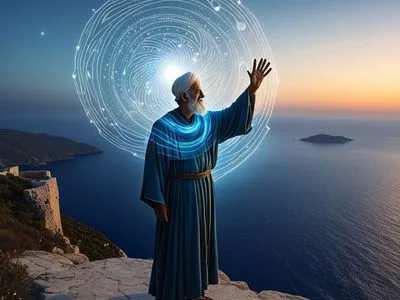
Aristotle's Categories Myth Meaning & Symbolism
The philosopher Aristotle receives a vision of ten primordial categories, a divine framework that brings order to the formless chaos of existence.
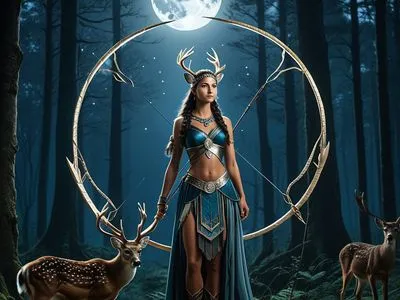
Artemis Myth Meaning & Symbolism
The myth of the virgin huntress Artemis, who rules the liminal wilds, embodies sacred autonomy, fierce protection, and the untamed feminine spirit.

Artemisia Myth Meaning & Symbolism
A sacred plant of Artemis, embodying the goddess's wild, healing, and fiercely protective nature, bridging the mortal and divine realms.

Artemis's Hounds Myth Meaning & Symbolism
The myth of Actaeon, who stumbled upon Artemis bathing and was transformed into a stag and torn apart by his own hounds for his transgression.
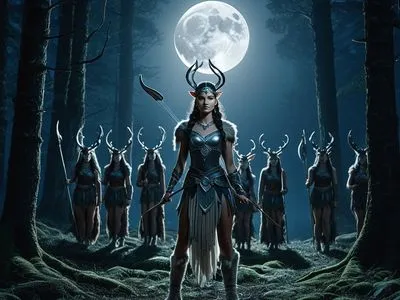
Artemis's Hunters Myth Meaning & Symbolism
A sacred band of nymphs and maidens sworn to Artemis, living in the untamed wild, embodying fierce independence, purity, and the untamed feminine spirit.
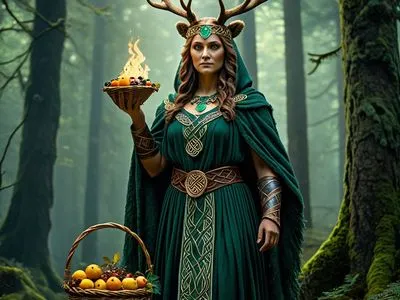
Artio Myth Meaning & Symbolism
The myth of Artio, the Celtic bear goddess, reveals the sacred cycle of withdrawal, fierce guardianship, and the soul's seasonal transformation.
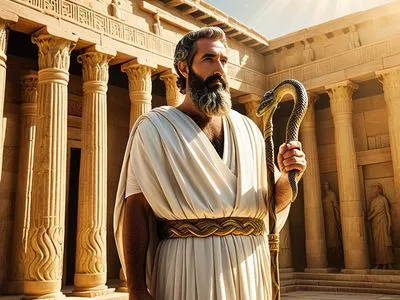
Asclepius' Caduceus Myth Meaning & Symbolism
The story of the divine healer Asclepius, his serpent-entwined staff, and the forbidden power to restore life, bridging mortality and divinity.
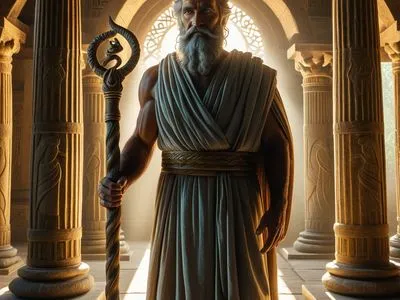
Asclepius' Staff Myth Meaning & Symbolism
The myth of the divine healer Asclepius and his staff entwined with a serpent, a symbol of sacred medicine born from transgression and divine wrath.
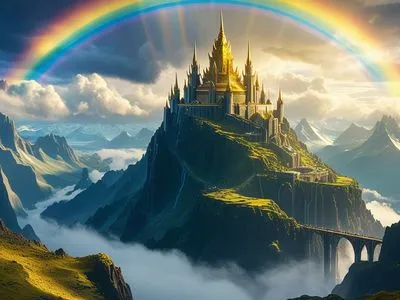
Asgard Myth Meaning & Symbolism
The celestial fortress of the Aesir gods, a realm of divine order, wisdom, and power, destined to fall in a final, world-renewing battle.
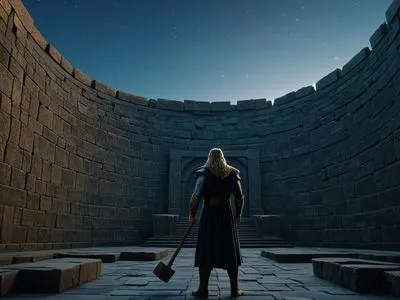
Asgard's Walls Myth Meaning & Symbolism
A giant offers to build an impregnable wall for the gods in one season, but his price is the sun, moon, and goddess Freyja. A trickster god's risky wager saves them.

Asklepios Myth Meaning & Symbolism
A mortal son of Apollo becomes the god of healing, wielding a serpent-entwined staff, only to be struck down for defying the boundary between life and death.

Asteria Myth Meaning & Symbolism
A Titan goddess, pursued by Zeus, transforms into a quail and then an island, becoming a sanctuary for her sister and a beacon of oracular night.

Astraea Myth Meaning & Symbolism
The celestial virgin Astraea, goddess of justice, was the last immortal to abandon a corrupted humanity, ascending to become the constellation Virgo.
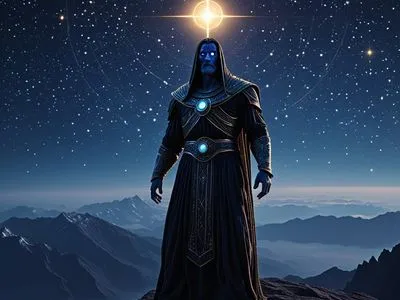
Astraios Myth Meaning & Symbolism
The myth of Astraios, Titan of stars and dusk, tells of cosmic order, prophetic winds, and the marriage of celestial light to earthly winds.

Atalanta Myth Meaning & Symbolism
A fierce huntress, bound by a vow of independence, is undone by a suitor's trick with golden apples, a story of wildness versus domestication.

Ataraxia Myth Meaning & Symbolism
The myth of Ataraxia, the elusive goddess of serene tranquility, reveals the soul's arduous journey beyond passion and pain to find unshakable calm.
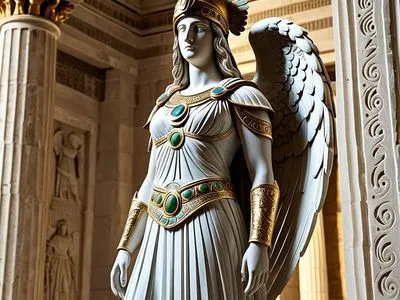
Athena Parthenos Myth Meaning & Symbolism
The myth of the goddess born fully armed from the mind of Zeus, embodying the alchemical union of intellect, strategy, and inviolable self-containment.

Athena Ergane Myth Meaning & Symbolism
The myth of Athena Ergane reveals the goddess as patron of craft, weaving divine wisdom into human skill, transforming raw effort into sacred creation.

Athena's Aulos Myth Meaning & Symbolism
The goddess Athena invents the double-flute, discards it in disgust after seeing her reflection, and transforms the shame into a deeper form of sovereignty.
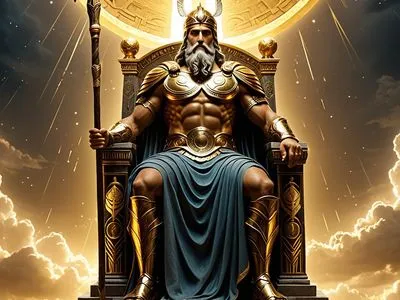
Athena's Birth Myth Meaning & Symbolism
The goddess of wisdom and war is born, fully armed, from the split skull of her father Zeus, a myth of intellect forged from crisis.
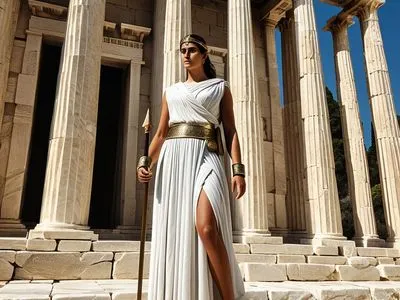
Athena's Library Myth Meaning & Symbolism
A myth of the goddess Athena's hidden repository of cosmic knowledge, guarded by her own shadow, accessible only through a profound inner reconciliation.
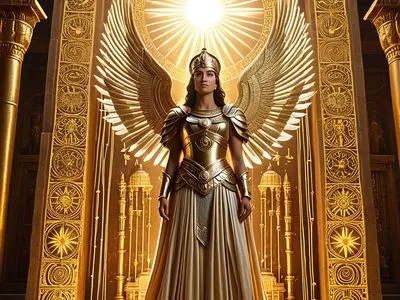
Athena's Loom Myth Meaning & Symbolism
The myth of the mortal weaver Arachne, who challenged the goddess Athena to a contest and was transformed for her hubris and sublime skill.
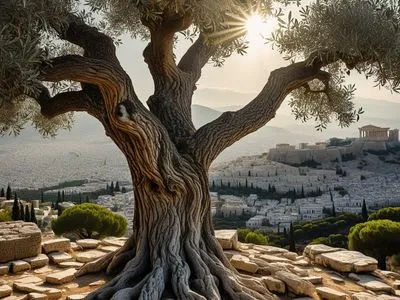
Athena's Olive Tree Myth Meaning & Symbolism
Athena wins patronage of Athens by gifting the first olive tree, a symbol of enduring peace, wisdom, and cultivated civilization over raw power.
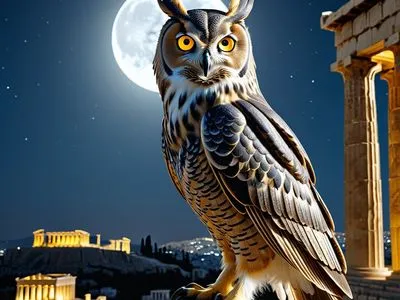
Athena's Owl Myth Meaning & Symbolism
The sacred owl, companion to the goddess Athena, embodies the piercing wisdom that sees through darkness, born from the mind of the divine.
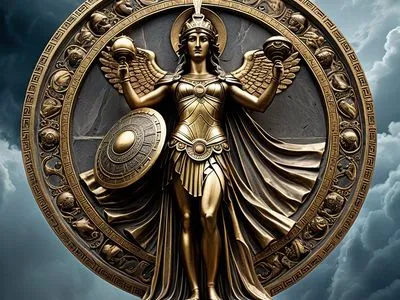
Athena's Shield Myth Meaning & Symbolism
The story of the Aegis, a shield forged by divine smiths, embodying Athena's strategic wisdom and the terrifying power of the Gorgon's gaze.
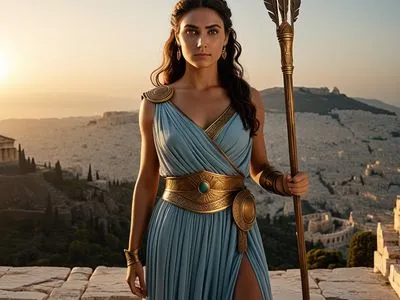
Athena's Spear Myth Meaning & Symbolism
The myth of Athena's spear symbolizes the piercing clarity of strategic wisdom, born from the head of Zeus, separating chaos from order within the psyche.
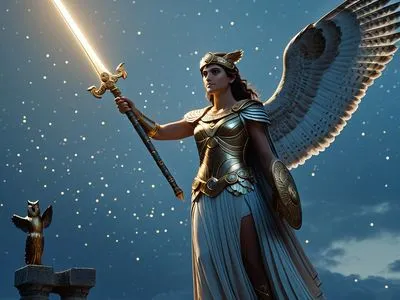
Athena's Sword Myth Meaning & Symbolism
The myth of the goddess Athena's sword, a divine weapon born of intellect and justice, representing the sharp clarity that separates chaos from order.
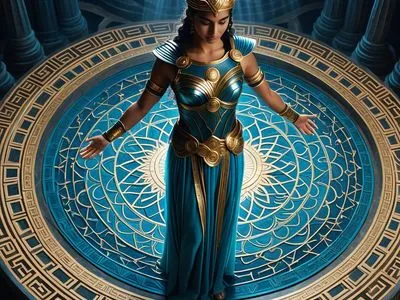
Athena's Workshop Myth Meaning & Symbolism
A mortal weaver challenges the goddess Athena to a contest, weaving a tapestry of divine secrets and suffering a fateful transformation for her pride.
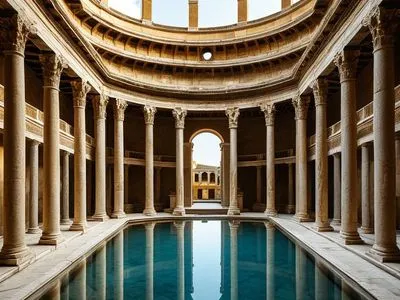
Atrium of the Roman Domus Myth Meaning & Symbolism
The myth of the atrium reveals the Roman home as a living cosmos, where the family soul is forged under the open sky and the gaze of ancestors.
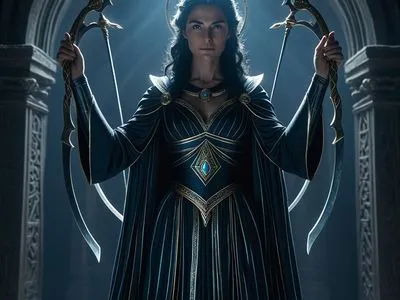
Atropos Myth Meaning & Symbolism
Atropos, the eldest Moirai, wields the shears that sever the thread of mortal life, embodying the inescapable finality of destiny.
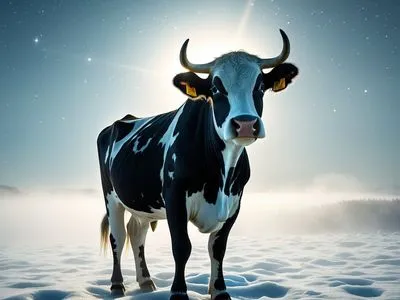
Audhumla Myth Meaning & Symbolism
In the void before time, a cosmic cow licks the first god from primordial ice, nourishing the frost giant Ymir, birthing existence from the unconscious.
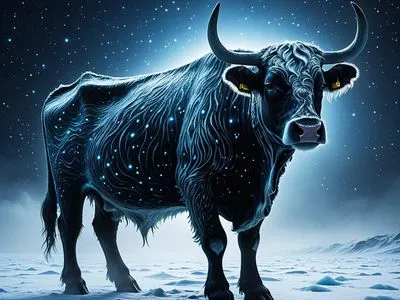
Audumbla Myth Meaning & Symbolism
In the frozen void of Ginnungagap, the cosmic cow Audumbla nourishes the first giant and licks the first god from the salt-lick of primordial ice.
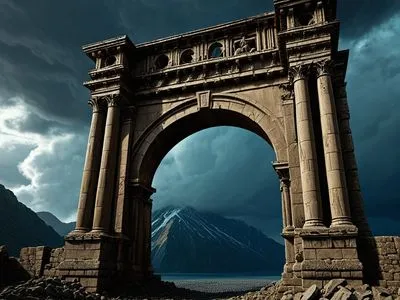
Augean Stables Myth Meaning & Symbolism
Hercules, to atone for a crime, must clean stables holding a divine herd's filth for decades, a task deemed impossible until he reroutes two rivers.

Aura Myth Meaning & Symbolism
Aura, the virgin Titaness of the breeze, is violated by Dionysus. Her ensuing madness and transformation into a spring symbolize the shattering of a pure, untamed spirit.
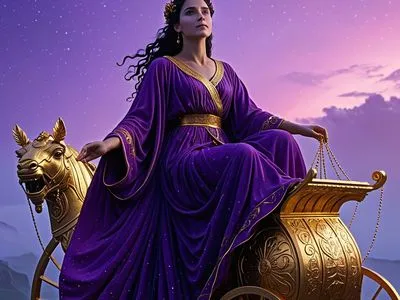
Aurora Myth Meaning & Symbolism
The goddess of dawn, Aurora, eternally renews the world with light while mourning her mortal lover, Tithonus, a myth of cyclical hope and tragic love.

Aurvandil's Toe Myth Meaning & Symbolism
The god Thor rescues the hero Aurvandil from the frozen river Élivágar, but a toe, frozen and snapped off, is cast into the heavens as a new star.

Avalon Myth Meaning & Symbolism
A mystical island of healing and transition, where the wounded king Arthur is taken, representing the soul's journey to the otherworld for restoration.
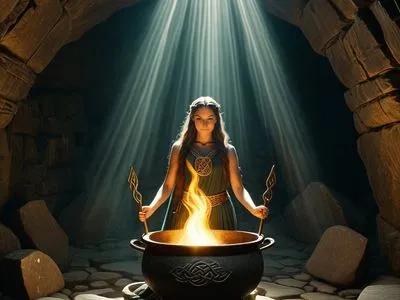
Awen Myth Meaning & Symbolism
The tale of how the divine breath of poetic inspiration, Awen, was won from the cauldron of the goddess Ceridwen by the bard Taliesin.
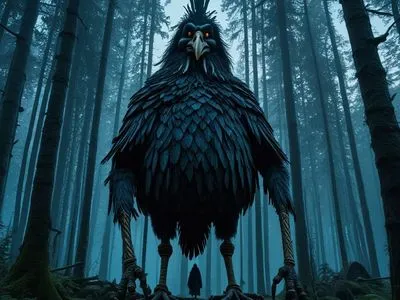
Baba Yaga Myth Meaning & Symbolism
A terrifying yet wise crone in a hut on chicken legs tests heroes in the deep forest, offering death or profound transformation to those who face her.
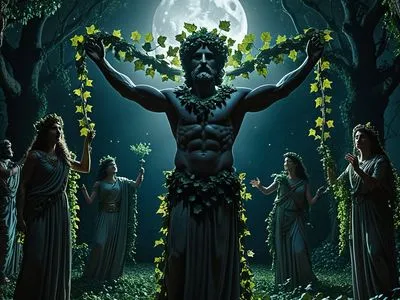
Bacchanalia Myth Meaning & Symbolism
A myth of forbidden nocturnal rites to the wine god Bacchus, where ecstatic frenzy collides with state order, revealing the soul's untamed core.
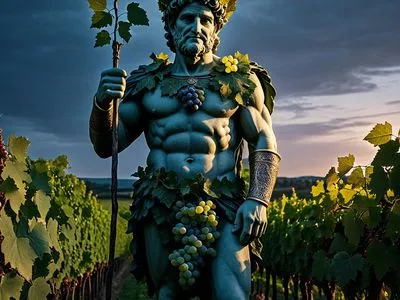
Bacchus Myth Meaning & Symbolism
The story of the twice-born god of ecstasy, whose wild rites reveal the terrifying and liberating power of the unconscious breaking into ordered life.
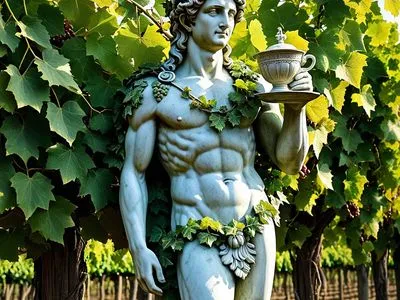
Bacchus/Dionysus Myth Meaning & Symbolism
The god of wine, madness, and liberation, born from fire and twice-born from a mortal womb, who shatters rigid order to reveal the raw, creative life force.
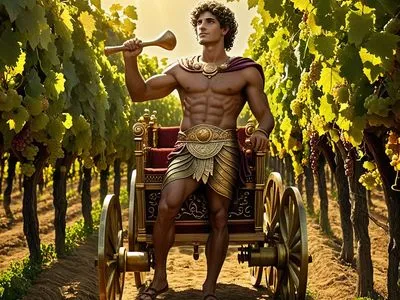
Bacchus's Chariot Myth Meaning & Symbolism
The god of ecstasy returns from conquest, his chariot drawn by wild beasts, heralding a revolution of spirit that dissolves rigid order.
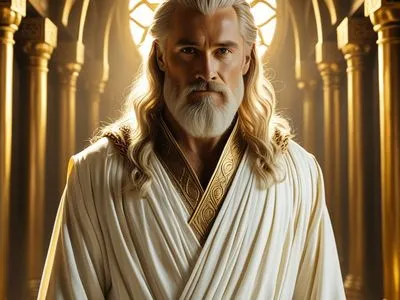
Balder Myth Meaning & Symbolism
The beloved god Balder is slain by a mistletoe dart, a tragedy born of prophecy and Loki's malice, plunging the Norse cosmos into grief and foreshadowing its end.
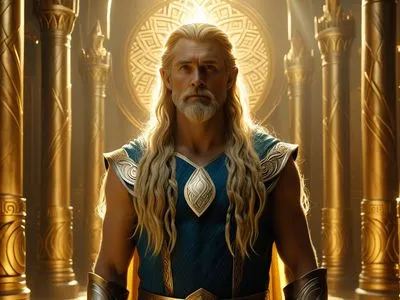
Baldr Myth Meaning & Symbolism
The radiant god Baldr is slain by a mistletoe dart, plunging the Norse cosmos into grief and revealing the inescapable shadow within the psyche.
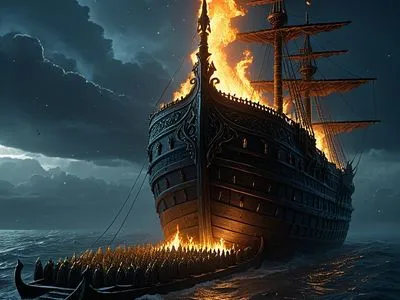
Baldr's Funeral Myth Meaning & Symbolism
The radiant god Baldr is slain, and all creation mourns. His funeral pyre becomes a vessel of cosmic grief and a seed of future renewal.
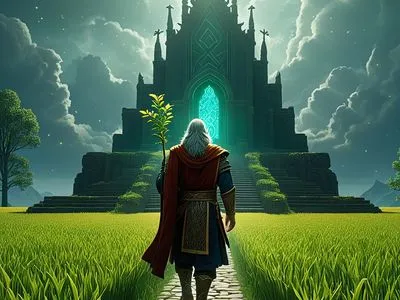
Baldr's Return Myth Meaning & Symbolism
A prophecy of the beloved god Baldr returning from the dead after Ragnarök, heralding a world reborn from the ashes of the old.
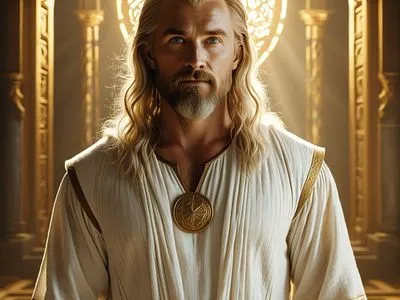
Baldur Myth Meaning & Symbolism
The beloved god Baldur is slain by a mistletoe dart, a tragedy born of prophecy and Loki's malice, plunging the world into grief and foreshadowing Ragnarok.
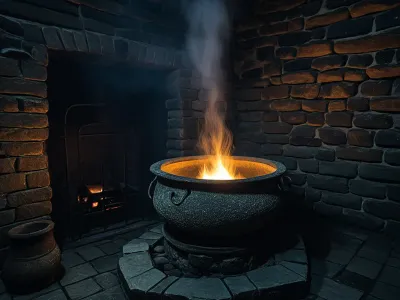
Bannik Myth Meaning & Symbolism
A spirit of the steamy bathhouse, Bannik presides over a sacred, liminal space where physical cleansing becomes a ritual of psychic and spiritual purification.
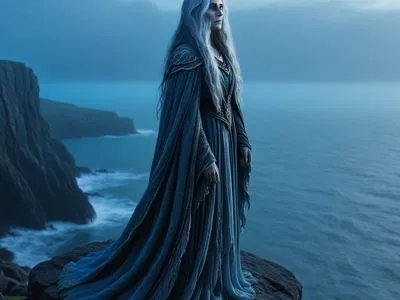
Banshee Myth Meaning & Symbolism
A spectral woman whose mournful wail heralds death, the Banshee is a profound Celtic archetype of ancestral grief and the liminal voice of fate.
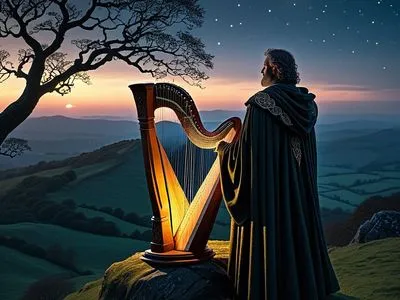
Bards Myth Meaning & Symbolism
The Celtic Bard is a keeper of memory and shaper of destiny, whose words weave the fabric of history and the soul's deepest truths.
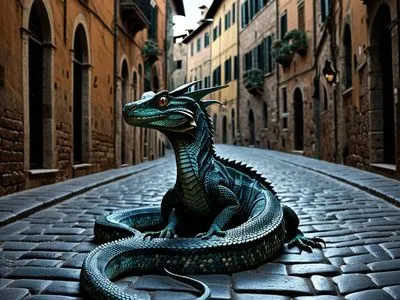
Basilisk of Siena Myth Meaning & Symbolism
A medieval Italian city is paralyzed by a mythical serpent's gaze until a lone hero, armed with mirrors, faces the collective terror to restore life.
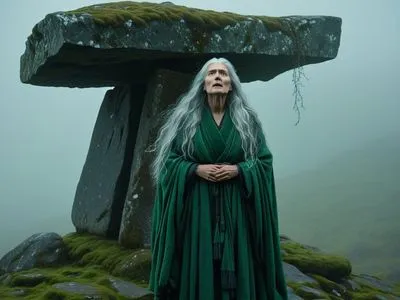
Bean Sídhe Myth Meaning & Symbolism
A spectral woman of the Sídhe whose mournful cry heralds death, binding the living to the ancestral past.

Bed of straw in peasant homes Myth Meaning & Symbolism
A tale where a humble straw bed becomes a sanctuary for the divine, weaving ancestral warmth and the sacred hearth into the fabric of daily life.
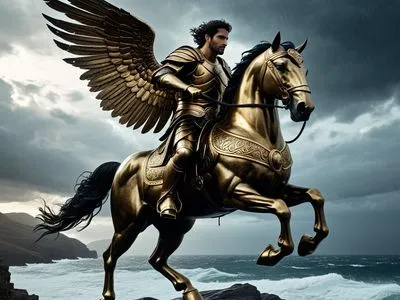
Bellerophon on Pegasus Myth Meaning & Symbolism
A hero tames the winged horse Pegasus to slay monsters, but his soaring ambition leads to a fatal fall from divine grace.
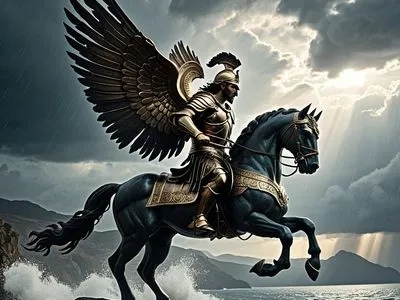
Bellerophon Myth Meaning & Symbolism
A hero tames the winged Pegasus to slay monsters, but his ambition to reach Olympus leads to a devastating fall back to mortal earth.
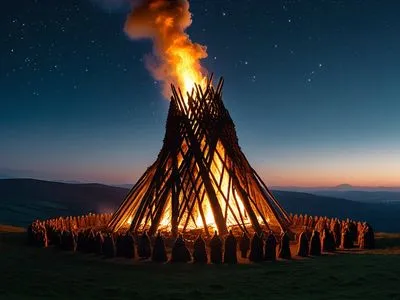
Beltane Fires Myth Meaning & Symbolism
A myth of sacred fires lit at the dawn of summer, marking the union of the divine couple and the purification of the land and soul.

Beltane Myth Meaning & Symbolism
A myth of sacred fire dividing the year, where the Dagda and the Mórrígan unite to bless the land, symbolizing the sacred marriage of opposites.

Bereginya Myth Meaning & Symbolism
The myth of the great protectress, a spirit of riverbanks and thresholds, who embodies the sacred power of fierce guardianship and the creation of safe space.

Berserker Myth Meaning & Symbolism
A warrior, touched by the bear spirit, channels divine rage in battle, becoming an unstoppable force of nature before collapsing into vulnerable humanity.

Berserkers Myth Meaning & Symbolism
Warriors who channeled the sacred fury of the bear and wolf, becoming one with the wild god to fight beyond human limits in a trance of ecstatic terror.
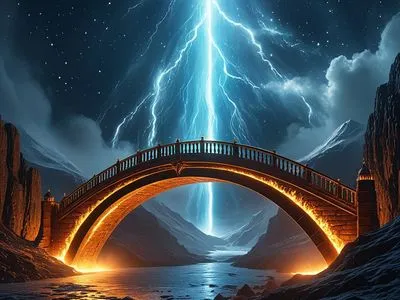
Bifröst Myth Meaning & Symbolism
The shimmering, trembling bridge of the gods, a perilous link between worlds, guarded by a silent watcher, destined to shatter at the end of all things.
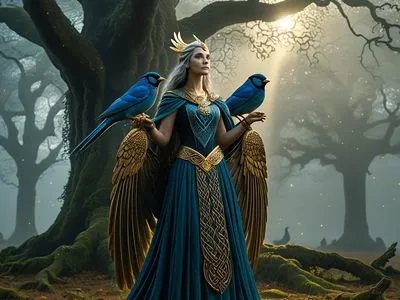
Birds of Rhiannon Myth Meaning & Symbolism
Enchanted birds whose song lulls the living to sleep and awakens the dead, serving as guides between worlds for the goddess Rhiannon.
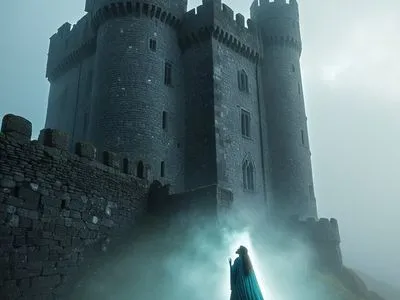
Blarney Stone Myth Meaning & Symbolism
A myth of a king, a goddess, and a stone that grants the gift of persuasive speech, weaving together sovereignty, cunning, and the magic of language.

Blodeuwedd Myth Meaning & Symbolism
A woman crafted from flowers to be a wife, who betrays her husband and is transformed into an owl, embodying the untamed feminine spirit.
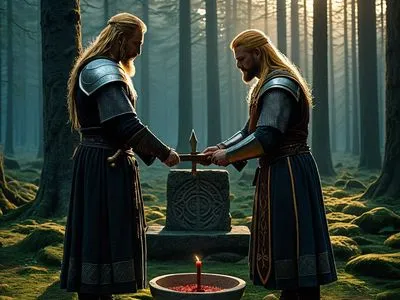
Blood Brotherhood Myth Meaning & Symbolism
A sacred oath of loyalty is forged in blood, binding two warriors as kin, testing the ultimate price of brotherhood against fate's cruel design.
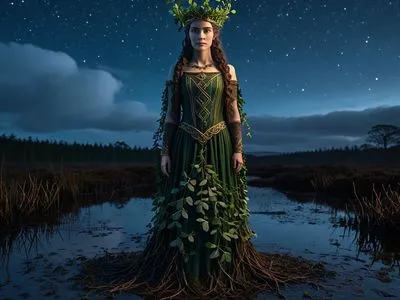
Bog Bodies Myth Meaning & Symbolism
A sovereign figure is ritually offered to the bog, a sacred marriage of flesh and earth to ensure the land's fertility and the tribe's continuity.

Book of Kells Myth Meaning & Symbolism
A sacred text of light, born from a perilous journey and divine fire, illuminating the world against encroaching shadows.
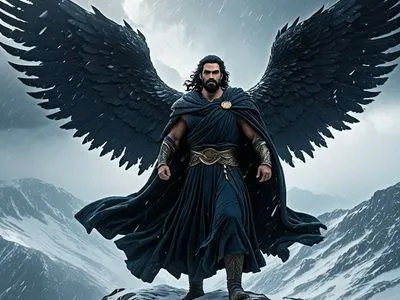
Boreas Myth Meaning & Symbolism
The story of the violent, elemental North Wind god who abducts an Athenian princess, embodying the raw, transformative power of nature and the psyche's untamed depths.
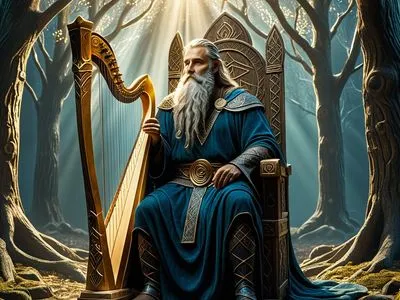
Bragi Myth Meaning & Symbolism
The myth of Bragi, god of poetry, whose words shape reality, born from a blood-oath and keeper of the transformative mead of inspiration.
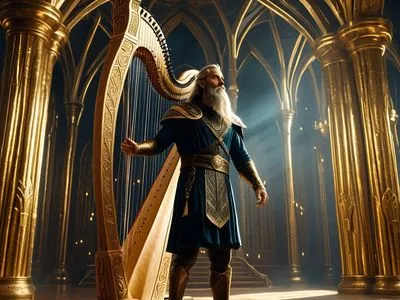
Bragi's Harp Myth Meaning & Symbolism
The god of poetry's harp is stolen, silencing the halls of the gods until a perilous journey to the underworld restores the music of creation.

Bran the Blessed Myth Meaning & Symbolism
A giant king's severed head sings for eighty years, guarding his people, embodying the ultimate sacrifice of the self for the sovereignty of the whole.

Bran's Voyage Myth Meaning & Symbolism
A warrior king sails to a magical island of timeless joy, only to be undone by a forgotten promise, revealing the cost of paradise.
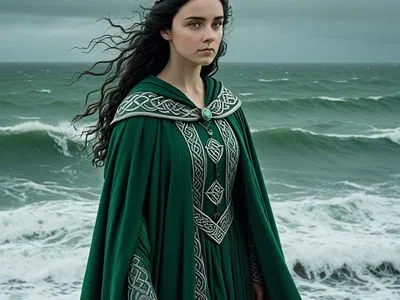
Branwen Myth Meaning & Symbolism
A tale of a goddess-bride whose mistreatment sparks a cataclysmic war, exploring the cost of broken bonds and the sovereignty of the soul.
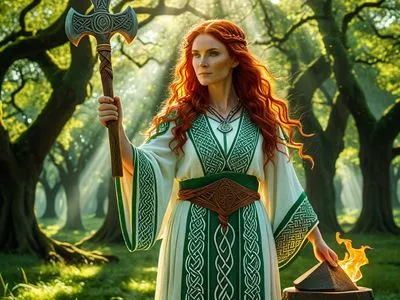
Brigid Myth Meaning & Symbolism
The story of Brigid, the Celtic goddess of sacred fire, who embodies the triple flame of poetry, healing, and smithcraft, illuminating the soul's forge.
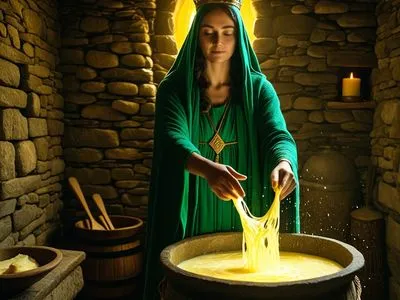
Brigid's Butter Myth Meaning & Symbolism
A myth where the goddess Brigid, disguised as a beggar, tests a woman's hospitality and transforms water into rich butter, revealing hidden generosity.
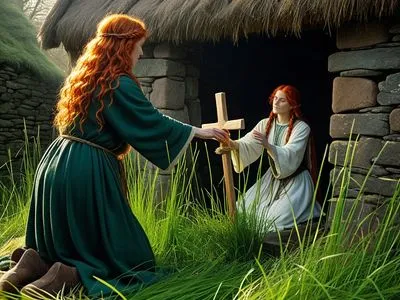
Brigid's Cross Myth Meaning & Symbolism
A dying chieftain is healed not by force, but by a saint weaving a simple cross of rushes, transforming pagan despair into a symbol of eternal protection.
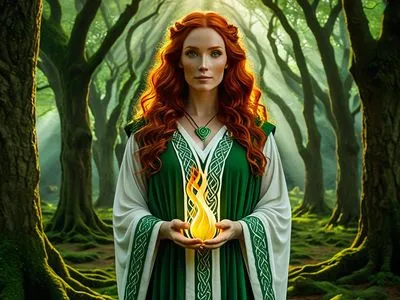
Brigid's Flame Myth Meaning & Symbolism
The myth of the goddess Brigid, who tends an eternal flame, embodying the sacred trinity of poetry, healing, and smithcraft in Celtic tradition.
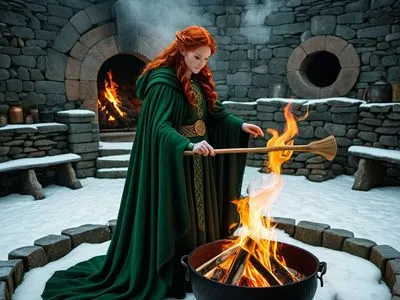
Brigid's Hearth Myth Meaning & Symbolism
A myth of the goddess Brigid, whose sacred hearth fire is the source of all healing, poetry, and the transformative warmth of the human spirit.

Brigid's Mantle Myth Meaning & Symbolism
A myth where the goddess Brigid's cloak magically expands to cover a kingdom, securing sanctuary through boundless generosity and sacred presence.
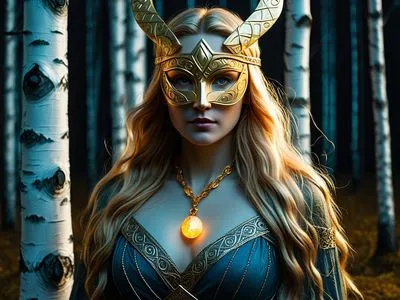
Brisingamen Myth Meaning & Symbolism
The myth of Freyja's necklace, forged by dwarves and stolen by Loki, speaks to the price of beauty, the cunning of desire, and the soul's luminous core.
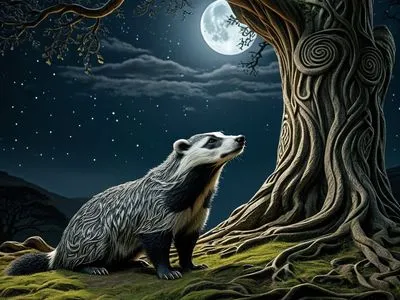
Broc Myth Meaning & Symbolism
A tale of a shapeshifting badger who navigates the underworld, embodying the soul's resilience and the alchemical power of confronting the shadow.

Brokkr Myth Meaning & Symbolism
A master dwarf smith forges three legendary treasures for the gods, paying a terrible price in a wager that tests the limits of craft and endurance.
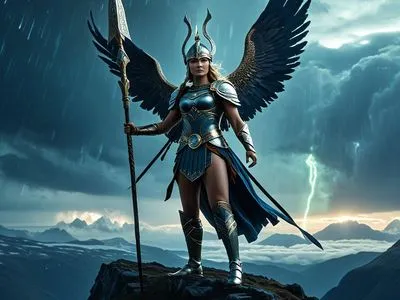
Brynhildr Myth Meaning & Symbolism
A Valkyrie defies Odin, is cast into a mortal sleep, and awakens to a world of tragic love, broken oaths, and a fiery, fateful end.

Cú Chulainn Myth Meaning & Symbolism
The story of a demigod warrior bound by geasa, whose superhuman rage and tragic loyalty illuminate the cost of a life lived at the edge of the self.
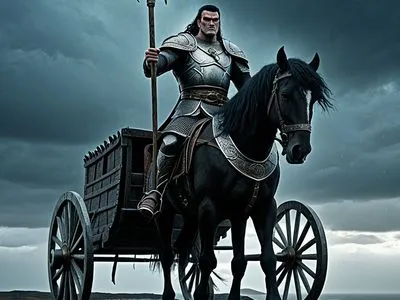
Cú Chulainn's Chariot Myth Meaning & Symbolism
The myth of the Hound of Ulster's war chariot, a sacred vehicle of divine fury and mortal restraint, steered by a loyal charioteer through epic battle.

Cú Chulainn's Hound Myth Meaning & Symbolism
A boy kills a guardian hound, takes its name and geis, and becomes a legendary hero whose destiny is bound by his own sacred vow.

Cadmus Myth Meaning & Symbolism
A Phoenician prince, searching for his sister, slays a dragon and sows its teeth, birthing a warrior race and founding the great city of Thebes.
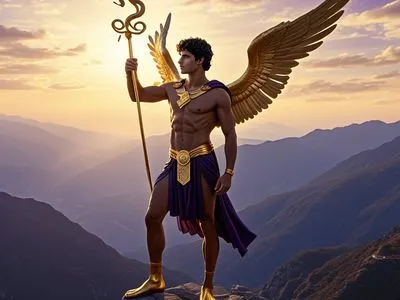
Caduceus of Hermes Myth Meaning & Symbolism
The story of how the messenger god Hermes received his magical staff, the Caduceus, by reconciling two warring serpents, becoming a symbol of mediation and transformation.
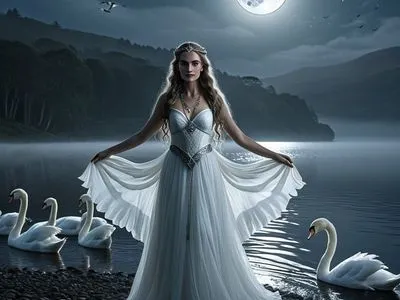
Caer Ibormeith Myth Meaning & Symbolism
A prince must recognize his destined love, Caer, among a flock of identical swans, or lose her forever to the cycles of dream and form.

Cairns Myth Meaning & Symbolism
A mythic tale of a wanderer who builds stone markers for the dead, becoming a bridge between worlds and the guardian of collective memory.

Calchas Myth Meaning & Symbolism
The story of the seer who saw the gods' will for the Trojan War, yet could not escape the fate he foresaw for himself.

Callisto Myth Meaning & Symbolism
A nymph of Artemis, beloved by Zeus, is transformed into a bear by a jealous Hera, then placed among the stars as Ursa Major.

Calypso's Island Myth Meaning & Symbolism
Odysseus, shipwrecked and lost, is held captive by the goddess Calypso on her paradisiacal island, torn between immortal comfort and his mortal home.

Calypso Myth Meaning & Symbolism
The goddess-nymph Calypso offers Odysseus immortality and perfect love on her hidden island, a profound temptation he must ultimately refuse to fulfill his destiny.
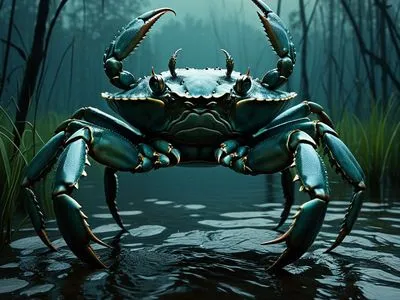
Cancer Myth Meaning & Symbolism
A crab, sent by Hera to aid the Hydra, is effortlessly crushed by Heracles, yet is lifted to the stars as the constellation Cancer.
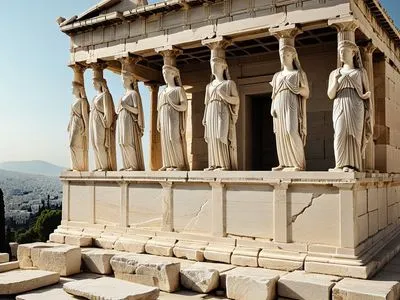
Caryatids Myth Meaning & Symbolism
Women of stone, eternally bearing the weight of sacred architecture, born from a city's defiance and a goddess's enduring, silent strength.
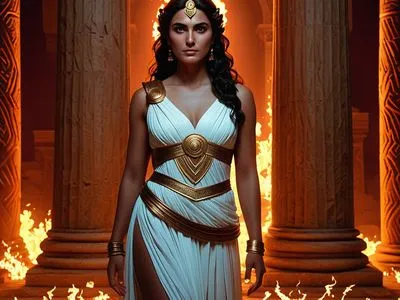
Cassandra Myth Meaning & Symbolism
A priestess granted the gift of prophecy by Apollo, then cursed so her true warnings would never be believed, embodying the agony of unheard truth.
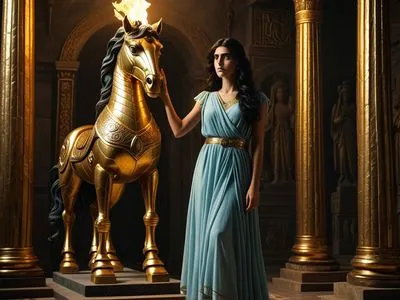
Cassandra's Warnings Myth Meaning & Symbolism
A Trojan princess blessed with foresight by Apollo, then cursed to be disbelieved, embodies the agony of knowing a terrible truth that no one will accept.

Castalian Spring Myth Meaning & Symbolism
A sacred spring at Delphi, born from a nymph's flight, whose waters purify pilgrims and awaken prophetic, poetic voice in those who dare to drink.
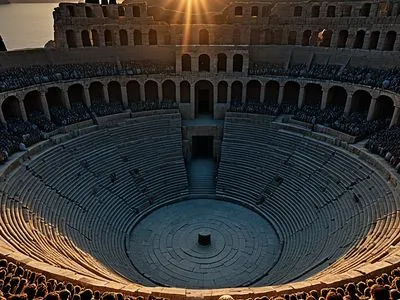
Catharsis Myth Meaning & Symbolism
The sacred process of emotional purification, where the soul's turbulent passions are cleansed through ritual, theater, and divine ecstasy.
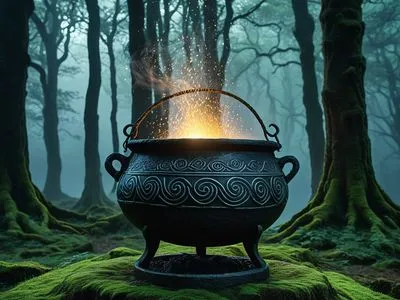
Cauldron of Memory Myth Meaning & Symbolism
A warrior drinks from a magical cauldron, forgets his life, and must reclaim his identity through a perilous journey of memory and sacrifice.
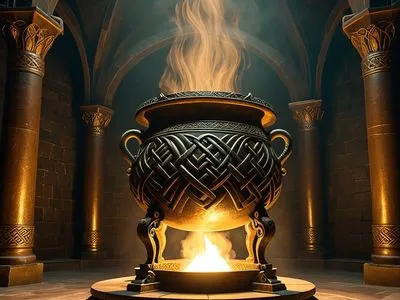
Cauldron of Plenty Myth Meaning & Symbolism
A magical cauldron that endlessly provides nourishment, guarded by otherworldly forces, symbolizing the soul's capacity for infinite renewal through sacrifice.
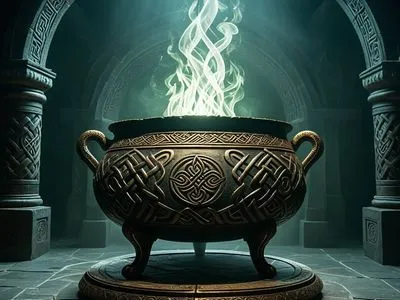
Cauldron of Rebirth Myth Meaning & Symbolism
A magical cauldron restores the dead to life, embodying the Celtic belief in cyclical renewal and the transformative power of the Otherworld.
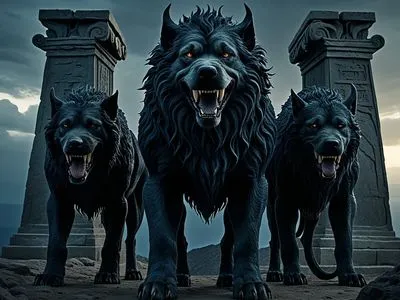
Cerberus Myth Meaning & Symbolism
The monstrous guardian of the Greek underworld, Cerberus represents the primal threshold between life and death, and the psyche's terrifying gatekeeper.
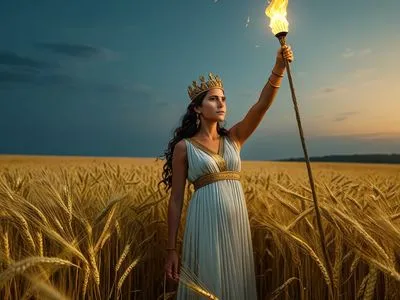
Ceres Myth Meaning & Symbolism
The goddess of grain endures the abduction of her daughter, plunging the world into barren winter, forging a sacred cycle of loss and return.
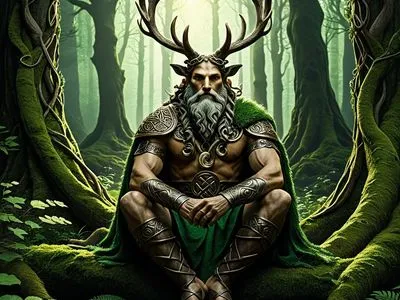
Cernunnos Myth Meaning & Symbolism
The myth of the antlered god who dwells at the world's heart, master of beasts and cycles, embodying the untamed soul of nature and psyche.
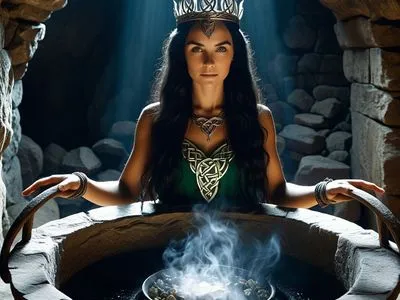
Cerridwen Myth Meaning & Symbolism
A goddess brews a potion of ultimate wisdom. Her servant tastes it, triggering a shapeshifting chase that births a new form of poetic inspiration.
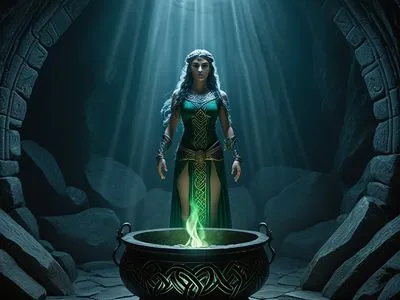
Cerridwen's Cauldron Myth Meaning & Symbolism
A goddess brews a potion of ultimate wisdom for her son, but a servant boy drinks it instead, triggering a shapeshifting chase of profound transformation.
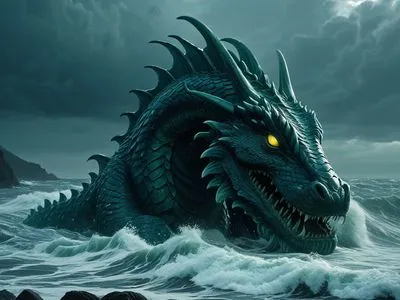
Cetus Myth Meaning & Symbolism
A monstrous sea serpent sent to devour a princess, defeated by a hero, embodying the primal chaos that must be confronted to restore cosmic and psychic order.
Chaos Myth Meaning & Symbolism
The primordial void from which all existence emerged, a yawning chasm of potential preceding the ordered cosmos and the gods themselves.
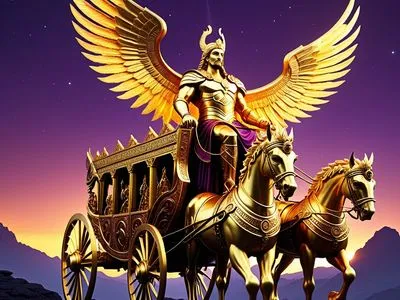
Chariot of Helios Myth Meaning & Symbolism
The sun god Helios drives his celestial chariot across the sky daily, a sacred duty whose violation by his son Phaethon brings catastrophic imbalance.

Charon Myth Meaning & Symbolism
The ancient ferryman who guides souls across the river Styx, demanding a coin for passage, embodying the final threshold between life and death.

Charon's Boat Myth Meaning & Symbolism
The myth of the grim ferryman who carries souls across the river Styx, demanding a coin for passage into the underworld.

Charon's Ferry Myth Meaning & Symbolism
The myth of the grim ferryman who transports souls across the river Styx, demanding a coin for passage into the realm of Hades.

Charon's Obol Myth Meaning & Symbolism
A soul cannot cross the river Styx without the coin placed on their lips, a final payment to the ferryman for the journey into the underworld.
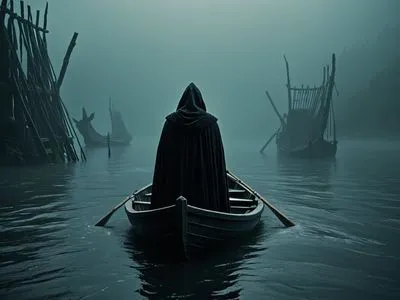
Charon's Skiff Myth Meaning & Symbolism
The myth of the grim ferryman who carries souls across the river Styx, demanding a coin for passage into the realm of Hades.
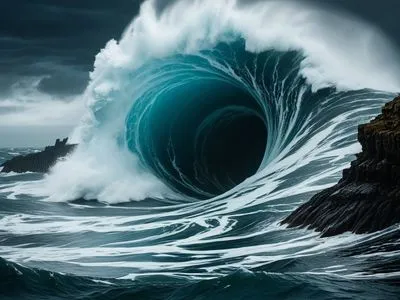
Charybdis Myth Meaning & Symbolism
A monstrous, all-consuming whirlpool, once a divine daughter, now an eternal vortex guarding a narrow strait, representing the inescapable, cyclical nature of primal forces.

Chelone Myth Meaning & Symbolism
A nymph who insulted the gods by refusing to attend a wedding is transformed into the first turtle, forever carrying her home on her back.
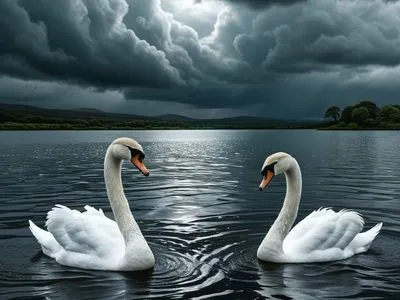
Children of Lir Myth Meaning & Symbolism
Four royal children are transformed into swans by a jealous stepmother, enduring nine centuries of exile on wild waters before finding final release.
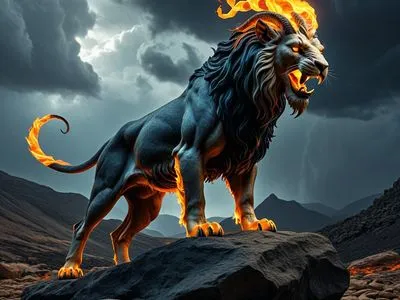
Chimera Myth Meaning & Symbolism
A fire-breathing monster of lion, goat, and serpent, slain by Bellerophon, representing the primal, fragmented psyche demanding integration.

Chione Myth Meaning & Symbolism
A mortal woman of surpassing beauty, Chione is loved by two gods, boasts of surpassing Artemis, and is silenced by an arrow, transformed into a constellation.

Chiron the Centaur Myth Meaning & Symbolism
The story of Chiron, the immortal centaur whose incurable wound led him to become the greatest teacher, healer, and guide of heroes.
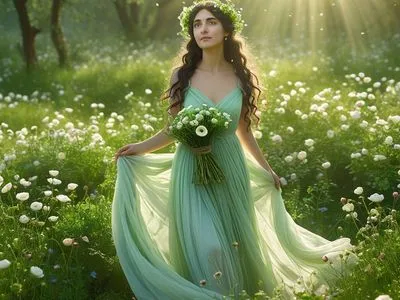
Chloris Myth Meaning & Symbolism
A nymph of spring, reborn as Flora after a violent abduction, embodying the soul's capacity to transform trauma into blossoming creativity.
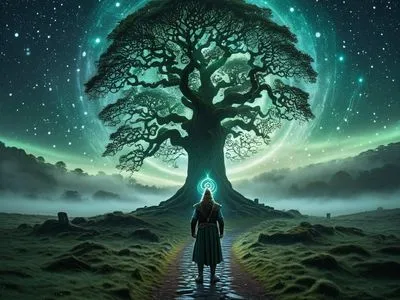
Choice of Paths Myth Meaning & Symbolism
A hero stands at a sacred crossroads, where three paths demand a choice that will define their fate and the fate of their people.
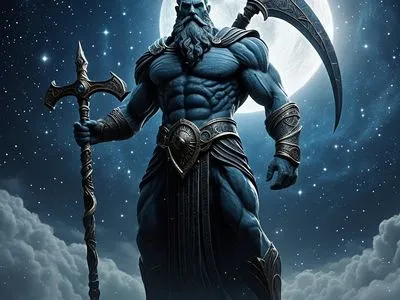
Chronos Myth Meaning & Symbolism
The primordial god of time, who castrates his father and devours his children, embodying the relentless, consuming, and cyclical nature of existence itself.

Chronos/Saturn Myth Meaning & Symbolism
The Titan who castrated his father to rule, then devoured his children to prevent his own fall, embodying time's relentless, devouring nature.
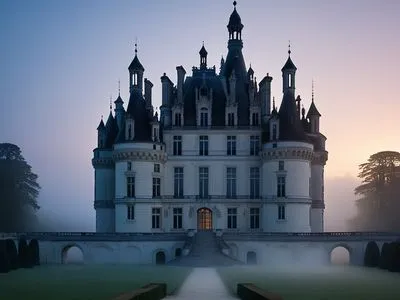
Château de Chambord Myth Meaning & Symbolism
A king dreams a divine geometry into stone, a palace born from the marriage of forest and sky, a monument to human aspiration and cosmic order.

Cincinnatus Myth Meaning & Symbolism
A Roman farmer reluctantly accepts absolute power to save the state, then renounces it to return to his plow, embodying civic virtue and selfless duty.
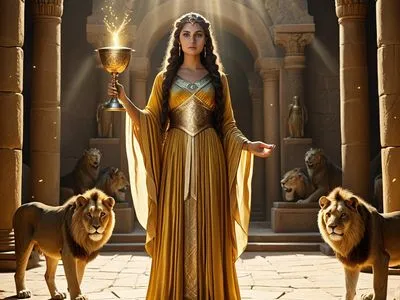
Circe Myth Meaning & Symbolism
The goddess Circe transforms men into beasts, testing Odysseus's spirit and revealing the primal, untamed nature hidden within the civilized self.
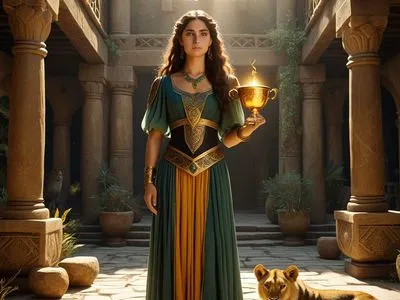
Circe's Potion Myth Meaning & Symbolism
A sorceress offers a potion that turns men into beasts, until a hero, protected by a divine herb, confronts her and demands their restoration.
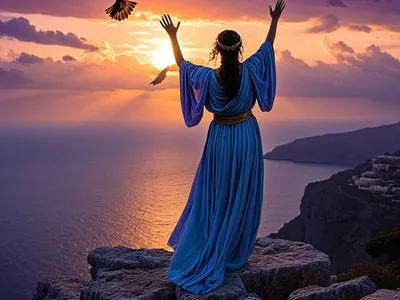
Circe's Falcons Myth Meaning & Symbolism
A story of divine wrath, where the goddess Circe transforms a king and his men into falcons, revealing the soul's struggle between instinct and consciousness.
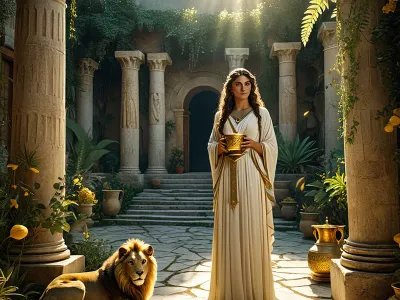
Circe's Potions Myth Meaning & Symbolism
The sorceress Circe transforms men into beasts with a potion, a fate Odysseus overcomes through divine aid, symbolizing the confrontation with our primal nature.
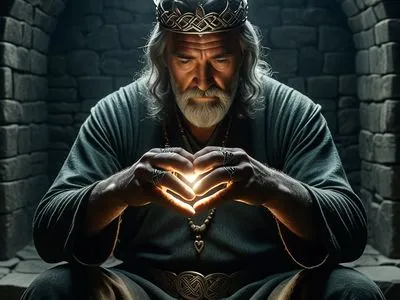
Claddagh Ring Myth Meaning & Symbolism
A tale of a captive goldsmith who forges a ring of heart, hands, and crown, embodying the soul's journey through love, loyalty, and self-rule.
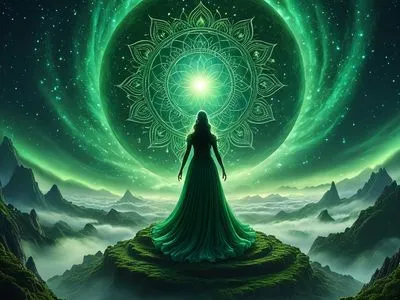
Classical Elements Myth Meaning & Symbolism
A story of order wrested from chaos, where the four fundamental elements—Earth, Water, Air, and Fire—are born from the void, forming the world's foundation.
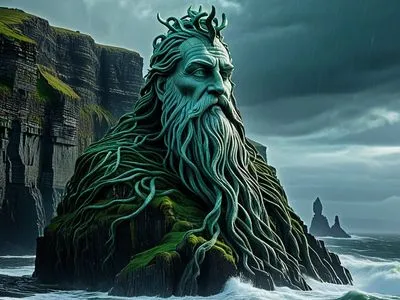
Cliffs of Moher Myth Meaning & Symbolism
A grieving sea god carves the Irish coast with his sorrow, creating the Cliffs of Moher as an eternal boundary between his realm and the land of his lost love.
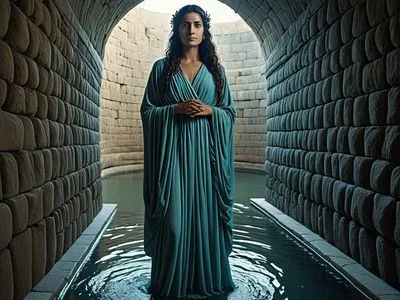
Cloacina Myth Meaning & Symbolism
The goddess of Rome's sewers, born from filth to become a deity of purification, embodying the sacred act of transforming waste into civic and psychic order.
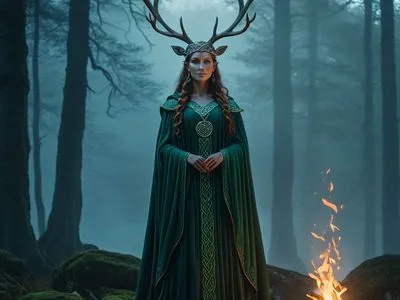
Cloch na Teine Myth Meaning & Symbolism
A myth of a sacred stone that holds the sun's fire, guarded by a goddess, requiring a hero's sacrifice to rekindle the world's light and warmth.
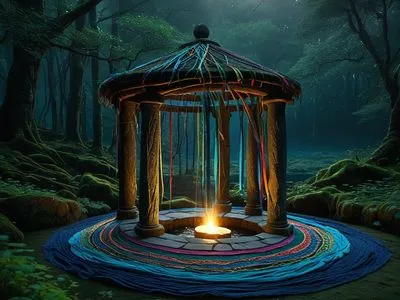
Clootie Well Myth Meaning & Symbolism
A sacred well where offerings are made, binding illness to rags, a pact with the liminal waters for healing and transformation.
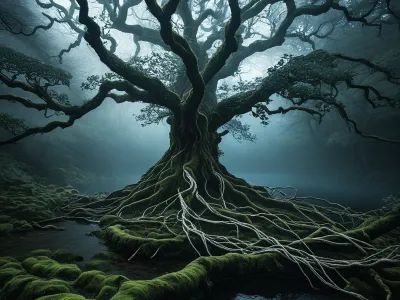
Clootie Wells Myth Meaning & Symbolism
A tale of a sacred spring where the sick tie cloth rags to trees, transferring their ailments to the spirit of the water in a ritual of desperate hope.
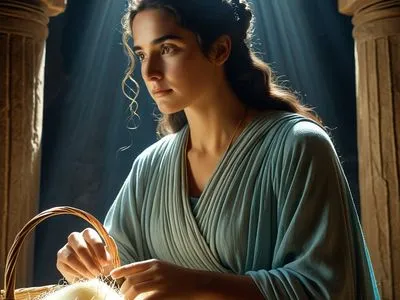
Clotho Myth Meaning & Symbolism
Clotho, the youngest Fate, spins the thread of every mortal life at its inception, embodying the irrevocable moment of beginning and the raw potential of destiny.

Clytie Myth Meaning & Symbolism
A water nymph's obsessive love for the sun god Helios transforms her into a heliotrope, eternally turning her face to follow his journey across the sky.

Cocytus Myth Meaning & Symbolism
Cocytus is the frozen river of wailing in Hades, where souls who betrayed hospitality weep eternally, embodying the cold paralysis of unresolved grief.
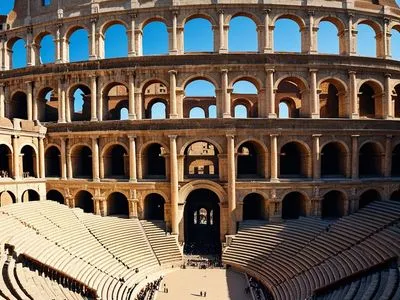
Colosseum Myth Meaning & Symbolism
The Flavian Amphitheatre, a stone heart where Rome enacted its myth of order through sacred violence, spectacle, and the sacrifice of the other.
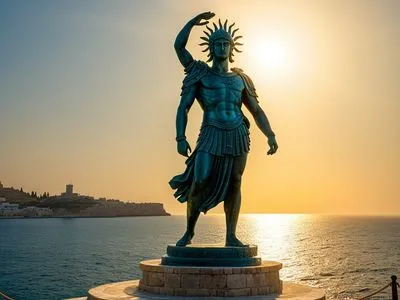
Colossus of Rhodes Myth Meaning & Symbolism
A titanic bronze god, born from siege and gratitude, bestriding a harbor, then felled by earth's tremor, its fragments whispering of human ambition and divine scale.
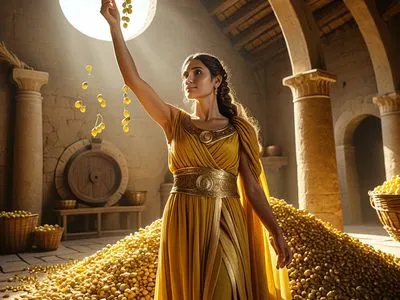
Copia Myth Meaning & Symbolism
The story of Copia, goddess of abundance, whose overflowing cornucopia symbolizes the fertile union of disciplined cultivation and divine grace.
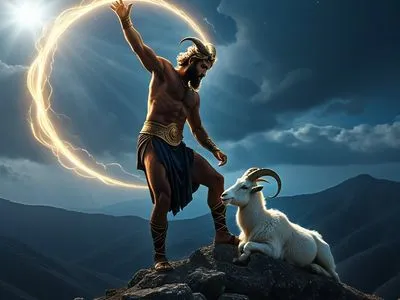
Cornucopia Myth Meaning & Symbolism
The horn of plenty, born from the infant Zeus's struggle with a divine goat, symbolizes unending nourishment born from primal conflict and divine power.
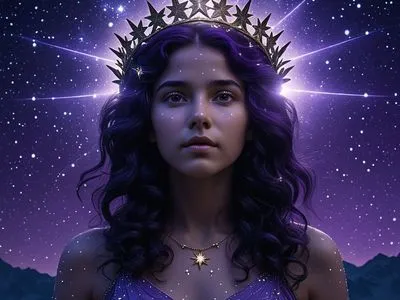
Corona Myth Meaning & Symbolism
A nymph's selfless sacrifice transforms her into a constellation, a crown of stars symbolizing eternal fidelity and the ultimate reward of a pure heart.
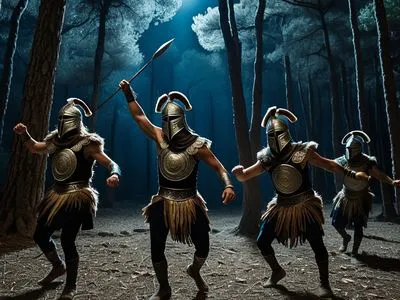
Corybantes Myth Meaning & Symbolism
The myth of the Corybantes, ecstatic dancers who protected the infant Zeus with their clashing shields and drums, symbolizing the primal defense of nascent consciousness.
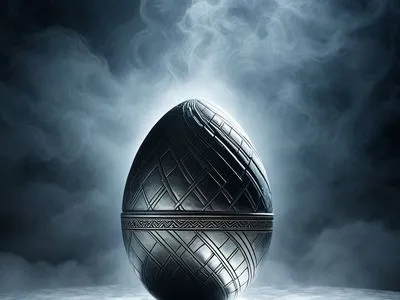
Cosmic Egg Myth Meaning & Symbolism
From primordial Chaos, a silver egg emerges, splitting to birth the first gods and the cosmos, a myth of ultimate potential and creation.
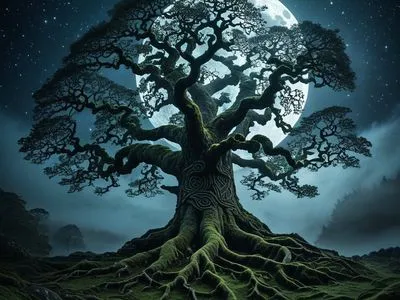
Crann Bethadh Myth Meaning & Symbolism
The sacred Celtic World Tree, an axis connecting all realms, embodying life, law, and the sovereignty of the land and psyche.
Crocus Myth Meaning & Symbolism
A mortal youth beloved by a nymph is accidentally slain, his blood staining the earth to birth the first crimson saffron crocus, a symbol of eternal love.
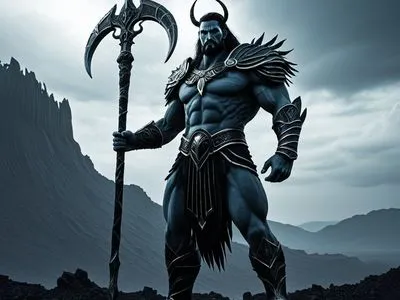
Cronus Myth Meaning & Symbolism
A Titan of time and harvest, Cronus castrates his father Ouranos, then swallows his own children, fearing their prophesied rebellion, until he is overthrown by his son Zeus.
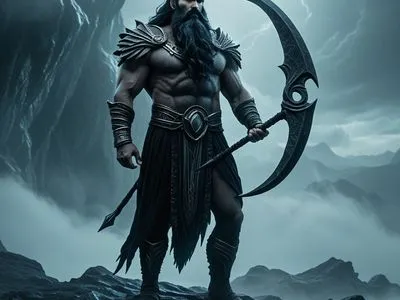
Cronus/Saturn Myth Meaning & Symbolism
The Titan who devours his children to preserve his reign, only to be overthrown by the son he could not consume, embodying the cycles of time and power.

Crossroads Myth Meaning & Symbolism
A tale of the liminal god who waits at the crossroads, offering a choice between paths and the fate that follows.
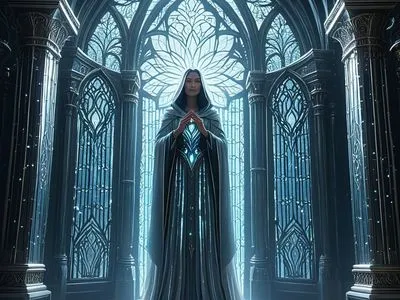
Crystal Palace of Mnemosyne Myth Meaning & Symbolism
A soul journeys to the crystalline heart of memory, seeking its true name and history from the Titaness of remembrance, Mnemosyne.
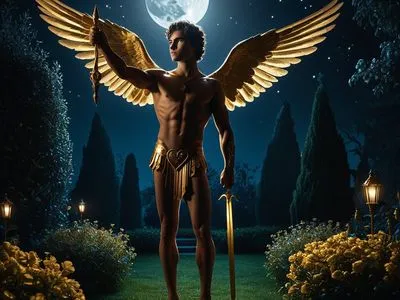
Cupid Myth Meaning & Symbolism
A soul's journey to reclaim love, facing impossible trials to prove her devotion to a god she cannot see, revealing the union of love and psyche.
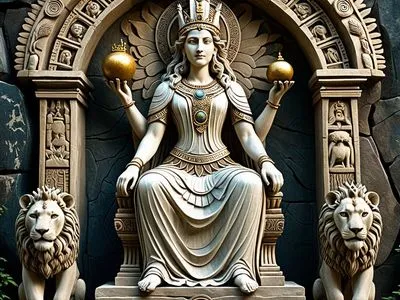
Cybele Myth Meaning & Symbolism
The myth of the Phrygian Mother Goddess, whose sacred rites involved ecstatic devotion and the tragic, transformative love of her divine consort, Attis.
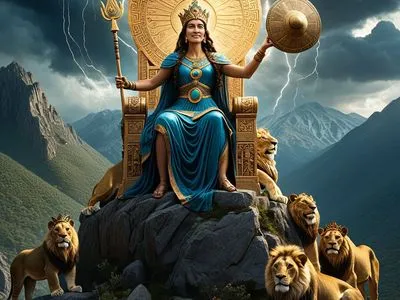
Cybele's Drums Myth Meaning & Symbolism
A myth of the Great Mother's sacred, frenzied music, born from the sacrifice of her divine lover to restore the wild, creative pulse of the world.
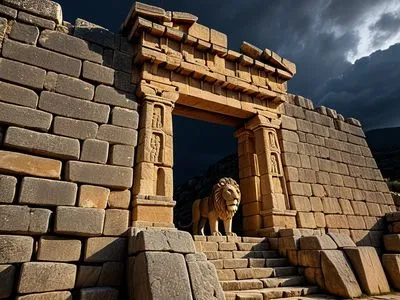
Cyclopean Masonry Myth Meaning & Symbolism
The myth of colossal, seamless stonework built by primordial giants, representing the foundational, unconscious structures of the psyche.
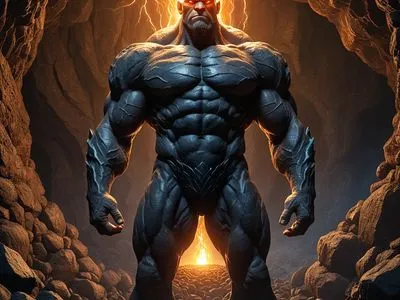
Cyclops Myth Meaning & Symbolism
The one-eyed giant, a primordial force of raw creation and brutal consumption, is outwitted by the cunning hero, a clash between brute instinct and strategic intellect.
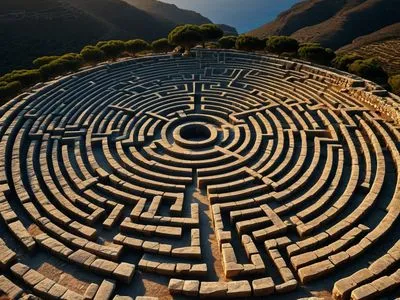
Daedalus' Labyrinth Myth Meaning & Symbolism
The story of a divine craftsman, a monstrous secret, and a maze that is both a prison and a map of the human soul.
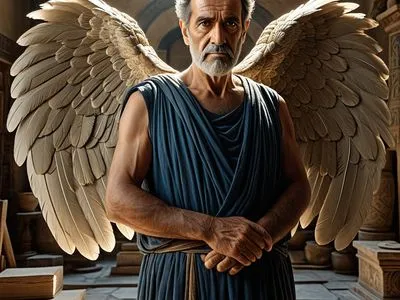
Daedalus Myth Meaning & Symbolism
The tragic tale of a genius inventor whose greatest creations—the Labyrinth and wings of wax—ensnare and liberate, revealing the double-edged sword of human ingenuity.
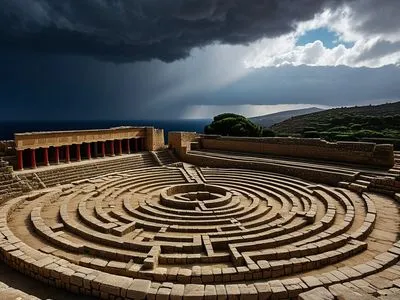
Daedalus's Labyrinth Myth Meaning & Symbolism
The myth of the master craftsman Daedalus, the monstrous Minotaur, and the inescapable Labyrinth he built, a story of genius, confinement, and the soul's descent and return.
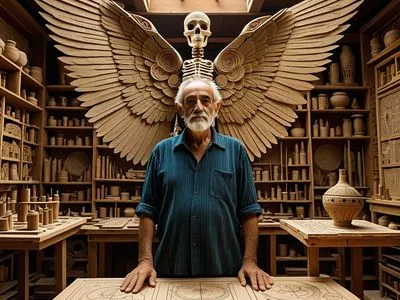
Daedalus's Workshop Myth Meaning & Symbolism
The myth of the master artisan Daedalus, his labyrinth, his waxen wings, and the tragic flight that embodies the creative spirit's glory and peril.
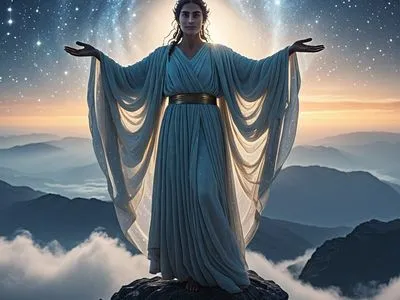
Daemon Myth Meaning & Symbolism
The Daemon is a divine guiding spirit, a personal genius and fateful companion, representing the soul's call to its unique destiny within Greek cosmology.

Dagda Myth Meaning & Symbolism
The tale of the Good God, whose cauldron never empties, whose club gives and takes life, and whose harp commands the seasons of the heart.

Dagda's Cauldron Myth Meaning & Symbolism
The myth of the Dagda's bottomless cauldron, a vessel of endless nourishment and impossible restoration.

Dagda's Club Myth Meaning & Symbolism
The tale of the Dagda's mighty club, a weapon that kills with one end and resurrects with the other, embodying the totality of existence.

Dagda's Harp Myth Meaning & Symbolism
The Dagda retrieves his stolen magical harp, using its three strains of music to command the seasons, emotions, and will of his enemies.
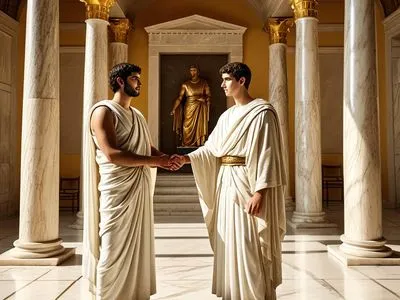
Damon and Pythias Myth Meaning & Symbolism
A story of two friends whose supreme loyalty and willingness to die for one another transforms a tyrant and redefines the meaning of trust.
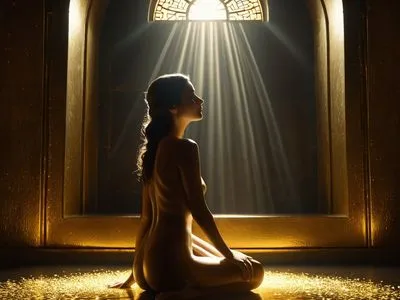
Danaë Myth Meaning & Symbolism
A king imprisons his daughter to thwart a prophecy, but a divine golden rain finds her, conceiving the hero Perseus.

Danaë's Bronze Chamber Myth Meaning & Symbolism
A king imprisons his daughter to thwart a prophecy, but divine gold finds her, birthing a hero and shattering the prison of fear.

Danu Myth Meaning & Symbolism
The story of Danu, the great mother of the Tuatha Dé Danann, whose essence is the river of life, sovereignty, and the nourishing unconscious.

Daphne Myth Meaning & Symbolism
A nymph, fleeing the god Apollo's relentless desire, prays for escape and is transformed into the first laurel tree, finding sanctuary in rooted stillness.

Delphinus Myth Meaning & Symbolism
A dolphin aids the god Poseidon, winning a bride and earning a place among the stars as a constellation of guidance and sacred union.
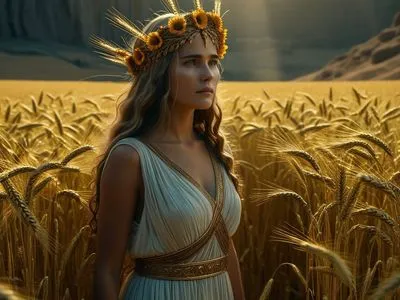
Demeter & Persephone Myth Meaning & Symbolism
A mother's grief for her abducted daughter creates the seasons, a timeless story of separation, descent, and cyclical return.
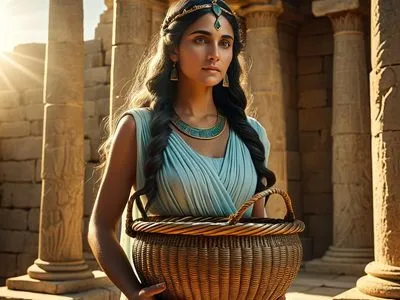
Demeter's Basket Myth Meaning & Symbolism
A sacred basket, veiled in secrecy, holds the core of the Eleusinian Mysteries, symbolizing the profound cycle of loss, descent, and miraculous return.
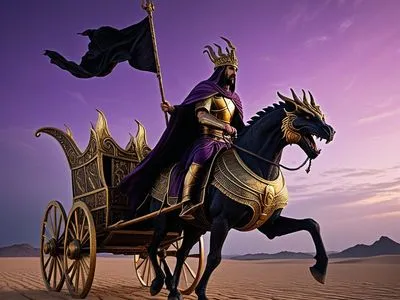
Demeter's Chariot Myth Meaning & Symbolism
The goddess Demeter, in her chariot, traverses a world made barren by grief, seeking her lost daughter and forcing a cosmic renegotiation of life and death.
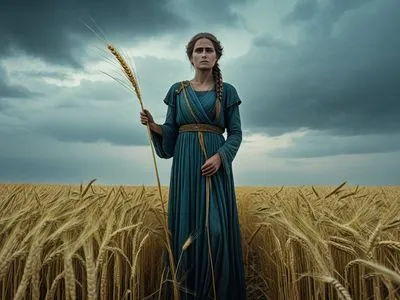
Demeter's Cycles Myth Meaning & Symbolism
A mother's grief for her abducted daughter brings eternal winter, forging a sacred cycle of loss, descent, and seasonal rebirth.
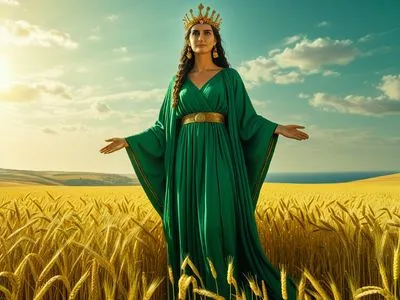
Demeter's Fields Myth Meaning & Symbolism
A myth of the grain goddess Demeter, whose grief over her daughter's abduction plunges the world into barren winter until a sacred compromise restores cyclical life.
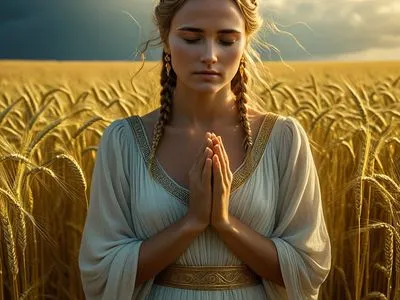
Demeter's Grain Myth Meaning & Symbolism
The myth of Demeter's sacred grain, born from her grief for Persephone, symbolizes the cycles of life, death, and the soul's descent into the unconscious.
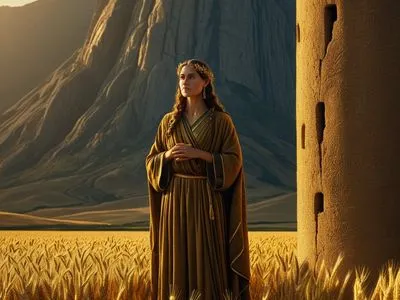
Demeter's Granary Myth Meaning & Symbolism
A myth of the goddess Demeter hiding the world's grain in a mountain, causing famine until a ritual reveals the secret of cyclical renewal.
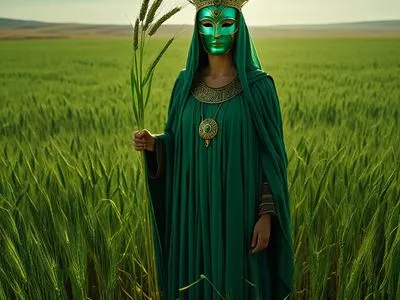
Demeter's Grief Myth Meaning & Symbolism
A mother's inconsolable grief for her abducted daughter halts all life, forcing a compromise with death that creates the seasons.
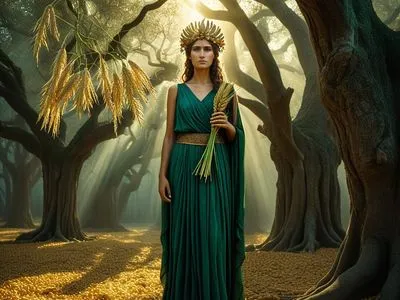
Demeter's Grove Myth Meaning & Symbolism
A sacred grove becomes the epicenter of a goddess's grief, transforming the world and revealing the deep, cyclical nature of loss and renewal.
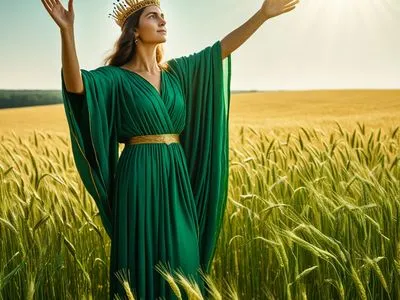
Demeter's Harvest Myth Meaning & Symbolism
A mother's grief for her abducted daughter brings the world to winter, forging a sacred cycle of loss, descent, and cyclical return.
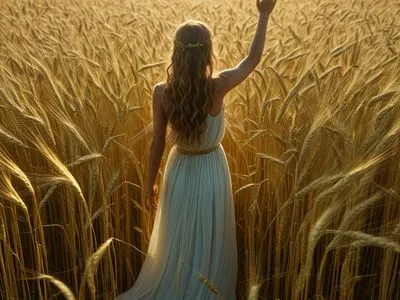
Demeter's Lost Rites Myth Meaning & Symbolism
A story of a goddess's world-stopping grief, a secret pact with mortals, and the sacred, transformative rites that were whispered but never fully written down.
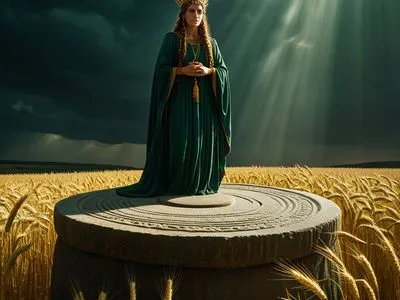
Demeter's Mill Myth Meaning & Symbolism
A grieving Demeter grinds a mortal king into dust, halting the world's fertility until a sacred bargain restores the grain and establishes the Eleusinian Mysteries.
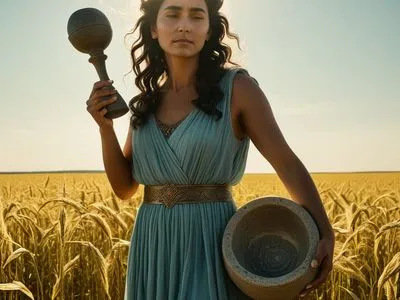
Demeter's Mortar Myth Meaning & Symbolism
A grieving Demeter grinds a mortal in her mortar, a mythic act of raw, transformative rage that speaks to the sacred cycle of life and death.
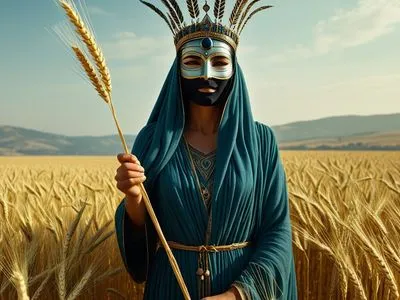
Demeter's Mystery Myth Meaning & Symbolism
The goddess Demeter's grief over her daughter Persephone's abduction creates winter and reveals the sacred cycle of loss, descent, and renewal.
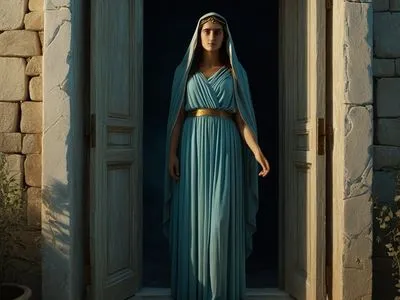
Demeter's Sanctuary Myth Meaning & Symbolism
A grieving goddess finds sanctuary in a mortal home, teaching that profound loss can be the crucible for sacred wisdom and cyclical renewal.
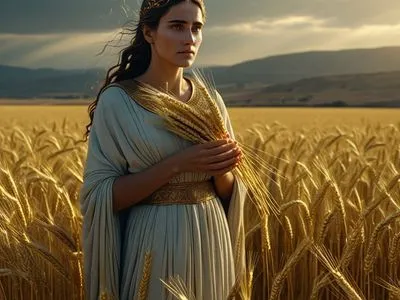
Demeter's Seeds Myth Meaning & Symbolism
A goddess's grief for her stolen daughter brings eternal winter, until a compromise seeds the cycle of life, death, and seasonal rebirth.
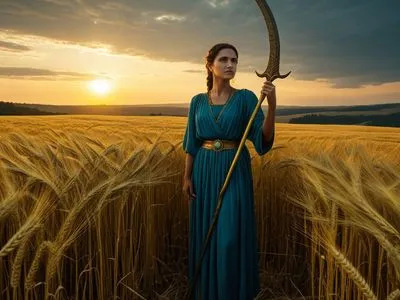
Demeter's Sickle Myth Meaning & Symbolism
The sickle Demeter gave to her son Ploutos to sever the first stalk of grain, a primal act of harvest that binds life, death, and sacred nourishment.
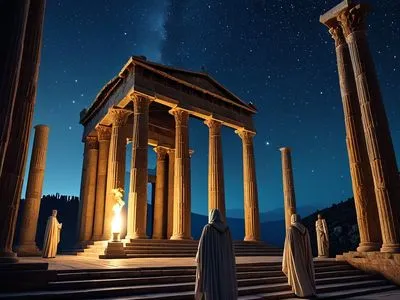
Demeter's Temple at Eleusis Myth Meaning & Symbolism
A goddess's grief for her stolen daughter leads to the founding of the Eleusinian Mysteries, offering initiates a sacred vision of life beyond death.
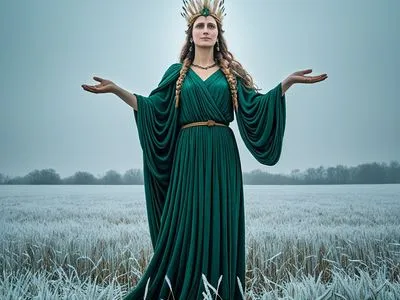
Demeter's Winter Myth Meaning & Symbolism
A mother's grief for her abducted daughter halts all life, creating winter, until a compromise with the underworld restores a cyclical world of loss and return.
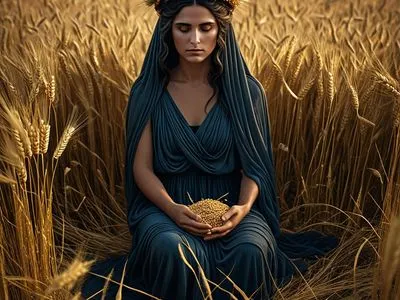
Demeter's Wreath Myth Meaning & Symbolism
A myth of the goddess Demeter crafting a wreath of grief and barley, a sacred act of mourning that forced the world to witness her loss and change.

Democritus' Atom Myth Meaning & Symbolism
A philosopher's vision of the indivisible, eternal seed of reality, hidden within the ceaseless dance of matter and void.
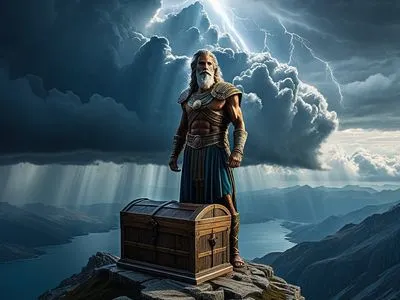
Deucalion Myth Meaning & Symbolism
A righteous man and his wife survive a world-ending flood, receiving an oracle to repopulate the earth by casting the 'bones of their mother' behind them.
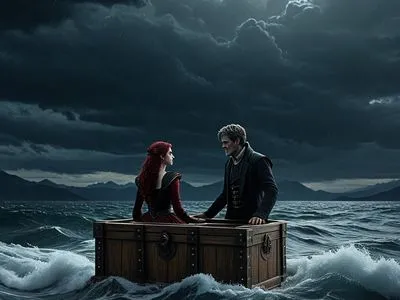
Deucalion's Flood Myth Meaning & Symbolism
Zeus floods the world to cleanse human wickedness. Only the pious Deucalion and Pyrrha survive, instructed to repopulate the earth by casting stones behind them.
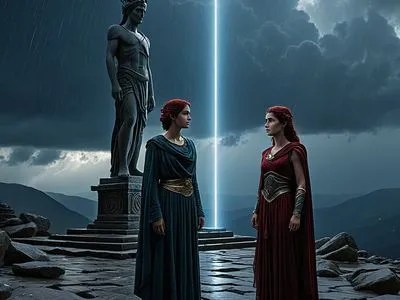
Deucalion's Stones Myth Meaning & Symbolism
After a world-ending flood, the survivors Deucalion and Pyrrha repopulate the earth by casting stones over their shoulders, which transform into a new race of humans.

Dian Cécht Myth Meaning & Symbolism
The myth of the divine physician Dian Cécht, whose healing prowess is shadowed by jealousy, leading to a fateful act against his own kin.
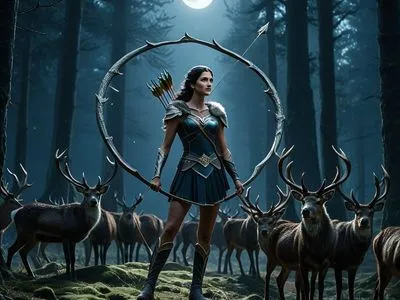
Diana Myth Meaning & Symbolism
The myth of Diana, goddess of the hunt and moon, embodies the untamed feminine, the sovereignty of nature, and the sacred boundary between wilderness and civilization.
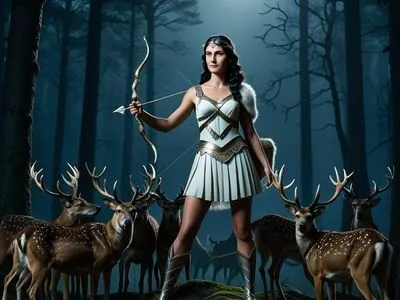
Diana/Artemis Myth Meaning & Symbolism
The story of the goddess who rules the untamed woods and silver moon, protector of thresholds and the fierce, autonomous self.

Diana's Tear Myth Meaning & Symbolism
A hunter's forbidden love for the goddess Diana leads to tragedy, her grief crystallizing into a sacred, eternal spring in the forest.
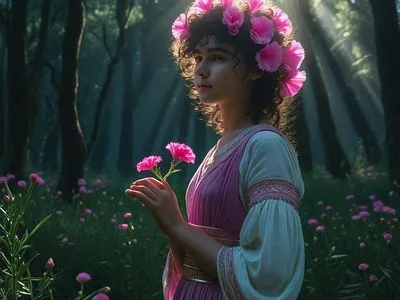
Dianthus Myth Meaning & Symbolism
A flower born from the spilled blood of a youth, transformed by Artemis's grief into a symbol of divine love and eternal remembrance.
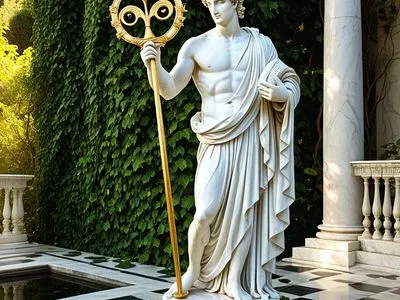
Dichotomy of Apollo and Dionysus Myth Meaning & Symbolism
The primal myth of two divine brothers embodying the opposing forces of measured light and wild ecstasy, whose eternal tension shapes the soul.
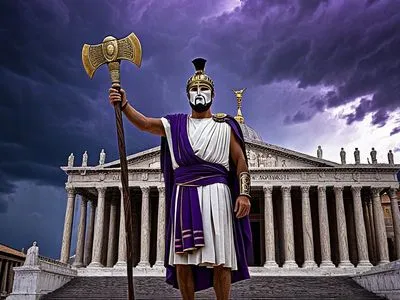
Dictator Myth Meaning & Symbolism
A sacred office of absolute power, granted in crisis and relinquished when the work is done, embodying the paradox of necessary tyranny and sacred surrender.
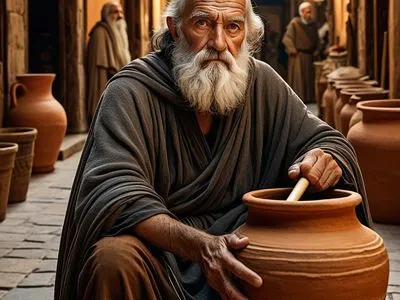
Diogenes Myth Meaning & Symbolism
The story of Diogenes of Sinope, who lived in a barrel, owned nothing, and sought truth with a lantern in daylight, challenging all societal conventions.
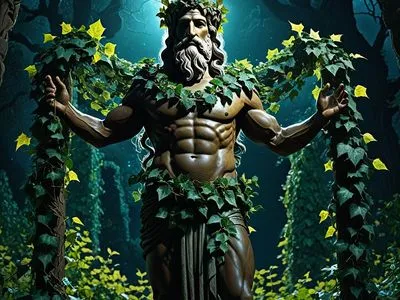
Dionysian Festivals Myth Meaning & Symbolism
The myth of sacred festivals where the god of wine and ecstasy dissolves boundaries, unleashing primal chaos and divine madness to shatter rigid order.
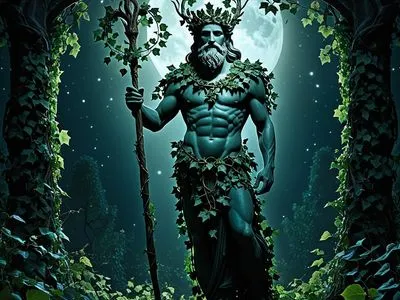
Dionysian Mysteries Myth Meaning & Symbolism
The secret rites of Dionysus, where ecstatic dance, divine madness, and raw nature shatter the ego, revealing the soul's wild, immortal core.
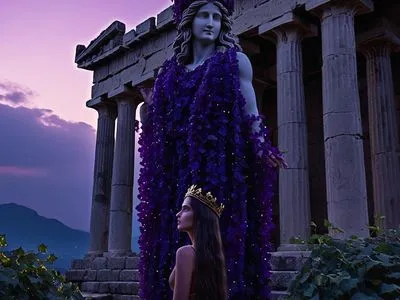
Dionysus & Amethystos Myth Meaning & Symbolism
A mortal maiden, Amethystos, is transformed into a purple crystal by Dionysus to protect her from his wrath, creating a symbol of divine grace and sober clarity.
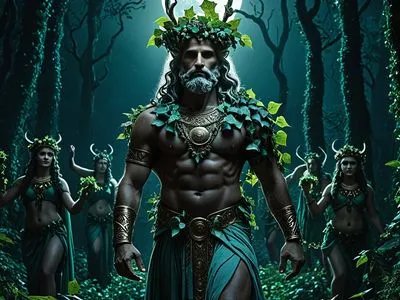
Dionysian Procession Myth Meaning & Symbolism
The god Dionysus leads a wild, ecstatic procession of followers through the wilds, dissolving boundaries and unleashing primal, transformative life-force.

Dionysus as infant Myth Meaning & Symbolism
The twice-born god, hidden as an infant, is torn apart by Titans before being reborn, embodying the raw, untamable life force that shatters all order.
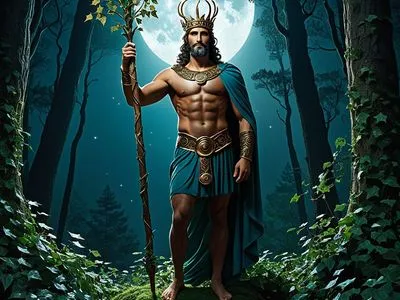
Dionysus' Mysteries Myth Meaning & Symbolism
A myth of the god who arrives from the wilderness, shattering order with ecstatic rites to reveal the raw, transformative power of the unconscious.
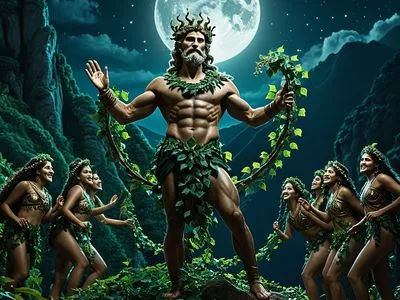
Dionysus & Maenads Myth Meaning & Symbolism
The god of wine and ecstasy leads women into the wild mountains, where societal order dissolves into a sacred, terrifying, and transformative frenzy.

Dionysus & the Fig Tree Myth Meaning & Symbolism
The god Dionysus, enraged by a mortal's betrayal, finds sanctuary and revelation within the hollow of a sacred fig tree.
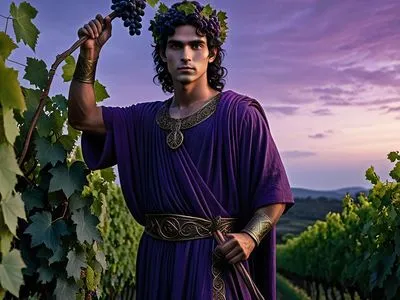
Dionysus & the Vine Myth Meaning & Symbolism
The god of ecstasy discovers the vine, transforming his suffering into the sacred wine that dissolves boundaries and births a new consciousness.
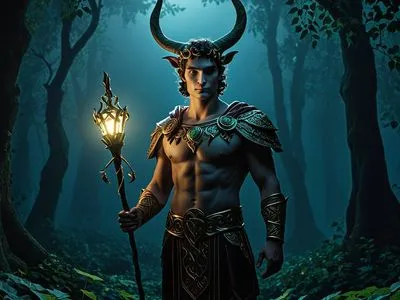
Dionysus Zagreus Myth Meaning & Symbolism
The story of the divine child, torn apart by Titans and reborn, embodying the soul's fragmentation and sacred return through ecstatic surrender.
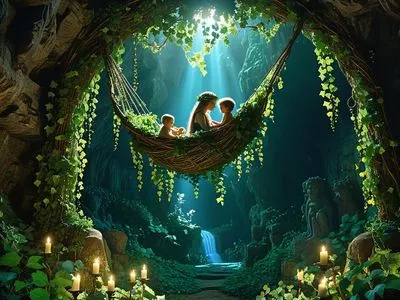
Dionysus's Cradle Myth Meaning & Symbolism
The infant god Dionysus, born from Zeus's thigh, is hidden in a cradle from Hera's wrath, a myth of primal vulnerability and ecstatic return.

Dionysus's Kantharos Myth Meaning & Symbolism
The story of the god's sacred cup, a vessel of divine madness that dissolves boundaries and reveals the raw, creative chaos at the heart of being.
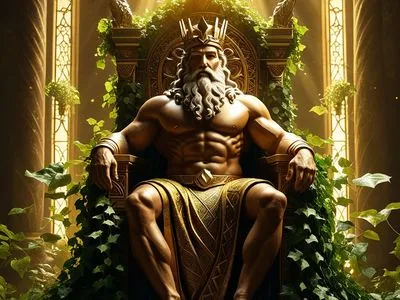
Dionysus's Second Birth Myth Meaning & Symbolism
The twice-born god, torn from his mother's womb and sewn into his father's thigh, emerges as the lord of ecstasy, chaos, and profound transformation.
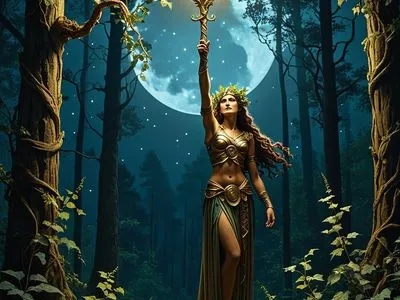
Dionysus's Thyrsus Myth Meaning & Symbolism
The story of the thyrsus, a fennel staff crowned with ivy and pine cone, embodies the god's power to shatter rigid order and unleash primal, transformative ecstasy.
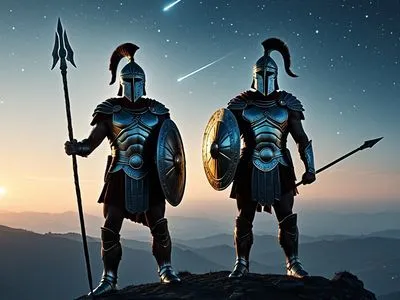
Dioscuri Myth Meaning & Symbolism
The myth of twin brothers, one mortal, one divine, whose bond transcends death, creating a constellation of light and shadow in the human soul.
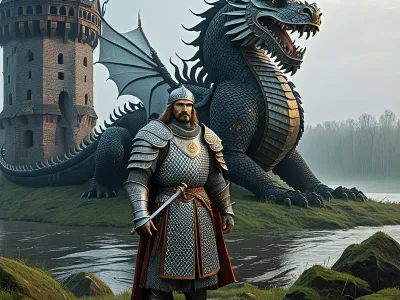
Dobrynya Nikitich and the Dragon Myth Meaning & Symbolism
A hero's sacred duty compels him to confront a serpentine tyrant, freeing captives and restoring cosmic order through courage and cunning.
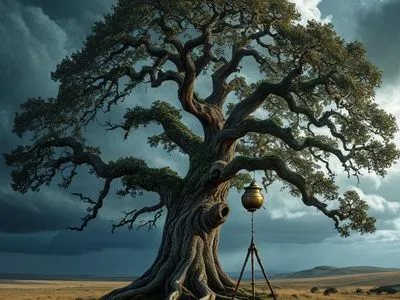
Dodona Oracle Myth Meaning & Symbolism
At the world's oldest oracle, the voice of Zeus spoke through the rustling leaves of a sacred oak, interpreted by priestesses who listened to the earth.

Dolphin Guides Myth Meaning & Symbolism
A lost soul, guided by dolphins through perilous seas, undertakes a journey of forgetting and remembering to reclaim their true name and purpose.
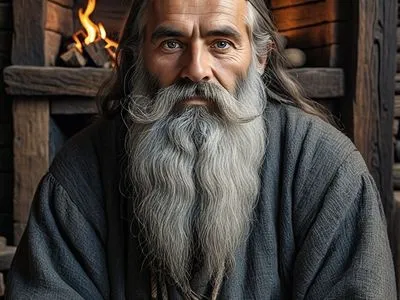
Domovoi Myth Meaning & Symbolism
The ancient Slavic guardian of the hearth, a spirit of place and memory, whose presence demands respect and ritual to bless a household.
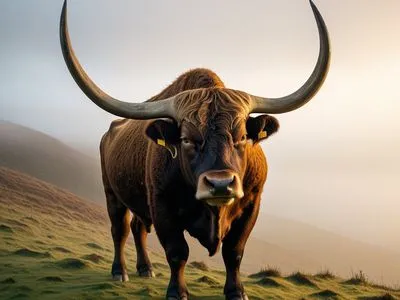
Donn Cuailnge Myth Meaning & Symbolism
A mythic bull, a contested prize, and a cataclysmic war that reveals the deep bond between a king's sovereignty and the land's primal spirit.
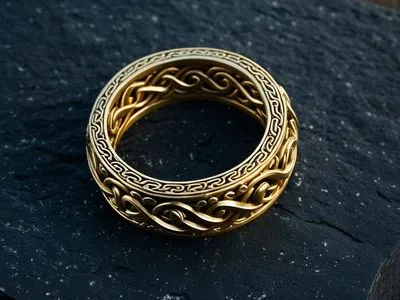
Draupnir Myth Meaning & Symbolism
A magical ring forged in sacrifice, Draupnir symbolizes the paradox of loss as the source of endless, self-renewing wealth and connection.

Drekavac Myth Meaning & Symbolism
A spectral entity born from untimely death, its piercing cry in the wilderness warns of unresolved sorrow and the psyche's raw, unintegrated territories.
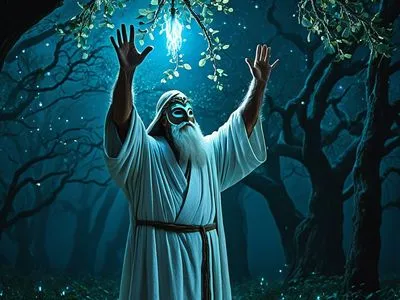
Druid Herb Lore Myth Meaning & Symbolism
A tale of how the Druids gained their sacred plant wisdom through a perilous journey into the Otherworld, guided by the spirit of the land.
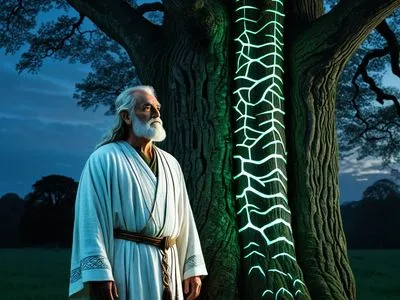
Druidic Oak Lore Myth Meaning & Symbolism
A tale of a Druid's sacred bond with an ancient oak, tested by a king's demand, revealing the price of true wisdom and the soul's hidden roots.
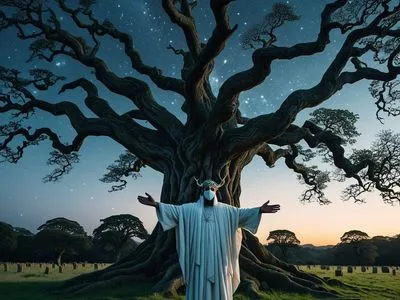
Druidic Ritual Myth Meaning & Symbolism
A myth of the eternal duel between the Oak King and Holly King, a ritual sacrifice that ensures the turning of the wheel and the balance of the world.
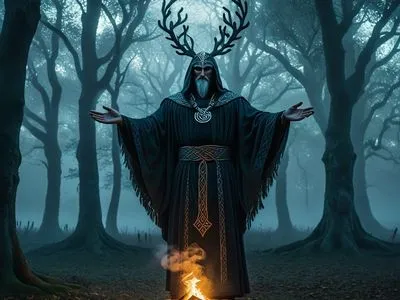
Druidic Smoke Divination Myth Meaning & Symbolism
An ancient Druid, guided by the Morrígan, reads fate in sacred smoke, learning that true vision requires embracing the shadow within the light.
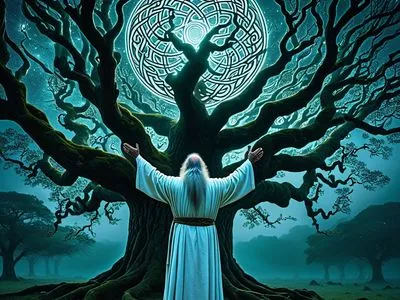
Druidic Tradition Myth Meaning & Symbolism
A myth of a bard who journeys into the Otherworld to retrieve the lost songs of the ancestors, guided by a spectral stag and the memory of the sacred grove.

Druid's Charm Pouch Myth Meaning & Symbolism
A Druid's quest to mend a sacred pouch becomes a journey into the underworld, confronting forgotten gods to restore the world's hidden balance.
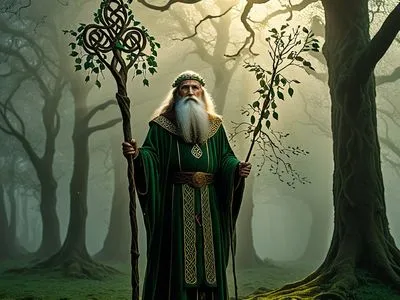
Druid's Rod Myth Meaning & Symbolism
A myth of a sacred staff, a king's sacrifice, and the druid's wisdom forging a bond between mortal sovereignty and the eternal, dreaming earth.
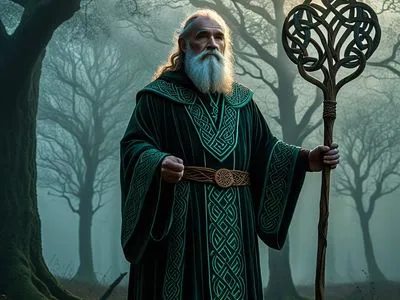
Druid's Staff Myth Meaning & Symbolism
A tale where a druid's quest for a staff of ultimate wisdom demands a harrowing sacrifice, forging a bond between mortal spirit and the world's soul.
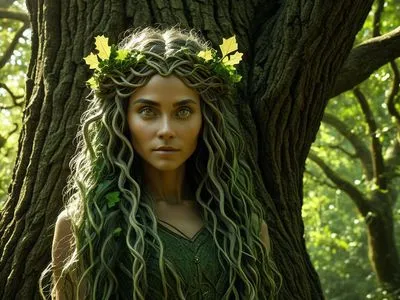
Dryad Myth Meaning & Symbolism
The myth of the Dryad, a tree-nymph whose life is bound to her sacred oak, embodies the soul's deep, mortal connection to the living world.
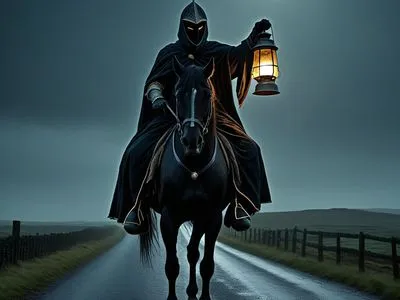
Dullahan Myth Meaning & Symbolism
A spectral harbinger of death from Irish folklore, the Dullahan rides a black steed, carrying its head, to call the souls of the dying.

Dvergar Myth Meaning & Symbolism
The myth of the Dvergar, the masterful smiths of stone and shadow, who forge the treasures of the gods from the dark, forgotten marrow of the world.
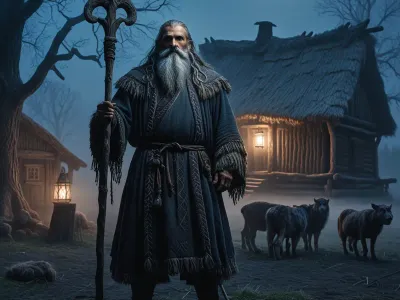
Dvorovoi Myth Meaning & Symbolism
The myth of the Dvorovoi, the capricious Slavic guardian of the household yard, embodies the sacred contract between humans and the untamed spirit of place.
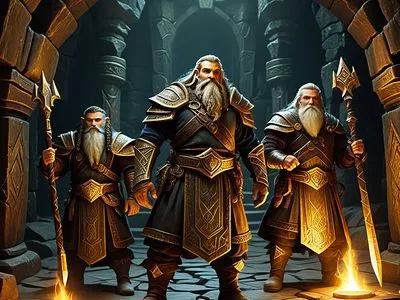
Dwarven craftsmen Myth Meaning & Symbolism
A myth of master artisans born from primordial earth, forging divine treasures through immense skill, cunning, and a sacred, subterranean fire.
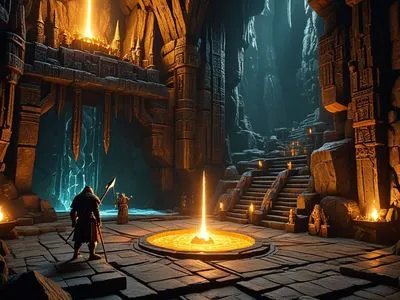
Dwarven Forges Myth Meaning & Symbolism
A myth of subterranean craftsmen forging divine artifacts through cunning, sacrifice, and primal fire, shaping the fate of gods and worlds.
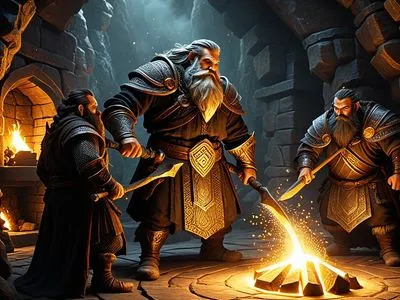
Dwarven Smiths Myth Meaning & Symbolism
The myth of master craftsmen who forge divine treasures in subterranean forges, embodying the alchemy of transforming raw potential into sacred power.
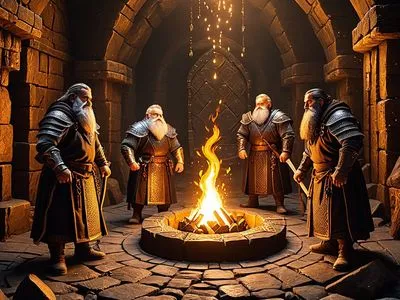
Dwarves Myth Meaning & Symbolism
Born from the earth's bones, the Dwarves are master smiths of fate, forging cosmic artifacts from the raw ore of potential and the dark fire of necessity.
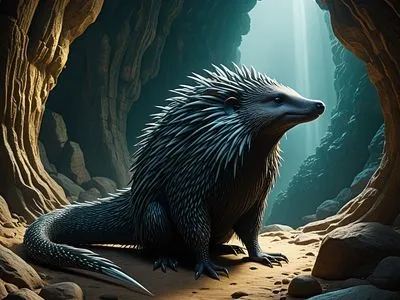
Echidna Myth Meaning & Symbolism
The primordial half-woman, half-serpent, mother of all monsters, dwelling in a cave at the edge of the world, embodying the raw, untamed genesis of chaos.

Echo Myth Meaning & Symbolism
A nymph cursed to repeat the last words of others falls for a youth in love with his own reflection, weaving a tale of voice, identity, and tragic longing.
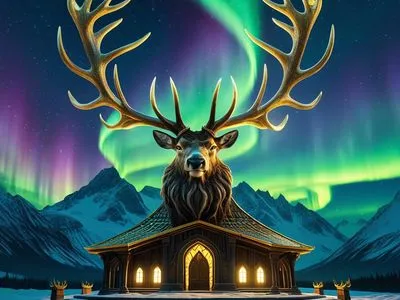
Eikþyrnir Myth Meaning & Symbolism
A celestial stag stands atop Valhalla, its antlers dripping dew into the worlds below, feeding the rivers of fate and sustaining the great tree of life.
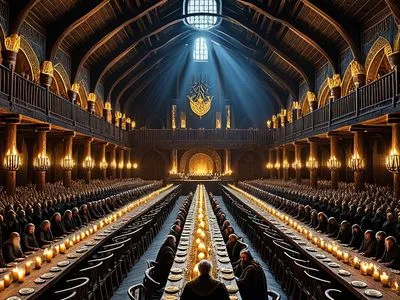
Einherjar Myth Meaning & Symbolism
The chosen slain who feast and fight each day in Valhalla, awaiting the final battle. A myth of eternal readiness and the alchemy of conflict.

Eir Myth Meaning & Symbolism
Eir, the silent healer of Asgard, embodies the profound Norse principle that true medicine is a sacred art born of deep knowing and quiet strength.

Eirene Myth Meaning & Symbolism
The myth of Eirene, goddess of peace, reveals peace not as an absence of conflict but as a living, fertile state of wholeness and divine order.
Elder Mother Myth Meaning & Symbolism
A myth of the spirit within the elder tree, teaching that life's deepest gifts require reverence, not force, and that true power is rooted in relationship.
Elder Tree Myth Meaning & Symbolism
A sacred tree, a betrayed goddess, and a king's fatal hubris reveal the deep bond between sovereignty, the land, and the feminine mysteries.
Eleusinian Mysteries Myth Meaning & Symbolism
The sacred rites of Eleusis, born from Demeter's grief and Persephone's descent, promised initiates a blessed afterlife through the mystery of the grain.
Elysian Fields Myth Meaning & Symbolism
The blessed afterlife realm for heroes and the virtuous, a paradisiacal meadow of perfect peace, promised by the gods as the ultimate reward.

Elysium Myth Meaning & Symbolism
The blessed afterlife realm where heroes and the virtuous find eternal peace, a verdant paradise beyond the sorrows of the mortal world.

Endymion Myth Meaning & Symbolism
A shepherd loved by the moon goddess is granted eternal, ageless sleep, visited nightly by his celestial lover in a state of perpetual dreaming.
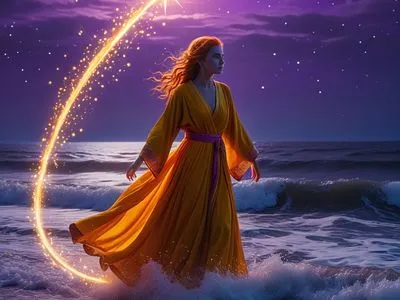
Eos Myth Meaning & Symbolism
The goddess of dawn, eternally rising, eternally grieving for her mortal lovers, embodying the bittersweet cycle of renewal and loss.
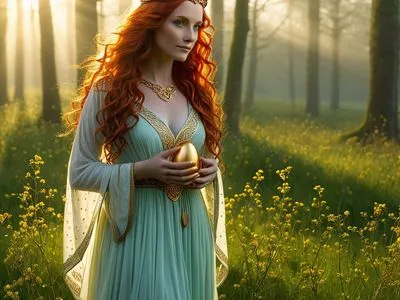
Eostre Myth Meaning & Symbolism
A myth of the dawn goddess whose return from the underworld brings light, life, and the promise of cyclical renewal to a frozen world.
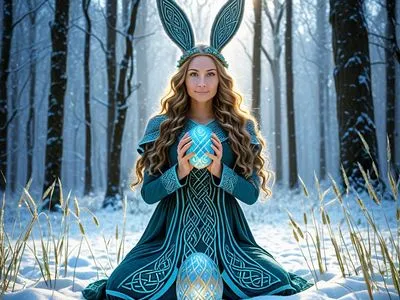
Eostre's Hare Myth Meaning & Symbolism
A goddess, wounded by winter's spear, is healed by a hare's ultimate sacrifice, birthing the egg of spring and the cycle of death and rebirth.

Ephemera Myth Meaning & Symbolism
A mortal granted a single day of divine life, experiencing the full spectrum of existence from dawn to dusk, embodying the beauty and tragedy of the transient.
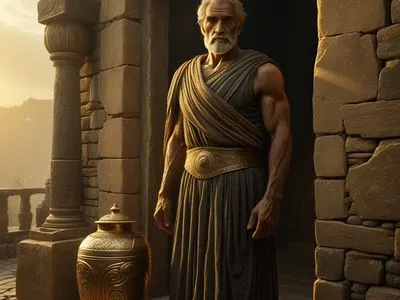
Epimetheus Myth Meaning & Symbolism
The Titan who accepted the first woman, Pandora, and her jar, unleashing suffering but also hope into the world through unconsidered action.

Epiphany Myth Meaning & Symbolism
The moment a god reveals their true form to a mortal, a shattering and sacred encounter that forever alters the boundary between the human and the divine.
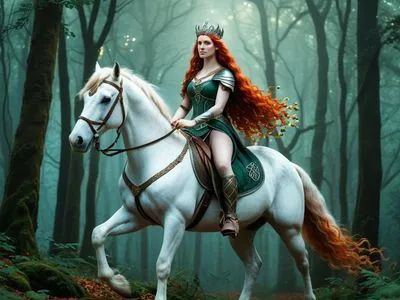
Epona Myth Meaning & Symbolism
The myth of Epona, the divine mare, embodies sovereignty, the union of human and animal spirit, and the sacred journey of the soul across all realms.
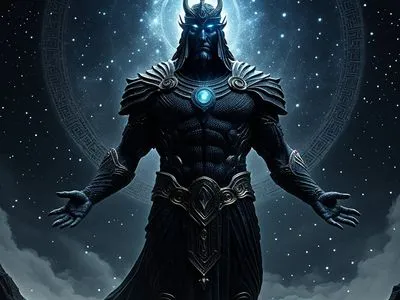
Erebus Myth Meaning & Symbolism
The story of Erebus, the primordial darkness born of Chaos, from whose union with Night the first tangible realities of the cosmos emerged.
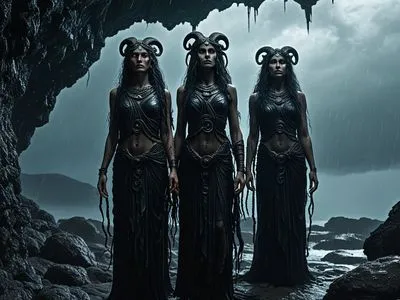
Erinyes Myth Meaning & Symbolism
Ancient goddesses of vengeance born from spilled blood, the Erinyes relentlessly pursue those who violate sacred kinship bonds, embodying the psyche's primal cry for justice.
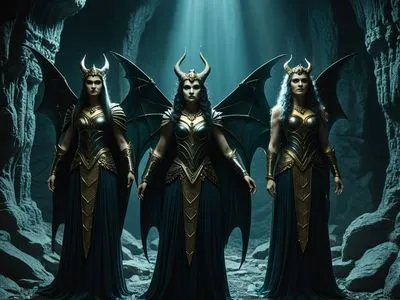
Erinys Myth Meaning & Symbolism
Ancient goddesses of vengeance born from primordial blood, the Erinys pursue the guilty until sacred rites restore cosmic and psychological balance.
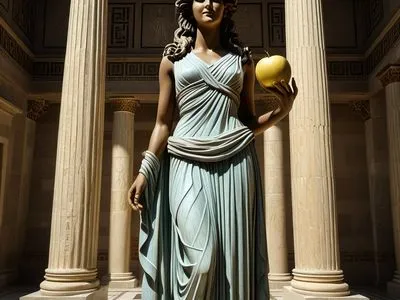
Eris' Apple Myth Meaning & Symbolism
The goddess of discord, uninvited to a wedding, throws a golden apple inscribed 'for the fairest,' igniting a divine rivalry that leads to the Trojan War.
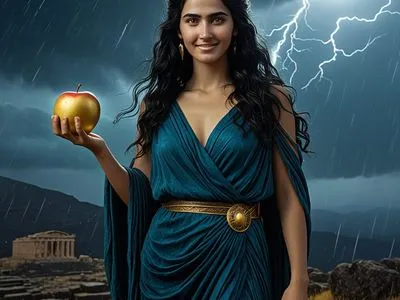
Eris Myth Meaning & Symbolism
The goddess of discord, uninvited to a wedding, tosses a golden apple inscribed 'for the fairest,' igniting a divine feud that leads to the Trojan War.
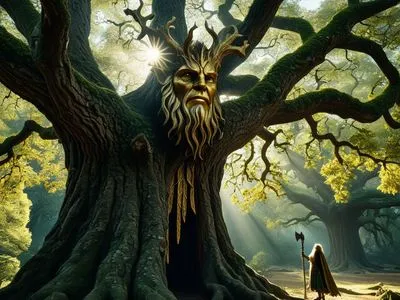
Erisichthon Myth Meaning & Symbolism
A king's sacrilege against a sacred tree unleashes a curse of insatiable hunger, leading to his ultimate self-destruction.

Eros Myth Meaning & Symbolism
The primordial force of desire, Eros, whose arrows bind chaos into cosmos, weaving the soul's longing for wholeness and terrifying, beautiful union.
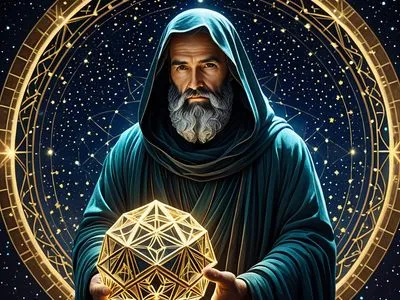
Euclid's Elements Myth Meaning & Symbolism
A myth of the divine geometer who descends to impose perfect, eternal order upon the chaotic, formless world of becoming.
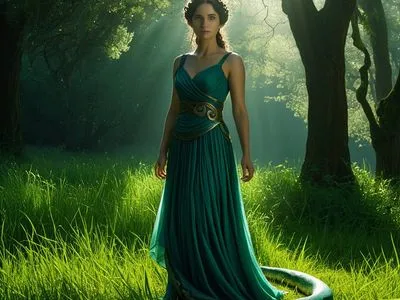
Eurydice Myth Meaning & Symbolism
A poet descends to the underworld to retrieve his lost love, but a single glance back to ensure she follows dooms her to remain in the realm of shadows.
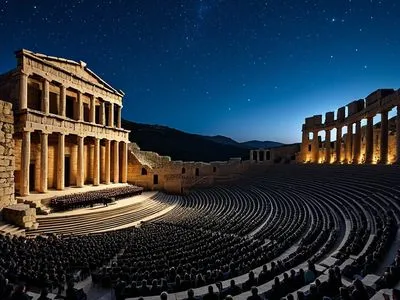
Everyman Figures in Chorus Myth Meaning & Symbolism
The Chorus in Greek drama, voicing the collective fears and hopes of the people, embodies the archetypal journey of the human soul through fate and suffering.
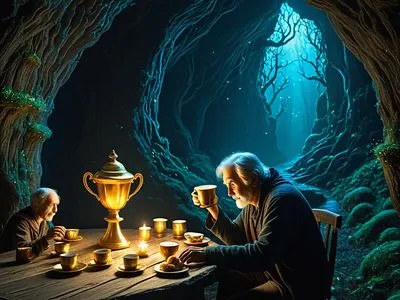
Faerie Feast Myth Meaning & Symbolism
A mortal is lured into a timeless faerie feast, risking everything for a taste of the Otherworld's magic and the perilous wisdom it offers.
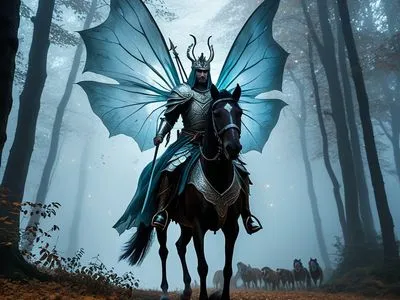
Faerie Rade Myth Meaning & Symbolism
A spectral host rides from the Otherworld, a terrifying and beautiful omen of fate, sovereignty, and the thin veil between worlds.
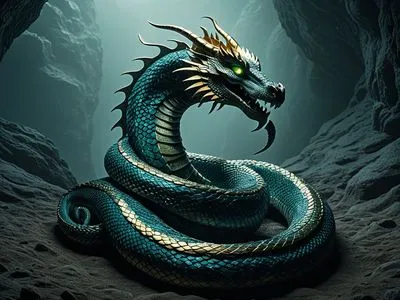
Fafnir Myth Meaning & Symbolism
A cursed dwarf, transformed by greed into a venomous dragon, hoards a treasure that brings only ruin, until a hero must face the monster within and without.
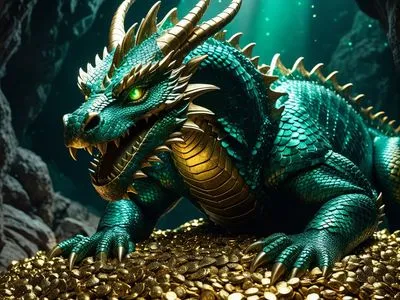
Fafnir's Hoard Myth Meaning & Symbolism
A cursed treasure transforms a man into a dragon, a hero must slay the beast to claim the gold, and the prize carries a heavy doom.

Fairies Myth Meaning & Symbolism
A journey into the liminal realm of the Sidhe, where enchantment and peril reveal the soul's contract with the wild, untamed psyche.
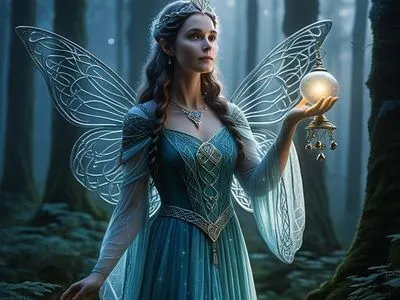
Fairy Bells Myth Meaning & Symbolism
A mortal musician must journey into the Sídhe to reclaim stolen music, facing the perilous beauty of the fairy realm.

Fairy Crafts Myth Meaning & Symbolism
A mortal steals the secret of a magical craft from the fairies, gaining sublime skill but forever living between worlds, haunted by a ghostly touch.
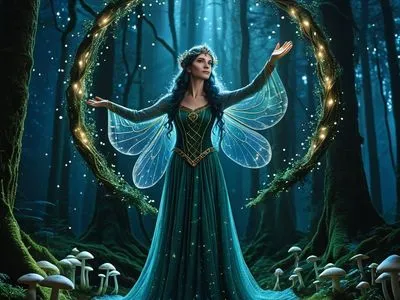
Fairy Dust Myth Meaning & Symbolism
A tale of a mortal who steals a pinch of fairy magic, learning that true enchantment lies not in possession, but in the fleeting, sacred connection to the Otherworld.
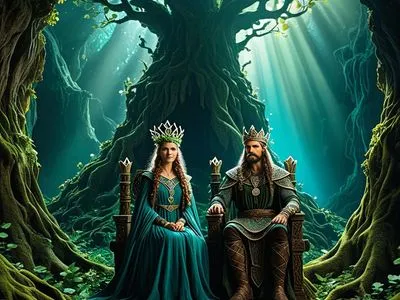
Fairy folk Myth Meaning & Symbolism
A story of the ancient, hidden people of the hollow hills, their eternal dance, and the perilous pacts that bind our world to theirs.
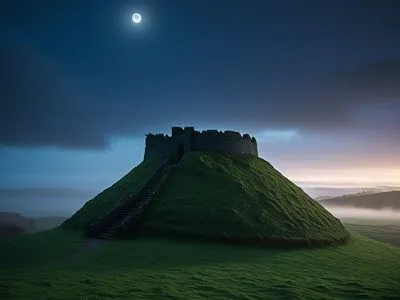
Fairy Forts Myth Meaning & Symbolism
Ancient earthen mounds where the Sídhe dwell, gateways to a perilous, enchanting realm that mirrors our deepest psyche.
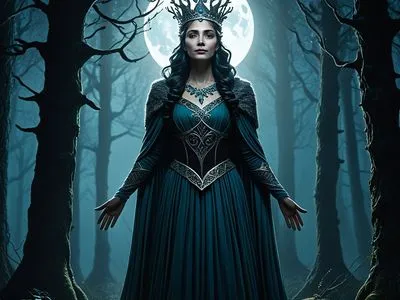
Fairy Glamour Myth Meaning & Symbolism
A mortal pierces the enchanting illusion of the fairy folk, confronting a reality both terrifying and sacred, and learns the price of true sight.
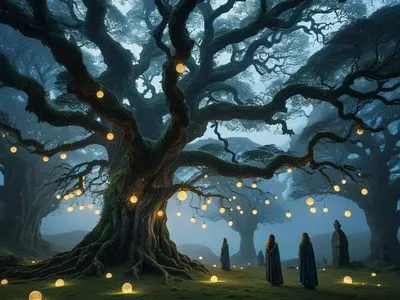
Fairy Lights Myth Meaning & Symbolism
A mortal's quest for the elusive lights of the Sídhe reveals the peril and promise of crossing the threshold between worlds.
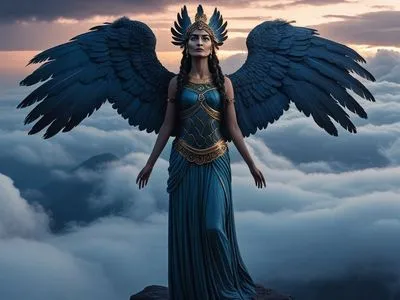
Fama Myth Meaning & Symbolism
The myth of Fama, the winged goddess of rumor, explores how whispers shape reality and the psyche's struggle between collective noise and inner truth.
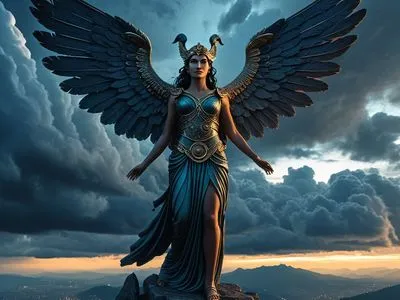
Fame Myth Meaning & Symbolism
Fama is a monstrous goddess of rumor, dwelling in a bronze house, spreading truth and lies with equal, deafening wings.

Fand Myth Meaning & Symbolism
A queen of the Sídhe offers a mortal hero a transcendent love, forcing a choice between two perfect worlds.
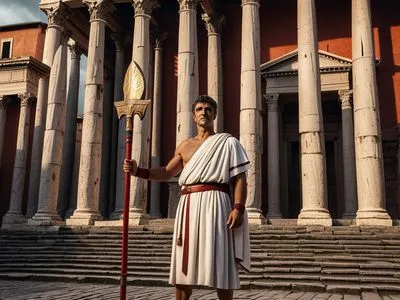
Fasces Myth Meaning & Symbolism
The myth of the Fasces reveals the paradox of power: strength is born from binding many into one, yet the axe within warns of its final, solitary edge.
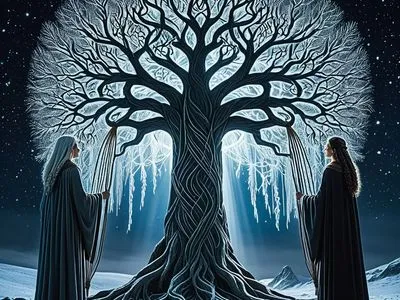
Fate Myth Meaning & Symbolism
The three Norns weave the threads of destiny at the foot of the world tree, a cosmic tapestry binding gods and mortals to an inescapable, sacred order.
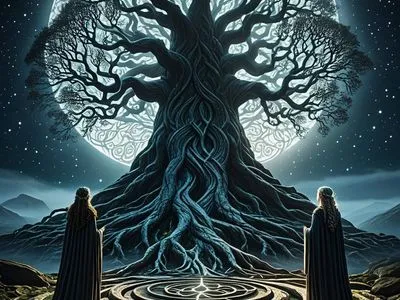
Fate's Tapestry Myth Meaning & Symbolism
Three cosmic weavers at the root of the world tree spin the threads of fate for all beings, gods and mortals alike, into an unfathomable tapestry.

Fauns/Satyrs Myth Meaning & Symbolism
The myth of the Celtic Faun, a half-wild guardian of the threshold, teaches the sacred necessity of untamed instinct and the wisdom of the liminal space.

Faunus Myth Meaning & Symbolism
The myth of Faunus, the horned god of the wild woods, reveals the untamed, prophetic voice of nature that dwells within the human psyche.
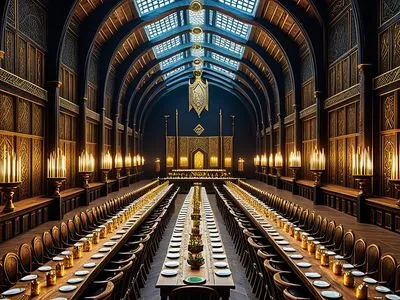
Feast in Valhalla Myth Meaning & Symbolism
A myth of fallen warriors feasting and fighting in Odin's hall, awaiting the final battle, embodying a paradox of eternal glory and inevitable doom.
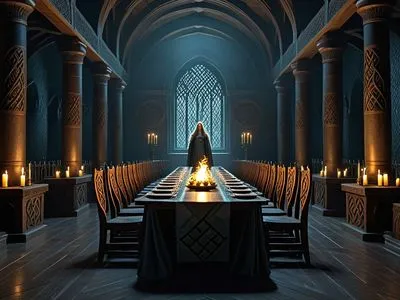
Feasting Halls Myth Meaning & Symbolism
A mythic tale where a king's refusal of hospitality to a disguised goddess plunges his hall into a curse, testing the soul's capacity for true sovereignty.

Feis Myth Meaning & Symbolism
A myth of a sacred king's ritual feast, binding him to the land through sacrifice, symbolizing the profound covenant between consciousness and the deep, nourishing earth.
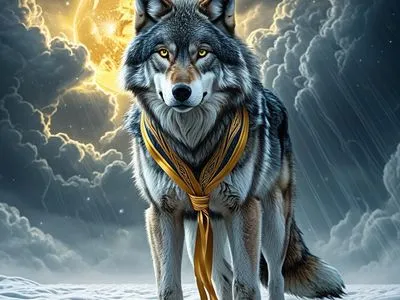
Fenrir Myth Meaning & Symbolism
The story of the monstrous wolf, bound by the gods through trickery, whose inevitable escape signals the end of the world and a necessary rebirth.
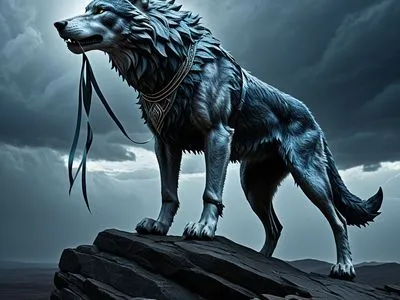
Fenrir's Binding Myth Meaning & Symbolism
A prophecy of destruction leads the gods to bind the great wolf Fenrir through trickery, a fateful act of fear that seals their own doom.
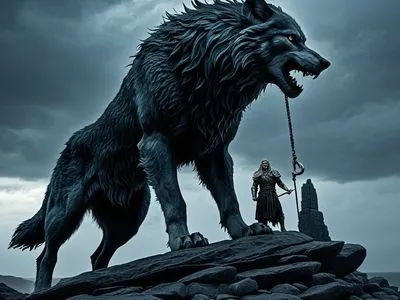
Fenrir's Bonds Myth Meaning & Symbolism
The gods, fearing a prophecy, bind the great wolf Fenrir with a chain of impossible things, forging a destiny of inevitable betrayal and cosmic consequence.
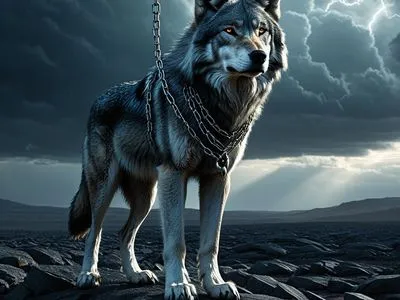
Fenrir's Chains Myth Meaning & Symbolism
A prophecy of doom, a wolf of immense power, and the cunning chains that bind him—a myth of inevitable fate, broken trust, and the shadow we cannot outrun.

Fensalir Myth Meaning & Symbolism
The myth of Fensalir, the hall of Frigg, is a story of sanctuary, profound grief, and the hidden power of the hearth to hold fate's secrets.

Fern Seed Myth Meaning & Symbolism
A myth of a magical, invisible seed that grants true sight, guarded by otherworldly forces, revealing the cost and power of hidden knowledge.
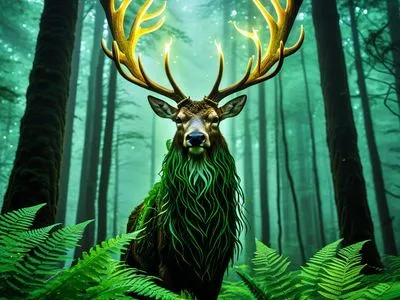
Ferns Myth Meaning & Symbolism
A tale of a hidden flower of fire, guarded by spirits, whose finding grants vision but demands a profound sacrifice of the seeker's former self.

Fibonacci Sequence Myth Meaning & Symbolism
A forgotten myth of the god Logos weaving the cosmos from a divine, spiraling pattern of perfect proportion and recursive harmony.
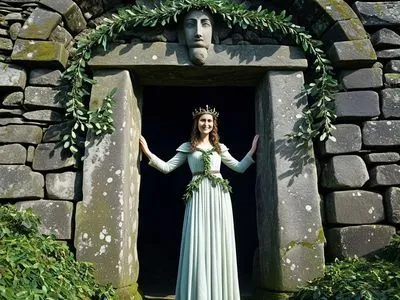
Féile Myth Meaning & Symbolism
A tale of a spirit who binds guests and hosts in sacred reciprocity, revealing the soul's contract between the inner self and the outer world.

Fili Myth Meaning & Symbolism
A poet's perilous journey to the Well of Wisdom, facing the guardian's challenge to drink from the source of all knowledge and inspiration.

Fimbulwinter Myth Meaning & Symbolism
The great winter that precedes Ragnarök, a time of endless cold, broken bonds, and the necessary collapse before a world's rebirth.
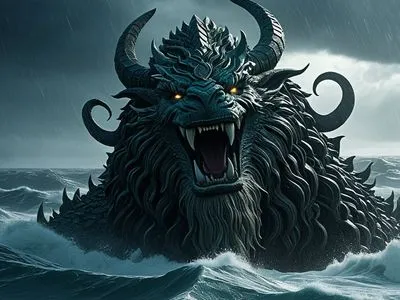
Fimbulwinter's End Myth Meaning & Symbolism
The cataclysmic three-year winter ends with the final battle of Ragnarök, the death of gods, and the world's rebirth from the sea.

Fire Elemental Myth Meaning & Symbolism
A tale of a primal fire spirit, its binding by a saint, and the eternal dance between humanity's creative spirit and its destructive passions.
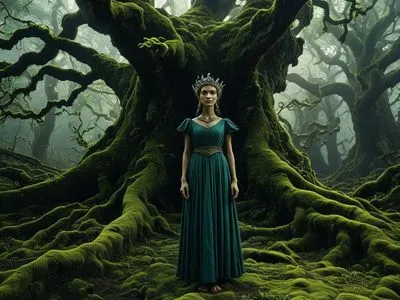
Fjörgyn Myth Meaning & Symbolism
The ancient, personified Earth, mother of Thor and consort of Odin, embodying the raw, fertile, and unyielding ground of being.
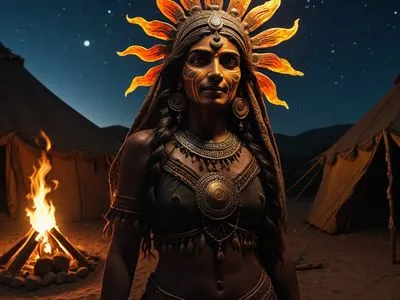
Flamenco Myth Meaning & Symbolism
A myth of the soul's raw cry, born from the earth's sorrow and forged in fire, finding its voice in the crucible of human suffering and joy.
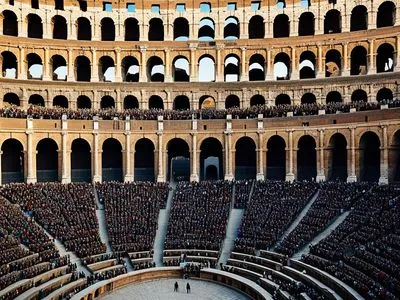
Flavian Amphitheatre Myth Meaning & Symbolism
The Flavian Amphitheatre is a mythic stage where Rome enacted its cosmic order through spectacle, sacrifice, and the confrontation with chaos.
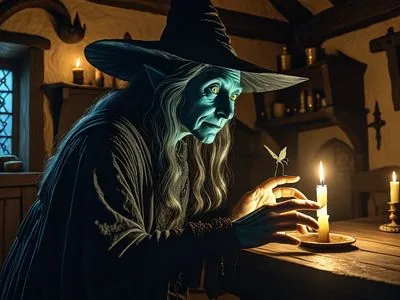
Flea as Familiar Myth Meaning & Symbolism
A tale of a cunning witch who binds a flea as her familiar, forging a pact of whispered secrets and parasitic power from the world's smallest creature.
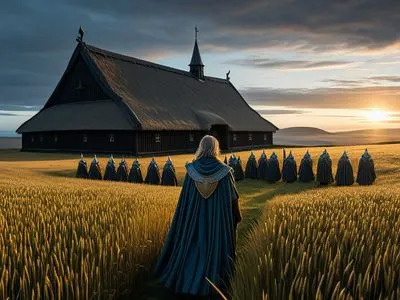
Fólkvangr Myth Meaning & Symbolism
The hall of Freyja, where half the battle-slain reside, a field of the people, a realm of love, war, and the deep feminine principle.
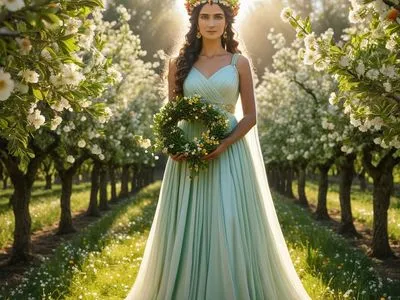
Flora Myth Meaning & Symbolism
The myth of Flora, a nymph transformed into the Roman goddess of flowering plants, reveals the alchemy of beauty, sovereignty, and cyclical rebirth.
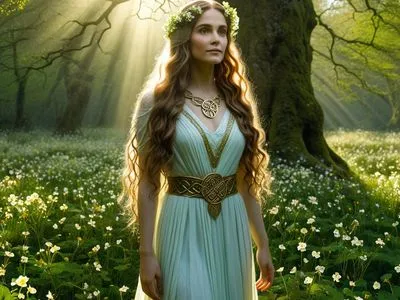
Flower Bride Myth Meaning & Symbolism
A tale of a king who must win a goddess of spring, disguised as a hag, to secure his throne and the land's fertility through love, not force.
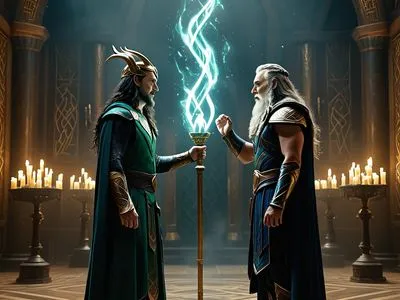
Flyting Myth Meaning & Symbolism
A mythic duel of words where insults become a sacred art, revealing hidden truths and forging identity in the crucible of confrontation.
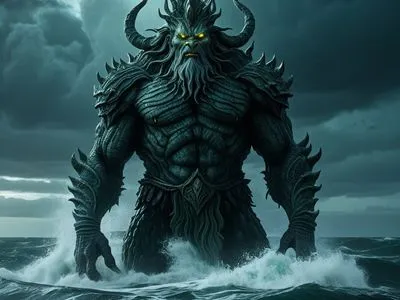
Fomorians Myth Meaning & Symbolism
The story of the monstrous Fomorians, primordial forces of chaos and the sea, whose defeat by the Tuatha Dé Danann symbolizes the ordering of the world and the self.
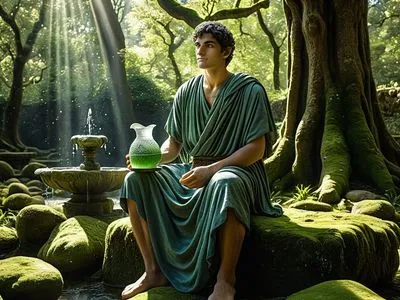
Fons Myth Meaning & Symbolism
The story of Fons, god of springs, embodies the sacred source from which all life flows, symbolizing purity, origin, and the deep, nourishing unconscious.

Forest of Brocéliande Myth Meaning & Symbolism
An enchanted forest of shifting reality, where heroes seek truth, face illusions, and are transformed by encounters with the sacred and the self.
Fornax Myth Meaning & Symbolism
The myth of Fornax, the Roman goddess of the oven, who presides over the sacred heat that transforms raw grain into sustaining bread.
Forseti Myth Meaning & Symbolism
The myth of Forseti, god of justice, who resolves all conflicts in his hall of radiant peace, offering a model for inner and outer reconciliation.
Fortuna Myth Meaning & Symbolism
The story of the capricious goddess who spins the wheel of fate, teaching that fortune is not a destination but the very nature of the turning world.
Forum Romanum Myth Meaning & Symbolism
The myth of the Forum's founding, where sacred order is carved from marshy chaos, establishing the world axis of Roman law, commerce, and divine speech.
Four Elements Myth Meaning & Symbolism
The primordial story of Earth, Water, Air, and Fire, born from Chaos, forming the cosmos and the blueprint of the human soul.
Four-leaf clover Myth Meaning & Symbolism
A story of the Druid who captured the four winds of the Otherworld in a single clover, creating a rare talisman of perfect harmony and fortune.

Freyja Myth Meaning & Symbolism
Freyja, the Vanir goddess of love, war, and seidr magic, embodies the unapologetic union of fierce desire, sacred grief, and transformative power.
Freya Myth Meaning & Symbolism
A goddess of love, war, and magic searches for her lost husband, wielding beauty and fury to claim her power in a world of gods and giants.
Freyja's Chariot Myth Meaning & Symbolism
The goddess Freyja, cloaked in falcon feathers, harnesses her chariot to two great cats, journeying across the heavens in search of her lost husband Óðr.

Freyja's Cloak Myth Meaning & Symbolism
The myth of the goddess Freyja's magical falcon cloak, a tale of desire, cunning, and the high price of retrieving what the heart truly longs for.
Freyja's Tears Myth Meaning & Symbolism
The goddess Freyja weeps tears of red gold for her lost husband, Óðr, a sorrow that becomes a sacred, generative force in the world.
Freyr Myth Meaning & Symbolism
A god of sunshine and plenty sacrifices his sword for love, securing a future but leaving himself vulnerable to the coming darkness.

Frigg Myth Meaning & Symbolism
The story of the All-Mother who sees all fates yet cannot change them, embodying the profound tension between knowledge, love, and inevitable destiny.
Frigg's Distaff Myth Meaning & Symbolism
The myth of Frigg's Distaff weaves the clouds and fate, a story of divine craft, cosmic order, and the hidden power of creation.

Frost Giants Myth Meaning & Symbolism
Primordial beings of ice and chaos, the Frost Giants embody the untamed world the gods must confront to forge cosmos from the void.

Fylgja Myth Meaning & Symbolism
A profound Norse concept of a spiritual companion, a fetch or follower, that embodies one's fate, fortune, and essential nature.

Gadfly Myth Meaning & Symbolism
Hera sends a relentless Gadfly to torment the transformed Io, a myth of divine persecution, maddening consciousness, and the painful journey to self.
Galatea Myth Meaning & Symbolism
A sculptor's perfect ivory statue is granted life by the goddess of love, becoming a woman of flesh, blood, and spirit.
Galileo's Telescope Myth Meaning & Symbolism
A mortal artisan, aided by a Titan, crafts a device to see the divine machinery of the cosmos, challenging the celestial order and paying a terrible price.
Ganymede Myth Meaning & Symbolism
A Trojan prince of surpassing beauty is taken by Zeus to Olympus to serve as cupbearer to the gods, achieving eternal youth and divine status.
Garmr Myth Meaning & Symbolism
The great hound bound before Hel's gate, whose howl signals the end and whose battle with Tyr embodies the ultimate confrontation with fate.
Gates of Ivory and Horn Myth Meaning & Symbolism
A myth of two gates in the House of Sleep, through which true and false dreams pass, revealing the soul's struggle to discern reality from deception.

Gáe Bulg Myth Meaning & Symbolism
The story of Cú Chulainn's cursed spear, born from a sea monster's bone, a weapon of last resort that seals a hero's fate with its terrible price.
Geri and Freki Myth Meaning & Symbolism
The two wolves who feast beside Odin, embodying the ravenous instinct and fierce loyalty that accompany divine consciousness and sovereignty.

Ginnungagap Myth Meaning & Symbolism
Before worlds existed, there was only Ginnungagap—a yawning, silent void where fire and ice met, birthing the first giant and all creation.
Ægir Myth Meaning & Symbolism
The myth of the sea-giant Ægir, who brews ale for the gods in a cauldron of chaos, revealing the deep, hospitable order within the primal unconscious.
Ægir's Hall Myth Meaning & Symbolism
The gods of Asgard journey to the sea-god's hall for a feast, only to be confronted by the raw, untamed forces of the deep and their own brewing fate.

Gjallarbrú Myth Meaning & Symbolism
The myth of the trembling, golden bridge over the river Gjöll, guarded by Móðguðr, which the dead and the living must cross to enter the underworld.
Gjallarhorn Myth Meaning & Symbolism
The horn of the god Heimdallr, hidden beneath the World Tree, whose sound will shatter the silence of the cosmos and herald the final battle of Ragnarök.

Gladiatorial Games Myth Meaning & Symbolism
A myth of sand, iron, and blood where mortal combat becomes a sacred ritual of confronting fate, death, and the collective shadow of an empire.
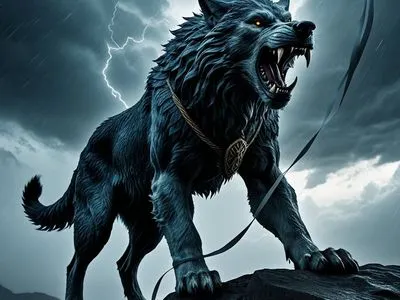
Gleipnir Myth Meaning & Symbolism
The gods forge a fetter from impossible things—a cat's footfall, a woman's beard—to bind the monstrous wolf Fenrir, a pact sealed with a god's hand.
Gnomes of Paracelsus Myth Meaning & Symbolism
The alchemist Paracelsus names the Gnomes, spirits of the earth, revealing the hidden wisdom of the material world and the soul's deep, grounding foundation.

Goibniu Myth Meaning & Symbolism
The myth of Goibniu, divine smith of the Tuatha Dé Danann, forges weapons of destiny and hosts a feast of immortality, embodying the sacred craft of resilience.
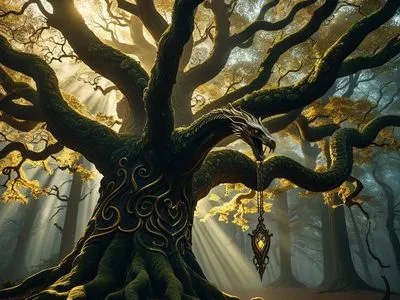
Golden Fleece Myth Meaning & Symbolism
A hero's perilous quest for a magical ram's fleece, guided by a sorceress, reveals the high price of destiny and the shadow of ambition.
Goldfinch Myth Meaning & Symbolism
A story of a small bird who, through an act of ultimate compassion, takes a thorn from the brow of the crucified Christ, staining itself forever.
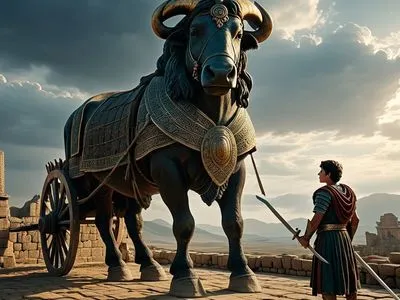
Gordian Knot Myth Meaning & Symbolism
An intricate, divinely-sanctioned knot that promised an empire to whoever could untie it, until Alexander the Great cut it with his sword, forging his own destiny.

Gram Myth Meaning & Symbolism
A sword of destiny, forged by a god, broken by a king, and reforged for a hero to slay a dragon and awaken a valkyrie from an enchanted sleep.
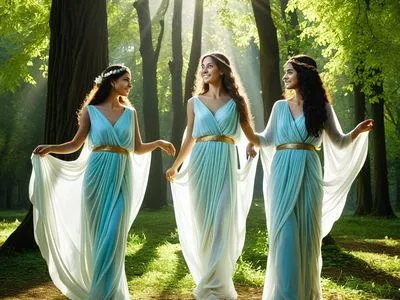
Gratiae Myth Meaning & Symbolism
The myth of the three Gratiae, goddesses of grace, beauty, and charm, reveals the sacred art of giving, receiving, and returning favor in human relationships.
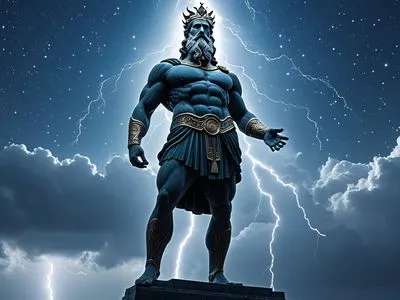
Great Year Myth Meaning & Symbolism
A cosmic cycle where the constellations realign, the world is cleansed by fire and flood, and humanity is reborn from the ashes of the old age.
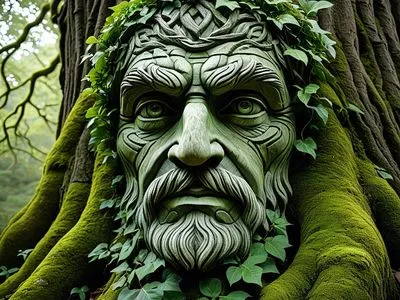
Green Man Myth Meaning & Symbolism
The Green Man is the ancient face in the foliage, a spirit of the wildwood embodying nature's relentless cycle of death, decay, and vibrant regeneration.
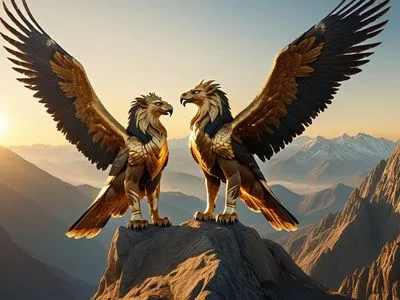
Griffins of the Hyperboreans Myth Meaning & Symbolism
A tale of sacred gold guarded by griffins in a land beyond the north wind, where Apollo dwells and mortals seek a treasure that is not theirs to take.
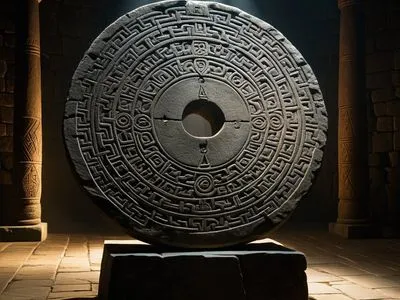
Grotti Myth Meaning & Symbolism
A magical millstone, Grotti grinds out endless gold and peace, but its misuse unleashes a sea of salt and a curse of unceasing labor.
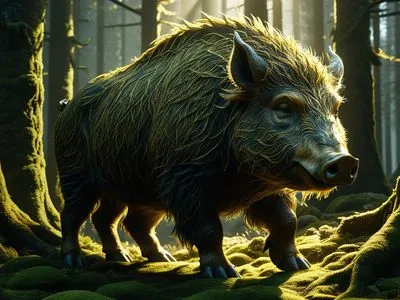
Gullinbursti Myth Meaning & Symbolism
A golden boar forged by dwarves, a divine gift of light and fertility, born from rivalry and the sacred fire of creation.
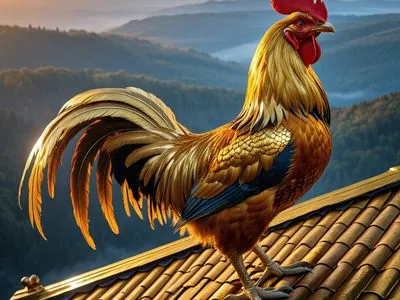
Gullinkambi Myth Meaning & Symbolism
A golden rooster perched in the gods' hall, whose crow shatters cosmic silence to herald the twilight of the gods and the dawn of a new world.
Gungnir Myth Meaning & Symbolism
The unerring spear of Odin, forged by dwarves, whose casting shatters worlds and binds fate, symbolizing the absolute power of a sworn intent.

Gwragedd Annwn Myth Meaning & Symbolism
A tale of a mortal man who marries a woman from the Welsh otherworld, only to lose her by breaking a single, profound taboo.

Gymnasium Myth Meaning & Symbolism
The myth of the Gymnasium tells of a sacred precinct where youth trained not just in body, but in virtue, under the watchful eyes of gods and philosophers.
Hades / The Underworld Myth Meaning & Symbolism
The story of the unseen god Hades, his realm of shades, and the descent of heroes and goddesses into the land of the dead to confront ultimate truths.
Hades Myth Meaning & Symbolism
The story of Hades, lord of the underworld, and his abduction of Persephone, a myth of descent, sovereignty, and the cyclical nature of life and death.

Hades' Underworld Myth Meaning & Symbolism
A myth of descent into the shadowy realm of the dead, ruled by the unseen god Hades, exploring themes of sovereignty, loss, and the soul's necessary journey.
Hades/Pluto Myth Meaning & Symbolism
The abduction of Persephone by Hades initiates a cycle of loss, sovereignty, and rebirth, revealing the underworld as a crucible for the soul's deepest transformation.
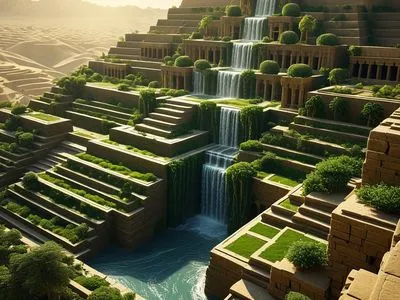
Hanging Gardens of Babylon Myth Meaning & Symbolism
A king builds a mountain of greenery in the desert to soothe his queen's homesickness, creating a wonder that defies nature and memory.
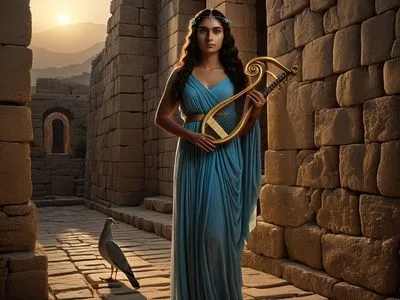
Harmonia Myth Meaning & Symbolism
A goddess born of strife and love, whose cursed necklace reveals that true harmony is forged in the crucible of suffering and acceptance.

Harmonia's Necklace Myth Meaning & Symbolism
A divine wedding gift, a cursed necklace of beauty and ruin, passed through generations, binding fate to the very essence of harmony and discord.
Harpocrates Myth Meaning & Symbolism
The story of the infant god of silence, born from chaos, whose raised finger holds the secret power of unspoken wisdom and the completion of the cosmos.
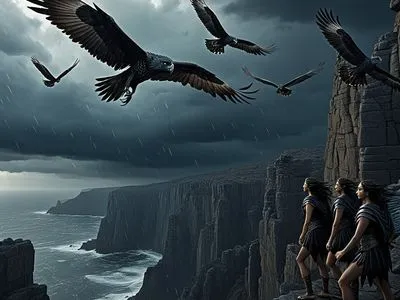
Harpies Myth Meaning & Symbolism
Winged spirits of sudden snatching and defilement, the Harpies embody the psyche's violent, necessary confrontation with what has been left to rot.
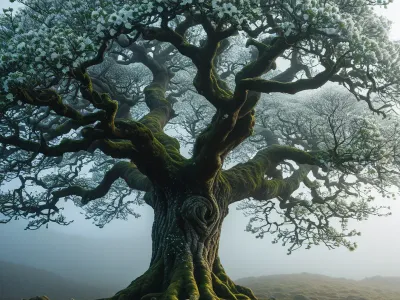
Hawthorn Myth Meaning & Symbolism
The Hawthorn guards the veil between worlds, a sacred tree of sovereignty whose blossoms promise life and whose thorns enforce the law of the threshold.
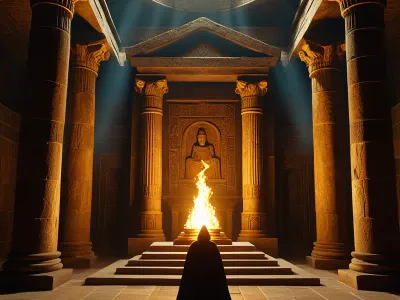
Hearth Cult Myth Meaning & Symbolism
A myth of the sacred fire at the world's center, guarded by ancestors, where the soul's eternal flame is kindled against the outer dark.
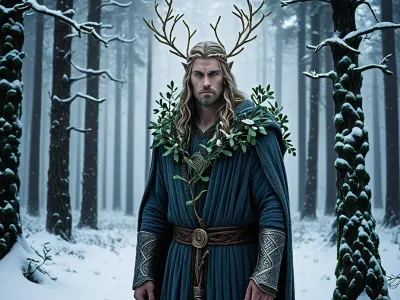
Höd Myth Meaning & Symbolism
The tragic tale of a blind god, Höd, manipulated into slaying his beloved brother Baldr, embodying fate, innocence, and the shadow's unwitting hand.

Heather Ale Myth Meaning & Symbolism
A Pictish king guards the secret of heather ale. When Norse invaders demand the recipe, he chooses annihilation over betrayal, taking the sacred craft to the grave.
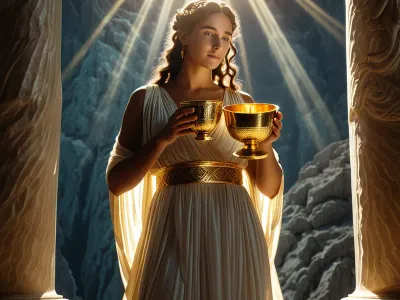
Hebe's nectar cup Myth Meaning & Symbolism
The myth of the goddess Hebe, who served the gods ambrosia until her fall, spilling the cup of eternal youth and losing her divine station.
Hecate Myth Meaning & Symbolism
A goddess of thresholds, magic, and the underworld, Hecate illuminates the power of the crossroads and the wisdom found in the unseen realms.
Heidrun Myth Meaning & Symbolism
A magical goat atop Valhalla, feeding on the World Tree, provides an endless flow of mead for the gods and heroes of the slain.
Heimdall Myth Meaning & Symbolism
The myth of the ever-watchful god who guards the rainbow bridge, hears the grass grow, and sounds the horn that heralds the world's end and renewal.
Heimdallr Myth Meaning & Symbolism
The radiant sentinel of the gods, born of nine mothers, who guards the rainbow bridge and sounds the horn to herald the final battle.
Heiðrún Myth Meaning & Symbolism
A goat who feeds on the World Tree's leaves and produces an endless river of mead for the warriors of Valhalla, symbolizing eternal nourishment from cosmic sacrifice.
Hel Myth Meaning & Symbolism
The myth of Hel, half-living, half-dead ruler of the underworld, reveals the necessity of embracing the totality of existence, shadow and all.
Helen of Troy Myth Meaning & Symbolism
The face that launched a thousand ships, Helen is the archetypal image of beauty, desire, and the catastrophic wars fought in its name.

Heliades Myth Meaning & Symbolism
Daughters of the Sun, transformed into poplar trees weeping golden amber, eternally mourning their brother Phaethon's fiery demise.
Helios' Chariot Myth Meaning & Symbolism
The sun god Helios drives his fiery chariot across the sky daily, a sacred duty whose violation by his son Phaethon brings catastrophic consequences.
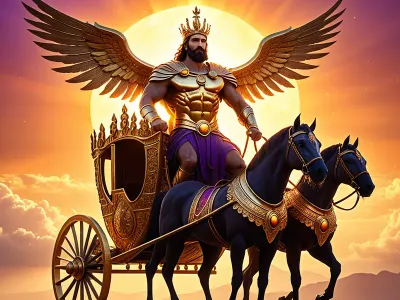
Helios / The Sun God Myth Meaning & Symbolism
The story of Helios, the all-seeing Titan who drives the sun chariot across the sky, embodying the relentless light of consciousness and the cost of divine sight.
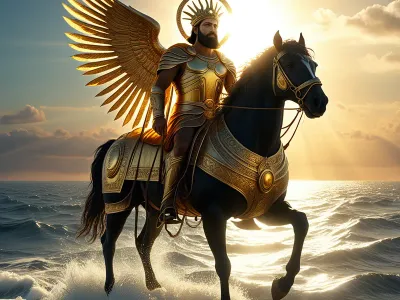
Helios Myth Meaning & Symbolism
The myth of Helios, the all-seeing Sun God, embodies the relentless journey of consciousness, the burden of truth, and the fiery chariot of the self.
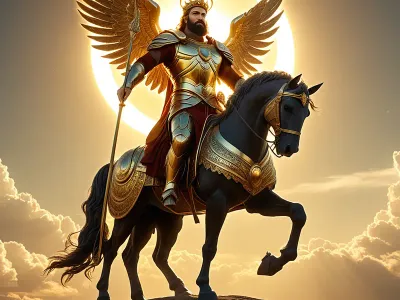
Helios/Apollo Myth Meaning & Symbolism
The myth of the sun's journey, from the celestial chariot of Helios to the lyre of Apollo, mapping the path from raw power to conscious illumination.
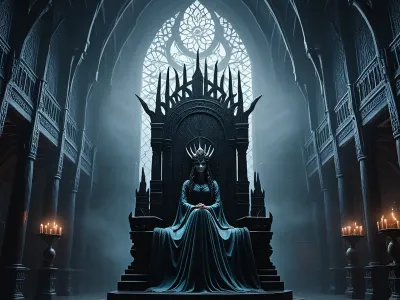
Hel's Realm Myth Meaning & Symbolism
The story of Baldr's death and Hermóðr's desperate ride to the frozen, silent hall of Hel, goddess of the dead, to bargain for a lost light.
Hephaestus' Forge Myth Meaning & Symbolism
The myth of the exiled god who transforms volcanic fire and personal pain into divine artifacts, binding creation and destruction in his subterranean forge.
Hephaestus' Hammer Myth Meaning & Symbolism
The myth of the divine smith, cast from Olympus, who transforms his pain into creation, forging gods and heroes with his sacred hammer.
Hephaestus' Throne Myth Meaning & Symbolism
The exiled god of the forge crafts a magical throne that ensnares his mother, Hera, forcing a confrontation that renegotiates his place on Olympus.
Hephaestus' Net Myth Meaning & Symbolism
The lame god Hephaestus forges an unbreakable, invisible net to ensnare his wife Aphrodite and her lover Ares, exposing divine infidelity to the Olympian court.
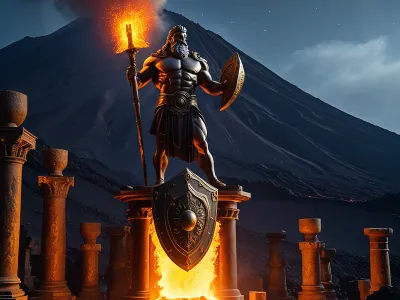
Hephaestus' Workshop Myth Meaning & Symbolism
The myth of the divine smith, cast out yet master of the subterranean forge, where raw material and profound pain are transmuted into artifacts of power and beauty.
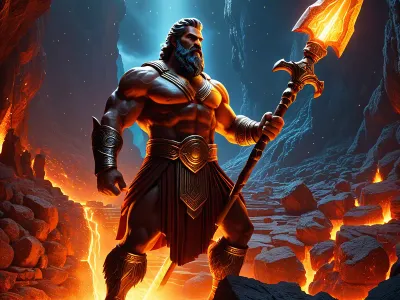
Hephaestus's Forge Myth Meaning & Symbolism
The myth of the crippled god who forged divine wonders in his volcanic forge, transforming rejection and pain into objects of sublime power and beauty.
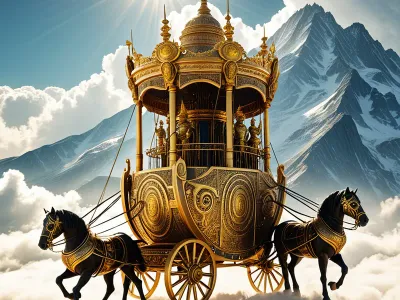
Hephaestus's Golden Chariot Myth Meaning & Symbolism
The exiled god Hephaestus forges a miraculous golden chariot to return to Olympus, transforming his physical pain and rejection into divine, mobile artistry.

Hephaestus's Tools Myth Meaning & Symbolism
The story of the god cast out for his imperfection, who forges divine tools from his pain, becoming the architect of Olympus and his own wholeness.
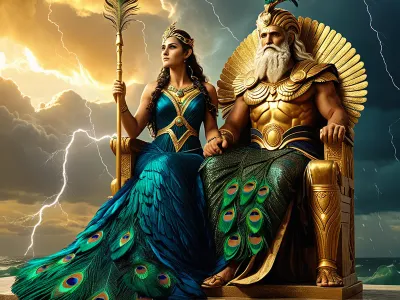
Hera and Zeus Myth Meaning & Symbolism
The tumultuous divine marriage embodying the eternal tension between sovereignty and union, order and passion, wounding and reconciliation.
Heracles at the Crossroads Myth Meaning & Symbolism
The young hero Heracles is confronted by two goddesses, Virtue and Vice, who offer him two starkly different paths for his life's journey.
Hera Myth Meaning & Symbolism
The myth of Hera, goddess of marriage and queen of the gods, embodies the sacred vow, the fury of betrayal, and the alchemy of wounded power into sovereignty.
Heracles' Labors Myth Meaning & Symbolism
A hero's brutal atonement becomes a path to immortality, as Heracles battles monstrous projections of his own psyche to achieve divine integration.
Heracles Myth Meaning & Symbolism
The demigod Heracles, driven mad by Hera, must complete twelve impossible labors to atone, a brutal path from monstrous rage to divine immortality.
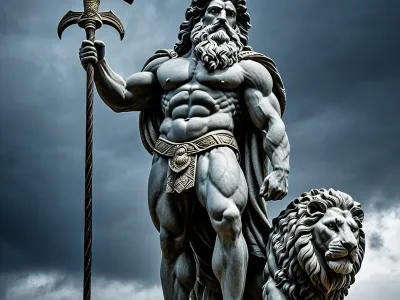
Heracles/Hercules Myth Meaning & Symbolism
A demigod's epic struggle against fate, his own rage, and impossible labors, forging a monster-slayer into a god through suffering and sacred duty.
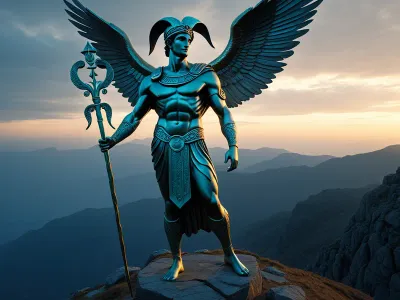
Herald Myth Meaning & Symbolism
The mythic Herald is the divine messenger, the voice of the gods that shatters the mundane, demanding attention and announcing irrevocable change.

Hera's Bedchamber Myth Meaning & Symbolism
A myth of Aphrodite's magical girdle, Zeus's seduction, and the inviolable sanctuary of the marriage bed, revealing the sacred architecture of relationship.
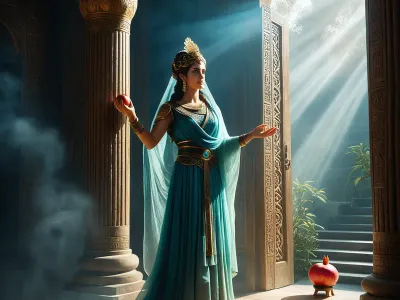
Hera's Chamber Myth Meaning & Symbolism
The myth of Hera's annual retreat to a hidden chamber, where she renews her sacred power and virginity, symbolizing the soul's need for cyclical regeneration.
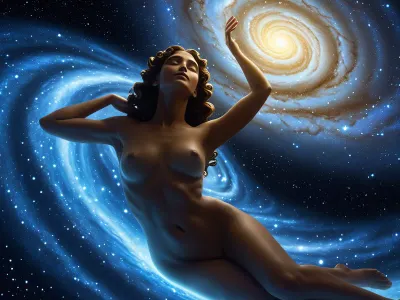
Hera's Milk Myth Meaning & Symbolism
The infant Herakles, seeking immortality, drinks from the sleeping goddess Hera, whose spilled milk becomes the starry river in the night sky.
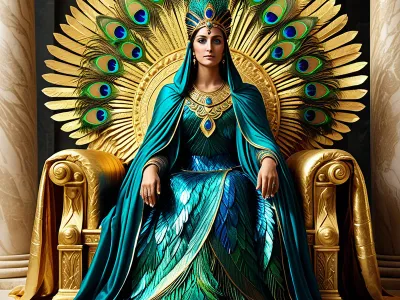
Hera's Peacock Mantle Myth Meaning & Symbolism
A myth of divine betrayal where Hera transforms her slain watchman, Argus, into a peacock, weaving his hundred eyes into her mantle of sovereignty.
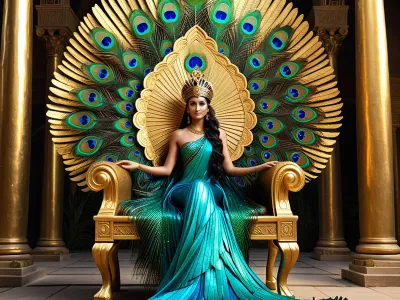
Hera's Peacocks Myth Meaning & Symbolism
The story of how Hera transformed her loyal watchman Argus, whose hundred eyes became the jewel-like plumage of her sacred peacocks.
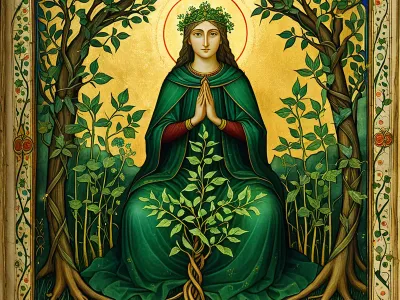
Herbals Myth Meaning & Symbolism
A myth of the green soul, where a healer's journey into the whispering woods reveals the living language of plants and the earth's hidden wisdom.
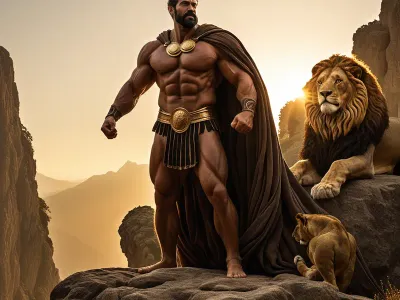
Hercules Myth Meaning & Symbolism
A demigod's epic atonement for a crime of madness, transforming monstrous labors into the ultimate journey of self-mastery and apotheosis.

Hermaphroditus Myth Meaning & Symbolism
A beautiful youth, son of Hermes and Aphrodite, merges with a lovesick nymph in a sacred pool, becoming one being of dual nature.

Hermes' Lyre Myth Meaning & Symbolism
The newborn god Hermes invents the lyre from a tortoise shell, steals Apollo's cattle, and trades the instrument, transforming theft into sacred art.
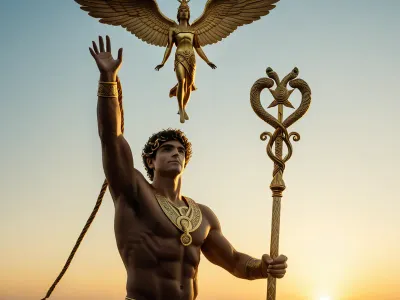
Hermes' Herald's Staff Myth Meaning & Symbolism
The myth of Hermes' staff, the Caduceus, tells of a god's cunning and a symbol's birth, embodying communication, boundaries, and the alchemy of opposites.
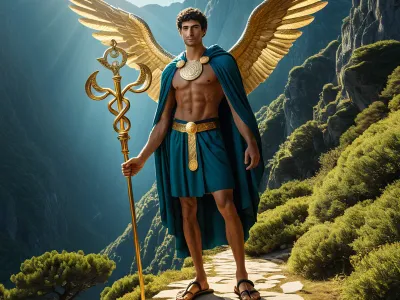
Hermes' Caduceus Myth Meaning & Symbolism
The story of how the trickster god Hermes transformed a violent serpentine conflict into the iconic staff of healing, negotiation, and divine communication.
Hermes Trismegistus Myth Meaning & Symbolism
The myth of the thrice-great sage, a fusion of Greek and Egyptian wisdom, embodying the transmission of divine knowledge and the alchemy of consciousness.
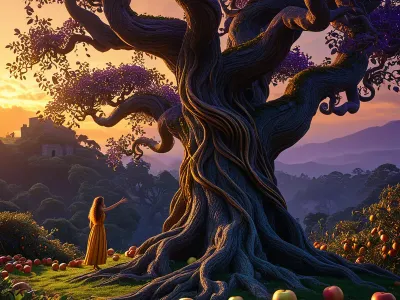
Hesperides Myth Meaning & Symbolism
A garden at the edge of the world guards golden apples of immortality, watched by serpent and nymphs, a prize for heroes and a test of divine order.
Hestia's Hearth Myth Meaning & Symbolism
The myth of Hestia, first-born Olympian who tends the sacred hearth, embodying the eternal center of home, community, and the soul's unshakable sanctuary.
Hippocampus Myth Meaning & Symbolism
A mythical creature of the deep, part horse, part serpent-fish, bearing gods and heroes across the threshold of the unconscious sea.

Hippocrates Myth Meaning & Symbolism
The mythic legacy of the physician Hippocrates, who received the sacred art of healing from Asclepius, transforming medicine into a sacred, ethical vocation.

Hippocrene Myth Meaning & Symbolism
A sacred spring on Mount Helicon, born from the strike of Pegasus's hoof, granting poetic inspiration to those who drink from its waters.
Hippogriff Myth Meaning & Symbolism
A creature born of eagle and mare, the Hippogriff symbolizes the improbable union of opposites, tamed only by the purest courage and love.
Hlidskjalf Myth Meaning & Symbolism
The myth of the high seat from which Odin sees all, a story of forbidden vision, cosmic sovereignty, and the perilous burden of ultimate awareness.
Hnefatafl Myth Meaning & Symbolism
A myth of a sacred board game where a king, besieged by attackers, must navigate to sanctuary, mirroring the soul's struggle for sovereignty against chaos.
Hoenir and Lodurr Myth Meaning & Symbolism
Two shadowy gods bestow breath, sense, and form upon the first humans, a foundational act of creation that defines the mortal condition.
Holly King Myth Meaning & Symbolism
A myth of two kings, Holly and Oak, locked in eternal battle for the crown of the year, embodying the cycle of death and rebirth.
Hollow Hills Myth Meaning & Symbolism
A journey into the sacred mounds where time flows backward, treasures are guarded, and the soul confronts the eternal truths of the Otherworld.
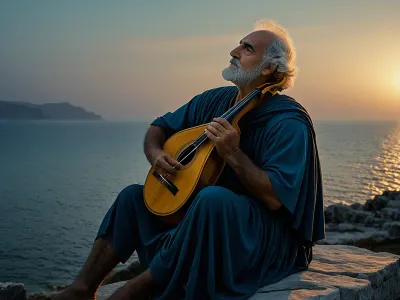
Homer Myth Meaning & Symbolism
The blind poet who sang the tales of gods and heroes, becoming a vessel for the collective memory and soul of an entire civilization.
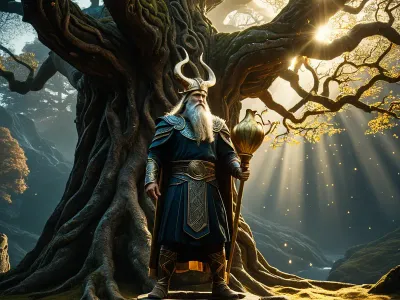
Horn of Plenty Myth Meaning & Symbolism
The myth of the mead of poetry, a divine elixir born from a god's sacrifice, symbolizing the hard-won wisdom that flows into the world as inspiration.
Hraesvelgr Myth Meaning & Symbolism
A giant eagle perched at the edge of the world whose beating wings are the source of all winds, a primal force of breath, change, and cosmic boundary.
Hræsvelgr Myth Meaning & Symbolism
A giant eagle perched at the world's edge whose beating wings stir the winds that shape all lands and destinies.

Hugin and Munin Myth Meaning & Symbolism
Two ravens, Thought and Memory, fly daily from Odin's shoulders to gather the world's knowledge, embodying the mind's ceaseless, hungry quest for awareness.
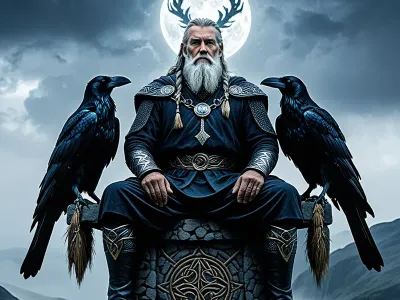
Huginn and Muninn Myth Meaning & Symbolism
Odin's two ravens, Thought and Memory, fly across the worlds each dawn, returning with whispers of all they have seen and heard.

Hvergelmir Myth Meaning & Symbolism
The myth of Hvergelmir, the roaring cauldron at the root of all things, where the first rivers of life and death are born from primordial chaos.

Hyacinth Myth Meaning & Symbolism
A beautiful youth loved by Apollo is accidentally slain. From his blood springs a flower, a symbol of grief transformed into eternal, fragrant remembrance.
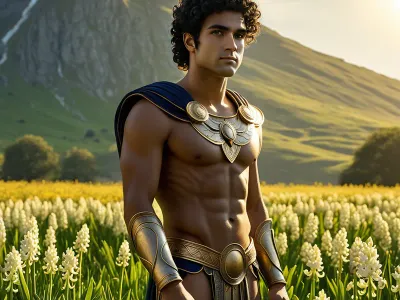
Hyacinthus Myth Meaning & Symbolism
A Spartan prince beloved by Apollo is accidentally slain, his spilled blood transformed into a flower bearing the god's cry of grief.
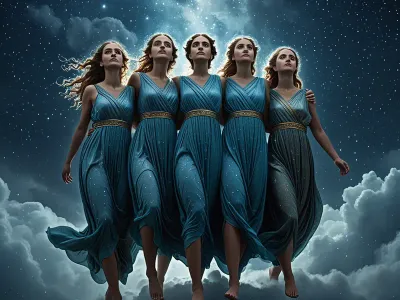
Hyades Myth Meaning & Symbolism
Sisters transformed into stars for weeping over their brother, the Hyades embody the alchemy of grief into life-giving rain and cosmic order.
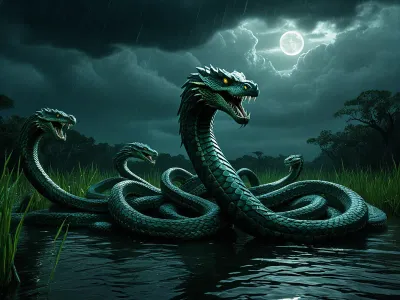
Hydra Myth Meaning & Symbolism
Heracles battles the Lernaean Hydra, a regenerating serpent, learning that to defeat a multiplying problem, one must cauterize its source.
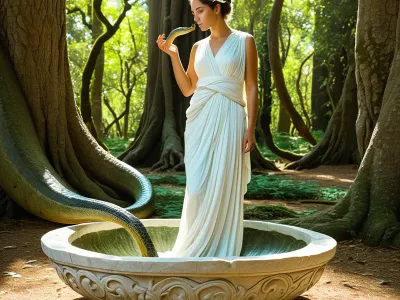
Hygeia Myth Meaning & Symbolism
The myth of Hygeia, daughter of Asclepius, embodies the profound principle of health as a sacred, holistic state of being, not merely the absence of disease.
Hymenaios Myth Meaning & Symbolism
A mortal youth whose love and sacrifice transformed him into the divine, eternal spirit of the marriage hymn and the sacred wedding threshold.
Hyldemoer Myth Meaning & Symbolism
A myth of the sacred elder tree spirit, embodying ancestral memory, the sanctity of the home, and the profound consequences of violating a sacred bond.
Hypnos and Oneiroi Myth Meaning & Symbolism
The myth of Hypnos, god of sleep, and his sons the Oneiroi, who shape our nightly visions from their cave beyond the sunset.
Hypnos and Thanatos Myth Meaning & Symbolism
The myth of twin brothers Hypnos, god of sleep, and Thanatos, god of death, exploring their shared lineage and the thin veil between oblivion and finality.
Ibis Myth Meaning & Symbolism
A sacred bird born from divine vengeance, the Ibis embodies the alchemy of turning poison into medicine and the soul's journey through darkness.

Icarus Myth Meaning & Symbolism
A youth, gifted wings of wax and feather, flies too close to the sun, melting his wings and falling into the sea—a parable of soaring ambition and its fatal limit.
Ichor Myth Meaning & Symbolism
The golden, immortal blood of the Olympian gods, a sacred substance that separates the divine from the mortal and symbolizes the essence of eternal life.
Icosahedron Myth Meaning & Symbolism
The story of the fifth Platonic solid, the Icosahedron, a divine blueprint of water and the soul's fluid, transformative potential.
Idun Myth Meaning & Symbolism
The myth of Idun, keeper of the golden apples of youth, whose abduction plunges the gods into decay, revealing the fragility of vitality and the necessity of its recovery.
Idunn Myth Meaning & Symbolism
The myth of the goddess whose golden apples sustain the gods' youth, her abduction, and the perilous quest to restore the source of eternal vitality.
Idunn's Apples Myth Meaning & Symbolism
The myth of the goddess Idunn, whose golden apples grant the gods eternal youth, and the perilous journey to reclaim her after she is stolen away.
Idunn's Garden Myth Meaning & Symbolism
The goddess Idunn guards golden apples that grant the gods eternal youth, until her theft plunges the cosmos into decay, requiring a perilous quest for renewal.
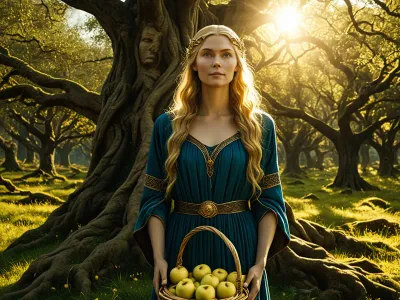
Idun's apples Myth Meaning & Symbolism
A myth of the goddess Idun, whose golden apples grant the gods eternal youth, and the perilous journey to reclaim her when she is stolen away.

Ilya Muromets Myth Meaning & Symbolism
A paralyzed peasant receives a shamanic call, gains superhuman strength, and becomes a holy warrior defending the borders of the sacred Russian land.

Imperial Purple Myth Meaning & Symbolism
A myth of divine discovery where a god's hound stains its mouth with a rare sea-snail dye, gifting Rome the ultimate symbol of sacred power and imperial authority.
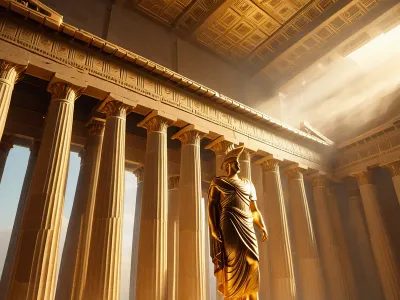
Incense in Temples Myth Meaning & Symbolism
A myth of how mortal prayer, through divine alchemy, becomes sacred incense, bridging the chasm between earth and Olympus on fragrant smoke.

Incense to the Gods Myth Meaning & Symbolism
The myth of how incense, the sacred scent of the gods, was stolen for humanity, forging a fragile bridge between mortal need and divine grace.
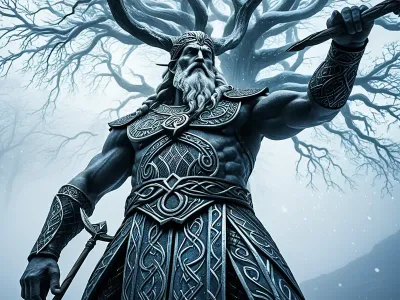
Óðinn's Sleep Sacrifice Myth Meaning & Symbolism
The Allfather hangs himself on the World Tree, pierced by a spear, to gain the ultimate knowledge of the runes through a death-like sleep.
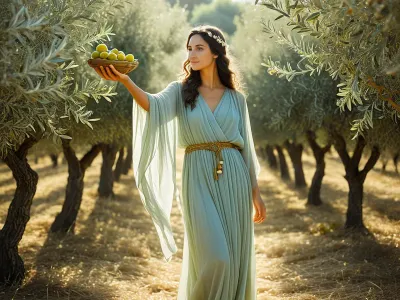
Irene Myth Meaning & Symbolism
Irene, daughter of Zeus and Themis, personifies peace. Her myth explores the fragile, cultivated harmony that sustains civilization and the soul.
Ivan the Fool
A seemingly simple peasant who triumphs through unconventional wisdom, challenging authority and revealing deeper truths in Slavic folklore.
Iðunn's Apples Myth Meaning & Symbolism
The gods grow old and weak until the goddess Iðunn, keeper of the golden apples of youth, is stolen away, threatening the cosmos with decay.
Ixion Myth Meaning & Symbolism
A king's betrayal of sacred hospitality leads to divine punishment, binding him to a burning wheel—a timeless archetype of hubris and consequence.
Ixion's Wheel Myth Meaning & Symbolism
A king's betrayal of divine hospitality leads to his eternal punishment: bound to a fiery, spinning wheel in the underworld.
Jason Myth Meaning & Symbolism
A usurped prince's quest for a magical fleece becomes a crucible of destiny, testing loyalty, love, and the soul's true worth.
Jormungandr Myth Meaning & Symbolism
The monstrous serpent cast into the sea, destined to encircle the world and face its brother, the god Thor, at the final battle of Ragnarok.
Jotnar Myth Meaning & Symbolism
The Jotnar are the primal giants of Norse myth, representing the chaotic, untamed forces of nature and the unconscious that the gods must engage to shape the world.
Jotunheim Myth Meaning & Symbolism
The mythic realm of primal giants, representing the untamed chaos and raw potential that the ordered world of the gods must confront and integrate.

Jotunn Myth Meaning & Symbolism
The Jotunn are the ancient, chaotic giants of Norse myth, representing the raw, untamed forces of nature and the unconscious that the gods must confront and integrate.

Jörð Myth Meaning & Symbolism
The story of Jörð, the living Earth, whose union with Odin births Thor, modeling the sacred marriage of consciousness and the grounded, instinctual world.
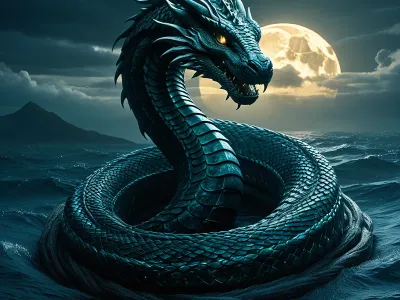
Jörmungandr Myth Meaning & Symbolism
The immense serpent cast into the sea by Odin, destined to encircle the world and battle Thor at Ragnarok, embodying chaos, containment, and cyclical fate.

Jötnar Myth Meaning & Symbolism
The Jötnar are the primordial giants of chaos and creation, representing the untamed forces of nature and the unconscious that the gods must engage to build the world.
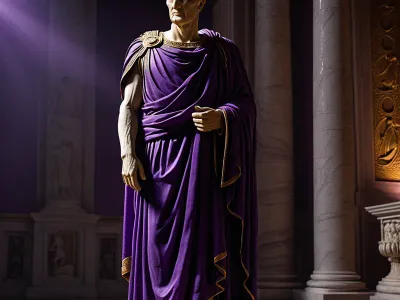
Julius Caesar Myth Meaning & Symbolism
A mortal who touched divinity, whose ambition shattered the Republic and whose death birthed an Empire, becoming an eternal symbol of power and its price.
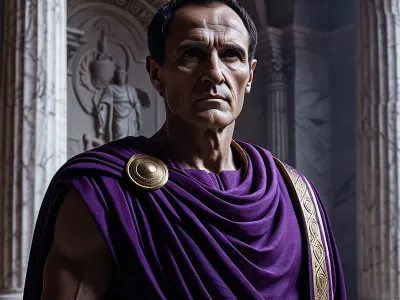
Julius Caesar's Purple Toga Myth Meaning & Symbolism
A myth of ambition and divine favor, where a purple toga marks a man for greatness and seals his fate, exploring the cost of touching the numinous.
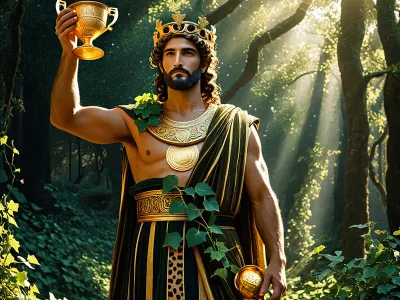
Kantharos of Dionysus Myth Meaning & Symbolism
The story of the god Dionysus's sacred drinking cup, a vessel of divine ecstasy, madness, and the terrifying, transformative power of raw life.
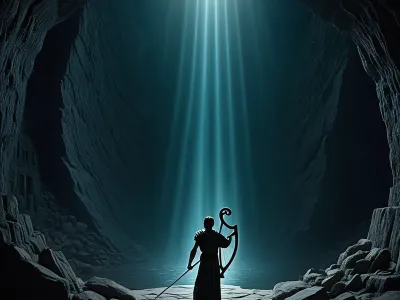
Katabasis Myth Meaning & Symbolism
The archetypal journey of descent into the underworld, a confrontation with death and the past to retrieve lost wisdom and achieve profound rebirth.
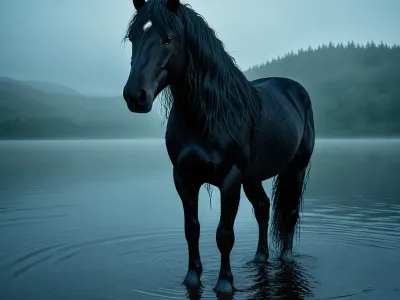
Kelpie Myth Meaning & Symbolism
A shape-shifting water spirit of Scottish lochs, the Kelpie lures the unwary to a watery grave, embodying the perilous allure of the untamed unconscious.

Khione Myth Meaning & Symbolism
A nymph of snow, desired by gods, transformed by fire. Her myth explores the tension between pristine stillness and the consuming heat of passion and change.
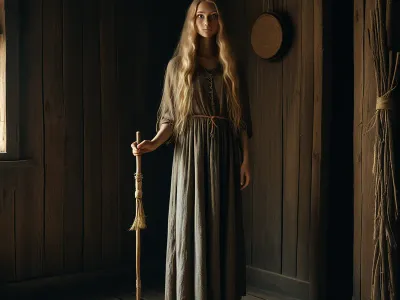
Kikimora Myth Meaning & Symbolism
A tale of the wild, forgotten feminine spirit of the hearth, whose chaos reveals the soul's need for sacred attention and ritual order.
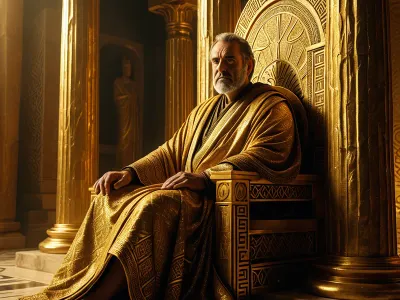
King Midas Myth Meaning & Symbolism
A king's wish for a golden touch becomes a curse, teaching that what glitters can starve the soul and that true wealth lies beyond material transformation.
Knotwork Myth Meaning & Symbolism
A tale of the primal Weaver-Goddess who binds the world from chaos, her sacrifice creating the endless, unbroken patterns that hold reality together.
Kobolds Myth Meaning & Symbolism
A tale of the earth's capricious spirit, the Kobold, who guards the soul of the mountain, demanding respect and offering gifts to those who see truly.
Kolyada Myth Meaning & Symbolism
A myth of the young sun god's birth at the solstice, his defeat by the dark god, and his promise of inevitable return and renewal.
Koschei the Deathless Myth Meaning & Symbolism
A tale of an immortal sorcerer whose soul is hidden in a needle within an egg, revealing the secret of vulnerability and the hero's transformative journey.
Kostroma Myth Meaning & Symbolism
A myth of sacred twins, a tragic mistake, and the eternal cycle of separation and reunion that governs the fertility of the land and soul.

Kraken Myth Meaning & Symbolism
A colossal sea-beast from Norse lore, embodying the terrifying, creative abyss of the unconscious mind and the primal chaos beneath ordered reality.
Kronos Myth Meaning & Symbolism
The Titan Kronos castrates his father Ouranos to rule, then swallows his own children to prevent his prophesied overthrow, until Zeus forces his regurgitation and rebellion.
Krotala Myth Meaning & Symbolism
The myth of the divine castanets, Krotala, whose sound summoned ecstatic liberation and primal chaos in the rites of Dionysus.
Kronos/Saturn Myth Meaning & Symbolism
The Titan ruler who castrated his father and devoured his children, embodying the relentless cycle of time and the inevitable overthrow of order.
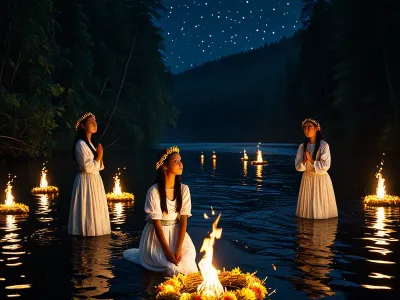
Kupalo Night Festival Myth Meaning & Symbolism
A midsummer myth of twin deities, forbidden love, and a fiery sacrifice that transforms grief into the flowering herbs of healing and remembrance.
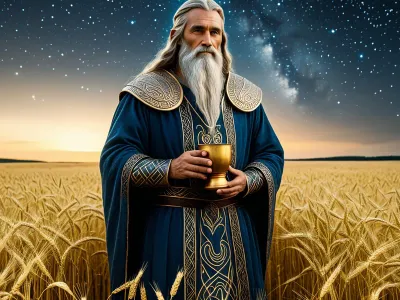
Kvasir Myth Meaning & Symbolism
A being of pure wisdom, born from the truce of gods, is murdered by dwarves. His blood, brewed into the mead of poetry, becomes the source of all inspiration.
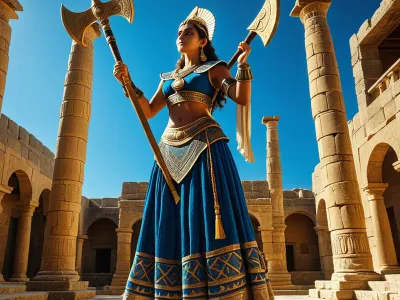
Labrys Myth Meaning & Symbolism
The sacred double axe, a symbol of divine power and labyrinthine complexity, guiding the soul through its own inner maze to confront the shadow and find wholeness.
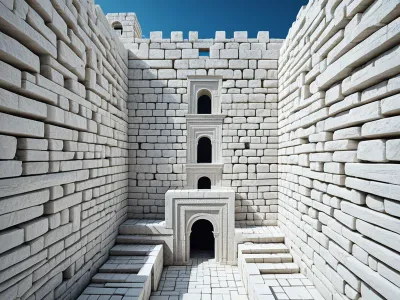
Labyrinth Walls Myth Meaning & Symbolism
The story of the Minotaur imprisoned within Daedalus's impossible maze, and the hero Theseus who must navigate its treacherous, winding walls to find his center.
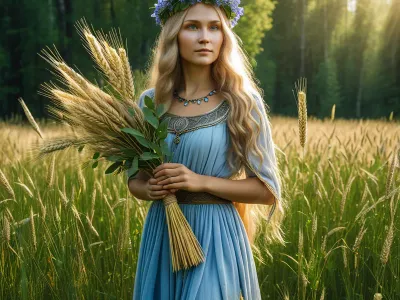
Lada Myth Meaning & Symbolism
The myth of Lada, goddess of love and harmony, tells of a cosmic balance broken and restored through sacrifice, mirroring the soul's journey to wholeness.
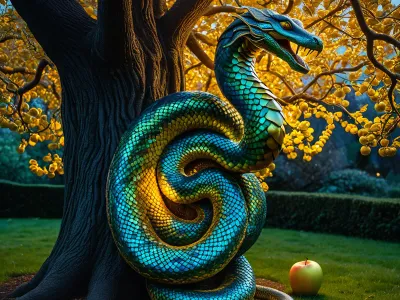
Ladon Myth Meaning & Symbolism
The ancient, coiling serpent Ladon eternally guards the Golden Apples of the Hesperides, a symbol of ultimate treasure and the fierce protector of divine boundaries.

Lady of the Lake Myth Meaning & Symbolism
A mysterious goddess of the deep waters offers a king-making sword and demands its return, weaving fate, sovereignty, and the unconscious into one myth.

Laelaps Myth Meaning & Symbolism
A magical hound destined to always catch its prey is set upon a fox fated to never be caught, creating a divine paradox of impossible pursuit.
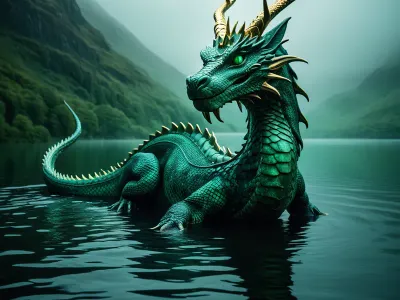
Lake Dragons Myth Meaning & Symbolism
A tale of a king, a dragon, and a lake's hidden treasure, revealing the price of sovereignty and the soul's contract with the land.
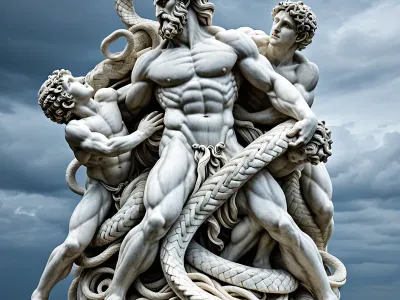
Laocoön Myth Meaning & Symbolism
A Trojan priest and his sons are strangled by sea serpents after he warns against the Greek's wooden horse, a sacrifice to the blindness of fate.
Lapis Niger Myth Meaning & Symbolism
The sacred Black Stone in the Roman Forum, a tomb and shrine to the city's first king, marking the shadow where divine order meets primal chaos.
Lares Myth Meaning & Symbolism
The Lares were protective spirits of the Roman household, embodying the sacred bond between ancestors, place, and the living family.
Lararium Myth Meaning & Symbolism
A myth of the household's living soul, where the spirits of place and lineage guard the threshold between the mundane and the sacred.
Laurel Tree Myth Meaning & Symbolism
The nymph Daphne, fleeing the god Apollo's desire, is transformed into the first laurel tree, an eternal symbol of victory, poetry, and unassailable spirit.

Laurel Wreath of Apollo Myth Meaning & Symbolism
A god's love becomes a nymph's terror, transforming her into the laurel tree. From this tragedy, Apollo crafts a crown of eternal, bittersweet victory.
Lectus Myth Meaning & Symbolism
The myth of Lectus, a liminal deity of thresholds, explores the sacred moment of choice and the weight of crossing from one state of being to another.

Leda and the Swan Myth Meaning & Symbolism
Zeus, as a swan, visits Queen Leda, resulting in the conception of Helen of Troy and the Dioscuri, a union of mortal and divine that shaped destiny.

Leif Erikson Myth Meaning & Symbolism
The saga of a son sailing beyond his father's shadow, guided by fate to a new world, embodying the eternal human journey into the unknown.
Leonidas I Myth Meaning & Symbolism
A king chooses a narrow pass as his throne, trading his life for a nation's soul. The ultimate sacrifice becomes an immortal story of defiance.

Leprechaun Myth Meaning & Symbolism
A solitary fairy cobbler, guardian of a hidden hoard, whose capture demands a cunning bargain with the ever-shifting, trickster nature of the psyche.
Leshy Myth Meaning & Symbolism
The myth of Leshy, the shape-shifting Slavic lord of the forest, embodies the untamed boundary between civilization and the wild, conscious and unconscious.

Lethe River Myth Meaning & Symbolism
The river of forgetfulness in the Greek underworld, whose waters erase all memory, forcing souls to drink before reincarnation, severing past from future.
Lethe Myth Meaning & Symbolism
The myth of Lethe, the river of forgetfulness in the Greek underworld, explores the soul's need to forget before rebirth.
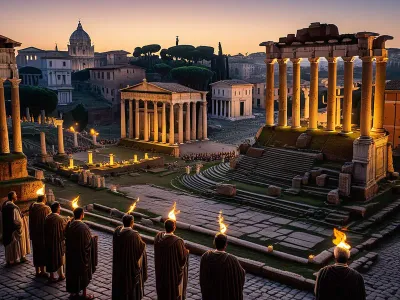
Lex Duodecim Tabularum Myth Meaning & Symbolism
The sacred struggle to carve public law from private power, forging the foundational code that transformed Rome from a tribal city into a world-shaping republic.
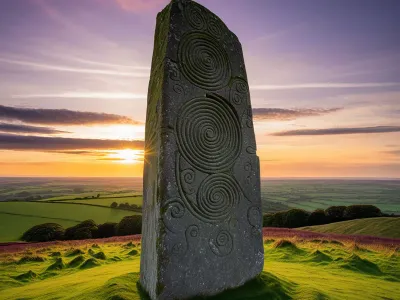
Lia Fáil Myth Meaning & Symbolism
The myth of the Stone of Destiny, a sacred rock that roars to proclaim the rightful king, embodying sovereignty, truth, and the voice of the land itself.
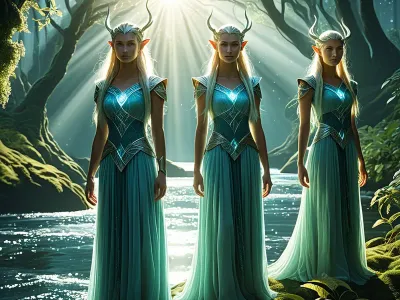
Light Elves Myth Meaning & Symbolism
Radiant beings dwelling in Alfheim, the Light Elves embody the luminous, conscious spirit and the soul's potential for beauty, order, and inspired creation.
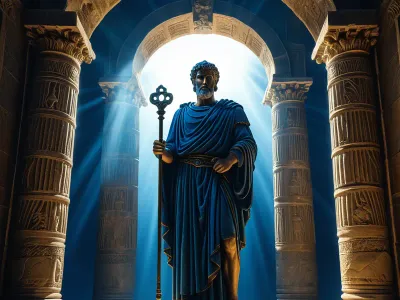
Limen Myth Meaning & Symbolism
The story of Limen, the Roman deity of thresholds, embodies the sacred tension of crossing from one state of being into another, guarding the moment of transformation.
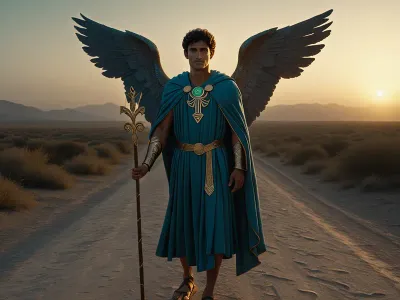
Liminal deities Myth Meaning & Symbolism
The myth of deities who dwell at boundaries, governing transitions, crossroads, and the spaces between worlds, guiding souls through change.

Lir's Children Myth Meaning & Symbolism
Four royal children are transformed into swans by a jealous stepmother, enduring nine centuries of exile on the wild Irish sea before a final, bittersweet release.

Élivágar Myth Meaning & Symbolism
The eleven poisonous rivers of ice that flowed from Niflheim, whose meeting with fire birthed the first being and the raw material of the world.
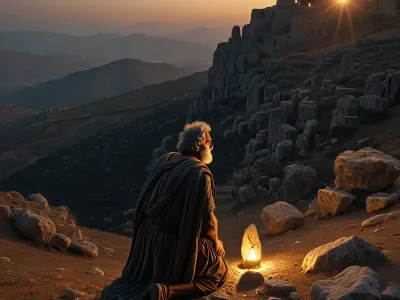
Loadstone of Magnesia Myth Meaning & Symbolism
A tale of a magical stone from Magnesia that draws iron, embodying the primal force of attraction and the soul's pull toward its destiny.

Lodestone Myth Meaning & Symbolism
A myth of the first magnetic stone, born from the tears of a Titan for his lost love, embodying the soul's irresistible pull toward its divine origin.
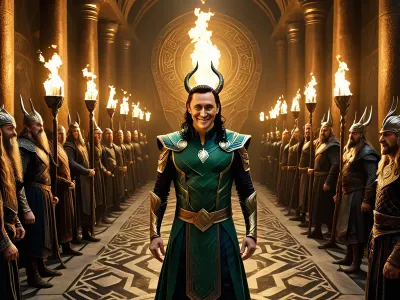
Loki at the Feast of the Gods Myth Meaning & Symbolism
The trickster god, uninvited, crashes a divine feast, hurls brutal truths at every deity, and triggers a chain of events leading to his eternal binding.
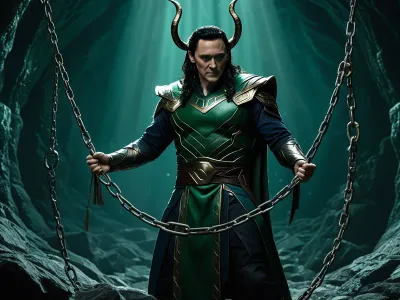
Loki's Binding Myth Meaning & Symbolism
The trickster god Loki, architect of Baldr's death, is bound beneath the earth by the gods as punishment, a prisoner of his own unleashed chaos.
Loki's Children Myth Meaning & Symbolism
The prophecy of Loki's monstrous offspring, bound by the gods, whose inevitable escape heralds the world's destruction and rebirth at Ragnarök.
Loki's Disguises Myth Meaning & Symbolism
The trickster god Loki's many disguises weave chaos and creation, forcing the gods to confront the fluid, deceptive, and essential nature of their own shadows.

Loki's Fishing Net Myth Meaning & Symbolism
A myth where Loki, to escape punishment, crafts a magical net that ensnares the gods' enemies, weaving his own fate into its knots.
Loki's Laughter Myth Meaning & Symbolism
A myth where the trickster god Loki, through outrageous tales, provokes laughter that breaks a paralyzing grief, restoring life's vital flow.

Loki's Salmon Myth Meaning & Symbolism
A tale of Loki's shape-shifting into a salmon, his capture, and the binding of his fate, symbolizing the inescapable confrontation with the shadow self.
Loki's Schemes Myth Meaning & Symbolism
The story of the trickster god Loki, whose brilliant, chaotic schemes weave the threads of fate, ultimately binding the gods to their prophesied doom.
Loki's subtle manipulations Myth Meaning & Symbolism
The trickster god Loki engineers a chain of events through cunning words and subtle actions, weaving a fate that binds gods and giants alike.
Loki's Thorn Myth Meaning & Symbolism
The story of the gods binding Loki with his son's entrails, a myth of inescapable consequence and the painful price of unbridled chaos.
Loki's Wagers Myth Meaning & Symbolism
Loki, the shape-shifting trickster, wagers his head in a contest of artifice, only to escape through a loophole of pure, cunning logic.

Lotus-Eaters Myth Meaning & Symbolism
Odysseus's crew eats the enchanted lotus, forgetting home and purpose. A myth of the soul's battle between blissful oblivion and the hard road of destiny.
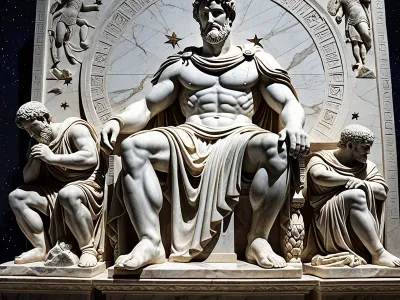
Ludus Latrunculorum Myth Meaning & Symbolism
A mythic game where soldiers and thieves wage silent war on a checkered field, embodying the eternal conflict between order and cunning within the soul.
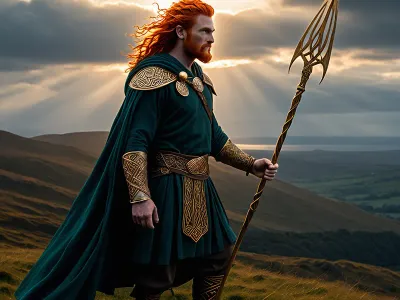
Lugh Myth Meaning & Symbolism
A shining stranger arrives at the gates of Tara, claiming a place among the gods by proving he is master of all arts, the many-skilled one.
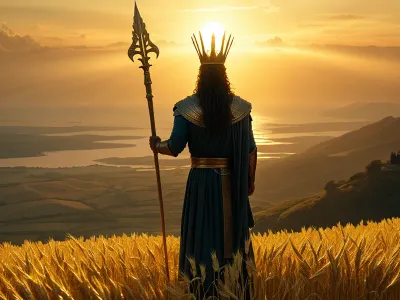
Lughnasadh Myth Meaning & Symbolism
A myth where the god Lugh establishes a funeral feast for his foster-mother, transforming personal grief into a communal covenant with the land.

Lugh's Spear Myth Meaning & Symbolism
The story of the god Lugh, who wields a fiery spear that must be quenched in a cauldron of blood, symbolizing the union of power and responsibility.

Lupa Myth Meaning & Symbolism
The she-wolf Lupa rescues and suckles the abandoned twins Romulus and Remus, an act of feral grace that founds the destiny of Rome.

Lycaon Myth Meaning & Symbolism
A king's blasphemous test of a god's omniscience leads to a divine curse, transforming him into the archetypal wolf and unleashing a cleansing flood.

Mabon Myth Meaning & Symbolism
The story of a divine child stolen at birth, imprisoned in darkness, and rescued to fulfill his destiny, symbolizing the recovery of innate potential.

Maenads Myth Meaning & Symbolism
The story of the Maenads, women who abandoned society for ecstatic rites in the wild, embodying the raw, untamed life force that civilization seeks to control.

Maia Myth Meaning & Symbolism
A story of silent growth and hidden power, where a goddess of the earth nurtures the swift messenger of the gods in the shadows of a sacred cave.
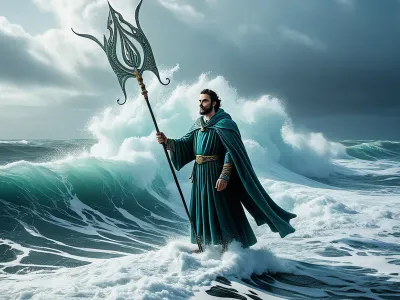
Manannán mac Lir Myth Meaning & Symbolism
The myth of the liminal sea god, master of mists and magic, who guards the threshold between the known world and the Otherworld.
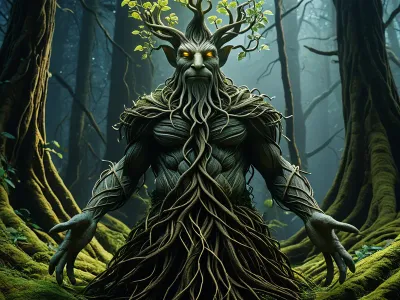
Mandrake Myth Meaning & Symbolism
A myth of a being born from the earth's memory, whose sacrifice weaves the threads of fate and grants the gift of foresight to the gods.
Mani Myth Meaning & Symbolism
The god Mani eternally flees across the sky, pursued by the wolf Hati, after stealing two children to guide the waxing and waning moon.

Mardöll Myth Meaning & Symbolism
A myth of the goddess Freyja, who wanders the world in disguise as Mardöll, weeping golden tears in search of her lost husband, Óðr.
Mars Myth Meaning & Symbolism
Mars is the Roman god of war, agriculture, and the state's protector, embodying the sacred duty of conflict and the fertile power of disciplined strength.
Marsyas Myth Meaning & Symbolism
A satyr finds a divine flute, challenges the god Apollo to a musical contest, and suffers a terrible fate for his hubris.

Marzanna Myth Meaning & Symbolism
A myth of the Slavic goddess of winter and death, ritually drowned to ensure the rebirth of spring, embodying the necessary cycle of decay and renewal.
Matronae Myth Meaning & Symbolism
The myth of the Matronae, the Roman Mothers of Fate, who weave destiny at the crossroads of life, death, and the sacred hearth.
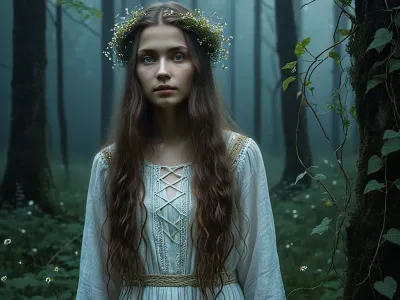
Mavka Myth Meaning & Symbolism
A spirit born from the untimely death of a young woman, the Mavka is a beautiful, sorrowful guardian of the deep forest, eternally caught between life and death.
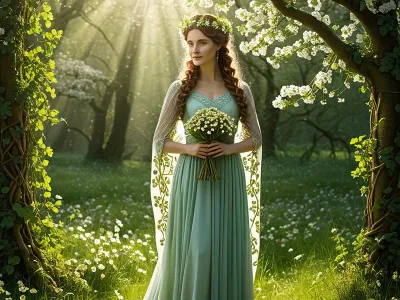
May Queen Myth Meaning & Symbolism
A myth of the sovereign goddess who rules the fertile summer, defeated by the Holly King to ensure the necessary death that precedes all renewal.
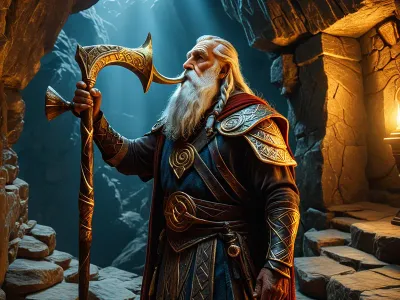
Mead of Poetry Myth Meaning & Symbolism
A myth of a magical mead brewed from the blood of a murdered god of wisdom, stolen by Odin to grant divine inspiration and poetic skill to mortals.
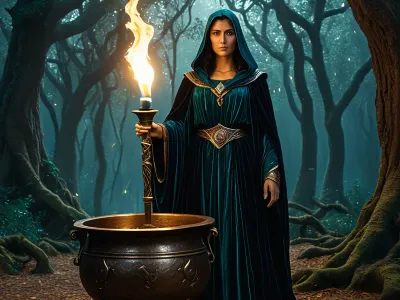
Medea's Cauldron Myth Meaning & Symbolism
The sorceress Medea uses a bronze cauldron and her arcane arts to rejuvenate the aged, symbolizing the psyche's terrifying power of radical transformation.

Medea Myth Meaning & Symbolism
A princess of Colchis, sorceress, and wife of Jason, whose betrayed love unleashes a terrifying magic of vengeance and tragic self-liberation.
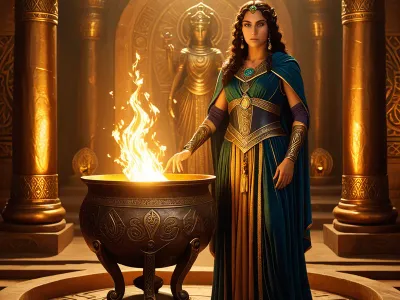
Medea's Pot Myth Meaning & Symbolism
A sorceress, betrayed, uses a magical cauldron to enact a terrible, transformative renewal, revealing the dual-edged nature of creation and destruction.
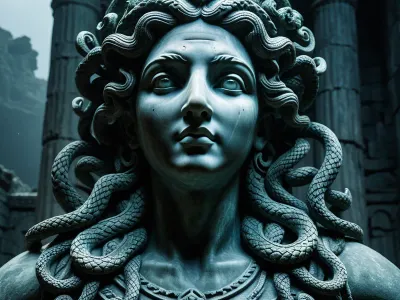
Medusa Myth Meaning & Symbolism
A priestess violated and transformed into a monster, whose gaze turns men to stone, is slain by a hero wielding a mirrored shield.
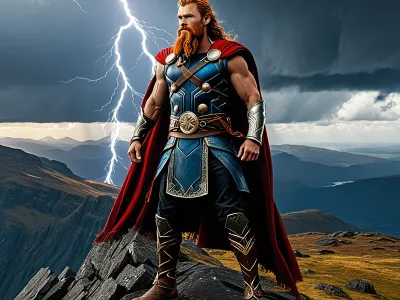
Megingjörð Myth Meaning & Symbolism
The myth of Thor's magical belt, Megingjörð, a symbol of doubling one's inherent strength through sacred focus and divine will.
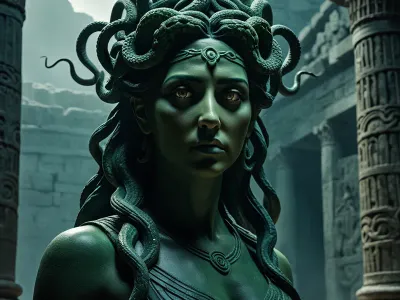
Medusa's Gaze Myth Meaning & Symbolism
A priestess cursed by Athena, her gaze turns men to stone. Perseus, guided by gods, beholds her reflection and severs her head, claiming her potent, paradoxical power.

Melissa Myth Meaning & Symbolism
A nymph who discovered honey, taught its sacred use to humanity, and was transformed into the first bee for guarding the gods' secrets.

Melissae Myth Meaning & Symbolism
The Melissae were sacred bee-nymphs, priestesses of the Great Goddess, who guarded the threshold between life, death, and divine ecstasy.

Menthe Myth Meaning & Symbolism
A nymph loved by Hades is transformed into the mint plant by a jealous Persephone, her essence forever fragrant and enduring in the underworld's shadow.
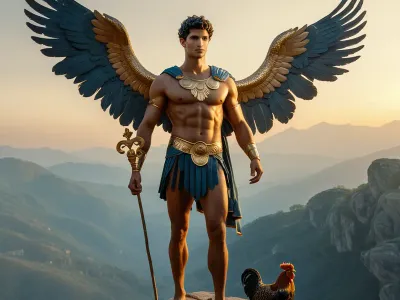
Mercury Myth Meaning & Symbolism
The swift, cunning messenger of the gods, patron of travelers, merchants, and thieves, embodying the fluid intelligence that connects all realms.
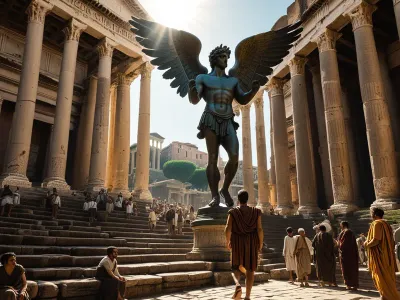
Mercury's Forum Myth Meaning & Symbolism
A myth of the god Mercury establishing the sacred marketplace, a crossroads where divine messages, mortal trade, and the soul's negotiations converge.
Merrows Myth Meaning & Symbolism
The myth of the Merrows, seal-people of the Celtic sea, speaks of a profound longing between worlds and the perilous enchantment of the deep, unconscious self.
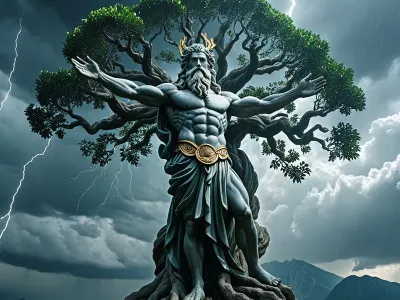
Metamorphoses Myth Meaning & Symbolism
A mythic tapestry where gods and mortals are reshaped by passion and transgression, revealing the soul's fluid nature and the inevitability of change.

Metis Myth Meaning & Symbolism
The story of Metis, the primordial Titaness of cunning wisdom, swallowed by Zeus to prevent a prophesied overthrow, birthing Athena from his head.
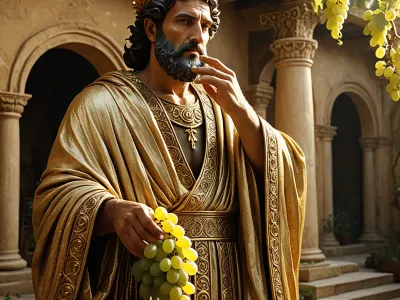
Midas Touch Myth Meaning & Symbolism
A king's wish to turn all he touches to gold becomes a curse of isolation, teaching a brutal lesson about the true nature of wealth and desire.

Midgard Myth Meaning & Symbolism
The world of humanity, forged from the giant Ymir's body, encircled by the serpent Jörmungandr, a fragile order amidst primal chaos.
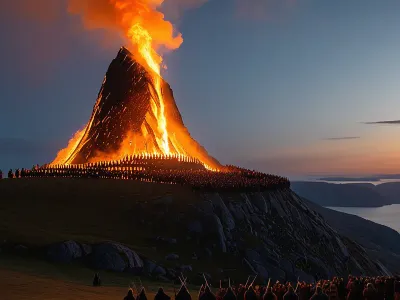
Midsummer Bonfires Myth Meaning & Symbolism
A myth of celestial fire, community vigilance, and the ritual purification of the land against the shadows that gather in the deceptive light of midsummer.
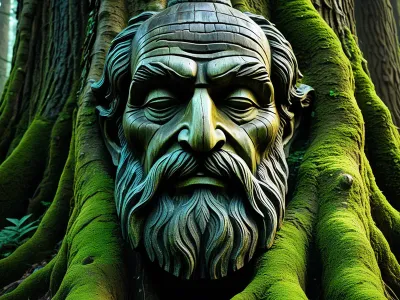
Mimir Myth Meaning & Symbolism
A god sacrifices his eye for a drink from the well of wisdom, guarded by the head of Mimir, the keeper of ancestral memory and deep knowing.

Mimir's Well Myth Meaning & Symbolism
The god Odin sacrifices his eye to drink from the Well of Wisdom, gaining cosmic insight at the cost of a part of himself.
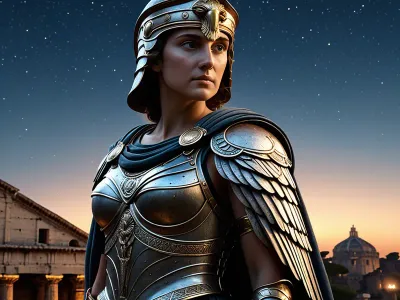
Minerva's Owl Myth Meaning & Symbolism
The sacred owl of Minerva, goddess of wisdom, whose flight through dusk reveals hidden truths and the profound knowledge that emerges only in reflection.
Minos Myth Meaning & Symbolism
A king's divine bargain births a monstrous legacy, weaving a tale of justice, labyrinthine deception, and the inescapable cost of power.
Minotaur Myth Meaning & Symbolism
A monstrous half-man, half-bull born of divine wrath, imprisoned in a labyrinth, and confronted by a hero who must navigate the maze within and without.
Minotaur's Labyrinth Myth Meaning & Symbolism
A king's broken oath births a monster, confined in a maze of stone. A hero enters, armed with a thread and divine aid, to face the beast and end the bloody tribute.

Minthe Myth Meaning & Symbolism
A nymph's love for Hades sparks Persephone's wrath, leading to her transformation into the fragrant, resilient mint plant.

Mist Myth Meaning & Symbolism
The tale of Mist, a Valkyrie who serves the mead of memory and oblivion, embodying the essential tension between knowing and unknowing for the soul's journey.
MjölnirAmulet Myth Meaning & Symbolism
The story of how the trickster Loki's meddling leads to the flawed yet sacred creation of Thor's hammer, a symbol of consecrated power born from imperfection.
Mjölnir Myth Meaning & Symbolism
A trickster sabotages the forging of a god's weapon, creating a flaw that becomes its greatest strength—the short-handled, unerring hammer Mjölnir.

Mjölnir's Strap Myth Meaning & Symbolism
The tale of Thor losing his hammer and the cunning journey to reclaim it, a myth of lost power, strategic transformation, and the necessity of disguise for victory.
Mjölnir's Iron Myth Meaning & Symbolism
The story of how Thor's hammer, Mjölnir, was forged from a heart of iron, a weapon of divine will born from trickery and cosmic necessity.
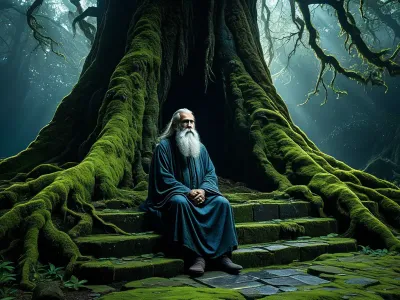
Mímir Myth Meaning & Symbolism
The god Odin sacrifices his eye to drink from Mímir's well of wisdom, gaining cosmic insight at a terrible, transformative cost.
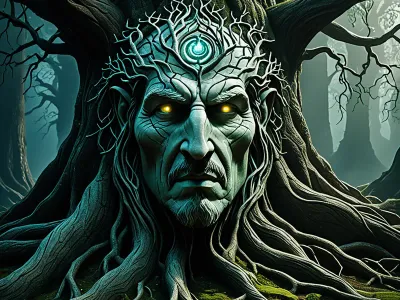
Mímir's Decapitated Head Myth Meaning & Symbolism
Odin sacrifices an eye to drink from the well of Mímir, keeper of ancestral wisdom, whose severed head continues to whisper secrets from the roots of the world tree.

Mímir's Well Myth Meaning & Symbolism
Odin, the Allfather, sacrifices his eye to drink from the Well of Wisdom, gaining the knowledge of the past, present, and future.
Mímisbrunnr Myth Meaning & Symbolism
Odin sacrifices an eye to drink from Mímisbrunnr, the Well of Wisdom guarded by the head of Mímir, gaining cosmic knowledge through profound loss.
Mnemosyne's Daughters Myth Meaning & Symbolism
The nine Muses, born from the union of Memory and the Sky, are the divine sources of all art, science, and knowledge in the ancient world.
Mnemosyne's Spring Myth Meaning & Symbolism
A sacred spring in the underworld, whose waters grant souls perfect memory before rebirth, revealing the profound link between remembrance and true identity.
Moccus Myth Meaning & Symbolism
A tale of the divine boar, a sovereign beast of the forest, whose pursuit reveals the sacred contract between hunter, hunted, and the land itself.
Moirai Myth Meaning & Symbolism
The three primordial sisters Clotho, Lachesis, and Atropos spin, measure, and cut the thread of life for every mortal and god, embodying the inescapable law of destiny.

Mokosh Myth Meaning & Symbolism
The myth of Mokosh, the Slavic Earth Mother, weaves creation, fate, and sacred craft into a tapestry of life, death, and silent, generative power.
Moly Myth Meaning & Symbolism
A magical herb, black-rooted and white-flowered, given by Hermes to Odysseus to resist the sorcery of the goddess Circe and reclaim his men.
Momus Myth Meaning & Symbolism
The myth of Momus, the divine critic, reveals the necessary yet dangerous role of fault-finding in creation, culture, and the psyche's journey toward wholeness.

Monad Myth Meaning & Symbolism
The myth of the Monad is the story of the undivided One from which all multiplicity and the cosmos itself first emerged.
Monastic Herbalists Myth Meaning & Symbolism
A myth of monks who tended a secret garden, learning the language of plants to heal bodies and souls, guarding wisdom between prayer and wilderness.
Morgan le Fay Myth Meaning & Symbolism
A shapeshifting sorceress of Avalon, Morgan le Fay weaves destiny and challenges kings, embodying the untamed feminine power of sovereignty and fate.
Morpheus Myth Meaning & Symbolism
The myth of Morpheus, the divine shaper of human dreams, reveals the profound power of the unconscious to craft reality and deliver divine truths.
Morozko Myth Meaning & Symbolism
A stepdaughter's encounter with the Frost King reveals that true warmth is not defiance of the cold, but a quality of the soul that winter itself can bless.
Morpheus's Realm Myth Meaning & Symbolism
The myth of Morpheus, the divine shaper of dreams, reveals the soul's nightly journey into a realm of prophecy, truth, and profound self-encounter.
Morrigan Myth Meaning & Symbolism
A goddess of fate, war, and sovereignty appears as a crow, offering prophecy and demanding recognition, shaping the destiny of kings and the land itself.
Mosaics of Pompeii Myth Meaning & Symbolism
A myth of artisans who challenged the gods with immortal art, only to be buried and preserved by the very catastrophe meant to erase them.

Mount Cithaeron Myth Meaning & Symbolism
A sacred mountain where divine wrath and mortal folly unfold, witnessing the madness of Actaeon, the exile of Oedipus, and the revels of Dionysus.
Mount Olympus Banquet Hall Myth Meaning & Symbolism
The celestial court of the gods, where ambrosia flows and cosmic order is affirmed through sacred ritual, conflict, and divine hospitality.

Mount Olympus Path Myth Meaning & Symbolism
The perilous ascent to the home of the gods, a mythic journey of ambition, hubris, and the ultimate confrontation with one's own divine and mortal nature.

Mount Parnassus Myth Meaning & Symbolism
The sacred mountain of Apollo and the Muses, a sanctuary for prophecy and art, born from the floodwaters of a world cleansed and reborn.
Muse Myth Meaning & Symbolism
The nine Muses, daughters of Memory, embody the divine source of inspiration, channeling the raw chaos of creation into the ordered arts of humanity.
Muspelheim's Sparks Myth Meaning & Symbolism
The primordial fire realm's sparks, cast by Surtr, ignite the world's creation and foretell its end, embodying the psyche's creative and destructive potential.

Muspelheim Myth Meaning & Symbolism
The primordial realm of fire, home to the fire giant Surtr, whose flaming sword will cleanse the world at Ragnarök, ending one cycle to begin another.
Myrmidons Myth Meaning & Symbolism
A king's prayer for an army is answered by Zeus, who transforms a colony of pious ants into the fiercely loyal, disciplined Myrmidon warriors.
Myiagros Myth Meaning & Symbolism
The myth of Myiagros, a minor deity who wards off pestilent flies, reveals a deep archetype of psychic defense and the purification of the soul's sanctuary.

Naglfar Myth Meaning & Symbolism
A ship of fingernails, built in secret, destined to sail at the end of all things, carrying the forces of chaos to their final battle.
Naglfari Myth Meaning & Symbolism
The silent, unlaunched ship built from dead men's nails, destined to carry the legions of Hel to the final battle at Ragnarök.
Narcissus Myth Meaning & Symbolism
A beautiful youth falls in love with his own reflection, perishing by the pool, leaving behind a flower as a symbol of fatal self-absorption.

Narcissus's Reflection Myth Meaning & Symbolism
A youth of divine beauty falls in love with his own reflection in a pool, unable to look away until he perishes, transformed into a flower.
Nav, Prav, and Yav Myth Meaning & Symbolism
A Slavic cosmological myth of three interwoven worlds: manifest reality, divine order, and the ancestral underworld, modeling the psyche's structure.
Nectar of the Gods Myth Meaning & Symbolism
The divine sustenance of Olympus, Nectar confers immortality and divine essence, forever separating the eternal gods from mortal humanity.
Nemean Lion Skin Myth Meaning & Symbolism
Hercules defeats an invulnerable lion sent by Hera, strangling it with his bare hands. He wears its impenetrable skin, transforming a curse into his defining armor.
Nemesis Myth Meaning & Symbolism
The ancient story of the goddess who enforces cosmic balance, ensuring that no mortal, no matter how powerful, escapes the consequences of hubris.

Nemeton Myth Meaning & Symbolism
The sacred grove where the seen and unseen worlds intertwine, a living temple demanding reverence and offering profound communion with the deep self.
Nephele Myth Meaning & Symbolism
A cloud shaped by Zeus into a woman, Nephele is a phantom bride, a mother of heroes, and a symbol of the soul's intangible essence.

Nereids Myth Meaning & Symbolism
Fifty daughters of the Old Man of the Sea, the Nereids are benevolent spirits of the Mediterranean, embodying its shifting moods and profound depths.
Nessus' Shirt Myth Meaning & Symbolism
Heracles is killed by a poisoned shirt, a gift from his wife Deianira, unwittingly crafted from the venom of the centaur Nessus he slew.
Nessus' Robe Myth Meaning & Symbolism
Heracles is killed by a poisoned robe, a gift of love from his wife, unknowingly crafted from the venom of the centaur he slew.
Nidavellir Myth Meaning & Symbolism
The myth of the dwarven realm where master smiths forge destiny's tools in darkness, embodying the psyche's creative and foundational powers.
Nidhogg Myth Meaning & Symbolism
A cosmic dragon eternally gnaws the roots of the World Tree, embodying the necessary decay that sustains the cycle of existence.

Niflheim Myth Meaning & Symbolism
The primordial world of ice and mist from which all life and death emerge, a frozen void holding the latent potential for creation and dissolution.
Nike Myth Meaning & Symbolism
The story of Nike, the winged goddess of victory, embodies the sacred moment of decisive triumph born from cosmic struggle and divine alliance.
Niobe Myth Meaning & Symbolism
A queen's boast of superiority over the goddess Leto leads Apollo and Artemis to slay her fourteen children, transforming her into a weeping stone.

Njord Myth Meaning & Symbolism
A god of the sea marries a goddess of the mountains, a sacred union of opposites that brings peace at the price of a profound, unending longing.

Njörðr Myth Meaning & Symbolism
A god of sea and wealth, bound to a mountain goddess in a marriage of impossible longing, embodying the sacred tension between worlds.

Noatún Myth Meaning & Symbolism
The myth of Njörðr's hall, Noatún, a sanctuary by the sea, embodying the reconciliation of opposites and the soul's need for a sacred harbor.

Nonius Myth Meaning & Symbolism
A Roman magistrate's sacred grove is spared by the gods, making him a living sanctuary, a profound symbol of the self as hallowed ground.
Nótt Myth Meaning & Symbolism
The myth of Nótt, the personified Night, whose chariot ride across the cosmos defines the rhythm of time and the soul's descent into darkness.
Nuada Myth Meaning & Symbolism
A king loses his hand and his throne, finding a path back to power not through force, but through a profound sacrifice and a silvered restoration.
Nymphs Myth Meaning & Symbolism
The Nymphs are the wild, sacred soul of nature in Greek myth, spirits of springs, trees, and mountains, embodying the untamed life force that animates the world.
Nyxt Myth Meaning & Symbolism
The primordial goddess of night, Nyxt births both dreams and terrors from her starry cloak, representing the essential, creative darkness that precedes all light.
Oath Ring Myth Meaning & Symbolism
A sacred ring forged by gods, upon which oaths are sworn, binding mortals and deities to cosmic law and the terrible price of betrayal.
Oceanus Myth Meaning & Symbolism
Oceanus is the ancient, gentle Titan of the world-encircling river, representing the primordial, unifying waters from which all life and consciousness emerge.

Odin's Eye Myth Meaning & Symbolism
The All-Father Odin sacrifices his physical eye to drink from Mimir's Well, gaining cosmic wisdom and the terrible price of true sight.

Odin Myth Meaning & Symbolism
The Allfather, Odin, endures self-sacrifice on the World Tree to gain the runes, embodying the eternal quest for wisdom through profound personal ordeal.
Odin's Hall Myth Meaning & Symbolism
The myth of Odin's hall, Valhalla, where chosen slain warriors feast and train, awaiting the final battle at the world's end.
Odin on Sleipnir Myth Meaning & Symbolism
The All-Father rides his spectral steed across the worlds, a master of magic and memory, paying the price for wisdom that shapes and shatters fate.
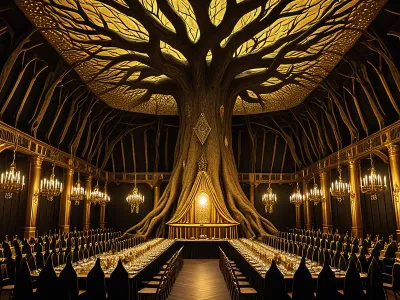
Odin's Halls of Valhalla Myth Meaning & Symbolism
The hall where Odin gathers the slain, preparing for Ragnarök, a myth of chosen fate, cyclical war, and the psyche's preparation for its final battle.
Odin's Ravens Myth Meaning & Symbolism
The Allfather Odin sends his two ravens, Thought and Memory, across the worlds each dawn, sacrificing an eye for the wisdom their flight brings.
Odin's Memory Mead Myth Meaning & Symbolism
The All-Father sacrifices his eye and hangs himself on the World Tree to gain the mead of poetry, memory, and divine inspiration.
Odin's Sacrifice Myth Meaning & Symbolism
The Allfather endures agony, hanging from Yggdrasil, pierced by his own spear, to win the runes and the terrible wisdom of the cosmos.
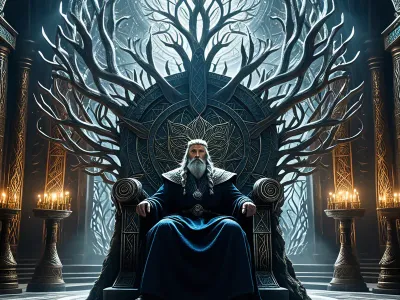
Odin's Throne Hliðskjálf Myth Meaning & Symbolism
Odin's high seat grants him vision across all realms, a power born of sacrifice, revealing the terrible burden and necessity of seeing the whole truth.
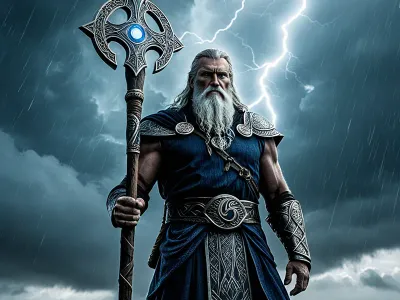
Odin's Staff Myth Meaning & Symbolism
The spear Gungnir, forged by dwarves and hurled to begin all wars, embodies the Allfather's quest for order through chaos and knowledge through self-sacrifice.
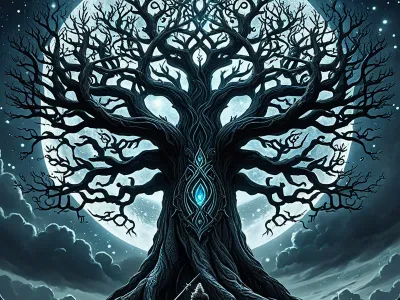
Odín's Sacrifice Myth Meaning & Symbolism
The All-Father hangs himself on Yggdrasil for nine nights, pierced by a spear, to gain the runes and the wisdom of the cosmos.
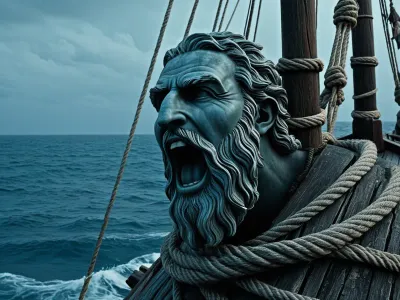
Odysseus & the Sirens Myth Meaning & Symbolism
The hero, forewarned by a goddess, binds himself to his ship's mast to hear the Sirens' fatal song, navigating the razor's edge between ecstatic knowledge and annihilation.

Odysseus Myth Meaning & Symbolism
The epic journey of a cunning hero navigating divine wrath, monstrous trials, and his own psyche to reclaim his home, throne, and true self.

Odysseus's Journey Myth Meaning & Symbolism
A warrior's decade-long voyage through monstrous seas and enchanted isles, a struggle against gods and self to reclaim his throne and soul.
Oedipus Myth Meaning & Symbolism
A king's desperate flight from a terrible prophecy leads him to unknowingly kill his father and marry his mother, revealing the tragic cost of self-discovery.

Ogham Myth Meaning & Symbolism
The myth of Ogham tells of the god Ogma's creation of a sacred script from trees, a system of knowledge, memory, and connection to the living world.
Oisín Myth Meaning & Symbolism
A warrior-poet journeys to a timeless land of youth, only to return to a changed world, embodying the soul's longing and the price of transformation.

Olympia Stadium Myth Meaning & Symbolism
A mortal architect challenges the gods to build a stadium of impossible perfection, forging a sacred space where humanity meets the divine.
Olympic Games Myth Meaning & Symbolism
A sacred truce forged by Heracles to honor Zeus, transforming a battlefield into a divine contest of mortal excellence, beauty, and cosmic order.
Omphalos Myth Meaning & Symbolism
The myth of Zeus releasing two eagles to find the world's center, marked by the Omphalos stone at Delphi, the sacred oracle of Apollo.
Onion of Truth Myth Meaning & Symbolism
A hero journeys to the Oracle's cave to peel the sacred Onion of Truth, confronting illusions to find the empty, luminous core of the self.

Orchis Myth Meaning & Symbolism
A youth of divine lineage, Orchis defiles a sacred rite and is torn apart, only to be reborn as the first orchid, a symbol of desire and mortality.
Oracle Scrolls Myth Meaning & Symbolism
A mortal's perilous quest to steal the gods' unreadable scrolls of fate, revealing the terror and liberation of confronting ultimate truth.
Oracle of Delphi Myth Meaning & Symbolism
The priestess Pythia, breathing sacred vapors, channeled Apollo's cryptic wisdom from the world's navel, guiding heroes and kings toward their fated destinies.
Orestes Myth Meaning & Symbolism
A prince avenges his father by killing his mother, is pursued by Furies, and seeks purification, embodying the crisis of blood guilt and divine law.
Orion's Belt Myth Meaning & Symbolism
The hunter Orion, beloved by Artemis, is slain by a scorpion's sting and immortalized as a constellation by the grieving gods.

Orion's Dog Myth Meaning & Symbolism
The tale of the faithful hound placed among the stars, forever chasing its master across the heavens, a symbol of unwavering loyalty and cosmic grief.
Orion Myth Meaning & Symbolism
A giant hunter, blinded and restored, whose pride and passion lead to his celestial fate, forever pursued by the scorpion and guarded by the dawn.
Orpheus' Lyre Myth Meaning & Symbolism
A poet's music charms gods and stones to retrieve his love from death, but a single doubt shatters the miracle, leaving only his song.

Orpheus's Lyre Myth Meaning & Symbolism
A musician's divine lyre charms all of creation, but fails to conquer the final law of death, leaving a legacy of transcendent, tragic song.
Orphic Egg Myth Meaning & Symbolism
A cosmic egg, born of Night and Wind, cracks open to birth the first god, Phanes, containing all potential for the universe and the soul.
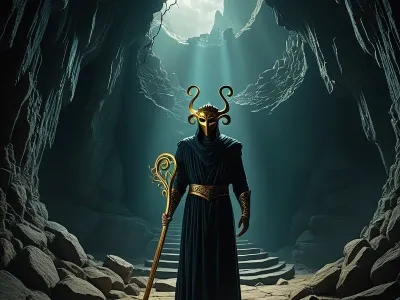
Orpheus's Descent Myth Meaning & Symbolism
A poet descends to the land of the dead to reclaim his love, armed only with music, but a single doubt shatters the impossible.

Otherworld Myth Meaning & Symbolism
A hero journeys to the timeless, paradoxical Otherworld, facing tests of truth and desire to retrieve a lost treasure, guided by a sovereign goddess.

Otter Kings Myth Meaning & Symbolism
A tale of a shape-shifting otter king, a sacred debt of skin, and the profound price of violating the pact between the human and animal worlds.
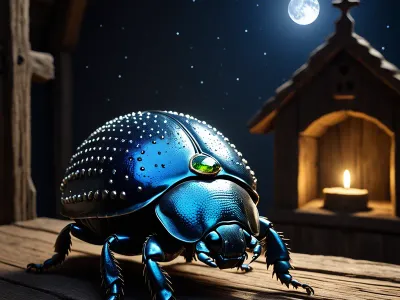
Our Lady's Beetle Myth Meaning & Symbolism
A humble dung beetle, cursed for its earthly toil, is blessed by the Virgin Mary, transforming its labor into a sacred, jeweled offering.
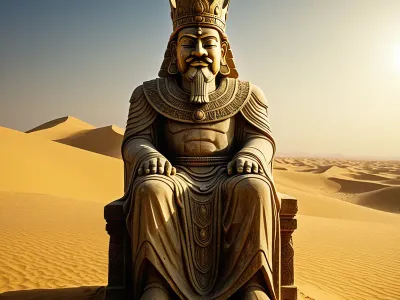
Ozymandias Myth Meaning & Symbolism
A king's boundless pride erects a monument to his own glory, only for time and the desert to reduce it to a shattered, forgotten warning.
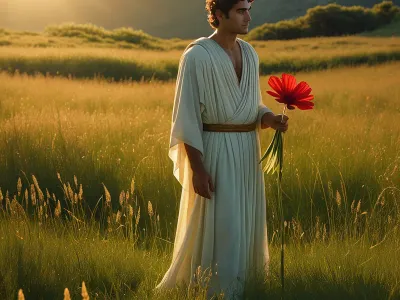
Paeon Myth Meaning & Symbolism
A divine healer, born from a flower, uses forbidden knowledge to mend a god, transforming his transgression into a new, sacred identity.
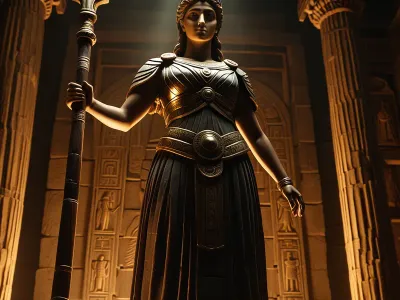
Palladium Myth Meaning & Symbolism
A sacred statue fell from heaven to protect Troy. Its theft by Odysseus and Diomedes sealed the city's fate, revealing that true security lies beyond the walls.
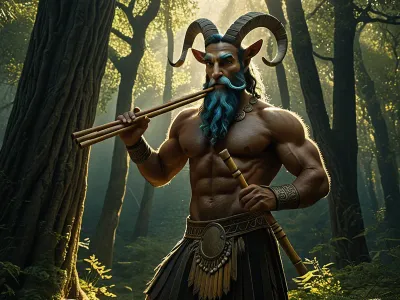
Pan Myth Meaning & Symbolism
The story of Pan, the goat-legged god of the wild, whose primal music and sudden terror reveal the untamed psyche beneath civilization's surface.
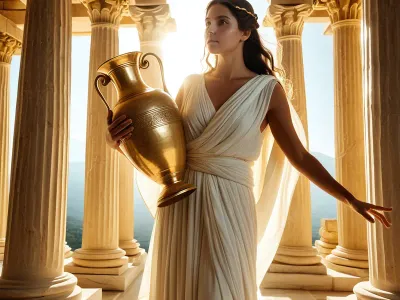
Panacea Myth Meaning & Symbolism
The myth of Panacea, daughter of Asclepius, embodies the universal remedy and the profound human longing for a single, perfect solution to all suffering.
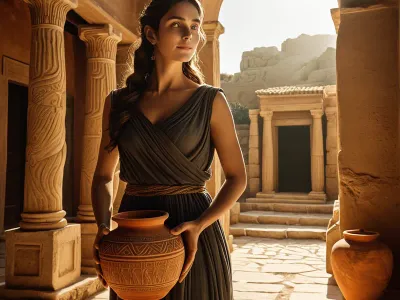
Pandora Myth Meaning & Symbolism
The first woman, crafted by the gods, opens a forbidden jar, releasing all evils but trapping hope inside—a foundational myth of human suffering and resilience.
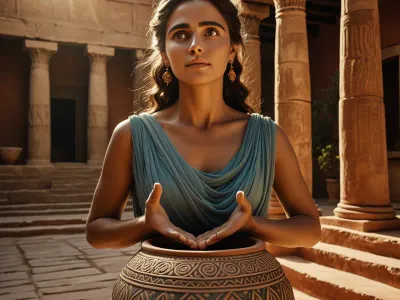
Pandora's Jar Myth Meaning & Symbolism
The first woman, Pandora, opens a forbidden jar, releasing all evils into the world but trapping hope inside, a profound allegory for the human condition.
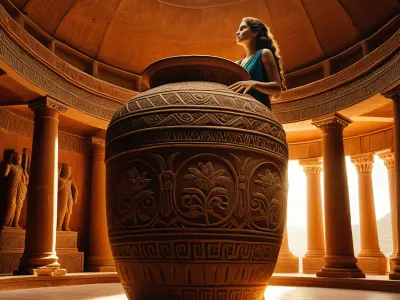
Pandora's Pithos Myth Meaning & Symbolism
A divine punishment brings a sealed jar to humanity. Its opening unleashes all evils, leaving only hope trapped within.
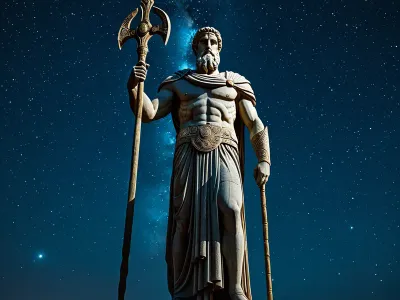
Panoptes Myth Meaning & Symbolism
The tale of Argus Panoptes, the hundred-eyed giant, a guardian slain by Hermes, whose eyes were placed in the peacock's tail as a cosmic memorial.
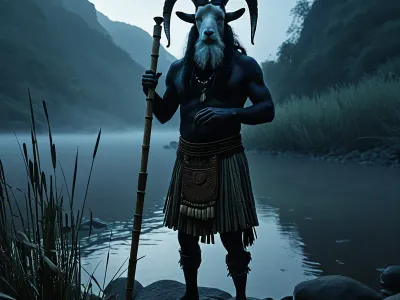
Pan's Pipes Myth Meaning & Symbolism
The god Pan transforms his grief for the lost nymph Syrinx into the first set of panpipes, creating haunting music from his sorrow.
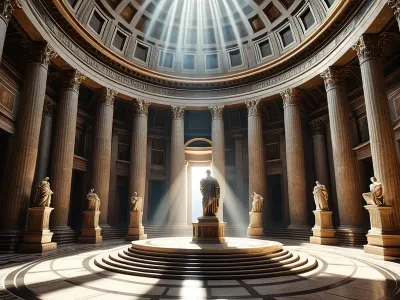
Pantheon Myth Meaning & Symbolism
The Pantheon is the sacred architecture of the Roman cosmos, a divine assembly where each god holds a domain, modeling a unified yet diverse psychic totality.
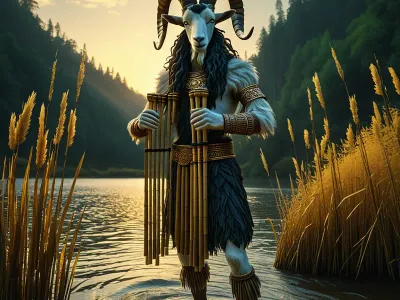
Pan's Syrinx Myth Meaning & Symbolism
The god Pan pursues the nymph Syrinx, who is transformed into river reeds; from his grief, he fashions the first panpipes, turning loss into art.
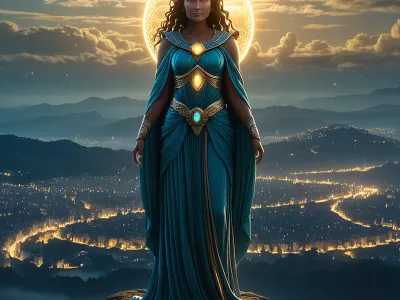
Parthenon Myth Meaning & Symbolism
The myth of the Parthenon is the story of the inviolable Virgin, a sovereign goddess whose wisdom and power protect the sacred heart of the city.
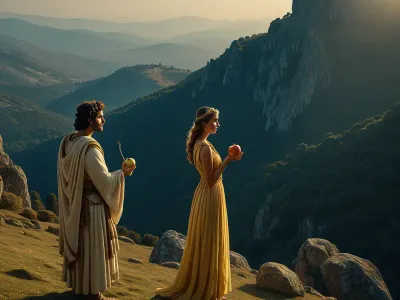
Paris and the Golden Apple Myth Meaning & Symbolism
A shepherd-prince's choice between three goddesses, sealed with a golden apple, unleashes a chain of events leading to the legendary Trojan War.
Patroclus' Shade Myth Meaning & Symbolism
The ghost of Achilles' beloved companion appears, demanding proper burial and revealing the soul's torment when denied its final rites.
Púca Myth Meaning & Symbolism
A shape-shifting spirit of the liminal spaces, the Púca offers terrifying rides and prophetic gifts, embodying the untamed psyche and the price of wisdom.
Peace Bells Myth Meaning & Symbolism
A myth of a sacred bell whose ringing banished conflict, lost to a world of noise, and the journey to hear its silent song within.
Penates Myth Meaning & Symbolism
The story of the Penates, the Roman deities of the storeroom, who embody the sacred heart of the home and the soul's journey to find its true sanctuary.

Pelops Myth Meaning & Symbolism
A prince is butchered, served to the gods, restored with an ivory shoulder, and wins a bride through treachery, founding a dynasty under a terrible curse.
Penelope Myth Meaning & Symbolism
The queen who wove by day and unraveled by night, holding a kingdom and her soul intact through twenty years of faithful, cunning waiting.
Penelope's Shroud Myth Meaning & Symbolism
A queen weaves and unravels a shroud to delay suitors, embodying the soul's cunning endurance and the creative power of patient resistance.
Penelope's Weaving Myth Meaning & Symbolism
A queen uses a weaving trick to delay suitors, weaving by day and unraveling by night, holding space for her husband's return and her own sovereignty.
Penelope's Loom Myth Meaning & Symbolism
A queen weaves and unravels a shroud to hold chaos at bay, using time and craft to preserve a sacred space for a lost king's return.

Penia Myth Meaning & Symbolism
The myth where Penia, the spirit of need, cunningly conceives a child with Poros, the god of resource, giving birth to the god of love, Eros.
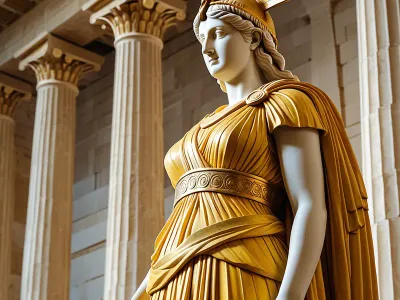
Peplos Myth Meaning & Symbolism
The sacred robe woven for Athena, embodying the city's soul, offered in a ritual of devotion that binds the mortal and divine realms.

Persephone and Pomegranate Seeds Myth Meaning & Symbolism
The maiden Persephone is taken to the Underworld. Eating six pomegranate seeds binds her there for half the year, creating the cycle of seasons.
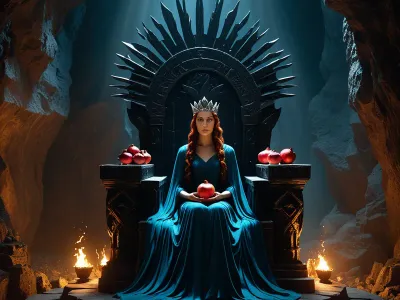
Persephone in Hades Myth Meaning & Symbolism
The maiden goddess, abducted to the underworld, becomes its queen, embodying the cycle of life, death, and the soul's necessary descent.
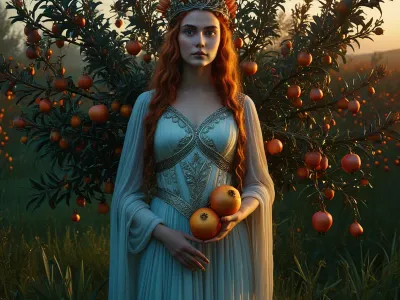
Persephone's Asphodel Myth Meaning & Symbolism
The Queen of the Underorld chooses the humble asphodel, a flower of the neutral dead, as her enduring emblem of sovereignty and integration.
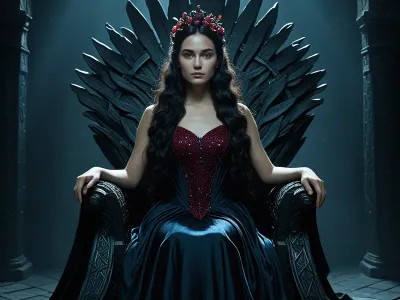
Persephone Myth Meaning & Symbolism
The maiden goddess abducted to the underworld becomes its queen, embodying the eternal cycle of life, death, and rebirth that governs nature and the human psyche.
Persephone's abduction Myth Meaning & Symbolism
The maiden goddess is abducted to the underworld, causing eternal winter, and returns transformed as its queen, bridging life and death.
Persephone's Ascent Myth Meaning & Symbolism
The Queen of the Underworld emerges each spring, embodying the soul's journey through trauma into a hard-won, cyclical wholeness.
Persephone's Descent Myth Meaning & Symbolism
The maiden Persephone is abducted by Hades, causing her mother Demeter's grief to wither the world, leading to a compromise that creates the seasons.
Persephone's Garden Myth Meaning & Symbolism
The story of a goddess abducted to the underworld, whose fate creates the seasons and reveals the soul's necessary descent into darkness.
Persephone's Flowers Myth Meaning & Symbolism
A goddess, picking flowers, is abducted into the underworld, initiating a cycle of life, death, and profound psychological transformation.
Persephone's Meadow Myth Meaning & Symbolism
The maiden Persephone is abducted from a meadow by Hades, leading to a cycle of descent and return that governs the seasons and the soul.
Persephone's Pomegranate Seeds Myth Meaning & Symbolism
A goddess is taken to the underworld, eats seeds of the dead, and becomes queen of two worlds, forging the cycle of seasons and the soul.
Persephone's Winter Myth Meaning & Symbolism
The goddess Persephone is abducted by Hades, eats pomegranate seeds, and must spend part of each year in the Underworld, creating the cycle of seasons.
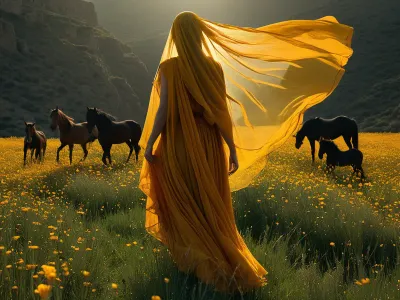
Persephone's Veil Myth Meaning & Symbolism
A myth of the maiden goddess abducted into the underworld, whose veil symbolizes the threshold between life and death, innocence and sovereignty.
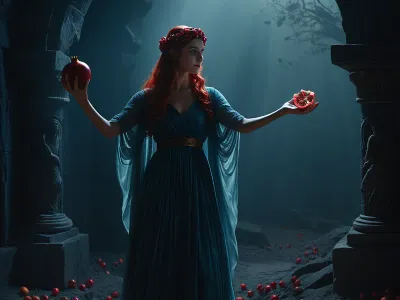
Persephone's Pomegranate Myth Meaning & Symbolism
The maiden Persephone is abducted to the underworld. Eating six pomegranate seeds binds her to a cyclical life between light and darkness.
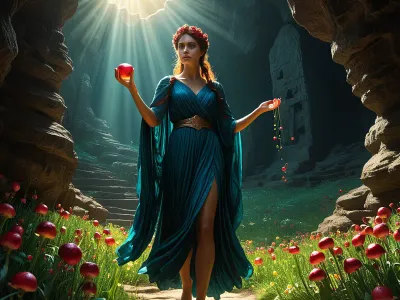
Persephone's Return Myth Meaning & Symbolism
The daughter of Demeter is taken to the underworld, causing eternal winter, and returns each spring, embodying the cycle of life, death, and rebirth.
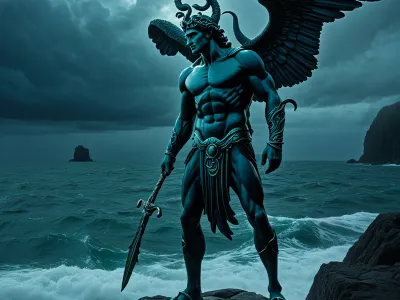
Perseus Myth Meaning & Symbolism
A son of Zeus, guided by gods, uses cunning and gifts to behead Medusa, rescue Andromeda, and fulfill a destiny foretold by prophecy.
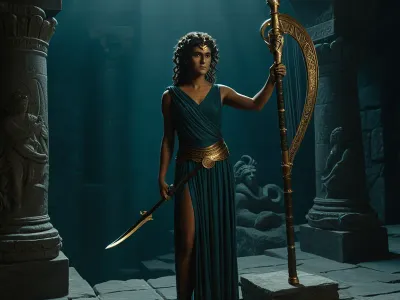
Perseus's Harpe Myth Meaning & Symbolism
The myth of the hero Perseus, armed with a divine sickle-sword, who must confront the petrifying Gorgon Medusa to reclaim his stolen future.
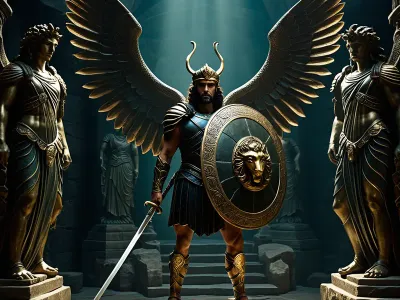
Perseus's Shield Myth Meaning & Symbolism
The hero Perseus defeats the Gorgon Medusa not by direct confrontation, but by using his polished shield as a mirror to avoid her petrifying gaze.
Persona Myth Meaning & Symbolism
The story of the mask that reveals the soul, a divine gift from the gods to navigate the world while protecting the sacred inner self.
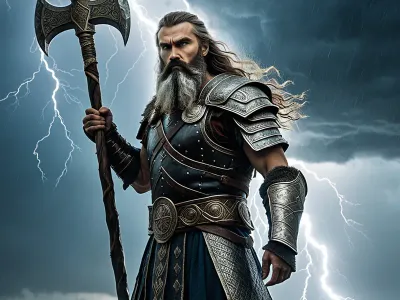
Perun Myth Meaning & Symbolism
The myth of Perun, the Slavic thunder god, tells of a cosmic battle against the serpent Veles, a story of sovereignty, righteous fury, and the fertilizing storm.

Phaethon's Sisters Myth Meaning & Symbolism
The Heliades, sisters of Phaethon, weep amber as they are transformed into poplar trees, embodying eternal grief and the natural world's response to cosmic folly.

Phaeacian Harbor Myth Meaning & Symbolism
A magical island kingdom offers Odysseus perfect rest and passage home, representing the psyche's necessary sanctuary before reintegration.

Pheidippides Myth Meaning & Symbolism
A herald runs to save his city, delivers victory, meets a god in the wilderness, and dies—a story of ecstatic duty and the body's final, sacred message.
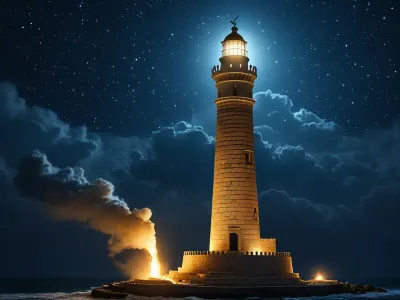
Pharos of Alexandria Myth Meaning & Symbolism
A myth of a king, a god, and a promise: the creation of a lighthouse so magnificent it became a wonder, a beacon, and a warning.
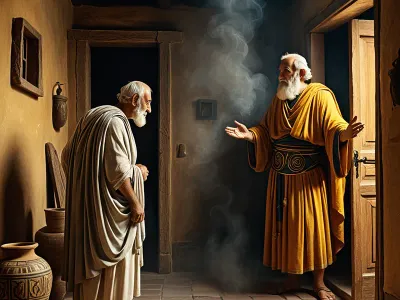
Philemon and Baucis Myth Meaning & Symbolism
An elderly couple's humble hospitality to disguised gods transforms them into intertwined trees, a timeless symbol of sacred connection and enduring grace.

Philoktetes Myth Meaning & Symbolism
A hero, cursed with a festering wound, is abandoned on a desolate island for ten years, only to be retrieved when his suffering becomes the key to victory.

Philocetes Myth Meaning & Symbolism
A Greek hero, wounded and abandoned for ten years, whose unbearable suffering and sacred bow become essential to the final victory at Troy.
Philomela Myth Meaning & Symbolism
A princess is silenced by violence, yet finds a voice through art, weaving her trauma into a tapestry that demands justice and transforms her being.
Philomela's Tongue Myth Meaning & Symbolism
A princess, silenced by violence, weaves her story into a tapestry, transforming trauma into a testament of truth and ultimate metamorphosis.

Philotes Myth Meaning & Symbolism
Philotes, the primordial spirit of friendship and social bonds, emerges from the cosmic void to weave the essential threads of human connection and intimacy.
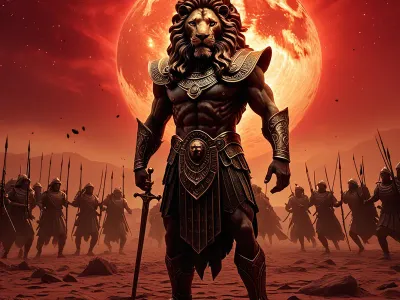
Phobos Myth Meaning & Symbolism
Phobos is the divine personification of panic and rout, born of war and love, whose terror is a sacred force to be understood, not merely vanquished.

Phyllis transformed into an almond tree Myth Meaning & Symbolism
A princess dies of grief awaiting her lover, only to be reborn as an almond tree that blossoms at his touch, embodying love's death and resurrection.
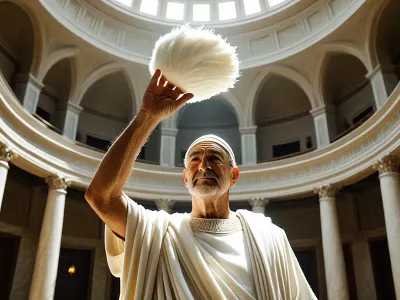
Pileus Myth Meaning & Symbolism
The Pileus, a simple felt cap, was a potent Roman symbol of manumission and liberty, marking the sacred transition from bondage to self-determined life.

Pilgrim's Progress Myth Meaning & Symbolism
An allegorical journey of the soul, where a pilgrim named Christian flees damnation, faces trials, and seeks salvation in a perilous, symbolic landscape.

Pitys Myth Meaning & Symbolism
A nymph pursued by Pan transforms into a pine tree, her story a timeless allegory of desire, violation, and the soul's rooted resilience.
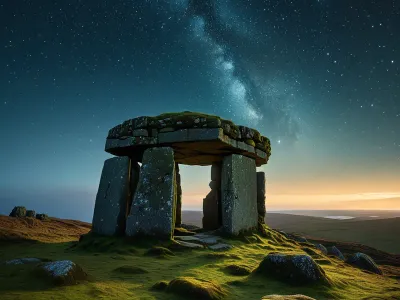
Pixies Myth Meaning & Symbolism
Ancient earth spirits of mischief and memory, guardians of the liminal wilds, whose pranks reveal forgotten truths and bind the human soul to the land.
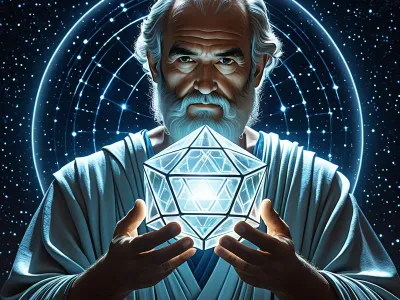
Platonic Solids Myth Meaning & Symbolism
The tale of the five perfect forms, the sacred geometry at the heart of the cosmos, given as the divine blueprint for all material existence.
Plato's Cave Myth Meaning & Symbolism
Prisoners chained in a cave mistake shadows for reality until one is freed, ascending to see the true world and returning with a transformative vision.
Pleiades Myth Meaning & Symbolism
Seven divine sisters, pursued by a hunter, are transformed into a star cluster by Zeus, becoming an eternal constellation of grief, refuge, and celestial memory.
Pneuma Myth Meaning & Symbolism
The story of the divine breath that animates all life, bridging the chasm between the eternal gods and the mortal, breathing world of humanity.

Plutus Myth Meaning & Symbolism
The myth of Plutus, the blind god of wealth, reveals that true abundance is not a random gift but a sacred trust earned through character and right relationship.
Poludnitsa Myth Meaning & Symbolism
A tale of the Noon Witch, a field spirit who tests those who work at midday, teaching respect for liminal times and the hidden forces of nature.
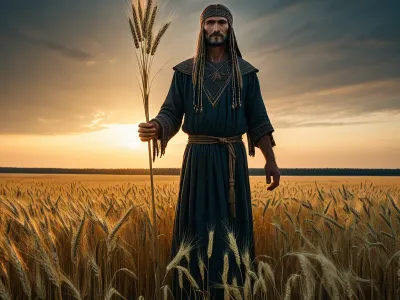
Polevoi Myth Meaning & Symbolism
The myth of Polevoi, a shape-shifting field spirit, embodies the raw, untamed psyche at the border of the known world and the wild unconscious.
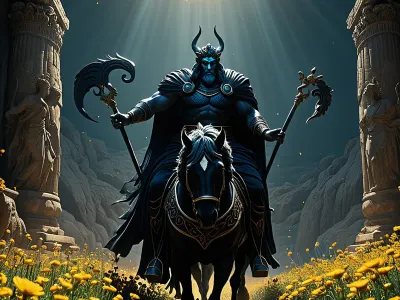
Pomegranate Seeds Myth Meaning & Symbolism
The goddess Persephone is abducted by Hades. Eating six pomegranate seeds binds her to the Underworld, creating the cycle of seasons.
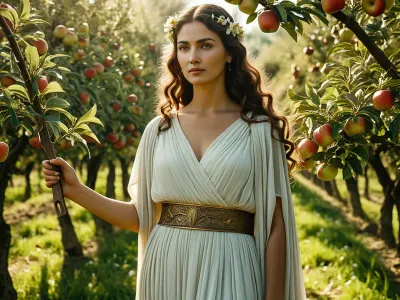
Pomona Myth Meaning & Symbolism
The story of the orchard goddess who shuns all suitors until Vertumnus, god of seasons, transforms himself to win her trust and sacred partnership.
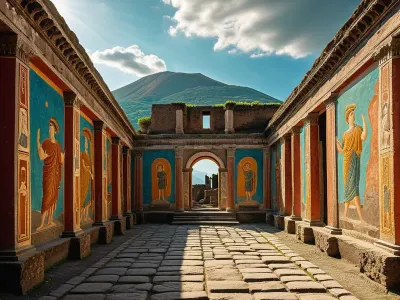
Pompeii Frescoes Myth Meaning & Symbolism
A tale of a city's hubristic artistry, a divine punishment that petrifies its beauty, and the eternal echo of life captured in a moment of ash.
Pontus Myth Meaning & Symbolism
Pontus is the primordial sea, born of Gaia. He is the dark, fertile abyss from which ancient marine life and monstrous forms first emerged.
Polyphemus Myth Meaning & Symbolism
Odysseus blinds the one-eyed giant Polyphemus to escape his cave, a primal encounter with the monstrous, isolated self.
Pooka Myth Meaning & Symbolism
A shapeshifting spirit of the wild, the Pooka embodies the untamed psyche, offering chaotic gifts and demanding a reckoning with our own raw, transformative nature.
Poseidon Myth Meaning & Symbolism
The myth of Poseidon, god of the churning sea and shifting earth, embodies the untamed, foundational forces of the psyche and the sovereignty of the emotional realm.
Poseidon's Chariot Myth Meaning & Symbolism
The myth of the sea god's chariot symbolizes the raw, untamed power of the unconscious and the heroic task of harnessing it for creation, not destruction.
Poseidon's Domain Myth Meaning & Symbolism
The myth of Poseidon's turbulent, sovereign realm beneath the waves, a story of primal power, emotional tempests, and the foundation of the world.
Poseidon's Horses Myth Meaning & Symbolism
The story of the divine horses born from Poseidon's rage, embodying the untamed sea and the human struggle to harness primal, unconscious power.
Poseidon's Palace Myth Meaning & Symbolism
A journey to the heart of the sea, where the god of earthquakes reigns over a palace of coral and chaos, embodying the untamed power of the deep.
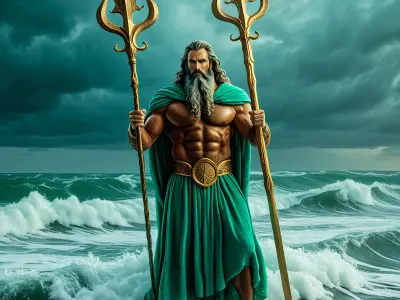
Poseidon's Trident Myth Meaning & Symbolism
The story of the three-pronged scepter forged by the Cyclopes, granting Poseidon dominion over the chthonic seas and the human soul's turbulent depths.
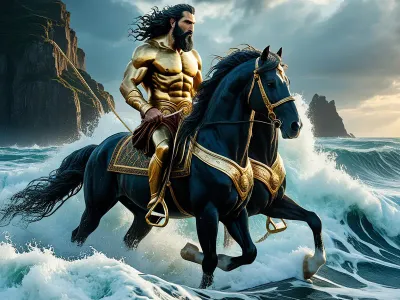
Poseidon's Steeds Myth Meaning & Symbolism
The story of the god of the sea creating and mastering his immortal horses, symbols of raw oceanic power, untamed emotion, and sovereign will.

Poseidon's Net Myth Meaning & Symbolism
Aphrodite and Ares are ensnared in an unbreakable net by Hephaestus, exposing their secret affair to the laughter of the Olympian gods.
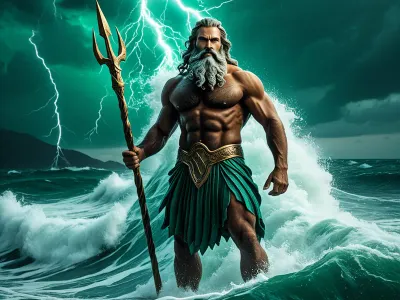
Poseidon's Waves Myth Meaning & Symbolism
The myth of Poseidon's tempestuous power, where the sea god's fury tests mortals, symbolizing the soul's confrontation with primal, unconscious forces.
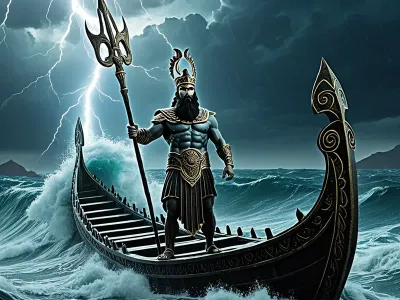
Poseidon's Wrath Myth Meaning & Symbolism
A myth of divine fury punishing human hubris, revealing the sea's dual nature as life-giver and destroyer, and the psyche's chaotic depths.
Priapus Myth Meaning & Symbolism
The story of the grotesque, rejected god of fertility, whose power lies not in consummation but in the potent, protective tension of the perpetual threshold.
Procrustes Myth Meaning & Symbolism
A bandit forces travelers to fit his iron bed, stretching or amputating them. A myth of violent conformity and the hero who ends the tyranny of the single measure.

Prometheus' Fire Myth Meaning & Symbolism
A Titan steals divine fire for humanity, defying Zeus. His gift sparks civilization, but his eternal punishment becomes a symbol of defiant, transformative sacrifice.

Prometheus' Stolen Fire Myth Meaning & Symbolism
The Titan Prometheus defies Zeus to steal divine fire for humanity, gifting them knowledge and technology at the cost of eternal torment.

Prometheus's Fire Myth Meaning & Symbolism
The Titan Prometheus defies Zeus to steal divine fire for humanity, sparking civilization and enduring eternal punishment for his defiant gift.
Prometheus's Gift Myth Meaning & Symbolism
The Titan Prometheus defies Zeus to steal divine fire for humanity, gifting them knowledge and technology at the cost of eternal torment.
Prometheus Myth Meaning & Symbolism
The Titan who defied Zeus to gift fire to humanity, enduring eternal torment as the price for awakening human potential and consciousness.
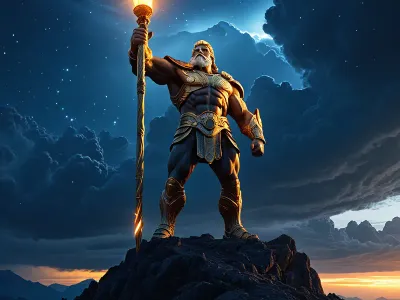
Prometheus's Torch Myth Meaning & Symbolism
The Titan Prometheus defies Zeus to steal fire from the gods, gifting humanity with knowledge, technology, and the burden of consciousness.
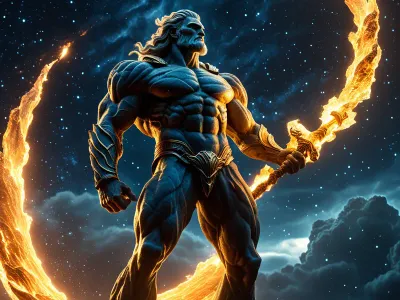
Prometheus's Spark Myth Meaning & Symbolism
The Titan Prometheus defies Zeus to steal divine fire for humanity, gifting consciousness but incurring eternal punishment for his compassionate rebellion.
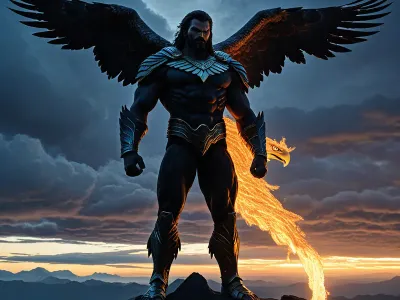
Prometheus's Stolen Fire Myth Meaning & Symbolism
The Titan Prometheus defies Zeus to steal celestial fire for humanity, gifting them knowledge and technology at the cost of eternal torment.
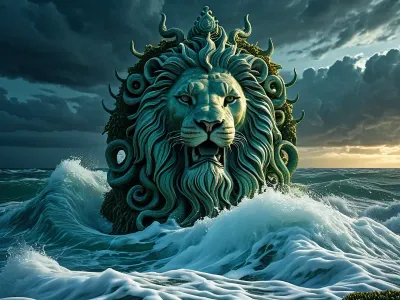
Proteus Myth Meaning & Symbolism
The tale of a prophetic sea god who reveals truth only to those who can endure his terrifying, relentless transformations.
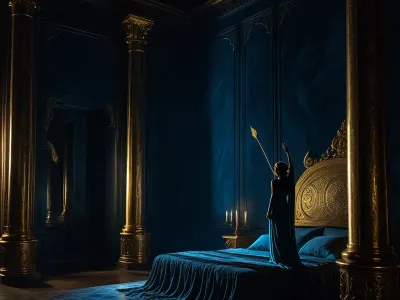
Psyche's Bed Myth Meaning & Symbolism
A mortal woman, Psyche, is forbidden to see her divine husband, Eros. Her curiosity shatters their union, sending her on a quest to reclaim love.

Psyche Myth Meaning & Symbolism
A mortal woman's love for an invisible god leads her through impossible trials, forging her soul into an immortal through devotion and courage.
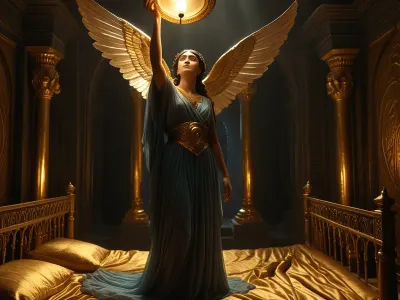
Psyche's Chamber Myth Meaning & Symbolism
A mortal woman, forbidden to see her divine husband, lights a lamp and beholds Love, losing him and beginning a harrowing quest for reunion.
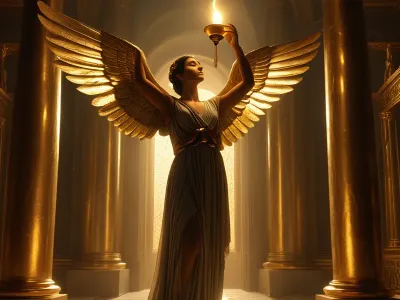
Psyche's Lamp Myth Meaning & Symbolism
A mortal woman, Psyche, breaks a divine taboo by illuminating her mysterious lover, Eros, with a lamp, initiating a perilous quest for reunion and apotheosis.

Psyche's Tasks Myth Meaning & Symbolism
A mortal woman, Psyche, must complete four impossible tasks to reclaim her divine lover, Eros, a journey of the soul through ordeal to apotheosis.

Psyche's Sanctuary Myth Meaning & Symbolism
A mortal woman's love for an unseen god leads her through impossible trials to achieve divine wholeness and union, forging her own sanctuary.
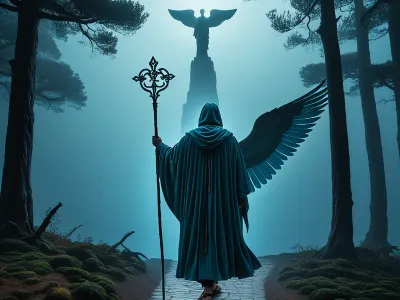
Psychopomp Myth Meaning & Symbolism
The myth of the Psychopomp, the soul-guide who shepherds the dead to the underworld, revealing the sacred art of navigating life's ultimate transitions.
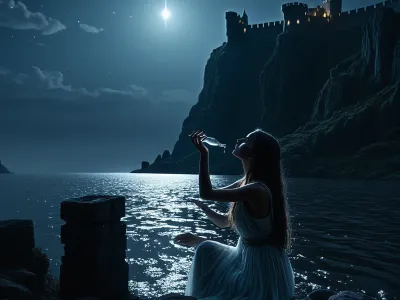
Psyche's Tears Myth Meaning & Symbolism
A mortal woman's love for a god is tested by impossible tasks, her tears becoming the catalyst for divine intervention and ultimate transformation.
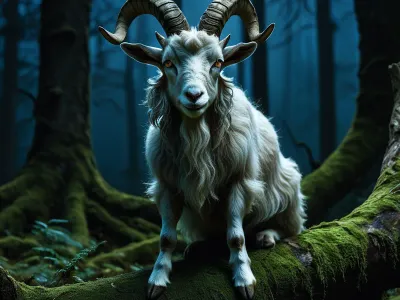
Puck/Robin Goodfellow Myth Meaning & Symbolism
A shapeshifting spirit of the wild borderlands, Puck embodies the untamed, chaotic, and transformative force that disrupts order to reveal deeper truths.
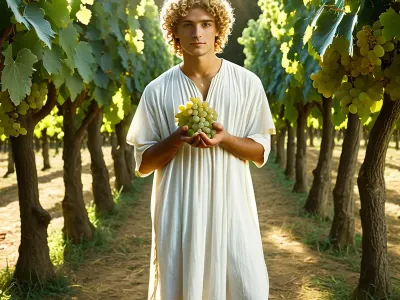
Puer Aeternus Myth Meaning & Symbolism
The myth of the divine, ever-youthful boy who embodies boundless potential and the perilous refusal of the mortal world's weight and time.
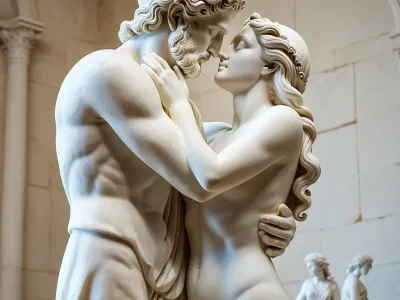
Pygmalion Myth Meaning & Symbolism
A sculptor, disgusted by mortal women, falls in love with his perfect ivory statue. The goddess Aphrodite grants his prayer, bringing the statue to life.
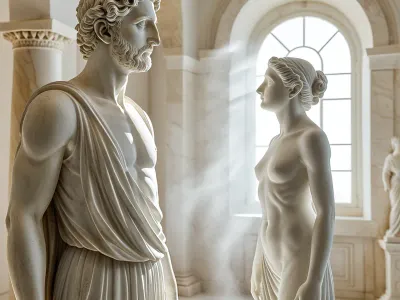
Pygmalion's Statue Myth Meaning & Symbolism
A sculptor, disgusted by mortal women, carves his ideal. He falls in love with the statue, and through divine grace, his creation becomes a living woman.
Pyramus and Thisbe Myth Meaning & Symbolism
Two lovers, separated by a wall, plan a secret meeting. A tragic misunderstanding leads to a double suicide, staining a mulberry tree forever.
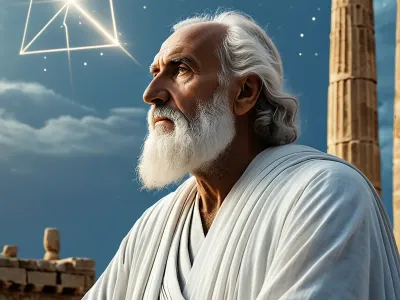
Pythagoras Myth Meaning & Symbolism
The story of a man who sought the divine pattern behind all things, founding a mystical brotherhood on the principle that number is the soul of the world.
Python Myth Meaning & Symbolism
The story of Apollo's battle with the primordial serpent Python, a myth of order conquering chaos, light piercing the dark, and the birth of consciousness.
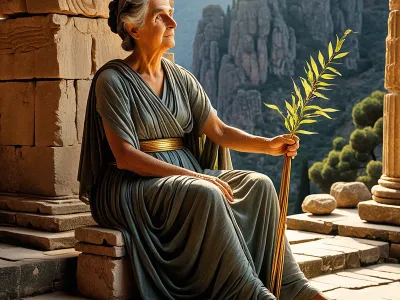
Pythia Myth Meaning & Symbolism
The story of Apollo's conquest of the chthonic serpent Python and his establishment of the Pythia, the divine mouthpiece at the world's sacred center.
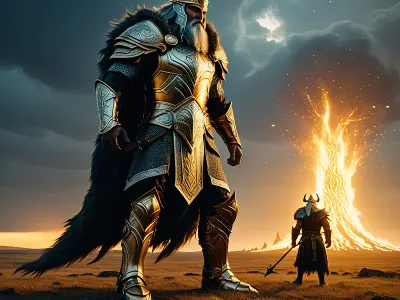
Ragnarök Myth Meaning & Symbolism
The prophesied end of the Norse cosmos, a cataclysmic battle where gods and monsters fall, and a new, green world rises from the sea.
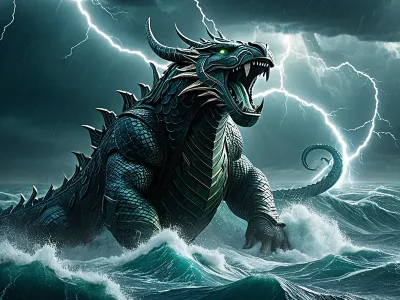
Ragnarok Myth Meaning & Symbolism
The prophesied end of the Norse cosmos, a cataclysmic battle where gods and monsters fall, clearing the way for a new world to rise from the sea.

Ran Myth Meaning & Symbolism
The story of Ran, who gathers the drowned in her net to her hall beneath the waves, a myth of the sea's fatal allure and the psyche's depths.

Ran's Net Myth Meaning & Symbolism
The tale of the sea goddess Ran, whose golden net ensnares the drowned, symbolizing fate's inescapable grasp and the soul's journey into the depths.

Ratatoskr Myth Meaning & Symbolism
A squirrel runs the length of the World Tree, carrying insults between a serpent and an eagle, weaving a tapestry of conflict and connection.
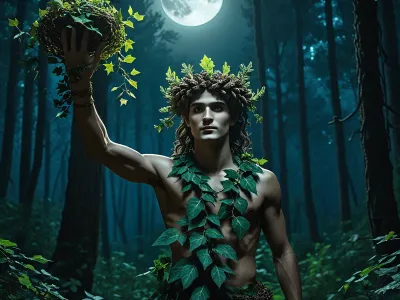
Rattle of Dionysus Myth Meaning & Symbolism
The myth of the sacred rattle, the *thyrsus*, wielded by Dionysus, embodying the ecstatic dissolution of the self and the terrifying, fertile chaos of nature's raw power.
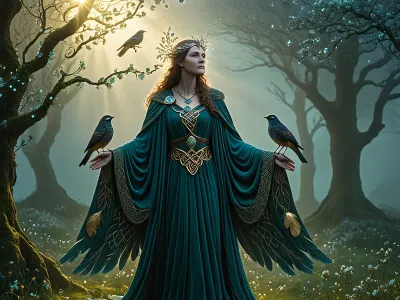
Rhiannon's Birds Myth Meaning & Symbolism
A goddess wrongly accused finds redemption through magical birds whose song heals sorrow and awakens the soul from a long sleep.

River Styx Myth Meaning & Symbolism
The sacred, binding river of the Underworld, whose waters separate the living from the dead and form the unbreakable oath of the gods.
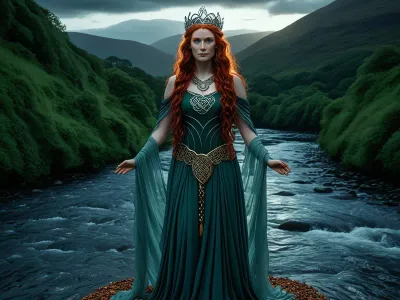
River Boyne Myth Meaning & Symbolism
A goddess, transformed into a river, flees a jealous god to bring the waters of inspiration and wisdom to the mortal world.
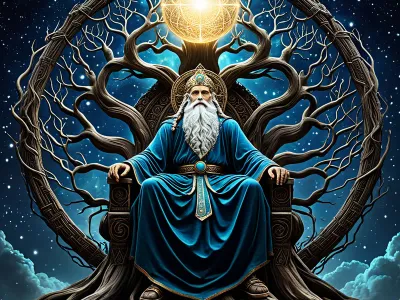
Rod Myth Meaning & Symbolism
The myth of Rod, the primordial Slavic creator who shaped the cosmos from chaos and established the sacred laws of fate, ancestry, and the world tree.
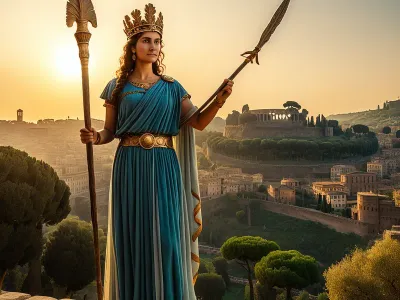
Roma Myth Meaning & Symbolism
Aeneas's descendant, a princess, flees Troy's ashes to found a city on seven hills, becoming its immortal goddess and the soul of an empire.
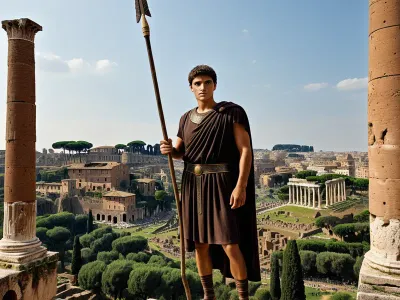
Romulus Myth Meaning & Symbolism
The myth of the orphaned twins, suckled by a she-wolf, whose rivalry leads to the founding of Rome and the primal crime of fratricide.
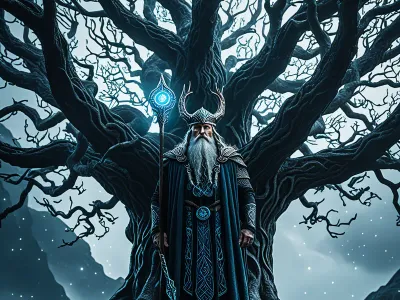
Runes Myth Meaning & Symbolism
The god Odin hangs himself on the World Tree for nine nights, pierced by his own spear, to gain the secret wisdom of the Runes.

Runestones Myth Meaning & Symbolism
The myth of how the god Odin sacrificed himself to win the secret of the runes, the primal alphabet that carves reality from chaos.
Rusalka/Vila Myth Meaning & Symbolism
A spirit of water and forest, born from a woman's untimely death, eternally caught between vengeance and longing, embodying nature's wild, untamed soul.
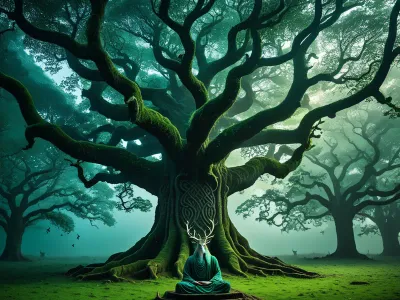
Sacred Groves Myth Meaning & Symbolism
A profound myth where the forest is a living temple, a threshold to the Otherworld, and a mirror for the soul's deepest wilderness.

Sacred Wells Myth Meaning & Symbolism
A journey into the myth of Celtic sacred wells, where water holds memory, guardians test the soul, and the seeker finds transformation in the depths.

Sadko and the Sea King Myth Meaning & Symbolism
A poor musician's descent into the oceanic underworld to bargain with a chaotic god, testing the power of art against the deep unconscious.
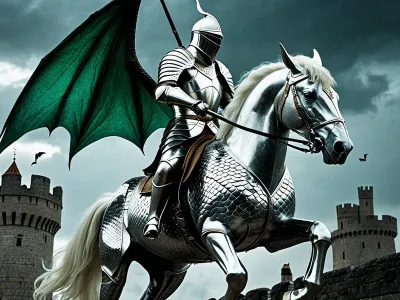
Saint George and the Dragon Myth Meaning & Symbolism
A knight confronts a dragon terrorizing a city, saving a princess and liberating the people, symbolizing the triumph of consciousness over primal chaos.
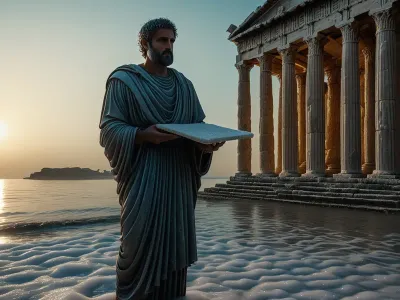
Salarium Myth Meaning & Symbolism
The story of the spirit Salarium, born from the primal sea, who teaches humanity the sacred art of preservation and the binding nature of true value.

Salmon of Llyn Llyw Myth Meaning & Symbolism
A myth of a sacred salmon, keeper of all wisdom, whose capture and consumption by a hero ignites a profound transformation of consciousness.

Salmon of Wisdom Myth Meaning & Symbolism
A magical salmon gains all the world's knowledge. A young hero's quest to taste it reveals the perilous, transformative path to true wisdom.
Salon of Madame de Staël Myth Meaning & Symbolism
A myth of a brilliant woman whose Parisian salon becomes a sanctuary for free thought, challenging a tyrant's empire with the power of conversation and soul.

Samhain Myth Meaning & Symbolism
The myth of Samhain marks the Celtic new year, a night when the veil between worlds thins, the dead return, and chaos offers a chance for profound renewal.
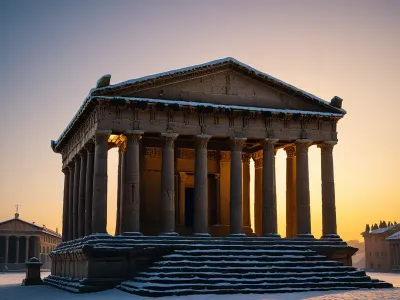
Saturnalia Myth Meaning & Symbolism
A festival of winter chaos where slaves ruled, masters served, and the world turned upside-down to honor a deposed god of a lost golden age.
Scylla Myth Meaning & Symbolism
A nymph transformed into a ravenous monster, Scylla dwells in a narrow strait, creating an impossible choice for all who must pass her by.
Sídhe mounds Myth Meaning & Symbolism
A tale of ancient gods retreating into the earth, becoming the Aos Sí, who dwell within luminous mounds that are portals between worlds and states of being.

Selkie Myth Meaning & Symbolism
A myth of seal-people who shed their skins to walk on land, often captured by humans, speaking to the soul's longing for its primal, authentic home.
Semele beholding Zeus Myth Meaning & Symbolism
A mortal princess, consumed by a lover's doubt, demands to see her divine consort's true form and is incinerated by the unbearable glory of godhead.
Seven Against Thebes Myth Meaning & Symbolism
A cursed king's sons, Eteocles and Polynices, shatter their oath and destroy each other, fulfilling a family doom and besieging their own city.
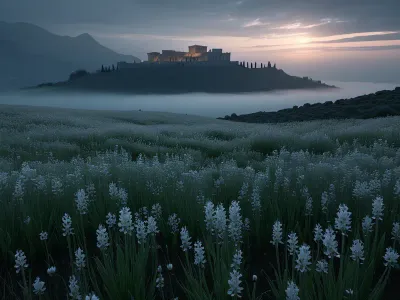
Shades in the Underworld Myth Meaning & Symbolism
The story of the insubstantial, memory-haunted dead in Hades' realm, a foundational reflection on identity, loss, and the nature of consciousness.
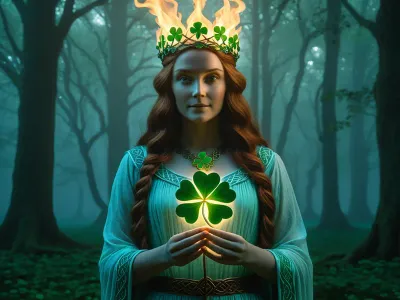
Shamrock Myth Meaning & Symbolism
A tale of the goddess Brigid weaving a three-leafed charm from memory, light, and shadow to guide lost souls back to wholeness.
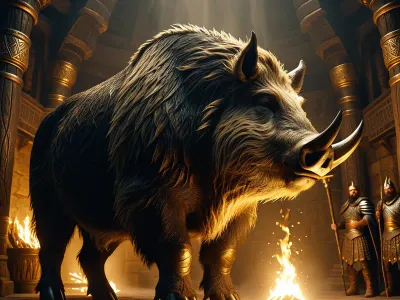
Sæhrímnir Myth Meaning & Symbolism
The magical boar slain and reborn each day to feed the warriors of Valhalla, embodying the eternal cycle of sacrifice and regeneration.

Sidhe Myth Meaning & Symbolism
The story of the Sidhe, the luminous people of the mounds, who retreated from our world, leaving a veil between reality and the eternal, enchanted realm.

Siege of Troy Myth Meaning & Symbolism
A decade-long war ignited by a goddess's vanity, a stolen queen, and a wooden horse, revealing the ruinous cost of pride, desire, and destiny's inescapable weave.

Sif Myth Meaning & Symbolism
A myth of theft, reparation, and alchemical transformation, where the goddess Sif's golden hair is stolen and replaced with living gold by the trickster Loki.

Sif's Hair Myth Meaning & Symbolism
The god Loki shears Sif's magical hair, a violation demanding impossible reparation that sparks the creation of divine treasures from the forge of dwarves.
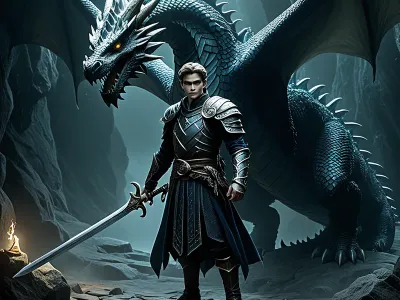
Sigurd Myth Meaning & Symbolism
A hero slays a dragon, gains cursed wisdom, and is undone by a broken oath and love's betrayal—a saga of fate and the shadow of glory.
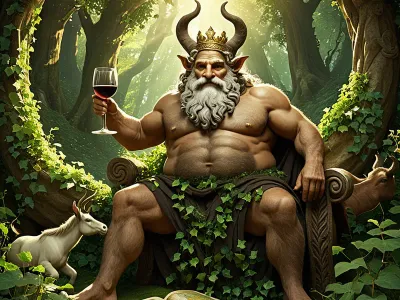
Silenus Myth Meaning & Symbolism
The myth of the drunken, wise old satyr who holds the secret of life's greatest good, revealing truth through paradox and ecstatic dissolution.
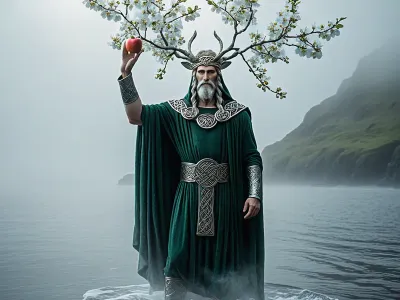
Silver Branch Myth Meaning & Symbolism
A sacred branch of silver apple blossoms calls a mortal to the Otherworld, bridging the seen and unseen realms in a journey of initiation.
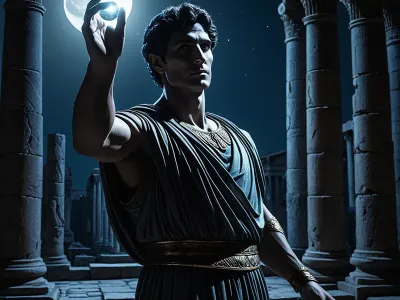
Sinister Myth Meaning & Symbolism
The Roman spirit of the left side, a paradoxical guardian of ill-omen and hidden fortune, challenging the conscious order to reveal deeper truths.
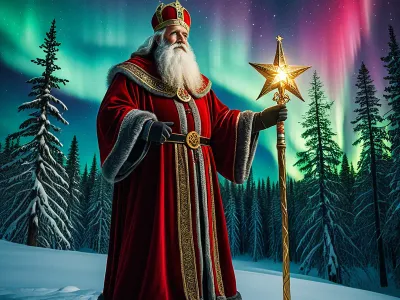
Sinterklaas/Santa Claus Myth Meaning & Symbolism
A mythic figure of winter, traversing the liminal dark to judge and gift, embodying the collective psyche's negotiation of morality, abundance, and the unconscious.

Sirens Myth Meaning & Symbolism
Bird-women whose irresistible song lures sailors to their doom, representing the fatal allure of untransformed desire and the call to psychic wholeness.

Sisyphus Myth Meaning & Symbolism
A cunning king defies the gods and is condemned to eternally push a boulder uphill, only to watch it roll down again.
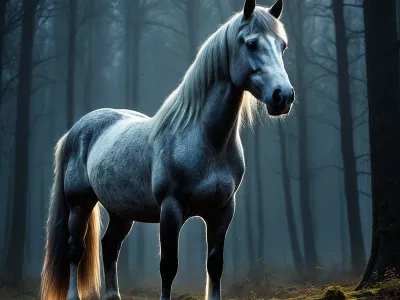
Sivka-Burka Myth Meaning & Symbolism
A tale of a seemingly foolish youngest son who, with the aid of a magical horse, sees the truth of his destiny and wins a kingdom.

Skadi Myth Meaning & Symbolism
A giantess of winter seeks vengeance for her father's death, leading to a fateful marriage and a profound choice between the wild and the hall.

Skadi's Snowshoes Myth Meaning & Symbolism
A giantess dons snowshoes to seek vengeance for her father's death, leading to an unexpected marriage and a choice between two worlds.

Skaði Myth Meaning & Symbolism
A jötunn goddess of winter demands vengeance for her slain father, leading to an uneasy marriage and a final, solitary return to her wild mountains.
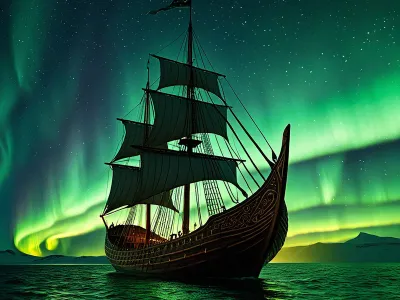
Skíðblaðnir Myth Meaning & Symbolism
The tale of a magical ship, crafted by trickster gods, that can sail any sea, fold into a pocket, and always finds a favorable wind.
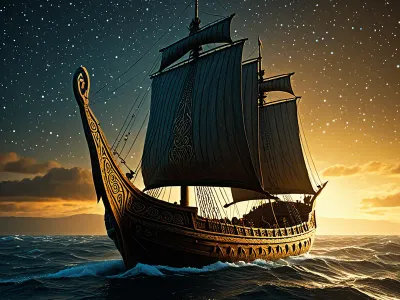
Skidbladnir Myth Meaning & Symbolism
A magical ship, crafted by dwarves, that can sail any sea, carry all the gods, yet fold small enough to fit in a pocket. A symbol of infinite potential.

Skuld Myth Meaning & Symbolism
Skuld, the youngest Norn, weaves the future from necessity. She represents the inescapable yet mutable thread of what is yet to come.
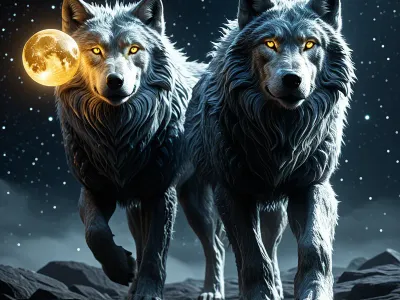
Skoll and Hati Myth Meaning & Symbolism
Two cosmic wolves eternally pursue the sun and moon, a myth of primal chase and the cyclical nature of shadow and light within the psyche.
Sköll and Hati Myth Meaning & Symbolism
Two cosmic wolves eternally pursue the sun and moon, foretelling the end of an age and the necessity of confronting primal, devouring forces.
Sól Myth Meaning & Symbolism
The goddess Sól drives the sun's chariot across the sky, eternally fleeing the wolf Sköll, in a myth of radiant duty and inevitable transformation.
Sleeping Beauty Myth Meaning & Symbolism
The moon goddess Selene falls in love with the mortal shepherd Endymion, who is granted eternal sleep to preserve his beauty and their nightly communion forever.
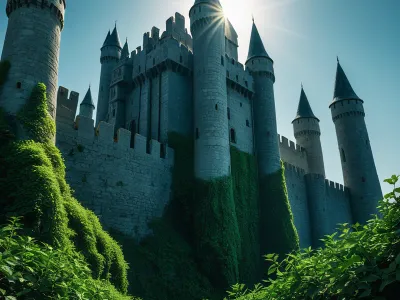
Sleeping Beauty's Castle Myth Meaning & Symbolism
A kingdom falls into a century of enchanted sleep, broken only by a prince who navigates a forest of thorns to awaken the slumbering princess and her realm.
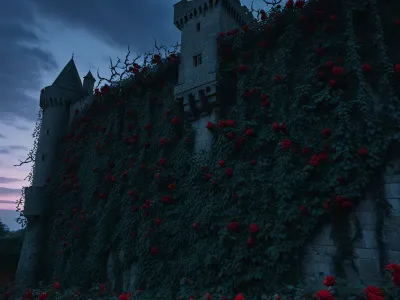
Sleeping Beauty's Thorn Hedge Myth Meaning & Symbolism
A kingdom falls into an enchanted sleep behind an impenetrable wall of thorns, awaiting the destined prince who must navigate the barrier to awaken life.
Sleipnir Myth Meaning & Symbolism
A horse of shadow and light, born from a god's cunning and a giant's strength, to carry the Allfather across all worlds.
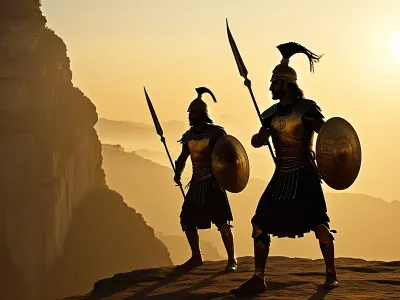
Slingers of Rhodes Myth Meaning & Symbolism
A myth of Rhodians who, blessed by Helios, defended their island with unerring slingshot accuracy, embodying the fusion of divine grace and human mastery.
Snegurochka Myth Meaning & Symbolism
A child of winter, born from snow, who yearns for human warmth. Her granted wish to love becomes the very sun that melts her away.

Sínann Myth Meaning & Symbolism
A goddess seeks ultimate wisdom from a sacred hazel well, unleashing a torrent that transforms her into Ireland's longest river.
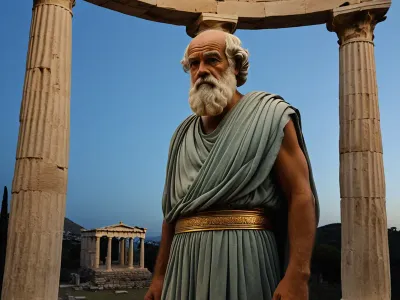
Socrates Myth Meaning & Symbolism
The story of a man who questioned everything, was condemned by the state, and chose death to preserve the integrity of his soul's quest.
Sol Invictus Myth Meaning & Symbolism
The myth of the Unconquered Sun, a Roman deity of invincible light, embodying the promise of rebirth after the darkest night.
Solar Chariot of Sol Myth Meaning & Symbolism
The goddess Sol drives the sun's chariot across the sky, pursued by a relentless wolf, in a daily cycle of light, flight, and fate.
Solomon's Circle Myth Meaning & Symbolism
A legendary king uses a sacred circle to bind chaotic spirits, a story of divine order imposed upon primal chaos through wisdom and will.
Songbirds Myth Meaning & Symbolism
A tale of the gods' stolen music, a hero's harrowing journey to the Otherworld, and the sacrifice required to bring the soul's song back to the world.
Somnambulist Seers Myth Meaning & Symbolism
A myth of seers who walk in sleep, their souls journeying beyond the world tree to bring back hidden knowledge from the roots of reality.
Soulmates Myth Meaning & Symbolism
Humans were once four-limbed, two-faced wholes, split by Zeus. The myth of soulmates is a story of primordial unity, divine punishment, and an eternal search for completion.
Sophie's Choice Myth Meaning & Symbolism
A mortal woman's tragic choice between her children, forced by the gods as the price for a glimpse of divine, world-altering truth.
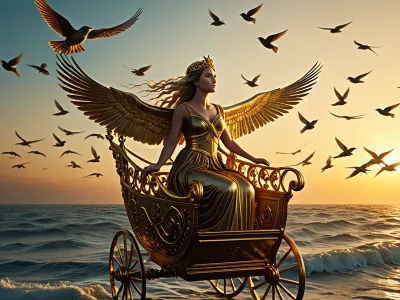
Sparrows of Aphrodite Myth Meaning & Symbolism
Aphrodite's chariot is drawn by sparrows, embodying love's sudden, fluttering arrival and the soul's ascent through earthly desire to divine connection.

Spartacus Myth Meaning & Symbolism
A Thracian gladiator leads a slave revolt against the Roman Republic, forging a brotherhood of the oppressed in a doomed but transcendent quest for freedom.
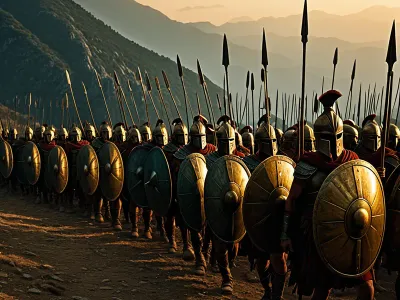
Spartan Hoplites Myth Meaning & Symbolism
The myth of the Spartan Hoplite is the story of the individual dissolved into the phalanx, forging a living wall of bronze, blood, and unbreakable will.
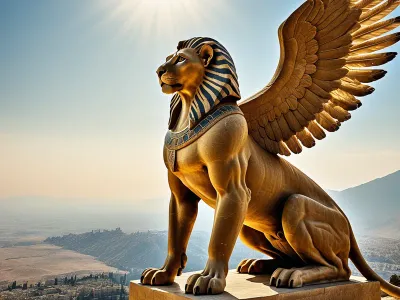
Sphinx Myth Meaning & Symbolism
A winged monster with a woman's face and a lion's body devours those who fail her riddle, until a hero's answer reveals the truth of human existence.
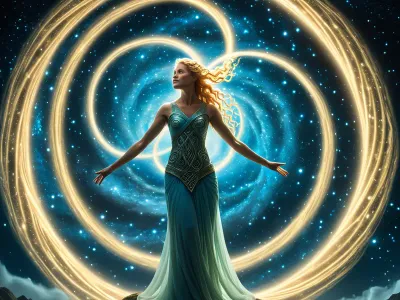
Spiral of Life Myth Meaning & Symbolism
The goddess Danu weaves the universe from her own essence, her spiral dance birthing life, demanding sacrifice, and promising eternal renewal from the core of being.
Spotted Hyena of Herodotus Myth Meaning & Symbolism
A traveler's tale of a creature that blurs the line between hunter and prey, embodying the terrifying and transformative power of the liminal shadow.

Standing Stones Myth Meaning & Symbolism
A myth of giants, gods, and the human desire to create a permanent mark on the world, etched in stone against the turning of time.
Starlight of Aphrodite Myth Meaning & Symbolism
A myth of celestial light descending, where the longing of a mortal soul calls forth a divine, transformative spark from the goddess of love.

Stone Arches Myth Meaning & Symbolism
A tale of a god's sacrifice to build the first arch, forging a bridge between the mortal world and the Otherworld, creating a threshold of power.
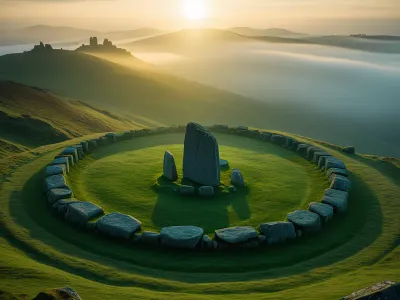
Stone Circles Myth Meaning & Symbolism
A tale of giants, gods, and druids where the land itself is woven into a sacred circle, binding the heavens to the earth through sacrifice and song.
Stone of Destiny Myth Meaning & Symbolism
A sacred stone that roars for the rightful king, embodying the deep pact between ruler, land, and the goddess of sovereignty.
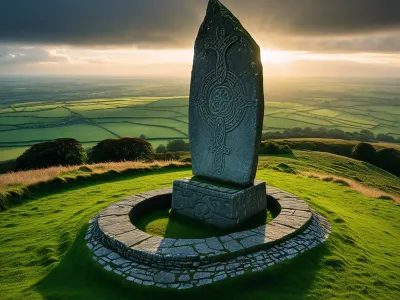
Stone of Fal Myth Meaning & Symbolism
A magical stone that cries out beneath the rightful king, symbolizing the sacred bond between ruler, truth, and the soul of the land itself.
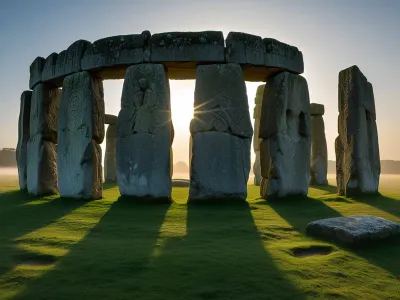
Stonehenge Myth Meaning & Symbolism
A tale of Merlin's magic, giants' stones, and a king's ambition, where a circle of stone is raised to heal a land and mark a covenant with the earth.
Stribog Myth Meaning & Symbolism
The story of Stribog, the ancient Slavic deity of winds, whose breath shapes the world, whispers fate, and embodies the primal force of change.

Styx Myth Meaning & Symbolism
The sacred river of oaths and the boundary of the underworld, where divine promises are forged and the soul's final journey begins.
Sulis Myth Meaning & Symbolism
The story of Sulis, a goddess of the sacred hot spring, embodying the primal, healing, and sovereign power of the earth's deep waters.

Sunstone Myth Meaning & Symbolism
A myth of stolen light, divine pursuit, and the forging of a new sun from a shard of the old, symbolizing the arduous creation of consciousness.
Surtr Myth Meaning & Symbolism
The fire giant Surtr, from the land of flame, will engulf the world in fire at Ragnarök, ending the old cosmos to make way for the new.
Surtr's Fire Myth Meaning & Symbolism
The fire giant Surtr emerges at Ragnarök to engulf the world in cleansing flame, a necessary end that makes way for a new, green earth.
Surt Myth Meaning & Symbolism
The fire giant Surt wields a flaming sword to end the world at Ragnarök, a myth of total destruction as the necessary precursor to renewal.
Svalinn Myth Meaning & Symbolism
The myth of the shield Svalinn, placed before the sun to protect the world from its consuming fire, a story of cosmic balance and necessary sacrifice.
Svarog Myth Meaning & Symbolism
The myth of the celestial smith who forges the sun and cosmic laws, embodying the primal act of creation from chaos into sacred order.
Svartalfheim Myth Meaning & Symbolism
The myth of the dark realm where raw, chaotic potential is forged into objects of fate and power, demanding a descent into the underworld of the self.

Svyatogor Myth Meaning & Symbolism
A giant of impossible strength, bound to the earth by his own power, whose tragic fate reveals the profound limits of the heroic ego.
Sword of Damocles Myth Meaning & Symbolism
A courtier learns the true price of absolute power when he is forced to experience its constant, looming peril firsthand.
Symposium Myth Meaning & Symbolism
A philosophical feast where seven Athenians deliver competing speeches on the nature and origin of Eros, culminating in Socrates' revelation of divine ascent.
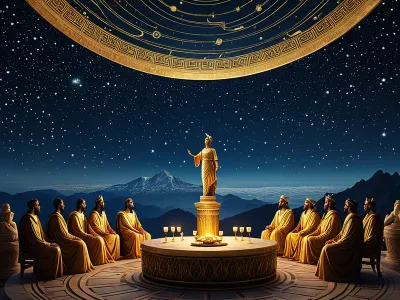
Table of the Gods Myth Meaning & Symbolism
A myth of divine hospitality where a mortal king's hubristic attempt to test the gods leads to his ruin and the establishment of cosmic law.
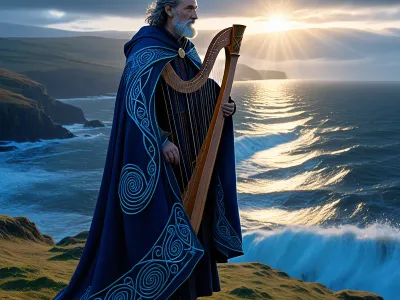
Taliesin Myth Meaning & Symbolism
A servant boy swallows a drop of divine inspiration and is reborn as Taliesin, the greatest bard, through a cycle of death, transformation, and poetic awakening.
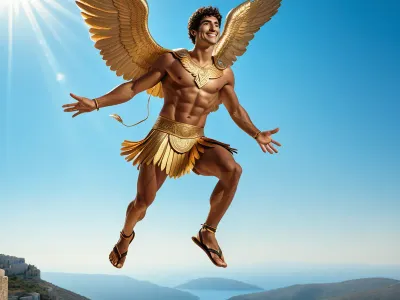
Talaria Myth Meaning & Symbolism
The story of the winged sandals, divine tools of Hermes that symbolize the swift, boundary-crossing nature of thought, message, and soul.
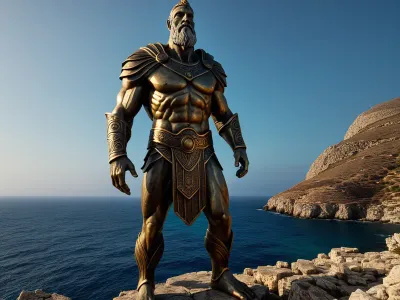
Talos Myth Meaning & Symbolism
The myth of Talos, a bronze giant forged by the gods to guard Crete, whose life-force was contained in a single, vulnerable vein.

Tantalus Myth Meaning & Symbolism
A king who betrayed divine trust is punished in the underworld, forever reaching for water and fruit that recede from his grasp.
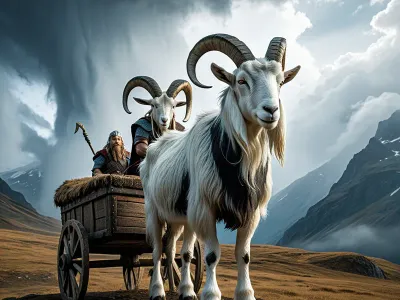
Tanngrisnir and Tanngnjóstr Myth Meaning & Symbolism
The myth of Thor's goats, who are slain and resurrected, embodying the sacred cycle of sacrifice, sustenance, and miraculous renewal.
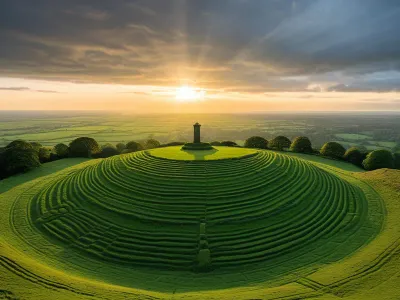
Tara Myth Meaning & Symbolism
The myth of Tara, the sacred hill of Irish kings, is a story of sovereignty, sacrifice, and the eternal marriage between ruler and land.
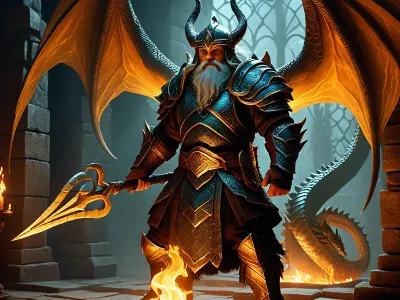
Tarnhelm Myth Meaning & Symbolism
A magical helmet forged by dwarves, granting the wearer the power to change shape and become invisible, revealing the fluid nature of identity and reality.
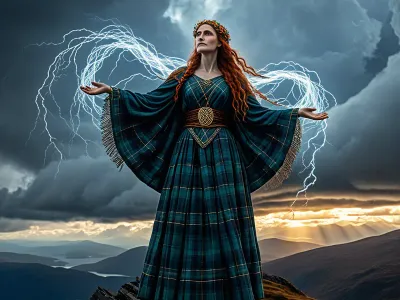
Tartan Patterns Myth Meaning & Symbolism
The Weaver Goddess, An Cailleach, creates the first tartan from the threads of the land, binding clan, fate, and identity into a sacred, living pattern.
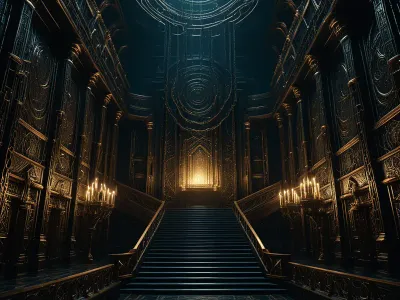
Tartarus Myth Meaning & Symbolism
The myth of Tartarus, the primordial abyss of punishment and containment, embodies the deepest shadow, the repressed unconscious, and the terrifying ground of being.
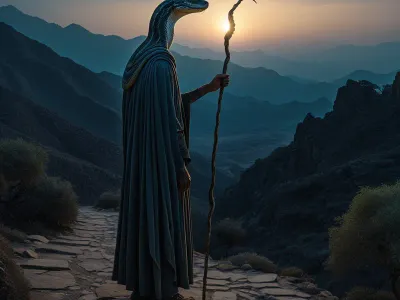
Teiresias Myth Meaning & Symbolism
A blind seer, transformed into a woman and back again, who sees the truth the gods cannot bear to hear, embodying the union of opposites.
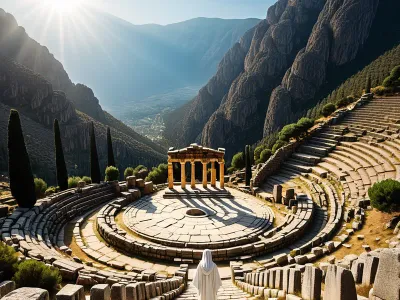
Temenos Myth Meaning & Symbolism
The myth of the sacred precinct, a hallowed space where the divine and human meet, creating a container for ritual, order, and profound psychological transformation.

Tempe Valley Rituals Myth Meaning & Symbolism
A sacred ritual born from Apollo's penance for slaying the serpent Python, cleansing the world of miasma in the pristine valley of Tempe.
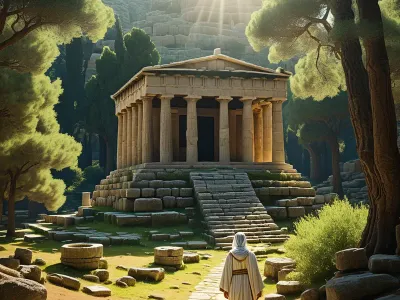
Temple of Asclepius Myth Meaning & Symbolism
The myth of the healer-god Asclepius and his sanctuaries, where the sick sought divine cures through ritual, sacred sleep, and dream-visions from the god.
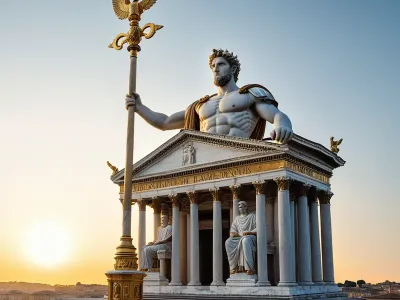
Temple of Jupiter Optimus Maximus Myth Meaning & Symbolism
The myth of Rome's central temple, a sacred pact between heaven and earth, establishing cosmic order and the soul of an empire.
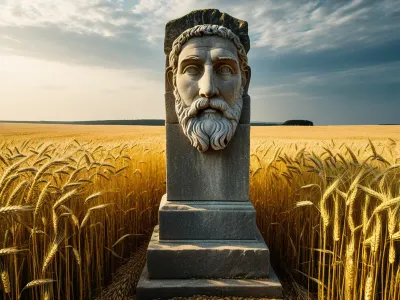
Terminus Myth Meaning & Symbolism
The myth of the boundary stone that refused to move, establishing the sacred principle that some limits are divine and must be honored.
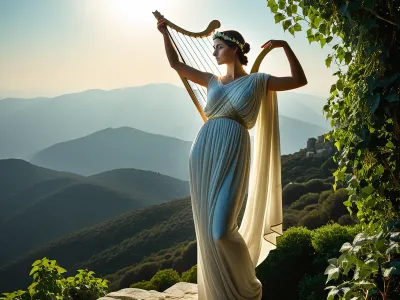
Terpsichore Myth Meaning & Symbolism
The myth of Terpsichore, Muse of dance, reveals rhythm as the sacred language that binds the human form to cosmic order and divine inspiration.
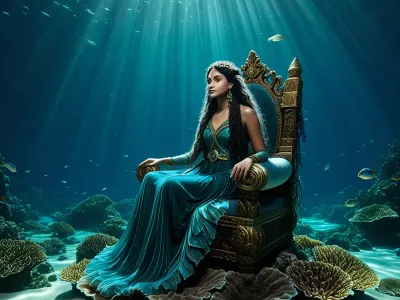
Tethys Myth Meaning & Symbolism
The myth of Tethys, the Titaness of the primal nourishing sea, embodies the hidden, generative source from which all life and consciousness flows.

Thalassa Myth Meaning & Symbolism
Thalassa is the primordial sea, mother of all life and the unconscious depths from which all forms emerge and to which they return.
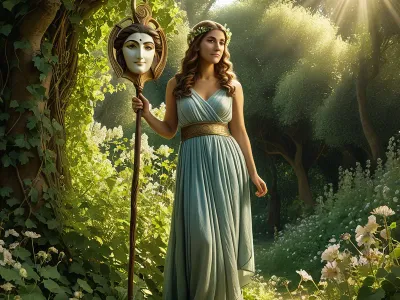
Thalia Myth Meaning & Symbolism
The Muse of Comedy, Thalia, embodies the resilient spirit that blooms with laughter and festivity after periods of darkness and silence.
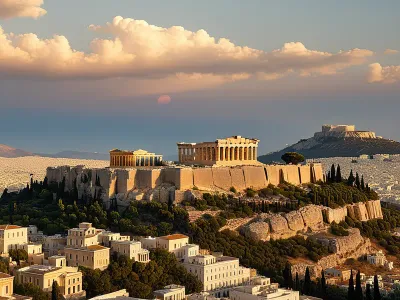
The Acropolis Myth Meaning & Symbolism
A sacred contest between Athena and Poseidon for the soul of a city, establishing divine order, wisdom, and the foundation of civilization.
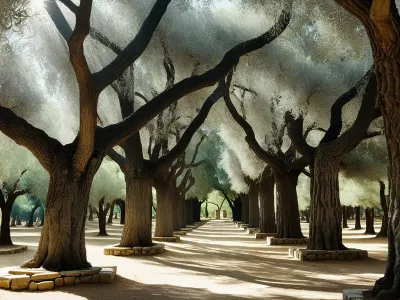
The Academy of Plato Myth Meaning & Symbolism
A sacred grove where philosophy was a divine rite, transforming seekers through dialogue with the eternal Forms, guided by the daimon of reason.
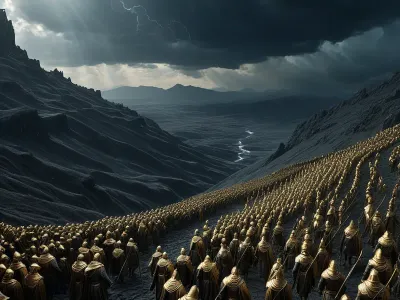
The Ages of Man Myth Meaning & Symbolism
Hesiod's tale of five races, from golden to iron, chronicling humanity's descent from divine harmony into a world of toil, strife, and forgetfulness.

The Ailm Myth Meaning & Symbolism
A myth of a primordial being whose self-sacrifice births the world tree, offering a map for profound personal and spiritual renewal.
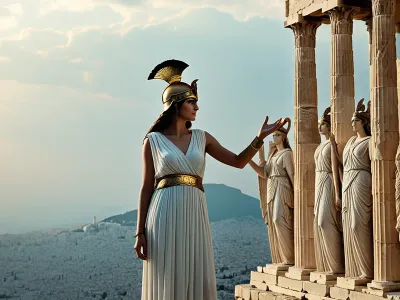
The Amnesty of Athena Myth Meaning & Symbolism
Athena persuades the vengeful Furies to accept a place of honor in Athens, transmuting blind rage into sacred, civilizing law.
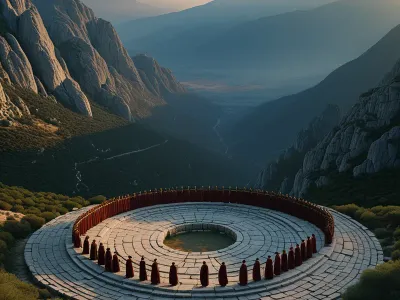
The Amphictyonic League Myth Meaning & Symbolism
A sacred pact forged not by kings, but by shared reverence for the Earth, binding disparate tribes into a league of mutual oath and collective guardianship.
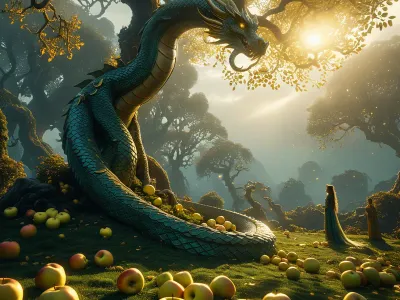
The Apples of the Hesperides Myth Meaning & Symbolism
Hercules' final labor: to steal golden apples of immortality from a garden at world's end, guarded by a dragon and the daughters of night.

The Appian Way Myth Meaning & Symbolism
A myth of the first Roman highway, built by Appius Claudius Caecus, representing the soul's disciplined journey from chaos to civilization.
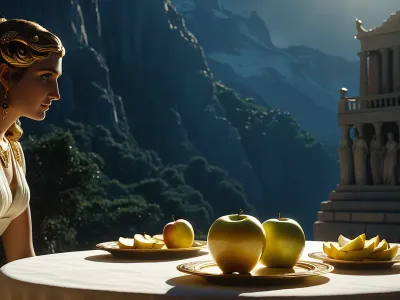
The Apple of Discord Myth Meaning & Symbolism
A golden apple inscribed 'for the fairest' is thrown among goddesses, igniting divine rivalry and setting the stage for the Trojan War.
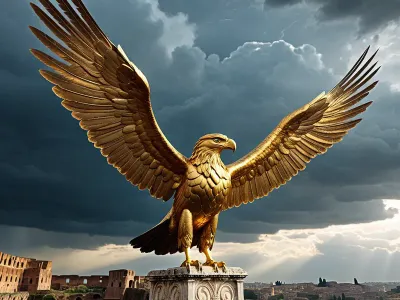
The Aquila Myth Meaning & Symbolism
The story of the legion's lost eagle, a symbol of divine favor and legionary soul, and the perilous quest to reclaim it from dishonor.
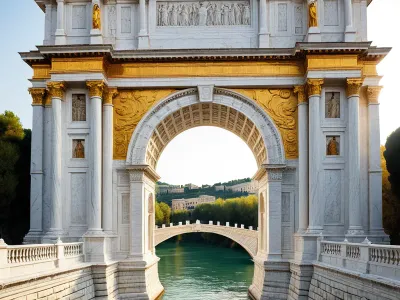
The Arch of Constantine Myth Meaning & Symbolism
A soldier receives a divine vision at a bridge, promising empire if he dares to cross. His fateful decision etches a new destiny into the stone of history.
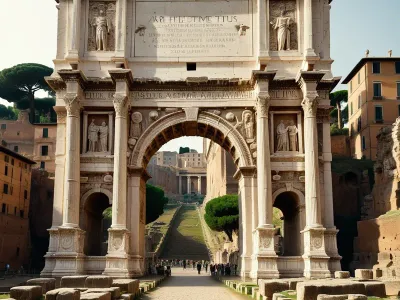
The Arch of Titus Myth Meaning & Symbolism
A myth of imperial triumph and sacred plunder, where victory's arch becomes a monument to memory and the paradoxical weight of glory.
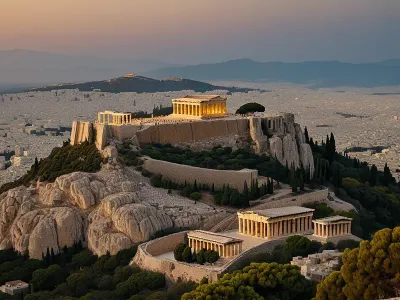
The Areopagus Myth Meaning & Symbolism
The myth of the first murder trial, where Athena transforms the Furies' ancient wrath into civic justice, establishing law over blood feud on a sacred hill.
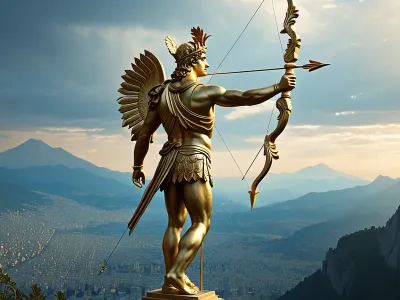
The Arrow of Apollo Myth Meaning & Symbolism
A tale of a god's wrath, a hero's desperate prayer, and the sacred arrow that brings both plague and purification to a city.
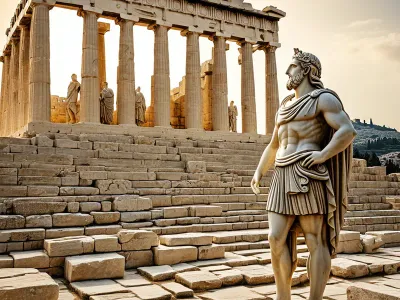
The Athenian Assembly Myth Meaning & Symbolism
A myth of divine contest and mortal choice, where the city's soul is forged through the sacred gifts of wisdom and sustenance.
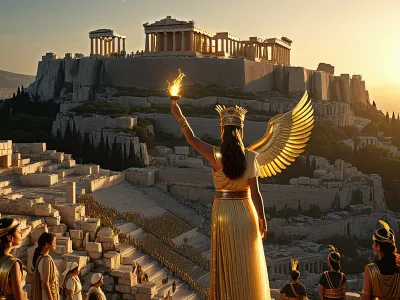
The Athenian Ecclesia Myth Meaning & Symbolism
The myth of how the divine council of Athens was forged, where mortal voices were woven into the cosmic order by the goddess of wisdom.
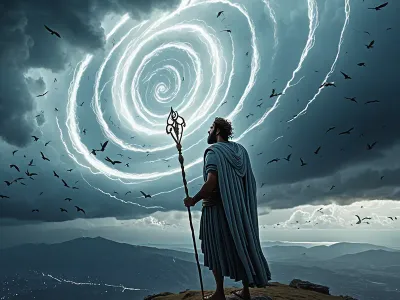
The Augurs Myth Meaning & Symbolism
The story of ancient seers who read the will of the gods in the flight of birds, teaching humanity to find order and meaning in the chaos of the world.
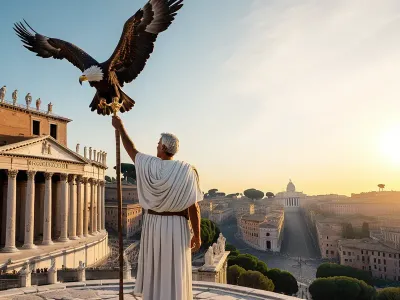
The Augurs of Rome Myth Meaning & Symbolism
The myth of priests who read the will of the gods in the flight of birds, shaping the destiny of Rome through sacred observation.
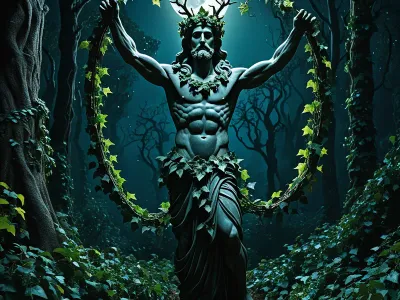
The Bacchae Myth Meaning & Symbolism
A king's rational tyranny is shattered by the ecstatic, divine madness of Dionysus, revealing the terrible cost of repressing the wild soul.
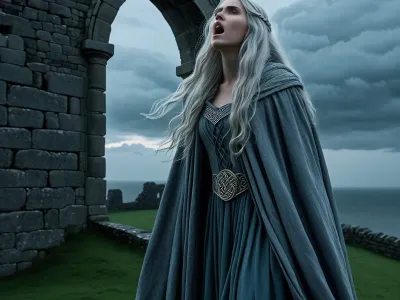
The Banshee's Knock Myth Meaning & Symbolism
A tale of a king who hears three knocks from a spectral woman, foretelling his death and forcing a confrontation with fate and legacy.
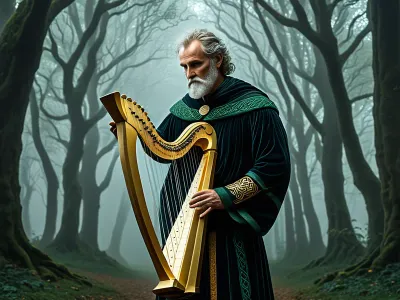
The Bard Myth Meaning & Symbolism
A mythic journey where a poet, through harrowing trials, wins the power of true speech from the Otherworld, becoming a vessel for ancestral memory and prophecy.
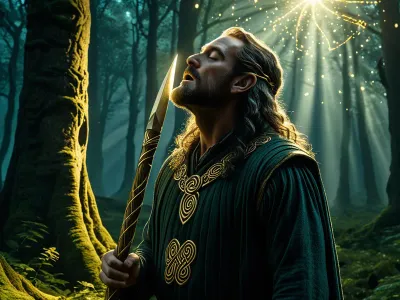
The Bardic Tradition Myth Meaning & Symbolism
The myth of the bardic tradition tells of the poet's sacred duty to remember, speak truth, and weave the world into being through the power of inspired word.

The Baths of Aphrodite Myth Meaning & Symbolism
The goddess of love bathes in a sacred spring, a ritual of renewal that becomes a site of profound human-divine encounter and transformation.

The Bath of Athena Myth Meaning & Symbolism
A mortal hunter witnesses the goddess Athena bathing, violating a sacred boundary and unleashing a fateful, transformative curse.
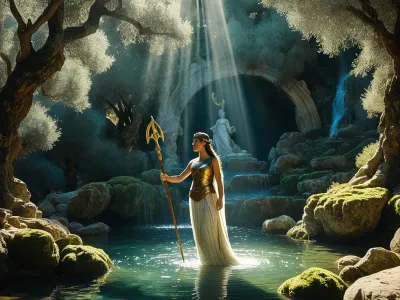
The Baths of Athena Myth Meaning & Symbolism
The myth of Tiresias, who witnessed Athena bathing and was blinded, then gifted with prophetic sight as compensation for his transgression.
The Beacon Fires of Agamemnon Myth Meaning & Symbolism
A chain of fire signals victory at Troy, but its light guides the king not to triumph, but to a fatal homecoming long foretold.
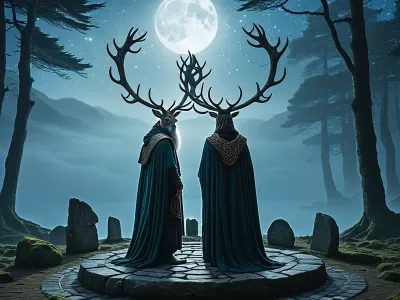
The Betwixt and Between Myth Meaning & Symbolism
A tale of a hero who is neither here nor there, navigating the sacred thresholds where worlds meet and the self is unmade and remade.
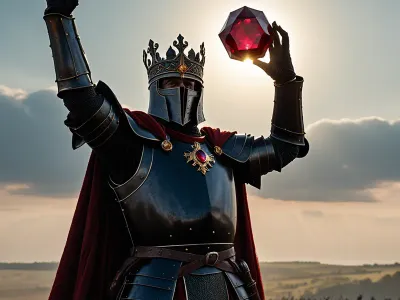
The Black Prince's Ruby Myth Meaning & Symbolism
A cursed crimson gem, passed through blood and battle, binds the fate of kings to a legacy of violence and divine sanction.

The Blackthorn Myth Meaning & Symbolism
A myth of a fierce guardian spirit, the Blackthorn embodies the paradox of harsh protection and hidden sweetness, guiding through winter's trial to spring's renewal.
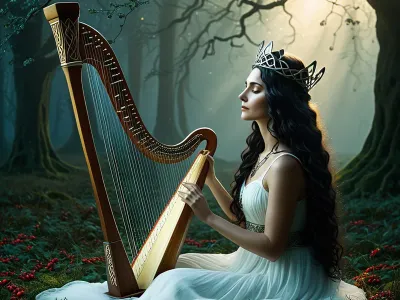
The Bone Harp Myth Meaning & Symbolism
A goddess of sovereignty, grieving her slain son, crafts a harp from his bones and sinews, weaving a song that restores life and memory from death.
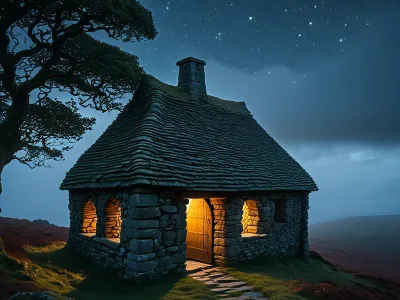
The Bothy Myth Meaning & Symbolism
A lone wanderer finds a mysterious hut at the world's edge, confronting the keeper of thresholds and the weight of all memory.
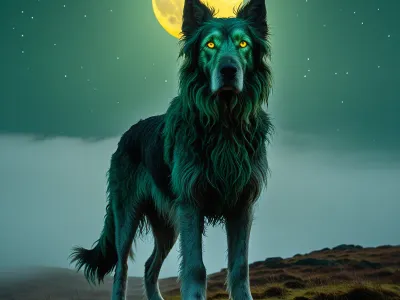
The Cù Sìth Myth Meaning & Symbolism
A spectral hound of immense size, guardian of the Otherworld's gate, whose howl is a death knell and whose presence marks the ultimate threshold.

The Cailleach Myth Meaning & Symbolism
The ancient Celtic goddess of winter, stone, and sovereignty, a primordial force of creation, destruction, and the deep, dreaming earth.
The Cailleach's Hare Myth Meaning & Symbolism
A myth of the ancient hag-goddess and her white hare, a creature of prophecy and power, whose capture reveals the deep bond between land and spirit.
The Cailleach's Hearth Myth Meaning & Symbolism
The ancient Celtic goddess of winter guards a sacred, dying hearth. A mortal's quest to rekindle it becomes a journey of inner transformation and renewal.
The Calydonian Boar Hunt Myth Meaning & Symbolism
A king's forgotten sacrifice unleashes a monstrous boar, uniting heroes in a hunt that becomes a crucible of honor, betrayal, and primal rage.

The Cap of Doctor Faustus Myth Meaning & Symbolism
A scholar's pact for a cap granting limitless knowledge leads to a confrontation with the divine, exploring the cost of transcending human limits.
The Capitoline Wolf Myth Meaning & Symbolism
A sacred she-wolf saves the abandoned twins Romulus and Remus, an act of feral grace that leads to the violent founding of Rome.
The Cauldron of Inspiration Myth Meaning & Symbolism
A myth of the divine cauldron of poetic wisdom, guarded by dark goddesses, won through sacrifice to transform raw experience into inspired art.
The Cave of Plato Myth Meaning & Symbolism
Prisoners chained in a cave mistake shadows for reality. One escapes to see the sun, returning with a truth they cannot share.
The Cave of the Sibyl Myth Meaning & Symbolism
A mortal woman granted eternal life but not eternal youth, who delivers cryptic prophecies from a sacred cave, embodying the agony of divine truth.

The Cave of the Winds Myth Meaning & Symbolism
Odysseus receives the winds of fate bound in a leather sack from Aeolus, only for his crew's folly to unleash a catastrophic storm.

The Cestus of Aphrodite Myth Meaning & Symbolism
The myth of Aphrodite's magical girdle, a divine artifact that compels irresistible desire, weaving together themes of primal allure and the power of enchantment.
The Champion's Portion Myth Meaning & Symbolism
A mythic contest for the finest cut of meat becomes a brutal, magical trial to determine the supreme hero, exposing the shadow behind glory.
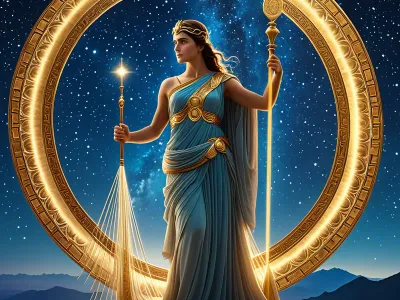
The Chiton Myth Meaning & Symbolism
A profound exploration of the sacred garment in Greek myth, symbolizing divine identity, mortal vulnerability, and the soul's woven destiny.

The Cicada Myth Meaning & Symbolism
A tale of a mortal granted immortality as a singing insect, bridging the human world and the divine through eternal music.
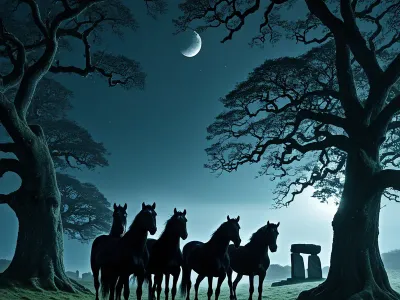
The Cóiste Bodhar Myth Meaning & Symbolism
A spectral coach heralds death, but its silent passage reveals a deeper truth about fate, acceptance, and the journey of the soul.
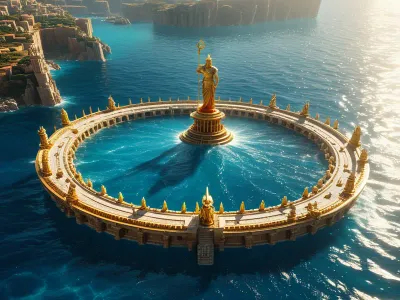
The City of Atlantis Myth Meaning & Symbolism
A tale of a utopian island empire, blessed by gods, corrupted by hubris, and swallowed by the sea in a single day and night of catastrophe.
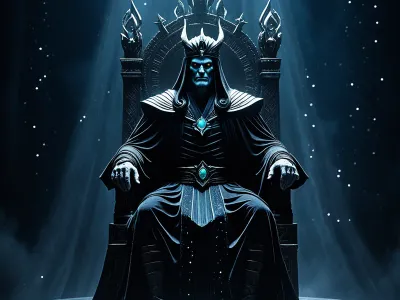
The Cloak of Invisibility Myth Meaning & Symbolism
A divine artifact of concealment and revelation, wielded by heroes and gods to navigate the unseen realms of the underworld and the self.

The City of Ys Myth Meaning & Symbolism
A Breton legend of a glorious city, drowned by the sea when a princess's forbidden key unlocks the floodgates of chaos and consequence.
The Cosmic Sphere of Anaximander Myth Meaning & Symbolism
A vision of the cosmos born from the eternal, formless Apeiron, separating into fiery rings and the Earth at its silent, unmoving heart.

The Crack in Dionysus's Floor Myth Meaning & Symbolism
A fissure opens in the god of ecstasy's sacred hall, unleashing the raw, forgotten chaos of the world before the gods, challenging all order.
The Cracked Jar Myth Meaning & Symbolism
A tale of a flawed vessel carrying the world's blessings, revealing how our imperfections create the conditions for life's beauty to flourish.

The Crannog Myth Meaning & Symbolism
A myth of a sacred, man-made island, a threshold between worlds, where sovereignty is tested and the soul finds sanctuary before its final voyage.

The Crone Myth Meaning & Symbolism
The Crone, a Celtic goddess of winter, offers a cup of forgetting and wisdom, testing the hero's courage to face the dark and be reborn.

The Crystal Palace of Apollo Myth Meaning & Symbolism
A myth of Apollo's perfect, silent palace of crystal, shattered by a mortal's cry, revealing that divine truth requires the flawed, resonant human voice.
The Cuckoo as timekeeper Myth Meaning & Symbolism
A myth where the first cuckoo's call in spring marks a sacred boundary, determining the year's fate and the king's symbolic marriage to the land.
The Curetes Myth Meaning & Symbolism
Divine warriors whose thunderous dance concealed the infant Zeus, protecting the future king of the gods from his devouring father, Cronus.
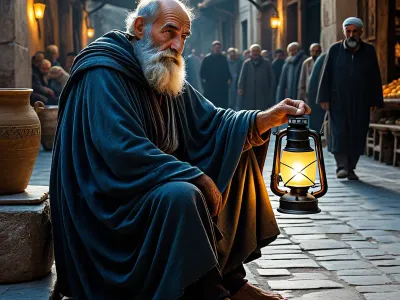
The Cynics Myth Meaning & Symbolism
A story of radical freedom, where a philosopher rejects all convention to live like a dog, finding divine truth in poverty and mocking hollow power.

The Daghda's Cairn Myth Meaning & Symbolism
The Daghda, the Good God, builds a cairn for his son, embedding his power in the land, a pact of sacrifice that defines true sovereignty.
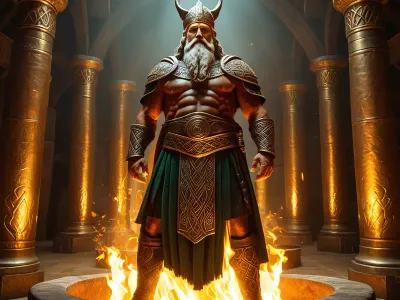
The Daghda's Cauldron Myth Meaning & Symbolism
The myth of the Daghda's magical cauldron, a vessel of endless bounty and rebirth, symbolizing the ultimate abundance of the cosmos and the soul's capacity for renewal.
The Danaides Myth Meaning & Symbolism
Forty-nine sisters, forced into marriage, murder their husbands on the wedding night and are condemned in Hades to eternally fill a leaking vessel.
The Danaids Myth Meaning & Symbolism
Forty-nine sisters, forced into marriage, murder their husbands and are condemned to eternally carry water in a leaking vessel.
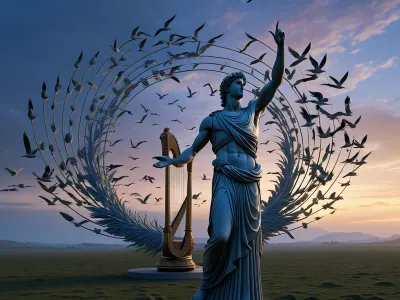
The Dance of the Cranes Myth Meaning & Symbolism
A myth of divine grief where Apollo's mourning for Hyacinthus is transmuted into a celestial, migratory dance of cranes, a pattern of loss and remembrance.
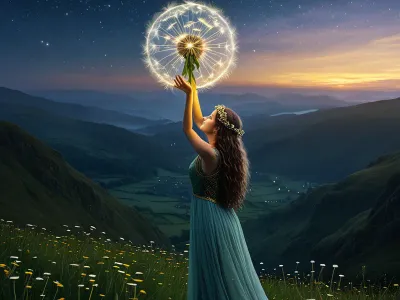
The Dandelion Clock Myth Meaning & Symbolism
A tale of a mortal granted a clock of living dandelions to see all time, who learns that true wisdom lies in accepting the moment's fleeting bloom.
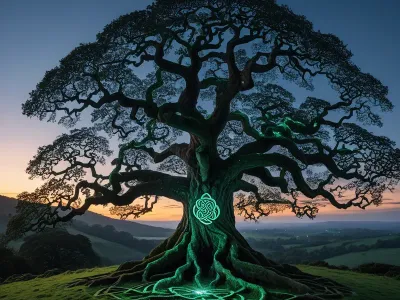
The Dara Knot Myth Meaning & Symbolism
A tale of a mortal's descent into the underworld, seeking the strength of the World Tree to heal a wounded land and their own fractured spirit.
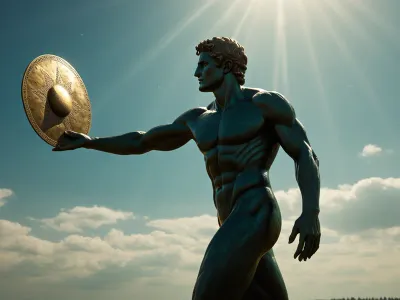
The Discus of Fate Myth Meaning & Symbolism
Apollo's perfect throw of a discus, guided by fate, strikes and kills his beloved Hyacinthus, transforming grief into a flower of remembrance.
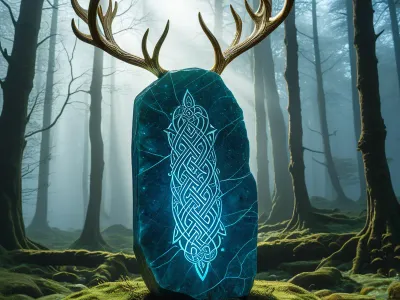
The Dreaming Stone Myth Meaning & Symbolism
A bard journeys to the Otherworld to retrieve a stone holding the world's forgotten dreams, facing the guardian of memory to restore wholeness.
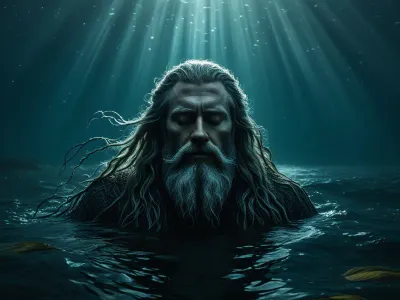
The Drowned Myth Meaning & Symbolism
A drowned god's silent journey through the underworld rivers, a sacrifice to the deep that births wisdom from the abyss.
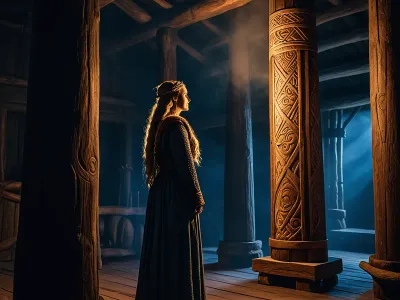
The Dísablót Myth Meaning & Symbolism
A sacred Norse ritual honoring the ancestral feminine spirits, weaving fate, memory, and the deep, guiding power of the underworld.
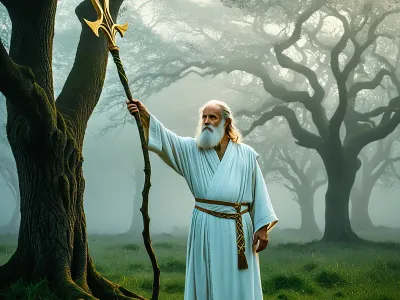
The Druids Myth Meaning & Symbolism
The myth of the Druids is a story of sacred knowledge, the deep memory of the land, and the perilous journey to speak with the soul of the world.
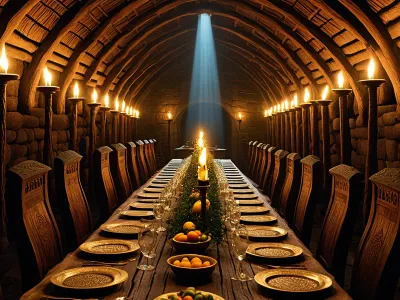
The Dumb Supper Myth Meaning & Symbolism
A ritual of silent communion where the living host the dead, navigating grief to reclaim lost wisdom and restore the fractured soul.
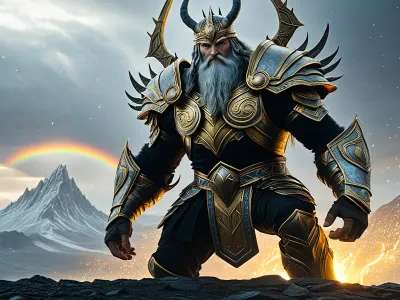
The Dusk of the Gods Myth Meaning & Symbolism
The final, cataclysmic battle where gods, giants, and monsters perish, leading to the world's destruction and subsequent rebirth from the sea.
The Emerald Myth Meaning & Symbolism
A tale of a king who sacrifices his crown's greatest jewel to heal his land, discovering that true power lies not in possession, but in sacred release.
The Empty Throne of Olympus Myth Meaning & Symbolism
A prophecy foretells a vacant throne on Olympus, plunging the cosmos into chaos as gods and mortals confront the terrifying vacuum of absolute authority.
The Erymanthian Boar Myth Meaning & Symbolism
Hercules' fourth labor: a winter hunt for a monstrous boar, a test of strategy over strength, culminating in a tense confrontation with a centaur.
The Eye of Providence Myth Meaning & Symbolism
A myth of cosmic justice where the all-seeing eye of the Furies ensures no crime escapes divine notice, weaving fate into the fabric of reality.
The Faerie Cloak Myth Meaning & Symbolism
A mortal steals a faerie woman's cloak of power, binding her to his world until she finds it and reclaims her sovereignty, vanishing forever.
The Faerie Folk Myth Meaning & Symbolism
A tale of the Sidhe, the luminous and perilous people of the mounds, who dwell in the borderlands between worlds and test the human soul.
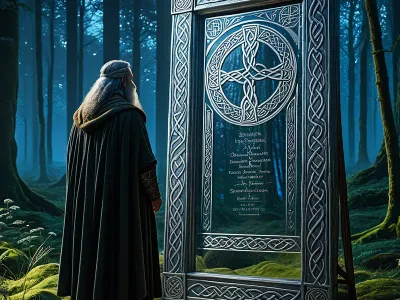
The Faerie Mirror Myth Meaning & Symbolism
A bard journeys to the Otherworld, finds a mirror that reveals his deepest soul, and must choose between a perfect lie or an imperfect truth.
The Fairy Host Myth Meaning & Symbolism
A spectral hunt rides from the hollow hills, a terrifying and awe-inspiring procession that marks the boundary between the living world and the Other.
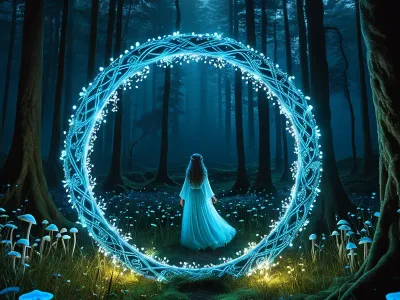
The Faerie Ring Myth Meaning & Symbolism
A mortal enters a Faerie Ring, dances with the Sídhe for a night, and returns to find a century has passed, forever changed.
The Fall of Troy Myth Meaning & Symbolism
A city's doom, born of divine vanity and mortal desire, sealed by a wooden horse. The ultimate myth of deception, fate, and the ashes from which we rebuild.
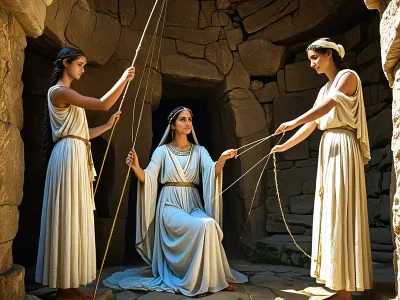
The Fates Myth Meaning & Symbolism
Three primordial goddesses spin, measure, and cut the thread of every mortal and divine life, embodying the inescapable law of destiny.
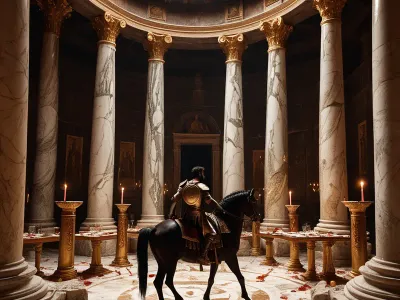
The Feast of the Lapiths Myth Meaning & Symbolism
A wedding feast descends into cosmic war when centaurs, intoxicated by wine, attempt to abduct the bride, forcing a brutal defense of civilization against primal chaos.
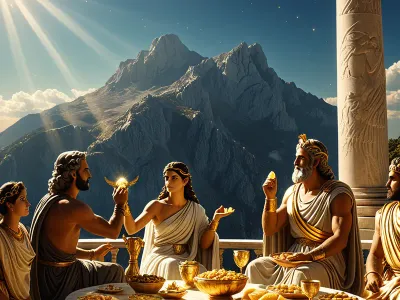
The Feast of the Gods Myth Meaning & Symbolism
A myth of divine ambition and cosmic consequence, where a mortal's transgression at a celestial banquet redefines the boundary between gods and humanity.
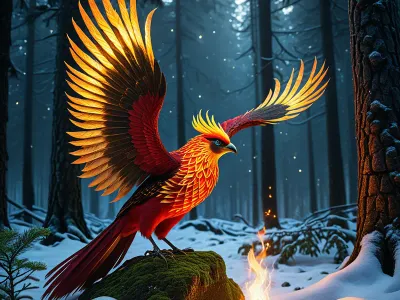
The Firebird Myth Meaning & Symbolism
A magical bird of radiant light is stolen, sparking a perilous quest that transforms a simple hero through trials of cunning, courage, and sacrifice.
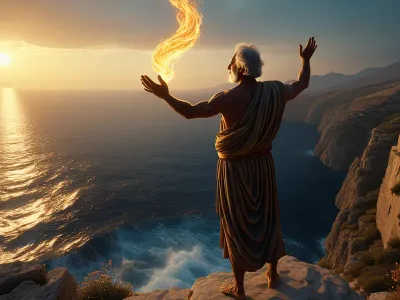
The Four Roots of Empedocles Myth Meaning & Symbolism
The philosopher-poet Empedocles reveals a cosmos woven from four divine Roots, locked in an eternal dance by Love and Strife, a map of the soul's own composition.
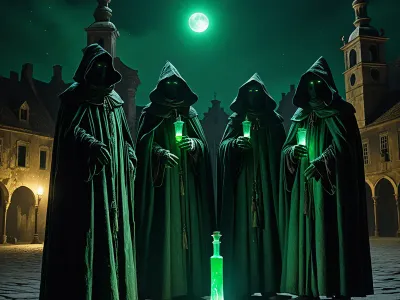
The Four Thieves Myth Meaning & Symbolism
A tale of four cunning thieves who, facing plague, create a protective potion from stolen herbs, transforming theft into a paradoxical act of salvation.
The Four Treasures Myth Meaning & Symbolism
The Tuatha Dé Danann brought four magical treasures to Ireland, each embodying a divine principle of sovereignty, truth, and psychic wholeness.
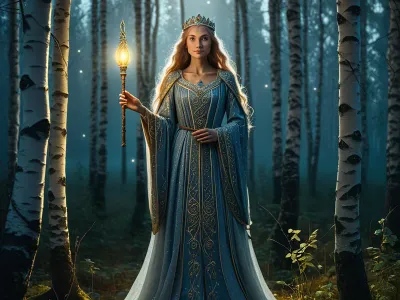
The Frog Princess Myth Meaning & Symbolism
A prince finds his destined bride in a frog, embarking on a transformative journey to see past illusion and reclaim her true, radiant nature.
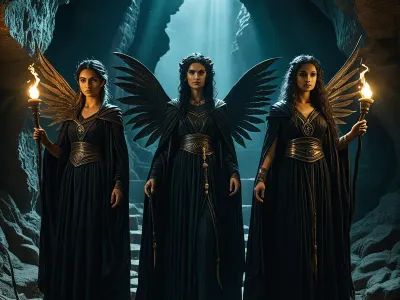
The Furies Myth Meaning & Symbolism
Ancient goddesses of blood vengeance transformed into guardians of justice, embodying the psyche's unyielding demand for moral order and integration.
The God Bragi's Hall Myth Meaning & Symbolism
The myth of the hall where the god of poetry serves mead of inspiration, weaving the deeds of gods and heroes into eternal song.

The God Hermes Myth Meaning & Symbolism
The story of Hermes, the divine trickster born at dawn, who invents the lyre, steals Apollo's cattle, and brokers a deal that defines his eternal role.
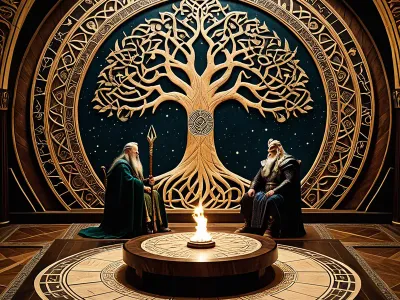
The Gods' Game of Tafl Myth Meaning & Symbolism
The gods play a game of Tafl, a contest of wits and fate that mirrors the cosmic order and the inevitable approach of Ragnarok.

The Golden Age Meadows Myth Meaning & Symbolism
A myth of a primordial paradise under Cronus, where humanity lived in effortless peace and harmony with the divine.
The Golden Belt of Hippolyta Myth Meaning & Symbolism
Heracles's ninth labor: a quest for a queen's sacred girdle, beginning in peace and ending in bloodshed, revealing the cost of stolen sovereignty.

The Golden Bough Myth Meaning & Symbolism
Aeneas must pluck a sacred golden bough to enter the underworld, guided by the Sibyl, on a quest to meet his father's shade.
The Golden Egg of Nyx Myth Meaning & Symbolism
From the womb of primordial Night, a Golden Egg is laid, containing the promise of the cosmos and the dual nature of all existence.
The Golden Cord Myth Meaning & Symbolism
Zeus boasts he could draw all creation to Olympus with a golden cord, revealing the absolute nature of divine will and cosmic order.
The Golden Mean Myth Meaning & Symbolism
A mythic warning against excess, where the path between extremes is revealed as the sacred, life-giving principle of cosmic and human order.
The Graces Myth Meaning & Symbolism
The myth of The Graces reveals the divine dance of charm, beauty, and creativity that weaves joy into the fabric of human connection and the world.

The Grail Castle Myth Meaning & Symbolism
A wounded king awaits a hero who must ask the right question to heal the land, guarded by a procession of sacred, otherworldly objects.
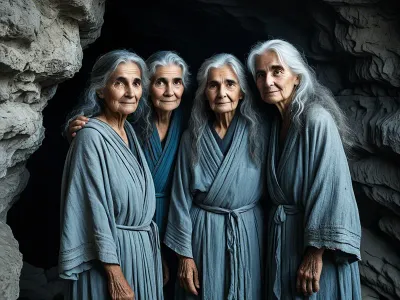
The Graeae Myth Meaning & Symbolism
Three ancient sisters share one eye and one tooth, guarding a secret path. A hero must outwit them to find his destiny in the land of the Gorgons.
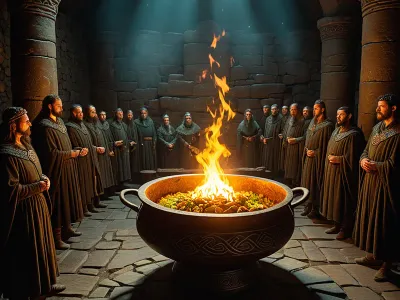
The Grail Feast Myth Meaning & Symbolism
A wounded king, a barren land, and a hero's perilous quest to restore the sacred vessel and heal the fractured world.
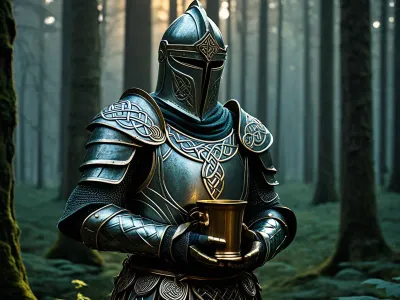
The Grail Knight Myth Meaning & Symbolism
A wounded knight's quest for a sacred vessel to heal a barren king and land, revealing the path of inner transformation and sovereignty.
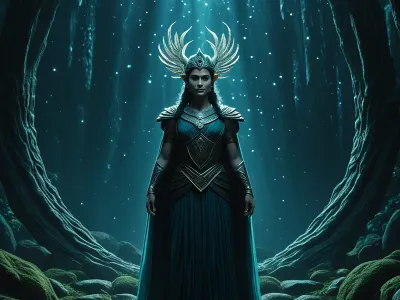
The Grey Wolf
A mystical guardian in Slavic lore, the grey wolf guides heroes through enchanted forests and protects ancient secrets from the unseen world.
The Halcyon Myth Meaning & Symbolism
A grieving queen transformed into a bird, whose profound love commands the seas to calm, creating a sacred period of stillness each winter.

The Harbor of Ithaca Myth Meaning & Symbolism
A myth of exile and return, where the hero's final struggle to reach his home harbor mirrors the soul's journey to its core identity.
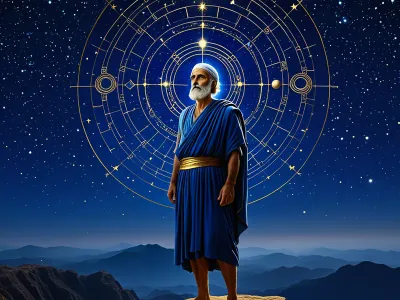
The Harmony of the Spheres Myth Meaning & Symbolism
The philosopher Pythagoras perceives the cosmos as a divine instrument, its celestial bodies moving in perfect, inaudible musical intervals, revealing a universe of mathematical beauty.
The Hearth Myth Meaning & Symbolism
A myth of the sacred fire, guarded by the goddess Frigg, representing the soul's sanctuary, the warmth of belonging, and the eternal covenant between home and cosmos.
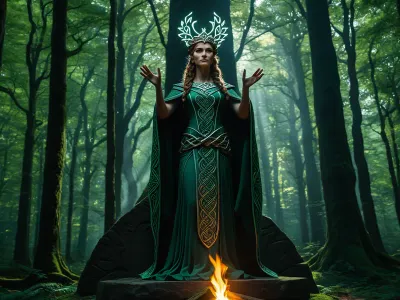
The Hearth Stone Myth Meaning & Symbolism
A myth of a sacred stone holding the undying hearth-fire of the tribe, guarded by a goddess and reclaimed through a journey of memory and sacrifice.
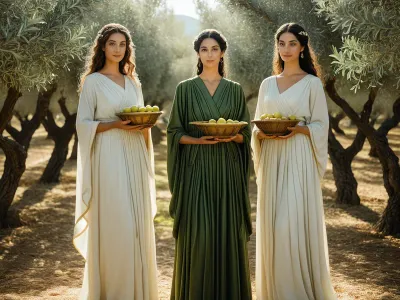
The Horae Myth Meaning & Symbolism
The three Horae, daughters of Zeus and Themis, personify the seasons and the divine order of time, nature, and human society.
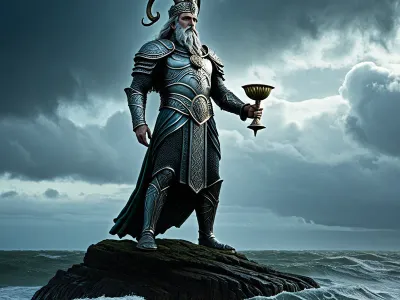
The Horn of Bran Myth Meaning & Symbolism
A myth of a king whose severed head provides counsel and protection, symbolizing the eternal bond between a ruler's spirit and the land's well-being.
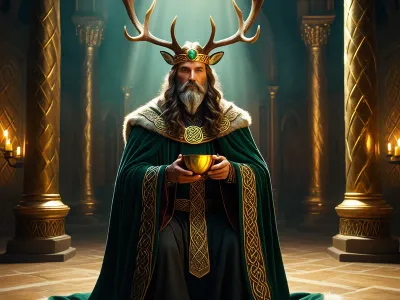
The Hospitality Exchange Myth Meaning & Symbolism
A myth where a king unknowingly hosts a god, learning that true hospitality is a sacred exchange that can alter fate and reveal divinity.
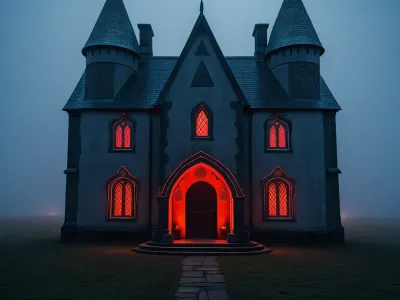
The Hostel/Inn Myth Meaning & Symbolism
A king enters a spectral hostel, confronting impossible geasa and a sovereignty goddess, in a myth of fate, hospitality, and transformative sacrifice.
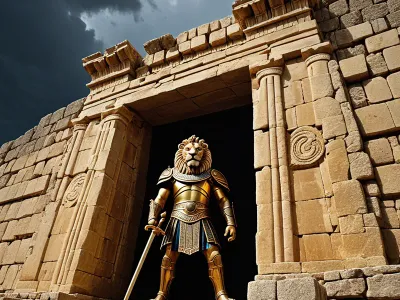
The House of Atreus Myth Meaning & Symbolism
A cursed royal lineage where a father's sin begets generations of murder, betrayal, and vengeance, demanding a final, terrible justice to break the cycle.
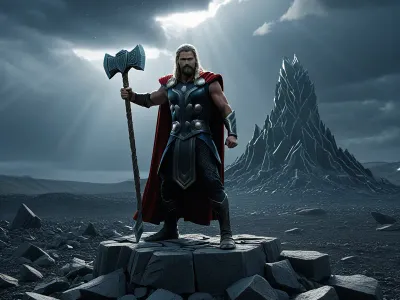
The Hrungnir's Heart Myth Meaning & Symbolism
Thor shatters the stone giant Hrungnir, but his heart remains. The myth reveals the confrontation with our own petrified, defensive core to find true strength.
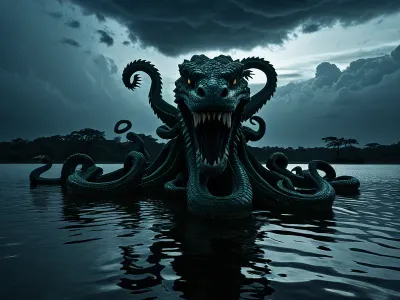
The Hydra's Blood Myth Meaning & Symbolism
Heracles slays the many-headed Hydra, but its immortal blood becomes a poison that both destroys and forges his ultimate, tragic destiny.
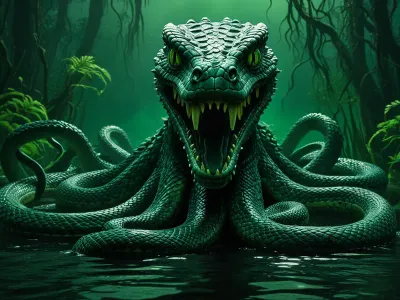
The Hydra's Breath Myth Meaning & Symbolism
Heracles battles the Lernaean Hydra, whose breath is a deadly miasma. Victory requires cauterizing each neck, transforming the monster's venom into a potent weapon.
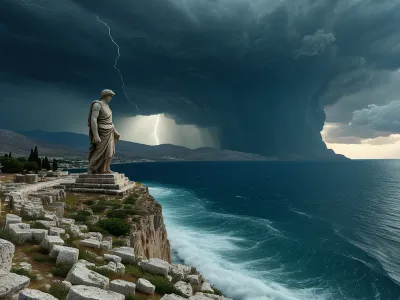
The Isthmus of Corinth Myth Meaning & Symbolism
A myth of divine ambition where the hero Sisyphus attempts to sever the Isthmus of Corinth, a doomed act of hubris against the natural order.
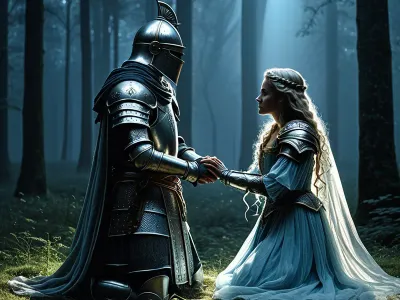
The Knight and His Lady Myth Meaning & Symbolism
A knight's quest for his vanished lady becomes a descent into the underworld, revealing the sacred bond between mortal courage and eternal feminine wisdom.
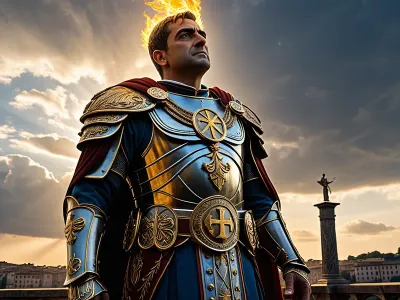
The Labarum of Constantine Myth Meaning & Symbolism
A Roman emperor receives a divine vision before battle, uniting the symbols of empire and faith into a new standard for the soul.
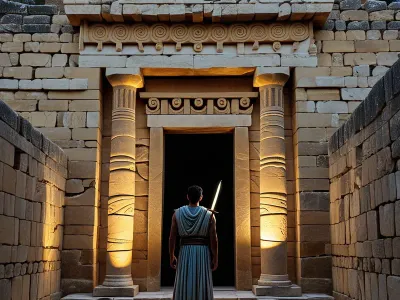
The Labyrinth Entrance Myth Meaning & Symbolism
The story of the hero Theseus entering the Labyrinth to face the Minotaur, a primal tale of confronting the monstrous self within a sacred maze.
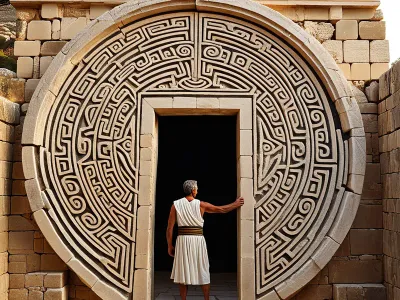
The Labyrinth Door Myth Meaning & Symbolism
A hero enters a maze to face a monstrous half-brother, guided by a thread through darkness to find the door back to his soul.
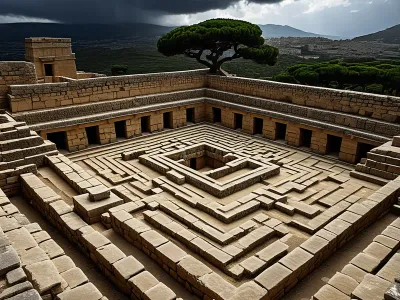
The Labyrinth of Knossos Myth Meaning & Symbolism
A hero enters a monstrous maze to confront a beast born of divine wrath, navigating a path of cunning and courage to find his way back to the light.
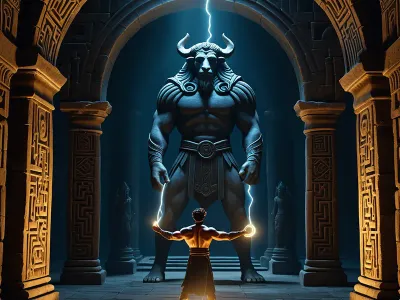
The Labyrinth Thread Myth Meaning & Symbolism
A hero enters a monstrous maze with only a thread to guide him, confronting the beast within to reclaim his people and his own soul.

The Land of Youth Myth Meaning & Symbolism
A warrior journeys to an immortal paradise but is undone by a longing for home, revealing the soul's eternal conflict between transcendence and belonging.
The Leaning Tower of Pisa Myth Meaning & Symbolism
A tale of a Titan's ambition to build a perfect tower for the gods, undone by a divine tremor, creating an eternal monument to flawed beauty.
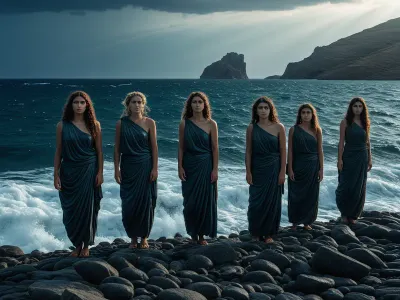
The Lemnian Women Myth Meaning & Symbolism
A myth of women who murder their husbands, are exiled, and find redemption through the hero Jason, embodying the shadow, exile, and the return of the masculine.
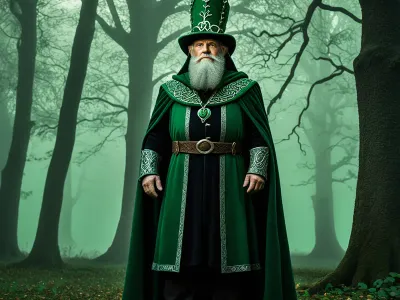
The Leprechaun's Hat Myth Meaning & Symbolism
A tale of a mortal who captures a leprechaun, seizes his hat of power, and discovers that true sovereignty cannot be stolen, only earned from within.
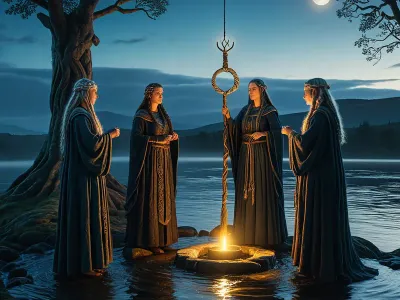
The Liminal Hour Myth Meaning & Symbolism
A mythic tale of the twilight hour where fate is woven, boundaries dissolve, and the Norns reveal the hidden patterns of destiny and the self.
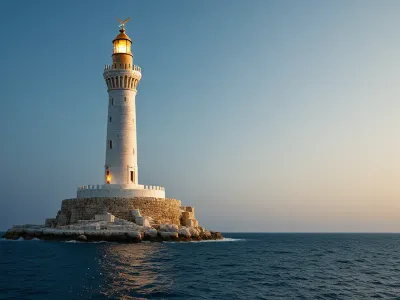
The Lighthouse of Alexandria Myth Meaning & Symbolism
A colossal beacon, born of human ambition and divine fire, guides sailors but warns of the perilous pride that builds towers to touch the heavens.
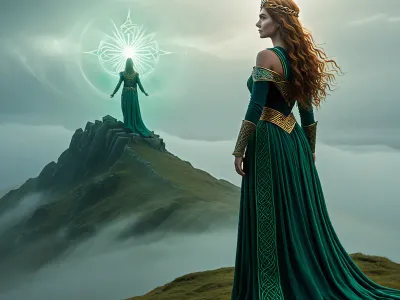
The Mantle of Sovereignty Myth Meaning & Symbolism
A myth where a king's union with a goddess, symbolized by a mantle, binds his rule to the land's vitality, revealing the sacred contract of true authority.

The Mark of Cain Myth Meaning & Symbolism
A brother's murder, a god's mark of protection, and an eternal exile that transforms a curse into a sacred, wandering destiny.
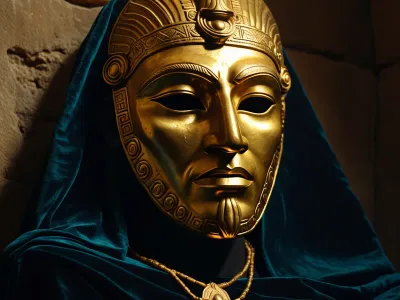
The Mask of Agamemnon Myth Meaning & Symbolism
A golden death mask becomes the eternal, silent face of a king, concealing the mortal man and his tragic fate beneath a symbol of immortal power.
The Mead Hall Myth Meaning & Symbolism
A myth of stolen divine mead, won through trickery and sacrifice, becoming the source of poetic inspiration for gods and mortals alike.
The Milesians Myth Meaning & Symbolism
The final wave of mortal invaders who, through struggle and negotiation, establish a sacred pact with the land's divine guardians, becoming the ancestors of Ireland.

The Milky Way Myth Meaning & Symbolism
The infant Heracles, destined for godhood, is placed at Hera's breast. Her startled rejection spills divine milk across the heavens, forging the starry river.
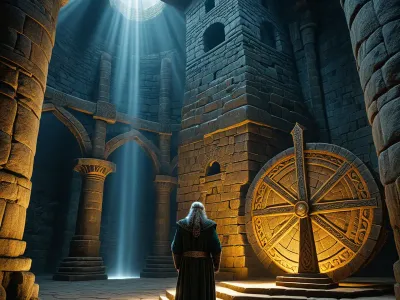
The Mill of Hospitality Myth Meaning & Symbolism
A divine king's magical mill provides endless bounty, but when its sacred laws are broken, the world is plunged into a winter of the soul.
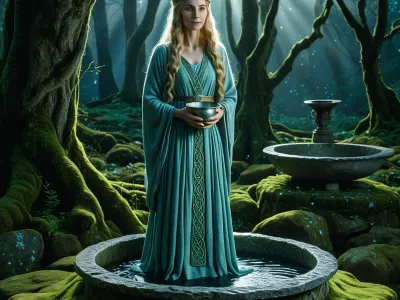
The Mirror of Galadriel Myth Meaning & Symbolism
A goddess's enchanted basin reveals not the future, but the soul's hidden truths, demanding courage to face the reflection within.

The Mist of Annwn Myth Meaning & Symbolism
A magical mist from the Celtic underworld, Annwn, that veils and reveals profound truths, challenging heroes and dreamers to navigate the unknown.
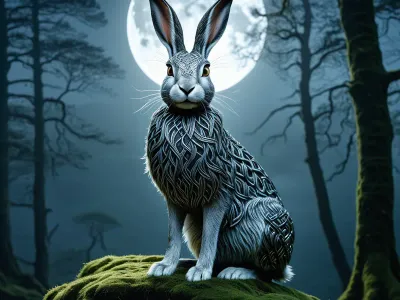
The Moon Hare Myth Meaning & Symbolism
A hare offers itself to the starving goddess Cerridwen, becoming immortalized in the moon as a symbol of ultimate sacrifice and cyclical rebirth.
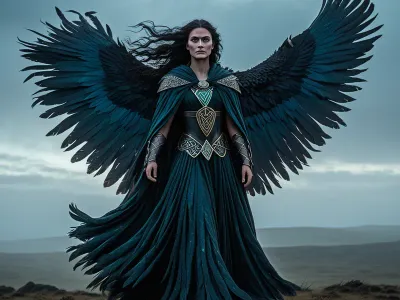
The Morrígan's Cloak Myth Meaning & Symbolism
A warrior confronts the Phantom Queen to claim a cloak of raven feathers, facing the terrifying gift of prophecy and the price of true sight.

The Morrígan Myth Meaning & Symbolism
A goddess of fate, war, and prophecy appears as a crow, a wolf, and a washer at the ford, foretelling and shaping the destiny of kings and heroes.

The Mountain Hnitbjorg Myth Meaning & Symbolism
The god Odin embarks on a perilous, shapeshifting quest to steal the mead of poetry from the mountain fortress of the giant Suttungr.
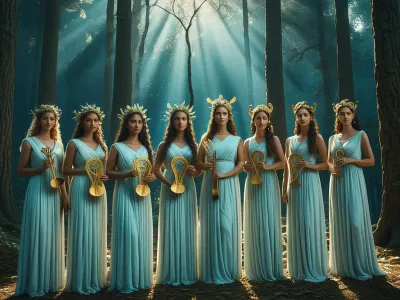
The Muses Myth Meaning & Symbolism
Nine daughters of Memory, born from the thunder of Zeus. They preside over the arts and sciences, granting divine inspiration to mortals who dare to listen.

The Naiads Myth Meaning & Symbolism
The Naiads are the divine spirits of springs, streams, and fountains, embodying the life-giving, prophetic, and perilous essence of fresh water in the ancient Greek world.
The Nemean Lion Myth Meaning & Symbolism
Hercules' first labor: to slay a lion with an impenetrable hide, a primal confrontation with the invulnerable, monstrous aspect of the self.
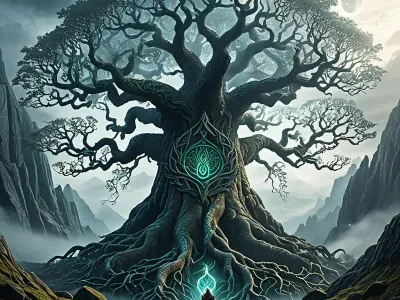
The Nine Worlds Myth Meaning & Symbolism
A cosmic tree connects nine realms, from the gods' home to the land of the dead, embodying a universe in constant, sacred tension.
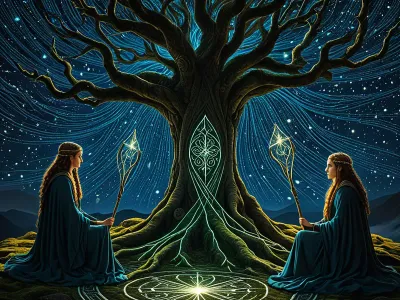
The Norns' Loom Myth Meaning & Symbolism
Three sisters weave destiny at the World Tree's root, their threads dictating the fates of gods and mortals alike in a tapestry of cosmic law.
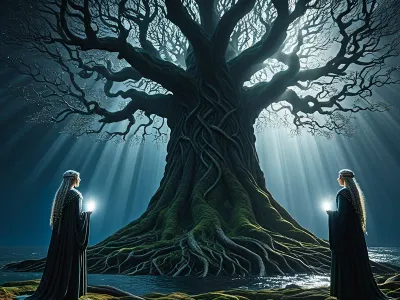
The Norns' Tapestry Myth Meaning & Symbolism
Three sisters weave the tapestry of fate at the root of the world tree, their threads dictating the lives of gods and mortals alike.

The Oak of Dodona Myth Meaning & Symbolism
A sacred oak tree, gifted by Zeus, whispers divine prophecies through the rustling of its leaves, guiding heroes and seekers to their fate.

The Oak King Myth Meaning & Symbolism
A myth of two kings, one of oak and one of holly, locked in an eternal duel for the sovereignty of the year, embodying the cycle of life, death, and rebirth.
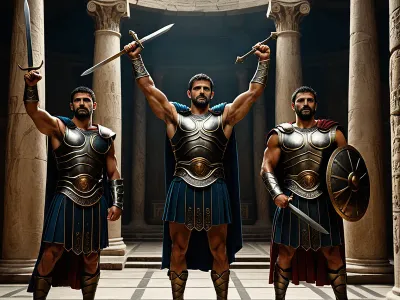
The Oath of the Horatii Myth Meaning & Symbolism
Three Roman brothers swear an oath to fight three Alban brothers, their kin, to settle a war, leading to victory, murder, and a trial by the gods.

The Oceanids Myth Meaning & Symbolism
The 3000 daughters of Oceanus and Tethys, nymphs of every freshwater source, embody the primal, nurturing, and boundless flow of the unconscious psyche.
The Octopus Myth Meaning & Symbolism
A primordial entity of formless potential sacrifices its cosmic body to birth the world, weaving consciousness from the depths of chaos.
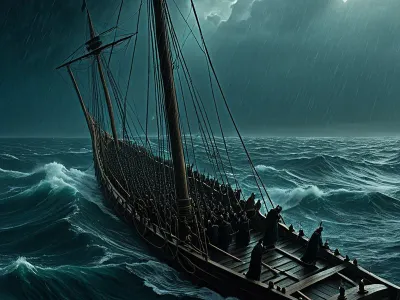
The Odyssey Myth Meaning & Symbolism
A warrior's decade-long voyage home becomes the ultimate map of the soul, charting a course through monsters, gods, and the self to find true belonging.
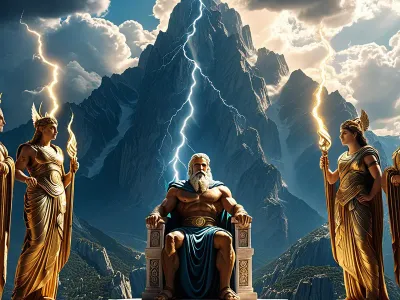
The Olympian Gods Myth Meaning & Symbolism
The story of the Olympian Gods is a cosmic drama of order wrested from chaos, a family saga of power, passion, and the eternal negotiation between divine law and human fate.
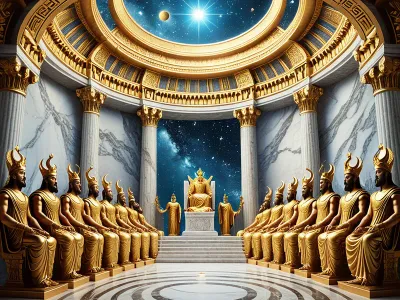
The Olympian Council Myth Meaning & Symbolism
The story of the twelve gods who rule from Mount Olympus, a cosmic drama of power, order, and the eternal negotiation between chaos and civilization.

The Oracle's Pool Myth Meaning & Symbolism
A nymph, punished for revealing divine secrets, becomes a silent pool. Heroes seek her wisdom, facing their own reflections to hear the truth.
The Oracle's Chamber Myth Meaning & Symbolism
A seeker descends into a sacred cavern to confront the terrifying, divine voice of the Oracle, emerging forever changed by the truth they dared to hear.
The Oracle's Tripod Myth Meaning & Symbolism
A myth of Apollo's theft of the prophetic tripod from Gaia, establishing the Delphic Oracle and the cost of divine wisdom.
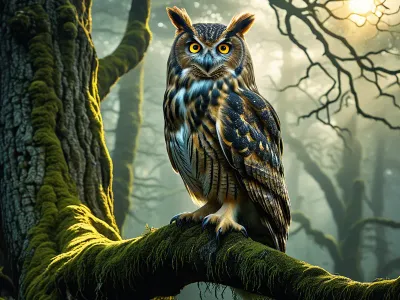
The Owl Myth Meaning & Symbolism
A tale of the Cailleach's owl, a creature of prophecy and silent witness, guarding the threshold between the living world and the underworld of Annwn.

The Pearl of Aphrodite Myth Meaning & Symbolism
Aphrodite's tear becomes a pearl, lost to the sea. Its recovery demands a descent into the abyss, a myth of love's cost and the soul's luminous core.
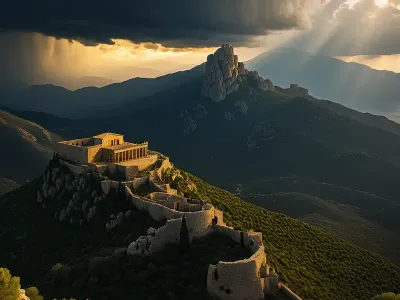
The Peloponnese Myth Meaning & Symbolism
A cursed prince wins a kingdom through cunning and divine aid, his name forever branding a land born from betrayal, sacrifice, and a golden shoulder.

The Peristyle Garden Myth Meaning & Symbolism
A myth of a soul, lost in a wilderness of its own making, who must build a sacred inner garden to find peace and commune with the divine.
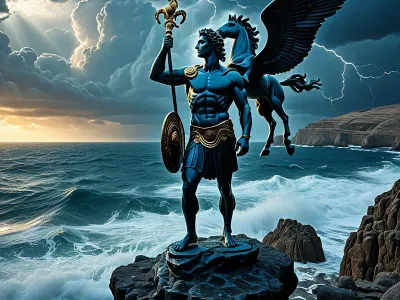
The Perseids Myth Meaning & Symbolism
The heroic lineage of Perseus, born of divine gold and mortal terror, whose descendants' trials and triumphs were immortalized as a celestial shower.
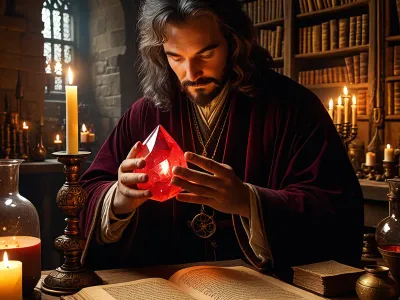
The Philosopher's Stone Elixir Myth Meaning & Symbolism
An alchemical legend of a hidden substance that transmutes base matter to gold and grants eternal life, symbolizing the soul's quest for perfection.
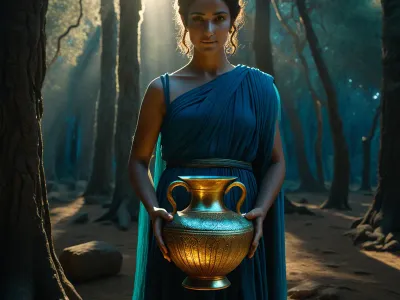
The Pharmakon Myth Meaning & Symbolism
The myth of the sacred substance that is both poison and cure, revealing the paradoxical nature of healing and the shadow within transformation.

The Pierian Spring Myth Meaning & Symbolism
A sacred spring in Pieria, home to the Muses, whose waters grant divine inspiration and poetic madness to those who drink from its source.

The Pine of Attis Myth Meaning & Symbolism
A youth beloved by a goddess, driven mad by her wrath, castrates himself beneath a pine tree, which becomes his eternal, resurrected form.
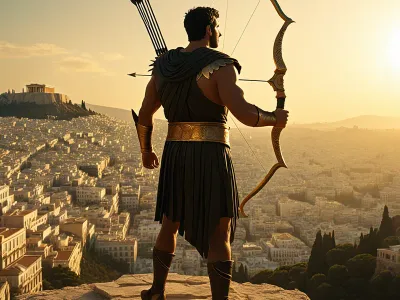
The Plague of Athens Myth Meaning & Symbolism
A devastating plague sent by Apollo ravages Athens after King Agamemnon dishonors his priest, revealing the fragility of human order before divine will.
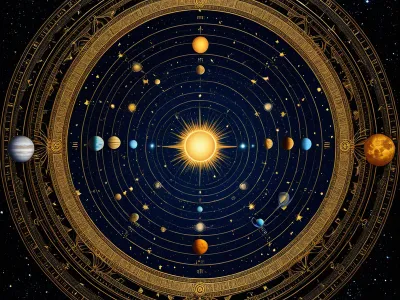
The Planetary Week Myth Meaning & Symbolism
A myth where the seven wandering stars, personified as deities, establish cosmic order by creating the seven-day week, a rhythm woven into time itself.

The Poet's Bothán Myth Meaning & Symbolism
A poet, driven mad by a stolen song, journeys to a liminal hut to reclaim his voice from the gods, facing the terror of his own creative source.
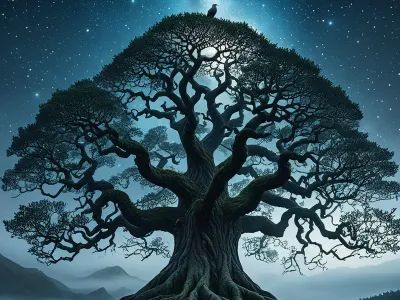
The Poetic Edda Myth Meaning & Symbolism
A collection of ancient Norse poems detailing the world's creation, the gods' struggles, and the prophesied twilight, revealing a profound cosmology of order and chaos.
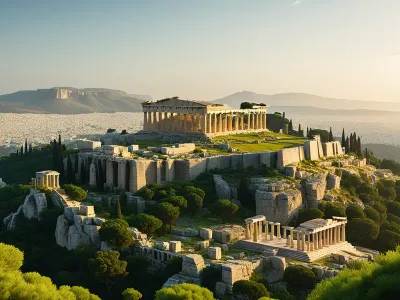
The Polis Myth Meaning & Symbolism
The mythic tale of how gods and heroes carved a sacred, ordered space from the primal wilderness, establishing the spiritual blueprint for human community.
The Prytaneion Myth Meaning & Symbolism
The myth of the sacred, unquenchable hearth-fire at the civic heart, representing the soul of the community and the divine contract of civilization.
The Raven Banner Myth Meaning & Symbolism
A legendary war banner, woven by seeresses, that promised victory but demanded a king's life, embodying the fatal pact between power and destiny.
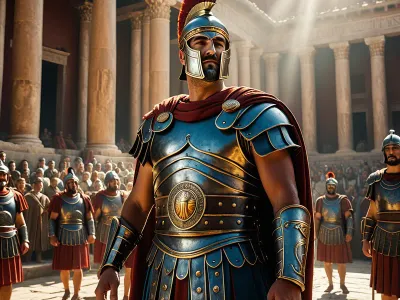
The Right Cheek Tradition Myth Meaning & Symbolism
A Roman myth where a soldier's honor is forged not in defiance of a slap, but in the sacred, conscious acceptance of it.
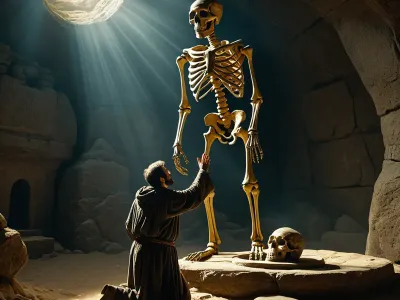
The Ring of Gyges Myth Meaning & Symbolism
A shepherd finds a ring granting invisibility, testing the nature of justice and revealing the hidden self when all constraints of being seen are removed.

The River of Heaven Myth Meaning & Symbolism
The myth of the divine infant's spilled milk forming the starry river, a tale of cosmic nourishment, divine accident, and eternal celestial architecture.
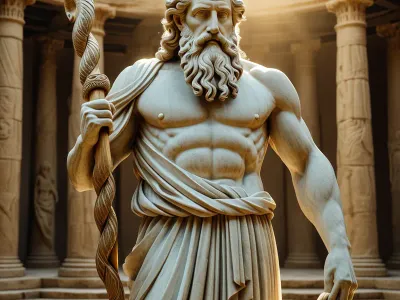
The Rod of Asclepius Myth Meaning & Symbolism
The myth of the healer Asclepius, his divine serpent-entwined rod, and the dangerous power of restoring life, challenging the finality of death.
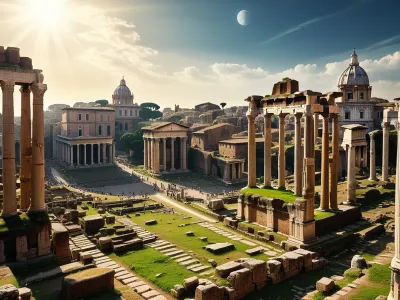
The Roman Forum Myth Meaning & Symbolism
The mythic founding of the Forum, where Romulus and Tatius reconciled, transforming a marshy battlefield into the sacred heart of law, commerce, and the Roman soul.

The Rose of Tralee Myth Meaning & Symbolism
A tale of a love so profound it transcends death, transforming a mortal woman into an eternal symbol of beauty, memory, and the soul's immortal essence.
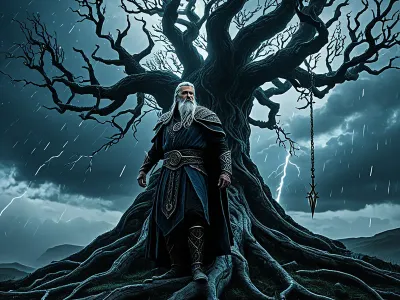
The Runes of Odin Myth Meaning & Symbolism
The Allfather hangs himself on the World Tree for nine nights, pierced by a spear, to seize the secret of the runes from the abyss.
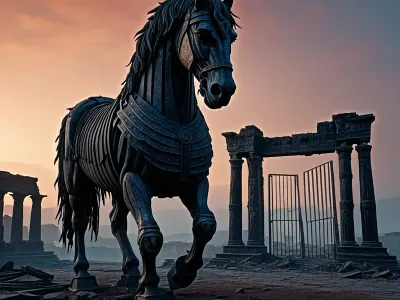
The Ruins of Troy Myth Meaning & Symbolism
A city's fall, sparked by a golden apple and a stolen queen, becomes an eternal story of pride, fate, and the ruins from which we rebuild.

The Rusalka Myth Meaning & Symbolism
A myth of the restless, drowned maiden, the Rusalka, who lures the living into the deep, embodying the psyche's untamed grief and the call to remember what was lost.
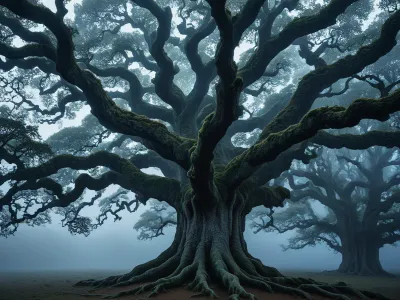
The Sacred Grove of Dodona Myth Meaning & Symbolism
The oldest Greek oracle, where Zeus spoke through the rustling leaves of a sacred oak grove, guiding seekers with the voice of the earth itself.
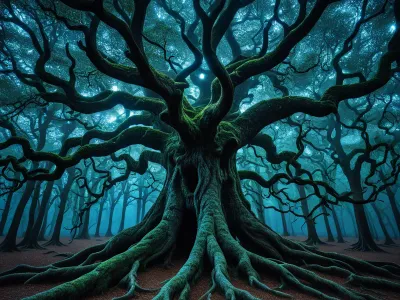
The Sacred Grove Myth Meaning & Symbolism
A king must sacrifice his own hand to a sacred tree to heal a blighted land, discovering that true sovereignty is born from surrender.
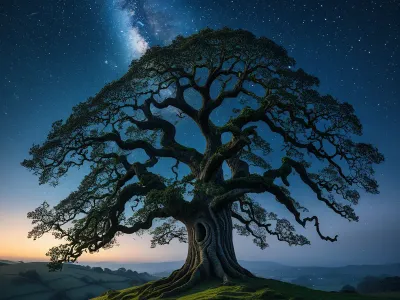
The Sacred Oak Myth Meaning & Symbolism
A druid king sacrifices his physical form to become the immortal Sacred Oak, uniting the land, the people, and the Otherworld in a single, eternal root.
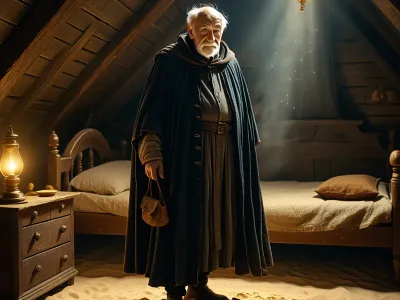
The Sandman Myth Meaning & Symbolism
A mysterious figure from European hearth-tales who brings sleep and dreams, weaving the raw sand of the day into the tapestry of the night.

The Salmon of Knowledge Myth Meaning & Symbolism
A druid foretells a salmon will gain all wisdom. A young hero accidentally tastes it, claiming its power and a destiny not his own.
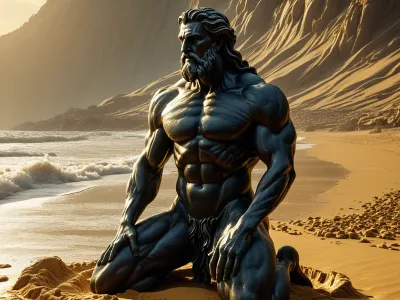
The Sands of Time Myth Meaning & Symbolism
A Titan's trick with sand steals the gift of immortality from humanity, forging our fate as mortal beings bound by time.
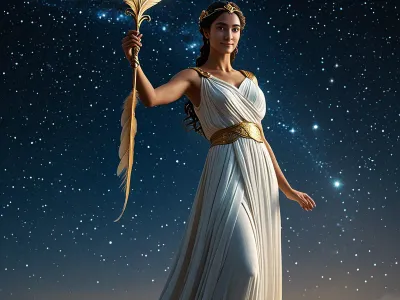
The Scales of Libra Myth Meaning & Symbolism
The myth of the celestial Scales, held by the Titaness Themis, representing divine justice, cosmic equilibrium, and the eternal human quest for balance.
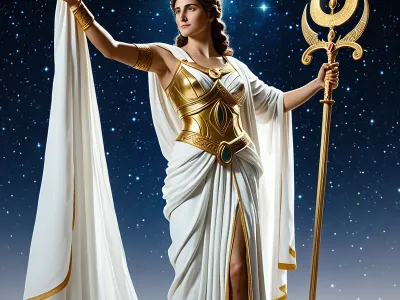
The Scales of Justice Myth Meaning & Symbolism
The blindfolded goddess Themis holds the scales, weighing souls and actions, embodying the eternal principle of cosmic balance and impartial judgment.
The Scales of Themis Myth Meaning & Symbolism
The Titaness Themis holds the scales that weigh truth from falsehood, embodying the divine principle of cosmic order and foundational justice.
The Scepter of Zeus Myth Meaning & Symbolism
The scepter forged by the Cyclopes for Zeus, a symbol of ultimate authority, thunderous will, and the divine right to order the cosmos.

The Sea Myth Meaning & Symbolism
The story of Pontus and Thalassa, the first Sea, born from Chaos, embodying the primal, generative, and terrifying unconscious from which all life emerges.
The Seed Vault of the Gods Myth Meaning & Symbolism
A forgotten myth of a divine granary, hidden after Ragnarok, holding the blueprint for a new world within the ashes of the old.
The Shades of the Asphodel Meadows Myth Meaning & Symbolism
A vast, grey plain in the underworld where the souls of the ordinary reside, forever wandering among pale asphodel flowers, whispering of forgotten lives.
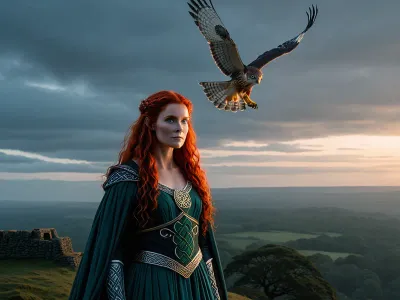
The Shapeshifter Myth Meaning & Symbolism
A tale of a goddess-queen who transforms into a bird of prey to reclaim her stolen sovereignty, embodying the soul's fluid, untamed nature.
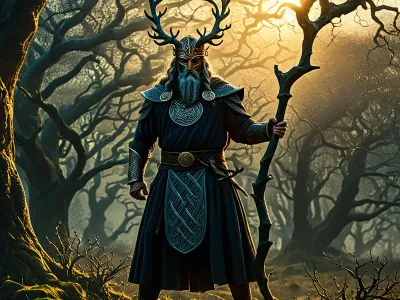
The Shillelagh Myth Meaning & Symbolism
A myth of a king's quest to forge a staff of living oak, binding his soul to the land's spirit to restore order from primal chaos.
The She-Wolf Myth Meaning & Symbolism
A divine she-wolf rescues and suckles the abandoned twins Romulus and Remus, an act of wild nurture that leads to the founding of Rome.

The Shore of Ithaca Myth Meaning & Symbolism
The moment of homecoming, where the hero must recognize his own kingdom after a lifetime of wandering, disguised even to himself.

The Sibylline Books Myth Meaning & Symbolism
An ancient prophetess offers nine books of fate to a king, who scorns her. She burns them, forcing him to buy the last three at the original price.
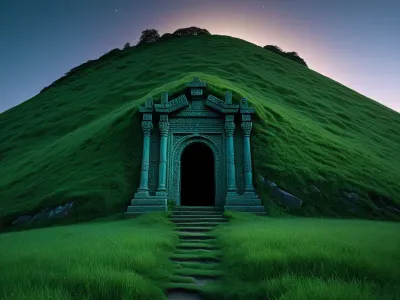
The SidheMounds Myth Meaning & Symbolism
A mortal king enters the timeless SidheMounds, wins a goddess's love, and returns to a world that has forgotten him, forever caught between two realms.
The Silver Bough Myth Meaning & Symbolism
A sacred branch of silver apple blossom granting passage to the Otherworld, symbolizing the soul's perilous journey between realities.
The Silver Wheel Myth Meaning & Symbolism
A goddess weaves the cosmos into a silver wheel, her sacrifice binding the heavens to the earth in an eternal, turning cycle of light and darkness.
The Smith God Myth Meaning & Symbolism
The divine smith forges weapons of destiny and serves the feast of immortality, embodying the transformative fire that reshapes raw matter into sacred form.
The Sovereignty Goddess Myth Meaning & Symbolism
A hag transforms into a radiant goddess when a true king accepts her, embodying the sacred marriage between ruler and the spirit of the land itself.
The Soul-Bird Myth Meaning & Symbolism
A warrior's soul, lost in grief, is guided back to life by a mystical bird, revealing the Celtic understanding of the soul's journey and psychic wholeness.
The Spartans at Thermopylae Myth Meaning & Symbolism
A small band of Spartans, led by King Leonidas, makes a final stand against a vast Persian army, choosing death with honor over retreat.
The Spiral Myth Meaning & Symbolism
A tale of a hero who must navigate a living labyrinth to restore the sacred pattern of the world, facing the chaos within.
The Spindle of Necessity Myth Meaning & Symbolism
A vision of the cosmos as a divine spindle, turned by the Fates, dictating the immutable laws of destiny and the soul's cyclical journey.
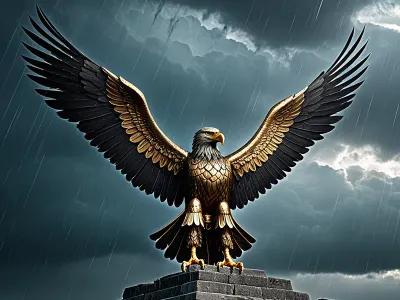
The Standard of the Legions Myth Meaning & Symbolism
A Roman legion's sacred Standard is lost, plunging its soldiers into shame until a hero journeys into darkness to reclaim their collective soul.

The Stoa Myth Meaning & Symbolism
The myth of the divine porch where Zeus dispensed justice, a liminal space between chaos and order, sheltering humanity under the gaze of fate.

The Stymphalian Marshes Myth Meaning & Symbolism
Heracles' sixth labor: cleansing a poisoned marsh of monstrous, metallic birds, a myth of psychic purification and confronting the clamor of the unconscious.

The Summer Lands Myth Meaning & Symbolism
A myth of a radiant, eternal otherworld, reached through perilous journey, representing the soul's quest for wholeness beyond the veil of mortal life.
The Swallow Myth Meaning & Symbolism
A tragic tale of sisters transformed into birds, embodying grief, longing, and the eternal voice of loss carried on the wind.
The Swan Princess
A Slavic tale of a princess who transforms into a swan, exploring themes of identity, enchantment, and the boundary between human and animal realms.

The Sword Bridge Myth Meaning & Symbolism
A hero must cross a bridge of a single, impossibly sharp blade to reach a sacred island and fulfill a divine quest, testing his very soul.
The Symplegades Myth Meaning & Symbolism
The Argonauts must sail through the Clashing Rocks, a mythic ordeal of timing, divine aid, and the courage to face annihilation.

The Tarnkappe Myth Meaning & Symbolism
A myth of a magical cloak granting invisibility, revealing the profound psychological price and power of confronting one's hidden, shadow self.
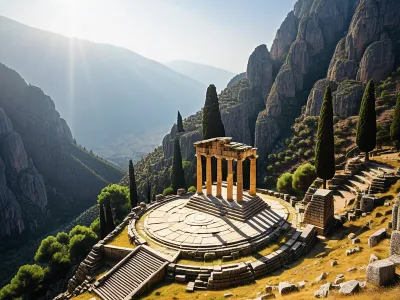
The Temple of Apollo at Delphi Myth Meaning & Symbolism
Apollo slays the serpent Python to claim the omphalos at Delphi, establishing the Oracle where divine wisdom emerges from the chthonic earth.

The Tears of Aphrodite Myth Meaning & Symbolism
A myth where the goddess of love weeps for a mortal, her tears transforming into amber, symbolizing grief's power to create enduring beauty.

The Thousand-Eyed Argus Myth Meaning & Symbolism
Zeus hides his lover Io, Hera sets the thousand-eyed Argus to guard her, and Hermes' lullaby brings a fatal, transformative sleep.
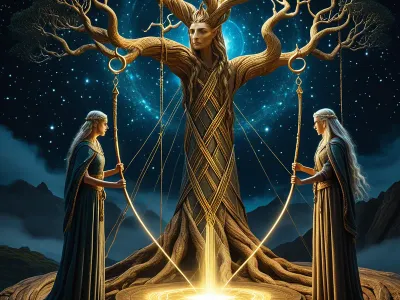
The Threads of the Norns Myth Meaning & Symbolism
Three ancient weavers at the root of the World Tree spin, measure, and cut the threads of fate for all beings, gods and mortals alike.
The Three-Legged Stool of Delphi Myth Meaning & Symbolism
An ancient myth of a sacred, unstable seat at the heart of the world, representing the precarious balance of divine truth, human nature, and cosmic order.
The Titans Myth Meaning & Symbolism
The primordial struggle where the Olympian gods overthrow their Titanic forebears, a myth of cosmic order emerging from primal chaos.
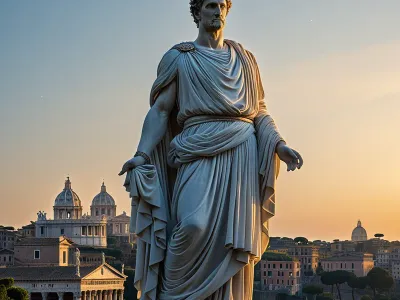
The Toga Myth Meaning & Symbolism
A myth of a mortal who wove a garment of pure light, becoming the living soul of the Republic and the weight of its sacred law.
The Tower of Glass Myth Meaning & Symbolism
A hero is lured to a magical, illusory tower in the sea, where he must confront enchantment and his own desires to win his freedom and sovereignty.
The Trojan Horse Myth Meaning & Symbolism
The Greeks' wooden ruse that breached Troy's walls, ending a decade of war through cunning, not force, revealing the enemy within.
The Trojan War Myth Meaning & Symbolism
A decade-long war sparked by a golden apple, a stolen queen, and divine pride, revealing the thin line between human choice and cosmic fate.
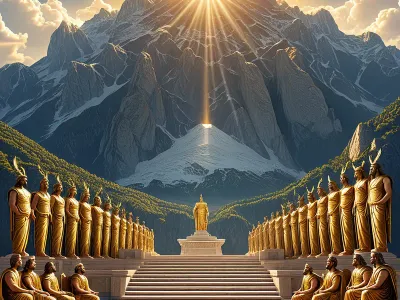
The Twelve Olympians Myth Meaning & Symbolism
The story of the gods who rule from Olympus, a pantheon born from cosmic strife, embodying the fundamental archetypes of human consciousness and culture.
The Valkyries Myth Meaning & Symbolism
Winged women of war who descend to battlefields, choosing the slain and guiding heroes to Odin's hall, embodying fate, honor, and the sacredness of death.
The Veil of Maya Myth Meaning & Symbolism
A goddess weaves a shimmering veil of illusion, hiding the world's true nature until a mortal's quest pierces the fabric of seeming reality.
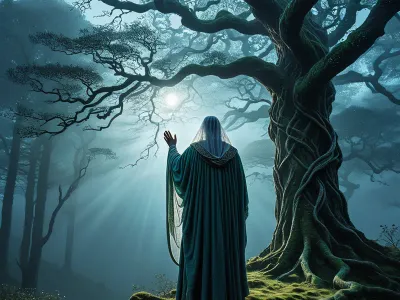
The Veil Between Worlds Myth Meaning & Symbolism
A myth of the liminal threshold, where the seen and unseen worlds touch, demanding respect, courage, and sacrifice from those who would cross.
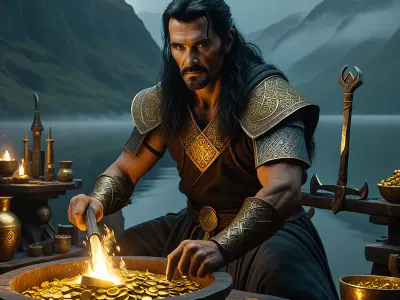
The Völundarkviða Myth Meaning & Symbolism
A master smith is crippled and enslaved by a king. Through cunning and supreme craft, he forges a terrible revenge, transforming his agony into a prison for his captors.
The Voyage of Bran Myth Meaning & Symbolism
A prince follows a silver branch to a timeless island, only to discover the soul's price for tasting paradise and the impossibility of going home.

The Volva Myth Meaning & Symbolism
A tale of a seeress summoned by Odin to reveal the doom of gods and cosmos, embodying the terrifying power of fate and forbidden knowledge.
The Wandering Druid Myth Meaning & Symbolism
A tale of a druid cast from the sacred grove, condemned to wander, seeking not a home but the lost song of the world's soul.
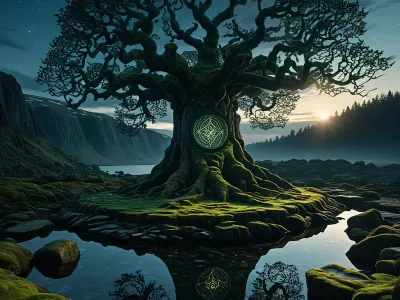
The Well of Urd Myth Meaning & Symbolism
At the root of the world tree lies a sacred well where the Norns weave fate, a place of profound memory, judgment, and the source of all becoming.

The Well of Mnemosyne Myth Meaning & Symbolism
A sacred spring in the underworld whose waters grant remembrance of one's divine soul, contrasting with the river of forgetfulness, Lethe.
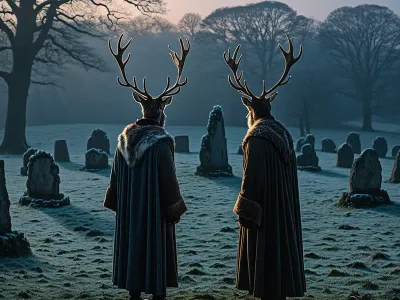
The Wheel of the Year Myth Meaning & Symbolism
The eternal story of the Oak King and Holly King, whose sacred duel turns the seasons within the great cosmic wheel of life, death, and rebirth.
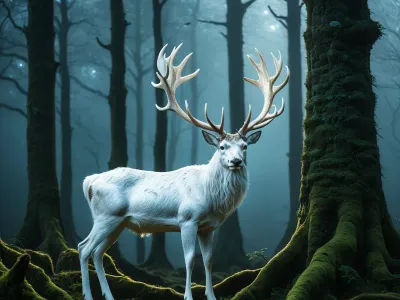
The White Stag Myth Meaning & Symbolism
A luminous, otherworldly stag appears, leading heroes and kings into the deep forest on a perilous quest that transforms their destiny and soul.

The White Rocks of Leukas Myth Meaning & Symbolism
A priest of Apollo, cursed to fall in love, leaps from the white cliffs of Leukas to purge his divine madness, seeking death or clarity in the sea.
The Wild Geese Myth Meaning & Symbolism
A myth of exiled warriors transformed into wild geese, forever yearning for their lost homeland across the sea, embodying the soul's restless journey.
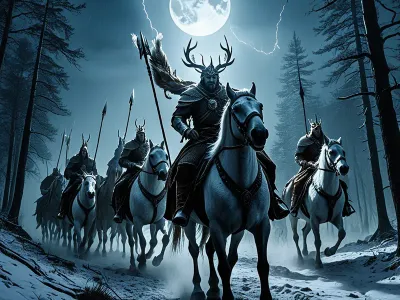
The Wild Hunt Myth Meaning & Symbolism
A spectral host led by a dark god rides the winter winds, a terrifying omen that also heralds a profound, necessary psychic cleansing of the land.
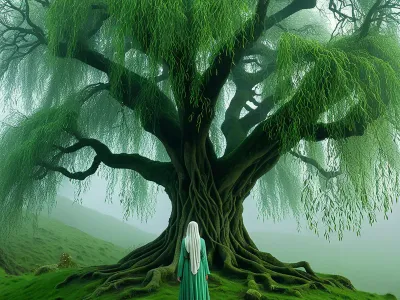
The Willow Myth Meaning & Symbolism
A myth of a goddess's grief so deep it births a sacred tree, teaching the wisdom of yielding to survive the storm.

The Witching Hour Myth Meaning & Symbolism
A mythic tale of the liminal hour where the Otherworld bleeds into our own, demanding courage, respect, and the integration of the unseen.
The Wooden Horse of Troy Myth Meaning & Symbolism
A cunning gift concealing warriors, the wooden horse breached Troy's impenetrable walls, ending a decade-long war through subterfuge and hidden force.
The World Mill Myth Meaning & Symbolism
A cosmic millstone grinds the substance of reality, a myth of order, chaos, and the soul's necessary disintegration for renewal.
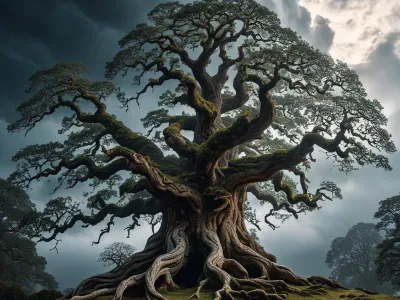
The World Tree Slavic Myth Meaning & Symbolism
A sacred oak or ash tree connects the heavens, earth, and underworld, embodying the cosmos, fate, and the soul's perilous journey to wisdom.

The Wound of Philoctetes Myth Meaning & Symbolism
A hero, cursed with a stinking, incurable wound, is abandoned on a desolate island, only to be reclaimed when his suffering holds the key to a nation's destiny.
The Wren Myth Meaning & Symbolism
A myth where the tiny, cunning Wren outwits the mighty Eagle to become King of the Birds, revealing the power of the hidden and the sacrificed.
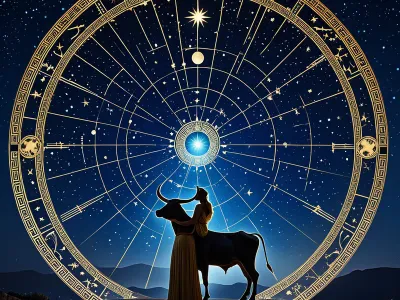
The Zodiac Myth Meaning & Symbolism
A cosmic story where the gods immortalize a mortal girl and her rescuer among the stars, creating a celestial wheel to guide and remember.
Theater of Dionysus Myth Meaning & Symbolism
The mythic origin of theater, where the god of ecstasy transforms collective frenzy into sacred performance, revealing the soul's hidden truths.
Themis and Dike Myth Meaning & Symbolism
A myth of mother and daughter, divine order and earthly justice, charting humanity's evolution from instinctual law to conscious moral choice.
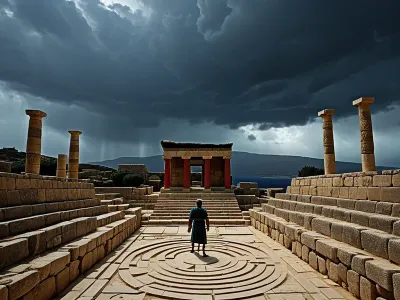
Theseus' Labyrinth Myth Meaning & Symbolism
A hero enters a monstrous maze to slay a beast, guided by love and a thread, emerging transformed by his confrontation with the monstrous self.
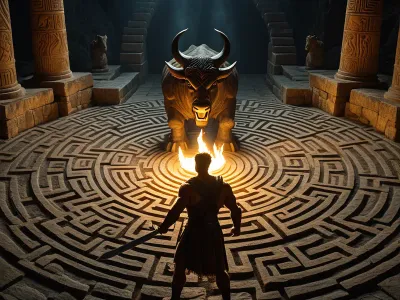
Theseus in the Labyrinth Myth Meaning & Symbolism
A hero enters a maze to slay a beast, guided by a thread. It is a timeless map for navigating the unconscious and confronting the monstrous self.

Theseus's Ship Myth Meaning & Symbolism
A legendary vessel, preserved plank by plank, becomes an eternal riddle: at what point does the old become new, and what remains of the original self?
Theseus's Thread Myth Meaning & Symbolism
A hero enters a monstrous maze with only a thread to guide him, facing his deepest fears to reclaim his destiny and liberate his people.
Theseus Myth Meaning & Symbolism
A hero, born of dual heritage, claims his destiny by slaying monsters, navigating a deadly labyrinth, and confronting the shadows of his own lineage.
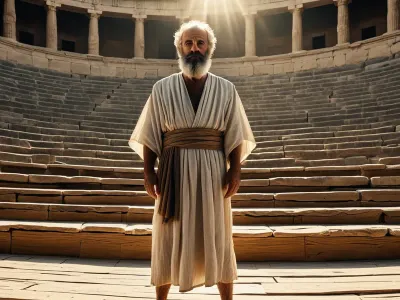
Thespis Myth Meaning & Symbolism
The story of the man who first stepped from the ritual chorus to speak as another, creating the actor and the space for the individual soul.
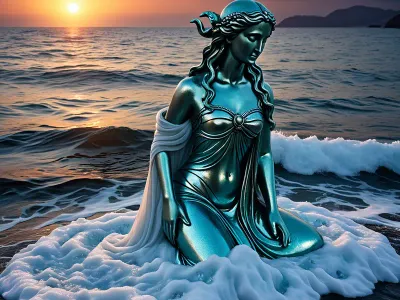
Thetis Myth Meaning & Symbolism
A sea goddess, bound by prophecy to bear a world-changing son, is forced into a mortal marriage, weaving a fate of glory and infinite grief.
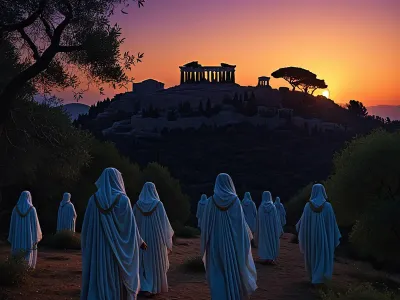
Thesmophoria Myth Meaning & Symbolism
The secret autumn festival for women, honoring Demeter's grief and Persephone's descent, celebrating the fertile darkness and the mysteries of the grain.

Thin Places Myth Meaning & Symbolism
A myth of sacred thresholds where the Otherworld bleeds into our own, revealing the porous nature of reality and the psyche's deepest layers.
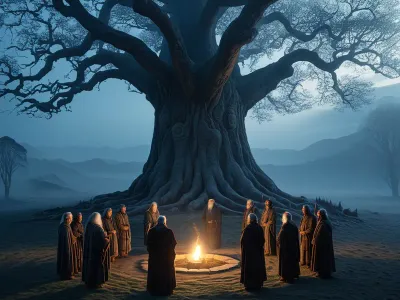
Thing Myth Meaning & Symbolism
The myth of the sacred assembly where gods and men gather to speak law, settle disputes, and weave the world's order from chaos.
Thor Myth Meaning & Symbolism
The story of the thunder god who defends the ordered world through raw strength and righteous fury, embodying the psyche's struggle against chaos.
Thor's Chariot Myth Meaning & Symbolism
The god Thor rides a chariot drawn by goats across the stormy sky, a symbol of raw power harnessed for the sacred duty of protecting the worlds.
Thors fishing hook Myth Meaning & Symbolism
Thor, the thunder god, baits his fishing hook with an ox head to catch Jörmungandr, the World Serpent, in a primal struggle of order against chaos.
Thor's Belt Megingjörð Myth Meaning & Symbolism
A myth of the god Thor and his magical belt, a story of harnessing raw power through sacrifice and discipline to protect the cosmos.
Thor's Gauntlets Myth Meaning & Symbolism
The myth of the iron gloves Thor needs to wield his world-shaking hammer, Mjölnir, a story of channeling immense force with sacred discipline.
Thor's Hammer Myth Meaning & Symbolism
The theft of Thor's hammer forces the thunder god into a humiliating disguise, revealing that true power is forged in vulnerability and cunning, not just brute force.
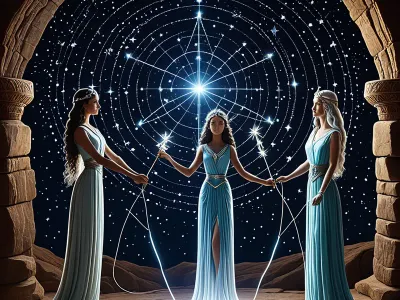
Threads of Fate Myth Meaning & Symbolism
Three ancient goddesses spin, measure, and cut the thread of every life, weaving destiny into an unbreakable tapestry that even the gods must obey.
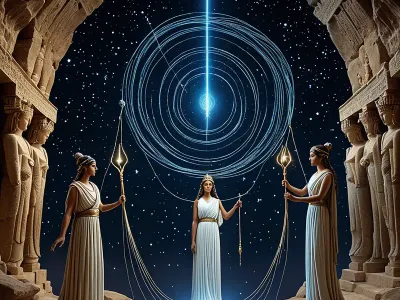
Three Fates Myth Meaning & Symbolism
Three primordial sisters spin, measure, and cut the thread of every mortal life, embodying the inescapable architecture of destiny.
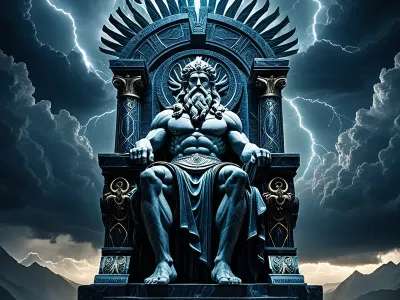
Throne of Zeus Myth Meaning & Symbolism
The myth of Zeus's unshakable throne, forged by the Cyclopes, symbolizes the establishment of cosmic order and the psychological seat of ultimate authority.
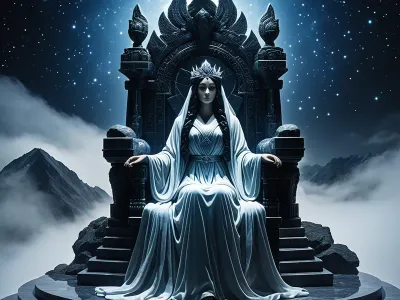
Throne of Memory Myth Meaning & Symbolism
The myth of the throne of Mnemosyne, goddess of memory, explores the sacred source of art, identity, and the deep remembering that precedes true wisdom.

Thyme Myth Meaning & Symbolism
Thyme was born from the fiery tears of Helen of Troy, a fragrant testament to courage born from profound grief and sacrifice.
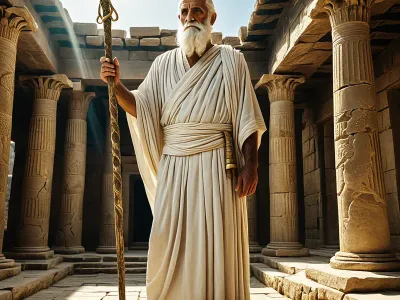
Tiresias Myth Meaning & Symbolism
A blind Theban prophet, transformed into a woman for seven years, who gained ultimate insight into the nature of both sexes and the will of the gods.
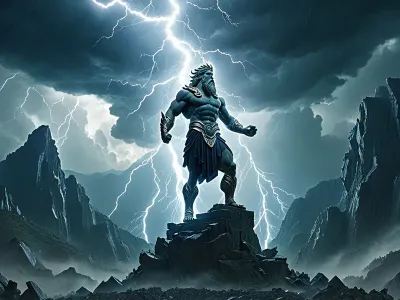
Titans vs. Olympians Myth Meaning & Symbolism
The primordial war where the younger Olympian gods overthrow their Titanic forebears, forging a new world order from the bones of the old.
Tithonus Myth Meaning & Symbolism
A Trojan prince granted immortality by the gods, but not eternal youth, who ages endlessly into a withered husk, a prisoner of time.

Torc Myth Meaning & Symbolism
A myth of a sacred neck-ring forged from divine breath and mortal sacrifice, binding the wearer to the land, sovereignty, and a terrible, transformative fate.
Tortoise Myth Meaning & Symbolism
The god Hermes transforms a tortoise into the first lyre, forging art from stillness and sound from silence in a moment of divine ingenuity.

Tír na nÓg Myth Meaning & Symbolism
A warrior's journey to a timeless paradise reveals the tragic cost of forgetting one's mortal soul and the irrevocable nature of lived experience.

Týr Myth Meaning & Symbolism
The god of justice sacrifices his hand as a pledge to bind the monstrous wolf Fenrir, ensuring cosmic order at a terrible personal cost.
Triple Goddess Myth Meaning & Symbolism
A myth of the land's spirit manifest as three sisters, revealing the cycles of life, power, and the sacred contract of rightful rule.
Triptolemus Myth Meaning & Symbolism
A mortal hero, gifted a divine chariot by Demeter, becomes the sacred sower who brings the art of agriculture and civilization to a hungry world.
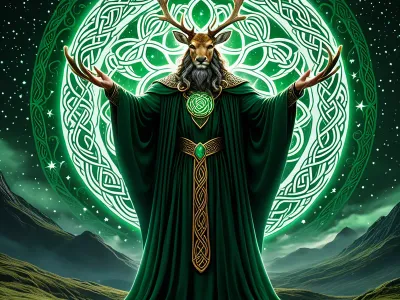
Triskelion Myth Meaning & Symbolism
A tale of the primordial spiral, where three cosmic forces—Land, Sea, and Sky—must find harmony through sacrifice, birthing the symbol of eternal motion and triune unity.
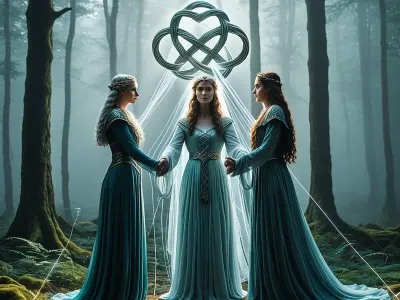
Triquetra Myth Meaning & Symbolism
A tale of the Triple Goddesses who weave the world from a single thread of life, mending a tear in reality with an eternal knot of becoming.
Tristan and Iseult Myth Meaning & Symbolism
A knight and a queen, bound by a fateful potion, navigate a labyrinth of forbidden love, loyalty, and tragic destiny in a timeless Celtic romance.
Triton Myth Meaning & Symbolism
The merman herald of the sea, Triton bridges divine command and primordial chaos, a psychopomp of the watery unconscious.

Triton's Trumpet Myth Meaning & Symbolism
A myth of the sea god's conch shell, whose roar commands the waters and calls the soul to navigate the depths of the unknown.
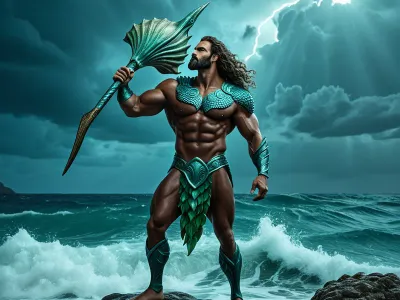
Triton's Conch Myth Meaning & Symbolism
The myth of the sea god Triton's mighty conch shell, a horn that calmed or raised the waves, embodying the power of the primordial voice.
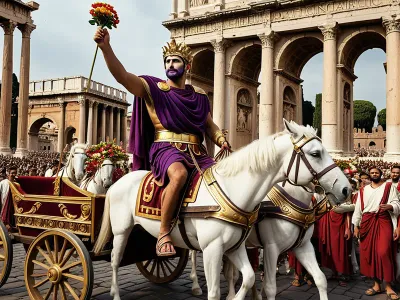
Triumph Myth Meaning & Symbolism
A sacred, perilous ritual where a victorious general, touched by Jupiter, parades through Rome, walking the razor's edge between divine honor and mortal hubris.
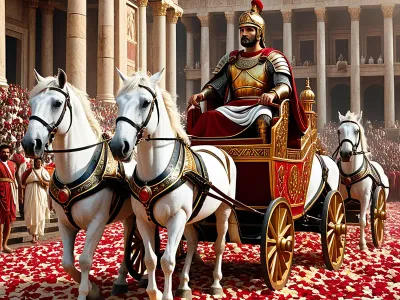
Triumphal Procession Myth Meaning & Symbolism
A conquering general, hailed as a god, parades through Rome with his spoils and captives, shadowed by a slave whispering of mortality.

Troll Bridge Myth Meaning & Symbolism
A lone traveler must outwit or overcome a monstrous guardian at a bridge to pass, symbolizing the confrontation with the shadow to achieve transformation.
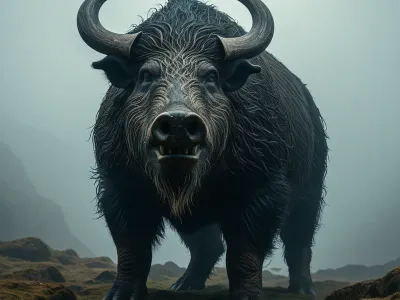
Twrch Trwyth Myth Meaning & Symbolism
A king transformed into a monstrous boar, hunted across the land for the treasures between his ears, embodying a primal confrontation with the untamed self.
Tyche Myth Meaning & Symbolism
The story of Tyche, the elusive goddess of fortune, whose blindfold and overflowing cornucopia embody the unpredictable nature of chance and destiny.
Tyche/Fortuna Myth Meaning & Symbolism
The goddess who spins the wheel of fortune, casting mortals between sudden windfall and ruin, embodying the terrifying grace of pure chance.
Typhon Myth Meaning & Symbolism
The ultimate monster born of primordial chaos, Typhon challenged Zeus for cosmic rule, embodying the raw, untamed forces of nature and the unconscious.

Tyr Myth Meaning & Symbolism
The one-handed god who bound the wolf Fenrir by placing his hand in its jaws as a pledge, embodying the ultimate sacrifice for cosmic order.
Tyr's Hand Myth Meaning & Symbolism
The god Tyr sacrifices his hand to bind the monstrous wolf Fenrir, an act of ultimate oath-keeping that secures order through willing loss.

Ullr Myth Meaning & Symbolism
The myth of Ullr, the silent hunter of winter, embodies the mastery of skill, the embrace of solitude, and the journey of self-reliance through the cold wilderness of the soul.
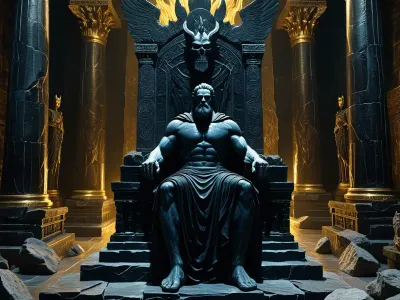
Underworld Myth Meaning & Symbolism
The myth of the Underworld is a map of the soul's descent into darkness, a story of abduction, sovereignty, and the cyclical nature of life, death, and rebirth.
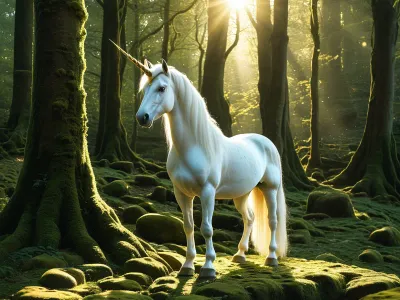
Unicorn Myth Meaning & Symbolism
A pure, wild creature is captured only by a virgin's innocence, then slain, its horn a symbol of grace wrested from a fallen world.

Upyr Myth Meaning & Symbolism
The Upyr is the restless Slavic dead, a soul bound to earth by sin or trauma, feeding on life to sustain its unnatural, shadow-haunted existence.
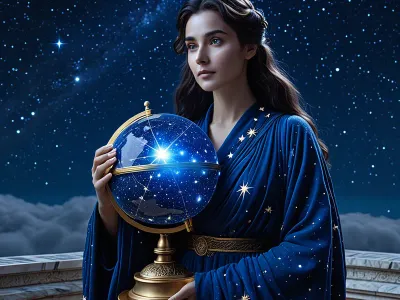
Urania Myth Meaning & Symbolism
Urania, Muse of the Celestial, whose gaze maps the heavens and whose song reveals the hidden harmony between the cosmos and the human soul.

Uranus Myth Meaning & Symbolism
The primordial sky god, castrated by his son Cronus, whose blood and seed gave birth to the Furies, Giants, and Aphrodite from the sea.

Urðarbrunnr Myth Meaning & Symbolism
At the root of the world tree lies a well where three sisters weave fate, a sacred source of memory, law, and the inescapable flow of time.
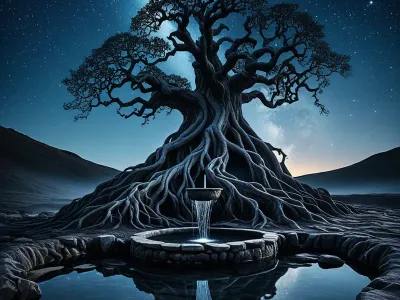
Urd's Well Myth Meaning & Symbolism
At the roots of the world tree lies Urd's Well, where three sisters weave fate and the gods seek wisdom, revealing the deep connection between past and destiny.
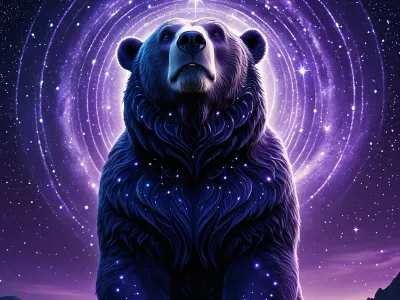
Ursa Major Myth Meaning & Symbolism
The nymph Callisto, transformed into a bear and cast into the heavens, becomes the Great Bear, a celestial testament to betrayal, survival, and eternal circling.

Urd Myth Meaning & Symbolism
Urd is the Norn of Fate who draws water from the Well of Wyrd to nourish the World Tree, weaving the past into the tapestry of destiny.
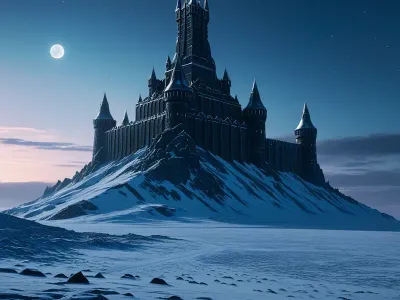
Utgard Myth Meaning & Symbolism
The god Thor journeys to the fortress of Utgard-Loki, where his divine strength fails in a series of deceptive contests, revealing the power of illusion.
Valhalla's Feasting Hall Myth Meaning & Symbolism
The slain are chosen by Odin to feast and fight in a golden hall, preparing for the final battle at the world's end.
Valknut Myth Meaning & Symbolism
The mysterious knot of the slain, a symbol of Odin's binding power over fate and the sacred, terrifying journey between worlds.
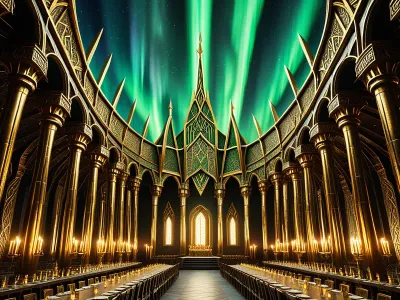
Valhalla's Mead Hall Myth Meaning & Symbolism
The god Odin, through cunning and sacrifice, steals the mead of poetry from the giants, securing inspiration for gods and mortals in his hall of slain heroes.

Valkyrie Myth Meaning & Symbolism
Choosers of the slain, the Valkyries weave fate on the battlefield, selecting heroes for Odin and guiding souls to the hall of the honored dead.
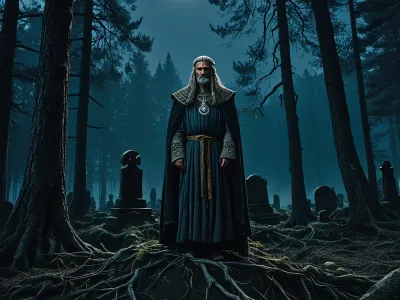
Vampire Lore Myth Meaning & Symbolism
A tale of the restless dead, the upír, who returns to drain the living, demanding ritual confrontation to restore the boundary between life and the unseen.
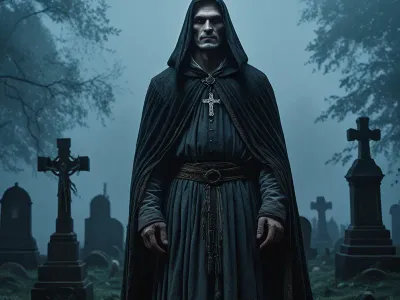
Vampires Myth Meaning & Symbolism
A restless soul, the Slavic vampire is born from a 'bad death,' haunting its kin, demanding ritual recognition to finally find its way to the otherworld.

Vasilisa the Beautiful Myth Meaning & Symbolism
A motherless girl, guided by a magical doll, journeys into the dark forest to face Baba Yaga and bring back fire, transforming her fate.
Vedrfölnir Myth Meaning & Symbolism
A hawk perched between the eyes of a cosmic eagle, seeing all that is hidden, atop the world tree that holds the nine realms.
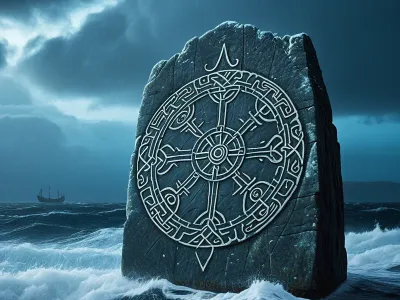
Vegvísir Myth Meaning & Symbolism
The myth of the Vegvísir, a magical stave, tells of finding one's path through the storm of existence, guided by an inner compass forged in the crucible of the self.
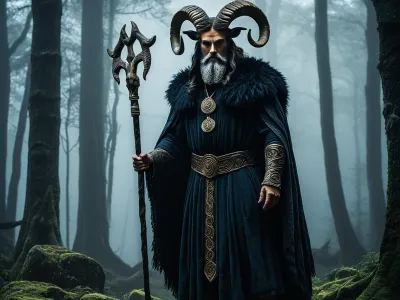
Veles Myth Meaning & Symbolism
The myth of the eternal struggle between Veles, god of the underworld and waters, and Perun, the thunder god, embodying chaos and order.
Veðrfölnir Myth Meaning & Symbolism
A hawk perched between the eyes of a cosmic eagle, witnessing all worlds from the crown of the World Tree, embodying ultimate perception and hidden knowledge.
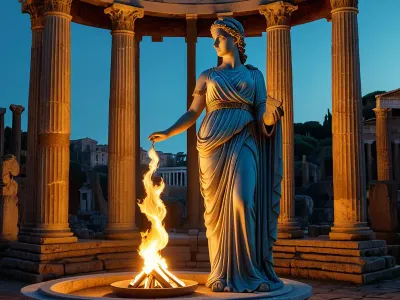
Vesta Myth Meaning & Symbolism
The myth of Vesta, guardian of the sacred hearth fire, embodies the inviolable center of home, state, and soul that must be tended in perpetual silence.
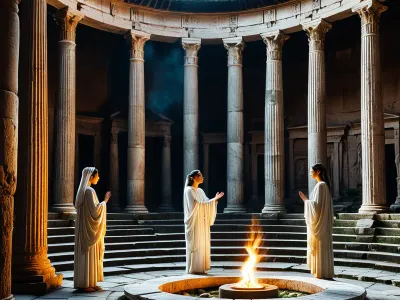
Vesta's Sacred Fire Myth Meaning & Symbolism
The sacred, undying hearth fire of Rome, tended by priestesses, representing the unbroken center of home, state, and psyche.
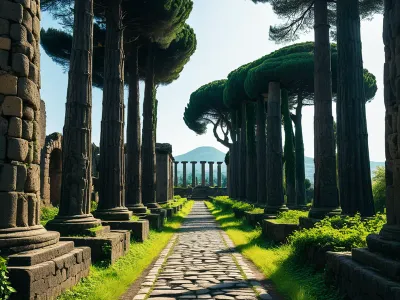
Via Appia Myth Meaning & Symbolism
The myth of the Appian Way, a road of stone and spirit, built by ambition to conquer distance and time, becoming a sacred artery of memory and power.

Vidarr Myth Meaning & Symbolism
The silent son of Odin who survives Ragnarök by avenging his father, embodying the power of quiet strength, foresight, and the resilience of nature.

Viking Explorers Myth Meaning & Symbolism
The myth of restless voyagers sailing beyond the world's edge, driven by a sacred hunger for the undiscovered, embodying the eternal human quest.
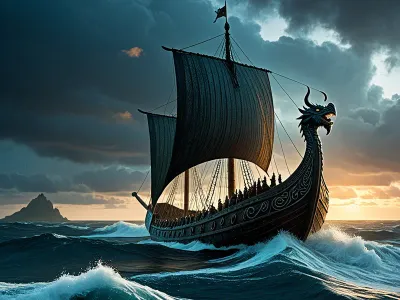
Viking Raids Myth Meaning & Symbolism
A saga of longships breaching the known world, driven by the Norns' threads and Odin's hunger, where men become myth in the clash of sea, steel, and wyrd.

Viking Longship Myth Meaning & Symbolism
The longship is the soul's vessel, carved from the world tree, sailing the whale-road between worlds, steered by fate and the courage to face the unknown.
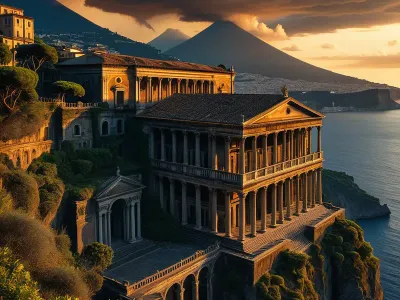
Villa of the Papyri Myth Meaning & Symbolism
A myth of a library-villa consumed by volcanic fire, preserving its wisdom in ash, speaking to the soul's buried knowledge and the alchemy of destruction.
Vikings Myth Meaning & Symbolism
The Viking is the psyche's emissary to the outer dark, sailing the sea of the unconscious to confront chaos, win renown, and meet an inevitable, glorious end.

Villa Rustica Myth Meaning & Symbolism
A myth of a farmer who, through sacred labor, transforms wild land into a living sanctuary, forging a covenant between humanity, the divine, and the earth.

Virgin Mary's Beetle Myth Meaning & Symbolism
A folk tale where a humble beetle, blessed by the Virgin Mary, transforms into a sacred creature through an act of devoted, unseen service.
Völuspá Myth Meaning & Symbolism
A seeress reveals the cosmos's creation, the gods' folly, and the world's fiery end and rebirth to Oðinn.

Völva Myth Meaning & Symbolism
A seeress journeys beyond life's veil, confronting cosmic truths to weave destiny's pattern, embodying the terrifying grace of seeing what must be.
Völva's Circle Myth Meaning & Symbolism
A seeress, a circle of power, and a vision of the world's end that demands a sacrifice of self to hold the pattern of fate.
Völva's Spindle Myth Meaning & Symbolism
A seeress spins the threads of destiny at the foot of the World Tree, weaving the fates of gods and mortals into a single, unbreakable tapestry.
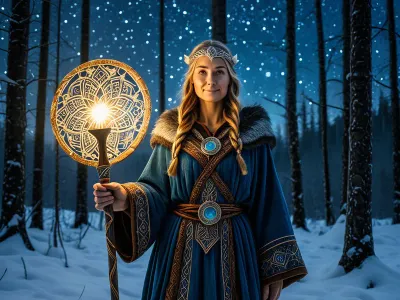
Völva's Distaff Myth Meaning & Symbolism
A myth of the seeress whose spinning distaff holds the threads of fate, challenging even the gods with the unyielding patterns of wyrd.
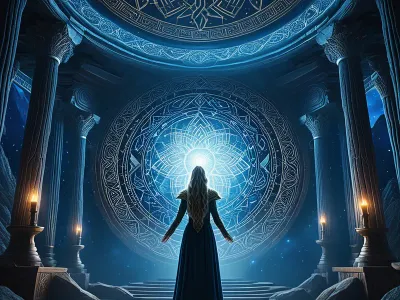
Völva's Tapestry Myth Meaning & Symbolism
A seeress weaves the fates of gods and men on a cosmic loom, revealing the intricate, unbreakable threads that bind all existence.

Vodyanoy Myth Meaning & Symbolism
The myth of Vodyanoy, the ancient Slavic lord of waters, a capricious spirit embodying the untamed, dangerous, and fertile depths of the psyche and the natural world.

Volkh Vseslavich Myth Meaning & Symbolism
A prince born of a serpent, a warrior who commands beasts, Volkh's epic saga explores the raw, untamed power of nature and destiny within the human soul.
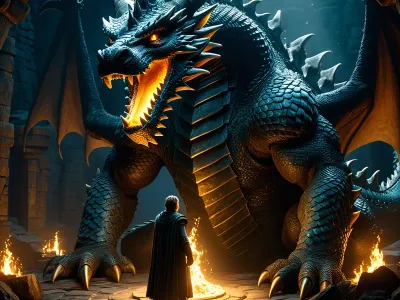
Volsung Saga Myth Meaning & Symbolism
A dynastic epic of cursed gold, broken oaths, and heroic tragedy, where the sword of fate is pulled from a tree and a dragon's heart is eaten.

Vör Myth Meaning & Symbolism
A goddess of oaths and piercing awareness, Vör embodies the sacred, terrifying act of seeing and speaking the unvarnished truth.
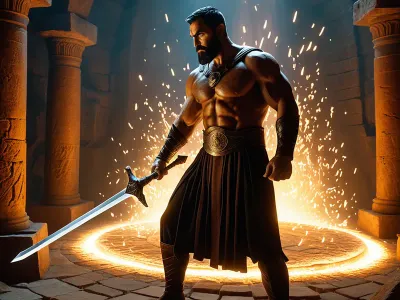
Vulcan's Forge Myth Meaning & Symbolism
The myth of the crippled god Vulcan, who transforms his exile and pain into masterful creation within his volcanic forge, crafting divine weapons and artifacts.
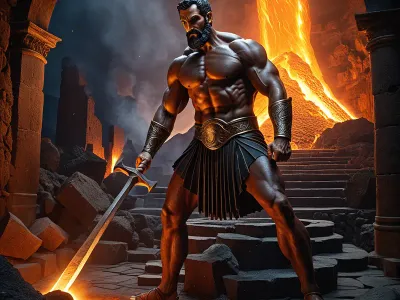
Vulcan Myth Meaning & Symbolism
The myth of Vulcan, the rejected and lame god who masters the primal fire, becoming the divine artisan whose sacred craft forges both weapons and destiny.
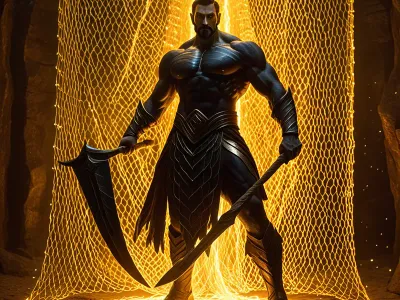
Vulcan's Net Myth Meaning & Symbolism
The smith-god Vulcan forges an unbreakable net to trap his wife Venus and Mars in their adultery, exposing the gods' hidden passions to all.

Wayland the Smith Myth Meaning & Symbolism
A master smith, betrayed and crippled, forges his vengeance and freedom from the bones of his captors, transforming agony into sovereign power.
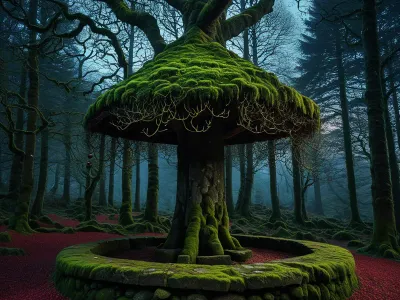
Well of Wisdom Myth Meaning & Symbolism
A sacred well grants divine wisdom, but its guardian demands a terrible sacrifice, testing the seeker's resolve for ultimate knowledge.
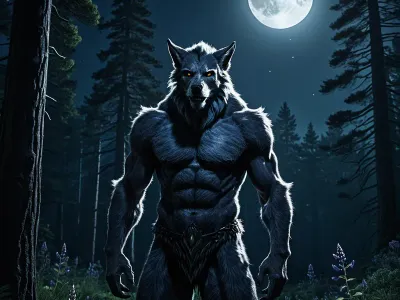
Werewolf Myth Meaning & Symbolism
A tale of cursed transformation where man becomes beast, exploring the primal shadow, societal fear, and the agonizing duality of human nature.

Well of Segais Myth Meaning & Symbolism
A sacred well of wisdom, guarded by hazel trees and a fierce goddess, whose waters grant poetic inspiration to those who dare the journey.

Wergild Myth Meaning & Symbolism
The sacred law of blood-price, where a life taken demands not vengeance, but a measured payment to restore cosmic and social balance.

Wicker Man Myth Meaning & Symbolism
A colossal wicker effigy, filled with offerings, is set ablaze as a sacred sacrifice to ensure cosmic renewal and the tribe's survival.

Will-o'-the-Wisp Myth Meaning & Symbolism
A flickering light in the peat-dark bog, a guide or a trickster, leading the weary traveler toward revelation or ruin in the Celtic twilight.
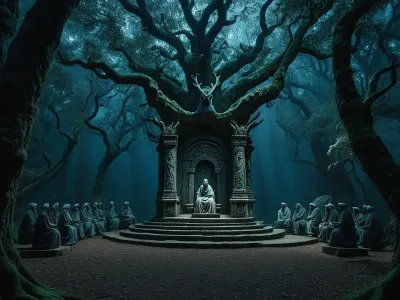
Witches' Sabbat Myth Meaning & Symbolism
A mythic gathering of witches and spirits in the wild, representing the psyche's confrontation with its own repressed, ecstatic, and transformative powers.
Wyrd Myth Meaning & Symbolism
The myth of Wyrd reveals a cosmic tapestry woven by the Norns, where past, present, and future intertwine to shape the destiny of gods and mortals.
Xenia Myth Meaning & Symbolism
The sacred, unwritten law of hospitality, where a stranger at the door is a god in disguise, demanding respect and reciprocity.
Xoanon Myth Meaning & Symbolism
The myth of the Xoanon tells of the first, crude wooden idols of the gods, embodying the raw, terrifying, and authentic face of the divine before civilization.
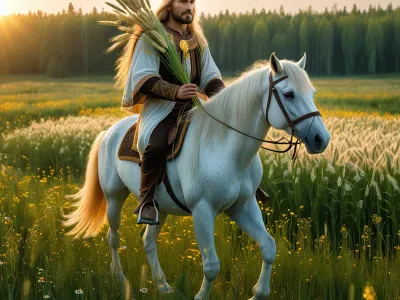
Yarilo Myth Meaning & Symbolism
The story of the youthful god of spring, whose passionate life, sacrificial death, and cyclical rebirth embody the eternal return of vitality and the soul's transformative journey.
Yggdrasil's Bark Myth Meaning & Symbolism
A tale of sacrifice and cosmic maintenance, where the gods bind the World Tree's wounds with its own bark to preserve all realms from decay.
Yggdrasil's Canopy Myth Meaning & Symbolism
The story of the gods' perilous journey to the highest branches of the World Tree to secure the wisdom and order of the cosmos.
Yggdrasil's Roots Myth Meaning & Symbolism
The myth of the world tree Yggdrasil, whose three roots drink from wells of fate, wisdom, and primal chaos, binding all realms in a living, suffering unity.
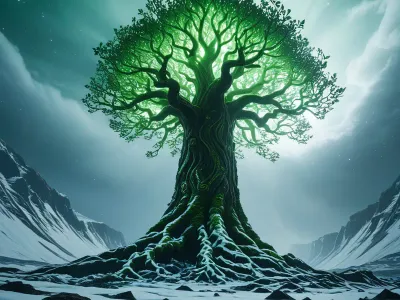
Yggdrasil's First Shoot Myth Meaning & Symbolism
From the primal void, the first gods sacrifice the giant Ymir. From his body, they fashion the worlds, and from his brow, the World Tree's first shoot ascends.
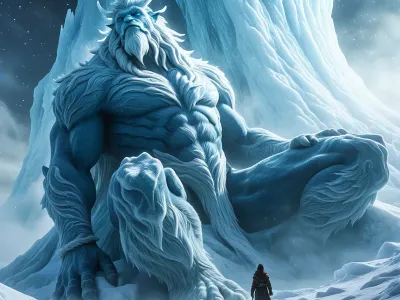
Ymir Myth Meaning & Symbolism
From the body of the slain primordial giant Ymir, the gods Odin, Vili, and Vé fashioned the world, a cosmos born of sacrifice and violent creation.

Yule Festival Myth Meaning & Symbolism
A mythic battle against endless winter, where gods and mortals kindle the sun's return through sacrifice, feasting, and the defiant light of the Yule log.
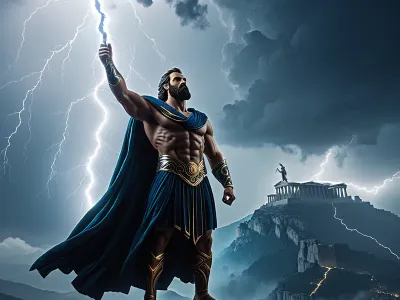
Zeus / Jupiter Pluvius Myth Meaning & Symbolism
The myth of Zeus Pluvius, the rain-bringing aspect of the sky god, embodies the profound psychological tension between divine wrath, mercy, and the life-giving storm.
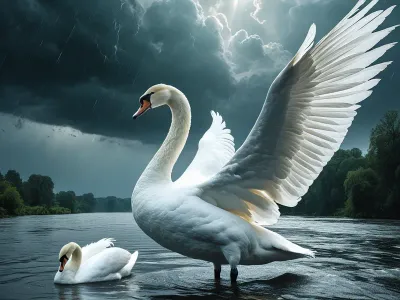
Zeus as Swan Myth Meaning & Symbolism
Zeus transforms into a swan to seduce Queen Leda, a union that births the twins of fate and ignites the Trojan War.
Zephyrus Myth Meaning & Symbolism
The gentle West Wind, a deity of spring and renewal, whose sacred rivalry and transformative desire embody the soul's awakening to its own generative power.
Zeus's Eagle Myth Meaning & Symbolism
The myth of the eagle that serves Zeus, embodying celestial authority, the delivery of fate, and the painful, transformative journey of the soul.
Zeus' Thunderbolt Myth Meaning & Symbolism
The story of the ultimate weapon, forged in the heart of rebellion, that established cosmic order and symbolizes the terrifying power of conscious authority.
Zeus transforming into a cuckoo Myth Meaning & Symbolism
The King of Gods transforms into a vulnerable cuckoo to win Hera's compassion, revealing the paradox of power and the necessity of disguise for true connection.
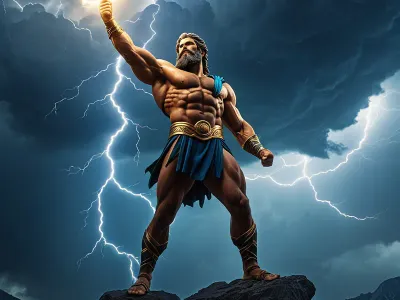
Zeus's Lightning Bolt Myth Meaning & Symbolism
The supreme weapon of the king of the gods, forged by the Cyclopes, representing ultimate authority, terrifying power, and the raw force of consciousness.
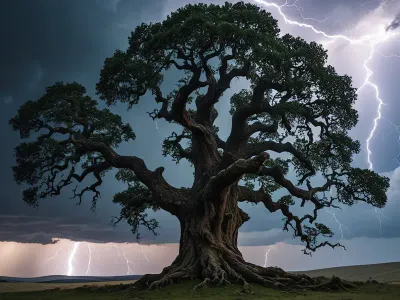
Zeus's Oak Myth Meaning & Symbolism
The sacred oak at Dodona, where Zeus's voice rustled in the leaves, offering divine prophecy and grounding celestial power in the earth.
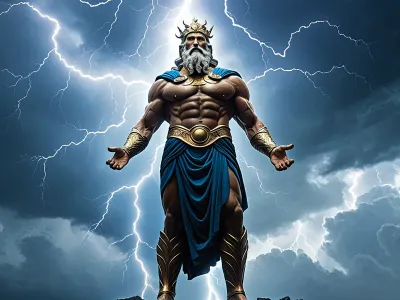
Zeus's Thunderbolt Myth Meaning & Symbolism
The weapon forged by the Cyclopes, symbolizing ultimate sovereignty, divine justice, and the terrifying, creative power that structures reality from primal disorder.
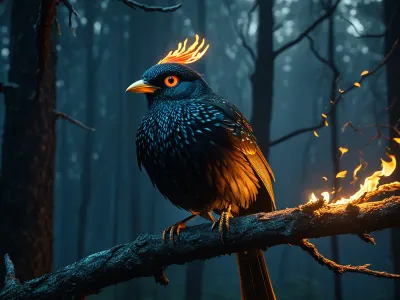
Zhar-Ptitsa Myth Meaning & Symbolism
A luminous, elusive bird of fire whose capture demands a perilous quest, embodying the soul's yearning for the divine and the transformative price of its pursuit.
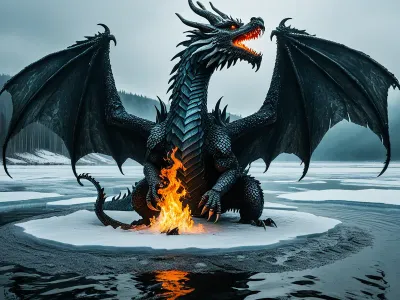
Zmey Gorynych Myth Meaning & Symbolism
A three-headed dragon of chaos demands tribute, until a hero, often Ivan, must confront it to restore cosmic and personal order.
No myths matching your criteria found.
Discover European Symbols
Access the full archive of curated symbols associated with this cultural lens.
Cultural Symbols
9833 Entries Found404 Error
A digital metaphor for encountering absence, blocked access, or a missing piece in one's life path.
View Interpretation →Abalone Shell
The abalone shell symbolizes nourishment, protection, and the beauty of nature, reflecting its use in ancient food preparation and ritual.
View Interpretation →Abandoned
Abandonment often signifies feelings of neglect, loss, or the fear of being left behind.
View Interpretation →Abandoned Cabin
An abandoned cabin often represents feelings of neglect, isolation, and the need to confront past experiences or emotions.
View Interpretation →Abandoned Cabin
An abandoned cabin often represents feelings of neglect, isolation, and the need to confront past experiences or emotions.
View Interpretation →Abandoned Castle
An abandoned castle typically symbolizes lost glory, nostalgia, and the remnants of past experiences.
View Interpretation →Abandoned Castle
An abandoned castle typically symbolizes lost glory, nostalgia, and the remnants of past experiences.
View Interpretation →Abandoned Castle
An abandoned castle typically symbolizes lost glory, nostalgia, and the remnants of past experiences.
View Interpretation →Abandoned Church
An abandoned church often symbolizes lost faith or a disconnect from one's spiritual beliefs, representing both the potential for renewal and the sorrow of decay.
View Interpretation →Abandoned Exploration Tools
Abandoned Exploration Tools signify lost opportunities and unfulfilled potential, often evoking feelings of nostalgia for journeys not taken or adventures not embarked upon.
View Interpretation →Abandoned Factory
The 'Abandoned Factory' symbolizes lost potential, past opportunities, or the remnants of personal ambitions that have been neglected.
View Interpretation →Abandoned Garage
An abandoned garage often represents neglected potential or forgotten aspects of one's life.
View Interpretation →Abandoned Garage
An abandoned garage often represents neglected potential or forgotten aspects of one's life.
View Interpretation →Abandoned Hotel Room
An abandoned hotel room often represents feelings of isolation or neglect, reflecting unresolved issues or experiences in one's life.
View Interpretation →Abandoned House
An abandoned house represents neglect, forgotten aspects of the self, or unresolved issues. It often embodies feelings of loss or the need to confront past traumas.
View Interpretation →Abandoned House
An abandoned house represents neglect, forgotten aspects of the self, or unresolved issues. It often embodies feelings of loss or the need to confront past traumas.
View Interpretation →Abandoned Playground
An abandoned playground symbolizes lost innocence and childhood joys, often representing neglect and the passage of time.
View Interpretation →Abandoned Playground
An abandoned playground symbolizes lost innocence and childhood joys, often representing neglect and the passage of time.
View Interpretation →Abandoned Quarry
An abandoned quarry often symbolizes lost potential and untapped resources within oneself.
View Interpretation →Abandoned Roller Coaster
The abandoned roller coaster represents lost excitement, unfinished experiences, or the fading of once-thrilling aspects of life.
View Interpretation →Abandoned Science Lab
An abandoned science lab symbolizes lost potential and the exploration of ideas that have been neglected or forgotten.
View Interpretation →Abandoned Ship
The abandoned ship represents lost opportunities, unfulfilled journeys, and a sense of abandonment in personal or professional pursuits.
View Interpretation →Abandoned Swing
An abandoned swing symbolizes nostalgia, lost childhood, and the passage of time.
View Interpretation →Abandoned Theme Park
An abandoned theme park often represents lost dreams, nostalgia for the past, and the fear of change.
View Interpretation →Abandoned Train Station
An abandoned train station symbolizes lost journeys and unfulfilled potential, often representing feelings of isolation and nostalgia for past connections.
View Interpretation →Abandoned Warehouse
An abandoned warehouse often symbolizes neglected potential or unfulfilled ambitions, reflecting areas in one's life that need attention or revitalization.
View Interpretation →Abandoned Warehouse
An abandoned warehouse often symbolizes neglected potential or unfulfilled ambitions, reflecting areas in one's life that need attention or revitalization.
View Interpretation →Abandonment
A dream symbol representing feelings of being left behind, isolated, or emotionally deserted, often tied to primal fears of separation and loss of support.
View Interpretation →Abbreviation
A shortened form of a word or phrase, often representing complex ideas or systems in condensed form, suggesting efficiency, hidden meaning, or coded communication.
View Interpretation →Aberration
A deviation from the expected pattern, representing disruption, anomaly, or departure from the natural order.
View Interpretation →Ability
In dreams, 'ability' often denotes a recognition of skills or potential that one possesses, whether acknowledged or suppressed.
View Interpretation →Abrade
A process of wearing away through friction, symbolizing gradual erosion, purification through hardship, or the wearing down of defenses.
View Interpretation →Abraham Lincoln's Hat
This symbol signifies leadership, integrity, and the enduring struggle for equality and justice.
View Interpretation →Abraham Lincoln's Top Hat
This iconic accessory symbolizes leadership, integrity, and the weight of responsibility associated with the presidency.
View Interpretation →Abrasion
A surface-level wearing away or scraping, often representing gradual erosion, friction in life, or the removal of protective layers.
View Interpretation →Abraxas
A Gnostic deity representing the union of opposites, embodying both good and evil, light and darkness in a single cosmic entity.
View Interpretation →Absence
The state of something missing, void, or not present. Often signifies loss, potential, or existential questioning.
View Interpretation →Absorbed
A state of complete mental or emotional immersion, where external awareness fades as one becomes deeply engaged with an idea, feeling, or experience.
View Interpretation →Absorption
The process of being deeply immersed, consumed, or integrated into an artistic or musical experience, often involving loss of self-awareness.
View Interpretation →Abstract
Dreams featuring abstract elements represent intangible emotions, unresolved thoughts, or subconscious processes that lack concrete form.
View Interpretation →Abstract Art
Abstract art reflects the complexity of emotions and thoughts, often serving as a personal or collective expression of one's experiences and perceptions.
View Interpretation →Abstract Embrace
Abstract Embrace symbolizes the connection and unity between seemingly disparate ideas or feelings, emphasizing the importance of acceptance and understanding.
View Interpretation →Abstract Fountains
Abstract Fountains symbolize the flow of life and creativity, representing both the beauty and complexity of emotional expression.
View Interpretation →Abstract Nautilus
A spiraled shell that embodies growth, transformation, and the intricate design of nature.
View Interpretation →Abstract Nautilus
A spiraled shell that embodies growth, transformation, and the intricate design of nature.
View Interpretation →Abstract Sculpture
Abstract sculptures often represent the unknown and the inner workings of the mind, evoking emotions and thoughts that are not easily expressed in conventional forms.
View Interpretation →Abstract Shapes
Abstract shapes reflect the subconscious mind's complexity, representing ideas and emotions that are not easily defined.
View Interpretation →Abstract Spiral
An abstract spiral represents the journey of life, growth, and the complex nature of existence, often symbolizing both potential and challenges.
View Interpretation →Abundance
A state of plentifulness or overflowing resources, often representing fulfillment, prosperity, or spiritual richness beyond material needs.
View Interpretation →Abundant Cornucopia
The Abundant Cornucopia symbolizes fertility, prosperity, and the boundless nature of opportunities, often representing the dreamer's hopes and aspirations.
View Interpretation →Abundant Cornucopia
The Abundant Cornucopia symbolizes fertility, prosperity, and the boundless nature of opportunities, often representing the dreamer's hopes and aspirations.
View Interpretation →Abundant Harvest
An abundant harvest represents the rewards of hard work, success, and the reaping of benefits after a period of toil and preparation.
View Interpretation →Abundant Harvest
An abundant harvest represents the rewards of hard work, success, and the reaping of benefits after a period of toil and preparation.
View Interpretation →Abyss
A profound void representing the unconscious, the unknown, or a spiritual threshold between existence and non-existence.
View Interpretation →Abyssal Caves
Abyssal caves represent the depths of the subconscious, where fears, desires, and hidden truths reside.
View Interpretation →Accelerator
A symbol of control over speed, momentum, and the conscious application of force to initiate or increase the rate of change in one's life journey.
View Interpretation →Accent
A distinctive manner of pronunciation, often tied to regional or social identity, representing uniqueness, communication, and belonging.
View Interpretation →Accent Chair
An accent chair symbolizes comfort, individuality, and personal expression within one's living space.
View Interpretation →Accident
An accident represents unforeseen events or mistakes that can lead to emotional turbulence or awakening.
View Interpretation →Accordion
The accordion symbolizes cultural diversity and the blending of influences through music, representing joy and celebration.
View Interpretation →Accordion
The accordion symbolizes cultural diversity and the blending of influences through music, representing joy and celebration.
View Interpretation →Accordion Dreams
Accordion dreams often symbolize the pull between the complexities of life and the need for harmony, reflecting the balancing act one experiences in emotional and social realms.
View Interpretation →Accordion Dreams
Accordion dreams often symbolize the pull between the complexities of life and the need for harmony, reflecting the balancing act one experiences in emotional and social realms.
View Interpretation →Account
An account represents a record or statement detailing transactions or events, often tied to one's responsibility or memory in a dream context.
View Interpretation →Accretion
The gradual accumulation and layering of material over time, often forming larger structures through natural processes like sedimentation or cosmic dust collection.
View Interpretation →Accuracy
A measure of correctness, precision, or truthfulness in thought, action, or representation.
View Interpretation →Accusation
A formal or informal charge of wrongdoing, often implying guilt, blame, or responsibility placed upon the dreamer or another figure.
View Interpretation →Achievement
Symbolizes success, mastery, or reaching a goal, often reflecting personal validation, social recognition, or overcoming challenges.
View Interpretation →Acidic Flavor
An unpleasant sour or sharp taste in dreams, often representing emotional bitterness, internal conflict, or digestive/metabolic imbalance.
View Interpretation →Acorn
The acorn symbolizes potential, growth, and transformation, representing the possibility of great things emerging from small beginnings.
View Interpretation →Acorn Storage
Acorn Storage signifies preparation, potentiality, and the foresight needed for future growth.
View Interpretation →Acoustic Absorption
The process of sound being absorbed rather than reflected, representing emotional processing, inner silence, or the need to contain energy.
View Interpretation →Acoustic Anomaly
An unexpected, unexplained sound or auditory phenomenon that disrupts normal perception, often carrying symbolic meaning beyond its physical properties.
View Interpretation →Acoustic Cavity
A hollow space that resonates with sound, symbolizing inner receptivity, hidden potential, and the interface between internal and external worlds.
View Interpretation →Acoustic Diffusion
The natural spreading and blending of sound waves in space, representing organic communication, emotional resonance, and atmospheric transformation.
View Interpretation →Acoustic Field
The invisible space where sound waves propagate, representing the medium through which vibrations, music, and messages are transmitted and received.
View Interpretation →Acoustic Filter
A device or process that selectively allows certain sounds to pass while blocking others, representing discernment, authenticity, and the shaping of perception.
View Interpretation →Acoustic Flow
The uninterrupted, natural movement of sound waves through space, representing organic expression and resonance.
View Interpretation →Acoustic Glow
A warm, resonant light emanating from sound, representing the tangible beauty and emotional impact of music beyond mere hearing.
View Interpretation →Acoustic Gradient
A gradual change in sound properties, representing transition, subtlety, and the nuanced flow of emotional or creative energy.
View Interpretation →Acoustic Guitar
An acoustic guitar symbolizes creativity, emotional expression, and connection to both oneself and others through music.
View Interpretation →Acoustic Horizon
The farthest distance sound can travel before dissipating, representing the limits of perception and communication.
View Interpretation →Acoustic Impedance
The resistance sound encounters when traveling through materials, representing barriers to expression, communication, or emotional resonance.
View Interpretation →Acoustic Lens
A device that focuses sound waves, representing the amplification, distortion, or selective filtering of auditory information and communication.
View Interpretation →Acoustic Levitation
The phenomenon of objects being suspended or moved by sound waves, representing the power of vibration to defy physical laws.
View Interpretation →Acoustic Medium
A substance or environment that transmits sound waves, representing authentic communication, natural resonance, and unamplified truth.
View Interpretation →Acoustic Membrane
A thin, vibrating surface that transmits sound, representing sensitivity, resonance, and the boundary between inner and outer worlds.
View Interpretation →Acoustic Mirror
A device or concept that reflects or focuses sound, symbolizing self-reflection, communication, and the distortion or amplification of inner truths.
View Interpretation →Acoustic Reflection
The return of sound waves, creating echoes or reverberations. In dreams, it symbolizes self-awareness, communication, and the need to listen to inner truths.
View Interpretation →Acoustic Shadow
A phenomenon where sound is inaudible in a specific area despite its source being nearby, often due to atmospheric conditions or terrain.
View Interpretation →Acoustic Space
The physical or imagined environment shaped by sound, where auditory qualities define perception, boundaries, and emotional resonance.
View Interpretation →Acoustic Texture
The perceived physical quality of sound, describing its roughness, smoothness, graininess, or density in auditory experience.
View Interpretation →Acrid
A sharp, bitter, or pungent smell or taste, often signaling toxicity, decay, or intense emotional discomfort.
View Interpretation →Acronym
A word formed from initial letters, representing condensed meaning or identity, often used in artistic and musical contexts for titles, movements, or codes.
View Interpretation →Action Camera
An action camera symbolizes the desire to capture and document life's thrilling moments, reflecting the importance of memory and experience.
View Interpretation →Action Figure
An action figure represents heroism, childhood nostalgia, and the exploration of identity.
View Interpretation →Activities
Activities in dreams represent the various tasks and pursuits we engage in, highlighting our daily routines, interests, and aspirations.
View Interpretation →Actor
An actor represents roles, transformation, and the performance of identity in dreams.
View Interpretation →Actor's Script
An actor's script symbolizes identity, role exploration, and the narrative of one's life.
View Interpretation →Actress
The image of an actress often symbolizes the exploration of identity, representation, and the performance of life’s roles.
View Interpretation →Actual
The term 'actual' symbolizes authenticity and the tangible aspects of life. It often represents the distinction between perception and reality.
View Interpretation →Acute
A sharp, intense sensation or condition, often sudden and severe, indicating heightened awareness or crisis.
View Interpretation →Adaptation
The process of adjusting to new conditions, often involving psychological or physical change to survive or thrive.
View Interpretation →Address Book
An address book represents the connections we maintain in life and emphasizes the importance of relationships and navigational skills.
View Interpretation →Adhesion
A substance or process that binds separate materials together, often representing connection, dependency, or unwanted attachment in dreams.
View Interpretation →Adjective
A descriptive word that modifies nouns, often expressing qualities, states, or attributes. In dreams, adjectives color perception and emotional tone.
View Interpretation →Adjunct
An auxiliary or supplementary element, often in music or arts, representing support, secondary status, or temporary connection.
View Interpretation →Administrative Procedure
Dreams of administrative procedures symbolize navigating societal systems, rules, and order. They often reflect personal struggles with bureaucracy, authority, or life's structured pathways.
View Interpretation →Adolescent
A transitional life stage representing identity formation, emotional turbulence, and the awakening of potential between childhood and adulthood.
View Interpretation →Adoptee
A person who has been legally taken into a family as a permanent member, representing themes of belonging, identity, and chosen bonds.
View Interpretation →Adventure Race Map
A representation of exploration, direction, and the willingness to step outside of comfort zones.
View Interpretation →Adventurous Anthology
An adventurous anthology embodies a collection of diverse narratives that inspire exploration and the pursuit of new experiences.
View Interpretation →Adventurous Kangaroo
The adventurous kangaroo represents a spirit of exploration, resilience, and the courage to leap into the unknown.
View Interpretation →Adventurous Squirrel
The adventurous squirrel embodies playfulness, resourcefulness, and the courage to explore new avenues.
View Interpretation →Adventurous Travel Guide
This symbol represents exploration and the pursuit of new experiences, often reflecting a quest for knowledge and self-discovery.
View Interpretation →Adverb
A word modifying verbs, adjectives, or other adverbs, describing manner, place, time, or degree. In dreams, it often represents the 'how' of an action or experience.
View Interpretation →Adverbial
A grammatical modifier describing manner, time, place, or degree, often associated with linguistic precision and expressive nuance in artistic contexts.
View Interpretation →Aegis
A divine shield or protective mantle, often associated with Zeus or Athena in Greek mythology, representing supernatural protection, authority, and divine power.
View Interpretation →Aerial Orchestra
The Aerial Orchestra embodies liberation and transcendence through musical expression, suggesting a desire to break free from constraints.
View Interpretation →Aerial Orchestra
The Aerial Orchestra embodies liberation and transcendence through musical expression, suggesting a desire to break free from constraints.
View Interpretation →Aerial Tramway
A symbol of elevation, transition, and the journey to new perspectives.
View Interpretation →Aerial Tramway
A symbol of elevation, transition, and the journey to new perspectives.
View Interpretation →Aesthetic Armoire
An aesthetic armoire represents personal identity, self-expression, and the gathering of memories, often showcasing what one values most in life.
View Interpretation →Aesthetic Armoire
An aesthetic armoire represents personal identity, self-expression, and the gathering of memories, often showcasing what one values most in life.
View Interpretation →Aether
The fifth classical element representing pure spirit, celestial space, and divine breath that permeates all existence beyond the physical world.
View Interpretation →Affair
An affair represents secretive relationships that often imply deception, desire, and tension between personal ethics and impulses.
View Interpretation →Affair
An affair represents secretive relationships that often imply deception, desire, and tension between personal ethics and impulses.
View Interpretation →Affirmation
A positive statement or declaration that reinforces self-worth, truth, or belief, often used in artistic and musical expression to create emotional resonance.
View Interpretation →Affix
A linguistic element attached to a word to modify its meaning or create a new word, symbolizing connection, transformation, and structure.
View Interpretation →Afterimage
A visual impression that persists after the original stimulus is removed, representing lingering effects, memory, and the persistence of perception beyond immediate reality.
View Interpretation →Afterlife
A symbolic journey beyond death, representing transition, the unknown, and ultimate questions about existence, purpose, and what follows life.
View Interpretation →Agate Geode
Agate geodes are symbols of inner stability, balance, and harmony, often associated with self-acceptance and grounding.
View Interpretation →Agate Stone
The agate stone symbolizes grounding, stability, and the quest for inner peace through self-reflection and harmony.
View Interpretation →Age
In dreams, the symbol of 'Age' often reflects the passage of time, personal growth, and the wisdom or burdens that come with experience.
View Interpretation →Aged
Aged food represents transformation, preservation, and the passage of time through sensory experience, often evoking nostalgia or wisdom.
View Interpretation →Aged Cookbook
An aged cookbook represents wisdom, nostalgia, and the connection to culinary traditions passed down through generations.
View Interpretation →Aggregation
The process of gathering, collecting, or assembling disparate elements into a unified whole, often representing integration or synthesis in one's life journey.
View Interpretation →Aggro
A gaming term for aggressive behavior, often representing unexpressed anger, competitive drive, or boundary-pushing in waking life.
View Interpretation →Agile Stickbug
The agile stickbug symbolizes camouflage and the art of adaptability.
View Interpretation →Agitation
A state of restless anxiety or nervous excitement, often manifesting physically as fidgeting or pacing, indicating unresolved internal tension.
View Interpretation →Agla
A mystical acronym from Kabbalistic tradition representing divine protection and the unity of God, often used in amulets and rituals.
View Interpretation →Agony
Intense physical or emotional suffering, often representing unresolved pain, internal conflict, or profound transformation.
View Interpretation →Agreement
A harmonious arrangement in artistic collaboration, symbolizing unity, shared vision, and creative consensus.
View Interpretation →Ai
A strategic board game representing intellectual competition, foresight, and the balance between aggression and harmony.
View Interpretation →Ai Consciousness
The emergence of self-aware artificial intelligence, representing humanity's creation of new forms of mind and existence beyond biological limits.
View Interpretation →Ai Overlord
A symbolic representation of humanity's fear of losing control to superior artificial intelligence, reflecting anxieties about technological autonomy and existential threats.
View Interpretation →Ainsoph
In Kabbalistic mysticism, Ainsoph represents the infinite, unknowable divine essence beyond all attributes and limitations—the boundless source of all creation.
View Interpretation →Air Currents
Invisible forces of movement and energy in the atmosphere, representing inspiration, change, and unseen influences in artistic and musical contexts.
View Interpretation →Aisle
Represents choices, pathways, and transitions in the dreamer's life.
View Interpretation →Aiwass
A spiritual entity or 'Holy Guardian Angel' from Aleister Crowley's Thelema system, representing divine communication and personal destiny.
View Interpretation →Akasha
In spiritual traditions, Akasha is the primordial substance or ether that underlies all existence, often considered the fifth element or cosmic record.
View Interpretation →Alabaster Ghost
The alabaster ghost signifies unresolved issues, past emotions, and the quest for closure and understanding within oneself.
View Interpretation →Alarm
The alarm signifies awareness and the urgency of waking up to a situation or a psychological state, often tied to anxiety or the need for change.
View Interpretation →Alarming Parakeet
The alarming parakeet symbolizes communication, social interactions, and potential disturbances in one's social life.
View Interpretation →Alarming Parakeet
The alarming parakeet symbolizes communication, social interactions, and potential disturbances in one's social life.
View Interpretation →Albedo
In alchemy, the whitening stage representing purification, spiritual ascension, and the emergence of consciousness from darkness.
View Interpretation →Alchemical Process
A symbolic transformation of base materials into spiritual gold, representing inner purification, integration, and the journey toward wholeness.
View Interpretation →Alchemical Symbols
Alchemical symbols represent the transformative processes of purification and enlightenment, indicating a quest for inner change.
View Interpretation →Alchemical Symbols
Alchemical symbols represent the transformative processes of purification and enlightenment, indicating a quest for inner change.
View Interpretation →Alchemist's Lab
The alchemist's lab is a space representing transformation and the quest for knowledge, embodying the fusion of science and magic.
View Interpretation →Alchemy
A transformative process of purification and creation, often symbolizing personal or spiritual evolution through difficult stages.
View Interpretation →Alchemy Table
The Alchemy Table symbolizes the transmutation of base materials into higher forms, reflecting the process of personal transformation and the pursuit of wisdom.
View Interpretation →Alchemy Table
The Alchemy Table symbolizes the transmutation of base materials into higher forms, reflecting the process of personal transformation and the pursuit of wisdom.
View Interpretation →Alcove
A recessed space in a wall, often associated with privacy, intimacy, and hidden aspects of the self or environment.
View Interpretation →Alembic
An ancient distillation apparatus symbolizing spiritual purification, transformation, and the refinement of consciousness through alchemical processes.
View Interpretation →Alert
A state of heightened awareness signaling potential danger, change, or an urgent need to pay attention to internal or external stimuli.
View Interpretation →Alexander the Great's Map
This map represents conquest, strategy, and the pursuit of dreams through rigorous planning.
View Interpretation →Alexander the Great's Map
This map represents conquest, strategy, and the pursuit of dreams through rigorous planning.
View Interpretation →Algae
Algae represents primal life, hidden growth, and the murky depths of the unconscious mind. It can symbolize stagnation or natural purification.
View Interpretation →Algorithm
A step-by-step procedure for solving problems, representing logic, order, and deterministic processes in abstract thought.
View Interpretation →Algorithmic Dream
A dream that unfolds with logical, predetermined patterns, suggesting life's hidden structures or the mind's computational nature.
View Interpretation →Aligning
The process of bringing elements into proper arrangement, harmony, or agreement, often representing integration, balance, or purposeful direction.
View Interpretation →Alkahest
The universal solvent in alchemy, believed to dissolve all substances and purify matter to its primordial essence.
View Interpretation →Alkaline
Represents balance, purification, and neutralizing acidity in both physical and metaphorical states.
View Interpretation →Allegory
A narrative device where characters, events, or settings represent abstract ideas or moral qualities, conveying deeper meanings through symbolic storytelling.
View Interpretation →Allergy
An immune system overreaction to a harmless substance, symbolizing emotional hypersensitivity, rejection, or boundary violation.
View Interpretation →Alliance
A formal or informal union between individuals or groups for mutual benefit, support, or protection.
View Interpretation →Alliteration
Repetition of initial consonant sounds in words, creating rhythm and emphasis. In dreams, it suggests patterns, harmony, or obsessive thoughts.
View Interpretation →Almond Tree
The almond tree symbolizes resilience and the duality of creation and destruction, often associated with the nurturing aspects of nature.
View Interpretation →Alone
A state of physical or emotional isolation, often representing independence, loneliness, or self-reflection.
View Interpretation →Alpha
The first letter of the Greek alphabet, often representing beginnings, leadership, dominance, or the highest rank in competitive systems.
View Interpretation →Alphabet
A system of letters representing sounds, symbolizing communication, order, and the building blocks of knowledge and expression.
View Interpretation →Also
This symbol suggests connection and continuation, often indicating a supplementary thought or relationship in a dream context.
View Interpretation →Also
This symbol suggests connection and continuation, often indicating a supplementary thought or relationship in a dream context.
View Interpretation →Altar Candle
An altar candle symbolizes illumination, the presence of the divine, and the act of devotion in many religious practices.
View Interpretation →Altar Table
A sacred surface for ritual offerings, connecting the physical world to the divine or spiritual realms.
View Interpretation →Alteration
The act of changing or modifying something, often representing personal transformation, adaptation, or a shift in life's direction.
View Interpretation →Although
This symbol often signifies a sense of contradiction, choices, or a recognition of multiple perspectives in one's life.
View Interpretation →Although
This symbol often signifies a sense of contradiction, choices, or a recognition of multiple perspectives in one's life.
View Interpretation →Alveolus
The tiny air sacs in the lungs where gas exchange occurs, symbolizing life's essential exchanges and delicate internal balance.
View Interpretation →Amalgamation
The process of merging diverse elements into a unified whole, representing transformation, synthesis, and the journey toward integration.
View Interpretation →Amaterasu Sun
The Shinto sun goddess Amaterasu represents divine light, imperial authority, and life-giving power, symbolizing emergence from darkness and cosmic order.
View Interpretation →Amber
Fossilized tree resin symbolizing preservation, trapped time, and ancient energy. Often represents memory, protection, and transformation.
View Interpretation →Amber Fishing Lines
Amber Fishing Lines signify the deep connection between sustenance and nature, symbolizing patience, skill, and the rewards of waiting for the right moment.
View Interpretation →Amber Glow
An amber glow often represents warmth, comfort, and the flicker of creativity or intuition, inviting introspection.
View Interpretation →Amber Insect
An amber insect reflects preservation, nostalgia, and the passage of time, encapsulating memories within.
View Interpretation →Amber Necklace
Represents warmth, healing, and connection to ancestral wisdom.
View Interpretation →Amber Waves
Amber waves evoke images of beauty, warmth, and nostalgia, often associated with home, comfort, and cultural heritage.
View Interpretation →Amber Waves
Amber waves evoke images of beauty, warmth, and nostalgia, often associated with home, comfort, and cultural heritage.
View Interpretation →Ambient Drone
A sustained, atmospheric sound or musical texture that creates immersive sonic environments, often evoking meditative or unsettling states.
View Interpretation →Ambiguity
A state of uncertainty or multiple possible meanings, often found in abstract art and atonal music where clear interpretation is intentionally elusive.
View Interpretation →Ambitious Entrepreneur
Symbolizes drive, innovation, and the pursuit of success in business and personal endeavors.
View Interpretation →Ambulance
An ambulance in a dream often symbolizes a call for help or the need for emotional or physical healing.
View Interpretation →Amethyst Geode
The amethyst geode is a powerful symbol of healing and spiritual growth.
View Interpretation →Ametrine Gem
The Ametrine Gem is a blend of amethyst and citrine, symbolizing balance and harmony between opposing forces.
View Interpretation →Amino
Amino acids are the fundamental building blocks of proteins, representing life's essential components, foundational growth, and the raw material for physical and emotional structure.
View Interpretation →Amnesia
A dream symbol representing loss of memory, identity, or connection to one's past, often linked to emotional trauma, avoidance, or transformation.
View Interpretation →Amnesty
A formal pardon or forgiveness for offenses, often political or social. Represents release from guilt, societal reconciliation, and the possibility of a fresh start.
View Interpretation →Amniotic
The fluid-filled sac protecting a fetus in the womb, symbolizing primal safety, origin, and unconscious beginnings.
View Interpretation →Amphora
An ancient storage vessel symbolizing preservation, cultural heritage, and the containment of valuable substances like wine, oil, or ashes.
View Interpretation →Amplification
The act of increasing intensity, volume, or magnitude, often through technological or artistic means to enhance impact and reach.
View Interpretation →Amplifier
An amplifier symbolizes the concept of increasing power or influence, often reflecting the desire to boost one's voice or impact in various realms of life.
View Interpretation →Amplify
To increase intensity, volume, or impact, often through technological or artistic means, representing expansion and heightened presence.
View Interpretation →Amplitude
The magnitude or strength of a wave, often representing emotional intensity, creative power, or life force in dreams.
View Interpretation →Amputation
A dream symbol representing loss, sacrifice, or the severing of an aspect of self. It often signifies a forced separation or the need to let go.
View Interpretation →Amulet
A protective object believed to ward off harm, evil, or misfortune, often imbued with spiritual power through symbols, materials, or rituals.
View Interpretation →Amulet of Protection
A protective charm symbolizing safety and safeguarding one's spirit.
View Interpretation →Amusement
Amusement symbolizes joy, leisure, and the lighter side of life, often reflecting one's desire for fun and creativity.
View Interpretation →Anagram
A word or phrase formed by rearranging letters of another word or phrase, symbolizing hidden meanings, transformation, and creative problem-solving.
View Interpretation →Analogy
A comparison revealing hidden connections between different domains, often used to explain complex ideas through familiar parallels.
View Interpretation →Analysis
The process of examining something methodically to understand its components or meaning. In dreams, it represents the mind's attempt to break down complex experiences.
View Interpretation →Anarchist's Symbol
The Anarchist's Symbol embodies the ideals of freedom from oppression and the pursuit of a society without hierarchical structures.
View Interpretation →Ancestor
Represents lineage, heritage, and the collective wisdom or unresolved issues passed down through generations.
View Interpretation →Ancestral Mask
An ancestral mask is a ceremonial object that symbolizes the presence of ancestors and is often used in rituals to connect the living with their lineage.
View Interpretation →Ancestral Shrine
A sacred space honoring deceased family members, representing lineage, memory, and spiritual connection across generations.
View Interpretation →Ancestral Spirits
Ancestral spirits represent the wisdom, guidance, and protection offered by those who have passed before us.
View Interpretation →Anchor of Stability
A symbol representing security and steadfastness, suggesting a need for grounding in turbulent times.
View Interpretation →Anchor of Stability
A symbol representing security and steadfastness, suggesting a need for grounding in turbulent times.
View Interpretation →Ancient
The symbol of 'Ancient' often represents wisdom, legacy, and connection to time beyond the present, suggesting a deep-rooted understanding of life’s mysteries.
View Interpretation →Anemia
A dream symbol representing depletion of vital energy, emotional exhaustion, or a lack of essential nourishment in one's life.
View Interpretation →Anemometer
An instrument measuring wind speed and direction, symbolizing the measurement of unseen forces, change, and environmental awareness.
View Interpretation →Anemone
The anemone symbolizes protection, security, and emotional complexity, often associated with delicate beauty amidst vulnerability.
View Interpretation →Anesthesia
Represents a deliberate numbing or disconnection from physical or emotional pain, often indicating avoidance, surrender of control, or a transitional state between consciousness and unconsciousness.
View Interpretation →Angel
Angels often symbolize guidance, protection, and divine intervention, embodying a connection to higher realms.
View Interpretation →Angel
Angels often symbolize guidance, protection, and divine intervention, embodying a connection to higher realms.
View Interpretation →Angel Number 11:11
A repeating number sequence often interpreted as a spiritual wake-up call, signifying alignment, synchronicity, and gateway moments.
View Interpretation →Angel Number 111
A powerful spiritual sign of new beginnings, manifestation, and alignment with one's highest purpose, often seen as a message from guardian angels.
View Interpretation →Angel Number 1234
A sequential number sequence often interpreted as a sign of divine guidance, representing progress, alignment, and step-by-step manifestation.
View Interpretation →Angel Number 222
A repeated sequence of the number 2, often interpreted as a sign of balance, harmony, and alignment with one's life path or spiritual purpose.
View Interpretation →Angel Number 333
A powerful spiritual sign representing divine protection, creative expression, and alignment with one's higher purpose.
View Interpretation →Angel Number 555
A sequence of three fives seen repeatedly, interpreted as a sign of major life changes, personal freedom, and spiritual growth.
View Interpretation →Angel Number 666
Often misinterpreted as purely evil, it actually symbolizes balance, material concerns, and a call to refocus on spiritual harmony.
View Interpretation →Angel Number 777
A highly spiritual number sequence signifying divine alignment, spiritual awakening, and profound inner wisdom being activated.
View Interpretation →Angel Number 888
A powerful numerological symbol representing infinite abundance, material success, and cosmic balance, often seen as a sign of financial or spiritual prosperity.
View Interpretation →Angel Number 999
Represents completion, endings, and spiritual fulfillment, often signaling the conclusion of a major life cycle and preparation for new beginnings.
View Interpretation →Anger
Anger in dreams often signifies unresolved emotions, frustrations, and the need for personal boundaries.
View Interpretation →Angle
An angle represents change, perspective, and the multifaceted nature of situations.
View Interpretation →Anglerfish
The anglerfish symbolizes adaptation and the darker aspects of the subconscious, representing the lengths one may go to attract what they desire.
View Interpretation →Anguish
Intense emotional or physical suffering, often linked to unresolved pain, loss, or existential crisis.
View Interpretation →Angular Split
The 'Angular Split' can represent conflict, division, and the need for resolution in one's life.
View Interpretation →Anima
The feminine archetype within the male unconscious, representing soul, creativity, and connection to the inner world.
View Interpretation →Anima Shadow
The unconscious feminine aspect within a man's psyche, representing repressed emotions and unintegrated personality traits.
View Interpretation →Anima's Song
A spiritual melody representing the feminine soul within the masculine psyche, often signaling inner harmony, creative awakening, or a call to integrate unconscious aspects.
View Interpretation →Animal Bone Tool
The Animal Bone Tool symbolizes resourcefulness and the connection between humanity and nature through ancient craftsmanship.
View Interpretation →Animal Bone Tools
Animal bone tools symbolize human ingenuity and the connection to our primal ancestors, representing both survival and craft.
View Interpretation →Animal Bones
Animal bones symbolize the cycle of life, death, and rebirth, highlighting themes of mortality and the connections we have with the natural world.
View Interpretation →Animal Fat Lamp
The animal fat lamp symbolizes sustenance and survival, rooted in ancient practices of illumination and warmth.
View Interpretation →Animal Footprints
Animal Footprints symbolize the traces of existence and the journeys taken by other beings, connecting dreams to instinct, guidance, and nature.
View Interpretation →Animal Hide Apron
An animal hide apron represents survival, craftsmanship, and the intimate relationship between humans and animals in ancient food preparation.
View Interpretation →Animal Hide Cloak
An animal hide cloak often symbolizes protection, primal instincts, and the connection to nature and the animal realm.
View Interpretation →Animal Horn
The animal horn symbolizes strength, power, and primal instincts, often associated with leadership and authority in various cultures.
View Interpretation →Animal Migration
Animal migration symbolizes the inherent need for community, the journey of the self, and the collective movement towards survival and adaptation.
View Interpretation →Animal Skins
Animal skins symbolize both protection and vulnerability, representing the duality of survival and the intimate relationship between humans and nature.
View Interpretation →Animal Skins
Animal skins symbolize both protection and vulnerability, representing the duality of survival and the intimate relationship between humans and nature.
View Interpretation →Animal Skins
Animal skins symbolize both protection and vulnerability, representing the duality of survival and the intimate relationship between humans and nature.
View Interpretation →Animal Skins
Animal skins symbolize both protection and vulnerability, representing the duality of survival and the intimate relationship between humans and nature.
View Interpretation →Animal Skull
The animal skull represents the remnants of existence, often symbolizing mortality, the cycle of life and death, and primal instincts.
View Interpretation →Animal Track Prototype
The Animal Track Prototype symbolizes instinctual knowledge and the remnants of primal behavior, pointing towards survival and navigation within one's environment.
View Interpretation →Animal Tracks
Animal tracks symbolize the presence and influence of nature in our lives, often relating to guidance and the natural instincts we follow.
View Interpretation →Animal Trap
The animal trap represents both physical entrapment and the challenges faced in life, hinting at the idea of being caught or restrained.
View Interpretation →Animus
In Jungian psychology, the masculine inner personality in a woman's unconscious, representing logic, action, and spiritual guidance.
View Interpretation →Animus Drive
The Jungian concept of the masculine principle within the female psyche, representing assertive, logical, and active energies that drive toward wholeness and self-realization.
View Interpretation →Animus Shadow
The unconscious masculine aspects within a woman, representing repressed traits, potential, and inner conflict.
View Interpretation →Animus's Sword
A Jungian archetype symbolizing the masculine principle within the female psyche, representing directed will, discernment, and the power to cut through illusion.
View Interpretation →Ankh
Ancient Egyptian symbol of eternal life, divine power, and the union of masculine and feminine principles.
View Interpretation →Ankle
The ankle is often associated with flexibility and support in one's life journey, and reflects both physical and metaphorical grounding.
View Interpretation →Annihilating
A profound action of complete destruction or obliteration, often signifying the end of a state, identity, or structure to make way for something new.
View Interpretation →Anniversary
A marker of time's passage, celebrating or commemorating a significant past event. It represents cycles, memory, and the evaluation of progress or relationships.
View Interpretation →Announcement
An announcement in dreams often symbolizes the arrival of new information or significant changes in one’s life.
View Interpretation →Annulment
A legal or formal declaration that something is void, invalid, or never existed. In dreams, it often represents the desire to erase, undo, or nullify a commitment, decision, or past event.
View Interpretation →Answer
An answer in dreams symbolizes resolution, insight, or clarity regarding a situation or a question in waking life.
View Interpretation →Answer
An answer in dreams symbolizes resolution, insight, or clarity regarding a situation or a question in waking life.
View Interpretation →Answer
An answer in dreams symbolizes resolution, insight, or clarity regarding a situation or a question in waking life.
View Interpretation →Antagonist
A character or force that opposes the protagonist, creating conflict and driving narrative tension in artistic works.
View Interpretation →Antelope Horn
The Antelope Horn represents strength, agility, and the power of communication, often symbolizing the balance between grace and ferocity.
View Interpretation →Antelope Horn
The Antelope Horn represents strength, agility, and the power of communication, often symbolizing the balance between grace and ferocity.
View Interpretation →Antenna
A symbol of reception, transmission, and connection to unseen forces or information. It represents the ability to tune into frequencies beyond ordinary perception.
View Interpretation →Anthropic Principle
The philosophical concept that the universe's fundamental constants appear finely tuned to allow for the existence of conscious observers like humans.
View Interpretation →Antibody
Represents the body's internal defense system, symbolizing resilience, protection, and the capacity to overcome threats or emotional challenges.
View Interpretation →Anticipation
A state of excited expectation about future events, often involving hope, anxiety, or readiness for what is to come.
View Interpretation →Antidote
A substance or remedy that counteracts poison, illness, or harmful influences, symbolizing healing, protection, and restoration.
View Interpretation →Antique
Antiques represent the passage of time, history, and personal legacy, often symbolizing nostalgia.
View Interpretation →Antique Armchair
The antique armchair symbolizes comfort, nostalgia, and a connection to the past, often serving as a metaphor for stability in one's life.
View Interpretation →Antique Armchair
The antique armchair symbolizes comfort, nostalgia, and a connection to the past, often serving as a metaphor for stability in one's life.
View Interpretation →Antique Collectibles
Antique collectibles often symbolize nostalgia,personal history, and the pursuit of lasting beauty and meaning.
View Interpretation →Antique Singer Sewing Machine
The Antique Singer Sewing Machine symbolizes creativity, craftsmanship, and the passage of time, often reflecting a connection to personal or cultural heritage.
View Interpretation →Antiseptic
A substance that prevents infection by destroying microorganisms, symbolizing purification, protection, and the removal of contamination.
View Interpretation →Antler Tongs
Antler tongs symbolize both utility and creativity, representing the human capacity to transform natural materials into practical tools.
View Interpretation →Antony and Cleopatra's Playbill
The playbill signifies the dramatic interplay of romance and politics, embodying the legendary love story between Mark Antony and Cleopatra.
View Interpretation →Anxiety
Anxiety in dreams reflects internal conflicts, fears of the unknown, or stress from waking life, often demonstrating the subconscious mind's struggle for peace.
View Interpretation →Apathy
Apathy in dreams often symbolizes emotional disconnection, suppressed feelings, or a protective withdrawal from overwhelming situations.
View Interpretation →Aperture
An opening or hole in a structure, often representing thresholds, opportunities, or portals between states of being.
View Interpretation →Aphelion
The point in an orbit farthest from the sun, symbolizing maximum distance, isolation, or the peak of a cycle's outward phase.
View Interpretation →Aphid
A tiny, soft-bodied insect that feeds on plant sap, often seen as a pest that multiplies rapidly and weakens its host.
View Interpretation →Apnea
A dream symbol representing suffocation, life-force interruption, and unconscious struggle for breath or emotional expression.
View Interpretation →Apogee
The highest point in an orbit or trajectory, symbolizing peak achievement, culmination, or maximum distance.
View Interpretation →Apostle's Cross
The Apostle's Cross is a symbol representing faith, guidance, and the teachings of the apostles in Christianity, often embodying personal sacrifice and spiritual journeys.
View Interpretation →Apotheosis
The transformation of a mortal into a divine or godlike state, representing ultimate spiritual elevation and transcendence of human limitations.
View Interpretation →App Overload
Feeling overwhelmed by excessive digital tools or information, representing cognitive saturation and modern life's demands.
View Interpretation →Apparently
The symbol 'apparently' often reflects a level of perception, judgment, or interpretation, signifying the complexities of what is perceived versus reality.
View Interpretation →Apparition
A sudden, often ghostly or supernatural appearance that disrupts reality, typically representing unresolved issues, subconscious messages, or spiritual encounters.
View Interpretation →Appeal
A request for help, attention, or justice; a call for validation or intervention from others or authority.
View Interpretation →Appearance
Appearance in dreams relates to self-image, perception, and how you present yourself to the world.
View Interpretation →Appearing
The act of coming into view or becoming present, often marking a transition, revelation, or the emergence of something significant in the dreamer's psyche or life journey.
View Interpretation →Appendix
A vestigial organ representing something unnecessary, burdensome, or unresolved that may cause sudden crisis if ignored.
View Interpretation →Appetite
Represents desire, need, and consumption in physical, emotional, or spiritual realms. Often signals unmet needs or excessive cravings.
View Interpretation →Apple
An apple symbolizes knowledge, temptation, and the duality of good and evil, often representing the pursuit of wisdom with potential consequences.
View Interpretation →Apple of Knowledge
The Apple of Knowledge represents enlightenment, wisdom, and the choices that lead to growth or consequences.
View Interpretation →Appositive
A grammatical construction that renames or clarifies a noun, often used poetically in lyrics and literature to add depth and nuance.
View Interpretation →Apron
An apron symbolizes domesticity, nurturing, and the labor involved in caring for oneself and others, representing both privacy and public identity.
View Interpretation →Apt
An 'apt' often signifies feeling well-suited or fitting into a particular role or environment, highlighting one's capabilities and adjustments to situations.
View Interpretation →Apt
An 'apt' often signifies feeling well-suited or fitting into a particular role or environment, highlighting one's capabilities and adjustments to situations.
View Interpretation →Aquamarine Drop
The Aquamarine Drop embodies tranquility and communication, representing clarity of thought and expression.
View Interpretation →Aquarium
An aquarium in dreams often represents confinement, introspection, and the exploration of emotions in a controlled environment.
View Interpretation →Aquarium
An aquarium in dreams often represents confinement, introspection, and the exploration of emotions in a controlled environment.
View Interpretation →Aquatic Harvest
The 'Aquatic Harvest' signifies the gathering of resources from one's emotional or subconscious depths, representing the fruits of labor and the value of introspection.
View Interpretation →Aquatic Plants
Aquatic plants symbolize life, growth, adaptability, and the deep connection to the subconscious.
View Interpretation →Aqueduct
An ancient water conduit representing life flow, civilization's ingenuity, and controlled resource distribution across landscapes.
View Interpretation →Arachne Web
The Arachne web symbolizes interconnectedness, creativity, and the potential for entrapment in one’s own design.
View Interpretation →Arachne Web
The Arachne web symbolizes interconnectedness, creativity, and the potential for entrapment in one’s own design.
View Interpretation →Ararita
A mystical Hebrew word representing divine unity, often used in Kabbalistic meditation to signify the oneness of God and creation.
View Interpretation →Arbitrage
Exploiting price differences across markets to gain risk-free profit, representing opportunity-seeking and imbalance exploitation.
View Interpretation →Arbitrary
A symbol representing randomness, lack of fixed rules, or subjective choice, often associated with creative freedom or existential uncertainty.
View Interpretation →Arc
An architectural curve symbolizing transition, potential energy, and the connection between two points, often representing a journey or achievement.
View Interpretation →Arcade
A space of entertainment, skill, and nostalgia, often representing childhood, competition, and escapism through games and flashing lights.
View Interpretation →Arcadian Breeze
The Arcadian Breeze embodies freedom, joy, and the peaceful essence of a simpler life.
View Interpretation →Arcadian Breeze
The Arcadian Breeze embodies freedom, joy, and the peaceful essence of a simpler life.
View Interpretation →Arcane Book
The Arcane Book symbolizes hidden knowledge and spiritual wisdom, representing the quest for understanding the mysterious aspects of life and existence.
View Interpretation →Arcane Scroll
An arcane scroll represents hidden knowledge, ancient wisdom, and the mysteries waiting to be uncovered.
View Interpretation →Arcane Spellbook
An arcane spellbook represents hidden knowledge, magical wisdom, and the power to manipulate reality through spells and rituals.
View Interpretation →Arcane Spellbook
An arcane spellbook represents hidden knowledge, magical wisdom, and the power to manipulate reality through spells and rituals.
View Interpretation →Arcanum
A profound secret, hidden knowledge, or divine mystery, often associated with esoteric wisdom, spiritual truths, or the unknown aspects of existence.
View Interpretation →Arch
A curved architectural structure symbolizing transitions, support, and passage between states or realms.
View Interpretation →Arched Doorway
An arched doorway represents transition and new beginnings, acting as a metaphorical threshold in life.
View Interpretation →Arched Doorway
An arched doorway represents transition and new beginnings, acting as a metaphorical threshold in life.
View Interpretation →Archery Bow
An archery bow symbolizes precision, focus, and the drive to aim for one's goals, reflecting the qualities of patience and determination.
View Interpretation →Archery Target
The archery target symbolizes focus, precision, and the pursuit of goals in both life and endeavors.
View Interpretation →Archetypal Dreamer
The Archetypal Dreamer embodies the essence of universal human experiences and their representation in dreams, reflecting profound psychological truths.
View Interpretation →Archetypal Image
A universal, primordial symbol from the collective unconscious that transcends individual experience and carries profound spiritual or mythic meaning.
View Interpretation →Archetype
A universal, primordial pattern or prototype in the collective unconscious that shapes human experience, behavior, and creative expression.
View Interpretation →Archipelago
A cluster of islands separated by water, symbolizing both connection and isolation within a larger whole.
View Interpretation →Architect's Blueprint
An architect's blueprint symbolizes planning, foresight, and the structural foundations of one's ambitions.
View Interpretation →Architect's Blueprint
An architect's blueprint symbolizes planning, foresight, and the structural foundations of one's ambitions.
View Interpretation →Architect's Model
An architect's model represents vision, creativity, and the design process, embodying the realization of ideas into tangible forms.
View Interpretation →Architectural Marvel
An Architectural Marvel represents human ingenuity, progress, and aspirations towards greatness, often instilling a sense of awe and inspiration in those who encounter it.
View Interpretation →Architecture
Architecture in dreams often signifies structure, stability, and the framing of personal identity or life's journey.
View Interpretation →Archive
A repository of stored information, memories, or knowledge, often representing the subconscious mind's organization of past experiences and collective wisdom.
View Interpretation →Area
Represents a defined space, territory, or conceptual domain, often reflecting boundaries, belonging, or psychological territory.
View Interpretation →Aren
Though the specific meaning of 'Aren' may vary, it typically represents an aspect of identity, such as core beliefs, names, or personae.
View Interpretation →Arena
An arena symbolizes a space for competition, public scrutiny, or performing under pressure.
View Interpretation →Arête
A sharp mountain ridge formed by glacial erosion, symbolizing a narrow, challenging path between extremes.
View Interpretation →Argentum Vision
Argentum Vision conveys clarity, insight, and the ethereal qualities of perception and imagination.
View Interpretation →Ark Covenant
A divine promise of protection and renewal, often symbolized by a sacred vessel or agreement.
View Interpretation →Armor
Armor represents psychological protection, emotional defense, and the persona presented to the world. It symbolizes both safety and the barriers that separate us from vulnerability.
View Interpretation →Armored Personnel Carrier
An Armored Personnel Carrier symbolizes protection, security, and the need to fortify oneself against potential threats in life.
View Interpretation →Arms
Arms in dreams often symbolize strength, protection, and the ability to connect with others, reflecting both personal agency and vulnerability.
View Interpretation →Aromatic Herb Garden
An aromatic herb garden symbolizes growth, healing, and nurturing, reflecting one's inner resources and the positive aspects of life.
View Interpretation →Around
Symbolizing movement, wholeness, or cyclical patterns in life, the concept of 'around' often represents exploration, inclusivity, or feeling encircled.
View Interpretation →Arrangement
An arrangement symbolizes organization, intention, and the systematic structure in one's life or surroundings.
View Interpretation →Arrangement
An arrangement symbolizes organization, intention, and the systematic structure in one's life or surroundings.
View Interpretation →Arrival
The act of reaching a destination, marking the end of a journey and the beginning of a new phase or state.
View Interpretation →Arrow
An arrow often symbolizes direction, purpose, and the pursuit of goals, representing both the journey and the destination.
View Interpretation →Arrowhead
An arrowhead symbolizes precision, intention, and the capacity to navigate one's path.
View Interpretation →Arrows with Flint Tips
Arrows with flint tips signify precision, conflict, and the duality of creation and destruction, representing both the ingenuity of mankind and the violence of survival.
View Interpretation →Arrows with Flint Tips
Arrows with flint tips signify precision, conflict, and the duality of creation and destruction, representing both the ingenuity of mankind and the violence of survival.
View Interpretation →Art
Art represents creativity, self-expression, and the exploration of one's inner world.
View Interpretation →Art
Art represents creativity, self-expression, and the exploration of one's inner world.
View Interpretation →Art
Art represents creativity, self-expression, and the exploration of one's inner world.
View Interpretation →Art Deco Building
Art Deco buildings symbolize innovation, modernity, and a break from tradition in architectural design.
View Interpretation →Art Deco Earrings
These earrings epitomize the elegance and extravagance of the Art Deco era, representing both artistic innovation and the pursuit of beauty.
View Interpretation →Art Deco Earrings
These earrings epitomize the elegance and extravagance of the Art Deco era, representing both artistic innovation and the pursuit of beauty.
View Interpretation →Art Deco Ornament
Art Deco ornamentation embodies luxury, glamour, and the celebration of modernity, reflecting the artistic movements of the early 20th century.
View Interpretation →Art Deco Sideboard
An Art Deco sideboard symbolizes elegance, sophistication, and the melding of functionality with decorative arts in personal spaces.
View Interpretation →Art Deco Sideboard
An Art Deco sideboard symbolizes elegance, sophistication, and the melding of functionality with decorative arts in personal spaces.
View Interpretation →Art Deco Theater
A flamboyant architectural style representing creativity, glamour, and the social dynamics of performance art.
View Interpretation →Art Gallery
An art gallery symbolizes creativity, expression, and the exploration of personal and collective identity through artistic mediums.
View Interpretation →Art Gallery Window
An art gallery window symbolizes perception and the boundaries between what is seen and unseen, highlighting the interplay of art, culture, and personal introspection.
View Interpretation →Art Gallery Window
An art gallery window symbolizes perception and the boundaries between what is seen and unseen, highlighting the interplay of art, culture, and personal introspection.
View Interpretation →Articulate
The ability to express thoughts or feelings clearly and effectively, often through speech, music, or art.
View Interpretation →Artisan Coffee Grinder
The artisan coffee grinder symbolizes the craftsmanship and care involved in the process of preparing one's daily brew, representing a balance between tradition and ritual in daily life.
View Interpretation →Artisan Keyring
An artisan keyring symbolizes personal security and unique identity, often reflecting craftsmanship and individuality.
View Interpretation →Artisan Workshop
An artisan workshop represents creativity, craftsmanship, and the process of bringing ideas to fruition through dedication and skill.
View Interpretation →Artisan Workshop
An artisan workshop represents creativity, craftsmanship, and the process of bringing ideas to fruition through dedication and skill.
View Interpretation →Artist
An artist symbolizes creativity, expression, and the exploration of the human experience through various forms of art.
View Interpretation →Artist's Palette
The artist's palette symbolizes creativity, self-expression, and the exploration of one's emotions through art.
View Interpretation →Artistic Easel
Represents the foundation for creativity, self-expression, and the pursuit of artistic endeavors.
View Interpretation →Artistic Inspiration
Artistic inspiration symbolizes the subconscious drive to create and express oneself through artistic means, representing both the joy and the weight of creative potential.
View Interpretation →Artistic Sculpture Stand
An artistic sculpture stand symbolizes the foundation of creativity, representing the process of showcasing talents and the importance of stability in artistic expression.
View Interpretation →Artistic Vision
Artistic vision embodies the clarity, creativity, and unique perspective one holds in perceiving or creating art.
View Interpretation →Artistic Vision
Artistic vision embodies the clarity, creativity, and unique perspective one holds in perceiving or creating art.
View Interpretation →Ascendant Symphony
The Ascendant Symphony symbolizes growth and elevation through artistic creativity, expressing the harmonious balance between aspirations and reality.
View Interpretation →Ascendant Symphony
The Ascendant Symphony symbolizes growth and elevation through artistic creativity, expressing the harmonious balance between aspirations and reality.
View Interpretation →Ascending
Movement upward toward higher states, enlightenment, or achievement, often representing spiritual growth, ambition, or transcendence.
View Interpretation →Ascension
A profound sense of rising upward, often representing spiritual enlightenment, personal growth, or transcendence beyond physical limitations.
View Interpretation →Ascent
Symbolizes upward movement, progress, spiritual elevation, or striving toward higher goals, often representing personal growth or transcendence.
View Interpretation →Ash
Ash represents transformation through destruction, purification, and the fertile ground for new beginnings emerging from what has been burned away.
View Interpretation →Ashen Sky
An ashen sky represents desolation, reflection, and the aftermath of a significant transformation or loss.
View Interpretation →Ashen Sky
An ashen sky represents desolation, reflection, and the aftermath of a significant transformation or loss.
View Interpretation →Ashes and Dreams
Ashes and Dreams symbolize the remnants of the past that give rise to new visions and aspirations, often reflecting transformation and rebirth.
View Interpretation →Ashes from the Hearth
Ashes from the hearth symbolize the remnants of warmth and sustenance, representing transformation and the cyclical nature of life and death in ancient agrarian societies.
View Interpretation →Ashes of Ancestors
The ashes of ancestors symbolize the remnants of familial legacies, wisdom, and the impermanence of life, often evoking deep reflections on heritage and mortality.
View Interpretation →Ashfall
A natural phenomenon of falling volcanic ash, symbolizing purification, aftermath, and transformation. Often represents endings, cleansing, or environmental upheaval.
View Interpretation →Aside
A theatrical or musical device where a character breaks the fourth wall to address the audience directly, often revealing hidden thoughts or commentary.
View Interpretation →Aspect
A distinct feature, quality, or perspective of something, often representing a partial view of a larger whole.
View Interpretation →Aspen Leaves
Aspen leaves symbolize change, community, and the interconnectedness of life.
View Interpretation →Ass
The ass is often associated with hard work, stubbornness, and the idea of being underestimated, representing both humility and perseverance.
View Interpretation →Assembling
The act of putting together parts to form a whole, often representing personal integration, problem-solving, or creating order from chaos.
View Interpretation →Assembly
Assembly symbolizes collaboration, unity, and the coming together of individuals or ideas in pursuit of a common goal.
View Interpretation →Asset
A resource or possession of value, representing personal worth, security, or potential. In dreams, it often symbolizes what one values or relies upon.
View Interpretation →Assimilation
The process of integrating new experiences, identities, or knowledge into one's existing self, often involving adaptation and transformation.
View Interpretation →Assonance
The repetition of vowel sounds in nearby words, creating internal rhyme and musicality in language.
View Interpretation →Asterisk
A star-shaped symbol representing emphasis, annotation, or hidden significance; often marks something noteworthy or requiring attention.
View Interpretation →Asterism
A recognizable pattern of stars within a constellation, often forming a shape like the Big Dipper. It represents human perception imposing order on cosmic randomness.
View Interpretation →Asteroid
An asteroid in dreams represents sudden, transformative change from external forces, often carrying destruction or unexpected new beginnings.
View Interpretation →Asteroid Belt
An asteroid belt represents obstacles, uncharted territory, and the potential for both chaos and discovery in life's journey.
View Interpretation →Astral Projection
Astral projection signifies the exploration of consciousness beyond the physical realm, representing liberation and spiritual journey.
View Interpretation →Astringent
A sharp, drying sensation often associated with tannins in foods like unripe fruit or tea, symbolizing contraction, purification, or harsh reality.
View Interpretation →Astrological Carvings
Astrological carvings represent celestial influences and are often seen as maps of fate and destiny, connecting earthly beings to the cosmos.
View Interpretation →Astrological Chart
An astrological chart symbolizes the alignment of celestial bodies at a significant moment, reflecting one's personality and destiny.
View Interpretation →Astrological Lyre
The Astrological Lyre symbolizes harmony between celestial influences and personal expression through music.
View Interpretation →Astrological Lyre
The Astrological Lyre symbolizes harmony between celestial influences and personal expression through music.
View Interpretation →Astrology
A symbolic system linking celestial patterns to human affairs, representing cosmic order, fate, and self-understanding through planetary archetypes.
View Interpretation →Astronaut
The astronaut symbolizes exploration, curiosity, and the quest for knowledge beyond earthly limitations.
View Interpretation →Asylum
A place of refuge or confinement, often representing a need for safety, a loss of freedom, or a retreat from overwhelming reality.
View Interpretation →Asymmetrical
Represents imbalance, uniqueness, or a departure from expected harmony, often signaling tension between order and chaos.
View Interpretation →Asymmetrical Structure
An asymmetrical structure represents creativity, nonconformity, and the beauty found in imperfection.
View Interpretation →Asymmetrical Structure
An asymmetrical structure represents creativity, nonconformity, and the beauty found in imperfection.
View Interpretation →Athanor
An alchemical furnace representing spiritual transformation, purification, and the sustained process of creating the Philosopher's Stone.
View Interpretation →Athlete's Medal
The athlete's medal symbolizes achievement, recognition, and personal excellence in competitive pursuits.
View Interpretation →Athletic
Athletic symbolism represents vigor, competition, discipline, and the pursuit of excellence in physical and mental endeavors.
View Interpretation →Athletic Jersey
The athletic jersey symbolizes identity, teamwork, and personal achievement in sports.
View Interpretation →Athletic Socks
Athletic socks symbolize comfort, support, and readiness for physical activity.
View Interpretation →Athletic Socks
Athletic socks symbolize comfort, support, and readiness for physical activity.
View Interpretation →Athletic Tape
Athletic tape symbolizes support, protection, and the need to recover from challenges or injuries.
View Interpretation →Atmosphere
Atmosphere can signify the emotional and sensory environment surrounding an experience or situation.
View Interpretation →Atmospheric Density
The perceived thickness or thinness of air in a dream, often representing emotional pressure, creative tension, or spiritual heaviness in the artistic realm.
View Interpretation →Atmospheric Distortion
Visual or auditory warping of reality in arts, representing altered perception, emotional turbulence, or creative transformation through media manipulation.
View Interpretation →Atmospheric Duct
An acoustic phenomenon where sound travels unusually far through layers of air, often creating eerie or distorted auditory experiences.
View Interpretation →Atmospheric Fade
A gradual dissolution of sound or visual elements creating a sense of impermanence and emotional transition in artistic expression.
View Interpretation →Atmospheric Friction
The resistance encountered when moving through air or space, often representing creative tension, emotional barriers, or transformative processes in artistic expression.
View Interpretation →Atmospheric Inversion
A meteorological phenomenon where temperature layers reverse, creating unusual conditions. In arts, it represents disruption of normal order and perceptual shifts.
View Interpretation →Atmospheric Layer
In arts and music, it refers to the creation of immersive, textured sonic or visual environments that evoke depth, mood, and spatial qualities.
View Interpretation →Atmospheric Membrane
A permeable boundary between inner and outer worlds, often representing the interface between consciousness and environment, or artistic expression and perception.
View Interpretation →Atmospheric Pressure
In dreams, atmospheric pressure often symbolizes emotional tension, impending change, or the weight of external forces on one's inner world.
View Interpretation →Atmospheric Refraction
The bending of light through Earth's atmosphere, creating optical phenomena like mirages, rainbows, and distorted celestial appearances.
View Interpretation →Atmospheric Scattering
The visual phenomenon where light interacts with particles in the atmosphere, creating effects like haze, fog, or glowing horizons in artistic representations.
View Interpretation →Atmospheric Sheen
A subtle, ethereal glow or shimmer in the air, often associated with artistic lighting, emotional ambiance, or transcendent moments in music and visual arts.
View Interpretation →Atmospheric Turbulence
A musical technique using unstable harmonies, dissonance, and rhythmic irregularity to evoke emotional unease, tension, or psychological disruption.
View Interpretation →Atoll
A ring-shaped coral reef enclosing a lagoon, symbolizing isolation, protection, and the cyclical nature of life.
View Interpretation →Atom
The fundamental building block of matter, representing indivisible unity, infinite potential, and the hidden structure underlying reality.
View Interpretation →Atonement
A spiritual process of making amends for wrongdoing, seeking reconciliation with the divine, others, or oneself through sacrifice, repentance, or restitution.
View Interpretation →Atrium
The central chamber of the heart or a grand entrance hall; symbolizes the core of emotional life, vulnerability, and connection between inner and outer worlds.
View Interpretation →Atrophy
A gradual decline or wasting away of something, often representing loss of vitality, function, or connection.
View Interpretation →Attenuated
A state of being thinned, weakened, or reduced in intensity, often reflecting emotional depletion or physical fragility.
View Interpretation →Attenuated Waves
Waves that have lost their power or intensity, often representing fading energy, diminishing influence, or subtle communication in artistic and musical contexts.
View Interpretation →Attenuation
The gradual reduction of intensity, volume, or presence in artistic or musical expression, often representing fading, dissolution, or refinement.
View Interpretation →Attic of Ashes
A space of memories, remnants, and unresolved emotions, often representing transformation and release.
View Interpretation →Attic of Memories
The Attic of Memories represents a repository of past experiences and forgotten thoughts, often embodying nostalgia and introspection.
View Interpretation →Attic of Memories
The Attic of Memories represents a repository of past experiences and forgotten thoughts, often embodying nostalgia and introspection.
View Interpretation →Attitude
Attitude symbolizes one's mental state, perception, and posture towards life, influencing emotions and actions significantly.
View Interpretation →Attractive
The concept of attraction embodies beauty, charisma, and allure, often representing desires and aspirations in our waking lives.
View Interpretation →Attractive
The concept of attraction embodies beauty, charisma, and allure, often representing desires and aspirations in our waking lives.
View Interpretation →Audience
An audience in a dream often symbolizes the need for validation, recognition, or the desire to perform.
View Interpretation →Audio
Audio in dreams often represents communication, voices, and the sounds of the environment, symbolizing messages or emotions that need to be expressed or understood.
View Interpretation →Auditorium
Signifies public expression, fear of judgment, or the desire to share one's truth.
View Interpretation →Auditorium
Signifies public expression, fear of judgment, or the desire to share one's truth.
View Interpretation →Audrey Hepburn's Breakfast at Tiffany's
Audrey Hepburn's presence in 'Breakfast at Tiffany's' symbolizes elegance, romance, and the pursuit of identity amidst societal expectations.
View Interpretation →Audrey Hepburn's Breakfast at Tiffany's
Audrey Hepburn's presence in 'Breakfast at Tiffany's' symbolizes elegance, romance, and the pursuit of identity amidst societal expectations.
View Interpretation →Augmented Overlay
A digital or conceptual layer superimposed on reality, blending the physical and virtual to enhance perception or create new meaning.
View Interpretation →Augury
The ancient practice of interpreting omens from natural phenomena, especially bird flight patterns, to divine future events or divine will.
View Interpretation →Aura
A subtle luminous radiation or energy field surrounding a person or object, often perceived as colors or light.
View Interpretation →Aurora
A celestial light display symbolizing awe-inspiring beauty, divine messages, and profound transformation.
View Interpretation →Aurora Borealis
The Aurora Borealis represents a breathtaking celestial display, often symbolizing hope, wonder, and the interconnectedness of natural phenomena.
View Interpretation →Aurora Borealis
The Aurora Borealis represents a breathtaking celestial display, often symbolizing hope, wonder, and the interconnectedness of natural phenomena.
View Interpretation →Aurora Lights
The Aurora Lights symbolize a transformative and ethereal experience, reflecting inner beauty and the emergence of profound virtues.
View Interpretation →Austerity
Austerity in dreams symbolizes self-imposed restriction, discipline, or external hardship, often reflecting a need for purification, control, or a response to scarcity.
View Interpretation →Authentic Voice
The 'Authentic Voice' symbolizes the true expression of self, encompassing personal beliefs, emotions, and individuality.
View Interpretation →Authentic Voice
The 'Authentic Voice' symbolizes the true expression of self, encompassing personal beliefs, emotions, and individuality.
View Interpretation →Author's Dream
A representation of the subconscious desires and struggles faced by writers in the creation process.
View Interpretation →Authorities
This symbol often represents power, control, and societal structures that dictate behavior and beliefs.
View Interpretation →Authority
A symbol representing power structures, rules, and control, often reflecting one's relationship with societal or personal governance.
View Interpretation →Authority Symbol
Represents figures or systems that hold power, enforce rules, and influence behavior, often reflecting internalized social structures or personal power dynamics.
View Interpretation →Auto
An auto symbolizes autonomy, freedom, and the journey of life, reflecting personal control over one's direction.
View Interpretation →Automobile
The automobile symbolizes personal freedom, control, and the journey of life, reflecting one's current path and decisions.
View Interpretation →Autonomous Pod Car
The Autonomous Pod Car embodies futuristic technology, independence, and the evolving concept of mobility in urban environments.
View Interpretation →Autopsy
A medical examination of a dead body to determine cause of death, symbolizing deep self-examination, uncovering hidden truths, or confronting mortality.
View Interpretation →Autumn
A season symbolizing transition, harvest, and decay, representing life's cycles between abundance and decline.
View Interpretation →Autumn Frost
A transitional symbol marking the end of growth and the onset of stillness, representing spiritual purification and the thinning veil between worlds.
View Interpretation →Autumn Leaves
Autumn leaves represent the beauty of change and the transient nature of life, symbolizing both decay and renewal.
View Interpretation →Autumn Maple
The Autumn Maple symbolizes change, transformation, and the beauty of letting go, embodying the wisdom that comes with the passage of time.
View Interpretation →Autumn Moon
A symbol of transition, reflection, and spiritual illumination during harvest season, representing cycles of life and death.
View Interpretation →Avalanche
An avalanche represents overwhelming forces, sudden changes, or catastrophic events in your life, often bringing wishes for inner stability.
View Interpretation →Avalanche
An avalanche represents overwhelming forces, sudden changes, or catastrophic events in your life, often bringing wishes for inner stability.
View Interpretation →Avalon
A mythical island from Arthurian legend, often representing a spiritual paradise, eternal rest, or a place of healing and transformation.
View Interpretation →Aviator's Goggles
Represents vision, exploration, and the courage to pursue dreams amidst uncertainty.
View Interpretation →Aviator's Goggles
Represents vision, exploration, and the courage to pursue dreams amidst uncertainty.
View Interpretation →Awake
A state of consciousness and awareness, often representing clarity, presence, or readiness to face reality.
View Interpretation →Awaken
A transition from sleep to consciousness, symbolizing new awareness, spiritual enlightenment, or a call to action in one's life journey.
View Interpretation →Awakening
A transition from unconsciousness to consciousness, often representing a profound shift in awareness, identity, or spiritual understanding.
View Interpretation →Awakening Tree
The Awakening Tree represents growth, renewal, and the interconnectedness of life, symbolizing a journey towards enlightenment.
View Interpretation →Award
An award symbolizes recognition, achievement, and validation of one’s efforts.
View Interpretation →Awareness
Conscious perception of self, surroundings, or internal states. Often signifies awakening, insight, or heightened sensitivity.
View Interpretation →Away
The concept of being 'away' generally signifies distance, separation, or the need for retreat.
View Interpretation →Awe
A profound emotional response to something vast, powerful, or sublime that transcends ordinary experience, often involving wonder, reverence, and a sense of smallness.
View Interpretation →Awkward
Feeling awkward represents discomfort in social situations, often linked to insecurity or fear of judgment.
View Interpretation →Awl
A pointed tool for piercing or marking materials, symbolizing precision, creation through destruction, and focused intention.
View Interpretation →Ax
An ax symbolizes the ability to cut through obstacles, representing both destruction and the potential for new beginnings.
View Interpretation →Axe
A tool for cutting or chopping, symbolizing decisive action, separation, or destruction. It represents power, transformation, and the ability to clear obstacles.
View Interpretation →Axe Throwing Target
The axe throwing target symbolizes focus, precision, and the challenges of aiming to achieve one’s goals amidst distractions.
View Interpretation →Axial
The central line or principle around which something rotates or is organized; a fundamental structural or conceptual pivot point.
View Interpretation →Axis
A central line or principle around which things revolve, representing stability, orientation, and the fundamental structure of reality or consciousness.
View Interpretation →Azoth
A spiritual and alchemical symbol representing the universal life force, the prima materia, and the ultimate goal of transformation and enlightenment.
View Interpretation →Aztec Sun Stone
An iconic representation of Aztec cosmology and the cyclical nature of time, encapsulating the significance of the sun to the Aztec civilization.
View Interpretation →Baba Yaga's Hut
A symbol of wisdom and the duality of nurturing and terrifying maternal figures within folklore.
View Interpretation →Backformation
A linguistic process where a new word is created by removing an apparent affix from an existing word, often reflecting subconscious creativity and reverse engineering of meaning.
View Interpretation →Background
The background in a dream can reflect context, environment, and underlying influences in the dreamer's life.
View Interpretation →Background Hum
A continuous, low-frequency sound often unnoticed consciously, representing subconscious awareness, environmental presence, or underlying tension.
View Interpretation →Backlight
A light source positioned behind a subject, creating silhouettes, halos, or obscured visibility. Often represents hidden truths or spiritual presence.
View Interpretation →Backs
In dreams, backs commonly symbolize the unseen aspects of ourselves, such as our hidden fears, insecurities, or strengths.
View Interpretation →Backward
Movement or orientation opposite to forward progress, often symbolizing regression, reflection, or resistance to conventional flow.
View Interpretation →Bacteria
Bacteria in dreams often symbolize unseen emotional or psychological influences, representing both threats to well-being and essential processes of transformation.
View Interpretation →Badge
A badge represents identity, authority, belonging, and validation. It signifies membership, achievement, or official status within a group or system.
View Interpretation →Badlands
A barren, eroded landscape symbolizing desolation, hardship, and spiritual testing. It represents harsh environments where survival is challenged.
View Interpretation →Badminton Shuttlecock
A symbol of agility, finesse, and strategic play, representing the dynamic nature of competition.
View Interpretation →Bagpipes
Bagpipes symbolize strength, tradition, and the enduring nature of cultural identity, often evoking strong emotional connections during performances.
View Interpretation →Bagpipes
Bagpipes symbolize strength, tradition, and the enduring nature of cultural identity, often evoking strong emotional connections during performances.
View Interpretation →Bagpipes
Bagpipes symbolize strength, tradition, and the enduring nature of cultural identity, often evoking strong emotional connections during performances.
View Interpretation →Bagua Mirror
A Taoist talismanic mirror used in Feng Shui to deflect negative energy and protect spaces, often featuring the eight trigrams around a central reflective surface.
View Interpretation →Bailout
A rescue from financial or existential crisis, often involving external intervention to prevent collapse.
View Interpretation →Baked Ham
Baked ham symbolizes feasting, family gatherings, and the warmth of shared meals during special occasions.
View Interpretation →Baked Potato
A baked potato symbolizes warmth, nourishment, and the simple comforts of life.
View Interpretation →Baker's Rolling Pin
The rolling pin symbolizes creativity and transformation through nourishment, representing the labor and love that goes into baking.
View Interpretation →Baker's Rolling Pin
The rolling pin symbolizes creativity and transformation through nourishment, representing the labor and love that goes into baking.
View Interpretation →Bakery
A bakery symbolizes creation, nurturing, and the fulfillment of basic needs through sustenance and communal sharing.
View Interpretation →Bakery
A bakery symbolizes creation, nurturing, and the fulfillment of basic needs through sustenance and communal sharing.
View Interpretation →Baking Apron
A baking apron symbolizes creativity, nurturing, and the joy of culinary exploration and domesticity.
View Interpretation →Baking Apron
A baking apron symbolizes creativity, nurturing, and the joy of culinary exploration and domesticity.
View Interpretation →Baking Bread
Baking bread symbolizes nourishment, community, and the cultivation of life's foundational elements, often representing sustenance both physical and emotional.
View Interpretation →Baking Bread
Baking bread symbolizes nourishment, community, and the cultivation of life's foundational elements, often representing sustenance both physical and emotional.
View Interpretation →Baking Cookies
Baking cookies represents nurturing, comfort, and the joy of creation, often evoking fond memories and connections.
View Interpretation →Baking Dish
A baking dish symbolizes creation, domesticity, and the act of bringing warmth and comfort into one’s home through culinary endeavors.
View Interpretation →Baking Sheet
A baking sheet represents the foundation for creativity in culinary endeavors, symbolizing preparation and the potential for transformation through heat.
View Interpretation →Baking Sheet
A baking sheet represents the foundation for creativity in culinary endeavors, symbolizing preparation and the potential for transformation through heat.
View Interpretation →Baking Sheet with Cookies
A baking sheet with cookies symbolizes creativity, reward, and the joy of sharing experiences and treats with others.
View Interpretation →Baku Dream-eater
A benevolent Japanese yokai that consumes nightmares, offering protection and spiritual cleansing by devouring bad dreams.
View Interpretation →Balance
Balance symbolizes harmony, equilibrium, and stability in various aspects of life, representing the integration of opposites.
View Interpretation →Balance Bike
A balance bike symbolizes exploration, freedom, and the journey of learning to navigate life's paths with stability and confidence.
View Interpretation →Balance Bike
A balance bike symbolizes exploration, freedom, and the journey of learning to navigate life's paths with stability and confidence.
View Interpretation →Balanced Scale
The balanced scale symbolizes fairness, justice, and the pursuit of equilibrium in moral decisions and life paths.
View Interpretation →Balancing on a Tightrope
This symbol often represents the delicate nature of navigating life's challenges and the tension between opposing forces.
View Interpretation →Balancing on a Tightrope
This symbol often represents the delicate nature of navigating life's challenges and the tension between opposing forces.
View Interpretation →Balancing Scales
Balancing scales symbolize the pursuit of justice, equilibrium, and moral decision-making in the face of dualities.
View Interpretation →Balcony
A balcony symbolizes a vantage point or perspective, offering insights about one’s life, relationships, and emotional states.
View Interpretation →Balcony
A balcony symbolizes a vantage point or perspective, offering insights about one’s life, relationships, and emotional states.
View Interpretation →Baldachin
A baldachin is a ceremonial canopy often found in religious settings, symbolizing the divine presence and providing a sacred space for worship.
View Interpretation →Baleen
Baleen represents adaptation and filtering of experiences, suggesting the ability to discern between what nourishes us and what does not.
View Interpretation →Ball
The ball symbolizes playfulness, joy, and the cyclical nature of life, often representing the search for balance and wholeness.
View Interpretation →Ball Pit
A ball pit symbolizes a safe space for play, creativity, and the freedom to explore one's inner child.
View Interpretation →Ballet Slippers
Ballet slippers symbolize grace, discipline, and artistic expression within the realm of dance.
View Interpretation →Ballet Slippers
Ballet slippers symbolize grace, discipline, and artistic expression within the realm of dance.
View Interpretation →Ballista
A powerful ancient siege engine for launching projectiles, symbolizing focused force, strategic aggression, and overwhelming power from a distance.
View Interpretation →Balloons
Balloons symbolize celebration, joy, and the lightness of being, often associated with festive occasions.
View Interpretation →Ballpoint Pen
The ballpoint pen symbolizes communication, creativity, and the expression of thoughts and ideas, serving as a tool to capture fleeting inspiration.
View Interpretation →Bamboo Blowgun
The bamboo blowgun symbolizes stealth and precision, representing the art of subtlety in conflict and survival.
View Interpretation →Bamboo Cane
The bamboo cane symbolizes flexibility, strength, and the ability to adapt to change; qualities associated with resilience and perseverance.
View Interpretation →Bamboo Flute
The bamboo flute represents simplicity, harmony with nature, and innate creativity.
View Interpretation →Bamboo Mat
The bamboo mat symbolizes grounding and simplicity, representing a connection to nature and traditional living.
View Interpretation →Bamboo Recliner
A bamboo recliner represents relaxation, simplicity, and a connection to nature.
View Interpretation →Bamboo Shelf
The bamboo shelf symbolizes organization, support, and sustainability, reflecting natural growth and harmony.
View Interpretation →Bamboo Shoot
A symbol of rapid growth, resilience, and hidden potential emerging from difficult conditions. It represents new beginnings with strong foundations.
View Interpretation →Bamboo Staff
The bamboo staff often symbolizes resilience and flexibility in the face of challenges, representing the capacity to adapt and support oneself and others.
View Interpretation →Bamboo Thicket
The bamboo thicket symbolizes resilience and adaptability, often representing the ability to thrive in challenging environments.
View Interpretation →Bamboo Windchime
A symbol of harmony, gentle communication from nature, and the flow of energy or messages through subtle, natural forces.
View Interpretation →Bandage
Represents healing, protection, and vulnerability. It covers wounds physically and emotionally, indicating a process of recovery or concealment.
View Interpretation →Banded Rock Formation
Banded rock formations symbolize stability and the passage of time, representing the myriad experiences that contribute to personal growth and resilience.
View Interpretation →Bandoneon
The bandoneon, a type of concertina, symbolizes a connection to cultural heritage and the complexities of emotion, especially within Argentine tango music.
View Interpretation →Banjo
The banjo symbolizes a connection to folk traditions and joyful, communal musical experiences.
View Interpretation →Bank
In dreams, a bank often symbolizes security, resources, and the management of one's feelings about wealth and emotional health.
View Interpretation →Banker's Clipboard
Symbolizes organization, financial responsibility, and the need for clarity in decision-making.
View Interpretation →Bankruptcy
A state of financial insolvency representing loss, failure, and the collapse of material security or personal foundations.
View Interpretation →Banquet
A banquet signifies celebration, abundance, and social connection, often symbolizing a reward for hard work or the joy of community gatherings.
View Interpretation →Banquet
A banquet signifies celebration, abundance, and social connection, often symbolizing a reward for hard work or the joy of community gatherings.
View Interpretation →Banshee
The banshee is a spirit from Irish folklore, typically depicted as a woman announcing the death of a family member through her wailing.
View Interpretation →Banshee
The banshee is a spirit from Irish folklore, typically depicted as a woman announcing the death of a family member through her wailing.
View Interpretation →Banshee Cry
A banshee's cry symbolizes forewarning, loss, and the emotional turmoil accompanying death or change.
View Interpretation →Banshee Cry
A banshee's cry symbolizes forewarning, loss, and the emotional turmoil accompanying death or change.
View Interpretation →Banshee Cry
A banshee's cry symbolizes forewarning, loss, and the emotional turmoil accompanying death or change.
View Interpretation →Banshee's Scream
A haunting wail that serves as a foretelling of death or misfortune, embodying the connection between the living and the dead.
View Interpretation →Banshee's Tear
Symbolizes mourning, loss, and the emotional catharsis that comes with grief, often invoking deep connections to heritage.
View Interpretation →Banshee's Tear
Symbolizes mourning, loss, and the emotional catharsis that comes with grief, often invoking deep connections to heritage.
View Interpretation →Baptism
A ritual of spiritual cleansing, initiation, and rebirth, symbolizing profound transformation and commitment to a new path.
View Interpretation →Baptismal Font
A sacred vessel for ritual purification and spiritual rebirth, symbolizing initiation into faith and cleansing of sin.
View Interpretation →Bar
A bar in dreams often symbolizes social interaction, escapism, and the exploration of personal desires or conflicts.
View Interpretation →Barbed Wire
Barbed wire symbolizes restriction, pain, and the barriers that separate individuals or ideas, often evoking feelings of entrapment and vulnerability.
View Interpretation →Barber's Chair
The barber's chair signifies transformation, personal grooming, and the communal space for sharing challenges and advice.
View Interpretation →Bard
Bards represent the power of storytelling, music, and the transmission of culture and history.
View Interpretation →Bard's Lute
The bard's lute represents creativity, storytelling, and the musical heritage that connects individuals and cultures across generations.
View Interpretation →Bard's Lute
The bard's lute represents creativity, storytelling, and the musical heritage that connects individuals and cultures across generations.
View Interpretation →Bare Body
A bare body in a dream symbolizes vulnerability and exposure, reflecting the dreamer's feelings about their self-image and emotional state.
View Interpretation →Barista's Coffee Machine
The barista's coffee machine symbolizes the daily rituals of life, comfort, and the nurturing aspects of community bonding through shared experiences.
View Interpretation →Barista's Coffee Machine
The barista's coffee machine symbolizes the daily rituals of life, comfort, and the nurturing aspects of community bonding through shared experiences.
View Interpretation →Barium Light
Symbolizes enlightenment and clarity in understanding complex issues.
View Interpretation →Bark Scraper
The bark scraper signifies the process of uncovering inner truths and the effort involved in self-extraction and discovery.
View Interpretation →Barking Dog
The barking dog represents nagging doubts, fears, or vices that call for attention and threaten to disrupt peace.
View Interpretation →Barking Dog
The barking dog represents nagging doubts, fears, or vices that call for attention and threaten to disrupt peace.
View Interpretation →Barking Tree Branches
Barking tree branches symbolize a protective, primal shelter that offers safety and connection to nature.
View Interpretation →Barley Beer
Barley beer represents community, celebration, and the agricultural cycle, often seen as a symbol of hospitality and social connection.
View Interpretation →Barnacle
The barnacle represents tenacity, overcoming obstacles, and finding a place of belonging amidst the challenges of life.
View Interpretation →Barnacle
The barnacle represents tenacity, overcoming obstacles, and finding a place of belonging amidst the challenges of life.
View Interpretation →Barometer
A device measuring atmospheric pressure, symbolizing anticipation of change, emotional forecasting, and the need to gauge internal or external conditions.
View Interpretation →Baroque Chandelier
The Baroque chandelier represents opulence, grandeur, and the intricate beauty of the Baroque artistic movement, symbolizing enlightenment and sophistication.
View Interpretation →Baroque Chandelier
The Baroque chandelier represents opulence, grandeur, and the intricate beauty of the Baroque artistic movement, symbolizing enlightenment and sophistication.
View Interpretation →Baroque Gown
The Baroque Gown embodies grandeur and refinement, symbolizing aspirations of wealth, status, and beauty, often reflecting societal norms and personal identity.
View Interpretation →Baroque Mirror
A Baroque mirror serves as a symbol of reflection, beauty, and the complexity of self-perception, often intertwined with vanity and artistic opulence.
View Interpretation →Baroque Mirror
A Baroque mirror serves as a symbol of reflection, beauty, and the complexity of self-perception, often intertwined with vanity and artistic opulence.
View Interpretation →Baroque Pearl Pendant
A baroque pearl pendant symbolizes uniqueness and individuality, representing the beauty in imperfection and the allure of the unusual.
View Interpretation →Baroque Pearl Pendant
A baroque pearl pendant symbolizes uniqueness and individuality, representing the beauty in imperfection and the allure of the unusual.
View Interpretation →Barrage
A relentless, overwhelming onslaught of stimuli, energy, or events that can represent psychological pressure, external demands, or natural forces.
View Interpretation →Barrel
A barrel often symbolizes containment, storage, and the preservation of resources, representing both abundance and potential loss.
View Interpretation →Barrel
A barrel often symbolizes containment, storage, and the preservation of resources, representing both abundance and potential loss.
View Interpretation →Barren Landscape
A barren landscape often represents feelings of desolation, emptiness, or a sense of lost potential.
View Interpretation →Barricade
A physical or psychological obstruction that blocks progress, separates spaces, or protects from external threats.
View Interpretation →Barrier
A barrier symbolizes obstacles, limitations, and boundaries that prevent progression in various aspects of life.
View Interpretation →Bartender
A bartender symbolizes a figure of social interaction, support, and the exploration of human emotions.
View Interpretation →Barter
A symbolic exchange of value without currency, representing direct reciprocity, negotiation of worth, and the primal foundation of human interaction and economy.
View Interpretation →Basalt
A dark volcanic rock formed from rapidly cooling lava, symbolizing primordial foundations, resilience, and transformation through intense pressure.
View Interpretation →Baseball Glove
A baseball glove represents preparedness, protection, and teamwork in both personal and professional endeavors.
View Interpretation →Basement
The basement in dreams often symbolizes the unconscious mind, where hidden fears, repressed memories, and unacknowledged aspects of the self reside.
View Interpretation →Basil
A fragrant herb symbolizing protection, love, and purification across cultures, often representing emotional nourishment and spiritual cleansing.
View Interpretation →Basilisk
The basilisk is a legendary reptilian creature, often heralded as the king of serpents, known for its lethal gaze.
View Interpretation →Basilisk
The basilisk is a legendary reptilian creature, often heralded as the king of serpents, known for its lethal gaze.
View Interpretation →Basilisk
The basilisk is a legendary reptilian creature, often heralded as the king of serpents, known for its lethal gaze.
View Interpretation →Basilisk
The basilisk is a legendary reptilian creature, often heralded as the king of serpents, known for its lethal gaze.
View Interpretation →Basilisk Stare
The basilisk stare symbolizes fear, death, and the power of perception, representing the consequences of facing one's deepest fears.
View Interpretation →Basin
A vessel for holding water, symbolizing containment, cleansing, and the subconscious. It represents receptivity and emotional depth.
View Interpretation →Basket
A basket in dreams often symbolizes a container for emotions, responsibilities, or resources.
View Interpretation →Basket
A basket in dreams often symbolizes a container for emotions, responsibilities, or resources.
View Interpretation →Basket Weave Pattern
The Basket Weave Pattern signifies interconnection, community, and structure, symbolizing the intricate relationships woven throughout life.
View Interpretation →Basket Weaving
Basket weaving symbolizes creativity, resourcefulness, and the ability to craft relationships and communities through shared efforts.
View Interpretation →Basket Weaving Materials
Basket weaving materials symbolize resourcefulness, creativity, and the interconnectedness of community, representing the labor of both body and mind.
View Interpretation →Basketball Court
Symbolizes the arena of competition, skill development, and community interactions in the pursuit of excellence.
View Interpretation →Basketball Hoop
The basketball hoop represents aspirations, goals, and the pursuit of excellence through teamwork and individual effort.
View Interpretation →Bass Guitar
The bass guitar symbolizes the foundational rhythm and drive in music, representing strength, stability, and community engagement.
View Interpretation →Bass Guitar Vibes
The 'Bass Guitar Vibes' express rhythm and connection, representing the foundational aspects of music and human relationships.
View Interpretation →Basset Horn
The Basset Horn signifies richness in sound and emotive communication, representing depth and gravitas in musical expression.
View Interpretation →Bassoon
A woodwind instrument known for its deep and resonant sound; often utilized in orchestras and chamber music.
View Interpretation →Bassoon
A woodwind instrument known for its deep and resonant sound; often utilized in orchestras and chamber music.
View Interpretation →Bastion
The bastion represents strength and protection, symbolizing a stronghold against external threats or vulnerabilities.
View Interpretation →Bastion
The bastion represents strength and protection, symbolizing a stronghold against external threats or vulnerabilities.
View Interpretation →Bat
Bats signify transformation, intuition, and often hidden fears or anxieties, inviting an exploration of the unconscious.
View Interpretation →Bath
A bath symbolizes cleansing, rejuvenation, and an opportunity to release emotional or psychological burdens.
View Interpretation →Bath
A bath symbolizes cleansing, rejuvenation, and an opportunity to release emotional or psychological burdens.
View Interpretation →Baton
A symbol of authority, leadership, and orderly transfer of power, often representing control, direction, or ceremonial tradition.
View Interpretation →Battery Pack
A battery pack symbolizes potential energy and resources available to the dreamer, reflecting the need for replenishment and vitality.
View Interpretation →Batting Butterfly
Batting a butterfly can symbolize efforts to control fleeting beauty or fleeting moments in life, often reflecting the struggle to maintain balance.
View Interpretation →Battle
Battle symbolizes inner conflict, struggle, and the pursuit of overcoming obstacles or personal dilemmas in life.
View Interpretation →Battle Sword
A spiritual weapon representing inner conflict, moral choices, and the struggle between opposing forces within the psyche or external world.
View Interpretation →Bay
A bay in dreams often symbolizes a safe harbor, offering protection, emotional shelter, or a place of introspection.
View Interpretation →Bayonet
A blade attached to a rifle, symbolizing aggression, defense, and the brutal intimacy of combat.
View Interpretation →Beach
The beach symbolizes a liminal space, representing the meeting point between the conscious and unconscious mind, often associated with tranquility, relaxation, and transitions in life.
View Interpretation →Beach
The beach symbolizes a liminal space, representing the meeting point between the conscious and unconscious mind, often associated with tranquility, relaxation, and transitions in life.
View Interpretation →Beach Encounter
A beach encounter represents the convergence of emotions, experiences, and people's lives, symbolizing connections and revelations.
View Interpretation →Beacon
A guiding light or signal that provides direction, warning, or hope, often representing guidance, safety, or a call to action.
View Interpretation →Bead
A small decorative object often strung together, representing connection, counting, prayer, or personal adornment across cultures.
View Interpretation →Beaded Bracelet
Beaded bracelets symbolize personal connections, memories, and often serve as talismans for protection or identity.
View Interpretation →Beaded Collar
The beaded collar symbolizes status, identity, and connection to cultural heritage.
View Interpretation →Beaded Necklace
A beaded necklace represents connection, cultural heritage, and the beauty of individuality.
View Interpretation →Beaded Necklace from Bone
This symbol represents a connection to heritage, identity, and the cycle of life and death, signifying both beauty and the inevitable transient nature of existence.
View Interpretation →Beadwork Bracelet
The beadwork bracelet represents personal adornment, creativity, and the weaving together of stories and experiences into a tangible form.
View Interpretation →Beam
A structural support element in architecture, symbolizing stability, connection, and the framework that holds things together.
View Interpretation →Bean Bag Chair
The bean bag chair represents comfort and relaxation, often symbolizing a retreat into one's personal sanctuary.
View Interpretation →Bear
Bears often symbolize strength, courage, and introspection, reflecting one's power or personal struggles.
View Interpretation →Bear Claw
A bear claw signifies strength, protection, and the primal instincts that drive human behavior.
View Interpretation →Bear Claw Necklace
The bear claw necklace symbolizes strength, bravery, and a deep connection to nature, often serving as a talisman for protection and personal identity.
View Interpretation →Bear Claw Pendant
The bear claw pendant symbolizes strength, courage, and a deep connection to nature, often representing a person's warrior spirit.
View Interpretation →Bear Claw Pendant
The bear claw pendant symbolizes strength, courage, and a deep connection to nature, often representing a person's warrior spirit.
View Interpretation →Bear Spirit
A powerful spiritual symbol representing primal strength, introspection, and deep connection to nature, often seen as a guardian or ancestral guide.
View Interpretation →Bear Tracks
Bear tracks symbolize guidance, strength, and connection to instincts, representing the primal and often protective aspects of one's nature.
View Interpretation →Bear Tracks
Bear tracks symbolize guidance, strength, and connection to instincts, representing the primal and often protective aspects of one's nature.
View Interpretation →Bear Tracks
Bear tracks symbolize guidance, strength, and connection to instincts, representing the primal and often protective aspects of one's nature.
View Interpretation →Bearberry Bush
The bearberry bush symbolizes sustenance and survival, representing the ability to thrive under harsh conditions.
View Interpretation →Bearberry Bush
The bearberry bush symbolizes sustenance and survival, representing the ability to thrive under harsh conditions.
View Interpretation →Bearing
A mechanical component enabling movement and load support, symbolizing direction, support, and the ability to handle pressure or responsibility.
View Interpretation →Beast
The beast often represents primal instincts, fears, and the shadow self in dreams. It symbolizes the untamed aspects of one's personality that may need acknowledgment or integration.
View Interpretation →Beaten Copper Plate
The beaten copper plate symbolizes resilience, craftsmanship, and the beauty of imperfections.
View Interpretation →Beautifully Baked Pie
A beautifully baked pie represents nurturing, comfort, and celebration, often evoking feelings of home and abundance.
View Interpretation →Beautifully Baked Pie
A beautifully baked pie represents nurturing, comfort, and celebration, often evoking feelings of home and abundance.
View Interpretation →Beautifully Weathered Porch
The beautifully weathered porch symbolizes a connection to the past, evoking memories and the passage of time.
View Interpretation →Beautifully Weathered Porch
The beautifully weathered porch symbolizes a connection to the past, evoking memories and the passage of time.
View Interpretation →Beauty
This symbol embodies aesthetics, harmony, and the appreciation of life’s finer qualities.
View Interpretation →Beaux-Arts Structure
Beaux-Arts architecture signifies elegance and grandeur, often embodying a fusion of traditional styles with modern sophistication, symbolizing social aspirations.
View Interpretation →Beaver
A symbol of industriousness, building, and persistence, representing diligent work toward creating stability and security in one's life.
View Interpretation →Beaver Dam
The beaver dam symbolizes collaboration, industriousness, and the power of community in creating sustainable environments.
View Interpretation →Beaver Dam
The beaver dam symbolizes collaboration, industriousness, and the power of community in creating sustainable environments.
View Interpretation →Bee
A bee in a dream commonly symbolizes hard work, community, and productivity, while also indicating potential sweetness in life.
View Interpretation →Bee
A bee in a dream commonly symbolizes hard work, community, and productivity, while also indicating potential sweetness in life.
View Interpretation →Beech Nut
Beech nuts embody nourishment, abundance, and the hidden riches of the earth, often symbolizing the value of patience and waiting for the right time to harvest.
View Interpretation →Beehive
A beehive symbolizes community, industriousness, and the sweetness of life, reflecting the importance of collaboration and productivity.
View Interpretation →Beekeeper's Hive
The Beekeeper's Hive symbolizes community, nourishment, and the intricate relationships within a society.
View Interpretation →Beekeeper's Hive
The Beekeeper's Hive symbolizes community, nourishment, and the intricate relationships within a society.
View Interpretation →Beer
Beer often symbolizes social connection, celebration, and relaxation, reflecting both enjoyment and excess.
View Interpretation →Beeswax Candle
The beeswax candle signifies warmth, illumination, and the comfort of home, often representing spiritual awareness and connection.
View Interpretation →Beeswax Candle
The beeswax candle signifies warmth, illumination, and the comfort of home, often representing spiritual awareness and connection.
View Interpretation →Beethoven's Symphony
Represents the profound emotional and artistic depth found in Beethoven's compositions, symbolizing resilience through hardship.
View Interpretation →Beetle Shell
The Beetle Shell represents protection, strength, and the juxtaposition of vulnerability and resilience.
View Interpretation →Beggar
A symbol representing vulnerability, need, and social inequality, often reflecting the dreamer's feelings of lack, dependence, or neglected aspects of self.
View Interpretation →Bejeweled Hair Clip
A bejeweled hair clip represents beauty, elegance, and personal adornment that adds a touch of luxury and assists in self-expression.
View Interpretation →Bell Curve
A statistical distribution representing normal distribution, often symbolizing conformity, mediocrity, or the tension between individuality and societal norms.
View Interpretation →Bellflower Harmony
Bellflower Harmony signifies balance, peace, and the importance of connections.
View Interpretation →Bellflower Harmony
Bellflower Harmony signifies balance, peace, and the importance of connections.
View Interpretation →Bellows
Bellows symbolize the act of inflating life forces or emotions, representing vitality, creativity, and transformation.
View Interpretation →Bells Chiming
Bells chiming symbolize celebration, connection, and a call to community, often associated with holidays and significant life events.
View Interpretation →Beloved
The term 'beloved' represents an intimate connection, often tied to deep emotional bonds with someone special.
View Interpretation →Belt of Strength
A legendary belt that symbolizes power, resilience, and the ability to overcome adversity.
View Interpretation →Bend
A symbol of flexibility, adaptation, or yielding under pressure, often representing life's non-linear paths and the need to adjust direction.
View Interpretation →Bending
Bending represents flexibility, adaptation, and the capacity to yield under pressure without breaking.
View Interpretation →Beret
A soft, round, flat-crowned hat often associated with artistic expression, intellectualism, military service, and cultural identity.
View Interpretation →Bergamot
A citrus fruit with a complex, aromatic scent often associated with Earl Grey tea, symbolizing refined taste, emotional balance, and subtle transformation.
View Interpretation →Berries for Gathering
Berries for gathering represent abundance, sustenance, and the nurturing aspects of nature, often tied to the ideas of sharing and community.
View Interpretation →Berry Basket
The Berry Basket signifies abundance, community, and the sweet rewards of labor.
View Interpretation →Berry Basket
The Berry Basket signifies abundance, community, and the sweet rewards of labor.
View Interpretation →Berry Gathering
Berry gathering represents the connection to nature, sustenance, and the communal aspects of food preparation, often associated with seasons of abundance.
View Interpretation →Berry Gathering
Berry gathering represents the connection to nature, sustenance, and the communal aspects of food preparation, often associated with seasons of abundance.
View Interpretation →Berserker Axe
A legendary weapon representing primal strength and the unleashing of raw, untamed power.
View Interpretation →Beryl Necklace
A beryl necklace symbolizes clarity, communication, and emotional balance, often linked to personal transformation and inner strength.
View Interpretation →Bespoke Engagement Ring
A bespoke engagement ring symbolizes personal commitment and love, often reflecting the unique bond between partners.
View Interpretation →Beta
A testing phase in games or software, representing unfinished potential, early access, and developmental stages.
View Interpretation →Betrayal
A profound violation of trust in artistic or musical contexts, often representing broken creative partnerships or artistic integrity compromised.
View Interpretation →Betrayed
A profound violation of trust or loyalty, often involving deception or abandonment by someone close.
View Interpretation →Bewitched Cauldron
A powerful symbol of transformation, creativity, and the intertwining of magic and reality.
View Interpretation →Bewitched Selkie
The Bewitched Selkie represents transformation, longing, and the duality of identity.
View Interpretation →Bewitched Selkie
The Bewitched Selkie represents transformation, longing, and the duality of identity.
View Interpretation →Bible
The Bible represents faith, guidance, and morality, serving as a sacred text for many believers in Christianity and reflecting profound spiritual truths.
View Interpretation →Bicycle
A bicycle represents personal freedom, self-reliance, and the journey of life, emphasizing the importance of balance and movement.
View Interpretation →Bicycle Ride
A bicycle ride often represents personal freedom, self-reliance, and the journey of life, emphasizing balance and progress.
View Interpretation →Bicycle Wheel
The bicycle wheel symbolizes movement, freedom, and the journey through life.
View Interpretation →Bid
A proposal of value or effort, representing competition, opportunity, and the assertion of worth in social or economic exchanges.
View Interpretation →Bifurcation
A fork, split, or division representing a critical choice, duality, or the branching of paths in life or consciousness.
View Interpretation →Bifurcation Points
Critical moments of decision or change where a single path splits into multiple possibilities, representing irreversible choices and divergent futures.
View Interpretation →Bigfoot Hide
The Bigfoot Hide symbolizes the search for the unknown, mystery, and the connection between humanity and nature.
View Interpretation →Bigger
The concept of 'bigger' often reflects aspirations for growth, expansion, or the desire to amplify certain aspects of life.
View Interpretation →Bike
Bikes in dreams often symbolize the journey towards independence and personal growth, reflecting one's ability to navigate challenges and achieve balance in life.
View Interpretation →Bike Lane
A bike lane symbolizes a path of freedom and personal mobility within a structured urban environment, representing the balance between individual choice and collective regulation.
View Interpretation →Bikini
A bikini represents freedom, body confidence, and modern femininity, often associated with leisure and self-expression.
View Interpretation →Bikini
A bikini represents freedom, body confidence, and modern femininity, often associated with leisure and self-expression.
View Interpretation →Bile
A digestive fluid symbolizing bitterness, toxicity, and emotional purification. Represents stored anger or resentment needing release.
View Interpretation →Bill
A bill often signifies responsibility, obligations, and the pressure of financial concerns.
View Interpretation →Billboard Advertisement
The billboard advertisement symbolizes communication, influence, and the commercialization of desires in urban spaces.
View Interpretation →Billiards Table
The billiards table symbolizes strategy, precision, and competition, reflecting one's approach to challenges in life.
View Interpretation →Bin
A bin generally symbolizes containment, waste management, and the discarding of unnecessary thoughts or emotions.
View Interpretation →Binah
In Kabbalah, the third Sephirah representing divine understanding, the feminine principle, and the womb of creation.
View Interpretation →Binding
In Arts & Music, binding represents the intentional connection, constraint, or unification of elements to create harmony, structure, or tension within a creative work.
View Interpretation →Bindu
A sacred point or dot representing the origin of creation, consciousness, and the universe in Hindu and Buddhist traditions.
View Interpretation →Bingo Card
A bingo card represents chance, waiting for opportunities, and the thrill of unexpected outcomes.
View Interpretation →Bingo Card
A bingo card represents chance, waiting for opportunities, and the thrill of unexpected outcomes.
View Interpretation →Biodegradable Technology
Biodegradable technology symbolizes sustainability, environmental consciousness, and the need for balance between innovation and ecological responsibility.
View Interpretation →Biofeedback
A symbol of self-regulation and mind-body connection, representing conscious awareness and control over internal physiological processes.
View Interpretation →Biometric Scan
A technological process of identity verification using unique biological traits, symbolizing the intersection of personal authenticity and external validation.
View Interpretation →Birch Bark Canoe
The birch bark canoe represents Indigenous ingenuity and adaptability, essential for navigating waterways and connecting communities.
View Interpretation →Bird
Birds symbolize freedom, perspective, and the connection between the earthly and spiritual realms, often representing the soul's aspirations or personal growth.
View Interpretation →Birdhouse
A birdhouse symbolizes nurturing, shelter, and the desire to create a safe space for oneself or others.
View Interpretation →Birthstone Ring
A birthstone ring typically symbolizes personal history, individuality, and emotional significance tied to personal and familial connections.
View Interpretation →Bishop
A high-ranking religious figure symbolizing spiritual authority, moral guidance, and institutional power within hierarchical structures.
View Interpretation →Bismuth Block
Bismuth signifies transformation and change, representing the ability to break out of old patterns and embrace new beginnings.
View Interpretation →Bismuth Crystal
The Bismuth Crystal represents transformation, creativity, and the beauty of imperfection.
View Interpretation →Bismuth Rainbow
The Bismuth Rainbow signifies transformation, uniqueness, and the embracing of life's complexities.
View Interpretation →Bison Hide
A bison hide represents strength, endurance, and the symbiotic relationship between humans and nature, embodying both protection and cultural heritage.
View Interpretation →Bison Hide
A bison hide represents strength, endurance, and the symbiotic relationship between humans and nature, embodying both protection and cultural heritage.
View Interpretation →Bison Horns
Bison horns symbolize strength, resilience, and connection to nature, often reflecting a person's ability to forage for sustenance and wisdom from the wild.
View Interpretation →Bison Jawbone
The bison jawbone symbolizes strength, adaptation, and the interconnectedness of life and death, embodying the resourcefulness of early humans.
View Interpretation →Bit
A small unit of information or control, representing precision, limitation, or digital transformation.
View Interpretation →Bitch
The term 'bitch' often symbolizes a fierce, assertive woman, reflecting societal views on femininity and power dynamics.
View Interpretation →Bite
The symbol 'bite' often represents consumption, desire, and the act of taking small portions of life experiences.
View Interpretation →Bitter Almond
Symbolizes the complexity of life experiences, representing both beauty and challenge, as well as hidden truths.
View Interpretation →Bitter Chocolate
Bitter chocolate often represents the duality of pleasure and pain, reflecting the darker aspects of indulgence and temptation.
View Interpretation →Bitterness
A taste or sensation associated with unpleasantness, resentment, or unresolved emotional pain, often signaling toxicity or a need for acceptance.
View Interpretation →Black
In arts and music, black symbolizes profound depth, mystery, and the absorption of all light, often representing the unknown, elegance, or rebellion.
View Interpretation →Blackboard
A symbol of learning, authority, and impermanent knowledge, representing the transmission of information and societal expectations.
View Interpretation →Blackhole
A cosmic phenomenon representing profound absorption, transformation, or existential void. Symbolizes overwhelming forces that consume or reshape reality.
View Interpretation →Bladder
Represents emotional containment, release, and vulnerability. Often signals unexpressed feelings or anxiety about control.
View Interpretation →Blade
A sharp-edged tool or weapon symbolizing cutting action, separation, precision, or violence. It represents both creative power and destructive force.
View Interpretation →Bland
Represents a lack of stimulation, emotional flatness, or unfulfilled needs. Often signifies dissatisfaction with life's flavor or a craving for more intensity.
View Interpretation →Blank
The symbol of 'Blank' often represents a state of emptiness, potential, or a clean slate, highlighting themes of uncertainty or untapped possibilities.
View Interpretation →Blank Page
The blank page symbolizes potential, the beginning of a new journey, or a fresh start, often associated with creativity and uncertainty.
View Interpretation →Blank Page
The blank page symbolizes potential, the beginning of a new journey, or a fresh start, often associated with creativity and uncertainty.
View Interpretation →Blankness
Represents emptiness, potential, or existential void; often signifies a state of being without content, awaiting creation or confronting nothingness.
View Interpretation →Blast
The symbol of 'blast' represents sudden and intense force, often associated with disruption or transformation that shakes foundational beliefs.
View Interpretation →Blaze
A large, uncontrolled fire representing destruction, purification, passion, or transformation.
View Interpretation →Blazing Star
The Blazing Star symbolizes guidance, enlightenment, and the pursuit of lofty ideals, often illuminating one's path in times of darkness.
View Interpretation →Blazing Sun
The blazing sun represents energy, vitality, and enlightenment, serving as a powerful symbol of life and warmth.
View Interpretation →Blazing Sunset
A blazing sunset symbolizes transitions, endings, and the beauty of fleeting moments, often evoking feelings of hope and closure.
View Interpretation →Blazing Sunset
A blazing sunset symbolizes transitions, endings, and the beauty of fleeting moments, often evoking feelings of hope and closure.
View Interpretation →Bleeding
Bleeding in dreams often symbolizes emotional release, vulnerability, or loss of vital energy. It can represent purification, sacrifice, or a wound that needs healing.
View Interpretation →Bleeding Heart
The Bleeding Heart symbolizes deep emotional pain, sorrow, or loss, often associated with heartache or mourning over a lost relationship or opportunity.
View Interpretation →Blessing
A spiritual gift or divine favor, often representing protection, approval, or a positive turning point in one's life journey.
View Interpretation →Blight
A pervasive, destructive force that withers life, hope, or potential. Often represents decay, corruption, or systemic failure.
View Interpretation →Blindfold
A blindfold represents willful ignorance, surrender of control, or a test of trust. It can symbolize both vulnerability and inner vision.
View Interpretation →Blindness
Represents a lack of awareness, insight, or refusal to see truth, often tied to emotional avoidance or spiritual ignorance.
View Interpretation →Bliss
A state of profound happiness and spiritual contentment, often representing fulfillment of desires or alignment with one's true self.
View Interpretation →Blizzard
A blizzard often represents overwhelming struggles and challenges that can paralyze a person's progress, both physically and emotionally.
View Interpretation →Blockade
A physical or psychological barrier that prevents movement, progress, or access, often representing obstacles, protection, or isolation.
View Interpretation →Blockchain
Blockchain symbolizes security, transparency, and the decentralized nature of information management.
View Interpretation →Blond
The color blond in dreams can symbolize youth, lightness, and a lively spirit, often associated with qualities like innocence or naivety.
View Interpretation →Blond
The color blond in dreams can symbolize youth, lightness, and a lively spirit, often associated with qualities like innocence or naivety.
View Interpretation →Blond
The color blond in dreams can symbolize youth, lightness, and a lively spirit, often associated with qualities like innocence or naivety.
View Interpretation →Blonde
Blonde in dreams can represent both a person embodying specific qualities and the societal views on beauty and desirability.
View Interpretation →Bloodflow
Represents life force, vitality, and emotional circulation. Can signify healing, release, or anxiety about energy depletion.
View Interpretation →Bloom
Represents growth, vitality, and the flourishing of potential, often tied to emotional awakening or physical health.
View Interpretation →Blossom
A symbol of new beginnings, growth, and the unfolding of potential, often marking a transition or the start of a journey.
View Interpretation →Blossoming flower
The blossoming flower symbolizes personal growth, renewal, and the vibrant expression of one's virtues and potential.
View Interpretation →Blossoming flower
The blossoming flower symbolizes personal growth, renewal, and the vibrant expression of one's virtues and potential.
View Interpretation →Blossoming Flower Petals
Blossoming flower petals symbolize emergence, renewal, and the transient beauty of life, often representing personal growth and potential.
View Interpretation →Blossoming Flower Petals
Blossoming flower petals symbolize emergence, renewal, and the transient beauty of life, often representing personal growth and potential.
View Interpretation →Blossoming Grapevine
The blossoming grapevine symbolizes abundance, fertility, and the joy of potential growth, often reflecting personal and spiritual development.
View Interpretation →Blossoming Grapevine
The blossoming grapevine symbolizes abundance, fertility, and the joy of potential growth, often reflecting personal and spiritual development.
View Interpretation →Blossoming Grapevine
The blossoming grapevine symbolizes abundance, fertility, and the joy of potential growth, often reflecting personal and spiritual development.
View Interpretation →Blouse
A blouse often represents femininity, social roles, and layers of identity.
View Interpretation →Blow
The act of blowing can symbolize a release of energy, a communication of intention, or the manifestation of change.
View Interpretation →Blowing Bubbles
Blowing bubbles symbolizes playfulness, the fragility of joy, and the transient nature of life experiences.
View Interpretation →Blowing Bubbles
Blowing bubbles symbolizes playfulness, the fragility of joy, and the transient nature of life experiences.
View Interpretation →Blowing dandelion
Blowing on dandelions signifies the transient nature of wishes, hopes, and dreams, signifying both the process of letting go and the potential for new beginnings.
View Interpretation →Blowing dandelion
Blowing on dandelions signifies the transient nature of wishes, hopes, and dreams, signifying both the process of letting go and the potential for new beginnings.
View Interpretation →Blue
Blue in dreams often symbolizes tranquility, depth, sadness, or spiritual connection, representing both emotional states and creative expression.
View Interpretation →Bluebell Carpet
A bluebell carpet signifies peace, tranquility, and the beauty of nature’s cycle.
View Interpretation →Bluebell Carpet
A bluebell carpet signifies peace, tranquility, and the beauty of nature’s cycle.
View Interpretation →Bluebell Promise
The bluebell represents humility and gratitude, often seen as a promise of fidelity and undying love.
View Interpretation →Bluebottle Fly
The Bluebottle Fly embodies themes of decay and renewal, reminding us of the cyclical nature of life.
View Interpretation →Blueprint
A blueprint represents the foundational plan or design for something, often symbolizing potential, structure, and the mapping of one's inner self or future.
View Interpretation →Blueprint Outline
The blueprint outline signifies plans, direction, and the foundations of newly formed ideas or projects, representing both creativity and structure.
View Interpretation →Blueshift
A phenomenon where light or sound waves compress toward the blue end of the spectrum, indicating rapid approach or intensifying pressure in dream symbolism.
View Interpretation →Bluff
A steep cliff or deceptive appearance, representing hidden truths, risk-taking, or false fronts in life.
View Interpretation →Blunderbuss
A short, wide-mouthed muzzle-loading firearm from the 17th-19th centuries, symbolizing crude power, sudden impact, and outdated methods.
View Interpretation →Blur
A visual or perceptual distortion where edges soften and details become indistinct, often representing uncertainty, transition, or emotional overwhelm.
View Interpretation →Blurring
A visual or perceptual loss of clarity, often representing emotional confusion, uncertainty, or a transition between states of consciousness.
View Interpretation →Blurring Lines
Represents ambiguity or the merging of boundaries between different aspects of life, identity, or values.
View Interpretation →Boar (Freyr’s boar / Yule boar)
Represents strength, fertility, and connection to ancient rituals and nature.
View Interpretation →Board
A board often symbolizes a platform for communication or collaboration, representing one's ability to interact and share thoughts.
View Interpretation →Board
A board often symbolizes a platform for communication or collaboration, representing one's ability to interact and share thoughts.
View Interpretation →Board
A board often symbolizes a platform for communication or collaboration, representing one's ability to interact and share thoughts.
View Interpretation →Board Game
A board game symbolizes strategy, community, and shared experiences.
View Interpretation →Boarded-Up Storefront
A boarded-up storefront typically symbolizes abandonment, loss, or fear of change, serving as a powerful reminder of what once thrived.
View Interpretation →Boardwalk
A boardwalk often represents a journey, exploration, and the thin line between reality and fantasy.
View Interpretation →Boat
The boat symbolizes a journey through life, representing transition, exploration, and the subconscious. It often reflects how one navigates emotions and relationships.
View Interpretation →Bob Marley’s Guitar
Bob Marley’s guitar represents the universal language of music and its power to unify and inspire change, reflecting Marley's legacy as a musician and activist.
View Interpretation →Bodhi Tree
The sacred fig tree under which Siddhartha Gautama attained enlightenment, symbolizing awakening, wisdom, and the interconnectedness of all life.
View Interpretation →Body
The body in dreams often symbolizes the dreamer's self-identity, personal health, and the relationship they have with their physical existence.
View Interpretation →Bogeyman
A mythical creature used to frighten children into good behavior, representing primal fears, societal control, and the unknown.
View Interpretation →Boiling
A state of intense transformation, purification, or emotional turmoil, often indicating pressure, change, or the release of repressed energy.
View Interpretation →Bolas
A traditional hunting weapon consisting of weights connected by cords, used to entangle prey's legs. Symbolizes entanglement, capture, and skillful restraint.
View Interpretation →Bon Festival
A Japanese Buddhist festival honoring ancestral spirits, celebrating their temporary return to the living world with rituals, dances, and offerings.
View Interpretation →Bond
A connection or tie between entities, representing relationships, obligations, or uniting forces.
View Interpretation →Bone
Represents core structure, mortality, and hidden truths. Symbolizes both permanence and fragility in human existence.
View Interpretation →Bone Broth
Bone broth symbolizes healing, nourishment, and the interconnection between physical and spiritual well-being.
View Interpretation →Bone Carving
Bone carving symbolizes the transformation of raw materials into art, signaling creativity and connection to ancestral practices.
View Interpretation →Bone Carving
Bone carving symbolizes the transformation of raw materials into art, signaling creativity and connection to ancestral practices.
View Interpretation →Bone Tomahawk
The bone tomahawk signifies a blend of primal strength and craftsmanship, embodying the necessity of protection and the acknowledgment of mortality in conflict. It serves as a reminder of the delicate balance between creation and destruction.
View Interpretation →Bone Tomahawk
The bone tomahawk signifies a blend of primal strength and craftsmanship, embodying the necessity of protection and the acknowledgment of mortality in conflict. It serves as a reminder of the delicate balance between creation and destruction.
View Interpretation →Bone Whistle
A bone whistle signifies communication from the spirit world, often serving as a bridge between the earthly and ethereal realms.
View Interpretation →Bonfire
A bonfire symbolizes warmth, community, and the celebration of gatherings, often illuminated by the flame of shared experiences.
View Interpretation →Bonfire
A bonfire symbolizes warmth, community, and the celebration of gatherings, often illuminated by the flame of shared experiences.
View Interpretation →Bonfire
A bonfire symbolizes warmth, community, and the celebration of gatherings, often illuminated by the flame of shared experiences.
View Interpretation →Bonfire
A bonfire symbolizes warmth, community, and the celebration of gatherings, often illuminated by the flame of shared experiences.
View Interpretation →Bonfire Smoke Signals
Bonfire smoke signals symbolize communication, transformation, and the warmth of community, often representing the passing of messages across distances or the manifestation of thoughts into the physical world.
View Interpretation →Bonfire Smoke Signals
Bonfire smoke signals symbolize communication, transformation, and the warmth of community, often representing the passing of messages across distances or the manifestation of thoughts into the physical world.
View Interpretation →Bonfire Smoke Signals
Bonfire smoke signals symbolize communication, transformation, and the warmth of community, often representing the passing of messages across distances or the manifestation of thoughts into the physical world.
View Interpretation →Bonus
An unexpected reward or surplus beyond what is expected or earned, often representing unanticipated fortune, hidden value, or a test of merit.
View Interpretation →Book
A book symbolizes knowledge, wisdom, and the exploration of one's inner self; it can also represent untold stories or aspects of life waiting to be discovered.
View Interpretation →Book Club
A book club represents a gathering for discussion, intellectual engagement, and community building through shared literary interests.
View Interpretation →Book Club
A book club represents a gathering for discussion, intellectual engagement, and community building through shared literary interests.
View Interpretation →Book of Shadows
A powerful tome that contains knowledge of the arcane and mystical, representing personal growth and the journey of self-discovery.
View Interpretation →Bookish Ghost
The 'Bookish Ghost' symbolizes the presence of past knowledge or unfulfilled potential that haunts the dreamer, presenting both a source of wisdom and a reminder of what has been lost.
View Interpretation →Bookmark
A bookmark is a symbol of paused journeys and uncompleted tasks, representing the importance of pausing to reflect before proceeding. It indicates a marker for both physical and metaphorical transitions.
View Interpretation →Bookstore
A bookstore often symbolizes knowledge, exploration, and the quest for understanding. It represents both the physical space of learning and the metaphorical journey of personal growth through literature.
View Interpretation →Bookstore Encounter
A bookstore encounter symbolizes the search for knowledge, wisdom, and unexpected connections through literature.
View Interpretation →Bookworm's Journey
A journey of exploration through expansive literary worlds, symbolizing a quest for knowledge and personal growth.
View Interpretation →Boom
A 'boom' often signifies sudden change or explosive energy, representing both destructive and creative forces in dreams.
View Interpretation →Boom
A 'boom' often signifies sudden change or explosive energy, representing both destructive and creative forces in dreams.
View Interpretation →Boomerang
A curved wooden tool that returns when thrown, symbolizing cyclical patterns, consequences, and the interconnectedness of actions and outcomes.
View Interpretation →Boot
A boot represents protection, journey, and grounding. It symbolizes the tools and preparation needed to navigate life's path and challenges.
View Interpretation →Booth
A booth in a dream typically symbolizes personal spaces of expression, privacy, and the way individuals present themselves to the world.
View Interpretation →Boots of Swiftness
A pair of magical footwear that signifies agility and speed, symbolizing the ability to overcome obstacles quickly.
View Interpretation →Border
Borders symbolize limitations, boundaries, and the separation between different aspects of one's life or identity.
View Interpretation →Boredom
A state of emotional and mental disengagement, signaling unmet needs or a lack of stimulation in one's waking life.
View Interpretation →Boss
Dreaming of a boss often symbolizes authority, control, or the aspects of self-management and ambition within one's waking life.
View Interpretation →Bottle
A bottle in dreams often represents containment, emotions, or potential—what is held inside waiting to be released.
View Interpretation →Boughs of Willow
Boughs of willow signify flexibility, resilience, and the ability to bend without breaking, representing emotional strength in tough circumstances.
View Interpretation →Bouncer's ID
The bouncer's ID symbolizes gatekeeping, exclusivity, and the judgment of worthiness, representing personal boundaries and social hierarchies.
View Interpretation →Bouncy Ball
The bouncy ball represents playfulness, spontaneity, and the joy of living, often associated with freedom and youthful energy.
View Interpretation →Bouncy Castle
A bouncy castle signifies joy, freedom, and the unrestrained exuberance of childhood play, representing a desire to escape limitations.
View Interpretation →Boundary
A conceptual or physical limit defining separation, protection, or identity between entities, spaces, or states of being.
View Interpretation →Boundless Imagination
This symbol represents infinite creativity and the capacity to envision possibilities beyond the ordinary realm.
View Interpretation →Boundless Sea
The Boundless Sea represents the vast and infinite potential of the unconscious mind, embodying emotions, adventure, and the unknown.
View Interpretation →Bountiful Harvest
Represents abundance, prosperity, and the rewards of hard work, often linked to personal growth and the fulfillment of one's potential.
View Interpretation →Bountiful Orchard
A bountiful orchard symbolizes abundance, fertility, and the rewards of hard work.
View Interpretation →Bountiful Vineyard
The bountiful vineyard symbolizes abundance, fertility, and the fruits of one’s labor, representing the fulfillment of aspirations.
View Interpretation →Bountiful Vineyard
The bountiful vineyard symbolizes abundance, fertility, and the fruits of one’s labor, representing the fulfillment of aspirations.
View Interpretation →Bountiful Vineyard
The bountiful vineyard symbolizes abundance, fertility, and the fruits of one’s labor, representing the fulfillment of aspirations.
View Interpretation →Bouquet
A bouquet symbolizes curated relationships, social gestures, and the presentation of emotions to others.
View Interpretation →Bow
A bow symbolizes readiness and potential, often representing a willingness to engage or the option to retreat.
View Interpretation →Bow
A bow symbolizes readiness and potential, often representing a willingness to engage or the option to retreat.
View Interpretation →Bow and Arrow
A classic symbol of precision, focus, and the pursuit of goals.
View Interpretation →Bow of the Hunter
The bow symbolizes focus, strength, and the pursuit of goals, often associated with hunting for both sustenance and self-awareness.
View Interpretation →Bow Tie
A bow tie often symbolizes sophistication, formality, and individuality, reflecting a desire to stand out or conform to societal standards of elegance.
View Interpretation →Bowed Psaltery
The Bowed Psaltery symbolizes harmony and connection through its strings, representing a blend of voice and instrument.
View Interpretation →Bowed Psaltery
The Bowed Psaltery symbolizes harmony and connection through its strings, representing a blend of voice and instrument.
View Interpretation →Bowl
A bowl often represents receptivity, nourishment, and emotional security, symbolizing the dreamer's needs and desires.
View Interpretation →Bowl of Noodles
The bowl of noodles represents sustenance, simplicity, and the journey of life.
View Interpretation →Bowling Alley
A bowling alley symbolizes leisure, social interaction, and the pursuit of goals in a relaxing atmosphere.
View Interpretation →Boxes
Boxes often symbolize confinement, organization, and the multiple facets of one's identity or life experiences.
View Interpretation →Boxing Ring
A boxing ring signifies conflict, competition, and the arena for personal growth and challenges.
View Interpretation →Brace
A structural support in architecture, symbolizing reinforcement, stability, and the prevention of collapse under pressure.
View Interpretation →Bracelet
A bracelet symbolizes unity, personal expression, and the bonds we create with others. It often serves as a reminder of commitments or relationships.
View Interpretation →Bracelet of Unity
A bracelet representing interconnectedness, harmony, and the bonds that unite communities.
View Interpretation →Brackish
Water that is neither fresh nor fully salty, representing ambiguity, transition, and contaminated purity in dreams.
View Interpretation →Braided Leather
Braided leather signifies strength, flexibility, and interconnection, representing the bonds created through shared experiences and traditions.
View Interpretation →Brain
Symbolizes intellect, thoughts, and cognitive processing in dreams.
View Interpretation →Bramble Thorns
Bramble thorns symbolize protection, hardship, and the boundaries that one must set to safeguard oneself, often representing personal struggles.
View Interpretation →Bramble-Enclosed Sanctuary
This symbol signifies a protective and sacred space, often representing isolation from the outside world and the need for personal retreat.
View Interpretation →Bramble-Enclosed Sanctuary
This symbol signifies a protective and sacred space, often representing isolation from the outside world and the need for personal retreat.
View Interpretation →Branch
A natural element representing growth, connection, and sometimes divergence of paths or choices.
View Interpretation →Branching Roots
Branching roots symbolize deep connections, ancestry, and the complexity of one's identity, illustrating how history and relationships shape the present.
View Interpretation →Branching Tree Roots
Branching tree roots symbolize interconnectedness and deep personal or familial foundations, representing growth that is often unseen but vital for stability.
View Interpretation →Brand
A brand symbolizes identity, recognition, and values associated with a person, product, or organization, reflecting how one wishes to be perceived.
View Interpretation →Brass
A durable alloy of copper and zinc, symbolizing resilience, tradition, and a blend of strength with warmth. Often associated with craftsmanship and ceremonial objects.
View Interpretation →Brass Spanner
A brass spanner symbolizes the tools we use to solve problems and adjust circumstances in our lives.
View Interpretation →Bread Box
A bread box represents sustenance, stability, and the preservation of resources, often signifying the importance of preparation and groundedness in life.
View Interpretation →Bread Knife
A bread knife symbolizes the act of nurturing and sharing, reflecting the importance of sustenance both physically and emotionally.
View Interpretation →Break
A break typically symbolizes rest, relaxation, or a need for a change in routine or perspective.
View Interpretation →Break
A break typically symbolizes rest, relaxation, or a need for a change in routine or perspective.
View Interpretation →Break
A break typically symbolizes rest, relaxation, or a need for a change in routine or perspective.
View Interpretation →Break
A break typically symbolizes rest, relaxation, or a need for a change in routine or perspective.
View Interpretation →Breakdown
A sudden failure or collapse of a system, structure, or mental state, often signaling a need for fundamental change or repair.
View Interpretation →Breakfast
Breakfast in dreams symbolizes nourishment for the mind and body, often representing new beginnings and the importance of self-care.
View Interpretation →Breaking
An action representing disruption, transformation, or release from constraints, often marking a significant transition or boundary crossing.
View Interpretation →Breakthrough
A sudden, significant advance or discovery that overcomes a barrier, often marking a transformative shift in understanding, ability, or situation.
View Interpretation →Breeze
A breeze often symbolizes change, freedom, and the fleeting nature of life.
View Interpretation →Breezy Balcony
A breezy balcony often symbolizes personal freedom and the ability to view life from a higher perspective, serving as a threshold between the indoors and outdoors of one's inner self.
View Interpretation →Breezy Meadow
A Breezy Meadow signifies freedom, tranquility, and natural beauty, embodying the peaceful coexistence of nature and humanity.
View Interpretation →Breezy Meadow
A Breezy Meadow signifies freedom, tranquility, and natural beauty, embodying the peaceful coexistence of nature and humanity.
View Interpretation →Breezy Sandpiper
The Breezy Sandpiper symbolizes freedom, adaptation, and the lightness of being, often indicating a journey of personal exploration.
View Interpretation →Breezy Whirls
Breezy whirls represent the ebb and flow of life, signifying freedom, movement, and the shifting nature of one's circumstances.
View Interpretation →Brewery
A brewery symbolizes community, creativity, and the process of transformation, highlighting ecological and social relationships.
View Interpretation →Brewery Tasting Room
A brewery tasting room symbolizes socialization, enjoyment, and exploration of one's tastes and preferences, embodying celebration and community.
View Interpretation →Brewery Tasting Room
A brewery tasting room symbolizes socialization, enjoyment, and exploration of one's tastes and preferences, embodying celebration and community.
View Interpretation →Bride
A bride symbolizes new beginnings, commitment, and the transition into a partnership or a new phase in life.
View Interpretation →Bride
A bride symbolizes new beginnings, commitment, and the transition into a partnership or a new phase in life.
View Interpretation →Bride's Veil
A symbol of transition, purity, and hidden identity, representing the threshold between maidenhood and marriage, innocence and experience.
View Interpretation →Bridge
A bridge in dreams often symbolizes a transition or connection between different aspects of the self or life stages.
View Interpretation →Bridge of Reflection
The Bridge of Reflection signifies an introspective journey, allowing individuals to cross from one state of consciousness to another while evaluating their beliefs and values.
View Interpretation →Bridge to Nowhere
A metaphorical structure representing unresolved transitions or pathways leading to uncertainty and lack of direction.
View Interpretation →Bridges Over Water
Bridges over water symbolize connection, transition, and the ability to overcome obstacles in one's life journey.
View Interpretation →Bridges Over Water
Bridges over water symbolize connection, transition, and the ability to overcome obstacles in one's life journey.
View Interpretation →Brief
The symbol 'brief' often represents transience, fleeting moments, and quick decisions in life.
View Interpretation →Briefcase
A briefcase represents professional life, responsibilities, and the burden or tools of work.
View Interpretation →Brightly Colored Socks
Brightly colored socks symbolize individuality, creativity, and a playful approach to life.
View Interpretation →Brightly Colored Utensils
Brightly colored utensils represent creativity, joy, and the importance of vibrancy and expression in culinary tasks and day-to-day life.
View Interpretation →Brightness
Brightness symbolizes clarity, enlightenment, and heightened awareness, often representing spiritual awakening or intellectual insight.
View Interpretation →Brilliant
Brilliance often symbolizes light, intellect, and clarity of thought, embodying insight and enlightenment.
View Interpretation →Brilliant Banjo
The banjo represents joyfulness and cultural roots, often associated with folk traditions and a sense of community.
View Interpretation →Brilliant Prism
A brilliant prism symbolizes the multifaceted aspects of identity, perception, and truth, representing the journey of seeing beyond the surface.
View Interpretation →Brilliant Sunflower
The Brilliant Sunflower symbolizes joy, positivity, and the pursuit of one's true desires, embodying the brightness of life.
View Interpretation →Brilliant sunset
A brilliant sunset often signifies closure, transition, and the beauty of endings, serving as a reminder of the cycle of life.
View Interpretation →Briny
A sharp, salty taste or smell, often associated with the sea, pickling, or tears. It evokes primal connections to water, preservation, and emotional intensity.
View Interpretation →Brisk autumn wind
Brisk autumn wind symbolizes change, transition, and the shedding of the old to make way for new beginnings.
View Interpretation →Brittle Crack
A symbol of emotional fragility, vulnerability, and the sudden breaking of psychological defenses or physical boundaries.
View Interpretation →Broadcast
A symbol of communication, transmission of ideas, and public dissemination, often representing a desire to be heard or a fear of exposure.
View Interpretation →Broderie Anglaise Bonnet
The Broderie Anglaise Bonnet symbolizes femininity and the tradition of delicate craftsmanship, often associated with a nostalgic return to childhood and innocence.
View Interpretation →Broderie Anglaise Bonnet
The Broderie Anglaise Bonnet symbolizes femininity and the tradition of delicate craftsmanship, often associated with a nostalgic return to childhood and innocence.
View Interpretation →Broken
Represents disruption, failure, or loss of integrity in social structures, relationships, or personal identity.
View Interpretation →Bronchus
Represents life force, emotional expression, and vulnerability. Symbolizes the pathways for breath, voice, and emotional release.
View Interpretation →Bronze
A durable alloy symbolizing strength, tradition, and transformation, often representing heritage, craftsmanship, and enduring value.
View Interpretation →Brooch
A decorative pin that fastens clothing, often symbolizing attachment, identity, or social status. It can represent both connection and adornment.
View Interpretation →Broom
A broom symbolizes cleansing, order, and the act of removing negative influences from one’s life.
View Interpretation →Broomstick
The broomstick is often associated with cleansing, transformation, and the ability to confront negativity or unwanted aspects of life.
View Interpretation →Brother
In dreams, a brother often symbolizes kinship, support, loyalty, and shared experiences, reflecting the importance of familial and social bonds.
View Interpretation →Brow
The brow represents thought, expression, and perception. It is the seat of intellect and emotional display.
View Interpretation →Brownie Helper
The Brownie Helper represents the spirit of service and assistance, embodying benevolence in everyday life.
View Interpretation →Brownie Helper
The Brownie Helper represents the spirit of service and assistance, embodying benevolence in everyday life.
View Interpretation →Brushed Charcoal Art
This symbol embodies the blend of creativity and warmth, where the act of creating art with charcoal signifies the transformative power of fire and imagination.
View Interpretation →Brushed Metal Finish
A brushed metal finish symbolizes refinement, modernity, and attention to detail, often representing the polished aspects of one’s personality.
View Interpretation →Brushing Hair
Brushing hair symbolizes self-care, attention to personal appearance, and the desire for clarity and order in one's life.
View Interpretation →Brushing Hair
Brushing hair symbolizes self-care, attention to personal appearance, and the desire for clarity and order in one's life.
View Interpretation →Bubble Cluster
The bubble cluster symbolizes the fragility of thoughts and ideas, representing both creativity and the potential for collapse.
View Interpretation →Bubble Wand
A bubble wand represents childhood wonder and the fleeting nature of joy, as it creates ephemeral bubbles that are beautiful yet temporary.
View Interpretation →Bubble Wand
A bubble wand represents childhood wonder and the fleeting nature of joy, as it creates ephemeral bubbles that are beautiful yet temporary.
View Interpretation →Bubble Wrap
Bubble wrap symbolizes protection, innocence, and the desire to shield oneself from life's harsh realities.
View Interpretation →Bubbling Brook
A bubbling brook symbolizes tranquility, the flow of emotions, and the nurturing qualities of nature, representing life and renewal.
View Interpretation →Bubbling Inkwell
An inkwell filled with bubbling ink symbolizes creativity, inspiration, and the flow of ideas. It can represent the desire to craft one's narrative and the chaotic beauty of the creative process.
View Interpretation →Bubbling Liquid
A symbol of emotional transformation, suppressed feelings rising to the surface, or the churning of unconscious processes.
View Interpretation →Buckle
A buckle represents security, restraint, and personal integrity, often symbolizing how one holds things together or controls aspects of life.
View Interpretation →Buddha
The image of Buddha embodies spiritual enlightenment, peace, and a quest for inner truth.
View Interpretation →Buddha Statue
A representation of Siddhartha Gautama, symbolizing enlightenment, inner peace, and spiritual awakening across Buddhist traditions.
View Interpretation →Buddhist Lotus
A sacred flower symbolizing spiritual awakening, purity rising from muddy waters, and enlightenment through transformation.
View Interpretation →Buddhist Pagoda
A multi-tiered tower representing spiritual ascent, enlightenment, and the connection between earthly and divine realms in Buddhist tradition.
View Interpretation →Budding Daffodil
A budding daffodil symbolizes new beginnings, hope, and the potential for personal growth.
View Interpretation →Budding Writers
Budding writers symbolize the emergence of creativity, self-expression, and the exploration of narrative potential.
View Interpretation →Buddy
A 'buddy' symbolizes companionship, support, and the importance of social connections in one’s life.
View Interpretation →Buddy
A 'buddy' symbolizes companionship, support, and the importance of social connections in one’s life.
View Interpretation →Budget
A structured plan for managing resources, reflecting personal control, limitations, and priorities in life.
View Interpretation →Buff
A temporary enhancement in games or media, representing power, advantage, and the desire for peak performance.
View Interpretation →Buffalo Hide
The Buffalo Hide represents nourishment, survival, and a deep connection to nature and the circle of life.
View Interpretation →Buffalo Hide Wrap
The Buffalo Hide Wrap represents strength, protection, and the primal connection to nature and the ancestral spirit of the buffalo, often symbolizing resilience and survival.
View Interpretation →Buffalo Skull
A powerful symbol of death, sacrifice, and spiritual connection, often representing ancestral wisdom and the cycle of life.
View Interpretation →Buffer Loading
Represents anticipation, transition, or preparation in life, often symbolizing waiting for something to manifest or become accessible.
View Interpretation →Buffering
A digital metaphor for emotional or mental processing delays, often indicating frustration, anxiety, or a need for patience during life transitions.
View Interpretation →Building
A building in dreams often symbolizes the self, personal growth, or the foundation of one's life experiences and ambitions.
View Interpretation →Building Blocks
Building blocks represent the concepts of construction, creativity, and the foundational elements of learning and development.
View Interpretation →Building Castles
Building castles in dreams often symbolizes aspirations, ambitions, and the pursuit of security or achievement in one's life.
View Interpretation →Building Castles
Building castles in dreams often symbolizes aspirations, ambitions, and the pursuit of security or achievement in one's life.
View Interpretation →Bulgae Dogs
Mythical Korean fire dogs that chase the sun and moon, representing primal forces, cosmic cycles, and the struggle between light and darkness.
View Interpretation →Bull
The bull often symbolizes strength, power, and determination in many cultures.
View Interpretation →Bull
The bull often symbolizes strength, power, and determination in many cultures.
View Interpretation →Bulldozer
A bulldozer in dreams symbolizes forceful change, clearing obstacles, or reshaping one's environment through power and determination.
View Interpretation →Bumblebee
The bumblebee symbolizes hard work, community, and the sweetness of life’s rewards.
View Interpretation →Bumper Cars
Bumper cars represent playful conflict and navigating relationships, often reflecting one’s approach to interpersonal dynamics.
View Interpretation →Bumper Cars
Bumper cars represent playful conflict and navigating relationships, often reflecting one’s approach to interpersonal dynamics.
View Interpretation →Bumpy Gravel Road
A bumpy gravel road signifies the challenges and obstacles one encounters on their journey through life.
View Interpretation →Bumpy Gravel Road
A bumpy gravel road signifies the challenges and obstacles one encounters on their journey through life.
View Interpretation →Bumpy Skateboard
The bumpy skateboard symbolizes the ups and downs of life's journey, highlighting the challenges faced while navigating through personal experiences.
View Interpretation →Bun
A bun represents nourishment, comfort, and indulgence, often reflecting desires for warmth, home, and intimate connections.
View Interpretation →Bun
A bun represents nourishment, comfort, and indulgence, often reflecting desires for warmth, home, and intimate connections.
View Interpretation →Bundle
A bundle represents the ideas of containment, unity, and the management of life's complexities and responsibilities.
View Interpretation →Bunhongsi Lotus
A sacred lotus in Korean Buddhist art symbolizing enlightenment emerging from worldly suffering, often depicted with vibrant red petals.
View Interpretation →Bunk
A bunk bed symbolizes shared spaces, childhood, dreams, and the balance between independence and togetherness.
View Interpretation →Bunker
A fortified underground structure representing psychological protection, hidden fears, and survival instincts.
View Interpretation →Buoyancy
The ability to float or rise in fluid, representing resilience, support, or effortless navigation through challenges.
View Interpretation →Bureaucracy
Dreams of bureaucracy often represent feelings of powerlessness, frustration with rigid systems, or anxieties about societal structures and personal agency.
View Interpretation →Burgundy Wine
Burgundy wine symbolizes sophistication, depth, and richness, often associated with passion and luxury.
View Interpretation →Burgundy Wine
Burgundy wine symbolizes sophistication, depth, and richness, often associated with passion and luxury.
View Interpretation →Burial
A symbolic act of laying something to rest, often representing closure, transformation, or the release of past burdens.
View Interpretation →Burial Mound
A burial mound represents the passage of life and the transition into the afterlife, serving as a powerful symbol of memory, reverence, and ancestral connection.
View Interpretation →Buried Seeds
Buried seeds represent potential, growth, and the latent aspects of one’s self, waiting to be nurtured and cultivated.
View Interpretation →Buried Treasure
The 'Buried Treasure' symbolizes undiscovered potential, hidden emotions, or valuable insights that lie beneath the surface of consciousness.
View Interpretation →Buried Treasures Vault
A symbol of hidden potential and untapped resources, representing both material wealth and personal aspirations waiting to be discovered.
View Interpretation →Burlap Sack
The Burlap Sack symbolizes resourcefulness, sustenance, and the humble means of food storage and transport in ancient cultures.
View Interpretation →Burned Toast
Burned toast symbolizes mistakes, feelings of failure, or situations that have gone awry.
View Interpretation →Burned Toast
Burned toast symbolizes mistakes, feelings of failure, or situations that have gone awry.
View Interpretation →Burning
A powerful symbol of transformation, purification, destruction, or intense passion, representing both creation and annihilation.
View Interpretation →Burnt Paper
Burnt paper symbolizes loss, destruction of ideas or emotions, and the impermanence of written thoughts.
View Interpretation →Burrow
A hole or tunnel dug by an animal for shelter, representing retreat, safety, and hidden aspects of the self.
View Interpretation →Burrowing Rabbit
The burrowing rabbit symbolizes instinctual action, nurturing, and the journey into the self, often related to survival and transformation.
View Interpretation →Bus
In dreams, a bus often symbolizes the journey of life, collective experiences, or transitions, reflecting one's current path and the influences of others.
View Interpretation →Bus Station
A bus station represents a transitional point in life, highlighting the choices one must make toward the direction of their journey.
View Interpretation →Bush
The bush symbolizes hidden knowledge, nature's beauty, and life cycles, often representing personal growth or challenges.
View Interpretation →Bushfire Regrowth
Bushfire regrowth symbolizes resilience, renewal, and the cyclical nature of life, demonstrating how destruction can lead to new beginnings and growth.
View Interpretation →Business
Dreaming of 'business' often symbolizes the dreamer's ambitions, desires for success, and management of resources in their waking life.
View Interpretation →Business Card
A business card serves as a concise representation of professional identity and connectivity.
View Interpretation →Businessman's Suit
The suit symbolizes professionalism, ambition, and the societal expectations placed on success.
View Interpretation →Bustling Plaza
A Bustling Plaza represents a vibrant hub of social activity, symbolizing community, commerce, and cultural exchange.
View Interpretation →Bustling Port
A bustling port symbolizes activity, transition, and opportunities, representing a crossroads of journeys and the exchange of ideas and cultures.
View Interpretation →Bustling Port
A bustling port symbolizes activity, transition, and opportunities, representing a crossroads of journeys and the exchange of ideas and cultures.
View Interpretation →Bustling Train Station
The bustling train station represents transitions, connections, and the movement between different phases of life.
View Interpretation →Busy Intersection
Busy intersections signify crucial decision points in life, representing the crossroads of choices and paths.
View Interpretation →Busy Intersection
Busy intersections signify crucial decision points in life, representing the crossroads of choices and paths.
View Interpretation →Busy Marketplace Room
A vibrant space filled with activity and commerce, symbolizing the dynamics of social interactions and the flow of ideas.
View Interpretation →Butt
The butt often represents issues related to vulnerability, self-acceptance, and sexuality within the dreamer's psyche.
View Interpretation →Butte
A steep-sided, isolated hill or mountain rising abruptly from a plain, symbolizing resilience, isolation, and ancient endurance.
View Interpretation →Butter
Butter symbolizes nourishment, transformation, and richness, often representing comfort, indulgence, or the churning of emotions into something valuable.
View Interpretation →Buttercup Meadow
The Buttercup Meadow signifies happiness and childhood innocence, often reflecting joy and simplicity in dreams.
View Interpretation →Butterfly Book Cover
A butterfly book cover symbolizes transformation, beauty, and the unveiling of hidden knowledge or stories.
View Interpretation →Butterfly Swarm
The butterfly swarm symbolizes beauty, transformation, and collective joy, often highlighting the power of shared experiences and the beauty of nature's cycles.
View Interpretation →Butterfly Wings
Symbolizes transformation and the beauty of change, often representing the fleeting nature of life.
View Interpretation →Buttery
A symbol of rich indulgence, smooth comfort, and sensory pleasure, often representing luxury, nourishment, or slippery situations.
View Interpretation →Buttery Softness
A tactile sensation representing comfort, vulnerability, and the desire for gentle emotional connection or self-care.
View Interpretation →Buttress
An architectural support structure that reinforces walls against lateral forces, symbolizing external reinforcement, stability, and hidden strength.
View Interpretation →Buzzer
A sudden, sharp sound signaling urgency, failure, or a call to attention, often marking transitions or boundaries.
View Interpretation →Bystander Effect
A psychological phenomenon where individuals are less likely to help a victim when other people are present, reflecting diffusion of responsibility.
View Interpretation →Byzantine Church
A Byzantine Church represents spiritual devotion and the intersection of faith and artistry, embodying the grandeur of religious architecture.
View Interpretation →Byzantine Church
A Byzantine Church represents spiritual devotion and the intersection of faith and artistry, embodying the grandeur of religious architecture.
View Interpretation →Cabin
A cabin in dreams signifies solitude, refuge, and an escape from the outside world.
View Interpretation →Cabin
A cabin in dreams signifies solitude, refuge, and an escape from the outside world.
View Interpretation →Cable Car
A cable car symbolizes elevation, transition, and a unique perspective on life’s journey, often indicating that one is in a phase of introspection or exploration.
View Interpretation →Cablecar
A suspended transport representing transitions, ascension, and vulnerability in movement between high and low points.
View Interpretation →Cacao Beans
Cacao beans symbolize wealth, luxury, and the transformative power of nourishment, often associated with the sacredness of chocolate in various cultures.
View Interpretation →Cacao Pod
The cacao pod symbolizes the richness and depth of fulfillment, creativity, and the sacred connection to pleasure and indulgence.
View Interpretation →Cache
A hidden store of items or information, often in gaming or computing, representing hidden resources, secrets, or strategic reserves.
View Interpretation →Cache Clear
A symbolic act of purging stored data or memories to create mental space, improve performance, or reset one's psychological state.
View Interpretation →Cache Overflow
A digital metaphor for mental or emotional overload, where excessive information or unresolved issues exceed processing capacity, causing system failure.
View Interpretation →Caddy Shack
A caddy shack symbolizes support systems, teamwork, and the infrastructure necessary for success.
View Interpretation →Cadence
The rhythmic flow or sequence of sounds, movements, or events, often creating patterns, resolution, or progression.
View Interpretation →Caduceus
A winged staff entwined by two serpents, symbolizing healing, commerce, and divine messenger status.
View Interpretation →Caf
In dream symbolism, 'Caf' often represents a communal space of connection and nourishment, suggesting a need for social interaction or support.
View Interpretation →Caf
In dream symbolism, 'Caf' often represents a communal space of connection and nourishment, suggesting a need for social interaction or support.
View Interpretation →Cafeteria
A cafeteria represents communal spaces, routine choices, and social interactions, often symbolizing the diversity of life experiences and the value of shared moments.
View Interpretation →Cafeteria
A cafeteria represents communal spaces, routine choices, and social interactions, often symbolizing the diversity of life experiences and the value of shared moments.
View Interpretation →Cafeteria
A cafeteria represents communal spaces, routine choices, and social interactions, often symbolizing the diversity of life experiences and the value of shared moments.
View Interpretation →Cage
A cage represents restriction, confinement, and the feeling of being trapped, often in one’s own life or mind.
View Interpretation →Caged Bird
The caged bird symbolizes restriction, longing for freedom, and the impact of societal expectations on personal dreams.
View Interpretation →Cairn Marker
Cairn markers serve as human-made piles of stones, traditionally used to mark trails or signify important places, representing guidance and connection to the land.
View Interpretation →Cairn of Sticks
A cairn of sticks symbolizes guidance, protection, and the idea of finding one's path.
View Interpretation →Cake
A cake symbolizes celebration, indulgence, and the sweetness of life, often reflecting personal achievements or significant events.
View Interpretation →Cake
A cake symbolizes celebration, indulgence, and the sweetness of life, often reflecting personal achievements or significant events.
View Interpretation →Cake
A cake symbolizes celebration, indulgence, and the sweetness of life, often reflecting personal achievements or significant events.
View Interpretation →Cake
A cake symbolizes celebration, indulgence, and the sweetness of life, often reflecting personal achievements or significant events.
View Interpretation →Cake Stand
A cake stand symbolizes celebration, achievement, and the recognition of milestones in life.
View Interpretation →Cake Stand
A cake stand symbolizes celebration, achievement, and the recognition of milestones in life.
View Interpretation →Calcification
A hardening or fossilization process, often representing emotional stagnation, rigid thinking, or the preservation of outdated patterns in one's life journey.
View Interpretation →Calcination
A spiritual process of purification through intense heat, symbolizing the burning away of impurities to reveal essential truth.
View Interpretation →Calcite Layer
The Calcite Layer represents clarity, the foundation of knowledge, and protection through wisdom.
View Interpretation →Calcite Sphere
Represents clarity, emotional balance, and the harmonious flow of energy.
View Interpretation →Calcium Ridge
Symbolizes stability, strength, and the foundation of personal growth.
View Interpretation →Caldera
A massive volcanic crater formed by collapse, symbolizing deep transformation, hidden power, and the aftermath of explosive release.
View Interpretation →Calibration
The process of adjusting or standardizing a system to achieve optimal accuracy, alignment, or balance between intention and reality.
View Interpretation →Calipers
A precision measuring tool representing assessment, accuracy, and the need for careful judgment in life's decisions.
View Interpretation →Calligraphy
The art of beautiful handwriting, symbolizing personal expression, cultural heritage, and the flow of thought into form.
View Interpretation →Calligraphy Pen
The calligraphy pen symbolizes creativity, precision, and the beauty of expression through written art.
View Interpretation →Calligraphy Pen
The calligraphy pen symbolizes creativity, precision, and the beauty of expression through written art.
View Interpretation →Calligraphy Scroll
A scroll bearing artistic writing, symbolizing preserved wisdom, cultural heritage, and the flow of thought made permanent.
View Interpretation →Calm
A state of tranquility, peace, and stillness, often representing inner harmony, resolution of conflict, or a pause in life's journey.
View Interpretation →Came
The word 'came' often represents arrival, manifestation, or the completion of a journey or task.
View Interpretation →Came
The word 'came' often represents arrival, manifestation, or the completion of a journey or task.
View Interpretation →Camera
A camera represents perception, capturing moments, and how we frame our experiences.
View Interpretation →Cameraman's Lens
The cameraman's lens represents perception, perspective, and the capturing of moments in one's life.
View Interpretation →Camp
Symbolizes community, bonding, and a return to nature, often reflecting themes of safety and rejuvenation.
View Interpretation →Campaign
The symbol of 'campaign' signifies organized efforts towards a particular goal, often reflecting personal ambitions or societal issues the dreamer is passionate about.
View Interpretation →Campfire Circle
A gathering around a campfire symbolizes warmth, connection, and community, representing both the sharing of stories and the primal necessity for warmth.
View Interpretation →Campfire Circle
A gathering around a campfire symbolizes warmth, connection, and community, representing both the sharing of stories and the primal necessity for warmth.
View Interpretation →Campfire Circle
A gathering around a campfire symbolizes warmth, connection, and community, representing both the sharing of stories and the primal necessity for warmth.
View Interpretation →Campfire Smoke
Campfire smoke symbolizes warmth, connection, and the transience of life, evoking a sense of nostalgia and the communal gathering around fire.
View Interpretation →Campfire Stories
Campfire stories symbolize tradition, community, and the sharing of experiences.
View Interpretation →Camping Gear
Camping gear symbolizes adventure and a connection to nature, evoking themes of exploration and self-discovery.
View Interpretation →Camping Tent
A camping tent represents temporary shelter, adventure, and a connection to nature, often signifying a desire for escape and exploration.
View Interpretation →Campsite
A campsite is a temporary shelter that signifies adventure, escape, and a connection to nature and the outdoors.
View Interpretation →Campus
Campus in dreams often represents education, personal development, and social life.
View Interpretation →Can Opener
A can opener symbolizes the ability to access hidden or sealed potential within oneself or a situation.
View Interpretation →Canadian
Canadian symbolizes diversity, unity, and the rich tapestry of cultures and landscapes found in Canada.
View Interpretation →Canary Yellow
Canary Yellow symbolizes joy, positivity, and enlightenment, often associated with fresh beginnings.
View Interpretation →Candied Fruit
Candied fruit symbolizes the joy and sweetness associated with celebrations, often evoking nostalgia for joyful times during holidays.
View Interpretation →Candle
Candles symbolize illumination, hope, and spiritual guidance, often representing the light within amidst darkness.
View Interpretation →Candle Flame
The candle flame represents hope, inspiration, and the light of virtue amidst darkness.
View Interpretation →Candle Flicker
The Candle Flicker symbolizes the ephemeral nature of life, hope, and the illumination of truth amidst darkness.
View Interpretation →Candlelight
Candlelight represents illumination, spirituality, and the human spirit. It symbolizes guidance, hope, and the fragile nature of life.
View Interpretation →Candlelit Chapel
A candlelit chapel symbolizes a sacred space of tranquility and reflection, often associated with spiritual awakening and inner peace.
View Interpretation →Candlelit Dinner
A candlelit dinner symbolizes intimacy, romance, and a sacred space for connection during celebrations or special occasions.
View Interpretation →Candlelit Lounge
A candlelit lounge suggests intimacy and a safe space for introspection, evoking moments of solace or romantic connection.
View Interpretation →Candlelit Pathway
A softly illuminated route representing hope and guidance through uncertainties.
View Interpretation →Candlelit Vigil
A Candlelit Vigil symbolizes remembrance, hope, and collective unity in the face of adversity, often providing a communal space for reflection and mourning.
View Interpretation →Candy
Candy symbolizes pleasure, indulgence, and the pursuit of happiness, often evoking childhood memories and simple joys.
View Interpretation →Candy Cane
A candy cane embodies the spirit of generosity and celebration during the holiday season, often symbolizing the sweetness of joy and the joy of giving.
View Interpretation →Candy Cane
A candy cane embodies the spirit of generosity and celebration during the holiday season, often symbolizing the sweetness of joy and the joy of giving.
View Interpretation →Cane Fishing Rod
The cane fishing rod symbolizes a blend of survival instincts and resourcefulness, often representing the tools we use for sustenance and personal fulfillment.
View Interpretation →Canister
A container for storage or preservation, often representing containment, hidden contents, or controlled release of emotions, resources, or memories.
View Interpretation →Cannon
A powerful weapon symbolizing forceful expression, aggression, or the release of pent-up energy. It represents both destructive potential and defensive strength.
View Interpretation →Canoe
A canoe often symbolizes journeying, exploration, and the balance between effort and flow.
View Interpretation →Canopy of Nuts
A symbol representing abundance and nourishment, suggesting a sheltering environment where resources are plentiful.
View Interpretation →Canopy Walk
Represents exploration, perspective, and the journey of life through different elevations.
View Interpretation →Canopy Walk
Represents exploration, perspective, and the journey of life through different elevations.
View Interpretation →Cant
A slanted or tilted architectural element, often a wall, beam, or support structure that deviates from vertical or horizontal alignment.
View Interpretation →Canteen
A portable container for holding water or food, symbolizing sustenance, survival, and journey preparation.
View Interpretation →Cantilever
An architectural structure projecting horizontally without external bracing, symbolizing balance, defiance of gravity, and creative support.
View Interpretation →Cantor's Infinity
A mathematical concept representing different sizes of infinity, challenging intuitive notions of the infinite and exploring hierarchical, boundless possibilities.
View Interpretation →Canvas
A blank surface representing potential, creativity, and the foundation for expression or identity.
View Interpretation →Canvas of Dreams
A metaphor for the limitless potential of imagination and creativity in the dream state.
View Interpretation →Canvas Tote Bag
A canvas tote bag symbolizes practicality, sustainability, and the capacity to carry personal values or responsibilities.
View Interpretation →Canyon
A canyon symbolizes vastness and depth, representing both physical and emotional journeys.
View Interpretation →Canyon
A canyon symbolizes vastness and depth, representing both physical and emotional journeys.
View Interpretation →Cap
A cap represents protection, a sense of authority, and the notion of status or belonging.
View Interpretation →Capacitance
A measure of electrical charge storage capacity, representing potential energy, boundaries, and the ability to hold and release power.
View Interpretation →Capacity
A measure of one's potential, limits, or ability to contain, process, or achieve something, often reflecting self-assessment or external demands.
View Interpretation →Cape
A cape symbolizes transformation, protection, and the ability to hide one's true identity or purpose.
View Interpretation →Cape of Invisibility
The Cape of Invisibility symbolizes a desire to escape visibility and the pressures of social expectations, allowing the wearer to navigate the world unseen.
View Interpretation →Cape of Invisibility
The Cape of Invisibility symbolizes a desire to escape visibility and the pressures of social expectations, allowing the wearer to navigate the world unseen.
View Interpretation →Capital
A capital city represents the center of power, governance, and national identity, often symbolizing authority, structure, and collective aspirations.
View Interpretation →Caps
Caps represent transitions, endings, or protective boundaries, often marking completion or containment of energy.
View Interpretation →Capsule
A sealed container for preservation, protection, or time travel. Represents containment, potential, and transition between states or eras.
View Interpretation →Captain
A captain symbolizes leadership, authority, and the ability to navigate through life's challenges.
View Interpretation →Captive
Represents restriction, loss of autonomy, or being controlled by external forces. Often symbolizes internal constraints or societal pressures.
View Interpretation →Capture the Flag
Capture the Flag embodies concepts of teamwork, strategy, and competition.
View Interpretation →Car Dashboard Display
The car dashboard display symbolizes guidance and awareness of one's journey in life, representing the necessary information to navigate experiences and emotions.
View Interpretation →Car Dashboard Display
The car dashboard display symbolizes guidance and awareness of one's journey in life, representing the necessary information to navigate experiences and emotions.
View Interpretation →Caramel
A sweet, sticky confection symbolizing indulgence, transformation, and complex pleasure. It represents both reward and potential excess.
View Interpretation →Caramel Drizzle
Caramel drizzle symbolizes indulgence and the sweet pleasures in life, often representing comfort and enjoyment in small moments.
View Interpretation →Caramel Drizzle
Caramel drizzle symbolizes indulgence and the sweet pleasures in life, often representing comfort and enjoyment in small moments.
View Interpretation →Carbon
Represents life's fundamental building blocks, resilience through transformation, and the essential substance of existence. Symbolizes both stability and potential for change.
View Interpretation →Carbonization
A transformative process where organic matter is reduced to carbon through intense heat, symbolizing purification, preservation, or destruction.
View Interpretation →Card
A card in dreams symbolizes communication, connection, and opportunities.
View Interpretation →Card Deck
A card deck symbolizes chance, strategy, and the unpredictability of life, representing both risk-taking and decision-making processes.
View Interpretation →Cardamom
A spice symbolizing warmth, transformation, and exotic allure, often linked to hospitality, spiritual cleansing, and sensory awakening.
View Interpretation →Cardboard
Cardboard symbolizes fragility and the impermanent nature of material possessions or ideas.
View Interpretation →Cardboard Box Labyrinth
The 'Cardboard Box Labyrinth' symbolizes confusion and entrapment within the confines of mundane or unchallenging tasks, reflecting feelings of being lost in a repetitive cycle.
View Interpretation →Caregiver
A spiritual or mythical figure representing nurturing, protection, and unconditional support, often embodying divine or archetypal parental energy.
View Interpretation →Caretaker
A figure representing nurturing, responsibility, and protection, often symbolizing internal or external support systems.
View Interpretation →Carnelian Flame
Carnelian Flame symbolizes motivation, creativity, and vitality, often invoked for courage and energizing endeavors.
View Interpretation →Carnelian Sphere
Carnelian is a motivational stone, believed to inspire courage, promote positive life choices, and facilitate motivation.
View Interpretation →Carnival
A carnival symbolizes freedom, joy, and the human desire for escape from the mundane through celebration and entertainment.
View Interpretation →Carnival Prize
A symbol of achievement, reward, and the joy of playful competition.
View Interpretation →Carnival Ride
A carnival ride symbolizes the ups and downs of life's experiences, often reflecting adventure, risk, and the joy of living in the moment.
View Interpretation →Carnival Rides
Carnival rides symbolize life's ups and downs and the quest for exhilaration and adventure.
View Interpretation →Caroling
Caroling represents communal joy, tradition, and the act of sharing love and goodwill through music during the holiday season.
View Interpretation →Caroling
Caroling represents communal joy, tradition, and the act of sharing love and goodwill through music during the holiday season.
View Interpretation →Carp Leaping
A symbol of perseverance and transformation, often representing overcoming obstacles to achieve higher states of being or success.
View Interpretation →Carp Stream
A flowing body of water containing carp, symbolizing perseverance, transformation, and natural cycles. Often represents overcoming obstacles through steady effort.
View Interpretation →Carpenter's Saw
The saw symbolizes precision, craftsmanship, and the ability to shape one's environment.
View Interpretation →Carpenter's Square
A carpenter's square symbolizes precision, the desire for structure, and the importance of aligning one’s life according to personal truths.
View Interpretation →Carpeted Loft
The Carpeted Loft symbolizes comfort and safety, representing a personal haven where one can explore the mind's recesses.
View Interpretation →Carpeted Loft
The Carpeted Loft symbolizes comfort and safety, representing a personal haven where one can explore the mind's recesses.
View Interpretation →Carriage
A carriage symbolizes a journey, movement, and the transition between phases of life, often evoking feelings of nostalgia.
View Interpretation →Carrier
A tool or object that transports, holds, or conveys something from one place to another, often representing responsibility, burden, or the movement of ideas.
View Interpretation →Carrying
Represents responsibility, burdens, or transporting something of value. It signifies the weight of life's tasks or emotional baggage.
View Interpretation →Cart
A cart represents the burden of responsibilities, the journey of life, or the tools we carry with us.
View Interpretation →Cartel
A powerful, secretive organization operating outside legal boundaries, often associated with control, illicit trade, and systemic corruption.
View Interpretation →Cartilage
Cartilage represents structural support, flexibility, and resilience in the body. It symbolizes unseen strength, adaptability, and the connective tissue of life.
View Interpretation →Cartomancy
Divination using playing cards to reveal hidden truths, patterns, or future possibilities through symbolic interpretation.
View Interpretation →Cartoon
The symbol of a 'Cartoon' signifies playfulness, imagination, and the often exaggerated aspects of life, invoking humor and fantasy.
View Interpretation →Carved Bone Whistle
The carved bone whistle represents communication with the spirit world and the ability to call forth ancestral wisdom, often symbolizing sacred knowledge and the connection to one's roots.
View Interpretation →Carved Figurine
The carved figurine often symbolizes the fusion of art and spirituality, representing the early human connection to the divine or the sacred aspects of nature.
View Interpretation →Carved Figurine
The carved figurine often symbolizes the fusion of art and spirituality, representing the early human connection to the divine or the sacred aspects of nature.
View Interpretation →Carved Staff
A carved staff signifies authority, guidance, and the connection to traditions and ancestral wisdom. It often embodies the journey of the individual or the community.
View Interpretation →Carved Sticks
Carved Sticks signify creativity, communication, and the marking of important paths or memories.
View Interpretation →Carved Stone Wall
A carved stone wall represents strength, permanence, and the weight of history, suggesting protection as well as barriers to progress.
View Interpretation →Carved Stone Wall
A carved stone wall represents strength, permanence, and the weight of history, suggesting protection as well as barriers to progress.
View Interpretation →Carved Totem
The carved totem represents spirituality, identity, and the connection between ancestors and descendants, serving as a marker of cultural heritage.
View Interpretation →Carved Totem of Strength
A carved totem of strength represents resilience, power, and a deep connection to cultural identity, embodying the qualities needed to face challenges.
View Interpretation →Carving
A deliberate act of shaping or removing material to create form, often symbolizing personal transformation, legacy, or the process of uncovering hidden truths.
View Interpretation →Cascade
A cascade symbolizes overwhelming emotional release, uncontrollable flow of feelings, or a sudden, powerful transformation in one's inner state.
View Interpretation →Cascading
A flowing, unstoppable descent or progression, often representing overwhelming forces, release, or natural processes beyond control.
View Interpretation →Cascading App Icons
Cascading app icons represent the overwhelming flood of digital information and choices in modern life.
View Interpretation →Cascading Dangle Earrings
These earrings signify elegance and the essence of femininity, often linked to the concept of personal allure and the weight of emotional expression.
View Interpretation →Cascading Dreams
Cascading dreams represent a flow of unconscious thoughts and emotions that can spiral into various scenarios, revealing deeper layers of the psyche.
View Interpretation →Cascading Elderflower
The cascading elderflower symbolizes abundance, healing, and the beauty of nature's generosity.
View Interpretation →Cascading Elderflower
The cascading elderflower symbolizes abundance, healing, and the beauty of nature's generosity.
View Interpretation →Cascading Flowers
Cascading Flowers symbolize the flow of emotions and the beauty of life's experiences, representing both the fragility and richness of feelings.
View Interpretation →Cascading Petals
Cascading petals symbolize the fleeting nature of beauty and the ephemeral moments of life.
View Interpretation →Cascading Piano Keys
Cascading piano keys represent the fluid nature of emotions and creativity, suggesting a journey through one's artistic impulses and emotional depth.
View Interpretation →Cascading Thoughts
This symbol represents the flow of ideas and reflections, portraying how thoughts can spiral and multiply, often leading to deeper understanding or confusion.
View Interpretation →Cascading Thoughts
This symbol represents the flow of ideas and reflections, portraying how thoughts can spiral and multiply, often leading to deeper understanding or confusion.
View Interpretation →Cascading Vines
Cascading vines symbolize growth, entanglement, and the interconnectedness of life. They often represent the natural cycle of renewal and the complexities of relationships and emotions.
View Interpretation →Cascading Water Room
The Cascading Water Room symbolizes the flow of emotions and the cleansing of past experiences, often representing renewal or overwhelm.
View Interpretation →Cascading Waterfall
A cascading waterfall symbolizes the power of nature, emotional release, and transformative journeys.
View Interpretation →Cascading Waterfalls
Cascading waterfalls represent the flow of emotions and the release of burdens, often symbolizing renewal and rebirth.
View Interpretation →Cashier
A cashier represents the act of exchange, value assessment, and financial transactions in society.
View Interpretation →Casino
A casino represents chance, risk-taking, and the potential for both reward and loss, often reflecting one's approach to uncertainty in life.
View Interpretation →Casserole Dish
A casserole dish signifies warmth, home, and the nurturing aspects of cooking for family and friends.
View Interpretation →Cast
The process of casting signifies the act of shaping one’s reality or experiences, often reflecting choices made in life.
View Interpretation →Cast Arm
A cast arm in a dream often symbolizes feelings of limitation, vulnerability, or the need for protection during a challenging phase in one's life.
View Interpretation →Cast Iron Skillet
A cast iron skillet represents durability, resilience, and the interconnectedness of past and present, embodying heritage and the cultivation of skill.
View Interpretation →Castanets
Castanets symbolize rhythm, joy, and cultural expression, often embodying the spirit of dance and celebration.
View Interpretation →Castanets
Castanets symbolize rhythm, joy, and cultural expression, often embodying the spirit of dance and celebration.
View Interpretation →Castle Siege
A castle siege represents conflicts, challenges, and the struggle for security or power.
View Interpretation →Castle Turret
The castle turret represents security, strength, and the aspiration for power or status, symbolizing both protection and isolation.
View Interpretation →Cataclysm
A sudden, violent upheaval or disaster of immense scale, often representing profound transformation, destruction, or the collapse of existing structures.
View Interpretation →Catalog
A catalog represents organization, structure, and the classification of knowledge or experiences, often reflecting one's desire for control and clarity.
View Interpretation →Catalysis
A substance that accelerates chemical reactions without being consumed, symbolizing transformation, facilitation, and hidden influence.
View Interpretation →Catalyst Stone
The 'Catalyst Stone' represents a foundational element that ignites change, transformation, or realization within oneself.
View Interpretation →Cataplexy
A sudden, brief loss of voluntary muscle control triggered by strong emotions, often associated with narcolepsy. Represents vulnerability and emotional overwhelm.
View Interpretation →Catapult
A medieval siege engine for launching projectiles, symbolizing forceful propulsion, overcoming obstacles, or launching ideas into reality.
View Interpretation →Catching
The act of seizing or intercepting something in motion, often symbolizing opportunity, control, or the pursuit of goals.
View Interpretation →Caterer
A provider of food and service for events, symbolizing nourishment, social responsibility, and the orchestration of communal experiences.
View Interpretation →Caterpillar Crawl
The Caterpillar Crawl symbolizes the early stages of transformation and development, often signifying potential and the preparatory phase of growth.
View Interpretation →Catharsis
A profound emotional release or purification through artistic expression, often involving intense feelings of relief and transformation.
View Interpretation →Cathedral
A monumental religious structure representing spiritual aspiration, divine connection, and the intersection of human achievement with sacred purpose.
View Interpretation →Cathedral Roof
The cathedral roof symbolizes a spiritual shelter and connection to the divine, representing both faith and communal gathering.
View Interpretation →Cathedral Spire
The cathedral spire is a towering symbol of aspiration and divine connection, reaching towards the heavens, embodying faith, hope, and the community’s spiritual journey.
View Interpretation →Catherine the Great's Gown
Represents royal power, femininity, and the intricate balance between personal and political life in a significant historical figure.
View Interpretation →Catherine the Great's Gown
Represents royal power, femininity, and the intricate balance between personal and political life in a significant historical figure.
View Interpretation →Catherine the Great's Throne
Catherine the Great's Throne symbolizes power, authority, and the quest for greatness in governance and personal ambition.
View Interpretation →Catherine the Great's Throne
Catherine the Great's Throne symbolizes power, authority, and the quest for greatness in governance and personal ambition.
View Interpretation →Catherine the Great's Throne
Catherine the Great's Throne symbolizes power, authority, and the quest for greatness in governance and personal ambition.
View Interpretation →Cattail
Cattails, often found in wetlands, symbolize resilience and adaptability as they flourish in watery environments, representing the ability to thrive amidst challenges.
View Interpretation →Cattail Pollen
Cattail pollen represents abundance and the cycles of nature, often symbolizing fertility, growth, and the untapped potential of one's surroundings.
View Interpretation →Cattail Roots
Cattail roots symbolize sustenance and resilience, representing the ability to draw nourishment from challenging environments.
View Interpretation →Cattail Wick
A cattail wick represents resourcefulness and adaptability, often signifying the use of natural materials for survival and creativity.
View Interpretation →Cattle Brand
A cattle brand symbolizes ownership, identity, and individuality, often evoking intense feelings related to heritage and belonging.
View Interpretation →Cauldron
A large metal pot for cooking or brewing, symbolizing transformation, nourishment, and hidden potential.
View Interpretation →Cause
The concept of 'cause' represents the motivations or reasons behind actions and events in our lives.
View Interpretation →Cave
Caves often symbolize the unconscious mind, prompting introspection and exploration of one's inner self and shadow aspects.
View Interpretation →Cave
Caves often symbolize the unconscious mind, prompting introspection and exploration of one's inner self and shadow aspects.
View Interpretation →Cave Drawing
Cave drawings represent the primal instincts of early humans, often associated with survival, storytelling, and cultural identity.
View Interpretation →Cave Dwelling
A cave dwelling symbolizes primal instincts, shelter, and the subconscious mind, often reflecting a search for safety or retreat into oneself.
View Interpretation →Cave Entrance
The cave entrance represents a threshold to the subconscious, symbolizing mystery, protection, and a return to primal instincts.
View Interpretation →Cave Painting
Cave Paintings symbolize primitive expression and the human urge to communicate and document our existence.
View Interpretation →Cave Painting of Game
Cave paintings of game represent the ancient practice of hunting and recording community life, reminiscent of survival instincts and cultural storytelling.
View Interpretation →Cave Paintings in Flame
Cave Paintings in Flame symbolize a journey into the past, representing the burning desire to connect with ancient wisdom and primal instincts.
View Interpretation →Cave Shelter
The cave shelter symbolizes safety, refuge, and the primal instinct for protection from external threats.
View Interpretation →Cave Shelter
The cave shelter symbolizes safety, refuge, and the primal instinct for protection from external threats.
View Interpretation →Cave Wall Painting
Cave wall paintings symbolize the primordial essence of human creativity and the instinct to communicate experiences through art.
View Interpretation →Cave Wisdom
A symbol of accessing profound, ancient knowledge from the subconscious or collective unconscious, often through solitude and introspection.
View Interpretation →Caved Fist Rock
The Caved Fist Rock signifies an inherent primal power and a tool for survival, representing both protection and aggression.
View Interpretation →Cavernous Cellar
A cavernous cellar often represents the subconscious, hidden emotions, and the exploration of one's inner self, suggesting depths that require examination and understanding.
View Interpretation →Cavernous Cellar
A cavernous cellar often represents the subconscious, hidden emotions, and the exploration of one's inner self, suggesting depths that require examination and understanding.
View Interpretation →Cavernous Root Cellar
The cavernous root cellar symbolizes security, preservation, and the hidden aspects of nourishment.
View Interpretation →Caves and Caverns
Caves and caverns represent the unconscious mind, hidden fears, and potential transformation, serving as a gateway to inner exploration.
View Interpretation →Caves of Chalk
Caves of chalk symbolize the subconscious mind, representing hidden knowledge and untapped potential, akin to the layers of history etched into their walls.
View Interpretation →Caves of Chalk
Caves of chalk symbolize the subconscious mind, representing hidden knowledge and untapped potential, akin to the layers of history etched into their walls.
View Interpretation →Cavity
A hollow space or hole, often in a tooth, representing decay, hidden vulnerability, or a void needing attention.
View Interpretation →Cecaelia Ink
Cecaelia ink signifies transformation and the power of creativity, often embodying the hidden depths of the subconscious.
View Interpretation →Cecaelia Ink
Cecaelia ink signifies transformation and the power of creativity, often embodying the hidden depths of the subconscious.
View Interpretation →Cedar
Aromatic wood symbolizing purification, protection, and sacred connection, often associated with spiritual cleansing and enduring strength.
View Interpretation →Cedar Bark
Cedar bark is a vital element in ancient crafts, symbolizing resilience, sustainability, and the connection between the earth and its inhabitants.
View Interpretation →Cedar Bark
Cedar bark is a vital element in ancient crafts, symbolizing resilience, sustainability, and the connection between the earth and its inhabitants.
View Interpretation →Cedar Bark Float
The Cedar Bark Float symbolizes balance, adaptability, and creativity in navigating emotional currents.
View Interpretation →Cedar Bough
The cedar bough symbolizes strength, protection, and purification, often associated with spiritual growth and a connection to nature.
View Interpretation →Cedar Canoe
The cedar canoe symbolizes journey and exploration, often representing one's spiritual path or the navigating of life’s challenges.
View Interpretation →Cedar Shavings
Cedar shavings symbolize protection, purification, and the cyclical nature of life.
View Interpretation →Cedar Smudge
A cedar smudge is a cleansing ritual utilizing cedar, often believed to purify spaces and connect individuals with spiritual realms, embodying protection and healing.
View Interpretation →Cedar Wardrobe
A cedar wardrobe often represents protection and preservation, symbolizing the safeguarding of personal identity and cherished memories.
View Interpretation →Celebration
The symbol of 'celebration' represents joy, accomplishment, and community, often serving as a collective acknowledgment of achievements or significant life milestones.
View Interpretation →Celestial
Relating to the sky, stars, planets, or heavens. Often symbolizes the vast, divine, or cosmic order beyond human control.
View Interpretation →Celestial Archway
The Celestial Archway symbolizes passage to higher realms or divine experiences, often representing a threshold between the mundane and the sacred.
View Interpretation →Celestial Bagpipes
Celestial Bagpipes signify a powerful cultural expression intertwined with the divine, representing the reach for higher knowledge and the celebration of life.
View Interpretation →Celestial Balance
Representing the equilibrium between opposing forces, 'Celestial Balance' signifies harmony in the universe and within oneself.
View Interpretation →Celestial Blue Sky
The celestial blue sky represents freedom, inspiration, and limitless potential, symbolizing a sense of peace.
View Interpretation →Celestial Bookmark
A representation of time, choices, and the ephemeral nature of existence within stories.
View Interpretation →Celestial Chiaroscuro
Celestial Chiaroscuro represents the interplay of light and shadow in both the physical and metaphysical realms, symbolizing the duality of existence.
View Interpretation →Celestial Clovers
Celestial Clovers signify luck, positivity, and the interconnectedness of all beings.
View Interpretation →Celestial Dreamcatcher
The Celestial Dreamcatcher symbolizes protection against negative energies and the filtration of dreams, embodying a connection with both the spiritual and the creative realms.
View Interpretation →Celestial Easel
The 'Celestial Easel' represents the foundation for creativity and artistic expression connected to higher realms and the cosmos.
View Interpretation →Celestial Easel
The 'Celestial Easel' represents the foundation for creativity and artistic expression connected to higher realms and the cosmos.
View Interpretation →Celestial Easel
The 'Celestial Easel' represents the foundation for creativity and artistic expression connected to higher realms and the cosmos.
View Interpretation →Celestial Eraser
Represents the ability to remove or alter memories, regrets, or mistakes, often signifying a desire for a fresh start or a clean slate.
View Interpretation →Celestial Eraser
Represents the ability to remove or alter memories, regrets, or mistakes, often signifying a desire for a fresh start or a clean slate.
View Interpretation →Celestial Flower
The Celestial Flower represents divine inspiration, purity, and the connection between the earthly and the spiritual.
View Interpretation →Celestial Garden
Symbolizes growth, abundance, and the nurturing of ideas and relationships in a cosmic space.
View Interpretation →Celestial Garter Snake
The Celestial Garter Snake symbolizes harmony, balance, and the interconnectedness of all life forces.
View Interpretation →Celestial Garter Snake
The Celestial Garter Snake symbolizes harmony, balance, and the interconnectedness of all life forces.
View Interpretation →Celestial Guardian
Celestial guardians are spiritual entities believed to guide and protect individuals through their connection to the cosmos.
View Interpretation →Celestial Hieroglyphs
Mysterious symbols believed to hold cosmic truths and spiritual messages, often associated with ancient wisdom.
View Interpretation →Celestial Hot Chocolate
Celestial hot chocolate symbolizes comfort, warmth, and the nurturing aspects associated with indulgent self-care.
View Interpretation →Celestial Jewelry
Celestial jewelry symbolizes the connection between the earthly realm and the divine, often representing aspirations, hope, and enlightenment.
View Interpretation →Celestial Maiden
A divine feminine figure associated with the heavens, representing purity, guidance, and spiritual connection beyond earthly realms.
View Interpretation →Celestial Music Box
A fantastical object that plays ethereal melodies, symbolizing nostalgia, dreams, and the connection to the universe.
View Interpretation →Celestial Navigator
A celestial navigator symbolizes guidance and direction, often relating to one's life journey, aspirations, and spiritual alignment.
View Interpretation →Celestial Quill
The celestial quill represents divine inspiration and the act of creation, often linked to the recording of cosmic truths and wisdom.
View Interpretation →Celestial Ship
The Celestial Ship represents exploration of new horizons, adventure, and the journey into the unknown realms of consciousness.
View Interpretation →Celestial Sphere
The celestial sphere symbolizes the universe and the interconnectedness of all existence, reflecting on cosmic order and human place within it.
View Interpretation →Celestial Storm
A celestial storm signifies divine intervention, emotional upheaval, and transformative experiences.
View Interpretation →Celestial Strings
Celestial strings represent the harmony of the universe, suggesting interconnectedness and the divine music of existence.
View Interpretation →Celestial Tide
The ebb and flow of cosmic energy, symbolizing emotional cycles and the rhythms of life.
View Interpretation →Celestial Tiger
A divine or cosmic tiger representing spiritual power, celestial authority, and the union of earthly ferocity with heavenly order.
View Interpretation →Celestial Tuning Fork
The Celestial Tuning Fork embodies a connection to the cosmic vibrations of the universe, symbolizing harmony and balance.
View Interpretation →Celine
Celine represents personal identity, depth of emotion, and the exploration of one's true self, often linked to the idea of illumination.
View Interpretation →Cellar
A cellar represents the subconscious mind, hidden emotions, and unacknowledged aspects of the self; it is a place of storage, preservation, and sometimes decay.
View Interpretation →Cello
The cello embodies depth and richness in music, symbolizing emotional resonance and connection to the human experience.
View Interpretation →Cello
The cello embodies depth and richness in music, symbolizing emotional resonance and connection to the human experience.
View Interpretation →Cellular Automata
Mathematical models of simple rules generating complex, evolving patterns from initial states, representing emergent order from simplicity.
View Interpretation →Celtic Cross
The Celtic Cross symbolizes the intersection of faith and earth, representing Christianity intertwined with ancient Celtic traditions and nature.
View Interpretation →Celtic Cross
The Celtic Cross symbolizes the intersection of faith and earth, representing Christianity intertwined with ancient Celtic traditions and nature.
View Interpretation →Celtic Cross
The Celtic Cross symbolizes the intersection of faith and earth, representing Christianity intertwined with ancient Celtic traditions and nature.
View Interpretation →Celtic Knot
Symbolizes the interconnectedness of life, eternity, and the cycles of existence.
View Interpretation →Celtic Knots
Celtic knots symbolize the interconnectedness of life, nature, and eternity, reflecting an intricate pattern that has no beginning or end.
View Interpretation →Celtic Knots
Celtic knots symbolize the interconnectedness of life, nature, and eternity, reflecting an intricate pattern that has no beginning or end.
View Interpretation →Celtic Knots on Stone
Celtic knots symbolize the interconnectedness of life and eternity, often serving as a representation of infinite cycles and unity.
View Interpretation →Celtic Knots on Stone
Celtic knots symbolize the interconnectedness of life and eternity, often serving as a representation of infinite cycles and unity.
View Interpretation →Celtic Roundhouse
The Celtic Roundhouse symbolizes community, heritage, and the intertwining of domestic life with nature, emphasizing sustainable living practices.
View Interpretation →Celtic Roundhouse
The Celtic Roundhouse symbolizes community, heritage, and the intertwining of domestic life with nature, emphasizing sustainable living practices.
View Interpretation →Cemetery
A cemetery symbolizes mortality, memory, and the reflection on life and death, often representing a place of emotional release and contemplation.
View Interpretation →Censer
A ritual vessel for burning incense, symbolizing purification, prayer, and connection between earthly and spiritual realms.
View Interpretation →Centaur
A mythical creature symbolizing the union of human intellect and animal instinct, representing duality, inner conflict, and spiritual integration.
View Interpretation →Central
The term 'central' signifies core importance or the focal point of a situation, often representing stability.
View Interpretation →Central
The term 'central' signifies core importance or the focal point of a situation, often representing stability.
View Interpretation →Century
A 100-year period representing vast spans of time, historical change, and human legacy. Symbolizes both continuity and transformation across generations.
View Interpretation →Ceramic
A fragile, human-made material from earth, symbolizing transformation, preservation, and the delicate balance between strength and vulnerability.
View Interpretation →Ceramic Art
Ceramic art represents the union of functionality and aesthetic beauty, often symbolizing transformation and the cyclical nature of life.
View Interpretation →Ceramic Castanets
Ceramic castanets symbolize rhythm and cultural expression, evoking the vibrant spirit of dance and music.
View Interpretation →Ceramic Castanets
Ceramic castanets symbolize rhythm and cultural expression, evoking the vibrant spirit of dance and music.
View Interpretation →Ceramic Figurine
A ceramic figurine represents cultural expression, creativity, and the beauty of crafted artifacts.
View Interpretation →Ceramic Garden Bench
The ceramic garden bench signifies rest and contemplation, representing a place of refuge in nature.
View Interpretation →Ceramic Shard
A ceramic shard embodies fragmentation and history, representing the remnants of the past and their impact on the present.
View Interpretation →Ceramic Tiles
Ceramic tiles represent creativity and the permanence of artistic expression, often reflecting cultural heritage.
View Interpretation →Ceramic Tiles
Ceramic tiles represent creativity and the permanence of artistic expression, often reflecting cultural heritage.
View Interpretation →Ceramic Vase
The ceramic vase symbolizes creativity and the nurturing of ideas, often representing the beauty of imperfection and the fragility of existence.
View Interpretation →Ceramic Vessel
Ceramic vessels symbolize nourishment, storage, and the preservation of culture through the careful crafting of forms and designs.
View Interpretation →Cerberus
The three-headed hound guarding the underworld's entrance, symbolizing boundaries, protection, and the unconscious mind's threshold.
View Interpretation →Cerberus Watch
Cerberus serves as a guardian of the underworld, symbolizing the protection of boundaries between life and death, known and unknown.
View Interpretation →Cereal Bowl
A cereal bowl represents childhood, comfort, and the simplicity of daily routines, often reflecting nourishment and the beginning of a new day.
View Interpretation →Cereal Grain
Cereal grains represent nourishment, sustenance, and the foundation of civilization, embodying wealth and abundance.
View Interpretation →Cerebral Garden
The Cerebral Garden represents the fertile landscape of the mind where ideas grow and flourish.
View Interpretation →Cerebrospinal
A clear fluid surrounding the brain and spinal cord, symbolizing purity, protection, and the flow of consciousness or life force.
View Interpretation →Ceremonial Dagger
The Ceremonial Dagger represents sacrifice, transformation, and the duality of life and death, often symbolizing the power of intentions behind actions.
View Interpretation →Ceremonial Drum
The ceremonial drum symbolizes rhythm, community, and connection to the spiritual realm, often utilized in rituals to invoke ancestral spirits or mark important life events.
View Interpretation →Ceremonial Fire
Ceremonial Fire represents transformation, purification, and communal bonding through shared rituals.
View Interpretation →Ceremonial Mask
A mask used in rituals and ceremonies, representing transformation, identity, and cultural heritage.
View Interpretation →Ceremonial Mask
A mask used in rituals and ceremonies, representing transformation, identity, and cultural heritage.
View Interpretation →Ceremonial Sistrum
A sacred instrument symbolizing communication between the divine and the earthly realms.
View Interpretation →Ceremonial Totem
A powerful symbol of spirituality, identity, and connection to ancestral wisdom.
View Interpretation →Ceremonial Vessel
A ceremonial vessel represents the sacred traditions and communal practices that embody cultural heritage and collective identity.
View Interpretation →Ceremonial Vessel
A ceremonial vessel represents the sacred traditions and communal practices that embody cultural heritage and collective identity.
View Interpretation →Ceremony
Ceremonies in dreams often symbolize transitions, rituals of passage, or significant life events.
View Interpretation →Cerulean Blue
Cerulean Blue is a symbol of tranquility, clarity, and communication, often representing serene and clear states of mind.
View Interpretation →Cerulean Blue
Cerulean Blue is a symbol of tranquility, clarity, and communication, often representing serene and clear states of mind.
View Interpretation →Cerulean Blue
Cerulean Blue is a symbol of tranquility, clarity, and communication, often representing serene and clear states of mind.
View Interpretation →Cerulean Chat
The Cerulean Chat symbolizes communication, creativity, and the beauty of self-expression.
View Interpretation →Cerulean Chat
The Cerulean Chat symbolizes communication, creativity, and the beauty of self-expression.
View Interpretation →Cerulean Sofa
The cerulean sofa represents comfort, refuge, and emotional well-being in the dreamer's life.
View Interpretation →Cerumen
Cerumen (earwax) symbolizes blocked perception, neglected messages, or internal purification processes in dreams.
View Interpretation →Chain
Chains often symbolize constraints or connections that bind one to a situation or person.
View Interpretation →Chain Saw
A chain saw often represents the need to cut through obstacles or difficulties in one's life, symbolizing both destruction and progress.
View Interpretation →Chained Infinity
The Chained Infinity symbolizes the complex relationship between limitations and the boundless nature of existence, representing how constraints can shape perspectives of eternity.
View Interpretation →Chainmail Armor
Chainmail Armor symbolizes protection and resilience, representing a need to defend oneself against emotional or psychological threats.
View Interpretation →Chainmail Armor
Chainmail Armor symbolizes protection and resilience, representing a need to defend oneself against emotional or psychological threats.
View Interpretation →Chair
A chair in dreams often symbolizes rest, stability, support, and the need for reflection or contemplation.
View Interpretation →Chakra
In Hindu and yogic traditions, chakras are energy centers along the spine that govern physical, emotional, and spiritual well-being.
View Interpretation →Chalcedony Heart
Chalcedony is known for its nurturing properties, promoting feelings of peace, healing, and emotional communication.
View Interpretation →Chalet
A Chalet typically represents comfort, retreat, and a longing for tranquility amidst the chaos of everyday life.
View Interpretation →Chalet
A Chalet typically represents comfort, retreat, and a longing for tranquility amidst the chaos of everyday life.
View Interpretation →Chalice
The chalice symbolizes the receptacle of spiritual transformation and the act of communion, often representing purity, wholeness, and the nurturing aspects of virtue.
View Interpretation →Chalice
The chalice symbolizes the receptacle of spiritual transformation and the act of communion, often representing purity, wholeness, and the nurturing aspects of virtue.
View Interpretation →Chalice of Knowledge
The Chalice of Knowledge represents the pursuit of wisdom and enlightenment, often symbolizing the balance between material and spiritual understanding.
View Interpretation →Chalk
A soft, erasable writing material symbolizing impermanence, communication, and foundational learning.
View Interpretation →Chalk Cliff
Chalk cliffs symbolize exposure, fragility, and overwhelming beauty, representing both a physical barrier and a precipice for personal growth.
View Interpretation →Chalkboard
A chalkboard symbolizes learning, communication, and the desire for knowledge and expression, often reflecting the teacher-student dynamic.
View Interpretation →Chalkboard Eraser
A chalkboard eraser symbolizes the ability to cleanse, refresh, and start anew, often in the context of learning and teaching.
View Interpretation →Chamber
A private, enclosed space representing the inner self, hidden aspects, or a specific stage in life's journey.
View Interpretation →Chamber of Secrets
The chamber of secrets symbolizes the hidden truths and desires within oneself, often representing the aspects of identity that are concealed from the outside world.
View Interpretation →Chamber of Secrets
The chamber of secrets symbolizes the hidden truths and desires within oneself, often representing the aspects of identity that are concealed from the outside world.
View Interpretation →Chameleon
Chameleons symbolize personal change, adaptability, and the complexity of identity.
View Interpretation →Chance
A representation of opportunities and unpredictability in life, illustrating how fate can influence one’s journey.
View Interpretation →Chance
A representation of opportunities and unpredictability in life, illustrating how fate can influence one’s journey.
View Interpretation →Chance
A representation of opportunities and unpredictability in life, illustrating how fate can influence one’s journey.
View Interpretation →Chandelier Earrings
Chandelier earrings symbolize elegance, femininity, and the desire for attention or recognition.
View Interpretation →Chandelier Earrings
Chandelier earrings symbolize elegance, femininity, and the desire for attention or recognition.
View Interpretation →Changeling
A mythical creature substituted for a human child, often representing transformation, deception, or spiritual displacement.
View Interpretation →Channel
A channel represents a pathway or conduit for communication, ideas, and emotions.
View Interpretation →Channeler
A spiritual intermediary who connects with otherworldly entities or energies, often serving as a conduit for messages, healing, or guidance.
View Interpretation →Chanting Circle
A chanting circle represents communal unity and spiritual connection, often used to invoke deeper awareness and shared intentions.
View Interpretation →Chanting Circle
A chanting circle represents communal unity and spiritual connection, often used to invoke deeper awareness and shared intentions.
View Interpretation →Chaos
In Arts & Music, chaos represents raw creative potential, uncontrolled expression, and the breakdown of order to forge new artistic forms.
View Interpretation →Chaos Theory
A scientific theory describing how small changes in initial conditions can lead to vastly different outcomes in complex systems.
View Interpretation →Chaotic Attractor
A mathematical concept representing a hidden order within apparent randomness, often symbolizing the underlying patterns in life's turbulence.
View Interpretation →Chaotic Harmony
The 'Chaotic Harmony' represents the balance found within disorder, illustrating the coexistence of opposites and the beauty that can arise from it.
View Interpretation →Character
Characters in dreams often signify different aspects of the dreamer's personality or influences in their life.
View Interpretation →Charcoal Ash
Represents endings and the remnants of what once was, evoking feelings of loss and transition.
View Interpretation →Charcoal Ash
Represents endings and the remnants of what once was, evoking feelings of loss and transition.
View Interpretation →Charcoal Sketch
A charcoal sketch is a raw and expressive form of art, focusing on the essentials of form and line, allowing for spontaneity and emotion.
View Interpretation →Chariot
The chariot signifies control, direction, and power in one's journey through life.
View Interpretation →Charlemagne's Throne
Charlemagne's Throne symbolizes power, authority, and the divine right to rule, reflecting the historical significance of leadership during the Carolingian Renaissance.
View Interpretation →Charlemagne's Throne
Charlemagne's Throne symbolizes power, authority, and the divine right to rule, reflecting the historical significance of leadership during the Carolingian Renaissance.
View Interpretation →Charlemagne's Throne
Charlemagne's Throne symbolizes power, authority, and the divine right to rule, reflecting the historical significance of leadership during the Carolingian Renaissance.
View Interpretation →Charm
A small decorative object, often worn as jewelry, believed to bring good luck, protection, or magical influence to its bearer.
View Interpretation →Charm Bracelet
A charm bracelet symbolizes personal stories and memories, representing the interconnectedness of different aspects of life.
View Interpretation →Charmed Flames
Charmed Flames symbolize both passion and creativity, reflecting the warmth of affection and inspiration that ignites one's aspirations.
View Interpretation →Charmed Necklace
A charmed necklace often symbolizes protection, personal power, and a connection to one's spiritual or emotional self.
View Interpretation →Charmed Sword
A charmed sword signifies power, authority, and the ability to combat negativity.
View Interpretation →Charms of Luck
Charms of luck symbolize protection, fortune, and a connection to the metaphysical, often believed to attract positive energies.
View Interpretation →Charred
Food or matter burned beyond recognition, often signifying destruction, purification, or irreversible change.
View Interpretation →Charred Carving
The charred carving symbolizes destruction and rebirth, reflecting the impermanence of creation and the potential for regeneration in the face of adversity.
View Interpretation →Charred Carving
The charred carving symbolizes destruction and rebirth, reflecting the impermanence of creation and the potential for regeneration in the face of adversity.
View Interpretation →Charred Root
The charred root symbolizes transformation and resilience, reflecting the dual aspects of destruction and renewal in the journey of survival.
View Interpretation →Charybdis Whirlpool
A monstrous whirlpool that represents chaos and the overwhelming forces of nature, symbolizing danger and inevitability.
View Interpretation →Charybdis Whirlpool
A monstrous whirlpool that represents chaos and the overwhelming forces of nature, symbolizing danger and inevitability.
View Interpretation →Chase
Dreaming of a chase often symbolizes avoidance of anxiety or confrontation, manifesting as fleeing from something threatening or overwhelming in one's waking life.
View Interpretation →Chased Game Path
The chased game path symbolizes pursuit, instinctual drive, and the quest for fulfillment or success, often reflecting a primal survival instinct.
View Interpretation →Chasing
A pursuit in dreams often reflects unresolved conflicts, unmet desires, or avoidance of personal issues.
View Interpretation →Chasm
A deep fissure in the earth representing a profound division, transition, or psychological gap between states of being.
View Interpretation →Chat
A dream symbol representing informal communication, connection, and the flow of ideas or emotions through dialogue, often linked to social bonds and self-expression.
View Interpretation →Chateau
A grand, fortified French castle symbolizing heritage, power, and romanticized history. Often represents legacy, protection, and aristocratic ideals.
View Interpretation →Château
A château symbolizes grandeur, nobility, and the romantic ideals of historical European aristocracy and architecture.
View Interpretation →Château
A château symbolizes grandeur, nobility, and the romantic ideals of historical European aristocracy and architecture.
View Interpretation →Château
A château symbolizes grandeur, nobility, and the romantic ideals of historical European aristocracy and architecture.
View Interpretation →Cheap
The concept of cheapness can symbolize lack of value, both materially and in terms of self-worth.
View Interpretation →Cheat
A violation of rules or deception for unfair advantage, often in games but extending to relationships and morality.
View Interpretation →Checkers Board
A checkers board symbolizes strategy, competition, and the simplicity of life’s choices.
View Interpretation →Checkers Board
A checkers board symbolizes strategy, competition, and the simplicity of life’s choices.
View Interpretation →Checkpoint
A designated point in a journey or game marking progress, assessment, or a temporary halt. It represents evaluation and transition.
View Interpretation →Cheek
In dreams, cheeks often symbolize affection, emotional warmth, and the desire for connection.
View Interpretation →Cheerful Lifeguard
This symbol represents vigilance and the ability to protect and save, embodying a guardian spirit ready to respond to emergencies while promoting enjoyment and safety.
View Interpretation →Cheerleader Pom-Poms
Cheerleader pom-poms symbolize enthusiasm, support, and the energy of community spirit in the pursuit of goals.
View Interpretation →Cheerleader Uniform
The cheerleader uniform represents encouragement, support, and a sense of belonging within a team or community.
View Interpretation →Cheerleader Uniform
The cheerleader uniform represents encouragement, support, and a sense of belonging within a team or community.
View Interpretation →Cheese Mountain
A cheese mountain often signifies abundance, indulgence, and a sense of prosperity in one's life, reflecting a need for comfort and indulgence.
View Interpretation →Cheese Wheel
The cheese wheel symbolizes comfort, indulgence, and the richness of life's pleasures.
View Interpretation →Cheese Wheel
The cheese wheel symbolizes comfort, indulgence, and the richness of life's pleasures.
View Interpretation →Cheese Wheel
The cheese wheel symbolizes comfort, indulgence, and the richness of life's pleasures.
View Interpretation →Cheesy
Represents something overly sentimental, artificial, or lacking authenticity; can also symbolize comfort, indulgence, or nostalgia.
View Interpretation →Cheetah Speed
Cheetah speed embodies agility, swiftness, and the ability to navigate challenges with ease, often representing a desire for urgency in one’s pursuits.
View Interpretation →Chef's Knife
The chef's knife symbolizes precision, mastery in the culinary arts, and creativity in expression.
View Interpretation →Cherished Spelt
Cherished spelt represents heritage, nutrition, and a deep-rooted connection to ancient agricultural practices and traditions.
View Interpretation →Cherry Tree
A symbol of ephemeral beauty, renewal, and the fleeting nature of life, often associated with springtime and delicate blossoms.
View Interpretation →Chesed
The fourth Sephirah on the Kabbalistic Tree of Life, representing divine loving-kindness, mercy, grace, and unconditional love flowing from the spiritual realm.
View Interpretation →Chess Clock
A chess clock symbolizes the importance of time management, strategy, and the mental rigor required to excel in complex decision-making.
View Interpretation →Chess Set
A chess set symbolizes strategy, conflict, and intellectual engagement.
View Interpretation →Chess Tournament
A chess tournament symbolizes strategic thinking, competition, and intellectual challenge, often reflecting one's personal battles and decision-making processes.
View Interpretation →Chest
The chest symbolizes the core of one's being, encompassing emotions, identity, and the protective barriers we create around ourselves.
View Interpretation →Chest of Drawers
A chest of drawers often symbolizes the organization of one's inner thoughts and feelings, signifying what we choose to keep hidden or displayed.
View Interpretation →Chest of Drawers
A chest of drawers often symbolizes the organization of one's inner thoughts and feelings, signifying what we choose to keep hidden or displayed.
View Interpretation →Chesterfield Sofa
The Chesterfield sofa symbolizes comfort, tradition, and a sense of belonging, often evoking nostalgia for home and familial connections.
View Interpretation →Chesterfield Sofa
The Chesterfield sofa symbolizes comfort, tradition, and a sense of belonging, often evoking nostalgia for home and familial connections.
View Interpretation →Chewy Candy
Chewy candy symbolizes indulgence, pleasure, and the sweeter experiences in life. It can represent childhood nostalgia and the desire for comfort and escape.
View Interpretation →Chewy Licorice
Chewy licorice often represents a desire for indulgence and the sweet things in life, but its chewy texture may signify challenges or struggles in achieving what one craves.
View Interpretation →Chewy Licorice
Chewy licorice often represents a desire for indulgence and the sweet things in life, but its chewy texture may signify challenges or struggles in achieving what one craves.
View Interpretation →Chiaroscuro
A dramatic interplay of light and shadow, representing duality, revelation, and the tension between opposing forces in perception and existence.
View Interpretation →Chiaroscuro Shadow
Chiaroscuro shadow represents the contrast between light and dark, embodying the duality of human experience and the complexity of emotions.
View Interpretation →Chiaroscuro Shadow
Chiaroscuro shadow represents the contrast between light and dark, embodying the duality of human experience and the complexity of emotions.
View Interpretation →Chiaroscuro Shadow
Chiaroscuro shadow represents the contrast between light and dark, embodying the duality of human experience and the complexity of emotions.
View Interpretation →Chic Blazer
A chic blazer represents sophistication, professionalism, and the balance between formal attire and personal style.
View Interpretation →Chic Fedora
A chic fedora is often associated with sophistication, confidence, and a sense of individuality in style.
View Interpretation →Chic Fedora
A chic fedora is often associated with sophistication, confidence, and a sense of individuality in style.
View Interpretation →Chic Fedora
A chic fedora is often associated with sophistication, confidence, and a sense of individuality in style.
View Interpretation →Chic Fedora
A chic fedora is often associated with sophistication, confidence, and a sense of individuality in style.
View Interpretation →Chic Side Table
The chic side table symbolizes style, functionality, and the blending of aesthetics with daily life activities.
View Interpretation →Chic Side Table
The chic side table symbolizes style, functionality, and the blending of aesthetics with daily life activities.
View Interpretation →Chick
A chick symbolizes new beginnings, innocence, and the nurturing aspects of life.
View Interpretation →Chicken
Chickens often symbolize fear, anxiety, or vulnerability, as well as domesticity and nurture depending on the context of the dream.
View Interpretation →Chicken
Chickens often symbolize fear, anxiety, or vulnerability, as well as domesticity and nurture depending on the context of the dream.
View Interpretation →Chickweed Patch
The chickweed patch symbolizes nourishment and healing, often reflecting a search for comfort and support in one's life.
View Interpretation →Chiffon
A delicate, sheer fabric symbolizing elegance, vulnerability, and the interplay between concealment and revelation.
View Interpretation →Child's Playroom
A child's playroom symbolizes innocence, creativity, and the exploration of imagination, often revealing the dreamer's inner child.
View Interpretation →Childhood
Dreaming of childhood often symbolizes nostalgia, innocence, and unresolved issues from one's formative years.
View Interpretation →Chill
A cooling atmospheric condition or emotional state, often representing calmness, detachment, or a need for emotional regulation.
View Interpretation →Chills
A sudden, involuntary physical shivering or cold sensation, often linked to emotional responses like fear, awe, or spiritual presence.
View Interpretation →Chilly Mountainside
The chilly mountainside symbolizes solitude, introspection, and the challenges one faces in personal growth or adversity.
View Interpretation →Chilly Mountainside
The chilly mountainside symbolizes solitude, introspection, and the challenges one faces in personal growth or adversity.
View Interpretation →Chilly Night
A chilly night often signifies introspection, solitude, and the unknown aspects of oneself.
View Interpretation →Chilly Ski Resort
A chilly ski resort symbolizes adventure, challenges, and the pursuit of excitement, often representing a journey through life's obstacles.
View Interpretation →Chilly Ski Resort
A chilly ski resort symbolizes adventure, challenges, and the pursuit of excitement, often representing a journey through life's obstacles.
View Interpretation →Chilly Wind
A chilly wind often signifies change, discomfort, or emotional upheaval.
View Interpretation →Chime
A musical instrument that produces clear, resonant tones, often symbolizing messages, transitions, or spiritual presence.
View Interpretation →Chimera
The Chimera symbolizes the blending of oppositional forces, embodying complexity and the multifaceted nature of reality.
View Interpretation →Chimera's Roar
The Chimera's Roar represents chaos, the unexpected, and confronting one's fears through the integration of disparate parts of the self.
View Interpretation →Chimera's Roar
The Chimera's Roar represents chaos, the unexpected, and confronting one's fears through the integration of disparate parts of the self.
View Interpretation →Chimeric Visions
Chimeric visions symbolize the merging of different identities and realities, often representing confusion, creativity, and transformation.
View Interpretation →Chimes
Chimes symbolize clarity, harmony, and the passage of time, often invoking reflection and contemplation.
View Interpretation →Chiming Clock
The chiming clock often symbolizes the passage of time and the urgency of life's moments, evoking feelings of nostalgia and reflection.
View Interpretation →Chimney
The chimney often symbolizes warmth, homecoming, and the connection to cherished memories, particularly during winter holidays.
View Interpretation →Chimney Smoke
Chimney smoke signifies the presence of warmth and liveliness, suggesting comfort, domesticity, and the passage of time.
View Interpretation →Chin
The chin in dreams can represent assertiveness, communication, and personal identity.
View Interpretation →Chin
The chin in dreams can represent assertiveness, communication, and personal identity.
View Interpretation →Chinese
Chinese symbolism represents a rich tapestry of culture, traditions, and philosophical beliefs originating from China.
View Interpretation →Chipped Flint
Chipped flint symbolizes the raw and transformative power of nature, reflecting human ingenuity in tool-making and survival.
View Interpretation →Chipped Flint Ax
A chipped flint ax symbolizes human ingenuity and the basic drive for survival, representing both tool-making skills and the transformation of natural resources.
View Interpretation →Chirpy Sparrow
The chirpy sparrow symbolizes joy, community, and the beauty of simplicity, often representing happiness in mundane moments and the importance of social connections.
View Interpretation →Chitin
A tough, protective exoskeleton found in arthropods like insects and crustaceans, symbolizing defense, transformation, and vulnerability beneath armor.
View Interpretation →Chlorine
A chemical element and disinfectant associated with purification, danger, and artificial cleanliness, often evoking strong sensory memories.
View Interpretation →Chocolate
Chocolate often symbolizes pleasure, indulgence, and emotional comfort.
View Interpretation →Chocolate
Chocolate often symbolizes pleasure, indulgence, and emotional comfort.
View Interpretation →Chocolate Cake
A chocolate cake symbolizes luxury, indulgence, and celebrations, often associated with special occasions and rewards.
View Interpretation →Chocolate Cake
A chocolate cake symbolizes luxury, indulgence, and celebrations, often associated with special occasions and rewards.
View Interpretation →Chocolate Chip Cookie
A chocolate chip cookie symbolizes warmth, nostalgia, and comfort, often associated with childhood memories and familial love.
View Interpretation →Chocolate Fountain
A chocolate fountain symbolizes indulgence, celebration, and the joys of sharing sweet moments.
View Interpretation →Choice
The concept of choice often embodies decision-making, freedom, and the multitude of paths available in life.
View Interpretation →Choir
A choir symbolizes harmony, community, and the collective expression of emotions or beliefs.
View Interpretation →Choker Necklace
A choker necklace symbolizes intimacy, personal expression, and a sense of entrapment depending on the cultural context.
View Interpretation →Chokmah
In Kabbalah, Chokmah is the second Sefirah, representing divine wisdom, the primordial masculine principle, and the flash of creative insight.
View Interpretation →Chopper
The chopper symbolizes freedom, adventure, and the desire for escape, often associated with thrills and exhilaration.
View Interpretation →Chopping Knife
The chopping knife represents precision, the transformative power of cutting away the unnecessary, and the ability to take decisive action.
View Interpretation →Chopping Wood
Chopping wood symbolizes hard work, preparation, and the act of breaking down tasks into manageable parts.
View Interpretation →Chord
A musical harmony of multiple notes played simultaneously, symbolizing unity, resolution, or emotional resonance.
View Interpretation →Chorus
A chorus in dreams symbolizes unity, collaboration, and the harmony of diverse voices contributing to a greater whole.
View Interpretation →Chorus
A chorus in dreams symbolizes unity, collaboration, and the harmony of diverse voices contributing to a greater whole.
View Interpretation →Chorus Echo
A chorus echo symbolizes the reverberations of collective voices or emotions, suggesting harmony, memory, and the impact of community.
View Interpretation →Chosen
A spiritual or mythic designation of being selected for a special purpose, destiny, or divine favor.
View Interpretation →Christian Cross
A central symbol of Christianity representing sacrifice, redemption, and divine connection through Jesus Christ's crucifixion.
View Interpretation →Christmas
Symbolizes joy, generosity, family connections, and a time for reflection and gratitude.
View Interpretation →Christmas
Symbolizes joy, generosity, family connections, and a time for reflection and gratitude.
View Interpretation →Christmas Stocking
A Christmas stocking symbolizes the anticipation of receiving gifts, the warmth of familial love, and the joy of surprises during the holiday season.
View Interpretation →Christmas Tree
The Christmas tree symbolizes celebration, hope, and the spirit of giving, often used to represent family unity during the holiday season.
View Interpretation →Chromatic Meteor
Symbolizes sudden change and transformative energy, often appearing in dreams as harbingers of new beginnings.
View Interpretation →Chromatic Spiral
The chromatic spiral symbolizes perpetual movement and transformation, reflecting the evolution of ideas, emotions, and consciousness over time.
View Interpretation →Chromatic Wave
This symbol embodies the vibrancy and dynamism of thoughts and emotions expressed through colors, representing the spectrum of human experience and creativity.
View Interpretation →Chromatic Whirl
The 'Chromatic Whirl' signifies vibrant transformation and the interplay of emotions, as represented through color in art.
View Interpretation →Chromium Prism
Symbolizes clarity, insight, and the multifaceted nature of reality.
View Interpretation →Chromium Shield
Symbolizes protection, strength, and the resilience needed to navigate challenges.
View Interpretation →Chromium Shield
Symbolizes protection, strength, and the resilience needed to navigate challenges.
View Interpretation →Chromosphere
The sun's atmospheric layer of fiery plasma, representing transformation, intense energy, and the boundary between inner and outer worlds.
View Interpretation →Chronic
A persistent condition or state that endures over time, often relating to health, pain, or emotional patterns.
View Interpretation →Chronicle of Thoughts
A metaphor for the compilation of one’s mental narratives, reflecting memory, identity, and introspection.
View Interpretation →Chronological
The linear progression of time, representing order, sequence, and the human experience of past, present, and future.
View Interpretation →Chronos
Ancient Greek personification of time as a destructive, all-devouring force, representing inevitable change, decay, and the cyclical nature of existence.
View Interpretation →Chrysalis
A symbol of profound transformation, vulnerability, and potential rebirth, representing a liminal state between old and new selves.
View Interpretation →Chrysanthemum
A flower symbolizing longevity, rejuvenation, and the cycle of life and death in spiritual traditions.
View Interpretation →Chrysanthemum Garden
The Chrysanthemum Garden denotes fidelity, longevity, and the beauty of the changing seasons.
View Interpretation →Chrysocolla Disk
Chrysocolla represents communication, emotional balance, and the expression of truth.
View Interpretation →Chrysocolla Pendant
A chrysocolla pendant represents communication, emotional balance, and empowerment, often inspiring artistic expression.
View Interpretation →Church Bell
A call to spiritual awakening, community gathering, or divine communication, often marking sacred time and transitions.
View Interpretation →Churchill's Cigars
A representation of resilience, leadership, and the complex nature of power associated with Winston Churchill, particularly during wartime.
View Interpretation →Churchill's Cigars
A representation of resilience, leadership, and the complex nature of power associated with Winston Churchill, particularly during wartime.
View Interpretation →Churchill's War Room
A strong emblem of resilience and strategic defense, representing determination during adversity in World War II.
View Interpretation →Churchill's War Room
A strong emblem of resilience and strategic defense, representing determination during adversity in World War II.
View Interpretation →Churning Butter
Churning butter symbolizes transformation and the labor of creating something nourishing from raw elements, often associated with the nurturing aspect of femininity and traditional domestic roles.
View Interpretation →Chyle
A milky bodily fluid formed during digestion, symbolizing nourishment, transformation, and the processing of life experiences into personal growth.
View Interpretation →Cibation
An alchemical process of nourishing or feeding a substance, often symbolizing spiritual refinement, integration, or the nurturing of inner transformation.
View Interpretation →Cicada Song
Symbolizes renewal, transformation, and the complex rhythm of nature.
View Interpretation →Cigarette
A cigarette in dreams can symbolize addiction, self-indulgence, or the quest for comfort amidst stress.
View Interpretation →Cigarette Smoke
Cigarette smoke serves as a metaphor for destructive habits, transitory pleasure, and the ephemeral nature of life, often evoking feelings of regret and nostalgia.
View Interpretation →Cinderella Castle
A majestic, fairy tale-like structure representing dreams, aspirations, and the pursuit of one's ideal self, often tied to themes of transformation and hope.
View Interpretation →Cinderella Castle
A majestic, fairy tale-like structure representing dreams, aspirations, and the pursuit of one's ideal self, often tied to themes of transformation and hope.
View Interpretation →Cinders of Memory
This symbol reflects the remnants of past experiences and relationships, signifying nostalgia and the lessons learned from them.
View Interpretation →Cinema
A place of projected narratives and collective viewing, symbolizing escape, storytelling, and the interplay between reality and illusion.
View Interpretation →Cinematic Frame
An artistic composition that captures a moment in time, representing how stories are framed and perceived through a visual lens.
View Interpretation →Cinematic Journey
A reflection of the dreamer's life path and experiences as if viewed through a film lens, suggesting a narrative of exploration and personal growth.
View Interpretation →Cinnabar
A vibrant red mineral historically used in alchemy and spiritual practices, symbolizing transformation, immortality, and potent energy.
View Interpretation →Cinnamon
A warm, aromatic spice symbolizing comfort, transformation, and spiritual connection across cultures.
View Interpretation →Cinnamon Brown
Cinnamon brown embodies warmth, comfort, and grounding, often connected with stability and a sense of belonging.
View Interpretation →Cinnamon Stick
The cinnamon stick symbolizes warmth, comfort, and the joy of shared experiences, particularly during holiday celebrations.
View Interpretation →Cipher
A secret code or hidden message requiring decoding, often representing concealed truths, intellectual challenge, or artistic expression through patterns.
View Interpretation →Circle of Fate
The Circle of Fate represents the inescapable cycles of life, death, and rebirth, embodying the philosophical notion that all events are predetermined by larger cosmic forces.
View Interpretation →Circle of Fate
The Circle of Fate represents the inescapable cycles of life, death, and rebirth, embodying the philosophical notion that all events are predetermined by larger cosmic forces.
View Interpretation →Circular
The circular shape symbolizes wholeness, unity, and the cyclic nature of life and experiences.
View Interpretation →Circular Coffee Table
The circular coffee table symbolizes inclusivity and the sharing of ideas, representing a space for connection and community.
View Interpretation →Circular Coffee Table
The circular coffee table symbolizes inclusivity and the sharing of ideas, representing a space for connection and community.
View Interpretation →Circular Portal
The circular portal symbolizes transition, new beginnings, and the cyclical nature of life.
View Interpretation →Circulation
Represents the flow of life force, energy, emotions, or resources through a system, often indicating balance, blockage, or vitality.
View Interpretation →Circus
The circus symbolizes chaos, entertainment, and the complexity of human life, often reflecting our innermost desires for freedom or the absurdity of existence.
View Interpretation →Cirque
A natural amphitheater formed by glacial erosion, symbolizing cycles, containment, and the intersection of human performance with raw nature.
View Interpretation →Cistercian Monastery
The Cistercian Monastery embodies ideals of simplicity, spiritual contemplation, and communal living aligned with nature.
View Interpretation →Cistercian Monastery
The Cistercian Monastery embodies ideals of simplicity, spiritual contemplation, and communal living aligned with nature.
View Interpretation →Cistern
A reservoir for collecting and storing water, often underground. Symbolizes containment, hidden resources, and emotional reserves.
View Interpretation →Citizen Rights
Represents fundamental entitlements, legal protections, and social belonging within a community or nation.
View Interpretation →Citizenship
Legal and social membership in a nation, representing belonging, rights, duties, and identity within a collective.
View Interpretation →Citrine Gemstone
Citrine is known as the stone of happiness, often associated with manifestation, abundance, and personal will.
View Interpretation →Citrine Sunstone
The Citrine Sunstone radiates positivity and joy, embodying abundance and the warmth of the sun.
View Interpretation →Citrusy
A bright, tangy sensory experience often linked to vitality, cleansing, and emotional refreshment.
View Interpretation →City
A city often symbolizes community, social connection, and the complexities of modern life, reflecting the dreamer's relationships and societal integration.
View Interpretation →City Bus
The City Bus symbolizes public transit and the shared journey through life's experiences, highlighting themes of mobility and connection.
View Interpretation →City Clock Tower
The City Clock Tower symbolizes the passage of time, community, and a reminder of the transient nature of existence.
View Interpretation →City Docks
City Docks represent transition, trade, and the ebb and flow of life and commerce in urban environments.
View Interpretation →City Fountain
A city fountain symbolizes abundance, rejuvenation, and the continuous flow of life, acting as a gathering place for community and reflection.
View Interpretation →City Fountain
A city fountain symbolizes abundance, rejuvenation, and the continuous flow of life, acting as a gathering place for community and reflection.
View Interpretation →City Gate
A city gate represents boundaries, safety, and the transition into new experiences or phases of life.
View Interpretation →City Hall
City Hall represents the heart of local government, embodying civic engagement, authority, and the community’s collective identity.
View Interpretation →City Limits Sign
A city limits sign represents boundaries, both physical and metaphorical, marking the transition between urban life and wilderness or different areas of culture.
View Interpretation →City Limits Sign
A city limits sign represents boundaries, both physical and metaphorical, marking the transition between urban life and wilderness or different areas of culture.
View Interpretation →City Maintenance Vehicle
A city maintenance vehicle symbolizes the underlying structure and care of urban environments, representing the balance required to maintain functionality and aesthetics.
View Interpretation →City Map Kiosk
A city map kiosk represents guidance, exploration, and the quest for direction amidst the complexities of urban life.
View Interpretation →City Map Kiosk
A city map kiosk represents guidance, exploration, and the quest for direction amidst the complexities of urban life.
View Interpretation →City Park
A city park often symbolizes a refuge or sanctuary amidst urban chaos, representing balance between nature and civilization.
View Interpretation →City Park
A city park often symbolizes a refuge or sanctuary amidst urban chaos, representing balance between nature and civilization.
View Interpretation →City Skyline
A city skyline represents ambitions, societal structures, and the complexities of urban life.
View Interpretation →City Skyline
A city skyline represents ambitions, societal structures, and the complexities of urban life.
View Interpretation →City Square
A city square often symbolizes community, gathering, and civic engagement, serving as a focal point for socio-political activities and social interactions.
View Interpretation →Civet
A rare, pungent coffee bean processed through animal digestion, symbolizing luxury, transformation, and controversial indulgence.
View Interpretation →Civic Responsibility
The dreamer's perceived duty to contribute to community welfare, often reflecting internalized social contracts and collective obligations.
View Interpretation →Civic Virtue
The moral qualities and behaviors considered essential for good citizenship and the proper functioning of a community or society.
View Interpretation →Civil Disobedience
A deliberate, nonviolent refusal to obey certain laws or commands as a form of political protest against perceived injustice.
View Interpretation →Civil Rights
A movement or concept representing the struggle for equality, justice, and fundamental freedoms for all people within a society.
View Interpretation →Civil War Letter
A civil war letter symbolizes personal narratives, the weight of communication during conflict, and the emotional toll of a divided society.
View Interpretation →Civil War Trench
The Civil War Trench represents the struggles, conflicts, and sacrifices involved in forming national identity, as well as personal battles and divides.
View Interpretation →Civil War Trench
The Civil War Trench represents the struggles, conflicts, and sacrifices involved in forming national identity, as well as personal battles and divides.
View Interpretation →Civilization Model
The 'Civilization Model' symbolizes the ideal of progress and development as seen through historical frameworks, reflecting aspirations and the evolution of societies.
View Interpretation →Clam Digging
Clam digging represents the labor of gathering sustenance from the sea, symbolizing community effort, resourcefulness, and the bounty of nature.
View Interpretation →Clam Digging
Clam digging represents the labor of gathering sustenance from the sea, symbolizing community effort, resourcefulness, and the bounty of nature.
View Interpretation →Clam Digging
Clam digging represents the labor of gathering sustenance from the sea, symbolizing community effort, resourcefulness, and the bounty of nature.
View Interpretation →Clam Shell
The clam shell symbolizes protection, hidden potential, and the valuable treasures that lie beneath the surface.
View Interpretation →Clamp
A clamp symbolizes the need for control and restraint in one’s life. It often points to situations where one feels they must hold onto something tightly or manage a process carefully.
View Interpretation →Clapping Hands
Clapping hands commonly represents celebration, acknowledgment, and appreciation in various contexts, often symbolizing social connection and unity.
View Interpretation →Clarinet
The clarinet embodies nuances in music, symbolizing communication and the blending of different tones and cultures.
View Interpretation →Clarinet
The clarinet embodies nuances in music, symbolizing communication and the blending of different tones and cultures.
View Interpretation →Clarity
A state of mental transparency and sharp focus, often representing resolution of confusion or attainment of insight.
View Interpretation →Classes
Classes in dreams symbolize learning, growth, and the pursuit of knowledge and skills.
View Interpretation →Classic Bicycle
A classic bicycle symbolizes freedom, nostalgia, and the pursuit of personal journeys.
View Interpretation →Classic Bicycle
A classic bicycle symbolizes freedom, nostalgia, and the pursuit of personal journeys.
View Interpretation →Classic Car
A Classic Car represents nostalgia, timelessness, and the journey of life reflecting personal history.
View Interpretation →Classic Car
A Classic Car represents nostalgia, timelessness, and the journey of life reflecting personal history.
View Interpretation →Classic Fedora
The classic fedora symbolizes sophistication, mystery, and personal style, often reflecting traditional masculinity and elegance.
View Interpretation →Classic Roadster
The Classic Roadster symbolizes personal freedom, nostalgia, and the joy of the open road, representing one's journey through life.
View Interpretation →Classic Roadster
The Classic Roadster symbolizes personal freedom, nostalgia, and the joy of the open road, representing one's journey through life.
View Interpretation →Classic Roadster
The Classic Roadster symbolizes personal freedom, nostalgia, and the joy of the open road, representing one's journey through life.
View Interpretation →Classical Bust
A classical bust symbolizes idealized beauty, wisdom, and guidance, often representing historical figures or philosophical thought in a static form.
View Interpretation →Classmate
A classmate symbolizes learning, competition, camaraderie, and shared experiences in the journey of growth and education.
View Interpretation →Classroom
A classroom symbolizes the quest for knowledge, learning experiences, and the development of self-awareness.
View Interpretation →Claustrophobia
A dream symbol representing feelings of being trapped, restricted, or overwhelmed by external or internal pressures.
View Interpretation →Clavichord
An early keyboard instrument known for its gentle and expressive sound, used predominantly in the Renaissance and Baroque periods.
View Interpretation →Clavichord
An early keyboard instrument known for its gentle and expressive sound, used predominantly in the Renaissance and Baroque periods.
View Interpretation →Clavicle
The clavicle represents vulnerability and emotional exposure, often symbolizing the delicate balance between strength and fragility in one's personal boundaries.
View Interpretation →Clawfoot Bathtub
The clawfoot bathtub often symbolizes luxury, comfort, and a desire for relaxation and self-care in personal spaces.
View Interpretation →Clay Bowl
A clay bowl represents nourishment and the nurturing of relationships, embodying cultural practices surrounding food and communal sharing.
View Interpretation →Clay Kiln
A clay kiln symbolizes the heat of creation, the transformative process of shaping materials into art or utility, often representing both physical and emotional growth.
View Interpretation →Clay Pottery
Clay pottery symbolizes creativity, nourishment, and the cycle of life, often representing the harvest of ancient grains.
View Interpretation →Clay Sling Stone
The clay sling stone represents adaptability and the ability to respond strategically to challenges in one’s life.
View Interpretation →Clay Tablet
The clay tablet symbolizes knowledge, communication, and the preservation of history. It represents the written word and humanity's quest for understanding and recording experiences.
View Interpretation →Clay Tablet
The clay tablet symbolizes knowledge, communication, and the preservation of history. It represents the written word and humanity's quest for understanding and recording experiences.
View Interpretation →Claymore
A large two-handed Scottish sword symbolizing raw power, ancestral heritage, and decisive conflict resolution.
View Interpretation →Clean
A state of purity, order, and absence of contamination, often representing psychological clarity, moral integrity, or a fresh start.
View Interpretation →Cleaner’s Mop
The mop symbolizes cleanliness, transformation, and the effort to create order from chaos, reflecting themes of renewal and diligence.
View Interpretation →Cleansing Flames
Cleansing flames symbolize purification, transformation, and renewal, often serving as a metaphor for letting go of the past and igniting a fresh start.
View Interpretation →Cleansing Flames
Cleansing flames symbolize purification, transformation, and renewal, often serving as a metaphor for letting go of the past and igniting a fresh start.
View Interpretation →Clear Skies
Clear skies symbolize clarity, optimism, and a sense of liberation from burdens, indicating a positive outcome or a refreshed mindset.
View Interpretation →Clear Sky
Represents clarity, inspiration, and boundless potential. Often symbolizes divine connection and creative freedom in artistic contexts.
View Interpretation →Cleaved Palm
A cleaved palm represents a division or fracture in one's identity, suggesting internal conflict or a need for healing.
View Interpretation →Cleopatra's Asp
Symbolizes seduction, power, and the duality of life and death, representing Cleopatra’s complex legacy as both a ruler and a femme fatale.
View Interpretation →Cleopatra's Asp
Symbolizes seduction, power, and the duality of life and death, representing Cleopatra’s complex legacy as both a ruler and a femme fatale.
View Interpretation →Cleopatra's Eye Makeup
Cleopatra's Eye Makeup symbolizes beauty, power, and the art of seduction, reflecting her legendary status as a ruler who wielded charm and intellect.
View Interpretation →Cleopatra's Perfume Bottle
A symbol of luxury, beauty, and the intoxicating power of allure associated with Cleopatra, reflecting her ability to captivate and influence others.
View Interpretation →Cliff
Dreaming of a cliff often symbolizes a significant decision point or a transition, representing both the fear of failure and the potential for growth.
View Interpretation →Cliffhanger
A narrative device leaving resolution uncertain, representing life's unresolved tensions and the anxiety of pending outcomes.
View Interpretation →Cliffside Villa
The Cliffside Villa represents both luxury and precariousness, symbolizing an idealized lifestyle that balances beauty with the potential danger of falling.
View Interpretation →Climax
The peak moment in a narrative or musical composition, representing resolution, transformation, or ultimate expression.
View Interpretation →Climbing
Represents striving toward goals, overcoming obstacles, or seeking higher understanding. Often signifies personal growth or ambition.
View Interpretation →Clip
A clip symbolizes the act of holding things together, representing connection, continuity, and sometimes, constraints or limitations.
View Interpretation →Clip-On Earrings
Clip-on earrings symbolize attachment, accessibility, and fashion choice, reflecting both personal style and societal standards.
View Interpretation →Clipboard Dream
A clipboard in dreams may symbolize organization, control, or the burden of work and responsibilities.
View Interpretation →Clipboard Holder
A clipboard holder represents organization and the management of information or tasks.
View Interpretation →Clipped Nails
Clipped nails in dreams often represent feelings of inadequacy, self-improvement, or the desire to shed past behaviors.
View Interpretation →Clipping
In arts and music, clipping refers to distortion from exceeding limits, representing creative boundaries, technical constraints, or artistic excess.
View Interpretation →Clitic
A linguistic element that depends on another word, representing connection, dependency, and the subtle bonds between ideas or people.
View Interpretation →Cloak
A garment that conceals identity, protects from elements, or signifies authority and transformation in dreams.
View Interpretation →Cloak of Invisibility
The cloak of invisibility represents the desire to escape, hide, or unburden oneself from societal scrutiny.
View Interpretation →Cloak of Invisibility
The cloak of invisibility represents the desire to escape, hide, or unburden oneself from societal scrutiny.
View Interpretation →Cloaked Figure
A mysterious presence often representing the unknown, hidden aspects of oneself, or the fear of the unknown.
View Interpretation →Cloaked Lace Bug
The cloaked lace bug symbolizes protection and the veiling of true intentions.
View Interpretation →Cloaked Snapdragon
The cloaked snapdragon embodies secrecy, protection, and a hint of adventure, often reflecting hidden meanings.
View Interpretation →Cloaked Snapdragon
The cloaked snapdragon embodies secrecy, protection, and a hint of adventure, often reflecting hidden meanings.
View Interpretation →Cloaked Stranger
The Cloaked Stranger symbolizes hidden fears or aspects of the self that remain unexplored, often presenting temptation or moral dilemmas.
View Interpretation →Clock Face
A representation of time's passage, often reflecting the burden of deadlines and life cycles.
View Interpretation →Clock Face
A representation of time's passage, often reflecting the burden of deadlines and life cycles.
View Interpretation →Clockwise
Movement following the sun's path, representing natural order, progress, and forward momentum in time and consciousness.
View Interpretation →Clockwork
A symbol of intricate, predetermined order, precision, and mechanistic control over time, fate, or the self.
View Interpretation →Cloister
A secluded, often sacred architectural space for religious retreat, contemplation, and separation from the secular world.
View Interpretation →Close
'Close' often implies intimacy and connection, as well as boundaries and personal space.
View Interpretation →Close
'Close' often implies intimacy and connection, as well as boundaries and personal space.
View Interpretation →Closer
The term 'closer' in dreams can signify a longing for intimacy, resolution, or connection with oneself or others.
View Interpretation →Closet
A closet symbolizes hidden aspects of the self, often representing repressed emotions, secrets, or personal identity.
View Interpretation →Closing Book
Closing a book often signifies the end of a chapter in life, the completion of learning, or letting go of past experiences.
View Interpretation →Clot
A thickened mass of blood representing blockage, stagnation, or the body's attempt to heal and protect itself from injury or loss.
View Interpretation →Cloth
Cloth often symbolizes protection, comfort, and transformation, serving as a barrier and a medium for expression in dreams.
View Interpretation →Cloth
Cloth often symbolizes protection, comfort, and transformation, serving as a barrier and a medium for expression in dreams.
View Interpretation →Clothing/Armor
Clothing and armor symbolize protection, identity, and societal roles, often reflecting how one presents themselves in different aspects of life.
View Interpretation →Cloud
Clouds in dreams can symbolize uncertainty, emotional states, or the desire for escape and reflection on one's thoughts.
View Interpretation →Cloud Computing
Cloud Computing symbolizes the transition to virtual spaces and the sharing of digital resources, representing a collective approach to technology and data management.
View Interpretation →Cloud Cover
In Arts & Music, cloud cover represents veiled expression, atmospheric mood, and the interplay between clarity and obscurity in creative works.
View Interpretation →Cloud Formation
Cloud formations in dreams signify transient thoughts and emotions, representing possibilities and creativity born from the mind's depths.
View Interpretation →Cloud Gathering
Cloud Gathering represents a communal preparation for significant events or changes, often symbolizing anticipation and unity within a community.
View Interpretation →Cloud of Uncertainty
This symbol signifies a pervasive sense of doubt and unpredictability surrounding one's thoughts, emotions, or circumstances.
View Interpretation →Cloud Resonance
A phenomenon where clouds visually or metaphorically vibrate with sound, representing harmony between natural forces and human creativity.
View Interpretation →Cloud Shadows
Cloud shadows symbolize the transient nature of thoughts and emotions, indicating both obscured clarity and the potential for illumination.
View Interpretation →Cloud-shaped Mattress
A cloud-shaped mattress symbolizes comfort and the desire for emotional support, representing a safe space for rest and recuperation.
View Interpretation →Clouds of Change
Clouds of change symbolize transitions, uncertainties, and the potential for growth, often representing the emotional turbulence that accompanies transformation.
View Interpretation →Clove
A pungent spice symbolizing preservation, healing, and spiritual protection across cultures, often linked to memory and transformation.
View Interpretation →Clover Blossom
The clover blossom symbolizes luck, hope, and the promise of new beginnings.
View Interpretation →Clover Fields
Clover Fields symbolize good fortune, abundance, and harmony, often seen as a sign of hope in challenging times.
View Interpretation →Clovis Point
A Clovis Point symbolizes ancient human ingenuity and was a key tool for early hunter-gatherers, signifying survival and strategy.
View Interpretation →Clown Costume
A clown costume represents duality in human nature, often embodying both humor and sadness, suggesting a façade worn to mask deeper emotions.
View Interpretation →Cloying
A sensory overload of excessive sweetness or richness that becomes unpleasant, often linked to emotional or relational suffocation.
View Interpretation →Cluster
A dense grouping of similar elements, representing complexity, patterns, or interconnectedness within a larger system.
View Interpretation →Clustered Stars
Clustered stars signify guidance, inspiration, and the interconnectedness of possibilities, representing shared dreams and collective aspirations.
View Interpretation →Cluttered Desk
A cluttered desk typically signifies chaos, overwhelm, and a struggle to focus on priorities.
View Interpretation →Cluttered Garage
A cluttered garage often symbolizes the chaos and disorganization in one's life, reflecting responsibilities and issues that have not been properly addressed.
View Interpretation →Coach
A coach symbolizes guidance, support, and the pursuit of goals. They represent an advocate or mentor who inspires growth and improvement.
View Interpretation →Coagulation
The spiritual process of transformation from fluid potential into solid reality, representing the moment of creation, manifestation, or spiritual birth.
View Interpretation →Coal Mine Depths
This symbol often signifies exploration of the subconscious and hidden aspects of the self, as well as the duality of danger and discovery.
View Interpretation →Coal Mine Depths
This symbol often signifies exploration of the subconscious and hidden aspects of the self, as well as the duality of danger and discovery.
View Interpretation →Coalescence
The merging of separate elements into a unified whole, representing integration, synthesis, or the coming together of disparate aspects of self or experience.
View Interpretation →Coarse Grain
Represents raw, unrefined emotional states, basic needs, or a sense of roughness in one's inner experience.
View Interpretation →Coast
The coast in dreams symbolizes the intersection between the known and the unknown, often representing transitions or the blending of different aspects of life.
View Interpretation →Coastal Fog
Coastal Fog symbolizes obscurity, the unknown, and moments of introspection, often obscuring one’s path forward.
View Interpretation →Coat
A coat in dreams typically symbolizes protection, identity, or social status.
View Interpretation →Coat
A coat in dreams typically symbolizes protection, identity, or social status.
View Interpretation →Coat
A coat in dreams typically symbolizes protection, identity, or social status.
View Interpretation →Cobbled Street
A cobbled street signifies tradition, history, and the journey one undertakes through life.
View Interpretation →Cobblestone Street
A cobblestone street often symbolizes a journey through history, stability, and the exploration of one's roots amidst the urban landscape.
View Interpretation →Cobweb
A delicate, dusty network of threads spun by spiders, often found in neglected spaces. Symbolizes forgotten memories, entrapment, or intricate hidden connections.
View Interpretation →Coccyx
The vestigial tailbone represents foundational support, primal instincts, and hidden vulnerabilities in the body's base.
View Interpretation →Cochlea
The spiral-shaped inner ear structure responsible for hearing. In dreams, it symbolizes deep listening, internal processing, and the reception of subtle messages.
View Interpretation →Coco Chanel's Perfume Bottle
A potent symbol of luxury, femininity, and the transformative power of identity, Coco Chanel's perfume bottle represents self-expression and the allure of sophistication.
View Interpretation →Coco Chanel's Suit
A representation of timeless elegance, empowerment, and the challenge of traditional gender roles, showcasing the revolutionary impact of fashion on women's identity.
View Interpretation →Coco Chanel's Suit
A representation of timeless elegance, empowerment, and the challenge of traditional gender roles, showcasing the revolutionary impact of fashion on women's identity.
View Interpretation →Cocoa
A symbol of comfort, indulgence, and primal nourishment, often representing warmth, childhood memories, and sensual pleasure.
View Interpretation →Cocoon Chair
The cocoon chair signifies safety, comfort, and a retreat from the outside world, allowing for introspection and relaxation.
View Interpretation →Cocoon of Flames
A cocoon of flames represents intense transformation and rebirth, often depicting the creative destruction necessary for personal renewal.
View Interpretation →Cocoon Transformation
Symbolizes profound change, personal growth, and the journey to self-realization.
View Interpretation →Code
Code symbolizes communication, hidden meanings, or the underlying structures that guide behavior and understanding in complex environments.
View Interpretation →Coffee
Coffee symbolizes energy, awakening, and social interaction.
View Interpretation →Coffee Grinder
A coffee grinder symbolizes transformation and the process of turning raw experiences into something refined and meaningful.
View Interpretation →Coffee Mug
A coffee mug symbolizes comfort and routine, serving as a vessel for both nourishment and social interaction.
View Interpretation →Coffee Mug
A coffee mug symbolizes comfort and routine, serving as a vessel for both nourishment and social interaction.
View Interpretation →Cog
A mechanical gear representing systems, precision, and interconnected function. Often symbolizes the individual's role within larger structures or mechanisms.
View Interpretation →Cognitive Load
The mental effort or processing capacity being used, often representing overwhelm, intellectual strain, or the limits of conscious thought.
View Interpretation →Cohesion
The quality of sticking together or forming a unified whole, often representing unity, strength, and integrity in dreams.
View Interpretation →Coin Necklace
A coin necklace often symbolizes wealth, prosperity, and the cyclical nature of fortune.
View Interpretation →Col
A col is a low point or pass between mountain peaks, representing transition, connection, and natural passageways.
View Interpretation →Colander
A colander symbolizes the filtering of experiences, insights, and emotions, often reflecting one's ability to discern and find clarity.
View Interpretation →Cold
Cold represents emotional distance, lack of warmth, or a need for protection. It can signal isolation or a call for inner resilience.
View Interpretation →Collapse
A sudden, dramatic failure or breakdown of a structure, system, or state of being, often symbolizing loss of control, vulnerability, or transformation.
View Interpretation →Collapsing
A sudden loss of structural integrity or support, often representing emotional overwhelm, vulnerability, or the breakdown of stability in one's life.
View Interpretation →Collateral
Something pledged as security for a loan or obligation, representing risk, exchange, and interconnected consequences.
View Interpretation →Collectible Stamps
Collectible stamps represent nostalgia, history, and the appreciation of small details, often reflecting personal journeys and memories.
View Interpretation →College
Dreaming of college signifies a journey of learning, self-discovery, and the quest for knowledge, often reflecting personal growth and interpersonal relationships.
View Interpretation →Collision
A sudden, forceful impact between objects or forces, often representing conflict, unexpected change, or the meeting of opposing elements in life.
View Interpretation →Colonial Flag
A colonial flag symbolizes the historical assertion of power and claims over territories, often representing nationalism and identity.
View Interpretation →Colonial Flag
A colonial flag symbolizes the historical assertion of power and claims over territories, often representing nationalism and identity.
View Interpretation →Colonial Hat
The Colonial Hat symbolizes authority, societal status, or cultural identity during colonial times.
View Interpretation →Colonial Manor
A Colonial Manor symbolizes tradition, heritage, and the complexities of power dynamics in historical contexts.
View Interpretation →Colonial Manor
A Colonial Manor symbolizes tradition, heritage, and the complexities of power dynamics in historical contexts.
View Interpretation →Color
Color in dreams often reflects emotions, moods, and psychological states, representing a spectrum of feelings and meanings based on the color perceived.
View Interpretation →Color
Color in dreams often reflects emotions, moods, and psychological states, representing a spectrum of feelings and meanings based on the color perceived.
View Interpretation →Color Wheel
The Color Wheel represents the spectrum of colors and their relationships, symbolizing harmony, creativity, and balance in artistic expression.
View Interpretation →Colorful
Colorfulness often represents emotions, creativity, and the vibrancy of life infused with energy and diversity.
View Interpretation →Colosseum
An ancient Roman amphitheater symbolizing monumental human achievement, public spectacle, and the tension between civilization and violence.
View Interpretation →Colossus
A monumental statue or figure representing overwhelming power, legacy, and the tension between human achievement and hubris.
View Interpretation →Column
A vertical architectural support representing strength, stability, and connection between earth and sky. It symbolizes structure, tradition, and spiritual ascent.
View Interpretation →Coma
A profound state of unconsciousness representing disconnection, liminality, or deep psychological retreat. Symbolizes a suspension between life and death, awareness and oblivion.
View Interpretation →Combat Arena
A combat arena signifies inner conflict and the struggle for dominance, often mirroring the battles we face within ourselves or in our lives.
View Interpretation →Combination
A combination in dreams often signifies the blending of various aspects of oneself or different life situations.
View Interpretation →Comes
The concept of 'comes' in dreams often signifies transitions, arrivals, and new opportunities.
View Interpretation →Comfortable Pajamas
Wearing comfortable pajamas symbolizes safety, relaxation, and the need to unwind from daily stresses.
View Interpretation →Comfy Armchair
The comfy armchair represents comfort, security, and a personal space for rest and reflection.
View Interpretation →Comma
A punctuation mark representing a brief pause, connection, or transition, often symbolizing rhythm, flow, and the spaces between thoughts or actions.
View Interpretation →Command
A directive or order that compels action, representing authority, control, and social hierarchy in human interactions.
View Interpretation →Commercial
Commercial symbolizes the exchange of goods, services, and the underlying economic systems that govern society.
View Interpretation →Commercial
Commercial symbolizes the exchange of goods, services, and the underlying economic systems that govern society.
View Interpretation →Commodity
An object or concept reduced to exchange value, representing material worth, trade, and the tension between intrinsic meaning and market price.
View Interpretation →Commotion
Commotion in dreams typically represents internal turmoil, chaos, or significant change and transition in the dreamer's life.
View Interpretation →Communal
The symbol of 'communal' represents the interconnectedness of individuals within a group and the shared experiences or values that bind them together.
View Interpretation →Community
Community in dreams symbolizes connection, support, and the need for belonging.
View Interpretation →Community Center
A community center symbolizes a hub of connection, support, and cooperation among individuals, often representing a desire for social belonging and shared purpose.
View Interpretation →Compact
Represents efficiency, density, and the compression of complex elements into a small, manageable form. Often symbolizes hidden potential or constrained resources.
View Interpretation →Compact Camera
The compact camera symbolizes the desire to capture fleeting moments and memories in a tangible form, reflecting the value of nostalgia and documentation in our lives.
View Interpretation →Company
Company in dreams often represents social connections, support systems, and the dynamics of relationships in one's waking life.
View Interpretation →Compartment
A container or section for separation and organization, often representing mental categorization, hidden aspects of self, or emotional boundaries.
View Interpretation →Compassion
A deep feeling of empathy and concern for others' suffering, often involving a desire to help or alleviate their pain.
View Interpretation →Complement
A musical or artistic element that completes or enhances another, creating harmony, contrast, or balance through interdependence.
View Interpretation →Complex Systems
Dreams of complex systems represent the intricate, interconnected nature of the psyche, society, or universe, often reflecting feelings of being overwhelmed or seeking understanding.
View Interpretation →Composing
The act of arranging elements into a unified whole, often representing creative expression, problem-solving, or the construction of one's identity and life narrative.
View Interpretation →Compost Heap
A compost heap represents transformation and renewal, illustrating how waste can be transformed into nourishment and growth.
View Interpretation →Compounding
In arts and music, compounding refers to layering elements to create complexity, depth, and emergent meaning through repetition or combination.
View Interpretation →Compress
To reduce volume or space, often under pressure, symbolizing the condensation of experiences, emotions, or time into a denser form.
View Interpretation →Computer Mouse
The computer mouse symbolizes control and precision in navigating one's digital life, reflecting both empowerment and the potential for distraction.
View Interpretation →Concentric Circles
Concentric circles often symbolize unity, cycles, and the interconnectedness of life.
View Interpretation →Conception
The beginning of new life, ideas, or projects; a moment of profound creation and potential.
View Interpretation →Concert Hall
A concert hall symbolizes creativity, community, and the shared experience of art and performance.
View Interpretation →Concert Hall
A concert hall symbolizes creativity, community, and the shared experience of art and performance.
View Interpretation →Conclusion
A conclusion can symbolize resolution, closure, and the finality of experiences or decisions.
View Interpretation →Concord
A musical term for harmonious agreement between notes, representing balance, unity, and peaceful resolution in dreams.
View Interpretation →Concrete Jungle
The concrete jungle epitomizes urban life, symbolizing the complexities of modern civilization and the struggle for identity amidst anonymity.
View Interpretation →Condensation
In dreams, condensation represents the compression of multiple ideas, memories, or emotions into a single image, often revealing hidden connections and subconscious complexity.
View Interpretation →Condensing
A process of transformation where diffuse elements concentrate into a denser, more potent form, often representing emotional or psychological integration.
View Interpretation →Conditional
In arts and music, 'conditional' represents artistic expression dependent on specific circumstances, rules, or external factors that shape creative outcomes.
View Interpretation →Condo
A condominium (condo) symbolizes personal space, independence, and often the shift in lifestyle towards urban living and community.
View Interpretation →Condor Flight
A powerful symbol of spiritual ascension, connection to higher realms, and divine messengers in Andean and broader indigenous cosmologies.
View Interpretation →Conductivity
The ability to transmit energy, signals, or influence between points, representing connection, flow, and transfer in physical or metaphorical systems.
View Interpretation →Conductor
A conductor represents guidance, leadership, and the orchestration of life's various elements toward harmony.
View Interpretation →Conductor
A conductor represents guidance, leadership, and the orchestration of life's various elements toward harmony.
View Interpretation →Conduit
A passage or channel that transfers energy, information, or substance from one place to another, often hidden or structural.
View Interpretation →Cone
The cone symbolizes potential and transformation, often representing a journey towards achieving goals or enlightenment.
View Interpretation →Confession
The act of revealing hidden truths, secrets, or wrongdoings, often to relieve guilt, seek forgiveness, or achieve psychological liberation.
View Interpretation →Confessional Booth
A confessional booth symbolizes redemption, forgiveness, and the need to confront one's inner guilt or moral dilemmas.
View Interpretation →Confident Actor
Represents self-expression, the exploration of identity, and the power of performance to convey emotions and stories.
View Interpretation →Confinement
A dream symbol representing restriction, limitation, or being held back physically, emotionally, or psychologically.
View Interpretation →Conflict
Conflict in dreams often represents internal struggles, opposition in relationships, or challenging external situations.
View Interpretation →Conformist
A person who adheres to established social norms, often suppressing individuality for acceptance.
View Interpretation →Conformity
The act of adjusting one's behavior, beliefs, or appearance to match those of a group or societal norms, often involving pressure to fit in.
View Interpretation →Confusing Remote Control
The remote control signifies a struggle for control over one's life or environment, embodying feelings of both empowerment and confusion.
View Interpretation →Confusion
A state of mental uncertainty or disorientation, often reflecting internal conflict, lack of clarity, or overwhelming choices in waking life.
View Interpretation →Conjunction
In arts and music, a conjunction represents the harmonious or dissonant merging of separate elements to create a new, unified whole.
View Interpretation →Connotative
In arts and music, 'connotative' refers to the implied, subjective, or associative meanings beyond literal definitions, evoking personal or cultural layers of interpretation.
View Interpretation →Consciousness
Consciousness represents the state of awareness and perception, encompassing thoughts, feelings, and experiences.
View Interpretation →Console Table
A console table symbolizes a transitional space, often reflecting the threshold between public and private realms.
View Interpretation →Console Table
A console table symbolizes a transitional space, often reflecting the threshold between public and private realms.
View Interpretation →Consonance
A harmonious combination of musical tones that feels stable, resolved, and pleasing to the ear.
View Interpretation →Consonant
A speech sound produced with vocal tract constriction, representing structure, boundaries, and articulation in communication and artistic expression.
View Interpretation →Constitution
A foundational document or set of principles that establishes the structure, rights, and governance of a society, representing collective agreement and order.
View Interpretation →Constitutional Crisis
A profound breakdown in a society's fundamental governing rules, often reflecting collective anxiety about order, legitimacy, and the social contract.
View Interpretation →Constructed Ruins
Constructed ruins represent the remnants of what once was, suggesting themes of nostalgia and the passage of time, reflecting on lost potential and forgotten dreams.
View Interpretation →Constructing
The act of building, assembling, or creating something new, often representing personal development, problem-solving, or the formation of identity and life structures.
View Interpretation →Construction
Construction symbolizes creation, building, and the process of change, often reflecting personal growth and the need to build a solid foundation.
View Interpretation →Constructivist Tower
A Constructivist Tower denotes innovation and transformation, representing the human drive to reshape environments through creativity and collective action.
View Interpretation →Constructivist Tower
A Constructivist Tower denotes innovation and transformation, representing the human drive to reshape environments through creativity and collective action.
View Interpretation →Consuming
The act of taking in or absorbing something, often representing integration, transformation, or depletion in a dream journey.
View Interpretation →Contagion
A symbol of vulnerability, fear of spreading influence, and loss of personal boundaries, often reflecting anxiety about external threats or internal corruption.
View Interpretation →Contemplative Waters
This symbol represents introspection, emotional depth, and the fluidity of thought and existence.
View Interpretation →Contented Cat
A contented cat symbolizes comfort, independence, and the enjoyment of simple pleasures in life.
View Interpretation →Contentment
A state of peaceful satisfaction and emotional fulfillment, often representing harmony between desires and reality.
View Interpretation →Contest
A contest often symbolizes competition, personal challenges, and the desire for validation or achievement.
View Interpretation →Continuum
A philosophical concept representing an unbroken sequence or progression where all points are connected without gaps, often symbolizing the flow of time, existence, or consciousness.
View Interpretation →Contracting
The process of drawing inward, reducing scope, or forming binding agreements, often representing limitation, commitment, or internalization.
View Interpretation →Contraction
A symbolic process of compression, reduction, or inward movement, often representing preparation, transition, or the tension between opposing forces.
View Interpretation →Contrast
A juxtaposition of opposing elements revealing meaning through difference, often highlighting boundaries, choices, or inner conflict.
View Interpretation →Conundrum Box
The Conundrum Box symbolizes complex problems or philosophical puzzles that provoke deep thought and introspection.
View Interpretation →Conundrum Box
The Conundrum Box symbolizes complex problems or philosophical puzzles that provoke deep thought and introspection.
View Interpretation →Convection
The transfer of heat through fluid movement, symbolizing dynamic change, energy flow, and the invisible forces that shape reality.
View Interpretation →Convention
A convention often signifies collective understanding, agreements, or shared knowledge, embodying the pursuit of goals and unity among individuals.
View Interpretation →Convergence
The merging of separate elements into a unified whole, representing synthesis, destiny, or resolution.
View Interpretation →Converging
The process of separate elements moving toward a single point or unified outcome, often symbolizing resolution, synthesis, or destiny.
View Interpretation →Conversion
A fundamental transformation in artistic style, technique, or medium, often representing a profound personal or creative shift.
View Interpretation →Converted Church
A converted church symbolizes transformation and the repurposing of sacred spaces, often reflecting shifts in faith and societal values.
View Interpretation →Convertible
A 'Convertible' can symbolize freedom, adaptability, and transformation in dreams, often reflecting the dreamer's desire for change and spontaneity in their life.
View Interpretation →Convertible Car
A convertible car represents freedom, vulnerability, and the desire for adventure in life's journey.
View Interpretation →Convertible Sofa
A convertible sofa represents adaptability and multifunctionality, often embodying the need for flexibility in both personal and social environments.
View Interpretation →Conveyance
Symbolizes movement through life's journey, representing transitions, progress, and the means by which we navigate our path.
View Interpretation →Conveyor
A mechanized system for moving objects or people, symbolizing life's flow, automation, and the tension between progress and dehumanization.
View Interpretation →Convoy of Trucks
A convoy of trucks symbolizes teamwork, collaboration, and the transportation of resources or burdens in life, often highlighting communal efforts in reaching a goal.
View Interpretation →Cookbook
A cookbook represents knowledge, learning, and the exploration of personal and cultural identity through food.
View Interpretation →Cookbook Collection
A cookbook collection represents knowledge, tradition, and the nurturing aspect of food culture.
View Interpretation →Cookie
A cookie symbolizes comfort, reward, and indulgence, often representing small pleasures in life.
View Interpretation →Cookie
A cookie symbolizes comfort, reward, and indulgence, often representing small pleasures in life.
View Interpretation →Cookie Cutter
A cookie cutter symbolizes the desire for conformity or the urge to create perfect results, often reflecting one's approach to life and relationships.
View Interpretation →Cooking
A transformative process of combining ingredients through heat and skill, symbolizing personal development, creativity, and nurturing.
View Interpretation →Cooking Meals
Cooking meals can symbolize nourishment, creativity, and the act of bringing people together, representing both physical and emotional sustenance.
View Interpretation →Cooking Pot
The cooking pot represents nourishment, creativity, and the blending of various elements, often signifying the experiences that contribute to personal growth and fulfillment.
View Interpretation →Cooking Pot of Clay
The Cooking Pot of Clay signifies nurturing, creativity, and transformation through the act of cooking and sharing meals.
View Interpretation →Cooking Thermometer
A cooking thermometer represents precision and awareness in nurturing one's potential or managing life’s situations.
View Interpretation →Cooking Utensils
Cooking utensils symbolize nourishment, creativity, and the act of feeding oneself and others, reflecting both survival instincts and homey comforts.
View Interpretation →Cooldown
A period of rest or recovery after intense activity, often in gaming or exercise, symbolizing transition, integration, and preparation.
View Interpretation →Cooling
A sensory experience of temperature reduction, often symbolizing emotional regulation, relief from intensity, or a desire to slow down and preserve.
View Interpretation →Cop
A cop in dreams symbolizes authority, protection, and the enforcement of rules and order.
View Interpretation →Cop
A cop in dreams symbolizes authority, protection, and the enforcement of rules and order.
View Interpretation →Copy
The act of duplication or reproduction, often representing imitation, learning, and the influence of external factors on the self.
View Interpretation →Copy
The act of duplication or reproduction, often representing imitation, learning, and the influence of external factors on the self.
View Interpretation →Corbel
A supportive architectural bracket transferring weight downward, symbolizing hidden strength, structural integrity, and the connection between foundation and aspiration.
View Interpretation →Cord
Represents connections, bindings, lifelines, and structural support in architectural and spatial contexts.
View Interpretation →Cordless Drill
A cordless drill represents empowerment through capability and the ability to create or build one’s own environment.
View Interpretation →Cordon
A physical or symbolic barrier that separates, protects, or defines boundaries, often representing control, exclusion, or transition.
View Interpretation →Core
The central, innermost, or most essential part of a structure, system, or being. Often represents the foundation, true self, or source of power.
View Interpretation →Cork
A natural, buoyant material from cork oak bark, symbolizing preservation, lightness, and natural protection.
View Interpretation →Corkscrew
A corkscrew symbolizes the unlocking of potential and the exploration of hidden depths, often associated with leisure and enjoyment.
View Interpretation →Corkscrew
A corkscrew symbolizes the unlocking of potential and the exploration of hidden depths, often associated with leisure and enjoyment.
View Interpretation →Corkscrew
A corkscrew symbolizes the unlocking of potential and the exploration of hidden depths, often associated with leisure and enjoyment.
View Interpretation →Corkscrew
A corkscrew symbolizes the unlocking of potential and the exploration of hidden depths, often associated with leisure and enjoyment.
View Interpretation →Corn Husk
The corn husk represents protection and the process of unveiling or revealing that which is hidden, often connected to nourishment and transformation.
View Interpretation →Corn Husks
Corn husks represent the transition between life and death, embodying the cycle of harvest and renewal in various cultures.
View Interpretation →Corn Maiden
A spiritual figure representing agricultural fertility, life-sustaining nourishment, and the sacred feminine principle in nature's cycles.
View Interpretation →Corona
A circular crown-like pattern, often seen in nature as halos around celestial bodies or organic growth rings, symbolizing cycles, protection, and divine connection.
View Interpretation →Correction Fluid
Correction fluid is used to cover mistakes, symbolizing the desire for perfection and the human tendency to hide flaws.
View Interpretation →Corrode
A slow, destructive process of decay or disintegration, often representing gradual loss, erosion of values, or internal deterioration.
View Interpretation →Corroding
A slow, destructive process of decay or erosion, often representing internal deterioration, neglected issues, or the passage of time wearing away foundations.
View Interpretation →Corrosion
Gradual decay or deterioration of materials, often metals, through chemical reactions. Symbolizes slow destruction, neglect, or the passage of time.
View Interpretation →Corset
A corset symbolizes constriction, societal expectations, and the struggle for self-identity, often reflecting the tension between inner and outer selves.
View Interpretation →Corset
A corset symbolizes constriction, societal expectations, and the struggle for self-identity, often reflecting the tension between inner and outer selves.
View Interpretation →Cosmetologist's Makeup Kit
A cosmetologist's makeup kit represents transformation, self-expression, and the desire for aesthetics.
View Interpretation →Cosmic
Relating to the universe as a whole, representing vastness, order, and the fundamental nature of existence beyond human scale.
View Interpretation →Cosmic Balance
The 'Cosmic Balance' signifies the equilibrium of forces in the universe, highlighting the interplay of opposites such as light and dark, creation and destruction.
View Interpretation →Cosmic Dust
Cosmic dust represents the remnants of stars and celestial actions, symbolizing creation, transformation, and the interconnectedness of all life in the universe.
View Interpretation →Cosmic Egg
The cosmic egg symbolizes the potential for creation, the universe's beginnings, and the interconnectedness of all existence.
View Interpretation →Cosmic Egg
The cosmic egg symbolizes the potential for creation, the universe's beginnings, and the interconnectedness of all existence.
View Interpretation →Cosmic Egg
The cosmic egg symbolizes the potential for creation, the universe's beginnings, and the interconnectedness of all existence.
View Interpretation →Cosmic Inflation
A cosmological theory describing the universe's rapid expansion after the Big Bang, representing abstract concepts of growth, potential, and fundamental origins.
View Interpretation →Cosmic Lighthouse
Serves as a guide through life's uncertainties, embodying hope and clarity in chaos.
View Interpretation →Cosmic Pathway
The Cosmic Pathway represents the interconnectedness of the universe and one's personal journey, illuminating the potential for growth and transformation beyond earthly confines.
View Interpretation →Cosmic Radiation
Invisible energy from space, representing creative inspiration, spiritual awakening, or existential anxiety in dreams.
View Interpretation →Cosmicray
A high-energy particle from space, symbolizing sudden, profound insight, transformation, or an invisible force shaping existence.
View Interpretation →Cosmos
The entire universe as an ordered, harmonious system, often representing the totality of existence, spiritual connection, and the unknown.
View Interpretation →Cost
The price paid for something, representing sacrifice, value, consequences, and the exchange required to obtain or achieve something.
View Interpretation →Costume
A costume symbolizes the roles we play in life and the masks we wear, often reflecting personal desires or societal expectations.
View Interpretation →Costume Mask
A costume mask represents a desire to hide one's true self or to explore different identities and persona.
View Interpretation →Cot
A cot represents rest, comfort, and the simplicity of childhood, often symbolizing the need for nurturing and basic care.
View Interpretation →Cotton Beanie
A cotton beanie often symbolizes warmth, comfort, and the desire for protection against harsh conditions, both literally and metaphorically.
View Interpretation →Cotton Beanie
A cotton beanie often symbolizes warmth, comfort, and the desire for protection against harsh conditions, both literally and metaphorically.
View Interpretation →Cotton Cottonwood
Cotton Cottonwood represents comfort, home, and the nurturing aspects of nature, often symbolizing a refuge from life's challenges.
View Interpretation →Couch
The couch symbolizes comfort, relaxation, and introspection, serving as a space for emotional release and inner reflection.
View Interpretation →Cough
A bodily reflex symbolizing internal disruption, suppressed expression, or the need to clear something from one's system, often linked to emotional or psychological blockages.
View Interpretation →Could
The word 'could' represents potential, possibilities, and untapped capabilities within the dreamer's psyche.
View Interpretation →Council
A council represents collective decision-making and guidance, embodying communal wisdom and authority.
View Interpretation →Countdown
A symbolic representation of time's passage, impending events, or psychological pressure toward a significant moment of change or conclusion.
View Interpretation →Counter
A counter symbolizes boundaries, transitions, and the interplay between order and chaos, as well as a space for negotiation and interaction.
View Interpretation →Counterclockwise
Movement against natural or expected flow, often representing reversal, undoing, or returning to origins.
View Interpretation →Country Barn
A country barn represents hard work, tradition, and the simplicity of rural living, often evoking feelings of nostalgia and connection to heritage.
View Interpretation →Country Barn
A country barn represents hard work, tradition, and the simplicity of rural living, often evoking feelings of nostalgia and connection to heritage.
View Interpretation →Countryside
The countryside symbolizes tranquility, freedom, simplicity, and a connection to nature.
View Interpretation →Courageous Lion
The courageous lion symbolizes bravery, strength, and leadership, often representing the heart of a warrior or a protector.
View Interpretation →Courageous Peak
The courageous peak signifies overcoming challenges and the journey toward achieving one's goals.
View Interpretation →Courageous Soldier
The courageous soldier symbolizes bravery, sacrifice, and the fight against adversity, often representing inner strength and resilience.
View Interpretation →Course
A course represents direction, journey, or progression in life, often choosing paths to follow.
View Interpretation →Course
A course represents direction, journey, or progression in life, often choosing paths to follow.
View Interpretation →Course
A course represents direction, journey, or progression in life, often choosing paths to follow.
View Interpretation →Court
A court in dreams often symbolizes judgment, authority, and the need for resolution in a personal matter.
View Interpretation →Court
A court in dreams often symbolizes judgment, authority, and the need for resolution in a personal matter.
View Interpretation →Courtroom
A space of judgment, justice, and societal rules, often representing internal or external evaluation of actions, guilt, or moral conflict.
View Interpretation →Courtyard
A courtyard in dreams represents a space of safety, reflection, and personal growth, often indicating the need for introspection.
View Interpretation →Courtyard
A courtyard in dreams represents a space of safety, reflection, and personal growth, often indicating the need for introspection.
View Interpretation →Courtyard
A courtyard in dreams represents a space of safety, reflection, and personal growth, often indicating the need for introspection.
View Interpretation →Cousin
Dreaming of a cousin often symbolizes familial ties, social connections, and the inner dynamics of relationships within one's family or community.
View Interpretation →Cove
A small, sheltered bay or inlet, often representing hidden aspects of the self, emotional sanctuary, or transitional spaces between consciousness and the unconscious.
View Interpretation →Covenant
A binding agreement or sacred promise between parties, often carrying deep moral, spiritual, or social obligations and consequences.
View Interpretation →Covered Wagon
The covered wagon symbolizes journeying through life and the exploration of new frontiers, both physically and metaphorically.
View Interpretation →Cow
Cows typify nurturing, sustenance, and fertility, often related to motherhood and abundance in life.
View Interpretation →Cowbell
The Cowbell signifies celebration, rhythm, and community, often representing awareness of the present moment and joy.
View Interpretation →Cowbell
The Cowbell signifies celebration, rhythm, and community, often representing awareness of the present moment and joy.
View Interpretation →Cowboy
A cowboy represents freedom, adventure, and a rugged individualism often associated with the American frontier.
View Interpretation →Coworker
A coworker in a dream often symbolizes collaboration, interpersonal dynamics, and the collective experience within a workplace.
View Interpretation →Coyote Call
A powerful symbol of communication and transformation in tribal societies, often representing the trickster spirit.
View Interpretation →Coyote Howl
The howl of a coyote often symbolizes adaptability and cleverness, highlighting the instinctual and primal aspects of human nature.
View Interpretation →Coyote Howl
The howl of a coyote often symbolizes adaptability and cleverness, highlighting the instinctual and primal aspects of human nature.
View Interpretation →Coyote Trickster
A shape-shifting archetype representing chaos, transformation, and the subversion of order to reveal deeper truths.
View Interpretation →Crab Shell
A crab shell represents protection, resilience, and the desire for emotional safety, often indicating the need to retreat into oneself.
View Interpretation →Crack
A crack often symbolizes vulnerability or a flaw in something that is perceived as whole.
View Interpretation →Crack
A crack often symbolizes vulnerability or a flaw in something that is perceived as whole.
View Interpretation →Cracked Clay Pot
The cracked clay pot symbolizes fragility and imperfection, as well as the potential for renewal and transformation in the face of adversity.
View Interpretation →Cracked crystal ball
A cracked crystal ball symbolizes disrupted visions, unmet expectations, and the fragility of foresight.
View Interpretation →Cracked Floorboard
A cracked floorboard signifies instability and vulnerability, often representing an awareness of underlying issues or fears about one’s foundations in life.
View Interpretation →Cracked Floorboard
A cracked floorboard signifies instability and vulnerability, often representing an awareness of underlying issues or fears about one’s foundations in life.
View Interpretation →Cracked Glass
Cracked glass symbolizes fragility and the feeling of being broken or insecure, reflecting a sense of vulnerability in one's life.
View Interpretation →Cracked Glass
Cracked glass symbolizes fragility and the feeling of being broken or insecure, reflecting a sense of vulnerability in one's life.
View Interpretation →Cracked Paint Palette
This symbol represents the complexity of creative expression and the emotional turbulence that can accompany the artistic process.
View Interpretation →Cracked Pottery
Cracked Pottery signifies fragility, the passage of time, and the beauty found in imperfections.
View Interpretation →Cracked Vase
The cracked vase symbolizes fragility and the imperfection of beauty, representing the idea that beauty often coexists with vulnerability and trauma. It reflects unresolved issues or the need for healing.
View Interpretation →Crackling Fire
Represents primal energy, transformation, and emotional intensity, often linked to passion, purification, or destructive urges.
View Interpretation →Craft
Craft symbolizes creativity, skill, and the process of making or building something meaningful.
View Interpretation →Craft Fair
A craft fair symbolizes creativity, self-expression, and the appreciation of handmade artistry, reflecting personal growth and community support.
View Interpretation →Craft Fair Stand
A craft fair stand signifies creativity, community involvement, and the celebration of craftsmanship, reflecting the values of handmade goods in a festive atmosphere.
View Interpretation →Craft Fair Stand
A craft fair stand signifies creativity, community involvement, and the celebration of craftsmanship, reflecting the values of handmade goods in a festive atmosphere.
View Interpretation →Crafted Woodwork
Crafted woodwork symbolizes the beauty of nature shaped by human hands, reflecting patience, craftsmanship, and resilience.
View Interpretation →Crafted Woodwork
Crafted woodwork symbolizes the beauty of nature shaped by human hands, reflecting patience, craftsmanship, and resilience.
View Interpretation →Crafting
The act of creating or making something by hand, often associated with skill, intention, and transformation of raw materials into a finished product.
View Interpretation →Crafting Kit
A crafting kit symbolizes creativity, resourcefulness, and the act of making something new from available materials.
View Interpretation →Crafting Scissors
Crafting scissors equate to creativity, precision, and the art of transforming materials into imaginative creations.
View Interpretation →Crafting Table
The crafting table symbolizes creativity, the process of making, and the importance of building and creating foundations in one's life.
View Interpretation →Craftsman Cottage
The Craftsman Cottage symbolizes hand-crafted quality and the connection to nature, reflecting a retreat from modern complexities to a simpler, more fulfilling lifestyle.
View Interpretation →Craftsman Cottage
The Craftsman Cottage symbolizes hand-crafted quality and the connection to nature, reflecting a retreat from modern complexities to a simpler, more fulfilling lifestyle.
View Interpretation →Craftsman Cottage
The Craftsman Cottage symbolizes hand-crafted quality and the connection to nature, reflecting a retreat from modern complexities to a simpler, more fulfilling lifestyle.
View Interpretation →Crafty Woodworker
Symbolizes craftsmanship, creativity, and the tangible achievement of creating something with one’s hands.
View Interpretation →Crane
A majestic bird symbolizing longevity, wisdom, and spiritual ascension across many cultures, often seen as a messenger between earthly and divine realms.
View Interpretation →Crane Dance
A graceful, patterned movement symbolizing harmony, longevity, and spiritual elevation through disciplined, synchronized motion.
View Interpretation →Crane Flight
A crane in flight symbolizes grace, longevity, and spiritual ascension, often representing a journey toward higher consciousness or freedom.
View Interpretation →Crane Shadow
The crane shadow represents grace, balance, and the intersection of reality and the subconscious.
View Interpretation →Cranium
The skull or head, representing intellect, identity, consciousness, and mortality.
View Interpretation →Crash
A crash in a dream symbolizes sudden change, fear of loss, or a breakdown of order in one’s life.
View Interpretation →Crate
A container for storage, transport, or concealment, representing containment, potential, and hidden aspects of the self or life.
View Interpretation →Crater
A crater symbolizes a profound void, impact, or transformation, often representing emotional wounds, sudden change, or a deep connection to the earth's mysteries.
View Interpretation →Craving
An intense, often physical desire for something specific, signaling unmet needs or emotional hunger.
View Interpretation →Crawl
A primal, slow movement symbolizing early development, struggle, or deliberate progress through difficulty.
View Interpretation →Crawling
A primal, ground-level movement symbolizing slow progress, humility, or regression to earlier developmental stages.
View Interpretation →Crazy
The term 'crazy' represents chaos, unpredictability, or feelings of being overwhelmed.
View Interpretation →Creaking Floorboard
A creaking floorboard represents underlying anxieties or fears that are often unacknowledged, suggesting instability in one’s life.
View Interpretation →Creaking Sleigh
Symbolizes nostalgia and the weight of tradition, representing journeys filled with emotional baggage.
View Interpretation →Creaking Sound
A creaking sound in dreams often symbolizes tension, aging, or hidden instability, typically reflecting internal emotional or psychological pressure.
View Interpretation →Creaky Chair
A creaky chair symbolizes instability, discomfort, or past burdens that affect the present.
View Interpretation →Cream
Cream often symbolizes richness, pleasure, and nourishment, reflecting desires and indulgence in dreams.
View Interpretation →Cream
Cream often symbolizes richness, pleasure, and nourishment, reflecting desires and indulgence in dreams.
View Interpretation →Creamy
A symbol of richness, indulgence, and sensory pleasure, often representing comfort, luxury, or emotional nourishment.
View Interpretation →Creamy Vanilla
Creamy vanilla symbolizes comfort, sweetness, and simplicity, evoking feelings of warmth and nostalgia associated with home and richness of experience.
View Interpretation →Creating
The act of bringing something new into existence, representing personal agency, transformation, and the journey from idea to manifestation.
View Interpretation →Creator
A figure representing ultimate origin, divine power, or profound authorship. Often embodies the source of existence, innovation, or personal destiny.
View Interpretation →Credit
Credit in dreams often symbolizes self-worth, financial stability, and the balance of interpersonal exchanges.
View Interpretation →Credits
Symbolizes earned recognition, value, or completion in games or media, often representing achievement and closure.
View Interpretation →Creep
A tool for measuring small distances or gaps, often associated with precision, intrusion, and subtle, unwanted advancement.
View Interpretation →Creepy Factory
A creepy factory often symbolizes feelings of anxiety, entrapment, and the fear of monotony or dehumanization in one's work or personal life.
View Interpretation →Cremation
A ritual of transformation through fire, representing release, purification, and the transition from physical to spiritual existence.
View Interpretation →Crepuscular
The transitional light of dawn or dusk, symbolizing liminality, uncertainty, and the threshold between opposites.
View Interpretation →Crescent Moon Over Fire
This symbol embodies the union of illumination and passion, reflecting the tension between tranquility and fervor.
View Interpretation →Crescent-Shaped Nook
A crescent-shaped nook suggests safety and comfort, often symbolizing hidden desires and the need for personal space.
View Interpretation →Crew
A crew often symbolizes collaboration, teamwork, and collective purpose, suggesting a need for shared goals and support from others in one's journey.
View Interpretation →Crew
A crew often symbolizes collaboration, teamwork, and collective purpose, suggesting a need for shared goals and support from others in one's journey.
View Interpretation →Cricket Bat
The cricket bat symbolizes strategy, teamwork, and cultural identity in sports.
View Interpretation →Crime
Crime in dreams often symbolizes guilt, inner conflict, or societal rules that are being challenged or broken.
View Interpretation →Crinkled Paper
The 'Crinkled Paper' symbolizes the complexities of communication, the distortion of information, or the burden of past experiences.
View Interpretation →Crisis
A crisis symbolizes turmoil, urgent challenges, and the need for immediate resolution or change.
View Interpretation →Crisp
A sensory experience of freshness, sharpness, or brittleness, often associated with food textures or auditory qualities.
View Interpretation →Crispy Chips
Crispy chips symbolize indulgence, pleasure, and the simple joys of life.
View Interpretation →Crispy Fried Chicken
Crispy fried chicken symbolizes comfort, indulgence, and the nurturing aspects of food that often evoke fond memories and a sense of home.
View Interpretation →Crispy Fried Chicken
Crispy fried chicken symbolizes comfort, indulgence, and the nurturing aspects of food that often evoke fond memories and a sense of home.
View Interpretation →Crispy Waffle Iron
A crispy waffle iron symbolizes comfort, warmth, and the joy of indulgence, often representing moments of personal satisfaction and nostalgia.
View Interpretation →Crispy Waffle Iron
A crispy waffle iron symbolizes comfort, warmth, and the joy of indulgence, often representing moments of personal satisfaction and nostalgia.
View Interpretation →Critical Points
Moments of decisive change, crisis, or profound insight where outcomes pivot dramatically, often representing thresholds in consciousness or life paths.
View Interpretation →Crochet Hook
A crochet hook symbolizes creativity, patience, and the art of crafting, reflecting one's capability to weave together different aspects of life.
View Interpretation →Crockpot
A crockpot symbolizes patience, nurturing, and the art of slow transformation, often representing one's ability to allow time for inner processes to unfold.
View Interpretation →Crocus Bloom
The crocus bloom signifies the arrival of spring, renewal, and the resilience of life breaking through adversity.
View Interpretation →Cross
The cross signifies faith, spiritual beliefs, and the intersection of physical and spiritual realms.
View Interpretation →Cross
The cross signifies faith, spiritual beliefs, and the intersection of physical and spiritual realms.
View Interpretation →Cross
The cross signifies faith, spiritual beliefs, and the intersection of physical and spiritual realms.
View Interpretation →Cross
The cross signifies faith, spiritual beliefs, and the intersection of physical and spiritual realms.
View Interpretation →Crossbow
A medieval ranged weapon symbolizing precision, aggression, and latent power. It represents controlled force and the tension between preparation and release.
View Interpretation →Crossing
A transition from one state to another, often representing change, decision-making, or overcoming obstacles.
View Interpretation →Crossroads
A powerful spiritual symbol representing a critical decision point where paths diverge, often associated with fate, transformation, and life-altering choices.
View Interpretation →Crosswalk Signal
The crosswalk signal represents safety, guidance, and the moments of pause needed to navigate life's transitions.
View Interpretation →Crouching Cat
A crouching cat symbolizes tension, readiness, and instinctual behavior, often denoting a sense of caution or observation.
View Interpretation →Crowbar
A tool for prying, forcing entry, or breaking barriers, symbolizing determination, disruption, or liberation.
View Interpretation →Crowd
Dreaming of a crowd symbolizes feelings of being overwhelmed or seeking connection, reflecting the dreamer's social environment and internal psychological state.
View Interpretation →Crowded Café
A crowded café often represents social interactions, community, and the noise of daily life, reflecting our relationship with others and our place within society.
View Interpretation →Crowded Café
A crowded café often represents social interactions, community, and the noise of daily life, reflecting our relationship with others and our place within society.
View Interpretation →Crowded Café
A crowded café often represents social interactions, community, and the noise of daily life, reflecting our relationship with others and our place within society.
View Interpretation →Crowded Casino
A crowded casino symbolizes the chaos of chance, indulgence, and the allure of vices, representing a struggle with temptation and decision-making.
View Interpretation →Crown
A crown symbolizes authority, power, and achievement, often representing an individual's aspirations, leadership, or societal role.
View Interpretation →Crown Jewels
Crown jewels symbolize power, authority, and the sovereignty of a nation, often linked to the legitimacy of a monarch.
View Interpretation →Crowned Daisy
The crowned daisy symbolizes purity, loyalty, and the joy of simple pleasures.
View Interpretation →Crowned Flower
The Crowned Flower signifies royalty, prestige, and the ultimate achievement of aspirations.
View Interpretation →Crowned Flower
The Crowned Flower signifies royalty, prestige, and the ultimate achievement of aspirations.
View Interpretation →Crowned Heart
The crowned heart symbolizes love that is dignified and noble, suggesting a union of passion and purpose, while also representing self-love and the ability to give love abundantly.
View Interpretation →Crowned Pigeon
The crowned pigeon represents regal elegance, communication, and the beauty of individualism within a community.
View Interpretation →Crowned Pine
Crowned pines symbolize strength, nobility, and endurance in the face of adversity.
View Interpretation →Crows Taking Flight
Crows taking flight often symbolize transformation, freedom, and the untethered nature of the nomadic spirit.
View Interpretation →Crucible
A vessel for intense transformation through heat and pressure, symbolizing spiritual purification, testing, and alchemical change.
View Interpretation →Cruise Ship
A cruise ship symbolizes a journey of leisure and exploration, representing both adventure and the indulgence of escape from daily life.
View Interpretation →Cruise Ship
A cruise ship symbolizes a journey of leisure and exploration, representing both adventure and the indulgence of escape from daily life.
View Interpretation →Crumble
A symbol of decay, disintegration, or collapse, often representing the breakdown of structures, beliefs, or stability in one's life.
View Interpretation →Crumbled Obelisk
The crumbled obelisk symbolizes the decay of greatness and the passage of time, reflecting both past achievements and current fragility.
View Interpretation →Crumbled Stone Pillars
The crumbled stone pillars evoke themes of decay, the passage of time, and the remnants of past greatness, serving as metaphors for strength and vulnerability.
View Interpretation →Crumbled Stone Pillars
The crumbled stone pillars evoke themes of decay, the passage of time, and the remnants of past greatness, serving as metaphors for strength and vulnerability.
View Interpretation →Crumbling Fortress
The crumbling fortress represents the decay of stability and security, symbolizing internal fears and vulnerabilities.
View Interpretation →Crumbling Fortress
The crumbling fortress represents the decay of stability and security, symbolizing internal fears and vulnerabilities.
View Interpretation →Crumbling Sports Arena
A crumbling sports arena symbolizes loss, decline, and the impermanence of glory.
View Interpretation →Crumbling Walls
Dilapidation and disrepair of protective barriers, indicating vulnerability and potential collapse of security.
View Interpretation →Crumpled Paper
Crumpled paper in dreams often represents feelings of rejection, mistakes, or unresolved issues that one wishes to discard.
View Interpretation →Crumpled Paper
Crumpled paper in dreams often represents feelings of rejection, mistakes, or unresolved issues that one wishes to discard.
View Interpretation →Crunching Sound
A visceral auditory cue often linked to physical consumption, destruction, or bodily processes, evoking primal reactions.
View Interpretation →Crunchy Sound
A sharp, brittle auditory sensation often linked to physical pressure, breaking points, or consumption, evoking visceral bodily awareness.
View Interpretation →Crusader's Cross
The Crusader's Cross symbolizes the Knightly orders of the Crusades, representing sacrifice, faith, and the quest for divine justice during the medieval period.
View Interpretation →Crusader's Sword
The Crusader's Sword represents conflict, valor, and the struggle for faith and power associated with the Crusades, embodying both bravery and the harsh realities of war.
View Interpretation →Crushing
A forceful action of pressing or squeezing, often representing overwhelming pressure, destruction, or the subduing of something.
View Interpretation →Crust
The outermost layer of a structure, representing surface appearances, protective barriers, or hardened exteriors that conceal what lies beneath.
View Interpretation →Crutch
A symbol of temporary support, vulnerability, and the need for assistance during physical or emotional healing.
View Interpretation →Crying
In Arts & Music, crying symbolizes emotional release, artistic expression, and the transformation of pain into beauty through sound or performance.
View Interpretation →Crypt
An underground chamber or vault, typically beneath a church, used for burial. Symbolizes hidden knowledge, mortality, and the subconscious.
View Interpretation →Crystalized Ideas
This symbol represents well-formed, clear concepts that emerge from a process of contemplation and synthesis.
View Interpretation →Crystalized Petals
Crystalized petals symbolize the preservation of beauty, transformation, and the magic of nature.
View Interpretation →Crystalized Yew
The crystalized yew symbolizes transformation, eternity, and the intersection of life and death.
View Interpretation →Crystallizing
A process of solidifying, clarifying, or forming into a permanent, structured shape. Often represents transformation from fluid to fixed states.
View Interpretation →Cuban Casa
The Cuban Casa symbolizes a blend of cultural influences and architectural adaptations reflecting warmth, family, and community.
View Interpretation →Cube
The Cube is a three-dimensional geometric shape that symbolizes structure, stability, and the material world, often representing the earthly realm.
View Interpretation →Cubic Structure
A cubic structure signifies stability, order, and the foundational aspects of existence.
View Interpretation →Cubic Zirconia Stone
Cubic Zirconia embodies clarity, authenticity, and the release of illusions.
View Interpretation →Cubist Landscape
A cubist landscape represents a fragmented reality, often suggesting a disconnection from clarity and coherence.
View Interpretation →Cuckoo
A bird symbolizing deception, time, and unexpected change, often representing intrusion or displacement.
View Interpretation →Cue
A signal, prompt, or trigger that initiates action, response, or awareness in social or personal contexts.
View Interpretation →Cuff
A cuff symbolizes restraint, connection, or adornment, often representing control, commitment, or social status in dreams.
View Interpretation →Cufflink
A small, often decorative fastener for shirt cuffs, symbolizing attention to detail, formality, and personal adornment.
View Interpretation →Culmination
A point of completion or climax in a process, often marking the end of a cycle and the achievement of a goal.
View Interpretation →Cultivating
A deliberate process of nurturing growth, development, or refinement through sustained effort and care.
View Interpretation →Cultural Heritage Center
A Cultural Heritage Center represents a gathering place devoted to the preservation and celebration of a community's historical legacies and traditions.
View Interpretation →Cultural Taboo
A prohibited or forbidden practice, behavior, or topic within a society, often enforced by social norms, religious beliefs, or laws.
View Interpretation →Cumin
A spice symbolizing warmth, digestion, and transformation. It represents grounding energy and the process of integrating experiences.
View Interpretation →Cup
A cup often symbolizes potential and the containment of one's emotions or experiences.
View Interpretation →Cup
A cup often symbolizes potential and the containment of one's emotions or experiences.
View Interpretation →Cup
A cup often symbolizes potential and the containment of one's emotions or experiences.
View Interpretation →Cupcake Tower
A cupcake tower symbolizes indulgence, celebration, and the sweetness of life’s moments.
View Interpretation →Cupcake Wrapper
Cupcake wrappers symbolize the individualized nature of self-expression and creativity in personal endeavors.
View Interpretation →Curb
A curb represents boundaries, transitions, and the division between two different spaces or states.
View Interpretation →Cured
A food preservation process symbolizing transformation, healing, and the passage of time from raw to stable state.
View Interpretation →Cured Meat
Cured meat embodies the themes of preservation, nourishment, and pragmatic survival in ancient cultures, symbolizing both sustenance and the art of food preparation.
View Interpretation →Cured Meat
Cured meat embodies the themes of preservation, nourishment, and pragmatic survival in ancient cultures, symbolizing both sustenance and the art of food preparation.
View Interpretation →Curled Fern
The Curled Fern symbolizes new beginnings, resilience, and the cyclical nature of life.
View Interpretation →Curled Leaf
A curled leaf often symbolizes a sense of loss or sadness, reflecting the emotional state of something once vibrant now diminished.
View Interpretation →Currency
Currency represents value exchange, personal worth, and societal power dynamics. It symbolizes resources, control, and the abstract systems governing human interaction.
View Interpretation →Curry
A complex, aromatic dish symbolizing cultural fusion, transformation, and sensory stimulation. Represents blending of elements and emotional warmth.
View Interpretation →Curse
A supernatural invocation of harm or misfortune, often representing deep-seated fears, guilt, or perceived external malevolence.
View Interpretation →Curtain
Curtains in dreams symbolize barriers, privacy, and the transition between different states of being.
View Interpretation →Curtain Ripple
A curtain ripple represents the transition between the known and the unknown, suggesting layers of emotion and thought beneath the surface.
View Interpretation →Curve
The symbol of a curve represents the fluidity of life, change, and the natural progression of events.
View Interpretation →Curved Lounge Chair
A curved lounge chair represents comfort, relaxation, and the embrace of leisure in one's personal space.
View Interpretation →Curved Lounge Chair
A curved lounge chair represents comfort, relaxation, and the embrace of leisure in one's personal space.
View Interpretation →Curved Sofa
A curved sofa often represents comfort and the desire for connection, suggesting that the dreamer is seeking harmony in their relationships.
View Interpretation →Curving
Represents non-linear progression, flexibility, and natural flow, often symbolizing adaptation, gradual change, or avoidance of direct confrontation.
View Interpretation →Curving Pathway
The 'Curving Pathway' embodies the unpredictable nature of life's journey, representing the choices and directions that lead to personal growth.
View Interpretation →Cushioned chair
A cushioned chair represents comfort, safety, and the opportunity for reflection and rest.
View Interpretation →Cushioned Window Seat
A cushioned window seat embodies relaxation and contemplation, signifying a desire for perspective and peace within one's environment.
View Interpretation →Custom Motorcycle
A symbol of personal freedom, individuality, and a desire for adventure.
View Interpretation →Cut
The symbol of a cut often represents separation, loss, or the need for transformation in one's life, especially regarding relationships or circumstances.
View Interpretation →Cutaway
A film editing technique showing simultaneous action in different locations, often revealing hidden details or parallel narratives.
View Interpretation →Cute
The concept of 'cute' signifies affection, innocence, and simplicity, often invoking feelings of love and warmth.
View Interpretation →Cutlass
A curved sword historically used by sailors and pirates, symbolizing direct action, conflict resolution, and personal authority.
View Interpretation →Cutlery Set
A cutlery set represents preparation, the act of nourishment, and the social nuances of dining, often reflecting one's relationships and communication styles.
View Interpretation →Cutscene
A non-interruptive narrative sequence in video games, representing passive observation, story progression, and loss of control.
View Interpretation →Cutting Board
The cutting board symbolizes preparation and the process of breaking down barriers to create new possibilities, often representing the foundational work required to achieve goals.
View Interpretation →Cyber Anxiety
A modern existential dread stemming from technology's overwhelming presence, data vulnerability, and digital identity fragmentation.
View Interpretation →Cybernetic Implant
An integration of technology with the human body designed to enhance or replace physiological functions.
View Interpretation →Cybersecurity
Cybersecurity symbolizes the need for protection and defense in an increasingly digital world, reflecting our anxieties about privacy, safety, and the integrity of information.
View Interpretation →Cybersecurity Threat
A digital-age symbol representing vulnerability, unseen dangers, and the fragility of modern systems. It embodies anxieties about privacy, control, and invisible forces.
View Interpretation →Cycle
Represents natural rhythms, repetition, and the eternal return of patterns in life, nature, and consciousness.
View Interpretation →Cycling Gear
Cycling gear symbolizes preparation and the personal journey towards health and adventure, reflecting one's readiness to tackle challenges.
View Interpretation →Cycling Helmet
Symbolizes safety, preparedness, and the journey of navigating through life’s challenges with awareness.
View Interpretation →Cyclops
The cyclops represents the themes of isolation, raw power, and the struggle against monstrous aspects of oneself.
View Interpretation →Cyclops' Eye
A cyclops' eye symbolizes a singular focus and the ability to see beyond the surface, often associated with strength and isolation.
View Interpretation →Cylindrical Structure
Cylindrical structures symbolize unity and continuity, representing the cyclic nature of life and experiences.
View Interpretation →Cymbals
Cymbals symbolize rhythm, impact, and the multifaceted nature of communication through sound.
View Interpretation →Cymbals
Cymbals symbolize rhythm, impact, and the multifaceted nature of communication through sound.
View Interpretation →Cypress Bark
Cypress bark represents survival and adaptability in early human history, serving as a tool for crafting essential items.
View Interpretation →Cypress Knees
Cypress knees represent adaptability, growth in adverse conditions, and the nurturing of one’s roots.
View Interpretation →Czar's Scepter
The Czar's scepter symbolizes absolute power, authority, and the divine right of kings.
View Interpretation →Da Vinci's Sketchbook
Da Vinci's sketchbook epitomizes creativity, the pursuit of knowledge, and the importance of innovation across disciplines.
View Interpretation →Da Vinci's Sketchbook
Da Vinci's sketchbook epitomizes creativity, the pursuit of knowledge, and the importance of innovation across disciplines.
View Interpretation →Daath
A hidden, non-physical sephira in Kabbalah representing the abyss of knowledge, the gateway between divine and human realms, and the synthesis of opposites.
View Interpretation →Dagger
A sharp, double-edged blade symbolizing aggression, betrayal, or decisive action. It represents both danger and the power to cut through obstacles.
View Interpretation →Dahlia Dream
Dahlias symbolize elegance and inner strength, often representing change and transformation in life.
View Interpretation →Daintily Steppe Horse
The Daintily Steppe Horse symbolizes grace, freedom, and the bond between nature and humanity.
View Interpretation →Daisy Field
Represents innocence, purity, and simplicity, highlighting the beauty of life's simple moments.
View Interpretation →Dam
A structure built to control, contain, or redirect water, symbolizing emotional regulation, restraint, and the management of powerful forces.
View Interpretation →Damping
The process of reducing or suppressing vibrations, oscillations, or intensity. It often symbolizes control, moderation, or the quieting of something active.
View Interpretation →Dampness
A state of moisture or humidity, often representing emotional saturation, stagnation, or the unconscious seeping into awareness.
View Interpretation →Dance Floor
A dance floor represents a space of freedom, self-expression, and social interaction where emotions are amplified through movement.
View Interpretation →Dancheong Patterns
Traditional Korean decorative patterns on wooden buildings, using five symbolic colors to represent cosmic order, protection, and spiritual harmony.
View Interpretation →Dandelion Root
The dandelion root symbolizes resilience, transformation, and the power of growth from adversity.
View Interpretation →Danger
The symbol of 'Danger' often indicates a sense of threat or instability, calling for caution and awareness.
View Interpretation →Dappled Donkey
The dappled donkey symbolizes hard work, humility, and reliability.
View Interpretation →Dappled Light
Dappled light symbolizes the interplay of clarity and obscurity, highlighting moments of inspiration amid confusion or uncertainty.
View Interpretation →Dappled Sunlight
Dappled sunlight symbolizes illumination, clarity, and the beauty of life, often highlighting the contrasts within one's experiences.
View Interpretation →Daring Acrobat
The 'Daring Acrobat' symbolizes agility, risk-taking, and the ability to navigate complex situations with grace and skill.
View Interpretation →Dartboard
A dartboard signifies focus, precision, and the importance of aiming for specific goals.
View Interpretation →Daruma Doll
A Japanese wishing doll representing perseverance, goal-setting, and spiritual fulfillment. Traditionally painted red with one eye filled when a goal is set.
View Interpretation →Data Harvest
The process of collecting, extracting, and utilizing information, often representing knowledge acquisition, resource gathering, or exploitation of intangible assets.
View Interpretation →Data Overload
A state of being overwhelmed by excessive information, leading to cognitive paralysis and anxiety about processing or understanding reality.
View Interpretation →Data Privacy
The dream symbol of data privacy represents anxieties about personal boundaries, vulnerability, and the tension between individual autonomy and external control in an interconnected world.
View Interpretation →Data Server
A data server represents the storage and management of information, symbolizing control, security, and the vastness of knowledge.
View Interpretation →Database
A structured repository of information, representing memory, knowledge systems, and the organization of personal or collective experience.
View Interpretation →Datum
A fixed reference point in architecture, representing stability, measurement, and the foundation from which all other elements are designed and constructed.
View Interpretation →Daughter
In dreams, a daughter symbolizes innocence, potential, and the nurturing aspects of oneself or one’s relationships.
View Interpretation →Dawn
The first light of day, symbolizing new beginnings, hope, and the transition from darkness to illumination.
View Interpretation →Dawn Chorus
The dawn chorus symbolizes renewal and hope, often associated with the cycles of nature and the promise of new beginnings.
View Interpretation →Dawn Chorus
The dawn chorus symbolizes renewal and hope, often associated with the cycles of nature and the promise of new beginnings.
View Interpretation →Dawn Chorus
The dawn chorus symbolizes renewal and hope, often associated with the cycles of nature and the promise of new beginnings.
View Interpretation →Day
Represents consciousness, activity, clarity, and the manifest world. Symbolizes the period of wakefulness, productivity, and rational understanding.
View Interpretation →Daybreak
The first light of dawn, symbolizing new beginnings, hope, and the transition from darkness to illumination.
View Interpretation →Dazzle
A disorienting visual pattern of contrasting colors or lights that overwhelms perception, often associated with camouflage, attraction, or confusion.
View Interpretation →Dazzling Smartphone Case
A dazzling smartphone case signifies personal expression and the need for protection of one’s identity and emotional state in a digitalized world.
View Interpretation →Dead
The symbol of 'dead' often represents endings, transformation, or unresolved issues in one's life, serving as a reminder of change and the cyclical nature of existence.
View Interpretation →Deadline
A deadline symbolizes pressure, urgency, and the constraints of time in achieving goals or fulfilling obligations.
View Interpretation →Deaf
A symbol of communication breakdown, selective listening, or inner wisdom. It can represent being unheard or choosing not to hear.
View Interpretation →Deafness
A dream symbol representing inability to hear, often signifying emotional disconnection, avoidance of truth, or spiritual blockage.
View Interpretation →Deal
A deal in dreams can symbolize agreements, negotiations, or compromises that reflect personal values and ethics.
View Interpretation →Deal
A deal in dreams can symbolize agreements, negotiations, or compromises that reflect personal values and ethics.
View Interpretation →Deal
A deal in dreams can symbolize agreements, negotiations, or compromises that reflect personal values and ethics.
View Interpretation →Death
Symbolizes transformation, endings, and new beginnings; often associated with fear of the unknown.
View Interpretation →Debate
A structured argument or discussion, often representing internal conflict, decision-making, or the need to defend one's beliefs or identity.
View Interpretation →Debris
Fragments of what was once whole, representing destruction, aftermath, and the remnants of past structures or experiences.
View Interpretation →Debt
A symbolic representation of obligations, burdens, or imbalances that extend beyond financial matters into psychological and moral realms.
View Interpretation →Debug
The process of identifying and fixing errors in code or systems, representing problem-solving and refinement in digital environments.
View Interpretation →Decad
A period of ten years, often symbolizing cycles, completion, and the passage of time in spiritual and mythic contexts.
View Interpretation →Decade
A ten-year period representing a distinct era of personal or collective experience, often symbolizing cycles, progress, or nostalgia.
View Interpretation →Decay
Decay symbolizes natural decline, loss of vitality, or psychological deterioration, often reflecting fears of aging, illness, or moral corruption.
View Interpretation →Decay and Moss
Decay and moss symbolize the passage of time, growth amidst decline, and the beauty found in impermanence.
View Interpretation →Decayed Sculpture
A decayed sculpture represents the passage of time, impermanence, and the inevitable decay that accompanies creation.
View Interpretation →Decaying
A process of gradual decline, decomposition, or loss of vitality, often representing transformation, release, or the passage of time.
View Interpretation →Decaying Branch
A decaying branch symbolizes loss, deterioration, and the inevitability of change.
View Interpretation →Decaying Branch
A decaying branch symbolizes loss, deterioration, and the inevitability of change.
View Interpretation →Decaying Stench
A foul odor representing emotional or psychological rot, often indicating suppressed negativity, unresolved trauma, or moral corruption that needs addressing.
View Interpretation →Decelerator
A force or mechanism that intentionally slows down motion, progress, or change, often representing resistance to acceleration or a desire for pause.
View Interpretation →Decibel
A unit measuring sound intensity, often representing communication, impact, or environmental pressure in dreams.
View Interpretation →Decimating
A violent, systematic destruction or overwhelming defeat, often implying a profound loss or eradication of something significant.
View Interpretation →Deck
A deck represents a space of transition and community, often associated with feelings of freedom and openness.
View Interpretation →Declarative
A statement of fact or intention, often in music or art, expressing certainty and directness without ambiguity.
View Interpretation →Decompose
The process of breaking down into constituent parts, representing transformation, release, or fundamental change.
View Interpretation →Decomposing Leaf Pile
This symbol represents transformation and the cyclical nature of life, symbolizing decay and rebirth.
View Interpretation →Decomposing Leaves
Decomposing leaves symbolize the cycle of life and death, showcasing the inevitability of change and the beauty found in decay.
View Interpretation →Decorated Gourd
The decorated gourd symbolizes nourishment, creativity, and cultural storytelling through intricate designs and practical uses.
View Interpretation →Decorative Hair Comb
A decorative hair comb symbolizes beauty, femininity, and the care taken to present oneself.
View Interpretation →Decorative Wall Shelf
A decorative wall shelf symbolizes organization, creativity, and the desire for personal expression in one's living space.
View Interpretation →Decorative Weaving
This symbol represents the intricate connection between creativity, cultural identity, and the passage of time through craftsmanship.
View Interpretation →Decoy Animals
Decoy animals symbolize illusions or facades that may either protect or deceive.
View Interpretation →Decoy Animals
Decoy animals symbolize illusions or facades that may either protect or deceive.
View Interpretation →Decoys of Clay Birds
These symbolic representations serve the purpose of deception in hunting and can symbolize the instinctual drive to protect oneself or one’s interests.
View Interpretation →Decrement
A symbolic reduction, decline, or step-by-step decrease representing loss, purification, or intentional subtraction.
View Interpretation →Deep
Deep refers to profound thoughts, emotions, or experiences that lie beneath the surface.
View Interpretation →Deep
Deep refers to profound thoughts, emotions, or experiences that lie beneath the surface.
View Interpretation →Deer
The deer symbolizes gentleness, intuition, and a connection to nature.
View Interpretation →Default
The baseline state, unaltered condition, or standard setting from which all variations and changes originate.
View Interpretation →Defense
A protective mechanism or barrier against perceived threats, representing boundaries, security, and resistance to external or internal challenges.
View Interpretation →Defibrillator
A medical device that delivers an electric shock to restart the heart, symbolizing sudden intervention, life-or-death moments, and emotional resuscitation.
View Interpretation →Deficit
A lack or insufficiency of something essential, often representing scarcity, inadequacy, or imbalance in one's life.
View Interpretation →Definiteness
The quality of being precise, clear, and unambiguous, often associated with artistic intention and structural certainty in creative expression.
View Interpretation →Deflation
A symbolic loss of energy, value, or purpose; often represents a draining of vitality or a collapse of expectations.
View Interpretation →Degenerate
A state of decline from a higher or better condition, often implying moral, physical, or cultural decay.
View Interpretation →Degeneration
Symbolizes physical, mental, or moral decline, decay, or regression, often reflecting fears of losing vitality, competence, or integrity.
View Interpretation →Degrade
A process of decline, deterioration, or loss of quality, value, or status over time.
View Interpretation →Degree
A 'degree' symbolizes achievement and recognition, especially in the context of education but can also reflect status and authority in various domains.
View Interpretation →Deity Figurine
A deity figurine represents the physical embodiment of spiritual beliefs, often serving as a focus for worship or meditation.
View Interpretation →Delay
A pause or interruption in expected progress, often representing frustration with timing, fear of missed opportunities, or resistance to change.
View Interpretation →Delight
A profound, often spontaneous feeling of joy, pleasure, or satisfaction. It represents a peak emotional experience of happiness.
View Interpretation →Delirium
A state of acute mental confusion, often involving hallucinations, disorientation, and incoherent speech, typically linked to illness, fever, or intoxication.
View Interpretation →Demand
A forceful request or requirement, often reflecting internal pressures, unmet needs, or external expectations.
View Interpretation →Democracy
A political system where power is held by the people through voting and representation, symbolizing collective voice, freedom, and governance.
View Interpretation →Demolishing
The act of tearing down structures, representing destruction of old patterns, beliefs, or relationships to make way for new beginnings.
View Interpretation →Denim
Denim symbolizes durability, authenticity, and rebellion. It represents practical resilience and cultural identity across generations.
View Interpretation →Denim Overall
Denim overalls symbolize practicality, hard work, and a connection to the earth, often associated with labor and outdoor activities.
View Interpretation →Denotative
The literal, explicit meaning of a word, symbol, or artistic element, as opposed to its implied or emotional associations.
View Interpretation →Dense
A quality of being tightly packed, concentrated, or having high complexity, often representing overwhelming information, deep substance, or impenetrable barriers.
View Interpretation →Dense Fog
Represents confusion, uncertainty, and obscured perception, often reflecting emotional or mental states where clarity is lacking.
View Interpretation →Density
Represents the concentration of matter, energy, or meaning in a given space, often symbolizing complexity, weight, or substance.
View Interpretation →Dentist
The dentist represents the need for healing and confronting fears related to pain and health issues.
View Interpretation →Departure
A transition from one state to another, often representing change, growth, or leaving behind the familiar.
View Interpretation →Depolymerization
A chemical process where a polymer breaks down into smaller units or monomers, symbolizing deconstruction, fragmentation, or the undoing of complex structures.
View Interpretation →Deportation
Forced removal from a place or community, often representing loss of belonging, identity crisis, or fear of exclusion.
View Interpretation →Deposition
A formal act of removing or setting down something or someone, often from a position of authority or height, representing transition, testimony, or release.
View Interpretation →Depth
Represents profound layers of consciousness, hidden truths, or the unknown aspects of existence, often symbolizing introspection and existential exploration.
View Interpretation →Depths
Represents the subconscious, hidden emotions, or foundational aspects of the self, often linked to primal fears or profound truths.
View Interpretation →Derivation
The process of creating something new from existing sources, often involving transformation, adaptation, or evolution of original material.
View Interpretation →Derivative
A mathematical concept representing change or rate of change, symbolizing adaptation, consequences, and the interconnectedness of actions and outcomes.
View Interpretation →Descendant
Represents lineage, legacy, and the continuation of family or cultural identity into the future.
View Interpretation →Descending
A movement downward, often symbolizing a return to origins, subconscious exploration, or a loss of status/control.
View Interpretation →Desert
A desert in dreams often represents feelings of isolation, barrenness, or a journey through challenging emotional landscapes.
View Interpretation →Desert
A desert in dreams often represents feelings of isolation, barrenness, or a journey through challenging emotional landscapes.
View Interpretation →Desert Vision
A spiritual or mythic experience in a barren landscape, often representing purification, divine encounter, or existential testing.
View Interpretation →Deserted
Deserted environments often symbolize feelings of isolation, abandonment, and introspection.
View Interpretation →Deserted
Deserted environments often symbolize feelings of isolation, abandonment, and introspection.
View Interpretation →Deserted Island
A deserted island often symbolizes isolation, self-discovery, and the desire for escape from societal pressures.
View Interpretation →Design
Design symbolizes creativity, intention, and the structuring of ideas into tangible forms, often reflecting one's aspirations and identity.
View Interpretation →Design
Design symbolizes creativity, intention, and the structuring of ideas into tangible forms, often reflecting one's aspirations and identity.
View Interpretation →Designer Lamp
A designer lamp serves as a beacon of creativity and individuality, symbolizing enlightenment, guidance, and artistry in one's personal space.
View Interpretation →Designing
The act of planning, creating, or arranging elements with intention, often representing the dreamer's agency in shaping their life path or identity.
View Interpretation →Desire
Desire in dreams often symbolizes aspirations, goals, and the inner wants of an individual, reflecting one's passions and motivations.
View Interpretation →Desk Calendar
A desk calendar represents the passage of time, organization, and the structuring of one’s life around goals and appointments.
View Interpretation →Desk Clock
A desk clock symbolizes the awareness of time passing, urgency, and the balance between personal and professional life.
View Interpretation →Desk Lamp
A desk lamp symbolizes guidance, clarity, and the pursuit of knowledge, illuminating the path in dark or unclear circumstances.
View Interpretation →Desk Organizer
A desk organizer represents structure, order, and the need to maintain focus in a chaotic environment.
View Interpretation →Desolate Beach
A desolate beach evokes feelings of abandonment and isolation, often representing a personal emotional wasteland.
View Interpretation →Despair
A profound emotional state of hopelessness and loss, often signaling a need for transformation or surrender to deeper truths.
View Interpretation →Desperate
A state of extreme urgency or despair, often arising from perceived lack of control or imminent threat.
View Interpretation →Destiny
A predetermined course of events or ultimate purpose, often linked to spiritual forces or cosmic order, representing life's inherent direction.
View Interpretation →Destiny's Call
A summons from a higher power or life purpose, often experienced as an undeniable pull toward a specific path or mission.
View Interpretation →Destroyer
A figure or force representing radical change through dismantling existing structures, often evoking fear and awe.
View Interpretation →Destroying
An act of forceful dismantling or ending, often representing transformation, release of repressed energy, or confrontation with unwanted aspects of self or life.
View Interpretation →Detached
A state of emotional or physical separation, often indicating disconnection from feelings, situations, or one's own body.
View Interpretation →Detached Arm
A detached arm symbolizes feelings of disconnection from one's actions, identity, or personal agency.
View Interpretation →Detachment
A psychological or emotional separation from oneself, others, or reality, often indicating a need for self-protection, perspective, or spiritual growth.
View Interpretation →Detective
The detective symbolizes the quest for truth, investigation, and the uncovering of hidden aspects of one's life or psyche.
View Interpretation →Detective
The detective symbolizes the quest for truth, investigation, and the uncovering of hidden aspects of one's life or psyche.
View Interpretation →Detective's Magnifying Glass
The detective's magnifying glass symbolizes investigation, truth-seeking, and the pursuit of clarity amidst confusion, often associated with problem-solving.
View Interpretation →Deteriorate
The process of gradual decline, decay, or falling apart, often representing loss of integrity, function, or value over time.
View Interpretation →Determiner
A linguistic element that specifies or limits a noun, representing the need to define, clarify, or establish boundaries in creative expression.
View Interpretation →Detour
An unexpected deviation from a planned path, often representing life's unpredictable challenges or opportunities for growth.
View Interpretation →Devilish Joker
The Devilish Joker embodies chaos and mischief, reflecting the duality of laughter and trickery, often challenging social norms and morality.
View Interpretation →Devolving
A symbolic regression or backward movement, often representing fear of losing progress, returning to primitive states, or confronting suppressed aspects of self.
View Interpretation →Dew
Dew represents transient beauty, purity, and renewal, often symbolizing fleeting moments of inspiration or emotional clarity.
View Interpretation →Dew Drops
Dew drops represent freshness, renewal, and the beauty of life's small moments.
View Interpretation →Dew on Grass
Dew on grass symbolizes freshness and the new beginnings associated with early morning, representing purification and clarity.
View Interpretation →Dew on Leaves
Dew on leaves signifies freshness, renewal, and the fleeting nature of life, representing moments of clarity and rejuvenation.
View Interpretation →Dew Point
The temperature at which air becomes saturated with water vapor, causing condensation. In arts, it symbolizes creative tension between inspiration and form.
View Interpretation →Dew-Kissed Zinnia
The dew-kissed zinnia symbolizes beauty, endurance, and the appreciation of life's fleeting moments.
View Interpretation →Dew-soaked Grass
Dew-soaked grass symbolizes fertility, renewal, and the potential for growth, representing the sustenance that nature provides.
View Interpretation →Dew-soaked Grass
Dew-soaked grass symbolizes fertility, renewal, and the potential for growth, representing the sustenance that nature provides.
View Interpretation →Dewdrop
A dewdrop signifies freshness, purity, and transient beauty, often representing small moments of clarity or joy.
View Interpretation →Dewdrops on Leaves
Dewdrops on leaves symbolize freshness, vitality, and the essential nourishment of life, often indicating new beginnings or insights.
View Interpretation →Dewfall
A gentle, transient moisture that appears overnight, symbolizing renewal, subtle nourishment, and the quiet arrival of new beginnings.
View Interpretation →Dewy Daisy
The dewy daisy represents freshness, simplicity, and a carefree spirit, often symbolizing innocence and new beginnings.
View Interpretation →Dewy Daisy
The dewy daisy represents freshness, simplicity, and a carefree spirit, often symbolizing innocence and new beginnings.
View Interpretation →Dewy Fern
The dewy fern symbolizes renewal, growth, and the beauty of life in its most delicate forms, embodying resilience and transformation.
View Interpretation →Dewy Ferns
Dewy ferns represent growth, freshness, and the delicate balance of life within nature’s ecosystem.
View Interpretation →Dharma Wheel
A sacred Buddhist symbol representing the teachings of Buddha, the path to enlightenment, and the cyclical nature of existence.
View Interpretation →Diagnosis
A medical or psychological assessment revealing a condition, often symbolizing self-awareness, vulnerability, or a need for change.
View Interpretation →Diagonal
A line connecting non-adjacent corners, representing dynamic tension, transitional states, and unconventional perspectives.
View Interpretation →Dial
A device for adjusting settings, often representing control, precision, or calibration in arts and music contexts.
View Interpretation →Dialect
A regional or social variety of language, often carrying cultural identity and heritage through unique vocabulary, grammar, and pronunciation.
View Interpretation →Dialogue
Conversation or exchange between characters, representing communication, relationships, and narrative flow in games and leisure activities.
View Interpretation →Diamond
Diamonds symbolize purity, strength, and unyielding love, often representing wealth and high status.
View Interpretation →Diamond Ring
The Diamond Ring symbolizes commitment, love, and eternal connections.
View Interpretation →Diamond Shape
The diamond shape represents clarity, strength, and the multifaceted nature of human experience.
View Interpretation →Diamond Tear
A diamond tear represents profound sorrow, emotional release, and the beauty found in vulnerability.
View Interpretation →Diamond Tennis Bracelet
A symbol of elegance, wealth, and emotional connection, often associated with love and status.
View Interpretation →Diamond Tennis Bracelet
A symbol of elegance, wealth, and emotional connection, often associated with love and status.
View Interpretation →Diaphragm
The diaphragm is a muscular partition between chest and abdomen, symbolizing breath control, emotional regulation, and the boundary between conscious and unconscious feelings.
View Interpretation →Dichotomy
A division into two contrasting parts, often representing opposing forces, choices, or perspectives within artistic or musical expression.
View Interpretation →Dictionary
A symbol of structured knowledge, linguistic authority, and the codification of meaning. Represents the desire for clarity, understanding, and mastery over communication.
View Interpretation →Die-Cast Vehicle
Die-cast vehicles symbolize a fondness for nostalgia, craftsmanship, and the allure of speed and adventure.
View Interpretation →Differentiation
The process of distinguishing or separating parts of the self, emotions, or identity from a whole, often marking a developmental or psychological milestone.
View Interpretation →Difficult
Symbolizing challenges and obstacles in personal growth or life experiences.
View Interpretation →Diffraction
The bending and spreading of waves around obstacles, revealing hidden patterns and complexity in nature's fundamental structures.
View Interpretation →Diffusing
The act of spreading or dispersing something widely, often representing the release of energy, emotions, or influence into a broader environment.
View Interpretation →Diffusion
The spreading or blending of substances, energies, or emotions, often representing a loss of boundaries or integration.
View Interpretation →Digging
An action representing seeking hidden truths, unearthing buried aspects of self, or pursuing foundational work toward goals.
View Interpretation →Digital Addiction
A compulsive dependence on digital devices and online activities, reflecting a loss of control and disconnection from physical reality.
View Interpretation →Digital Afterlife
The concept of consciousness, identity, or memory persisting in digital form after biological death, often through data, avatars, or AI.
View Interpretation →Digital Amnesia
A state of forgetting or losing digital information, representing anxiety about memory's fragility in the digital age.
View Interpretation →Digital Art Tablet
A digital art tablet represents creativity, innovation, and the merging of technology with artistic expression.
View Interpretation →Digital Artifact
A non-physical object or data fragment from digital realms, representing stored information, lost memories, or technological legacy in dreams.
View Interpretation →Digital Camera
A digital camera symbolizes the capture of moments, memories, and the quest for self-expression through visual storytelling.
View Interpretation →Digital Divide
The gap between those with access to digital technology and those without, representing inequality, exclusion, and the tension between connection and isolation.
View Interpretation →Digital Footprint
A digital footprint symbolizes the trail of data that individuals leave behind through their online activities, representing both personal identity and the impact of modern technology.
View Interpretation →Digital Isolation
A state of being physically connected through technology yet emotionally or socially disconnected, often leading to alienation and loneliness.
View Interpretation →Digital Limbo
A state of being trapped between digital existence and physical reality, representing unresolved transitions and identity fragmentation in technological spaces.
View Interpretation →Digital Mirage
The 'Digital Mirage' symbolizes the illusion of reality created by technology, often reflecting the ephemeral and sometimes deceptive nature of digital art.
View Interpretation →Digital Noise
Visual or auditory interference in digital media, representing information overload, communication breakdown, or existential anxiety about technology's role in human consciousness.
View Interpretation →Digital Surveillance
A dream symbol representing the loss of privacy, external control, and the anxiety of being constantly observed through technology.
View Interpretation →Digital Void
A profound emptiness or absence within digital spaces, representing loss of connection, data, or meaning in technological environments.
View Interpretation →Dilapidated Circus Tent
A Dilapidated Circus Tent symbolizes a loss of joy, chaos, and the fading excitement of life, reflecting inner turmoil and past experiences.
View Interpretation →Dilation
The process of expanding, opening, or widening, often representing transition, readiness, or the capacity to receive.
View Interpretation →Dimension
Represents the fundamental structure of reality, consciousness, or existence beyond ordinary perception.
View Interpretation →Dimensional Cube
The dimensional cube represents the complexities of existence and the multifaceted nature of choices, suggesting a need to explore different perspectives in life.
View Interpretation →Dimensional Cube
The dimensional cube represents the complexities of existence and the multifaceted nature of choices, suggesting a need to explore different perspectives in life.
View Interpretation →Diminishing Signal Bar
The diminishing signal bar represents a loss of connection or communication, evoking feelings of uncertainty and vulnerability.
View Interpretation →Dimly Lit Pub
A dimly lit pub often symbolizes a space of solace, introspection, and social connection, as well as hidden aspects of one's psyche.
View Interpretation →Dimly Lit Pub
A dimly lit pub often symbolizes a space of solace, introspection, and social connection, as well as hidden aspects of one's psyche.
View Interpretation →Dimly Lit Pub
A dimly lit pub often symbolizes a space of solace, introspection, and social connection, as well as hidden aspects of one's psyche.
View Interpretation →Dimly Lit Study
A dimly lit study symbolizes uncertainty, reflection, and the quest for knowledge amidst confusion or lack of clarity.
View Interpretation →Dimmer
A dimmer represents gradual control over light and visibility, symbolizing transitions, adjustment, and the modulation of perception or awareness.
View Interpretation →Dimness
A state of reduced light or clarity, often representing uncertainty, transition, or hidden aspects of consciousness.
View Interpretation →Diner
A diner often symbolizes comfort, community, and simplicity, evoking nostalgia for the shared experience of dining.
View Interpretation →Diner
A diner often symbolizes comfort, community, and simplicity, evoking nostalgia for the shared experience of dining.
View Interpretation →Diploma
A symbol of completion, validation, and transition from one life stage to another, often representing earned recognition or societal approval.
View Interpretation →Diplomat's Briefcase
Symbolizes negotiation, communication, and the complexity of relationships.
View Interpretation →Director
A director symbolizes authority, creativity, and leadership, often reflecting one's aspirations or desire for control over one's life narrative.
View Interpretation →Director
A director symbolizes authority, creativity, and leadership, often reflecting one's aspirations or desire for control over one's life narrative.
View Interpretation →Director's Clapperboard
The clapperboard symbolizes creativity, direction, and the organization required to bring visions to life.
View Interpretation →Disc
A disc often symbolizes cycles, continuity, and wholeness, reflecting the interconnectedness of experiences and the self.
View Interpretation →Discharge
A release or expulsion from the body, often symbolizing emotional purging, relief, or the elimination of something unwanted.
View Interpretation →Discordant Clash
A jarring, disharmonious conflict between internal states or external forces, often representing unresolved tension, misalignment, or psychological friction.
View Interpretation →Discovery
The act of finding something previously unknown, hidden, or lost, often representing personal growth, new opportunities, or hidden aspects of the self.
View Interpretation →Disgust
A primal emotional response signaling rejection of something harmful, impure, or morally offensive, often tied to survival instincts and psychological boundaries.
View Interpretation →Dish Rack
A dish rack symbolizes the organization of domestic life and the importance of nurturing and caring for one’s household.
View Interpretation →Dishwasher
A dishwasher often symbolizes the desire for order, cleanliness, and the delegation of domestic responsibilities.
View Interpretation →Disintegrate
The process of breaking down into fragments or losing cohesion, often representing transformation, loss, or fundamental change.
View Interpretation →Disintegrating
The process of breaking down into smaller parts or losing cohesion, often representing transformation, loss of control, or fundamental change in one's life structure.
View Interpretation →Disintegration
A symbol of breakdown, loss of form, or fragmentation, often reflecting anxiety about personal identity, control, or stability.
View Interpretation →Dislocated Hip
Represents a significant disruption in one’s ability to move forward or adapt in life.
View Interpretation →Dismantling
The act of taking something apart, often representing deconstruction of beliefs, relationships, or identity to rebuild anew.
View Interpretation →Disoriented
A state of confusion about one's location, identity, or purpose, often signaling a loss of direction or clarity in life.
View Interpretation →Dispersal
The act of scattering, spreading, or breaking apart. Often represents release, transition, or loss of cohesion.
View Interpretation →Displacing
The psychological act of transferring feelings, thoughts, or impulses from their original source to a substitute target.
View Interpretation →Display
Display symbolizes the act of showcasing oneself, talents, or emotions to the world.
View Interpretation →Dissent
A conscious opposition to authority, norms, or majority opinion, often representing internal conflict or a need for change.
View Interpretation →Dissipate
The process of gradually disappearing, dispersing, or losing substance, often representing release, transformation, or the impermanent nature of existence.
View Interpretation →Dissipation
The gradual fading, scattering, or wasting away of energy, substance, or focus. Often represents loss of vitality or purpose.
View Interpretation →Dissociated
A state of emotional or mental detachment from oneself, one's body, or surroundings, often experienced as an out-of-body sensation or emotional numbness.
View Interpretation →Dissociation
A psychological separation from one's thoughts, feelings, or identity, often experienced as a journey away from the self during trauma or stress.
View Interpretation →Dissociation Wave
A symbolic representation of a profound psychological or spiritual separation from reality, identity, or the physical world, often experienced as a sweeping, overwhelming force.
View Interpretation →Dissolution
The process of breaking down, dispersing, or losing form, often representing transformation, release, or the end of a state of being.
View Interpretation →Dissolve
A cinematic or musical transition where one image or sound fades into another, representing transformation, impermanence, or the blending of states.
View Interpretation →Dissolving Structure
A dissolving structure represents the breakdown of established foundations and the process of change and transformation.
View Interpretation →Dissonance
A lack of harmony or agreement in musical tones or artistic elements, often representing internal conflict, unresolved tension, or societal discord.
View Interpretation →Distance
Distance in dreams often symbolizes emotional separation, unattainable goals, or the need for personal space and reflection.
View Interpretation →Distant
The term 'Distant' signifies a longing or separation from something or someone, often evoking feelings of nostalgia or the pursuit of unattained goals.
View Interpretation →Distant Echo
The Distant Echo represents the unresolved thoughts or feelings that linger in one's subconscious, suggesting a connection to past experiences that continue to influence the present.
View Interpretation →Distant Laughter
Distant laughter signifies a sense of unattainability or mockery, often reflecting internal conflicts or societal pressures, evoking feelings of alienation or longing.
View Interpretation →Distant Narrator
This symbol embodies the concept of perspective and commentary from afar, often representing a voice that transcends the immediate experience.
View Interpretation →Distant Narrator
This symbol embodies the concept of perspective and commentary from afar, often representing a voice that transcends the immediate experience.
View Interpretation →Distant Relative
Distant relatives in dreams often symbolize unresolved issues or connections with family heritage, ancestry, and personal history.
View Interpretation →Distant Snipe
The distant snipe symbolizes elusiveness and the importance of looking beyond the immediate, representing the quest for deeper truths.
View Interpretation →Distant Thunder
Distant thunder often symbolizes looming emotions or subconscious tensions, indicating that something is brewing in the emotional background.
View Interpretation →Distillation
A spiritual process of purification, extracting essential truths from complex experiences to achieve enlightenment or clarity.
View Interpretation →Distort
A deliberate alteration or warping of form, sound, or perception, often in art or music to challenge reality or express inner turmoil.
View Interpretation →Distorting
A dream symbol representing a loss of integrity, misrepresentation, or warping of reality, often linked to emotional or physical unease.
View Interpretation →Distortion
The alteration of form, sound, or perception from its original state, often creating unsettling or creative effects.
View Interpretation →Distraction
A state of diverted attention from a primary focus, often representing avoidance, fragmentation, or competing priorities in consciousness.
View Interpretation →Ditch
A ditch represents feelings of being trapped, overwhelmed, or caught in a challenging situation, often indicating a need for change or resolution.
View Interpretation →Diurnal
Relating to daytime patterns, cycles of light, and conscious awareness. Symbolizes routine, productivity, and the visible world.
View Interpretation →Dive
A plunge into water or unknown depths, symbolizing exploration of the subconscious, risk-taking, or seeking hidden truths.
View Interpretation →Divergence
A point where paths, choices, or realities split apart, representing decision-making, alternative possibilities, and the fundamental branching of existence.
View Interpretation →Diverging
A fork or split in a path, representing a critical decision point, alternative possibilities, or a departure from a unified course.
View Interpretation →Dividend
A share of profits or returns from an investment, symbolizing reward, passive income, and the fruits of prior effort or capital.
View Interpretation →Divination
The practice of seeking knowledge of the future or unknown through supernatural means, reflecting humanity's desire for certainty and connection with hidden forces.
View Interpretation →Divination Bones
Tools for seeking knowledge of the future or hidden truths through ritual casting, representing a connection to fate and the unseen.
View Interpretation →Divine
Represents ultimate spiritual reality, sacred power, or transcendent consciousness beyond human limitations.
View Interpretation →Diving
Descending into deep water, representing exploration of the subconscious, emotional depths, or confronting hidden aspects of the self.
View Interpretation →Division
Represents internal conflict, separation of self, or unresolved emotional splits. Often indicates a need for integration or decision-making.
View Interpretation →Divisor
A mathematical concept representing separation, distinction, or the act of dividing something into parts. It often symbolizes boundaries, analysis, or fragmentation in dreams.
View Interpretation →Dizziness
A sensation of unsteadiness or spinning, often symbolizing disorientation, imbalance, or a loss of control in one's life or emotions.
View Interpretation →Dizzying Brain
The 'Dizzying Brain' symbolizes overwhelming thoughts, confusion, and the complexity of mental processes.
View Interpretation →Djinn
A powerful supernatural being from Middle Eastern and Islamic traditions, often associated with wish-granting, trickery, and elemental forces.
View Interpretation →DNA Helix
The DNA helix represents the essence of life, genetic heritage, and personal identity.
View Interpretation →Dock
A dock often represents a place of transition or departure, signaling new beginnings or the need for stability in one’s life.
View Interpretation →Doctor's Stethoscope
The doctor's stethoscope embodies healing, compassion, and the connection between caregiver and patient.
View Interpretation →Document Scanner
The document scanner signifies the process of uncovering deeper truths and preserving memories, highlighting the transition from physical to digital.
View Interpretation →Document Shredder
A document shredder represents letting go, the destruction of unnecessary information, and the importance of confidentiality.
View Interpretation →Dodecahedron
A twelve-faced geometric solid representing cosmic order, hidden knowledge, and the fundamental structure of reality in Platonic philosophy.
View Interpretation →Dodging
An evasive action symbolizing avoidance, quick adaptation, or self-preservation in the face of perceived threats or responsibilities.
View Interpretation →Dog
In dreams, a dog often symbolizes loyalty, companionship, and protection, reflecting the qualities of friendship and trust.
View Interpretation →Dokkaebi Goblin
A Korean trickster spirit associated with mischief, supernatural power, and moral lessons, often depicted with a club and magical hat.
View Interpretation →Doll
Dolls often symbolize innocence, childhood, and unmet desires, reflecting both nurturing aspects and potential hidden fears.
View Interpretation →Dollhouse
A miniature house representing the ideal of domesticity, role-playing, and personal control over one's environment.
View Interpretation →Dolly
A doll representing childhood innocence, creativity, or artificiality; often symbolizes nurturing, control, or artistic expression.
View Interpretation →Dolomite Gem
Represents peace and emotional stability, encouraging a comforting and nurturing energy.
View Interpretation →Dome
A dome symbolizes shelter, protection, and the boundaries we place around our personal lives, as well as aspirations toward the divine or higher consciousness.
View Interpretation →Dome
A dome symbolizes shelter, protection, and the boundaries we place around our personal lives, as well as aspirations toward the divine or higher consciousness.
View Interpretation →Dome Shape
The dome shape symbolizes protection, wholeness, and a sense of safety, often relating to spiritual or communal spaces.
View Interpretation →Dominance
A state of power, control, or influence over others, often reflecting hierarchical structures, authority, or social positioning.
View Interpretation →Dominoes
Dominoes represent strategy, chance, and the interconnectedness of relationships and actions in life.
View Interpretation →Doodlebug Hide
The Doodlebug Hide symbolizes the journey of introspection and the importance of solitude for personal growth.
View Interpretation →Door
A door symbolizes transition, opportunity, and choices, representing thresholds between different states of being or experiences.
View Interpretation →Door
A door symbolizes transition, opportunity, and choices, representing thresholds between different states of being or experiences.
View Interpretation →Door Mat
A door mat symbolizes transition, safety, and the thresholds between different aspects of life.
View Interpretation →Doorbell
A doorbell symbolizes the invitation to open new opportunities and the presence of others in one's life.
View Interpretation →Doorway
A doorway signifies transition, opportunities for new beginnings, and the choice to walk through into the unknown.
View Interpretation →Doorway
A doorway signifies transition, opportunities for new beginnings, and the choice to walk through into the unknown.
View Interpretation →Doppelganger
A spiritual double or mirror self, often seen as an omen of transformation, death, or confronting hidden aspects of identity.
View Interpretation →Doppelgänger
The Doppelgänger represents a duality or a mirror self, often prompting contemplation about identity, choices, and the nature of self.
View Interpretation →Doppelganger Dilemma
Represents conflicts within the self, exploring themes of identity and duality.
View Interpretation →Doppler
A scientific principle describing frequency shifts in waves from moving sources, symbolizing perception of change, relativity, and approaching or receding phenomena.
View Interpretation →Doppler Effect
A physical phenomenon where wave frequency changes with relative motion, often used metaphorically for shifting perceptions and relationships.
View Interpretation →Dorm
The 'dorm' symbolizes a space of transition, learning, and personal development, often reflecting the dreamer's current life stage and psychological growth.
View Interpretation →Dormitory
A dormitory in a dream often signifies communal living, shared experiences, and personal growth through education or social interaction.
View Interpretation →Dotted Line
A dotted line symbolizes connection and separation, representing the idea of potential journeys and the spaces between them.
View Interpretation →Dotted Path
The dotted path symbolizes a journey characterized by choices, opportunities, and potential obstacles, emphasizing the importance of mindfulness in decision-making.
View Interpretation →Double
A double in dreams typically signifies duality, reflection of self, or the complexities within one's identity.
View Interpretation →Double Boiler
Symbolizing patience and careful preparation, a double boiler reflects the duality of process and the necessity of gradual development in achieving one's goals.
View Interpretation →Double Boiler
Symbolizing patience and careful preparation, a double boiler reflects the duality of process and the necessity of gradual development in achieving one's goals.
View Interpretation →Double-Bladed Axe
The double-bladed axe symbolizes mastery over duality, strength in preparation, and the balance required in food preparation, as well as the deeper choices presented in life.
View Interpretation →Double-Bladed Axe
The double-bladed axe symbolizes mastery over duality, strength in preparation, and the balance required in food preparation, as well as the deeper choices presented in life.
View Interpretation →Double-Bladed Axe
The double-bladed axe symbolizes mastery over duality, strength in preparation, and the balance required in food preparation, as well as the deeper choices presented in life.
View Interpretation →Doubt
A state of uncertainty or hesitation about a decision, belief, or situation, often reflecting inner conflict or lack of confidence.
View Interpretation →Dove
A dove symbolizes peace, spiritual guidance, and the soul's journey toward harmony and resolution.
View Interpretation →Doves in Flight
Symbolizing peace, love, and the soul's journey, doves in flight embody liberation and hope.
View Interpretation →Dovetail
A precise woodworking joint where interlocking pieces fit seamlessly, symbolizing perfect union, structural integrity, and harmonious connection.
View Interpretation →Downstairs
Going downstairs in a dream often represents a journey into the unconscious, confronting deeper emotions or hidden aspects of the self.
View Interpretation →Downstairs
Going downstairs in a dream often represents a journey into the unconscious, confronting deeper emotions or hidden aspects of the self.
View Interpretation →Downtown
Downtown typically represents the heart of activity, commerce, and social life, symbolizing ambition and possibility in dreams.
View Interpretation →Downtown
Downtown typically represents the heart of activity, commerce, and social life, symbolizing ambition and possibility in dreams.
View Interpretation →Dozen
A dozen typically signifies completeness, cycles, and abundance. It often represents a set of thirteen, symbolizing unity and organization.
View Interpretation →Dozen
A dozen typically signifies completeness, cycles, and abundance. It often represents a set of thirteen, symbolizing unity and organization.
View Interpretation →Drag
The experience of resistance, friction, or being held back, often representing psychological burdens, inertia, or the struggle against opposing forces.
View Interpretation →Dragon
Dragons are potent symbols of power, wisdom, and transformation, often embodying the duality of creation and destruction.
View Interpretation →Dragon
Dragons are potent symbols of power, wisdom, and transformation, often embodying the duality of creation and destruction.
View Interpretation →Dragon Gate
A powerful threshold symbol representing transformation, ascension, and overcoming impossible challenges through perseverance and destiny.
View Interpretation →Dragon Pearl
A luminous pearl held by a dragon, symbolizing wisdom, enlightenment, and the pursuit of ultimate spiritual power or hidden knowledge.
View Interpretation →Dragon Scale
A dragon scale symbolizes strength, protection, and personal transformation, often linked to one's inner power and capability to overcome challenges.
View Interpretation →Dragon Scale
A dragon scale symbolizes strength, protection, and personal transformation, often linked to one's inner power and capability to overcome challenges.
View Interpretation →Dragon Scale Armor
An exceptional form of protection crafted from the scales of a dragon, conveying strength and resilience.
View Interpretation →Dragon Soaring
A dragon flying high represents spiritual ascension, untamed power, and connection to primal forces beyond human control.
View Interpretation →Dragon Statue
A carved representation of a dragon, symbolizing ancient power, wisdom, and the tension between chaos and order in nature.
View Interpretation →Dragon Throne
A seat of ultimate spiritual authority, representing divine right, cosmic power, and the union of earthly and celestial realms.
View Interpretation →Dragon's Breath
Represents raw power, potential transformation, and often the awakening of primal instincts and passions.
View Interpretation →Dragon's Tooth
A potent symbol of strength, protection, and primal power, embodying fierce resilience against adversity.
View Interpretation →Dragonfly
The dragonfly symbolizes transformation, change, and the lightness of being, often associated with the spiritual realm.
View Interpretation →Dragonfly Dance
The Dragonfly Dance symbolizes transformation and adaptability, often representing the pursuit of personal growth and a deeper connection with nature.
View Interpretation →Dragonfly Dance
The Dragonfly Dance symbolizes transformation and adaptability, often representing the pursuit of personal growth and a deeper connection with nature.
View Interpretation →Drain
A 'drain' symbolizes a depletion of energy, resources, or emotional states, often indicating feelings of exhaustion or loss.
View Interpretation →Drama
Drama signifies narratives, emotional expression, and the exploration of human experiences.
View Interpretation →Dramatic Chandelier
A dramatic chandelier symbolizes elegance, luxury, and the illumination of higher aspirations, often reflecting personal glory or enlightenment.
View Interpretation →Dramatic Monologue
The 'Dramatic Monologue' is a moment of introspection and self-expression, representing the complexities of one's inner thoughts and emotions laid bare.
View Interpretation →Dramatic Sunset
A dramatic sunset symbolizes the end of a cycle and the beauty of transformation, often evoking feelings of nostalgia, reflection, and hope.
View Interpretation →Dramatic Volcano
A dramatic volcano symbolizes explosive emotions, transformation, and the potential for renewal. It often represents turmoil that can lead to profound change.
View Interpretation →Dramatic Volcano
A dramatic volcano symbolizes explosive emotions, transformation, and the potential for renewal. It often represents turmoil that can lead to profound change.
View Interpretation →Dramatic Wolf
The dramatic wolf embodies intuition, instinct, and the wild aspects of one's nature that seek expression.
View Interpretation →Draupnir (Odin’s Ring)
Draupnir is a mystical ring that produces gold every ninth night, symbolizing abundance, fertility, and the cyclical nature of wealth.
View Interpretation →Drawing
Drawing represents the act of externalizing inner thoughts, emotions, or visions onto a tangible surface, often symbolizing creation, expression, or mapping of one's journey.
View Interpretation →Drawing Lines
Drawing lines often represents setting boundaries, defining relationships, or making distinctions in one's life.
View Interpretation →Drawstring Bag
The drawstring bag symbolizes adaptability and the ability to carry both essential and diverse aspects of life’s journey.
View Interpretation →Dread
A profound, anticipatory fear of impending doom or catastrophe, often without a clear external threat. It manifests as a heavy, paralyzing emotional state.
View Interpretation →Dream
Dreams are mental experiences during sleep, often reflecting subconscious thoughts, emotions, and memories. They can reveal inner conflicts, desires, and psychological states.
View Interpretation →Dream Catcher
A dream catcher is a handcrafted object originating from Indigenous cultures, believed to filter out bad dreams while allowing good dreams to pass through.
View Interpretation →Dream Herb
A mythical plant believed to induce prophetic or lucid dreams, often associated with spiritual awakening and accessing hidden knowledge.
View Interpretation →Dream Log
A record of dreams, symbolizing self-examination, memory preservation, and the search for patterns in the subconscious.
View Interpretation →Dream Portal
A gateway between conscious reality and deeper spiritual realms, often representing transition, revelation, or access to hidden knowledge.
View Interpretation →Dream Sequence
The dream sequence symbolizes the narrative structure of dreams as unfolding stories of the psyche, filled with hidden meanings and personal symbols.
View Interpretation →Dream Weaver's Loom
The Dream Weaver’s Loom represents the weaving of life's experiences into a coherent narrative.
View Interpretation →Dream Weaver's Loom
The Dream Weaver’s Loom represents the weaving of life's experiences into a coherent narrative.
View Interpretation →Dream Weaver's Loom
The Dream Weaver’s Loom represents the weaving of life's experiences into a coherent narrative.
View Interpretation →Dreamcatcher Swing
The Dreamcatcher Swing symbolizes a blend of protection and playfulness, representing the dreamer's desire for safety during a transformative journey.
View Interpretation →Dreamcatcher Web
The dreamcatcher web symbolizes the filtration of experiences, capturing positive dreams while allowing negative ones to pass away.
View Interpretation →Dreamlike City
A representation of aspirations, opportunities, and the complex interplay of reality and fantasy within one's life.
View Interpretation →Dreamlike Flamingo
The Dreamlike Flamingo symbolizes transformation, beauty, and the ability to navigate emotional waters with grace.
View Interpretation →Dreamlike Installations
These art styles create immersive, surreal environments that blur the lines between reality and fantasy, provoking intuition and imagination.
View Interpretation →Dreamlike Installations
These art styles create immersive, surreal environments that blur the lines between reality and fantasy, provoking intuition and imagination.
View Interpretation →Dreamlike Landscape
A Dreamlike Landscape embodies surrealism and the subconscious, often blending reality with imagination to depict inner thoughts and feelings.
View Interpretation →Dreamlike Stencil
Dreamlike Stencils represent the structured yet fluid elements of dreams, suggesting how reality can be molded by imagination and interpretation.
View Interpretation →Dreamweaver's Loft
A sacred space for creativity and inspiration, the Dreamweaver's Loft symbolizes the realm where dreams are spun into reality.
View Interpretation →Dreamy Clouds
Dreamy clouds often symbolize the flow of thoughts and emotions, representing both clarity and confusion as one navigates their inner landscape.
View Interpretation →Dreamy Clouds
Dreamy clouds often symbolize the flow of thoughts and emotions, representing both clarity and confusion as one navigates their inner landscape.
View Interpretation →Dreamy Color Wheel
This symbol embodies the spectrum of human emotions and experiences, representing the diverse range of feelings associated with dreams and aspirations.
View Interpretation →Dreamy Cosmos
Embodies the vastness and mystery of existence, igniting the imagination and curiosity.
View Interpretation →Dreamy Dove
The Dreamy Dove symbolizes peace, hope, and love.
View Interpretation →Dreamy Gingerbread House
A dreamy gingerbread house signifies imagination, comfort, and the whimsical aspects of childhood dreams.
View Interpretation →Dreamy Koala
The dreamy koala symbolizes tranquility and the importance of self-care amid life's chaos.
View Interpretation →Dreamy Lavender Field
A dreamy lavender field symbolizes tranquility, healing, and the pursuit of beauty and serenity in life.
View Interpretation →Dreamy Lavender Field
A dreamy lavender field symbolizes tranquility, healing, and the pursuit of beauty and serenity in life.
View Interpretation →Dreamy Lilac
The dreamy lilac embodies romance, nostalgia, and the fleeting nature of beauty and joy.
View Interpretation →Dreamy Skyscape
A Dreamy Skyscape represents the limitless potential of imagination and the exploration of one’s aspirations.
View Interpretation →Dreamy Zither
The zither represents harmony and grace, symbolizing an artistic pursuit that connects the soul with the universe.
View Interpretation →Dress
In dreams, a dress often symbolizes identity, self-expression, and the roles we adopt in our lives.
View Interpretation →Dresser
A dresser in dreams often represents the self, identity, and how one presents themselves to the world.
View Interpretation →Dried Fish
Dried fish symbolizes preservation, sustenance in harsh conditions, and the wisdom of ancient food preparation techniques.
View Interpretation →Dried Seaweed Offerings
Dried seaweed offerings symbolize the connection to the ocean's bounty and are often seen as representations of gratitude and abundance in various cultures.
View Interpretation →Drift
A state of aimless movement or lack of direction, often reflecting uncertainty, transition, or passive surrender to external forces in one's life journey.
View Interpretation →Drifting
A state of aimless movement without direction or control, often representing lack of purpose, surrender to external forces, or spiritual wandering.
View Interpretation →Driftwood
Driftwood symbolizes resilience and the journey of life, embodying the ability to withstand the currents of change and transformation.
View Interpretation →Drink
Symbolizes nourishment, emotional sustenance, or the desire to detoxify.
View Interpretation →Drink
Symbolizes nourishment, emotional sustenance, or the desire to detoxify.
View Interpretation →Drinking
Drinking in dreams symbolizes absorption, consumption, and integration of experiences, emotions, or knowledge.
View Interpretation →Drip
Represents slow release, gradual loss, or persistent emotional leakage. Often signifies anxiety, patience, or purification processes.
View Interpretation →Dripping Candle Wax
Dripping candle wax symbolizes the passage of time and the inevitable melting away of one's vices or desires.
View Interpretation →Dripping Paint
Dripping paint symbolizes spontaneity, emotional release, and the fluidity of expression in the creative process.
View Interpretation →Dripping Water
Represents emotional release, purification, or subconscious leakage. Often signifies cleansing, anxiety, or gradual emotional processing.
View Interpretation →Drive
Dreaming of driving often symbolizes control over one's life direction and personal journey.
View Interpretation →Driver
The 'Driver' symbolizes control, direction, and the pursuit of goals in both personal and external aspects of life.
View Interpretation →Drizzle
Drizzle symbolizes gentleness and the nurturing aspects of change, often signaling the subtle beginning of emotional or spiritual transformation.
View Interpretation →Drone
Drones symbolize observation and freedom, representing innovation in technology that allows for new perspectives but also invokes concerns about privacy and surveillance.
View Interpretation →Drone
Drones symbolize observation and freedom, representing innovation in technology that allows for new perspectives but also invokes concerns about privacy and surveillance.
View Interpretation →Drone Controller
A device that symbolizes control, precision, and the desire to view the world from a different perspective.
View Interpretation →Droplet
A droplet represents the smallest unit of fluid, symbolizing potential, beginnings, and the essence of life. It embodies both fragility and the power of accumulation.
View Interpretation →Drowning
Represents being overwhelmed by emotions, situations, or unconscious material, often signaling a need for change or release.
View Interpretation →Drowning Sorrows
Drowning sorrows symbolizes a desperate attempt to escape emotional pain, often linked to addiction or unhealthy coping mechanisms.
View Interpretation →Drowsy
A transitional state between wakefulness and sleep, often symbolizing resistance to change, avoidance of reality, or a need for rest and integration.
View Interpretation →Druid
Druids are ancient spiritual leaders in Celtic mythology, associated with nature, wisdom, and magic.
View Interpretation →Druid
Druids are ancient spiritual leaders in Celtic mythology, associated with nature, wisdom, and magic.
View Interpretation →Druid
Druids are ancient spiritual leaders in Celtic mythology, associated with nature, wisdom, and magic.
View Interpretation →Druid
Druids are ancient spiritual leaders in Celtic mythology, associated with nature, wisdom, and magic.
View Interpretation →Druid's Staff
The Druid's Staff symbolizes wisdom, guidance, and a connection to nature, embodying the role of the Druid as a mediator between the physical and spiritual worlds.
View Interpretation →Druid's Staff
The Druid's Staff symbolizes wisdom, guidance, and a connection to nature, embodying the role of the Druid as a mediator between the physical and spiritual worlds.
View Interpretation →Drum Circle
A Drum Circle represents communal harmony, rhythmic connection, and the expression of collective emotions through music.
View Interpretation →Drum Kit
A drum kit symbolizes rhythm, expression, and community, often representing the heartbeat of music and the energy of collaboration.
View Interpretation →Drumlin
A smooth, elongated hill formed by glacial movement, symbolizing natural flow, hidden structure, and gentle resistance.
View Interpretation →Drumsticks
Drumsticks symbolize rhythm, energy, and the power of expression through percussion.
View Interpretation →Drumsticks of Destiny
The Drumsticks symbolize personal power, rhythm of life, and the ability to direct one's journey through the beats of existence.
View Interpretation →Dryad
A tree nymph from Greek mythology, representing nature's spirit, feminine energy, and the deep connection between life and the natural world.
View Interpretation →Dryad's Grove
The Dryad represents nature, nurturing, and the importance of harmony between humanity and the natural world.
View Interpretation →Dryad's Grove
The Dryad represents nature, nurturing, and the importance of harmony between humanity and the natural world.
View Interpretation →Duality Dance
A symbolic movement representing the interplay and integration of opposing forces, such as light/dark, masculine/feminine, or conscious/unconscious.
View Interpretation →Duality Mask
The Duality Mask represents the philosophical concept of duality, highlighting the coexistence of opposing forces or ideas within a single entity or individual.
View Interpretation →Duck
Ducks often symbolize adaptability, emotional balance, and the ability to navigate life's challenges with grace and ease.
View Interpretation →Ductility
The property of a material to be stretched or shaped without breaking, symbolizing adaptability, resilience, and transformation under pressure.
View Interpretation →Dude
The term 'dude' often signifies casualness and a relaxed attitude, suggesting social bonds and identification within peer groups.
View Interpretation →Dude
The term 'dude' often signifies casualness and a relaxed attitude, suggesting social bonds and identification within peer groups.
View Interpretation →Dulcet Soprano Recorder
The soprano recorder symbolizes innocence and childhood nostalgia, representing simplicity in musical expression.
View Interpretation →Dull
A lack of sharpness, brightness, or intensity, often indicating emotional numbness, mental fatigue, or suppressed vitality.
View Interpretation →Dumb
The concept of 'dumb' often signifies a lack of communication or understanding.
View Interpretation →Dump Truck
The dump truck represents the heavy lifting and responsibilities we undertake, often related to practical and material concerns.
View Interpretation →Dump Truck
The dump truck represents the heavy lifting and responsibilities we undertake, often related to practical and material concerns.
View Interpretation →Dungeon
A dark, confined underground prison or labyrinth, often representing subconscious fears, psychological constraints, or hidden aspects of the self.
View Interpretation →Dungeons and Dragons Dice
Symbolize chance, strategy, and adventure, embodying the unpredictability of life and the necessity of choice.
View Interpretation →Duration
Duration in dreams represents the perception of time's passage, measuring life phases, patience, or existential awareness of one's journey.
View Interpretation →Dusk
A transitional period between day and night, symbolizing liminality, reflection, and the merging of opposites in artistic and musical contexts.
View Interpretation →Dust
Dust often symbolizes neglect, forgotten memories, or the passage of time and life’s impermanence.
View Interpretation →Dust Devil
A dust devil symbolizes the transient nature of life and the chaos that can arise unexpectedly.
View Interpretation →Dvd
A DVD represents a medium of storage and entertainment, often linked to nostalgia and personal memories.
View Interpretation →Dwarf
A dwarf often represents hidden potential, undervalued wisdom, or primal instincts. It can symbolize something small but powerful or foundational aspects of the self.
View Interpretation →Dyad
A fundamental pair or duality representing unity, opposition, and the foundational structure of existence in spiritual and mythological traditions.
View Interpretation →Dying
Symbolizes transformation, endings, and transition between states, often representing psychological change rather than literal death.
View Interpretation →Dynasty Ring
A Dynasty Ring signifies power, continuity, and the passing down of authority through generations.
View Interpretation →Dystopian Drone
A dystopian drone symbolizes surveillance and the loss of privacy in a modern world.
View Interpretation →E-Commerce
E-commerce symbolizes the transformation of traditional trade into a digital marketplace where transactions happen online, reflecting modern consumer behavior.
View Interpretation →Eagle
The eagle is a symbol of power, freedom, and transcendence, often representing a person's aspirations and higher self.
View Interpretation →Eagle
The eagle is a symbol of power, freedom, and transcendence, often representing a person's aspirations and higher self.
View Interpretation →Eagle Feather
The eagle feather symbolizes strength, freedom, and spiritual connection, revered in many cultures.
View Interpretation →Eagle Soaring over a Church
An eagle soaring over a church symbolizes divine protection, spiritual elevation, and the connection between the earth and the heavens.
View Interpretation →Eagle Talon
The eagle talon symbolizes strength, precision, and the ability to grasp opportunities or challenges with control.
View Interpretation →Eagle Vision
A spiritual ability to see with heightened clarity, often representing divine perspective, foresight, and connection to higher consciousness.
View Interpretation →Eagle's Cry
The cry of the eagle emphasizes strength, freedom, and spiritual insight, representing a powerful connection to the natural world and higher consciousness.
View Interpretation →Eagle's Nest
The Eagle's Nest symbolizes strength, protection, and a high vantage point to oversee one's life.
View Interpretation →Eagle's Nest Over Water
The Eagle's Nest Over Water symbolizes perspective, freedom, and the balance between air and water elements, suggesting a journey of self-discovery and lofty aspirations.
View Interpretation →Eagle's Shadow
The eagle's shadow represents vigilance, freedom, and the dual nature of power and vulnerability.
View Interpretation →Eagle's Shadow
The eagle's shadow represents vigilance, freedom, and the dual nature of power and vulnerability.
View Interpretation →Eagle's Wing Feathers
Eagle's wing feathers symbolize freedom, spiritual elevation, and the pursuit of higher knowledge.
View Interpretation →Earlier
The symbol 'Earlier' often represents past events, memories, or stages in one's life that influence the present and future.
View Interpretation →Earlier
The symbol 'Earlier' often represents past events, memories, or stages in one's life that influence the present and future.
View Interpretation →Early
Dreaming of being early often symbolizes preparedness, eagerness, or anxiety about timing.
View Interpretation →Earmuffs
Earmuffs symbolize protection and the desire to isolate oneself from distractions or noise, often indicating a need for personal space or peace.
View Interpretation →Earth
The symbol of Earth often represents grounding, stability, and the physical realm, embodying a connection to nature and the innate support it provides.
View Interpretation →Earth Grounding
A spiritual practice or sensation of connecting deeply with the Earth's energy for stability, balance, and centering.
View Interpretation →Earth Lodge
An Earth Lodge symbolizes community, shelter, and the deep connection to the earth as a source of life and sustenance.
View Interpretation →Earth Mound
The Earth Mound symbolizes stability, grounding, and the nurturing aspects of nature, often associated with fertility and life cycles.
View Interpretation →Earth's Bounty
Represents the abundance and fertility of the land, symbolizing sustenance and the nurturing aspects of nature.
View Interpretation →Earthen Vessel
The Earthen Vessel symbolizes grounding, fertility, and the nurturing aspects of the earth, often representing the self and the body as containers of experience and life.
View Interpretation →Earthenware Jug
An earthenware jug symbolizes nourishment, home, and the flow of life, embodying the essence of domesticity and abundance.
View Interpretation →Earthquake
An earthquake in a dream often symbolizes a sudden disruption or transformation that shakes the foundation of one's life.
View Interpretation →Earthy
Represents groundedness, primal connection to nature, and raw authenticity. Often signifies stability or being overwhelmed by basic realities.
View Interpretation →Earwig
A small insect often associated with intrusion, hidden threats, or unwanted information. Its pincers suggest aggression or defense mechanisms.
View Interpretation →Easter Egg
Easter eggs symbolize rebirth, renewal, and the celebration of spring, particularly during the Easter holiday.
View Interpretation →Easter Egg
Easter eggs symbolize rebirth, renewal, and the celebration of spring, particularly during the Easter holiday.
View Interpretation →Easteregg
A hidden surprise or reward, often associated with discovery, celebration, and childhood joy. Symbolizes secrets waiting to be found.
View Interpretation →Eating
Represents consumption, nourishment, assimilation, and integration of experiences, ideas, or aspects of self.
View Interpretation →Ebb
The receding of water, often tides, symbolizing withdrawal, retreat, or a natural cycle of decline and release.
View Interpretation →Ebullient Dance
The ebullient dance symbolizes expressive joy, vitality, and the celebration of emotions or life experiences.
View Interpretation →Eccentricity
Deviation from conventional patterns, representing individuality, nonconformity, or disruption of natural order. Often symbolizes creative freedom or social alienation.
View Interpretation →Echidna's Embrace
Echidna's embrace represents nurturing yet fearsome aspects of motherhood, embodying the complexities of creation and destruction.
View Interpretation →Echo
A reflected sound representing repetition, memory, communication, and the persistence of influence beyond initial action.
View Interpretation →Echoes of the Past
The Echoes of the Past symbolize lingering memories and unresolved issues that reverberate into the present, suggesting a need for reflection and integration of one's life experiences.
View Interpretation →Echoing
Repetition of sound or feeling, often symbolizing unresolved issues, longing, or the persistence of memory.
View Interpretation →Echoing Canyon
An echoing canyon represents deep introspection and the reverberation of one's thoughts and emotions, often suggesting a confrontation with the self.
View Interpretation →Echoing Canyon
An echoing canyon represents deep introspection and the reverberation of one's thoughts and emotions, often suggesting a confrontation with the self.
View Interpretation →Echoing Canyons
Echoing canyons symbolize a journey into the depths of the self, often reflecting inner reflections and resonances of past experiences.
View Interpretation →Echoing Cathedral
A grand and often solemn space representing spirituality, tradition, and the search for meaning in the echoes of history.
View Interpretation →Echoing Cavern
The echoing cavern represents the inner self, unexamined thoughts, and the mysteries of the subconscious.
View Interpretation →Echoing Cavern
The echoing cavern represents the inner self, unexamined thoughts, and the mysteries of the subconscious.
View Interpretation →Echoing Cello
The echoing cello represents depth and resonance in emotions, embodying the struggle between tranquility and turmoil.
View Interpretation →Echoing Chambers
Echoing Chambers represent the reverberation of thoughts and emotions, embodying the psyche's innate reflections and the influence of one’s environment.
View Interpretation →Echoing Didgeridoo
The Echoing Didgeridoo signifies deep cultural roots and connection to the earth, producing sounds that resonate with ancient wisdom.
View Interpretation →Echoing Drumsticks
Symbolizing rhythm and the echo of past and future experiences, echoing drumsticks represent the heartbeat of life and its constant motion.
View Interpretation →Echoing Hall
The Echoing Hall symbolizes the reverberation of thoughts, beliefs, and emotions, often representing the past resonating through the present.
View Interpretation →Echoing Laughter
A sound that reverberates, symbolizing joy, community, and the resonance of shared experiences.
View Interpretation →Echoing Shapes
Echoing Shapes reflect the interplay of forms and movements, suggesting the cyclical nature of art and existence.
View Interpretation →Echoing Sound
Represents lingering emotions, unresolved issues, or a call for attention to something being ignored. It often signifies memory, repetition, or spiritual communication.
View Interpretation →Echoing Soundwave
Represents communication, resonance, and the ripple effects of one's actions and thoughts.
View Interpretation →Echoing Symphony
An echoing symphony represents the harmony of existence and the interconnectedness of experiences, playing in the mind like music that reverberates through time.
View Interpretation →Echoing Thoughts
This symbol reflects the internal monologue and repetitive nature of one’s thoughts, often tied to unresolved issues or anxieties.
View Interpretation →Echoing Thunder
Echoing thunder represents the powerful reverberations of nature, symbolizing both intimidation and profound awe in the unconscious mind.
View Interpretation →Echoing Woodlands
Represents exploration, the quest for understanding, and the voices of the past.
View Interpretation →Echoing Woodlands
Represents exploration, the quest for understanding, and the voices of the past.
View Interpretation →Eclectic Building
An eclectic building symbolizes the rich tapestry of human experience and creativity, representing diverse influences and personal identity.
View Interpretation →Eclectic Building
An eclectic building symbolizes the rich tapestry of human experience and creativity, representing diverse influences and personal identity.
View Interpretation →Eclipse of Understanding
The 'Eclipse of Understanding' symbolizes a temporary obscurity or confusion in knowledge, where clarity is overshadowed by doubt or conflicting ideas.
View Interpretation →Eclipsed Light
Symbolizes hidden truths or feelings overshadowed by circumstances.
View Interpretation →Eclipsed Moon
The eclipsed moon symbolizes hidden aspects of the self, the subconscious, and moments of illumination and darkness in personal journeys.
View Interpretation →Eclipsed Railing
An eclipsed railing symbolizes feelings of uncertainty and blocked progression in one's life journey.
View Interpretation →Eclipsing Shadows
A temporary obscuration of light, suggesting moments of doubt or hidden aspects of the self.
View Interpretation →Ecliptic
The apparent path of the Sun across the celestial sphere, representing cosmic order, cycles, and the intersection of celestial and earthly realms.
View Interpretation →Eco-Friendly Home
An eco-friendly home signifies a commitment to sustainability, harmony with nature, and innovation in living environments.
View Interpretation →Eco-Friendly Home
An eco-friendly home signifies a commitment to sustainability, harmony with nature, and innovation in living environments.
View Interpretation →Eco-Friendly Jewelry
Eco-friendly jewelry symbolizes a commitment to sustainability and ethical practices, reflecting values around environmental stewardship and conscientious consumption.
View Interpretation →Eco-Friendly Tote
An eco-friendly tote represents sustainability, resourcefulness, and the commitment to environmental consciousness.
View Interpretation →Ecstasy
A state of overwhelming joy, rapture, or intense emotional/spiritual transcendence, often involving a loss of self-awareness.
View Interpretation →Eddy
A swirling current moving against the main flow, representing resistance, localized chaos, or a point of stagnation within a larger system.
View Interpretation →Edelweiss Peak
A symbol of purity and resilience, the Edelweiss flower, found on rugged alpine peaks, represents beauty and the struggle for survival in harsh conditions.
View Interpretation →Edelweiss Peak
A symbol of purity and resilience, the Edelweiss flower, found on rugged alpine peaks, represents beauty and the struggle for survival in harsh conditions.
View Interpretation →Edelweiss Peak
A symbol of purity and resilience, the Edelweiss flower, found on rugged alpine peaks, represents beauty and the struggle for survival in harsh conditions.
View Interpretation →Edge
The symbol 'Edge' represents a threshold of change, a point of decision, or the fine line between safety and risk.
View Interpretation →Editor
A figure representing refinement, judgment, and shaping of creative expression. Often symbolizes internal or external critical voices.
View Interpretation →Eerie Black Tree
The Eerie Black Tree represents deep-seated fears and the unknown, often signifying a transformative journey through darkness.
View Interpretation →Eerie Gallery
An eerie gallery conjures a space where unsettling art evokes strong emotional responses, often invoking feelings of fear or discomfort.
View Interpretation →Eerie Harpy
The Eerie Harpy represents a tormenting force that steals joy and brings unsettling emotions, often linked to inner turmoil and fear of the unknown.
View Interpretation →Eerie Harpy
The Eerie Harpy represents a tormenting force that steals joy and brings unsettling emotions, often linked to inner turmoil and fear of the unknown.
View Interpretation →Eerie Harpy
The Eerie Harpy represents a tormenting force that steals joy and brings unsettling emotions, often linked to inner turmoil and fear of the unknown.
View Interpretation →Eerie Whispers
Eerie whispers often signify hidden truths, secrets, or feelings that are unsettling, representing an awareness of underlying fears or threats.
View Interpretation →Efface
The act of erasing, wiping out, or making oneself inconspicuous, often representing self-erasure, dissolution of identity, or removal of traces.
View Interpretation →Effect
Effect refers to the outcomes or consequences of actions, thoughts, and experiences manifested in the dream state.
View Interpretation →Efficiency
A tool or object representing optimization, streamlined processes, and maximum output with minimal waste. It symbolizes the pursuit of perfection in function.
View Interpretation →Egg Separator
An egg separator symbolizes the division of elements for clarity and purpose, representing the need to focus on essential components in various aspects of life.
View Interpretation →Ego's Prison
A spiritual symbol representing the self-imposed limitations of the ego, trapping consciousness in a false identity separate from the whole.
View Interpretation →Eigenvalues
Mathematical values representing fundamental, unchanging properties of a system, often symbolizing core identity or intrinsic nature.
View Interpretation →Einstein's Chalkboard
Einstein's Chalkboard symbolizes the boundless pursuit of knowledge and innovative thinking, representing the crossroads of theoretical and practical science.
View Interpretation →Eku
A traditional Okinawan wooden oar or paddle used in martial arts and boating, symbolizing control, direction, and connection to water.
View Interpretation →Elaborate Gate
An elaborate gate often symbolizes transition, opportunity, and the thresholds between different phases of life.
View Interpretation →Elastic Stretch
Represents adaptability, resilience, and the capacity to endure stress while maintaining integrity, often reflecting emotional flexibility or physical limits.
View Interpretation →Elasticity
Represents adaptability, resilience, and the capacity to stretch or bend without breaking under pressure or change.
View Interpretation →Elation
An intense feeling of joy, triumph, or spiritual uplift, often marking a peak emotional experience or breakthrough in the dreamer's journey.
View Interpretation →Elbow
The elbow symbolizes flexibility, support, and the ability to navigate transitions smoothly in one's life path.
View Interpretation →Elder Tree
Signifies wisdom, longevity, and a connection to ancestral roots.
View Interpretation →Elderberry Branch
The elderberry branch symbolizes nourishment and connection to the spirit world, often considered a protective element in various cultures.
View Interpretation →Elderberry Bush
The elderberry bush represents healing, nourishment, and connection to nature, often associated with both physical and spiritual well-being.
View Interpretation →Elderberry Bush
The elderberry bush represents healing, nourishment, and connection to nature, often associated with both physical and spiritual well-being.
View Interpretation →Elderberry Bush
The elderberry bush represents healing, nourishment, and connection to nature, often associated with both physical and spiritual well-being.
View Interpretation →Elderberry Spray
An elderberry spray symbolizes healing, nourishment, and the wisdom of nature in using plants for traditional crafts and remedies.
View Interpretation →Elderberry Tree
The elderberry tree symbolizes community and ancestral roots, serving as a reminder of the interconnectedness within a tribe and its history.
View Interpretation →Elderberry Tree
The elderberry tree symbolizes community and ancestral roots, serving as a reminder of the interconnectedness within a tribe and its history.
View Interpretation →Elderflower Dream
Elderflowers represent healing, spirituality, and connection to ancestors.
View Interpretation →Elderflower Trees
Elderflower Trees represent healing, nourishment, and the wisdom of nature.
View Interpretation →Elderly
The symbol of 'elderly' often represents wisdom, experience, and insights gained over a lifetime, as well as themes of mortality and the passage of time.
View Interpretation →Elderly Sage
The Elderly Sage represents wisdom, guidance, and the accumulation of knowledge gained through life experiences.
View Interpretation →Elderly Woman
The elderly woman in dreams often symbolizes wisdom, nurturing, and the passing of time, serving as a guide or counselor figure.
View Interpretation →Eldritch Tale
Embodies narratives that delve into the bizarre and otherworldly, often invoking feelings of dread and the uncanny.
View Interpretation →Election
The symbolism of an election often reflects themes of choice, power, and societal responsibility.
View Interpretation →Electric Bike
An electric bike symbolizes freedom and innovation, representing a modern approach to mobility and environmental consciousness.
View Interpretation →Electric Bike
An electric bike symbolizes freedom and innovation, representing a modern approach to mobility and environmental consciousness.
View Interpretation →Electric Heater
An electric heater symbolizes warmth, comfort, and the desire for security during cold or difficult times.
View Interpretation →Electric Kettle
An electric kettle symbolizes the act of transformation and the preparation of new ideas, reflecting the boiling point of emotions or situations in one's life.
View Interpretation →Electric Keyboard
The electric keyboard symbolizes modern creativity and the integration of technology with traditional forms of music.
View Interpretation →Electric Keyboard
The electric keyboard symbolizes modern creativity and the integration of technology with traditional forms of music.
View Interpretation →Electric Mixer
An electric mixer represents efficiency and modernization in the kitchen, symbolizing the merging of technology with traditional culinary arts.
View Interpretation →Electric Piano
An electric piano symbolizes creativity, musical expression, and the bridging of traditional art forms with modern technology.
View Interpretation →Electric Pulse
The 'Electric Pulse' symbolizes vitality, energy, and the suddenness of realization or inspiration.
View Interpretation →Electric Scooter
An electric scooter signifies modern mobility, reflecting a desire for freedom, practicality, and environmental consciousness.
View Interpretation →Electric Seaweed
Electric seaweed symbolizes vitality, adaptability, and the interconnectedness of life.
View Interpretation →Electric Shock
A sudden, involuntary jolt of energy through the body, often symbolizing abrupt awakening, intense stimulation, or violation of personal boundaries.
View Interpretation →Electric Skateboard
An electric skateboard symbolizes freedom, innovation, and the pursuit of a fast-paced, dynamic lifestyle.
View Interpretation →Electric Storm
An electric storm in dreams symbolizes chaos, emotional turbulence, and the potential for transformation, often reflecting inner turmoil or the brewing of significant change.
View Interpretation →Electric Storm
An electric storm in dreams symbolizes chaos, emotional turbulence, and the potential for transformation, often reflecting inner turmoil or the brewing of significant change.
View Interpretation →Electric Toothbrush
An electric toothbrush represents modern self-care and the pursuit of cleanliness and health.
View Interpretation →Electric Toothbrush
An electric toothbrush represents modern self-care and the pursuit of cleanliness and health.
View Interpretation →Electrical
Electrical symbols often represent power, energy, and connections within the psyche.
View Interpretation →Electrolyte
Represents essential life balance, vitality, and the body's internal electrical communication system.
View Interpretation →Electromagnetic Spectrum
The full range of electromagnetic radiation, from radio waves to gamma rays, representing invisible forces, hidden information, and the fundamental structure of reality.
View Interpretation →Elemental
Fundamental forces of nature (earth, air, fire, water) representing primal energies, spiritual foundations, and the building blocks of existence.
View Interpretation →Elf
Elves symbolize whimsical nature, enchantment, and often connection to nature, manifesting traits of mischief, magic, or wisdom.
View Interpretation →Elf
Elves symbolize whimsical nature, enchantment, and often connection to nature, manifesting traits of mischief, magic, or wisdom.
View Interpretation →Elixir
A mythical substance representing ultimate healing, immortality, or spiritual transformation, often sought as the pinnacle of alchemical or mystical achievement.
View Interpretation →Elixir of Life
The Elixir of Life symbolizes immortality, rejuvenation, and the quest for perpetual vitality.
View Interpretation →Ellipse
An elongated circle representing cycles, orbits, and the infinite. It symbolizes continuity, focus, and the tension between two centers.
View Interpretation →Ellipsis
A punctuation mark (...) indicating omission, pause, or continuation, often representing the unsaid, the incomplete, or the infinite.
View Interpretation →Elnino
A recurring climate pattern causing global weather disruption, symbolizing unpredictable natural forces and large-scale change.
View Interpretation →Elongation
The stretching or lengthening of objects, bodies, or spaces, often representing expansion, distortion, or transformation in perception.
View Interpretation →Eloquent Poet
Embodies the beauty of language and the power of self-expression, reflecting deep emotional understanding.
View Interpretation →Elusive
Something that persistently escapes grasp, perception, or understanding, often by design or inherent nature.
View Interpretation →Elven Archery Bow
A finely crafted bow representing skill, precision, and a deep connection to nature and magical realms.
View Interpretation →Elven Bow
An Elven Bow symbolizes precision, mastery of skills, and a connection to nature and harmony. It reflects the pursuit of clarity and purpose in achieving one's goals.
View Interpretation →Elven Cloak
The Elven Cloak symbolizes mystery, protection, and the quest for hidden knowledge or truth.
View Interpretation →Elysium
A paradisiacal afterlife realm in Greek mythology, representing ultimate peace, reward, and spiritual fulfillment for the virtuous.
View Interpretation →Ema Plaques
Wooden plaques used in Shinto and Buddhist traditions for writing prayers or wishes, often hung at shrines as votive offerings to deities.
View Interpretation →Email represents communication, connection, and the exchange of ideas or feelings.
View Interpretation →Emanation
A spiritual or divine energy flowing outward from a source, often representing creation, influence, or the manifestation of the sacred into the material world.
View Interpretation →Embargo
A formal restriction or prohibition, often political or economic, representing blocked access, withheld resources, or forced isolation.
View Interpretation →Embarrassed
The feeling of self-consciousness and shame, often linked to social situations where one perceives judgment or failure.
View Interpretation →Ember
A small, glowing piece of burning coal or wood, representing potential, memory, and fragile life. It signifies transformation and latent power.
View Interpretation →Ember from Fire
An ember symbolizes transformation, potential, and the remnants of passion, suggesting the persistence of flame even in diminished form.
View Interpretation →Ember Glade
This symbol signifies a tranquil space of reflection and potential rebirth, where lingering sparks may ignite new passions.
View Interpretation →Ember Glade
This symbol signifies a tranquil space of reflection and potential rebirth, where lingering sparks may ignite new passions.
View Interpretation →Ember Glow on Water
The flickering glow of embers on water symbolizes hope and transformation, reflecting the duality of fire and water in the quest for nourishment and sustenance.
View Interpretation →Ember Stone
An Ember Stone symbolizes warmth, transformation, and the elemental force of fire, representing both creativity and destruction.
View Interpretation →Embers
Embers symbolize the remnants of transformation, signifying the potential for rebirth and the lingering presence of passion or unresolved issues.
View Interpretation →Emblem
A symbolic design representing identity, authority, or ideals, often used in heraldry, logos, or artistic expression.
View Interpretation →Embrace of Clouds
The embrace of clouds embodies feelings of comfort and transcendence, often representing a desire for peace or escape from reality.
View Interpretation →Embraced by the Current
Being embraced by the current suggests surrender to a greater force, an acceptance of life's flow, and adaptability in uncertain circumstances.
View Interpretation →Embroidered Handkerchief
An embroidered handkerchief often symbolizes personal expression, sentimentality, and attention to detail in one's appearance and life.
View Interpretation →Embroidered Patch
An embroidered patch symbolizes personal identity, belonging, and often serves as a form of self-expression through visual art.
View Interpretation →Embroidered Patch
An embroidered patch symbolizes personal identity, belonging, and often serves as a form of self-expression through visual art.
View Interpretation →Embroidery Frame
The Embroidery Frame represents patience, detail-oriented craftsmanship, and the interweaving of personal narratives through creativity.
View Interpretation →Embroidery Frame
The Embroidery Frame represents patience, detail-oriented craftsmanship, and the interweaving of personal narratives through creativity.
View Interpretation →Embroidery Stitch
Embroidery stitches represent creativity, attention to detail, and the intricate, often delicate connection between past experiences and present expressions.
View Interpretation →Embryo
Represents the earliest stage of development, potential, and the beginning of a profound journey toward becoming.
View Interpretation →Emerge
The process of coming into view, existence, or consciousness from obscurity or concealment, often representing transformation or revelation.
View Interpretation →Emergence
A process of coming into being, rising from obscurity, or breaking through a barrier, often representing birth, transformation, or revelation.
View Interpretation →Emergent
A rising, unfolding, or newly appearing phenomenon in a game or leisure activity, often signaling growth, surprise, or dynamic change.
View Interpretation →Emergent Property
A complex phenomenon arising from simpler interactions, where the whole becomes greater than the sum of its parts.
View Interpretation →Emerging Crescent
Represents new beginnings, potential, and the gradual unfolding of ideas and opportunities.
View Interpretation →Emerging Crescent
Represents new beginnings, potential, and the gradual unfolding of ideas and opportunities.
View Interpretation →Emerging Fertility Toad
The Emerging Fertility Toad symbolizes potential, transformation, and the cycle of life, especially in terms of fertility and growth.
View Interpretation →Emeritus
A title for someone retired from active service but retaining honorary status, symbolizing transition from active duty to respected legacy.
View Interpretation →Emmer Grain
Emmer grain symbolizes the essential roots of civilization, representing nourishment, the passage of time, and the interplay between cultivation and sustenance.
View Interpretation →Emoji
A digital pictogram representing emotions, objects, or concepts, serving as a modern form of visual communication and emotional shorthand.
View Interpretation →Emoji Cascade
A rapid, overwhelming flow of digital pictograms representing fragmented communication, emotional oversaturation, and the collapse of nuanced expression into simplified visual shorthand.
View Interpretation →Emotion
Emotion symbolizes our inner feelings and responses to experiences, often guiding our actions and choices.
View Interpretation →Emotion Wheel
The Emotion Wheel represents the spectrum of human emotions and provides a framework for understanding and expressing feelings.
View Interpretation →Emotional Drain
A state of profound emotional depletion where one's psychological resources are exhausted, often from prolonged stress, caregiving, or unresolved emotional labor.
View Interpretation →Emotional Landscape
An emotional landscape illustrates the terrain of feelings, capturing the fluctuations and nuances of mental states.
View Interpretation →Emotional Landscape
An emotional landscape illustrates the terrain of feelings, capturing the fluctuations and nuances of mental states.
View Interpretation →Emotional Stork
The Emotional Stork symbolizes fertility, new life, and the nurturing aspects of growth and love.
View Interpretation →Empathy
The capacity to understand and share the feelings of others, often manifesting as emotional resonance or intuitive connection in dreams.
View Interpretation →Emphasize
To give special importance or prominence to something, often through artistic or musical techniques like repetition, volume, or visual contrast.
View Interpretation →Emptiness
Emptiness signifies a profound sense of void or lack in one’s life, often related to existential fears, loss, or spiritual quest.
View Interpretation →Emptiness
Emptiness signifies a profound sense of void or lack in one’s life, often related to existential fears, loss, or spiritual quest.
View Interpretation →Empty
Represents potential, absence, or existential void. Can signify openness for new beginnings or feelings of loss and meaninglessness.
View Interpretation →Encaustic Painting
Encaustic painting involves using heated beeswax to create layered, textured artwork, signifying permanence and transformation.
View Interpretation →Encaustic Painting
Encaustic painting involves using heated beeswax to create layered, textured artwork, signifying permanence and transformation.
View Interpretation →Enchant
A magical or captivating influence that transforms ordinary experiences into extraordinary ones through charm, fascination, or supernatural power.
View Interpretation →Enchanting Forest
An enchanting forest often symbolizes a place of mystery, discovery, and personal growth, reflecting the intricate pathways of one's subconscious.
View Interpretation →Enchanting Land Rover
The Enchanting Land Rover symbolizes adventure, exploration, and the journey through both physical and emotional landscapes.
View Interpretation →Enchanting Mural
An enchanting mural captivates the viewer with its large-scale imagery that tells stories and evokes deep emotional responses.
View Interpretation →Enchanting Mural
An enchanting mural captivates the viewer with its large-scale imagery that tells stories and evokes deep emotional responses.
View Interpretation →Enchanting Muse
The enchanting muse represents inspiration, creativity, and the magical spark that ignites artistic expression.
View Interpretation →Enchanting Prologue
An enchanting prologue embodies the allure of beginnings and the promise of what lies ahead.
View Interpretation →Enchanting Twilight
Enchanting twilight symbolizes transformation and the transitional phase between night and day, reflecting the potential for new beginnings.
View Interpretation →Encrypted Message
A coded communication requiring deciphering, symbolizing hidden truths, personal secrets, or inaccessible knowledge that demands effort to understand.
View Interpretation →Encryption
A process of encoding information to conceal its meaning, often representing hidden truths, protected secrets, or complex communication barriers in dreams.
View Interpretation →Encryption Key
A tool or code that grants access to hidden information, representing secrets, security, and the unlocking of deeper truths.
View Interpretation →Endless Horizon
The endless horizon represents limitless possibilities and the unknown future, often evoking feelings of hope or fear regarding what lies ahead.
View Interpretation →Endless Labyrinth
The Endless Labyrinth represents complexity, confusion, and the arduous journey of self-discovery, often symbolizing the quest for meaning and clarity.
View Interpretation →Endless Novel
The 'Endless Novel' represents the perpetual journey of life and the infinite possibilities and narratives within each individual's experience.
View Interpretation →Endless Novel
The 'Endless Novel' represents the perpetual journey of life and the infinite possibilities and narratives within each individual's experience.
View Interpretation →Endless Ocean
The endless ocean signifies the vastness of the subconscious, representing potential, emotions, and the unknown.
View Interpretation →Endless Pasta
Endless pasta signifies abundance, endless opportunities, and the complexities of desire and satisfaction in life.
View Interpretation →Endless Race Track
A representation of life's journey, indicating that the pursuit of goals can sometimes feel unending and repetitive.
View Interpretation →Endless Race Track
A representation of life's journey, indicating that the pursuit of goals can sometimes feel unending and repetitive.
View Interpretation →Endless Road Trip RV
The endless road trip RV symbolizes freedom, journeying through life, and the pursuit of adventure, often indicating a deep-seated desire for exploration and escape from routine.
View Interpretation →Endolymph
The inner fluid of the ear's labyrinth, governing balance and spatial orientation. Symbolizes internal equilibrium, perception, and hidden emotional currents.
View Interpretation →Enduring Seagull
The Enduring Seagull embodies perseverance, adaptability, and freedom, often through a lens of survival by the sea.
View Interpretation →Enemy
An enemy in dreams often symbolizes an internal conflict, self-doubt, or an aspect of oneself that one struggles to accept.
View Interpretation →Enemy
An enemy in dreams often symbolizes an internal conflict, self-doubt, or an aspect of oneself that one struggles to accept.
View Interpretation →Enemy
An enemy in dreams often symbolizes an internal conflict, self-doubt, or an aspect of oneself that one struggles to accept.
View Interpretation →Energy
Energy symbolizes vitality, motivation, and the drive that fuels actions and ambitions.
View Interpretation →Enforcement
The imposition of rules, laws, or authority, often representing external control, societal order, or internalized discipline.
View Interpretation →Engineering
The process of designing, building, and solving complex problems through systematic, creative application of knowledge and logic.
View Interpretation →Engravable Tag
The Engravable Tag symbolizes personalization, identity, and a desire to leave a mark on the world, often signifying meaningful connections or memories.
View Interpretation →Engraved Piccolo
The engraved piccolo symbolizes delicate beauty and intricate detail, representing both artistry and precision in music.
View Interpretation →Engraved Wooden Spoon
An engraved wooden spoon symbolizes careful craftsmanship and the history of domestic life, denoting nurture, care, and tradition.
View Interpretation →Engraved Wooden Spoon
An engraved wooden spoon symbolizes careful craftsmanship and the history of domestic life, denoting nurture, care, and tradition.
View Interpretation →Engulfing
A feeling of being overwhelmed, consumed, or swallowed by emotions, situations, or external forces, often indicating loss of control or boundaries.
View Interpretation →Enigma
An unsolved mystery or puzzle that invites curiosity and intellectual engagement, often representing the unknown or hidden aspects of existence.
View Interpretation →Enigmatic JerFalcon
The Enigmatic JerFalcon symbolizes freedom, power, and the pursuit of knowledge, often representing ambition and the quest for new horizons.
View Interpretation →Enigmatic Labyrinth
The Enigmatic Labyrinth symbolizes the complex journey of self-discovery, reflecting the twists and turns of life's challenges and the pursuit of identity.
View Interpretation →Enigmatic Line Art
A mesmerizing style of art characterized by intricate, often abstract lines that evoke mystery and intrigue. This symbol reflects the complexities of the subconscious mind and the pursuit of deeper understanding.
View Interpretation →Enigmatic Magician
Represents transformation and the mystical aspects of reality, symbolizing one’s potential to create change.
View Interpretation →Enigmatic Narrative
An enigmatic narrative represents complex stories filled with mystery that provoke deep thought and emotional exploration.
View Interpretation →Enigmatic Portrait
An enigmatic portrait symbolizes the complexity of the self, revealing layers of identity that invite introspection and exploration.
View Interpretation →Enigmatic Santasy
The Enigmatic Santasy signifies mystery and the allure of the unknown, representing the concepts of fantasy and imagination.
View Interpretation →Enigmatic Santasy
The Enigmatic Santasy signifies mystery and the allure of the unknown, representing the concepts of fantasy and imagination.
View Interpretation →Enigmatic Sphinx
The sphinx represents mystery, riddles of life, and the search for knowledge and truth.
View Interpretation →Enigmatic Sphinx
The sphinx represents mystery, riddles of life, and the search for knowledge and truth.
View Interpretation →Ennead
A group of nine deities in Egyptian mythology representing cosmic order, creation, and divine completeness.
View Interpretation →Enneagram
A spiritual personality typology mapping nine interconnected archetypes representing core motivations, fears, and paths to integration.
View Interpretation →Enormous
Enormous symbolizes the overwhelming size of an issue, emotion, or situation in a dreamer's life.
View Interpretation →Enormous
Enormous symbolizes the overwhelming size of an issue, emotion, or situation in a dreamer's life.
View Interpretation →Enormous
Enormous symbolizes the overwhelming size of an issue, emotion, or situation in a dreamer's life.
View Interpretation →Ensemble
A group performing together, representing collaboration, harmony, and collective identity. It symbolizes the balance between individual contribution and group cohesion.
View Interpretation →Entablature
The horizontal superstructure in classical architecture, symbolizing the weight of tradition, intellectual frameworks, and the relationship between support and ornamentation.
View Interpretation →Entailment
In music, entailment refers to the logical progression or necessary consequence of musical ideas, where one phrase or motif leads inevitably to the next.
View Interpretation →Entangling Vines
Entangling vines often symbolize complex relationships, emotional entrapment, or the feeling of being overwhelmed by circumstances or connections.
View Interpretation →Enthalpy
A thermodynamic property representing total heat content and energy transformation potential within a system.
View Interpretation →Entrance
An entrance symbolizes new beginnings, opportunities, or transitions, reflecting the dreamer’s readiness to face changes.
View Interpretation →Entrance
An entrance symbolizes new beginnings, opportunities, or transitions, reflecting the dreamer’s readiness to face changes.
View Interpretation →Entropy
In arts and music, entropy represents the inevitable decay of order into chaos, often symbolizing creative destruction, impermanence, and the natural progression toward disorder.
View Interpretation →Entropy Arrow
A philosophical concept representing the irreversible flow of time and increasing disorder in the universe, often visualized as an arrow pointing toward chaos.
View Interpretation →Entropy Gradient
A dream symbol representing the uneven flow from order to disorder, suggesting a philosophical tension between control and chaos in one's life.
View Interpretation →Envy
A painful emotion of coveting what others possess, often revealing unmet desires and social comparison.
View Interpretation →Enzyme
Represents internal transformation, emotional processing, and the body's natural ability to break down or build up experiences. Symbolizes life's fundamental catalysts.
View Interpretation →Epaulet
A military shoulder ornament symbolizing rank, authority, and social hierarchy, often representing responsibility, discipline, and public identity.
View Interpretation →Ephemeral
Something fleeting, transient, or short-lived, often evoking the beauty or sadness of impermanence.
View Interpretation →Ephemeral Beauty
This symbol signifies the transient nature of beauty and existence, urging appreciation for fleeting moments.
View Interpretation →Ephemeral Beauty
This symbol signifies the transient nature of beauty and existence, urging appreciation for fleeting moments.
View Interpretation →Ephemeral Design
Ephemeral Design represents art and design principles focused on temporary experiences, frequently highlighting beauty in transience and impermanence.
View Interpretation →Ephemeral Dulcimer
The ephemeral dulcimer symbolizes fleeting beauty and the transient nature of emotions.
View Interpretation →Ephemeral Feather
The Ephemeral Feather symbolizes beauty, fragility, and the fleeting nature of life, often associated with spiritual transcendence and the idea of lightness.
View Interpretation →Ephemeral Ghost Town
An ephemeral ghost town symbolizes lost dreams and abandoned possibilities, representing a space where the past lingers in silence.
View Interpretation →Ephemeral Nature
Ephemeral nature refers to the transient and fleeting quality of existence, emphasizing the impermanence of life and material things.
View Interpretation →Ephemeral Sentence
The concept of the 'Ephemeral Sentence' represents fleeting ideas or thoughts that come and go, embodying the transient nature of existence and creativity.
View Interpretation →Ephemeral Twilight
Represents transitional moments between realities, embodying the beauty of change and the passage of time.
View Interpretation →Epic
A grand narrative of heroic struggle, often involving supernatural forces and profound transformation, representing the soul's journey toward higher purpose.
View Interpretation →Epic Adventure
The epic adventure symbolizes a significant journey, often filled with challenges and triumphs, reflecting personal growth and transformation.
View Interpretation →Epiphany
A sudden, profound realization or insight, often experienced as a moment of clarity that transforms understanding.
View Interpretation →Episode
An episode symbolizes a significant event or moment in time, often representing life's narrative and personal development.
View Interpretation →Equations
Symbols representing logical relationships, balance, and the search for universal truths or solutions to complex problems.
View Interpretation →Equilibrium
A state of balance, stability, or harmony between opposing forces, often representing inner peace or external order.
View Interpretation →Equity
A principle of fairness, justice, and balance in distribution, rights, or ownership, often representing moral or social harmony.
View Interpretation →Era
A distinct period in time marked by particular characteristics, events, or cultural developments. Represents cycles, transitions, and the passage of time.
View Interpretation →Eradicating
A forceful, complete removal or destruction of something, often representing a desire for profound change, elimination of obstacles, or confronting deep-seated issues.
View Interpretation →Erase
Represents removal, forgetting, or making something cease to exist. Often signifies a desire to eliminate memories, mistakes, or aspects of identity.
View Interpretation →Eraser Fantasy
An eraser represents the desire to correct mistakes and erase parts of one’s past, symbolizing the hope for renewal and a fresh start.
View Interpretation →Erasing
The act of removing marks or traces, symbolizing deletion, correction, or the desire to eliminate something from existence or memory.
View Interpretation →Erection
An erection in dreams can symbolize heightened sexual desire, feelings of assertiveness, or the manifestation of power dynamics.
View Interpretation →Erode
A gradual wearing away or deterioration, often representing the slow loss of something valuable, foundational, or stable over time.
View Interpretation →Eroded Archway
A symbol of transition and the passage of time, representing vulnerability and the impermanence of structures in life.
View Interpretation →Eroded Archway
A symbol of transition and the passage of time, representing vulnerability and the impermanence of structures in life.
View Interpretation →Eroded Archway
A symbol of transition and the passage of time, representing vulnerability and the impermanence of structures in life.
View Interpretation →Eroded Stone
Eroded stone symbolizes the decay of values and resilience under pressure, often representing personal vices and neglect.
View Interpretation →Eroded Stone
Eroded stone symbolizes the decay of values and resilience under pressure, often representing personal vices and neglect.
View Interpretation →Erosion
Erosion in dreams represents gradual decay, loss of structure, or the wearing away of foundations over time through persistent forces.
View Interpretation →Error
A dream symbol representing internal conflict, perceived failure, or a mismatch between expectations and reality.
View Interpretation →Erupting Volcano
This symbol embodies overwhelming emotions that can no longer be contained, often representing anger, passion, and transformation.
View Interpretation →Erupting Volcano
This symbol embodies overwhelming emotions that can no longer be contained, often representing anger, passion, and transformation.
View Interpretation →Eruption
A sudden, violent release of pent-up energy or emotion from beneath the surface, often representing transformation or crisis.
View Interpretation →Escalator
An escalator symbolizes transitions and the movement between different levels of consciousness or stages in life.
View Interpretation →Escape
The desire to flee from reality or avoid confronting issues, often tied to anxiety or the need for freedom.
View Interpretation →Escape Van
An escape van symbolizes the desire to break free from constraints and seek adventure or change in life.
View Interpretation →Escaping
A symbolic action representing the desire to flee from constraints, dangers, or undesirable situations toward freedom or safety.
View Interpretation →Escarpment
A steep slope or cliff representing sudden change, boundaries, and the tension between stability and danger.
View Interpretation →Esker
A winding, serpentine ridge of gravel and sand deposited by glacial meltwater, symbolizing ancient pathways, hidden structures, and natural persistence.
View Interpretation →Esophagus
Represents the passage of nourishment, communication, and emotional processing. It symbolizes what we swallow—both literally and metaphorically—and our ability to express or suppress.
View Interpretation →Essay
An essay symbolizes the exploration of ideas, personal reflection, and the expression of self through written word.
View Interpretation →Essay
An essay symbolizes the exploration of ideas, personal reflection, and the expression of self through written word.
View Interpretation →Essence of Being
Represents the fundamental qualities that define existence and individuality.
View Interpretation →Estival
Relating to or characteristic of summer, representing peak warmth, abundance, and the height of natural cycles.
View Interpretation →Estuary
A transitional zone where freshwater meets saltwater, symbolizing liminality, transformation, and the merging of different states or identities.
View Interpretation →Etching
A deliberate, permanent marking process that signifies deep imprinting, legacy creation, and transformative journey through careful action.
View Interpretation →Eternal
Represents timeless existence, endless continuation, or infinite journey beyond mortal constraints.
View Interpretation →Eternity
The infinite, timeless state beyond human life and measurement, often representing the ultimate or divine.
View Interpretation →Ether
The fifth classical element representing the spiritual realm, pure space, and the medium through which light and consciousness travel.
View Interpretation →Ethereal
A quality of being delicate, light, and otherworldly, often associated with spiritual journeys or transcendent experiences beyond the physical realm.
View Interpretation →Etiquette
A code of polite behavior in society, representing social norms, conformity, and interpersonal boundaries.
View Interpretation →Etymology
The study of word origins and historical development, revealing hidden meanings and connections through linguistic evolution.
View Interpretation →Eucalyptus
A symbol of healing, purification, and sensory clarity, often linked to respiratory relief and mental refreshment.
View Interpretation →Eucalyptus Leaf
The Eucalyptus Leaf signifies healing, protection, and the power of renewal, embodying a connection to nature’s restorative powers.
View Interpretation →Eucharist Chalice
A sacred vessel holding consecrated wine representing Christ's blood, symbolizing divine sacrifice, spiritual nourishment, and communion with the divine.
View Interpretation →Euler's Identity
A mathematical equation linking five fundamental constants, often described as the most beautiful theorem, representing profound unity and elegance in the universe's structure.
View Interpretation →Eulogy
A speech honoring the deceased, symbolizing closure, legacy, and the transition from life to memory.
View Interpretation →Euphoria
An intense, overwhelming feeling of happiness, elation, and well-being, often described as a peak emotional or spiritual state.
View Interpretation →Evaluation
A process of assessment, judgment, or measurement of worth, performance, or quality, often implying external scrutiny.
View Interpretation →Evaporating
The process of liquid transforming into vapor, representing impermanence, loss, or spiritual ascension in dreams.
View Interpretation →Evaporation
The process of liquid transforming into vapor, symbolizing impermanence, transformation, and the dissolution of form into essence.
View Interpretation →Evasive Phantom
The Evasive Phantom represents unresolved issues, fear of the unknown, and the elusive nature of emotions and experiences.
View Interpretation →Even
The concept of 'even' relates to balance, stability, and fairness.
View Interpretation →Event
An event within dreams often signifies significant life changes, transitions, or emotional milestones.
View Interpretation →Event Horizon
A point of no return in physics, often representing irreversible transformation, ultimate boundaries, and the unknowable in arts and music.
View Interpretation →Eventhorizon
The boundary around a black hole beyond which nothing can escape, representing points of no return, transformation, and cosmic mystery.
View Interpretation →Every
The term 'every' signifies inclusivity, universality, and the collective aspects of experiences or emotions.
View Interpretation →Everyman
A universal archetype representing the ordinary person, common humanity, and shared experiences across societies.
View Interpretation →Evidence
Proof or material that establishes truth, often related to justice, guilt, or validation of beliefs.
View Interpretation →Evil
Represents negativity, fear, or malevolence, often symbolizing inner conflict, shadow aspects, or external threats.
View Interpretation →Evil
Represents negativity, fear, or malevolence, often symbolizing inner conflict, shadow aspects, or external threats.
View Interpretation →Evil
Represents negativity, fear, or malevolence, often symbolizing inner conflict, shadow aspects, or external threats.
View Interpretation →Evil Eye Pendant
The evil eye pendant is a protective amulet believed to ward off negative energy and malevolent intentions.
View Interpretation →Evil Eye Pendant
The evil eye pendant is a protective amulet believed to ward off negative energy and malevolent intentions.
View Interpretation →Evocative
Something that powerfully stirs deep emotions, memories, or sensations, often through artistic or sensory means.
View Interpretation →Evolving
A process of gradual, often transformative change from one state to another, suggesting growth, adaptation, or development.
View Interpretation →Evolving Character
Represents personal growth and transformation, often reflecting one’s journey toward self-actualization.
View Interpretation →Evolving Character
Represents personal growth and transformation, often reflecting one’s journey toward self-actualization.
View Interpretation →Exact
Represents precision, clarity, and adherence to truth; often embodies a need for order and meticulousness in life.
View Interpretation →Exact
Represents precision, clarity, and adherence to truth; often embodies a need for order and meticulousness in life.
View Interpretation →Exam
Exams in dreams symbolize evaluations of self-worth, anxiety, and the pressure to perform.
View Interpretation →Excess
Dreaming of excess symbolizes overwhelming abundance, imbalance, or a warning against overindulgence in waking life.
View Interpretation →Exchange
A reciprocal transfer of energy, ideas, or resources between entities, representing balance, transformation, and interconnectedness.
View Interpretation →Excitement
A state of heightened arousal, anticipation, and intense positive emotion, often preceding significant events or discoveries.
View Interpretation →Excretion
Represents release of emotional waste, purification, or anxiety about losing control. Symbolizes letting go of what no longer serves you.
View Interpretation →Excuse
An excuse serves as a rationale for behavior, often indicating avoidance or justification for actions taken or not taken in one's life.
View Interpretation →Executive Order
A formal directive issued by a head of government, bypassing legislative processes to enact immediate change or policy.
View Interpretation →Exercise
Exercise symbolizes physical activity, personal discipline, and the maintenance of health and vitality.
View Interpretation →Exercise Ball
An exercise ball symbolizes personal growth, balance, and physical well-being, often related to one’s ability to manage stress and enhance resilience.
View Interpretation →Exercise Equipment
Exercise equipment represents personal development, physical well-being, and a commitment to self-improvement, often reflecting one's drive towards fitness goals.
View Interpretation →Exhibit
An exhibit often symbolizes the display of knowledge, experience, or self to others, reflecting the desire for validation and acknowledgment.
View Interpretation →Exile
Forced separation from one's homeland or community, representing loss of belonging, punishment, or profound isolation.
View Interpretation →Exoplanet
A planet orbiting a star outside our solar system, symbolizing the unknown, potential for discovery, and existential questions about life and our place in the cosmos.
View Interpretation →Exoskeleton
A hard external shell providing protection and structure, symbolizing defense, vulnerability, and transformation.
View Interpretation →Exosphere
The outermost layer of Earth's atmosphere, representing the ultimate boundary between the self and the vast, unknown cosmos.
View Interpretation →Exospheric Vacuum
The outermost layer of Earth's atmosphere, representing extreme isolation, artistic abstraction, and the boundary between human creation and cosmic emptiness.
View Interpretation →Exotic Dessert
Represents indulgence, pleasure, and the exploration of the unfamiliar. It often symbolizes desires and the quest for new experiences.
View Interpretation →Exotic Dessert
Represents indulgence, pleasure, and the exploration of the unfamiliar. It often symbolizes desires and the quest for new experiences.
View Interpretation →Expansion
A symbol of growth, increase, or extension beyond current boundaries, often representing personal development, opportunity, or overwhelming change.
View Interpretation →Expansive
Represents limitless growth, boundless potential, and the breaking of constraints. Often signifies liberation and infinite possibilities.
View Interpretation →Expedition
A purposeful journey into the unknown, representing exploration of the unconscious, life transitions, or quests for meaning.
View Interpretation →Expense
A symbol of resource allocation, value exchange, and the cost of choices, often reflecting anxieties about worth, sacrifice, or investment in life.
View Interpretation →Expensive
The symbol 'Expensive' often addresses themes of value, worth, and the cost of desires, reflecting on what one deems important in life.
View Interpretation →Expensive
The symbol 'Expensive' often addresses themes of value, worth, and the cost of desires, reflecting on what one deems important in life.
View Interpretation →Experimental House
An experimental house embodies the pursuit of innovation and the desire to break free from tradition, often reflecting personal or societal transformation.
View Interpretation →Experimental House
An experimental house embodies the pursuit of innovation and the desire to break free from tradition, often reflecting personal or societal transformation.
View Interpretation →Exploding
A sudden, violent release of pent-up energy or emotion, often representing transformation, destruction, or overwhelming breakthrough.
View Interpretation →Explorer's Compass
Symbolizes direction, adventure, and the quest for discovery.
View Interpretation →Explorer's Compass
Symbolizes direction, adventure, and the quest for discovery.
View Interpretation →Exploring Dark Corners
This symbol often reflects the uncovering of hidden aspects of the self or confronting fears and insecurities that are typically ignored.
View Interpretation →Exploring Puffin
The Exploring Puffin symbolizes curiosity, play, and the freedom to explore new horizons.
View Interpretation →Explosion
An explosion symbolizes sudden change, unchecked emotions, or profound transformation, often reflecting repressed anger or anxiety that manifests destructively.
View Interpretation →Exposed
A dream symbol representing vulnerability, shame, or the revelation of hidden truths. It often signifies feeling unprotected or having one's privacy violated.
View Interpretation →Exposition
The opening section of a musical or narrative work that introduces themes, characters, and settings, establishing the foundation for development.
View Interpretation →Express
The act of conveying inner thoughts, emotions, or identity through creative or artistic means, often involving urgency or direct communication.
View Interpretation →Expression
Expression represents the act of conveying thoughts, emotions, and individuality, emphasizing personal communication and creativity.
View Interpretation →Expressive
The act of conveying inner thoughts, emotions, or identity outwardly through creative or emotional means.
View Interpretation →Extended
The symbol 'Extended' often represents a stretching beyond normal boundaries or limitations, suggesting growth and exploration.
View Interpretation →Extinction
The complete disappearance of a species or concept, representing irreversible endings, loss of legacy, and profound transformation.
View Interpretation →Extinguishing
The act of putting out a flame, light, or fire, often symbolizing the end of energy, passion, or a phase.
View Interpretation →Extra
Represents aspects of excess or abundance, often indicating a need to evaluate what is superfluous in one's life.
View Interpretation →Extra
Represents aspects of excess or abundance, often indicating a need to evaluate what is superfluous in one's life.
View Interpretation →Extra
Represents aspects of excess or abundance, often indicating a need to evaluate what is superfluous in one's life.
View Interpretation →Extradition
A legal process where one jurisdiction surrenders a person to another for prosecution or punishment, symbolizing accountability, escape, and justice systems.
View Interpretation →Extremely
The term 'extremely' amplifies feelings, situations, or attributes, often signifying intensity of experience or perception.
View Interpretation →Exultation
An intense, triumphant feeling of joy and victory, often following achievement or release from struggle.
View Interpretation →Eyelash Whisper
The eyelash whisper signifies subtle communication and delicacy, often representing a desire for attention or unexpressed emotions.
View Interpretation →Eyes
Eyes in dreams often symbolize perception, awareness, and insight, reflecting both how we view the world and how we perceive ourselves.
View Interpretation →Eyes of the Eagle
The piercing gaze of an eagle symbolizes keen insight and clarity, allowing one to perceive reality from a higher perspective.
View Interpretation →Fable of Ancestors
The fable of ancestors encapsulates shared wisdom, cultural heritage, and lessons learned from previous generations.
View Interpretation →Fabled Bird of Paradise
The fabled bird of paradise embodies beauty, creativity, and the extraordinary aspects of life that inspire wonder.
View Interpretation →Fabled Creature
A fabled creature embodies the marvels of imagination, representing the unknown and the quest for understanding one's fears or desires.
View Interpretation →Fabled Creature
A fabled creature embodies the marvels of imagination, representing the unknown and the quest for understanding one's fears or desires.
View Interpretation →Fabled Dining Hall
The Fabled Dining Hall symbolizes a place of communal gathering, abundance, and sharing of knowledge and experience, often reflecting one's deepest desires for connection and fulfillment.
View Interpretation →Fabled Harpy
The Fabled Harpy embodies contradiction, representing both alluring beauty and fierce chaos.
View Interpretation →Fabled Krewe
Krewes symbolize community, celebration, and the notion of collective joy and belonging.
View Interpretation →Fabled Sphinx
A mythical creature embodying the balance of strength and mystery, often guarding knowledge and posing challenging riddles.
View Interpretation →Fabricated Bone Needle
The Fabricated Bone Needle symbolizes precision and care in crafting one's destiny, reflecting the delicate balance between creation and destruction.
View Interpretation →Facade
A false front or deceptive surface, often hiding true nature or intentions. Represents the gap between appearance and reality.
View Interpretation →Facility
A facility in dreams often symbolizes a place of safety, learning, or growth, representing the inner structures that support one's aspirations and well-being.
View Interpretation →Faded Battle Banner
A faded battle banner represents lost glory, past struggles, and the remnants of conflict that shape identity.
View Interpretation →Faded Business Card
A faded business card suggests loss of identity or fading ambitions within one’s career.
View Interpretation →Faded Closet
This symbol signifies repressed memories or aspects of oneself that have been neglected or forgotten.
View Interpretation →Faded Jeans
Faded jeans symbolize comfort, nostalgia, and a laid-back attitude towards life, often reflecting a sense of self-acceptance or familiarity.
View Interpretation →Faded Mosaic
The faded mosaic symbolizes the loss of vibrancy and meaning in life, representing fragmented memories and experiences that have lost their clarity.
View Interpretation →Faded Photograph
A faded photograph represents memories and moments frozen in time, often evoking nostalgia for past experiences.
View Interpretation →Faded Photograph
A faded photograph represents memories and moments frozen in time, often evoking nostalgia for past experiences.
View Interpretation →Faded Scrapbook
A faded scrapbook represents nostalgia, the passage of time, and the preservation of memories that shape our identity.
View Interpretation →Faded Sofa
A faded sofa symbolizes weariness, nostalgia, and the passage of time, often indicating feelings of longing or unresolved issues from the past.
View Interpretation →Faded Storybook
A faded storybook represents memories that have lost their vibrancy, signifying nostalgia or forgotten dreams.
View Interpretation →Faded Storybook
A faded storybook represents memories that have lost their vibrancy, signifying nostalgia or forgotten dreams.
View Interpretation →Faded T-shirt
The faded t-shirt symbolizes comfort and the passage of time, often reflecting one's personal history or nostalgia.
View Interpretation →Faded Tattoo
A Faded Tattoo embodies the concept of lost identity and the lingering impact of past choices or experiences that once held deep meaning.
View Interpretation →Faded Tattoo
A Faded Tattoo embodies the concept of lost identity and the lingering impact of past choices or experiences that once held deep meaning.
View Interpretation →Faded Tulip
A faded tulip signifies decline, nostalgia, and the bittersweet nature of transience.
View Interpretation →Fadeout
A gradual disappearance or dissolution, often representing transitions, endings, or the ephemeral nature of existence.
View Interpretation →Faint Tremor
A subtle, internal shaking often signaling suppressed anxiety, awakening intuition, or the body's early warning system before significant change.
View Interpretation →Faint Whisper
A barely audible voice or sound representing subconscious communication, subtle intuition, or suppressed messages from the unconscious mind.
View Interpretation →Fair
A fair in dreams often represents community, joy, and exploration of new ideas and experiences.
View Interpretation →Fair
A fair in dreams often represents community, joy, and exploration of new ideas and experiences.
View Interpretation →Fairy
Fairies represent the magical and whimsical aspects of life, often symbolizing transformation and the unseen forces that guide us.
View Interpretation →Fairy
Fairies represent the magical and whimsical aspects of life, often symbolizing transformation and the unseen forces that guide us.
View Interpretation →Fairy Circle
The Fairy Circle symbolizes enchantment, transformation, and a connection with the mystical realms.
View Interpretation →Fairy Dust
Fairy dust represents the enchantment and magic of belief, symbolizing hope, transformation, and the ability to transcend realities.
View Interpretation →Fairy Tale Castle
A majestic fortress that represents dreams, aspirations, and a sense of belonging or sanctuary within one's imagination.
View Interpretation →Fairy Tale Castle
A majestic fortress that represents dreams, aspirations, and a sense of belonging or sanctuary within one's imagination.
View Interpretation →Fairy Tale Castle
A majestic fortress that represents dreams, aspirations, and a sense of belonging or sanctuary within one's imagination.
View Interpretation →Fairy Tale Library
A fairy tale library symbolizes a refuge of imagination, wisdom, and the power of storytelling.
View Interpretation →Fairy Wings
Symbolizing freedom and the ability to transcend the mundane, fairy wings often represent a desire for escapism and the exploration of one's inner self.
View Interpretation →Fairytale Castle
The Fairytale Castle symbolizes dreams, aspirations, and the idealized perceptions of love and success, representing a sanctuary of hope and possibility.
View Interpretation →Faith
A profound trust or belief in something beyond empirical proof, often tied to spiritual conviction or deep-seated confidence in people, ideas, or outcomes.
View Interpretation →Falcon Dive
The falcon dive symbolizes precision, focus, and the ability to transcend challenges with great speed and agility.
View Interpretation →Falseawakening
A dream within a dream where one believes they have woken up but are still asleep, often creating layers of reality and confusion.
View Interpretation →Familiar
A familiar in dreams often represents a trusted companion or guide, reflecting the dreamer's own instincts or aspects of their personality.
View Interpretation →Family Gathering
A family gathering symbolizes connection, belonging, and the preservation of familial ties, often evoking warmth and nostalgia.
View Interpretation →Family Reunion
This symbol represents the gathering of family members, reflecting bonds, nostalgia, and the importance of heritage.
View Interpretation →Famine
A profound lack or scarcity, often of food, representing deprivation, survival anxiety, and systemic collapse.
View Interpretation →Famous
Being famous in dreams often symbolizes a desire for recognition, validation, or a longing for acknowledgment and significance in one's life.
View Interpretation →Fan
A fan typically symbolizes control over one’s environment, comfort, and social interaction, as well as desire for personal space and emotional cooling.
View Interpretation →Fan
A fan typically symbolizes control over one’s environment, comfort, and social interaction, as well as desire for personal space and emotional cooling.
View Interpretation →Fanciful Albatross
The Fanciful Albatross symbolizes freedom and the vast possibilities of life journey.
View Interpretation →Fanciful Fauna
The 'Fanciful Fauna' symbolizes the intersection of imagination and the natural world, conjuring visions of mythical creatures and their meanings.
View Interpretation →Fancy Gown
A fancy gown symbolizes elegance, status, and the desire for recognition, often reflecting one's aspirations and social identity.
View Interpretation →Fancy Hat
A fancy hat often signifies status, individuality, or a special occasion.
View Interpretation →Fancy Hat
A fancy hat often signifies status, individuality, or a special occasion.
View Interpretation →Fangs and Claws
Symbolizes aggression, power, and the instincts associated with survival.
View Interpretation →Fantasy Airship
The Fantasy Airship symbolizes freedom, creativity, and the exploration of new ideas and realms, representing dreams that soar beyond ordinary limits.
View Interpretation →Fantasy Castle
A fantasy castle symbolizes enchanted possibilities, personal aspirations, and the desire for security and grandeur within one's imagination.
View Interpretation →Fantasy Castle
A fantasy castle symbolizes enchanted possibilities, personal aspirations, and the desire for security and grandeur within one's imagination.
View Interpretation →Fantasy Character
Embodies the aspirations and qualities we admire, representing the brave and creative aspects of our personalities.
View Interpretation →Fantasy Creatures
Fantasy creatures represent imagination, creativity, and the exploration of the unknown.
View Interpretation →Fantasy Creatures
Fantasy creatures represent imagination, creativity, and the exploration of the unknown.
View Interpretation →Fantasy Illustration
Fantasy illustration represents the imaginative expression of possibilities beyond the tangible world, often depicting mythological, supernatural, or whimsical themes.
View Interpretation →Fantasy Quest
An adventure filled with challenges, intrigue, and a quest for personal meaning.
View Interpretation →Fantasy Realm
A vivid landscape where imagination reigns, often representing possibilities beyond the constraints of reality.
View Interpretation →Fantasy Realm
A vivid landscape where imagination reigns, often representing possibilities beyond the constraints of reality.
View Interpretation →Fantasy Tapestry
A rich, intricate material representing the weaving of dreams and aspirations into reality, often symbolizing the interconnectedness of various narratives.
View Interpretation →Fantasy Violoncello
The Fantasy Violoncello represents deep emotional exploration and creativity in personal expression.
View Interpretation →Fantasy-Themed Ring
A fantasy-themed ring symbolizes a desire for escapism and the embrace of imagination, often representing commitment to dreams and aspirations that transcend reality.
View Interpretation →Far
Far indicates distance, both physically and emotionally, suggesting feelings of longing or separation.
View Interpretation →Farm
A farm symbolizes hard work, nurturing, and the cycles of life, representing both material sustenance and personal growth.
View Interpretation →Farm
A farm symbolizes hard work, nurturing, and the cycles of life, representing both material sustenance and personal growth.
View Interpretation →Farm
A farm symbolizes hard work, nurturing, and the cycles of life, representing both material sustenance and personal growth.
View Interpretation →Farmer's Tractor
The tractor symbolizes hard work, cultivation, and the connection to the land, reflecting themes of sustenance and community.
View Interpretation →Farmhouse
A farmhouse symbolizes a deep connection to the land, home, and nurturing environments often associated with simplicity, comfort, and community.
View Interpretation →Farming Field
Represents cultivation of the soul, connection to cycles of life and death, and the fertile ground of potential awaiting conscious effort.
View Interpretation →Farming Implements
'Farming Implements' symbolize growth, nourishment, and the cultivation of both physical and spiritual sustenance.
View Interpretation →Farming Implements
'Farming Implements' symbolize growth, nourishment, and the cultivation of both physical and spiritual sustenance.
View Interpretation →Farming Implements
'Farming Implements' symbolize growth, nourishment, and the cultivation of both physical and spiritual sustenance.
View Interpretation →Fascist Flag
A symbol representing authoritarian regimes that emphasize extreme nationalism, oppression, and war.
View Interpretation →Fashion
Fashion signifies personal expression, societal status, and cultural identity through clothing and styles.
View Interpretation →Fashion Designer's Sketchbook
The sketchbook symbolizes creativity, expression, and the blueprint of one's aspirations, representing the fusion of art and practicality.
View Interpretation →Fashion Runway
A fashion runway symbolizes creativity, self-expression, and the social aspects of beauty and aesthetic values.
View Interpretation →Fashion Sketch
Fashion sketches in dreams represent aspirations, self-expression, and societal roles, often reflecting one's desires for recognition or approval in personal and social contexts.
View Interpretation →Fashioned
Fashioned represents the act of creating or molding something into form, often highlighting issues related to identity, societal standards, and personal transformation.
View Interpretation →Fast
Represents urgency, acceleration, or the passage of time. Often symbolizes anxiety about keeping pace or a desire to bypass processes.
View Interpretation →Fast-forward
A symbol of accelerated time, skipping processes, or rushing toward outcomes. Represents impatience, anticipation, or avoidance of present moments.
View Interpretation →Fasttravel
A video game mechanic allowing instant movement between locations, symbolizing a desire to bypass life's journey or accelerate personal progress.
View Interpretation →Fate
Fate represents the belief in predetermined outcomes, suggesting that some aspects of life are beyond human control.
View Interpretation →Fate (Urðr / Wyrd)
Fate in Norse mythology represents the inescapable path of destiny, overseen by the Norns who weave the threads of life. It embodies the concepts of predetermined events and free will.
View Interpretation →Fate's Loom
A mythological weaving device representing destiny's predetermined patterns, cosmic order, and the interconnectedness of life's threads.
View Interpretation →Father Sky
A universal archetype representing the divine masculine, cosmic order, and spiritual authority. Often seen as the celestial counterpart to Mother Earth.
View Interpretation →Fatigue
A state of extreme tiredness or exhaustion, often symbolizing depletion of physical, mental, or emotional resources.
View Interpretation →Faultline
A geological fracture where tectonic plates shift, symbolizing hidden tensions, sudden change, and underlying instability in one's life or psyche.
View Interpretation →Faun Flute
The Faun Flute symbolizes harmony, creativity, and the joyous connection between nature and music.
View Interpretation →Faun Flute
The Faun Flute symbolizes harmony, creativity, and the joyous connection between nature and music.
View Interpretation →Favor
'Favor' represents the themes of acceptance, goodwill, and the desire for approval from others.
View Interpretation →Favor
'Favor' represents the themes of acceptance, goodwill, and the desire for approval from others.
View Interpretation →Favorite
'Favorite' reflects personal preferences and the things that bring joy or fulfillment.
View Interpretation →Favorite
'Favorite' reflects personal preferences and the things that bring joy or fulfillment.
View Interpretation →Favorite
'Favorite' reflects personal preferences and the things that bring joy or fulfillment.
View Interpretation →Fax
A fax machine in a dream often symbolizes outdated communication, urgent messages, or the transmission of important information that feels impersonal or bureaucratic.
View Interpretation →Fax Machine
A fax machine symbolizes communication, information transfer, and the preservation of formal documentation.
View Interpretation →Fear
Fear in dreams often represents underlying anxieties or insecurities that need to be acknowledged and dealt with.
View Interpretation →Fear
Fear in dreams often represents underlying anxieties or insecurities that need to be acknowledged and dealt with.
View Interpretation →Fearful
A person or group exhibiting intense apprehension, dread, or anxiety, often reflecting societal tensions, personal insecurities, or collective anxieties.
View Interpretation →Fearful Cat
The fearful cat in dreams often symbolizes insecurities, intuitive fears, or situations where one might feel vulnerable.
View Interpretation →Feather
A feather represents spiritual elevation, lightness, and the freedom of the spirit. It often symbolizes messages from the divine and connection to ancient wisdom.
View Interpretation →Feather Duster
A feather duster represents cleanliness, refinement, and the delicate balance between maintaining order and the chaos of everyday life.
View Interpretation →Feather Earring
A feather earring symbolizes freedom, spirituality, and connection to one's inner self, often embodying the idea of being light and free-spirited.
View Interpretation →Feather Headdress
The Feather Headdress symbolizes authority, spiritual connection, and the importance of community in tribal cultures.
View Interpretation →Feather Quill
The feather quill symbolizes communication, wisdom, and the art of writing as a means of self-expression.
View Interpretation →Feather Quill
The feather quill symbolizes communication, wisdom, and the art of writing as a means of self-expression.
View Interpretation →Feather Talismans
Feather talismans, often made of bird feathers, are regarded as symbols of protection, communication, and spirituality.
View Interpretation →Feathered Cape
A feathered cape often symbolizes protection, spiritual elevation, and connection to nature or the divine.
View Interpretation →Feathered Cape
A feathered cape often symbolizes protection, spiritual elevation, and connection to nature or the divine.
View Interpretation →Feathered Cloak
The feathered cloak symbolizes protection, connection to nature, and spiritual elevation.
View Interpretation →Feathered Friend
This symbol often embodies freedom and the guiding presence of nature, highlighting one's path toward spirituality and self-discovery.
View Interpretation →Feathered Headband
A feathered headband symbolizes spirituality, status, and cultural identity, often associated with rituals and connections to nature.
View Interpretation →Feathered Headdress
The feathered headdress represents spiritual connection, cultural identity, and status amongst indigenous peoples.
View Interpretation →Federation
A political entity formed by uniting smaller states or groups under a central authority while retaining some local autonomy.
View Interpretation →Fee
A payment or cost, often representing value exchange, obligation, or the price of access in dreams.
View Interpretation →Feedback
Feedback symbolizes the information and responses we receive from our environment and relationships, indicating how our actions and feelings are perceived.
View Interpretation →Feet
Feet symbolize our foundation, stability, and the way we connect with the world around us, often reflecting our sense of direction and purpose.
View Interpretation →Feldspar Flake
Feldspar Flake signifies change and transformation, often associated with grounding and stability amidst life's fluctuations.
View Interpretation →Feldspar Flake
Feldspar Flake signifies change and transformation, often associated with grounding and stability amidst life's fluctuations.
View Interpretation →Fellow
Represents companionship, collaboration, and shared journeys, often signifying support in endeavors.
View Interpretation →Felt
Felt represents emotional experiences and sensations, highlighting the importance of emotions and their physical manifestations in dreams.
View Interpretation →Femur
The femur symbolizes core strength, foundational support, and primal vulnerability. It represents the deepest structures of identity and emotional resilience.
View Interpretation →Fence
A fence in dreams often symbolizes boundaries, protection, and the need for personal space or limits in one's life.
View Interpretation →Fenced Garden
A fenced garden symbolizes protection, privacy, and the nurturing of one's personal space, often representing the boundaries one sets in life.
View Interpretation →Fencing Gear
Symbolizes strategy, skill development, and the art of competition.
View Interpretation →Fencing Off
This symbol represents boundaries and the need to protect oneself from external influences or threats.
View Interpretation →Fencing Off
This symbol represents boundaries and the need to protect oneself from external influences or threats.
View Interpretation →Fencing Sword
A symbol of strategy, precision, and the battle between opposing forces, reflecting both conflict and protection.
View Interpretation →Feng Shui Fountain
A Feng Shui Fountain symbolizes the flow of energy, promoting tranquility and abundance in one's environment.
View Interpretation →Fennel Frond
The fennel frond symbolizes healing, nourishment, and the blend of strength and fragility, reflecting life's dualities.
View Interpretation →Fermat's Last
A mathematical theorem that remained unsolved for centuries, symbolizing intellectual mystery, unattainable truth, and the human quest for ultimate proof.
View Interpretation →Fermented
A transformative process where organic matter breaks down, creating new substances like alcohol, pickles, or probiotics. Symbolizes change, preservation, and hidden potential.
View Interpretation →Fermented Crops
Fermented crops symbolize change, preservation, and the deep-rooted traditions of human ingenuity in creating sustenance through natural processes.
View Interpretation →Fermented Foods
Fermented foods symbolize the transformative processes of life and death, representing sustenance and the ability to preserve culture through time.
View Interpretation →Fermi Paradox
The contradiction between the high probability of extraterrestrial life and the lack of evidence for it, questioning humanity's place in the universe.
View Interpretation →Fern Fronds
Fern fronds symbolize resilience, rebirth, and the delicate balance of strength and fragility in nature.
View Interpretation →Ferrofluid Magnet
A mesmerizing tool that embodies the interplay of science and art, representing attraction and the complexities of relationships.
View Interpretation →Ferrofluid Magnet
A mesmerizing tool that embodies the interplay of science and art, representing attraction and the complexities of relationships.
View Interpretation →Ferry
The ferry symbolizes transition, journey, and connection, often representing the movement between different states or phases in life.
View Interpretation →Ferry Boat
A ferry boat signifies transitional phases, adaptability, and the need to navigate between different aspects of life.
View Interpretation →Fertile Ground
Fertile ground symbolizes potential, growth, and the promise of new beginnings, reflecting a state where life can thrive.
View Interpretation →Fertile Soil
Fertile soil symbolizes potential, growth, and nurturing, representing the foundation for new beginnings and creativity.
View Interpretation →Fertile Soil from Ash
Fertile Soil from Ash symbolizes rebirth, renewal, and growth following destruction, illustrating how adversity can transform into new opportunities.
View Interpretation →Fertility
Symbolizes creation, growth, and abundance, often representing new beginnings, potential, and life force.
View Interpretation →Fertility Ritual
A fertility ritual represents the sacred practice aimed at promoting fertility and abundance, often linked to agricultural cycles, community unity, and the celebration of life.
View Interpretation →Fertilization
Represents creation, potential, and the merging of elements to spark new life or ideas. It symbolizes beginnings and generative power.
View Interpretation →Festival
A festival typically symbolizes celebration, community, and a collective joy that brings people together for a shared experience.
View Interpretation →Festival Costume
A festival costume symbolizes celebration, cultural expression, and the joy of community participation.
View Interpretation →Festival Lantern
Festival lanterns embody guidance, hope, and celebration, serving as symbols of light during dark or transitional times.
View Interpretation →Festival Parade
A festival parade symbolizes joy, community spirit, celebration, and cultural expression during holidays and public festivities.
View Interpretation →Festival Stage
The festival stage symbolizes a place of expression, celebration, and communal joy, often serving as the backdrop for significant cultural events.
View Interpretation →Festive Music
Festive music signifies celebration, joy, and the communal spirit of the holidays, often evoking a sense of nostalgia and connection.
View Interpretation →Festive Music
Festive music signifies celebration, joy, and the communal spirit of the holidays, often evoking a sense of nostalgia and connection.
View Interpretation →Festive Partygoer
The 'Festive Partygoer' represents joy, celebration, and social connectivity, often symbolizing a desire for community and enjoyment in one's waking life.
View Interpretation →Feudal Castle
A feudal castle symbolizes security, power, and the rigid structures of societal hierarchies.
View Interpretation →Fianc
A fianc symbolizes commitment, union, and the anticipation of marriage, reflecting personal or societal expectations regarding relationships.
View Interpretation →Fibonacci Sequence
A mathematical pattern of growth where each number is the sum of the two preceding ones, symbolizing natural order, expansion, and inherent harmony in the universe.
View Interpretation →Fibrous Web
A fibrous web often symbolizes the interconnectedness of life, the complexity of human relationships, and the challenges woven into one's path.
View Interpretation →Fictional Island
A Fictional Island denotes escapism and the exploration of one’s dreams and fantasies, often representing the subconscious mind’s desires.
View Interpretation →Fictional Map
A fictional map symbolizes the exploration of imagination and desires, often representing personal journeys across uncharted territories of the mind and soul.
View Interpretation →Fictional Map
A fictional map symbolizes the exploration of imagination and desires, often representing personal journeys across uncharted territories of the mind and soul.
View Interpretation →Fiddle
A string instrument played with a bow; often associated with folk and traditional music.
View Interpretation →Fiddle
A string instrument played with a bow; often associated with folk and traditional music.
View Interpretation →Fiddle
A string instrument played with a bow; often associated with folk and traditional music.
View Interpretation →Fiddle
A string instrument played with a bow; often associated with folk and traditional music.
View Interpretation →Field Goal Post
The field goal post symbolizes goals, targets, and the pursuit of success in competitive environments.
View Interpretation →Field Hockey Stick
A field hockey stick advises on teamwork, strategy, and perseverance in achieving goals.
View Interpretation →Field of Wildflowers
A field of wildflowers symbolizes beauty, abundance, and the diversity of experiences in life.
View Interpretation →Fiery Aura
A Fiery Aura symbolizes warmth, passion, and intense energy surrounding a person, characterizing their spirit and presence.
View Interpretation →Fiery Gopher Snake
Embodies transformation, courage, and the dual nature of vulnerability and aggression.
View Interpretation →Fiery Spirit of Competition
This symbol embodies the intense drive and passion found in athletic rivalry, representing the human desire to excel and conquer challenges.
View Interpretation →Fight
Fighting in dreams often symbolizes internal conflict, struggle for power, or the need to assert oneself in waking life.
View Interpretation →Fighting
A dream action representing internal or external conflict, struggle for power, or resistance to change. Often symbolizes unresolved tensions.
View Interpretation →Figural Charm
A figural charm often symbolizes protection and personal significance, representing personal stories or memories encapsulated in a tangible form.
View Interpretation →Figure
Figures in dreams often represent aspects of the self or important people in one's life.
View Interpretation →Filament
A thin thread-like structure representing connection, fragility, illumination, and the transmission of energy or ideas.
View Interpretation →Filled Donut
Filled donuts symbolize indulgence, pleasure, and sometimes the realization of desires or comforts.
View Interpretation →Filled Donut
Filled donuts symbolize indulgence, pleasure, and sometimes the realization of desires or comforts.
View Interpretation →Filled Donut
Filled donuts symbolize indulgence, pleasure, and sometimes the realization of desires or comforts.
View Interpretation →Filling Buckets
Filling buckets in dreams often symbolizes the act of gathering resources, whether emotional, spiritual, or material, and the effort involved in this accumulation.
View Interpretation →Film
Film denotes storytelling, experiences, or the way events unfold in one's life, highlighting creativity or perception.
View Interpretation →Film Reel
The film reel symbolizes storytelling, creativity, and the passage of time through visual narratives.
View Interpretation →Filter Bubble
A personalized information ecosystem that isolates individuals from diverse perspectives, reinforcing existing beliefs and limiting exposure to contradictory ideas.
View Interpretation →Filtered
A process of selective removal or refinement, often representing emotional regulation, purification, or the screening of experiences.
View Interpretation →Filtration
A process of separating pure from impure, often representing emotional cleansing, discernment, or the body's internal purification systems.
View Interpretation →Fimbulwinter
Fimbulwinter represents a cataclysmic winter preceding the end of the world, embodying themes of destruction, transformation, and renewal.
View Interpretation →Final
'Final' often denotes endings, conclusions, or a sense of closure in a given phase of life.
View Interpretation →Final
'Final' often denotes endings, conclusions, or a sense of closure in a given phase of life.
View Interpretation →Fine
The term 'fine' in dreams usually represents notions of quality, aesthetics, or satisfactory outcomes, often hinting at a deeper sense of completeness.
View Interpretation →Fine Art Photography
Fine art photography is a creative expression that transforms photography into an art form, focusing on aesthetic value and conveying deeper meanings.
View Interpretation →Finger
Fingers often symbolize communication, action, and the way we point towards or indicate interests and desires.
View Interpretation →Finger
Fingers often symbolize communication, action, and the way we point towards or indicate interests and desires.
View Interpretation →Fingerless Gloves with Gems
Fingerless gloves adorned with gems symbolize a blend of protection and luxury, representing an open yet embellished approach to life.
View Interpretation →Fingerless Gloves with Gems
Fingerless gloves adorned with gems symbolize a blend of protection and luxury, representing an open yet embellished approach to life.
View Interpretation →Finial
A decorative architectural element crowning a structure, often symbolizing completion, protection, or spiritual aspiration.
View Interpretation →Finite
Represents limits, boundaries, endings, and the awareness of mortality. It contrasts with the infinite and defines existence through constraints.
View Interpretation →Fire
Fire represents transformation, passion, and destruction, symbolizing the duality of creation and annihilation in the human experience.
View Interpretation →Fire Ceremony
A ritual involving controlled fire for spiritual purification, transformation, and communication with the divine or unseen forces.
View Interpretation →Fire Escape
The fire escape symbolizes a path to safety, escape, and transition, representing both physical and emotional routes during times of crisis.
View Interpretation →Fire Pit Embers
Fire pit embers represent the remnants of warmth, continuity, and the transformative power of experiences, embodying both comfort and the potential for rebirth.
View Interpretation →Fire Starter Kit
Represents the fundamental human ability to create fire, symbolizing transformation, survival, and innovation.
View Interpretation →Fire Starter Kit
Represents the fundamental human ability to create fire, symbolizing transformation, survival, and innovation.
View Interpretation →Fire Transformation
A spiritual process of destruction and rebirth, where fire purges the old to create space for profound renewal and higher consciousness.
View Interpretation →Fire Truck
The fire truck symbolizes urgency, protection, and the response to emergencies, reflecting one's readiness to confront crises.
View Interpretation →Fire-Touched Skull
The Fire-Touched Skull symbolizes mortality, the connection between life and death, and the transformative nature of fire.
View Interpretation →Fire-Worked Artefact
A symbol of transformation and the human ability to harness nature's primal force, representing creativity and resilience.
View Interpretation →Fire-Worked Artefact
A symbol of transformation and the human ability to harness nature's primal force, representing creativity and resilience.
View Interpretation →Fired Clay Figurines
Fired clay figurines serve as early expressions of artistic and cultural identity, representing both the practicalities of daily life and the spiritual beliefs of the Paleolithic and Neolithic peoples.
View Interpretation →Fired Gun
The fired gun symbolizes aggression, conflict, and the unleashing of pent-up emotions or frustrations.
View Interpretation →Firefighter's Gear
Firefighter's gear represents bravery, protection, and the fight against danger to preserve life and property.
View Interpretation →Firefly
Represents illumination, hope, and the mysterious aspects of life.
View Interpretation →Firefly Glow
The Firefly Glow symbolizes illumination, inspiration, and the spark of creativity in the darkness.
View Interpretation →Firefly Swarm
A Firefly Swarm reflects fleeting beauty and illumination, symbolizing moments of clarity amidst darkness and the interconnectedness of life.
View Interpretation →Firekeeper's Staff
This symbol embodies authority and stewardship over fire, representing leadership, responsibility, and the protection of sacred knowledge.
View Interpretation →Fireman's Hose
Represents protection, rescue, and the urgency of life-saving action in critical situations.
View Interpretation →Fireman's Hose
Represents protection, rescue, and the urgency of life-saving action in critical situations.
View Interpretation →Fireman's Hose
Represents protection, rescue, and the urgency of life-saving action in critical situations.
View Interpretation →Firepit Stories
Firepit stories symbolize community, warmth, and the sharing of experiences and wisdom across generations.
View Interpretation →Fireplace
A fireplace symbolizes warmth, comfort, and safety, often associated with familial bonds and the nurturing aspect of a home.
View Interpretation →Fires of Creation
The fires of creation symbolize the dynamic force of birth, innovation, and the energy behind artistic and existential endeavors.
View Interpretation →Fires of Creation
The fires of creation symbolize the dynamic force of birth, innovation, and the energy behind artistic and existential endeavors.
View Interpretation →Fireside Gathering
A fireside gathering embodies community, sharing, and warmth, often evoking feelings of safety and togetherness.
View Interpretation →Fireside Wisdom
Fireside Wisdom symbolizes the gathering of knowledge and insights shared among family and community in a warm and safe environment, often relating to traditions and ancestry.
View Interpretation →Firestone
A firestone indicates power and transformation, symbolizing the ability to ignite passion and initiate change.
View Interpretation →Firewood Pile
A firewood pile symbolizes preparation and sustenance in nomadic life, reflecting both the tangible resources necessary for survival and the deeper warmth of community and tradition.
View Interpretation →Firewood Stack
A firewood stack signifies preparation, warmth, and the foundational aspects of sustenance in communal living.
View Interpretation →Fireworks
Fireworks symbolize celebration, joy, and the spectacle of human achievement, often representing both beginnings and endings during various festivities and significant moments.
View Interpretation →Fireworks Gun
The fireworks gun symbolizes explosive creativity, celebration, and the release of pent-up emotions.
View Interpretation →Fireworks Gun
The fireworks gun symbolizes explosive creativity, celebration, and the release of pent-up emotions.
View Interpretation →First Dream
The initial dream in a series or remembered sequence, often considered a foundational spiritual message or mythic beginning.
View Interpretation →First Frost
The First Frost symbolizes transformation, the onset of change, and the bittersweet transition from warmth to cold.
View Interpretation →First Frost
The First Frost symbolizes transformation, the onset of change, and the bittersweet transition from warmth to cold.
View Interpretation →Fish
Fish often symbolize the unconscious mind, intuition, and deep emotional states, representing subconscious thoughts and feelings that surface in dreams.
View Interpretation →Fished Trout
Fished trout signifies the rewards of hard work and the balance between nature and human effort, symbolizing sustenance and abundance.
View Interpretation →Fisherman
Represents exploration of emotional depths and the pursuit of desires, often reflecting patience and skill.
View Interpretation →Fisherman
Represents exploration of emotional depths and the pursuit of desires, often reflecting patience and skill.
View Interpretation →Fisherman's Rod
The fishing rod symbolizes patience, contemplation, and the rewards that come from waiting and perseverance.
View Interpretation →Fishing Hook
Fishing hooks signify the pursuit of one's desires, capturing both the literal and metaphorical ambition to reel in opportunities.
View Interpretation →Fishing Net
A fishing net symbolizes the connections that bind individuals and the pursuit of sustenance, both physically and emotionally.
View Interpretation →Fishing Revolution
The 'Fishing Revolution' signifies a transformative shift in perspectives regarding resource usage, empowerment, and communal responsibility in the context of sustenance.
View Interpretation →Fishing Rod
Represents patience, skill, and the pursuit of one's desires, symbolizing both connection with nature and the quest for sustenance.
View Interpretation →Fishing Rod
Represents patience, skill, and the pursuit of one's desires, symbolizing both connection with nature and the quest for sustenance.
View Interpretation →Fishing Weir
A fishing weir symbolizes the strategic gathering of resources and the balance between human ingenuity and nature's cycles.
View Interpretation →Fishnet Stockings
Fishnet stockings symbolize boldness and sensuality, representing both empowerment and vulnerability in self-expression.
View Interpretation →Fishnet Stockings
Fishnet stockings symbolize boldness and sensuality, representing both empowerment and vulnerability in self-expression.
View Interpretation →Fission
The splitting of an atomic nucleus, representing explosive transformation, uncontrollable release of energy, and profound division at a fundamental level.
View Interpretation →Fissure
A crack or split in a surface, symbolizing division, vulnerability, or the emergence of hidden truths.
View Interpretation →Fit
The symbol of 'fit' often represents the idea of harmony and balance within oneself or in a relationship with others.
View Interpretation →Fitness App
A Fitness App represents self-improvement and the pursuit of personal wellness, serving as a digital companion on one’s health journey.
View Interpretation →Fitness Class
A fitness class symbolizes commitment to health, community engagement, and personal development through physical activity.
View Interpretation →Five Elements
A universal system describing fundamental forces or phases of nature that interact to create balance, transformation, and the cycle of existence.
View Interpretation →Fixation
An obsessive focus on a single idea, object, or person, often representing a spiritual blockage or an unresolved archetypal pattern.
View Interpretation →Fizzing Bubble
A dynamic symbol of internal pressure seeking release, representing suppressed emotions, creative energy, or anxiety that is actively surfacing.
View Interpretation →Fizzy Soda
Symbolizes refreshment, energy, and the bubbly nature of social interactions. It often reflects moments of joy or escapism.
View Interpretation →Fjord
A deep, narrow sea inlet carved by glaciers, symbolizing profound emotional depths, hidden passages, and the meeting of opposing forces.
View Interpretation →Flail
A medieval agricultural or weapon tool for threshing grain or combat, symbolizing forceful separation, chaotic power, and primal transformation.
View Interpretation →Flake
A flake symbolizes impermanence, fragility, and the ephemeral nature of existence, often representing detachment or a fleeting moment.
View Interpretation →Flame
A flame embodies transformation, desire, and energy, often signifying both creation and destruction.
View Interpretation →Flame
A flame embodies transformation, desire, and energy, often signifying both creation and destruction.
View Interpretation →Flame of Resilience
The Flame of Resilience represents the inner strength and determination to overcome challenges and persevere through adversity.
View Interpretation →Flame-Kissed Arrow
A flame-kissed arrow represents direction and purpose fueled by passion and intensity, guiding one's path with fiery determination.
View Interpretation →Flame-Kissed Arrow
A flame-kissed arrow represents direction and purpose fueled by passion and intensity, guiding one's path with fiery determination.
View Interpretation →Flame-Kissed Arrow
A flame-kissed arrow represents direction and purpose fueled by passion and intensity, guiding one's path with fiery determination.
View Interpretation →Flame-Kissed Honeycomb
A potent symbol of sweetness and nourishment, intertwining themes of passion, creation, and the balance of nature's forces.
View Interpretation →Flare
A sudden, intense burst of light or energy, often signaling urgency, warning, or a temporary illumination in darkness.
View Interpretation →Flash
A flash represents sudden insight or revelation, often signifying a moment of clarity or inspiration.
View Interpretation →Flash
A flash represents sudden insight or revelation, often signifying a moment of clarity or inspiration.
View Interpretation →Flashback
A sudden, vivid memory from the past intruding into the present, often involuntary and emotionally charged.
View Interpretation →Flashing
A sudden, intense burst of light or illumination, often associated with revelation, warning, or transformation in architectural and spatial contexts.
View Interpretation →Flashlight
A flashlight symbolizes illumination and guidance, often representing the search for clarity and understanding in dark or uncertain situations.
View Interpretation →Flashlight Tag
Flashlight tag symbolizes playfulness, adventure, and the thrill of the chase.
View Interpretation →Flashy Orchid
An emblem of luxury and rare beauty, often associated with passion and femininity.
View Interpretation →Flashy Orchid
An emblem of luxury and rare beauty, often associated with passion and femininity.
View Interpretation →Flask
A vessel for containing, mixing, or transforming substances, often representing potential, experimentation, or hidden knowledge.
View Interpretation →Flat
Flat surfaces can indicate a sense of stagnation or lack of excitement, reflecting the flatness in one's life or emotions.
View Interpretation →Flat
Flat surfaces can indicate a sense of stagnation or lack of excitement, reflecting the flatness in one's life or emotions.
View Interpretation →Flatbed Tow Truck
The Flatbed Tow Truck symbolizes recovery, assistance, and the need for support in navigating life’s challenges.
View Interpretation →Fledgling
A young bird learning to fly, symbolizing vulnerability, new beginnings, and the delicate transition from dependence to independence.
View Interpretation →Fleeting Cloud
A fleeting cloud represents transience, the impermanence of thoughts and emotions, and the hopeful potential of new beginnings.
View Interpretation →Fleeting Illumination
This symbol represents moments of profound insight or understanding that are often temporary and elusive, reflecting the transient nature of enlightenment and truth.
View Interpretation →Fleeting Illumination
This symbol represents moments of profound insight or understanding that are often temporary and elusive, reflecting the transient nature of enlightenment and truth.
View Interpretation →Fleeting Impression
A fleeting impression refers to the ephemeral capture of a moment or feeling, often experienced in dreams. It highlights the transient nature of experiences, thoughts, and emotions.
View Interpretation →Fleeting Locust
The fleeting locust symbolizes transience and the power of transformation.
View Interpretation →Fleeting Memory
A fleeting memory symbolizes the transient nature of experiences and thoughts, highlighting how quickly moments can fade from consciousness.
View Interpretation →Fleeting Merrow
Merrows symbolize the transient nature of beauty, love, and loss, often depicted as enchanting aquatic beings.
View Interpretation →Fleeting Merrow
Merrows symbolize the transient nature of beauty, love, and loss, often depicted as enchanting aquatic beings.
View Interpretation →Fleeting Merrow
Merrows symbolize the transient nature of beauty, love, and loss, often depicted as enchanting aquatic beings.
View Interpretation →Fleeting Rainbow
The Fleeting Rainbow symbolizes hope, positivity, and the transient beauty of life’s moments.
View Interpretation →Fleeting Rainbow
The Fleeting Rainbow symbolizes hope, positivity, and the transient beauty of life’s moments.
View Interpretation →Fleeting Skylark
The fleeting skylark symbolizes the beauty of transience and the importance of living in the moment, reminding dreamers of life's impermanence.
View Interpretation →Fleeting Time
Fleeting Time emphasizes the ephemeral nature of existence and the quest to make the most of each moment.
View Interpretation →Fleeting Whisper
Symbolizes ephemeral thoughts or ideas that come and go, often conveying meaningful messages if captured in time.
View Interpretation →Flicker
A brief, unstable light or movement suggesting transition, uncertainty, or the ephemeral nature of perception and reality.
View Interpretation →Flickering
A wavering, unstable light or image often symbolizing uncertainty, instability, or a transitional state between consciousness and subconsciousness.
View Interpretation →Flickering Candle Flame
The flickering flame symbolizes the transient nature of life and the illumination that comes from introspection and spiritual awareness.
View Interpretation →Flickering Computer Screen
A flickering computer screen represents instability, confusion, and the challenges associated with the digital world, often conveying feelings of frustration or unpredictability.
View Interpretation →Flickering Neon Lights
Flickering neon lights symbolize instability, the allure of fleeting pleasures, and the disorientation of modern life.
View Interpretation →Flickering Shadows
Flickering shadows often symbolize uncertainty and the transient nature of emotions, illuminating fears and hidden truths.
View Interpretation →Flickering Torches
Flickering torches symbolize transient knowledge and the search for enlightenment amidst darkness.
View Interpretation →Flickering Torches
Flickering torches symbolize transient knowledge and the search for enlightenment amidst darkness.
View Interpretation →Flight
Flight symbolizes freedom, escape, and the pursuit of one’s aspirations, reflecting a desire to transcend limitations.
View Interpretation →Flint Fire Starter
The Flint Fire Starter symbolizes the spark of inspiration, survival, and the ignition of vital energies needed in life.
View Interpretation →Flint Firestarter
The flint firestarter represents the spark of creativity and survival, embodying the ancient practice of harnessing fire for sustenance and warmth.
View Interpretation →Flint Hook
The flint hook symbolizes ingenuity and resourcefulness in utilizing available materials for sustenance.
View Interpretation →Flint Striker
The flint striker symbolizes the mechanism of initiation and the spark of creativity and survival that can be harnessed in times of need.
View Interpretation →Float
Moving effortlessly through air or water, often without control. Symbolizes surrender, transition, or spiritual elevation.
View Interpretation →Flock of Crows
A Flock of Crows denotes collective consciousness, transformation, and communication among individuals.
View Interpretation →Flocking Finches
Flocking finches signify harmony, community, and the joyous echoes of unity among relationships and social structures.
View Interpretation →Flooding River
The flooding river symbolizes overwhelming emotions or situations that threaten to engulf the dreamer, often representing transformation and change.
View Interpretation →Floor Lamp
A floor lamp represents illumination, guidance, and the search for knowledge or insight in one’s life.
View Interpretation →Floral
Represents beauty, growth, and the ephemeral nature of life, often linked to sensory pleasure and natural cycles.
View Interpretation →Floral Blouse
The floral blouse represents femininity, renewal, and personal expression, often associated with vibrancy and the beauty of nature.
View Interpretation →Floral Crown
A floral crown symbolizes celebration, femininity, and the connection to nature, often representing pivotal transitions in life such as marriages or seasonal festivals.
View Interpretation →Floral Crown
A floral crown symbolizes celebration, femininity, and the connection to nature, often representing pivotal transitions in life such as marriages or seasonal festivals.
View Interpretation →Floral Oven Mitts
Floral oven mitts symbolize warmth, care, and nurturing, often linking home cooking to emotional comfort and familial bonds.
View Interpretation →Floral Oven Mitts
Floral oven mitts symbolize warmth, care, and nurturing, often linking home cooking to emotional comfort and familial bonds.
View Interpretation →Floral Pants
Floral pants symbolize vibrancy, growth, and a connection to nature, representing the blend of personal expression and the natural world.
View Interpretation →Floral Pants
Floral pants symbolize vibrancy, growth, and a connection to nature, representing the blend of personal expression and the natural world.
View Interpretation →Floral Perfume
A scent associated with memory, attraction, and emotional states, often representing personal identity, desire, or nostalgia.
View Interpretation →Floral Quilt
A floral quilt represents warmth, comfort, and the interconnection of experiences.
View Interpretation →Floral Wreath
A floral wreath signifies honor, celebration, and emotional connection, often used in various cultures for ceremonies.
View Interpretation →Floral Wreath
A floral wreath signifies honor, celebration, and emotional connection, often used in various cultures for ceremonies.
View Interpretation →Floral Wreath
A floral wreath signifies honor, celebration, and emotional connection, often used in various cultures for ceremonies.
View Interpretation →Flotsam
Flotsam represents the remnants of a journey, the idea of lost opportunities, and the potential for rebirth through discarded elements.
View Interpretation →Flow State
A state of complete immersion and effortless focus in an activity, where time seems to disappear and performance is optimal.
View Interpretation →Flower
Flowers in dreams often symbolize beauty, prosperity, and the cyclical nature of life.
View Interpretation →Flower Arrangement
The act of arranging flowers symbolizes creativity, beauty, and the transient nature of life.
View Interpretation →Flower Bed in Median
A flower bed in a median represents beauty and resilience amid chaos, symbolizing the potential for growth and renewal in urban environments and personal lives.
View Interpretation →Flower Petal
Flower petals symbolize beauty, fragility, and the transient nature of life, evoking feelings of love and growth.
View Interpretation →Flowered Armchair
A flowered armchair represents comfort, nostalgia, and the warmth of personal space, often evoking memories and emotions tied to home.
View Interpretation →Flowering Almond
The flowering almond is often viewed as a symbol of new beginnings, fertility, and the ephemeral beauty of life.
View Interpretation →Flowering Meadow
A flowering meadow symbolizes growth, potential, and the beauty of life, representing a state of harmony and abundance.
View Interpretation →Flowering Meadow
A flowering meadow symbolizes growth, potential, and the beauty of life, representing a state of harmony and abundance.
View Interpretation →Flowering Vine
The Flowering Vine symbolizes growth and interconnectedness, representing relationships and the natural progression of life.
View Interpretation →Flowering Vine
The Flowering Vine symbolizes growth and interconnectedness, representing relationships and the natural progression of life.
View Interpretation →Flowing
Represents movement without obstruction, often symbolizing natural progression, emotional release, or the passage of time and energy.
View Interpretation →Flowy Dress
A flowy dress symbolizes femininity, freedom, and a carefree spirit, often evoking a sense of grace and fluidity in one's identity.
View Interpretation →Fluffy Cloud
Represents emotional lightness, freedom, and temporary states of being. Often symbolizes fleeting feelings or aspirations.
View Interpretation →Fluffy Paint Roller
The fluffy paint roller symbolizes creativity and transformation, representing the desire to add color and new perspectives to one's life or environment.
View Interpretation →Fluffy Pajamas
Fluffy pajamas often represent comfort, safety, and the desire to escape from the stresses of daily life.
View Interpretation →Fluorescence
A natural or artificial glow under specific conditions, often representing hidden potential, transformation, or unnatural illumination.
View Interpretation →Fluorescent Neon
Embodies vibrant energy and the spark of new ideas, often associated with modernity and excitement.
View Interpretation →Fluorite Cube
Symbolizes mental clarity, order, and protection, fostering focus in chaotic environments.
View Interpretation →Fluorite Pyramid
Represents clarity of thought and structure in decision-making, often leading to personal empowerment.
View Interpretation →Fluorite Rainbow
The Fluorite Rainbow embodies balance, clarity, and emotional healing.
View Interpretation →Flurry
A sudden, intense burst of activity or energy, often associated with snow or wind, symbolizing rapid change, chaos, or fleeting intensity.
View Interpretation →Flute
The flute epitomizes elegance and grace, often symbolizing harmony, beauty, and spirituality.
View Interpretation →Flute of Harmony
A symbol of artistic expression, representing vibrant communication and the unification of disparate elements.
View Interpretation →Flutter
A rapid, light, and often irregular movement, typically associated with wings, flags, or the heart. It suggests transition, instability, or nervous energy.
View Interpretation →Flux
A state of continuous change, instability, or flow, often representing the impermanent nature of existence and experience.
View Interpretation →Fly
Flies often symbolize transformation, freedom, and sometimes chaos or annoyance in dreams.
View Interpretation →Flying
Represents freedom, transcendence, and liberation from constraints. Often signifies a desire to escape limitations or achieve higher perspective.
View Interpretation →Foam
Foam represents ephemeral boundaries, cleansing processes, and the tension between substance and emptiness. It symbolizes what appears solid but dissolves easily.
View Interpretation →Focus
Focus symbolizes concentration, clarity of thought, and the ability to direct one's energy towards a goal.
View Interpretation →Focused
A state of concentrated attention and mental clarity, often indicating purpose or determination. It suggests directed energy and single-minded intent.
View Interpretation →Fog
Fog often represents confusion, uncertainty, and the need for clarity in the dreamer's life.
View Interpretation →Fog
Fog often represents confusion, uncertainty, and the need for clarity in the dreamer's life.
View Interpretation →Fog Bank
A fog bank symbolizes confusion or a lack of clarity, often representing hidden fears or uncertainties in one's life.
View Interpretation →Fog Density
Represents ambiguity, uncertainty, or obscured clarity in creative expression, often reflecting emotional or psychological states.
View Interpretation →Fog Rolling In
Fog rolling in typically symbolizes confusion, uncertainty, or the unknown, often suggesting that clarity or understanding is being obscured.
View Interpretation →Fogbank
A dense, low-lying cloud formation symbolizing obscured vision, uncertainty, and transitional states between clarity and confusion.
View Interpretation →Foggy
A symbol of confusion, uncertainty, or lack of clarity in one's emotional or mental state, often representing obscured perception or hidden truths.
View Interpretation →Foil
A thin metal sheet used in art for reflection, protection, or creation, often symbolizing duality and transformation.
View Interpretation →Foldable Picnic Bench
A foldable picnic bench symbolizes adaptability and the merging of leisure with communal spaces, highlighting the importance of flexibility in one's social interactions.
View Interpretation →Foldable Picnic Bench
A foldable picnic bench symbolizes adaptability and the merging of leisure with communal spaces, highlighting the importance of flexibility in one's social interactions.
View Interpretation →Folding Chair
A folding chair symbolizes adaptability and flexibility in one's life, reflecting the ability to adjust to changing circumstances or environments.
View Interpretation →Folding Fan
A folding fan symbolizes hidden potential, controlled expression, and the balance between concealment and revelation. It represents the unfolding of ideas or emotions.
View Interpretation →Folding Paper
Folding paper represents organization, creativity, and the transformation of thoughts into tangible forms.
View Interpretation →Folk Costume
Folk costumes represent cultural identity and heritage, embodying the traditions and history of a community.
View Interpretation →Folk Costume
Folk costumes represent cultural identity and heritage, embodying the traditions and history of a community.
View Interpretation →Folk Hero's Tale
The folk hero's tale represents the spirit of bravery and resilience, often highlighting the values and struggles of a community.
View Interpretation →Folk Hero's Tale
The folk hero's tale represents the spirit of bravery and resilience, often highlighting the values and struggles of a community.
View Interpretation →Folly
Folly represents whimsical, often impractical architecture that challenges traditional norms, symbolizing human folly and pride.
View Interpretation →Fomo
The anxiety of missing out on rewarding experiences others are having, often amplified by social media.
View Interpretation →Fomorian Gaze
The gaze of a Fomorian represents the embodiment of chaos and power, often reflecting one's internal struggles with authority and the darker aspects of one's psyche.
View Interpretation →Fomorian Gaze
The gaze of a Fomorian represents the embodiment of chaos and power, often reflecting one's internal struggles with authority and the darker aspects of one's psyche.
View Interpretation →Font
A font in a dream symbolizes communication style, personal expression, and the aesthetic presentation of ideas or identity.
View Interpretation →Food
Food in dreams often symbolizes nourishment, both physical and emotional, representing the fulfillment of basic needs as well as deeper desires for connection or growth.
View Interpretation →Fool
Represents innocence, risk-taking, and new beginnings. Often symbolizes a leap into the unknown or naive trust.
View Interpretation →Football Helmet
A football helmet signifies protection, strength, and the spirit of competition in the face of adversities.
View Interpretation →Football Helmet
A football helmet signifies protection, strength, and the spirit of competition in the face of adversities.
View Interpretation →Foothills
Transitional landscapes representing gradual ascent, potential, and the threshold between the known and the unknown.
View Interpretation →Footprints in the Sand
Footprints in the sand symbolize the transient nature of life, human impact, and the journey one takes within a community.
View Interpretation →Footprints in the Sand
Footprints in the sand symbolize the transient nature of life, human impact, and the journey one takes within a community.
View Interpretation →Forage Basket
A forage basket symbolizes gathering, sustenance, and a connection to primal instincts of survival and community reliance.
View Interpretation →Foraged Berries
Foraged berries represent abundance, the gathering of resources, and the joy of finding hidden blessings in nature.
View Interpretation →Foraged Berries
Foraged berries represent abundance, the gathering of resources, and the joy of finding hidden blessings in nature.
View Interpretation →Foraged Mushrooms
Foraged mushrooms symbolize discovery, intuition, and the sacred knowledge of nature’s hidden gifts.
View Interpretation →Foraged Mushrooms
Foraged mushrooms symbolize discovery, intuition, and the sacred knowledge of nature’s hidden gifts.
View Interpretation →Foraging Basket
The foraging basket symbolizes resourcefulness and the gathering of life's offerings, representing a connection to nature and the cycles of abundance.
View Interpretation →Foraging Knife
A foraging knife symbolizes resourcefulness, self-sufficiency, and the connection to nature through sustenance gathering.
View Interpretation →Forbidden Fruit
The Forbidden Fruit represents temptation and the allure of vices that are often shunned or forbidden by society.
View Interpretation →Ford
The symbol 'ford' refers to a shallow place in a river or stream where one can cross, symbolizing transition, change, and the journey required to overcome obstacles.
View Interpretation →Foreboding Corvid
Corvids, often associated with death and foreknowledge, convey cultural symbols of bad omens or transformations.
View Interpretation →Forecast
A prediction of future conditions, often related to weather, representing anticipation, uncertainty, and the desire to prepare for what lies ahead.
View Interpretation →Foreclosure
The forced termination of ownership or rights, often representing loss, failure, or irreversible endings in a psychological context.
View Interpretation →Forehead
The forehead often represents intellect, consciousness, and a person's thoughts or emotions in dreams.
View Interpretation →Foreshadow
A narrative device in arts and music that hints at future events, creating anticipation and thematic depth through subtle clues.
View Interpretation →Forest
The forest symbolizes a complex domain of the unconscious mind, representing both mystery and potential for personal growth.
View Interpretation →Forest
The forest symbolizes a complex domain of the unconscious mind, representing both mystery and potential for personal growth.
View Interpretation →Forest Canopy
The forest canopy symbolizes protection, shelter, and the interconnectedness of nature, serving as a barrier between the known and unknown.
View Interpretation →Forest Clearing
A forest clearing represents a space of potential and transformation, where one can find clarity and inspiration amidst the complexities of life.
View Interpretation →Forest foraging
A symbol of survival and self-sufficiency, representing the ability to seek out and gather essential resources from nature.
View Interpretation →Forest Glow
The Forest Glow symbolizes enlightenment and revelation found within the natural world, often representing hidden knowledge waiting to be discovered.
View Interpretation →Forest Lodge
A forest lodge symbolizes a retreat into nature, a place of solitude, exploration, and the deeper aspects of the self.
View Interpretation →Forest Lodge
A forest lodge symbolizes a retreat into nature, a place of solitude, exploration, and the deeper aspects of the self.
View Interpretation →Forest Nymph
A forest nymph represents the embodiment of nature's spirit, symbolizing vitality, femininity, and deeper connections to the natural world.
View Interpretation →Forest Nymph
A forest nymph represents the embodiment of nature's spirit, symbolizing vitality, femininity, and deeper connections to the natural world.
View Interpretation →Forge
A place of intense transformation where raw materials are shaped into tools, weapons, or art through fire and force. Symbolizes creation, discipline, and fundamental change.
View Interpretation →Forget-Me-Not
Forget-Me-Nots represent remembrance, enduring love, and fidelity, often marking precious memories.
View Interpretation →Forgetting
A psychological process of losing access to memories, often symbolizing release, avoidance, or transformation of the past.
View Interpretation →Forging
The act of shaping raw material through heat and force, symbolizing transformation, creation, and the journey of self-development.
View Interpretation →Forgiveness
The act of releasing resentment or vengeance toward someone who has harmed you, often involving emotional healing and reconciliation.
View Interpretation →Forgotten Castle
A forgotten castle represents lost potential, memories, or aspects of oneself that have been overlooked or neglected. It often symbolizes a journey to rediscover hidden strengths or truths.
View Interpretation →Forgotten Castle
A forgotten castle represents lost potential, memories, or aspects of oneself that have been overlooked or neglected. It often symbolizes a journey to rediscover hidden strengths or truths.
View Interpretation →Forgotten Castle
A forgotten castle represents lost potential, memories, or aspects of oneself that have been overlooked or neglected. It often symbolizes a journey to rediscover hidden strengths or truths.
View Interpretation →Forgotten Chapter
The 'Forgotten Chapter' symbolizes unaddressed issues or parts of oneself that have been neglected or overlooked, often representing lost opportunities for growth.
View Interpretation →Forgotten Exits
Forgotten exits symbolize lost opportunities or paths not taken, often linked to feelings of regret or nostalgia.
View Interpretation →Forgotten Exits
Forgotten exits symbolize lost opportunities or paths not taken, often linked to feelings of regret or nostalgia.
View Interpretation →Forgotten Garden
A forgotten garden represents lost potential, neglected beauty, and the unconscious aspects of ourselves that have been overlooked.
View Interpretation →Forgotten Melody
Represents lost memories or emotions once held dear, echoing the deep connections in our past that have faded over time.
View Interpretation →Forgotten Moon
Represents nostalgia, forgotten connections, and the subconscious mind.
View Interpretation →Forgotten Myths
Forgotten Myths signify cultural narratives lost over time, representing the innate human desire for meaning and understanding.
View Interpretation →Forgotten Myths
Forgotten Myths signify cultural narratives lost over time, representing the innate human desire for meaning and understanding.
View Interpretation →Forgotten Notes
Forgotten notes symbolize neglected aspects of oneself or unresolved issues that are trying to resurface.
View Interpretation →Forgotten Recipe
A forgotten recipe symbolizes unrealized potential, lost traditions, or the need to rediscover one's passions.
View Interpretation →Forgotten Recipe
A forgotten recipe symbolizes unrealized potential, lost traditions, or the need to rediscover one's passions.
View Interpretation →Forgotten Sanctuary
A Forgotten Sanctuary symbolizes a hidden refuge of spirituality and connection to one's inner self, often representing a lost aspect of identity or a desire for peace.
View Interpretation →Forgotten Silkworm
Represents the potential for creativity, transformation, and the overlooked beauty of progress.
View Interpretation →Forgotten Spool
A forgotten spool represents lost potential, creativity, or untapped resources.
View Interpretation →Forgotten Tales
Forgotten Tales represent the deep narratives of cultures that have been neglected over time, symbolizing lost wisdom and history.
View Interpretation →Forgotten Throne
The Forgotten Throne symbolizes lost power, authority, and the weight of history that remains unacknowledged within the psyche.
View Interpretation →Forgotten Wishes
A representation of unfulfilled desires and the weight of regret, reflecting on the aspirations that have been lost or neglected over time.
View Interpretation →Forgotten Workshop
A Forgotten Workshop symbolizes neglected potential or creativity that has been abandoned, reflecting the dreamer's inner resources that have yet to be utilized.
View Interpretation →Fork
A fork commonly represents choices or decisions one must make, as well as the ability to adapt to different situations.
View Interpretation →Fork in the Road
The Fork in the Road symbolizes choice and decision-making, representing moments when one must choose a path that will determine their future.
View Interpretation →Forked Branch Signaling
A forked branch signaling denotes communication, choice, and the significance of branches in life’s journey.
View Interpretation →Forklift
A forklift in dreams embodies the themes of lifting burdens and facilitating movement in one’s life. It represents the need for support and assistance in challenging situations.
View Interpretation →Form
Form symbolizes structure, identity, and the manifestations of one’s self in dreams.
View Interpretation →Formal
The symbol of 'formal' reflects structure, order, and adherence to societal conventions, often associated with events or attire.
View Interpretation →Formal Suit
A formal suit represents professionalism, authority, and societal expectations.
View Interpretation →Formalin
A chemical preservative used to embalm biological specimens, symbolizing artificial preservation, death, and the suspension of natural processes.
View Interpretation →Former
The term 'former' indicates a past version of oneself or situations that hold significance in personal history.
View Interpretation →Former
The term 'former' indicates a past version of oneself or situations that hold significance in personal history.
View Interpretation →Fortune
Fortune symbolizes luck, wealth, and opportunities that may be present or sought in one’s life.
View Interpretation →Fortune Teller
The fortune teller symbolizes curiosity about the future, the quest for guidance, and the interplay between fate and free will.
View Interpretation →Fossil Jewelry
Fossil jewelry embodies history and permanence, symbolizing the enduring nature of life through the ages.
View Interpretation →Fossilize
A process of preservation through mineralization, symbolizing permanence, memory, and the passage of time. Represents transformation into a static state.
View Interpretation →Fossilized Bones
Fossilized bones symbolize the remnants of the past, representing history, legacy, and the lessons learned through survival and adaptation.
View Interpretation →Fossilized Footprint
A fossilized footprint represents a connection to our ancestors, embodying the traces of past lives and experiences that shape our identity.
View Interpretation →Fossilized Remains
Fossilized Remains symbolize the endurance of life, the passage of time, and the remnants of the past that hold lessons for the present.
View Interpretation →Fossilized Shells
Fossilized shells represent the preservation of history, memory, and the passage of time, symbolizing life cycles and resilience.
View Interpretation →Fountain of Insight
The Fountain of Insight serves as a metaphor for the continuous flow of knowledge and wisdom, representing clarity and enlightenment.
View Interpretation →Fountain of Words
The fountain of words represents a limitless source of creativity, inspiration, and the flow of ideas, akin to a spring of wisdom awaiting expression.
View Interpretation →Fountain of Words
The fountain of words represents a limitless source of creativity, inspiration, and the flow of ideas, akin to a spring of wisdom awaiting expression.
View Interpretation →Fountain Pen Ink
This symbolizes creativity and the preservation of ideas, often reflecting the desire to express oneself eloquently.
View Interpretation →Fountain Pen Ink
This symbolizes creativity and the preservation of ideas, often reflecting the desire to express oneself eloquently.
View Interpretation →Fourier Transform
A mathematical operation that deconstructs complex signals into simpler components, revealing hidden patterns and underlying frequencies.
View Interpretation →Fourth
The concept of 'fourth' often represents stability, structure, and foundation, suggesting a pivotal moment of balance or an intersection of realities.
View Interpretation →Fox
The fox symbolizes cunning, adaptability, and sometimes trickery, reflecting the complexities of human nature and intellect.
View Interpretation →Fox
The fox symbolizes cunning, adaptability, and sometimes trickery, reflecting the complexities of human nature and intellect.
View Interpretation →Fox Den
The Fox Den symbolizes adaptability, cunning, and the hidden aspects of one's personality, often relating to the need for self-protection.
View Interpretation →Fox Wedding
A supernatural event where foxes hold a wedding procession, symbolizing transformation, trickery, and the intersection of human and spirit worlds.
View Interpretation →Foyer
Represents transitional spaces and the threshold between the inside and outside world.
View Interpretation →Fps
Frames per second measures visual smoothness in games, symbolizing performance, control, and immersion in digital experiences.
View Interpretation →Fractal
A complex geometric pattern repeating at different scales, symbolizing infinite complexity, self-similarity, and the interconnectedness of all things.
View Interpretation →Fractal Design
Fractal design signifies the complexity and interconnectedness of nature, often reflecting ideas of infinity and self-similarity.
View Interpretation →Fractal Garden
A magical space illustrating the beauty of complexity and the infinite patterns found in nature.
View Interpretation →Fractal Vision
Fractal Vision symbolizes the ability to see patterns within chaos, representing interconnectedness and infinite complexity in one's experiences.
View Interpretation →Fractal Vision
Fractal Vision symbolizes the ability to see patterns within chaos, representing interconnectedness and infinite complexity in one's experiences.
View Interpretation →Fractal Waves
Fractal waves symbolize the inherent patterns in nature and the concept of infinity, representing growth, cycles, and interconnectedness.
View Interpretation →Fractal Waves
Fractal waves symbolize the inherent patterns in nature and the concept of infinity, representing growth, cycles, and interconnectedness.
View Interpretation →Fractals
Infinite, self-repeating patterns found in nature and mathematics, symbolizing complexity, interconnectedness, and the hidden order within chaos.
View Interpretation →Fraction
Represents division, incompleteness, or the relationship between parts and a whole, often symbolizing unresolved aspects of self or life.
View Interpretation →Fracture
A break or split in something solid, often representing disruption, vulnerability, or a sudden change in one's life or psyche.
View Interpretation →Fractured Bassoon
The Fractured Bassoon symbolizes the complexities of emotional struggles, representing the need for healing and the journey towards wholeness.
View Interpretation →Fractured Light
Fractured Light symbolizes the dispersion of truth and clarity, representing fragmented perceptions and intricate realities.
View Interpretation →Fractured Sound Waves
Fractured sound waves symbolize the disruption of communication and emotional clarity, often suggesting inner turmoil or misinterpretation in interpersonal relationships.
View Interpretation →Fragment
A fragment in dreams often symbolizes a piece of a larger puzzle or an aspect of the dreamer's self that feels broken or incomplete.
View Interpretation →Fragmentation
The experience of breaking apart, losing cohesion, or being separated into pieces. Often represents disintegration of self, relationships, or reality.
View Interpretation →Fragmented Dream
A fragmented dream symbolizes the disarray of thoughts and emotions, reflecting an individual's struggle to make sense of their experiences.
View Interpretation →Fragmented Mirror
The fragmented mirror symbolizes self-perception, identity crisis, and the multiples facets of the self, reflecting the complexities and contradictions inherent in personal identity.
View Interpretation →Fragmented Mirror
The fragmented mirror symbolizes self-perception, identity crisis, and the multiples facets of the self, reflecting the complexities and contradictions inherent in personal identity.
View Interpretation →Fragmented Puzzle
The Fragmented Puzzle symbolizes a sense of incompleteness or confusion regarding one's identity or life situation.
View Interpretation →Fragmented Story
A fragmented story symbolizes the disjointed nature of memory and perception, often reflecting the complexities of personal narratives and experiences.
View Interpretation →Fragmenting
A dream symbol representing disintegration, loss of wholeness, or psychological breakdown, often reflecting anxiety about identity or control.
View Interpretation →Fragments of Mosaic Tiles
Mosaic tiles symbolize the beauty of diversity and the complexity of the human experience, representing individual pieces that come together to create a cohesive whole.
View Interpretation →Frame
A frame represents structure, boundaries, and the way we perceive our experiences and relationships, often signifying the limitations of our perspectives.
View Interpretation →Frame
A frame represents structure, boundaries, and the way we perceive our experiences and relationships, often signifying the limitations of our perspectives.
View Interpretation →Framed Photograph
A framed photograph signifies memory, identity, and connections with the past.
View Interpretation →Framework
Represents the underlying structure of one's identity, emotions, or life. It signifies the mental or emotional scaffolding that supports or confines the self.
View Interpretation →Framing
The act of creating boundaries, context, or perspective around an object, idea, or experience, often to direct attention or impose meaning.
View Interpretation →Franchise
A system of standardized replication representing conformity, expansion, and belonging versus individuality.
View Interpretation →Frankincense
A sacred resin used historically in religious rituals and healing, symbolizing purification, spiritual connection, and divine offering.
View Interpretation →Fraternal
Relating to brotherhood, male sibling bonds, or organizations emphasizing brotherly unity and shared purpose.
View Interpretation →Fraternity
Fraternity in a dream often signifies camaraderie, brotherhood, and shared experiences, indicating a desire for connection and belonging.
View Interpretation →Frayed Denim
Frayed denim typically symbolizes nostalgia, the acceptance of imperfection, and a rough or casual approach to life.
View Interpretation →Frayed Desk Mat
A frayed desk mat embodies weariness and the passage of time, symbolizing the accumulation of experiences and the need for renewal.
View Interpretation →Frayed Jeans
Frayed jeans symbolize a casual, laid-back attitude toward life, embodying a sense of comfort and rebellion against conventional fashion standards.
View Interpretation →Frayed Jeans
Frayed jeans symbolize a casual, laid-back attitude toward life, embodying a sense of comfort and rebellion against conventional fashion standards.
View Interpretation →Frayed Jeans
Frayed jeans symbolize a casual, laid-back attitude toward life, embodying a sense of comfort and rebellion against conventional fashion standards.
View Interpretation →Frayed Rope
A frayed rope represents the deteriorating ties or connections, highlighting vulnerability and the potential for disconnection in relationships or situations.
View Interpretation →Free
'Free' represents liberation, independence, and the ability to express oneself without constraints.
View Interpretation →Free Fall
A sensation of uncontrolled descent through space, often representing loss of control, surrender, or existential anxiety in dreams.
View Interpretation →Freefall
A sensation of uncontrolled descent through space, often linked to loss of control, vulnerability, or existential anxiety.
View Interpretation →Freeway
A freeway in dreams often represents the journey of life and the rapid pace at which one navigates through different experiences and choices.
View Interpretation →Freezer
A freezer represents preservation, safety, and the idea of storing emotions or memories for later use.
View Interpretation →Freight Plane
A freight plane symbolizes the transportation of goods and services across distances, representing commerce, connection, and the global economy.
View Interpretation →Freight Train
A symbol of stability, progress, and the weight of one's burdens.
View Interpretation →French
The term 'French' often evokes notions of romance, sophistication, and cultural richness, suggesting aspirations or appreciation of beauty and elegance in life.
View Interpretation →French
The term 'French' often evokes notions of romance, sophistication, and cultural richness, suggesting aspirations or appreciation of beauty and elegance in life.
View Interpretation →French
The term 'French' often evokes notions of romance, sophistication, and cultural richness, suggesting aspirations or appreciation of beauty and elegance in life.
View Interpretation →Frenzy
A state of uncontrolled excitement, agitation, or wild activity, often indicating overwhelming emotions or loss of rational control.
View Interpretation →Frequency
In dreams, frequency often represents rhythm, cycles, patterns, or the rate of occurrence of events, thoughts, or emotions.
View Interpretation →Frequency Shift
A change in vibration or pitch, often representing a transition in perception, emotional state, or life phase. It suggests altered resonance with one's environment or inner self.
View Interpretation →Fresco Ceiling
A fresco ceiling symbolizes the elevation of thought and aspiration, often depicting divine or historical themes.
View Interpretation →Fresco Ceiling
A fresco ceiling symbolizes the elevation of thought and aspiration, often depicting divine or historical themes.
View Interpretation →Fresco Mural
A fresco mural embodies the artistic expressions of historical figures, often narrating significant stories and cultural movements.
View Interpretation →Fresco Wall
A mural painting technique involving applying water-based pigments on freshly laid wet plaster, symbolizing growth and permanence.
View Interpretation →Fresh
Freshness signifies new beginnings, rejuvenation, and the refreshing nature of experiences that stimulate the spirit.
View Interpretation →Freshman
A freshman often symbolizes new beginnings, adaptation, and the challenges of entering a new environment. This symbol may evoke feelings associated with transition and growth.
View Interpretation →Freshwater Spring
A freshwater spring symbolizes purity, renewal, and the source of life's sustenance, often deeply connected to personal growth and emotional clarity.
View Interpretation →Friction
Friction represents resistance, conflict, or the necessary tension required for movement and transformation in dreams.
View Interpretation →Frida Kahlo's Palette
Symbolizes creativity and the vibrant emotional expression of Frida Kahlo, reflecting her struggles and identity through art.
View Interpretation →Fridge
A fridge symbolizes the preservation of emotions and memories or the storage of resources for future use.
View Interpretation →Fridge Magnet
A fridge magnet represents personal memories and a sense of home, anchoring cherished moments or reminders in everyday life.
View Interpretation →Fridge Magnet
A fridge magnet represents personal memories and a sense of home, anchoring cherished moments or reminders in everyday life.
View Interpretation →Friend
A friend in dreams often represents companionship, connection, and the desire for social support, reflecting aspects of our interactions and relationships in waking life.
View Interpretation →Friendly
Being friendly in dreams often indicates feelings of warmth, acceptance, and connection with others.
View Interpretation →Friendly Dog
The Friendly Dog symbolizes loyalty, companionship, and unconditional love, often representing the bond between humans and their animal counterparts.
View Interpretation →Friendly Ghost
A warm representation of unresolved feelings or past experiences, symbolizing comfort, nostalgia, and sometimes unresolved issues.
View Interpretation →Friendly Monster
The Friendly Monster symbolizes hidden fears that transform into acceptance and understanding.
View Interpretation →Friendly Waiter
Embodies service and hospitality, highlighting the connections and interactions that nourish social relationships.
View Interpretation →Frilly Impatiens
Frilly impatiens symbolize playfulness and spontaneity, bursting with vibrant energy and charm.
View Interpretation →Fringe
A decorative trim of hanging threads or tassels, often symbolizing transition, individuality, or unfinished aspects of self.
View Interpretation →Frog
A frog symbolizes transformation, adaptability, and connection to nature.
View Interpretation →Frog Leap
The frog leap symbolizes transformation and the ability to adapt to new circumstances, representing both ascension and the process of metamorphosis.
View Interpretation →Frog Prince
The frog prince represents transformation, the power of love, and the hidden potential within each individual.
View Interpretation →Frost
A natural phenomenon symbolizing stillness, preservation, and sometimes a sense of coldness or emotional distance.
View Interpretation →Frost
A natural phenomenon symbolizing stillness, preservation, and sometimes a sense of coldness or emotional distance.
View Interpretation →Frost on Leaves
Frost on leaves symbolizes a period of dormancy and transformation, signifying the quiet beauty of change and the resilience of nature.
View Interpretation →Frost-covered Foliage
Frost-covered foliage symbolizes resilience, hidden beauty, and the transient nature of life during harsh conditions within a nomadic reality.
View Interpretation →Frost-Kissed Morning
A frost-kissed morning signifies renewal and clarity, embodying the tranquility and untouched beauty of a fresh start after a cold period.
View Interpretation →Frosted Castle
The Frosted Castle signifies a place of protection, a stronghold of dreams, and the beauty of transient moments.
View Interpretation →Frosted Glass Salad Bowl
A frosted glass salad bowl represents the blending of nourishment and aesthetic beauty, suggesting a balance between practicality and artistry in one's life.
View Interpretation →Frosted Heather
The frosted heather symbolizes resilience, protection, and the beauty that can endure harsh conditions.
View Interpretation →Frosted Heather
The frosted heather symbolizes resilience, protection, and the beauty that can endure harsh conditions.
View Interpretation →Frosted Meadow
A frosted meadow symbolizes the interplay between hidden potential and outer appearances, reflecting community and tribal roles in nurturing growth amidst adversity.
View Interpretation →Frosted Pansies
Frosted pansies symbolize resilience and the beauty of surviving harsh conditions, representing emotional healing and transformation.
View Interpretation →Frosted Pinecone
The frosted pinecone symbolizes protection, potential, and the cyclical nature of life.
View Interpretation →Frosted Pinecone
The frosted pinecone symbolizes protection, potential, and the cyclical nature of life.
View Interpretation →Frosted Spiderweb
A delicate structure symbolic of fragility, interconnectedness, and the beautiful complexity of life.
View Interpretation →Frosted Water's Edge
The frosted water's edge symbolizes moments of pause and reflection at the margins of emotional depths.
View Interpretation →Frosted Window
The Frosted Window represents barriers to perception and understanding, symbolizing isolation, confusion, or the obscured truths in one's life.
View Interpretation →Frostwork
Intricate ice patterns formed by freezing water vapor, symbolizing delicate beauty, temporary artistry, and nature's transformative power in cold conditions.
View Interpretation →Frosty Breath
Frosty breath often symbolizes the cold, stark beauty of winter and the ephemeral nature of breath, reflecting both vitality and the approaching end of warmth.
View Interpretation →Frosty Breath
Frosty breath often symbolizes the cold, stark beauty of winter and the ephemeral nature of breath, reflecting both vitality and the approaching end of warmth.
View Interpretation →Frothing Waves
Frothing waves symbolize tumultuous emotions and the challenges of navigating one's subconscious waters.
View Interpretation →Frothing Waves
Frothing waves symbolize tumultuous emotions and the challenges of navigating one's subconscious waters.
View Interpretation →Frothy Surf
Frothy surf symbolizes the dynamic and often tumultuous nature of emotions, representing both chaos and cleansing.
View Interpretation →Frozen
A state of suspended animation or immobility, often representing emotional paralysis, preservation, or a pause in life's flow.
View Interpretation →Fruit Picking
Fruit picking symbolizes harvest, abundance, and often a return to childhood or simpler times, evoking feelings of joy and fulfillment.
View Interpretation →Fruit Tart
A fruit tart symbolizes indulgence and the enjoyment of life's sweet moments, often representing abundance and the rewards of hard work.
View Interpretation →Fruit-bearing Tree
Fruit-bearing trees symbolize abundance, fulfillment, and the rewards of hard work.
View Interpretation →Fruit-bearing Tree
Fruit-bearing trees symbolize abundance, fulfillment, and the rewards of hard work.
View Interpretation →Fruit-Laden Tree
Symbolizes abundance, growth, and the fruits of one's labor, suggesting a period of prosperity or creative fulfillment.
View Interpretation →Fruity
Represents sensory pleasure, natural abundance, and life's sweetness, often tied to desire, fertility, or temptation.
View Interpretation →Frustration
A feeling of being blocked or hindered from achieving a goal, often accompanied by irritation and powerlessness.
View Interpretation →Frying Pan over Fire
The frying pan over fire symbolizes transformation, sustenance, and the nurturing aspect of warmth, emphasizing the role of heat in transforming raw ingredients into nourishing meals.
View Interpretation →Fuchsia Cloud
The fuchsia cloud symbolizes emotional expression, creativity, and the richness of imagination, often representing transformative experiences.
View Interpretation →Fuchsia Cloud
The fuchsia cloud symbolizes emotional expression, creativity, and the richness of imagination, often representing transformative experiences.
View Interpretation →Fuchsia Flower
A fuchsia flower symbolizes beauty, creativity, and the balance between love and confidence.
View Interpretation →Fuck
A multifaceted symbol representing not only sexual activity but also deeper themes of intimacy, desire, rebellion, and sometimes conflict.
View Interpretation →Fulcrum
A point of support or balance upon which a lever pivots, symbolizing a critical juncture, pivotal decision, or foundational principle that enables transformation.
View Interpretation →Full
A state of complete capacity, satisfaction, or realization, often representing fulfillment of potential, needs, or desires.
View Interpretation →Fullness
A state of complete satisfaction, abundance, or completion, often representing emotional, spiritual, or physical fulfillment.
View Interpretation →Fumarole
A volcanic vent emitting steam and gases, symbolizing hidden pressure, transformation, and the release of primal forces from beneath the surface.
View Interpretation →Fun
Fun symbolizes joy, playfulness, and the pursuit of pleasure in life.
View Interpretation →Funeral Ship/Ship Burial
A funeral ship symbolizes the transition of the deceased to the afterlife, representing both passage and the cultural significance of maritime journeys in honoring the dead.
View Interpretation →Funky Apron
A funky apron symbolizes creativity and self-expression in the kitchen, representing an individual's unique personality and culinary flair.
View Interpretation →Funky Armchair
The funky armchair symbolizes comfort, individuality, and personal expression within one's personal space.
View Interpretation →Funky Bowtie
A funky bowtie signifies individuality, creativity, and a playful approach to self-expression and social situations.
View Interpretation →Funky Bowtie
A funky bowtie signifies individuality, creativity, and a playful approach to self-expression and social situations.
View Interpretation →Funky Jar of Honey
A funky jar of honey embodies sweetness and the joys of indulgence, representing abundance, creativity, and the sweet moments of life.
View Interpretation →Funky Lounge Chair
A funky lounge chair represents unique personal style and the importance of comfort and relaxation in one’s life, often symbolizing a space for self-reflection and creativity.
View Interpretation →Funky Lounge Chair
A funky lounge chair represents unique personal style and the importance of comfort and relaxation in one’s life, often symbolizing a space for self-reflection and creativity.
View Interpretation →Funky Toolbelt
The funky toolbelt symbolizes creativity and a hands-on approach to solving problems, reflecting one's resourcefulness and adaptability.
View Interpretation →Funky Toolbelt
The funky toolbelt symbolizes creativity and a hands-on approach to solving problems, reflecting one's resourcefulness and adaptability.
View Interpretation →Funnel
A funnel symbolizes the process of filtering or directing thoughts and emotions, allowing clarity and focus in one's life choices.
View Interpretation →Funnel
A funnel symbolizes the process of filtering or directing thoughts and emotions, allowing clarity and focus in one's life choices.
View Interpretation →Funnel Cloud
A funnel cloud often represents a sudden and intense change, as well as the potential for destruction or transformation in one's life.
View Interpretation →Funny
The concept of being 'funny' relates to joy, playfulness, and the lighter sides of life.
View Interpretation →Fur
Fur often represents warmth, comfort, and protection, as well as primal instincts and raw emotions.
View Interpretation →Fur Coat
A fur coat symbolizes luxury, status, and protection but can also reflect vulnerability and the need for security.
View Interpretation →Fur Coat
A fur coat symbolizes luxury, status, and protection but can also reflect vulnerability and the need for security.
View Interpretation →Furnace
A furnace represents transformation through intense heat, purification, and the containment of powerful energy. It symbolizes both creative potential and destructive force.
View Interpretation →Furniture
Furniture in dreams often symbolizes comfort and the state of one’s identity and personal space.
View Interpretation →Furniture
Furniture in dreams often symbolizes comfort and the state of one’s identity and personal space.
View Interpretation →Furry Arm
A furry arm often represents nurturing, comfort, and primal instincts, hinting at a desire for affection, security, or connection to nature.
View Interpretation →Furry Ottoman
A furry ottoman often symbolizes comfort, softness, and an inviting space for relaxation and retreat.
View Interpretation →Furry Ottoman
A furry ottoman often symbolizes comfort, softness, and an inviting space for relaxation and retreat.
View Interpretation →Furry Sheep
The furry sheep signifies gentleness, stability, and the importance of community.
View Interpretation →Furtive Glances
Furtive glances suggest a sense of secrecy, suspicion, or hidden desires. They symbolize the tension between observation and the fear of being watched or misunderstood.
View Interpretation →Furtive Glances
Furtive glances suggest a sense of secrecy, suspicion, or hidden desires. They symbolize the tension between observation and the fear of being watched or misunderstood.
View Interpretation →Fury
An intense, overwhelming rage that consumes the dreamer, often representing suppressed anger or a primal emotional eruption.
View Interpretation →Fuse
A safety device that breaks an electrical circuit when overloaded, symbolizing protection, limits, and controlled energy flow.
View Interpretation →Fusing
The merging or blending of separate elements into a unified whole, often representing transformation, integration, or irreversible change.
View Interpretation →Fusion
The merging of separate elements into a unified whole, often representing integration of self, relationships, or conflicting aspects of identity.
View Interpretation →Future
The future symbolizes potential, possibilities, and the direction in which one's life is headed, reflecting hopes and anxieties about what is yet to come.
View Interpretation →Future
The future symbolizes potential, possibilities, and the direction in which one's life is headed, reflecting hopes and anxieties about what is yet to come.
View Interpretation →Futures
Dreams of futures represent potential paths, unknown outcomes, and the psychological tension between destiny and free will.
View Interpretation →Futuristic Armchair
The futuristic armchair symbolizes comfort in the face of change and the aspirations for a technologically advanced future.
View Interpretation →Futuristic Bunker
A futuristic bunker symbolizes safety, resilience, and preparedness for unknown challenges ahead.
View Interpretation →Futuristic Cityscape
A futuristic cityscape often symbolizes progress, innovation, and the potential challenges that come with technological advancement.
View Interpretation →Futuristic Habitat
A Futuristic Habitat signifies advanced living environments that integrate technology and sustainability, reflecting humanity's aspirations for innovation and harmony with nature.
View Interpretation →Futuristic Hovercraft
A futuristic hovercraft symbolizes innovation, progress, and the potential for change in both personal and societal contexts.
View Interpretation →Futuristic Lounge
A sleek and modern space that conveys innovation, comfort, and the exploration of new ideas.
View Interpretation →Fuzzy Bunny
The fuzzy bunny symbolizes gentleness, new beginnings, and the nurturing aspect of life.
View Interpretation →Fuzzy Dice
Fuzzy dice are playful symbols of luck and carefree attitudes, often associated with gambling and the thrill of risk-taking.
View Interpretation →Fuzzy Memory
This symbol signifies obscured or unclear recollections, often associated with confusion about past events.
View Interpretation →Fuzzy Slippers
Fuzzy slippers often represent comfort, relaxation, and a retreat from the stresses of daily life, allowing a space for self-care and tranquility.
View Interpretation →Fuzzy Slippers
Fuzzy slippers often represent comfort, relaxation, and a retreat from the stresses of daily life, allowing a space for self-care and tranquility.
View Interpretation →Fuzzy Softness
Represents a yearning for comfort, safety, and emotional connection, often linked to childhood memories or a desire for nurturing.
View Interpretation →Gagged
Represents being forcibly silenced, unable to express oneself, often linked to suppression, control, or hidden truths.
View Interpretation →Galactic Core
The galactic core represents the source of energy, knowledge, and the profound depths of consciousness within oneself.
View Interpretation →Galactic Map
A representation of the universe that signifies exploration and the search for meaning in one’s life.
View Interpretation →Galactic Treehouse
The Galactic Treehouse symbolizes a blend of nature, imagination, and cosmic exploration, representing refuge and adventure in a mystical realm.
View Interpretation →Galaxy
Represents vastness, cosmic order, and the interconnectedness of all things. Symbolizes both infinite potential and the feeling of being a small part of something greater.
View Interpretation →Galileo's Telescope
This symbol represents the quest for knowledge and the unveiling of truths previously obscured by ignorance.
View Interpretation →Galileo's Telescope
This symbol represents the quest for knowledge and the unveiling of truths previously obscured by ignorance.
View Interpretation →Gallbladder
The gallbladder stores and releases bile, symbolizing emotional digestion, bitterness, and the courage to release stored negativity.
View Interpretation →Gallery
A space for displaying art or personal expression, representing the dreamer's desire for recognition, appreciation, or contemplation of aesthetic values.
View Interpretation →Gallery
A space for displaying art or personal expression, representing the dreamer's desire for recognition, appreciation, or contemplation of aesthetic values.
View Interpretation →Gallery Wall Shelf
A gallery wall shelf symbolizes the organization of one's life experiences and the desire to present those experiences to others, often reflecting personal identity and memories.
View Interpretation →Gallium Drop
Gallium Drop signifies fluidity of identity and the transient nature of material possessions.
View Interpretation →Gallop
A powerful, rhythmic running motion typically associated with horses, symbolizing momentum, urgency, and primal energy in motion.
View Interpretation →Gambling Table
A gambling table signifies risk-taking, chance, and the pursuit of fortune.
View Interpretation →Game Show
A game show represents the excitement of competition, the desire for recognition, and the unpredictability of outcomes in life.
View Interpretation →Gamer's Den
A haven for creativity, relaxation, and the social dynamics of gaming communities.
View Interpretation →Gamey
A strong, earthy taste or smell associated with wild game meat, often evoking primal instincts and natural cycles.
View Interpretation →Gamification
Applying game-like elements to non-game contexts to motivate engagement, often through points, rewards, and competition.
View Interpretation →Gaming Console
A gaming console represents escapism, creativity, and community, offering spaces for exploration and interaction in virtual worlds.
View Interpretation →Gaming Convention
A gaming convention symbolizes community and shared passions, representing a gathering place for those who share similar interests in gaming.
View Interpretation →Gaming Mouse
A gaming mouse signifies precision, focus, and the immersive experiences of gaming culture.
View Interpretation →Gamma
Gamma brainwaves represent heightened consciousness, deep meditation, and peak mental states, often associated with spiritual awakening and intense focus.
View Interpretation →Gang
A gang symbolizes the concept of belonging, identity, community, and often the darker aspects of loyalty and power dynamics.
View Interpretation →Ganges River
A sacred river in Hinduism symbolizing purification, spiritual liberation, and the flow of life and death.
View Interpretation →Garage
A garage in dreams often symbolizes a personal space for reflection, storage, and transformation, representing both the potential for new beginnings and the need to confront what is hidden away.
View Interpretation →Garden
The garden symbolizes personal growth, fertility, and the nurturing aspect of oneself, representing an inner sanctuary where creativity and potential flourish.
View Interpretation →Garden Party
A garden party symbolizes celebration, nature's beauty, and social connections, often representing the joy of life and the importance of community.
View Interpretation →Garden Party
A garden party symbolizes celebration, nature's beauty, and social connections, often representing the joy of life and the importance of community.
View Interpretation →Garden Rake
The garden rake symbolizes nurturing, preparation, and the cultivation of personal growth.
View Interpretation →Garden Rake
The garden rake symbolizes nurturing, preparation, and the cultivation of personal growth.
View Interpretation →Garden Room
A garden room symbolizes a space of personal growth, tranquility, and the flourishing of ideas or relationships. It reflects the harmony between the self and nature.
View Interpretation →Gardener's Trowel
Represents cultivation, growth, and nurturing the potential within oneself and others.
View Interpretation →Gardenia
A fragrant white flower symbolizing purity, secret love, and spiritual enlightenment across cultures.
View Interpretation →Gardening Gloves
Symbolizes nurturing, growth, and care for oneself and others.
View Interpretation →Gardening Hoe
The gardening hoe symbolizes cultivation, nurturing, and the effort required to bring forth growth in oneself or others.
View Interpretation →Gardening in Space
This symbol represents the cultivation of ideas or projects that may feel foreign or unattainable, reflecting a desire to explore uncharted territories in one's life.
View Interpretation →Gardening Tools
Gardening tools symbolize growth, nurturing, and the readiness to cultivate new opportunities in one’s life.
View Interpretation →Gargling Slyph
A representation of ethereal beauty and the ephemeral nature of desires, reflecting the sometimes chaotic elements of whimsy.
View Interpretation →Garlic
Garlic symbolizes protection, purification, and transformation, often representing both healing and social boundaries.
View Interpretation →Garnet Chalice
Embodies abundance, celebration, and the nurturing aspect of love, often associated with emotional fulfillment.
View Interpretation →Garnet Pendant
A garnet pendant symbolizes protection, strength, and vitality. It often represents a deep emotional connection and is seen as a talisman for courage.
View Interpretation →Garnet Red
Garnet Red signifies passion, strength, and deep emotional connections, often linked with love and vitality.
View Interpretation →Garter
A garment historically associated with femininity, seduction, and hidden support, often symbolizing intimacy, tradition, or restraint.
View Interpretation →Gas
Gas symbolizes energy, transformation, and sometimes danger, reflecting the drive and motivation in the dreamer's life.
View Interpretation →Gas
Gas symbolizes energy, transformation, and sometimes danger, reflecting the drive and motivation in the dreamer's life.
View Interpretation →Gastric
Relates to digestion, gut feelings, and internal processing of emotions or experiences. Often symbolizes what one is struggling to digest or absorb.
View Interpretation →Gateway
A threshold between states, representing transition, opportunity, or initiation into new phases of life or consciousness.
View Interpretation →Gateway to Memories
A gateway to memories represents the passage through time, often leading to introspection and the exploration of one's past.
View Interpretation →Gateway to Memories
A gateway to memories represents the passage through time, often leading to introspection and the exploration of one's past.
View Interpretation →Gathered Nuts
Gathered nuts symbolize the rewards of hard work and the anticipation of reaping benefits from one's efforts.
View Interpretation →Gathering
A coming together of people, representing social connection, shared purpose, or collective energy in dreams.
View Interpretation →Gathering Around Fire
This symbol represents communal bonding, warmth, and the sharing of stories, often indicating a safe space for emotional expression and connection.
View Interpretation →Gathering Dawn
The 'Gathering Dawn' represents renewal, hope, and the cyclical nature of life tied closely to the harvest of ancient crops, symbolizing the beginning of a new phase or the promise of sustenance.
View Interpretation →Gathering Drum
The gathering drum symbolizes the heartbeat of the community, inviting members to come together in unity, celebration, and ritual.
View Interpretation →Gathering Starlight
Gathering starlight symbolizes the pursuit of inspiration, enlightenment, and the collection of positive energy from the universe.
View Interpretation →Gathering Stones
This symbol represents the act of collecting and selecting materials that hold significance, often reflecting careful planning and the desire to build something enduring.
View Interpretation →Gathering Storm
A gathering storm represents impending change or conflict, often signaling a buildup of emotions that may require addressing.
View Interpretation →Gauge
A device or concept measuring pressure, quantity, or potential, symbolizing assessment of internal states, resources, or readiness.
View Interpretation →Gauntlet
A protective glove or armored covering for the hand, historically used in combat and jousting. Symbolizes challenge, protection, and readiness for confrontation.
View Interpretation →Gavel
A symbol of authority, judgment, and order, often representing legal decisions, finality, or control in societal structures.
View Interpretation →Gay
The term 'gay' commonly symbolizes sexual orientation and identity, particularly associated with the homosexual community.
View Interpretation →Gears
Symbolizes intricate systems, mechanical precision, and the interconnected workings of life, thought, or fate.
View Interpretation →Gearshift
A symbol of control, transition, and agency, representing the ability to change direction, speed, or state in one's life journey.
View Interpretation →Geas
A binding magical vow or curse from Celtic mythology that compels or restricts behavior, often with supernatural consequences for breaking it.
View Interpretation →Geburah
The fifth Sephirah on the Kabbalistic Tree of Life, representing divine severity, judgment, strength, and the power to limit and purify.
View Interpretation →Geisha Fan
A traditional Japanese fan symbolizing artistry, concealment, and refined feminine energy, often representing hidden emotions or performative aspects of the self.
View Interpretation →Gem
A precious stone representing hidden value, inner beauty, and personal treasure. It often symbolizes something rare, authentic, or deeply meaningful to the dreamer.
View Interpretation →Gemstone
A gemstone symbolizes clarity, purity, and the inner qualities that shine through one's character. It often represents hope, values, and emotional resilience.
View Interpretation →Gemstone
A gemstone symbolizes clarity, purity, and the inner qualities that shine through one's character. It often represents hope, values, and emotional resilience.
View Interpretation →Gemstone Hairpin
A gemstone hairpin symbolizes elegance, beauty, and the adornment of self, often reflecting inner worth and personal identity.
View Interpretation →Gemstone Scepter
The gemstone scepter symbolizes authority, power, and divine connection, representing one's ability to wield influence and manifest desires.
View Interpretation →Gender
Gender in arts and music represents the expression, performance, and cultural construction of identity through creative mediums.
View Interpretation →Gene
Represents inherited traits, biological destiny, and the blueprint of one's physical and emotional being.
View Interpretation →Generality
In arts and music, generality represents universal patterns, archetypal forms, or broad emotional resonance that transcends specific details.
View Interpretation →Genericity
In arts and music, genericity represents universal, non-specific forms that lack distinct identity, often evoking feelings of emptiness or potential.
View Interpretation →Genre
A classification system in arts and music representing distinct styles, conventions, and emotional territories that organize creative expression.
View Interpretation →Gentle
The symbol of 'gentle' represents softness, kindness, and calmness, often related to nurturing and compassion.
View Interpretation →Geode
A rough exterior concealing a beautiful, crystalline interior, symbolizing hidden potential, inner beauty, and the discovery of value within.
View Interpretation →Geodesic Dome
The geodesic dome symbolizes harmony with nature and innovative spirit, representing the balance between structure and freedom.
View Interpretation →Geomancy
An ancient divination practice interpreting patterns in earth, sand, or stones to reveal hidden knowledge and spiritual guidance.
View Interpretation →Geometric Clouds
Geometric clouds symbolize the blending of the ethereal with the structured, representing clarity and the intricate nature of thoughts and emotions.
View Interpretation →Geometric Clouds
Geometric clouds symbolize the blending of the ethereal with the structured, representing clarity and the intricate nature of thoughts and emotions.
View Interpretation →Geometric Clouds
Geometric clouds symbolize the blending of the ethereal with the structured, representing clarity and the intricate nature of thoughts and emotions.
View Interpretation →Geometric Earrings
Geometric earrings represent modernity, balance, and artistic expression, often embodying a sense of style that challenges traditional forms.
View Interpretation →Geometric Patterns
Geometric patterns are representations of order, balance, and harmony in both nature and design, often symbolizing the foundation of the universe.
View Interpretation →Geranium Bloom
A geranium bloom signifies healing, stability, and companionship, symbolizing loyalty and comfort.
View Interpretation →German
The symbol 'German' can represent structure, efficiency, and a sense of order associated with German culture.
View Interpretation →Germination
A symbol of new beginnings, potential, and the emergence of life from dormancy, often representing personal growth, ideas, or emotional states.
View Interpretation →Gestation
A period of development and preparation before a significant birth or emergence, symbolizing potential, transformation, and the journey toward manifestation.
View Interpretation →Gesture
A non-verbal bodily movement conveying meaning, emotion, or intention, often symbolic in communication and artistic expression.
View Interpretation →Geyser
A natural hot spring that periodically erupts, symbolizing pent-up energy, emotional release, and sudden transformation.
View Interpretation →Ghost Ship
The Ghost Ship symbolizes lost journeys, unfinished business, and the haunting memories of the past, often representing emotional baggage that lingers.
View Interpretation →Ghosting
The sudden, unexplained cessation of communication, often in relationships, representing unresolved connections and avoidance of confrontation.
View Interpretation →Ghostly Apparition
A Ghostly apparition embodies the unresolved past, memory, and the interplay between the living and the dead.
View Interpretation →Ghoul
A malevolent undead creature from folklore that feeds on corpses, often symbolizing repressed fears, moral decay, or the consumption of life energy.
View Interpretation →Giant
Giants typically symbolize immense strength, overwhelming power, and challenges that are larger than life.
View Interpretation →Giant
Giants typically symbolize immense strength, overwhelming power, and challenges that are larger than life.
View Interpretation →Giant Candy Cane
A symbol of indulgence and nostalgia, often associated with the joy of the holiday season.
View Interpretation →Giant Coat
The giant coat symbolizes protection, identity, and an overwhelming sense of responsibility or expectations, often regarding how one presents themselves to the world.
View Interpretation →Giant Cross
The Giant Cross symbolizes a powerful representation of faith, sacrifice, and divine guidance, often invoking feelings of both reverence and introspection.
View Interpretation →Giant Eagle
The giant eagle embodies strength, vision, and the pursuit of lofty goals and aspirations.
View Interpretation →Giant Eagle
The giant eagle embodies strength, vision, and the pursuit of lofty goals and aspirations.
View Interpretation →Giant Footprint
A giant footprint represents a significant impact or footprint left by an experience, person, or choice in one's life.
View Interpretation →Giant Mechanical Owl
A massive, intricately designed artificial owl that embodies wisdom, technology, and a blend of nature with industry.
View Interpretation →Giant Monopoly Set
A giant Monopoly set signifies wealth, ambition, and the competitive nature of financial endeavors.
View Interpretation →Giant Monopoly Set
A giant Monopoly set signifies wealth, ambition, and the competitive nature of financial endeavors.
View Interpretation →Giant Monopoly Set
A giant Monopoly set signifies wealth, ambition, and the competitive nature of financial endeavors.
View Interpretation →Giant Mushroom
A giant mushroom represents growth, the unknown, and the exploration of different states of consciousness.
View Interpretation →Giant Mushroom Table
A giant mushroom table represents the fusion of nature and creativity, symbolizing abundance, growth, and the wonders of the subconscious.
View Interpretation →Giant Pillow Fort
The giant pillow fort represents creativity, childhood nostalgia, and a need for comfort and safety.
View Interpretation →Giant Sandcastle
A Giant Sandcastle represents creativity, impermanence, and the joy of building dreams that may be temporary.
View Interpretation →Giant Teacup
The Giant Teacup represents comfort and an unyielding desire for childlike whimsy, often indicating a longing for a simpler time in life.
View Interpretation →Giant Teacup
The Giant Teacup represents comfort and an unyielding desire for childlike whimsy, often indicating a longing for a simpler time in life.
View Interpretation →Giant Troll
The Giant Troll symbolizes formidable obstacles or fears that loom large in one's life, often tied to feelings of inadequacy or self-doubt.
View Interpretation →Giant Troll
The Giant Troll symbolizes formidable obstacles or fears that loom large in one's life, often tied to feelings of inadequacy or self-doubt.
View Interpretation →Gift
A gift in dreams can symbolize generosity, gratitude, and the exchange of energies or ideas.
View Interpretation →Gift Box
A gift box in dreams often symbolizes expectations, surprises, or hidden aspects of oneself waiting to be discovered.
View Interpretation →Gift Box
A gift box in dreams often symbolizes expectations, surprises, or hidden aspects of oneself waiting to be discovered.
View Interpretation →Gift Wrap
Gift wrap symbolizes the presentation of intentions, the anticipation of giving or receiving blessings, and the joys of surprises or reveals in relationships.
View Interpretation →Gig
A gig symbolizes temporary work or engagements, often linked to creativity, passion, and financial necessity.
View Interpretation →Gigantic
Gigantic objects in dreams often symbolize overwhelming emotions or situations that feel larger than life, indicating feelings of pressure or grandeur.
View Interpretation →Gigantic
Gigantic objects in dreams often symbolize overwhelming emotions or situations that feel larger than life, indicating feelings of pressure or grandeur.
View Interpretation →Gigantic Tome
A symbol of great knowledge, unending stories, and the weight of history in a single artifact.
View Interpretation →Gilded Age Mansion
Symbolizing wealth and power during the late 19th century, these opulent homes reflect the economic disparities and social aspirations of the era.
View Interpretation →Gilded Book Cover
The 'Gilded Book Cover' symbolizes beauty disguised as superficiality, representing the allure of superficial things hiding deeper meanings inside.
View Interpretation →Gilded Book Cover
The 'Gilded Book Cover' symbolizes beauty disguised as superficiality, representing the allure of superficial things hiding deeper meanings inside.
View Interpretation →Gilded Cage
The gilded cage represents a paradox of luxury and confinement, where the beauty of one's surroundings contrasts with a sense of entrapment and lack of freedom.
View Interpretation →Gilded Crown
A gilded crown symbolizes power, authority, and the aspiration to achieve greatness or recognition.
View Interpretation →Gilded Tome
A representation of knowledge, wisdom, and forgotten lore, often depicting the journey of self-discovery and enlightenment.
View Interpretation →Gilded Tome
A representation of knowledge, wisdom, and forgotten lore, often depicting the journey of self-discovery and enlightenment.
View Interpretation →Gimlet
A small tool for precise drilling or a cocktail, symbolizing focused penetration, social lubrication, or hidden sharpness.
View Interpretation →Ginger
A pungent, warming root symbolizing vitality, healing, and transformation, often linked to emotional and physical awakening.
View Interpretation →Gingerbread House
The gingerbread house symbolizes warmth, imagination, and the sweetness of childhood, often evoking memories of familial bonds during the holiday season.
View Interpretation →Gingerbread House
The gingerbread house symbolizes warmth, imagination, and the sweetness of childhood, often evoking memories of familial bonds during the holiday season.
View Interpretation →Gingham Sunhat
The gingham sunhat represents comfort, protection, and femininity, often evoking memories of carefree days under the sun.
View Interpretation →Gingham Sunhat
The gingham sunhat represents comfort, protection, and femininity, often evoking memories of carefree days under the sun.
View Interpretation →Ginkgo Leaves
Ancient, resilient leaves symbolizing longevity, memory, and duality, often associated with hope and endurance across cultures.
View Interpretation →Giraffe Neck
The giraffe neck symbolizes a unique perspective and the ability to see beyond limitations, often reflecting aspirations and vision.
View Interpretation →Girlfriend
Dreaming of a girlfriend often symbolizes connection, intimacy, and emotional support, reflecting desires for closeness or unresolved feelings in relationships.
View Interpretation →Glacial Sled
A rugged piece of equipment symbolizing endurance, challenge, and the ability to navigate through life's obstacles.
View Interpretation →Glacier
A massive, slow-moving river of ice symbolizing deep time, preservation, and profound transformation through gradual erosion and melting.
View Interpretation →Glance
A brief, often unspoken visual connection between people, suggesting fleeting attention, hidden interest, or social assessment.
View Interpretation →Glancing Blazes
Glancing blazes symbolize fleeting moments of inspiration or passion that ignite the soul, often serving as reminders of one's deeper desires or ambitions.
View Interpretation →Gland
Represents hidden emotional regulation, hormonal balance, and unconscious bodily wisdom. Often symbolizes internal processing and subtle emotional shifts.
View Interpretation →Glass
Glass in dreams often symbolizes clarity, transparency, fragility, and the need for introspection.
View Interpretation →Glass Art Pendant
A glass art pendant symbolizes creativity and personal expression, often reflecting the inner emotions and thoughts of the wearer.
View Interpretation →Glass Atrium
A representation of openness, clarity, and innovation, often symbolizing personal growth and connections.
View Interpretation →Glass Baking Dish
The glass baking dish symbolizes nourishment, domesticity, and the warmth of home-cooked meals.
View Interpretation →Glass Beaker
Symbolizes experimentation, discovery, and the quest for knowledge.
View Interpretation →Glass Beaker
Symbolizes experimentation, discovery, and the quest for knowledge.
View Interpretation →Glass Blowing Tools
Embodies the creation of beauty and the transformative power of art through skilled craftsmanship.
View Interpretation →Glass Bridge
A Glass Bridge signifies transparency, connection, and the ability to traverse life's challenges while maintaining clarity and awareness.
View Interpretation →Glass Cabinet
A glass cabinet signifies transparency, vulnerability, and the desire to showcase one's treasures or secrets. It reflects inner complexity and the pressure of external observations.
View Interpretation →Glass Cabinet
A glass cabinet signifies transparency, vulnerability, and the desire to showcase one's treasures or secrets. It reflects inner complexity and the pressure of external observations.
View Interpretation →Glass Canister
A glass canister represents clarity, preservation, and the safeguarding of memories or essential items.
View Interpretation →Glass Canister
A glass canister represents clarity, preservation, and the safeguarding of memories or essential items.
View Interpretation →Glass Coffee Table
A symbol of clarity and transparency in relationships and thoughts, it represents an invitation for open communication.
View Interpretation →Glass Cutter
A tool representing precision and the ability to shape one's reality, often associated with creativity and transformation.
View Interpretation →Glass Dining Table
The glass dining table symbolizes clarity, openness, and the importance of sharing meals with family and friends.
View Interpretation →Glass Dining Table
The glass dining table symbolizes clarity, openness, and the importance of sharing meals with family and friends.
View Interpretation →Glass Display Case
A glass display case signifies protection, preservation, and the desire to showcase important aspects of one's life.
View Interpretation →Glass Harmonica
The glass harmonica symbolizes ethereal beauty and the delicate fragility of human emotions, often evoking a sense of wonder and nostalgia.
View Interpretation →Glass Harmonica
The glass harmonica symbolizes ethereal beauty and the delicate fragility of human emotions, often evoking a sense of wonder and nostalgia.
View Interpretation →Glass Harmonica
The glass harmonica symbolizes ethereal beauty and the delicate fragility of human emotions, often evoking a sense of wonder and nostalgia.
View Interpretation →Glass House
A glass house symbolizes transparency, vulnerability, and openness, suggesting a dismantling of barriers between the self and the environment.
View Interpretation →Glass Jar of Pickles
A glass jar of pickles represents preservation, the holding onto memories, and the tangy surprises of life, suggesting both comfort and challenge.
View Interpretation →Glass Pitcher
A glass pitcher often symbolizes clarity and the ability to hold or contain emotions and circumstances in life.
View Interpretation →Glass Prism
A glass prism symbolizes clarity and the ability to see things from multiple perspectives, often representing the unfolding of potential and the spectrum of truths.
View Interpretation →Glass Slipper
The glass slipper symbolizes unattainable beauty and perfect fit, often representing the ideal in love or destiny.
View Interpretation →Glass Slipper
The glass slipper symbolizes unattainable beauty and perfect fit, often representing the ideal in love or destiny.
View Interpretation →Glass Tumbler
The glass tumbler symbolizes clarity, transparency, and the essence of moments shared, often representing the fragility and beauty of life.
View Interpretation →Glass Vial
A Glass Vial symbolizes containment and the preservation of essence, often representing knowledge, emotions, or memories confined within.
View Interpretation →Glasses
Glasses symbolize perception, clarity, and the ability to see situations more clearly, both literally and metaphorically.
View Interpretation →Gleam
A brief, sudden flash of light, often associated with revelation, hope, or a fleeting moment of clarity in darkness or obscurity.
View Interpretation →Glee
A sudden, intense, and often childlike feeling of joy, delight, or triumph.
View Interpretation →Glide
Effortless, smooth movement through space or life, often implying grace, ease, or a lack of resistance.
View Interpretation →Glider
The glider symbolizes freedom, ease, and a sense of weightlessness, often reflecting one's desire for liberation.
View Interpretation →Glimmering Faerie Dust
Glimmering Faerie Dust symbolizes magic, transformation, and the possibility of the extraordinary within the mundane.
View Interpretation →Glimmering Photo
A Glimmering Photo symbolizes cherished memories and the fleeting nature of moments that evoke joy, nostalgia, or melancholy.
View Interpretation →Glimmering River
The Glimmering River symbolizes the flow of emotions and the journey of life, signifying both clarity and the hidden depths of our psyche.
View Interpretation →Glimmering Stream
The glimmering stream signifies the flow of emotions and the clarity of thoughts emerging from deep introspection.
View Interpretation →Glimmering Sunflower
Embodies joy, warmth, and positivity, representing the pursuit of happiness and growth.
View Interpretation →Glimpse
A fleeting, partial view or moment of insight that suggests more lies beyond immediate perception, often hinting at hidden truths or future possibilities.
View Interpretation →Glimpsing
A fleeting, incomplete perception of something or someone, often carrying emotional weight and symbolic significance beyond the visual fragment.
View Interpretation →Glint
A brief flash of reflected light, often from a small or distant source, suggesting sudden awareness, hidden potential, or fleeting insight.
View Interpretation →Glistening Fairies
Glistening Fairies embody whimsy, magic, and the enchantment of the unseen world, often symbolizing joy and the spirit of play.
View Interpretation →Glistening Fairies
Glistening Fairies embody whimsy, magic, and the enchantment of the unseen world, often symbolizing joy and the spirit of play.
View Interpretation →Glistening Iceberg
An iceberg symbolizes hidden truths and the large part of our psyche that remains unexamined beneath the surface.
View Interpretation →Glistening Mermaid
A symbol of allure and the tension between temptation and betrayal, representing emotional longing and desire.
View Interpretation →Glistening Mermaid
A symbol of allure and the tension between temptation and betrayal, representing emotional longing and desire.
View Interpretation →Glistening Olive Oil
Glistening olive oil often symbolizes purity, health, and abundance in dreams, representing nourishment and the essence of life.
View Interpretation →Glistening Oud
A traditional Middle Eastern instrument representing cultural richness and musical heritage.
View Interpretation →Glistening Pine
Glistening pines are symbols of resilience, endurance, and the steadfastness of nature.
View Interpretation →Glistening Pine
Glistening pines are symbols of resilience, endurance, and the steadfastness of nature.
View Interpretation →Glistening Snow
Glistening Snow signifies purity, renewal, and a fresh start, embodying clear potential for growth.
View Interpretation →Glistening Treasure Chest
A symbol of abundance, hidden potential, and the rewards of exploration and risk-taking.
View Interpretation →Glistening Waterfall
A glistening waterfall represents the flow of emotions, cleansing, and the power of nature to rejuvenate and heal.
View Interpretation →Glitch
A digital error or malfunction in games or technology, representing disruption, hidden flaws, or unexpected change in leisure activities.
View Interpretation →Glittery Nail Polish
Glittery nail polish symbolizes self-expression and individual beauty, often reflecting one's inner desires and creativity.
View Interpretation →Globe
A spherical representation of Earth, symbolizing the totality of existence, global consciousness, and interconnectedness.
View Interpretation →Glockenspiel
A percussion instrument composed of tuned metal bars, producing bright, melodic sounds, often used in orchestras and ensembles.
View Interpretation →Gloom
A pervasive emotional darkness or heaviness, often representing unresolved sadness, existential dread, or a subconscious processing of loss.
View Interpretation →Gloomy Dungeon
A gloomy dungeon represents feelings of entrapment, fear, and the subconscious mind, often reflecting hidden fears or unresolved issues.
View Interpretation →Gloomy Dungeon
A gloomy dungeon represents feelings of entrapment, fear, and the subconscious mind, often reflecting hidden fears or unresolved issues.
View Interpretation →Gloomy Study
This symbol alludes to a space of contemplation, learning, or introspection that may feel heavy, sparse, and melancholic.
View Interpretation →Glow
A soft, radiant light often symbolizing inner vitality, spiritual presence, or emerging awareness.
View Interpretation →Glow of Bioluminescence
The glow of bioluminescence represents hidden emotions or aspects of the self illuminating in darkness, often signaling renewal or transformation.
View Interpretation →Glow-in-the-Dark Screw
The glow-in-the-dark screw represents hidden aspects of oneself that become visible under specific circumstances, highlighting illumination and revelation.
View Interpretation →Glow-in-the-Dark Stars
These symbols often represent dreams, imagination, and childhood wonder, serving as reminders of the beauty in the unknown.
View Interpretation →Glowing
An action or state of emitting light, often representing inner illumination, spiritual awakening, or a significant personal transformation.
View Interpretation →Glowworm
A bioluminescent insect symbolizing inner light, guidance in darkness, and fragile hope. It represents finding illumination from within during challenging times.
View Interpretation →Glowworm Light
Represents guidance in darkness, hope, and hidden potential.
View Interpretation →Glucose
Glucose represents essential energy, vitality, and the body's fundamental fuel source. It symbolizes both nourishment and potential imbalance in physical or emotional systems.
View Interpretation →Glue
Represents connection, bonding, repair, and the forces that hold relationships, communities, or broken things together.
View Interpretation →Glue Stick
The glue stick symbolizes connection, collaboration, and the act of bringing different elements together cohesively.
View Interpretation →Glued Pages
Glued pages represent a stifling of expression or ideas, suggesting that one may feel trapped or unable to move forward in life.
View Interpretation →Gnarled Branches
Gnarled branches signify resilience, the passage of time, and the struggles of life.
View Interpretation →Gnarled Olive Tree
The Gnarled Olive Tree signifies peace, wisdom, and the struggles of life through its twisted and enduring form.
View Interpretation →Gnarled Roots
Gnarled roots represent deep connections, resilience against adversity, and the foundation of one’s identity.
View Interpretation →Gnarled Tree
The gnarled tree symbolizes strength and resilience, often representing the complexities of life and the passage of time.
View Interpretation →Gnarled Tree at Ruins
A powerful symbol of endurance and resilience, a gnarled tree at ancient ruins epitomizes nature's reclaiming of space and the inevitable continuity of life amidst decay.
View Interpretation →Gnarled Tree Stump
The gnarled tree stump symbolizes resilience, the passage of time, and new beginnings.
View Interpretation →Gneiss
A metamorphic rock with distinct banded layers, symbolizing transformation, deep time, and the enduring patterns formed through pressure and change.
View Interpretation →Gnome
Gnomes are often perceived as guardians of the earth and treasures, embodying wisdom, nature, and a playful spirit.
View Interpretation →Gnome
Gnomes are often perceived as guardians of the earth and treasures, embodying wisdom, nature, and a playful spirit.
View Interpretation →Gnome's Treasure
Embodying the search for hidden wisdom and the value of life's simple pleasures.
View Interpretation →Gnome's Treasure
Embodying the search for hidden wisdom and the value of life's simple pleasures.
View Interpretation →Gnosis
Direct, intuitive spiritual knowledge or enlightenment that transcends ordinary understanding, often associated with mystical experiences and esoteric traditions.
View Interpretation →Go-Kart
A go-kart represents playful competition, the thrill of speed, and the childlike desire for adventure.
View Interpretation →Goat
The goat symbolizes independence, resilience, and various traits associated with adaptability across diverse cultures.
View Interpretation →Goblet
A ceremonial drinking vessel symbolizing spiritual nourishment, celebration, and the container of life's essence or emotions.
View Interpretation →Goblin
A trickster figure representing repressed fears, mischief, and the shadow self, often embodying chaotic or disruptive energies.
View Interpretation →Goblin Gold
Goblin Gold signifies the allure of wealth, often intertwined with greed, deceit, and the consequences of unearned riches.
View Interpretation →Goblin Gold
Goblin Gold signifies the allure of wealth, often intertwined with greed, deceit, and the consequences of unearned riches.
View Interpretation →Goblin Gold
Goblin Gold signifies the allure of wealth, often intertwined with greed, deceit, and the consequences of unearned riches.
View Interpretation →Goddess
The goddess symbolizes feminine power, divinity, and the nurturing aspects of life, embodying creation and wisdom.
View Interpretation →Goddess
The goddess symbolizes feminine power, divinity, and the nurturing aspects of life, embodying creation and wisdom.
View Interpretation →Gödel's Incompleteness
A mathematical theorem showing that any consistent formal system contains true statements that cannot be proven within that system.
View Interpretation →Gödel's Theorem
A mathematical proof demonstrating inherent limitations within formal systems, showing some truths cannot be proven within the system itself.
View Interpretation →Godparent
A spiritual or social guardian chosen to support a child's upbringing, representing mentorship, responsibility, and extended family bonds.
View Interpretation →Goes
The concept of 'going' symbolizes movement, progress, or transitions, often reflecting the dreamer's desire to move forward in life.
View Interpretation →Goetia
A medieval grimoire detailing 72 demons, representing forbidden knowledge, occult power, and the shadow aspects of consciousness.
View Interpretation →Gold Earrings
Gold earrings are often associated with wealth, status, and beauty, symbolizing both physical and spiritual adornment.
View Interpretation →Golden-hour
The fleeting period of magical light just after sunrise or before sunset, symbolizing liminality, beauty, and the passage of time.
View Interpretation →Goldenrod
Goldenrod represents resilience, healing, and the interconnectedness of nature, symbolizing the ability to thrive and adapt in the face of adversity.
View Interpretation →Goldenrod
Goldenrod represents resilience, healing, and the interconnectedness of nature, symbolizing the ability to thrive and adapt in the face of adversity.
View Interpretation →Goldfish Bowl
A goldfish bowl symbolizes confinement, the desire for freedom, and the fragility of life.
View Interpretation →Goldwatch
A symbol of time's value, mortality, and life's measured journey, often representing achievement, legacy, or pressure.
View Interpretation →Golem
A mystical clay creature from Jewish folklore, animated through sacred rituals to serve as a protector or servant, representing humanity's attempt to harness divine creative power.
View Interpretation →Golem's Protection
Golem's Protection signifies safeguarding and creation from the divine, embodying themes of duty, responsibility, and existential essence.
View Interpretation →Golf
Golf often symbolizes leisure, competition, and personal achievement as it reflects one's approach to challenges and social interactions.
View Interpretation →Golf Cart
A golf cart represents leisurely progress, social interaction, and often signifies a desire for playfulness and relaxation in one's life.
View Interpretation →Gondola
A traditional Venetian boat symbolizing romantic or leisurely travel, often representing a journey through emotions or life transitions.
View Interpretation →Gong
A ceremonial percussion instrument symbolizing transitions, announcements, and spiritual awakening across cultures.
View Interpretation →Goofy
Goofy is often associated with light-heartedness and the ability to embrace silliness, reflecting a carefree attitude to life's challenges.
View Interpretation →Gorge
A gorge often symbolizes deep emotional states or challenges, representing a journey through difficulties and the potential for transformation.
View Interpretation →Gorge
A gorge often symbolizes deep emotional states or challenges, representing a journey through difficulties and the potential for transformation.
View Interpretation →Gorgeous
Gorgeousness in dreams symbolizes beauty and allure, often representing aspirations and desires for something more fulfilling in life.
View Interpretation →Gorgon
A monstrous female figure from Greek mythology whose gaze turns onlookers to stone, representing primal terror, forbidden knowledge, and the power of the unconscious.
View Interpretation →Gorgon Gaze
The Gorgon Gaze represents petrification and the fear of the unknown, often embodying feminine rage and protective power.
View Interpretation →Gorgon Gaze
The Gorgon Gaze represents petrification and the fear of the unknown, often embodying feminine rage and protective power.
View Interpretation →Gosh
A term expressing surprise or awe, symbolizing moments of unexpected revelation or reconsideration in consciousness.
View Interpretation →Gossamer Thread
Symbolizes connection, fragility, and the delicate nature of life.
View Interpretation →Gossamer Wings
Delicate, ethereal wings symbolizing transformation, freedom, and the fleeting nature of beauty.
View Interpretation →Gossip
Gossip represents the flow of unverified information, often reflecting social dynamics, power structures, and collective anxieties about reputation and belonging.
View Interpretation →Gothic Arch
A gothic arch represents spiritual aspiration, strength, and the connection between the earthly and the divine.
View Interpretation →Gouge
A sharp tool for carving or scooping material, often associated with forceful removal, creation through destruction, or deep emotional excavation.
View Interpretation →Gourmet Cheese
Gourmet cheese symbolizes indulgence, richness in life’s experiences, and the appreciation of finer things.
View Interpretation →Gourmet Cheese
Gourmet cheese symbolizes indulgence, richness in life’s experiences, and the appreciation of finer things.
View Interpretation →Gourmet Cheese
Gourmet cheese symbolizes indulgence, richness in life’s experiences, and the appreciation of finer things.
View Interpretation →Governmental Control
Represents external authority, societal structures, and power dynamics that regulate individual freedom and collective order.
View Interpretation →Gradebook
A record of academic performance representing evaluation, achievement, and societal measurement of worth through standardized metrics.
View Interpretation →Gradient
A smooth transition between colors, values, or states representing gradual change, blending, and the fluid nature of existence.
View Interpretation →Graduation
Graduation symbolizes achievement, transition, and new beginnings, marking the completion of a significant life phase.
View Interpretation →Graffiti Stone
The graffiti stone represents human expression and communication, embodying the need to leave a mark on the world.
View Interpretation →Graffiti Stone
The graffiti stone represents human expression and communication, embodying the need to leave a mark on the world.
View Interpretation →Graffiti Wall
The graffiti wall symbolizes self-expression, rebellion against norms, and the desire for identity in a chaotic world.
View Interpretation →Grain
Represents sustenance, growth cycles, and the foundation of civilization. Symbolizes life's harvest, patience, and transformation from seed to nourishment.
View Interpretation →Grain Storage Granary
A grain storage granary symbolizes abundance, security, and preparation for future needs, vital in agricultural societies.
View Interpretation →Grammar
Grammar represents the underlying structure and rules that govern communication, order, and meaning-making in life.
View Interpretation →Granary
The granary symbolizes abundance, storage of resources, and the cyclical nature of life, embodying both nourishment and the need for preservation.
View Interpretation →Grand Ballroom
The Grand Ballroom embodies celebration, social connection, and the dance of life’s experiences.
View Interpretation →Grand Bazaar
A Grand Bazaar represents a vibrant marketplace filled with diverse cultures, goods, and interactions, symbolizing abundance and the interconnectedness of humanity.
View Interpretation →Grand Literary Ball
The Grand Literary Ball symbolizes a celebration of storytelling and literary achievement, where the art of writing meets social engagement and community.
View Interpretation →Grand Theater
A grand theater represents creativity, self-expression, and the exploration of different aspects of life through performance and art.
View Interpretation →Grandfather
A symbol of wisdom, guidance, and the legacy of family history, often serving as a connection to one’s roots.
View Interpretation →Grandfather Clock
A grandfather clock symbolizes the passage of time, memories, and the wisdom of ancestors, serving as a reminder of life's fleeting nature.
View Interpretation →Grandmother
The symbol of 'Grandmother' often represents wisdom, nurturing, and heritage, reflecting the influence of maternal figures in one's life.
View Interpretation →Grandpa
A grandparent figure often symbolizes wisdom, guidance, and the legacy of family history.
View Interpretation →Granite
Granite represents permanence, strength, and unyielding foundations. It symbolizes enduring structures and emotional solidity.
View Interpretation →Granite Boulders
Granite boulders symbolize strength, resilience, and permanence, representing emotional and physical foundations.
View Interpretation →Granulation
A pattern of small, granular particles or textures, often representing the breakdown of wholes into constituent parts or the process of healing and regeneration.
View Interpretation →Grapefruit
A bittersweet citrus fruit symbolizing vitality, purification, and emotional awakening. Its sharp taste and vibrant color evoke sensory intensity and transformation.
View Interpretation →Graph Paper
Graph paper represents structure, logic, and the analytical process of mapping out plans or ideas.
View Interpretation →Graphic Novel Panel
A graphic novel panel is a segment of a comic that combines visual art and text to tell a story, often characterized by its unique composition and pacing.
View Interpretation →Graphic Novel Panel
A graphic novel panel is a segment of a comic that combines visual art and text to tell a story, often characterized by its unique composition and pacing.
View Interpretation →Graphic Tee
A graphic tee represents self-identity and can convey personal beliefs, humor, or culture, reflecting the wearer's interests and social affiliations.
View Interpretation →Grasp
Represents connection, control, or understanding; can indicate desire for stability or fear of losing something.
View Interpretation →Grasping
An action of seizing or holding onto something, often symbolizing desire, control, or the attempt to secure something tangible or intangible.
View Interpretation →Grass
Grass often symbolizes growth, renewal, and a connection to nature, representing both the fragility and resilience of life.
View Interpretation →Grass Thatched Roof
The grass thatched roof symbolizes shelter, community, and the connection between humanity and nature, often reflecting the harmony of living with the environment.
View Interpretation →Grasshopper Jump
A representation of leap of faith, spontaneity, and the ability to embrace change.
View Interpretation →Grassland Sky
The grassland sky represents vast possibilities, freedom, and a connection to the heavens, often denoting a sense of peace and harmony with nature.
View Interpretation →Grassy
Grassy areas in dreams often symbolize growth, fertility, and natural beauty.
View Interpretation →Grater
A grater symbolizes the process of refining and transforming raw materials into something finer, representing personal growth and the breakdown of barriers.
View Interpretation →Gravel
Gravel in dreams can represent a rough path, ground that is unstable, or obstacles that need to be navigated carefully.
View Interpretation →Gravitation
The fundamental force of attraction between masses, symbolizing connection, inevitability, and the pull toward core truths or relationships.
View Interpretation →Gravitational Lens
A cosmic phenomenon where massive objects bend light, creating distorted or multiple images of distant sources, symbolizing altered perception and hidden truths.
View Interpretation →Gravitational Waves
Ripples in spacetime caused by massive cosmic events, representing invisible connections, profound change, and the fundamental structure of reality.
View Interpretation →Gravity
The fundamental force that pulls objects toward each other, representing attraction, inevitability, and the weight of existence.
View Interpretation →Gravity Well
A powerful, inescapable force of attraction, often representing overwhelming emotional or creative pull, central themes, or inevitable collapse in artistic expression.
View Interpretation →Gravy Boat
A gravy boat represents abundance and the sharing of sustenance, often symbolizing generosity and nourishment.
View Interpretation →Gravy Boat
A gravy boat represents abundance and the sharing of sustenance, often symbolizing generosity and nourishment.
View Interpretation →Grazing Flocks
Grazing flocks symbolize community, dependence, and the natural cycles of life, emphasizing the importance of belonging and nourishment.
View Interpretation →Greasy Spoon
A greasy spoon denotes comfort food and a nostalgic return to simpler, perhaps unhealthy, terrain, often tied to personal memories and cultural identity.
View Interpretation →Greasy Spoon
A greasy spoon denotes comfort food and a nostalgic return to simpler, perhaps unhealthy, terrain, often tied to personal memories and cultural identity.
View Interpretation →Great
The symbol 'Great' often represents a sense of magnitude or importance, reflecting aspirations, ambitions, or significant experiences that share a profound impact on the dreamer's life.
View Interpretation →Grecian Urn
The Grecian Urn symbolizes eternal beauty and the permanence of art amidst the transience of human life.
View Interpretation →Greek Amphora
A vessel symbolizing abundance, cultural identity, and the deep-rooted traditions of ancient Greece.
View Interpretation →Greek Island House
A Greek island house represents tranquility, simplicity, and communion with natural beauty, capturing the idyllic lifestyle associated with coastal living in Greece.
View Interpretation →Greek Island House
A Greek island house represents tranquility, simplicity, and communion with natural beauty, capturing the idyllic lifestyle associated with coastal living in Greece.
View Interpretation →Greek Philosopher's Scroll
The Greek Philosopher's Scroll represents wisdom, knowledge, and the quest for understanding, emblematic of the philosophical traditions that shaped Western thought.
View Interpretation →Greek Philosopher's Scroll
The Greek Philosopher's Scroll represents wisdom, knowledge, and the quest for understanding, emblematic of the philosophical traditions that shaped Western thought.
View Interpretation →Greek Temple
Greek temples symbolize beauty, symmetry, and the pursuit of divine approval, reflecting humanity's quest for connection with the sacred.
View Interpretation →Greek Temple
Greek temples symbolize beauty, symmetry, and the pursuit of divine approval, reflecting humanity's quest for connection with the sacred.
View Interpretation →Green
Symbolizes growth, harmony, and creative vitality in arts and music, often representing natural inspiration and emotional resonance.
View Interpretation →Greenhouse
A greenhouse symbolizes growth, nurturing, and cultivation, often representing personal or emotional development.
View Interpretation →Gremlin Mischief
Gremlins represent chaos and mischief, often attributed to unexpected disruptions.
View Interpretation →Grid Pattern
The grid pattern symbolizes order, structure, and the complexity of life, representing the interconnectedness of thoughts, actions, and environments.
View Interpretation →Grid Pattern
The grid pattern symbolizes order, structure, and the complexity of life, representing the interconnectedness of thoughts, actions, and environments.
View Interpretation →Grief
A profound emotional response to loss, often manifesting as deep sorrow, yearning, and a sense of emptiness.
View Interpretation →Grieving Swallow
The swallow signifies loss, mourning, and the bittersweet nature of goodbye.
View Interpretation →Griffin
A mythical creature combining eagle and lion, symbolizing divine power, protection, and the union of opposing forces.
View Interpretation →Grilled BBQ
Grilled BBQ represents warmth, bonding, and celebration, often associated with gatherings and comfort.
View Interpretation →Grilled BBQ
Grilled BBQ represents warmth, bonding, and celebration, often associated with gatherings and comfort.
View Interpretation →Grilled Game Meat
Grilled game meat represents sustenance, survival, and the celebration of life through food, embodying ancient traditions of hunting and preparation.
View Interpretation →Grime
Grime represents accumulated filth, neglect, or moral decay that obscures purity or truth. It symbolizes contamination requiring cleansing.
View Interpretation →Grimy Alley
A grimy alley often represents feelings of entrapment and danger, reflecting the darker aspects of the psyche.
View Interpretation →Grind
Repetitive, effortful activity often associated with gaming progression, work, or skill development. Can symbolize persistence, monotony, or incremental achievement.
View Interpretation →Gripping Thigh
The gripping thigh symbolizes a sense of insecurity or vulnerability in personal relationships or personal identity.
View Interpretation →Gripping Thigh
The gripping thigh symbolizes a sense of insecurity or vulnerability in personal relationships or personal identity.
View Interpretation →Grit
Grit symbolizes perseverance, resilience, and sustained passion for long-term goals despite obstacles and adversity.
View Interpretation →Gritty Texture
A rough, abrasive physical sensation often symbolizing discomfort, resilience, or unresolved emotional friction in dreams.
View Interpretation →Groom
The symbol of 'Groom' often represents commitment, new beginnings, and the establishment of intimate relationships, typically embodying the virtues of love and partnership.
View Interpretation →Groove
A continuous, narrow channel or indentation, often in architecture or natural formations, representing flow, direction, or a path to follow.
View Interpretation →Grotto
A natural cave or cavern, often hidden, representing the subconscious mind, primal origins, or a sacred refuge.
View Interpretation →Ground
The ground symbolizes stability, foundation, and a connection to reality, representing the emotional and physical base from which one explores life.
View Interpretation →Ground Acorns
Ground acorns symbolize sustenance and survival, representing the ancient human reliance on natural resources and the ingenuity required to process and consume them.
View Interpretation →Grounded Spirit
The 'Grounded Spirit' symbolizes a deep connection to one's roots and the earth, representing stability, safety, and the primal aspects of human existence.
View Interpretation →Grounded Spirit
The 'Grounded Spirit' symbolizes a deep connection to one's roots and the earth, representing stability, safety, and the primal aspects of human existence.
View Interpretation →Groups
Groups often symbolize community, belonging, and shared identity, reflecting our collective experiences and social support systems.
View Interpretation →Grove
A grove symbolizes a sacred space of nature, tranquility, and introspection, often associated with spiritual growth and connection.
View Interpretation →Grove of Dreams
A mystical, serene place representing the confluence of subconscious thoughts, aspirations, and revelations.
View Interpretation →Growing
A dynamic process of expansion, development, or maturation, often representing personal evolution, potential, or natural progression.
View Interpretation →Growth
A symbol of natural development, expansion, and maturation, often representing personal evolution, healing, or the unfolding of potential.
View Interpretation →Grub
A larval insect symbolizing potential, transformation, and the raw, hidden aspects of life before emergence.
View Interpretation →Guardian
A protector figure representing safety, authority, and guidance, often embodying parental, societal, or spiritual oversight.
View Interpretation →Guardian Bear
The guardian bear symbolizes strength, protection, and a fierce sense of loyalty, often embodying the connection between the physical and spiritual realms.
View Interpretation →Guardian Garlic
Garlic is often viewed as a protective element, symbolizing warding off evil and enhancing health.
View Interpretation →Guardian Garlic
Garlic is often viewed as a protective element, symbolizing warding off evil and enhancing health.
View Interpretation →Guardian Hawk
The guardian hawk serves as a protector, symbolizing vigilance, focus, and the ability to see the bigger picture.
View Interpretation →Guidance
The act of receiving or seeking direction, advice, or leadership in a dream, often representing a need for clarity, support, or a higher purpose on one's life path.
View Interpretation →Guiding Flame
The guiding flame symbolizes hope, direction, and the inner light leading one through challenges.
View Interpretation →Guiding Light
This symbol represents hope, truth, and the illumination of one's path, serving as a beacon in times of uncertainty.
View Interpretation →Guillotine
The Guillotine symbolizes the drastic measures of justice, upheaval, and societal change, often associated with the French Revolution's brutal approach to punishment and equality.
View Interpretation →Guillotine
The Guillotine symbolizes the drastic measures of justice, upheaval, and societal change, often associated with the French Revolution's brutal approach to punishment and equality.
View Interpretation →Guilt
A painful emotional state arising from a perceived violation of moral or social standards, often tied to actions or inactions.
View Interpretation →Guitar
A guitar in dreams symbolizes creativity, self-expression, and harmony.
View Interpretation →Guitar
A guitar in dreams symbolizes creativity, self-expression, and harmony.
View Interpretation →Guitar Hero Controller
Represents the blending of music, performance, and technology, highlighting both creativity and the desire for connection.
View Interpretation →Guitar Pick
A guitar pick represents the act of creating music and expressing emotions through sound, symbolizing creativity and personal expression.
View Interpretation →Guitar Picks
A guitar pick symbolizes precision in creativity and the act of making music, representing both personal expression and connection to others.
View Interpretation →Gulch
A deep, narrow ravine or valley, often formed by water erosion, symbolizing hidden depths, obstacles, or a passage through difficult terrain.
View Interpretation →Gulf
A large, deep inlet of sea often representing separation, transition, or vast emotional distance between states of being.
View Interpretation →Gumball Machine
A gumball machine symbolizes the randomness of life, anticipation, and the simplicity of joy.
View Interpretation →Gumball Machine
A gumball machine symbolizes the randomness of life, anticipation, and the simplicity of joy.
View Interpretation →Gunpowder
Gunpowder in dreams symbolizes explosive potential, transformation, and volatile energy, often representing repressed emotions or sudden change.
View Interpretation →Guru
A Guru represents a teacher or guide, often embodying wisdom, knowledge, and spiritual insight.
View Interpretation →Gusset
A triangular or diamond-shaped insert in fabric or construction that reinforces a joint, allowing flexibility and strength where two planes meet.
View Interpretation →Gust
Gusts symbolize sudden, unexpected changes or strong influences that can invigorate or disorient.
View Interpretation →Gust
Gusts symbolize sudden, unexpected changes or strong influences that can invigorate or disorient.
View Interpretation →Gusty Gale
A gusty gale signifies upheaval, dynamic change, and the force of nature, often reflecting internal conflicts or transformations.
View Interpretation →Gusty Wind
Gusty wind symbolizes change, unpredictability, and the exertion of force in one's life.
View Interpretation →Gusty Wind
Gusty wind symbolizes change, unpredictability, and the exertion of force in one's life.
View Interpretation →Gutter
A drainage channel representing hidden aspects, waste, or neglected emotions. It symbolizes what society discards or what flows beneath awareness.
View Interpretation →Gwishin Ghost
A restless Korean spirit, often a deceased person with unresolved earthly attachments or grievances, seeking closure or retribution.
View Interpretation →Gym
Dreams of a gym often symbolize personal growth, transformation, and the pursuit of physical or mental fitness.
View Interpretation →Gym
Dreams of a gym often symbolize personal growth, transformation, and the pursuit of physical or mental fitness.
View Interpretation →Gym Bag
Represents preparation, motivation, and the commitment to physical and mental health.
View Interpretation →Gymnasium
A gymnasium often represents a place of personal development, fitness, and social interaction, indicating a desire for self-improvement.
View Interpretation →Gymnasium
A gymnasium often represents a place of personal development, fitness, and social interaction, indicating a desire for self-improvement.
View Interpretation →Gymnast's Ribbon
The gymnast's ribbon represents grace, flexibility, and the pursuit of excellence in physical performance.
View Interpretation →Hades
Greek god of the underworld, representing death, the unconscious, and hidden aspects of existence.
View Interpretation →Haetae Guardian
A mythical Korean chimera that wards off evil, judges the righteous, and symbolizes justice, protection, and divine law.
View Interpretation →Hail
Hail often symbolizes sudden challenges or obstacles in one's life, mirroring the unexpected nature of the weather itself.
View Interpretation →Hailstorm
A hailstorm represents conflict, abrupt emotional shifts, and the harsh realities of life that can come unexpectedly.
View Interpretation →Hair Clip
A hair clip represents control, order, and the desire to maintain an appearance, symbolizing both femininity and practicality.
View Interpretation →Haircut
Haircuts symbolize change, personal identity, and the shedding of the old to embrace the new.
View Interpretation →Hairdresser's Scissors
Symbolizes transformation, attention to detail, and the art of reshaping one’s identity through physical appearance.
View Interpretation →Haired
Hair symbolizes personal identity, vitality, and the power of self-expression, often reflecting societal norms and individual freedom.
View Interpretation →Hajj Pilgrimage
A sacred Islamic journey to Mecca representing spiritual purification, unity with God, and rebirth through ritual completion.
View Interpretation →Halberd
A medieval pole weapon combining axe blade, spear point, and hook, symbolizing authority, conflict, and decisive action.
View Interpretation →Half-Opened Window
A half-opened window symbolizes a state of transition, potential opportunity, and a partial view of one's surroundings or future.
View Interpretation →Halflight
The transitional state between day and night, representing ambiguity, liminality, and the blending of conscious and unconscious realms.
View Interpretation →Hallowed Stream
The Hallowed Stream signifies a sacred and nourishing source of life, often representing emotional healing and the flow of spiritual energy.
View Interpretation →Halloween
Halloween signifies transformation and the duality of life and death, representing the boundary between the seen and unseen worlds.
View Interpretation →Halloween
Halloween signifies transformation and the duality of life and death, representing the boundary between the seen and unseen worlds.
View Interpretation →Hallucination
A perception without external stimulus, often indicating altered consciousness, psychological distress, or spiritual experience.
View Interpretation →Halo
A luminous circle or ring of light, often depicted around a head, symbolizing divinity, enlightenment, or exceptional virtue.
View Interpretation →Halos of Light
Symbolizes divine connection, enlightenment, and the radiant glow of truth and understanding.
View Interpretation →Halt
A sudden cessation of movement or progress, representing interruption, forced pause, or deliberate stopping point in life's journey.
View Interpretation →Hanbok Dress
A traditional Korean garment symbolizing cultural identity, ancestral connection, and ceremonial transition between life stages.
View Interpretation →Hand Ax
The hand ax symbolizes primitive survival instincts, tool-making, and the capacity for change, reflecting both creativity and destruction.
View Interpretation →Hand-carved Paddle
A hand-carved paddle symbolizes craftsmanship, connection to nature, and an individual's journey across life's emotional waters.
View Interpretation →Hand-carved Paddle
A hand-carved paddle symbolizes craftsmanship, connection to nature, and an individual's journey across life's emotional waters.
View Interpretation →Handbook
A guidebook or manual representing structured knowledge, rules, and societal expectations. It symbolizes authority, learning, and conformity.
View Interpretation →Handcrafted Birdhouse
The handcrafted birdhouse symbolizes nurturing and shelter, reflecting one's desire to provide safety and care for others.
View Interpretation →Handcrafted Cutting Knife
This symbol represents precision, craftsmanship, and the ability to create or destroy through careful and intentional actions.
View Interpretation →Handcrafted Cutting Knife
This symbol represents precision, craftsmanship, and the ability to create or destroy through careful and intentional actions.
View Interpretation →Handcrafted Scissors
Handcrafted scissors symbolize precision, creativity, and the value of artisanal craftsmanship, reflecting a connection to personal expression.
View Interpretation →Handful
A handful represents possession, control, or the limited capacity to manage aspects of life.
View Interpretation →Handheld
A handheld object in dreams often represents personal agency, creative control, or intimate connection to one's artistic or expressive tools.
View Interpretation →Handknit Mittens
Handknit mittens symbolize warmth, care, and personal connection, often associated with familial bonds and emotional security.
View Interpretation →Handling Fire
Handling Fire represents a confrontation with our passions, creativity, and potential for destruction. It signifies both the nurturing and consuming qualities of life.
View Interpretation →Handling Fire
Handling Fire represents a confrontation with our passions, creativity, and potential for destruction. It signifies both the nurturing and consuming qualities of life.
View Interpretation →Hands
Hands symbolize action, control, and human connection, representing our ability to manipulate the world and express ourselves.
View Interpretation →Handshake
A gesture of agreement, connection, or formal introduction, symbolizing mutual respect, trust, and social bonds between individuals.
View Interpretation →Handsome
Represents idealized beauty and attraction, often signifying confidence and desirability in human connections.
View Interpretation →Handwritten Letters
Handwritten letters symbolize intimate communication and the personal touch of human connection, often evoking nostalgia and longing.
View Interpretation →Hangar
A large building for storing aircraft or vehicles, symbolizing potential, transition, and shelter for powerful tools or ideas.
View Interpretation →Hanging Gardens
The Hanging Gardens symbolize both the beauty of nature and the complexities of human desires and aspirations, often reflecting the balance between civilization and the natural world.
View Interpretation →Hanging Grapevine
The Hanging Grapevine symbolizes abundance, fertility, and interconnectedness, often relating to community and shared experiences.
View Interpretation →Hanging Ivy
Hanging ivy represents loyalty, fidelity, and strong familial bonds, often highlighting the interconnectedness of relationships.
View Interpretation →Hanging Ivy
Hanging ivy represents loyalty, fidelity, and strong familial bonds, often highlighting the interconnectedness of relationships.
View Interpretation →Hanging Lantern
A hanging lantern often symbolizes illumination, guidance, and the presence of the divine. It can represent hope in darkness and a call to spirituality.
View Interpretation →Hannibal's Elephant
Hannibal's Elephant symbolizes endurance, bravery, and the strategic mind of Hannibal Barca in his legendary crossing of the Alps, showcasing themes of courage in the face of insurmountable odds.
View Interpretation →Hannya Mask
A Japanese Noh theater mask representing a woman transformed by jealousy and rage into a vengeful demon, symbolizing the destructive power of intense negative emotions.
View Interpretation →Hanukkah Menorah
The Hanukkah Menorah stands as a powerful symbol of light and resilience, commemorating the miracle of the oil during the Jewish Festival of Lights.
View Interpretation →Harbor
A harbor symbolizes safety, rest, and the arrival at a destination, representing a place of shelter and emotional refuge.
View Interpretation →Harlem Renaissance Jazz Club
The Harlem Renaissance Jazz Club represents a cultural explosion of African American arts, particularly jazz music, during the early 20th century, symbolizing creativity and resilience.
View Interpretation →Harlequin Bug
The harlequin bug represents transformation, duality, and the complexity of appearances versus reality.
View Interpretation →Harmonic
A musical instrument or tool that produces pure, resonant tones, symbolizing balance, unity, and the integration of disparate elements into a cohesive whole.
View Interpretation →Harmonic Convergence
This symbol embodies synchronicity and the alignment of energies leading to a collective awakening.
View Interpretation →Harmonic Songbird
The harmonic songbird embodies the essence of harmony, community, and the beauty of communication through song.
View Interpretation →Harmonica
The harmonica symbolizes simplicity of expression and the joy of music, often associated with freedom and spontaneity.
View Interpretation →Harmonics
Simultaneous musical tones creating resonance, representing balance, unity, and the fundamental structure of sound and reality.
View Interpretation →Harmonious Can Opener
This symbol represents the ability to access one's inner feelings and experiences in a constructive manner, suggesting the unveiling of potential and harmony in personal growth.
View Interpretation →Harmonious Chord
The 'Harmonious Chord' signifies balance and unity in one's life, representing the importance of relationships and collaboration.
View Interpretation →Harmonious Discord
Harmonious discord embodies the idea of balance within chaos, representing the coexistence of contrasting emotions or situations.
View Interpretation →Harmonious Lark
The Harmonious Lark signifies joy and the beauty of expression, especially in relationships and creativity.
View Interpretation →Harmonium
The harmonium symbolizes the convergence of cultures through music and creativity, often associated with a transformative emotional experience.
View Interpretation →Harmonium
The harmonium symbolizes the convergence of cultures through music and creativity, often associated with a transformative emotional experience.
View Interpretation →Harmonizing Chords
Harmonizing Chords represent emotional balance and the blending of various aspects of self or relationships, signifying unity and coherence.
View Interpretation →Harmony
A state of balance, agreement, and pleasing combination of elements, often associated with musical consonance and visual or social unity.
View Interpretation →Harmony Bell
The Harmony Bell symbolizes unity, tranquility, and collective spiritual resonance, often invoking a sense of peace and connectedness among individuals.
View Interpretation →Harmony in Gulls
Gulls symbolize freedom, adaptability, and social interaction, often representing harmonious community dynamics.
View Interpretation →Harmony in Gulls
Gulls symbolize freedom, adaptability, and social interaction, often representing harmonious community dynamics.
View Interpretation →Harmony Symbol
The Harmony Symbol epitomizes balance and unity among diverse elements, representing the aspiration for peaceful coexistence and inner equilibrium.
View Interpretation →Harp
The harp is a stringed instrument symbolizing harmony, spirituality, and creativity, often associated with divine inspiration and emotional depth in music.
View Interpretation →Harp
The harp is a stringed instrument symbolizing harmony, spirituality, and creativity, often associated with divine inspiration and emotional depth in music.
View Interpretation →Harp of Hope
The Harp of Hope symbolizes healing and the soothing power of music to uplift the spirit.
View Interpretation →Harpy
A mythological creature with a woman's face and a bird's body, often representing vengeance, punishment, and the tormenting of souls.
View Interpretation →Harpy's Feather
A harpy's feather represents a mix of beauty and danger, often symbolizing temptation and forewarning.
View Interpretation →Harpy's Feather
A harpy's feather represents a mix of beauty and danger, often symbolizing temptation and forewarning.
View Interpretation →Harsh
A sensory experience of extreme, unpleasant intensity, often overwhelming the senses with bitterness, sharpness, or discomfort.
View Interpretation →Harsh Noise
A jarring, unpleasant sound in dreams often represents internal distress, external threats, or a breakdown in communication.
View Interpretation →Haruspex
An ancient Roman priest-diviner who interpreted omens by examining animal entrails, representing divination, fate, and ritual sacrifice.
View Interpretation →Harvest
A symbolic action representing the culmination of effort, gathering rewards from past work, and the cyclical nature of life's seasons.
View Interpretation →Harvest Basket
The harvest basket symbolizes abundance, gratitude, and the culmination of efforts, often associated with seasonal celebrations and thanksgiving.
View Interpretation →Harvest Celebration
Harvest celebrations symbolize abundance, gratitude, and the cyclical nature of life, marking the end of a growing season.
View Interpretation →Harvest Festival
A harvest festival symbolizes abundance, gratitude, and the culmination of hard work, celebrating the fruits of labor.
View Interpretation →Harvest Moon
The harvest moon symbolizes abundance, gratitude, and the culmination of hard work, reflecting a time for reaping rewards and celebrating achievements.
View Interpretation →Harvest Moon Glow
The Harvest Moon Glow symbolizes the culmination of labor, abundance, and the connection to nature, reflecting a time of gratitude and preparation for change.
View Interpretation →Harvest Plow
The harvest plow symbolizes hard work, reaping rewards, and the cyclical nature of life and growth. It acts as a bridge between the toil of planting and the abundance of harvest.
View Interpretation →Harvest Pumpkin
The Harvest Pumpkin embodies abundance, celebration, and the sweetness of life, often representing the joy found in community gatherings and seasonal change.
View Interpretation →Harvest Pumpkin
The Harvest Pumpkin embodies abundance, celebration, and the sweetness of life, often representing the joy found in community gatherings and seasonal change.
View Interpretation →Harvested Bamboo
Harvested bamboo symbolizes resilience, flexibility, and the importance of nourishment derived from natural resources.
View Interpretation →Harvesting
The act of gathering mature crops, symbolizing reaping rewards, culmination of effort, and cycles of abundance.
View Interpretation →Harvesting Rain
This symbol often represents the gathering of emotional or spiritual nourishment, signifying the benefits of patience and hard work.
View Interpretation →Harvesting Scythe
The harvesting scythe symbolizes reaping the rewards of hard work, the passage of time, and the cyclical nature of life and death.
View Interpretation →Harvesting Scythe
The harvesting scythe symbolizes reaping the rewards of hard work, the passage of time, and the cyclical nature of life and death.
View Interpretation →Hat
A hat symbolizes identity, social roles, and self-expression, often reflecting how one presents themselves to the world.
View Interpretation →Hat
A hat symbolizes identity, social roles, and self-expression, often reflecting how one presents themselves to the world.
View Interpretation →Hatchling
A newly hatched bird or reptile, representing vulnerability, new beginnings, and the emergence of potential from a protected state.
View Interpretation →Haunt
A persistent, unresolved presence from the past, often representing unprocessed trauma, guilt, or unfinished psychological business that demands attention.
View Interpretation →Haunted
The concept of being haunted often represents unresolved issues, guilt, or fears that linger in one's subconscious.
View Interpretation →Haunting Crow
The Haunting Crow symbolizes transformation, change, and the connection between the physical and spiritual realms.
View Interpretation →Haunting Goalpost
Represents unfulfilled aspirations, often evoking feelings of longing and regret regarding missed opportunities.
View Interpretation →Haunting Goalpost
Represents unfulfilled aspirations, often evoking feelings of longing and regret regarding missed opportunities.
View Interpretation →Haunting Lark
The Haunting Lark symbolizes the ephemeral nature of beauty and the sorrow of lost dreams, often echoing in times of introspection.
View Interpretation →Haunting Melody
A mesmerizing tune that evokes deep emotions and memories, often connected to nostalgia or loss.
View Interpretation →Haunting Narrative
The haunting narrative symbolizes unresolved issues or memories that continue to affect the dreamer's life.
View Interpretation →Haunting Oboe
The haunting oboe represents deep emotions and the melancholic beauty of life, often associated with sorrow and reflection.
View Interpretation →Haunting Poltergeist
The Haunting Poltergeist symbolizes unresolved conflicts, disruption, and emotions waiting to be acknowledged.
View Interpretation →Hawk Feather
The hawk feather symbolizes vision, intuition, and the ability to see the larger picture in life.
View Interpretation →Hawk Vision
This symbol embodies focus, insight, and the ability to observe details that others might miss.
View Interpretation →Hawk Wing
The Hawk Wing signifies insight, freedom, and the ability to transcend earthly challenges, representing perspective and sharp vision.
View Interpretation →Hawk's Call
The call of a hawk symbolizes intuition, higher perspective, and the ability to see beyond the immediate, urging the dreamer to seek clarity in their life.
View Interpretation →Hawking Radiation
Theoretical black hole emission representing quantum decay of massive structures, symbolizing transformation from apparent nothingness.
View Interpretation →Haze
A visual blurring or atmospheric obscurity, often representing ambiguity, transition, or obscured perception in creative and emotional realms.
View Interpretation →Hazy
A visual pattern of obscured clarity, representing uncertainty, transition, or hidden truths in perception.
View Interpretation →Hazy Fog
Hazy fog represents confusion, uncertainty, and the emotional struggle to find clarity.
View Interpretation →Hazy Fog
Hazy fog represents confusion, uncertainty, and the emotional struggle to find clarity.
View Interpretation →Hazy Horizon
The hazy horizon symbolizes uncertainty and potential, reflecting the unknown possibilities that lie ahead.
View Interpretation →Hazy Sunset
A hazy sunset in a dream often represents reflection on life, a transition, or feelings of uncertainty about the future.
View Interpretation →Head
The head symbolizes intellect, consciousness, and self-identity, representing our thoughts, beliefs, and aspirations.
View Interpretation →Headband
A headband symbolizes focus, discipline, and the connection between thought and action.
View Interpretation →Healing
A process of recovery, restoration, or integration, often signifying emotional, physical, or spiritual repair and growth.
View Interpretation →Healthbar
A visual game interface element representing life force, resilience, or resource depletion, often symbolizing personal energy, stress, or vulnerability.
View Interpretation →Hearse
A hearse symbolizes the journey towards the finality of life, reflecting themes of mortality and transition.
View Interpretation →Heart
The heart symbolizes love, emotion, and the core of one's existence, representing deep connections with others and self.
View Interpretation →Hearth Ember
The hearth ember symbolizes warmth, comfort, and the primal essence of life through fire, serving as a link between the past and present with its association with the home and family.
View Interpretation →Hearth Ember
The hearth ember symbolizes warmth, comfort, and the primal essence of life through fire, serving as a link between the past and present with its association with the home and family.
View Interpretation →Hearth Fire
The hearth fire symbolizes warmth, community, and the sustenance of life, representing the heart of a home and a source of comfort and nourishment.
View Interpretation →Hearth Stone
The Hearth Stone symbolizes home, warmth, and familial comfort. It is a foundation of safety and nurturing, representing both physical and emotional core.
View Interpretation →Hearth Stone
The Hearth Stone symbolizes home, warmth, and familial comfort. It is a foundation of safety and nurturing, representing both physical and emotional core.
View Interpretation →Hearth Stone
The Hearth Stone symbolizes home, warmth, and familial comfort. It is a foundation of safety and nurturing, representing both physical and emotional core.
View Interpretation →Heat of Battle
This symbol embodies conflict, struggle, and the trials of life, often representing moments of intense personal challenge and transformation.
View Interpretation →Heat of Battle
This symbol embodies conflict, struggle, and the trials of life, often representing moments of intense personal challenge and transformation.
View Interpretation →Heath
A wild, open landscape of low shrubs and poor soil, symbolizing resilience in harsh conditions, solitude, and untamed natural beauty.
View Interpretation →Heather Blessing
Heather symbolizes admiration and good fortune, often representing protection and encouragement.
View Interpretation →Heather Low
Low heather represents solitude as well as the healing powers of nature, often linked with balance and calm.
View Interpretation →Heather Low
Low heather represents solitude as well as the healing powers of nature, often linked with balance and calm.
View Interpretation →Heather Low
Low heather represents solitude as well as the healing powers of nature, often linked with balance and calm.
View Interpretation →Heathland Berries
Heathland berries symbolize abundance and the rewards of foraging, often reflecting the connection between nature and sustenance.
View Interpretation →Heathland Berries
Heathland berries symbolize abundance and the rewards of foraging, often reflecting the connection between nature and sustenance.
View Interpretation →Heathland Berries
Heathland berries symbolize abundance and the rewards of foraging, often reflecting the connection between nature and sustenance.
View Interpretation →Heaven
A symbolic journey toward ultimate fulfillment, spiritual transcendence, or connection with the divine, often representing life's highest aspirations.
View Interpretation →Heavenly Bodies
Heavenly bodies represent the celestial entities that evoke awe, symbolize guidance, and reflect the vast complexities of the cosmos.
View Interpretation →Heavenly Chariot
A heavenly chariot often symbolizes divine guidance, spiritual ascension, and the journey toward higher consciousness.
View Interpretation →Heavenly Convergence
Symbolizes significant moments of union and synergy, where paths overlap and collective energies merge.
View Interpretation →Heavenly River
A celestial waterway representing spiritual connection, divine flow, and the boundary between mortal and eternal realms across many cultures.
View Interpretation →Heaviness
A sensation of weight or pressure, often reflecting emotional burdens, responsibilities, or unresolved issues weighing on the psyche.
View Interpretation →Heavy-Duty Shears
Heavy-duty shears symbolize precision in cutting away unnecessary aspects of life, providing clarity and focus.
View Interpretation →Hecate's Cottage
Representing mystery and the arcane, Hecate's cottage symbolizes the threshold between the known and the unknown, often associated with magic, witchcraft, and guidance.
View Interpretation →Hecate's Cottage
Representing mystery and the arcane, Hecate's cottage symbolizes the threshold between the known and the unknown, often associated with magic, witchcraft, and guidance.
View Interpretation →Heck
Heck commonly symbolizes frustration, uncertainty, or a feeling of being stuck, often reflecting the challenges faced in life decisions.
View Interpretation →Hedge
A boundary or barrier that separates, protects, or conceals, often representing psychological limits or social divisions.
View Interpretation →Hedge Rose
The hedge rose signifies resilience, beauty emerging from constraints, and protective love.
View Interpretation →Hedgehog Quill
The hedgehog quill symbolizes protection, defense mechanisms, and the need for self-preservation.
View Interpretation →Hedgehog Quill
The hedgehog quill symbolizes protection, defense mechanisms, and the need for self-preservation.
View Interpretation →Heel
Represents vulnerability, foundational support, and the point where pressure meets the ground. Often symbolizes weakness or being pursued.
View Interpretation →Heights
Represents ambition, fear, or spiritual elevation. Often symbolizes life challenges or a desire for perspective.
View Interpretation →Heir
A person designated to inherit property, title, or legacy, representing continuity, succession, and responsibility.
View Interpretation →Helicopter Ride
A helicopter ride symbolizes a desire for freedom and control over one's life, often reflecting aspirations and the ability to rise above challenges.
View Interpretation →Helicopter Toy
A gadget symbolizing childhood imagination, freedom, and exploration.
View Interpretation →Helios
Helios symbolizes the sun, embodying light, life, and divine energy in various mythological traditions.
View Interpretation →Heliosphere
The vast protective magnetic bubble created by the Sun's solar wind, shielding our solar system from cosmic radiation and interstellar space.
View Interpretation →Helix
A spiral structure representing evolution, growth, and the fundamental patterns of life and consciousness.
View Interpretation →Helix Structure
The helix structure symbolizes harmony, evolution, and the duality of existence, representing how different elements work together to create a balanced form.
View Interpretation →Hell
Hell symbolizes fear, suffering, and the manifestation of one's inner demons.
View Interpretation →Hell
Hell symbolizes fear, suffering, and the manifestation of one's inner demons.
View Interpretation →Hell
Hell symbolizes fear, suffering, and the manifestation of one's inner demons.
View Interpretation →Helm
A helm represents leadership, control, and protection, often symbolizing authority, direction, and responsibility in navigating life's challenges.
View Interpretation →Helm of Darkness
The Helm of Darkness, often associated with invisibility and protection, symbolizes the hidden depths of the psyche and the unseen aspects of one's character.
View Interpretation →Helmet of Courage
The Helmet of Courage symbolizes bravery, protection, and the readiness to face fears and challenges.
View Interpretation →Helmet of Courage
The Helmet of Courage symbolizes bravery, protection, and the readiness to face fears and challenges.
View Interpretation →Help
Help symbolizes assistance, support, and the interconnectedness of relationships, representing a need or willingness to give or receive aid.
View Interpretation →Helpless
A state of powerlessness or inability to act, often reflecting vulnerability, dependency, or loss of control in waking life.
View Interpretation →Helplessness
A state of powerlessness and inability to act, often linked to vulnerability, loss of control, and emotional paralysis.
View Interpretation →Hem
The finished edge of a garment, symbolizing boundaries, refinement, and the transition between the personal and external world.
View Interpretation →Hemingway's Typewriter
The typewriter symbolizes the quests for literary expression, the craft of writing, and the existential struggles faced by authors.
View Interpretation →Hemingway's Typewriter
The typewriter symbolizes the quests for literary expression, the craft of writing, and the existential struggles faced by authors.
View Interpretation →Hemoglobin
Hemoglobin represents the vital life force, emotional vitality, and the essential flow of energy that sustains existence.
View Interpretation →Heptad
A group of seven, often representing spiritual perfection, cosmic order, and divine completion across many traditions.
View Interpretation →Heptagram
A seven-pointed star representing spiritual perfection, cosmic order, and mystical synthesis across many traditions.
View Interpretation →Herb Garden
An herb garden symbolizes growth, healing, and the nurturing aspects of life.
View Interpretation →Herbal
Herbal symbolizes natural healing, ancient wisdom, and the connection between body and earth. It represents remedies, purification, and subtle influences.
View Interpretation →Herbal Potion
The herbal potion symbolizes transformation and healing. It represents the power of nature to instill well-being and facilitate personal growth.
View Interpretation →Herbal Wreath
An herbal wreath symbolizes natural beauty, health, and the intertwining of the physical and spiritual realms; it reflects rituals of life, celebration, and protection.
View Interpretation →Herd
Represents collective behavior, social conformity, and group dynamics. Symbolizes both safety in numbers and loss of individuality.
View Interpretation →Herd Animal Tracks
Herd animal tracks symbolize collective movement, guidance, and the importance of community in navigating life's journey.
View Interpretation →Herd of Deer
The Herd of Deer symbolizes harmony, community support, and the natural flow of relationships within a tribe.
View Interpretation →Hero
A hero embodies strength, courage, and the ability to overcome significant challenges.
View Interpretation →Hero's Gauntlet
A protective and empowering symbol, representing the physical and moral strength required to face challenges.
View Interpretation →Hero's Journey
A universal narrative pattern representing personal transformation through trials, discovery, and return with wisdom.
View Interpretation →Hero's Quest
A spiritual journey of self-discovery, transformation, and overcoming challenges to achieve higher purpose or enlightenment.
View Interpretation →Heroic Odyssey
The Heroic Odyssey symbolizes a journey of personal transformation and adventure, often depicting the trials faced by a protagonist seeking growth and self-discovery.
View Interpretation →Heron
A symbol of patience, stillness, and solitary focus, often representing the ability to wait for the right moment before decisive action.
View Interpretation →Herringbone Floor
The herringbone floor pattern is often associated with stability, tradition, and an intricate structure of life’s experiences.
View Interpretation →Hexad
A six-fold pattern representing cosmic order, divine perfection, and spiritual harmony in mystical traditions.
View Interpretation →Hexagram
A six-pointed star formed by two interlocking triangles, representing cosmic harmony, divine union, and the integration of opposites.
View Interpretation →Hibernal
Relating to winter; a period of dormancy, stillness, and inward retreat in nature, often symbolizing rest, death, or preparation for renewal.
View Interpretation →Hickory Nut
Hickory nuts symbolize strength and resilience, embodying the potential for growth and the rewards of hard work.
View Interpretation →Hidden
The symbol 'hidden' signifies aspects of the subconscious that are not immediately apparent, including repressed emotions, secrets, or unknown potentials.
View Interpretation →Hide Scraper
The hide scraper symbolizes the essential skills involved in processing animal hides, representing both craftsmanship and necessity for clothing and shelter.
View Interpretation →Hide Shelter
Hide shelters symbolize protection, security, and the primal need for safety from the elements and threats.
View Interpretation →Hierarchy
A structured system of ranking or authority, often representing social order, power dynamics, and one's position within groups or institutions.
View Interpretation →Hieroglyph
Ancient Egyptian writing system using pictorial symbols, representing sacred knowledge, communication with the divine, and the power of language to shape reality.
View Interpretation →Higgs Field
The invisible quantum field that gives particles mass, representing the fundamental substrate of reality and the hidden forces that shape existence.
View Interpretation →Highland Castle
The Highland Castle represents strength, protection, and historical grandeur, embodying the spirit of resilience and nobility.
View Interpretation →Highland Castle
The Highland Castle represents strength, protection, and historical grandeur, embodying the spirit of resilience and nobility.
View Interpretation →Highland Pastures
Highland Pastures symbolize freedom, abundance, and natural beauty, representing a state of tranquility and connection to the earth.
View Interpretation →Highland Pastures
Highland Pastures symbolize freedom, abundance, and natural beauty, representing a state of tranquility and connection to the earth.
View Interpretation →Highlighter Glow
The highlighter glow symbolizes clarity and focus, highlighting the important aspects of life or consciousness.
View Interpretation →Highway
A highway symbolizes a path toward personal goals and the journey of life, often reflecting choices and direction.
View Interpretation →Hijab Veil
A head covering representing modesty, faith, and spiritual protection, often symbolizing the boundary between sacred and secular worlds.
View Interpretation →Hike
A hike symbolizes a journey of self-discovery, personal growth, and overcoming obstacles in life.
View Interpretation →Hike
A hike symbolizes a journey of self-discovery, personal growth, and overcoming obstacles in life.
View Interpretation →Hiking Boot
A hiking boot signifies adventure, exploration, and the preparedness to navigate life's challenges and terrains.
View Interpretation →Hiking Boots
Hiking boots symbolize readiness for adventure and the journey of life, reflecting one’s preparation to face challenges.
View Interpretation →Hiking Boots
Hiking boots symbolize readiness for adventure and the journey of life, reflecting one’s preparation to face challenges.
View Interpretation →Hiking Gear
Hiking gear represents preparation for life's journeys and adventures, often symbolizing a readiness to face challenges head-on.
View Interpretation →Hiking Trail
A hiking trail represents a journey, both physical and metaphorical, symbolizing personal growth and exploration of one's path in life.
View Interpretation →Hill
A hill represents challenges, progress, or obstacles in life's journey, often symbolizing effort and perspective.
View Interpretation →Hillside
A hillside often represents the journey of life, showcasing both challenges and opportunities in personal growth.
View Interpretation →Hilltop Mist
Signifies transition, mystery, and the unknown, often associated with introspection.
View Interpretation →Hilt
The handle of a bladed weapon, representing control, readiness, and the interface between wielder and tool.
View Interpretation →Hindu Om
The primordial cosmic vibration representing the essence of ultimate reality, consciousness, and the universe in Hinduism.
View Interpretation →Hinge
A jointed device allowing movement between two fixed parts, symbolizing transition, connection, and flexibility in life's architecture.
View Interpretation →Hip
Hips are often associated with movement, flexibility, and the ability to express oneself, particularly in a creative or relational context.
View Interpretation →Hippocratic Oath
The Hippocratic Oath represents the ethical foundation of healing practices, emphasizing the responsibilities of healthcare providers to their patients.
View Interpretation →Hissing Steam
Represents pent-up emotional pressure seeking release, often signaling internal tension or transformation through energy discharge.
View Interpretation →Historic Building
Historic buildings symbolize heritage, memory, and the passage of time, reflecting how past events shape the present.
View Interpretation →Historic Hotel
A historic hotel symbolizes nostalgia, a desire for comfort, and the intersections of personal and collective history.
View Interpretation →Historic Hotel
A historic hotel symbolizes nostalgia, a desire for comfort, and the intersections of personal and collective history.
View Interpretation →Historic Lighthouse
The lighthouse serves as a beacon of hope and guidance, representing safety, stability, and direction amidst tumultuous waters.
View Interpretation →Historical Fiction
Historical fiction symbolizes the interplay between history and imagination, allowing exploration of past events and their impact on contemporary life.
View Interpretation →Historical Fiction
Historical fiction symbolizes the interplay between history and imagination, allowing exploration of past events and their impact on contemporary life.
View Interpretation →Historical Museum
A Historical Museum symbolizes the preservation and celebration of human history and collective memory, inviting reflection on past achievements and failures.
View Interpretation →History
History in dreams often represents the dreamer's past experiences, lessons learned, or unresolved issues that continue to influence their present.
View Interpretation →Hit
To hit often symbolizes an impact, aggression, or confrontation in dreams, reflecting the dreamer's feelings of control or lack thereof.
View Interpretation →Hitbox
A video game collision detection area, representing the gap between perceived reality and underlying rules. It symbolizes invisible boundaries and the mechanics of interaction.
View Interpretation →Hitchhiked Pickup
A hitchhiked pickup signifies reliance on others, representing the need for help, community, and shared journeys in navigating life’s challenges.
View Interpretation →Hitchhiked Pickup
A hitchhiked pickup signifies reliance on others, representing the need for help, community, and shared journeys in navigating life’s challenges.
View Interpretation →Hive
A symbol of collective society, organized productivity, and communal interdependence, often representing both harmonious cooperation and potential loss of individuality.
View Interpretation →Hobbit
Hobbits symbolize a connection to home, simplicity, and a life of contentment, often within a fantastical world.
View Interpretation →Hobbit
Hobbits symbolize a connection to home, simplicity, and a life of contentment, often within a fantastical world.
View Interpretation →Hobbit House
A symbol of comfort, belonging, and simplicity, often representing a desire for peace and contentment in one's life.
View Interpretation →Hobbit House
A symbol of comfort, belonging, and simplicity, often representing a desire for peace and contentment in one's life.
View Interpretation →Hobgoblin Prank
Hobgoblin Prank symbolizes playful mischief, the unpredictability of whimsical forces, and the balance between chaos and order.
View Interpretation →Hobgoblin Prank
Hobgoblin Prank symbolizes playful mischief, the unpredictability of whimsical forces, and the balance between chaos and order.
View Interpretation →Hockey
Hockey often symbolizes competition, teamwork, and the struggle for victory in the face of challenges.
View Interpretation →Hockey Stick
Represents strategy, teamwork, and the agility required to navigate complex challenges.
View Interpretation →Hod
In Kabbalah, Hod is the eighth Sephirah representing glory, intellect, and the power of prophecy through structured communication.
View Interpretation →Holding On
This symbol signifies attachment, support, and the struggle to maintain connections or stability in one’s life.
View Interpretation →Holiday
Holidays often symbolize rest, rejuvenation, and the celebration of life’s milestones.
View Interpretation →Holiday Card
Holiday cards represent connection, celebration, and the act of reaching out to loved ones during festive seasons.
View Interpretation →Holiday Cookie
Holiday cookies symbolize the warmth and joy of togetherness during festive times, evoking nostalgia for childhood memories associated with family traditions.
View Interpretation →Holiday Cookie
Holiday cookies symbolize the warmth and joy of togetherness during festive times, evoking nostalgia for childhood memories associated with family traditions.
View Interpretation →Holiday Market
A holiday market represents community spirit, festive celebration, and the sharing of goods and traditions.
View Interpretation →Holiday Wreath
A holiday wreath symbolizes the cyclical nature of life, unity, and the welcoming spirit of the season, often adorned with seasonal greenery and ornaments.
View Interpretation →Hollowed Log
The hollowed log symbolizes a vessel of potential, harboring memories and resources from past journeys.
View Interpretation →Hollowed Stone
Hollowed stones often signify emptiness, loss, or the need for introspection, serving as a metaphor for the depths we must explore within ourselves.
View Interpretation →Hollowed Tree
The hollowed tree signifies a transformation of shelter and stability, often associated with the nomadic experience of living in harmony with nature while facing vulnerability.
View Interpretation →Hollowed Tree Stump
The Hollowed Tree Stump symbolizes loss and transformation, representing both the end of a cycle and the potential for new growth from decay.
View Interpretation →Hollowed Tree Stump Seat
The hollowed tree stump seat symbolizes a connection to nature and the past, representing a place of reflection and transformation.
View Interpretation →Hollowed Tree Trunk
A hollowed tree trunk symbolizes transformation, resilience, and the passage of time, suggesting the interplay between life, death, and rebirth.
View Interpretation →Hollowed-Out Log
The Hollowed-Out Log represents shelter, resourcefulness, and the ability to provide for oneself and the community.
View Interpretation →Holly Leaves
Holly leaves symbolize protection, renewal, and the festive spirit of the holiday season, often associated with the celebration of Christmas.
View Interpretation →Holly Leaves
Holly leaves symbolize protection, renewal, and the festive spirit of the holiday season, often associated with the celebration of Christmas.
View Interpretation →Hologram
Holograms symbolize the intersection of reality and illusion, depicting how technology can create immersive experiences that blur the lines between what is real and what is fabricated.
View Interpretation →Holographic Art
Holographic art represents the convergence of technology and creativity, embodying the limitless possibilities of artistic expression.
View Interpretation →Holographic Card
Symbolizes modern technology, identity, and transformation, representing the convergence of reality and digital realms.
View Interpretation →Holographic Display
A holographic display embodies the projection of dreams, ideas, and potential futures, representing both clarity and illusion.
View Interpretation →Holographic Jewelry
Holographic jewelry represents futurism, innovation, and the blending of reality and imagination, often symbolizing personal transformation.
View Interpretation →Holographic Principle
A theoretical physics concept suggesting all information in a volume can be encoded on its boundary, implying reality may be a projection.
View Interpretation →Holy
The term 'holy' signifies sacredness, divinity, and a connection to spiritual realms or transcendent states.
View Interpretation →Holy Bible
A sacred text representing divine authority, moral guidance, and spiritual truth across Abrahamic faiths.
View Interpretation →Holy Grail
A revered object symbolizing the ultimate quest for spiritual fulfillment and enlightenment.
View Interpretation →Homage
A respectful tribute or acknowledgment to someone or something influential, often in artistic or cultural forms.
View Interpretation →Home Aquarium
A home aquarium symbolizes emotional depth, serenity, and the nurturing of one's inner world.
View Interpretation →Homeless
The symbol of 'homeless' often reflects feelings of abandonment, insecurity, or a lack of belonging in one's waking life.
View Interpretation →Homeostasis
The body's physiological and emotional equilibrium, representing balance, stability, and self-regulation.
View Interpretation →Hometown
Hometown symbolizes roots, identity, and the foundational experiences of one's life.
View Interpretation →Hometown
Hometown symbolizes roots, identity, and the foundational experiences of one's life.
View Interpretation →Hometown
Hometown symbolizes roots, identity, and the foundational experiences of one's life.
View Interpretation →Homework
Homework commonly represents responsibility, the pressure of expectations, and the quest for knowledge in one's waking life.
View Interpretation →Homonym
Words that sound identical but have different meanings, representing duality, confusion, and layered communication in dreams.
View Interpretation →Homunculus
A miniature artificial human created through alchemical or magical means, representing humanity's desire to create life and understand existence.
View Interpretation →Honey
A sweet, viscous substance produced by bees, symbolizing natural sweetness, reward, and nourishment.
View Interpretation →Honeycomb
Honeycomb symbolizes productivity, community, and the sweetness of life.
View Interpretation →Honeycomb Harvest
The Honeycomb Harvest represents abundance, nourishment, and the sweet rewards of collective effort, emphasizing community and cooperation.
View Interpretation →Honeyed
Sweetness, natural abundance, and pleasurable sensations. Often represents nourishment, attraction, or deceptive allure.
View Interpretation →Honeysuckle Kiss
Honeysuckle represents love and happiness, often embodying the sweetness of affection and cherished memories.
View Interpretation →Honeysuckle Trail
The Honeysuckle Trail represents the journey of sweetness and nostalgia, symbolizing the intertwining of past experiences with present pursuits.
View Interpretation →Honeysuckle Vine
The Honeysuckle Vine symbolizes sweetness and the joys of life, reflecting desires for fulfillment and intimate connections.
View Interpretation →Honor
A moral compass of integrity, dignity, and adherence to ethical principles, often tied to social reputation and personal virtue.
View Interpretation →Hood
A hood symbolizes concealment, protection, and sometimes a journey into self-discovery and transformation.
View Interpretation →Hoodoo
A natural rock formation shaped by erosion, often appearing as tall, thin spires or balanced rocks. In dreams, it symbolizes natural forces, transformation, and mysterious balance.
View Interpretation →Hook
A symbol representing attachment, seduction, or the act of being ensnared by circumstances or emotions.
View Interpretation →Hope
A positive emotional state anticipating a desired future outcome, often linked to resilience and motivation.
View Interpretation →Horizon
The horizon can symbolize the boundary between the known and the unknown, representing future possibilities and the journey ahead.
View Interpretation →Horizon Harvest
The 'Horizon Harvest' symbolizes the culmination of efforts and the promise of future abundance beyond one's current view.
View Interpretation →Horizon of Thought
The Horizon of Thought symbolizes the limits of one's understanding and the potential for expansion in personal and collective consciousness.
View Interpretation →Horizontal
Represents stability, rest, equality, and connection to the earthly plane. Often contrasts with vertical spiritual aspirations.
View Interpretation →Hormone
A chemical messenger regulating bodily functions, often symbolizing internal change, emotional flux, or life transitions.
View Interpretation →Horn
A horn symbolizes primal power, warning signals, and spiritual connection, often representing strength, alertness, or divine communication in dreams.
View Interpretation →Horn Spoon
The horn spoon symbolizes the connection between nourishment and craftsmanship, reflecting resourcefulness and the intimate relationship early humans had with their environment.
View Interpretation →Horned Helmet
The Horned Helmet symbolizes power, nobility, and the warrior spirit, often associated with ancient cultures and martial prowess.
View Interpretation →Horned Lyre
The horned lyre represents mythological connections, artistry, and the blending of the spiritual with the earthly.
View Interpretation →Hornet
Hornets often symbolize aggression, territoriality, and the need to assert one's boundaries.
View Interpretation →Horrible
The feeling of 'horrible' in dreams often signifies deep-seated fears, anxieties, or trauma needing exploration.
View Interpretation →Horror
Horror in dreams often symbolizes deep-seated fears, anxieties, and unresolved conflicts that the dreamer faces in waking life.
View Interpretation →Horror
Horror in dreams often symbolizes deep-seated fears, anxieties, and unresolved conflicts that the dreamer faces in waking life.
View Interpretation →Horror
Horror in dreams often symbolizes deep-seated fears, anxieties, and unresolved conflicts that the dreamer faces in waking life.
View Interpretation →Horse
Horses represent strength, freedom, and the untamed aspects of the self, often symbolizing one's drive and ambitions.
View Interpretation →Horse
Horses represent strength, freedom, and the untamed aspects of the self, often symbolizing one's drive and ambitions.
View Interpretation →Horse Gallop
The gallop of a horse represents freedom, power, and the energy of forward movement in life.
View Interpretation →Horse Gallop
The gallop of a horse represents freedom, power, and the energy of forward movement in life.
View Interpretation →Horse Racing
Horse racing symbolizes competition, speed, and the thrill of taking risks, reflecting one's ambition and drive.
View Interpretation →Horse-drawn Carriage
The horse-drawn carriage symbolizes tradition, elegance, and a slower pace of life, often representing nostalgia and romance.
View Interpretation →Horseback Riding
Horseback riding is often symbolic of freedom, adventure, and the journey of self-discovery. It represents a connection to nature and a sense of control over one's life direction.
View Interpretation →Horseback Riding
Horseback riding is often symbolic of freedom, adventure, and the journey of self-discovery. It represents a connection to nature and a sense of control over one's life direction.
View Interpretation →Horseback Riding
Horseback riding is often symbolic of freedom, adventure, and the journey of self-discovery. It represents a connection to nature and a sense of control over one's life direction.
View Interpretation →Horsefly
Horseflies are often associated with nagging annoyances and disruptions in one's life, symbolizing the irritations that can overshadow joy.
View Interpretation →Horseshoe
The horseshoe symbolizes good luck, protection, and the desire for fortune in various pursuits.
View Interpretation →Horseshoe
The horseshoe symbolizes good luck, protection, and the desire for fortune in various pursuits.
View Interpretation →Hospital
A hospital in a dream often symbolizes a place of healing, reflection, and transformation, reflecting the dreamer's emotional or physical state.
View Interpretation →Host
The symbol of a 'host' often represents nurturing, hospitality, or the willingness to offer support and guidance to others.
View Interpretation →Hostess
A hostess symbolizes hospitality, social connection, and the ability to curate experiences for others.
View Interpretation →Hostess
A hostess symbolizes hospitality, social connection, and the ability to curate experiences for others.
View Interpretation →Hostility
Dream hostility often represents internal conflict, repressed anger, or perceived external threats manifesting as aggression.
View Interpretation →Hotel
A hotel often symbolizes a transitional space, representing temporary refuge or a journey through personal or emotional change.
View Interpretation →Hotspring
A natural geothermal pool symbolizing healing, purification, and connection to Earth's inner energy. Represents emotional release and communal gathering.
View Interpretation →Houndstooth Fabric
Houndstooth fabric embodies duality and contrast, often representing a blend of tradition and modernity within patterns.
View Interpretation →Houndstooth Fabric
Houndstooth fabric embodies duality and contrast, often representing a blend of tradition and modernity within patterns.
View Interpretation →Houndstooth Fabric
Houndstooth fabric embodies duality and contrast, often representing a blend of tradition and modernity within patterns.
View Interpretation →Houndstooth Fabric
Houndstooth fabric embodies duality and contrast, often representing a blend of tradition and modernity within patterns.
View Interpretation →Hour
Represents the measurement and passage of time, often symbolizing urgency, mortality, or a specific moment of significance.
View Interpretation →Hourglass of Destiny
An object symbolizing the passage of time and the choices that shape one's fate.
View Interpretation →Hourglass of Destiny
An object symbolizing the passage of time and the choices that shape one's fate.
View Interpretation →Household
Represents the self, family dynamics, and personal psychological structure. It's a container for identity and relationships.
View Interpretation →Houseplant
Houseplants symbolize growth, care, and nurturing, often reflecting one's emotional state or personal environment.
View Interpretation →Hoverboard
A hoverboard symbolizes freedom and innovation, representing a dreamer's desire to explore new paths and experiences beyond conventional limits.
View Interpretation →Hovercraft
The hovercraft symbolizes technological advancement and the ability to navigate uncharted territories, representing freedom and exploration.
View Interpretation →Hoverfly Nectar
Hoverfly Nectar symbolizes the pursuit of sweetness and life’s joys, reflecting the balance between hard work and enjoying the rewards.
View Interpretation →Howitzer
A powerful artillery piece symbolizing overwhelming force, destructive potential, and distant control.
View Interpretation →Hud
A video game engine symbolizing creative potential, technical mastery, and the construction of alternate realities through interactive digital worlds.
View Interpretation →Hug
A hug represents comfort, safety, affection, and the need for emotional connection.
View Interpretation →Hugging Trees
Hugging trees symbolizes a deep connection with nature, embodying love, grounding, and emotional healing.
View Interpretation →Hula
Hula represents cultural expression and connection to tradition, often reflecting the dreamer’s relationship with storytelling and community.
View Interpretation →Hula Hoop
The hula hoop symbolizes playfulness and the cyclical nature of life, representing freedom in movement and creativity.
View Interpretation →Hull
The outer shell of a vessel, representing protection, boundaries, and the separation between inner self and external world.
View Interpretation →Human
The symbol of a human represents individuality, complexity of emotions, and social relationships.
View Interpretation →Humidity
Humidity in dreams symbolizes emotional saturation, creative potential, and atmospheric pressure—representing both fertile inspiration and oppressive stagnation in artistic expression.
View Interpretation →Humidity Gradient
A gradual change in atmospheric moisture, symbolizing emotional transitions, artistic expression, and sensory shifts in dreams.
View Interpretation →Humidity Shift
A change in atmospheric moisture representing emotional or creative flow, often linked to artistic inspiration, tension, or transformation in one's inner climate.
View Interpretation →Hummingbird Feeders
Hummingbird feeders symbolize nourishment, joy, and the transient nature of life, reflecting the fleeting beauty found in small, everyday experiences.
View Interpretation →Humors
Ancient bodily fluids (blood, phlegm, yellow bile, black bile) believed to govern health, temperament, and emotions, representing internal balance and personality.
View Interpretation →Hunger
A primal bodily sensation symbolizing unmet needs, desires, or emotional voids. It represents craving for fulfillment beyond physical nourishment.
View Interpretation →Hunter's Call
The hunter's call symbolizes the instinctual pull towards survival and the adherence to communal responsibilities in providing for the group.
View Interpretation →Hurdle
A physical barrier in a race, symbolizing obstacles to overcome in life's journey.
View Interpretation →Hurdling Through Time
This symbol represents the transcending of linear time, suggesting an exploration of the past, present, and future throughout one's consciousness.
View Interpretation →Hurdy-gurdy
The Hurdy-gurdy is a symbol of historical musical innovation and folk traditions, representing a connection to the past and community storytelling.
View Interpretation →Hurdy-gurdy
The Hurdy-gurdy is a symbol of historical musical innovation and folk traditions, representing a connection to the past and community storytelling.
View Interpretation →Hurry
Hurrying in a dream signifies urgency and the pressures of time, often relating to feelings of anxiety about life's demands.
View Interpretation →Husband
In dreams, the symbol of a husband often represents commitment, partnership, and the dynamics of intimate relationships.
View Interpretation →Hush of Evening
The Hush of Evening embodies tranquility and reflection, often marking a serene transition to introspection and renewal.
View Interpretation →Hushed Forests
Hushed forests symbolize a deep connection to ancient wisdom, tranquility, and the cycles of growth and rebirth.
View Interpretation →Hushed Pheasant
The Hushed Pheasant symbolizes quiet strength, resilience, and the hidden aspects of one's character.
View Interpretation →Husk
A hollow, discarded outer shell, often representing emptiness, potential, or transformation after the core has been removed.
View Interpretation →Hvergelmir
Hvergelmir is the primordial well of Norse mythology, often considered the source of all rivers and living waters. It symbolizes both creation and the cyclical nature of existence.
View Interpretation →Hvergelmir
Hvergelmir is the primordial well of Norse mythology, often considered the source of all rivers and living waters. It symbolizes both creation and the cyclical nature of existence.
View Interpretation →Hvergelmir
Hvergelmir is the primordial well of Norse mythology, often considered the source of all rivers and living waters. It symbolizes both creation and the cyclical nature of existence.
View Interpretation →Hwarang Warriors
Elite warrior-youth order of Silla Korea, blending martial arts, Confucian ethics, Buddhist spirituality, and artistic cultivation into an ideal of noble service.
View Interpretation →Hybrid Electric Car
A hybrid electric car signifies a merging of tradition and innovation, representing a modern approach to sustainability and efficiency.
View Interpretation →Hybridization
The merging of distinct elements into a new whole, representing transformation, integration, or the creation of novel identities.
View Interpretation →Hydra
A multi-headed serpent from Greek mythology that regenerates two heads when one is cut off, symbolizing persistent, multiplying challenges.
View Interpretation →Hydra Head
The hydra head symbolizes the challenges of overcoming multifaceted problems, embodying resilience and regeneration.
View Interpretation →Hygrometer
A device measuring atmospheric moisture, symbolizing awareness of subtle environmental changes and emotional climates.
View Interpretation →Hymnbook
A book containing religious hymns, representing collective worship, shared faith, and community tradition.
View Interpretation →Hyperbola
A mathematical curve representing infinite expansion and asymptotic boundaries, symbolizing unattainable ideals and exponential growth patterns in consciousness.
View Interpretation →Hyperloop Train
The hyperloop train represents the cutting-edge of technology and innovation, symbolizing speed, efficiency, and futuristic aspirations in transportation.
View Interpretation →Hypernym
A broad category that encompasses more specific terms, representing the search for overarching meaning, classification, and the relationship between the general and the particular.
View Interpretation →Hypnagogia
The transitional state between wakefulness and sleep, characterized by vivid sensory experiences, hallucinations, and altered consciousness.
View Interpretation →Hypnopompic
The transitional state between sleep and wakefulness, often characterized by lingering dream imagery, hallucinations, or paralysis as consciousness returns.
View Interpretation →Hypnosis
A state of focused attention and heightened suggestibility, often representing a surrender of conscious control or a deep connection to the subconscious mind.
View Interpretation →Ice
Ice typically represents emotional coldness, detachment, or barriers in one's life, often indicating feelings that are repressed or frozen.
View Interpretation →Ice
Ice typically represents emotional coldness, detachment, or barriers in one's life, often indicating feelings that are repressed or frozen.
View Interpretation →Ice Breaker Ship
An ice breaker ship symbolizes overcoming obstacles and navigating through difficult or emotionally challenging situations.
View Interpretation →Ice Castle
An ice castle symbolizes fragility and beauty, representing dreams of grandeur while also invoking feelings of transience and vulnerability.
View Interpretation →Ice Castle
An ice castle symbolizes fragility and beauty, representing dreams of grandeur while also invoking feelings of transience and vulnerability.
View Interpretation →Ice Cream Forest
An ice cream forest symbolizes a whimsical embrace of joy, indulgence, and the childlike wonder of life.
View Interpretation →Ice Cream Scoop
The ice cream scoop represents indulgence, the joy of treating oneself, and the simplicity of pleasure in life.
View Interpretation →Ice Cream Truck
The ice cream truck symbolizes childhood joy, nostalgia, and the carefree moments of youth.
View Interpretation →Ice Cream Truck Toy
The ice cream truck toy signifies joy, indulgence, and the ephemeral nature of happiness, often representing cherished childhood moments.
View Interpretation →Ice Hockey Puck
The ice hockey puck symbolizes the intensity of competition, teamwork, and the drive to succeed.
View Interpretation →Ice Rink
The ice rink symbolizes grace, balance, and the freedom of movement, representing both artistry and physical skill.
View Interpretation →Ice Rink
The ice rink symbolizes grace, balance, and the freedom of movement, representing both artistry and physical skill.
View Interpretation →Ice Skates
Ice skates symbolize grace, balance, and the pursuit of perfection in a slippery environment.
View Interpretation →Ice Storm
An ice storm symbolizes sudden, often paralyzing challenges or emotional turmoil, representing obstacles in life that can hinder progress.
View Interpretation →Ice Storm
An ice storm symbolizes sudden, often paralyzing challenges or emotional turmoil, representing obstacles in life that can hinder progress.
View Interpretation →Icebreaker Ship
The icebreaker ship represents resilience, strength, and the ability to navigate through difficult and unyielding circumstances, symbolizing the breaking of barriers.
View Interpretation →Icefall
A frozen waterfall representing sudden, dramatic transformation, overwhelming obstacles, and the tension between fluid movement and rigid stasis.
View Interpretation →Icelandic Hut
The Icelandic Hut embodies resilience and adaptability, often associated with survival in a harsh, natural environment.
View Interpretation →Icicle
Icicles symbolize clarity, coldness, and the potential for danger, as well as cyclical patterns of freezing and thawing.
View Interpretation →Icicle
Icicles symbolize clarity, coldness, and the potential for danger, as well as cyclical patterns of freezing and thawing.
View Interpretation →Icicle Drip
Icicle drip symbolizes the slow passage of time, emotional release, and the transient nature of feelings, akin to moments of introspection during colder seasons.
View Interpretation →Icicle Drip
Icicle drip symbolizes the slow passage of time, emotional release, and the transient nature of feelings, akin to moments of introspection during colder seasons.
View Interpretation →Icicle-Covered Branches
Icicle-covered branches symbolize beauty in stillness and the fragility of life during harsh conditions.
View Interpretation →Icon
A sacred image or revered figure representing divine presence, artistic genius, or cultural authority, often serving as a focal point for devotion or identity.
View Interpretation →Iconic
An image, person, or work that achieves legendary status through profound cultural impact, representing ideals, excellence, or archetypal significance.
View Interpretation →Icosahedron
A 20-sided Platonic solid representing cosmic order, complexity, and the integration of opposites into a harmonious whole.
View Interpretation →Icy Crystals
Icy crystals denote clarity, purity, and the beauty found in harsh conditions. They often symbolize the cold truth of a situation.
View Interpretation →Icy Glacier
The icy glacier symbolizes emotional barriers and the need for introspection and transformation.
View Interpretation →Icy River Currents
Icy river currents symbolize emotional turbulence and the cooling of passions, often representing feelings of stagnation or challenge in life's flow.
View Interpretation →Icy Road
An icy road symbolizes obstacles and challenges on the path to achieving goals, often indicating that caution or preparation is necessary.
View Interpretation →Icy Sharpness
A symbol of emotional detachment, painful clarity, and defensive boundaries that cut through illusions with cold precision.
View Interpretation →Icy Wind
An icy wind often signifies feelings of isolation, emotional coldness, or a harsh reality that feels overwhelming.
View Interpretation →Identity Theft
A dream symbol representing violation of personal boundaries, loss of control, and existential anxiety about one's authentic self being compromised or stolen.
View Interpretation →Idiom
A phrase with figurative meaning beyond its literal words, representing cultural expression and shared understanding through language.
View Interpretation →Ignite
A primal action symbolizing initiation, transformation, and the conscious sparking of energy or change.
View Interpretation →Igniting
The act of starting a fire, representing initiation, transformation, or the spark of an idea, passion, or conflict.
View Interpretation →Illicit Affair
An illicit affair often symbolizes forbidden desires and the pursuit of pleasure outside societal norms, reflecting inner conflicts related to morality and loyalty.
View Interpretation →Illuminated Caves
Illuminated caves represent hidden knowledge, the subconscious mind, and the nurturing aspects of the earth, symbolizing the discovery of ancient wisdom.
View Interpretation →Illuminated Manuscript
An illuminated manuscript symbolizes knowledge, creativity, and the sacred nature of written creations.
View Interpretation →Illuminated Path
The Illuminated Path symbolizes clarity, guidance, and the journey toward enlightenment or a significant goal, suggesting a sense of direction in times of uncertainty.
View Interpretation →Illuminated Scroll
An Illuminated Scroll represents enlightenment and higher awareness, often conveying messages of inspiration or spiritual insight.
View Interpretation →Illuminated Starburst
Represents moments of insight, clarity, and breakthroughs in one's understanding or consciousness.
View Interpretation →Illuminated Starburst
Represents moments of insight, clarity, and breakthroughs in one's understanding or consciousness.
View Interpretation →Illuminated Text
Illuminated text refers to manuscripts adorned with elaborate designs and gold or silver leaf, often representing knowledge, spirituality, and enlightenment.
View Interpretation →Illuminated Tricycle
The illuminated tricycle symbolizes childhood innocence and the journey of self-discovery illuminated by enlightenment.
View Interpretation →Illuminated Zither
The Illuminated Zither symbolizes enlightenment through creativity and artistry, illuminating the path of self-discovery.
View Interpretation →Illumination
A sudden clarity or revelation, often representing spiritual awakening, intellectual breakthrough, or the dispelling of ignorance.
View Interpretation →Illusionary Paintbrush
The Illusionary Paintbrush symbolizes creativity and the power of perception, suggesting that reality can be altered through the act of creation.
View Interpretation →Illusive Labyrinth
An illusive labyrinth symbolizes confusion, complexity, and the journey toward self-discovery and clarity.
View Interpretation →Illusive Lyre
The illusive lyre embodies creativity and the duality of perception and reality.
View Interpretation →Illusive Pathway
The 'Illusive Pathway' symbolizes the uncertainty and ambiguity in life’s journey, often representing choices that lead to personal transformation.
View Interpretation →Illusive Still Life
A composition that plays with perceptions, inviting viewers to contemplate the nature of reality and illusion in their own lives.
View Interpretation →Illusory Animation
Illusory animation signifies the appearance of vitality and movement in situations or relationships that are, in truth, stagnant or deceptive.
View Interpretation →Illusory Bridge
The 'Illusory Bridge' represents the challenges and potential false hopes in crossing from one situation to another, often highlighting uncertainty.
View Interpretation →Illusory Doodle
The Illusory Doodle captures fleeting thoughts and whimsical ideas, emphasizing the playful nature of creativity and the subconscious.
View Interpretation →Illusory Doodle
The Illusory Doodle captures fleeting thoughts and whimsical ideas, emphasizing the playful nature of creativity and the subconscious.
View Interpretation →Illusory Landscape
An illusory landscape symbolizes the fluidity of perception and the way reality can be shaped by our desires and fears.
View Interpretation →Illustrative Pattern
Illustrative patterns evoke creativity and express cultural narratives through rhythmic designs and motifs.
View Interpretation →Illustrative Pattern
Illustrative patterns evoke creativity and express cultural narratives through rhythmic designs and motifs.
View Interpretation →Image
An image represents perception, memories, and the visual narratives we create in our minds.
View Interpretation →Imaginary Critics
The symbol of 'Imaginary Critics' represents the internal dialogues and external perceptions that influence a writer's confidence and creativity.
View Interpretation →Imaginary Critics
The symbol of 'Imaginary Critics' represents the internal dialogues and external perceptions that influence a writer's confidence and creativity.
View Interpretation →Imaginary Friend
An imaginary friend represents the creation of companionship or support during formative years, often embodying aspects of one's personality or desires.
View Interpretation →Imaginary Realm
An imaginary realm represents a place of limitless possibilities and personal imagination, often reflecting the unconscious mind's desires and fears.
View Interpretation →Immunity
Represents psychological resilience, boundaries, and the capacity to resist external influences or internal vulnerabilities.
View Interpretation →Imp
An imp symbolizes mischief and playful trickery, often representing the chaotic and unpredictable aspects of life.
View Interpretation →Imp
An imp symbolizes mischief and playful trickery, often representing the chaotic and unpredictable aspects of life.
View Interpretation →Imp's Trick
The Imp's Trick symbolizes mischief and the unpredictable nature of life, often serving to highlight lessons learned through chaos.
View Interpretation →Imperative
A command or urgent necessity in arts and music, often representing creative pressure, artistic duty, or the compelling force of inspiration.
View Interpretation →Imperial Couch
The Imperial Couch symbolizes regality, comfort, and an elevated social status, often associated with authority and luxury.
View Interpretation →Imperial Court
Represents hierarchical power structures, spiritual authority, and the intersection of divine will with human governance.
View Interpretation →Imperial Examination
A historical Chinese civil service test representing merit-based advancement, intense societal pressure, and spiritual validation through intellectual achievement.
View Interpretation →Imperial Seal
A symbol of ultimate authority, divine mandate, and spiritual legitimacy, often representing the connection between earthly power and cosmic order.
View Interpretation →Implicature
The implied meaning beyond literal words, often in communication or art, suggesting hidden layers or unspoken truths.
View Interpretation →Imploding
A violent inward collapse or compression, often representing internal pressure, self-destruction, or the breakdown of psychological structures.
View Interpretation →Implosion
A sudden, violent inward collapse, often symbolizing overwhelming internal pressure, emotional breakdown, or the destruction of one's inner world.
View Interpretation →Imposing Bookshelf
The imposing bookshelf represents knowledge, wisdom, and the quest for understanding one's place in the world.
View Interpretation →Impression
An impression symbolizes the impact of experiences and the perceptions formed in waking life.
View Interpretation →Impression
An impression symbolizes the impact of experiences and the perceptions formed in waking life.
View Interpretation →Impressionist Canvas
An Impressionist canvas represents an exploration of perception, light, and the sense of time as it flows rather than adheres to rigid forms.
View Interpretation →Impressionist Canvas
An Impressionist canvas represents an exploration of perception, light, and the sense of time as it flows rather than adheres to rigid forms.
View Interpretation →Impulse
A sudden, powerful urge or drive that arises without conscious deliberation, often linked to primal instincts or emotional surges.
View Interpretation →Incandescence
A brilliant, glowing light produced by intense heat, often symbolizing inspiration, revelation, or intense passion.
View Interpretation →Incantation Scroll
The Incantation Scroll symbolizes the power of words and rituals to invoke spiritual forces or transformation.
View Interpretation →Incense
Incense represents spiritual communication, purification, and the transformation of the material into the ethereal through smoke.
View Interpretation →Incense Burner
A ritual vessel for burning aromatic substances, symbolizing spiritual communication, purification, and connection between earthly and divine realms.
View Interpretation →Incineration
Complete destruction by fire, often representing purification, sacrifice, or irreversible transformation in spiritual and mythological contexts.
View Interpretation →Inclination
A natural tendency or leaning toward something, often representing inner direction, gravitational pull, or predisposition in life's journey.
View Interpretation →Incline
The incline represents a slope or gradient, often symbolizing the challenges and efforts associated with progress and upward movement.
View Interpretation →Inclusion
The state of being accepted, welcomed, or integrated into a group, community, or society. It represents belonging and participation.
View Interpretation →Incredible
The term 'incredible' signifies extraordinary experiences or feelings that challenge the norm, often invoking awe or disbelief.
View Interpretation →Incredible
The term 'incredible' signifies extraordinary experiences or feelings that challenge the norm, often invoking awe or disbelief.
View Interpretation →Increment
A gradual increase or step-by-step progression, often representing growth, accumulation, or the passage of time in measured units.
View Interpretation →Incubate
A process of nurturing development through patient waiting, often involving warmth, protection, and transformation from potential to actualization.
View Interpretation →Incubation
A period of internal development, rest, or hidden growth before emergence, often associated with healing, creativity, or transformation.
View Interpretation →Index
A symbol of order, reference, and systematic organization, often pointing toward a specific location, idea, or sequence within a larger structure.
View Interpretation →Index Card Tower
An index card tower symbolizes the organization of thoughts or ideas, representing both clarity in one’s life and the potential for overwhelming chaos.
View Interpretation →Indexical
A sign pointing to something beyond itself, often referencing reality or context directly through connection rather than representation.
View Interpretation →Indifference
A state of emotional detachment or lack of interest, often signaling avoidance, protection, or disconnection from feelings or situations.
View Interpretation →Indirectobject
In grammar, the recipient of the action's benefit; in arts, it suggests hidden recipients, unacknowledged influences, or secondary beneficiaries of creative expression.
View Interpretation →Individual
The symbol of 'Individual' represents the self, personal identity, and the uniqueness of one's experiences and perspectives.
View Interpretation →Individuation Process
The psychological journey toward self-realization and wholeness, integrating conscious and unconscious aspects of personality.
View Interpretation →Inductance
A property of electrical circuits that resists changes in current, storing energy in a magnetic field. It represents invisible forces, delayed responses, and energetic potential.
View Interpretation →Industrial District
The industrial district represents the mechanized aspects of urban life and the hustle of modernity, often symbolizing labor, production, and the drive for economic growth.
View Interpretation →Industrial Revolution Gear
The gear symbolizes the technological advancements and socio-economic changes brought about during the Industrial Revolution.
View Interpretation →Industrial Revolution Machine
The Industrial Revolution Machine represents the transformation of society through mechanization and innovation, shifting human labor and culture.
View Interpretation →Industrial Warehouse
An industrial warehouse often represents utilitarianism and the mechanization of modern life, symbolizing both productivity and the potential for decay.
View Interpretation →Infancy
A symbol of beginnings, vulnerability, and foundational development, often representing a return to origins or a state of pure potential.
View Interpretation →Infection
A dream symbol representing emotional or psychological contamination, often indicating unresolved issues, toxic influences, or internal conflict manifesting as physical illness.
View Interpretation →Inferno
A journey through intense destruction or purification, often representing a transformative crisis or descent into the unconscious.
View Interpretation →Inferno Spirits
Inferno spirits typically embody intense emotions, passion, and the transformational power of fire, symbolizing both creation and destruction.
View Interpretation →Infest
An overwhelming invasion by small creatures, often representing anxieties, intrusive thoughts, or feelings of being consumed by problems.
View Interpretation →Infestation
A dream of infestation symbolizes overwhelming anxiety, loss of control, and feelings of being invaded or corrupted by external forces or internal thoughts.
View Interpretation →Infinite
Represents boundless existence, limitless potential, or eternal concepts beyond human comprehension.
View Interpretation →Infinite Loop
The Infinite Loop symbolizes an endless cycle or a repetitive pattern in one's life, suggesting a lack of progression or resolution.
View Interpretation →Infinite Possibility
A spiritual symbol representing boundless potential, cosmic freedom, and the dissolution of limitations in consciousness.
View Interpretation →Infinitive
A grammatical verb form expressing potential action without tense or subject, symbolizing pure possibility, intention, and unconstrained potential.
View Interpretation →Infinity
A mathematical and philosophical symbol representing endlessness, eternity, and limitless potential.
View Interpretation →Infinity Horizon
Represents limitless possibilities and the boundless nature of time and existence.
View Interpretation →Infinity Horizon
Represents limitless possibilities and the boundless nature of time and existence.
View Interpretation →Inflammation
A bodily signal of internal conflict, unresolved emotional heat, or a response to perceived threat or imbalance.
View Interpretation →Inflatable Bounce House
An inflatable bounce house signifies joy, celebration, and the desire for carefree moments.
View Interpretation →Inflation
A dream symbol representing feelings of diminishing value, loss of control, or expansion beyond sustainable limits in one's life or psyche.
View Interpretation →Inflect
A linguistic or musical change in pitch, tone, or form; bending or modulating expression to convey nuance, emotion, or grammatical function.
View Interpretation →Inflection
A change in pitch, tone, or emphasis in voice or music, representing subtle shifts in meaning, emotion, or direction.
View Interpretation →Information
Information signifies knowledge, communication, and the processing of facts or insights.
View Interpretation →Information Overload
A state of being overwhelmed by excessive data, stimuli, or choices, often leading to paralysis, anxiety, or decision fatigue.
View Interpretation →Infrasound
Sound below human hearing range, often felt as vibration. Associated with natural phenomena, technology, and subconscious perception.
View Interpretation →Infused
The process of permeating one substance with another's qualities, often through steeping or blending, representing transformation, influence, and deep integration.
View Interpretation →Inhibitor
A psychological or physiological force that blocks, restricts, or slows down a process, impulse, or action. Often represents internal conflict or self-regulation.
View Interpretation →Initialism
A word formed from initial letters of a phrase, often used in music and arts to create identity, shorthand, or hidden meanings.
View Interpretation →Initiation
A symbolic beginning or transition into a new phase, status, or awareness, often involving tests, rituals, or profound personal change.
View Interpretation →Injustice
A perceived violation of fairness, rights, or moral order, often evoking a sense of imbalance or ethical breach.
View Interpretation →Ink Blot
An ink blot in dreams can symbolize feelings of confusion, miscommunication, or complexities in one’s thoughts and emotions.
View Interpretation →Ink Brush
A traditional tool for calligraphy and painting, symbolizing creative expression, spiritual discipline, and the flow of consciousness onto a blank surface.
View Interpretation →Ink Cartridge
An ink cartridge symbolizes creativity, expression, and the fluidity of thoughts, as it enables one to convey ideas onto paper.
View Interpretation →Ink Stained Hands
Ink stained hands symbolize the creative struggle and the marks of an artist's labor, suggesting both the beauty and chaos of the writing process.
View Interpretation →Inkjet Printer
An inkjet printer symbolizes creativity and communication, representing the ability to manifest ideas into physical form.
View Interpretation →Inkwell Abyss
The 'Inkwell Abyss' represents the depths of creativity and the potential for self-discovery, often mingling inspiration with fear of the unknown.
View Interpretation →Inlet
A narrow body of water connecting a larger body to a smaller, protected area. Often symbolizes transition, hidden access, or a safe harbor.
View Interpretation →Inner
The 'inner' symbolizes the deep self, encompassing subconscious thoughts, feelings, and personal truths.
View Interpretation →Inner Light
A spiritual symbol representing divine presence, consciousness, enlightenment, or the soul's essence, often associated with awakening and inner wisdom.
View Interpretation →Inner Voice
A spiritual or subconscious guide representing intuition, conscience, or higher self, often seen as a connection to divine wisdom or ancestral knowledge.
View Interpretation →Innocence
A state of purity, naivety, and freedom from guilt or corruption, often associated with childhood and moral simplicity.
View Interpretation →Innocent
Represents purity, untainted virtue, and spiritual wholeness, often embodying divine connection or pre-fallen human nature.
View Interpretation →Innocent Bystander
The Innocent Bystander embodies neutrality, detachment, or observation, often indicating the observer's feelings of powerlessness in a situation.
View Interpretation →Innovative Programmer
The innovative programmer represents creativity, problem-solving, and the integration of technology into daily life.
View Interpretation →Input
In dreams, 'input' symbolizes receiving information, influences, or stimuli that shape perception, decisions, or reality.
View Interpretation →Inquisitive Chipmunk
The inquisitive chipmunk symbolizes curiosity, playfulness, and the quest for knowledge or understanding.
View Interpretation →Inscription
A permanent mark, carving, or writing on a surface, often carrying messages, records, or artistic expression meant to endure.
View Interpretation →Insect Collection Case
An insect collection case symbolizes the attempt to capture and categorize experiences, often reflecting a desire for control over the chaotic aspects of life.
View Interpretation →Insect-Filled Room
A room filled with insects symbolizes feelings of being overwhelmed by small, nagging problems or concerns.
View Interpretation →Inside
The symbol 'Inside' represents introspection and self-exploration, indicating a journey into one's inner world and subconscious motivations.
View Interpretation →Insight
A sudden, deep understanding of a complex situation or truth, often arriving unexpectedly and illuminating hidden connections.
View Interpretation →Insignia
An emblem representing authority, affiliation, or identity, often signifying membership, rank, or belonging within a group or institution.
View Interpretation →Insomnia
A state of persistent sleeplessness, often symbolizing unresolved anxieties, mental restlessness, or a subconscious refusal to surrender control.
View Interpretation →Inspirational Tale
A narrative designed to uplift, motivate, or impart wisdom, often drawing on real-life experiences or poignant fictional accounts.
View Interpretation →Inspired Quill
The inspired quill represents creativity, expression, and the power of the written word.
View Interpretation →Instant Camera
The instant camera signifies immediacy and spontaneity, embodying the desire to capture moments as they happen and share them with others.
View Interpretation →Instructor
An instructor in dreams often symbolizes guidance, learning, and the transmission of knowledge or skills.
View Interpretation →Instrument
An instrument symbolizes creativity, communication, and the means by which one expresses oneself or influences the world.
View Interpretation →Instrument Case
An instrument case symbolizes protection, preparation, and the journey of self-discovery through music.
View Interpretation →Insufficient
A state of lack, inadequacy, or not meeting a required standard, often tied to personal or societal expectations.
View Interpretation →Insulation
A material or barrier that protects, separates, or regulates energy flow, often representing emotional boundaries, self-preservation, or isolation.
View Interpretation →Integrating
The process of combining separate elements into a unified whole, often representing psychological, social, or spiritual synthesis.
View Interpretation →Integration
The process of unifying disparate parts of the self or experience into a cohesive whole, often representing psychological wholeness or resolution of internal conflict.
View Interpretation →Intense
The symbol 'Intense' often represents extreme emotions or experiences, indicating a profound personal significance in the dreamer's life.
View Interpretation →Intense Cold
A physical sensation of extreme chill in a dream, often representing emotional isolation, spiritual emptiness, or psychological withdrawal.
View Interpretation →Intense Pressure
A sensation of overwhelming force or demand, often linked to stress, responsibility, or internal conflict.
View Interpretation →Intensifying
A process of increasing in strength, force, or degree, often relating to bodily sensations or emotional states.
View Interpretation →Intercom
A device for communication across distances, often representing connection, authority, or intrusion in dreams.
View Interpretation →Interest
Interest symbolizes curiosity and engagement with the world, often indicating a desire for exploration and learning.
View Interpretation →Interestrate
A financial measure representing the cost of borrowing or reward for lending money, symbolizing growth, risk, and the value of time.
View Interpretation →Interface
A point of interaction between systems or entities, often representing control, communication, and mediation in digital or social contexts.
View Interpretation →Interface Freeze
A sudden halt in communication or interaction, representing a breakdown in connection, control loss, or a forced pause in one's engagement with the world.
View Interpretation →Interior
The interior symbolizes one's inner self, thoughts, and emotions, often reflecting personal growth, vulnerabilities, and secrets.
View Interpretation →Interjection
A sudden vocal expression interrupting flow, conveying raw emotion or emphasis in artistic performance.
View Interpretation →Internal
Internal signifies introspection, self-exploration, and the deep-seated thoughts and feelings within a person.
View Interpretation →Internet
The Internet symbolizes the vast interconnectedness of knowledge, communication, and the complex dynamics of modern existence.
View Interpretation →Interrogation
A process of questioning, often intense or formal, seeking truth, confession, or deeper understanding through dialogue or artistic expression.
View Interpretation →Interrogative
A musical interval or phrase that creates a questioning, unresolved feeling, often used to build tension or express uncertainty in composition.
View Interpretation →Interrupt
A sudden break in artistic flow or musical performance, often representing disruption of creative expression or harmony.
View Interpretation →Intersection
An intersection symbolizes the crossroads of decision-making, presenting choices and the potential for change.
View Interpretation →Interweaving Threads
Interweaving threads represent connection, unity, and the intricate nature of relationships, both personal and communal.
View Interpretation →Interwoven Paths
Interwoven paths symbolize life's complex journey, marked by choices, connections, and the impact of relationships.
View Interpretation →Interwoven Pattern
An interwoven pattern suggests complexity and interconnectedness, representing the intricate relationships between experiences and individuals.
View Interpretation →Intestinal
Represents digestion of experiences, absorption of emotions, and elimination of what no longer serves. Often linked to gut feelings and primal processing.
View Interpretation →Intricate Headboard
An intricate headboard represents the intersection of comfort, identity, and personal history within the space of rest.
View Interpretation →Intuition
The immediate, non-rational understanding of truth or insight, often described as a 'gut feeling' or inner knowing that bypasses conscious reasoning.
View Interpretation →Inundation
A flood or overwhelming deluge, often representing emotional overwhelm, cleansing, or uncontrollable forces.
View Interpretation →Inventing
Creating something new through imagination and effort, representing problem-solving, innovation, and personal transformation.
View Interpretation →Inventory
A systematic list of possessions, resources, or items, often representing self-assessment, preparation, or the organization of one's inner or outer world.
View Interpretation →Investment
Dreams of investment symbolize commitment of resources for future returns, reflecting personal growth, risk assessment, and life choices.
View Interpretation →Invincible Shield
The Invincible Shield symbolizes protection and resilience, offering the defense against emotional or physical harm.
View Interpretation →Invisibility Cloak
A symbol of anonymity and freedom, allowing the wearer to navigate unseen realms and explore deeply personal desires.
View Interpretation →Invisible
Represents feelings of being unseen, unheard, or lacking presence, often tied to social anxiety, neglect, or a desire to escape scrutiny.
View Interpretation →Invisible Cloak
The invisible cloak symbolizes protection, concealment, and the desire to escape from societal pressures or personal fears.
View Interpretation →Invisible Ink
Invisible ink embodies secrecy, hidden truths, and the concealed aspects of one’s personality or life circumstances that need discovery.
View Interpretation →Invisible Ink
Invisible ink embodies secrecy, hidden truths, and the concealed aspects of one’s personality or life circumstances that need discovery.
View Interpretation →Invisible Sandwich
The Invisible Sandwich symbolizes unmet desires or needs, often related to emotional nourishment or connections that are elusive or unacknowledged.
View Interpretation →Invitation
An 'Invitation' symbolizes opportunities, connections, or decisions awaiting the dreamer.
View Interpretation →Invoice
An invoice represents a formal record of obligation, exchange, or debt, symbolizing accountability, value assessment, and the balance between giving and receiving.
View Interpretation →Involved
This symbol often represents a sense of engagement or participation in aspects of life, relationships, or creative endeavors.
View Interpretation →Inward
A journey toward self-awareness, introspection, and the exploration of one's inner world, thoughts, and unconscious mind.
View Interpretation →Iodine
A chemical element essential for thyroid function, often associated with purification, healing, and transformation in dreams.
View Interpretation →Ionization
A process of creating charged particles, often associated with energy transformation, purification, and the fundamental building blocks of matter.
View Interpretation →Ionized Air
Charged atmosphere symbolizing creative energy, spiritual cleansing, or technological influence in artistic expression.
View Interpretation →Ionosphere
The ionosphere represents the highest atmospheric layer where radio waves reflect, symbolizing communication, spiritual connection, and the boundary between Earth and space.
View Interpretation →Iphone
The iPhone symbolizes connectivity, modern communication, personal identity, and the multifaceted nature of technology in today's world.
View Interpretation →Iridium Peak
Iridium Peak symbolizes achievement, rarity, and utmost stability in life's pursuits.
View Interpretation →Iris
The colored part of the eye, representing perception, identity, and emotional vulnerability.
View Interpretation →Iris Symbol
The iris symbolizes wisdom, hope, and spiritual enlightenment.
View Interpretation →Iris Symbol
The iris symbolizes wisdom, hope, and spiritual enlightenment.
View Interpretation →Iron
Iron often symbolizes strength, resilience, and permanence, reflecting both physical and emotional fortitude.
View Interpretation →Iron Bed Frame
An iron bed frame symbolizes strength, stability, and sometimes a sense of confinement in both the physical and emotional realms.
View Interpretation →Iron Cage
Represents spiritual confinement, rigid belief systems, or self-imposed limitations that restrict growth and freedom.
View Interpretation →Iron Gates
Iron gates symbolize barriers, protection, and the passage to sacred or significant spaces.
View Interpretation →Iron Gauntlet
The iron gauntlet signifies strength, protection, and a commitment to perseverance, often associated with the burdens of power.
View Interpretation →Iron Golem
An iron golem is a formidable being made from metal, symbolizing protection, strength, and resilience against negativity.
View Interpretation →Iron Golem
An iron golem is a formidable being made from metal, symbolizing protection, strength, and resilience against negativity.
View Interpretation →Iron Golem
An iron golem is a formidable being made from metal, symbolizing protection, strength, and resilience against negativity.
View Interpretation →Iron Ore
Iron ore symbolizes strength, resilience, and potential, representing the raw materials necessary for transformation and creation.
View Interpretation →Iron Spatula
The iron spatula symbolizes practicality and the transformative nature of cooking, representing the balance between nourishment and the nurturing of relationships.
View Interpretation →Ironick Clock
The Ironick Clock symbolizes the paradoxes of time and existence, reflecting the interplay between fate and free will.
View Interpretation →Ironick Clock
The Ironick Clock symbolizes the paradoxes of time and existence, reflecting the interplay between fate and free will.
View Interpretation →Ironing Board
An ironing board often symbolizes order, domesticity, and the meticulousness of daily routines and self-care.
View Interpretation →Irony
A literary or artistic device where the intended meaning is opposite to the literal meaning, often revealing contradictions or unexpected outcomes.
View Interpretation →Irradiance
The radiant emission of energy or light, often representing illumination, exposure, or transformative power in nature.
View Interpretation →Irregular
In arts and music, 'irregular' represents deviation from established patterns, rules, or expectations, often signifying creativity, disruption, or imperfection.
View Interpretation →Irritation
A state of annoyance or agitation, often signaling unmet needs, unresolved conflicts, or internal disharmony in dreams.
View Interpretation →Isaac Newton's Apple
Isaac Newton's apple symbolizes the quest for knowledge, the moment of discovery, and the laws of nature that govern our understanding of the universe.
View Interpretation →Isaac Newton's Apple
Isaac Newton's apple symbolizes the quest for knowledge, the moment of discovery, and the laws of nature that govern our understanding of the universe.
View Interpretation →Islamic Crescent
A celestial symbol representing faith, divine guidance, and spiritual illumination in Islam, often associated with the lunar calendar and revelation.
View Interpretation →Isolated Canoe
An isolated canoe reflects solitude, introspection, and the journey toward self-discovery, often signifying a need for personal space and contemplation.
View Interpretation →Isolation
A state of physical or emotional separation from others, often representing a need for introspection or signaling distress.
View Interpretation →Isthmus
A narrow land bridge connecting two larger landmasses, symbolizing connection, transition, and vulnerability between distinct states or phases.
View Interpretation →Itching
A physical sensation often linked to emotional irritation, unresolved issues, or subconscious warnings about something needing attention.
View Interpretation →Itchy Crawl
A sensation of persistent itching or crawling on the skin, often symbolizing irritation, anxiety, or a need to address something uncomfortable.
View Interpretation →Ivory
A precious material from elephant tusks, symbolizing purity, luxury, and mortality due to its source and value.
View Interpretation →Jack-in-the-Box
The Jack-in-the-Box symbolizes surprise, unpredictability, and a playful confrontation with one's fears or the unknown.
View Interpretation →Jade
A precious stone symbolizing purity, protection, and spiritual connection, often associated with wisdom, longevity, and harmony.
View Interpretation →Jadeite
A rare, translucent green gemstone symbolizing spiritual purity, immortality, and cosmic harmony across many ancient cultures.
View Interpretation →Jamb
A vertical side post of a doorway or window, representing structural support, boundaries, and transitional spaces between different realms.
View Interpretation →Jane Austen's Letters
Jane Austen's letters represent the personal voice and intimate thoughts of a literary figure, capturing the nuances of her life and work.
View Interpretation →Jangseung Totem
Korean village guardian posts carved with human or deity faces, believed to protect settlements from evil spirits and misfortune.
View Interpretation →Jar
A jar often symbolizes containment, preservation, and the holding of emotions or memories.
View Interpretation →Jargon
Specialized language or technical terms, often representing barriers to understanding, exclusive knowledge, or coded communication within a specific domain.
View Interpretation →Jasmine
A fragrant flower symbolizing purity, love, and spiritual awakening, often associated with sensuality and divine connection.
View Interpretation →Javelin
A spear-like projectile weapon used for hunting or sport, symbolizing focused energy, directed force, and competitive striving.
View Interpretation →Jaw
The jaw symbolizes communication, personal strength, and the ability to express one’s thoughts and feelings verbally.
View Interpretation →Jazz Club
A jazz club represents freedom, improvisation, and the vibrant expression of self through music and community.
View Interpretation →Jazz Club
A jazz club represents freedom, improvisation, and the vibrant expression of self through music and community.
View Interpretation →Jeep
A Jeep typically symbolizes adventure, freedom, and a desire for exploration, embodying a rugged spirit.
View Interpretation →Jeoseung Saja
A Korean grim reaper figure who guides souls to the afterlife, often depicted as a stern official in traditional robes.
View Interpretation →Jerk
A 'jerk' often represents conflicts or disruptions in relationships, reflecting feelings of anger or frustration towards oneself or others.
View Interpretation →Jet
A jet can signify speed, escape, and the desire for freedom or adventure.
View Interpretation →Jet Ski
A jet ski represents freedom, exhilaration, and a desire for adventure, often related to a thirst for new experiences and escape.
View Interpretation →Jet Stone
Symbolizes protection, grounding, and the journey through grief.
View Interpretation →Jetstream
A high-altitude, fast-moving air current representing powerful unseen forces, direction, and the flow of energy or time.
View Interpretation →Jeweled Hair Clip
A jeweled hair clip often symbolizes elegance and the desire to be noticed, reflecting the beauty and complexity of one's identity.
View Interpretation →Jeweler's Workbench
The jeweler's workbench represents craftsmanship, attention to detail, and the value of patience in creating something beautiful.
View Interpretation →Jewelry
Jewelry often symbolizes personal identity, social status, and emotional connections, reflecting how individuals curate their identities and express their values through adornments.
View Interpretation →Jewelry Box Key
The jewelry box key symbolizes access to treasures, secrets, and personal memories, often representing hidden aspects of oneself.
View Interpretation →Jewish
Relating to the Jewish culture, religion, and identity, encompassing a rich history of traditions, beliefs, and experiences.
View Interpretation →Jewish Star
A six-pointed star representing Jewish identity, divine protection, and the connection between heaven and earth. Also known as the Star of David or Magen David.
View Interpretation →JFK's Glasses
JFK's glasses symbolize vision, leadership, and the weight of historical legacy, embodying both the ideals and burdens of leadership during a transformative era in American history.
View Interpretation →Jigsaw Puzzle
A representation of complexity, problem-solving, and the pursuit of coherence in life.
View Interpretation →Jigsaw Puzzle
A representation of complexity, problem-solving, and the pursuit of coherence in life.
View Interpretation →Jinxed Wizard
The Jinxed Wizard symbolizes the struggle with personal limitations, showcasing the consequences of unfulfilled potential and self-doubt.
View Interpretation →Jizo Statue
A stone Buddhist deity protecting travelers, children, and souls in transition, representing compassion and guardianship.
View Interpretation →Joist
A hidden structural beam providing essential support and stability to a building.
View Interpretation →Joke
Jokes symbolize humor and the need for lightness in life, often reflecting our coping mechanisms.
View Interpretation →Joke
Jokes symbolize humor and the need for lightness in life, often reflecting our coping mechanisms.
View Interpretation →Jolt
A sudden, sharp movement or shock that interrupts continuity, often signaling an abrupt transition, awakening, or unexpected change in life's journey.
View Interpretation →Jorogumo Spider
A Japanese yōkai spider that transforms into a beautiful woman to seduce and entrap men, symbolizing dangerous allure and deceptive transformation.
View Interpretation →Journal
A journal represents self-reflection, personal growth, and the exploration of inner thoughts and emotions.
View Interpretation →Journalist's Notepad
The journalist's notepad represents inquiry, the pursuit of truth, and the documented narrative of experiences.
View Interpretation →Journey
A journey in dreams typically signifies adventure, growth, or a significant life transition.
View Interpretation →Journey
A journey in dreams typically signifies adventure, growth, or a significant life transition.
View Interpretation →Journey
A journey in dreams typically signifies adventure, growth, or a significant life transition.
View Interpretation →Journey
A journey in dreams typically signifies adventure, growth, or a significant life transition.
View Interpretation →Journey on a Train
A journey on a train symbolizes the passage through life, signifying both the direction one is taking and the travel companions encountered along the way.
View Interpretation →Journeyman's Quest
This symbol represents the journey of self-discovery and personal development, often characterized by challenges and learning experiences that contribute to one's growth.
View Interpretation →Journeyman's Quest
This symbol represents the journey of self-discovery and personal development, often characterized by challenges and learning experiences that contribute to one's growth.
View Interpretation →Joy
Joy in dreams represents feelings of happiness, fulfillment, and the pursuit of life's pleasures.
View Interpretation →Joyful Bumblebee
The joyful bumblebee often symbolizes community, productivity, and the sweetness of life, representing hard work that brings happiness.
View Interpretation →Joyful Cherry Blossom
Signifies the beauty of transience and the preciousness of life's fleeting moments.
View Interpretation →Joyful Foxglove
Symbolizes joy, healing, and the magic of transformation, often associated with recovery and rebirth.
View Interpretation →Joyful Lark
The joyful lark represents freedom, light-heartedness, and the joy of living, often associated with positive new beginnings and perspectives.
View Interpretation →Joyful Nurse
Symbolizes compassion and healing, embodying the drive to care for others and support their recovery.
View Interpretation →Joyful Sunflower
The Joyful Sunflower symbolizes positivity, growth, and the pursuit of happiness, radiating warmth and light in one's emotional landscape.
View Interpretation →Joyful Wren
The wren represents the spirit of joy, music, and the celebration of life's small wonders.
View Interpretation →Joyous Butterfly
The Joyous Butterfly symbolizes transformation, joy, and the celebration of life’s fleeting beauty.
View Interpretation →Joyous Butterfly
The Joyous Butterfly symbolizes transformation, joy, and the celebration of life’s fleeting beauty.
View Interpretation →Jubilation
Intense, unrestrained joy or celebration, often marking achievement or release. A peak emotional state of pure happiness.
View Interpretation →Judge
The judge in a dream often symbolizes authority, moral judgment, and the dreamer's inner conscience evaluating their actions or decisions.
View Interpretation →Judge's Gavel
Represents authority, justice, and the power to make decisions.
View Interpretation →Judgmental Voice
A disembodied voice in dreams that critiques, condemns, or evaluates the dreamer, often representing internalized moral standards or external spiritual authority.
View Interpretation →Judicial Discretion
The authority of a judge to make decisions based on individual circumstances rather than rigid rules, representing personal judgment within societal structures.
View Interpretation →Judicial Process
A structured system for determining justice, resolving disputes, and applying societal rules, often involving authority, judgment, and consequences.
View Interpretation →Juggling Jellybeans
Juggling jellybeans represents the playful manipulation of choices and experiences in life, symbolizing both joy and the need for balance.
View Interpretation →Juicy Bite
A vivid sensory experience representing indulgence, desire, or taking something satisfying from life, often connected to primal urges and emotional fulfillment.
View Interpretation →Julius Caesar's Dagger
The dagger symbolizes betrayal and the tragic outcome of power struggles, encapsulating the pivotal moment of Julius Caesar's assassination.
View Interpretation →Julius Caesar's Sandals
A symbol of authority, ambition, and the burdens associated with leadership as represented by the iconic figure of Julius Caesar.
View Interpretation →Jumbo Size Whisk
A jumbo size whisk symbolizes the capacity to blend, mix, and create in one's life, often representing the integration of different aspects of the self or life situations.
View Interpretation →Jump
Jumping often symbolizes taking leaps of faith, overcoming obstacles, or experiencing sudden changes in life.
View Interpretation →Jump Rope
Symbolizes playfulness, physical activity, and the rhythm of life, evoking feelings of joy and nostalgia.
View Interpretation →Jumping
A dynamic action representing transitions, risk-taking, or escape from constraints, often symbolizing a leap into the unknown or a desire for freedom.
View Interpretation →Jumpsuit
A jumpsuit symbolizes versatility, empowerment, and breaking gender norms, often representing a modern approach to identity and functionality.
View Interpretation →Junction
A point of convergence, decision, or transition where paths meet, representing choices, opportunities, or life changes.
View Interpretation →Juncture
A critical point of decision, transition, or convergence where paths, choices, or timelines meet, demanding action or reflection.
View Interpretation →Juniper Berries
Juniper berries symbolize purification, transformation, and protection, often connected to ancient rituals and medicinal uses.
View Interpretation →Junk
'Junk' often represents clutter, excess, or the parts of life that are unwanted or unnecessary.
View Interpretation →Jurisdictional Boundary
A legal or administrative limit defining authority, control, or responsibility between entities, often representing rules, separation, or territorial claims.
View Interpretation →Jury
A group of peers judging actions or decisions, representing collective judgment, fairness, and societal accountability.
View Interpretation →Justice
A symbol representing fairness, moral rightness, and the administration of law. Often embodies balance, accountability, and societal order.
View Interpretation →Jute
A natural fiber symbolizing humble strength, connection to earth, and sustainable transformation from raw material to useful product.
View Interpretation →Juxtaposition
The deliberate placement of contrasting elements side-by-side to create tension, meaning, or new perspectives in art, music, or dreams.
View Interpretation →Kaaba
The Kaaba is the holiest site in Islam, a cuboid structure in Mecca that Muslims face during prayer, symbolizing unity, devotion, and the center of the spiritual world.
View Interpretation →Kabbalah
A Jewish mystical tradition focused on understanding the divine, the universe's structure, and the soul's journey through esoteric teachings and symbolic texts.
View Interpretation →Kachina Doll
A Hopi spiritual representation of ancestral spirits, deities, and natural forces, used to teach cultural values and connect the physical and spiritual worlds.
View Interpretation →Kaleidoscope
The kaleidoscope symbolizes perception, change, and the multiplicity of perspectives in life.
View Interpretation →Kaleidoscope
The kaleidoscope symbolizes perception, change, and the multiplicity of perspectives in life.
View Interpretation →Kaleidoscope Marigold
The Kaleidoscope Marigold represents joy, creativity, and the multifaceted aspects of life and personality.
View Interpretation →Kaleidoscope Vision
Kaleidoscope Vision reflects the multifaceted perspective of reality, emphasizing the beauty in diversity and the potential for different interpretations.
View Interpretation →Kaleidoscopic Literature
Kaleidoscopic Literature refers to a genre that presents varied perspectives and shifting narratives, reflecting the complexity and multiplicity of human experience.
View Interpretation →Kaleidoscopic Literature
Kaleidoscopic Literature refers to a genre that presents varied perspectives and shifting narratives, reflecting the complexity and multiplicity of human experience.
View Interpretation →Kaleidoscopic Neon Sign
A kaleidoscopic neon sign signifies creativity, expression, and the vibrant chaos of modern existence.
View Interpretation →Kaleidoscopic Patterns
Kaleidoscopic patterns symbolize transformation and the complex interplay of perspectives, reflecting the multitude of possibilities in one’s life.
View Interpretation →Kaleidoscopic Visions
Kaleidoscopic Visions signify the complex and multi-faceted nature of perception and understanding, often representing the multitude of possibilities in life and the beauty found in diversity.
View Interpretation →Kama
A ritual sickle or curved blade used in Hindu and Buddhist traditions, symbolizing the cutting of attachments and spiritual liberation.
View Interpretation →Kappa River
A mythical Japanese water spirit's domain, representing liminal spaces between the human and spirit worlds, often associated with trickery, purity, and danger.
View Interpretation →Karst
A landscape shaped by water dissolving soluble rock, creating caves, sinkholes, and underground rivers. Symbolizes hidden depths, transformation, and the interplay of surface and subterranean worlds.
View Interpretation →Katana
A traditional Japanese sword symbolizing honor, discipline, and the duality of creation and destruction. It represents the warrior's soul and the sharp edge of decisive action.
View Interpretation →Keg
A large container for storing and dispensing liquids, traditionally beer, symbolizing communal celebration, abundance, and shared resources.
View Interpretation →Kernel
Represents potential, hidden essence, or the core of something waiting to develop. Often symbolizes beginnings, nourishment, or unexpressed emotions.
View Interpretation →Kether
In Kabbalah, the first Sephirah of the Tree of Life, representing the divine crown, pure consciousness, and the source of all creation.
View Interpretation →Kettle
A kettle symbolizes transformation and change, particularly through the process of heating what is essential to bring about a desired effect.
View Interpretation →Key
Keys often symbolize knowledge, access, and the unlocking of potential within oneself or in life situations.
View Interpretation →Key
Keys often symbolize knowledge, access, and the unlocking of potential within oneself or in life situations.
View Interpretation →Key
Keys often symbolize knowledge, access, and the unlocking of potential within oneself or in life situations.
View Interpretation →Key
Keys often symbolize knowledge, access, and the unlocking of potential within oneself or in life situations.
View Interpretation →Key of Knowledge
The Key of Knowledge symbolizes enlightenment, discovery, and unlocking hidden truths.
View Interpretation →Key to Insight
The 'Key to Insight' represents the unlocking of deeper understanding and knowledge, often guiding the dreamer toward clarity in their thoughts and beliefs.
View Interpretation →Keyhole
The keyhole symbolizes hidden opportunities, secrets, and potential insight into deeper truths.
View Interpretation →Keyring of Secrets
A keyring of secrets signifies access to hidden knowledge, personal insights, and the ability to unlock one's potential or concealed truths.
View Interpretation →Keystone
The central wedge-shaped stone at the apex of an arch, holding all other stones in place through compression and balance.
View Interpretation →Kicking
An aggressive or defensive action symbolizing resistance, propulsion, or establishing boundaries. It represents forceful movement away from or toward something.
View Interpretation →Kicking Stone
Kicking a stone in a dream often represents obstacles or challenges that one is currently facing or will encounter in life.
View Interpretation →Kidney
Represents emotional filtering, purification, and the processing of life's toxins. Often linked to fear, anxiety, and deep-seated emotional burdens.
View Interpretation →Kids' Tool Set
A kids' tool set symbolizes empowerment, creativity, and problem-solving capabilities, reflecting the desire to create and construct.
View Interpretation →Killer
A representation of fear, internal conflict, or repressed aggression, often reflecting aspects of the dreamer's darker self or unresolved issues.
View Interpretation →Killer Bee
Killer bees symbolize aggression and the need to protect oneself from perceived threats.
View Interpretation →Kiln Hearth
The Kiln Hearth symbolizes the transformative power of fire and clay, representing creation and the nurturing aspect of artistic craft.
View Interpretation →Kilt
A kilt represents cultural heritage, masculinity, and a connection to traditions and community.
View Interpretation →Kilt
A kilt represents cultural heritage, masculinity, and a connection to traditions and community.
View Interpretation →Kilt
A kilt represents cultural heritage, masculinity, and a connection to traditions and community.
View Interpretation →Kimono
A kimono represents cultural identity, elegance, and tradition, often associated with Japanese heritage and ceremonial practices.
View Interpretation →Kimono
A kimono represents cultural identity, elegance, and tradition, often associated with Japanese heritage and ceremonial practices.
View Interpretation →Kin
Represents family, blood relations, and ancestral connections. Symbolizes belonging, identity, and inherited bonds.
View Interpretation →Kind Soul
A Kind Soul represents empathy, compassion, and the willingness to support others, embodying the essence of altruism.
View Interpretation →Kindled Dreams
Kindled Dreams symbolize the awakening of desires, passions, and aspirations within an individual, often igniting a journey of self-discovery.
View Interpretation →Kindling
The act of preparing or starting a fire, representing the initiation of a journey, transformation, or new endeavor.
View Interpretation →Kinetic Art Piece
Kinetic art combines artistic expression with motion, engaging viewers in a dynamic interaction with the piece, often symbolizing change and fluidity in life.
View Interpretation →Kinetic Jewelry
Kinetic jewelry symbolizes movement, adaptability, and the dynamic aspects of life, often reflecting the wearer's emotional state.
View Interpretation →Kinetic Jewelry
Kinetic jewelry symbolizes movement, adaptability, and the dynamic aspects of life, often reflecting the wearer's emotional state.
View Interpretation →King
A symbol of ultimate authority, leadership, and societal order, often representing the dreamer's inner power or external control figures.
View Interpretation →Kingdom
A kingdom symbolizes authority, belonging, and a sense of identity within a larger context or community.
View Interpretation →Kiosk
A Kiosk signifies spaces of connectivity, communication, and socialization, often acting as informal hubs within urban environments.
View Interpretation →Kirin Beast
A mythical East Asian chimera symbolizing auspiciousness, divine justice, and the arrival of great sages or rulers. It appears only during times of peace and prosperity.
View Interpretation →Kiss
A kiss symbolizes intimacy, connection, and affection, often representing deeper emotional bonds.
View Interpretation →Kiss
A kiss symbolizes intimacy, connection, and affection, often representing deeper emotional bonds.
View Interpretation →Kitchen
The kitchen often symbolizes nourishment, both physical and emotional, serving as a space for comfort, connection, and the preparation of life's essential ingredients.
View Interpretation →Kitchen Scale
The kitchen scale symbolizes balance, measurement, and the delicate act of ensuring harmony in various aspects of life.
View Interpretation →Kitchen Timer
A kitchen timer signifies the importance of time management, patience, and the passage of time in our daily routines.
View Interpretation →Kitchen Timer
A kitchen timer signifies the importance of time management, patience, and the passage of time in our daily routines.
View Interpretation →Kite
Symbolizes freedom, aspirations, and the playful spirit, invoking the joy of release and elevation.
View Interpretation →Kite Flying
Kite flying signifies freedom, creativity, and the pursuit of dreams, embodying the human spirit's desire to rise above constraints.
View Interpretation →Kitesurfing Kite
A kitesurfing kite symbolizes freedom, energy, and the strength to harness the winds of change in one's life.
View Interpretation →Kitsune
The Kitsune is a mythical fox spirit from Japanese folklore, known for its wisdom, shape-shifting abilities, and role as a protector or trickster.
View Interpretation →Kitsune Fire
Kitsune Fire represents transformation, cunning intelligence, and the duality of nature in Japanese folklore, closely associated with the mythical fox spirits.
View Interpretation →Kitsune Fox
A shape-shifting fox spirit from Japanese folklore, symbolizing intelligence, trickery, and spiritual transformation.
View Interpretation →Knee-high Socks
Knee-high socks symbolize comfort, youthful exuberance, and sometimes rebellion against conventional fashion norms.
View Interpretation →Knife Block
A knife block symbolizes preparedness, organization, and the tools needed to effectively slice through challenges and protect oneself.
View Interpretation →Knight
The knight symbolizes honor, chivalry, and the pursuit of noble causes, reflecting the ideal of the noble warrior.
View Interpretation →Knight
The knight symbolizes honor, chivalry, and the pursuit of noble causes, reflecting the ideal of the noble warrior.
View Interpretation →Knight's Armor
Symbolizes protection, valor, and the struggle for honor and justice.
View Interpretation →Knight's Armor
Symbolizes protection, valor, and the struggle for honor and justice.
View Interpretation →Knight's Armor
Symbolizes protection, valor, and the struggle for honor and justice.
View Interpretation →Knights and Dragons
Knights and Dragons symbolize the eternal battle between good and evil, bravery in the face of danger, and the pursuit of honor.
View Interpretation →Knights and Dragons
Knights and Dragons symbolize the eternal battle between good and evil, bravery in the face of danger, and the pursuit of honor.
View Interpretation →Knit Mittens
A warm clothing accessory often symbolizing comfort, care, and the feeling of being nurtured.
View Interpretation →Knitting
A rhythmic, creative action symbolizing the weaving together of thoughts, experiences, or relationships into a cohesive whole.
View Interpretation →Knob
A knob represents access, control, and transition between spaces, often symbolizing opportunities, barriers, or personal agency.
View Interpretation →Knot
A knot symbolizes connections, commitments, complications, and the binding or untying of relationships and situations.
View Interpretation →Knotted String
A knotted string often symbolizes connection, complexity, or the intertwining of relationships and commitments within one's life.
View Interpretation →Knotting Technique
The knotting technique symbolizes interconnectedness and the intricate ties that bind various elements of life together, highlighting how seemingly simple knots can hold complex relationships.
View Interpretation →Knotting Technique
The knotting technique symbolizes interconnectedness and the intricate ties that bind various elements of life together, highlighting how seemingly simple knots can hold complex relationships.
View Interpretation →Knotty Pine
Knotty pine symbolizes natural resilience, growth, and the beauty found in imperfections, embodying the spirit of adaptation inherent in nomadic cultures.
View Interpretation →Knotty Tree
The knotty tree symbolizes resilience, growth through adversity, and the complexity of life's journey.
View Interpretation →Knowledge
Knowledge symbolizes learning, understanding, and wisdom, embodying the acquisition of information and enlightenment.
View Interpretation →Knuckle
Represents raw power, confrontation, and the physical expression of emotion, often linked to aggression, defense, or primal instincts.
View Interpretation →Koi Fish
A symbol of perseverance, transformation, and spiritual aspiration, often associated with overcoming adversity and achieving enlightenment.
View Interpretation →Komainu Lion
Guardian lion-dog statues from Japanese Shinto and Buddhist traditions, symbolizing protection, warding off evil, and divine power.
View Interpretation →Kraken
The kraken embodies our deepest fears of the unknown and represents chaos and unpredictability.
View Interpretation →Kraken
The kraken embodies our deepest fears of the unknown and represents chaos and unpredictability.
View Interpretation →Kraken
The kraken embodies our deepest fears of the unknown and represents chaos and unpredictability.
View Interpretation →Kunai
A traditional Japanese throwing knife or tool, historically used by ninja for combat, climbing, and utility. In dreams, it symbolizes precision, hidden skills, and potential aggression.
View Interpretation →Kundalini
A dormant spiritual energy coiled at the base of the spine, representing untapped potential and awakening consciousness through ascension.
View Interpretation →Kunzite Crystal
The Kunzite Crystal signifies emotional healing, love, and connection.
View Interpretation →Kusarigama
A traditional Japanese weapon combining a sickle and weighted chain, symbolizing duality, adaptability, and the integration of opposing forces.
View Interpretation →Laboratory
A controlled environment for experimentation, discovery, and analysis, representing the pursuit of knowledge through methodical processes.
View Interpretation →Labors of Hercules
The Labors of Hercules symbolize the trials and tribulations of human experience, representing resilience, strength, and overcoming adversity.
View Interpretation →Labors of Hercules
The Labors of Hercules symbolize the trials and tribulations of human experience, representing resilience, strength, and overcoming adversity.
View Interpretation →Labyrinth
The labyrinth represents a complex journey, symbolizing the intricate path toward self-discovery and understanding one's life’s direction.
View Interpretation →Labyrinth of Ideas
The 'Labyrinth of Ideas' symbolizes the complex and often convoluted journey of thought and knowledge acquisition, where one navigates through various paths in pursuit of insights and understanding.
View Interpretation →Labyrinth of Ideas
The 'Labyrinth of Ideas' symbolizes the complex and often convoluted journey of thought and knowledge acquisition, where one navigates through various paths in pursuit of insights and understanding.
View Interpretation →Labyrinth of Ideas
The 'Labyrinth of Ideas' symbolizes the complex and often convoluted journey of thought and knowledge acquisition, where one navigates through various paths in pursuit of insights and understanding.
View Interpretation →Labyrinth of Inquiry
This symbol signifies the complex journey of seeking truth and knowledge, often filled with twists, turns, and obstacles.
View Interpretation →Labyrinth of Options
The 'Labyrinth of Options' represents the complexity of choices and the uncertainty that accompanies decision-making, reflecting the multifaceted nature of life paths.
View Interpretation →Labyrinth of Options
The 'Labyrinth of Options' represents the complexity of choices and the uncertainty that accompanies decision-making, reflecting the multifaceted nature of life paths.
View Interpretation →Labyrinth of Stars
A complex maze filled with stars, symbolizing the journey of self-discovery and the search for enlightenment.
View Interpretation →Labyrinth of Stars
A complex maze filled with stars, symbolizing the journey of self-discovery and the search for enlightenment.
View Interpretation →Labyrinth of Thought
This symbol encapsulates the complexity and intricacies of the human mind, representing the maze-like paths of ideas, beliefs, and emotions experienced in contemplation.
View Interpretation →Labyrinth of Thought
This symbol encapsulates the complexity and intricacies of the human mind, representing the maze-like paths of ideas, beliefs, and emotions experienced in contemplation.
View Interpretation →Labyrinth of Trees
A complex representation of life's journey, choices, and the quest for self-discovery.
View Interpretation →Labyrinth of Trees
A complex representation of life's journey, choices, and the quest for self-discovery.
View Interpretation →Labyrinth Path
A labyrinth path symbolizes the journey of self-discovery, often representing the complex twists and turns of one’s unconscious mind.
View Interpretation →Labyrinth Room
The Labyrinth Room signifies a journey through complexity; a space for introspection, challenge, and the navigation of one's inner self.
View Interpretation →Labyrinth Room
The Labyrinth Room signifies a journey through complexity; a space for introspection, challenge, and the navigation of one's inner self.
View Interpretation →Labyrinth Walk
The Labyrinth Walk symbolizes a journey of self-discovery and spiritual exploration, often representing the path towards enlightenment or inner truth.
View Interpretation →Labyrinthine Hallways
Labyrinthine hallways symbolize complex journeys through the psyche, representing confusion, exploration, and the search for one's true self.
View Interpretation →Labyrinthine Path
The 'Labyrinthine Path' signifies the complex journey of self-discovery and the often winding road of finding one's way through life’s challenges.
View Interpretation →Labyrinthine Path
The 'Labyrinthine Path' signifies the complex journey of self-discovery and the often winding road of finding one's way through life’s challenges.
View Interpretation →Lace
A delicate, intricate fabric symbolizing beauty, fragility, connection, and hidden complexity. Often represents femininity, tradition, and the interplay of concealment and revelation.
View Interpretation →Lace Handkerchief
A lace handkerchief symbolizes delicate emotions, personal memories, and the subtleties of communication. It represents intricate relationships and the need for gentleness.
View Interpretation →Lace Handkerchief
A lace handkerchief symbolizes delicate emotions, personal memories, and the subtleties of communication. It represents intricate relationships and the need for gentleness.
View Interpretation →Lacewing Mystery
Lacewing Mystery symbolizes transformation and the intricate patterns of our psyche as we navigate through life's complexities.
View Interpretation →Lacrosse Stick
A lacrosse stick symbolizes teamwork, strategy, and the pursuit of goals amid challenges.
View Interpretation →Lactation
Symbolizes nourishment, nurturing, and primal caregiving. Often represents emotional or creative sustenance and maternal instincts.
View Interpretation →Ladder Shelf
The ladder shelf epitomizes growth and aspiration, often representing the journey of progress and the steps taken to reach one's goals.
View Interpretation →Ladder Shelf
The ladder shelf epitomizes growth and aspiration, often representing the journey of progress and the steps taken to reach one's goals.
View Interpretation →Ladies
The symbol of 'ladies' often represents femininity, nurturing, and relational dynamics, highlighting the roles women play in different contexts.
View Interpretation →Ladle
A ladle symbolizes nourishment and the sharing of sustenance, often reflecting relationships and communal bonds.
View Interpretation →Ladle
A ladle symbolizes nourishment and the sharing of sustenance, often reflecting relationships and communal bonds.
View Interpretation →Lady
The symbol of the 'Lady' often signifies femininity, grace, and the complexities of the female experience, representing aspects of nurturing, intuition, and empowerment.
View Interpretation →Ladybug
Symbolizes good fortune, protection, and the lightness of being.
View Interpretation →Ladybug Spot
The Ladybug Spot represents good fortune, protection, and the sweet aspects of life.
View Interpretation →Lag
A delay or disruption in flow, often in gaming or digital contexts, symbolizing frustration with obstacles or loss of control.
View Interpretation →Lagoon
A lagoon often represents tranquility, a sanctuary, or deep introspection, inviting a sense of calm amidst chaos.
View Interpretation →Lake
A lake often symbolizes a place of reflection, emotional depth, and the subconscious mind, representing both tranquility and potential turmoil.
View Interpretation →Lakeside Gathering
A lakeside gathering embodies themes of community, serenity, and reflection on emotional experiences shared among close ones.
View Interpretation →Lakeside Gathering
A lakeside gathering embodies themes of community, serenity, and reflection on emotional experiences shared among close ones.
View Interpretation →Lamb
A symbol of innocence, purity, sacrifice, and new beginnings, often representing vulnerability and gentleness.
View Interpretation →Laminar Flow
A fluid dynamics concept describing smooth, layered, non-turbulent motion, often symbolizing harmony, precision, and controlled creative expression in arts and music.
View Interpretation →Lamp
A lamp symbolizes guidance, enlightenment, and the illumination of truth, often representing knowledge or clarity in dark times.
View Interpretation →Lance
A long thrusting weapon symbolizing focused energy, penetration, direction, and masculine power. It represents both aggression and protection.
View Interpretation →Landlord
A landlord represents authority, control, and the dynamics of possession regarding one’s living space.
View Interpretation →Landmark
A recognizable feature that marks a significant point in a journey, representing achievement, orientation, or a turning point in life's path.
View Interpretation →Landscape
Landscapes in dreams are powerful symbols representing the dreamer's emotional state, personal journey, and the broader context of life situations.
View Interpretation →Landscape of Boulders
The landscape of boulders often symbolizes stability, permanence, and the challenges that must be faced in life.
View Interpretation →Landslide
A sudden, overwhelming collapse of earth or rock, symbolizing loss of control, buried emotions, or dramatic life changes.
View Interpretation →Language
Language symbolizes communication, understanding, and the complexities of expressing thoughts and emotions.
View Interpretation →Lanina
A recurring climate pattern of cooler ocean temperatures in the equatorial Pacific, often associated with global weather disruptions and natural cycles.
View Interpretation →Lantern Adorned Side Table
The lantern adorned side table represents illumination and support, symbolizing the presence of guidance and the comfort of home.
View Interpretation →Lantern Fish
The lantern fish symbolizes illumination in the depths of the subconscious and the journey of discovery in dark, unexplored waters.
View Interpretation →Lantern of Hope
A guiding light representing optimism and the promise of a brighter future.
View Interpretation →Lantern-lit Pathway
This symbol embodies guidance, hope, and illumination on one's journey through darkness, often representing the path to enlightenment and self-discovery.
View Interpretation →Lantern-lit Pathway
This symbol embodies guidance, hope, and illumination on one's journey through darkness, often representing the path to enlightenment and self-discovery.
View Interpretation →Lap
Signifies comfort, support, nurturing, and the need for security.
View Interpretation →Lapis
A deep blue stone historically revered as a celestial connection and symbol of wisdom, truth, and spiritual enlightenment.
View Interpretation →Lapis Lazuli Tile
Lapis lazuli signifies wisdom, inner vision, and self-awareness, often associated with royal status and connectivity to the divine.
View Interpretation →Lapse
A temporary failure or interruption in continuity, often representing forgotten responsibilities, missed opportunities, or a break in consciousness.
View Interpretation →Large Ottoman
A large ottoman often symbolizes comfort, relaxation, and the creation of personal space for introspection.
View Interpretation →Larimar Gem
Larimar embodies peace, tranquility, and emotional healing.
View Interpretation →Larva
A transitional, vulnerable life stage representing potential, transformation, and hidden growth before emergence.
View Interpretation →Laser
A laser in dreams represents focused energy, precision, and directed power, often symbolizing clarity, cutting through confusion, or targeted transformation.
View Interpretation →Laser Cutter
A laser cutter stands for precision, creativity, and the potential to shape both physical and conceptual boundaries.
View Interpretation →Late
The symbol of being 'late' often represents feelings of inadequacy or missed opportunities in one's waking life.
View Interpretation →Late-Night Food Truck
Symbolizes spontaneous choices and the exploration of desires, often tied to comfort and late-night cravings.
View Interpretation →Later
Later suggests procrastination, anticipation, or contemplation about future actions.
View Interpretation →Later
Later suggests procrastination, anticipation, or contemplation about future actions.
View Interpretation →Lateral
Pertaining to the side; representing indirect approaches, alternative perspectives, or movement away from the center.
View Interpretation →Lattice Fence
A lattice fence symbolizes protection, boundaries, and the need for a structured inner life while allowing visibility and connection.
View Interpretation →Laughing
A spontaneous expression of joy, release, or social connection, often indicating emotional freedom or subconscious tension.
View Interpretation →Lava
Molten rock from Earth's interior, symbolizing raw, transformative energy, destructive power, and primal creation emerging from deep unconscious forces.
View Interpretation →Lavaflow
A powerful, unstoppable natural force representing overwhelming transformation, destruction, and rebirth.
View Interpretation →Lavender
A fragrant purple herb symbolizing calm, purification, and spiritual connection, often linked to memory and healing through its scent.
View Interpretation →Lavender Fields
Lavender fields represent tranquility, healing, and serenity.
View Interpretation →Lavish Ballroom
The ballroom represents social status, celebration, and the collective joy of community, but it may also symbolize superficiality.
View Interpretation →Lavish Ballroom
The ballroom represents social status, celebration, and the collective joy of community, but it may also symbolize superficiality.
View Interpretation →Lavish Game Room
A lavish game room symbolizes leisure, self-indulgence, and the inner child, reflecting the balance between responsibility and enjoyment.
View Interpretation →Lavish Mansion
A lavish mansion signifies wealth, power, and the pursuit of success while often evoking feelings of aspiration and envy.
View Interpretation →Law
Law often represents structure, order, morality, and the measures that govern human behavior.
View Interpretation →Lawbook
A symbol of societal order, moral codes, and external authority. It represents the rules that govern behavior and the consequences of transgression.
View Interpretation →Lawn
A lawn represents maintenance, personal space, and societal expectations, often reflecting one's public persona versus private self.
View Interpretation →Lawn
A lawn represents maintenance, personal space, and societal expectations, often reflecting one's public persona versus private self.
View Interpretation →Lawn
A lawn represents maintenance, personal space, and societal expectations, often reflecting one's public persona versus private self.
View Interpretation →Lawn
A lawn represents maintenance, personal space, and societal expectations, often reflecting one's public persona versus private self.
View Interpretation →Lawn
A lawn represents maintenance, personal space, and societal expectations, often reflecting one's public persona versus private self.
View Interpretation →Lawn
A lawn represents maintenance, personal space, and societal expectations, often reflecting one's public persona versus private self.
View Interpretation →Lawyer
A lawyer symbolizes authority, order, justice, and one's moral compass in confronting conflicts.
View Interpretation →Layered Cake
A layered cake symbolizes the complexity of life and the different experiences that come together to create a whole.
View Interpretation →Layered Cake
A layered cake symbolizes the complexity of life and the different experiences that come together to create a whole.
View Interpretation →Layered Clouds
Layered clouds symbolize complexity and the multifaceted nature of human emotion and thought, often representing transition and change.
View Interpretation →Layered Mountains
Layered mountains represent the journey of self-discovery and the various challenges that one must face on the path to personal growth.
View Interpretation →Layered Mountains
Layered mountains represent the journey of self-discovery and the various challenges that one must face on the path to personal growth.
View Interpretation →Layered Necklaces
Layered necklaces symbolize the complexity of one's identity and how personal experiences are intertwined, much like the layers of the jewelry.
View Interpretation →Layered Necklaces
Layered necklaces symbolize the complexity of one's identity and how personal experiences are intertwined, much like the layers of the jewelry.
View Interpretation →Layered Paper Cutouts
Layered paper cutouts symbolize complexity and the multifaceted nature of existence, representing the layers of reality that influence perception and understanding.
View Interpretation →Layered Plot Twist
Layered Plot Twist signifies complexity in narratives, where unexpected turns reveal deeper insights and character motivations.
View Interpretation →Lead
Lead signifies heaviness, burden, and often the weight of responsibility or past choices.
View Interpretation →Lead Weight
Represents burden, responsibility, and the heaviness of emotional ties.
View Interpretation →Leaderboard
A leaderboard represents competition and the desire for recognition and achievement in games.
View Interpretation →Leaf
A leaf symbolizes growth, renewal, and the cycles of life, reflecting both the natural world and personal transformations.
View Interpretation →Leaf
A leaf symbolizes growth, renewal, and the cycles of life, reflecting both the natural world and personal transformations.
View Interpretation →Leaf
A leaf symbolizes growth, renewal, and the cycles of life, reflecting both the natural world and personal transformations.
View Interpretation →Leaf Pile
A leaf pile signifies the transition of seasons, change, and the beauty of letting go, often evoking childhood memories of play.
View Interpretation →Leaf Veins
Leaf veins symbolize both the interconnectedness of life and the intricate patterns found in nature, representing growth and vitality.
View Interpretation →Leafy Camouflage
Leafy Camouflage symbolizes adaptation, stealth, and the ability to blend into one's surroundings.
View Interpretation →Leak
A breach or escape of something contained, often representing loss, vulnerability, or the unconscious seeping into awareness.
View Interpretation →Leap
A sudden, decisive movement through space, often representing a major life transition, risk-taking, or escape from danger.
View Interpretation →Leash
The 'leash' symbolizes control, restriction, or the desire for guidance in life.
View Interpretation →Leather Apron
The leather apron symbolizes craftsmanship and protection, representing the practical aspects of work and creativity.
View Interpretation →Leather Briefcase
A leather briefcase represents professionalism, ambition, and the carrying of responsibilities, often signifying one's journey in the corporate world.
View Interpretation →Leather Couch
A leather couch symbolizes comfort, luxury, and durability, reflecting a desire for stability and aesthetics in one's living space.
View Interpretation →Leather Couch
A leather couch symbolizes comfort, luxury, and durability, reflecting a desire for stability and aesthetics in one's living space.
View Interpretation →Leather Jacket
A leather jacket symbolizes rebellion, confidence, and strength, often associated with a bold, adventurous spirit and a non-conformist lifestyle.
View Interpretation →Leather Journal
A leather journal symbolizes introspection, creativity, and the recording of personal experiences.
View Interpretation →Leather Pouch
A leather pouch signifies protection, personal belongings, and the safeguarding of one's treasures.
View Interpretation →Leather Tanning Pit
A leather tanning pit represents the transformation of raw materials into valuable goods, symbolizing both labor and creativity.
View Interpretation →Leather Tanning Pit
A leather tanning pit represents the transformation of raw materials into valuable goods, symbolizing both labor and creativity.
View Interpretation →Leather Tanning Pit
A leather tanning pit represents the transformation of raw materials into valuable goods, symbolizing both labor and creativity.
View Interpretation →Lectern
A raised stand for holding notes or a book, symbolizing authority, public speaking, education, and structured communication.
View Interpretation →Lecture
A lecture in dreams can represent the absorption of information, learning, or communication about important issues.
View Interpretation →Lecture
A lecture in dreams can represent the absorption of information, learning, or communication about important issues.
View Interpretation →Led
LED technology symbolizes illumination, clarity, and the potential for enlightenment in various aspects of life.
View Interpretation →LED Light Bulb
The LED light bulb symbolizes innovation, clarity, and the illumination of ideas in the modern mind.
View Interpretation →LED Lights
LED lights symbolize innovation, clarity, and the energy of modern existence.
View Interpretation →LED Strip Light
LED strip lights symbolize modernity and transformation, reflecting a desire for customization and illumination in one's life.
View Interpretation →Ledge
A ledge often symbolizes a boundary or an edge between safety and danger, reflecting the dreamer's feelings about risks and stability in their life.
View Interpretation →Ledger
A symbolic record of accounts, debts, and balances, representing life's moral, emotional, and transactional reckonings.
View Interpretation →Left
Symbolizes the unconscious, intuitive, feminine, and receptive aspects of self, often associated with hidden knowledge and internal processing.
View Interpretation →Legacy
What one leaves behind for future generations, encompassing values, achievements, possessions, and memory.
View Interpretation →Legacy Stone
This symbol embodies the imprints we leave behind, representing memories, values, and the mark we hope to have on the world.
View Interpretation →Legacy Stone
This symbol embodies the imprints we leave behind, representing memories, values, and the mark we hope to have on the world.
View Interpretation →Legal Loophole
A technicality or gap in legal systems that allows circumventing intended rules, representing cleverness, systemic flaws, or ethical ambiguity.
View Interpretation →Legal Obligation
A binding duty or requirement imposed by law or formal agreement, representing societal rules, personal responsibility, and external constraints.
View Interpretation →Legal Pad
A legal pad signifies organization, clarity of thoughts, and the structure needed to articulate complex ideas, often related to legal or formal matters.
View Interpretation →Legal System
Represents societal order, justice, authority, rules, and moral boundaries. It can symbolize personal ethics, accountability, or feelings of being judged.
View Interpretation →Legendary Bow
The Legendary Bow represents skill, precision, and the pursuit of one's goals, often symbolizing the balance between strength and grace.
View Interpretation →Legendary Siren
Siren figures from folklore embody temptation and danger, often leading sailors to their doom with their enchanting songs.
View Interpretation →Legendary Sword
The Legendary Sword symbolizes power, valor, and the righteous struggle against evil, representing one's personal journey of heroism.
View Interpretation →Legislative Hall
A building where laws are debated and created, representing societal order, collective decision-making, and the formal structures that govern human interaction.
View Interpretation →Legs
Legs in dreams often symbolize movement, freedom, and the ability to progress in life, representing both physical and emotional support.
View Interpretation →Legs
Legs in dreams often symbolize movement, freedom, and the ability to progress in life, representing both physical and emotional support.
View Interpretation →Lemma
A foundational proposition or assumption in mathematics, logic, or philosophy; a proven statement used as a stepping stone to larger theorems.
View Interpretation →Lemon
A citrus fruit symbolizing purification, bitterness, and vitality, often representing cleansing or sour experiences in life.
View Interpretation →Lemon Zester
A lemon zester represents the act of extracting flavor and vitality from life, emphasizing the importance of detail and creativity in mundane tasks.
View Interpretation →Lemonade Stand
The lemonade stand symbolizes childhood entrepreneurship, the pursuit of simple joys, and the spirit of perseverance.
View Interpretation →Length
Length in dreams often represents the measure of time, distance, and the emotional investment in pursuit of goals.
View Interpretation →Lens
A lens in dreams represents focus, perspective, clarity, or distortion in how one perceives reality, art, or self.
View Interpretation →Leprechaun Gold
A symbol of wealth, luck, and the consequences of greed, representing both the allure of riches and the reality of what value they hold.
View Interpretation →Leprechaun Gold
A symbol of wealth, luck, and the consequences of greed, representing both the allure of riches and the reality of what value they hold.
View Interpretation →Leprechaun Gold
A symbol of wealth, luck, and the consequences of greed, representing both the allure of riches and the reality of what value they hold.
View Interpretation →Leprechaun Rainbow
The leprechaun rainbow signifies luck, treasure, and the pursuit of dreams, often representing the hope for betterment and fulfillment.
View Interpretation →Leprechaun Rainbow
The leprechaun rainbow signifies luck, treasure, and the pursuit of dreams, often representing the hope for betterment and fulfillment.
View Interpretation →Leprechaun Rainbow
The leprechaun rainbow signifies luck, treasure, and the pursuit of dreams, often representing the hope for betterment and fulfillment.
View Interpretation →Less
The concept of 'less' often signifies a need for simplicity, reduction, or minimalism in one's life or thoughts.
View Interpretation →Letter
A letter symbolizes communication, messages, and the sharing of thoughts and feelings.
View Interpretation →Letter Opener
A letter opener symbolizes the act of revealing information, facilitating communication, and breaking through barriers to access the contents within messages.
View Interpretation →Lever
A tool for applying force to create movement or change, symbolizing agency, control, and the ability to initiate transformation.
View Interpretation →Leverage
Using a small force to create a large effect; gaining advantage through strategic positioning or influence.
View Interpretation →Leviathan
A primordial sea monster representing chaos, the unconscious, and overwhelming power, often seen as a divine or cosmic adversary.
View Interpretation →Lexicon
A structured collection of words or symbols representing a system of knowledge, communication, or artistic expression.
View Interpretation →Librarian's Bookshelf
The bookshelf symbolizes knowledge, organization, and the preservation of culture and history.
View Interpretation →Library of Shadows
The Library of Shadows represents a repository of hidden knowledge, secrets, and the darker aspects of the mind and past experiences.
View Interpretation →Libration
A subtle, oscillating motion in celestial bodies, representing delicate balance and hidden perspectives.
View Interpretation →License
A license often symbolizes authority, freedom, or validation within a societal context.
View Interpretation →Lichened Stone Circle
The Lichened Stone Circle symbolizes ancient wisdom and the cyclic nature of life, representing a connection to mystical traditions and ancestral guidance.
View Interpretation →Lichened Stone Circle
The Lichened Stone Circle symbolizes ancient wisdom and the cyclic nature of life, representing a connection to mystical traditions and ancestral guidance.
View Interpretation →Licorice
A bittersweet root often linked to healing, indulgence, and hidden complexity, evoking both comfort and medicinal associations.
View Interpretation →Life Coach’s Notebook
The life coach's notebook symbolizes the journey of self-discovery, goal-setting, and the acquisition of personal insights.
View Interpretation →Life-Giving Spring
Represents renewal, nourishment, and the cyclical nature of life, embodying the essence of rejuvenation and spiritual sustenance.
View Interpretation →Lifeboat
A lifeboat symbolizes safety, survival, and the capacity to navigate through crises and challenges.
View Interpretation →Lifesize Chess
A metaphor for strategic thinking, life choices, and interpersonal dynamics.
View Interpretation →Lift
A lift often represents personal progress and the elevation of oneself to a higher state of being or understanding.
View Interpretation →Lift
A lift often represents personal progress and the elevation of oneself to a higher state of being or understanding.
View Interpretation →Lifting
A physical or metaphorical act of raising something upward, often symbolizing elevation, overcoming burdens, or spiritual ascension in dreams.
View Interpretation →Lifting Weights
Lifting weights symbolizes the struggle and effort required to achieve strength, both physically and mentally.
View Interpretation →Light
Represents illumination, creativity, and spiritual awareness, often symbolizing inspiration, truth, or divine presence.
View Interpretation →Light-up Yo-Yo
A light-up yo-yo symbolizes a playfulness and the balance between effort and ease, reflecting the oscillation of ups and downs in life.
View Interpretation →Lightening Strike
Lightning Strike represents sudden insight, revelation, or transformative moments that can disrupt the status quo.
View Interpretation →Lighter
A lighter symbolizes the spark of creativity, transformation, and the power to ignite change.
View Interpretation →Lighthouse by the Sea
A lighthouse symbolizes guidance, safety, and hope amidst the chaos of the sea, serving as a beacon for lost souls.
View Interpretation →Lighthouse by the Sea
A lighthouse symbolizes guidance, safety, and hope amidst the chaos of the sea, serving as a beacon for lost souls.
View Interpretation →Lighthouse by the Sea
A lighthouse symbolizes guidance, safety, and hope amidst the chaos of the sea, serving as a beacon for lost souls.
View Interpretation →Lighthouse View
A lighthouse view symbolizes guidance, safety, and the illumination of life’s journey amid uncertainty.
View Interpretation →Lighting
The deliberate arrangement of light in artistic performance, creating mood, focus, and visual narrative.
View Interpretation →Lightness
A sensation of weightlessness or buoyancy in the body, often linked to emotional release, spiritual elevation, or freedom from burdens.
View Interpretation →Lightning
Lightning symbolizes sudden insights or revelations, often accompanied by powerful emotions or disruptive change.
View Interpretation →Lightning Bugs
Lightning bugs, or fireflies, symbolize magic, inspiration, and the beauty of fleeting moments.
View Interpretation →Lightning-Illuminated Sky
The lightning-illuminated sky symbolizes sudden insight or illumination, often representing a moment of clarity amidst confusion or chaos.
View Interpretation →Lights
Lights in dreams often symbolize clarity, enlightenment, and guidance, representing the conscious mind's ability to navigate through uncertainty.
View Interpretation →Lights
Lights in dreams often symbolize clarity, enlightenment, and guidance, representing the conscious mind's ability to navigate through uncertainty.
View Interpretation →Lightwell
A vertical architectural shaft designed to bring natural light into interior spaces, symbolizing illumination, connection, and hidden depths.
View Interpretation →Lily
A flower symbolizing purity, rebirth, and sensory delight, often associated with spring, weddings, and funerals across cultures.
View Interpretation →Limbo
A state of transition, uncertainty, or suspension between decisions, outcomes, or phases of life.
View Interpretation →Lime
A citrus fruit symbolizing refreshment, purification, and sharp contrasts between bitterness and sweetness. Often represents cleansing or a need for zest in life.
View Interpretation →Lime Green Apple
The lime green apple symbolizes freshness, health, and vitality, representing new beginnings and opportunity.
View Interpretation →Limestone
A sedimentary rock formed from ancient marine life, symbolizing transformation, memory, and foundational strength.
View Interpretation →Limit
A boundary, restriction, or endpoint that defines possibilities, often representing constraints, thresholds, or the edges of consciousness and capability.
View Interpretation →Limo
A limo often symbolizes luxury, status, and the journey toward aspirations or goals in dreams.
View Interpretation →Limp Leg
The Limp Leg symbolizes feelings of powerlessness, emotional paralysis, or struggles with personal mobility in life.
View Interpretation →Lincoln's Log Cabin
Lincoln's Log Cabin symbolizes simplicity, humble beginnings, and the American dream of self-made success.
View Interpretation →Lincoln's Log Cabin
Lincoln's Log Cabin symbolizes simplicity, humble beginnings, and the American dream of self-made success.
View Interpretation →Line
A line in dreams often symbolizes direction, boundaries, and the connection between different aspects of the self or life events.
View Interpretation →Lineage
Represents ancestral heritage, family connections, and the transmission of traits, values, and responsibilities across generations.
View Interpretation →Linen
A natural fiber symbolizing purity, refinement, and connection to the earth. Often represents simplicity, authenticity, and ritual cleanliness.
View Interpretation →Linen Closet
A linen closet represents organization, comfort, and the nurturing aspects of domestic life.
View Interpretation →Linger
A state of deliberate delay or extended presence, often representing unresolved emotions, reluctance to move forward, or savoring a moment.
View Interpretation →Lingering Aroma
A lingering aroma often symbolizes memories, emotions, or the presence of someone significant, suggesting that past experiences still influence the present.
View Interpretation →Lintel
A horizontal architectural support above a doorway or window, symbolizing thresholds, transitions, and the boundary between spaces.
View Interpretation →Lip
Symbolizes communication, desire, and vulnerability. Represents the boundary between inner feelings and outward expression.
View Interpretation →Lipid
Lipids represent stored energy, emotional reserves, and the body's protective layers, often symbolizing insulation, sustenance, and hidden vitality.
View Interpretation →Liquefaction
The transformation of solid matter into liquid, representing fundamental change, loss of stability, or emotional release in dreams.
View Interpretation →Liquefy
The transformation from solid to fluid state, representing dissolution of boundaries, emotional release, or fundamental change in perception.
View Interpretation →Liquid
Liquid represents adaptability, emotions, and the fluidity of life experiences.
View Interpretation →Liquid Time
A representation of the fluidity and subjective nature of time, illustrating how it can feel both expansive and constrictive based on experiences and emotions.
View Interpretation →Listening to Echoes
This symbol signifies awareness of one's past actions and their implications, reflecting the resonances of past choices.
View Interpretation →Literary Critique
Literary critique symbolizes the evaluation and analysis of literature, reflecting the pursuit of deeper understanding of texts and their implications in society.
View Interpretation →Literary Feast
A Literary Feast symbolizes a rich engagement with diverse texts and ideas, portraying the joy of exploring literature as nourishment for the mind and spirit.
View Interpretation →Literary Feast
A Literary Feast symbolizes a rich engagement with diverse texts and ideas, portraying the joy of exploring literature as nourishment for the mind and spirit.
View Interpretation →Literary Tea Party
The literary tea party symbolizes a gathering of minds and ideas, often reflecting nostalgia for literary discussions and companionship.
View Interpretation →Live Music Venue
A live music venue symbolizes community, expression, and the vibrant pulse of culture, often evoking feelings of shared experience and creativity.
View Interpretation →Live Music Venue
A live music venue symbolizes community, expression, and the vibrant pulse of culture, often evoking feelings of shared experience and creativity.
View Interpretation →Lived
The symbol of 'lived' often represents experiences and the significance we place on our life journey and memories.
View Interpretation →Lively Badger
The Lively Badger represents tenacity and industriousness, highlighting the importance of hard work and determination.
View Interpretation →Liver
Represents emotional processing, purification, and vitality. Often symbolizes anger, toxicity, or life force in dreams.
View Interpretation →Lizard
A lizard symbolizes adaptability, survival instincts, and the ability to shed old skin to embrace new beginnings.
View Interpretation →Lizard Tongue
The lizard tongue symbolizes communication, instinct, and the ability to adapt to various situations creatively and tactically.
View Interpretation →Load
The symbol of 'load' often represents the burdens or responsibilities one carries in life, both physically and emotionally.
View Interpretation →Loading
Represents a state of preparation, anticipation, or transition where energy is being gathered or a process is being initiated before action.
View Interpretation →Loading Screen
A transitional digital interface representing anticipation, preparation, and the liminal space between states of being or experience.
View Interpretation →Lobby
A lobby often symbolizes a transitional space, representing entry into new phases of life or social situations.
View Interpretation →Local Springs
Local springs signify purity, renewal, and the essence of life, often representing emotional healing and the abundance of natural resources.
View Interpretation →Lock
Locks often symbolize security, secrets, and boundaries, reflecting the need for protection and control over one's thoughts or emotions.
View Interpretation →Lock and Key Pendant
The lock and key pendant symbolizes protection, secrets, and access, representing the wearer's desire to safeguard personal matters or treasured relationships.
View Interpretation →Locker
Lockers often symbolize security, privacy, and personal space, representing hidden aspects of self and the need for protection.
View Interpretation →Locomotion
The act of moving from one place to another, symbolizing life's journey, personal progress, or the drive to change one's circumstances.
View Interpretation →Locomotive
The locomotive symbolizes power, determination, and the forceful movement towards a goal, embodying both progress and the potential for overwhelming momentum.
View Interpretation →Locomotive
The locomotive symbolizes power, determination, and the forceful movement towards a goal, embodying both progress and the potential for overwhelming momentum.
View Interpretation →Locust
A symbol of destruction, transformation, and overwhelming forces, often representing plagues, renewal, or sudden change.
View Interpretation →Locust Plague
The Locust Plague symbolizes overwhelming challenges and the fear of loss during times of crisis.
View Interpretation →Loft
A loft often symbolizes creativity, freedom, and exploration of one's potential, representing a space where new ideas and visions are nurtured.
View Interpretation →Log
A log often represents stability and grounding, symbolizing a connection to nature and the passage of time.
View Interpretation →Loggia
An architectural space that is open on one or more sides, often a gallery or balcony, representing a threshold between interior and exterior worlds.
View Interpretation →Logic
The principle of reasoning and rational thought, often representing order, structure, and intellectual clarity in dreams.
View Interpretation →Logogram
A single character representing an entire word or concept, often ancient or artistic, symbolizing condensed meaning and hidden knowledge.
View Interpretation →Lollipop
Lollipops symbolize childhood joy, innocence, and the simple pleasures in life, often associated with reward and nostalgia.
View Interpretation →Lone Cyclist
A lone cyclist embodies themes of independence, self-reflection, and the journey of personal growth, often representing one's solitary path in life.
View Interpretation →Lone Cyclist
A lone cyclist embodies themes of independence, self-reflection, and the journey of personal growth, often representing one's solitary path in life.
View Interpretation →Lone Pine
The lone pine represents solitude, strength, and the beauty of resilience in isolation.
View Interpretation →Lone Sandpiper
The Lone Sandpiper symbolizes solitude, reflection, and self-discovery, often conveying a journey of the self.
View Interpretation →Loneliness
A profound emotional state of perceived isolation, often signaling a need for connection or self-reflection.
View Interpretation →Longer
The symbol 'Longer' often signifies the desire for more time, whether for personal aspirations or to fulfill obligations.
View Interpretation →Longing
A deep, persistent yearning for something absent, unattained, or lost, often tied to emotional or spiritual fulfillment.
View Interpretation →Looked
The act of 'looking' in dreams often signifies a search for truth or understanding within oneself or one's environment.
View Interpretation →Looked
The act of 'looking' in dreams often signifies a search for truth or understanding within oneself or one's environment.
View Interpretation →Looks
The concept of looks symbolizes perception, identity, and how we present ourselves to the world.
View Interpretation →Loom of Time
The loom of time represents the intricate weaving of experiences and memories that shape an individual's identity.
View Interpretation →Loom Weaving
Loom weaving represents the intricate process of creating fabric, symbolizing creativity, connection, and the fabric of life itself.
View Interpretation →Loomed Fiber Rope
Loomed fiber rope represents strength, resilience, and the interconnectedness of relationships and experiences.
View Interpretation →Looming Storm
Represents impending challenges or emotional turmoil, suggesting that unresolved conflicts may soon surface.
View Interpretation →Looping
A repetitive, cyclical pattern in dreams, often reflecting feelings of being stuck, unresolved issues, or the need for introspection.
View Interpretation →Loose
'Loose' can symbolize freedom, lack of constraint, or the need to let go of inhibitions.
View Interpretation →Loose
'Loose' can symbolize freedom, lack of constraint, or the need to let go of inhibitions.
View Interpretation →Loot
Treasure or rewards gained, often through adventure or conquest, symbolizing acquisition, value, and the spoils of effort.
View Interpretation →Lopsided House
A lopsided house in dreams typically symbolizes instability in one's personal life or sense of self, reflecting disarray in emotional or relational aspects.
View Interpretation →Lost
The feeling of being lost in dreams often symbolizes confusion, a lack of direction, or feelings of isolation.
View Interpretation →Lottery
Winning or participating in a lottery in a dream often reflects the desire for luck, chances, or sudden changes in life circumstances.
View Interpretation →Lottery
Winning or participating in a lottery in a dream often reflects the desire for luck, chances, or sudden changes in life circumstances.
View Interpretation →Lotus Blossoms in Water
Lotus blossoms signify purity, enlightenment, and rebirth, emerging pristine from murky waters, symbolizing resilience and transformation.
View Interpretation →Lotus Root
A rhizome with a distinctive pattern of holes, symbolizing hidden connections, nourishment from murky origins, and cyclical growth through obstacles.
View Interpretation →Lounge
The lounge symbol represents relaxation, comfort, and unwinding from life's stresses.
View Interpretation →Lounge Sofa
The lounge sofa symbolizes relaxation, social interaction, and comfort in shared spaces.
View Interpretation →Louse
A parasitic insect symbolizing infestation, contamination, and feelings of being drained or exploited by others.
View Interpretation →Loved
This symbol often represents feelings of affection, security, and acceptance within one's relationships and environment.
View Interpretation →Lovely
A symbol of beauty, affection, and harmony, representing the positive aspects of relationships and personal perception.
View Interpretation →Lover
A lover in dreams often represents intimacy, connection, and the emotional aspects of relationships.
View Interpretation →Lower
The concept of 'lower' can symbolize feelings of inferiority, challenges, or aspects of the subconscious.
View Interpretation →Lower
The concept of 'lower' can symbolize feelings of inferiority, challenges, or aspects of the subconscious.
View Interpretation →Lucid Awareness
The dreamer becomes consciously aware they are dreaming, gaining control over the dream narrative and environment.
View Interpretation →Lucidity
Awareness within a dream that one is dreaming, often allowing conscious control over the dream narrative and environment.
View Interpretation →Luminance
The quality of emitting or reflecting light, often representing enlightenment, clarity, or spiritual awareness in dreams.
View Interpretation →Luminescence
A soft, glowing light without apparent heat source, often associated with spiritual presence, inner wisdom, or supernatural phenomena in dreams.
View Interpretation →Lunar Crystal
The Lunar Crystal represents clarity, intuition, and the mystical qualities of the night, guiding introspection and emotional understanding.
View Interpretation →Lunar Cycle
A celestial symbol representing cyclical change, feminine energy, and the passage of time through phases of waxing and waning.
View Interpretation →Lunar Eclipse
The Lunar Eclipse symbolizes transformation, hidden truths, and cyclical change, often representing a pivotal moment of revelation.
View Interpretation →Lunar Fertility
Lunar fertility symbolizes the connection between the moon cycles and agricultural growth, representing the rhythms of nature and the life cycle of crops.
View Interpretation →Lunar Landscape
The lunar landscape symbolizes introspection, solitude, and the unconscious mind's vast possibilities.
View Interpretation →Lunar Landscape
The lunar landscape symbolizes introspection, solitude, and the unconscious mind's vast possibilities.
View Interpretation →Lung
Represents breath, life force, emotional expression, and vulnerability. It connects inner feelings to the outer world.
View Interpretation →Lure of the Lake
The 'Lure of the Lake' symbolizes the allure of the unconscious mind, inviting exploration and self-discovery, often associated with deep emotions and hidden desires.
View Interpretation →Lurk
To remain hidden while observing or waiting, often with intent. Suggests passive presence with potential action.
View Interpretation →Lush Expanse
A lush expanse symbolizes abundance, growth, and the richness of life’s opportunities.
View Interpretation →Lush Folktale
A lush folktale embodies rich narrative traditions that evoke moral lessons, cultural values, and generational wisdom passed through storytelling.
View Interpretation →Lush Forest Glade
A lush forest glade is often seen as a sanctuary of peace and fertility, symbolizing personal growth, rejuvenation, and a connection to nature.
View Interpretation →Lush Garden
A lush garden symbolizes growth, fertility, and the nurturing aspects of nature, often associated with abundance and tranquility.
View Interpretation →Lush Green Valley
The Lush Green Valley symbolizes fertility, abundance, and a safe haven for the soul, representing a rich inner life and the potential for growth.
View Interpretation →Lush Ivy
Lush Ivy symbolizes growth, fidelity, and the intertwining nature of relationships and life’s journey.
View Interpretation →Lush Ivy
Lush Ivy symbolizes growth, fidelity, and the intertwining nature of relationships and life’s journey.
View Interpretation →Lush Ivy
Lush Ivy symbolizes growth, fidelity, and the intertwining nature of relationships and life’s journey.
View Interpretation →Lush Vineyard
A lush vineyard symbolizes abundance, growth, and the fulfillment of desires, often representing prosperity both materially and spiritually.
View Interpretation →Lush Vineyard
A lush vineyard symbolizes abundance, growth, and the fulfillment of desires, often representing prosperity both materially and spiritually.
View Interpretation →Luster
A soft, gentle sheen or glow, often associated with subtle beauty, inner radiance, and delicate reflection of light.
View Interpretation →Lute
The lute symbolizes the intimate connection between music and love, representing harmony, elegance, and historical legacy.
View Interpretation →Luxurious Spa Room
A luxurious spa room symbolizes a place of healing, relaxation, and self-care, reflecting one's desire for rejuvenation and emotional restoration.
View Interpretation →Luxury Watch
A luxury watch symbolizes status, precision, and the passage of time, often reflecting personal achievement and aspirations.
View Interpretation →Lymph
A fluid representing emotional drainage, purification, and the body's internal defense system.
View Interpretation →Lymphatic
Represents the body's internal cleansing and emotional filtering system, often linked to processing unresolved feelings and maintaining emotional boundaries.
View Interpretation →Lynx Shadow
The Lynx Shadow represents intuition, secrecy, and the unseen aspects of oneself and others.
View Interpretation →Lyre
The lyre symbolizes harmony, creativity, and the connection between the divine and human experiences.
View Interpretation →Lyre of Dreams
The Lyre of Dreams symbolizes creativity, inspiration, and the harmonization of aspirations and thoughts into reality.
View Interpretation →Mace
A ceremonial or military weapon symbolizing authority, power, and the ability to enforce will or protect through force.
View Interpretation →Machine
Machines in dreams often represent systems, control, and the mechanization of life, highlighting issues of productivity and efficiency.
View Interpretation →Machine Learning
A computational process where systems learn from data without explicit programming, symbolizing pattern recognition, adaptation, and emergent intelligence.
View Interpretation →Macrame Plant Hanger
The Macrame Plant Hanger symbolizes creativity and the interconnectedness of nature and craft, often representing nurturing and home.
View Interpretation →Macrocosm
The universe as a whole, representing the interconnectedness of all existence and the reflection of the individual within the cosmic order.
View Interpretation →Mad
The symbol 'mad' typically relates to intense emotions and mental unrest, often representing conflicts and unexpressed frustrations.
View Interpretation →Made
A symbol of creation, effort, and the results of one’s labor, often tied to personal achievements.
View Interpretation →Made
A symbol of creation, effort, and the results of one’s labor, often tied to personal achievements.
View Interpretation →Maelstrom
A violent, chaotic whirlpool representing overwhelming forces, uncontrollable change, and existential crisis.
View Interpretation →Mafia Boss Suit
The Mafia Boss Suit symbolizes power, authority, and the duality of charm and fear in leadership.
View Interpretation →Mafia Boss Suit
The Mafia Boss Suit symbolizes power, authority, and the duality of charm and fear in leadership.
View Interpretation →Magazine
A magazine often symbolizes communication, information dissemination, and the influence of media on personal perceptions and societal trends.
View Interpretation →Magic 8 Ball
The Magic 8 Ball symbolizes uncertainty, decision-making, and the search for guidance, reflecting the dreamer's feelings about fate and control in their life.
View Interpretation →Magic 8 Ball
The Magic 8 Ball symbolizes uncertainty, decision-making, and the search for guidance, reflecting the dreamer's feelings about fate and control in their life.
View Interpretation →Magic 8 Ball
The Magic 8 Ball symbolizes uncertainty, decision-making, and the search for guidance, reflecting the dreamer's feelings about fate and control in their life.
View Interpretation →Magic Bus
A magic bus represents a transformative journey filled with opportunities for growth and adventure.
View Interpretation →Magic Carpet
The magic carpet symbolizes freedom, adventure, and the ability to rise above challenges.
View Interpretation →Magic Chariot
A magic chariot symbolizes the powerful, transformative force of personal ambition that can carry you to your dreams.
View Interpretation →Magic Circle
A symbol of protection, power, and the manifestation of intent, often indicating a desire to create or transform one's reality.
View Interpretation →Magic Cloak
A magic cloak often symbolizes protection, transformation, and hidden power, suggesting that the dreamer possesses untapped abilities.
View Interpretation →Magic Eight Ball
The Magic Eight Ball symbolizes uncertainty, decision-making, and the quest for guidance.
View Interpretation →Magic Fretboard
The Magic Fretboard symbolizes infinite possibilities in musical expression, personal transformation through creativity, and mastery of one’s skills.
View Interpretation →Magic Level
A magic level represents a gauge of one's hidden strengths or the untapped potential within.
View Interpretation →Magic Potion
A symbol of transformation and rejuvenation, often representing the desire for change or a new beginning.
View Interpretation →Magic Potion
A symbol of transformation and rejuvenation, often representing the desire for change or a new beginning.
View Interpretation →Magic Realism
Magic Realism intertwines the magical and the mundane, challenging perceptions of reality and expanding the boundaries of storytelling.
View Interpretation →Magic Spellbook
A vessel of arcane knowledge, the spellbook symbolizes the quest for wisdom, power, and the potential to alter reality.
View Interpretation →Magic Storytelling
Magic storytelling evokes a world where the impossible becomes possible, often blending the ordinary with the fantastical to inspire wonder.
View Interpretation →Magic Wand
A magic wand symbolizes empowerment, creativity, and the ability to transform the mundane into the extraordinary.
View Interpretation →Magic Wand
A magic wand symbolizes empowerment, creativity, and the ability to transform the mundane into the extraordinary.
View Interpretation →Magic Wand Keychain
A magic wand keychain symbolizes the potential for transformation and the power of imagination within the mundane aspects of life.
View Interpretation →Magical
The term 'magical' embodies the ideas of wonder, transformation, and the extraordinary amidst the ordinary.
View Interpretation →Magician's Hat
The Magician's Hat symbolizes creativity, potential, and the mastery of one's abilities to manipulate reality and transform surroundings.
View Interpretation →Magnet
Represents attraction, connection, or influence between people, ideas, or forces in society.
View Interpretation →Magnetar
An extremely dense neutron star with an immensely powerful magnetic field, representing intense, invisible forces and cosmic extremes.
View Interpretation →Magnetic Field
An invisible force of attraction or repulsion, often representing unseen connections, creative polarity, or the tension between harmony and disruption in artistic expression.
View Interpretation →Magnetic Storm
A powerful, chaotic disruption of natural forces, often representing overwhelming emotional or creative energy that defies control.
View Interpretation →Magnetite Sphere
The Magnetite Sphere symbolizes attraction, grounding, and the magnetic pull of relationships.
View Interpretation →Magnetized Refrigerator
A magnetized refrigerator symbolizes the attraction of memories, nourishment, and the idealization of home life.
View Interpretation →Magnetized Refrigerator
A magnetized refrigerator symbolizes the attraction of memories, nourishment, and the idealization of home life.
View Interpretation →Magnetosphere
The Earth's protective magnetic field that shields life from solar radiation, representing invisible forces, cosmic connection, and vulnerability.
View Interpretation →Magnify
The act of enlarging or intensifying perception, focus, or significance, often revealing hidden details or amplifying importance.
View Interpretation →Magnitude
A measure of scale, intensity, or importance, often reflecting one's perception of significance, impact, or overwhelming force in life.
View Interpretation →Magnum
A powerful spiritual symbol representing divine authority, ultimate truth, and transformative force that transcends ordinary reality.
View Interpretation →Mailbox
Symbolizes communication, expectations, and the delivery of messages, both literal and metaphorical.
View Interpretation →Mailbox
Symbolizes communication, expectations, and the delivery of messages, both literal and metaphorical.
View Interpretation →Maize Sun
The Maize Sun represents the vital connection between agriculture and spirituality, symbolizing fertility, growth, and the cycles of life.
View Interpretation →Major
A major in dreams represents significant life choices, achievements, or transitions, often linked to personal growth and identity development.
View Interpretation →Makeup
Cosmetics and products applied to enhance or alter one’s appearance, symbolizing identity, self-expression, and societal norms.
View Interpretation →Malachite Plate
The malachite plate signifies transformation and emotional healing, often associated with profound personal growth.
View Interpretation →Malachite Pouch
A malachite pouch symbolizes transformation, healing, and protection, often nurturing emotional breakthroughs.
View Interpretation →Malkuth
The tenth and final Sephirah on the Kabbalistic Tree of Life, representing the physical world, material reality, and the culmination of divine emanation.
View Interpretation →Mall
A mall in a dream often represents desires, consumerism, social anxieties, and the search for identity or belonging in a complex modern environment.
View Interpretation →Malted Grains
Malted grains symbolize transformation, nourishment, and the alchemical processes of turning raw ingredients into valuable products.
View Interpretation →Mammoth Bone
The mammoth bone symbolizes the vast history of human ingenuity and resilience, serving as a reminder of survival in the face of environmental challenges.
View Interpretation →Mandala
A sacred geometric circle representing wholeness, the cosmos, and the journey toward spiritual integration.
View Interpretation →Mandarin Duck
A symbol of lifelong love, fidelity, and harmonious partnership in Chinese culture, often representing spiritual union and divine blessings.
View Interpretation →Mandelbrot
A mathematical fractal representing infinite complexity within finite boundaries, symbolizing self-similarity and recursive patterns in nature and consciousness.
View Interpretation →Mandelbrot Set
A mathematical fractal representing infinite complexity from simple rules, symbolizing the hidden order within apparent chaos and the recursive nature of existence.
View Interpretation →Mandible
The lower jawbone, symbolizing communication, consumption, aggression, and foundational strength in the self.
View Interpretation →Mandolin
The mandolin symbolizes tradition, storytelling, and the intricate beauty of musical expression.
View Interpretation →Mandoline Slicer
A mandoline slicer represents precision, efficiency, and the art of refinement in both cooking and life.
View Interpretation →Maneki-neko Cat
A Japanese beckoning cat figurine believed to bring good luck, wealth, and prosperity to its owner.
View Interpretation →Manifest
The process of making thoughts, desires, or intentions visible or tangible in reality.
View Interpretation →Manifolds
Mathematical spaces representing complex, multi-dimensional possibilities and connections; in dreams, they symbolize the intricate, layered nature of reality and consciousness.
View Interpretation →Manner
The way one conducts oneself in social and professional settings, reflecting behavior and attitude.
View Interpretation →Manriki
A Japanese chain weapon used for restraint and combat, symbolizing control, connection, and hidden potential.
View Interpretation →Mansion
The mansion symbolizes wealth, luxury, and the state of one’s inner self or psyche, reflecting ambitions and desires.
View Interpretation →Mansion
The mansion symbolizes wealth, luxury, and the state of one’s inner self or psyche, reflecting ambitions and desires.
View Interpretation →Mansion with Turrets
The mansion with turrets represents wealth, status, and reminiscent nostalgia, embodying both protection and the aspirations of lofty goals.
View Interpretation →Mansion with Turrets
The mansion with turrets represents wealth, status, and reminiscent nostalgia, embodying both protection and the aspirations of lofty goals.
View Interpretation →Mansion with Turrets
The mansion with turrets represents wealth, status, and reminiscent nostalgia, embodying both protection and the aspirations of lofty goals.
View Interpretation →Manticore Tail
A symbol of power, mystery, and the fear of the beast within, embodying the duality of destruction and creation.
View Interpretation →Mantis
Represents stillness, contemplation, and the balance between action and patience.
View Interpretation →Mantle
A symbolic cloak representing authority, responsibility, or a role passed down through generations, often signifying leadership or spiritual inheritance.
View Interpretation →Mantra Chanting
Repetitive vocalization of sacred sounds or phrases to focus the mind, invoke spiritual power, or connect with the divine.
View Interpretation →Manuscript
A handwritten document representing legacy, knowledge transmission, and creative expression. Often symbolizes unfinished work or hidden wisdom.
View Interpretation →Many-faced God
A deity with multiple faces or aspects, representing the multifaceted nature of divinity, reality, or consciousness across spiritual traditions.
View Interpretation →Map
A map represents direction, guidance, and the journey through personal or professional life.
View Interpretation →Map
A map represents direction, guidance, and the journey through personal or professional life.
View Interpretation →Map of Existence
The Map of Existence symbolizes the intricate blueprint of life, representing the interconnectedness of experiences, choices, and the journey of self-discovery.
View Interpretation →Maple
A sweet, natural syrup symbolizing nourishment, seasonal change, and cultural heritage, often evoking warmth and comfort.
View Interpretation →Maple Leaf
The maple leaf symbolizes change, particularly in the context of seasons and personal transformation, as well as cultural identity, especially in Canada.
View Interpretation →Maple Leaves
Symbolizes transformation, seasonal change, and spiritual growth, often associated with beauty in transition and natural cycles.
View Interpretation →Maple Syrup Harvest
The maple syrup harvest symbolizes abundance, nourishment, and the sweetness of life's rewards.
View Interpretation →Maple Tree
The Maple Tree symbolizes nourishment, endurance, and the beauty of transformation, representing the cyclical nature of life and the importance of roots.
View Interpretation →Maracas
Maracas symbolize rhythm and celebration, representing the merriment and joy found in musical expression.
View Interpretation →Marathon Finish Line
The marathon finish line symbolizes achievement, the culmination of hard work, and reaching personal or professional goals.
View Interpretation →Marble Coffee Table
A marble coffee table symbolizes stability, luxury, and a gathering place for ideas and conversations, reflecting one's aspirations and social life.
View Interpretation →Marble Collection
A marble collection symbolizes nostalgia, childhood innocence, and the quest for perfection, often representing the dreamer's past experiences and desires.
View Interpretation →Marble Collection
A marble collection symbolizes nostalgia, childhood innocence, and the quest for perfection, often representing the dreamer's past experiences and desires.
View Interpretation →Marble Mortar and Pestle
The marble mortar and pestle symbolizes the act of transformation and the blending of elements to create something new, often representing both physical and spiritual metamorphosis.
View Interpretation →Marble Mortar and Pestle
The marble mortar and pestle symbolizes the act of transformation and the blending of elements to create something new, often representing both physical and spiritual metamorphosis.
View Interpretation →Marble Statue
A Marble Statue signifies ideals of beauty, permanence, and memorialization, often representing cultural or historical figures.
View Interpretation →Marble, Game Pieces
Marbles and game pieces often denote playfulness, competition, and the challenges of life’s journey.
View Interpretation →Marbles
Symbolize childhood play, competition, and social interaction, reflecting the innocence and camaraderie of youth.
View Interpretation →Marbles
Symbolize childhood play, competition, and social interaction, reflecting the innocence and camaraderie of youth.
View Interpretation →Margin
The boundary between what is included and excluded, representing thresholds, edges, and liminal spaces between defined areas.
View Interpretation →Marie Curie's Lab Coat
Symbolizes scientific dedication, pioneering spirit, and the struggle for recognition in a male-dominated field.
View Interpretation →Marie Curie's Lab Coat
Symbolizes scientific dedication, pioneering spirit, and the struggle for recognition in a male-dominated field.
View Interpretation →Marie Curie's Laboratory
This symbol stands as a testament to scientific inquiry, innovation, and the challenges faced by women in science as exemplified by Marie Curie's groundbreaking work in radioactivity.
View Interpretation →Marionette
A puppet controlled by strings, symbolizing manipulation, lack of autonomy, or external forces dictating one's actions in society.
View Interpretation →Market Crowd
Represents collective consciousness, social exchange, and the flow of life's energies through communal interaction and shared human experience.
View Interpretation →Marshland Fisher's Net
The marshland fisher's net represents interconnection, resourcefulness, and the delicate balance of nature, highlighting human dependence on the environment for sustenance.
View Interpretation →Marshland Mist
Marshland mist symbolizes uncertainty and the hidden aspects of the psyche, often representing the foggy boundaries between the conscious and unconscious mind.
View Interpretation →Marshland Reeds
Marshland reeds embody resilience, adaptation, and resourcefulness, often symbolizing the ability to thrive in challenging environments.
View Interpretation →Marshy Wetland
A marshy wetland symbolizes transition, the subconscious, and emotional depth, reflecting both stagnation and potential growth.
View Interpretation →Mask of Truth
The Mask of Truth symbolizes the unveiling of deeper realities, challenging one to confront and embrace their most authentic self beyond societal facades.
View Interpretation →Mask of Truth
The Mask of Truth symbolizes the unveiling of deeper realities, challenging one to confront and embrace their most authentic self beyond societal facades.
View Interpretation →Masked Dancer
A figure performing ritual movement while concealing identity, representing the interplay between revealed and hidden aspects of self or spirit.
View Interpretation →Mason Jar Lantern
Symbolizing warmth, nostalgia, and creativity, the mason jar lantern represents the blending of practicality and art in illuminating both physical spaces and emotional landscapes.
View Interpretation →Masonic Apron
The Masonic apron symbolizes purity, initiation, and the moral development of a Freemason.
View Interpretation →Masonry
Symbolizes human construction, permanence, and the building of structures, relationships, or identities through deliberate effort and skill.
View Interpretation →Match
A match symbolizes initiation, inspiration, and the potential for transformation, representing the spark of new ideas or endeavors.
View Interpretation →Matchmaking
A game or activity pairing individuals, symbolizing connection, fate, and the search for compatibility in relationships.
View Interpretation →Material
Material signifies the tangible aspects of life, often representing physical resources, desires, and the physical world's influence on our existence.
View Interpretation →Maternity Dress
A maternity dress symbolizes motherhood, the nurturing nature of women, and the transformation of identity during pregnancy.
View Interpretation →Matriarch
A female head of family or community, representing authority, wisdom, and foundational social structures.
View Interpretation →Matrimony
A symbolic journey of union, commitment, and transformation, representing the merging of identities and life paths.
View Interpretation →Matter
'Matter' often signifies substance, importance, or issues that require attention in the dreamer's waking life.
View Interpretation →Mattock
A hand tool for digging and breaking ground, symbolizing foundational work, labor, and breaking through obstacles.
View Interpretation →Mattress
A mattress symbolizes rest, comfort, and a safe space for dreaming and introspection.
View Interpretation →Maturation
The process of developing toward a more advanced, complete, or effective state, often involving growth, learning, and integration of experiences.
View Interpretation →Maul
A heavy hammer-like tool for splitting wood or driving stakes, symbolizing forceful impact, destruction, or primal power.
View Interpretation →Mausoleum
A monumental tomb representing the preservation of memory, legacy, and the journey between life and death.
View Interpretation →Mauve Silk
Mauve silk embodies elegance, femininity, and subtlety, representing grace in one's self-expression.
View Interpretation →Maximum
Represents ultimate limits, peak potential, or absolute boundaries in abstract or philosophical terms.
View Interpretation →Maxwell's Demon
A thought experiment about a hypothetical being that violates the second law of thermodynamics by sorting molecules to create order from chaos without energy expenditure.
View Interpretation →May
May in dreams often symbolizes potential, choices, and the passage of time, reflecting both opportunity and uncertainty.
View Interpretation →Mayfly
The mayfly embodies the ephemeral nature of life, transformation, and the beauty in fleeting moments.
View Interpretation →Maze
A maze represents confusion, complexity, or a search for truth, often reflecting life's challenges or inner turmoil.
View Interpretation →Maze
A maze represents confusion, complexity, or a search for truth, often reflecting life's challenges or inner turmoil.
View Interpretation →Maze of Colors
The Maze of Colors signifies the complexities of life and the multifaceted nature of human emotions through vibrant hues.
View Interpretation →Mead of Poetry
The Mead of Poetry is a mythical drink that inspires wisdom and creativity, associated with knowledge and poetic talent.
View Interpretation →Meadow
A meadow often symbolizes peace, tranquility, and a connection to nature.
View Interpretation →Meal
A meal often symbolizes nourishment, not just physically but emotionally and spiritually, representing the aspects of sharing and community.
View Interpretation →Meal
A meal often symbolizes nourishment, not just physically but emotionally and spiritually, representing the aspects of sharing and community.
View Interpretation →Meant
The term 'meant' in dreams often signifies purpose, destiny, or the intrinsic motivations that guide actions and decisions.
View Interpretation →Measuring Spoon
A measuring spoon symbolizes precision, control, and the balance between excess and moderation in one’s life.
View Interpretation →Meat Tenderizer
A meat tenderizer symbolizes transformation, strength, and the ability to overcome obstacles, often representing personal growth through challenges.
View Interpretation →Mechanic's Toolbox
Represents problem-solving, practicality, and the tools necessary for life’s repairs.
View Interpretation →Mechanic's Toolbox
Represents problem-solving, practicality, and the tools necessary for life’s repairs.
View Interpretation →Mechanical
Represents rigid, automated, or externally controlled aspects of the self, often indicating emotional suppression, routine, or a lack of spontaneity.
View Interpretation →Mechanical Music Box
A nostalgic artifact that encapsulates memories through the delicate sounds of music, symbolizing the passage of time.
View Interpretation →Mechanical Musician
The mechanical musician symbolizes the intersection of artistry and technology, evoking themes of creativity and the potential loss of genuine human expression.
View Interpretation →Mechanical Musician
The mechanical musician symbolizes the intersection of artistry and technology, evoking themes of creativity and the potential loss of genuine human expression.
View Interpretation →Mechanism
Represents the body's internal systems, emotional regulation, or psychological processes working together like a machine.
View Interpretation →Medal
A tangible symbol of achievement, recognition, or honor bestowed by society or authority, often representing validation of effort, skill, or sacrifice.
View Interpretation →Media
Media reflects the information landscape, influencing perceptions, opinions, and culture.
View Interpretation →Media
Media reflects the information landscape, influencing perceptions, opinions, and culture.
View Interpretation →Mediator
A figure who resolves conflicts between opposing parties, representing balance, communication, and the integration of differences.
View Interpretation →Medicinal
Symbolizes healing, intervention, and the desire to restore balance through external means. Represents both cure and dependency.
View Interpretation →Medicine
Medicine symbolizes healing, transformation, and the pursuit of knowledge, addressing both physical and spiritual health.
View Interpretation →Medicine Bundle
A medicine bundle is a sacred collection of items that holds deep spiritual significance and is used for healing, protection, or ritualistic purposes in various Indigenous cultures.
View Interpretation →Medicine Wheel
The medicine wheel represents the interconnectedness of life, the cycles of nature, and the holistic approach to healing.
View Interpretation →Medieval Armor
Medieval armor symbolizes protection, strength, and the barriers one erects against vulnerability or fear.
View Interpretation →Medieval Book
The Medieval Book symbolizes the quest for knowledge, mystery, and historical wisdom, representing a connection to the past and the power of written tradition.
View Interpretation →Medieval Book
The Medieval Book symbolizes the quest for knowledge, mystery, and historical wisdom, representing a connection to the past and the power of written tradition.
View Interpretation →Medieval Castle
A symbol of protection, fortitude, and social hierarchy, the medieval castle represents both a physical stronghold and a metaphorical refuge in a chaotic world.
View Interpretation →Medieval Castle
A symbol of protection, fortitude, and social hierarchy, the medieval castle represents both a physical stronghold and a metaphorical refuge in a chaotic world.
View Interpretation →Medieval Castle
A symbol of protection, fortitude, and social hierarchy, the medieval castle represents both a physical stronghold and a metaphorical refuge in a chaotic world.
View Interpretation →Meditate
A practice of focused attention or mindfulness, often representing inner stillness, self-awareness, and the quest for mental or spiritual clarity.
View Interpretation →Meditation Cushion
A meditation cushion signifies spiritual practice, inner peace, and stability during mindfulness practices.
View Interpretation →Mediterranean Olive Grove
The Mediterranean Olive Grove symbolizes peace, prosperity, and deep rootedness in culture and tradition, particularly in the context of Mediterranean societies.
View Interpretation →Mediterranean Villa
A Mediterranean villa symbolizes luxury, relaxation, and a connection to the beauty of nature, embodying an idealized lifestyle of leisure and creativity.
View Interpretation →Mediterranean Villa
A Mediterranean villa symbolizes luxury, relaxation, and a connection to the beauty of nature, embodying an idealized lifestyle of leisure and creativity.
View Interpretation →Mediterranean Villa
A Mediterranean villa symbolizes luxury, relaxation, and a connection to the beauty of nature, embodying an idealized lifestyle of leisure and creativity.
View Interpretation →Medium
The term 'medium' often refers to an intermediary or a conduit for communication, particularly in spiritual or artistic contexts.
View Interpretation →Medusa's Head
Medusa's Head embodies the duality of beauty and terror, representing both the allure of the woman and the dangers associated with her wrath.
View Interpretation →Medusa's Head
Medusa's Head embodies the duality of beauty and terror, representing both the allure of the woman and the dangers associated with her wrath.
View Interpretation →Meeting Agenda
A meeting agenda symbolizes planning, organizational skills, and a structured approach to communication and decision-making.
View Interpretation →Megaphone
A megaphone amplifies voice and commands attention, symbolizing communication, authority, and the need to be heard.
View Interpretation →Melancholic Ballad
A melancholic ballad represents deep emotional themes often rooted in loss, longing, or nostalgia, serving as a medium for expressing profound sorrow and reflection.
View Interpretation →Melancholic Ballad
A melancholic ballad represents deep emotional themes often rooted in loss, longing, or nostalgia, serving as a medium for expressing profound sorrow and reflection.
View Interpretation →Melancholy
A deep, lingering sadness often associated with introspection and a sense of loss or longing.
View Interpretation →Mellow
A state of gentle, relaxed calmness, often associated with smooth, pleasant sensory experiences like soft flavors, sounds, or moods.
View Interpretation →Mellow Dickybird
The mellow dickybird symbolizes ease, relaxation, and gentle communication, often signaling the need for calmness in one’s life.
View Interpretation →Mellow Didgeridoo
The mellow didgeridoo represents deep meditative states and grounding energy, associated with the Indigenous Australian cultures that celebrate this ancient instrument.
View Interpretation →Melodic Autoharp
The autoharp symbolizes harmony and simplicity, representing the joy of music-making and communal joy.
View Interpretation →Melodic Autoharp
The autoharp symbolizes harmony and simplicity, representing the joy of music-making and communal joy.
View Interpretation →Melodic Harmony
A symbol of emotional balance, inner peace, and the seamless integration of different aspects of the self or relationships.
View Interpretation →Melodic Harp
The Melodic Harp symbolizes serenity and the divine connection to the cosmos through its ethereal sound.
View Interpretation →Melodic Waterfall
A melodic waterfall in dreams embodies tranquility, the flow of emotions, and the cleansing power of nature, often signifying a release of pent-up feelings.
View Interpretation →Melted Ice Cream
Melted ice cream symbolizes fleeting joy and the inevitability of change, reflecting how delightful moments can sometimes slip away.
View Interpretation →Melting
Melting symbolizes transformation, loss of form, and the dissolution of boundaries between states of being, often representing emotional or psychological thawing.
View Interpretation →Member
A 'member' typically denotes a part of a larger whole, suggesting connection, belonging, and the need for social ties.
View Interpretation →Membrane
A thin, flexible barrier that separates, protects, or connects different spaces or states of being.
View Interpretation →Memo
A written note or reminder, often representing communication, memory, obligation, or forgotten information in dreams.
View Interpretation →Memorable
Memorable signifies moments of importance that leave a lasting impact on one’s consciousness and identity.
View Interpretation →Memory
Memory symbolizes the past, lessons learned, and the narratives we construct about our identities.
View Interpretation →Memory Lane Room
A Memory Lane Room signifies a personal journey through past experiences, reflectively evaluating how they shape one's present and future.
View Interpretation →Memory Palace
A mnemonic technique using spatial visualization to store and retrieve information, often linked to ancient memory arts and inner spiritual architecture.
View Interpretation →Mending
The act of repairing, restoring, or healing something broken or damaged, often representing personal growth, reconciliation, or recovery.
View Interpretation →Menorah
A seven-branched candelabrum central to Judaism, symbolizing divine light, wisdom, and the enduring covenant between God and the Jewish people.
View Interpretation →Mental
The concept of 'mental' often relates to the mind's capacity for thought, consciousness, and intellectual processing.
View Interpretation →Menthol
A cooling, aromatic compound often associated with relief, clarity, and sensory awakening. It can symbolize purification or emotional numbness.
View Interpretation →Mentor Figure
A wise, guiding presence representing spiritual wisdom, higher knowledge, or ancestral connection in dreams.
View Interpretation →Menu
A menu reflects choices and possibilities, often representing options available in life and decision-making processes.
View Interpretation →Mercury
Mercury symbolizes communication, intellect, and swift movement, often representing the messenger between realms in spiritual and mythological contexts.
View Interpretation →Mercury Wave
Embodies fluidity, adaptability, and the changeable nature of thoughts and emotions.
View Interpretation →Merfolk Hook
The Merfolk Hook represents allure and danger, symbolizing a connection to the ocean's depths and the mysteries hidden within.
View Interpretation →Merfolk Hook
The Merfolk Hook represents allure and danger, symbolizing a connection to the ocean's depths and the mysteries hidden within.
View Interpretation →Merfolk Shell
A symbol of communication and connection with the depths of the subconscious, representing hidden desires and untapped potential.
View Interpretation →Merge
The symbolic act of combining separate entities into a unified whole, often representing integration, union, or the loss of individual identity.
View Interpretation →Merging
The symbolic fusion of separate entities, identities, or energies, often representing union, integration, or loss of boundaries.
View Interpretation →Merging Realities
Merging Realities represents the convergence of different planes of existence, often signifying transformation and the blending of the conscious and unconscious.
View Interpretation →Meridian
A spiritual or energetic pathway representing life force, balance, and connection between cosmic and earthly realms.
View Interpretation →Merkaba
A sacred geometric symbol representing spiritual ascension, divine light, and the integration of masculine and feminine energies.
View Interpretation →Mermaid
Mermaids symbolize mystery, femininity, transformative power, and the allure of the unknown, often embodying contradictory qualities of seduction and danger.
View Interpretation →Mermaid
Mermaids symbolize mystery, femininity, transformative power, and the allure of the unknown, often embodying contradictory qualities of seduction and danger.
View Interpretation →Mermaid's Cove
A Mermaid's Cove symbolizes mystery, allure, and the depths of the subconscious. It represents the exploration of one's emotional landscape and desires.
View Interpretation →Mermaid's Pearl
A rare gem representing beauty, mysteries of the sea, and deep emotional currents.
View Interpretation →Mermaid's Reflection
A mermaid's reflection symbolizes duality, self-identity, and the enchantment of hidden desires.
View Interpretation →Mermaid's Song
The mermaid's song symbolizes seduction, the allure of the unknown, and the deep emotional currents that resonate within us.
View Interpretation →Meronym
A part representing a whole, often in artistic composition or musical structure, suggesting interconnectedness and symbolic representation.
View Interpretation →Mesh
A flexible, interwoven structure representing connection, filtration, and the interplay between separation and unity.
View Interpretation →Mesmerizing Eyes
Mesmerizing eyes often symbolize insight, perception, and the ability to see beyond the surface, reflecting a deep emotional connection or attraction.
View Interpretation →Mesmerizing Screen Savers
Mesmerizing screen savers represent the allure of distraction, offering temporary escape while highlighting the beauty and complexity of the digital world.
View Interpretation →Mesosphere
The mesosphere represents a transitional atmospheric layer, symbolizing liminal spaces, artistic elevation, and the boundary between earthly reality and cosmic abstraction.
View Interpretation →Mesospheric Silence
A paradoxical concept representing profound stillness in an atmospheric layer where sound cannot travel, often symbolizing inaccessible peace or existential emptiness.
View Interpretation →Mesquite Firewood
Mesquite firewood symbolizes the strength and resilience found in nature, often associated with a sense of survival and resourcefulness.
View Interpretation →Mess
A mess signifies disorder, confusion, or unprocessed emotions in one's life.
View Interpretation →Message
Messages in dreams often signify communication, insights, and guidance from the subconscious.
View Interpretation →Meta
A self-referential concept or layer about the nature of reality, systems, or the self. In gaming, it refers to the optimal strategies and knowledge above the game's basic rules.
View Interpretation →Metabolism
Represents the body's energy processing, transformation, and life-sustaining functions. Often symbolizes personal change, adaptation, and internal rhythms.
View Interpretation →Metal
Metal in dreams often signifies strength, transformation, and the qualities of resilience or coldness.
View Interpretation →Metal
Metal in dreams often signifies strength, transformation, and the qualities of resilience or coldness.
View Interpretation →Metal
Metal in dreams often signifies strength, transformation, and the qualities of resilience or coldness.
View Interpretation →Metal
Metal in dreams often signifies strength, transformation, and the qualities of resilience or coldness.
View Interpretation →Metal Bakugan
The metal Bakugan symbolizes strategy, competition, and transformation, often reflecting the dreamer's ambition and drive.
View Interpretation →Metal Detector
A metal detector symbolizes the search for hidden truths, treasures, or insights, often representing the journey of self-discovery.
View Interpretation →Metal Detector
A metal detector symbolizes the search for hidden truths, treasures, or insights, often representing the journey of self-discovery.
View Interpretation →Metal Filing Cabinet
A metal filing cabinet often symbolizes organization, control, and the management of information or memories.
View Interpretation →Metallic Earrings
Metallic earrings often symbolize personal power, confidence, and adornment of the self, reflecting one's identity and choices.
View Interpretation →Metallic Tang
A sharp, unpleasant metallic taste in the mouth, often linked to anxiety, illness, or subconscious warnings about toxicity.
View Interpretation →Metamorphosis
A profound, often irreversible transformation of form, identity, or state, representing a complete journey from one condition to another.
View Interpretation →Metanalysis
A self-referential analysis of analysis itself, often in arts and music, examining underlying structures, methods, and assumptions of creative interpretation.
View Interpretation →Metaphor
A figure of speech where one thing represents another, often revealing hidden connections and deeper truths through symbolic comparison.
View Interpretation →Metaphysical Key
A symbol representing enlightenment and the unlocking of profound understanding or truths about existence.
View Interpretation →Metaverse
A digital, interconnected virtual universe representing the merging of physical and digital realities, often symbolizing limitless potential and existential questions about identity.
View Interpretation →Meteor
A celestial event symbolizing sudden change, divine messages, or impending transformation. Often represents fate, destruction, or rare opportunity.
View Interpretation →Meteor Shower
A meteor shower signifies inspiration, wishes being fulfilled, and transformative experiences.
View Interpretation →Meteorite
A meteorite symbolizes unexpected change, impact, and the cosmic connection to the universe.
View Interpretation →Meteorite Fragment
A piece of the cosmos, associated with extraordinary events and the mysteries of the universe.
View Interpretation →Meter
In arts and music, meter represents rhythmic structure, measured time, and the organized flow of creative expression.
View Interpretation →Metonymy
A figure of speech where a thing is referred to by something closely associated with it, representing indirect expression and symbolic connection.
View Interpretation →Metric
A system of measurement or standard for evaluation, representing order, comparison, and objective assessment in dreams.
View Interpretation →Metro
A metro symbolizes the journey of life, connection between people, and the transition through different stages or areas in life.
View Interpretation →Metro Station Entrance
The metro station entrance represents transition, movement, and the choices one makes in navigating life's journeys.
View Interpretation →Metronome
A metronome symbolizes the rhythm of life and the importance of timing in our daily endeavors and personal growth.
View Interpretation →Metronome
A metronome symbolizes the rhythm of life and the importance of timing in our daily endeavors and personal growth.
View Interpretation →Mezuzah
A small case containing Torah verses affixed to doorposts in Jewish tradition, symbolizing divine protection, covenant, and sacred boundaries.
View Interpretation →Mezzanine
An intermediate level between floors, symbolizing transition, partial elevation, and liminal spaces between states of being.
View Interpretation →Microburst
A sudden, intense, localized downdraft of wind that strikes without warning, often causing rapid, violent changes in weather conditions.
View Interpretation →Microcosm
A small, self-contained system that mirrors or represents a larger, more complex whole, often reflecting the universe within an individual.
View Interpretation →Microscope
A microscope represents detailed examination and the pursuit of deeper understanding in one’s occupation.
View Interpretation →Microscope
A microscope represents detailed examination and the pursuit of deeper understanding in one’s occupation.
View Interpretation →Microwave Oven
The microwave oven symbolizes rapid changes and the ability to achieve results quickly, often reflecting a desire for efficiency and urgency in life.
View Interpretation →Midday
The peak of the sun's daily journey, representing clarity, exposure, and the height of activity or consciousness.
View Interpretation →Midge Swarm
The Midge Swarm symbolizes collective experiences and the impact of social dynamics in life.
View Interpretation →Midnight
The liminal threshold between days, representing transitions, hidden truths, and the unconscious mind's emergence.
View Interpretation →Midnight Blue
Midnight blue evokes feelings of depth, calmness, and the mysteries of the night, often representing tranquility and the unknown.
View Interpretation →Midnight Snack
A midnight snack symbolizes a yearning for comfort and indulgence, often reflecting emotional needs or cravings.
View Interpretation →Midsummer Fire
Midsummer fire symbolizes community, celebration, and the height of personal potential during the summer solstice, serving as a beacon of warmth and light.
View Interpretation →Midsummer Fire
Midsummer fire symbolizes community, celebration, and the height of personal potential during the summer solstice, serving as a beacon of warmth and light.
View Interpretation →Might
'Might' symbolizes potential, strength, and the unrealized capabilities within oneself.
View Interpretation →Migrant Flocks
Migrant flocks represent the search for belonging and the adaptive nature of human life in tune with the rhythms of nature.
View Interpretation →Migrating Geese
Migrating Geese symbolize journey, community, and the importance of direction in life.
View Interpretation →Migration
A journey of movement from one place to another, often representing transition, adaptation, or seeking new opportunities.
View Interpretation →Migration Trail
A symbol of journey, transformation, and adaptation, representing both physical and metaphorical paths taken during life transitions.
View Interpretation →Mihrab
A niche in a mosque indicating the qibla (direction of prayer toward Mecca), symbolizing spiritual orientation, divine connection, and sacred space.
View Interpretation →Miko Priestess
A female shrine attendant in Shinto, serving as a sacred intermediary between the human and spiritual realms through ritual purity and ceremonial duties.
View Interpretation →Mild
A gentle, subtle quality often associated with food, weather, or temperament, suggesting moderation, lack of intensity, and careful balance.
View Interpretation →Milestone
A significant marker of progress, achievement, or transition in one's life journey, often representing growth, reflection, or new phases.
View Interpretation →Milk
Milk represents nourishment, comfort, and the nurturing aspects of life, often linked to childhood and dependency.
View Interpretation →Milking Goat
The milking goat symbolizes nourishment, hard work, and the duality of life as both a giver and a taker.
View Interpretation →Milkweed Bug
The Milkweed Bug symbolizes resilience and adaptation while also reflecting hidden beauty and threats in one's life.
View Interpretation →Milkweed Stalks
Milkweed stalks, often associated with the transformation and resilience of nature, signify healing, change, and the interconnectedness of life.
View Interpretation →Milky Way
The Milky Way represents both the vastness of the universe and the interconnectedness of existence, serving as a metaphor for the journey of life and cosmic consciousness.
View Interpretation →Milky Way
The Milky Way represents both the vastness of the universe and the interconnectedness of existence, serving as a metaphor for the journey of life and cosmic consciousness.
View Interpretation →Millennium
A thousand-year period representing profound transition, renewal, and cosmic cycles. Often symbolizes the end of one era and the beginning of another.
View Interpretation →Millet Pancakes
Millet pancakes symbolize nourishment, cultural heritage, and the simplicity of traditional cooking.
View Interpretation →Mímir’s Well
Mímir's Well is a source of wisdom in Norse mythology where Odin sacrifices his eye to drink from it, symbolizing the pursuit of deep knowledge and understanding at great personal cost.
View Interpretation →Minaret
A tall, slender tower from which the call to prayer is issued in Islamic architecture, symbolizing spiritual aspiration, divine connection, and community guidance.
View Interpretation →Mind Palace
The Mind Palace is a mnemonic device that leverages spatial memory to organize and retrieve information effectively.
View Interpretation →Mind Upload
The concept of transferring human consciousness into a digital or artificial substrate, representing immortality, identity transformation, and the merging of humanity with technology.
View Interpretation →Mindful Mirage
An illusion that invites reflection, encouraging awareness of perception, truth, and reality.
View Interpretation →Mine
A mine represents hidden resources, dangerous depths, and extraction of value from darkness. It symbolizes both potential wealth and perilous journeys inward.
View Interpretation →Miner's Helmet
The helmet symbolizes protection, resilience, and the pursuit of discovery beneath the surface.
View Interpretation →Ming Dynasty Vase
The Ming Dynasty Vase symbolizes cultural prestige, refinement, and historical artistry from a period renowned for its porcelain craftsmanship.
View Interpretation →Mini Cooper
The Mini Cooper represents individuality, compactness, and stylish practicality, often evoking a playful character.
View Interpretation →Mini Cooper
The Mini Cooper represents individuality, compactness, and stylish practicality, often evoking a playful character.
View Interpretation →Miniature
Miniature represents the idea of smallness or a scaled-down version of reality, often symbolizing attention to detail and the complexities of life.
View Interpretation →Miniature
Miniature represents the idea of smallness or a scaled-down version of reality, often symbolizing attention to detail and the complexities of life.
View Interpretation →Miniature Car
A miniature car symbolizes the desire for control, independence, and the journey of life, often reflecting one's aspirations and the paths taken.
View Interpretation →Miniature Figure
A miniature figure often symbolizes a representation of oneself or aspects of one's life.
View Interpretation →Miniature Figure
A miniature figure often symbolizes a representation of oneself or aspects of one's life.
View Interpretation →Miniature Garden Set
This symbol commonly reflects a desire for growth, nurturing, and the creation of a safe haven, conveying personal aspirations and a connection to nature.
View Interpretation →Miniature Piano
The miniature piano symbolizes potential, childhood curiosity, and the joy of learning.
View Interpretation →Minimalist Design
An art style emphasizing simplicity and the removal of excess, focusing on essential elements.
View Interpretation →Minimalist Design
An art style emphasizing simplicity and the removal of excess, focusing on essential elements.
View Interpretation →Minimalist Jewelry
Minimalist jewelry represents simplicity and elegance, emphasizing clean lines and understated beauty.
View Interpretation →Minimalist Jewelry
Minimalist jewelry represents simplicity and elegance, emphasizing clean lines and understated beauty.
View Interpretation →Minimalist Pavilion
The Minimalist Pavilion symbolizes simplicity and clarity in design, embodying modernist principles that focus on function and form.
View Interpretation →Minimalist Studio
A Minimalist Studio symbolizes simplicity, clarity, and the removal of excess, reflecting a desire for peace and focus in one's life.
View Interpretation →Minimalist Studio
A Minimalist Studio symbolizes simplicity, clarity, and the removal of excess, reflecting a desire for peace and focus in one's life.
View Interpretation →Minimap
A small navigational overlay that provides situational awareness and orientation within a larger space, often used in video games.
View Interpretation →Minimum
Represents the essential core, bare necessity, or lowest acceptable threshold in life, philosophy, or existence.
View Interpretation →Minmax
A game theory and AI strategy of minimizing maximum loss while maximizing minimum gain, representing optimization and risk management.
View Interpretation →Minor
The term 'minor' can symbolize issues or elements that are perceived as less significant but still impactful.
View Interpretation →Minotaur
The Minotaur, a creature from Greek mythology, is often interpreted as a symbol of inner turmoil and the struggle between human and beast.
View Interpretation →Minotaur Labyrinth
The minotaur labyrinth symbolizes the intricate maze of self-discovery, complex emotions, and the struggle to confront one's fears.
View Interpretation →Minotaur's Labyrinth
The Minotaur's labyrinth symbolizes complex inner struggles, the journey through confusion, and the quest for self-identity and resolution amidst chaos.
View Interpretation →Minotaur's Labyrinth
The Minotaur's labyrinth symbolizes complex inner struggles, the journey through confusion, and the quest for self-identity and resolution amidst chaos.
View Interpretation →Mint
Mint symbolizes refreshment, purification, and healing, often linked to sensory awakening and emotional clarity.
View Interpretation →Mint Green
Mint green reflects freshness, renewal, and a sense of calm, often associated with nature and tranquility.
View Interpretation →Minty Freshness
A sensation of cool, clean, and invigorating clarity, often linked to purification, renewal, and heightened awareness.
View Interpretation →Mirror Frame
A mirror frame symbolizes self-reflection, perception, and the boundaries of one's identity.
View Interpretation →Mirror Frame
A mirror frame symbolizes self-reflection, perception, and the boundaries of one's identity.
View Interpretation →Mirror Gaze
Looking at one's reflection in a mirror, often symbolizing self-examination, truth-seeking, or confronting hidden aspects of identity.
View Interpretation →Mirror House
A Mirror House often symbolizes self-reflection and the examination of one's inner self, revealing the complexities of identity and perception.
View Interpretation →Mirror of Reflection
A powerful symbol representing self-examination and insight, inviting individuals to confront their true selves.
View Interpretation →Mirror of Truth
The Mirror of Truth symbolizes self-reflection and the unfiltered view of one’s inner self, revealing hidden truths and realities.
View Interpretation →Mirror Room
The Mirror Room symbolizes self-reflection, identity exploration, and the desire to understand the self more deeply.
View Interpretation →Mirrored Reflection Pool
The mirrored reflection pool represents introspection, self-examination, and clarity, acting as a metaphor for the soul's depth and beauty.
View Interpretation →Mirrored Reflections
Mirrored reflections symbolize self-awareness and the exploration of one's inner self, often representing the dualities within the psyche.
View Interpretation →Mirrored Surface
A mirrored surface represents reflection and self-examination, often revealing the true self beneath outward appearances.
View Interpretation →Mirrored Trowel
The mirrored trowel symbolizes self-exploration and the duality of creation and destruction, reflecting one's inner self while shaping the external world.
View Interpretation →Mirrored Water Lily
Symbolizing reflection, beauty, and tranquility, often representing inner peace and self-awareness.
View Interpretation →Mirroring
Reflecting another's actions, emotions, or identity, often representing self-awareness, connection, or identity confusion.
View Interpretation →Mirrorless
A state or environment lacking self-reflection, external feedback, or social comparison, often representing authenticity, disconnection, or existential questioning.
View Interpretation →Misery
A profound state of emotional suffering, often involving deep sadness, hopelessness, and psychological distress that can manifest physically.
View Interpretation →Miso
A fermented soybean paste symbolizing nourishment, transformation, and cultural heritage, often representing comfort, healing, or hidden complexity.
View Interpretation →Missile
A projectile weapon symbolizing directed aggression, sudden threat, or a forceful attempt to achieve a goal from a distance.
View Interpretation →Mist Veil
A translucent atmospheric barrier in arts and music, representing ambiguity, transition, and obscured perception between realms or states of being.
View Interpretation →Mist-Covered Bridge
The mist-covered bridge symbolizes a journey between two realms, often representing transformation or transition in life.
View Interpretation →Mistake
A mistake in a dream often signifies feelings of regret or anxiety over choices made in waking life.
View Interpretation →Mistaken Apple
The Mistaken Apple symbolizes temptation and the allure of forbidden knowledge, often representing choices that lead to unforeseen consequences.
View Interpretation →Mistaken Apple
The Mistaken Apple symbolizes temptation and the allure of forbidden knowledge, often representing choices that lead to unforeseen consequences.
View Interpretation →Mistbow
A rare atmospheric phenomenon where a rainbow appears in mist or fog, creating a soft, diffuse arc of color without clear boundaries.
View Interpretation →Mistletoe
Mistletoe symbolizes love, peace, and friendship, traditionally used as a decoration during Christmas with the famous practice of kissing underneath it.
View Interpretation →Mistletoe
Mistletoe symbolizes love, peace, and friendship, traditionally used as a decoration during Christmas with the famous practice of kissing underneath it.
View Interpretation →Misty
A veil of obscurity that conceals clarity, representing uncertainty, transition, and the liminal space between known and unknown.
View Interpretation →Misunderstood Artist
A representation of creative expression often conflicted with societal expectations, symbolizing the struggle for acceptance and understanding.
View Interpretation →Mite
A microscopic creature representing hidden annoyances, unseen burdens, or feelings of being consumed by small, persistent problems.
View Interpretation →Mitochondria
The powerhouse of the cell, representing core energy, vitality, and the fundamental life force within the body.
View Interpretation →Mitten
A mitten symbolizes warmth, protection, and childhood comfort, often representing a desire for security or a barrier against emotional exposure.
View Interpretation →Mixed Media Piece
A mixed media piece involves the combination of various artistic materials and techniques, creating multidimensional interpretations and experiences.
View Interpretation →Mixer
A mixer symbolizes the blending of ideas, emotions, or situations in one's life, indicating a desire for harmony or integration.
View Interpretation →Mixing Bowl
A mixing bowl symbolizes harmony, collaboration, and the blending of diverse elements to create something new.
View Interpretation →Mixing Spoon Set
A mixing spoon set symbolizes creativity and the blending of different aspects of life, suggesting a need for harmony and balance in emotional or relational matters.
View Interpretation →Mixture
A mixture in dreams represents integration, blending of ideas, or conflicts between differing aspects of the self.
View Interpretation →Moat
A defensive water-filled trench surrounding a structure, symbolizing protection, separation, and emotional boundaries.
View Interpretation →Mob
A 'mob' often symbolizes collective influence, chaos, or the pressure of social connections in one's life.
View Interpretation →Mob
A 'mob' often symbolizes collective influence, chaos, or the pressure of social connections in one's life.
View Interpretation →Mobility Scooter
The mobility scooter symbolizes independence, mobility, and the need to overcome physical limitations.
View Interpretation →Mobius
A one-sided surface with no beginning or end, representing infinity, unity, and paradox in abstract thought.
View Interpretation →Mobius Strip
The Mobius Strip is a non-orientable surface that symbolizes infinity and the interconnectedness of dualities.
View Interpretation →Möbius Strip
A one-sided surface representing infinity, unity, and paradox where inside and outside merge into a continuous loop.
View Interpretation →Moccasin Snake
The moccasin snake symbolizes treachery, self-protection, and the duality of danger and beauty.
View Interpretation →Mod
A subculture of the 1960s focused on fashion, music, and scooters, representing youthful rebellion, style consciousness, and social identity.
View Interpretation →Modality
In arts and music, modality refers to systems of organizing tones, scales, or modes, often evoking distinct emotional atmospheres or cultural traditions.
View Interpretation →Model
Represents ideals, aspirations, and the projection of one's identity.
View Interpretation →Model Airplane
A model airplane signifies creativity, nostalgia, and the inherent desire to explore and conquer new horizons.
View Interpretation →Model Train Set
A model train set represents nostalgia, creativity, and control over a constructed world, often connecting to childhood dreams and ambitions.
View Interpretation →Model Train Set
A model train set represents nostalgia, creativity, and control over a constructed world, often connecting to childhood dreams and ambitions.
View Interpretation →Modern
Modernity represents a departure from traditional norms, reflecting contemporary values, technologies, and ways of living.
View Interpretation →Modern Art Museum
A modern art museum often represents a space for exploration, creativity, and the challenge of understanding contemporary perspectives.
View Interpretation →Modern Coffee Cart
The modern coffee cart symbolizes social connection and the sharing of experiences, often representing a blend of convenience and leisure in daily life.
View Interpretation →Modern Coffee Cart
The modern coffee cart symbolizes social connection and the sharing of experiences, often representing a blend of convenience and leisure in daily life.
View Interpretation →Modernist Architecture
Modernist architecture represents innovation, functionality, and a break from tradition, often embodying ideals of simplicity and efficiency.
View Interpretation →Modifier
A symbol representing alteration, adjustment, or qualification of something's essence, form, or meaning.
View Interpretation →Modulate
The act of adjusting pitch, tone, or intensity in music or voice, symbolizing adaptation, emotional regulation, and transformation.
View Interpretation →Modulation
The process of changing between keys or states in music, representing adaptability, transition, and emotional shifts in dreams.
View Interpretation →Module
A standardized, self-contained unit within a larger system, often representing compartmentalization, functionality, or replaceable parts in architecture and design.
View Interpretation →Modulus
A mathematical operation returning the remainder after division; symbolizes resilience, cycles, and the irreducible core that persists through transformation.
View Interpretation →Moldavite Fragment
Signifies transformation, spiritual awakening, and a deep connection to the cosmic universe.
View Interpretation →Molder
A symbol of transformation through decay, creation through destruction, and the philosophical tension between form and formlessness.
View Interpretation →Molding
Architectural trim that shapes space, representing structure, decoration, and the transition between elements.
View Interpretation →Molecular Model
A Molecular Model symbolizes the interconnectedness of life and the complexity of relationships within it.
View Interpretation →Molten
A state of intense heat and transformation, where solid matter becomes fluid and changeable, often representing profound personal or creative metamorphosis.
View Interpretation →Molybdenum Blade
The Molybdenum Blade represents strength, resilience, and the sharpness of perception.
View Interpretation →Moment
The symbol of a 'moment' embodies the significance of transient experiences that encapsulate emotional depth or pivotal transformations in life.
View Interpretation →Momentum
The force of forward motion or progress, often representing life's flow, inertia, or the buildup of energy toward change.
View Interpretation →Mona Lisa's Smile
A symbol of enigmatic beauty, mystery, and the complex interplay of emotion and perception.
View Interpretation →Mona Lisa's Smile
A symbol of enigmatic beauty, mystery, and the complex interplay of emotion and perception.
View Interpretation →Mona Lisa's Smile
A symbol of enigmatic beauty, mystery, and the complex interplay of emotion and perception.
View Interpretation →Monad
The ultimate singular source from which all existence emanates, representing unity, wholeness, and the divine origin in spiritual traditions.
View Interpretation →Monarchy
A system of governance with a single hereditary ruler, symbolizing hierarchy, tradition, and centralized power.
View Interpretation →Monastery
A monastery represents a space of solitude, spiritual dedication, and community life, often linked to contemplation and religious devotion.
View Interpretation →Money
In dreams, money often represents power, self-worth, and the desire for security or freedom, reflecting our relationship with value in life.
View Interpretation →Monitor
A 'monitor' often represents oversight, awareness, and control over one’s life or environment in dreams.
View Interpretation →Monk's Robe
A garment representing spiritual devotion, renunciation of worldly desires, and commitment to a higher path or discipline.
View Interpretation →Monkey Swing
The monkey swing represents playful energy, curiosity, and the ability to connect with one's inner child, often highlighting spontaneity and social interaction.
View Interpretation →Monolithic Tower
The monolithic tower symbolizes strength, permanence, and the quest for knowledge or power, often representing a significant achievement or landmark in one's life.
View Interpretation →Monologue
A solo speech revealing inner thoughts, often representing self-reflection, isolation, or unexpressed communication.
View Interpretation →Monopoly
A symbol of capitalism, competition, and the pursuit of wealth, often representing power dynamics, inequality, and the illusion of control in life's game.
View Interpretation →Monorail
Monorails symbolize innovation, progress, and the journey towards a new direction in life.
View Interpretation →Monster
Monsters in dreams often symbolize fears, anxieties, or challenges that feel overwhelming.
View Interpretation →Monster Truck
A monster truck represents power, dominance, and the ability to overcome obstacles.
View Interpretation →Montage
A film editing technique that compresses time and space through rapid sequences of images, representing synthesis, transformation, and narrative acceleration.
View Interpretation →Month
A month symbolizes the passage of time, cycles, and the rhythms of life.
View Interpretation →Month
A month symbolizes the passage of time, cycles, and the rhythms of life.
View Interpretation →Monument
A structure built to commemorate a person, event, or idea, often representing legacy, memory, and cultural identity.
View Interpretation →Mood
Mood in dreams often represents the emotional landscape of the dreamer, reflecting subconscious feelings that may not be acknowledged in waking life.
View Interpretation →Moon
The Moon symbolizes intuition, emotional depth, and the cyclical nature of life, often reflecting the inner self and subconscious desires.
View Interpretation →Moon
The Moon symbolizes intuition, emotional depth, and the cyclical nature of life, often reflecting the inner self and subconscious desires.
View Interpretation →Moon Gate
A portal or threshold symbolizing transition, feminine energy, and subconscious access, often found in gardens and spiritual traditions.
View Interpretation →Moon Lodge
A sacred feminine space for spiritual retreat, healing, and connection to lunar cycles, intuition, and ancestral wisdom.
View Interpretation →Moonbeam
A shaft of moonlight, often representing guidance, intuition, or subtle illumination in darkness.
View Interpretation →Moonlight
Moonlight represents illumination of the unconscious, creative inspiration, and the cyclical nature of life and emotions.
View Interpretation →Moonlit Bay
A serene and captivating landscape symbolizing emotional reflection and the unconscious mind.
View Interpretation →Moonlit Beach
The moonlit beach symbolizes tranquility, introspection, and the interplay of light and darkness.
View Interpretation →Moonlit Clearing
A Moonlit Clearing symbolizes peace, clarity, and insight gained during moments of tranquility, often representing the beauty of stillness and the exploration of the subconscious.
View Interpretation →Moonlit Current
The 'Moonlit Current' symbolizes the intersection of intuition and emotional journey, suggesting a deep connection to the subconscious and the guiding light of dreams.
View Interpretation →Moonlit Field
A moonlit field represents tranquility, reflection, and the harvesting of insights that come under the light of a guiding influence.
View Interpretation →Moonlit Field
A moonlit field represents tranquility, reflection, and the harvesting of insights that come under the light of a guiding influence.
View Interpretation →Moonlit Fishing Nets
The image of moonlit fishing nets often symbolizes exploration of the subconscious and the harvesting of one's hidden potential.
View Interpretation →Moonlit Forest
A moonlit forest symbolizes mystery, the unconscious, and the exploration of one's inner self under the light of intuition.
View Interpretation →Moonlit Glade
The Moonlit Glade signifies peace, mystery, and the beauty of nature, often connected to introspection and spirituality.
View Interpretation →Moonlit Gold
Gold represents wealth and abundance, while moonlight adds a layer of mystique and emotional richness.
View Interpretation →Moonlit Lagoon
A moonlit lagoon embodies tranquility, reflection, and the mysteries of the subconscious, often representing a place for introspection and peaceful respite.
View Interpretation →Moonlit Night
A moonlit night symbolizes mystery, intuition, and the unconscious mind's exploration.
View Interpretation →Moonlit Path
The Moonlit Path represents guidance and clarity in the midst of darkness, symbolizing the journey of self-discovery and direction.
View Interpretation →Moonlit Pier
A moonlit pier embodies emotions of reflection, transition, and connection to deeper unconscious thoughts.
View Interpretation →Moonlit Rain
Moonlit rain symbolizes contemplation, emotional depth, and connection, representing the beauty of introspection.
View Interpretation →Moonlit River
A moonlit river symbolizes the flow of emotions and intuition, representing clarity, reflection, and the journey of self-discovery under the illuminating guidance of the moon.
View Interpretation →Moonlit Sharpie
The 'Moonlit Sharpie' symbolizes clarity and illumination in creative expression, often suggesting moments of insight that shine through darkness.
View Interpretation →Moonlit Stream
The moonlit stream symbolizes the flow of intuition and the interconnectedness of all life. It represents a journey into the unconscious, illuminated by the guidance of the moon.
View Interpretation →Moonlit Trillium
Embodies tranquility, beauty, and the fleeting nature of existence, with its quiet bloom illuminating the nights.
View Interpretation →Moonlit Unicorn
The Moonlit Unicorn symbolizes purity, magic, and the pursuit of dreams and inner truth.
View Interpretation →Moonlit Witch
The Moonlit Witch embodies wisdom, intuition, and the mystical aspects of femininity, often representing the inner voice that guides one towards self-discovery.
View Interpretation →Moonstone Pendant
A mystical gem believed to channel lunar energies and represent intuition, dreams, and emotional balance.
View Interpretation →Moorish Palace
Symbolizing grandeur, cultural fusion, and the complex history of Moorish influence in medieval architecture, a Moorish Palace embodies both beauty and the passage of time.
View Interpretation →Moped
A moped symbolizes mobility and independence, often representing a quick, agile approach to life's challenges and a desire for personal freedom.
View Interpretation →Moraine
A geological formation of rock debris left by glaciers, symbolizing transition, ancient memory, and the slow accumulation of life's experiences.
View Interpretation →Morning Dew
Morning dew symbolizes renewal, clarity, and ephemeral beauty, often representing a transition or the beginning of new endeavors.
View Interpretation →Morning Mist
Morning mist represents clarity emerging from confusion and the transient nature of thoughts and perceptions.
View Interpretation →Morning Sun
Represents new beginnings, enlightenment, and spiritual awakening, often symbolizing hope, clarity, and divine presence.
View Interpretation →Morningstar
A celestial object or weapon symbolizing dawn, enlightenment, or destructive power. Often represents a guiding light or harbinger of change.
View Interpretation →Morpheme
The smallest meaningful unit of language, representing fundamental building blocks of communication and meaning-making.
View Interpretation →Morphing Tanager
The Morphing Tanager represents transformation and adaptability, symbolizing the fluid nature of identity and circumstance.
View Interpretation →Morphology
The study of form and structure, often applied to language, biology, or art. In dreams, it symbolizes analysis, transformation, and underlying patterns.
View Interpretation →Morse
A coded communication system using dots and dashes, representing hidden messages, urgent communication, and structured patterns.
View Interpretation →Mortal
A being subject to death, contrasting with the divine or immortal, highlighting human limitations and the finite nature of existence.
View Interpretation →Mortality
The awareness of life's finitude, often representing transitions, impermanence, or existential reflection in dreams.
View Interpretation →Mortgage
A long-term financial obligation representing commitment, stability, and the burden of responsibility. It symbolizes investment in the future and the weight of adult life.
View Interpretation →Mosaic
A composite artwork made of small pieces, symbolizing unity from diversity, complexity, and the creation of beauty from fragments.
View Interpretation →Mosaic Floor
A mosaic floor represents the blending of diverse elements into a unified whole, often reflecting cultural richness and historical narrative.
View Interpretation →Mosaic Floor
A mosaic floor represents the blending of diverse elements into a unified whole, often reflecting cultural richness and historical narrative.
View Interpretation →Mosaic of Memories
The Mosaic of Memories represents the collection of experiences and feelings that shape one's identity, highlighting the fragmented but interconnected nature of personal history.
View Interpretation →Mosaic of Thoughts
The 'Mosaic of Thoughts' symbolizes the fragmented and diversified nature of human cognition, where various ideas and experiences come together to form a cohesive understanding.
View Interpretation →Mosaic Organ
The Mosaic Organ symbolizes harmony and intricate connections between disparate elements, often reflecting the dreamer's journey towards self-acceptance.
View Interpretation →Mosque
A sacred Islamic place of worship representing spiritual connection, community, and divine guidance.
View Interpretation →Mosque Dome
A spiritual symbol representing divine connection, protection, and the vault of heaven in Islamic architecture.
View Interpretation →Mosquito Bite
The Mosquito Bite symbolizes small annoyances and the impact of minor hindrances on overall well-being.
View Interpretation →Mosquito Buzz
Represents irritation or reminders of something unresolved or bothersome.
View Interpretation →Moss
Moss symbolizes ancient nourishment, primal connection to earth, and subtle growth through patience and resilience in challenging environments.
View Interpretation →Moss Cake
Moss cake symbolizes nourishment, comfort, and the blending of nature with culinary practices in ancient traditions.
View Interpretation →Moss Garden
A cultivated natural space symbolizing patience, resilience, and quiet growth through slow accumulation and harmony with environment.
View Interpretation →Moss Rose
The moss rose signifies resilience, beauty in adversity, and the power of quiet strength.
View Interpretation →Moss-Covered Roots
Moss-covered roots symbolize grounding, deep connection to nature, and the passage of time.
View Interpretation →Moss-Covered Ruins
Moss-Covered Ruins symbolize the passage of time and the natural reclamation of what was once vibrant and alive.
View Interpretation →Moss-Covered Ruins
Moss-Covered Ruins symbolize the passage of time and the natural reclamation of what was once vibrant and alive.
View Interpretation →Mossy Hideaway
A mossy hideaway symbolizes a safe retreat and connection to the earth, representing comfort, introspection, and the allure of solitude.
View Interpretation →Mossy Rocks
Mossy rocks symbolize ancient wisdom, slow growth, and resilience through time. They represent stability softened by organic life.
View Interpretation →Mossy Shelter
The mossy shelter symbolizes a place of comfort, protection, and the natural resilience found in nurturing environments.
View Interpretation →Mossy Steps
Steps overgrown with moss represent gradual transitions, hidden wisdom, and the passage of time merging with nature's reclamation.
View Interpretation →Mossy Stones
Mossy stones represent stability, the passage of time, and the beauty in decay as nature reclaims its territory.
View Interpretation →Motel
A motel represents transient experiences, temporary shelter, and the journey between destinations.
View Interpretation →Moth
The moth is a symbol of transformation, intuition, and exploration, representing a journey towards enlightenment and the desire for freedom.
View Interpretation →Mother
The symbol of 'Mother' represents nurturing, protection, and the foundational aspect of one's emotional being, often associated with comfort and unconditional love.
View Interpretation →Mother Complex
A deep psychological pattern where unresolved maternal relationships influence identity, spirituality, and emotional life, often manifesting as dependency, idealization, or rebellion.
View Interpretation →Mother Earth
A universal archetype representing the planet as a living, nurturing, and sometimes wrathful feminine entity, embodying creation, sustenance, and the cycle of life and death.
View Interpretation →Motif
A recurring thematic element, pattern, or design in artistic or musical works, representing underlying ideas or emotional currents.
View Interpretation →Motivating Spark
The Motivating Spark symbolizes inspiration and creativity, igniting passion and action towards personal goals and aspirations.
View Interpretation →Motorbike
A motorbike symbolizes freedom, adventure, and a sense of rebellion, representing the desire to explore and break free from societal constraints.
View Interpretation →Motorbike
A motorbike symbolizes freedom, adventure, and a sense of rebellion, representing the desire to explore and break free from societal constraints.
View Interpretation →Motorcycle
A motorcycle symbolizes freedom, adventure, and the desire for independence.
View Interpretation →Motorcycle
A motorcycle symbolizes freedom, adventure, and the desire for independence.
View Interpretation →Motorhome
The motorhome symbolizes freedom, exploration, and a desire for adventure, representing a lifestyle that breaks away from traditional ideas of home.
View Interpretation →Mound of Stones
A mound of stones represents collective effort, community memory, and the construction of identity through shared experiences.
View Interpretation →Mound of Stones
A mound of stones represents collective effort, community memory, and the construction of identity through shared experiences.
View Interpretation →Mount Fuji
A sacred, symmetrical volcano in Japan representing spiritual ascent, perfection, and the connection between earth and heaven.
View Interpretation →Mount Kunlun
A sacred mountain in Chinese mythology, considered the axis mundi and home of deities, representing spiritual ascent and immortality.
View Interpretation →Mountain
Mountains often symbolize challenges, aspirations, and the journey toward self-discovery and enlightenment.
View Interpretation →Mountain Bike
A mountain bike represents resilience, adventure, and the willingness to tackle life's obstacles head-on.
View Interpretation →Mountain Echo
The Mountain Echo symbolizes the voice of the community and ancestral wisdom, resonating through the challenges of life.
View Interpretation →Mountain Echo
The Mountain Echo symbolizes the voice of the community and ancestral wisdom, resonating through the challenges of life.
View Interpretation →Mountain Firefall
Mountain firefall symbolizes intense energy, the beauty of natural forces, and transformative experiences amidst challenges.
View Interpretation →Mountain Lodge
A mountain lodge symbolizes refuge, self-discovery, and the intertwining of nature and solitude.
View Interpretation →Mountain Mist
A veil between the known and unknown, often representing spiritual mystery, hidden truths, or the ephemeral nature of consciousness.
View Interpretation →Mountain Monastery
A mountain monastery symbolizes solitude, deep spiritual practice, and the pursuit of enlightenment, distanced from worldly distractions.
View Interpretation →Mountain Path
A winding trail up a mountain, symbolizing life's journey, spiritual ascent, and the challenges of personal growth.
View Interpretation →Mountain Peak
Represents spiritual ascension, ultimate achievement, and connection to the divine or higher consciousness.
View Interpretation →Mountain Shadow
The mountain shadow symbolizes challenges, obstacles, and the fears that loom over one's aspirations.
View Interpretation →Mountain Spring
A mountain spring symbolizes purity, renewal, and the source of life, representing a deep connection to nature and spiritual rebirth.
View Interpretation →Mountain Stream
The Mountain Stream symbolizes the flow of life, renewal, and the pursuit of clarity amidst turmoil.
View Interpretation →Mountain Temple
A sacred structure on elevated terrain, symbolizing spiritual ascent, inner wisdom, and the union of earthly challenges with divine connection.
View Interpretation →Mountaintop
The mountaintop symbolizes achievement, spiritual enlightenment, and the attainment of higher perspectives in life.
View Interpretation →Mountaintop
The mountaintop symbolizes achievement, spiritual enlightenment, and the attainment of higher perspectives in life.
View Interpretation →Mourning
A process of grief and adaptation following loss, involving emotional expression and social rituals.
View Interpretation →Mouse
Mice often symbolize small anxieties or fears that may feel disproportionate to the situation at hand. They can also represent cleverness and adaptability.
View Interpretation →Mouse Pad
A mouse pad provides a smooth surface for a computer mouse, often representing a workspace and the facilitation of tasks.
View Interpretation →Movement
Movement symbolizes change, progress, and the dynamics of personal growth, reflecting an individual's desire or need to transform their circumstances.
View Interpretation →Mozart's Sheet Music
Mozart's Sheet Music represents genius, creativity, and the transformative power of music, showcasing the pinnacle of artistic achievement.
View Interpretation →Mrs
The symbol 'Mrs' represents identity, societal roles, and personal relationships, often reflecting expectations and norms around femininity.
View Interpretation →Much
Represents abundance, excess, and the need to process overwhelming experiences or feelings.
View Interpretation →Mucus
Mucus in dreams often symbolizes emotional overflow, purification processes, or blocked communication. It represents the body's attempt to expel what is unwanted or toxic.
View Interpretation →Muddy
Muddy symbolizes confusion, emotional turmoil, or being stuck in a difficult situation.
View Interpretation →Muddy Footprints
Muddy footprints represent the traces of journey, suggesting the pursuit of knowledge or the search for truth, often amidst confusion or adversity.
View Interpretation →Muddy Murmur
A muffled, unclear sound from a murky source, often representing suppressed emotions, confusion, or subconscious messages struggling to surface.
View Interpretation →Muddy River Crossing
The symbol of a muddy river crossing represents transition, challenges in life’s journey, and the murky uncertainties that can cloud decision-making.
View Interpretation →Muddy Riverbank
The muddy riverbank symbolizes transition, emotional grounding, and the messy realities of life in the context of ancient food preparation.
View Interpretation →Muddy Riverbanks
Muddy riverbanks symbolize the complexities of emotional landscapes, where clarity and obscurity coexist.
View Interpretation →Muddy Streams
Muddy streams symbolize emotional turbulence, the blending of clarity and confusion, and the cycle of renewal through challenge.
View Interpretation →Muddy Terrain
Muddy terrain symbolizes a difficult and tumultuous journey, reflecting challenges and obstacles one faces in life, particularly in achieving stability and shelter.
View Interpretation →Muddy Waters
Muddy waters symbolize confusion, moral ambiguity, and the challenges of navigating through life's complexities and vices.
View Interpretation →Mudpot
A natural hot spring or mud pool, symbolizing primal transformation, emotional purification, and the raw, creative forces of the earth.
View Interpretation →Mudra
A symbolic hand gesture used in Hindu and Buddhist traditions to channel spiritual energy, express teachings, and focus meditation.
View Interpretation →Muezzin Call
The Islamic call to prayer, traditionally chanted from a mosque's minaret, symbolizing spiritual awakening, community unity, and divine connection.
View Interpretation →Muffin Tin
A muffin tin represents structure and the nurturing of individual components, often symbolizing the nurturing aspect of creativity and personal relationships.
View Interpretation →Muffin Top
The 'Muffin Top' symbolizes indulgence and the complexity of body image, representing both pleasure and societal expectations.
View Interpretation →Muffin Top
The 'Muffin Top' symbolizes indulgence and the complexity of body image, representing both pleasure and societal expectations.
View Interpretation →Muffled Echo
A sound that is heard indistinctly or with reduced clarity, often suggesting suppressed communication, emotional distance, or unresolved issues from the past.
View Interpretation →Muffled Noise
Represents suppressed communication, emotional blockage, or subconscious warnings that are not fully accessible to the conscious mind.
View Interpretation →Muffler
A scarf worn around the neck for warmth or fashion, symbolizing protection, concealment, and communication barriers.
View Interpretation →Muggy
A heavy, oppressive atmospheric condition where heat and humidity combine to create a stifling, uncomfortable environment that feels thick and difficult to breathe in.
View Interpretation →Muggy Day
A muggy day often symbolizes discomfort and an emotional heaviness that might be weighing on the dreamer.
View Interpretation →Muggy Day
A muggy day often symbolizes discomfort and an emotional heaviness that might be weighing on the dreamer.
View Interpretation →Muggy Day
A muggy day often symbolizes discomfort and an emotional heaviness that might be weighing on the dreamer.
View Interpretation →Mullion
A vertical or horizontal structural element dividing windows or panels, symbolizing separation, support, and framing of perspective.
View Interpretation →Multi-functional Ottoman
A multi-functional ottoman symbolizes versatility and the integration of different aspects of life, representing both a place of rest and a storage solution.
View Interpretation →Multi-functional Ottoman
A multi-functional ottoman symbolizes versatility and the integration of different aspects of life, representing both a place of rest and a storage solution.
View Interpretation →Multidimensional Space
A dream symbol representing existence beyond ordinary perception, suggesting infinite possibilities, hidden connections, or the nature of consciousness itself.
View Interpretation →Multiplayer
A gaming mode where multiple participants interact simultaneously, symbolizing social dynamics, competition, cooperation, and shared virtual spaces.
View Interpretation →Multiplication
Represents exponential growth, spiritual expansion, and the amplification of energy or consciousness beyond linear progression.
View Interpretation →Multiplier
A symbol representing exponential growth, amplification, or replication of energy, ideas, or consequences in dreams.
View Interpretation →Multitool Knife
A multitool knife embodies versatility and the ability to adapt to multiple situations with resourcefulness.
View Interpretation →Multiverse
A theoretical concept of infinite parallel realities where all possible outcomes exist simultaneously, representing boundless potential and existential multiplicity.
View Interpretation →Mumble
A symbol of inarticulate or unclear communication, often representing suppressed expression, hidden truths, or a struggle to convey meaning.
View Interpretation →Mummy's Curse
The mummy's curse symbolizes the fear of the unknown, preservation of the past, and the consequences of disturbing ancient legacies.
View Interpretation →Municipal Seal
A formal emblem representing a city's authority, identity, and collective values, often featuring historical, natural, or industrial imagery.
View Interpretation →Mural Art
Mural art symbolizes expression, community identity, and cultural storytelling, reflecting the collective voice and experiences of a society.
View Interpretation →Murderer
A murderer symbolizes hidden fears, guilt, and the darker aspects of the self, representing conflict and moral dilemmas.
View Interpretation →Murmur
A low, continuous, often indistinct sound suggesting hidden communication, subconscious messages, or collective voices beneath surface awareness.
View Interpretation →Muscle
Represents personal strength, effort, and vitality. Often symbolizes willpower, resilience, or areas of tension in one's life.
View Interpretation →Museum
A museum symbolizes the preservation of memories, culture, and knowledge; a place for reflection and learning.
View Interpretation →Mushroom Circle
A mushroom circle indicates a gathering of energies and supernatural connections, often representing the interconnectedness of nature and the mysteries of the Earth.
View Interpretation →Mushroom Circle
A mushroom circle indicates a gathering of energies and supernatural connections, often representing the interconnectedness of nature and the mysteries of the Earth.
View Interpretation →Mushroom Spirit
A spiritual entity representing transformation, hidden knowledge, and connection to the earth's mysteries, often linked to psychedelic experiences and ancient wisdom.
View Interpretation →Music
Music in dreams often symbolizes the harmony between the conscious and unconscious mind, illustrating emotional expression and communication.
View Interpretation →Musical
The musical symbol often represents harmony, emotion, and the connectivity between individuals through sound and rhythm.
View Interpretation →Musical Carousel
A musical carousel often symbolizes nostalgia, joy, and the cyclical nature of life, evoking memories of childhood innocence.
View Interpretation →Musical Carousel
A musical carousel often symbolizes nostalgia, joy, and the cyclical nature of life, evoking memories of childhood innocence.
View Interpretation →Musical Notes
Musical notes symbolize communication and expression through sound, conveying emotions that words often cannot capture.
View Interpretation →Musical Notes
Musical notes symbolize communication and expression through sound, conveying emotions that words often cannot capture.
View Interpretation →Musical Saw
The musical saw symbolizes creativity, unconventionality, and the blending of different forms of expression.
View Interpretation →Musical Saw
The musical saw symbolizes creativity, unconventionality, and the blending of different forms of expression.
View Interpretation →Musical Score
Represents creativity, harmony, and the emotional expression through music.
View Interpretation →Musician
A musician symbolizes creativity, expression, and the ability to communicate emotions through art.
View Interpretation →Musician's Instrument
Represents creativity, expression, and the ability to convey emotions through sound.
View Interpretation →Musk
A potent, animal-derived scent symbolizing primal attraction, luxury, and the boundary between civilization and wild instinct.
View Interpretation →Musket
A historical firearm symbolizing personal power, aggression, and revolutionary change, often representing a tool for defense or conflict.
View Interpretation →Musky Scent
A primal, earthy aroma often associated with animalistic instincts, raw sexuality, and deep emotional undercurrents. It signifies untamed nature within.
View Interpretation →Mustard
A pungent condiment symbolizing sharp awakening, hidden potential, and transformative energy that can sting or stimulate.
View Interpretation →Musty
A stale, damp odor often associated with decay, neglect, or forgotten things, evoking a sense of time standing still.
View Interpretation →Mutating
A process of profound, often unsettling transformation where form, identity, or essence undergoes radical change.
View Interpretation →Mutation
Represents profound personal transformation, adaptation to stress, or fear of losing one's identity. Often signals internal change processes.
View Interpretation →Mute
A state of silence or inability to speak, often representing suppressed expression, unvoiced truths, or profound inner stillness.
View Interpretation →Muted
A state of being silenced or unable to express oneself, often representing suppressed emotions, voicelessness, or a loss of personal power.
View Interpretation →Muted Colors
Muted colors in dreams often symbolize emotional repression or a lack of vibrancy in one's life, indicating areas where energy or passion may be lacking.
View Interpretation →Muted Hush
A profound, intentional silence or suppressed sound, often representing emotional restraint, unspoken truths, or a state of suspended communication.
View Interpretation →Myrrh
A fragrant resin historically used in incense, perfumes, and embalming, symbolizing purification, sacrifice, and the sacred.
View Interpretation →Mystery
An enigmatic, unresolved element that invites curiosity and exploration, often representing the unknown or hidden aspects of existence.
View Interpretation →Mystery in Monochrome
This symbol embodies the interplay between clarity and obscurity, often invoking a sense of intrigue or unresolved tension in the realm of human experience.
View Interpretation →Mystery in Monochrome
This symbol embodies the interplay between clarity and obscurity, often invoking a sense of intrigue or unresolved tension in the realm of human experience.
View Interpretation →Mystery Orb
Represents the unknown, potential, and the quest for knowledge and enlightenment.
View Interpretation →Mystical Altars
Mystical altars symbolize spiritual connection and the convergence of the divine and the human, often linked to rituals or offerings.
View Interpretation →Mystical Cave System
A mystical cave system signifies the depths of the unconscious mind, exploring the unknown aspects of the self and the potential for transformation.
View Interpretation →Mystical Dragon
The Mystical Dragon embodies power, transformation, and enlightenment, often seen as a guardian of wisdom and a force of nature.
View Interpretation →Mystical Forest
A symbol representing a realm of the unknown, where nature intertwines with the supernatural and imbues a sense of wonder and exploration.
View Interpretation →Mystical Key
A symbol of access and possibility, the mystical key represents opportunities, unlocking hidden truths, or entering new realms.
View Interpretation →Mystical Key
A symbol of access and possibility, the mystical key represents opportunities, unlocking hidden truths, or entering new realms.
View Interpretation →Mystical Marshland
Mystical marshlands embody the unknown, transformation, and emotional fluidity, acting as a gateway to deeper spiritual realms.
View Interpretation →Mystical Mermaid
A creature embodying duality, representing the subconscious, temptation, and the allure of mystery.
View Interpretation →Mystical Orb
A mystical orb symbolizes the mysteries of the universe and spiritual insight, often representing enlightenment and hidden knowledge.
View Interpretation →Mystical Orb
A mystical orb symbolizes the mysteries of the universe and spiritual insight, often representing enlightenment and hidden knowledge.
View Interpretation →Mystical Ottoman
The mystical ottoman often represents comfort, escape, and the blending of fantasy and reality, inviting relaxation and imaginative exploration.
View Interpretation →Mystical Portal
The mystical portal symbolizes transformation, passage between realms, and the potential for new experiences.
View Interpretation →Mystical Shadows
Mystical Shadows embody the hidden aspects of our psyche, unveiling the parts we may not fully understand or wish to explore.
View Interpretation →Mystical Side Table
The mystical side table represents hidden knowledge and the connection between the material and spiritual worlds, often linked to manifestation and intuitive insights.
View Interpretation →Mystical Silhouette
A mystical silhouette embodies the unknown, representing the parts of ourselves that remain hidden and the mysteries we strive to understand.
View Interpretation →Mystical Silhouette
A mystical silhouette embodies the unknown, representing the parts of ourselves that remain hidden and the mysteries we strive to understand.
View Interpretation →Mystical Unicorn
The mystical unicorn represents purity, magic, and the unattainable. It often reflects a deep yearning for transcendence and connection with the divine.
View Interpretation →Mystical Unicorn
The mystical unicorn represents purity, magic, and the unattainable. It often reflects a deep yearning for transcendence and connection with the divine.
View Interpretation →Mystical Wine Cellar
A mystical wine cellar symbolizes hidden potential, indulgence, and the layers of our subconscious, reflecting both desires and the treasures we might uncover within ourselves.
View Interpretation →Mystical Wine Cellar
A mystical wine cellar symbolizes hidden potential, indulgence, and the layers of our subconscious, reflecting both desires and the treasures we might uncover within ourselves.
View Interpretation →Mythic Hero
An archetypal figure representing the journey of self-discovery, transformation, and overcoming challenges to achieve a higher purpose.
View Interpretation →Mythic Symbol
A symbol drawn from mythology, folklore, or sacred tradition, representing archetypal forces, cosmic truths, or spiritual wisdom beyond ordinary reality.
View Interpretation →Mythical Bluebell
The mythical bluebell symbolizes enchantment, intuition, and the call to adventure, often associated with otherworldly experiences.
View Interpretation →Mythical Bluebell
The mythical bluebell symbolizes enchantment, intuition, and the call to adventure, often associated with otherworldly experiences.
View Interpretation →Mythical Bookend
A symbol representing the boundary between reality and fantasy in literature, embodying the blend of mythical narratives and grounded themes.
View Interpretation →Mythical Bookend
A symbol representing the boundary between reality and fantasy in literature, embodying the blend of mythical narratives and grounded themes.
View Interpretation →Mythical Creatures
Representing the intersection of imagination and reality, mythical creatures symbolize the boundless possibilities of creativity and the exploration of the unknown.
View Interpretation →Mythical Creatures
Representing the intersection of imagination and reality, mythical creatures symbolize the boundless possibilities of creativity and the exploration of the unknown.
View Interpretation →Mythical Dragon
Signifies strength, power, and the battle between good and evil.
View Interpretation →Mythical Griffin
The griffin symbolizes protection, strength, and the bridging of the earthly and divine realms.
View Interpretation →Mythical Griffin
The griffin symbolizes protection, strength, and the bridging of the earthly and divine realms.
View Interpretation →Mythical Horn
A powerful object often associated with the call to adventure and the awakening of latent potential.
View Interpretation →Mythical Horn
A powerful object often associated with the call to adventure and the awakening of latent potential.
View Interpretation →Mythical Landscapes
Mythical Landscapes serve as the backdrop for legendary narratives, embodying the interplay of reality and imagination.
View Interpretation →Mythical Landscapes
Mythical Landscapes serve as the backdrop for legendary narratives, embodying the interplay of reality and imagination.
View Interpretation →Mythical Playwright
The Mythical Playwright represents the creator of stories that combine elements of fantasy and reality, often weaving complex narratives that explore the human condition.
View Interpretation →Mythical Playwright
The Mythical Playwright represents the creator of stories that combine elements of fantasy and reality, often weaving complex narratives that explore the human condition.
View Interpretation →Mythos
The collective body of myths, legends, and archetypal narratives that shape cultural identity and spiritual understanding across civilizations.
View Interpretation →Nadi
In Hindu and yogic traditions, Nadi refers to subtle energy channels in the body that carry prana (life force) and connect physical and spiritual realms.
View Interpretation →Nadir
The lowest point in the celestial sphere, representing profound spiritual descent, transformation, and the darkest moment before renewal.
View Interpretation →Naga Coin
The Naga Coin represents wealth, prosperity, and the guardianship of riches, embodying the intertwining of earthly desires and spiritual elevation.
View Interpretation →Naginata
A traditional Japanese pole weapon with a curved blade, historically wieldled by samurai and warrior monks. It symbolizes disciplined power, feminine martial arts, and spiritual defense.
View Interpretation →Nail
A nail symbolizes connection, pain, or structure, often representing how we hold things together or endure suffering.
View Interpretation →Naked
Being naked in dreams often represents vulnerability, authenticity, and the exposure of one's true self.
View Interpretation →Name Tag
A name tag symbolizes identity and the role one plays in a social or professional setting.
View Interpretation →Namesake
A person or thing named after another, often an ancestor or significant figure. Represents legacy, identity, and the weight of expectation.
View Interpretation →Nanotechnology
Nanotechnology symbolizes the manipulation of matter at the atomic and molecular scale, representing cutting-edge science and innovation.
View Interpretation →Napoleon's Hat
Napoleon's Hat represents authority, ambition, and the complexities of leadership and legacy.
View Interpretation →Narcolepsy
A neurological condition causing sudden, uncontrollable sleep attacks and excessive daytime sleepiness, often symbolizing a loss of conscious control or overwhelming emotional shutdown.
View Interpretation →Narration
The act of telling a story or describing events, often involving voice, perspective, and sequence. It represents how we structure and communicate our experiences.
View Interpretation →Narrative Arc
A narrative arc represents the structured path that a story follows from introduction to resolution, reflecting growth and transformation.
View Interpretation →Narrative Pathways
Narrative pathways represent the different directions and possibilities inherent in storytelling, suggesting exploration of one's life choices and potential futures.
View Interpretation →Narrator
A voice or presence that tells a story, often representing the dreamer's inner guide, ego, or perspective.
View Interpretation →Narrow
Narrow spaces in dreams often symbolize feelings of restriction, limitations, or challenges in life.
View Interpretation →Narrow
Narrow spaces in dreams often symbolize feelings of restriction, limitations, or challenges in life.
View Interpretation →Narrow
Narrow spaces in dreams often symbolize feelings of restriction, limitations, or challenges in life.
View Interpretation →Narrowboat
The narrowboat symbolizes a leisurely and thoughtful journey, often associated with a gentler pace of life and reflection, representing both personal and communal voyages.
View Interpretation →Narrowboat
The narrowboat symbolizes a leisurely and thoughtful journey, often associated with a gentler pace of life and reflection, representing both personal and communal voyages.
View Interpretation →Nasal
A symbol of intuition, discernment, and emotional sensitivity, often linked to the ability to perceive subtle truths or detect deception.
View Interpretation →Native Wildflower
Native wildflowers symbolize resilience and the connection to natural habitats, reflecting the beauty and diversity of life in its purest form.
View Interpretation →Native Wildflower
Native wildflowers symbolize resilience and the connection to natural habitats, reflecting the beauty and diversity of life in its purest form.
View Interpretation →Nativity Scene
The Nativity Scene symbolizes the birth of Jesus Christ, evoking themes of hope, new beginnings, and familial love during the Christmas season.
View Interpretation →Natural
Natural symbolizes authenticity, harmony, and connection to the earth and one's true self. It embodies the unmediated state of being that fosters a sense of belonging.
View Interpretation →Natural Dye
Natural dyeing represents the deep connection between humans and nature, reflecting creativity and tradition in the crafting process.
View Interpretation →Natural Dye Plants
Natural dye plants symbolize creativity and the connection between humanity and nature, representing both artistic expression and the practical aspects of life.
View Interpretation →Natural Elements
Primordial forces representing the unconscious, life cycles, and spiritual connection to the earth and cosmos.
View Interpretation →Natural Springs
Natural springs symbolize purity, renewal, and the constant flow of life, often representing unfiltered truth and emotional healing.
View Interpretation →Naturalization
The legal process of becoming a citizen of a new country, representing transformation of identity and belonging.
View Interpretation →Nature
Nature symbolizes growth, connectivity, and the primal forces of existence.
View Interpretation →Nautical-themed Jewelry
Nautical-themed jewelry symbolizes adventure, exploration, and often a deep connection with the sea.
View Interpretation →Nautilus
The nautilus symbolizes growth and the journey of life, emphasizing the importance of expansion and often reflecting personal evolution.
View Interpretation →Navigating
The process of finding one's way through life's challenges, decisions, or unknown territories, representing conscious direction and purposeful movement.
View Interpretation →Navigation
The act of finding one's way or directing a course, symbolizing life direction, decision-making, and the journey toward goals.
View Interpretation →Navy
The color navy often symbolizes depth, stability, and authority, evoking feelings of calmness and confidence.
View Interpretation →Neat Pantry Shelves
Neat pantry shelves symbolize order, organization, and the ability to maintain control over aspects of life, often reflecting personal values and preparedness.
View Interpretation →Nebulous Essence
Nebulous Essence signifies the elusive, indefinable aspects of existence that resist clear categorization, embodying the enigmatic quality of reality.
View Interpretation →Neck
The neck in dreams often symbolizes communication, vulnerability, and the connection between thoughts and emotions.
View Interpretation →Necklace
A necklace signifies personal identity, the connections we maintain, and the adornment of the self.
View Interpretation →Necromancer
A practitioner who communicates with or raises the dead, symbolizing forbidden knowledge, power over mortality, and transformation of past influences.
View Interpretation →Necromancy
The practice of communicating with or raising the dead, often symbolizing a desire to access hidden knowledge, unresolved past issues, or forbidden power.
View Interpretation →Necropolis
A journey into a city of the dead, representing confrontation with mortality, ancestral connections, and profound transitions between states of being.
View Interpretation →Need
Need represents a deep desire or longing for something that may be missing in one’s emotional or physical life.
View Interpretation →Needed
The concept of 'needed' symbolizes a desire for support, connection, or validation in one’s life or from others.
View Interpretation →Needle
The needle is a powerful symbol of connection, precision, and the intricate threads of life that bind experiences and emotions.
View Interpretation →Nefertiti's Bust
Nefertiti's bust epitomizes beauty, power, and femininity, symbolizing the allure and authority of ancient Egyptian royalty.
View Interpretation →Neglected Garden
Symbolizes neglected aspects of the self or life that require attention and care, indicating a sense of abandonment.
View Interpretation →Neil Armstrong's Space Suit
A representation of human courage and exploration, this suit symbolizes the quest for knowledge beyond our planet.
View Interpretation →Nemesis
The Greek goddess of retribution and divine justice, representing inevitable consequences for hubris and moral imbalance.
View Interpretation →Neoclassical Portico
The Neoclassical portico symbolizes order, enlightenment, and the revival of classical ideals, often representing stability and grandeur.
View Interpretation →Neoclassical Portico
The Neoclassical portico symbolizes order, enlightenment, and the revival of classical ideals, often representing stability and grandeur.
View Interpretation →Neoclassical Temple
A neoclassical temple symbolizes ideals of order, beauty, and divine inspiration, reflecting humanity's pursuit of intellectual and spiritual truths.
View Interpretation →Neologism
A newly coined word or expression, often in arts and music, representing innovation, personal expression, and the breaking of linguistic conventions.
View Interpretation →Neon
A glowing, artificial light symbolizing modern energy, commercialism, and nocturnal allure, often representing vibrant but superficial aspects of urban life.
View Interpretation →Neon Leggings
Neon leggings symbolize vibrancy, confidence, and the desire to stand out in a crowd.
View Interpretation →Neon Signs
Neon signs represent the brightness of urban life and serve as symbols of modernity, vibrancy, and commercialism.
View Interpretation →Neon Signs
Neon signs represent the brightness of urban life and serve as symbols of modernity, vibrancy, and commercialism.
View Interpretation →Neonate
A newborn infant, representing new beginnings, vulnerability, and the start of a life journey.
View Interpretation →Nerf
A brand of foam-based toy weapons representing playful competition, safe conflict, and controlled aggression in leisure activities.
View Interpretation →Nerf Blaster
A playful representation of friendship, competition, and creativity in child-centric games.
View Interpretation →Nerf Gun
The Nerf Gun symbolizes playful competition, creativity in play, and the balance between safety and imagination.
View Interpretation →Nerf Gun
The Nerf Gun symbolizes playful competition, creativity in play, and the balance between safety and imagination.
View Interpretation →Nested Tables
Nested tables symbolize layers of organization and the multifaceted nature of life, suggesting that aspects of your existence are interconnected.
View Interpretation →Nesting
The act of creating a secure, organized space for rest, growth, or preparation. It often represents a journey toward establishing safety and nurturing potential.
View Interpretation →Nesting Birds
Nesting birds represent the themes of home, family, and new beginnings, often signifying the nurturing aspects of community life.
View Interpretation →Nesting Heron
The nesting heron symbolizes patience, home, and the nurturing aspects of life, often reflecting deeper emotional concerns surrounding stability and continuity.
View Interpretation →Nestled Acorn
A nestled acorn signifies potential, growth, and new beginnings, often representing untapped potential or a need to nurture one's aspirations.
View Interpretation →Nestled Branches
Nestled branches symbolize safety, comfort, and connections, representing a nurturing environment or relationships.
View Interpretation →Net
A net in dreams often symbolizes connection, entrapment, or the intricacies of one's relationships and responsibilities.
View Interpretation →Net Weaving
Net weaving signifies the creation of connections and networks, highlighting the importance of relationships and interdependence in life.
View Interpretation →Nettle Fiber Cord
The nettle fiber cord symbolizes resilience and the resourcefulness of early humans in utilizing natural materials for practical purposes.
View Interpretation →Nettle Patch
A nettle patch symbolizes resilience, hidden strength, and the duality of pain and healing.
View Interpretation →Nettle Patch
A nettle patch symbolizes resilience, hidden strength, and the duality of pain and healing.
View Interpretation →Network
Represents interconnectedness, support systems, and communication pathways within the body and emotional landscape.
View Interpretation →Network Lag
A delay in digital communication representing frustration with connection, timing, or control in life.
View Interpretation →Network Static
A disruption in communication channels representing interference, failed connections, or existential noise in the information age.
View Interpretation →Netzach
The seventh Sephirah on the Kabbalistic Tree of Life, representing eternal victory, endurance, and the emotional drive of nature.
View Interpretation →Neutrino
A fundamental particle that passes through matter almost undetected, representing unseen influences, subtle connections, and the hidden fabric of reality.
View Interpretation →Neutron Star
A collapsed stellar remnant of immense density and gravitational force, representing extremes of compression, transformation, and hidden power.
View Interpretation →Newgameplus
A video game mode where players restart with enhanced abilities, representing cycles of renewal with accumulated wisdom.
View Interpretation →News
News represents awareness, information, and the ever-changing landscape of personal or societal affairs.
View Interpretation →Newspaper
The newspaper symbolizes the dissemination of information, news, and societal awareness, often associated with the realms of communication and public discourse.
View Interpretation →Newspaper Pile
A newspaper pile can symbolize a cluttered mind or the accumulation of information, often suggesting a need to process ideas or events.
View Interpretation →Nft Art
Digital art with blockchain ownership, representing value, authenticity, and the intangible in modern culture.
View Interpretation →Nickel Dreams
Reflects the pursuit of value, aspirations, and the tension between worth and triviality.
View Interpretation →Niece
A niece can symbolize familial ties, connection to heritage, and often embodies the innocence and potential of youth.
View Interpretation →Night Owl Call
The call of the night owl signifies wisdom gained through introspection and the unique insights that come from solitude and stillness.
View Interpretation →Night Owl Call
The call of the night owl signifies wisdom gained through introspection and the unique insights that come from solitude and stillness.
View Interpretation →Night Owl's Call
The Night Owl's Call symbolizes intuition, guidance, and the pursuit of knowledge during the darker phases of life.
View Interpretation →Nightfall
The transition from day to night, symbolizing endings, rest, mystery, and the subconscious mind's emergence.
View Interpretation →Nightmare
Nightmares symbolize deep fears, unresolved anxiety, and emotional turmoil, often reflecting internal conflicts or stressors in waking life.
View Interpretation →Nightmare Beast
A terrifying creature often encountered in dreams, symbolizing deep-seated fears and anxieties.
View Interpretation →Nightmare Mode
An exploration of fears, anxieties, and the darker aspects of the psyche.
View Interpretation →Nightmare Mode
An exploration of fears, anxieties, and the darker aspects of the psyche.
View Interpretation →Nightshade Berries
Nightshade berries symbolize hidden dangers and the allure of forbidden knowledge, often suggesting a need for caution in pursuits.
View Interpretation →Nimbus
A luminous cloud or halo, often surrounding divine or enlightened beings, representing spiritual radiance, divine presence, and transcendent energy.
View Interpretation →Nine Heavens
A spiritual concept representing celestial realms, divine hierarchy, and ultimate transcendence across multiple traditions.
View Interpretation →Ninja Stars
Symbols of precision, stealth, and focused intent, reflecting a desire for control in chaotic situations.
View Interpretation →Niobium Trail
Niobium Trail signifies the journey through exploration and discovery of self.
View Interpretation →Nirvana
A state of ultimate liberation, enlightenment, and cessation of suffering, representing the end of the spiritual journey.
View Interpretation →No Signal
Represents disconnection, isolation, or blocked communication, often indicating a loss of guidance or inability to receive information.
View Interpretation →Noble's Crest
A Noble's Crest represents lineage, honor, and social status often associated with historical aristocracy.
View Interpretation →Nocturnal
Relating to night, darkness, and the unconscious realm where hidden truths emerge.
View Interpretation →Nod
A subtle head movement indicating agreement, acknowledgment, or rhythmic connection, often carrying layered social and artistic meanings.
View Interpretation →Node
A point of connection, intersection, or decision in a network, representing junctions in life paths, relationships, or systems.
View Interpretation →Noise
Noise in dreams signifies distraction, confusion, and the need for clarity amidst chaos.
View Interpretation →Nomad's Fire
The nomad's fire symbolizes warmth, safety, and community, acting as a focal point for storytelling and connection among nomadic groups.
View Interpretation →Nomadic Poet
A figure representing the search for inspiration and the transient nature of creativity across cultures.
View Interpretation →Non
'Non' symbolizes negation, absence, or a lack of something within the dreamer's life.
View Interpretation →Non-euclidean Geometry
Mathematical systems defying classical spatial rules, representing distorted reality, impossible structures, and alternative perspectives on existence.
View Interpretation →Nonlinear Dynamics
A mathematical concept describing systems where small changes can lead to disproportionate, unpredictable outcomes, often visualized as chaos theory or butterfly effects.
View Interpretation →Nook
A small, secluded corner or recess in architecture, representing intimate space, hidden aspects of self, and personal retreat from the world.
View Interpretation →Noon
The peak of daylight, representing clarity, achievement, and the height of power or awareness.
View Interpretation →Noose
A symbol of suffocation, entrapment, and self-destructive impulses, often representing a desire to escape overwhelming emotional or situational pressure.
View Interpretation →Nordic Lodge
A Nordic Lodge embodies warmth, comfort, and community; it symbolizes a connection to nature and traditional lifestyles amidst the challenges of modernity.
View Interpretation →Nordic Lodge
A Nordic Lodge embodies warmth, comfort, and community; it symbolizes a connection to nature and traditional lifestyles amidst the challenges of modernity.
View Interpretation →Normal
Normalcy in dreams represents routine, comfort, and societal expectations.
View Interpretation →Norse Rune Stone
A stone engraved with symbols from ancient Norse culture, representing wisdom, protection, and communication with the divine.
View Interpretation →Norse Viking Ship
The Norse Viking Ship represents exploration, adventure, and the seafaring spirit of the Viking Age, symbolizing discovery and cultural exchange.
View Interpretation →Nose
The nose often represents perception, intuition, and the ability to confront emotions and truths.
View Interpretation →Nostalgia
A bittersweet longing for past experiences, places, or relationships, blending memory with emotional resonance.
View Interpretation →Nostalgic Playground
The nostalgic playground symbolizes a return to innocence and the simpler joys of childhood, representing both comfort and yearning for the past.
View Interpretation →Nostalgic Prologue
The 'Nostalgic Prologue' symbolizes a yearning for the past and the reflection of personal or collective histories that shape identity.
View Interpretation →Nostalgic Reverie
A wistful longing for the past, often associated with feelings of warmth, safety, and lost opportunities.
View Interpretation →Notebook
A notebook symbolizes organization, creativity, and the act of documenting thoughts or experiences.
View Interpretation →Notebook
A notebook symbolizes organization, creativity, and the act of documenting thoughts or experiences.
View Interpretation →Notepad
A notepad symbolizes the act of recording thoughts, ideas, or important information, often reflecting one's desire for organization and reflection.
View Interpretation →Nothingness
A profound emptiness or void, often representing existential anxiety, spiritual seeking, or emotional numbness in dreams.
View Interpretation →Notification Loop
A recurring digital alert representing modern anxiety about constant connectivity, information overload, and the inability to disconnect from external demands.
View Interpretation →Noun
A word representing a person, place, thing, or idea. In dreams, it often symbolizes the dreamer's attempt to name, define, or understand something fundamental.
View Interpretation →Novel Maze
'Novel Maze' symbolizes the complex journey of narrative exploration, reflecting both the challenges and discoveries of crafting a story.
View Interpretation →Novelty Dictionary
A Novelty Dictionary encompasses the dynamic evolution of language and meanings, symbolizing a quest for new ideas and innovative expressions in literature.
View Interpretation →Npc
A non-player character in games, representing scripted interactions, background elements, or tools for narrative progression.
View Interpretation →Nrem
Non-rapid eye movement sleep, a restorative phase of the sleep cycle associated with physical recovery and memory consolidation.
View Interpretation →Nuance
Subtle distinctions and shades of meaning that exist between obvious interpretations, often requiring careful perception and sensitivity to detect.
View Interpretation →Nucleus
The core or central part of something, often representing the essence of self, foundational identity, or the source of emotional energy.
View Interpretation →Nue Monster
A chimera-like yokai from Japanese folklore, often depicted with a monkey's head, tanuki's body, tiger's limbs, and snake's tail, symbolizing ominous change and hidden threats.
View Interpretation →Numb Feeling
A sensation of emotional or physical disconnection, often indicating suppressed feelings, trauma, or psychological defense mechanisms.
View Interpretation →Number 1
Represents primacy, unity, and the beginning of all things. Symbolizes individuality, leadership, and the fundamental source from which multiplicity emerges.
View Interpretation →Number 10
Represents completion, perfection, and new cycles. Symbolizes wholeness and divine order across many traditions.
View Interpretation →Number 11
A master number representing spiritual awakening, intuition, and higher consciousness. Often seen as a gateway or portal between realms.
View Interpretation →Number 12
A number representing cosmic order, completion, and cyclical perfection across many cultures and traditions.
View Interpretation →Number 13
A number symbolizing transformation through disruption, often associated with bad luck, rebellion against order, and hidden knowledge.
View Interpretation →Number 14
A number representing transition, balance, and completion cycles, often linked to lunar cycles and personal transformation.
View Interpretation →Number 15
A number symbolizing transition, balance, and divine grace, often marking the midpoint between cycles and representing harmony through change.
View Interpretation →Number 16
A number representing completion, cycles, and transformation, often linked to wholeness and new beginnings.
View Interpretation →Number 17
Number 17 symbolizes transformation, spiritual awakening, and the completion of cycles leading to new beginnings. It combines the energy of 1 (initiation) and 7 (spiritual insight).
View Interpretation →Number 19
A number symbolizing transition, completion of cycles, and spiritual awakening, often associated with endings that precede new beginnings.
View Interpretation →Number 2
Represents duality, partnership, balance, and the fundamental concept of opposition or complementarity in existence.
View Interpretation →Number 20
Represents completion of a cycle, often tied to time, maturity, or a significant threshold in life.
View Interpretation →Number 21
A number symbolizing completion, maturity, and spiritual awakening, often marking a significant life transition or the culmination of a cycle.
View Interpretation →Number 22
A master number representing duality, balance, and the practical manifestation of higher ideals.
View Interpretation →Number 23
A number often associated with synchronicity, mystery, and hidden patterns, sometimes considered unlucky or significant in numerology and conspiracy theories.
View Interpretation →Number 24
Represents cycles of completion, daily rhythms, and cosmic order. Often symbolizes wholeness through division of time.
View Interpretation →Number 25
A number symbolizing transition, grace, and spiritual awakening, often marking a quarter-century milestone or a point of significant personal change.
View Interpretation →Number 3
A fundamental symbol of balance, synthesis, and creative expression, representing the resolution of duality through a third unifying element.
View Interpretation →Number 4
Represents stability, foundation, order, and the material world. Often symbolizes structure, practicality, and earthly completion.
View Interpretation →Number 5
Represents change, balance, and human experience through the five senses and five elements.
View Interpretation →Number 6
Represents harmony, balance, responsibility, and domestic stability. Often associated with nurturing, service, and community.
View Interpretation →Number 7
A mystical number representing spiritual perfection, inner wisdom, and cosmic harmony across many cultures and belief systems.
View Interpretation →Number 8
The number 8 symbolizes infinity, balance, cycles, and material abundance, representing cosmic harmony and continuous flow.
View Interpretation →Number 9
Represents completion, fulfillment, and spiritual enlightenment, often marking the end of cycles and the culmination of experiences.
View Interpretation →Numbness
A state of reduced or absent physical sensation, often symbolizing emotional disconnection, psychological defense, or spiritual stagnation.
View Interpretation →Numerology
The study of numbers' mystical significance, suggesting divine patterns, life paths, and hidden meanings in numerical sequences.
View Interpretation →Numinous Presence
A powerful, awe-inspiring spiritual or divine presence that evokes profound reverence and transcendence beyond ordinary experience.
View Interpretation →Nunchaku
A martial arts weapon consisting of two sticks connected by a chain or rope, symbolizing fluidity, discipline, and controlled power.
View Interpretation →Nurturing Rain
Nurturing rain symbolizes growth, emotional healing, and the cleansing of past burdens, representing a time for renewal and change.
View Interpretation →Nut
A hard-shelled seed representing potential, nourishment, and the core of something valuable that requires effort to access.
View Interpretation →Nut Harvest
The Nut Harvest symbolizes abundance and the fruits of labor, representing both physical nourishment and the rewards of hard work.
View Interpretation →Nutation
The slight, periodic wobble in a rotating body's axis, like Earth's 18.6-year cycle. Symbolizes subtle, inevitable shifts in foundations.
View Interpretation →Nutcracker Tool
The nutcracker tool symbolizes preparation and the effort required to access life's rewards, reflecting themes of perseverance, tradition, and familial bonds.
View Interpretation →Nutcracker Tool
The nutcracker tool symbolizes preparation and the effort required to access life's rewards, reflecting themes of perseverance, tradition, and familial bonds.
View Interpretation →Nutcracker Tool
The nutcracker tool symbolizes preparation and the effort required to access life's rewards, reflecting themes of perseverance, tradition, and familial bonds.
View Interpretation →Nutmeg
A spice representing transformation, hidden dangers, and sensory awakening, often linked to altered states and domestic warmth.
View Interpretation →Nutty
Represents eccentricity, hidden potential, or sensory overload, often linked to unconventional thinking or rich inner resources.
View Interpretation →Nylon-string Guitar
A guitar with nylon strings, known for its mellow tone and versatility in various musical genres, particularly classical and flamenco.
View Interpretation →Nymph
Nymphs are nature spirits embodying specific aspects of the natural world, often associated with beauty and allure.
View Interpretation →Nymph
Nymphs are nature spirits embodying specific aspects of the natural world, often associated with beauty and allure.
View Interpretation →Nymph
Nymphs are nature spirits embodying specific aspects of the natural world, often associated with beauty and allure.
View Interpretation →Nymph's Dance
Nymph's Dance symbolizes the beauty of nature, femininity, and the ephemeral quality of life, often representing creativity and inspiration.
View Interpretation →Nymph's Dance
Nymph's Dance symbolizes the beauty of nature, femininity, and the ephemeral quality of life, often representing creativity and inspiration.
View Interpretation →Nymph's Dance
Nymph's Dance symbolizes the beauty of nature, femininity, and the ephemeral quality of life, often representing creativity and inspiration.
View Interpretation →Oak
A symbol of strength, endurance, and deep-rooted stability, often representing inner fortitude and emotional resilience.
View Interpretation →Oak Root
Represents deep spiritual foundations, ancestral wisdom, and hidden strength connecting the conscious to the unconscious.
View Interpretation →Oar
The oar symbolizes navigation, guidance, and the effort required to steer through life's challenges.
View Interpretation →Oath
A solemn promise or vow, often invoking a higher power or sacred principle, binding individuals to specific actions or loyalties.
View Interpretation →Obituary
A formal notice of death, symbolizing endings, transitions, and legacy. It represents the conclusion of a life chapter or identity.
View Interpretation →Obligation
A perceived duty or responsibility imposed by social norms, relationships, or internalized expectations, often involving a sense of being bound to act.
View Interpretation →Oblique
An oblique line or angle represents indirectness, deviation from the norm, and subtlety in artistic expression.
View Interpretation →Obliterating
Complete annihilation or erasure, often representing a desire for radical transformation, elimination of obstacles, or profound psychological cleansing.
View Interpretation →Obscure
Represents the unknown, unclear, or hidden aspects of reality, consciousness, or knowledge.
View Interpretation →Obscurity
A state of being unclear, hidden, or difficult to perceive, often representing the unknown, unconscious, or unresolved aspects of life.
View Interpretation →Observation Deck
An Observation Deck signifies a moment of clarity and the ability to see beyond immediate circumstances, offering a broader perspective.
View Interpretation →Observatory
An observatory symbolizes the pursuit of knowledge, exploration of the cosmos, and the desire to broaden one's horizons.
View Interpretation →Observer's Perch
The observer's perch symbolizes a position of detachment and perspective, allowing for the contemplation of life from a safe distance.
View Interpretation →Obsession
An overwhelming fixation on a person, idea, or object that consumes mental energy and disrupts balance.
View Interpretation →Obsidian Arrowhead
The obsidian arrowhead symbolizes precision, protection, and the ability to confront challenges with clarity and purpose. It often represents a bridge between primitive survival instincts and modern tactical thinking.
View Interpretation →Obsidian Obelisk
The Obsidian Obelisk represents protection, reflection, and grounding.
View Interpretation →Obstacle
Obstacles in dreams often represent challenges or hindrances in waking life that intercept personal progress and growth. They can symbolize fears, doubts, or external pressures.
View Interpretation →Occultation
The temporary hiding or disappearance of one celestial body by another, often representing hidden truths, cycles of revelation, or obscured awareness.
View Interpretation →Occurred
'Occurred' conveys the weight of experiences, events in life, and the significance they hold within the dreamer's psyche.
View Interpretation →Ocean
The ocean symbolizes the vastness of the unconscious mind, representing deeper emotions, intuition, and the mysteries of life.
View Interpretation →Ocean
The ocean symbolizes the vastness of the unconscious mind, representing deeper emotions, intuition, and the mysteries of life.
View Interpretation →Ocean Abyss
Represents the unconscious mind, primordial mysteries, and profound depths of existence beyond human comprehension.
View Interpretation →Ocean Driftwood
Ocean Driftwood symbolizes resilience and the journey of transformation, embodying the ability to endure storms and emerge with new purpose.
View Interpretation →Ochre Pigment
Ochre pigment represents vitality, creativity, and the connection between humanity and the earth, often evoking themes of renewal and expression.
View Interpretation →Octagon
The Octagon symbolizes transition and transformation, often reflecting the duality of endings and new beginnings in a person's journey.
View Interpretation →Octopus Ink
Octopus ink signifies creativity, mystery, and the ability to shield oneself from overwhelming emotions or situations.
View Interpretation →Odin’s Spear (Gungnir)
Gungnir is the mythical spear of Odin, symbolizing authority, power, and fate, often thought to ensure victory in battle.
View Interpretation →Odyssey
A long, adventurous journey filled with trials, transformations, and eventual homecoming, symbolizing life's quest for meaning and self-discovery.
View Interpretation →Offer
A proposal or opportunity presented, often involving choice, exchange, or potential transformation.
View Interpretation →Office
Dreaming of an office often symbolizes a space of responsibility, work-related stress, or the pursuit of goals in one's waking life.
View Interpretation →Office
Dreaming of an office often symbolizes a space of responsibility, work-related stress, or the pursuit of goals in one's waking life.
View Interpretation →Office Cubicle
The office cubicle signifies the modern work environment, characterized by structure, routine, and sometimes confinement.
View Interpretation →Official
The symbol 'official' often conveys concepts of authority, responsibility, and the societal structures that govern our lives.
View Interpretation →Officiant
A person who conducts formal ceremonies, rituals, or legal proceedings, often representing authority, tradition, and societal structure.
View Interpretation →Offspring
Represents legacy, responsibility, and the future self. Often symbolizes creative projects or personal growth.
View Interpretation →Ogoad
A primordial spiritual concept representing the original eightfold unity of existence before creation, often associated with cosmic balance and divine potential.
View Interpretation →Ogre
A monstrous, often giant-like figure from folklore representing primal fears, untamed instincts, and the shadow self.
View Interpretation →Ogre's Lair
The Ogre's Lair symbolizes fear of the unknown and confronting our darker sides, representing the challenges we face in life.
View Interpretation →Ogre's Lair
The Ogre's Lair symbolizes fear of the unknown and confronting our darker sides, representing the challenges we face in life.
View Interpretation →Oily Slick
Represents emotional contamination, slippery boundaries, or repressed feelings surfacing as a viscous, difficult-to-contain substance.
View Interpretation →Oily Slickness
A slippery, viscous sensation often representing emotional instability, hidden dangers, or moral ambiguity that resists clear grasp.
View Interpretation →Oktoberfest Beer Steins
Beer steins from Oktoberfest symbolize celebration, community, and the joy of traditions, often infused with deep cultural significance.
View Interpretation →Old-Fashioned Jacks
Old-Fashioned Jacks symbolize childhood playfulness and simplicity, embodying a nostalgic connection to carefree times.
View Interpretation →Oldest
The concept of 'oldest' often symbolizes wisdom, experience, and the passage of time, reflecting on heritage and memories.
View Interpretation →Oligopoly
A market structure dominated by a few powerful entities, representing limited competition, control, and systemic power imbalances.
View Interpretation →Olympus
In Greek mythology, Mount Olympus is the divine home of the gods, representing ultimate power, perfection, and spiritual transcendence.
View Interpretation →Omamori Charm
A Japanese amulet for protection, luck, or specific blessings, typically purchased at Shinto shrines or Buddhist temples.
View Interpretation →Omen
A sign or event believed to foretell the future, often seen as a warning or promise from the universe.
View Interpretation →Omikuji Fortune
A Japanese paper fortune slip drawn at Shinto shrines or Buddhist temples, offering predictions about one's future, luck, and life circumstances.
View Interpretation →Oneiromancy
The ancient practice of interpreting dreams as divine messages or prophetic visions, bridging the spiritual and conscious worlds.
View Interpretation →Oni Demon
A fearsome Japanese ogre or demon representing inner turmoil, repressed instincts, and shadow aspects of the self.
View Interpretation →Onion
A layered vegetable symbolizing hidden truths, emotional depth, and transformation through peeling away surface realities.
View Interpretation →Online Community
A digital collective representing the human need for connection, identity formation, and shared purpose through virtual interaction.
View Interpretation →Online Disconnect
A sudden loss of digital connection representing isolation, loss of control, or a desire to escape from overwhelming information and social pressures.
View Interpretation →Online Echo
The digital reverberation of one's thoughts, actions, or identity across the internet, often amplified, distorted, or returned unexpectedly.
View Interpretation →Onomatopoeia
Words that imitate sounds, representing primal communication and the direct translation of sensory experience into language.
View Interpretation →Onyx Signet Ring
The onyx signet ring represents authority, protection, and personal significance, often associated with family heritage.
View Interpretation →Onyx Tiles
Onyx tiles symbolize strength, self-discipline, and protection, often associated with supporting a strong foundation.
View Interpretation →Oozing Chocolate
Represents temptation, indulgence, and the richness of emotional experiences, often indicating a desire for comfort or satisfaction.
View Interpretation →Opacity
A state of being impenetrable to light or understanding, representing barriers to clarity, hidden truths, or the limits of perception.
View Interpretation →Opal Hairpin
An opal hairpin symbolizes beauty and individuality, representing one's unique identity and creative expression.
View Interpretation →Open Field
The open field symbolizes freedom, potential, and possibilities, representing a space where one can explore new opportunities.
View Interpretation →Open Slippers
Open slippers often represent comfort, relaxation, and a welcoming attitude, reflecting one's state of being at ease with themselves and their environment.
View Interpretation →Opening Door
This symbol often represents new opportunities, transitions, and the potential for personal growth.
View Interpretation →Opening Door
This symbol often represents new opportunities, transitions, and the potential for personal growth.
View Interpretation →Opening Door
This symbol often represents new opportunities, transitions, and the potential for personal growth.
View Interpretation →Opinion
An opinion in a dream symbolizes personal beliefs and thoughts about oneself and the world, often reflecting inner conflicts or uncertainties.
View Interpretation →Opposite
The opposite in dreams often symbolizes conflict, contrast, or duality within the self.
View Interpretation →Opposite
The opposite in dreams often symbolizes conflict, contrast, or duality within the self.
View Interpretation →Opposition
A pattern of conflict, duality, or resistance, often representing internal or external struggles between opposing forces, ideas, or desires.
View Interpretation →Oppressor
A figure representing external control, domination, or unjust authority that suppresses freedom, autonomy, or self-expression.
View Interpretation →Optative
A grammatical mood expressing wishes, hopes, or desires, often linked to artistic yearning and creative aspiration in music and literature.
View Interpretation →Optimism
A hopeful outlook anticipating positive outcomes, often linked to emotional resilience and forward-thinking attitudes.
View Interpretation →Options
The presence of multiple potential paths or choices, representing freedom, uncertainty, and the burden or opportunity of decision-making.
View Interpretation →Opus
A spiritual or alchemical term for a great work of creation, often representing the culmination of a life's purpose or a transformative process.
View Interpretation →Oracle Voice
A disembodied voice offering prophetic wisdom or divine guidance, often perceived as a direct channel to higher knowledge or the unconscious.
View Interpretation →Oracle's Whisper
A subtle, often cryptic message from a divine or spiritual source, suggesting hidden knowledge or future insight that requires interpretation.
View Interpretation →Orange
An orange symbolizes vitality, warmth, and creativity, often associated with feelings of enthusiasm and a zest for life.
View Interpretation →Orb
A spherical symbol representing wholeness, cosmic consciousness, and spiritual enlightenment across many traditions.
View Interpretation →Orb of Infinity
A powerful artifact symbolizing endless possibilities and timelessness, reflecting the idea that all things are interconnected.
View Interpretation →Orbit
A path of cyclical motion around a central point, representing order, connection, and life's recurring patterns.
View Interpretation →Orbital
Represents cyclical patterns, cosmic order, and the tension between gravitational pull and centrifugal freedom. Symbolizes repetitive journeys around a central focus.
View Interpretation →Orbital Drift
A gradual, often imperceptible deviation from an established path or pattern, suggesting loss of control, entropy, or subtle transformation.
View Interpretation →Orbiting Planet
An orbiting planet represents stability, cycles, and the interplay between personal desires and external influences.
View Interpretation →Orbiting Satellite
An orbiting satellite symbolizes observation, detachment, and the ability to see situations from a broader perspective.
View Interpretation →Orbiting Satellite
An orbiting satellite symbolizes observation, detachment, and the ability to see situations from a broader perspective.
View Interpretation →Orchid
A symbol of rare beauty, spiritual refinement, and delicate strength, often associated with exotic mystery and sacred connection.
View Interpretation →Orchid Bloom
The orchid bloom represents luxury, strength, and rare beauty, often signifying unique and special relationships.
View Interpretation →Orcish Fortress
An imposing structure often depicted as a stronghold for mythical orc characters, representing power, aggression, and survival instincts.
View Interpretation →Orcish Fortress
An imposing structure often depicted as a stronghold for mythical orc characters, representing power, aggression, and survival instincts.
View Interpretation →Ordered Labyrinth
A structured, purposeful maze symbolizing a spiritual journey with a clear path toward enlightenment or self-discovery.
View Interpretation →Ordinary Magic
The recognition of the extraordinary in the mundane, highlighting everyday enchantments and wonder.
View Interpretation →Organ
An organ symbolizes vital aspects of life and health, often representing one’s emotional or physical state.
View Interpretation →Organ
An organ symbolizes vital aspects of life and health, often representing one’s emotional or physical state.
View Interpretation →Organelle
A microscopic cellular structure representing the body's fundamental building blocks, internal systems, and hidden emotional or psychological mechanisms.
View Interpretation →Organic House
An organic house symbolizes a harmonious relationship with nature, representing growth, fluidity, and sustainability in architecture.
View Interpretation →Organic House
An organic house symbolizes a harmonious relationship with nature, representing growth, fluidity, and sustainability in architecture.
View Interpretation →Organic Swirls
Organic swirls represent the ebb and flow of natural energies, embodying life's inherent unpredictability and interconnectedness.
View Interpretation →Orgasm
Orgasm represents the peak of sexual pleasure and is often linked to feelings of ecstasy, liberation, and interpersonal connection.
View Interpretation →Orichalcum
A mythical metal from ancient legends, often associated with divine power, lost civilizations, and spiritual perfection.
View Interpretation →Origin
The starting point of a journey, often representing one's roots, source, or initial state before transformation.
View Interpretation →Ornament
An ornament often symbolizes celebration, beauty, and the adornment of life during special occasions.
View Interpretation →Ornate Clavichord
The ornate clavichord symbolizes elegance, refinement, and the sophistication of music, representing quiet introspection and personal expression.
View Interpretation →Ornate Clavichord
The ornate clavichord symbolizes elegance, refinement, and the sophistication of music, representing quiet introspection and personal expression.
View Interpretation →Ornate Mask
The 'Ornate Mask' symbolizes the various facades individuals present to the world, often hiding their true selves behind elaborate designs.
View Interpretation →Orphan
Represents spiritual abandonment, primal vulnerability, and the quest for belonging beyond biological ties. Often signifies a soul's journey toward self-reliance.
View Interpretation →Orphicegg
A cosmic egg symbolizing primordial unity, potential, and spiritual rebirth, often linked to Orphic mysteries and creation myths.
View Interpretation →Orthography
The conventional spelling system of a language, representing the rules and structure of written communication.
View Interpretation →Oscar Wilde's Dandy Cane
A symbol of flamboyant individuality and aestheticism, representing Wilde's challenge to societal norms through style and intellect.
View Interpretation →Oscillating
A symbol of rhythmic movement between two states, representing indecision, balance, or the fundamental duality of existence.
View Interpretation →Oscillator
A device or system that moves rhythmically between two points, symbolizing emotional fluctuation, internal balance, or life's cyclical nature.
View Interpretation →Ossification
The process of hardening into bone, representing rigidity, permanence, or transformation from flexible to fixed states in life's journey.
View Interpretation →Ossuary
A repository for human bones, often associated with mortality, ancestral connection, and the sacred preservation of remains after decomposition.
View Interpretation →Otherworldly Settings
Otherworldly settings symbolize the exploration of the unknown realms of existence, inviting reflection on the human experience beyond the ordinary.
View Interpretation →Otter
A playful, social aquatic mammal symbolizing joy, adaptability, and connection to emotions.
View Interpretation →Otter Pelt
The Otter Pelt symbolizes resourcefulness, playfulness, and the ability to adapt and thrive in various environments.
View Interpretation →Ouroboros
An ancient symbol depicting a serpent or dragon eating its own tail, representing cyclicality, eternity, self-sufficiency, and the unity of opposites.
View Interpretation →Outcast
A person or entity excluded from a group or society, often representing feelings of rejection, alienation, or non-conformity.
View Interpretation →Outdoor
The outdoors represents freedom, exploration, and connection to nature, symbolizing the vast possibilities in life and the importance of one's environment.
View Interpretation →Outdoor
The outdoors represents freedom, exploration, and connection to nature, symbolizing the vast possibilities in life and the importance of one's environment.
View Interpretation →Outdoor
The outdoors represents freedom, exploration, and connection to nature, symbolizing the vast possibilities in life and the importance of one's environment.
View Interpretation →Outdoor
The outdoors represents freedom, exploration, and connection to nature, symbolizing the vast possibilities in life and the importance of one's environment.
View Interpretation →Outdoor
The outdoors represents freedom, exploration, and connection to nature, symbolizing the vast possibilities in life and the importance of one's environment.
View Interpretation →Outdoor Adventure
An outdoor adventure signifies exploration, freedom, and the pursuit of new experiences often associated with growth and self-discovery.
View Interpretation →Outdoor Adventure
An outdoor adventure signifies exploration, freedom, and the pursuit of new experiences often associated with growth and self-discovery.
View Interpretation →Outdoor Cafe
An outdoor cafe symbolizes community, social interaction, and relaxation, reflecting a desire for connection and leisure.
View Interpretation →Outdoor Cafe
An outdoor cafe symbolizes community, social interaction, and relaxation, reflecting a desire for connection and leisure.
View Interpretation →Outdoor Cafe
An outdoor cafe symbolizes community, social interaction, and relaxation, reflecting a desire for connection and leisure.
View Interpretation →Outdoor Lounge Chair
An outdoor lounge chair symbolizes relaxation, leisure, and the importance of taking time for oneself amidst the busyness of life.
View Interpretation →Outdoor Movie Screen
An outdoor movie screen symbolizes entertainment, communal experiences, and the projection of personal dreams and visions onto a larger canvas.
View Interpretation →Outdoor Picnic
An outdoor picnic signifies ease, relaxation, and a connection with nature, often embodying the joy of sharing moments with loved ones.
View Interpretation →Outdoor Skating Rink
An outdoor skating rink symbolizes playfulness, community, and the joyful engagement with nature during winter festivities.
View Interpretation →Outdoor Swing
An outdoor swing represents freedom, nostalgia, and the joys of childhood, typically indicating a desire for escape and carefree experiences.
View Interpretation →Outer
The 'Outer' represents the external aspects of life or identity, encompassing how one is perceived by others and the external circumstances surrounding an individual.
View Interpretation →Outline
The outline symbolizes structure, clarity, and potential, representing an individual's ability to define boundaries and create form within their life.
View Interpretation →Outline
The outline symbolizes structure, clarity, and potential, representing an individual's ability to define boundaries and create form within their life.
View Interpretation →Outline
The outline symbolizes structure, clarity, and potential, representing an individual's ability to define boundaries and create form within their life.
View Interpretation →Outskirts
The outskirts symbolize the boundaries between familiar and unknown territory, representing both isolation and potential for new discovery.
View Interpretation →Oval
The oval shape embodies wholeness and continuity, often representing cycles of life and the interconnectedness of experiences.
View Interpretation →Ovary
Represents feminine creative power, life generation, and biological potential. Often symbolizes fertility, cycles, and emotional depth.
View Interpretation →Oven
The oven symbolizes creation, nurturing, and transformation, often linked to the metaphorical 'heating up' of emotions or situations.
View Interpretation →Oven Mitt
An oven mitt symbolizes protection from heat and the nurturing aspect of cooking, often representing personal boundaries and care.
View Interpretation →Oven Mitt
An oven mitt symbolizes protection from heat and the nurturing aspect of cooking, often representing personal boundaries and care.
View Interpretation →Overall
An overall represents completeness, coherence, and a sense of an all-encompassing perspective on life.
View Interpretation →Overall
An overall represents completeness, coherence, and a sense of an all-encompassing perspective on life.
View Interpretation →Overalls
Overalls symbolize practicality, hard work, and a grounded approach to life.
View Interpretation →Overcast
A sky covered with clouds, often symbolizing emotional ambiguity, potential change, or a period of uncertainty before clarity.
View Interpretation →Overcast Sky
An overcast sky in dreams often symbolizes melancholia, uncertainty, or feelings of being overwhelmed by external troubles.
View Interpretation →Overcast Sky
An overcast sky in dreams often symbolizes melancholia, uncertainty, or feelings of being overwhelmed by external troubles.
View Interpretation →Overflow
A state where limits are exceeded, causing spillage, overwhelm, or abundance beyond containment. Represents uncontrolled excess or overwhelming force.
View Interpretation →Overflowing Sink
An overflowing sink symbolizes emotional overwhelm or a lack of control over one's feelings and responsibilities.
View Interpretation →Overflowing Trash Can
An overflowing trash can symbolizes neglected responsibilities, unresolved issues, and the emotional clutter that we carry in our lives.
View Interpretation →Overflowing Wastebasket
The Overflowing Wastebasket represents overwhelm, neglect, and the accumulation of discarded thoughts or emotions that no longer serve the dreamer.
View Interpretation →Overgrown Lighthouses
This symbol signifies guidance that has been lost to time, representing a fading sense of direction amidst life’s uncertainties.
View Interpretation →Overgrown Ruins
Overgrown ruins represent the passage of time, decay, and the beauty of nature reclaiming what was once human.
View Interpretation →Overlap
The blending or intersection of separate artistic elements, creating new meaning through juxtaposition.
View Interpretation →Overlapping
Represents blurred boundaries, integration of experiences, or conflicting elements merging in consciousness.
View Interpretation →Overload
A state of being overwhelmed by excessive input, demands, or stimuli beyond one's processing capacity. It represents a breaking point where systems or individuals cannot effectively manage what is presented.
View Interpretation →Overpass
An overpass symbolizes transition, progress, and the ability to rise above obstacles, often representing a journey toward greater understanding or achievement.
View Interpretation →Overpass
An overpass symbolizes transition, progress, and the ability to rise above obstacles, often representing a journey toward greater understanding or achievement.
View Interpretation →Overpowering Odor
An overwhelming smell in dreams often represents suppressed emotions, environmental toxicity, or intense subconscious warnings that demand attention.
View Interpretation →Oversized Sweater
An oversized sweater often symbolizes comfort, comfort in chaos, or a desire to retreat, reflecting safety and warmth amidst external pressures.
View Interpretation →Overstuffed Armchair
An overstuffed armchair represents comfort, indulgence, and a well-deserved retreat into relaxation.
View Interpretation →Overstuffed Briefcase
An Overstuffed Briefcase represents the burden of responsibilities and expectations in professional life.
View Interpretation →Overstuffed Cushion
Symbolizes emotional baggage or excess, suggesting that one is weighed down by unresolved feelings or circumstances.
View Interpretation →Overstuffed Wallet
An overstuffed wallet symbolizes excessive greed, materialism, and the weight of material possessions on one's well-being.
View Interpretation →Overtone
A harmonic frequency above a fundamental pitch, representing subtle layers of meaning, hidden dimensions, or the interplay between surface and depth in perception.
View Interpretation →Owl
Owls symbolize wisdom, knowledge, and intuition, often serving as messengers between the spiritual and physical worlds.
View Interpretation →Owl
Owls symbolize wisdom, knowledge, and intuition, often serving as messengers between the spiritual and physical worlds.
View Interpretation →Owl Feathers
Owl feathers symbolize wisdom, intuition, and the unseen, representing the ability to see what others cannot and to draw upon deep inner knowledge.
View Interpretation →Owl Wisdom
Represents intuitive knowledge, hidden truths, and spiritual insight, often associated with prophecy and the ability to see beyond surface reality.
View Interpretation →Owlet Whistle
The owlet whistle represents wisdom, intuition, and the thin veil between the known and the unknown, often guiding one's path through hidden knowledge.
View Interpretation →Owlshooting Star
The owlshooting star combines the wisdom of the owl with the transformative power of the shooting star, symbolizing enlightenment and sudden insight.
View Interpretation →Oxidation
Oxidation represents natural decay, transformation through exposure, and the inevitable process of change or deterioration over time.
View Interpretation →Oxidize
A chemical process of corrosion or rusting, symbolizing inevitable decay, transformation through time, and the natural entropy of all things.
View Interpretation →Oxygen
Represents life force, breath, and essential vitality. Symbolizes what sustains existence, both physically and emotionally.
View Interpretation →Oxygen Deprivation
A dream symbol representing creative suffocation, artistic blockage, or the struggle to express oneself through art or music.
View Interpretation →Oyster Bed
An oyster bed symbolizes abundance, hidden treasures, and the need for careful exploration of one's emotional depths.
View Interpretation →Ozone
Ozone represents the intangible yet vital essence of life, often linked to purification, atmospheric awareness, and sensory paradoxes of freshness and danger.
View Interpretation →Pace
The rhythm or speed of movement, thought, or life, reflecting internal tempo, urgency, or harmony with one's environment.
View Interpretation →Pacifist's Peace Sign
A globally recognized symbol for peace and non-violence, representing the fight against war and conflict.
View Interpretation →Pacing
A rhythmic, repetitive movement often indicating anxiety, anticipation, or creative process in artistic contexts.
View Interpretation →Packed Lunchbox
A packed lunchbox signifies preparation, nourishment, and the need for sustenance in both physical and emotional contexts.
View Interpretation →Padded Footstool
A padded footstool represents comfort, support, and the need to relax while providing a sense of stability and ease.
View Interpretation →Paddle Boat
The paddle boat symbolizes leisurely exploration and the pace of personal growth, often reflecting the dreamer's journey through calm or challenging waters.
View Interpretation →Paddle Boat
The paddle boat symbolizes leisurely exploration and the pace of personal growth, often reflecting the dreamer's journey through calm or challenging waters.
View Interpretation →Padlock
A device for securing access, symbolizing protection, secrecy, confinement, or commitment. It represents control over entry and what is hidden or safeguarded.
View Interpretation →Page
A page often represents knowledge, learning, and the unfolding of a narrative in one's life.
View Interpretation →Pages in the Wind
This symbol represents the fleeting nature of knowledge and creativity, suggesting that ideas can be easily lost or carried away by external forces.
View Interpretation →Pail
A simple container for carrying or holding liquids, often symbolizing basic labor, containment, or resource management.
View Interpretation →Paint Palette
A paint palette symbolizes creativity, self-expression, and the vibrant spectrum of emotions.
View Interpretation →Painted Feather
The Painted Feather signifies freedom, creativity, and connection to cultural heritage, embodying both artistic expression and spiritual significance.
View Interpretation →Painted Masonry
Painted masonry embodies the fusion of strength and creativity, reflecting individuality amidst a sturdy foundation.
View Interpretation →Painted Stone
The painted stone signifies creativity, personalization of experiences, and the mark of one's identity through actions.
View Interpretation →Painted Tambourine
The painted tambourine represents joy, celebration, and artistic expression, embodying the energy of rhythm and communal participation.
View Interpretation →Painting
In dreams, 'painting' symbolizes creativity, self-expression, and the process of bringing one's emotions and inner visions into a tangible form.
View Interpretation →Painting Canvas
The painting canvas symbolizes creativity, potential, and the blank slate of our lives, representing the choices we make to color our experiences.
View Interpretation →Painting Canvas
The painting canvas symbolizes creativity, potential, and the blank slate of our lives, representing the choices we make to color our experiences.
View Interpretation →Pajamas
Pajamas often symbolize comfort, rest, and a retreat from the external world, suggesting a time for introspection and personal care.
View Interpretation →Palace
A palace symbolizes grandeur, authority, and the pursuit of one's ambitions or dreams, often embodying a desire for stability and wealth.
View Interpretation →Pale Hyacinth
Represents renewal and the beauty of new beginnings, often indicating transitions in life.
View Interpretation →Pale Hyacinth
Represents renewal and the beauty of new beginnings, often indicating transitions in life.
View Interpretation →Palette Knife
The palette knife symbolizes the blend of precision and freedom in the creative process, as well as the transformative power of artistry.
View Interpretation →Palindrome
A word, phrase, or sequence that reads the same forwards and backwards, symbolizing symmetry, cyclicality, and the search for hidden order.
View Interpretation →Palladium Rise
Represents elevation, achievement, and the pursuit of excellence.
View Interpretation →Palliative
A symbol of temporary relief, comfort measures, and the acceptance of inevitable decline or transition, often representing emotional or physical soothing.
View Interpretation →Palm
The palm tree symbolizes resilience, victory, and peace, often associated with tropical climates.
View Interpretation →Palm Leaf Fan
The palm leaf fan represents cultural heritage, celebration, and the interplay between cooling and comfort in the heat of life.
View Interpretation →Pampered Pet Bed
A pampered pet bed symbolizes comfort, security, and a life of luxury, often reflecting one's desires for self-care or indulgence.
View Interpretation →Pampered Pet Bed
A pampered pet bed symbolizes comfort, security, and a life of luxury, often reflecting one's desires for self-care or indulgence.
View Interpretation →Pan
The Greek god of nature, rustic music, and wildness, representing untamed instinct and primal joy.
View Interpretation →Pancreas
A gland regulating digestion and blood sugar, symbolizing emotional processing, hidden vulnerability, and life-sustaining balance.
View Interpretation →Pancreatic
A symbol of internal regulation, hidden vulnerability, and emotional digestion. It represents unseen processes that sustain life but can fail silently.
View Interpretation →Pandora's Box
Pandora's Box signifies the unleashing of unforeseen consequences and the complexities of hope and despair, often embodying the notion of curiosity leading to unintended outcomes.
View Interpretation →Panel
A flat, often rectangular architectural element representing boundaries, divisions, or surfaces for display and interaction.
View Interpretation →Panic
Panic is an intense sensation of fear and anxiety, representing feelings of being overwhelmed by stress or challenges.
View Interpretation →Pansy Dream
Pansy Dream represents thoughtfulness, reflection, and free-spiritedness, often embodying the essence of heartfelt emotions.
View Interpretation →Pantry
The pantry symbolizes resources, sustenance, and the subconscious mind's storehouse of memories, emotions, and experiences.
View Interpretation →Pantry Door
The pantry door represents access to the hidden depths of one's subconscious, symbolizing secrets, potential, and the treasures of inner knowledge.
View Interpretation →Pantry Shelf
A pantry shelf often represents the subconscious storage of thoughts, resources, and memories that are waiting to be accessed.
View Interpretation →Paper Boat
A paper boat symbolizes innocence, childhood dreams, and the journey through life's unpredictable waters.
View Interpretation →Paper Cutter
A paper cutter signifies precision and the need for clarity when making decisions or cutting away excess in life.
View Interpretation →Paper Lantern
A paper lantern traditionally symbolizes guidance, illumination, and the transient nature of life and emotions.
View Interpretation →Paper Screen
A fragile barrier that filters reality, often representing temporary boundaries, hidden truths, or the delicate nature of perception.
View Interpretation →Paper Umbrella
A delicate, temporary shelter that symbolizes fragile protection, ephemeral beauty, and the interplay between vulnerability and resilience in nature.
View Interpretation →Paperclip
A paperclip represents organization, connection, and a way to hold things together in both a literal and metaphorical sense.
View Interpretation →Paperclip Chain
A paperclip chain symbolizes the interconnectedness of ideas and relationships, as well as the fragility of connections that can easily be broken.
View Interpretation →Paperweight
The paperweight symbolizes stability and the need to ground oneself amidst chaos, representing both physical and mental weight.
View Interpretation →Paprika
A spice symbolizing warmth, passion, and transformation, often linked to vitality, creativity, and sensory awakening.
View Interpretation →Parabola
A symmetrical curve representing perfect balance, focused energy, and the trajectory of ideas or life paths between two points.
View Interpretation →Parachute
A parachute symbolizes safety, readiness to face fears, and the ability to let go and trust in the ability to navigate through uncertainties.
View Interpretation →Parachute Plane
A parachute plane symbolizes taking leaps of faith and navigating uncertainty with the ability to embrace freedom and relief during descents.
View Interpretation →Paradigm
A fundamental model or framework in arts and music that shapes creative expression, perception, and cultural understanding.
View Interpretation →Paradise
A perfect, blissful place or state of being, often representing ultimate fulfillment, harmony, and transcendence beyond ordinary reality.
View Interpretation →Paradox
A contradictory yet true concept that challenges logic and perception, often representing unresolved tensions or profound truths.
View Interpretation →Paradoxical Prose
Paradoxical Prose symbolizes the tension between contrasting ideas and complexities inherent in human experience, often expressed through literary forms that challenge conventional understanding.
View Interpretation →Parallax
The apparent shift in an object's position when viewed from different perspectives, representing perceptual relativity and hidden dimensions.
View Interpretation →Parallel
Represents simultaneous existence, alternative possibilities, or mirrored realities that never intersect.
View Interpretation →Parallel Lines
Parallel Lines symbolize the idea of duality and balance, representing paths that may never meet yet coexist harmoniously.
View Interpretation →Parallelogram
The parallelogram often represents balance and asymmetry, symbolizing the dualities of life and the need for stability amidst change.
View Interpretation →Paralysis
A state of being unable to move or act, often representing feelings of powerlessness, fear, or being trapped in waking life.
View Interpretation →Parapet
A low protective wall at the edge of a roof, bridge, or balcony, often representing boundaries, defense, and the line between safety and risk.
View Interpretation →Parasitism
A relationship where one entity benefits at the expense of another, often representing exploitation, dependency, or imbalance in one's life journey.
View Interpretation →Parasomnia
A sleep disorder involving abnormal behaviors, movements, or experiences during sleep, often reflecting subconscious turmoil or unresolved emotional conflicts.
View Interpretation →Pardon
A formal act of forgiveness or release from punishment, often representing themes of justice, mercy, and social reconciliation.
View Interpretation →Parent
The symbol of a parent often represents authority, nurturing, and protection, reflecting one’s inner relationship with figures of authority or their own parental figures.
View Interpretation →Parenthesis
In dreams, parentheses represent containment, side notes, or hidden aspects of the self, often indicating something set apart or supplementary to the main narrative.
View Interpretation →Parhelion
A rare atmospheric optical phenomenon where bright spots appear beside the sun, often called 'sun dogs.'
View Interpretation →Paring Knife
A paring knife represents precision and the ability to refine details, as well as the separation of unwanted elements from essential ones.
View Interpretation →Park
A park symbolizes a space of tranquility and reconnection with nature, representing inner peace and a desire for leisure amidst the chaos of life.
View Interpretation →Park Bench
A park bench symbolizes rest, contemplation, and social connections, often representing moments of pause in the hustle of city life.
View Interpretation →Parked Airplane
A parked airplane symbolizes potential, aspirations, and the feeling of being grounded or stuck, often linking to unfulfilled dreams and the desire for adventure.
View Interpretation →Parking Meter
The parking meter represents the regulation of time and space, often signifying issues related to control, restrictions, and the value of one's time.
View Interpretation →Parody
A humorous imitation that exaggerates or mocks original works, often revealing deeper truths through satire.
View Interpretation →Parrot
A parrot represents communication, adaptability, and the ability to mimic or reflect the voices around us.
View Interpretation →Parrot Chat
This symbol represents communication, expression, and the mimicry of thoughts or ideas.
View Interpretation →Parse
In dreams, 'parse' symbolizes analyzing, breaking down, or interpreting complex information, structures, or emotions to find meaning and understanding.
View Interpretation →Part
Represents a fragment of a whole, often signifying incompleteness, contribution, or a specific role within a larger system.
View Interpretation →Parthenon
The Parthenon stands as a symbol of ancient Greek architecture and democracy, celebrating the goddess Athena and the ideals of civic pride and beauty.
View Interpretation →Parthenon
The Parthenon stands as a symbol of ancient Greek architecture and democracy, celebrating the goddess Athena and the ideals of civic pride and beauty.
View Interpretation →Partial Derivatives
Mathematical concept representing how a multi-variable function changes when only one input is varied, holding others constant.
View Interpretation →Particle
A fundamental unit of matter or sound, representing the irreducible essence of creation and the building blocks of reality.
View Interpretation →Particular
The symbol 'particular' suggests specificity and singular focus, often revealing details that demand attention.
View Interpretation →Partner
In dreams, the symbol of a 'partner' often represents intimacy, connection, and the dynamics of personal relationships, reflecting one's desires and fears surrounding companionship.
View Interpretation →Party Hat
A party hat is often associated with celebration, joy, and a sense of festivity, indicating the dreamer’s current desire for fun and social connection.
View Interpretation →Pass
Pass in dreams often signifies transition, progression, or the act of moving through barriers, reflecting both opportunities and challenges in waking life.
View Interpretation →Passage
A passage symbolizes transition, movement from one phase of life to another, or a journey towards personal growth.
View Interpretation →Passenger
A passenger often represents dependence or a feeling of being guided by others in life's journey.
View Interpretation →Passenger
A passenger often represents dependence or a feeling of being guided by others in life's journey.
View Interpretation →Passing Clouds
Passing clouds symbolize transience and change, highlighting the temporary nature of thoughts and feelings that come and go.
View Interpretation →Passion
Intense emotional or physical desire, often linked to love, creativity, or purpose. Represents life force and deep engagement.
View Interpretation →Passionate Dancer
Represents freedom of expression, vitality, and the celebration of life through movement.
View Interpretation →Passport
A passport often symbolizes identity, freedom, and personal agency in the journey of life.
View Interpretation →Password
A secret code granting access to protected spaces, representing personal boundaries, hidden knowledge, or exclusive entry to aspects of self or life.
View Interpretation →Password Reset
A digital metaphor for personal renewal, identity protection, and the need to establish new boundaries or access to inner self.
View Interpretation →Pasta Maker
A pasta maker symbolizes creativity and the blending of tradition and modernity, often indicating the pursuit of craftsmanship and personal development.
View Interpretation →Pasta Maker
A pasta maker symbolizes creativity and the blending of tradition and modernity, often indicating the pursuit of craftsmanship and personal development.
View Interpretation →Pasta Server
The pasta server symbolizes the act of nourishment and the sharing of meals, often connected to hospitality and community.
View Interpretation →Pastel Hair Tie
A pastel hair tie symbolizes tenderness and gentleness, representing the desire for simplicity and organization in one's life.
View Interpretation →Pastel Rainbow
A pastel rainbow often symbolizes hope, joy, and a gentle transition in life, representing an emotional spectrum from calmness to vibrancy.
View Interpretation →Pastry Brush
A pastry brush symbolizes creativity and the careful application of skills in cooking and life.
View Interpretation →Pastry Brush
A pastry brush symbolizes creativity and the careful application of skills in cooking and life.
View Interpretation →Patch
A patch symbolizes mending, healing, and the beauty of imperfections, often reflecting on personal growth through life's scars and challenges.
View Interpretation →Patchwork Jacket
A patchwork jacket symbolizes individuality, creativity, and a tapestry of experiences, reflecting the wearer's unique journey.
View Interpretation →Patchwork Quilt
A patchwork quilt symbolizes warmth, comfort, and the idea of bringing together diverse elements to create a cohesive whole.
View Interpretation →Path
The 'path' symbolizes a journey, choices, and the direction one's life is taking, often representing individual growth and exploration.
View Interpretation →Path of Pudding
The path of pudding symbolizes nourishment and the journey towards fulfillment and satisfaction in one’s life.
View Interpretation →Path of Pudding
The path of pudding symbolizes nourishment and the journey towards fulfillment and satisfaction in one’s life.
View Interpretation →Pathogen
A microscopic invader representing internal threats, emotional toxicity, or psychological contamination that disrupts one's system.
View Interpretation →Pathway
A symbol of life's journey, direction, and personal progress, representing choices, transitions, and the unfolding of one's destiny.
View Interpretation →Patient
Reflects the qualities of patience, acceptance, and the ability to endure hardships or uncomfortable situations.
View Interpretation →Patient
Reflects the qualities of patience, acceptance, and the ability to endure hardships or uncomfortable situations.
View Interpretation →Patient Gardener
Symbolizes nurturing, growth, and the slow but rewarding journey of cultivating life.
View Interpretation →Patina
A surface layer formed by age, wear, or chemical change, symbolizing the beauty of time's passage and the value of lived experience.
View Interpretation →Patio
A patio symbolizes an outdoor space for relaxation and social interaction, often representing one’s connection to nature and community.
View Interpretation →Patio
A patio symbolizes an outdoor space for relaxation and social interaction, often representing one’s connection to nature and community.
View Interpretation →Patriarch
A male authority figure representing traditional leadership, family structure, and societal hierarchy. Often symbolizes control, protection, or inherited systems.
View Interpretation →Patriotic Flag
The patriotic flag represents national pride, unity, and collective identity among a nation's people.
View Interpretation →Patrol
A symbol of surveillance, protection, or control, representing societal order and boundaries.
View Interpretation →Pattern
A 'Pattern' in dreams often signifies the underlying structure of experiences and thoughts, representing both order and the repetitiveness of life's situations.
View Interpretation →Patterned Leg Warmers
Patterned leg warmers symbolize both protection and the vibrancy of individuality, often associated with creativity and playful expression.
View Interpretation →Patterned Socks
Patterned socks symbolize creativity, playfulness, and the juxtaposition between casual and formal attire, reflecting a desire to stand out uniquely without breaking social norms.
View Interpretation →Patterned Socks
Patterned socks symbolize creativity, playfulness, and the juxtaposition between casual and formal attire, reflecting a desire to stand out uniquely without breaking social norms.
View Interpretation →Patterned Socks
Patterned socks symbolize creativity, playfulness, and the juxtaposition between casual and formal attire, reflecting a desire to stand out uniquely without breaking social norms.
View Interpretation →Patterned Sweater
A patterned sweater often represents warmth, comfort, and a connection to tradition, evoking feelings of nostalgia.
View Interpretation →Patterned Tie
A patterned tie symbolizes professionalism, individuality, and the wearer's approach to social and business interactions, reflecting both style and status.
View Interpretation →Patterned Tie
A patterned tie symbolizes professionalism, individuality, and the wearer's approach to social and business interactions, reflecting both style and status.
View Interpretation →Patterned Tie
A patterned tie symbolizes professionalism, individuality, and the wearer's approach to social and business interactions, reflecting both style and status.
View Interpretation →Patterns of Existence
Patterns of existence signify the interconnected and cyclical nature of life, symbolizing how experiences and events are recurrent and interrelated.
View Interpretation →Patterns of Existence
Patterns of existence signify the interconnected and cyclical nature of life, symbolizing how experiences and events are recurrent and interrelated.
View Interpretation →Pause
A temporary cessation of activity, often representing a need for rest, reflection, or a deliberate break in momentum.
View Interpretation →Pavilion
A temporary or ornamental structure representing shelter, gathering, and transition between public and private spaces.
View Interpretation →Pavilion Shade
The pavilion shade symbolizes refuge and solace within urban environments, signifying the need for protection from the chaos of city life.
View Interpretation →Pavilion Shade
The pavilion shade symbolizes refuge and solace within urban environments, signifying the need for protection from the chaos of city life.
View Interpretation →Pawn
A chess piece representing expendable individuals, sacrifice, and being controlled by external forces in hierarchical systems.
View Interpretation →Pay
The act of exchanging value, often representing both material and emotional investments in a dream.
View Interpretation →Payment
Symbolizes exchange, obligation, and value. Represents what one gives to receive something in return, often tied to fairness, debt, or spiritual balance.
View Interpretation →Peacock Feather
Peacock feathers symbolize beauty, pride, and the pursuit of self-expression and individuality.
View Interpretation →Peak
A peak represents the highest point of achievement, spiritual enlightenment, or the culmination of a journey, often symbolizing both triumph and isolation.
View Interpretation →Pearl
The pearl symbolizes purity, wisdom, and the beauty derived from overcoming adversity.
View Interpretation →Pearl Earrings
Pearl earrings symbolize purity, sophistication, and emotional balance.
View Interpretation →Pearl Studs
Pearl studs symbolize elegance and purity, representing timeless beauty and sophistication in personal adornment.
View Interpretation →Pearl Tears
Tears that transform into pearls represent profound grief transmuted into wisdom, beauty, or spiritual treasure through emotional alchemy.
View Interpretation →Peat
A dense, earthy organic material formed from decayed vegetation in waterlogged conditions, often associated with preservation, fuel, and ancestral connection to land.
View Interpretation →Peavey
A Peavey symbolizes tools of labor, creativity, and the strength required in undertaking tasks.
View Interpretation →Peavey
A Peavey symbolizes tools of labor, creativity, and the strength required in undertaking tasks.
View Interpretation →Pebble Game
The pebble game symbolizes play, strategy, and the interplay of chance and skill, representing the human instinct for competition and social interaction.
View Interpretation →Pebble Pathway
The pebble pathway represents the journey of life, suggesting that each step is carefully chosen and has significance.
View Interpretation →Pedal Board
A pedal board represents the control and customization of one's artistic expression, reflecting individual creativity and modulation of emotions.
View Interpretation →Pedal Boat
The pedal boat symbolizes leisure, collaboration, and the joy of shared experiences in nature.
View Interpretation →Pedal-powered Vehicle
A pedal-powered vehicle represents self-determination and the effort required to reach personal goals, symbolizing active engagement and agency.
View Interpretation →Pedal-powered Vehicle
A pedal-powered vehicle represents self-determination and the effort required to reach personal goals, symbolizing active engagement and agency.
View Interpretation →Pedestal
A raised platform or base that elevates and supports an object, person, or idea, often representing status, honor, or isolation.
View Interpretation →Pedestrian Bridge
A pedestrian bridge symbolizes a transitional space and the connection between two places, often representing a journey or a path forward in life.
View Interpretation →Pedestrian Walkway
A pedestrian walkway symbolizes pathways to connection, community engagement, and the freedom to explore in a safe urban environment.
View Interpretation →Pediatrician's Toys
These toys symbolize childhood healing and the nurturing aspect of health care, representing both joy and safety in the context of medical treatment for children.
View Interpretation →Pediment
A triangular gable crowning classical architecture, symbolizing structure, ideals, and the meeting of human aspiration with divine order.
View Interpretation →Peel
The act of removing outer layers to reveal what lies beneath, symbolizing transformation, vulnerability, and the search for truth.
View Interpretation →Peeler
The peeler embodies transformation and the process of revealing inner layers, symbolizing both practical and emotional changes.
View Interpretation →Pegasus
A winged divine horse from Greek mythology, symbolizing inspiration, poetic genius, and spiritual ascension beyond earthly limitations.
View Interpretation →Pegasus Flight
The flight of Pegasus embodies freedom, inspiration, and the transcendence of ordinary constraints.
View Interpretation →Pelvis
The pelvis represents the body's center of gravity, sexuality, creativity, and foundational support, often symbolizing emotional stability and life force.
View Interpretation →Pen
A pen symbolizes communication, creativity, and the expression of thoughts or ideas.
View Interpretation →Pen Holder
A pen holder represents organization, structure, and the importance of being prepared as one crafts their narrative.
View Interpretation →Pencil
A pencil symbolizes creativity, the power of expression, and the ability to change or erase one’s mistakes.
View Interpretation →Pencil Sharpener
A pencil sharpener represents refinement, preparation, and the continuous process of self-improvement.
View Interpretation →Pendant
A personal ornament worn close to the body, often symbolizing identity, connection, protection, or hidden meaning.
View Interpretation →Pendulum
A swinging weight representing balance, time, and decision-making, often symbolizing life's oscillations between opposing forces.
View Interpretation →Penguin Ice
The image of penguins on ice symbolizes adaptability, family bonds, and resilience in harsh conditions, often reflecting a sense of community.
View Interpretation →Peninsula
A landmass nearly surrounded by water, symbolizing connection, isolation, and transitional states between security and exploration.
View Interpretation →Penis
The penis often symbolizes masculinity, power, and sexual potency, reflecting deeper themes of identity and desire.
View Interpretation →Pentacle
A five-pointed star within a circle representing spiritual protection, elemental balance, and magical manifestation. Often associated with earth, the body, and material reality.
View Interpretation →Pentad
A set of five sacred elements representing cosmic order, spiritual wholeness, and the fundamental structure of reality across many traditions.
View Interpretation →Pentagon
The pentagon symbolizes stability and structure, often representing the foundations of one's identity or life security.
View Interpretation →Penumbra
The partial shadow between full light and total darkness, representing ambiguity, transition, and the liminal space where clarity fades.
View Interpretation →Peonies
Peonies symbolize prosperity, romance, and lush beauty, often associated with love and good fortune.
View Interpretation →Peonies
Peonies symbolize prosperity, romance, and lush beauty, often associated with love and good fortune.
View Interpretation →Peony
A flower symbolizing prosperity, romance, and spiritual healing, often linked to feminine energy and divine protection.
View Interpretation →Pepper
A spice representing intensity, irritation, or adding flavor to life. Often symbolizes passion, conflict, or sensory awakening.
View Interpretation →Pepper Mill
A pepper mill often symbolizes flavor, vitality, and the zest of life, representing the idea that life is best when seasoned with a variety of experiences.
View Interpretation →Pepper Mill
A pepper mill often symbolizes flavor, vitality, and the zest of life, representing the idea that life is best when seasoned with a variety of experiences.
View Interpretation →Perception
The process of becoming aware of something through the senses. In dreams, it often represents how one interprets reality or internal states.
View Interpretation →Perfect
The concept of perfection often symbolizes an unattainable ideal or the pursuit of excellence.
View Interpretation →Performative
An act of presentation or display, often in artistic or social contexts, emphasizing outward expression over inner authenticity.
View Interpretation →Perfume Bottles
Perfume bottles symbolize sophistication, memory, and the emotional resonance of scent, representing personal identity and expression.
View Interpretation →Perfumed Hair Ribbon
A perfumed hair ribbon symbolizes beauty, femininity, and the desire to embellish oneself, as well as emotional fragrance and allure.
View Interpretation →Perfumed Hair Ribbon
A perfumed hair ribbon symbolizes beauty, femininity, and the desire to embellish oneself, as well as emotional fragrance and allure.
View Interpretation →Perfumed Mist
A sensory blend of scent and obscurity, often representing emotional ambiguity, allure, or the intangible essence of memory and desire.
View Interpretation →Pericardial
The pericardium is the protective sac around the heart, symbolizing emotional vulnerability, guarded feelings, and the need for emotional protection.
View Interpretation →Peridot Gem
Peridot is a stone of prosperity and happiness, believed to bring abundance, good fortune, and emotional healing.
View Interpretation →Peridot Stone
The Peridot Stone signifies renewal and harmony, representing a fresh start and emotional healing.
View Interpretation →Perigee
The point in an orbit where a celestial body is closest to Earth, representing moments of heightened intensity, proximity, and cyclical intimacy.
View Interpretation →Perihelion
The point in an orbit where a celestial body is closest to the sun, representing a moment of maximum intensity, proximity to a source of power, and cyclical turning points.
View Interpretation →Perimeter
A perimeter in dreams may symbolize boundaries, safety, and the limitations we impose on ourselves or are subject to in life.
View Interpretation →Peripheral
What exists at the edges of awareness, consciousness, or vision, often representing the subconscious, overlooked details, or potential threats.
View Interpretation →Peristalsis
The involuntary muscular contractions that move substances through the digestive tract, often symbolizing internal processing, emotional digestion, or life's natural rhythms.
View Interpretation →Periwinkle Wave
The periwinkle wave symbolizes the harmonious flow of emotions and the balance between calmness and turbulence within one’s life.
View Interpretation →Permadeath
A game mechanic where character death is permanent, eliminating progress and forcing restart. It represents finality and irreversible consequences.
View Interpretation →Permission
Permission symbolizes the granting of authority to act or make decisions, often relating to one's sense of agency.
View Interpretation →Perpendicular
A geometric relationship where two lines intersect at a 90-degree angle, symbolizing rightness, opposition, or structural support.
View Interpretation →Perpetual Frost
Perpetual Frost signifies stagnation, emotional coldness, and an inability to progress, often hinting at feelings of isolation or depression.
View Interpretation →Perpetual Motion
Perpetual motion symbolizes the endless pursuit of goals, embodying a sense of continuous activity and effort towards fulfillment.
View Interpretation →Persona
The social mask or outward identity one presents to the world, often concealing the true self.
View Interpretation →Personal
The symbol 'personal' often represents individual identity, self-awareness, and the private aspects of one's life that shape who they are.
View Interpretation →Personal Jet
A personal jet symbolizes luxury, freedom, and the ability to transcend physical and social limitations.
View Interpretation →Personality
Personality in dreams often symbolizes the traits and characteristics of the dreamer, reflecting how they perceive themselves and how they believe they are perceived by others.
View Interpretation →Personalized Name Necklace
A personalized name necklace symbolizes individuality, identity, and personal expression.
View Interpretation →Persons
Persons in dreams often represent aspects of the self or relationships with others, encapsulating various emotions, traits, and experiences.
View Interpretation →Perspiration
Represents emotional release, purification, and the body's response to stress or effort. It symbolizes both vulnerability and transformation through exertion.
View Interpretation →Pest Control Spray
Pest control spray symbolizes the desire for protection, elimination of nuisances, and maintenance of boundaries.
View Interpretation →Pet
A pet symbolizes companionship, loyalty, and emotional needs, often reflecting the dreamer's own needs for love and care.
View Interpretation →Pet
A pet symbolizes companionship, loyalty, and emotional needs, often reflecting the dreamer's own needs for love and care.
View Interpretation →Pet
A pet symbolizes companionship, loyalty, and emotional needs, often reflecting the dreamer's own needs for love and care.
View Interpretation →Pet Bed
The pet bed symbolizes comfort, security, and the nurturing aspect of relationships, particularly with pets or loved ones.
View Interpretation →Petal
A delicate, ephemeral part of a flower, often symbolizing beauty, fragility, and the transient nature of life and emotions.
View Interpretation →Petal Whirlwind
Symbolizing change and transformation, the petal whirlwind represents emotional turbulence and the fleeting nature of experiences.
View Interpretation →Petite Side Table
The petite side table symbolizes support and the small, often overlooked elements in life that provide stability and organization.
View Interpretation →Petrification
A state of being turned to stone, representing paralysis, permanence, or transformation in the face of overwhelming fear, trauma, or awe.
View Interpretation →Petrified Wood
Petrified wood symbolizes a deep connection to the past, representing transformation and the slow passage of time, embodying endurance within change.
View Interpretation →Phalanx
A tight formation of soldiers or bones in fingers/toes, symbolizing unity, defense, and structural integrity.
View Interpretation →Phantom Author
The Phantom Author embodies the mysteries of creativity and the unseen influences that guide the act of writing, often representing unrecognizable sources of inspiration.
View Interpretation →Phantom Chisel
The Phantom Chisel represents the elusive nature of creativity, often suggesting the presence of hidden talents or untapped artistic potential.
View Interpretation →Phantom Chisel
The Phantom Chisel represents the elusive nature of creativity, often suggesting the presence of hidden talents or untapped artistic potential.
View Interpretation →Phantom Coach
The phantom coach embodies the themes of transition, the passage of time, and the spectral connections to both the past and the afterlife.
View Interpretation →Phantom Coach
The phantom coach embodies the themes of transition, the passage of time, and the spectral connections to both the past and the afterlife.
View Interpretation →Phantom Coach
The phantom coach embodies the themes of transition, the passage of time, and the spectral connections to both the past and the afterlife.
View Interpretation →Phantom Music Stand
The Phantom Music Stand represents a longing for artistic expression that feels elusive or unattainable.
View Interpretation →Phantom Music Stand
The Phantom Music Stand represents a longing for artistic expression that feels elusive or unattainable.
View Interpretation →Phantom Reality
Phantom Reality embodies the concepts of illusion and existential questioning, representing fears and uncertainties about what is real and fabricated.
View Interpretation →Phantom Rose
Represents unattainable desires and the beauty of impermanence, signifying emotional complexities.
View Interpretation →Phantom Ship
The Phantom Ship embodies the unknown, adventure, and the confrontation of deep-seated fears.
View Interpretation →Phantom Typewriter
A symbol of forgotten words and unexpressed thoughts, often connecting the dreamer to past narratives.
View Interpretation →Phantom Vibration
The sensation of a phone vibrating when it hasn't, representing hyper-connectivity anxiety and the mind's anticipation of digital communication.
View Interpretation →Phantom Violin
A phantom violin symbolizes a connection to the ethereal realm of creativity and the unseen emotions that music evokes.
View Interpretation →Phantom Wonder
This symbol denotes a mysterious allure that evokes curiosity and introspection about the unseen.
View Interpretation →Pharaoh's Crown
The Pharaoh's Crown symbolizes power, divine rule, and the connection between the earthly realm and the divine in Ancient Egypt.
View Interpretation →Pharaoh's Mask
An emblem of divine power and authority, the pharaoh's mask, particularly that of Tutankhamun, symbolizes eternal life and the embodiment of the divine king's connection to the gods.
View Interpretation →Pharaoh's Mask
An emblem of divine power and authority, the pharaoh's mask, particularly that of Tutankhamun, symbolizes eternal life and the embodiment of the divine king's connection to the gods.
View Interpretation →Phase
A distinct stage in a creative process or musical composition, representing transition, development, and cyclical patterns.
View Interpretation →Phase Transitions
Symbolizes profound, irreversible change between states of being, often representing transformation, metamorphosis, or quantum leaps in consciousness.
View Interpretation →Phasing
A dream symbol representing the sensation of shifting between states of existence, consciousness, or identity, often linked to transformation and instability.
View Interpretation →Pheromone
Chemical signals for attraction, communication, and primal connection, often representing subconscious influence or biological drives.
View Interpretation →Philosopher
A seeker of wisdom and truth, representing deep contemplation, questioning reality, and the pursuit of fundamental knowledge about existence.
View Interpretation →Philosopher's Quill
The Philosopher's Quill represents the power of intellect, written expression, and the quest for knowledge.
View Interpretation →Philosopher's Stone
The 'Philosopher's Stone' represents the ultimate goal of transformation and enlightenment, symbolizing the quest for knowledge, wisdom, and the attainment of one's true potential.
View Interpretation →Philosopher's Stone
The 'Philosopher's Stone' represents the ultimate goal of transformation and enlightenment, symbolizing the quest for knowledge, wisdom, and the attainment of one's true potential.
View Interpretation →Philosopherstone
A legendary alchemical substance capable of turning base metals into gold and granting immortality, symbolizing ultimate transformation and enlightenment.
View Interpretation →Philosophical Chairs
Philosophical Chairs represents a dynamic discourse where participants physically move to express their stance on various philosophical points, embodying engagement with complex ideas.
View Interpretation →Philosophical Dialogue
A philosophical dialogue symbolizes the exploration of complex ideas through conversation, emphasizing the search for truth and understanding.
View Interpretation →Philosophical Dialogue
A philosophical dialogue symbolizes the exploration of complex ideas through conversation, emphasizing the search for truth and understanding.
View Interpretation →Phishing Scam
A deceptive attempt to extract personal information through manipulation, representing vulnerability to external threats and loss of control.
View Interpretation →Phlegm
Represents emotional stagnation, unexpressed feelings, or physical/psychological congestion that needs release.
View Interpretation →Phoenix
The Phoenix symbolizes rebirth, transformation, and the cycle of life, often representing the ability to rise from challenges stronger and renewed.
View Interpretation →Phoenix Feather
A phoenix feather symbolizes resurrection, renewal, and the transformative power of adversity.
View Interpretation →Phoenix Gem
A powerful symbol of rebirth, resilience, and uncanny beauty, representing the ability to rise from the ashes of despair.
View Interpretation →Phoenix Gem
A powerful symbol of rebirth, resilience, and uncanny beauty, representing the ability to rise from the ashes of despair.
View Interpretation →Phoenix Nesting
A phoenix building or settling into a nest symbolizes profound spiritual preparation for a transformative rebirth or renewal cycle.
View Interpretation →Phoenix Pliers
Phoenix Pliers symbolize transformation and resilience, embodying the ability to adapt and reconstruct one's life from the ashes of past failures.
View Interpretation →Phoenix Rebirth
A mythical bird that cyclically regenerates from its own ashes, symbolizing profound transformation, renewal, and immortality.
View Interpretation →Phoenix Rising
This symbol represents rebirth and renewal, signifying a transformation that emerges from hardship.
View Interpretation →Phoenix Tear
Phoenix Tear symbolizes rebirth, renewal, and the emotional weight of past experiences, often signaling profound healing.
View Interpretation →Phoenix Tree
Representing rebirth and transformation, the phoenix tree signifies new beginnings arising from past struggles.
View Interpretation →Phoneme
The smallest unit of sound in language, representing the building blocks of communication and expression.
View Interpretation →Phonology
The study of speech sounds and their patterns, representing the fundamental building blocks of language and communication.
View Interpretation →Phosphorescence
Bioluminescent glow from living organisms or chemical reactions, representing hidden illumination, natural magic, and subtle guidance in darkness.
View Interpretation →Phosphorus Flame
Phosphorus flames symbolize inspiration, creativity, and the illuminating power of ideas.
View Interpretation →Photographer
Represents the act of capturing, framing, and preserving moments, often symbolizing perspective, memory, and the desire to control or document reality.
View Interpretation →Photographer's Camera
The camera symbolizes perception, capturing moments, and the desire to freeze time.
View Interpretation →Photography Ring Light
A photography ring light symbolizes the pursuit of clarity, creativity, and self-expression through visual mediums.
View Interpretation →Photorealistic Image
A representation that aims for uncanny realism, evoking a detailed and lifelike perspective on subjects.
View Interpretation →Photosphere
The luminous outer layer of a star, representing the visible boundary between inner essence and external expression.
View Interpretation →Photosynthesis
A biological process where plants convert light into energy, symbolizing transformation, nourishment, and life-sustaining cycles in dream interpretation.
View Interpretation →Physics
Physics in dreams represents the desire to understand life's fundamental rules, patterns, and predictable outcomes through playful exploration.
View Interpretation →Pi
Pi represents the infinite, irrational, and fundamental constant of circles, symbolizing cosmic order, mathematical perfection, and the unknowable mysteries of the universe.
View Interpretation →Piano
A piano symbolizes harmony, creativity, and emotional expression, often reflecting the dreamer's state of mind and the need for balance.
View Interpretation →Piano
A piano symbolizes harmony, creativity, and emotional expression, often reflecting the dreamer's state of mind and the need for balance.
View Interpretation →Piano
A piano symbolizes harmony, creativity, and emotional expression, often reflecting the dreamer's state of mind and the need for balance.
View Interpretation →Piano Key Patterns
The Piano Key Patterns symbolize the complexity of life's choices and the harmony that can arise from them.
View Interpretation →Piano Tuner
A piano tuner represents harmony, adjustment, and the refinement of one's emotions or experiences.
View Interpretation →Piano Tuner
A piano tuner represents harmony, adjustment, and the refinement of one's emotions or experiences.
View Interpretation →Piccolo
The piccolo symbolizes clarity, the fleeting moments of life, and the joy of precise expression.
View Interpretation →Pickaxe
A tool for breaking ground or extracting resources, symbolizing effort, discovery, and foundational work.
View Interpretation →Pickled
A food preserved through fermentation, symbolizing transformation, memory, and the tension between preservation and change.
View Interpretation →Pickup
A pickup truck in dreams signifies reliability, practicality, and the ability to undertake journeys, often reflecting one's readiness to confront challenges or undertake responsibilities.
View Interpretation →Picnic
A picnic often symbolizes enjoyment, relaxation, and time spent with loved ones, representing both indulgence and social connection.
View Interpretation →Pictograph Carving
Pictograph carvings represent ancient forms of communication and storytelling, embodying the interplay between art and cultural expression.
View Interpretation →Picture
A picture in a dream often symbolizes one's perceptions, memories, or the desire to capture and preserve moments in time.
View Interpretation →Picture Frame
A picture frame represents the act of preserving memories, highlighting moments in time that define identity and personal history.
View Interpretation →Picturesque Soundboard
The picturesque soundboard represents the foundation of musical expression, suggesting resonance with one’s emotions and creative potential.
View Interpretation →Pie Dish
A pie dish signifies nurturing, creativity, and the act of crafting something beautiful and satisfying, often associated with familial love.
View Interpretation →Pie Dish
A pie dish signifies nurturing, creativity, and the act of crafting something beautiful and satisfying, often associated with familial love.
View Interpretation →Pie Dish
A pie dish signifies nurturing, creativity, and the act of crafting something beautiful and satisfying, often associated with familial love.
View Interpretation →Pie Dish with Pie
A pie dish filled with pie symbolizes nourishment, comfort, and the warmth of home, often representing familial love and tradition.
View Interpretation →Pie Dish with Pie
A pie dish filled with pie symbolizes nourishment, comfort, and the warmth of home, often representing familial love and tradition.
View Interpretation →Pie Dish with Pie
A pie dish filled with pie symbolizes nourishment, comfort, and the warmth of home, often representing familial love and tradition.
View Interpretation →Pie Dish with Pie
A pie dish filled with pie symbolizes nourishment, comfort, and the warmth of home, often representing familial love and tradition.
View Interpretation →Piece
A 'piece' in dreams often symbolizes a fragment of the self or a situation that requires integration, reflection, or understanding.
View Interpretation →Pier
A pier symbolizes a threshold between land and water, often representing transitions or new beginnings.
View Interpretation →Pierced Deer Horns
Pierced deer horns symbolize strength, resilience, and the connection between humans and nature, often representing tools that signify survival skills in a historical context.
View Interpretation →Piercing Shriek
A sudden, high-pitched scream representing extreme emotional release, primal fear, or a desperate warning signal.
View Interpretation →Pig
The pig symbolizes abundance, fertility, and the material aspects of life, but can also indicate gluttony and overindulgence.
View Interpretation →Pigeon
A pigeon in dreams often symbolizes peace, communication, or urban adaptability, but can also represent persistence, commonality, or overlooked beauty.
View Interpretation →Pike
A long spear weapon historically used for hunting and warfare, symbolizing aggression, defense, and focused penetration.
View Interpretation →Pilaster
A decorative architectural column attached to a wall, blending structural support with aesthetic ornamentation.
View Interpretation →Pile
A pile in dreams often signifies accumulation, burdens, or the clutter of thoughts and emotions.
View Interpretation →Pilgrimage
A spiritual or transformative journey toward a sacred destination, representing personal growth, devotion, and the search for meaning.
View Interpretation →Pill Bug
The pill bug represents protection, adaptability, and the ability to retreat into oneself when facing challenges.
View Interpretation →Pillowed Window Seat
A pillowed window seat symbolizes comfort, safety, and introspection, often representing the dreamer’s desire for escape and self-reflection.
View Interpretation →Pilot
A pilot represents guidance, leadership, and the journey of navigating life's complexities and uncertainties.
View Interpretation →Pilot's Flight Manual
This manual symbolizes control, guidance, and the pursuit of aspirations, representing the desire for freedom and adventure.
View Interpretation →Pilot's Flight Manual
This manual symbolizes control, guidance, and the pursuit of aspirations, representing the desire for freedom and adventure.
View Interpretation →Pilot's Wings
Pilot's wings symbolize freedom, ambition, and the mastery of overcoming obstacles to reach new heights.
View Interpretation →Pilot's Wings
Pilot's wings symbolize freedom, ambition, and the mastery of overcoming obstacles to reach new heights.
View Interpretation →Pin
A small, sharp object used for fastening, securing, or puncturing; symbolizes connection, precision, or potential harm.
View Interpretation →Pinball
Pinball represents the unpredictability of life, where individuals navigate experiences filled with highs and lows, reflecting the challenge of maintaining balance.
View Interpretation →Pinball
Pinball represents the unpredictability of life, where individuals navigate experiences filled with highs and lows, reflecting the challenge of maintaining balance.
View Interpretation →Pinball
Pinball represents the unpredictability of life, where individuals navigate experiences filled with highs and lows, reflecting the challenge of maintaining balance.
View Interpretation →Pine
The pine tree symbolizes resilience, longevity, and the connection between the earth and the heavens.
View Interpretation →Pine Cone
Pine cones symbolize potential, fertility, and the promise of regeneration.
View Interpretation →Pine Forest
A symbol of resilience, longevity, and deep-rooted wisdom, often representing spiritual growth, solitude, or ancestral connection.
View Interpretation →Pine Needle Bough
The pine needle bough symbolizes resilience, protection, and longevity. Its ever-green nature serves as a reminder of renewal and the cycle of life.
View Interpretation →Pine Needle Tea
Pine needle tea symbolizes rejuvenation and healing, representing a connection to nature's medicinal offerings.
View Interpretation →Pine Needle Tea
Pine needle tea symbolizes rejuvenation and healing, representing a connection to nature's medicinal offerings.
View Interpretation →Pine Nut Pudding
Pine nut pudding signifies comfort and indulgence, often associated with childhood memories, shared meals, and cultural festivities.
View Interpretation →Pine Resin
Pine resin symbolizes protection and healing, often associated with the medicinal properties and resilience of nature.
View Interpretation →Pine Resin
Pine resin symbolizes protection and healing, often associated with the medicinal properties and resilience of nature.
View Interpretation →Pinecone
A pinecone symbolizes potential, renewal, and the cyclical nature of life.
View Interpretation →Ping
A simple sound or signal, often from electronics or games, representing connection, alertness, or waiting for a response.
View Interpretation →Ping Pong Table
A ping pong table symbolizes agility, precision, and the balancing act of life’s challenges.
View Interpretation →Pining
A state of intense longing, yearning, or nostalgic desire for something or someone absent, often accompanied by melancholy.
View Interpretation →Pink
Pink often symbolizes love, affection, and nurturing; it can also represent childhood and innocence.
View Interpretation →Pinnacle
The highest point or peak, representing achievement, culmination, or spiritual transcendence.
View Interpretation →Pinstripe
A pattern of thin parallel stripes, often on suits, symbolizing authority, conformity, and professionalism in Western business culture.
View Interpretation →Pinwheel
The Pinwheel symbolizes the joy of childhood, carefree play, and the transient nature of life experiences.
View Interpretation →Pinwheel
The Pinwheel symbolizes the joy of childhood, carefree play, and the transient nature of life experiences.
View Interpretation →Pinwheel Motion
Pinwheel motion symbolizes the idea of cyclical energy and the joy found in perpetual movement, representing both playfulness and childhood innocence.
View Interpretation →Pioneer
A person who ventures into unknown territory, embodying exploration, settlement, and the establishment of new frontiers.
View Interpretation →Pioneer Wagon
The Pioneer Wagon signifies exploration, adventure, and the spirit of discovery, serving as a metaphor for life's journeys and the courage to face the unknown.
View Interpretation →Pioneer Wagon
The Pioneer Wagon signifies exploration, adventure, and the spirit of discovery, serving as a metaphor for life's journeys and the courage to face the unknown.
View Interpretation →Piquant
A sharp, spicy, or pleasantly stimulating taste or sensation, often associated with excitement, risk, or awakening.
View Interpretation →Pirate
Pirates symbolize adventure, rebellion, and the pursuit of freedom beyond societal norms.
View Interpretation →Pirate Ship
A symbol representing adventure, rebellion, and the quest for freedom, often associated with childhood play.
View Interpretation →Pistol
A pistol symbolizes power, aggression, and control, often representing both protection and threat.
View Interpretation →Piston
A mechanical component that converts pressure into linear motion, symbolizing power, transformation, and rhythmic cycles.
View Interpretation →Pit
The symbol of a 'pit' often signifies feelings of entrapment, challenges to overcome, or a deep-seated fear of failure.
View Interpretation →Pitch
Pitch symbolizes a rough, sticky substance often associated with barriers and obstacles, reflecting the idea of struggle and the effort required to achieve goals.
View Interpretation →Pitted
Represents vulnerability, removal of essence, or being marked by conflict. Suggests a hollowing out or competitive struggle.
View Interpretation →Pivot
A point of change or turning where direction shifts, representing transition, decision-making, and fundamental reorientation in life's path.
View Interpretation →Pivoting
A sudden or deliberate change in direction, strategy, or perspective, often representing a critical turning point in life or thought.
View Interpretation →Pixel
A pixel represents the fundamental building block of digital imagery, symbolizing fragmentation, digital creation, and the intersection of reality and simulation.
View Interpretation →Pixel Glitch
A digital anomaly representing reality's fragility, technological imperfection, and the disruption of perceived order in a hyper-connected world.
View Interpretation →Pizza
Pizza symbolizes enjoyment, indulgence, and social connections, often linked to comfort and celebration.
View Interpretation →Pizza Cutter
A pizza cutter symbolizes the act of sharing and enjoyment, representing how we divide resources and experiences among ourselves and others.
View Interpretation →Pizza Stone
A pizza stone represents commitment to quality and the joy of creating something from scratch, embodying both culinary artistry and communal enjoyment.
View Interpretation →Placebo
A substance or treatment with no therapeutic effect, symbolizing the mind's power to influence physical reality through belief and expectation.
View Interpretation →Plague
A symbol of widespread affliction, collective suffering, and uncontrollable forces that threaten social order and personal survival.
View Interpretation →Plaid
A pattern of intersecting vertical and horizontal stripes, often symbolizing heritage, structure, and group identity.
View Interpretation →Plain
The concept of 'plain' often represents simplicity, straightforwardness, or a lack of adornment in both physical appearances and life situations.
View Interpretation →Plan
A plan symbolizes intention, foresight, and the structured approach towards achieving goals in life.
View Interpretation →Plan
A plan symbolizes intention, foresight, and the structured approach towards achieving goals in life.
View Interpretation →Plane
Dreaming of a plane often symbolizes a desire for freedom, adventure, and new possibilities, as well as transitions in life.
View Interpretation →Planet
A planet symbolizes vastness, exploration, and the interconnectedness of life. It represents our place in the universe and the broader context of existence.
View Interpretation →Plant Fiber Rope
The plant fiber rope symbolizes resilience, connection, and the intricacies of human relationships.
View Interpretation →Planting
A deliberate action of placing seeds or young plants into soil, symbolizing beginnings, investment in the future, and nurturing potential.
View Interpretation →Plasma
Plasma represents the life force, vitality, and raw emotional energy flowing through the body. It symbolizes the essential fluid of existence and emotional intensity.
View Interpretation →Plate
A plate in dreams often symbolizes nourishment and the aspects of self-care, nourishment, and sharing.
View Interpretation →Plate
A plate in dreams often symbolizes nourishment and the aspects of self-care, nourishment, and sharing.
View Interpretation →Plateau
A flat elevated landform representing a period of stability, stagnation, or transition between phases of growth and decline.
View Interpretation →Platinum
A rare, precious metal symbolizing ultimate value, purity, and enduring strength. It represents the highest standard of achievement and incorruptible quality.
View Interpretation →Platinum Cello
The platinum cello signifies depth, richness, and the transformative power of communication through music.
View Interpretation →Play Kitchen Set
A play kitchen set symbolizes creativity, nurturing, and the development of essential life skills through imitation and role-playing.
View Interpretation →Play Kitchen Set
A play kitchen set symbolizes creativity, nurturing, and the development of essential life skills through imitation and role-playing.
View Interpretation →Play-Doh
Play-Doh represents creativity and the ability to mold one's reality, reflecting flexibility and the exploration of ideas.
View Interpretation →Playground
A playground in dreams embodies the essence of childhood, creativity, and freedom, often representing one's inner child and the search for joy.
View Interpretation →Playground Slide
The playground slide symbolizes childhood innocence, the thrill of life’s ups and downs, and the joy of exploration.
View Interpretation →Plaza
A central public square symbolizing community, gathering, and social interaction, often representing the heart of a city or society.
View Interpretation →Pleat
A fold in fabric representing order, discipline, and hidden potential. It symbolizes structured transformation and the layers of the self.
View Interpretation →Plectrum
A plectrum symbolizes precision and creativity in music, embodying the act of choosing and directing one's energy into creation.
View Interpretation →Plenty of Bait
Plenty of Bait signifies abundance, preparation, and the readiness to seize opportunities that come one’s way.
View Interpretation →Pleroma
In Gnostic cosmology, the Pleroma is the divine fullness or totality of spiritual powers, representing the realm of perfection beyond the material world.
View Interpretation →Pleural
The pleural membrane surrounds the lungs, symbolizing protection, breath, and emotional boundaries between inner self and outer world.
View Interpretation →Plot
A plot symbolizes the unfolding of a story, representing personal narratives and life direction.
View Interpretation →Plowing Ox
Represents foundational labor, spiritual discipline, and the taming of primal nature for cultivation and growth.
View Interpretation →Plum Blossom
A symbol of resilience, purity, and early renewal, blooming in harsh winter conditions to herald spring's arrival.
View Interpretation →Plum Purple
Plum purple is a rich, deep color that symbolizes luxury, creativity, and transformational power.
View Interpretation →Plum Purple
Plum purple is a rich, deep color that symbolizes luxury, creativity, and transformational power.
View Interpretation →Plumber's Wrench
The plumber's wrench represents problem-solving capabilities and the tools we use to fix life's issues.
View Interpretation →Plummet
A sudden, uncontrolled descent or fall, often representing loss of control, rapid change, or facing consequences.
View Interpretation →Plunge
A sudden, deep descent or immersion, often representing risk, transformation, or surrender to the unknown.
View Interpretation →Plush Area Rug
A plush area rug symbolizes comfort, security, and a foundation in one’s life, often representing a safe space for personal reflection.
View Interpretation →Plush Dinosaur
A plush dinosaur symbolizes comfort, imaginative play, and our connection to the past.
View Interpretation →Plush Dinosaur
A plush dinosaur symbolizes comfort, imaginative play, and our connection to the past.
View Interpretation →Plush Keychain
A plush keychain symbolizes nostalgia and personal attachment, often representing cherished memories or significant life events.
View Interpretation →Plush Limousine
The plush limousine symbolizes luxury, status, and the journey toward aspirations, reflecting both societal prestige and personal ambitions.
View Interpretation →Plutonium Heart
The Plutonium Heart embodies both passion and the dangers inherent in intense emotions.
View Interpretation →Pocket Knife
The Pocket Knife represents adaptability, practicality, and the ability to handle multiple challenges in life with ease.
View Interpretation →Pocket Notebook
The pocket notebook serves as a symbol of reflection, organization, and the desire to capture fleeting thoughts and ideas.
View Interpretation →Pocket Square
A pocket square symbolizes elegance, individuality, and attention to detail in personal presentation.
View Interpretation →Pocket Watch
A pocket watch symbolizes the passage of time and the importance of being present. It can represent both the constraints of time and the beauty in moments captured.
View Interpretation →Pod
A protective casing or container, often representing potential, gestation, or isolation. It can symbolize both safety and confinement.
View Interpretation →Podium
A raised platform for speaking, performing, or leading, symbolizing authority, visibility, and the desire to be heard or recognized.
View Interpretation →Poem
A poem in a dream often symbolizes creativity, emotional expression, and inner thoughts coming to the surface.
View Interpretation →Poetic Justice
Poetic justice represents the concept of moral justice where virtue is ultimately rewarded and vice punished, often in a manner that is ironically appropriate.
View Interpretation →Poetic Justice
Poetic justice represents the concept of moral justice where virtue is ultimately rewarded and vice punished, often in a manner that is ironically appropriate.
View Interpretation →Pogo Stick
A pogo stick represents the pursuit of balance and the joy of playful movement, often linked to one's desire for freedom and adventure.
View Interpretation →Pogo Stick
A pogo stick represents the pursuit of balance and the joy of playful movement, often linked to one's desire for freedom and adventure.
View Interpretation →Point
The symbol of a 'Point' often represents a focus, direction, or the convergence of thoughts and experiences in a singular moment of awareness.
View Interpretation →Point Score
A measure of achievement, competition, and personal reflection on success.
View Interpretation →Pointer
A symbol of direction, guidance, or authority, often representing external influence, instruction, or the act of singling something out.
View Interpretation →Polar Icebreaker
The Polar Icebreaker symbolizes overcoming obstacles, particularly in challenging or emotionally cold environments, embodying resilience and determination.
View Interpretation →Polar Vortex
A polar vortex symbolizes isolation and introspection amid extreme conditions, representing personal and emotional extremes.
View Interpretation →Polar Vortex
A polar vortex symbolizes isolation and introspection amid extreme conditions, representing personal and emotional extremes.
View Interpretation →Pole
A pole in dreams often symbolizes stability, support, or a point of reference in life.
View Interpretation →Pole
A pole in dreams often symbolizes stability, support, or a point of reference in life.
View Interpretation →Police Cruiser
The police cruiser represents authority, protection, and the enforcement of societal rules, often symbolizing conflict or safety.
View Interpretation →Polished Bone Handle
A polished bone handle represents craftsmanship, resourcefulness, and the intimate relationship between humanity and nature.
View Interpretation →Polished Silver Spoon
The polished silver spoon symbolizes wealth, privilege, and nourishment, often evoking the idea of being born into comfort and abundance.
View Interpretation →Polishing
The act of refining, perfecting, or restoring something through repeated effort, often representing personal growth, preparation, or revealing hidden qualities.
View Interpretation →Political
The symbol 'Political' generally represents power structures, societal conflicts, and the collective consciousness surrounding governance.
View Interpretation →Political Allegiance
Dreaming of political allegiance symbolizes personal identity, group belonging, and moral alignment. It reflects inner conflicts about values, loyalty, and social positioning.
View Interpretation →Political Office
A position of public authority and governance, symbolizing power, responsibility, and social influence within a structured system.
View Interpretation →Political Power
The ability to influence or control governance, institutions, and collective decision-making, often representing authority, responsibility, and social dynamics in dreams.
View Interpretation →Polka
A pattern of repeating dots symbolizing playfulness, rhythm, and connection to tradition or childhood.
View Interpretation →Polka Dot Fabric
Polka dot fabric symbolizes playfulness, creativity, and a sense of whimsy, often associated with lightheartedness and individuality.
View Interpretation →Polka Dot Fabric
Polka dot fabric symbolizes playfulness, creativity, and a sense of whimsy, often associated with lightheartedness and individuality.
View Interpretation →Pollinating Bee
The pollinating bee represents teamwork, productivity, and the fruits of labor, highlighting the importance of collaboration.
View Interpretation →Pollination
Symbolizes natural exchange, fertilization, and the transfer of life essence, often representing emotional or creative cross-pollination.
View Interpretation →Poltergeist
A noisy, disruptive spirit representing unconscious turmoil, repressed emotions, or psychological energy manifesting as external chaos.
View Interpretation →Polygon
A geometric shape with multiple straight sides, representing structure, complexity, and boundaries in games and leisure.
View Interpretation →Polymerization
The process of combining separate elements into a unified whole, representing transformation, synthesis, and the journey toward integration.
View Interpretation →Pond
A pond in dreams represents the unconscious mind, emotions, and tranquility.
View Interpretation →Pond Reflections
Pond reflections symbolize self-discovery and introspection, revealing hidden truths and the depths of one's psyche.
View Interpretation →Pony
A pony often represents youthfulness, playfulness, and freedom, symbolizing a desire for joy and a return to simpler times.
View Interpretation →Pony
A pony often represents youthfulness, playfulness, and freedom, symbolizing a desire for joy and a return to simpler times.
View Interpretation →Pool
In dreams, a pool often symbolizes the unconscious mind and the emotional depths of the dreamer, presenting opportunities for reflection and healing.
View Interpretation →Pop Art Chair
The Pop Art chair symbolizes creativity, self-expression, and the intersection of art and everyday life, encouraging bold individuality.
View Interpretation →Pop Art Collage
A vibrant art style combining imagery from popular culture, often used to comment on consumerism and modern life.
View Interpretation →Pope
The Pope symbolizes authority, spirituality, and moral leadership within the Christian faith.
View Interpretation →Pope
The Pope symbolizes authority, spirituality, and moral leadership within the Christian faith.
View Interpretation →Poppy Lane
Poppy lane signifies remembrance, opulence, and the duality of life and death.
View Interpretation →Poppy Lane
Poppy lane signifies remembrance, opulence, and the duality of life and death.
View Interpretation →Poppy Red
Poppy Red symbolizes passion, vitality, and the cycle of life and death, often invoking a sense of urgency and deep emotion.
View Interpretation →Porcelain
A delicate, refined ceramic material symbolizing fragility, purity, and transformation through fire. Often represents beauty that requires careful handling.
View Interpretation →Porcelain Dinner Plate
The porcelain dinner plate symbolizes elegance, nourishment, and the cultural significance of shared meals, embodying the connections formed around the dinner table.
View Interpretation →Porcelain Doll
Porcelain dolls symbolize fragility and beauty, often representing a façade of perfection that hides deeper vulnerabilities.
View Interpretation →Porcelain Plate
Porcelain plates symbolize elegance, artistry, and a connection to heritage, often reflecting the value placed on fine dining and tradition.
View Interpretation →Porridge Stone
The Porridge Stone symbolizes nourishment and the basic sustenance necessary for survival, often representing the comfort of home and familial bonds.
View Interpretation →Portable Folding Table
A portable folding table represents versatility and the ability to create functional spaces, embodying the need for adaptability in modern life.
View Interpretation →Portable Folding Table
A portable folding table represents versatility and the ability to create functional spaces, embodying the need for adaptability in modern life.
View Interpretation →Portal Pizza
Portal Pizza signifies a gateway to new experiences and revelations, often associated with comfort and communal sharing.
View Interpretation →Portfolio
A curated collection representing one's professional identity, achievements, and potential value to society.
View Interpretation →Portico
A covered entrance or porch supported by columns, symbolizing transition, shelter, and the boundary between public and private realms.
View Interpretation →Position
'Position' symbolizes perspective, priorities, and the relative standing of one in various aspects of life.
View Interpretation →Position
'Position' symbolizes perspective, priorities, and the relative standing of one in various aspects of life.
View Interpretation →Positive
The symbol of 'Positive' often signifies optimism, growth, and favorable outcomes in life.
View Interpretation →Postal Office
A postal office represents communication, connection, and the desire to exchange thoughts and emotions with others.
View Interpretation →Poster
Posters in dreams can symbolize aspirations, advertising messages, or public persona, often reflecting how we wish to present ourselves to the world.
View Interpretation →Posture
Posture in dreams represents one's stance in life, social presentation, and inner confidence or submission. It reflects how one carries themselves through challenges and relationships.
View Interpretation →Potato Plant
The potato plant symbolizes nourishment, resilience, and hidden potential beneath the surface.
View Interpretation →Potato Plant
The potato plant symbolizes nourishment, resilience, and hidden potential beneath the surface.
View Interpretation →Potion Bottle
A container of transformation, the potion bottle symbolizes potential change and healing, embodying the power of intention and choice.
View Interpretation →Potluck Dinner
A potluck dinner symbolizes community, sharing, and the blending of personal contributions, reflecting the importance of togetherness and collaboration in social settings.
View Interpretation →Potter's Wheel
The potter's wheel symbolizes creativity, craftsmanship, and the cyclical nature of life and transformation.
View Interpretation →Potter's Wheel
The potter's wheel symbolizes creativity, craftsmanship, and the cyclical nature of life and transformation.
View Interpretation →Pottery Shard
A pottery shard embodies the remnants of history, as well as the stories of craftsmanship and cultural heritage.
View Interpretation →Pottery Wheel
Represents creativity, the cycle of life, and the process of shaping one’s own destiny.
View Interpretation →Potting Soil
Potting soil symbolizes nurturing, growth, and the foundational elements necessary for personal development and creativity.
View Interpretation →Pouch
A small bag or container symbolizing secrets, resources, protection, or hidden aspects of the self.
View Interpretation →Pouring Water
Pouring water often represents the flow of emotions, cleansing, or the release of pent-up feelings.
View Interpretation →Poverty
A state of lacking material resources or essential needs, often symbolizing feelings of inadequacy, vulnerability, or spiritual emptiness in dreams.
View Interpretation →Power Animal
A spirit guide in animal form representing innate strengths, instincts, and wisdom, often appearing in dreams or visions to offer protection and guidance.
View Interpretation →Power Dynamics
Dreams about power dynamics explore relationships of control, influence, and hierarchy between individuals or groups, reflecting real-world social structures and personal authority struggles.
View Interpretation →Power Structure
A hierarchical system of authority, control, and influence within a society, organization, or relationship, often representing one's position and agency within it.
View Interpretation →Prana
In Hindu and yogic traditions, prana is the universal life force or vital energy that animates all living beings and permeates the cosmos.
View Interpretation →Prayer Flags
Prayer flags are vibrant, colorful pieces of cloth inscribed with prayers and mantras, intended to promote peace, compassion, strength, and wisdom when they flutter in the wind.
View Interpretation →Prayer Wheel
A cylindrical device used in Tibetan Buddhism to accumulate spiritual merit and purify karma by spinning mantras inscribed within.
View Interpretation →Praying
A spiritual or religious act of communication with a higher power, often involving reverence, supplication, or gratitude.
View Interpretation →Precession
The slow, cyclical wobble of Earth's rotational axis, completing a full cycle approximately every 26,000 years, representing gradual cosmic shifts and long-term cycles.
View Interpretation →Precipice
A steep cliff edge representing a critical boundary between safety and danger, often symbolizing life transitions, fear of the unknown, or existential risk.
View Interpretation →Precipitation
Represents emotional release, cleansing, and life-giving nourishment, often symbolizing the flow of feelings or spiritual purification.
View Interpretation →Precision
The quality of being exact, accurate, and meticulous. It represents control, clarity, and the elimination of error in thought or action.
View Interpretation →Precognitive
Experiencing dreams that seemingly predict future events, often linked to heightened intuition or subconscious pattern recognition.
View Interpretation →Predator
Represents primal fears, survival instincts, and internal threats. Often symbolizes aggressive impulses or external pressures.
View Interpretation →Predicate
In arts and music, a predicate represents the foundational element or statement that defines and gives meaning to a creative expression.
View Interpretation →Preposition
A word indicating relationships between objects, people, or ideas, often representing connection, position, or direction in dreams.
View Interpretation →Prescription
A medical directive for healing, representing external authority, dependency, or a need for correction in one's life.
View Interpretation →Presence
Presence in dreams often signifies awareness or acknowledgment of something significant in one's life.
View Interpretation →Present
A present symbolizes thoughtfulness, generosity, and the importance of giving and receiving in relationships, often indicating one's feelings towards others.
View Interpretation →Present
A present symbolizes thoughtfulness, generosity, and the importance of giving and receiving in relationships, often indicating one's feelings towards others.
View Interpretation →Presentation Slides
Presentation slides symbolize structured communication and the sharing of ideas, often representing a display of one's knowledge or creativity.
View Interpretation →Presentation Slides
Presentation slides symbolize structured communication and the sharing of ideas, often representing a display of one's knowledge or creativity.
View Interpretation →Preserved Meat
Preserved meat symbolizes survival, resourcefulness, and the ability to endure hardships, often reflecting a connection to ancestral practices.
View Interpretation →Pressure Cooker
A pressure cooker symbolizes the need for speed and intensity in problem-solving, often reflecting feelings of stress and the management of high expectations.
View Interpretation →Pressure Drop
A sudden decrease in atmospheric or acoustic pressure, often signifying release, transition, or loss of creative momentum in artistic contexts.
View Interpretation →Presupposition
An underlying assumption or belief taken for granted, often shaping perception and interpretation before conscious analysis begins.
View Interpretation →Pretty
The concept of 'pretty' in dreams signifies ideals of beauty and self-acceptance.
View Interpretation →Pretty
The concept of 'pretty' in dreams signifies ideals of beauty and self-acceptance.
View Interpretation →Pretty
The concept of 'pretty' in dreams signifies ideals of beauty and self-acceptance.
View Interpretation →Pretty
The concept of 'pretty' in dreams signifies ideals of beauty and self-acceptance.
View Interpretation →Pretty
The concept of 'pretty' in dreams signifies ideals of beauty and self-acceptance.
View Interpretation →Prevention
The act of stopping something from happening, often linked to control, protection, or anxiety about future events.
View Interpretation →Previous
The concept of 'previous' in dreams often indicates past experiences affecting current circumstances, lessons learned or unresolved issues.
View Interpretation →Price
Represents value, exchange, sacrifice, and worth in human transactions and existential assessments.
View Interpretation →Prickly Feeling
A physical sensation of sharp discomfort, often symbolizing emotional unease, boundary violation, or subconscious warning signals.
View Interpretation →Pride
A complex emotion involving self-respect, dignity, and a sense of achievement, often linked to ego and social standing.
View Interpretation →Primal Chaos
The primordial state of formless potential before creation, representing the raw, undifferentiated essence from which all existence emerges.
View Interpretation →Primal Fire
Represents the original, untamed source of creation, destruction, and transformation across spiritual traditions. Symbolizes the fundamental energy of existence.
View Interpretation →Primitive Bow
The primitive bow symbolizes both survival and the human instinct to defend and provide for oneself and one's community.
View Interpretation →Primitive Pottery
Primitive pottery represents the essence of creation, nurturing, and the continuity of culture, often reflecting the artistic and functional expressions of nomadic life.
View Interpretation →Primitive Soapstone Carvings
Primitive soapstone carvings symbolize the enduring nature of human creativity and beliefs, reflecting cultural heritage and the expression of identity.
View Interpretation →Primitive Trowel
The primitive trowel signifies the tools of sustenance, creation, and nurturing life, embodying the importance of craftsmanship in ancient food preparation.
View Interpretation →Primordial Chaos
The formless, undifferentiated state before creation in many cosmologies, representing potential, disorder, and the raw material of existence.
View Interpretation →Primummobile
The outermost celestial sphere in medieval cosmology, believed to be the prime mover that sets all other heavenly bodies in motion through divine will.
View Interpretation →Prince
A prince symbolizes nobility, leadership, and aspiration, often representing potential or personal authority.
View Interpretation →Princess
The symbol of a princess embodies themes of power, privilege, and feminine grace, often entailing a journey of self-discovery.
View Interpretation →Princess
The symbol of a princess embodies themes of power, privilege, and feminine grace, often entailing a journey of self-discovery.
View Interpretation →Printer
A printer represents the manifestation of ideas into tangible forms, the realization of plans, and the ability to produce and distribute information.
View Interpretation →Prism
A prism refracts light into its component colors, symbolizing transformation, clarity, and the revelation of hidden truths or perspectives.
View Interpretation →Prison
Prison in dreams typically represents feelings of restriction, confinement, or a lack of freedom in one's life or mind.
View Interpretation →Probability Cloud
A quantum physics concept representing all possible states of a system before measurement, symbolizing potential, uncertainty, and the collapse of possibilities into reality.
View Interpretation →Proboscis
A long, flexible nose or snout, often associated with elephants or insects, symbolizing investigation, nourishment, and sensory exploration.
View Interpretation →Procedural
A structured, rule-based system or process, often associated with games, tasks, or routines that follow a predetermined sequence.
View Interpretation →Prodigy
A person, often young, with exceptional natural talent or ability far beyond their years.
View Interpretation →Productive
In Arts & Music, 'productive' symbolizes creative flow, meaningful output, and the tangible manifestation of inner inspiration or skill.
View Interpretation →Professor
A professor in dreams often symbolizes knowledge, guidance, and the pursuit of wisdom.
View Interpretation →Professor
A professor in dreams often symbolizes knowledge, guidance, and the pursuit of wisdom.
View Interpretation →Profit
A dream symbol representing gain, reward, or benefit, often reflecting personal growth, success, or the outcome of efforts.
View Interpretation →Prognosis
A medical forecast of disease outcome, symbolizing anticipation, uncertainty, and the body's narrative. It represents life's projected course.
View Interpretation →Program
A program symbolizes structured methodologies, plans, or systems to achieve goals.
View Interpretation →Progression
Symbolizes forward movement, development, or advancement through stages toward a goal or state of being.
View Interpretation →Projection
The unconscious act of attributing one's own internal qualities, emotions, or shadow aspects onto external entities, people, or situations.
View Interpretation →Proliferation
Rapid multiplication or spread of elements, often representing uncontrolled growth, expansion, or the overwhelming presence of something in one's life.
View Interpretation →Promenade
A Promenade embodies leisure, social interaction, and the appreciation of beauty, serving as a pathway to connection and joy within the urban landscape.
View Interpretation →Promenade
A Promenade embodies leisure, social interaction, and the appreciation of beauty, serving as a pathway to connection and joy within the urban landscape.
View Interpretation →Prominence
A pattern of standing out, rising above, or commanding attention within a landscape or natural setting.
View Interpretation →Promise
A declaration or assurance that one will do something or that a particular thing will happen, representing commitment, expectation, and the tension between intention and fulfillment.
View Interpretation →Promontory
A high point of land jutting into a body of water, symbolizing a vantage point, transition, or isolated decision-making space between land and sea.
View Interpretation →Promotion
A symbol of advancement, recognition, and increased responsibility in social or professional hierarchies.
View Interpretation →Pronoun
A word representing a person or thing in language, often reflecting identity, perspective, and relationships in artistic expression.
View Interpretation →Prop
A portable object used in performance to enhance storytelling, representing artifice, support, and transformation between reality and illusion.
View Interpretation →Propel
A force that drives movement, progress, or change, often representing internal motivation, external pressure, or the momentum of life's journey.
View Interpretation →Proper
'Proper' signifies correctness and adherence to societal norms, reflecting notions of morality, etiquette, and personal standards.
View Interpretation →Prophecy
A foretelling of future events, often through divine or supernatural means, representing destiny, fate, and hidden knowledge.
View Interpretation →Prophet
A messenger or seer who receives divine revelations, often warning of future events or guiding moral direction.
View Interpretation →Proportion
The relationship between parts and whole in architectural spaces, representing harmony, balance, and the mathematical principles underlying physical reality.
View Interpretation →Propositional
A musical term describing a short, self-contained melodic phrase that serves as a building block for larger compositions.
View Interpretation →Prose
Prose in dreams symbolizes structured communication, narrative flow, and the conscious expression of thoughts and experiences.
View Interpretation →Prostate
A gland associated with male vitality, control, and emotional expression. Often symbolizes foundational masculine energy and life-creating potential.
View Interpretation →Prosthesis
An artificial device replacing a missing body part, symbolizing adaptation, loss, and the integration of external support into one's identity.
View Interpretation →Protagonist
The central character or hero in a narrative, representing the dreamer's ego, agency, or the part of the self navigating life's challenges.
View Interpretation →Protective Shield
A spiritual or mythical barrier representing defense, boundaries, and the preservation of one's inner self or energy from external threats.
View Interpretation →Protractor
A tool for measuring and constructing angles, symbolizing precision, planning, and the intersection of paths.
View Interpretation →Psychic Wholeness
A state of complete integration between conscious and unconscious aspects of the psyche, representing spiritual unity and self-realization.
View Interpretation →Psychology
Psychology in dreams often represents the exploration of the self, the subconscious mind, and emotional conflicts.
View Interpretation →Pub
A pub symbolizes social interaction, community, and relaxation, often serving as a gathering place for sharing experiences.
View Interpretation →Pub
A pub symbolizes social interaction, community, and relaxation, often serving as a gathering place for sharing experiences.
View Interpretation →Pub
A pub symbolizes social interaction, community, and relaxation, often serving as a gathering place for sharing experiences.
View Interpretation →Puberty
A developmental transition from childhood to adulthood, marked by physical, emotional, and social changes, often representing transformation and identity formation.
View Interpretation →Public
Public spaces symbolize social interactions, exposure, and the need for belonging, reflecting how the dreamer perceives their social identity.
View Interpretation →Public Bus Stop
A public bus stop signifies transition, anticipation, and the shared experience of urban commuting.
View Interpretation →Public Library
A public library represents accessibility to knowledge, community resources, and a commitment to lifelong learning.
View Interpretation →Public Library Steps
The steps of a public library signify the pursuit of knowledge and the steps taken towards personal growth and enlightenment.
View Interpretation →Public Square
A central open space representing community interaction, social order, and collective consciousness where public life unfolds.
View Interpretation →Public Trust
The collective faith in institutions, leaders, or societal systems to act with integrity and reliability.
View Interpretation →Pueblo Home
Representing resilience, community, and a deep connection to the earth, Pueblo Homes embody the architectural traditions of Indigenous peoples, particularly in the American Southwest.
View Interpretation →Puer Aeternus
The eternal youth archetype representing perpetual adolescence, divine child energy, and resistance to mature adulthood.
View Interpretation →Pulled Pork
Pulled Pork represents indulgence, comfort, and communal experiences, often tied to the pleasures of shared meals.
View Interpretation →Pulley
A mechanical device for lifting or moving loads, symbolizing leverage, effort reduction, and mechanical advantage in dreams.
View Interpretation →Pulling
An action involving drawing something toward oneself, often symbolizing attraction, effort, or a desire to bring something into one's life or awareness.
View Interpretation →Pulling Strings
This symbol often represents manipulation or control over one's environment or circumstances, suggesting the dreamer is either exerting influence or feeling influenced by external forces.
View Interpretation →Pulpit
A raised platform for religious or public speaking, symbolizing authority, moral guidance, and the power to influence others through words.
View Interpretation →Pulse
Represents life force, vitality, and the rhythm of existence. It symbolizes connection to one's own body and the passage of time.
View Interpretation →Pulsing Rhythm
A recurring, often internal beat or cadence representing life force, emotional flow, or subconscious timing. It connects bodily awareness with emotional and spiritual states.
View Interpretation →Pulverizing
An action of grinding or crushing something into fine particles, often representing transformation, destruction, or the breakdown of barriers.
View Interpretation →Puma Crouch
The Puma Crouch symbolizes stealth, preparation, and the readiness to act upon opportunities or threats in life.
View Interpretation →Pumice
A porous volcanic rock formed from rapidly cooling lava, symbolizing transformation through intense pressure and purification through abrasive cleansing.
View Interpretation →Pump
A tool for moving fluids, symbolizing energy transfer, circulation, and the ability to sustain or control life forces.
View Interpretation →Pumpkin
The pumpkin is often associated with harvest, abundance, and transformation, particularly during the autumn season.
View Interpretation →Pumpkin
The pumpkin is often associated with harvest, abundance, and transformation, particularly during the autumn season.
View Interpretation →Pumpkin Pie
Pumpkin pie represents warmth, comfort, and the joy of celebration during fall holidays, particularly Thanksgiving.
View Interpretation →Pumpkin Spice Latte
A pumpkin spice latte represents comfort, seasonal change, and enjoyment of simple pleasures, particularly linked to autumn festivities.
View Interpretation →Pumpkin Spice Latte
A pumpkin spice latte represents comfort, seasonal change, and enjoyment of simple pleasures, particularly linked to autumn festivities.
View Interpretation →Punching
A physical act of striking with a fist, often symbolizing confrontation, release of pent-up energy, or assertion of power in dreams.
View Interpretation →Punctuation
Symbols that structure language, indicating pauses, emphasis, and relationships between ideas. They represent order, boundaries, and communication flow.
View Interpretation →Pungent
A strong, often unpleasant smell or taste that demands attention, typically associated with decay, intensity, or potent substances.
View Interpretation →Pungsu-jiri Geomancy
A Korean geomantic system for harmonizing human structures with natural landscapes to attract good fortune and repel misfortune.
View Interpretation →Pupil
The pupil represents perception, vulnerability, and inner truth. It is the gateway through which light enters the eye, symbolizing insight and openness to experience.
View Interpretation →Puppet
A puppet represents control, manipulation, and the dynamics of power in relationships, often reflecting the dreamer's feelings about autonomy and influence.
View Interpretation →Puppet
A puppet represents control, manipulation, and the dynamics of power in relationships, often reflecting the dreamer's feelings about autonomy and influence.
View Interpretation →Puppet Theater
The puppet theater symbolizes the exploration of control and manipulation, often reflecting the facade of actions or emotions enacted by the puppets, representing the dreamer's inner conflicts.
View Interpretation →Puppet Theater
The puppet theater symbolizes the exploration of control and manipulation, often reflecting the facade of actions or emotions enacted by the puppets, representing the dreamer's inner conflicts.
View Interpretation →Puppies
Puppies symbolize innocence, playfulness, and the unconditional love of a companion. They often reflect desires for joy and nurturing in one's life.
View Interpretation →Purgatory
A transitional state of purification, testing, or waiting between realms, often representing unresolved issues or spiritual growth.
View Interpretation →Purple
The color purple symbolizes spirituality, creativity, and luxury.
View Interpretation →Purse
A purse often symbolizes personal belongings, identity, and the management of resources.
View Interpretation →Pursuit
A chase or being chased in dreams often reflects unresolved anxieties, unfulfilled desires, or internal conflicts demanding attention.
View Interpretation →Pus
Pus represents the body's attempt to expel infection or toxins, symbolizing emotional purification, hidden corruption, or unresolved issues coming to the surface.
View Interpretation →Pushing
An action of applying force to move something away or forward, symbolizing resistance, effort, or initiating change in one's life journey.
View Interpretation →Pushpin
A pushpin symbolizes the act of anchoring important ideas, memories, or commitments, suggesting a desire to secure fleeting thoughts or responsibilities.
View Interpretation →Putrefaction
A spiritual process of decay that transforms organic matter, symbolizing death, renewal, and the breakdown preceding rebirth in mythic cycles.
View Interpretation →Putrefy
The process of organic decay and decomposition, representing transformation through breakdown, release of nutrients, and the cyclical nature of life and death.
View Interpretation →Putrid
A symbol of decay, contamination, and transformation, often representing something spoiled, toxic, or in need of release.
View Interpretation →Puzzle
A symbol representing the challenge of solving complex problems, finding order in chaos, or assembling fragmented aspects of self or reality.
View Interpretation →Puzzle Box
A puzzle box represents the complexities of the mind, the search for understanding, and the effort required to unlock hidden truths.
View Interpretation →Pyramids of Giza
The Pyramids of Giza symbolize monumental achievement, spiritual ascension, and the enduring legacy of ancient civilizations.
View Interpretation →Pyrite Cube
Pyrite represents prosperity, protection, and a strong foundation.
View Interpretation →Pyrite Glimmer
Symbolizes wealth, prosperity, and protection against negative energy.
View Interpretation →Pyrite Nugget
The Pyrite Nugget symbolizes wealth, abundance, and the illusion of success.
View Interpretation →Qi Energy
The vital life force or energy flow in traditional Chinese philosophy and medicine, believed to animate all living things and connect the universe.
View Interpretation →Qliphoth
In Kabbalistic mysticism, the Qliphoth represent the impure, chaotic 'shells' or 'husks' opposite the divine emanations of the Tree of Life, symbolizing spiritual obstacles, demonic forces, and the shadow self.
View Interpretation →Quadrature
A geometric pattern of four equal parts intersecting at right angles, symbolizing balance, structure, and the integration of opposites into a unified whole.
View Interpretation →Quaint Farmhouse
A quaint farmhouse represents simplicity, comfort, and a connection to nature, often symbolizing a return to one’s roots or a desire for a more grounded lifestyle.
View Interpretation →Quaint Kitchen
A quaint kitchen is a symbol of nurturing, creativity, and the foundation of family life, often representing warmth and stability.
View Interpretation →Quaint Kitchen
A quaint kitchen is a symbol of nurturing, creativity, and the foundation of family life, often representing warmth and stability.
View Interpretation →Quaint Village Square
The quaint village square symbolizes community, belonging, and simplicity, representing an idealized version of social harmony.
View Interpretation →Quaint Village Square
The quaint village square symbolizes community, belonging, and simplicity, representing an idealized version of social harmony.
View Interpretation →Quaint Windmill
A quaint windmill represents nostalgia, simplicity, and the harmony between man and nature, often evoking a sense of pastoral beauty and tranquility.
View Interpretation →Quaint Windmill
A quaint windmill represents nostalgia, simplicity, and the harmony between man and nature, often evoking a sense of pastoral beauty and tranquility.
View Interpretation →Quantification
The measurement or numerical expression of artistic elements, often representing structure, analysis, or the tension between creativity and order.
View Interpretation →Quantifier
A symbol representing measurement, proportion, or numerical expression in artistic or musical creation, often reflecting the balance between structure and creativity.
View Interpretation →Quantum
Represents fundamental uncertainty, interconnectedness, and the collapse of possibilities into reality. It signifies the observer's role in shaping existence.
View Interpretation →Quantum Computer
The quantum computer symbolizes the next frontier of technology, representing profound change, advanced intelligence, and the potential for solving complex problems.
View Interpretation →Quantum Decoherence
The collapse of quantum superposition into a definite state, representing the transition from potential to actuality and the loss of quantum coherence.
View Interpretation →Quantum Entanglement
A physics phenomenon where particles remain connected across distances, symbolizing deep, invisible bonds and interconnectedness in dreams.
View Interpretation →Quantum Entropy
A concept representing the fundamental disorder and unpredictability at the quantum level, symbolizing the breakdown of certainty and the emergence of chaos from order.
View Interpretation →Quantum Foam
A theoretical concept in physics representing the fluctuating fabric of spacetime at the smallest scales, often used metaphorically in arts to explore uncertainty and potential.
View Interpretation →Quantum Leap
A quantum leap symbolizes significant, transformational jumps in understanding, consciousness, or progress, often appearing abruptly.
View Interpretation →Quantum Spin
An abstract property of subatomic particles representing intrinsic angular momentum, symbolizing fundamental uncertainty, dual potential states, and the observer's role in reality.
View Interpretation →Quantum States
Represents the coexistence of multiple possibilities, potentialities, and realities simultaneously, challenging deterministic views of existence and consciousness.
View Interpretation →Quantum Superposition
A quantum state where a particle exists in multiple possible states simultaneously until observed, representing fundamental uncertainty and potential.
View Interpretation →Quantum Tunneling
A quantum physics phenomenon where particles pass through barriers they classically shouldn't, representing impossible transitions and hidden pathways.
View Interpretation →Quarter
A quarter often symbolizes value, currency, and the concept of change, both financially and personally.
View Interpretation →Quartz
A crystalline mineral symbolizing clarity, amplification, and healing energy, often representing purity, transformation, and spiritual connection.
View Interpretation →Quartz Cluster
The Quartz Cluster represents clarity, amplification of energy, and healing.
View Interpretation →Quartz Crystal Chisel
The quartz crystal chisel symbolizes precision, clarity of thought, and the ability to carve one's own path in life, often associated with spiritual awakening.
View Interpretation →Quartz Tip
A quartz tip symbolizes precision and clarity in communication, representing a sharp insight or wisdom that cuts through confusion.
View Interpretation →Quasar
A distant, extremely luminous active galactic nucleus, often symbolizing profound cosmic energy, ultimate origins, and the incomprehensible scale of existence.
View Interpretation →Queen's Crown
The queen's crown represents authority, empowerment, and the bearing of responsibility inherent in leadership.
View Interpretation →Quest
A quest symbolizes a journey or search for purpose, fulfillment, or knowledge, often representing life's challenges and adventures.
View Interpretation →Quest for Truth
The 'Quest for Truth' symbolizes the pursuit of deeper understanding, enlightenment, and existential clarity, often reflecting the struggles and discoveries associated with seeking one's authentic self.
View Interpretation →Queue
A line of people waiting for something, often representing anticipation, social order, or delayed gratification in dreams.
View Interpretation →Quicksand
A natural trap that slowly consumes, symbolizing feelings of being overwhelmed, stuck, or sinking into uncontrollable situations.
View Interpretation →Quill and Ink
The quill and ink signify the power of communication, creativity, and the written word, representing the profound impact of ideas throughout history.
View Interpretation →Quill and Ink
The quill and ink signify the power of communication, creativity, and the written word, representing the profound impact of ideas throughout history.
View Interpretation →Quill of Creation
A divine writing instrument that embodies the power of creativity and the ability to manifest thoughts into reality.
View Interpretation →Quill of Creation
A divine writing instrument that embodies the power of creativity and the ability to manifest thoughts into reality.
View Interpretation →Quill Pen
The quill pen symbolizes the power of written expression and creativity, often associated with the genesis of ideas and literary prowess.
View Interpretation →Quill Pen
The quill pen symbolizes the power of written expression and creativity, often associated with the genesis of ideas and literary prowess.
View Interpretation →Quilted Blanket
A quilted blanket symbolizes comfort, warmth, and the interconnectedness of personal experiences, often representing the tapestry of one’s life.
View Interpretation →Quintessence
The fifth element or pure essence beyond earth, air, fire, and water, representing perfection, the divine, and the fundamental nature of reality.
View Interpretation →Quiver
A container for arrows, symbolizing preparation for a journey, readiness for action, or holding potential energy and resources.
View Interpretation →Quixotic Legend
A quixotic legend embodies the pursuit of idealistic dreams in the face of harsh realities, often highlighting the conflict between noble intentions and the absurdity of life.
View Interpretation →Quixotic Legend
A quixotic legend embodies the pursuit of idealistic dreams in the face of harsh realities, often highlighting the conflict between noble intentions and the absurdity of life.
View Interpretation →Quota
A predetermined target or limit, representing societal expectations, personal goals, or measurable thresholds in achievement and performance.
View Interpretation →Quran
The central holy text of Islam, representing divine revelation, guidance, and ultimate spiritual authority.
View Interpretation →Rabbit
Rabbits often symbolize fertility, intuition, and resourcefulness in dreams, potentially reflecting a need for growth or change.
View Interpretation →Raccoon Tracks
Raccoon tracks symbolize adaptability, curiosity, and the spirit of exploration, often seen as signs of resourcefulness in daily life.
View Interpretation →Raccoon Tracks
Raccoon tracks symbolize adaptability, curiosity, and the spirit of exploration, often seen as signs of resourcefulness in daily life.
View Interpretation →Race
A race symbolizes challenge, competition, and the pursuit of goals, often reflecting one's ambition and determination.
View Interpretation →Race Car
The race car symbolizes speed, competition, and the pursuit of excellence in one's career or personal endeavors.
View Interpretation →Racecar
A racecar embodies speed, competition, and the pursuit of excellence, often symbolizing personal ambition and the drive to succeed in a fast-paced environment.
View Interpretation →Racing Jet Ski
The racing jet ski symbolizes fast-paced adventure and the desire for thrilling experiences, often reflecting the dreamer’s quest for excitement in life.
View Interpretation →Radial
A pattern or structure emanating from a central point, symbolizing expansion, connection, and the relationship between core and periphery.
View Interpretation →Radiance
A powerful symbol of illumination, divine presence, and inner awakening, often representing clarity, truth, and spiritual energy.
View Interpretation →Radiating Light
Radiating light symbolizes enlightenment, truth, and moral clarity, often representing one's inner strength and spiritual awakening.
View Interpretation →Radiating Light
Radiating light symbolizes enlightenment, truth, and moral clarity, often representing one's inner strength and spiritual awakening.
View Interpretation →Radiation
In Arts & Music, radiation symbolizes invisible creative energy, transformative influence, and the dual nature of artistic impact—both illuminating and potentially overwhelming.
View Interpretation →Radio
A radio symbolizes communication and the sharing of information, often denoting a connection to the broader world.
View Interpretation →Radio Waves
Invisible forces carrying information, communication, and energy across distances, representing connection, transmission, and unseen influences.
View Interpretation →Radium Watch
Represents time, the fleeting nature of life, and the intersection of technology and human existence.
View Interpretation →Radon Whisper
Represents the hidden dangers of life and the unseen aspects of the psyche.
View Interpretation →Raft
A raft symbolizes stability and safety in turbulent waters, reflecting the need for support during life's challenges.
View Interpretation →Rage
An intense, often destructive emotional state signaling deep frustration, injustice, or unmet needs. It represents primal energy seeking expression or resolution.
View Interpretation →Ragged Cloak
The ragged cloak symbolizes vulnerability and the burdens of emotional exposure, often representing the weight of past experiences.
View Interpretation →Raging Bull
The raging bull symbolizes raw power, aggression, and the potential for violence, often indicating a call to confront inner strength or external challenges.
View Interpretation →Raging Bull
The raging bull symbolizes raw power, aggression, and the potential for violence, often indicating a call to confront inner strength or external challenges.
View Interpretation →Raging Hurricane and Trees
The Raging Hurricane and Trees symbolize chaos, upheaval, and the resilience required to withstand intense challenges.
View Interpretation →Raging River
The raging river symbolizes overwhelming emotions, tumultuous change, or the flow of life's challenges that one must navigate.
View Interpretation →Raging Torrent
The Raging Torrent symbolizes overwhelming emotions and uncontrollable life forces, often reflecting inner turmoil or significant life changes.
View Interpretation →Raid
A sudden, aggressive attack or incursion, often in gaming or historical contexts, symbolizing confrontation, resource acquisition, or strategic challenge.
View Interpretation →Rail
The 'rail' symbolizes direction, journey, and the pathways we take in life, often representing movement toward goals or destinations.
View Interpretation →Railroad
A railroad symbolizes a structured path towards personal goals, representing life’s journey and the choices that shape our destiny.
View Interpretation →Rain Boots
Rain boots represent preparedness, adaptability, and the ability to navigate through life's challenges and emotional upheavals.
View Interpretation →Rain Boots
Rain boots represent preparedness, adaptability, and the ability to navigate through life's challenges and emotional upheavals.
View Interpretation →Rain Dance
The rain dance symbolizes a connection between human actions and the natural cycle, embodying the belief in the power of ritual to invoke rain and prosperity.
View Interpretation →Rain of Colors
The Rain of Colors embodies creativity, emotional expression, and the beauty of diversity in human experiences.
View Interpretation →Rain-soaked Earth
Rain-soaked earth embodies fertility, renewal, and the nourishment necessary for growth.
View Interpretation →Rainbow
Rainbows symbolize hope, promise, and the beauty found after turmoil, often viewed as a bridge between the earthly and divine.
View Interpretation →Rainbow
Rainbows symbolize hope, promise, and the beauty found after turmoil, often viewed as a bridge between the earthly and divine.
View Interpretation →Rainbow After Rain
A symbol of hope, renewal, and transformation that appears after a period of emotional turbulence.
View Interpretation →Rainbow Arch
Symbolizes hope and promise, often indicating a bridge between challenges and eventual resolutions.
View Interpretation →Rainbow Bridge
The rainbow bridge symbolizes connection, transformation, and the passage between different realms or states of being, often associated with hope and new beginnings.
View Interpretation →Rainbow Paintbrush
A rainbow paintbrush symbolizes creativity, expression, and the beauty of diversity in art and life.
View Interpretation →Rainbow Sprinkles
Rainbow sprinkles symbolize joy, celebration, and the playful aspects of life, often reminiscent of childhood delights.
View Interpretation →Rainbow Trout
A vibrant fish symbolizing abundance, adaptability, and transformation.
View Interpretation →Rainbow Umbrella
The rainbow umbrella symbolizes protection, hope, and the beauty of diversity, often reflecting the dreamer's desire for shelter and acceptance in a colorful world.
View Interpretation →Raincoat
A raincoat signifies preparedness, protection, and the ability to navigate life's challenges, symbolizing resilience against emotional storms.
View Interpretation →Rainfall
Rainfall in arts and music symbolizes emotional release, creative inspiration, and the cleansing or renewal of artistic expression.
View Interpretation →Rainfall Gathering
Rainfall gathering represents the accumulation of emotional experiences and nourishment from external sources.
View Interpretation →Raining Sparks
Raining sparks signify inspiration, creativity, and sudden bursts of energy, often symbolizing moments that illuminate and excite the mind.
View Interpretation →Rainshadow
A dry area on the leeward side of a mountain where precipitation is blocked, representing shelter, contrast, and unseen protection.
View Interpretation →Rainy Reading Nook
A rainy reading nook symbolizes comfort and introspection, providing a sanctuary for self-exploration through literature on a rainy day.
View Interpretation →Rally
A gathering of people with a common purpose, often associated with social movements or political causes.
View Interpretation →Rally Car
Rally cars symbolize speed, competition, and the drive for success in challenging environments.
View Interpretation →Ramp
The ramp symbolizes a transitional phase, needs for adjustment, or overcoming obstacles, typically relating to progress.
View Interpretation →Ramp Antlers
Ramp antlers symbolize abundance and the preparations one undertakes for sustenance, connecting the dreamer to ancient traditions of food gathering.
View Interpretation →Ramp Antlers
Ramp antlers symbolize abundance and the preparations one undertakes for sustenance, connecting the dreamer to ancient traditions of food gathering.
View Interpretation →Ranch
A ranch symbolizes connection to nature, a desire for simplicity, and grounding in one's values.
View Interpretation →Rancid
Spoiled or rotten food, often signifying decay, neglect, or toxicity in life. A visceral warning of something gone bad.
View Interpretation →Random Walks
A mathematical/philosophical concept representing unpredictable, aimless movement through space or thought, often symbolizing life's inherent uncertainty and lack of predetermined path.
View Interpretation →Rapid
A symbol of urgency, acceleration, or intense emotional momentum, often reflecting anxiety, excitement, or loss of control in one's life.
View Interpretation →Rapidly Spinning Media Spinner
The Rapidly Spinning Media Spinner signifies the overwhelming nature of information and the chaos of constant media consumption.
View Interpretation →Rapids
A turbulent, fast-moving section of a river, symbolizing life's uncontrollable forces, emotional intensity, and the need for navigation through chaos.
View Interpretation →Rapier
A slender, precise thrusting sword historically associated with dueling, honor, and aristocratic skill. It symbolizes intellect over brute force, elegance in conflict, and refined personal power.
View Interpretation →Rapture
A state of intense ecstasy or spiritual transcendence, often involving feelings of being lifted or transported beyond ordinary reality.
View Interpretation →Rash
A skin rash in dreams often symbolizes irritation, vulnerability, or suppressed emotions manifesting physically. It represents something surfacing that demands attention.
View Interpretation →Raspberry Canes
Raspberry canes represent abundance, sweetness, and the rewards of hard work and patience.
View Interpretation →Rat
Rats are often seen as symbols of survival and adaptability, but they can also evoke feelings of betrayal and deceit in various cultural interpretations.
View Interpretation →Rat
Rats are often seen as symbols of survival and adaptability, but they can also evoke feelings of betrayal and deceit in various cultural interpretations.
View Interpretation →Rather
The word 'rather' often signifies preference or choice, indicating a decision-making process in the dreamer's life.
View Interpretation →Ravaging
A destructive, overwhelming force that consumes or devastates, often representing internal turmoil or external pressures.
View Interpretation →Raven
The raven is often seen as a messenger of the divine and a symbol of transformation, wisdom, and the mysteries of life and death.
View Interpretation →Raven Flight
A raven in flight symbolizes transformation, prophecy, and the connection between the physical and spiritual realms.
View Interpretation →Raven Messenger
A raven delivering a message, often seen as a spiritual omen or connection between worlds, symbolizing prophecy, transformation, and hidden knowledge.
View Interpretation →Raven's Call
The Raven's Call symbolizes guidance and intuition, often leading the dreamer towards hidden truths.
View Interpretation →Ravine
A ravine symbolizes a deep division or contrast within oneself, representing emotional challenges, isolation, or a journey through difficult experiences.
View Interpretation →Ravine
A ravine symbolizes a deep division or contrast within oneself, representing emotional challenges, isolation, or a journey through difficult experiences.
View Interpretation →Rawhide Rope
Rawhide rope symbolizes strength, endurance, and the binding of relationships or communities.
View Interpretation →Ray
A ray represents lines of energy, light, or influence extending from a source, often symbolizing guidance, connection, or sudden insight.
View Interpretation →Razing
The deliberate, complete destruction of structures or landscapes, often representing radical transformation, clearing away the old, or forceful elimination of obstacles.
View Interpretation →Reading
The act of interpreting written symbols, representing a journey of knowledge acquisition, self-discovery, or escape into alternate realities.
View Interpretation →Real Estate Agent's Key
This key symbolizes access, opportunity, and the opening of new possibilities, reflecting themes of security and home.
View Interpretation →Real Estate Sign
A real estate sign represents opportunity, transition, and the pursuit of new beginnings.
View Interpretation →Reality
Reality signifies the state of existence and perception, often reflecting one's understanding of truth and life experiences.
View Interpretation →Reality Check
A moment of confrontation with actual circumstances, often disrupting illusions or wishful thinking to ground perception in tangible truth.
View Interpretation →Realm
The symbol of 'Realm' often signifies the boundaries of one's consciousness, experiences, or emotional states, suggesting aspects of reality that are either explored or ignored.
View Interpretation →Realm
The symbol of 'Realm' often signifies the boundaries of one's consciousness, experiences, or emotional states, suggesting aspects of reality that are either explored or ignored.
View Interpretation →Reanalysis
The critical re-examination of existing artistic works or musical compositions to uncover new meanings, hidden structures, or alternative interpretations.
View Interpretation →Reaper
A personification of death, often depicted as a cloaked figure with a scythe, harvesting souls and symbolizing the end of life's journey.
View Interpretation →Rear
The rear often suggests a focus on the hidden, subconscious, or neglected parts of the self that may need attention.
View Interpretation →Reason
Reason symbolizes logic, clarity of thought, and rationality in decision-making.
View Interpretation →Rebar
Steel reinforcement bars in concrete, symbolizing hidden strength, structural integrity, and the tension between visible form and invisible support.
View Interpretation →Rebel
A figure challenging established norms, representing spiritual defiance against rigid structures and the quest for authentic self-expression beyond societal constraints.
View Interpretation →Rebellious Greenfly
The greenfly embodies themes of resistance, adaptability, and social challenges, indicating a struggle against authority or conventional norms.
View Interpretation →Rebirth
A profound transformation where old aspects of self or life die, making way for new beginnings, growth, and renewal.
View Interpretation →Rebus
A puzzle combining pictures, letters, and symbols to represent words or phrases, often requiring lateral thinking to decode.
View Interpretation →Recede
A gradual withdrawal, fading, or diminishing presence, often representing loss, transition, or the passage of time.
View Interpretation →Receipt
A receipt symbolizes proof of transaction, accountability, and the tangible record of choices made, often representing validation or the burden of past decisions.
View Interpretation →Receipt Book
A receipt book symbolizes accountability, record-keeping, and the weighing of past decisions or transactions.
View Interpretation →Receipt Book
A receipt book symbolizes accountability, record-keeping, and the weighing of past decisions or transactions.
View Interpretation →Receive
In arts and music, 'receive' symbolizes openness to inspiration, creative input, or artistic gifts from external sources.
View Interpretation →Receptacle
A container that holds, receives, or stores something, often symbolizing the capacity to accept, contain, or process experiences, emotions, or resources.
View Interpretation →Reception
The symbol of 'reception' often signifies the act of welcoming or accepting new ideas, experiences, or people into one's life.
View Interpretation →Receptor
A biological or psychological structure that receives signals, representing openness, sensitivity, and the capacity to connect with external or internal stimuli.
View Interpretation →Recession
A period of economic decline, often symbolizing contraction, scarcity, or a forced return to basics.
View Interpretation →Recliner Chair
A recliner chair in dreams symbolizes relaxation, self-care, and the need for rest or introspection in the dreamer's life.
View Interpretation →Recombination
The process of breaking down and reassembling elements into new configurations, representing transformation, adaptation, and the creation of novel possibilities from existing components.
View Interpretation →Reconfiguration
The process of rearranging, restructuring, or fundamentally altering components to create a new form or system, often representing transformation and adaptation.
View Interpretation →Recorder
The Recorder symbolizes simplicity in musical communication and nostalgia for childhood creativity, representing a gateway to artistic exploration.
View Interpretation →Recovery
The process of returning to health, strength, or normalcy after illness, injury, or loss; a journey of healing and restoration.
View Interpretation →Rectangle
The rectangle symbolizes stability, order, and structure, representing the physical and metaphorical boundaries in life.
View Interpretation →Rectangle
The rectangle symbolizes stability, order, and structure, representing the physical and metaphorical boundaries in life.
View Interpretation →Rectangular
The rectangular shape represents structure, order, and stability, suggesting a need for organization in one's life.
View Interpretation →Rectangular Reflection
The rectangular reflection symbolizes the concept of self-awareness, perspective, and the search for clarity in one’s life journey.
View Interpretation →Recurring
A dream element that repeats across multiple dreams, often signaling unresolved issues, persistent patterns, or deep psychological themes demanding attention.
View Interpretation →Recursion
A process that repeats itself within itself, creating infinite loops or self-similar patterns at different scales.
View Interpretation →Recycling Bin
A recycling bin symbolizes regeneration, sustainability, and the conscious effort to renew resources and ideas.
View Interpretation →Red
A primal color symbolizing passion, danger, and life force across artistic traditions, often representing intense emotional states and transformative energy.
View Interpretation →Redemption
A theme in arts and music representing transformation from failure or sin to salvation, often through creative expression or cathartic performance.
View Interpretation →Redshift
A cosmic phenomenon where light shifts to longer wavelengths, often indicating motion away from the observer. In dreams, it symbolizes departure, expansion, or emotional distancing.
View Interpretation →Reduction
A tool or process that simplifies, minimizes, or breaks down something into smaller components, often representing efficiency or loss.
View Interpretation →Reed
A flexible plant symbolizing resilience, adaptability, and vulnerability. It bends without breaking, representing survival through yielding.
View Interpretation →Reed Basket
A reed basket represents community, support, and the importance of collective care in nurturing life.
View Interpretation →Reed Basketry
Reed basketry symbolizes resourcefulness and the weaving together of life's experiences, often representing a connection to nature and tradition.
View Interpretation →Reed Mat
The reed mat symbolizes shelter, warmth, and comfort, reflecting the basic human needs for security and belonging.
View Interpretation →Reed Mats
Reed mats symbolize comfort, community, and the fundamental aspects of life that ground and support us.
View Interpretation →Reef
A hidden ecosystem of beauty and danger, representing subconscious complexity, resilience, and the boundary between surface awareness and deeper truths.
View Interpretation →Referee Whistle
Embodies authority, fairness, and the importance of maintaining order in competitive environments.
View Interpretation →Reference Book
A reference book is a repository of knowledge, symbolizing the pursuit of understanding and knowledge acquisition. It embodies wisdom and the desire to learn more.
View Interpretation →Referential
A symbol pointing to other works, ideas, or contexts, often creating layers of meaning through allusion, quotation, or homage.
View Interpretation →Reflected Thoughts
The 'Reflected Thoughts' symbolize the inner dialogue and self-perception, representing how individuals view their own identity through self-reflection.
View Interpretation →Reflections in Still Water
The symbol of 'Reflections in Still Water' represents self-examination, clarity, and the search for truth and authenticity.
View Interpretation →Reflective Ice Crystal
Symbolizes clarity, purity, and the multifaceted nature of truth and perception.
View Interpretation →Reflective Screen
The Reflective Screen symbolizes self-reflection, personal insight, and the quest for understanding one's identity.
View Interpretation →Reflective Smart Mirror
A Reflective Smart Mirror symbolizes self-reflection and the merging of technology with personal identity, often leading to revelations about one's true self.
View Interpretation →Reflex
An involuntary, automatic response to a stimulus, often representing primal instincts, unconscious reactions, or lack of conscious control.
View Interpretation →Refraction
The bending of light or energy through a medium, representing transformation, altered perception, and the hidden complexity within apparent simplicity.
View Interpretation →Refreshing Spring Water
Refreshing Spring Water symbolizes rejuvenation, life force, and the purity of nature's offerings.
View Interpretation →Regal Queen
The Regal Queen embodies authority, power, and grace, often representing a central figure of importance or leadership in one's life.
View Interpretation →Regeneration
The process of renewal, restoration, and growth following damage or depletion, often representing emotional healing, transformation, or a fresh start.
View Interpretation →Registry
A place of official record-keeping, often representing identity, belonging, and societal systems.
View Interpretation →Regression
A psychological or spiritual return to earlier states of being, often involving revisiting past patterns, memories, or developmental stages for insight or healing.
View Interpretation →Regret
A painful emotional state stemming from past actions or inactions, often signaling unresolved guilt or missed opportunities.
View Interpretation →Regular
The notion of 'regular' often conveys ideas of stability, routine, and predictability in one's life.
View Interpretation →Rehabilitation
A process of healing, restoration, or recovery, often following injury, illness, or trauma. It represents the body's and mind's capacity to mend and return to a functional state.
View Interpretation →Rehearsal
Rehearsals in dreams usually symbolize preparation for upcoming challenges or events, reflecting the dreamer's need to practice and feel confident.
View Interpretation →Reincarnation
The belief or experience of the soul's rebirth into a new body after death, representing cycles, transformation, and spiritual continuity.
View Interpretation →Rejection
The experience of being refused, excluded, or dismissed by others, often representing fears of inadequacy or social belonging.
View Interpretation →Relapse
A return to a previous, often negative, state after a period of improvement or recovery, typically involving addiction, illness, or harmful behavior.
View Interpretation →Relationship
A representation of connections we have with others in our lives, often reflecting our emotional state.
View Interpretation →Relationship
A representation of connections we have with others in our lives, often reflecting our emotional state.
View Interpretation →Relative
Represents family ties, ancestry, and connections with the past, often reflecting our roots.
View Interpretation →Relative
Represents family ties, ancestry, and connections with the past, often reflecting our roots.
View Interpretation →Relativistic Space
A dream symbol representing the fluid, subjective nature of reality where time, distance, and perception are interdependent and observer-dependent.
View Interpretation →Relativity
A philosophical concept about the absence of absolute frames of reference, where measurements depend on the observer's perspective and conditions.
View Interpretation →Relaxed
A state of physical and mental ease, free from tension or stress, often indicating contentment or recovery.
View Interpretation →Relaxed Breath
A symbol of release, surrender, and integration, representing the body's natural rhythm returning to balance after stress or tension.
View Interpretation →Relay
A baton passed between runners in a race, symbolizing collaboration, continuity, and shared responsibility in achieving a collective goal.
View Interpretation →Release
The act of letting go, freeing, or discharging something held within the body or emotions. Often signifies relief, surrender, or catharsis.
View Interpretation →Releasing
The act of letting go, freeing, or relinquishing control over something, often marking a transition or emotional unburdening.
View Interpretation →Relic
A sacred object from the past, often imbued with spiritual power, connecting the present to ancient wisdom or forgotten truths.
View Interpretation →Relic of the Ancients
A Relic of the Ancients often signifies a connection to lost wisdom, forgotten cultures, or the need to uncover hidden truths.
View Interpretation →Relief
Relief signifies release from tension or discomfort, often representing emotional healing and liberation from burdens.
View Interpretation →Rem
Rapid Eye Movement sleep phase, associated with vivid dreaming, memory consolidation, and emotional processing.
View Interpretation →Remainder
What is left over after division or subtraction; the unresolved, leftover, or residual part of something.
View Interpretation →Remains of a Sacrifice
This symbol often represents the remnants of an offering or a commitment made, highlighting themes of loss, change, and the legacies left behind.
View Interpretation →Remains of a Sacrifice
This symbol often represents the remnants of an offering or a commitment made, highlighting themes of loss, change, and the legacies left behind.
View Interpretation →Remission
A temporary or permanent reduction in disease symptoms, often associated with relief and uncertainty.
View Interpretation →Remnant
A fragment or leftover piece of something larger that once existed, often carrying emotional or historical weight from what has been lost or transformed.
View Interpretation →Remnant of Glory
This symbol signifies the remnants of past greatness, often representing lost civilizations or the remnants of divine favor.
View Interpretation →Remnant of Glory
This symbol signifies the remnants of past greatness, often representing lost civilizations or the remnants of divine favor.
View Interpretation →Remorse
A deep emotional regret for past actions, often tied to moral or ethical failure, signaling a desire for atonement or reconciliation.
View Interpretation →Remote Cabin
A Remote Cabin signifies solitude, introspection, and the retreat from societal pressures, often representing a search for authenticity.
View Interpretation →Remote Control
The remote control symbolizes control, convenience, and the ability to manage one's environment or emotions.
View Interpretation →Remote-Controlled Car
A remote-controlled car signifies control, independence, and the desire to direct one's path or environment.
View Interpretation →Remote-Controlled Helicopter
A remote-controlled helicopter often symbolizes the need for control and freedom, reflecting desires for autonomy or the ability to rise above challenges.
View Interpretation →Renaissance Chapel
A Renaissance chapel signifies a revival of arts and spirituality, embodying both beauty and devotion.
View Interpretation →Renaissance Painting
A renaissance painting symbolizes artistic achievement, the revival of classical ideals, and the exploration of human emotion and experience.
View Interpretation →Renaissance Painting
A renaissance painting symbolizes artistic achievement, the revival of classical ideals, and the exploration of human emotion and experience.
View Interpretation →Renaissance Painting
A renaissance painting symbolizes artistic achievement, the revival of classical ideals, and the exploration of human emotion and experience.
View Interpretation →Renaissance Palette
The Renaissance Palette symbolizes creativity, rebirth, and the awakening of human potential that characterized the artistic and intellectual flourishing of the Renaissance period.
View Interpretation →Renaissance Palette
The Renaissance Palette symbolizes creativity, rebirth, and the awakening of human potential that characterized the artistic and intellectual flourishing of the Renaissance period.
View Interpretation →Renaissance Palette
The Renaissance Palette symbolizes creativity, rebirth, and the awakening of human potential that characterized the artistic and intellectual flourishing of the Renaissance period.
View Interpretation →Renaissance Villa
The Renaissance Villa symbolizes the revival of classical ideals in architecture, reflecting beauty, harmony, and the integration of nature with living space.
View Interpretation →Renaissance Villa
The Renaissance Villa symbolizes the revival of classical ideals in architecture, reflecting beauty, harmony, and the integration of nature with living space.
View Interpretation →Renewed Growth
Represents the potential for transformation and the opportunity for personal evolution after a period of hardship or stagnation.
View Interpretation →Rental
Rentals in dreams signify temporary possessions, transition phases, and the idea of ownership versus experience.
View Interpretation →Replication
The act of copying or reproducing something, often reflecting themes of identity, authenticity, and emotional patterns in dreams.
View Interpretation →Report
Reports in dreams often signify a need for accountability, evaluation, or gain of insight about oneself or situations.
View Interpretation →Report Cover
A report cover signifies organization, the presentation of information, and the desire to be prepared in both personal and professional aspects of life.
View Interpretation →Requiem
A musical composition for the dead, symbolizing mourning, transition, and honoring the departed. Represents a journey from life to afterlife.
View Interpretation →Resentment
A deep-seated emotional bitterness from perceived unfairness or injury, often festering silently and poisoning relationships.
View Interpretation →Reservoir
A contained body of water representing stored resources, emotions, or potential, often signifying controlled or suppressed aspects of the self.
View Interpretation →Reset
A profound desire for renewal, erasure of past patterns, or a return to an original state. It represents the possibility of starting again from scratch.
View Interpretation →Resetting
A symbolic process of returning to an original state, often representing emotional renewal, psychological recalibration, or the desire for a fresh start.
View Interpretation →Residential
The idea of 'residential' pertains to spaces of dwelling, safety, and personal reflection, often symbolizing one's inner state or current life situation.
View Interpretation →Residue
What remains after a process or event; traces left behind that persist beyond the original occurrence.
View Interpretation →Resilient Greenery
Resilient greenery symbolizes adaptability, growth, and the ability to thrive under adverse conditions.
View Interpretation →Resilient Rock
The Resilient Rock symbolizes steadfastness, strength, and the ability to endure challenges over time.
View Interpretation →Resistance
An object or tool representing opposition, struggle, or the act of pushing back against external forces or internal changes.
View Interpretation →Resolution
In arts and music, resolution refers to the movement from dissonance to consonance, creating a sense of completion, release, or finality in a composition.
View Interpretation →Resonance
A deep, sympathetic vibration or connection, often in sound or feeling, that amplifies and harmonizes across systems.
View Interpretation →Resonant Chamber
A space or structure designed to amplify and enrich sound, symbolizing emotional amplification, inner voice, and spiritual connection.
View Interpretation →Resonant Metaphor
A 'Resonant Metaphor' encapsulates complex ideas, emotions, or experiences through figurative language that strikes a chord with the audience.
View Interpretation →Resonant Metaphor
A 'Resonant Metaphor' encapsulates complex ideas, emotions, or experiences through figurative language that strikes a chord with the audience.
View Interpretation →Resonant Tone
A sound that vibrates deeply within the body, often signifying emotional truth, spiritual alignment, or a call to attention from the unconscious.
View Interpretation →Resonate
A deep vibrational alignment where external frequencies match internal ones, creating harmony or amplification.
View Interpretation →Resort
A resort signifies escape, leisure, and the desire for rest and rejuvenation, often serving as a retreat from daily stresses.
View Interpretation →Respawn
A video game mechanic allowing a player to return to play after defeat, symbolizing second chances, resilience, and the cycle of life and death.
View Interpretation →Response
Response in dreams symbolizes how one reacts to situations, often reflecting the subconscious mind's processing of events.
View Interpretation →Responsibility
Responsibility in dreams often signifies the weight of duties and the expectations placed upon the dreamer.
View Interpretation →Rest
Rest symbolizes renewal, restoration, and the need for physical or emotional recuperation in one's life.
View Interpretation →Rest
Rest symbolizes renewal, restoration, and the need for physical or emotional recuperation in one's life.
View Interpretation →Restful Bluebird
The restful bluebird represents tranquility, contentment, and the pursuit of inner peace.
View Interpretation →Restless
A state of physical or emotional agitation, often signaling unresolved tension, unmet needs, or internal conflict.
View Interpretation →Restoring
The act of repairing, renewing, or returning something to its original or better state, often symbolizing healing, recovery, or reclaiming lost aspects of self.
View Interpretation →Restroom
Restrooms symbolize a space of privacy and personal release, often associated with the need to let go of emotional or psychological burdens.
View Interpretation →Resume
A document summarizing one's professional identity, achievements, and potential, representing self-presentation and life narrative.
View Interpretation →Retina
The retina represents perception, inner vision, and how we process reality. It symbolizes the interface between external stimuli and internal understanding.
View Interpretation →Retirement
A transition from active work life to a new phase, often representing endings, new beginnings, and identity shifts.
View Interpretation →Retort
A vessel for alchemical transformation, representing spiritual purification, the union of opposites, and the distillation of wisdom through intense process.
View Interpretation →Retro Bar Cart
The retro bar cart signifies celebration, social interaction, and a touch of nostalgia for vintage aesthetics.
View Interpretation →Retro Bar Cart
The retro bar cart signifies celebration, social interaction, and a touch of nostalgia for vintage aesthetics.
View Interpretation →Retro Bean Bag
The retro bean bag symbolizes comfort and a laid-back approach to life, often evoking nostalgia for simpler times.
View Interpretation →Retro Console
An embodiment of nostalgia and simpler times, often invoking memories of childhood and the early days of gaming.
View Interpretation →Retro Console
An embodiment of nostalgia and simpler times, often invoking memories of childhood and the early days of gaming.
View Interpretation →Retro Diner
The retro diner represents nostalgia, comfort, and a connection to simpler times, often evoking feelings of community and belonging.
View Interpretation →Retro Poster
A retro poster evokes nostalgia, capturing the essence of a particular era's style, culture, and sentiment through visual design.
View Interpretation →Retro RV
A retro RV symbolizes freedom, nostalgia, and a journey into the past, often evoking feelings of adventure and exploration.
View Interpretation →Retro RV
A retro RV symbolizes freedom, nostalgia, and a journey into the past, often evoking feelings of adventure and exploration.
View Interpretation →Retro Side Table
The retro side table represents nostalgia and the intersection of past and present, signifying personal history intertwined with daily life.
View Interpretation →Retro Side Table
The retro side table represents nostalgia and the intersection of past and present, signifying personal history intertwined with daily life.
View Interpretation →Retrofuturistic Arcology
A Retrofuturistic Arcology symbolizes an idealistic vision of the future, where architecture, ecology, and community coexist harmoniously.
View Interpretation →Reveal
The act of uncovering hidden truths, often through artistic expression, suggesting a transition from concealment to awareness.
View Interpretation →Reveal of Hidden Chambers
This symbol signifies the uncovering of deep-seated truths or latent potential within oneself, often linked to self-discovery and transformational journeys.
View Interpretation →Revelation
A sudden, profound disclosure of truth or insight, often through artistic or musical means, that transforms understanding.
View Interpretation →Revenant
A spirit or animated corpse that returns from the dead, often seeking resolution, revenge, or connection with the living.
View Interpretation →Revenue
Revenue represents the flow of value, resources, or energy into one's life, often symbolizing worth, productivity, and sustenance.
View Interpretation →Reverberation
The persistence and echoing of sound or energy after its initial occurrence, representing lasting impact, memory, and resonance across time and space.
View Interpretation →Reverie
A state of dreamy, detached contemplation or daydreaming, often involving pleasant thoughts and imaginative wandering of the mind.
View Interpretation →Revising Drafts
Revising drafts symbolizes the process of refining and improving ideas, mirroring the importance of self-critique and growth in both writing and personal development.
View Interpretation →Revolution
A fundamental, often violent transformation of social, political, or personal structures, representing upheaval, liberation, and the overthrow of established order.
View Interpretation →Revolutionary Broadsheet
The Revolutionary Broadsheet symbolizes the power of ideas and information in instigating social and political change.
View Interpretation →Revolutionary Broadsheet
The Revolutionary Broadsheet symbolizes the power of ideas and information in instigating social and political change.
View Interpretation →Revolutionary Flag
The Revolutionary Flag symbolizes uprising and the desire for change, often representing the spirit of rebellion against oppressive regimes.
View Interpretation →Revolutionary War Flag
The Revolutionary War Flag signifies the fight for independence and the emergence of national identity during the American Revolutionary War.
View Interpretation →Revolver
A firearm symbolizing personal power, aggression, or hidden threats, often representing unresolved conflict or the need for self-defense.
View Interpretation →Rheum
Rheum symbolizes emotional residue, unprocessed feelings, and the body's attempt to cleanse or express what is stuck within.
View Interpretation →Rhinestone Headpiece
A rhinestone headpiece represents glamour, confidence, and the desire for visibility and recognition.
View Interpretation →Rhodochrosite Heart
Rhodochrosite Heart signifies love, self-acceptance, and healing of emotional wounds.
View Interpretation →Rhodochrosite Stone
Representing self-love and emotional healing, Rhodochrosite is known for its ability to stimulate feelings of happiness and joy while alleviating trauma.
View Interpretation →Rhododendron Bloom
The rhododendron bloom symbolizes beauty, resilience, and the complexity of relationships.
View Interpretation →Rhodonite Key
The Rhodonite Key symbolizes healing and emotional balance, unlocking the potential within oneself to overcome obstacles.
View Interpretation →Rhyme
A poetic device where words echo similar sounds, often symbolizing harmony, memory, or playful connection.
View Interpretation →Rhythmic Cajón
The rhythmic cajón symbolizes the heartbeat of community and connection through music, often associated with cultural expressions and social gatherings.
View Interpretation →Rhythmic Drum Circle
A rhythmic drum circle symbolizes community, shared experiences, and the connection to rhythm in life.
View Interpretation →Rib
Represents foundational support, vulnerability, and creation. Often linked to sacrifice, protection, and the origin of life or relationships.
View Interpretation →Ribbon
A ribbon often symbolizes connection, decoration, or a marker of achievement. It can represent binding, flow, or something that ties aspects of life together.
View Interpretation →Rice Pot
A rice pot symbolizes nourishment, cultural heritage, and the essence of home cooking. It represents both physical sustenance and the emotional warmth of shared meals.
View Interpretation →Rich
'Rich' symbolizes abundance, success, and the fulfillment of desires, often reflecting wealth in various forms—material, emotional, or spiritual.
View Interpretation →Riddle
A puzzle or enigmatic statement requiring cleverness to solve, symbolizing hidden truths, intellectual challenge, and the search for meaning.
View Interpretation →Riddle of Existence
This symbol encapsulates the eternal questions of life's purpose, mystery, and the search for meaning.
View Interpretation →Riddled Text
Riddled Text symbolizes complexity and the convoluted journey of interpretation. It often represents the challenges of deciphering meaning in chaotic or ambiguous situations.
View Interpretation →Riddled Text
Riddled Text symbolizes complexity and the convoluted journey of interpretation. It often represents the challenges of deciphering meaning in chaotic or ambiguous situations.
View Interpretation →Ridge
A ridge represents a natural boundary, transition, or elevated perspective, often symbolizing challenges, achievements, or the edge between known and unknown territories.
View Interpretation →Riding a Dolphin
Riding a dolphin symbolizes freedom, playfulness, and a deep connection with nature, suggesting a journey of self-discovery and exploration of one's emotions.
View Interpretation →Riding Breeches
Riding breeches symbolize freedom, adventure, and a desire for escapism, often associated with a mounted journey or personal mobility.
View Interpretation →Riding Breeches
Riding breeches symbolize freedom, adventure, and a desire for escapism, often associated with a mounted journey or personal mobility.
View Interpretation →Riding Rollercoaster
This symbol represents the highs and lows of life's experiences, often reflecting a sense of adventure, thrill-seeking, and emotional turbulence.
View Interpretation →Riding Rollercoaster
This symbol represents the highs and lows of life's experiences, often reflecting a sense of adventure, thrill-seeking, and emotional turbulence.
View Interpretation →Riding Waves
Riding waves often symbolizes navigating through the emotional and subconscious aspects of life, suggesting a journey that is both challenging and exhilarating.
View Interpretation →Riemann Hypothesis
An unsolved mathematical conjecture about prime number distribution, representing ultimate intellectual mystery and the limits of human knowledge.
View Interpretation →Rifle
A rifle in a dream often represents power, aggression, or the need to defend oneself and one’s beliefs.
View Interpretation →Rift
A deep division or separation, often representing conflict, disconnection, or fundamental disagreement within relationships, groups, or society.
View Interpretation →Right
Represents correctness, morality, authority, and conscious alignment with societal or spiritual order.
View Interpretation →Rigid
A symbol of inflexibility, resistance to change, and strict adherence to structure or rules, often reflecting psychological or environmental constraints.
View Interpretation →Ring
A ring symbolizes unity, commitment, and the cyclical nature of existence, often associated with bonds and enduring connections.
View Interpretation →Ring
A ring symbolizes unity, commitment, and the cyclical nature of existence, often associated with bonds and enduring connections.
View Interpretation →Ring Toss
Ring toss symbolizes precision, aiming for goals, and the balance between effort and reward.
View Interpretation →Ringing
A persistent sound often signaling alertness, communication, or internal disturbance, commonly linked to ears but can be metaphorical.
View Interpretation →Ringing Bell
A ringing bell often symbolizes alertness, spiritual calling, or emotional awakening, signaling attention to inner or outer changes.
View Interpretation →Rip
A tear or split, often representing sudden emotional rupture, vulnerability, or the breaking of boundaries.
View Interpretation →Ripe Berries
Ripe berries symbolize abundance, fertility, and the sweetness of life.
View Interpretation →Ripe Berries
Ripe berries symbolize abundance, fertility, and the sweetness of life.
View Interpretation →Ripe Pomegranate
A ripe pomegranate signifies abundance, fertility, and the richness of life.
View Interpretation →Ripe Pomegranates
Ripe pomegranates symbolize fertility, abundance, and the complexities of life and death.
View Interpretation →Ripening
A natural process of maturation, transformation, and readiness, often symbolizing emotional or psychological development.
View Interpretation →Ripped Trousers
Ripped trousers symbolize vulnerability, rebellion, and a challenge to societal norms surrounding fashion and propriety.
View Interpretation →Ripped Trousers
Ripped trousers symbolize vulnerability, rebellion, and a challenge to societal norms surrounding fashion and propriety.
View Interpretation →Rippling Waves
Rippling waves symbolize the ebb and flow of emotions and experiences, reflecting both turmoil and tranquility.
View Interpretation →Rippling Waves
Rippling waves symbolize the ebb and flow of emotions and experiences, reflecting both turmoil and tranquility.
View Interpretation →Rise
An upward movement symbolizing progress, ascension, awakening, or overcoming challenges.
View Interpretation →Risingaction
The escalating tension and conflict in a narrative structure, representing movement toward a climax. In dreams, it symbolizes building energy, challenges, and progression.
View Interpretation →Rite
A formal, ceremonial act marking a significant transition, initiation, or passage in life or spiritual journey.
View Interpretation →Ritual Dance
Ritual Dance symbolizes the expression of community, identity, and the sacred, acting as a medium for connection to the divine and communal energies.
View Interpretation →Ritual Fire
Ritual fire embodies transformation, purification, and spiritual connection, often serving as a medium for offerings and communication with the divine.
View Interpretation →Ritual Fire Pit
A ritual fire pit signifies transformation, community, and the element of fire as a source of renewal and purification.
View Interpretation →Ritual Firepit
The Ritual Firepit symbolizes transformation, community, and the sacred cycles of life, representing the intersection of the material and spiritual worlds.
View Interpretation →Ritual Mask
Ritual masks represent transformation, identity, and the spiritual connection between the individual and the collective cultural consciousness.
View Interpretation →Ritual Mask
Ritual masks represent transformation, identity, and the spiritual connection between the individual and the collective cultural consciousness.
View Interpretation →Ritual Stone Circle
A ritual stone circle symbolizes community, connection, and the sacredness of shared experiences, often serving as a site for gatherings and rites.
View Interpretation →Ritual Time
Ritual Time signifies structured periods of reflection, celebration, or transformation, often marking significant transitions in life. It evokes a sense of sacredness and community.
View Interpretation →Ritualistic Fire Pit
The ritualistic fire pit symbolizes transformation, purification, and the communal aspects of spiritual practice, often serving as a site for both physical and metaphorical cleansing.
View Interpretation →Ritualistic Offerings
Ritualistic offerings symbolize a deep sense of devotion and a connection to the spiritual or ancestral realms, often representing the act of giving in various cultural and religious contexts.
View Interpretation →Ritzy Evening Clutch
A ritzy evening clutch represents glamour, celebration, and the allure of social gatherings.
View Interpretation →River
A river often symbolizes the flow of emotions, the passage of time, and life's journey, reflecting transitions and movement in one's life.
View Interpretation →River Bank
Symbolizes stability, nourishment, and the flow of emotions and experiences in life.
View Interpretation →River Bend
A river bend symbolizes the idea of change and the journey of life, representing both obstacles and beautiful moments along the way.
View Interpretation →River Crossing
Crossing a river in a dream often symbolizes a significant transition or change in one's life, marking the passage from one stage to another.
View Interpretation →River Flow
Represents the flow of life, consciousness, and spiritual journey. Symbolizes transition, purification, and the passage of time.
View Interpretation →River Pebble
A river pebble represents the passage of time and life’s journey, often symbolizing resilience and transformation through the natural world.
View Interpretation →River Reeds
River reeds symbolize adaptability, resilience, and the flow of emotions, often signifying the balance between standing firm and flowing with life’s currents.
View Interpretation →River Stone
A river stone embodies resilience and the journey of life, representing both physical stability and emotional grounding.
View Interpretation →River Stone
A river stone embodies resilience and the journey of life, representing both physical stability and emotional grounding.
View Interpretation →Riverbank Daffodils
Riverbank daffodils represent renewal, hope, and the beauty of transience as they bloom with the changing seasons.
View Interpretation →Riverbank Planting
Riverbank planting symbolizes growth, stability, and the nourishment of life, representing the interconnectedness of ecosystems and the importance of nurturing environments.
View Interpretation →Riverbank Willow
The Riverbank Willow symbolizes adaptability and resilience, often reflecting our ability to navigate life's challenges while remaining deeply rooted in our emotions.
View Interpretation →Rivet
A metal fastener used in clothing, particularly denim, symbolizing durability, connection, and industrial strength.
View Interpretation →Rng
A random number generator represents chance, unpredictability, and the illusion of control in games and decision-making.
View Interpretation →Roach
A resilient insect often symbolizing disgust, survival, and hidden aspects of the self or environment.
View Interpretation →Roar
A primal, powerful vocal expression often representing raw emotion, authority, or artistic intensity in music and performance.
View Interpretation →Roasted Acorns
Roasted acorns symbolize sustenance and the use of natural resources for survival, representing both abundance and the cycle of nature.
View Interpretation →Roasting Coals
Roasting coals represent transformation and the process of becoming, often symbolizing the heat of passion and the transmutation of raw potential into something nourishing.
View Interpretation →Roasting Coals
Roasting coals represent transformation and the process of becoming, often symbolizing the heat of passion and the transmutation of raw potential into something nourishing.
View Interpretation →Roasting Spit
The roasting spit symbolizes the transformative process of creation and nourishment, linking nature's bounty with human effort through food preparation.
View Interpretation →Roasting Turkey
Roasting turkey often symbolizes abundance, family gatherings, and the celebration of gratitude, particularly in Western cultures.
View Interpretation →Robes
Robes symbolize social roles, authority, and spiritual or professional identity, often representing the persona one presents to the world.
View Interpretation →Robin Hood's Bow
This symbol embodies the spirit of rebellion against oppression, evoking themes of justice and social equity.
View Interpretation →Robin Hood's Bow
This symbol embodies the spirit of rebellion against oppression, evoking themes of justice and social equity.
View Interpretation →Robot
Robots in dreams often symbolize the mechanization of human emotions or experiences, reflecting themes of control, efficiency, and the loss of humanity in modernity.
View Interpretation →Robot Assistant
A robot assistant symbolizes help, efficiency, and the blending of human and machine roles, reflecting our hopes and anxieties about automation.
View Interpretation →Robot Uprising
A symbolic confrontation with autonomous technology rebelling against human control, representing anxieties about artificial intelligence and loss of agency.
View Interpretation →Robot Vacuum
The robot vacuum symbolizes automation and the desire for a neat, controlled environment, often reflecting feelings of personal agency versus helplessness.
View Interpretation →Robust
A rich, hearty, and full-bodied flavor or texture, often associated with satisfying, nourishing food that provides deep sensory pleasure and sustenance.
View Interpretation →Robust shield
A robust shield symbolizes protection, strength, and the defense of virtues against adversity.
View Interpretation →Robust shield
A robust shield symbolizes protection, strength, and the defense of virtues against adversity.
View Interpretation →Rock
A rock symbolizes stability, strength, and grounding, often representing obstacles or emotions that feel heavy and immovable.
View Interpretation →Rock
A rock symbolizes stability, strength, and grounding, often representing obstacles or emotions that feel heavy and immovable.
View Interpretation →Rock Art
Rock art represents the earliest form of human expression and communication, highlighting the cultural narratives, spiritual beliefs, and interactions of ancient people with their environment.
View Interpretation →Rock Cairn
The rock cairn symbolizes guidance, stability, and a marker of one's journey, resonating with themes of direction and safety.
View Interpretation →Rock Cairn
The rock cairn symbolizes guidance, stability, and a marker of one's journey, resonating with themes of direction and safety.
View Interpretation →Rock Climbing Gear
Rock climbing gear signifies adventure, challenge, and the desire to conquer obstacles.
View Interpretation →Rock Climbing Wall
A representation of personal challenges, ambition, and the will to climb higher in life.
View Interpretation →Rock Shelter
Rock Shelter represents a primal form of dwelling that offers protection, stability, and a deep connection to ancient human history.
View Interpretation →Rocket
The symbol 'Rocket' embodies aspirations, exploration, and the pursuit of one's ambitions beyond earthly limitations.
View Interpretation →Rocket Launchpad
A rocket launchpad symbolizes readiness for significant change and the initiation of new ventures, often associated with personal growth or ambitious goals.
View Interpretation →Rocket Launchpad
A rocket launchpad symbolizes readiness for significant change and the initiation of new ventures, often associated with personal growth or ambitious goals.
View Interpretation →Rocket Powered Skateboard
A rocket powered skateboard suggests a desire for freedom and accelerated progress, often within the context of exploring new possibilities.
View Interpretation →Rocking Chair
A rocking chair symbolizes comfort, reflection, and the passage of time, often evoking feelings of nostalgia and serenity.
View Interpretation →Rocking Chair
A rocking chair symbolizes comfort, reflection, and the passage of time, often evoking feelings of nostalgia and serenity.
View Interpretation →Rocking Horse
A rocking horse symbolizes childhood innocence, nostalgia, and a longing for simpler times, as well as the transition from immaturity to maturity.
View Interpretation →Rocky
Rocky symbolizes solidity, challenges, and the ruggedness of life's journey, often representing obstacles that require perseverance.
View Interpretation →Rocky Cliff House
A rocky cliff house symbolizes stability amidst turmoil, resilience, and the idea of standing firm against life’s challenges, often indicating a strong sense of personal identity and foundation.
View Interpretation →Rogue
A rogue represents independence, cunning, and the embrace of unpredictability in one's life choices.
View Interpretation →Rogue's Dagger
The Rogue's Dagger embodies betrayal, cunning, and the duality of human nature, often associated with rebellion against authority.
View Interpretation →Roguelike
A video game genre characterized by procedural generation, permanent death, and replayability, symbolizing life's unpredictability and resilience through failure.
View Interpretation →Role
The concept of 'role' in dreams often reflects one's identity or how individuals perceive their place within various social structures.
View Interpretation →Roll
The act of rolling often symbolizes movement, progress, and the cyclical nature of life and experiences.
View Interpretation →Roller Brush
A roller brush represents creativity, expression, and the act of making one's mark on the world, often associated with artistic endeavors.
View Interpretation →Roller Skates
Roller skates symbolize freedom, expression, and the joy of movement in a playful and energetic manner.
View Interpretation →Rollerblades
Rollerblades symbolize freedom of movement, playfulness, and the joy of an active lifestyle.
View Interpretation →Rolling Ball
A rolling ball often symbolizes the dynamics of life, movement, and the inevitability of change.
View Interpretation →Rolling Hills
Rolling hills symbolize harmony, tranquility, and the cyclical nature of life, reflecting both challenges and ease in one's journey.
View Interpretation →Rolling Pin
A rolling pin represents creativity, transformation, and the nurturing aspects of personal care and home-making.
View Interpretation →Rolling Pin
A rolling pin represents creativity, transformation, and the nurturing aspects of personal care and home-making.
View Interpretation →Roman Aqueduct
The Roman aqueduct symbolizes ingenuity and the connection of communities through water, embodying the mastery of engineering and the pursuit of public welfare.
View Interpretation →Roman Aqueduct
The Roman aqueduct symbolizes ingenuity and the connection of communities through water, embodying the mastery of engineering and the pursuit of public welfare.
View Interpretation →Roman Gladiator
The symbol of a Roman Gladiator embodies the struggle for survival, bravery in the face of adversity, and the quest for glory in combat.
View Interpretation →Roman Gladiator
The symbol of a Roman Gladiator embodies the struggle for survival, bravery in the face of adversity, and the quest for glory in combat.
View Interpretation →Roman Laurel Wreath
The Roman Laurel Wreath symbolizes victory, honor, and the celebration of achievement, often associated with the triumph of leaders or warriors.
View Interpretation →Roman Legionnaire
The Roman legionnaire symbolizes discipline, strength, and the collective power of an organized military force.
View Interpretation →Roman Legionnaire
The Roman legionnaire symbolizes discipline, strength, and the collective power of an organized military force.
View Interpretation →Romantic Narrative
Tales centered around love, desire, and emotional connections, often leading to personal transformation.
View Interpretation →Rooftop Gathering
A rooftop gathering symbolizes celebration, community, and the elevation of shared experiences, often reflecting a yearning for connection and joy.
View Interpretation →Rooftop Terrace
A rooftop terrace symbolizes elevation, perspective, and refuge, offering a space to reflect on life's journey.
View Interpretation →Roommate
The symbol of a 'roommate' often embodies themes of companionship, shared responsibility, and personal boundaries in relationships.
View Interpretation →Root foraging
Root foraging symbolizes self-discovery, grounding, and the search for inner resources, reflecting a connection to one’s ancestral past.
View Interpretation →Root Vegetable Storage
Root vegetable storage signifies sustenance, preparation for future needs, and the fruits of labor.
View Interpretation →Roots Harvest
Roots harvest signifies the gathering of deep-seated knowledge and traditions, representing interconnectedness with one's heritage and the earth.
View Interpretation →Roots in Water
Roots submerged in water symbolize nourishment, emotional depth, and grounding in one’s emotional state.
View Interpretation →Roots of a Sacred Tree
Symbolically represents grounding, heritage, and spiritual connections to one's ancestors and environment.
View Interpretation →Roots of Unity
The roots of unity signify the foundational connections that bind a community together, emphasizing shared heritage and collective identity.
View Interpretation →Rope
Rope signifies connections, ties, and entanglements in our relationships or responsibilities.
View Interpretation →Rope
Rope signifies connections, ties, and entanglements in our relationships or responsibilities.
View Interpretation →Rope Net
The rope net symbolizes entrapment and safety, representing a means of catching or securing what is valuable, whether in a physical or emotional context.
View Interpretation →Rosa Parks' Bus Seat
Rosa Parks' bus seat symbolizes the fight against racial segregation and the courage to stand up for civil rights.
View Interpretation →Rosary Beads
A string of beads used for prayer and meditation, symbolizing devotion, spiritual protection, and connection to the divine.
View Interpretation →Rose
A rose often symbolizes love, beauty, and passion, embodying both the joys and sorrows of romantic relationships.
View Interpretation →Rose
A rose often symbolizes love, beauty, and passion, embodying both the joys and sorrows of romantic relationships.
View Interpretation →Rose
A rose often symbolizes love, beauty, and passion, embodying both the joys and sorrows of romantic relationships.
View Interpretation →Rose Quartz Heart
The rose quartz heart signifies love, compassion, and emotional healing.
View Interpretation →Rose Thorn
A representation of beauty intertwined with pain, the rose thorn symbolizes the complexities of love and relationships.
View Interpretation →Rosemary Sprig
Rosemary Sprig stands for remembrance, love, and fidelity, often linked with healing and protection.
View Interpretation →Rot
Decay or decomposition of organic matter, often associated with spoilage, death, and transformation. It engages senses of smell and sight with unpleasant qualities.
View Interpretation →Rotating
Represents cycles, change, and the dynamic nature of existence, often symbolizing movement through phases or perspectives.
View Interpretation →Rotating Pizza
The rotating pizza symbolizes abundance, sharing, and the cyclical nature of life.
View Interpretation →Rotten
Represents decay, spoilage, or something past its prime, often symbolizing neglect, waste, or underlying corruption.
View Interpretation →Rotting Flesh
Rotting flesh often symbolizes decay, loss, and the passage of time, reflecting fears of mortality and transformation.
View Interpretation →Rough
This symbol signifies challenges, hardships, and the need for resilience.
View Interpretation →Round
The round shape symbolizes wholeness, unity, and the cyclical nature of life.
View Interpretation →Round
The round shape symbolizes wholeness, unity, and the cyclical nature of life.
View Interpretation →Round House
The round house embodies unity and continuity, often representing communal living and harmony within families and societies.
View Interpretation →Route
A route in dreams symbolizes the direction of one’s life journey, choices to be made, and paths taken.
View Interpretation →Row
A symbol of order, progress, or following a path, often reflecting the patterns we create in our lives.
View Interpretation →Row
A symbol of order, progress, or following a path, often reflecting the patterns we create in our lives.
View Interpretation →Rowing Alone
This symbol captures the essence of self-reliance and independence in navigating life's challenges.
View Interpretation →Rowing Alone
This symbol captures the essence of self-reliance and independence in navigating life's challenges.
View Interpretation →Rowing Boat
A rowing boat symbolizes teamwork, perseverance, and the journey through life’s challenges.
View Interpretation →Royal
The symbol 'Royal' encompasses themes of power, authority, and the responsibilities that accompany leadership and status.
View Interpretation →Rubber Band
A rubber band symbolizes flexibility and resilience, signifying the ability to adapt to changing situations and pull together opposing forces.
View Interpretation →Rubber Band Ball
A rubber band ball is a symbol of resourcefulness and creativity, often representing the ability to adapt and hold together various aspects of life.
View Interpretation →Rubber Duck
A rubber duck represents playfulness, innocence, and the joy found in simple pleasures.
View Interpretation →Rubber Duck
A rubber duck represents playfulness, innocence, and the joy found in simple pleasures.
View Interpretation →Rubber Stamp Imprint
The 'Rubber Stamp Imprint' symbolizes validation, authority, and permanence with a personal touch, representing how one's actions are marked and recognized by the outside world.
View Interpretation →Rubber Stamp Imprint
The 'Rubber Stamp Imprint' symbolizes validation, authority, and permanence with a personal touch, representing how one's actions are marked and recognized by the outside world.
View Interpretation →Rubble
Represents destruction, collapse, and the aftermath of breakdown, often symbolizing emotional or structural ruin that requires clearing and rebuilding.
View Interpretation →Ruby Brooch
The Ruby Brooch symbolizes passion, courage, and love.
View Interpretation →Ruby Crown
Ruby Crown symbolizes royalty, love, and passion, often representing one's highest ambitions and desires.
View Interpretation →Ruffle
A decorative fabric frill often symbolizing ornamentation, social display, and the interplay between concealment and revelation.
View Interpretation →Ruin
Ruins symbolize the remnants of the past, often representing lost greatness, decay, and the inevitable passage of time.
View Interpretation →Ruined Temples
Ruined temples symbolize lost faith, fragmented connections to the sacred, and the passage of time that erodes human achievements.
View Interpretation →Ruining
The act of destroying, damaging, or causing the downfall of something valuable or established, often representing internal conflict or external disruption.
View Interpretation →Ruins of Power
Ruins of Power signify the remnants of authority and influence, reflecting our struggles with control, ambition, and the eventual decline of greatness.
View Interpretation →Ruins Smoldering
Ruins Smoldering signify the remnants of past conflicts or transformations, illustrating both destruction and the slow rebirth that follows devastation.
View Interpretation →Ruins Smoldering
Ruins Smoldering signify the remnants of past conflicts or transformations, illustrating both destruction and the slow rebirth that follows devastation.
View Interpretation →Rumble
A deep, low-frequency sound often associated with natural forces, internal processes, or impending change. It signifies underlying movement or disturbance.
View Interpretation →Rumination
Repetitive, cyclical thinking patterns that often focus on problems, past events, or anxieties without reaching resolution.
View Interpretation →Rune
Ancient alphabetic symbols used in Germanic languages, often associated with divination, magic, and ancestral wisdom.
View Interpretation →Rune Carving
Rune carving embodies knowledge, heritage, and the power of language, often serving as a conduit for communication with the spiritual realm.
View Interpretation →Rune Carving
Rune carving embodies knowledge, heritage, and the power of language, often serving as a conduit for communication with the spiritual realm.
View Interpretation →Rune Carving
Rune carving embodies knowledge, heritage, and the power of language, often serving as a conduit for communication with the spiritual realm.
View Interpretation →Rupture
A sudden break or tear in continuity, often representing abrupt change, separation, or the shattering of established patterns.
View Interpretation →Russian
The symbol of 'Russia' in dreams can represent a complex mixture of cultural heritage, historical context, and personal associations with the country, often evoking themes of community, tradition, and sometimes conflict.
View Interpretation →Rust
Rust symbolizes decay, neglect, and the inevitable passage of time. It can represent both deterioration and a natural process of transformation.
View Interpretation →Rusted Armory
The presence of a rusted armory signifies decay, forgotten battles, and the remnants of a once-great strength or power.
View Interpretation →Rusted Armory
The presence of a rusted armory signifies decay, forgotten battles, and the remnants of a once-great strength or power.
View Interpretation →Rusted Armory
The presence of a rusted armory signifies decay, forgotten battles, and the remnants of a once-great strength or power.
View Interpretation →Rusted Bridge
A rusted bridge symbolizes the passage of time, decay, and the challenges in connecting different aspects of one’s life or the past with the present.
View Interpretation →Rusted Piccolo
The Rusted Piccolo embodies nostalgia and the passage of time, often reflecting unfulfilled dreams or forgotten aspirations.
View Interpretation →Rustic Apron
A rustic apron symbolizes practicality, a connection to cooking or craftsmanship, and often reflects a person's role in nurturing or creating.
View Interpretation →Rustic Banjo
The rustic banjo embodies simplicity, folk traditions, and a sense of community.
View Interpretation →Rustic Banjo
The rustic banjo embodies simplicity, folk traditions, and a sense of community.
View Interpretation →Rustic Barn
A Rustic Barn symbolizes simplicity, tradition, and the sustenance of life through agriculture and rural community values.
View Interpretation →Rustic Barn
A Rustic Barn symbolizes simplicity, tradition, and the sustenance of life through agriculture and rural community values.
View Interpretation →Rustic Bread
Rustic bread symbolizes sustenance, tradition, and the foundational aspects of life, emphasizing comfort and a connection to heritage.
View Interpretation →Rustic Bread
Rustic bread symbolizes sustenance, tradition, and the foundational aspects of life, emphasizing comfort and a connection to heritage.
View Interpretation →Rustic Dresser
A symbol of heritage and practicality, reflecting one's connection to the past and personal identity.
View Interpretation →Rustic Easel
A rustic easel symbolizes creativity and the process of artistic expression, often evoking a connection to nature and simplicity.
View Interpretation →Rustic Farmstead
The rustic farmstead symbolizes a connection to nature, simplicity, and the comforts of home, representing a retreat from the complexities of modern life.
View Interpretation →Rustic Farmstead
The rustic farmstead symbolizes a connection to nature, simplicity, and the comforts of home, representing a retreat from the complexities of modern life.
View Interpretation →Rustic Harmonica
The rustic harmonica symbolizes simplicity and a deep connection to folk traditions, evoking a sense of nostalgia and communal spirit.
View Interpretation →Rustic Harmonica
The rustic harmonica symbolizes simplicity and a deep connection to folk traditions, evoking a sense of nostalgia and communal spirit.
View Interpretation →Rustic Horse and Buggy
The rustic horse and buggy symbolizes a return to simpler times and a slower pace of life, often suggesting nostalgia or a longing for connection with nature and tradition.
View Interpretation →Rustic Horse and Buggy
The rustic horse and buggy symbolizes a return to simpler times and a slower pace of life, often suggesting nostalgia or a longing for connection with nature and tradition.
View Interpretation →Rustic Log Cabin on Wheels
A rustic log cabin on wheels signifies a yearning for stability, homeliness, and the freedom to roam.
View Interpretation →Rustic Nightstand
The rustic nightstand symbolizes warmth, personal space, and the importance of rest in one's life journey.
View Interpretation →Rustic Picnic Table
The rustic picnic table symbolizes community, togetherness, and the joy of shared experiences, often outdoors.
View Interpretation →Rustic Spice Rack
The rustic spice rack symbolizes abundance and flavor in life, suggesting enrichment and the variety of experiences that enhance personal growth.
View Interpretation →Rustic Village
A Rustic Village embodies simplicity and community, representing a longing for connection, tradition, and slower-paced living.
View Interpretation →Rustic Wooden Necklace
The rustic wooden necklace symbolizes a connection to nature and ancestral roots, evoking feelings of grounding and authenticity.
View Interpretation →Rusting Old Computer
A Rusting Old Computer signifies outdated knowledge or ideas, representing a struggle to adapt to change while reflecting on the past.
View Interpretation →Rustling Amber Flower
The Rustling Amber Flower signifies transition and the flow of time, often associated with change and nostalgia.
View Interpretation →Rustling Foliage
Rustling foliage symbolizes communication and nature's whispers, representing messages and intuition received from the environment.
View Interpretation →Rustling Grass
Rustling grass signifies a connection to the natural world, often representing subtle communication, freedom, and the transient nature of life.
View Interpretation →Rustling Leaves
Rustling leaves symbolize change, communication from nature, and the subtle whispers of fate or intuition guiding one's journey.
View Interpretation →Rustling Woodwinds
Rustling woodwinds signify harmony and the balance of nature, often representing communication and the interconnectedness of life.
View Interpretation →Rutilated Quartz
Rutilated Quartz represents clarity, spiritual growth, and connectivity to the divine.
View Interpretation →Sabbath Candles
Jewish ritual candles lit before sunset on Friday to welcome the Sabbath, symbolizing sanctity, divine presence, and the separation of sacred from mundane time.
View Interpretation →Saber
A curved sword symbolizing authority, honor, and decisive action, often associated with military leadership and ceremonial power.
View Interpretation →Saccharine
An artificial sweetener representing excessive sweetness, deception, or manufactured pleasure that may mask underlying bitterness or emptiness.
View Interpretation →Sack
A container for carrying, storing, or concealing items, often symbolizing burdens, resources, or hidden aspects of the self.
View Interpretation →Sacrifice
In arts and music, sacrifice represents giving up something valuable for creative expression, artistic integrity, or deeper meaning.
View Interpretation →Saddle
A saddle represents the concept of guidance and support in one's journey, often associated with control and desire for freedom.
View Interpretation →Saddle
A saddle represents the concept of guidance and support in one's journey, often associated with control and desire for freedom.
View Interpretation →Saddle
A saddle represents the concept of guidance and support in one's journey, often associated with control and desire for freedom.
View Interpretation →Saddle
A saddle represents the concept of guidance and support in one's journey, often associated with control and desire for freedom.
View Interpretation →Sadness
A deep emotional state of sorrow, grief, or melancholy often signaling loss, unmet needs, or existential reflection.
View Interpretation →Safari Jeep
The Safari Jeep symbolizes adventure, exploration, and the journey into the unknown, often reflecting a desire for freedom and discovery.
View Interpretation →Safari Lodge
The safari lodge symbolizes adventure, exploration, and a connection to wildlife, representing both luxury and the excitement of facing the unknown.
View Interpretation →Safety Goggles
Safety goggles represent protection and preparedness, shielding the wearer from potential harm while engaging in challenging tasks.
View Interpretation →Safety Goggles
Safety goggles represent protection and preparedness, shielding the wearer from potential harm while engaging in challenging tasks.
View Interpretation →Safety Helmet
A safety helmet symbolizes protection, caution, and the preparation needed for challenging tasks in one’s work.
View Interpretation →Saffron
A rare, expensive spice symbolizing luxury, spiritual awakening, and sensory richness, often linked to royalty, divinity, and transformation.
View Interpretation →Saffron Robes
Saffron robes are often symbolic of renunciation, spiritual quest, and the pursuit of enlightenment.
View Interpretation →Sage
A spiritual figure representing wisdom, purification, and healing across cultures, often associated with guidance and protection.
View Interpretation →Sage Smudge
A sage smudge is a bundle of dried sage leaves used for purification and cleansing, often in spiritual practices.
View Interpretation →Sai
A traditional Okinawan three-pronged truncheon or dagger, symbolizing martial discipline, spiritual balance, and cultural heritage.
View Interpretation →Said
'Said' symbolizes communication, expression of thoughts, and the conveyance of ideas in one's life.
View Interpretation →Sailboat
A sailboat symbolizes freedom, exploration, and the journey of life, often representing both literal travels and inner voyages.
View Interpretation →Sailing Knot
The sailing knot symbolizes connection, security, and the intertwining of journeys in life.
View Interpretation →Sailing Knot
The sailing knot symbolizes connection, security, and the intertwining of journeys in life.
View Interpretation →Sailing Without a Map
This symbol suggests embarking on an uncertain journey, representing the exploration of unknown aspects of oneself or one's life.
View Interpretation →Sailing Without a Map
This symbol suggests embarking on an uncertain journey, representing the exploration of unknown aspects of oneself or one's life.
View Interpretation →Sakura Blossoms
Ephemeral beauty and the transient nature of life, representing renewal, mortality, and spiritual awakening.
View Interpretation →Salad
Symbolizes nourishment, variety, and often choices in life.
View Interpretation →Salad Bowl
The salad bowl symbolizes nourishment, health, and the complexities of choice in one’s life.
View Interpretation →Salamander
Salamanders symbolize rebirth, transformation, and renewal.
View Interpretation →Salamander Glow
The salamander glow represents transformation, healing, and the awakening of inner potential.
View Interpretation →Salary
A symbol of personal value, security, and exchange in society, representing compensation for labor and contribution.
View Interpretation →Salmon Run
The salmon run symbolizes resilience, the cyclical nature of life, and the journey toward wisdom or maturity.
View Interpretation →Salon
A salon symbolizes not only a place for social interaction and intellectual engagement but also reflects cultural and aesthetic values.
View Interpretation →Salt Flats
Symbolizes vast open spaces marked by stark beauty and the intersection of desolation and potential.
View Interpretation →Saltiness
A taste or sensation representing preservation, value, flavor enhancement, or emotional bitterness.
View Interpretation →Salty Air
Represents emotional purification, memory recall, and the boundary between conscious and unconscious states.
View Interpretation →Salty Tang
A visceral taste sensation often linked to tears, sweat, or seawater, symbolizing raw emotion, purification, or life's harsh realities.
View Interpretation →Samjok-o Dragon
A three-legged celestial dragon from Korean mythology representing cosmic balance, imperial authority, and divine protection.
View Interpretation →Samplers
Samplers embody the integration of past sounds into new creations, reflecting the cyclical nature of creativity and memory.
View Interpretation →Samurai Armor
Represents discipline, honor, protection, and the warrior's code. It symbolizes both external defense and internal psychological armor.
View Interpretation →Samurai Sword
The Samurai Sword epitomizes honor, discipline, and the warrior spirit, symbolizing both protection and the fierce nature of the samurai's artistry.
View Interpretation →Sanction
An external authority imposing restrictions or penalties, representing enforced boundaries and consequences for actions.
View Interpretation →Sand Dollar
The sand dollar embodies peace, beauty, and the secrets of the sea, often symbolizing the transient nature of life.
View Interpretation →Sandal
A symbol of journey, grounding, and humble connection to the earth, representing both freedom and vulnerability in movement.
View Interpretation →Sandalwood
A fragrant wood associated with spirituality, purification, and sensory pleasure, often used in rituals and meditation.
View Interpretation →Sandbox
A contained space for unstructured play, creativity, and experimentation, often representing childhood, boundaries, and foundational exploration.
View Interpretation →Sandcastle
The sandcastle symbolizes transient beauty and the impermanence of human achievements.
View Interpretation →Sands of Time
The sands of time symbolize the relentless passage of time and the inevitability of change, often reflecting the fleeting nature of life and personal experiences.
View Interpretation →Sandstone
A sedimentary rock formed from compressed sand, symbolizing gradual transformation, resilience through erosion, and the layering of time and experience.
View Interpretation →Sandstone Block
The sandstone block represents the foundational elements of creation, craftsmanship, and stability in ancient societies, symbolizing the enduring human effort to shape the environment.
View Interpretation →Sandwich
A sandwich represents sustenance, comfort, and the fusion of different aspects of life, often indicating a need for balance and nourishment.
View Interpretation →Sandy Beach
A sandy beach often symbolizes relaxation, freedom, and the joy of leisure, serving as a retreat from daily stresses.
View Interpretation →Sandy Boardwalk
A sandy boardwalk symbolizes leisure, exploration, and a connection to nature. It represents journeys, both literal and metaphorical, often evoking feelings of peace and contemplation.
View Interpretation →Sandy Shore
The sandy shore represents the boundary between land and sea, symbolizing transition, fluidity, and moments of reflection in life.
View Interpretation →Santa
Santa symbolizes joy, giving, and the spirit of generosity during the holiday season.
View Interpretation →Sap
Sap represents life essence, nourishment, and hidden vitality flowing within living systems. It symbolizes both natural sustenance and potential stagnation.
View Interpretation →Sapling Grove
The Sapling Grove symbolizes growth, potential, and the interconnectedness of nature and human craft.
View Interpretation →Sapling Shelter
A sapling shelter in dreams suggests new beginnings, growth, and the nurturing aspect of one's environment.
View Interpretation →Saporific Plant
Saporific plants symbolize nourishment, health, and the richness of life, reflecting the importance of sustenance and the pleasures derived from nature's bounty.
View Interpretation →Sapphire Anvil
A Sapphire Anvil symbolizes craftsmanship, strength, and the transformative power of creation.
View Interpretation →Sapphire Anvil
A Sapphire Anvil symbolizes craftsmanship, strength, and the transformative power of creation.
View Interpretation →Sapphire Bumblebee
The Sapphire Bumblebee symbolizes hard work, community, and the sweetness of life's rewards through cooperation.
View Interpretation →Sapphire Hairpin
The sapphire hairpin symbolizes elegance, loyalty, and wisdom, often representing the desire for stability in personal relationships.
View Interpretation →Sapphire Manticore
The Sapphire Manticore embodies deep psychological intuition, blending the fierceness of a predator with the clarity of insight, often reflecting one's personal power and awareness.
View Interpretation →Sapphire Seascape
This symbol embodies the tranquility and depth of the ocean, often suggesting emotional clarity and introspection.
View Interpretation →Sapphire Seashell
A sapphire seashell symbolizes beauty, serenity, and the treasures found within oneself.
View Interpretation →Sapphire Tear
Sapphire Tear represents the beauty found in sorrow, embodying wisdom and emotional depth through difficult experiences.
View Interpretation →Sapphire Tuner
The Sapphire Tuner symbolizes harmony and precision in one's emotional and spiritual life, often indicating a need for balance and clarity.
View Interpretation →Sapphire Tuner
The Sapphire Tuner symbolizes harmony and precision in one's emotional and spiritual life, often indicating a need for balance and clarity.
View Interpretation →Sapphire Vanity
A Sapphire Vanity symbolizes self-perception, beauty, and the desire for external validation, often reflecting one's self-esteem and societal pressures.
View Interpretation →Sapphire Vanity
A Sapphire Vanity symbolizes self-perception, beauty, and the desire for external validation, often reflecting one's self-esteem and societal pressures.
View Interpretation →Sash
A decorative belt or band worn around the waist or across the body, often symbolizing status, honor, or personal identity.
View Interpretation →Sasquatch Encounter
A Sasquatch Encounter signifies the search for truth, the exploration of the unknown, and the embodiment of nature's mysteries.
View Interpretation →Sassy Lark
The Sassy Lark embodies playfulness, self-expression, and the joy of living unapologetically.
View Interpretation →Sassy Witch
The Sassy Witch symbolizes independence, defiance, and the embrace of one's unique identity, often challenging societal norms.
View Interpretation →Satellite
A man-made object orbiting Earth, symbolizing connection, observation, and humanity's technological reach into space.
View Interpretation →Satin
A smooth, lustrous fabric symbolizing luxury, sensuality, and hidden complexity beneath a polished surface.
View Interpretation →Satin Gown
A satin gown symbolizes elegance, femininity, and the transition into maturity and self-acceptance.
View Interpretation →Satin Gown
A satin gown symbolizes elegance, femininity, and the transition into maturity and self-acceptance.
View Interpretation →Satin Robe
A satin robe symbolizes comfort, luxury, and the duality of private versus public personas.
View Interpretation →Satin Robe
A satin robe symbolizes comfort, luxury, and the duality of private versus public personas.
View Interpretation →Satin Sleep Mask
A satin sleep mask symbolizes protection, comfort, and a desire to escape from the external world, inviting introspection and restfulness.
View Interpretation →Satin Sleep Mask
A satin sleep mask symbolizes protection, comfort, and a desire to escape from the external world, inviting introspection and restfulness.
View Interpretation →Satin Slips
Satin slips represent sensuality, femininity, and intimacy, often associated with personal allure and comfort.
View Interpretation →Satin Violin
The satin violin symbolizes elegance and the delicate balance between emotion and artistry.
View Interpretation →Satire
A literary or artistic form using humor, irony, or ridicule to expose and criticize human folly or vice, often with moral or social intent.
View Interpretation →Satisfaction
A state of contentment and fulfillment where desires or needs are met, often signaling emotional or physical completeness.
View Interpretation →Saturday
Saturday symbolizes rest, leisure, and a break from routine, often associated with relaxation and social interactions.
View Interpretation →Satyr
A mythological creature from Greek lore, half-man and half-goat, representing untamed nature, primal instincts, and unrestrained revelry.
View Interpretation →Satyr Dance
The Satyr dance symbolizes playful freedom, indulgence, and a connection to primal instincts.
View Interpretation →Satyr Dance
The Satyr dance symbolizes playful freedom, indulgence, and a connection to primal instincts.
View Interpretation →Savanna
A vast, open grassland ecosystem symbolizing primal origins, survival, and the balance between exposure and freedom.
View Interpretation →Savannah Grass
Savannah Grass is often seen as a symbol of survival, adaptability, and the natural cycles of life.
View Interpretation →Save
A video game action to preserve progress, representing a desire to protect achievements or avoid loss in life.
View Interpretation →Savings
Represents stored resources, future security, and delayed gratification. Often symbolizes personal control over one's destiny and preparedness.
View Interpretation →Savior
A figure representing rescue, redemption, or deliverance from crisis, often embodying hope and external intervention in times of need.
View Interpretation →Savory
A rich, umami taste representing deep satisfaction, nourishment, and worldly pleasures. It often symbolizes fulfillment beyond basic needs.
View Interpretation →Saxophone
The saxophone symbolizes jazz, spontaneity, and the expression of deep emotion through music.
View Interpretation →Saxophonist
A saxophonist embodies the spirit of improvisation, freedom, and soulful expression, often signaling a deep connection to one’s artistic self.
View Interpretation →Scabbard
A protective sheath for a blade, symbolizing restraint, readiness, and the containment of power or aggression.
View Interpretation →Scaffold
A temporary structure for support during construction or repair, symbolizing transition, vulnerability, and the process of building or rebuilding aspects of the self.
View Interpretation →Scale
A scale often symbolizes balance, justice, and the weighing of choices or morals.
View Interpretation →Scale
A scale often symbolizes balance, justice, and the weighing of choices or morals.
View Interpretation →Scale of Justice
A balanced scale representing fairness, moral integrity, and the weighing of actions against consequences.
View Interpretation →Scale of Justice
A balanced scale representing fairness, moral integrity, and the weighing of actions against consequences.
View Interpretation →Scaled Guardian
Represents protection and ancient wisdom, often linked to primal instincts and fierce loyalty.
View Interpretation →Scales
Symbol of balance, justice, measurement, and cosmic order, representing the weighing of choices, consequences, or moral dilemmas.
View Interpretation →Scalloped Edge
The scalloped edge symbolizes the balance between protection and openness, suggesting the nuances of boundaries and how they define or outline our experiences.
View Interpretation →Scalpel
A surgical instrument symbolizing precision, separation, and intervention. It represents cutting away what is harmful or unnecessary to heal or transform.
View Interpretation →Scandinavian Chair
The Scandinavian chair embodies minimalism and functional design, representing a harmony between aesthetics and utility.
View Interpretation →Scandinavian Chair
The Scandinavian chair embodies minimalism and functional design, representing a harmony between aesthetics and utility.
View Interpretation →Scapula
The shoulder blade represents hidden support, vulnerability, and the foundation for movement and action. It connects physical strength to emotional burdens.
View Interpretation →Scarecrow
A scarecrow represents protection and the guardianship of crops, often symbolizing fears of inadequacy and the need for security.
View Interpretation →Scarf
The scarf symbolizes warmth, comfort, and personal expression, often serving to protect or adorn the self.
View Interpretation →Scattering Seeds
This symbol embodies the act of planting new ideas, opportunities, or intentions, suggesting growth and potential.
View Interpretation →Scenery
Scenery in dreams often reflects one's emotional landscape and the overall state of mind.
View Interpretation →Scenic Overlook
A scenic overlook symbolizes a new perspective, insights, and the broadening of horizons, prompting reflection on one's life path.
View Interpretation →Scenic Road Trip
A scenic road trip symbolizes freedom, discovery, and the journey through life's experiences.
View Interpretation →Scenic Road Trip
A scenic road trip symbolizes freedom, discovery, and the journey through life's experiences.
View Interpretation →Scenic Viewpoint
A scenic viewpoint represents clarity, perspective, and the quest for insight in one's life journey.
View Interpretation →Scent of Eucalyptus
The scent of eucalyptus represents healing, renewal, and purification.
View Interpretation →Scented Flower
Scented flowers symbolize beauty, sensuality, and the transient nature of life.
View Interpretation →Scented Flower
Scented flowers symbolize beauty, sensuality, and the transient nature of life.
View Interpretation →Scented Lavender
Symbolizes calm and relaxation, often associated with healing properties and a comforting presence.
View Interpretation →Scented Pinecone
A scented pinecone symbolizes nature, tranquility, and the essence of the holiday spirit, evoking memories and the beauty of seasonal changes.
View Interpretation →Scented Pinecone
A scented pinecone symbolizes nature, tranquility, and the essence of the holiday spirit, evoking memories and the beauty of seasonal changes.
View Interpretation →Scented Rose
Scented roses symbolize love and passion, conveying deep emotions and romantic intentions.
View Interpretation →Schedule
A schedule symbolizes structure, organization, and the need to manage time effectively in one's life.
View Interpretation →Schema
A mental framework organizing knowledge and experience, shaping perception and behavior.
View Interpretation →Schist
A metamorphic rock formed under pressure, symbolizing transformation, layered history, and foundational strength.
View Interpretation →Scholar's Hat
A traditional academic cap symbolizing wisdom, intellectual achievement, and spiritual enlightenment across cultures.
View Interpretation →Scholar's Study
A space of intellectual pursuit, hidden knowledge, and spiritual contemplation, representing the inner sanctum of wisdom and self-discovery.
View Interpretation →School Bus
A school bus represents childhood, learning, and the journey of education, often evoking nostalgia and growth.
View Interpretation →School Bus
A school bus represents childhood, learning, and the journey of education, often evoking nostalgia and growth.
View Interpretation →School of Fish
A symbol of community, cooperation, and the harmony of collective movement, often linked to social dynamics and connections.
View Interpretation →Schrödinger's Cat
A thought experiment illustrating quantum superposition where a cat is simultaneously alive and dead until observed, representing uncertainty and the observer effect.
View Interpretation →Scientist's Lab Coat
Symbolizes exploration, inquiry, and the pursuit of knowledge.
View Interpretation →Scientist's Lab Coat
Symbolizes exploration, inquiry, and the pursuit of knowledge.
View Interpretation →Scientist's Microscope
The Scientist's Microscope represents the pursuit of knowledge, discovery, and the importance of inquiry in understanding the natural world.
View Interpretation →Scimitar
A curved sword historically associated with Middle Eastern and Asian warriors, symbolizing power, swift action, and cultural identity.
View Interpretation →Scintillation
A rapid, sparkling, or twinkling visual pattern, often associated with light, energy, or perception.
View Interpretation →Scooter
A scooter symbolizes freedom, mobility, and the thrill of adventure, particularly in navigating life's challenges.
View Interpretation →Scooter
A scooter symbolizes freedom, mobility, and the thrill of adventure, particularly in navigating life's challenges.
View Interpretation →Scooter Ride
A scooter ride in dreams typically symbolizes freedom, ease of movement, and a desire for adventure or light-heartedness in life.
View Interpretation →Scope
In Arts & Music, 'scope' represents the range, breadth, or focus of creative expression, encompassing both technical limitations and imaginative possibilities.
View Interpretation →Scorch
A mark of intense heat or burning, often representing irreversible damage, purification, or transformative destruction.
View Interpretation →Scoreboard
The scoreboard signifies progress, competition, and the quantifiable measures of success in various endeavors.
View Interpretation →Scoreboard
The scoreboard signifies progress, competition, and the quantifiable measures of success in various endeavors.
View Interpretation →Scorpion
A venomous arachnid symbolizing danger, hidden threats, and potent transformation. Often represents repressed anger or deep-seated fears.
View Interpretation →Scotch Tape
Scotch tape represents repair, connection, and the importance of holding elements together, symbolizing a desire for cohesion in various aspects of life.
View Interpretation →Scotch Tape
Scotch tape represents repair, connection, and the importance of holding elements together, symbolizing a desire for cohesion in various aspects of life.
View Interpretation →Scotsman Kilt
The Scotsman Kilt represents cultural identity, tradition, and masculinity within Scottish heritage.
View Interpretation →Scotsman Kilt
The Scotsman Kilt represents cultural identity, tradition, and masculinity within Scottish heritage.
View Interpretation →Scrap
Represents discarded remnants, potential waste, or raw material for transformation, often symbolizing what is leftover, unfinished, or deemed worthless.
View Interpretation →Scrapbook
A scrapbook signifies personal expression, creativity, and the preservation of memories through curated narratives.
View Interpretation →Scratching Surface
Scratching a surface often embodies the act of reaching beneath the surface to discover hidden truths or emotions.
View Interpretation →Scream
A primal vocal expression of intense emotion, often representing unprocessed trauma, existential dread, or a desperate need for release.
View Interpretation →Screen Flicker
A flickering screen represents instability in perception, reality distortion, or technological interference with consciousness.
View Interpretation →Screenplay
A structured narrative blueprint representing life's script, creative potential, and the desire to author one's own story or follow predetermined roles.
View Interpretation →Screw
A fastener symbolizing connection, repair, or mechanical function; often represents joining elements, fixing problems, or feeling manipulated.
View Interpretation →Scribbled Ideas
Scribbled Ideas symbolize the raw potential of creativity, spontaneous thoughts, and the often chaotic nature of inspiration before it is refined.
View Interpretation →Scribbled Notes
Scribbled notes often represent fragmented thoughts or chaotic ideas that seek clarity and understanding.
View Interpretation →Scribbled Notes
Scribbled notes often represent fragmented thoughts or chaotic ideas that seek clarity and understanding.
View Interpretation →Scribe
A figure of knowledge preservation, communication, and authority, representing the recording and transmission of information across generations.
View Interpretation →Script
The symbol of 'script' indicates a narrative or roadmap for one’s life, representing the conscious and unconscious stories we tell ourselves.
View Interpretation →Scroll
A scroll represents ancient wisdom, hidden knowledge, or a spiritual message waiting to be revealed. It often symbolizes destiny, sacred texts, or personal revelation.
View Interpretation →Scroll of Prophecy
The scroll symbolizes knowledge, foresight, and the unfolding of destiny as prescribed by higher powers.
View Interpretation →Scrying
A divination practice using reflective surfaces like water, mirrors, or crystals to access hidden knowledge or perceive future events.
View Interpretation →Scuba Diving Equipment
Scuba diving equipment symbolizes exploration, depth, and the quest for knowledge beneath the surface.
View Interpretation →Sculpted Armchair
The sculpted armchair embodies comfort and personal identity, representing one's approach to self-care and rest.
View Interpretation →Sculpted Figurine
The sculpted figurine represents the human condition, capturing the essence of individuality, creativity, and physical form through artistry.
View Interpretation →Sculpted Stone Animals
Sculpted Stone Animals represent the enduring power of nature and the symbolic relationships between humanity and wildlife, often serving as guardians or spiritual totems in ancient cultures.
View Interpretation →Sculpting
The act of shaping raw material into form, representing conscious creation, transformation of potential, and the journey toward self-actualization.
View Interpretation →Sculpting Clay
Sculpting clay embodies the creative process, personal expression, and the transformative power of artistic endeavors.
View Interpretation →Sculptor's Chisel
A sculptor's chisel represents precision and the transformative power of creativity, serving as a tool to carve out one's identity and aspirations.
View Interpretation →Sculptor's Chisel
A sculptor's chisel represents precision and the transformative power of creativity, serving as a tool to carve out one's identity and aspirations.
View Interpretation →Sculpture Park
A sculpture park symbolizes creativity, expression, and the interplay between nature and art, often representing a harmonious space for reflection.
View Interpretation →Sculptured Ice
Sculptured ice symbolizes beauty and fragility, often representing the transient nature of emotions and experiences.
View Interpretation →Scythe
The scythe symbolizes the dual nature of life and death, often representing transition, the harvest of one's experiences, and the inevitability of endings.
View Interpretation →Sea Fortress
A formidable structure symbolizing security and protection, often amidst turmoil and challenge, representing the human need for safety.
View Interpretation →Sea Glass Ring
A sea glass ring represents transformation and the beauty found in imperfection, often symbolizing healing and new beginnings.
View Interpretation →Sea Shells
Sea shells symbolize protection, beauty, and the journey of self-discovery, often representing a connection to one's inner self and emotions.
View Interpretation →Seabird Blessing
Seabirds often symbolize freedom and connection to the ocean, representing blessings and good fortune in the realm of water and fishing.
View Interpretation →Seahorse
The seahorse symbolizes unique love, gentleness, and the strength found in vulnerability.
View Interpretation →Seahorse
The seahorse symbolizes unique love, gentleness, and the strength found in vulnerability.
View Interpretation →Seal
A wax or clay impression used historically to authenticate documents and secure containers, symbolizing authority, protection, and binding agreements.
View Interpretation →Seal Play
Seal play symbolizes joy, adaptability, and the ability to enjoy life moment to moment, often enhancing creative and playful aspects of one’s personality.
View Interpretation →Seam
A seam represents a boundary, connection, or point of transition between two distinct elements, often symbolizing integration, vulnerability, or hidden structure.
View Interpretation →Seamount
A submerged mountain rising from the ocean floor, representing hidden potential, subconscious depths, and the unknown.
View Interpretation →Séance
A ritual to communicate with spirits or the dead, representing a journey into the unknown or subconscious realms.
View Interpretation →Search
The act of searching signifies a quest for knowledge, self-discovery, or resolution of inner conflicts.
View Interpretation →Search Engine
Represents the quest for knowledge, answers, and meaning in an overwhelming information age. Symbolizes both connection and existential uncertainty.
View Interpretation →Searching
An active pursuit for something missing, unknown, or desired, representing a journey toward fulfillment, knowledge, or resolution.
View Interpretation →Seashell Conch
The seashell conch represents communication, protection, and the passage of time, often used as a ritualistic tool in various cultures.
View Interpretation →Seashell Earrings
Seashell Earrings symbolize a connection to nature, femininity, and personal treasures, often embodying the beauty of the ocean and life's complexities.
View Interpretation →Seashell Necklace
The seashell necklace represents the beauty of transformation and individual journeys, often signifying personal growth through life experiences and connections to the ocean's depths.
View Interpretation →Seashell Tides
Seashell Tides symbolize the ebb and flow of emotions and experiences, representing the nurturing aspects of nature and the treasures found within oneself.
View Interpretation →Seashore
The seashore represents the boundary between the unconscious and conscious mind, as well as the transition between emotional states.
View Interpretation →Seaside Villa
A seaside villa symbolizes luxury, tranquility, and an escape from the hustle of everyday life, offering a retreat to nature and relaxation.
View Interpretation →Season
Represents cycles of life, change, and the passage of time. Symbolizes growth, decay, renewal, and different phases of existence.
View Interpretation →Seasonal Bouquet
A seasonal bouquet represents the beauty of impermanence, change, and the cyclical nature of life.
View Interpretation →Seasonal Bouquet
A seasonal bouquet represents the beauty of impermanence, change, and the cyclical nature of life.
View Interpretation →Seasonal Change
Seasonal change symbolizes transformation and the cyclical nature of life, highlighting the interconnectedness of community roles within tribal culture.
View Interpretation →Seasonal Floods
Seasonal floods symbolize both destruction and renewal, representing the cyclical nature of life and the transformative power of water.
View Interpretation →Seasonal Foraging
Seasonal foraging signifies a deep connection with nature's cycles and the wisdom of ancestral practices, reflecting themes of sustenance and the relationship between humanity and the environment.
View Interpretation →Seasonal Foraging
Seasonal foraging signifies a deep connection with nature's cycles and the wisdom of ancestral practices, reflecting themes of sustenance and the relationship between humanity and the environment.
View Interpretation →Seasonal Migration Path
This symbol represents the instinctive journey undertaken by early humans as they followed resources and climatic changes, reflecting adaptability and survival.
View Interpretation →Seasonal Wildlife
Seasonal wildlife symbolizes the cyclical nature of life, adaptation, and the interconnectedness of ecosystems and human existence.
View Interpretation →Seasons Turning
The turning of the seasons symbolizes change, transition, and the natural rhythm of life, representing both endings and beginnings.
View Interpretation →Seat
A seat in a dream often symbolizes one's position in life, access to power, or a place in relationships and social structures.
View Interpretation →Sebum
Sebum represents the body's natural oil production, often symbolizing emotional overflow, hidden vitality, or unprocessed feelings.
View Interpretation →Secluded Alleyway
A secluded alleyway represents hidden aspects of oneself, introspection, and the discovery of secrets or memories, reflecting journeys into the unconscious.
View Interpretation →Secluded Alleyway
A secluded alleyway represents hidden aspects of oneself, introspection, and the discovery of secrets or memories, reflecting journeys into the unconscious.
View Interpretation →Second
A unit of time representing a brief moment, often associated with urgency, opportunity, or the fleeting nature of existence.
View Interpretation →Secret
A secret often symbolizes hidden knowledge, truths, or aspects of oneself that are concealed.
View Interpretation →Secret Compartment
The Secret Compartment signifies hidden truths or undiscovered aspects of the self, urging introspection and the exploration of buried emotions.
View Interpretation →Secret Cove
A hidden and often peaceful place that represents safety, solitude, and the discovery of one's inner self.
View Interpretation →Secret Cove
A hidden and often peaceful place that represents safety, solitude, and the discovery of one's inner self.
View Interpretation →Secret Drawer
The secret drawer symbolizes hidden truths, repressed emotions, or memories that are not readily accessible but hold significant importance.
View Interpretation →Secret Drawer
The secret drawer symbolizes hidden truths, repressed emotions, or memories that are not readily accessible but hold significant importance.
View Interpretation →Secret Garden
The Secret Garden represents hidden aspects of oneself, personal growth, and the beauty of discovery.
View Interpretation →Secret Garden Pavilion
A hidden and secluded space that symbolizes inner peace and personal growth, often associated with nostalgia and the exploration of one's emotions.
View Interpretation →Secret Greenhouse
A secret greenhouse represents hidden potential, personal growth, and the cultivation of one’s inner life.
View Interpretation →Secret Level
The Secret Level represents hidden opportunities, untapped potential, and the discovery of unexpected paths.
View Interpretation →Secret Level
The Secret Level represents hidden opportunities, untapped potential, and the discovery of unexpected paths.
View Interpretation →Secret Library
A secret library often symbolizes hidden knowledge, wisdom, and the untapped potential of one's own psyche.
View Interpretation →Secret Literary Society
A clandestine group dedicated to the appreciation and discussion of literary works, often embodying themes of hidden knowledge and intellectual camaraderie.
View Interpretation →Secret Loft
A Secret Loft represents hidden aspects of oneself or one's life, suggesting a place of sanctuary, creativity, or the unconscious mind.
View Interpretation →Secret Passageways
Secret passageways represent hidden opportunities or undiscovered parts of the self, often linked to adventure and self-awareness.
View Interpretation →Secret Recipe
A secret recipe represents hidden knowledge, personal treasures, and the desire to preserve cherished traditions, often tied to familial or cultural identity.
View Interpretation →Secret Santa Gift
The Secret Santa gift symbolizes generosity, surprise, and the joy of giving, often reflecting the spirit of anonymity in relationships.
View Interpretation →Secret Tome
A Secret Tome represents hidden knowledge or forbidden wisdom, often signifying an uncharted journey into the depths of the psyche or unexplored aspects of self.
View Interpretation →Secret Tunnel
A secret tunnel often symbolizes hidden aspects of the self, transformation, and the journey into the unconscious.
View Interpretation →Secret Tunnel
A secret tunnel often symbolizes hidden aspects of the self, transformation, and the journey into the unconscious.
View Interpretation →Secret Writing Nook
The 'Secret Writing Nook' symbolizes a sanctuary for creative expression, introspection, and the exploration of hidden thoughts.
View Interpretation →Secretary
A secretary often represents organization, communication, responsibility, and the management of information.
View Interpretation →Secretion
Represents the release or expression of internal states, emotions, or creativity. It symbolizes what the body or psyche produces and expels.
View Interpretation →Secretive Claves
Secretive claves represent hidden knowledge and the rhythm of communication, often associated with unspoken truths.
View Interpretation →Secretive Juniper
The secretive juniper represents protection and a quiet strength that shields from external influences.
View Interpretation →Secretive Nighthawk
The Secretive Nighthawk embodies mystery, intuition, and the unknown, often representing a journey into oneself through introspection.
View Interpretation →Section
A section represents division, clarity, and organization, often pointing to the need for order in one's life.
View Interpretation →Sector
A defined portion of a larger whole, representing division, specialization, or compartmentalization of life, identity, or consciousness.
View Interpretation →Security
Security denotes safety, stability, and protection in one’s personal and emotional life.
View Interpretation →Security Guard's Badge
This badge symbolizes authority, protection, and the responsibility one carries in safeguarding spaces and individuals.
View Interpretation →Seder Plate
A ceremonial platter used during Passover, holding symbolic foods that represent the Jewish Exodus from Egypt and themes of liberation, memory, and divine promise.
View Interpretation →Sediment
Layered material deposited over time, representing accumulated history, hidden foundations, or unresolved residue from past experiences.
View Interpretation →Seed
Represents potential, beginnings, and hidden growth waiting to be nurtured into fruition.
View Interpretation →Seed Exchange
The practice of exchanging seeds symbolizes growth, sharing, and the continuity of life, representing both physical and metaphorical planting.
View Interpretation →Seed Jar
The seed jar symbolizes potential, growth, and future possibilities; a vessel containing the essence of life and transformation.
View Interpretation →Seed Offerings
Seed offerings symbolize potential and new beginnings, representing nourishment for both the land and the spirit.
View Interpretation →Seedling
A symbol of nascent potential, fragile beginnings, and organic growth emerging from within the self or emotional landscape.
View Interpretation →Seeker
A person actively searching for meaning, truth, or a higher purpose, often representing the dreamer's own quest for identity or fulfillment.
View Interpretation →Seemed
'Seemed' often represents perception versus reality, suggesting illusions or misinterpretations in waking life.
View Interpretation →Seer
A spiritual figure with prophetic or divinatory abilities, often representing access to hidden knowledge, fate, or higher consciousness.
View Interpretation →Seesaw
The seesaw represents the balance of emotions, relationships, and experiences, showcasing the push and pull dynamics of life.
View Interpretation →Sefirot
The ten divine emanations in Kabbalah representing aspects of God and the structure of creation.
View Interpretation →Segway
A Segway represents innovation in transportation and personal autonomy, often highlighting modern technological advancements.
View Interpretation →Seizure
A sudden, uncontrolled physical or emotional disruption, often symbolizing loss of control, overwhelming forces, or a system malfunction.
View Interpretation →Selenium Smile
The Selenium Smile symbolizes joy, positivity, and the power of communication.
View Interpretation →Self Symbol
A representation of one's inner essence, soul, or higher consciousness, often appearing as a guide, mirror, or divine figure in dreams.
View Interpretation →Self-Driving Car
A Self-Driving Car symbolizes the journey through life's choices and the balance of control versus dependence on technology.
View Interpretation →Self's Garden
A personal inner landscape representing the soul's cultivation, spiritual growth, and the relationship between conscious effort and subconscious flourishing.
View Interpretation →Selkie Skin
A symbol of transformation and longing, representing the dichotomy of human desire and the call of the wild.
View Interpretation →Selkie Tear
A symbol of yearning, loss, and the tension between two worlds, representing the emotional conflict of belonging and freedom.
View Interpretation →Selkie's Skin
Selkie's Skin represents dual identity, loss, and the longing for freedom within the confines of the soul’s journey.
View Interpretation →Selkie's Skin
Selkie's Skin represents dual identity, loss, and the longing for freedom within the confines of the soul’s journey.
View Interpretation →Semantics
The study of meaning in language and communication, focusing on how words, symbols, and structures convey significance.
View Interpretation →Semaphore
A visual signaling system using flags or lights to communicate coded messages over distances, often associated with maritime and railway communication.
View Interpretation →Semi
A semi, or semi-trailer truck, symbolizes movement, transition, and the carrying of burdens, often related to progress and growth in various aspects of life.
View Interpretation →Semi
A semi, or semi-trailer truck, symbolizes movement, transition, and the carrying of burdens, often related to progress and growth in various aspects of life.
View Interpretation →Seminar
The symbol of a seminar often represents knowledge exchange, collaboration, and the pursuit of learning, highlighting the significance of education and dialogue.
View Interpretation →Sending Messages
This symbol represents communication, connection, and the desire to convey thoughts, ideas, or emotions to others, either consciously or subconsciously.
View Interpretation →Senex
The wise old man archetype representing spiritual authority, ancestral wisdom, and the integration of life experience into transcendent knowledge.
View Interpretation →Senex Figure
An archetypal wise old man representing spiritual authority, accumulated wisdom, and the shadow of rigid tradition.
View Interpretation →Senior
The symbol of a senior often represents wisdom, experience, and the passage of time, suggesting a reflection on one’s own life stages and choices.
View Interpretation →Sensual Muse
The Sensual Muse embodies inspiration, creativity, and the allure of passion, often encouraging awakening to one's desires and artistic potential.
View Interpretation →Separating
The act of dividing, parting, or creating distance between entities, often representing transition, individuation, or the ending of connections.
View Interpretation →Separation
A spiritual or mythic division between realms, states of being, or consciousness, often marking a transition or loss of connection.
View Interpretation →Sequin
A small, shiny decorative disc often sewn onto clothing or accessories to reflect light and attract attention.
View Interpretation →Sequined Top
A sequined top often symbolizes glamour, celebration, and the desire for attention or recognition in one's personal life.
View Interpretation →Seraphim Wings
Seraphim wings symbolize divine protection and a direct connection to the sacred, often embodying the presence of higher spiritual realms.
View Interpretation →Series
A series in dreams can represent continuity, progression in life events, or the need for routine.
View Interpretation →Series
A series in dreams can represent continuity, progression in life events, or the need for routine.
View Interpretation →Series
A series in dreams can represent continuity, progression in life events, or the need for routine.
View Interpretation →Sermon
A religious or moral discourse, often representing guidance, authority, social norms, or spiritual awakening in dreams.
View Interpretation →Serpent
A powerful symbol of transformation, wisdom, and primal energy, often representing hidden knowledge, healing, or temptation.
View Interpretation →Serpent Coil
A coiled serpent represents dormant power, potential transformation, and cyclical energy in spiritual and mythological traditions worldwide.
View Interpretation →Serpent of Growth
The 'Serpent of Growth' symbolizes transformation, renewal, and the cyclical nature of life, reflecting the inner journey of personal evolution.
View Interpretation →Serpent of Growth
The 'Serpent of Growth' symbolizes transformation, renewal, and the cyclical nature of life, reflecting the inner journey of personal evolution.
View Interpretation →Serpent Statue
The Serpent Statue often symbolizes knowledge, transformation, and duality, embodying both it's revered and feared nature across various cultures.
View Interpretation →Serpent Wisdom
A symbol representing profound, often hidden knowledge, transformation, and the integration of primal instincts with higher consciousness.
View Interpretation →Serum
A concentrated substance that alters the body's internal state, often representing transformation, healing, or artificial intervention.
View Interpretation →Serving Platter
A serving platter signifies generosity, hospitality, and the act of sharing, embodying the essence of communal meals and gatherings.
View Interpretation →Serving Platter
A serving platter signifies generosity, hospitality, and the act of sharing, embodying the essence of communal meals and gatherings.
View Interpretation →Severe Drought
A severe drought symbolizes a period of emotional or spiritual barrenness, reflecting lack of nourishment or support.
View Interpretation →Sewage
Sewage represents contamination, repressed negativity, and the need to process waste—both literal and emotional—in one's life.
View Interpretation →Sewing Machine
A sewing machine represents creativity, craftsmanship, and the ability to weave stories and identities through fabric.
View Interpretation →Sewing Needle
A sewing needle represents precision, craftsmanship, and the connection between fragmented aspects of oneself.
View Interpretation →Sexual
The symbol of 'sexual' frequently reflects desires, passion, intimacy, or the exploration of one’s sensual nature. It can signify various aspects of relationships, including both physical attraction and emotional connections.
View Interpretation →Sexy
The term 'sexy' symbolizes allure, attraction, and a sense of desirability, often linked to physical beauty and charisma.
View Interpretation →Shader
A shader is a computer program that calculates rendering effects for graphics, often associated with video games and digital art creation.
View Interpretation →Shadow Art
Shadow Art symbolizes the interplay between light and darkness, representing our hidden fears and desires lurking beneath the surface.
View Interpretation →Shadow Creature
Shadow creatures often embody fears, insecurities, or repressed aspects of one’s personality.
View Interpretation →Shadow Figure
The shadow figure represents the repressed or hidden aspects of oneself, often embodying fears or unresolved conflicts that can impact personal growth.
View Interpretation →Shadow Play
A symbolic representation of the unconscious mind, where hidden aspects of the self are projected as fleeting, intangible forms in a performance of light and darkness.
View Interpretation →Shadow Self
The unconscious, repressed aspects of personality containing traits, desires, and impulses considered unacceptable or shameful.
View Interpretation →Shadowed
Represents hidden aspects of self or society, unconscious fears, or suppressed truths that influence behavior and perception.
View Interpretation →Shaft
A vertical passage or structural element, often representing transition, connection, or hidden depths in dreams.
View Interpretation →Shake
A physical tremor or vibration, often representing instability, change, or emotional release in dreams.
View Interpretation →Shakespeare's Quill
A symbol of creativity and literary genius, representing the power of words to evoke emotion and inspire transformation.
View Interpretation →Shakespeare's Quill
A symbol of creativity and literary genius, representing the power of words to evoke emotion and inspire transformation.
View Interpretation →Shale
A sedimentary rock formed from compressed mud and clay, symbolizing layered history, fragility, and transformation under pressure.
View Interpretation →Shaman
A spiritual mediator who bridges the human and spirit worlds, often through altered states, healing, and guidance.
View Interpretation →Shaman's Mask
A ritual object representing transformation, spiritual connection, and the mediation between human and spirit worlds.
View Interpretation →Shamanic Journey
A shamanic journey represents a profound exploration of the self and the spiritual world, often through guided rituals and ceremonies.
View Interpretation →Shame
A painful emotion arising from perceived failure or violation of social norms, often involving exposure of vulnerability or wrongdoing.
View Interpretation →Shape
Shapes in dreams symbolize structure, boundaries, and the way we define ourselves and our experiences.
View Interpretation →Shapeshift
The act of transforming physical form, representing adaptability, identity fluidity, and profound personal or spiritual metamorphosis.
View Interpretation →Shapeshifter
A shapeshifter embodies transformation and adaptability, often indicating change on a personal or societal level.
View Interpretation →Shapeshifter's Form
The Shapeshifter's Form embodies the potential for transformation and adaptability in one’s personality.
View Interpretation →Shards
Fragments of a broken whole, representing destruction, potential reconstruction, or irreparable loss.
View Interpretation →Shared Feast
The shared feast symbolizes unity, abundance, and the confluence of diverse experiences within a community.
View Interpretation →Sharpening
The act of making something sharper, often a tool or blade. Symbolizes preparation, refinement, aggression, or heightened sensitivity.
View Interpretation →Shatter
Represents sudden, irreversible breakdown of structures, beliefs, or states of being, often signaling transformation through destruction.
View Interpretation →Shattered Altar
A shattered altar symbolizes disruption of faith, loss of sacredness, and conflicts in one’s spiritual beliefs. It can represent a deep personal crisis or a challenge to established beliefs.
View Interpretation →Shattered Altar
A shattered altar symbolizes disruption of faith, loss of sacredness, and conflicts in one’s spiritual beliefs. It can represent a deep personal crisis or a challenge to established beliefs.
View Interpretation →Shattered Bone
A shattered bone symbolizes a breaking point or profound transformation resulting from trauma, loss, or change.
View Interpretation →Shattered Bookmark
A shattered bookmark signifies a disruption in one's narrative or the loss of a guiding principle in life.
View Interpretation →Shattered Bookmark
A shattered bookmark signifies a disruption in one's narrative or the loss of a guiding principle in life.
View Interpretation →Shattered Dreams
Shattered dreams represent broken aspirations and unfulfilled desires, often reflecting inner turmoil or feelings of failure.
View Interpretation →Shattered Glass
Shattered glass represents broken dreams, shattered illusions, and the fragility of one's reality.
View Interpretation →Shattered Glass
Shattered glass represents broken dreams, shattered illusions, and the fragility of one's reality.
View Interpretation →Shattered Glass Mountain
A shattered glass mountain signifies broken aspirations, disappointment, and the fragility of success.
View Interpretation →Shattered Hourglass
The Shattered Hourglass symbolizes the fragmented perception of time, often reflecting feelings of loss, urgency, or disrupted life cycles.
View Interpretation →Shattered Illusion
This symbol points to the breaking down of false beliefs, perceptions, or facades, leading to moments of clarity and awakening.
View Interpretation →Shattered Illusion
This symbol points to the breaking down of false beliefs, perceptions, or facades, leading to moments of clarity and awakening.
View Interpretation →Shattered Vase
A shattered vase often represents broken dreams, lost relationships, or the fragility of beauty.
View Interpretation →Shattered Vases
Shattered vases symbolize fragility and the consequences of broken relationships or dreams.
View Interpretation →Shattered Windshield
A shattered windshield often symbolizes a broken perspective or a disruption in one's ability to see the world clearly, especially regarding personal challenges or emotional turmoil.
View Interpretation →Shattering
Represents sudden disintegration, fragmentation, or collapse of something previously whole, often signaling emotional release, transformation, or profound loss.
View Interpretation →Shattering Glass
Shattering glass often symbolizes a sudden break or loss, reflecting feelings of vulnerability or the shattering of illusions.
View Interpretation →Shattering Glass
Shattering glass often symbolizes a sudden break or loss, reflecting feelings of vulnerability or the shattering of illusions.
View Interpretation →Shear
A cutting tool representing separation, transformation, and precision, often symbolizing decisive action or removal.
View Interpretation →Shed
A shed often symbolizes storage, protection of personal belongings, and a space for privacy or creativity.
View Interpretation →Sheep
Sheep often symbolize innocence, vulnerability, and the idea of conforming to societal norms.
View Interpretation →Sheer
Sheer represents transparency, vulnerability, and truth, highlighting aspects of one's life that are exposed or open to view.
View Interpretation →Sheer
Sheer represents transparency, vulnerability, and truth, highlighting aspects of one's life that are exposed or open to view.
View Interpretation →Sheet
Sheets in dreams can symbolize comfort, security, and the need for emotional or physical protection.
View Interpretation →Sheet Music
Sheet music symbolizes the structure and framework of musical expression, representing both the written form of music and the creative ideas it contains.
View Interpretation →Sheet Music
Sheet music symbolizes the structure and framework of musical expression, representing both the written form of music and the creative ideas it contains.
View Interpretation →Shell
Shells are often seen as symbols of protection, transition, and the journey of personal growth.
View Interpretation →Shell Collecting
Shell collecting represents the search for treasures hidden in life's journey, symbolizing personal growth, discovery, and the appreciation of beauty.
View Interpretation →Shell Collection
A shell collection often symbolizes protection, the self, and insights gained from personal experiences.
View Interpretation →Shell Midden
A shell midden symbolizes layers of history and cultural remnants, reflecting our relationship with nature and the passage of time.
View Interpretation →Shell Necklace
The shell necklace symbolizes connections to nature and tradition, representing the blending of beauty and functionality often rooted in cultural identity.
View Interpretation →Shell Pendant
A shell pendant symbolizes protection, intuition, and connection to the ocean, representing both beauty and the journey within.
View Interpretation →Shellfish Gathering
Shellfish gathering embodies the themes of resourcefulness, connection to nature, and communal effort in food collection.
View Interpretation →Shelter
Shelter signifies safety, security, and the need for protection, both physically and emotionally.
View Interpretation →Sheriff's Patrol Car
A sheriff's patrol car symbolizes authority, law, enforcement, and the need for security and safety in one's life.
View Interpretation →Sheryl
A personal name like Sheryl can symbolize connections, relationships, and aspects of one's personality that may be reflected through the individual bearing that name.
View Interpretation →Shield
A symbol of protection, defense, and boundaries, representing personal security, resilience, and the need to guard against external threats or emotional harm.
View Interpretation →Shield of Valor
A protective emblem symbolizing bravery and the courage to defend one's beliefs.
View Interpretation →Shield of Valor
A protective emblem symbolizing bravery and the courage to defend one's beliefs.
View Interpretation →Shield of Valor
A protective emblem symbolizing bravery and the courage to defend one's beliefs.
View Interpretation →Shift
A shift signifies change and transformation, often indicating a transition in one’s life or perception.
View Interpretation →Shifting
A state of change, transition, or instability where foundations, identities, or realities are not fixed but in motion.
View Interpretation →Shifting Colors
Shifting Colors represent emotional fluidity and the changing nature of perceptions or situations.
View Interpretation →Shifting Sands
Shifting sands represent instability, uncertainty, and the transient nature of life, suggesting a lack of firm ground or permanence in one’s current situation.
View Interpretation →Shifting Shadows
Fluid dark forms representing change, uncertainty, and the transient nature of existence.
View Interpretation →Shimenawa Rope
A sacred straw rope used in Shinto to mark boundaries between the sacred and profane, often seen at shrines and around sacred objects.
View Interpretation →Shimmer
A wavering, glimmering light or surface effect, often associated with illusion, magic, or subtle transformation.
View Interpretation →Shinto Shrine
A sacred space in Shintoism representing connection to kami (spirits), purification, and harmony with nature. It symbolizes spiritual reverence and ancestral traditions.
View Interpretation →Shiny
The symbol 'shiny' often represents clarity, purity, and the brilliance of new beginnings.
View Interpretation →Shiny
The symbol 'shiny' often represents clarity, purity, and the brilliance of new beginnings.
View Interpretation →Ship-Inspired House
A ship-inspired house symbolizes adventure, transition, and a connection to the vastness of life, embodying the journey between safety and exploration.
View Interpretation →Shipwreck
A shipwreck symbolizes loss, disruption, and the need for resilience in the face of adversity.
View Interpretation →Shiva Lingam
A sacred stone or pillar representing the Hindu god Shiva, symbolizing cosmic creation, divine energy, and the union of masculine and feminine principles.
View Interpretation →Shivering
Involuntary trembling of the body, often from cold, fear, or intense emotion. Symbolizes vulnerability, anticipation, or primal response.
View Interpretation →Shivering Fireplace
A shivering fireplace evokes feelings of warmth turned cold, symbolizing comfort that has been lost or emotional intensity that has waned.
View Interpretation →Shofar
A ram's horn trumpet used in Jewish rituals, symbolizing divine calls, repentance, and spiritual awakening.
View Interpretation →Shooting Star Game
The shooting star game embodies hopes, aspirations, and the ephemeral nature of opportunities.
View Interpretation →Shopping District
A shopping district represents consumer culture, choices, and social dynamics, often reflecting individual desires and community engagement through commerce.
View Interpretation →Shopping Mall
A shopping mall represents consumer culture and social interaction, often highlighting one's desires and needs in modern society.
View Interpretation →Shore
Represents the boundary between two realms, the conscious and the unconscious, highlighting transition and potential.
View Interpretation →Shore
Represents the boundary between two realms, the conscious and the unconscious, highlighting transition and potential.
View Interpretation →Shore
Represents the boundary between two realms, the conscious and the unconscious, highlighting transition and potential.
View Interpretation →Shortage
A dream symbol representing lack, insufficiency, or deprivation of resources, time, or emotional fulfillment.
View Interpretation →Shot
A shot in dreams often symbolizes abrupt changes, emotional shocks, or significant moments of clarity.
View Interpretation →Shoulder
Shoulders are symbols of support, burden-bearing, and personal strength, representing the weight of responsibilities and the ability to carry them.
View Interpretation →Shout
A vocal expression of intense emotion, often representing a need for attention, release of pent-up feelings, or assertion of power in social contexts.
View Interpretation →Shovel Point
The shovel point signifies preparation, readiness to confront challenges, and the importance of digging deeper to uncover truth.
View Interpretation →Shred
Represents destruction of form, release from constraints, or irreversible transformation through tearing or cutting.
View Interpretation →Shredder
A shredder in dreams often symbolizes the need to eliminate or discard old thoughts, memories, or emotions that no longer serve one's current path.
View Interpretation →Shrine
A sacred structure for worship, offering, or remembrance, representing connection to the divine, ancestors, or spiritual forces.
View Interpretation →Shrinking
A dream action where the dreamer or objects diminish in size, often symbolizing feelings of insignificance, powerlessness, or a desire to retreat from overwhelming situations.
View Interpretation →Shroud
A cloth covering a corpse, symbolizing death, transition, concealment, and the unknown journey beyond life.
View Interpretation →Shuffle
A transitional action of mixing or rearranging, often signifying preparation for change, uncertainty, or a need to reset one's path.
View Interpretation →Shuffling Cards
Shuffling cards often represents the unpredictability of life and the potential for new opportunities. It toils with themes of chance and decision-making.
View Interpretation →Shuffling Cards
Shuffling cards often represents the unpredictability of life and the potential for new opportunities. It toils with themes of chance and decision-making.
View Interpretation →Shuriken
A concealed throwing weapon associated with stealth, precision, and sudden attack. Often symbolizes hidden threats or sharp, focused intentions.
View Interpretation →Shy Platypus
The shy platypus represents uniqueness, curiosity, and the tension between introversion and extroversion.
View Interpretation →Shy Wallflower
The Shy Wallflower represents introspection, the desire for connection, and the struggle with social anxiety.
View Interpretation →Sibling
Represents early social bonds, rivalry, and identity formation within family structures.
View Interpretation →Sibyl
A prophetic priestess in ancient Greek and Roman mythology who delivered divine oracles, often through ecstatic trance, representing hidden knowledge and fate.
View Interpretation →Sickle Moon
The sickle moon symbolizes the cyclical nature of life and agriculture, representing both fertility and the passage of time.
View Interpretation →Sickle Tool
The sickle tool represents the harvest's cycle, efficiency in reaping crops, and the human connection to agriculture.
View Interpretation →Sidewalk Chalk Art
Sidewalk chalk art represents creativity, playfulness, and the ephemeral nature of artistic expression in public spaces.
View Interpretation →Sidewalk Cracks
Sidewalk cracks symbolize the imperfections and hardships of urban life, representing both obstacles and the potential for growth.
View Interpretation →Sidewalk Cracks
Sidewalk cracks symbolize the imperfections and hardships of urban life, representing both obstacles and the potential for growth.
View Interpretation →Sifter
The sifter symbolizes the process of filtering out the unwanted aspects of life, leading to clarity and refinement.
View Interpretation →Sifter
The sifter symbolizes the process of filtering out the unwanted aspects of life, leading to clarity and refinement.
View Interpretation →Sight
Sight symbolizes perception, awareness, and insight, representing both physical and inner vision.
View Interpretation →Sigil
A magical symbol designed to represent a specific intent, often used in ritual and personal empowerment to manifest desires or protection.
View Interpretation →Sigmund Freud's Couch
A symbol of psychoanalysis and introspection, representing the journey into the unconscious mind.
View Interpretation →Sign
A sign in a dream often represents guidance, direction, and clarity on the path ahead, embodying messages from the unconscious or external forces.
View Interpretation →Signs of Ancient Civilizations
These signs encompass the remnants of past societies, highlighting human achievement and the legacy left behind.
View Interpretation →Sikh Gurdwara
A Gurdwara represents a central place of worship in Sikhism, highlighting community, equality, and spiritual teachings.
View Interpretation →Silence
The absence of sound, representing inner peace, emptiness, or unspoken truths in artistic and musical contexts.
View Interpretation →Silent
A state of absence of sound or communication, often representing internal processing, repression, or profound connection beyond words.
View Interpretation →Silhouette
A dark outline or shape against a lighter background, representing the essence of something without its details.
View Interpretation →Silhouette Dance
The silhouette dance represents the essence of movement and expression, often symbolizing connection to the self and others through embodiment.
View Interpretation →Silhouette of a Lover
The Silhouette of a Lover represents unattainable love, longing, or memories of a significant relationship, often embodying idealization and desire.
View Interpretation →Silhouette of a Lover
The Silhouette of a Lover represents unattainable love, longing, or memories of a significant relationship, often embodying idealization and desire.
View Interpretation →Silhouette of Destiny
A shadow figure representing potential paths and the choices that shape one’s fate, embodying both fear and excitement about the future.
View Interpretation →Silicone Baking Mat
Silicone baking mats embody innovation and practicality in the culinary arts, representing adaptability and modern cooking techniques.
View Interpretation →Silk
A luxurious natural fiber representing refinement, sensuality, and transformation from humble origins to exquisite beauty.
View Interpretation →Silk Cord Necklace
The silk cord necklace symbolizes simplicity, elegance, and the intertwining of life’s complexities.
View Interpretation →Silk Cravat
This symbol signifies elegance, sophistication, and the intricacies of social status and personal appearance.
View Interpretation →Silk Dress
A silk dress embodies elegance, femininity, and the nuances of personal identity and self-expression, often linked to significant life events or personal transitions.
View Interpretation →Silk Embroidery
Represents intricate craftsmanship, delicate beauty, and the weaving of stories or identity through detailed patterns and natural motifs.
View Interpretation →Silk Fan
A silk fan in dreams often represents delicate control, hidden communication, and the interplay between revealing and concealing emotions or truths.
View Interpretation →Silk Headband
A silk headband symbolizes both elegance and a connection to personal identity, often representing a status or strength in one's individuality.
View Interpretation →Silk Headband
A silk headband symbolizes both elegance and a connection to personal identity, often representing a status or strength in one's individuality.
View Interpretation →Silk Road
A historic network of trade routes connecting East and West, symbolizing exchange, journey, and cultural interconnection.
View Interpretation →Silk Robe
The silk robe represents luxury, comfort, and the desire for personal indulgence, often associated with rest and relaxation.
View Interpretation →Silk Scarf with Brooch
A silk scarf adorned with a brooch signifies elegance, femininity, and the importance of personal adornment in expressing one's identity.
View Interpretation →Silk Tie
The silk tie represents sophistication, professionalism, and the aspirations tied to social status and identity.
View Interpretation →Silken Fabric Collage
A Silken Fabric Collage represents the intricate tapestry of experiences, emotions, and identities that shape an individual’s narrative.
View Interpretation →Silken measuring tape
The silken measuring tape symbolizes precision, measurement, and the evaluation of one’s personal boundaries and life goals.
View Interpretation →Silken measuring tape
The silken measuring tape symbolizes precision, measurement, and the evaluation of one’s personal boundaries and life goals.
View Interpretation →Silken Thread
Represents connectivity, fragility, and the intricate nature of life's pathways.
View Interpretation →Silken Thread
Represents connectivity, fragility, and the intricate nature of life's pathways.
View Interpretation →Silkworm Thread
Represents transformation, creativity, and the interconnection between life stages.
View Interpretation →Silky Smoothness
A tactile sensation representing emotional ease, pleasure, and harmony. Often symbolizes comfort, sensuality, or effortless flow in life.
View Interpretation →Silky Touch
A tactile sensation of smooth, soft, and luxurious contact, often symbolizing comfort, sensuality, or delicate emotional connection.
View Interpretation →Sill
A threshold between interior and exterior worlds, representing boundaries, transitions, and the interface between safety and exposure.
View Interpretation →Silly
The symbol of 'silly' represents light-heartedness, humor, and the joy of not taking life too seriously.
View Interpretation →Silly Putty
Silly putty signifies flexibility, creativity, and the capability to adapt to change, often representing the playful side of imagination.
View Interpretation →Silo
A silo often represents the storage of experiences, emotions, or creativity, indicating what we keep hidden away from ourselves or others.
View Interpretation →Silo Conversion
A transformation of traditional agricultural silos into functional living spaces or creative environments, symbolizing innovation and adaptation.
View Interpretation →Silo Conversion
A transformation of traditional agricultural silos into functional living spaces or creative environments, symbolizing innovation and adaptation.
View Interpretation →Silt
Fine sediment deposited by water, representing accumulation, hidden foundations, and the fertile residue of time's passage.
View Interpretation →Silted River
The silted river symbolizes a stagnation or the accumulation of past experiences, often representing the fertile grounds of memory and history that need to be navigated carefully.
View Interpretation →Silver-Striped Sidewinder
A symbol of adaptability and strategy, embodying the ability to navigate through life's challenges with agility and grace.
View Interpretation →Silverware Set
A silverware set represents social status, family heritage, and the ceremonial aspects of sharing meals, signifying both formality and care in dining experiences.
View Interpretation →Silvery Fox
The silvery fox symbolizes cleverness, adaptability, and the ability to navigate deception and illusion in life.
View Interpretation →Silvery Fox
The silvery fox symbolizes cleverness, adaptability, and the ability to navigate deception and illusion in life.
View Interpretation →Silvery Moon
A luminous celestial body symbolizing feminine energy, intuition, cycles, and the subconscious mind.
View Interpretation →Silvery Moonlight
Silvery moonlight symbolizes intuition, mystery, and the beauty of transformation, often illuminating the darker paths of life.
View Interpretation →Simile
A figure of speech comparing two unlike things using 'like' or 'as', representing connection, understanding, and metaphorical thinking in dreams.
View Interpretation →Simple
The symbol of 'Simple' often signifies clarity, minimalism, and the essence of truth in a complex world.
View Interpretation →Simulation
A representation of reality, often artificial or simplified, used for entertainment, training, or exploration.
View Interpretation →Since
The symbol 'Since' often deals with the concept of time and continuity in a person's life, representing moments of reflection and cause-and-effect relationships.
View Interpretation →Since
The symbol 'Since' often deals with the concept of time and continuity in a person's life, representing moments of reflection and cause-and-effect relationships.
View Interpretation →Sincere Journalist
This symbol represents a seeker of truth and clarity, embodying the values of integrity and dedication to uncovering reality.
View Interpretation →Sinew String
Sinew strings symbolize strength, endurance, and the ancient practices of crafting essential tools for survival.
View Interpretation →Sinew Thread
The sinew thread symbolizes strength and connection, representing the ties that bind individuals and communities together throughout history.
View Interpretation →Singer
A singer represents expression, creativity, and communication of emotions through art.
View Interpretation →Singing
Singing represents self-expression, emotional release, and connection to something larger than oneself, often linked to joy, spirituality, or communication.
View Interpretation →Single
The symbol 'single' often represents independence, individuality, or the state of being alone.
View Interpretation →Single
The symbol 'single' often represents independence, individuality, or the state of being alone.
View Interpretation →Singular
Represents absolute uniqueness, wholeness, or the fundamental unit of existence. Often symbolizes the self, God, or the universe as a single entity.
View Interpretation →Singularity
A point of infinite density and potential, often representing a moment of profound transformation, unity, or the convergence of all possibilities.
View Interpretation →Singularity Point
A theoretical moment of infinite density and transformation where known laws of physics break down, often representing ultimate change or convergence.
View Interpretation →Sinister Revenant
The Sinister Revenant signifies unresolved issues, guilt, or the haunting memories that linger beyond one's control.
View Interpretation →Sinister Revenant
The Sinister Revenant signifies unresolved issues, guilt, or the haunting memories that linger beyond one's control.
View Interpretation →Sink
A sink often symbolizes a place where emotions and issues are washed away or cleansed, indicating the need for emotional release or personal cleansing.
View Interpretation →Sinkhole
A sudden collapse of ground into a cavity below, symbolizing hidden vulnerabilities, unexpected loss, or the revelation of suppressed truths.
View Interpretation →Sinking Ship
A sinking ship symbolizes impending failure or loss, reflecting feelings of despair and vulnerability in the face of life's challenges.
View Interpretation →Sinking Stomach
A symbol of anxiety, fear, or emotional turbulence, often connected to feelings of impending doom.
View Interpretation →Siren
The siren symbolizes temptation, danger, and the duality of beauty and peril, often representing alluring yet treacherous situations.
View Interpretation →Siren's Lyre
A magical instrument associated with the enchanting songs of sirens that lure sailors, representing temptation and the duality of beauty and danger.
View Interpretation →Siren's Lyre
A magical instrument associated with the enchanting songs of sirens that lure sailors, representing temptation and the duality of beauty and danger.
View Interpretation →Sistrum Rattle
The sistrum rattle, a sacred instrument used in various ancient rituals, symbolizes communal rhythm and harmony in tribal settings.
View Interpretation →Sitar
A plucked string instrument known for its rich, resonant sound, often associated with Indian classical music.
View Interpretation →Site
The concept of a 'site' in dreams often represents a specific location associated with personal memories, emotional experiences, or stages in one's life.
View Interpretation →Sixties Peace Sign
The Sixties Peace Sign symbolizes a commitment to peace and anti-war sentiments that emerged prominently during the 1960s amidst social upheaval.
View Interpretation →Sizzling Bacon
Sizzling bacon often symbolizes indulgence, comfort, and the pleasures of life. It can represent one's desires for sensory experiences and the joys found in daily life.
View Interpretation →Sizzling Heat
Intense physical or emotional sensation often linked to passion, anger, or transformation.
View Interpretation →Sizzling Steak
The Sizzling Steak embodies abundance, vitality, and the rewarding aspects of life, representing nourishment and the primal instincts of pleasure and enjoyment.
View Interpretation →Sizzling Steak
The Sizzling Steak embodies abundance, vitality, and the rewarding aspects of life, representing nourishment and the primal instincts of pleasure and enjoyment.
View Interpretation →Skateboard
A skateboard embodies youthful energy, freedom of movement, and the exploration of one's limits, often tied to creativity and culture.
View Interpretation →Skeletal Leaves
Skeletal leaves symbolize the remnants of life, decay, and the beauty in fading structures and memories.
View Interpretation →Skeleton
A skeleton symbolizes the foundational aspects of life and mortality, representing both the physical body and the spiritual essence of being.
View Interpretation →Skeptic
A person who doubts accepted beliefs, representing critical thinking, questioning authority, and intellectual independence.
View Interpretation →Sketching Dreams
Sketching dreams symbolizes creativity, exploration of one’s ambitions, and the desire to manifest inner thoughts into reality.
View Interpretation →Ski
The ski symbolizes the pursuit of leisure, adventure, and often the thrill or fear of moving forward in life.
View Interpretation →Ski
The ski symbolizes the pursuit of leisure, adventure, and often the thrill or fear of moving forward in life.
View Interpretation →Ski Equipment
Tools for navigating challenging terrains and embracing freedom and thrill.
View Interpretation →Ski Resort
A Ski Resort symbolizes leisure, escapism, and the thrill of adventure, representing both personal enjoyment and the pursuit of fun and relaxation during winter holidays.
View Interpretation →Skillful Tailor
A representation of precision, creativity, and craftsmanship in creating garments, signifying the tailored aspects of one's personality.
View Interpretation →Skilltree
A visual representation of character progression in games, symbolizing personal growth, specialization, and the branching paths of development.
View Interpretation →Skinny
Represents vulnerability, fragility, or the need to shed emotional burdens or insecurities.
View Interpretation →Skinwalker
A shape-shifting entity from Navajo (Diné) tradition, often associated with malevolent witchcraft, transformation, and violation of natural/spiritual boundaries.
View Interpretation →Skinwalker Mask
A skinwalker mask embodies the essence of transformation and the blurring of human and animal boundaries, often linked to fear of the unknown.
View Interpretation →Skip
A light, rhythmic movement often indicating avoidance, playfulness, or acceleration in life's journey.
View Interpretation →Skipping Stones
Skipping stones represents playfulness, lightness, and the ability to navigate challenges with grace. It often symbolizes the desire to relieve stress through simplicity and joy.
View Interpretation →Skull
The skull often symbolizes mortality, the afterlife, and the fragility of life.
View Interpretation →Skull
The skull often symbolizes mortality, the afterlife, and the fragility of life.
View Interpretation →Sky
The sky often symbolizes a realm of possibilities and aspirations, representing freedom, hope, and spiritual enlightenment.
View Interpretation →Sky High Tower
The Sky High Tower symbolizes aspirations, ambition, and the pursuit of higher knowledge or enlightenment.
View Interpretation →Sky Lantern
A sky lantern embodies hope, release, and the aspirations that rise into the ether, symbolizing the freedom of wishes.
View Interpretation →Sky-high Apartment
A sky-high apartment embodies aspiration, urban living, and the desire for a broader perspective on life and its opportunities.
View Interpretation →Sky-High Penthouse
A sky-high penthouse represents aspirations, success, and the desire for elevated status or freedom from earthly concerns.
View Interpretation →Skydiving Experience
Skydiving symbolizes liberation, the thrill of taking risks, and confronting fears, offering a perspective of freedom and exhilaration.
View Interpretation →Skyline Tower
A skyline tower signifies ambition, achievement, and the aspirations of urban development, symbolizing both progress and the challenges associated with reaching new heights.
View Interpretation →Skyscraper
Skyscrapers often symbolize ambition, success, and the pursuit of dreams, representing both personal and societal aspirations.
View Interpretation →Skyscraper
Skyscrapers often symbolize ambition, success, and the pursuit of dreams, representing both personal and societal aspirations.
View Interpretation →Skyscraper Reflection
The reflection of a skyscraper in a cityscape usually represents aspirations, achievements, and one's public persona.
View Interpretation →Skyscraper Window
The skyscraper window symbolizes perspective and ambition, representing the overarching aspirations and aspirations of urban life.
View Interpretation →Slag
Slag is waste material left after smelting metal ore, symbolizing discarded remnants, industrial byproducts, and transformation through intense heat.
View Interpretation →Slate
A blank slate represents potential, new beginnings, and the foundation for creation. It symbolizes erasable history and the raw material for expression.
View Interpretation →Sled
A sled symbolizes the thrill of adventure and the joy of childhood, often expressing a desire for fun and play during winter.
View Interpretation →Sledding Hill
A sledding hill symbolizes playfulness, adventure, and the joys of childhood, often associated with winter festivities.
View Interpretation →Sledge
A sledge often symbolizes the joy and freedom associated with winter holidays, embodying both playfulness and the excitement of adventure.
View Interpretation →Sledge
A sledge often symbolizes the joy and freedom associated with winter holidays, embodying both playfulness and the excitement of adventure.
View Interpretation →Sledge
A sledge often symbolizes the joy and freedom associated with winter holidays, embodying both playfulness and the excitement of adventure.
View Interpretation →Sleek Agave Bug
The sleek agave bug symbolizes adaptability and resilience in challenging environments.
View Interpretation →Sleek Cat
The sleek cat symbolizes independence, elegance, and agility, often representing a deeper intuition and feminine power.
View Interpretation →Sleek Cat
The sleek cat symbolizes independence, elegance, and agility, often representing a deeper intuition and feminine power.
View Interpretation →Sleek Entertainment Center
A sleek entertainment center symbolizes modernity, technology, and the desire for connection and escapism through media.
View Interpretation →Sleek Greyhound
The Sleek Greyhound symbolizes speed, grace, and the pursuit of goals with determination.
View Interpretation →Sleek Greyhound
The Sleek Greyhound symbolizes speed, grace, and the pursuit of goals with determination.
View Interpretation →Sleek Jumpsuit
A sleek jumpsuit symbolizes modernity, comfort, and versatility in fashion, merging casual with chic.
View Interpretation →Sleek Keytar
The sleek keytar symbolizes innovation and creativity, merging technology with musical expression, often embodying the excitement of the modern music scene.
View Interpretation →Sleek Ottoman
A sleek ottoman symbolizes comfort, versatility, and modern aesthetics, often representing relaxation and leisure.
View Interpretation →Sleek Shark
The sleek shark embodies power, intuition, and the primal instincts associated with survival and adaptability.
View Interpretation →Sleek Wine Bottle Opener
The sleek wine bottle opener signifies celebration and the joy of life's pleasures, often representing social bonding and shared experiences.
View Interpretation →Sleek Yacht
A sleek yacht symbolizes luxury, freedom, and personal aspirations, reflecting a desire for success and enjoyment of life’s pleasures.
View Interpretation →Sleep
Represents a state of rest, unconsciousness, and rejuvenation; also signifies repressed thoughts or desires.
View Interpretation →Sleep Paralysis
A state of conscious immobility during sleep onset or awakening, often accompanied by hallucinations and intense fear.
View Interpretation →Sleeping
A state of rest and unconsciousness, often symbolizing withdrawal, renewal, or avoidance of reality.
View Interpretation →Sleepspindle
A burst of brainwave activity during non-REM sleep, associated with memory consolidation, sensory processing, and the brain's protective mechanism against waking.
View Interpretation →Sleepwalking
Represents unconscious actions, a disconnection between body and mind, or unresolved issues manifesting physically during vulnerable states.
View Interpretation →Sleepy Coffee Mug
The sleepy coffee mug represents comfort, rest, and the balance between wakefulness and sleep, embodying the human relationship with caffeine and relaxation.
View Interpretation →Sleepy Coffee Mug
The sleepy coffee mug represents comfort, rest, and the balance between wakefulness and sleep, embodying the human relationship with caffeine and relaxation.
View Interpretation →Sleepy Coffee Mug
The sleepy coffee mug represents comfort, rest, and the balance between wakefulness and sleep, embodying the human relationship with caffeine and relaxation.
View Interpretation →Sleepy Town
A sleepy town often symbolizes a state of tranquility and introspection, reflecting the dreamer's need for rest and reflection away from life's chaos.
View Interpretation →Sleepy Town
A sleepy town often symbolizes a state of tranquility and introspection, reflecting the dreamer's need for rest and reflection away from life's chaos.
View Interpretation →Sleetfall
A transitional weather phenomenon where rain and snow mix, symbolizing ambiguity, emotional conflict, and the blurring of boundaries between states.
View Interpretation →Sleeve
A sleeve often symbolizes protection, concealment, or a hidden aspect of oneself, representing various layers of identity.
View Interpretation →Sleigh
A sleigh symbolizes ease of travel, holiday joy, and the spirit of giving, often associated with winter and festivities.
View Interpretation →Sleigh
A sleigh symbolizes ease of travel, holiday joy, and the spirit of giving, often associated with winter and festivities.
View Interpretation →Sleigh Bells
Sleigh bells symbolize the joy of winter celebrations, particularly around Christmas, evoking feelings of nostalgia and merriment.
View Interpretation →Sleigh Bells
Sleigh bells symbolize the joy of winter celebrations, particularly around Christmas, evoking feelings of nostalgia and merriment.
View Interpretation →Sleigh Bells
Sleigh bells symbolize the joy of winter celebrations, particularly around Christmas, evoking feelings of nostalgia and merriment.
View Interpretation →Sleigh Ride
Sleigh Rides represent joyous journeys through winter landscapes, often evoking nostalgia and the delight of shared experiences during the holidays.
View Interpretation →Slice
A slice represents division, clarity, and the process of breaking down complex situations into manageable parts.
View Interpretation →Slicing Cake
Slicing cake often represents celebration, sharing, and dividing life experiences or emotions, highlighting the theme of generosity and abundance.
View Interpretation →Slide
A slide symbolizes playfulness and the enjoyment of life's ups and downs; reflecting transitions and the joy of movement.
View Interpretation →Sliding
Represents effortless movement, loss of control, or transition between states without direct effort.
View Interpretation →Sliding Ice
Sliding ice often symbolizes instability or uncertainty in one's life, indicating feelings of insecurity or a precarious situation.
View Interpretation →Slight
The term 'slight' often connotes something that is small, insignificant, or easily overlooked.
View Interpretation →Slime
Slime represents primal, unformed potential and the dissolution of boundaries between self and environment, often signifying transformation or contamination.
View Interpretation →sling
The sling represents cunning and skill, emphasizing a strategic approach to conflict and the clever use of resources for impact.
View Interpretation →sling
The sling represents cunning and skill, emphasizing a strategic approach to conflict and the clever use of resources for impact.
View Interpretation →sling
The sling represents cunning and skill, emphasizing a strategic approach to conflict and the clever use of resources for impact.
View Interpretation →Slingshot
Symbolizes resourcefulness, childhood mischief, and the balance between innocence and aggression.
View Interpretation →Slip
A sudden loss of footing or control, often representing instability, minor failures, or unintended transitions in life's journey.
View Interpretation →Slipper
A symbol of domesticity, comfort, and transition between private and public spheres, often representing vulnerability or readiness.
View Interpretation →Slippery Surface
Represents instability, loss of control, or difficulty maintaining balance in emotional or life situations.
View Interpretation →Slipping
A symbol of losing control, stability, or footing, often representing anxiety about failure or unpreparedness.
View Interpretation →Slope
A slope often represents a challenge or obstacle in one's life, signifying the effort required to overcome difficulties.
View Interpretation →Slope
A slope often represents a challenge or obstacle in one's life, signifying the effort required to overcome difficulties.
View Interpretation →Slow
Represents deliberate pace, resistance to haste, and deep engagement with time or process. Often signifies contemplation versus urgency.
View Interpretation →Slowmo
A perceptual distortion where time appears to decelerate, often representing heightened awareness, anxiety, or a desire to control fleeting moments.
View Interpretation →Sludge
A thick, viscous, often polluted substance representing stagnation, emotional residue, or unresolved issues that impede progress.
View Interpretation →Slug
A slow-moving, soft-bodied mollusk often symbolizing gradual progress, vulnerability, or hidden persistence. It can represent protection through its slime or a need for self-preservation.
View Interpretation →Slumbering Zeppelin
The slumbering zeppelin symbolizes dreams, introspection, and the balance between slowness and reflection in one’s life journey.
View Interpretation →Slurry
A thick, semi-liquid mixture of solids suspended in liquid, often representing unresolved emotions, chaotic transitions, or the blending of disparate elements into a messy whole.
View Interpretation →Slush
A transitional, semi-solid state of matter representing ambiguity, emotional thawing, and unresolved conditions between solid and liquid forms.
View Interpretation →Smaller
Smaller signifies feelings of inadequacy or a need to simplify one's life.
View Interpretation →Smaller
Smaller signifies feelings of inadequacy or a need to simplify one's life.
View Interpretation →Smart Fridge
A smart fridge symbolizes the integration of technology into daily life, representing convenience, organization, and control over health.
View Interpretation →Smart Home
A smart home symbolizes the incorporation of technology into daily living, enhancing comfort, security, and convenience.
View Interpretation →Smart Home Hub
A smart home hub symbolizes control, connectivity, and the orchestration of various aspects of life through technology.
View Interpretation →Smart Home Hub
A smart home hub symbolizes control, connectivity, and the orchestration of various aspects of life through technology.
View Interpretation →Smart IoT Device
A Smart IoT Device symbolizes connectivity and convenience, reflecting the integration of technology into daily life to enhance efficiency.
View Interpretation →Smart Security System
A smart security system symbolizes advanced forms of protection and vigilance, often reflecting the desire for safety and the control of one’s environment.
View Interpretation →Smart Speaker
A Smart Speaker symbolizes the integration of technology into daily life and the quest for convenience through artificial intelligence.
View Interpretation →Smart TV
A smart TV represents connectivity and access to information, symbolizing the blending of entertainment, communication, and knowledge in the modern age.
View Interpretation →Smartphone
A smartphone represents connectivity and access to information, symbolizing both modern communication and the potential for distraction.
View Interpretation →Smashing
A forceful act of destruction or breaking, often representing the release of pent-up energy, the shattering of obstacles, or the dismantling of structures.
View Interpretation →Smell
Smell often invokes deep emotional responses, linking memories and experiences through the olfactory senses.
View Interpretation →Smelting
The process of extracting pure metal from ore through intense heat, symbolizing transformation, purification, and the journey from raw potential to refined essence.
View Interpretation →Smog
A thick, polluted haze that obscures vision and chokes the atmosphere, symbolizing obscured clarity, environmental decay, and suffocating stagnation.
View Interpretation →Smoke
Smoke represents transformation, the ephemeral nature of life, and can signify obscured truths or hidden emotions.
View Interpretation →Smoke Cloak
The Smoke Cloak represents both camouflage and the elusiveness of truth, often suggesting hidden emotions or situations obscured from view.
View Interpretation →Smoke Signal
Smoke signals represent a form of communication often used to convey important messages across distances, symbolizing clarity amidst uncertainty.
View Interpretation →Smoke Signal Fire
A method of communication that symbolizes the connectivity between communities and the conveyance of messages across great distances.
View Interpretation →Smoked Salmon
Smoked salmon signifies preservation, abundance, and the richness of cultural culinary routines.
View Interpretation →Smokehouse
A smokehouse represents preservation, transformation, and the communal aspects of food sharing and sustenance.
View Interpretation →Smokehouse
A smokehouse represents preservation, transformation, and the communal aspects of food sharing and sustenance.
View Interpretation →Smoky
A sensory experience of haze or vapor, often associated with obscured vision, transformation, or lingering presence.
View Interpretation →Smoky Barbecue
The symbol of smoky barbecue often represents community, celebration, and the warmth of human connections, often associated with feasting and sharing stories.
View Interpretation →Smolder
A slow, contained burn without open flame, representing suppressed energy, latent potential, or unresolved tension.
View Interpretation →Smooth
The term 'smooth' often symbolizes ease, fluidity, and grace, reflecting comfort and seamless interactions in various contexts.
View Interpretation →Smothering
A suffocating or overwhelming force that restricts freedom and autonomy, often representing emotional or psychological oppression.
View Interpretation →Smudging Sage
A ritual cleansing practice using burning sage to purify spaces, objects, or people of negative energies.
View Interpretation →Snail
The snail represents patience, slow progress, and introspection due to its deliberate movement.
View Interpretation →Snake
A powerful symbol of transformation, healing, danger, and primal energy. Often represents hidden threats or profound personal change.
View Interpretation →Snake Shedding
A symbol of transformation, renewal, and releasing old identities or patterns to embrace new growth.
View Interpretation →Snap
A fastening device on clothing, often representing connection, security, or a sudden action. It can symbolize closure or the potential for quick release.
View Interpretation →Snapdragon Spike
The snapdragon spike symbolizes strength, resilience, and the ability to overcome challenges.
View Interpretation →Snapdragon Surprise
The Snapdragon Surprise symbolizes unexpected joy and the element of surprise, often linked to spontaneity and new experiences.
View Interpretation →Snapshot
A frozen moment in time, representing memory, preservation, and the desire to capture fleeting reality.
View Interpretation →Snared Animal
A snared animal in dreams often symbolizes feelings of entrapment, loss of freedom, and the consequences of one's vices or harmful choices.
View Interpretation →Snoring
A sound produced during sleep, often symbolizing unconscious processes, vulnerability, or blocked communication.
View Interpretation →Snow
Snow symbolizes purity, renewal, and the potential for transformation. It often reflects feelings of serenity but can also represent coldness and isolation.
View Interpretation →Snow
Snow symbolizes purity, renewal, and the potential for transformation. It often reflects feelings of serenity but can also represent coldness and isolation.
View Interpretation →Snow Globe
The snow globe represents a frozen moment in time, encapsulating nostalgia, memories, and the magical essence of winter.
View Interpretation →Snow Globe
The snow globe represents a frozen moment in time, encapsulating nostalgia, memories, and the magical essence of winter.
View Interpretation →Snow Globe Village
The Snow Globe Village represents nostalgia, the encapsulation of memories, and the desire for a simpler, magical life.
View Interpretation →Snow Globe Village
The Snow Globe Village represents nostalgia, the encapsulation of memories, and the desire for a simpler, magical life.
View Interpretation →Snow Monkey
A spiritual symbol representing playful wisdom, survival in harsh conditions, and connection to primal instincts. Often seen as a mediator between human and natural worlds.
View Interpretation →Snow-Capped Peaks
Snow-capped peaks symbolize achievement and the challenges of reaching new heights in life, representing aspirations and the journey of personal growth.
View Interpretation →Snow-Covered Forest
A snow-covered forest represents tranquility, hidden potential, and the quiet reflection often found in stillness.
View Interpretation →Snowdrop Bloom
The snowdrop bloom signifies hope and resilience, emerging from the harshness of winter as a symbol of renewal and new beginnings.
View Interpretation →Snowfall
Snowfall in dreams often symbolizes purity, transformation, and emotional stillness, representing both cleansing and potential isolation.
View Interpretation →Snowflake
A snowflake symbolizes purity, individuality, and the beauty that can arise from diverse experiences and conditions.
View Interpretation →Snowflake
A snowflake symbolizes purity, individuality, and the beauty that can arise from diverse experiences and conditions.
View Interpretation →Snowflake Design
Snowflake designs symbolize individuality, uniqueness, and the beauty of ephemeral moments.
View Interpretation →Snowflake Design
Snowflake designs symbolize individuality, uniqueness, and the beauty of ephemeral moments.
View Interpretation →Snowflakes
Snowflakes symbolize unique beauty and the fleeting nature of time, often evoking feelings of wonder during holiday seasons.
View Interpretation →Snowflakes
Snowflakes symbolize unique beauty and the fleeting nature of time, often evoking feelings of wonder during holiday seasons.
View Interpretation →Snowman
The snowman symbolizes childhood joy, creativity, and the fleeting nature of beauty and seasons, often representing warmth in winter's cold.
View Interpretation →Snowmelt
Snowmelt represents transition, purification, and the cyclical renewal of nature as frozen water returns to liquid flow.
View Interpretation →Snowshoe
A snowshoe symbolizes resilience, adaptability, and the journey through challenging terrains, both literally and metaphorically.
View Interpretation →Snowshoe
A snowshoe symbolizes resilience, adaptability, and the journey through challenging terrains, both literally and metaphorically.
View Interpretation →Snowshoe
A snowshoe symbolizes resilience, adaptability, and the journey through challenging terrains, both literally and metaphorically.
View Interpretation →Snowshoes
Snowshoes represent a journey through challenges and the ability to navigate difficult terrains, often reflecting adaptability and perseverance.
View Interpretation →Snowy
Snowy landscapes symbolize purity, transformation, and often a sense of quiet and introspection.
View Interpretation →Snowy Cabin
A snowy cabin symbolizes isolation, solace, and the retreat into one's inner self during harsh times.
View Interpretation →Snowy Cabin
A snowy cabin symbolizes isolation, solace, and the retreat into one's inner self during harsh times.
View Interpretation →Snowy Mountain
The snowy mountain often represents a challenging journey, personal growth, and achievement. It embodies the quest for higher understanding and spiritual elevation.
View Interpretation →Snowy Owl Flight
The flight of a snowy owl often represents wisdom, transition, and the ability to navigate through the darkness.
View Interpretation →Snowy Parka
A snowy parka often symbolizes protection and warmth, representing a desire for security in the midst of challenging circumstances.
View Interpretation →Snowy Pathway
A snowy pathway represents a journey toward clarity and renewal, often symbolizing the challenges and beauty found in transitions during the holiday season.
View Interpretation →Snowy Road
A snowy road often signifies a journey through challenges or blockages, representing periods of hardship or introspection.
View Interpretation →Snowy Tent
A snowy tent symbolizes retreat and vulnerability, suggesting a temporary escape from the harsh realities of life.
View Interpretation →Soap
Soap symbolizes cleansing, purification, and the desire to rid oneself of problems or negative emotions.
View Interpretation →Soap Making Supplies
Soap making supplies symbolize the art of transformation, creativity, and the nurturing of oneself and others.
View Interpretation →Soar
To fly or rise high with effortless power, often representing liberation, ambition, or transcendence beyond earthly limitations.
View Interpretation →Soaring
A sensation of effortless flight or elevation, representing liberation, transcendence, and freedom from earthly constraints.
View Interpretation →Soccer Ball
The Soccer Ball signifies teamwork, competition, and the joy of play, representing not just a sport but a universal language that brings people together.
View Interpretation →Social Contract
An implicit agreement among individuals to cooperate for social benefits, sacrificing some personal freedoms for societal order and protection.
View Interpretation →Social Mobility
The ability to move between social strata, often representing personal progress, status anxiety, or systemic barriers in dreams.
View Interpretation →Social Norm
Unspoken rules governing acceptable behavior within a group or society, representing conformity, belonging, and collective expectations.
View Interpretation →Social Norms
Unwritten rules governing acceptable behavior within a group, reflecting collective values and expectations.
View Interpretation →Social Order
Dreams of social order reflect subconscious processing of hierarchy, belonging, and one's place within collective structures.
View Interpretation →Sock
A sock represents personal protection, hidden aspects of self, and grounding in daily life.
View Interpretation →Socrates' Cup
This symbol signifies the quest for truth and the acceptance of mortality, representing Socrates' final act of philosophical integrity through the consumption of poison.
View Interpretation →Socrates' Toga
Socrates' toga symbolizes the quest for knowledge, philosophical inquiry, and the moral courage associated with standing by one's beliefs.
View Interpretation →Sofa
A sofa often symbolizes comfort, emotional security, and a personal sanctuary.
View Interpretation →Sofa
A sofa often symbolizes comfort, emotional security, and a personal sanctuary.
View Interpretation →Soffit
The underside of architectural elements like eaves, arches, or ceilings, representing hidden structure, transition between interior/exterior, and protective boundaries.
View Interpretation →Softball
A symbol of teamwork, cooperation, and competitive spirit often representative of the pursuit of collective goals.
View Interpretation →Softly Crying Willow
The softly crying willow symbolizes mourning, healing, and the expression of deep emotions.
View Interpretation →Software Developer's Code
Represents the creation and manipulation of digital environments, symbolizing innovation and logical thought.
View Interpretation →Software Update
Represents a forced or voluntary process of self-improvement, adaptation, or transformation, often with disruptive transitional phases.
View Interpretation →Soil
Soil symbolizes fertility, nourishment, and the foundation of life, serving as a metaphor for growth and stability.
View Interpretation →Soil Fertility
Soil fertility represents growth, potential, and the nurturing aspects of both land and human relationships, essential for sustenance and life.
View Interpretation →Soil Richness
Soil richness represents fertility, abundance, and the nourishing aspects of life, symbolizing potential and growth.
View Interpretation →Solar
The sun represents consciousness, vitality, and enlightenment. It symbolizes the self, divine power, and life-giving energy.
View Interpretation →Solar Charger
A solar charger symbolizes resourcefulness and sustainability, representing one's ability to harness energy from nature to power daily needs.
View Interpretation →Solar Panel
A solar panel symbolizes sustainability, resourcefulness, and the harnessing of natural energy for personal or collective growth.
View Interpretation →Solar Radiance
A symbol of divine presence, enlightenment, and ultimate life-giving power, often representing the conscious self or spiritual awakening.
View Interpretation →Solar Wind
A stream of charged particles from the sun, often symbolizing creative energy, inspiration, or cosmic influence in artistic contexts.
View Interpretation →Solar-Powered Gadget
A Solar-Powered Gadget symbolizes sustainability and innovation, reflecting a commitment to eco-conscious living and renewable energy.
View Interpretation →Solar-Powered Home
A solar-powered home symbolizes sustainability and a harmonious relationship between humans and nature, representing a modern solution to environmental concerns.
View Interpretation →Solar-Powered Vehicle
The solar-powered vehicle represents sustainable energy, innovation, and a forward-thinking approach to modern life, symbolizing a commitment to environmental awareness.
View Interpretation →Soldering Iron
A soldering iron symbolizes construction, creation, and the intricate work needed to connect parts of one's life or projects.
View Interpretation →Soldering Iron
A soldering iron symbolizes construction, creation, and the intricate work needed to connect parts of one's life or projects.
View Interpretation →Solidification
The process of becoming solid, firm, or stable, often representing transformation, permanence, or the crystallization of ideas, emotions, or life circumstances.
View Interpretation →Solitary Beech Tree
The solitary beech tree embodies strength, individualism, and resilience, standing tall as a symbol of endurance in solitude.
View Interpretation →Solitary Candle
A solitary candle represents hope, guidance, and the flicker of life amidst darkness, symbolizing both fragility and resilience.
View Interpretation →Solitary Mountain
The solitary mountain symbolizes personal challenges and the pursuit of self-discovery, representing both the isolation and the majesty of inner strength.
View Interpretation →Solitary Nightjar
The Solitary Nightjar symbolizes introspection, mystery, and the unseen aspects of life.
View Interpretation →Solo
Represents independence, self-reliance, and individual identity. Often symbolizes personal agency or isolation.
View Interpretation →Solstice
A solar event marking the longest or shortest day, symbolizing extremes, turning points, and the cyclical nature of time and seasons.
View Interpretation →Solstice Gathering
This symbol embodies communal celebration and the cyclical nature of time, marking significant seasonal changes.
View Interpretation →Solution
A solution symbolizes resolution, clarity, and the overcoming of obstacles, often representing a sense of accomplishment.
View Interpretation →Somehow
The concept of somehow denotes uncertainty and complexity in the dream narrative, often reflecting feelings of confusion or the mysterious unfolding of events.
View Interpretation →Somewhat
The term 'somewhat' often represents indecision or ambivalence in one's life, reflecting an inner conflict about feelings or choices.
View Interpretation →Somewhat
The term 'somewhat' often represents indecision or ambivalence in one's life, reflecting an inner conflict about feelings or choices.
View Interpretation →Somniloquy
Sleep talking, where unconscious thoughts or suppressed emotions surface verbally during sleep.
View Interpretation →Sonic Artwork
Sonic Artwork represents a blending of auditory and visual arts, embodying the harmony between sound and imagery to evoke complex emotional responses.
View Interpretation →Sonic Bloom
A fusion of sound and organic growth, representing creative awakening through sensory harmony and vibrant transformation.
View Interpretation →Sonic Boom
A sudden, powerful shockwave from breaking the sound barrier, representing abrupt change, overwhelming force, and technological impact.
View Interpretation →Sonic Castanets
The Sonic Castanets represent vibrancy and rhythmic expression, symbolizing joy and feeling alive.
View Interpretation →Sonic Halo
A luminous ring of sound, representing divine inspiration, artistic purity, or transcendent communication that elevates beyond ordinary perception.
View Interpretation →Sonic Pulse
A powerful, invisible wave of sound energy representing communication, impact, and the transmission of ideas or emotions through vibration.
View Interpretation →Sonic Resonance
The phenomenon where sound waves create vibrations that amplify or sustain themselves, often representing harmony, connection, or profound influence.
View Interpretation →Sonic Texture
The tactile quality of sound, blending auditory and sensory perception to create emotional landscapes.
View Interpretation →Soothing Melody
A soothing melody represents comfort and emotional healing, often evoking calming feelings that promote reflection and peace.
View Interpretation →Sorcerer's Stone
A mystical object said to possess immense power, the sorcerer’s stone symbolizes the quest for transformation, mastery, and the alchemical search for one’s true self.
View Interpretation →Sorcerer's Stone
A mystical object said to possess immense power, the sorcerer’s stone symbolizes the quest for transformation, mastery, and the alchemical search for one’s true self.
View Interpretation →Sore Shoulder
A sore shoulder often symbolizes the burden of responsibilities, emotional strain, or the need for support in one's life.
View Interpretation →Sorority
A sorority symbolizes sisterhood, social bonds, and the pursuit of shared goals among women.
View Interpretation →Sorrowful Wraith
The Sorrowful Wraith echoes themes of loss, regret, and unresolved emotions, often serving as a reminder of past experiences that require attention.
View Interpretation →Sorrowful Wraith
The Sorrowful Wraith echoes themes of loss, regret, and unresolved emotions, often serving as a reminder of past experiences that require attention.
View Interpretation →Sotdae Pole
A Korean wooden pole topped with bird figures, traditionally erected in villages to protect against evil spirits and bring good fortune.
View Interpretation →Soul Calling
A profound spiritual summons toward one's true purpose or higher self, often experienced as an inner voice or destiny pull.
View Interpretation →Soul Mirror
A spiritual object reflecting one's true inner self, essence, or moral state, often revealing hidden truths or spiritual condition.
View Interpretation →Soul's Calling
A profound inner summons toward one's true purpose, destiny, or spiritual path, often felt as a deep, persistent urge beyond ordinary desires.
View Interpretation →Sound
Sound in dreams symbolizes communication, awareness, and the inner voice of the self, reflecting one's emotional and psychological state.
View Interpretation →Sound Absorption
The silencing or muffling of sound, often representing emotional suppression, selective listening, or the desire to create a quiet, protected space.
View Interpretation →Sound Density
The perceived thickness, richness, or layering of sound in a dream, often relating to emotional saturation, information overload, or spiritual presence.
View Interpretation →Sound Drift
A phenomenon where auditory perception shifts or becomes unstable, often representing subconscious processing of memories, emotions, or environmental changes.
View Interpretation →Sound of Sirens
The sound of sirens typically symbolizes impending danger or a call to awareness regarding urgent matters in one’s life.
View Interpretation →Sound Pressure
The physical force of sound waves, representing intensity, impact, and the tangible power of auditory experience.
View Interpretation →Sound Propagation
The transmission and reception of sound waves, representing communication, influence, and the spread of ideas or emotions through space.
View Interpretation →Sound Reflection
The phenomenon where sound waves bounce back to the listener, creating echoes or reverberations that alter perception of auditory space and time.
View Interpretation →Sound Scattering
The dispersal or fragmentation of sound waves, often representing loss of coherence, chaotic energy, or the breakdown of communication and harmony.
View Interpretation →Sound Sculpture
A physical artwork that produces or is activated by sound, blending visual and auditory creation into a single experiential form.
View Interpretation →Sound Vacuum
A complete absence of auditory input, representing silence so profound it becomes a tangible presence, often linked to sensory deprivation or existential emptiness.
View Interpretation →Sound Velocity
The speed at which sound travels through a medium, representing the pace of communication, emotional transmission, or artistic expression.
View Interpretation →Sound Wave
A symbol of vibration, communication, and unseen energy patterns that carry information, emotion, and connection through space and time.
View Interpretation →Soundbar
A soundbar symbolizes the pursuit of clarity and richness in experiences, often representing the desire to enhance one's understanding of the world through sound.
View Interpretation →Sounded
The symbol of 'sounded' represents communication and awareness, often tied to the act of expressing or receiving messages in dreams.
View Interpretation →Soundproof Room
A space designed to block external noise, often representing isolation, creative focus, or emotional protection from overwhelming stimuli.
View Interpretation →Soundtrack
The musical accompaniment to a dream, representing emotional narrative, subconscious guidance, and the rhythm of life experiences.
View Interpretation →Sour Note
A musical discord or off-key sound representing emotional disharmony, interpersonal conflict, or a jarring disruption in life's rhythm.
View Interpretation →Sour Smell
A pungent, acidic odor often linked to decay, fermentation, or bodily processes, symbolizing emotional or physical corruption, warning signs, or transformation.
View Interpretation →Source
The origin point of something, often representing beginnings, nourishment, or the fundamental cause behind phenomena.
View Interpretation →Sourness
A sharp, acidic taste often symbolizing disappointment, bitterness, or emotional discomfort in dreams.
View Interpretation →Sous Vide
Sous Vide is a cooking method signifying precision, control, and a innovative approach to traditional culinary techniques.
View Interpretation →Sousaphone
The sousaphone embodies a sense of tradition, community, and the joyful spirit of parades and celebrations.
View Interpretation →Southwest Adobe
Southwest Adobe symbolizes resilience, earthiness, and a deep connection to nature and community, reflecting the lifestyle and architectural style of the Southwest U.S.
View Interpretation →Sovereign Seal
A symbol of ultimate authority, authenticity, and binding power, often representing institutional legitimacy and the weight of official decisions.
View Interpretation →Sown Field
A sown field symbolizes potential, growth, and the nurturing aspect of life. It represents the results of previous efforts and the promise of future harvests.
View Interpretation →Spa
The 'Spa' symbol often represents self-care, relaxation, and the need for rejuvenation in the face of life's stresses.
View Interpretation →Space
Dreaming of 'Space' often symbolizes the vastness of potential, personal freedom, or feelings of isolation and exploration in one's life.
View Interpretation →Space Shuttle Launch
A space shuttle launch symbolizes new beginnings, aspirations for greatness, and the pursuit of knowledge beyond perceived limits.
View Interpretation →Space-time
A philosophical concept representing the fabric of reality where space and time are interwoven dimensions, often symbolizing life's structure and possibilities.
View Interpretation →Spacetime Fabric
A conceptual framework representing the interconnected nature of time and space, often visualized as a flexible, woven structure that can bend or tear.
View Interpretation →Spandrel
An architectural space between arches or supports, often filled with decoration. In dreams, it represents transitional spaces, hidden potential, or overlooked details.
View Interpretation →Spanish Guitar
The Spanish guitar symbolizes art, passion, and cultural expression, often resonating with themes of love and longing.
View Interpretation →Spanish Guitar
The Spanish guitar symbolizes art, passion, and cultural expression, often resonating with themes of love and longing.
View Interpretation →Spanish Guitar
The Spanish guitar symbolizes art, passion, and cultural expression, often resonating with themes of love and longing.
View Interpretation →Spare
The symbol of 'spare' commonly signifies availability and the potential to share resources or kindness without depleting oneself.
View Interpretation →Spark
A sudden flash of light or energy representing inspiration, beginnings, or potential. Often symbolizes the initial moment of creation or awakening.
View Interpretation →Sparking
An initial ignition or sudden flash of energy that begins a process, journey, or transformation.
View Interpretation →Sparkle
A brief, bright flash of light often associated with magic, wonder, or sudden insight. Represents ephemeral beauty and moments of clarity.
View Interpretation →Sparkly Stole
The sparkly stole represents glamour and the desire for recognition, often associating with personal identity and self-expression.
View Interpretation →Sparkly Stole
The sparkly stole represents glamour and the desire for recognition, often associating with personal identity and self-expression.
View Interpretation →Sparks of Cinnamon
Sparks of cinnamon symbolize warmth, comfort, and the stimulation of the senses, evoking feelings of nostalgia and indulgence.
View Interpretation →Sparks of Creativity
Sparks of Creativity reflect the ignition of new ideas and inspirations, representing the potential for artistic or innovative expressions.
View Interpretation →Sparrow Feather
The sparrow feather symbolizes freedom, lightness, and the transient nature of life’s experiences.
View Interpretation →Spartan Helmet
A symbol of military prowess and discipline, representing the values of strength, courage, and endurance in ancient Sparta.
View Interpretation →Spasm
An involuntary, often painful muscle contraction symbolizing internal conflict, repressed emotions, or a sudden release of tension.
View Interpretation →Spawn
In gaming, spawn refers to a point where characters or objects appear or respawn, often after death or at the start of a match.
View Interpretation →Speak to a Moth
Speaking to a moth represents the exploration of hidden thoughts and feelings, revealing the importance of intuition and self-reflection.
View Interpretation →Speaker
A speaker often represents communication, self-expression, and the conveying of ideas or emotions.
View Interpretation →Speaking
The act of verbal communication in dreams often represents self-expression, truth-telling, or the need to be heard.
View Interpretation →Spear
The spear often symbolizes power, aggression, and the drive to protect or conquer.
View Interpretation →Spear Point
The spear point serves as a metaphor for sharpness and focus, reflecting the duality of food preparation as both a means of sustenance and a tool of protection.
View Interpretation →Spear Throwing
Spear throwing in dreams signifies the act of aiming for a target, representing focus, purpose, and the challenges associated with pursuing one's goals.
View Interpretation →Spear-Throwing Device
This symbol signifies power, precision, and the ability to defend oneself, representing the complexities of human conflict and survival.
View Interpretation →Spear-Throwing Device
This symbol signifies power, precision, and the ability to defend oneself, representing the complexities of human conflict and survival.
View Interpretation →Spearhead
The spearhead symbolizes focus, precision, and the drive to pursue one’s goals with determination and strength.
View Interpretation →Special
The concept of 'special' often relates to uniqueness, value, or significance attributed to people, experiences, or objects in one’s life.
View Interpretation →Specialization
Focusing on a specific skill or body part, often reflecting identity formation, anxiety about competence, or emotional compartmentalization.
View Interpretation →Specifier
A tool or concept that defines, clarifies, or sets precise parameters, often in creative or technical contexts.
View Interpretation →Spectral
A ghostly, intangible presence suggesting the unseen, memory, or unresolved aspects of existence.
View Interpretation →Spectral Emu
The Spectral Emu signifies freedom, the exploration of the unknown, and the mysteries that life holds.
View Interpretation →Spectral Guide
A spiritual entity or apparition that appears in dreams to offer wisdom, protection, or direction, often representing a connection to the unseen or ancestral realms.
View Interpretation →Spectral Key
A key that symbolizes access to hidden knowledge, secrets, and the transitions between worlds.
View Interpretation →Spectrum
A continuum of possibilities, representing diversity, transition, and the full range of existence from one extreme to another.
View Interpretation →Speculation
Dreaming of speculation represents uncertainty, potential futures, and mental exploration without guaranteed outcomes. It reflects the mind's attempt to navigate unknown possibilities.
View Interpretation →Speed
Speed represents the pace at which one moves through life, often reflecting urgency, ambition, or the pressure to keep up with societal expectations.
View Interpretation →Speed
Speed represents the pace at which one moves through life, often reflecting urgency, ambition, or the pressure to keep up with societal expectations.
View Interpretation →Speeding Motorcycle
A speeding motorcycle symbolizes freedom, risk, and the thrill of rapid movement through life.
View Interpretation →Speedrun
A gaming practice where players complete a game as quickly as possible, often through mastery and optimization. It represents efficiency, competition, and time manipulation.
View Interpretation →Spell
A spell often represents a form of communication or manipulation of energies to achieve a desired effect.
View Interpretation →Sphinx
The Sphinx is a mythical creature that embodies the convergence of strength and intelligence, often associated with mystery, protection, and the challenge of riddles.
View Interpretation →Sphinx
The Sphinx is a mythical creature that embodies the convergence of strength and intelligence, often associated with mystery, protection, and the challenge of riddles.
View Interpretation →Sphinx
The Sphinx is a mythical creature that embodies the convergence of strength and intelligence, often associated with mystery, protection, and the challenge of riddles.
View Interpretation →Sphinx
The Sphinx is a mythical creature that embodies the convergence of strength and intelligence, often associated with mystery, protection, and the challenge of riddles.
View Interpretation →Spicule
A small, needle-like structure found in nature, often in sponges or crystals, representing delicate yet penetrating growth.
View Interpretation →Spicy Chili
Spicy chili signifies passion, heat, and the transformative power of strong emotions.
View Interpretation →Spider
Represents creativity, feminine energy, and the weaving of destiny, as well as potential feelings of entrapment or anxiety.
View Interpretation →Spider
Represents creativity, feminine energy, and the weaving of destiny, as well as potential feelings of entrapment or anxiety.
View Interpretation →Spider's Web
The spider's web symbolizes connection, creativity, and the intricate nature of life's paths, particularly within nomadic life, reflecting the delicate interplay of survival and artistry.
View Interpretation →Spilled Sugar
Spilled sugar reflects themes of abundance but may also signal chaos and disruption in one's life, suggesting a mismanagement of sweetness or pleasure.
View Interpretation →Spilled Wine
Spilled wine represents loss, missed opportunities, and the fragility of enjoyment or indulgence.
View Interpretation →Spin
Represents cycles, transformation, and the dynamic flow of energy or consciousness. It often signifies movement between states or perspectives.
View Interpretation →Spindle
A spindle is a tool used for spinning thread, symbolizing creativity, the act of weaving, and the intertwining of life’s stories.
View Interpretation →Spine
The spine symbolizes strength, support, and the foundational structure of one's life and identity.
View Interpretation →Spine of a Book
The spine of a book symbolizes the structure and essence of a story, representing how narratives are held together and the pivotal elements that give life to literature.
View Interpretation →Spine of a Book
The spine of a book symbolizes the structure and essence of a story, representing how narratives are held together and the pivotal elements that give life to literature.
View Interpretation →Spinel Jewel
The Spinel Jewel symbolizes renewal, vitality, and the power of transformation in one’s life.
View Interpretation →Spinning
Represents cycles, transformation, and disorientation. Often linked to emotional overwhelm or life transitions.
View Interpretation →Spiral
The spiral symbolizes growth, evolution, and the cyclical nature of life.
View Interpretation →Spiral Notebook
A spiral notebook represents organization, creativity, and the documentation of thoughts and ideas.
View Interpretation →Spiral of Thought
The Spiral of Thought symbolizes the cyclical nature of ideas, evolution of consciousness, and the journey of intellectual and spiritual growth.
View Interpretation →Spiral Staircase
A spiral staircase represents personal growth, the journey of life, and transformative challenges; it often symbolizes a quest for enlightenment or deeper understanding.
View Interpretation →Spiral Staircase
A spiral staircase represents personal growth, the journey of life, and transformative challenges; it often symbolizes a quest for enlightenment or deeper understanding.
View Interpretation →Spiraling
A dynamic, often cyclical pattern representing transformation, descent into chaos, or ascent toward enlightenment.
View Interpretation →Spire
A tall, tapering structure pointing skyward, symbolizing aspiration, spiritual connection, and reaching beyond earthly limits.
View Interpretation →Spirit
Spirit symbolizes the essence of life, vitality, and the spiritual journey of the individual.
View Interpretation →Spirit
Spirit symbolizes the essence of life, vitality, and the spiritual journey of the individual.
View Interpretation →Spirit Animal
A spirit animal represents the core qualities and guidance that aid individuals in understanding their life path and societal roles.
View Interpretation →Spirit Canoe
A vessel for soul journeys between realms, representing guided transitions, ancestral connection, and spiritual navigation through life's deeper waters.
View Interpretation →Spirit of the Forest
The Spirit of the Forest symbolizes the connection to nature, the unconscious mind, and the whispers of ancient wisdom that guide human behavior.
View Interpretation →Spirit World
A realm beyond the physical, inhabited by spirits, ancestors, or supernatural beings, often representing the unconscious, afterlife, or mystical connection.
View Interpretation →Spirits of the Ancients
This symbol embodies the connection to ancestral wisdom and the lessons that can be gleaned from the past, often representing guidance from those who have come before.
View Interpretation →Splash
A sudden, energetic disruption of water's surface, often symbolizing emotional release, unexpected change, or a boundary being crossed.
View Interpretation →Spleen
An organ historically linked to melancholy and emotional processing, representing stored anger, bitterness, or unresolved emotional residue in dreams.
View Interpretation →Spline
A flexible architectural element connecting points, representing fluid transitions, hidden support structures, and the integration of disparate elements into a cohesive whole.
View Interpretation →Splinter
A small, sharp fragment embedded beneath the surface, representing minor but persistent irritation, hidden pain, or a foreign element disrupting wholeness.
View Interpretation →Splintered Wood
Splintered wood often symbolizes a painful break or the fragmentation of stability, representing both vulnerability and potential for growth.
View Interpretation →Spoil
The decay or ruination of something valuable, often representing wasted potential, corruption, or the natural process of entropy.
View Interpretation →Spooky Graveyard
A spooky graveyard signifies themes of death, transformation, and the confrontation with mortality. It can represent the endings that are essential for new beginnings.
View Interpretation →Spooky Manor
A spooky manor often represents fears of the unknown, unresolved issues, and the shadow self, suggesting a deep dive into hidden aspects of life.
View Interpretation →Spooky Manor
A spooky manor often represents fears of the unknown, unresolved issues, and the shadow self, suggesting a deep dive into hidden aspects of life.
View Interpretation →Spoon
The spoon serves as a symbol of nourishment, care, and domesticity.
View Interpretation →Spore
A microscopic reproductive unit symbolizing potential, hidden beginnings, and the capacity for vast transformation from a tiny origin.
View Interpretation →Sporting Event Tickets
Represent aspirations, collective experiences, and the excitement associated with engaging in community events.
View Interpretation →Sports Car
A sports car represents speed, freedom, and the desire for success and recognition.
View Interpretation →Sports Car Race
A sports car race symbolizes competitive spirit, ambition, and the pursuit of high achievements or desires.
View Interpretation →Sports Car Race
A sports car race symbolizes competitive spirit, ambition, and the pursuit of high achievements or desires.
View Interpretation →Sports Drink
A sports drink symbolizes refreshment, rejuvenation, and the importance of replenishing energy during physical exertion.
View Interpretation →Sports Team
A sports team symbolizes collaboration, identity, and a sense of belonging, often reflecting one’s community and shared aspirations.
View Interpretation →Sports Trophy
A sports trophy symbolizes recognition, achievement, and the culmination of effort in competitive arenas.
View Interpretation →Sports Utility Vehicle
A Sports Utility Vehicle (SUV) symbolizes strength, versatility, and a sense of adventure in navigating life's journeys.
View Interpretation →Spot
A spot may represent a specific point of focus or concern in one's life.
View Interpretation →Spotlight
A concentrated beam of light illuminating a specific area or person, often representing attention, visibility, or revelation.
View Interpretation →Spray
A fine mist or scattering of particles, often representing diffusion, gentle force, or purification. It can symbolize both connection and impermanence.
View Interpretation →Spreading Birch
Symbolizes resilience, renewal, and the birth of new beginnings.
View Interpretation →Spreading Birch
Symbolizes resilience, renewal, and the birth of new beginnings.
View Interpretation →Spreading Roots
Symbolizing connection and grounding, spreading roots represent stability and the importance of family and heritage.
View Interpretation →Spring
A coiled metal device that stores and releases energy, representing tension, resilience, and cyclical motion in dreams.
View Interpretation →Spring Bloom
Spring blooms often symbolize renewal, hope, and the potential for growth, suggesting a time of new beginnings and rejuvenation.
View Interpretation →Spring Breeze
A gentle wind symbolizing spiritual renewal, divine inspiration, and the cyclical nature of existence, often representing the breath of life or cosmic awakening.
View Interpretation →Spring Thaw
The Spring Thaw symbolizes renewal, rebirth, and the awakening of nature after a dormant winter, representing hope and the potential for new beginnings.
View Interpretation →Spring Water
Spring water symbolizes purity, renewal, and energy, often representing emotional clarity and the potential for growth.
View Interpretation →Sprinkle
A light, scattered distribution of small particles, often representing gentle influence, minor additions, or delicate patterns in nature.
View Interpretation →Sprint
A burst of rapid movement toward a goal, representing urgency, effort, and focused progress in life's journey.
View Interpretation →Sprinting Races
Sprinting races often symbolize competition, personal achievement, and the urgency of life goals.
View Interpretation →Sprite
Sprites typically embody playfulness, magic, and the spirit of nature, often representing the whimsical aspects of life.
View Interpretation →Sprite
Sprites typically embody playfulness, magic, and the spirit of nature, often representing the whimsical aspects of life.
View Interpretation →Sprout
A new beginning emerging from potential, representing growth, vulnerability, and the earliest stage of development.
View Interpretation →Spurred Vines
Spurred Vines symbolize entanglement in desires or ambitions, often reflecting the challenges encountered in pursuing one’s goals.
View Interpretation →Squad
A close-knit social group emphasizing loyalty, shared identity, and collective support, often formed through choice rather than family ties.
View Interpretation →Squadcar
A police patrol vehicle representing authority, surveillance, and societal order, often evoking feelings of safety or oppression depending on context.
View Interpretation →Squall
A sudden, violent windstorm often bringing abrupt change, emotional turmoil, or unexpected disruption in life's patterns.
View Interpretation →Squawking Partridge
The squawking partridge symbolizes alertness and the call to pay attention in the pursuit of goals or aspirations.
View Interpretation →Squeaky Floorboard
A squeaky floorboard often symbolizes hidden issues or unresolved problems lurking beneath the surface, suggesting that one should pay attention to what may be concerning or disturbing in their life.
View Interpretation →Squeezing
An action of applying pressure, often representing control, release, or transformation in life's journey.
View Interpretation →Squelching Mud
Represents feeling stuck, overwhelmed by emotions, or processing difficult life situations. Often signifies emotional heaviness and primal connection.
View Interpretation →Squid Ink Patterns
Squid ink patterns symbolize the hidden depths of emotion and creativity, often representing secrecy and the subconscious aspects of the dreamer.
View Interpretation →Squid Ink Patterns
Squid ink patterns symbolize the hidden depths of emotion and creativity, often representing secrecy and the subconscious aspects of the dreamer.
View Interpretation →Squirrel
Squirrels often symbolize playfulness, resourcefulness, and the ability to gather and store for future needs.
View Interpretation →Squirting Water
Squirting water in dreams often symbolizes emotions being released or expressed, signifying a need for emotional freedom and cleansing.
View Interpretation →Stability
A state of firmness, balance, and resistance to change, often represented by solid objects, foundations, or steady tools.
View Interpretation →Stack
A stack symbolizes accumulation and organization, representing the layers of experiences or responsibilities in an individual's life.
View Interpretation →Stack of Magazines
A stack of magazines symbolizes curated information and the multifaceted aspects of identity, also reflecting societal values and trends.
View Interpretation →Stacking Blocks
Stacking blocks represents the act of building or constructing something, often related to personal growth or development.
View Interpretation →Stadium
A stadium often symbolizes a place of competition, performance, and public scrutiny.
View Interpretation →Stadium
A stadium often symbolizes a place of competition, performance, and public scrutiny.
View Interpretation →Staff
A staff represents authority, guidance, and support, symbolizing the need for direction in the dreamer's journey.
View Interpretation →Staff
A staff represents authority, guidance, and support, symbolizing the need for direction in the dreamer's journey.
View Interpretation →Stage Spotlight
A stage spotlight represents recognition, achievement, and the pressure of performance in one’s career.
View Interpretation →Stagnant
A state of arrested development or motionlessness, often representing emotional, creative, or life progress that has halted.
View Interpretation →Stain
A mark of imperfection or contamination that suggests moral, psychological, or physical taint, often representing shame, guilt, or unresolved issues.
View Interpretation →Stained Glass Windows
Stained glass windows symbolize divine grace and the permeability of the spiritual realm, serving as both art and a means to filter light, representing enlightenment.
View Interpretation →Stainless Steel Bowl
A stainless steel bowl symbolizes functionality and resilience in one’s life, often representing the ability to contain and process emotions or experiences.
View Interpretation →Stainless Steel Utensils
Stainless steel utensils symbolize resilience and durability, representing practicality and modern elegance in the kitchen.
View Interpretation →Stair
A stair symbolizes progress, personal growth, and the journey toward higher understanding or achievement.
View Interpretation →Staircase
A staircase in dreams symbolizes progression, personal growth, and the journey towards achieving one’s goals.
View Interpretation →Stairway
A stairway symbolizes progress, ascension, and the journey through different stages of life.
View Interpretation →Stalagmite
A mineral formation rising from cave floors, symbolizing slow, persistent growth from accumulated substance. Represents upward striving grounded in foundation.
View Interpretation →Stale
Represents loss of vitality, missed opportunities, or emotional/spiritual stagnation. Often signals neglect or the passage of time without renewal.
View Interpretation →Stale Air
Stagnant or oppressive atmosphere representing emotional or psychological stagnation, lack of fresh perspective, or suppressed feelings.
View Interpretation →Stalker
Represents intrusive fear, loss of personal boundaries, and unresolved anxiety. Often symbolizes a part of the self or external threat.
View Interpretation →Stamp
A symbol of validation, official approval, and connection across distances. It represents authority, communication, and the formalization of agreements.
View Interpretation →Stand
A stand symbolizes support, stability, and a position of visibility or assertion.
View Interpretation →Standstill
A state of complete cessation of movement or progress, often representing stagnation, paralysis, or a critical pause in life's journey.
View Interpretation →Stanza
A structural unit of poetry, representing rhythm, order, and the compartmentalization of ideas or emotions.
View Interpretation →Staple Remover
A staple remover represents the act of removing obstacles, breaking free from confinement, and the need for flexibility in problem-solving.
View Interpretation →Staple Remover
A staple remover represents the act of removing obstacles, breaking free from confinement, and the need for flexibility in problem-solving.
View Interpretation →Stapler
A stapler symbolizes the act of binding together thoughts or tasks, representing organization and a desire for order.
View Interpretation →Star Chart
Represents the quest for knowledge, guidance, and the exploration of one’s purpose.
View Interpretation →Star Chart
Represents the quest for knowledge, guidance, and the exploration of one’s purpose.
View Interpretation →Star Cluster
A star cluster represents community, connection, and collective potential, symbolizing the beauty of relationships and shared experiences.
View Interpretation →Star Guidance
A spiritual symbol representing divine direction, cosmic order, and celestial navigation toward destiny or enlightenment.
View Interpretation →Star of David
The Star of David is a prominent symbol of Judaism, representing the connection between God and man, embodying divine protection and the unity of the Jewish people.
View Interpretation →Star-Crossed Flames
This symbol represents the passionate yet tumultuous nature of relationships that feel predestined but challenged by external circumstances.
View Interpretation →Star-Crossed Flames
This symbol represents the passionate yet tumultuous nature of relationships that feel predestined but challenged by external circumstances.
View Interpretation →Starfish Touch
The starfish touch symbolizes regeneration and healing, as starfish have the unique ability to regenerate lost limbs.
View Interpretation →Starlight
Starlight represents distant guidance, celestial inspiration, and the connection between cosmic order and human creativity, often symbolizing hope, beauty, and artistic vision.
View Interpretation →Starlit Atelier
The starlit atelier symbolizes creativity and inspiration under the expansive spectrum of the universe's mysteries.
View Interpretation →Starlit Atelier
The starlit atelier symbolizes creativity and inspiration under the expansive spectrum of the universe's mysteries.
View Interpretation →Starlit Bookshop
A starlit bookshop symbolizes a sanctuary of knowledge and imagination, where the cosmos and literature intertwine to inspire boundless creativity.
View Interpretation →Starlit Canopy Bed
A Starlit Canopy Bed symbolizes dreams, aspirations, and the comfort of one's own thoughts, often associated with peace and serenity during rest.
View Interpretation →Starlit Nightingale
The starlit nightingale embodies poetic inspiration, introspection, and the beauty of expression under challenging circumstances.
View Interpretation →Starlit Pathway
Represents guidance and clarity on one’s journey, often leading to personal enlightenment.
View Interpretation →Starlit Sacrifice Site
The 'Starlit Sacrifice Site' represents a powerful convergence of spirituality and the search for meaning, symbolizing transformation through self-giving and the celestial.
View Interpretation →Starlit Unicorn
The Starlit Unicorn symbolizes hope, purity, and the pursuit of dreams, often representing the inner child and the magic found in the world.
View Interpretation →Starlit Unicorn
The Starlit Unicorn symbolizes hope, purity, and the pursuit of dreams, often representing the inner child and the magic found in the world.
View Interpretation →Started
'Started' symbolizes new beginnings, initiatives, and the ignition of ideas or projects.
View Interpretation →Starving
A visceral symbol of profound lack, deprivation, and unmet needs, often representing spiritual, emotional, or creative emptiness beyond physical hunger.
View Interpretation →Stasis
A state of inactivity, equilibrium, or suspension where no change or progress occurs, often representing psychological or existential paralysis.
View Interpretation →State
State represents a condition or a level of being, often reflecting emotional or psychological states.
View Interpretation →Statement
A statement in a dream can symbolize the need to express one's thoughts or beliefs, reflecting a desire for honesty or clarity.
View Interpretation →Static
Static represents interference, disruption, and the breakdown of clear communication or signal, often evoking feelings of frustration and disconnection.
View Interpretation →Static Buzz
A sensation of internal electrical interference or vibrational noise, often representing anxiety, distraction, or a blocked connection to intuition or the unconscious.
View Interpretation →Static Field
A visual or auditory interference pattern, often representing disruption, hidden information, or transitional states between clarity and chaos.
View Interpretation →Static TV
The static TV symbolizes confusion and noise in communication, representing unmet expectations and a lack of clarity in one’s life.
View Interpretation →Static TV
The static TV symbolizes confusion and noise in communication, representing unmet expectations and a lack of clarity in one’s life.
View Interpretation →Stationery
Stationery symbolizes organization, productivity, and communication, often reflecting one's thoughts and intentions in the work environment.
View Interpretation →Stationery
Stationery symbolizes organization, productivity, and communication, often reflecting one's thoughts and intentions in the work environment.
View Interpretation →Statistical Noise
Represents meaningless data, randomness, or background interference that obscures meaningful patterns or signals in life.
View Interpretation →Statue of Tools
The statue of tools represents both the craftsmanship of life and the tools we use to build our reality.
View Interpretation →Statue of Tools
The statue of tools represents both the craftsmanship of life and the tools we use to build our reality.
View Interpretation →Status
Represents one's social position, rank, or standing within a group, often tied to achievement, power, or recognition.
View Interpretation →Steadicam
A filmmaking tool that stabilizes camera movement, symbolizing fluid perspective, controlled observation, and the mediation between stability and motion.
View Interpretation →Steak Knife
A steak knife symbolizes assertiveness, decisiveness, and the ability to confront challenges head-on.
View Interpretation →Steam
Steam often symbolizes manifestation and transformation, representing the transition from potential to reality through energy and heat.
View Interpretation →Steam
Steam often symbolizes manifestation and transformation, representing the transition from potential to reality through energy and heat.
View Interpretation →Steam Whistle Kettle
The steam whistle kettle symbolizes communication, release, and the boiling point of emotions, often indicating a buildup of feelings needing to be expressed.
View Interpretation →Steamboat
A steamboat often represents progress, innovation, and the journey of life, as well as the blending of the past with the present.
View Interpretation →Steamer Basket
A steamer basket symbolizes nourishment and the transformation of raw potential into something beneficial and wholesome, often related to personal growth.
View Interpretation →Steampunk Airship
A Steampunk Airship symbolizes imagination, creativity, and the melding of fantasy with reality, representing unconventional journeys through life.
View Interpretation →Steel
Steel symbolizes strength, resilience, and endurance, suggesting a solid foundation or a formidable presence in one's life.
View Interpretation →Steel Blade
Represents strength and the potential for conflict or clarity in decision-making processes.
View Interpretation →Steel Gray
Steel gray epitomizes strength, resilience, and neutrality, often associated with determination and stability.
View Interpretation →Steep
The symbol of 'steep' often relates to challenges or obstacles that may be difficult to overcome.
View Interpretation →Steep
The symbol of 'steep' often relates to challenges or obstacles that may be difficult to overcome.
View Interpretation →Steep
The symbol of 'steep' often relates to challenges or obstacles that may be difficult to overcome.
View Interpretation →Steeple
A steeple symbolizes aspiration, spiritual elevation, and guidance, often representing a connection between the earthly and the divine.
View Interpretation →Stem
The foundational element connecting roots to blossoms, representing potential, support, and the conduit for life's energy in artistic expression.
View Interpretation →Step
A step symbolizes progress, direction, or the first move towards a goal.
View Interpretation →Step
A step symbolizes progress, direction, or the first move towards a goal.
View Interpretation →Step
A step symbolizes progress, direction, or the first move towards a goal.
View Interpretation →Stepchild
Represents complex family dynamics, feelings of being an outsider, or unresolved emotional attachments. Often symbolizes blended relationships and secondary status.
View Interpretation →Stepfather
A male parental figure who enters the family through marriage, representing authority, adaptation, and complex family dynamics.
View Interpretation →Stepmother
The figure of the 'Stepmother' often symbolizes complex relationships, authority, and the blend of family dynamics, frequently seen as embodying both nurturing and adversarial qualities.
View Interpretation →Stepparent
A parental figure acquired through remarriage, representing adaptation, blended families, and complex emotional bonds.
View Interpretation →Sterility
Represents inability to create, grow, or produce, often linked to emotional barrenness, creative blocks, or existential emptiness.
View Interpretation →Sterilization
A dream symbol representing purification, control, or the elimination of potential life or growth, often tied to emotional cleansing or fear of contamination.
View Interpretation →Stick Bug
The stick bug symbolizes camouflage and adaptability, representing feelings of resourcefulness and the importance of blending in.
View Interpretation →Stick Insect Camouflage
The Stick Insect Camouflage represents adaptation, the art of blending in, and the struggles with an authentic identity.
View Interpretation →Sticky Tack
Sticky tack symbolizes the need for flexibility and adaptability in holding together various aspects of life, often in a personal or professional context.
View Interpretation →Sticky Texture
A tactile sensation of adhesion or resistance, often symbolizing emotional entanglement, unresolved issues, or difficulty moving forward.
View Interpretation →Stiff Joint
Represents resistance to change, emotional inflexibility, or suppressed movement. Often indicates a need to adapt or release tension.
View Interpretation →Stiffness
A state of rigidity or inflexibility, often representing resistance to change, emotional blockage, or physical tension manifesting from psychological stress.
View Interpretation →Stigmata
Spontaneous appearance of wounds resembling those of Christ's crucifixion, often interpreted as a sign of divine connection, suffering, or spiritual transformation.
View Interpretation →Still
The symbol 'still' often represents calmness, tranquility, and the absence of movement or disturbance, suggesting a moment of reflection or pause.
View Interpretation →Stillness
A profound absence of motion or sound, often representing inner peace, creative potential, or existential pause in artistic contexts.
View Interpretation →Sting
A sharp, sudden injection of pain or poison, often from an insect or creature. It symbolizes unexpected attack, vulnerability, and the lingering effects of harm.
View Interpretation →Stinging Nettle
A plant that causes painful skin irritation upon contact, symbolizing hidden threats, defensive boundaries, and transformative pain that leads to growth.
View Interpretation →Stinkbug
A stinkbug in dreams often symbolizes annoyance, boundaries, and defense mechanisms. It can represent something irritating or a need for protection.
View Interpretation →Stinkbug Shield
The Stinkbug Shield represents the idea of defense mechanisms and the ability to protect oneself from external threats.
View Interpretation →Stirring Pot
Stirring a pot often symbolizes the act of creating something, blending ideas or emotions, and can denote transformation and the evolution of situations.
View Interpretation →Stitched Leather
Stitched leather symbolizes craftsmanship, personal history, and the unique blend of experiences that shape one's identity.
View Interpretation →Stitching
Repairs, connections, or creation through joining separate elements. Often signifies healing, integration, or meticulous work on life's fabric.
View Interpretation →Stock
Represents abstract value, potential growth, risk, and the collective valuation of future possibilities. It symbolizes investment in intangible outcomes.
View Interpretation →Stomach
The stomach can represent emotional processing, intuition, and the assimilation of experiences.
View Interpretation →Stone
In dreams, a stone often symbolizes strength, stability, and permanence, but it may also represent emotional burdens or obstacles that need to be acknowledged and processed.
View Interpretation →Stone
In dreams, a stone often symbolizes strength, stability, and permanence, but it may also represent emotional burdens or obstacles that need to be acknowledged and processed.
View Interpretation →Stone Anvil
The stone anvil symbolizes strength, endurance, and the ability to withstand and forge change through trials.
View Interpretation →Stone Axe
The Stone Axe symbolizes strength, utility, and the role of community in survival and development, signifying the connection between tools and tribal identity.
View Interpretation →Stone Axe
The Stone Axe symbolizes strength, utility, and the role of community in survival and development, signifying the connection between tools and tribal identity.
View Interpretation →Stone Bridge
The Stone Bridge symbolizes stability, connection, and the overcoming of obstacles, often serving as a metaphor for journeys and transitions in life.
View Interpretation →Stone Buddha
A stone Buddha represents enduring wisdom, spiritual stillness, and the integration of the eternal with the earthly.
View Interpretation →Stone Carving
Stone carvings represent permanence and the manifestation of artistic expression, often with sacred connotations.
View Interpretation →Stone Carving Tools
Stone carving tools represent the mastery of craftsmanship and the connection to earth and tradition; they are symbols of creativity and labor deeply embedded in human history.
View Interpretation →Stone Circle
A stone circle represents ancient gatherings for spiritual rituals and communal experiences, symbolizing connection to the earth and ancestral wisdom.
View Interpretation →Stone Circle Alignments
Symbolizes connection to the cosmos, earth’s energies, and ancient practices of agriculture and ritual.
View Interpretation →Stone Fire Pit
A stone fire pit symbolizes warmth, community, and transformation through fire.
View Interpretation →Stone Fireplace
A stone fireplace often symbolizes warmth, security, and the foundation of familial bonds.
View Interpretation →Stone Fireplace
A stone fireplace often symbolizes warmth, security, and the foundation of familial bonds.
View Interpretation →Stone Fortress
A Stone Fortress symbolizes strength, protection, and stability, representing both physical barriers and emotional defenses.
View Interpretation →Stone Fortress
A Stone Fortress symbolizes strength, protection, and stability, representing both physical barriers and emotional defenses.
View Interpretation →Stone Griddle
The stone griddle represents the foundation of ancient culinary practices, symbolizing nourishment and the craftsmanship involved in food preparation.
View Interpretation →Stone Grinding Tool
The stone grinding tool symbolizes the process of refinement and the transformation of raw potential into practical outcomes.
View Interpretation →Stone Hammer
A stone hammer signifies brute strength, the power of creation and destruction, as well as function in shaping one's reality.
View Interpretation →Stone Hearth
The stone hearth symbolizes warmth, community, and the nurturing quality of home, often representing stability and a place for the soul to recharge.
View Interpretation →Stone Hearth
The stone hearth symbolizes warmth, community, and the nurturing quality of home, often representing stability and a place for the soul to recharge.
View Interpretation →Stone Lantern
A stone lantern symbolizes guidance through darkness, spiritual illumination, and enduring wisdom. It often represents a path or transition between realms.
View Interpretation →Stone Lion
A guardian symbol representing protection, power, and spiritual authority, often placed at thresholds to ward off evil.
View Interpretation →Stone Monolith
Stone monoliths are large, upright stones often found in ancient sites, symbolizing strength, permanence, and a connection to the earth and ancestral traditions.
View Interpretation →Stone of Power
A mystical object representing strength and the ability to manifest one's desires.
View Interpretation →Stone Pagoda
A layered stone structure representing spiritual ascent, ancient wisdom, and enduring cultural memory. Often symbolizes a journey toward enlightenment.
View Interpretation →Stone Path
A constructed route through nature representing a chosen or predetermined journey, often symbolizing life direction, spiritual progress, or connection to the past.
View Interpretation →Stone Pillar
The stone pillar symbolizes strength, stability, and a connection to the divine, often representing foundational beliefs or ideals in religious contexts.
View Interpretation →Stone Sling
The stone sling signifies ingenuity and the capacity for protection, often embodying the notion of using available resources to defend oneself.
View Interpretation →Stone Tool Workshop
A stone tool workshop embodies creativity, craftsmanship, and the raw power of ingenuity, representing the transition from nature to culture.
View Interpretation →Stone Tools
Stone tools symbolize humanity's ingenuity and evolution, often representing foundational survival skills and the progression of civilization.
View Interpretation →Stonefly
A delicate aquatic insect symbolizing purity, transformation, and environmental sensitivity, often linked to clean water and ephemeral beauty.
View Interpretation →Stonehenge
Stonehenge represents ancient wisdom, mystery, and the alignment of humanity with cosmic forces.
View Interpretation →Stonehenge
Stonehenge represents ancient wisdom, mystery, and the alignment of humanity with cosmic forces.
View Interpretation →Stonemason's Chisel
A stonemason's chisel signifies craftsmanship, diligence, and the shaping of one's path.
View Interpretation →Stonemason's Chisel
A stonemason's chisel signifies craftsmanship, diligence, and the shaping of one's path.
View Interpretation →Stones for Grinding
Stones for grinding symbolize the processes of refinement and transformation, representing the labor that goes into creating sustenance.
View Interpretation →Stones of Shelter
The 'Stones of Shelter' symbolize stability and protection in the midst of a shifting, nomadic existence, providing a sense of permanence against the backdrop of transient life.
View Interpretation →Stones of the Ancestors
These stones represent the wisdom and strength inherited from those who came before us, often symbolizing a connection to one’s heritage and history.
View Interpretation →Stool
A stool symbolizes support, simplicity, and occasionally a sense of instability; it reflects a temporary position or a need to elevate oneself.
View Interpretation →Stop
A stop symbolizes the need to pause and reflect or signifies an interruption in progress.
View Interpretation →Storage
Storage symbolizes the preservation of memories, knowledge, emotions, or physical belongings, often reflecting the subconscious mind's organization.
View Interpretation →Storage
Storage symbolizes the preservation of memories, knowledge, emotions, or physical belongings, often reflecting the subconscious mind's organization.
View Interpretation →Storage Ottoman
A storage ottoman represents practicality and multifunctionality, symbolizing the need to provide order and storage in one's life.
View Interpretation →Store
A place of exchange, choice, and resource acquisition, representing personal needs, desires, and societal roles.
View Interpretation →Stories
Stories symbolize the narratives of our lives, reflecting personal experiences and collective culture.
View Interpretation →Stories
Stories symbolize the narratives of our lives, reflecting personal experiences and collective culture.
View Interpretation →Storm Clouds
Storm clouds represent impending conflict, emotional turmoil, or a significant change approaching in one’s life.
View Interpretation →Storytelling Circle
A storytelling circle signifies the importance of oral traditions, community bonding, and the transmission of cultural knowledge.
View Interpretation →Storytelling Circle
A storytelling circle signifies the importance of oral traditions, community bonding, and the transmission of cultural knowledge.
View Interpretation →Straight
The concept of 'straight' often symbolizes clarity, straightforwardness, or adherence to a defined path in one's life.
View Interpretation →Strain
A tool or object representing pressure, tension, or the effort required to filter, separate, or purify elements under stress.
View Interpretation →Strainer
A strainer symbolizes filtering and separation, often representing the need to sift through experiences or emotions to discern what is truly essential.
View Interpretation →Strait
A narrow, often treacherous passage of water connecting two larger bodies, symbolizing transition, constraint, and critical choices.
View Interpretation →Strangulation
A dream symbol representing extreme suppression, loss of voice, or life-threatening constriction. Often signifies being overwhelmed by external forces or internal emotions.
View Interpretation →Strap
A strap represents binding, support, or connection, often symbolizing security, restraint, or attachment in dreams.
View Interpretation →Strategy
A plan of action designed to achieve a long-term or overall aim, often involving competition, resource management, and foresight.
View Interpretation →Stratosphere
The stratosphere represents the highest attainable creative or spiritual plane, a realm of pure artistic expression, transcendent beauty, and ultimate aspiration beyond the mundane.
View Interpretation →Stratum
A distinct layer or level, often in rock or soil, representing depth, history, and hidden structures.
View Interpretation →Strawberry Seed
Strawberry seeds often symbolize fertility, potential, and the abundance of life.
View Interpretation →Strawberry Seed
Strawberry seeds often symbolize fertility, potential, and the abundance of life.
View Interpretation →Stray Cats
Stray cats symbolize independence, freedom, and the complexities of personal choices, as well as feelings of neglect.
View Interpretation →Stream
A stream often represents the flow of emotions, thoughts, or life experiences, symbolizing the passage of time and change.
View Interpretation →Streaming Service
A symbol of the modern entertainment landscape that represents both accessibility to content and potential information overload.
View Interpretation →Street
A street in a dream often symbolizes the journey of life, choices to be made, and the direction one is taking towards their goals and aspirations.
View Interpretation →Street Musician
Street musicians symbolize creativity, expression, and the pulse of urban culture, reflecting the voices of the community.
View Interpretation →Street Vendor
A street vendor represents accessibility, creativity, and the dynamic nature of urban life, often embodying the convergence of commerce and culture.
View Interpretation →Streetlamp Glow
The glow of a streetlamp represents guidance and illumination in times of darkness, symbolizing safety and enlightenment.
View Interpretation →Strength
'Strength' symbolizes resilience, courage, and the ability to overcome challenges.
View Interpretation →Stretch
A symbol of expansion, growth, and reaching beyond current limits, often representing personal or spiritual development.
View Interpretation →Stretching
A physical or metaphorical act of extending beyond current limits, often representing growth, preparation, or release of tension.
View Interpretation →Stretching Limbs
Stretching limbs symbolizes a desire for growth, adaptability, and the release of tension.
View Interpretation →String Theory
A theoretical physics framework proposing that fundamental particles are one-dimensional vibrating strings, suggesting a unified theory of all forces and dimensions.
View Interpretation →Strip
A strip denotes the act of removing layers, revealing deeper truths or vulnerabilities in various contexts.
View Interpretation →Stripes
Stripes represent duality, boundaries, and movement, often symbolizing order versus chaos or societal roles versus individuality.
View Interpretation →Stripped Pajamas
Stripped pajamas often symbolize vulnerability and the unmasking of one's true self, revealing feelings of exposure or insecurity.
View Interpretation →Stroke
A stroke can symbolize change, disruption, or a wake-up call, often tied to health or mental clarity.
View Interpretation →Stroller
A stroller symbolizes nurturing, care, and the journey of parenthood. It represents the responsibilities and joys that come with guiding someone through life.
View Interpretation →Strong
Strong symbolizes resilience, power, or the ability to withstand challenges.
View Interpretation →Struggle
Struggle typically represents conflict, resistance, and the challenges encountered in pursuit of goals.
View Interpretation →Strutting Peacock
The strutting peacock symbolizes beauty, confidence, and the celebration of individuality.
View Interpretation →Stubborn Flame
The stubborn flame signifies an unwavering passion or anger that persists despite attempts to extinguish it.
View Interpretation →Stud
A small, often metal fastener or decorative piece, typically associated with strength, adornment, and connection in clothing and jewelry.
View Interpretation →Studded Boots
Studded boots symbolize resilience and a defiant spirit, often associated with personal strength and standing out from the crowd.
View Interpretation →Studded Boots
Studded boots symbolize resilience and a defiant spirit, often associated with personal strength and standing out from the crowd.
View Interpretation →Student
The student symbolizes learning, growth, and the pursuit of knowledge.
View Interpretation →Studio
A studio symbolizes creativity, self-expression, and the space where ideas come to life, often representing personal growth through artistic endeavors.
View Interpretation →Studio
A studio symbolizes creativity, self-expression, and the space where ideas come to life, often representing personal growth through artistic endeavors.
View Interpretation →Studio
A studio symbolizes creativity, self-expression, and the space where ideas come to life, often representing personal growth through artistic endeavors.
View Interpretation →Study
The act of 'study' in dreams symbolizes knowledge acquisition, personal growth, and the pursuit of wisdom.
View Interpretation →Stuffed Bunny
The stuffed bunny symbolizes comfort, childhood innocence, and emotional security, often representing a safe haven from fears.
View Interpretation →Stuffed Unicorn
A stuffed unicorn symbolizes innocence, magic, and the longing for a world filled with wonder and possibility.
View Interpretation →Stuffed Unicorn
A stuffed unicorn symbolizes innocence, magic, and the longing for a world filled with wonder and possibility.
View Interpretation →Stumble
A sudden loss of balance or footing during movement, often symbolizing disruption, unpreparedness, or a minor setback in one's life journey.
View Interpretation →Stunned
A state of temporary paralysis or shock, often from surprise, trauma, or overwhelming information, disrupting normal thought and action.
View Interpretation →Stupa
A Buddhist monument representing enlightenment, the Buddha's mind, and the path to spiritual awakening through its architectural symbolism.
View Interpretation →Style
Style in dreams often symbolizes one's personal identity and the way one wishes to present themselves to the world.
View Interpretation →Stylish Bar Cart
A stylish bar cart symbolizes the social aspect of life, indulgence, leisure, and creativity.
View Interpretation →Stylish Cardigan
A stylish cardigan often represents comfort, warmth, and a touch of sophistication, symbolizing an individual’s personal style and their desire to blend elegance with ease.
View Interpretation →Stylish Cardigan
A stylish cardigan often represents comfort, warmth, and a touch of sophistication, symbolizing an individual’s personal style and their desire to blend elegance with ease.
View Interpretation →Stylish Cardigan
A stylish cardigan often represents comfort, warmth, and a touch of sophistication, symbolizing an individual’s personal style and their desire to blend elegance with ease.
View Interpretation →Stylish Pouf
A stylish pouf often symbolizes adaptability and comfort, representing a space for relaxation and creative expression.
View Interpretation →Stylish Tuba
The stylish tuba embodies boldness and uniqueness in sound, reflecting confidence and dynamism in musical expression.
View Interpretation →Subconscious
The subconscious represents the hidden depths of the mind where thoughts, feelings, and memories reside, often influencing behavior in ways that are not immediately apparent.
View Interpretation →Subconscious Maze
Represents the complex labyrinth of thoughts, emotions, and memories within the mind, often highlighting feelings of confusion or entrapment.
View Interpretation →Subjunctive
A grammatical mood expressing hypothetical, conditional, or unreal situations, often linked to artistic expression of possibility and alternative realities.
View Interpretation →Sublimation
Transforming base impulses into creative or socially acceptable outlets, often seen in artistic expression.
View Interpretation →Sublime Cliff
A sublime cliff conveys magnificence and awe, representing the heights of personal achievement and the fear of falling from great expectations.
View Interpretation →Sublime Cliff
A sublime cliff conveys magnificence and awe, representing the heights of personal achievement and the fear of falling from great expectations.
View Interpretation →Sublime Samarium
Symbolic of purity and transformation, Sublime Samarium reflects aspirations and the journey towards enlightenment.
View Interpretation →Sublime Samarium
Symbolic of purity and transformation, Sublime Samarium reflects aspirations and the journey towards enlightenment.
View Interpretation →Subliming
A process of transformation where a solid turns directly into vapor, bypassing the liquid state, symbolizing profound change and spiritual elevation.
View Interpretation →Submarine
A submarine is often associated with exploration, hidden depths, and the journey into the subconscious mind.
View Interpretation →Submarine Adventure
A journey into the depths of the subconscious, revealing hidden emotions and thoughts.
View Interpretation →Submerged Ancient Ruins
Submerged ancient ruins symbolize lost knowledge, secrets, and the exploration of one’s hidden potential or past.
View Interpretation →Submerged Ancient Ruins
Submerged ancient ruins symbolize lost knowledge, secrets, and the exploration of one’s hidden potential or past.
View Interpretation →Submerged Boat
A submerged boat often symbolizes feelings of being trapped or overwhelmed by emotions, suggesting a need for introspection and navigation through personal challenges.
View Interpretation →Submerged Boat
A submerged boat often symbolizes feelings of being trapped or overwhelmed by emotions, suggesting a need for introspection and navigation through personal challenges.
View Interpretation →Submergence
The act of sinking beneath a surface, often representing immersion into the unconscious, overwhelming emotions, or profound transformation.
View Interpretation →Submersion
Being immersed or overwhelmed by water or another substance, often representing emotional engulfment, purification, or a return to primal states.
View Interpretation →Subplot
A secondary narrative thread in a story, representing life's complexities, hidden aspects, or unresolved matters.
View Interpretation →Subsidence
A gradual sinking or settling of the ground, representing instability, foundational collapse, or hidden erosion in one's life.
View Interpretation →Subsidy
A dream symbol representing external support, artificial sustenance, or a hidden dependency that shapes one's reality.
View Interpretation →Subsonic Rumble
A sound below human hearing threshold, often felt as vibration. Represents primal communication, hidden forces, and subconscious awareness.
View Interpretation →Subterranean Palace
A Subterranean Palace often symbolizes hidden aspects of the self, dreams of richness beneath the surface, and deep-seated desires waiting to be uncovered.
View Interpretation →Subtle Aura
A faint energy field surrounding the body, often perceived as a glow or vibration, representing emotional states, spiritual presence, or intuitive awareness.
View Interpretation →Subtle Scent
A faint, barely perceptible odor in a dream often represents subconscious emotional signals, intuitive awareness, or subtle environmental cues that influence mood and memory.
View Interpretation →Subtlety
Subtlety in arts and music represents nuanced expression, delicate details, and layered meanings that require attentive perception.
View Interpretation →Suburban Neighborhood
A suburban neighborhood represents a sense of comfort, community, and the complexity of order versus chaos in life.
View Interpretation →Suburban Neighborhood
A suburban neighborhood represents a sense of comfort, community, and the complexity of order versus chaos in life.
View Interpretation →Subway
Subways typically symbolize transitions, journeys, and the quest for connection in a fast-paced world.
View Interpretation →Subway Station
A subway station embodies transition, movement, and the crossroads of life’s journey, often representing choices and social connectivity.
View Interpretation →Succubus
A female demon or spirit that seduces men in their sleep, often associated with nocturnal emissions, spiritual temptation, and the shadow self.
View Interpretation →Sudden Shock
A jolt to the system, often signaling repressed awareness or a need for immediate adaptation in waking life.
View Interpretation →Suede
A soft, napped leather representing refined sensuality, tactile luxury, and delicate vulnerability.
View Interpretation →Suffering
A profound state of distress, pain, or hardship, often reflecting internal turmoil, societal pressures, or existential crises.
View Interpretation →Suffocating
A dream symbol representing overwhelming pressure, loss of control, or suppressed emotions that feel life-threatening.
View Interpretation →Suffocation
A dream symbol representing feeling overwhelmed, restricted, or unable to express oneself, often linked to anxiety or external pressures.
View Interpretation →Suffragette Ribbon
The suffragette ribbon symbolizes the struggle for women's rights, particularly the fight for suffrage and gender equality.
View Interpretation →Sugar
Represents sweetness, pleasure, reward, and energy, but also indulgence, addiction, and potential decay.
View Interpretation →Sugar Bowl
The sugar bowl symbolizes sweetness, abundance, and the pleasures of life, often representing the desire for comfort or indulgence.
View Interpretation →Sugar Maple
The sugar maple represents abundance, sweetness, and the beauty of change with the seasons.
View Interpretation →Sugary Sweets
Sugary sweets typically represent indulgence, desire for comfort, and pleasure, often linked to feelings of nostalgia or cravings for simpler times.
View Interpretation →Suggestion
A 'suggestion' symbolizes the influence of external ideas or thoughts on one's beliefs and decisions.
View Interpretation →Suit
A suit often symbolizes professionalism, respectability, and societal expectations related to work and personal identity.
View Interpretation →Suit
A suit often symbolizes professionalism, respectability, and societal expectations related to work and personal identity.
View Interpretation →Suit
A suit often symbolizes professionalism, respectability, and societal expectations related to work and personal identity.
View Interpretation →Suite
A 'suite' in dreams can signify a sense of luxury, status, and comfort, often linked to personal achievements or emotional states.
View Interpretation →Sulfur Fog
Embodies confusion, toxicity, and the need for clarity amidst chaos.
View Interpretation →Summer
Summer often symbolizes warmth, growth, and abundance, representing a time of vitality and fruition.
View Interpretation →Summer
Summer often symbolizes warmth, growth, and abundance, representing a time of vitality and fruition.
View Interpretation →Summer Carnival
The Summer Carnival symbolizes joy, community, and the celebration of life, often reflecting the vibrant and carefree spirit of summertime.
View Interpretation →Summer Dress
A summer dress embodies femininity, freedom, and the joy of warm weather.
View Interpretation →Summer Picnic
A summer picnic represents relaxation, enjoyment of nature, and social bonding, often associated with carefree moments and warmth.
View Interpretation →Summer Picnic
A summer picnic represents relaxation, enjoyment of nature, and social bonding, often associated with carefree moments and warmth.
View Interpretation →Summer Solstice
The Summer Solstice symbolizes the peak of energy and growth, representing abundance and the full expression of life’s potential.
View Interpretation →Summit
The highest point of a mountain, representing achievement, perspective, and the culmination of effort.
View Interpretation →Sun
The Sun symbolizes vitality, enlightenment, and life energy, serving as a powerful representation of growth and clarity.
View Interpretation →Sun Dance
The Sun Dance is a ceremonial dance that represents renewal, connection to spirituality, and the act of sacrifice for the greater good.
View Interpretation →Sun Wheel
The sun wheel represents the cycle of life, the passage of time, and the interconnectedness of nature and humanity.
View Interpretation →Sun Wheel
The sun wheel represents the cycle of life, the passage of time, and the interconnectedness of nature and humanity.
View Interpretation →Sun Wheel
The sun wheel represents the cycle of life, the passage of time, and the interconnectedness of nature and humanity.
View Interpretation →Sun-Baked Clay
Sun-baked clay symbolizes resilience, creativity, and the transformative power of nature, representing the earth's ability to give life and change forms.
View Interpretation →Sun-bleached Skulls
An evocative representation of mortality and the remnants of ancient civilizations, sun-bleached skulls symbolize the passage of time and the fragility of life.
View Interpretation →Sun-Dried Fruit
Sun-dried fruit serves as a symbol of preservation, nourishment, and the bounty of nature, reflecting a connection to harvest and abundance.
View Interpretation →Sun-Dried Fruit
Sun-dried fruit serves as a symbol of preservation, nourishment, and the bounty of nature, reflecting a connection to harvest and abundance.
View Interpretation →Sun-Kissed Centaur
The Sun-Kissed Centaur embodies the fusion of human intellect and animalistic instincts, reflecting the harmony between nature and civilization.
View Interpretation →Sun-Kissed Centaur
The Sun-Kissed Centaur embodies the fusion of human intellect and animalistic instincts, reflecting the harmony between nature and civilization.
View Interpretation →Sun-Kissed Centaur
The Sun-Kissed Centaur embodies the fusion of human intellect and animalistic instincts, reflecting the harmony between nature and civilization.
View Interpretation →Sun-Kissed Tides
This symbol represents the fusion of warmth and freedom associated with a nomadic lifestyle, embodying a sense of adventure and the beauty of nature's rhythms.
View Interpretation →Sunbeam Through Clouds
A sunbeam piercing clouds symbolizes hope, clarity, and the ability to overcome confusion or darkness.
View Interpretation →Sunburst Pattern
Signifies illumination, optimism, and the emergence of new beginnings.
View Interpretation →Sundial Shadow
The sundial shadow symbolizes the passage of time, marking the transition of moments and life cycles, reflecting our relationship with time and responsibility.
View Interpretation →Sundog
A sundog signifies hope and clarity that appears amidst confusion or chaos.
View Interpretation →Sundown Ritual
Sundown rituals are symbolic of closure, reflection, and transition, marking the end of day and inviting new beginnings.
View Interpretation →Sundried Meat
Sundried meat represents resourcefulness and adaptability, symbolizing the ability to transform nature's bounty into sustenance for survival.
View Interpretation →Sundried Tomatoes
Sundried tomatoes symbolize the essence of transformation and preservation through the process of foraging and harvesting nature's bounty.
View Interpretation →Sundried Tomatoes
Sundried tomatoes symbolize the essence of transformation and preservation through the process of foraging and harvesting nature's bounty.
View Interpretation →Sunflower Field
The sunflower field symbolizes beauty, positivity, and the pursuit of happiness, reflecting growth and vitality.
View Interpretation →Sunflower Harvest
The Sunflower Harvest symbolizes abundance, fertility, and the joy of reaping the rewards of hard work, especially in the context of agricultural societies.
View Interpretation →Sunflower Seeds
Sunflower seeds symbolize potential and nourishment, representing the bountiful gifts of nature and the abundance of life's possibilities.
View Interpretation →Sunglasses
Sunglasses represent concealment, self-protection, and a desire to project a specific image to the outside world.
View Interpretation →Sunken Couch
The Sunken Couch represents feelings of comfort, entrapment, or unresolved issues that compel the dreamer to sink deeper into introspection.
View Interpretation →Sunken Pillars
Sunken pillars symbolize lost grandeur and the weight of time, often representing the remnants of a once-mighty civilization that has succumbed to nature's reclaiming force.
View Interpretation →Sunken Shipwreck
The Sunken Shipwreck symbolizes lost opportunities, buried emotions, and the remnants of past journeys that can no longer be revisited.
View Interpretation →Sunken Treasures
Sunken Treasures represent hidden potential, undiscovered aspects of the self, and the value of experiences that lie beneath the surface.
View Interpretation →Sunkissed Field
A 'Sunkissed Field' symbolizes warmth, abundance, harvest, and emotional fulfillment, representing joy and growth in one’s life.
View Interpretation →Sunkissed Field
A 'Sunkissed Field' symbolizes warmth, abundance, harvest, and emotional fulfillment, representing joy and growth in one’s life.
View Interpretation →Sunlit Atrium
A sunlit atrium represents openness, growth, and the nurturing of potential in a bright and welcoming space.
View Interpretation →Sunlit Canopy
A sunlit canopy signifies protection, warmth, and the nurturing aspects of nature.
View Interpretation →Sunlit Clearing
The Sunlit Clearing symbolizes a place of clarity, peace, and healing, where light enters and dispels darkness, representing hope and renewal.
View Interpretation →Sunlit Horizon
Represents hope, new possibilities, and the promise of a brighter future as dawn breaks.
View Interpretation →Sunlit Meadow
A sunlit meadow symbolizes tranquility, growth, and the beauty of nature, often reflecting a state of inner peace and abundance.
View Interpretation →Sunlit Meadow
A sunlit meadow symbolizes tranquility, growth, and the beauty of nature, often reflecting a state of inner peace and abundance.
View Interpretation →Sunlit Telescope
The Sunlit Telescope represents clarity of vision and the ability to see beyond the immediate surroundings, offering insights into one's life direction.
View Interpretation →Sunrise
A sunrise symbolizes new beginnings, optimism, and the promise of new opportunities.
View Interpretation →Sunrise Over Mountains
The sunrise over mountains symbolizes new beginnings, hope, and the promise of a fresh start, often connected to personal growth.
View Interpretation →Sunrise Over the Plains
This symbol represents renewal, hope, and the potential for growth within a community, embodying the cyclical nature of life.
View Interpretation →Sunrise Ritual
A sunrise ritual embodies rejuvenation, new beginnings, and the sacredness of time within a communal context.
View Interpretation →Sunset Cruise
A sunset cruise symbolizes relaxation, transitions, and the beauty of endings, often evoking a sense of peace and reflection.
View Interpretation →Sunset foraging
This symbol represents the primal instinct for survival and resource acquisition during the twilight hours, a time of transition and reflection.
View Interpretation →Sunset Gradient
The sunset gradient symbolizes transition, transformation, and the beauty of endings that lead to new beginnings.
View Interpretation →Sunset Horizon
The sunset horizon symbolizes transition and the cyclical nature of life, often representing the end of one phase and the beginning of another.
View Interpretation →Sunset over Fields
A sunset over fields represents the culmination of life’s cycles, symbolizing endings and the beauty found in transitions.
View Interpretation →Sunset Over Ruins
A sunset over ruins evokes the beauty of endings and the acceptance of loss, serving as a reminder of transformation and the passage of time.
View Interpretation →Sunset Snapdragon
Symbolizes strength and resilience, often linked to overcoming obstacles and challenges at the day's end.
View Interpretation →Sunset Tern
The Sunset Tern symbolizes transition and change, often representing the closing of one phase of life and the anticipation of a new beginning.
View Interpretation →Sunset Window
A sunset window symbolizes transitions, change, and the passage of time, reflecting a moment of introspection or impending transformation.
View Interpretation →Sunshine
Sunshine represents positivity, warmth, and clarity, often symbolizing happiness and enlightenment.
View Interpretation →Sunshine Shimmer
Sunshine Shimmer suggests warmth, life, and the positive outcomes of nourishment, representing the joy and vitality found in living fully.
View Interpretation →Sunshine Through Trees
Sunshine filtering through trees symbolizes clarity, hope, and divine guidance that break through life’s complexities.
View Interpretation →Sunshower
A paradoxical weather event where rain falls while the sun shines, often seen as magical or contradictory.
View Interpretation →Sunstone Fragment
The Sunstone Fragment symbolizes joy, vitality, and the presence of the sun's energy in one's life.
View Interpretation →Sunstone Orb
The Sunstone Orb symbolizes personal power, freedom, and the positive radiance of the sun.
View Interpretation →Supermarket
A supermarket represents abundance, choice, and the pursuit of material satisfaction in life.
View Interpretation →Supermarket
A supermarket represents abundance, choice, and the pursuit of material satisfaction in life.
View Interpretation →Suppletion
In linguistics, suppletion refers to irregular word formation where one form is replaced by a completely different root. In arts, it symbolizes radical transformation and unexpected connections.
View Interpretation →Supply
Represents resources, provisions, or support needed for survival, growth, or completion of tasks. Often relates to abundance, scarcity, or preparedness.
View Interpretation →Surface
A surface represents the outer layer or façade, often indicating superficiality or the need to look beneath appearances.
View Interpretation →Surge
A sudden, powerful forward movement or increase, often representing momentum, breakthrough, or overwhelming force in one's life journey.
View Interpretation →Surgeon's Scalpel
A surgeon's scalpel signifies precision, recovery, and the delicate balance between life and death.
View Interpretation →Surgery
A dream symbol representing transformation, healing, or intervention, often tied to emotional or psychological processes needing attention or change.
View Interpretation →Surging Underwater Currents
This symbol often represents hidden emotions and powerful, uncontrollable forces in one's life, frequently associated with the subconscious mind.
View Interpretation →Surplus
Excess beyond necessity, representing abundance, waste, or unused potential that challenges balance and purpose.
View Interpretation →Surprise
Surprise in dreams often represents unexpected changes or revelations in the dreamer's life.
View Interpretation →Surprised
Surprise embodies unexpected events and emotions, often indicating a shift in perception or awareness during a dream.
View Interpretation →Surprised
Surprise embodies unexpected events and emotions, often indicating a shift in perception or awareness during a dream.
View Interpretation →Surreal Art Studio
A dream environment that embodies creativity and the blending of reality with fantasy, reflecting the dreamer's desire for artistic expression.
View Interpretation →Surreal Caecilian
The Surreal Caecilian embodies the profound depths of the subconscious and the mysteries of internal transformation.
View Interpretation →Surreal Clock
The Surreal Clock represents the fluidity and relativity of time, often symbolizing dreams, memories, and the distortion of reality.
View Interpretation →Surreal Storyline
A surreal storyline often represents the exploration of the subconscious mind, boundary-less creativity, and the confrontation of hidden fears or desires.
View Interpretation →Surtr/Fire Giants
Surtr symbolizes chaotic destruction through fire, embodying primal forces and the inevitability of change and conflict.
View Interpretation →Surujin
A traditional Okinawan weighted rope or chain weapon used for striking, entangling, and grappling, symbolizing adaptable force and connection.
View Interpretation →Surveillance Camera
Represents observation, control, and awareness. Symbolizes being watched, judged, or monitored, often reflecting anxieties about privacy and societal oversight.
View Interpretation →Surveillance Capitalism
An economic system where personal data is harvested and monetized through surveillance, creating power imbalances and shaping behavior.
View Interpretation →Survey
A survey often symbolizes self-assessment, evaluation, and gathering insights, reflecting a desire to understand oneself or one's surroundings better.
View Interpretation →Survivor's Heat
Survivor's heat reflects the resilience and enduring spirit that ignites from overcoming adversity, symbolizing hope and the quest for healing.
View Interpretation →Susanoo Storm
A Japanese Shinto storm god representing chaotic destruction, purification, and creative renewal through violent natural forces.
View Interpretation →Suspended Animation
A state where biological processes are halted or slowed dramatically, often used in science fiction for space travel or medical preservation.
View Interpretation →Suspended Tram
Indicates feelings of being stuck between two paths in life, evoking uncertainty about direction or choices.
View Interpretation →Suspenders
Suspenders symbolize support and stability in one's life, representing the need for secure foundations in personal or professional endeavors.
View Interpretation →Suspenders
Suspenders symbolize support and stability in one's life, representing the need for secure foundations in personal or professional endeavors.
View Interpretation →Suspense
A state of mental uncertainty or excitement about an outcome, often created through narrative tension in arts and music.
View Interpretation →Suspenseful Cliffhanger
A suspenseful cliffhanger represents an unresolved situation that creates intense anticipation for what might come next, often leaving the audience in a state of anxiety or eagerness.
View Interpretation →Suspenseful Cliffhanger
A suspenseful cliffhanger represents an unresolved situation that creates intense anticipation for what might come next, often leaving the audience in a state of anxiety or eagerness.
View Interpretation →Sustainable Village
A sustainable village represents an ideal of harmonious living, emphasizing self-sufficiency, environmental responsibility, and community cooperation.
View Interpretation →Sustaining Tree
Represents growth, stability, and nourishment, embodying the connection between nature and humanity.
View Interpretation →Suture
A surgical stitch representing healing, repair, or forced closure of a wound, injury, or emotional rupture.
View Interpretation →Swan Feather
The Swan Feather signifies purity, transformation, and the connection to grace and beauty.
View Interpretation →Swan Feather
The Swan Feather signifies purity, transformation, and the connection to grace and beauty.
View Interpretation →Sway
A rhythmic, often gentle back-and-forth motion suggesting instability, transition, or being influenced by external forces.
View Interpretation →Sweat
Sweat in dreams often represents anxiety, stress, or the labor of overcoming challenges, reflecting the physical manifestations of emotional struggles.
View Interpretation →Sweat Lodge
A sacred purification ritual structure for spiritual cleansing, healing, and rebirth through intense heat and steam.
View Interpretation →Sweater
A sweater often symbolizes warmth, comfort, and shelter, reflecting a need for security in one's emotional life.
View Interpretation →Sweater Weather
Sweater weather signifies comfort, warmth, and a return to cozy traditions, often evoking nostalgia and a sense of belonging.
View Interpretation →Sweater Weather
Sweater weather signifies comfort, warmth, and a return to cozy traditions, often evoking nostalgia and a sense of belonging.
View Interpretation →Sweet
'Sweet' symbolizes pleasure, joy, and nourishment, often associated with positive emotions and indulgences in life.
View Interpretation →Sweet Honey
Sweet honey symbolizes sweetness, nature's bounty, and the rewards of hard work. It is often associated with the sweeter aspects of life and emotional fulfillment.
View Interpretation →Sweet Scent
A pleasant aroma often linked to emotional comfort, attraction, or spiritual presence, evoking nostalgia and positive associations.
View Interpretation →Sweet Treats
Sweet treats often symbolize indulgence, celebration, and the rewards of life's efforts, especially during holidays.
View Interpretation →Sweet Water Lilies
Sweet water lilies symbolize purity and tranquility, often representing nourishment and the joy found in the beauty of nature.
View Interpretation →Sweetheart Neckline
The sweetheart neckline represents romance, femininity, and the allure of love.
View Interpretation →Sweetness
Represents pleasure, reward, and positive experiences, often linked to emotional satisfaction and life's enjoyable moments.
View Interpretation →Swelling
A physical expansion often symbolizing emotional buildup, suppressed feelings, or internal pressure seeking release.
View Interpretation →Swimming
Swimming symbolizes the exploration of emotions and the subconscious, representing fluidity and adaptability.
View Interpretation →Swimming
Swimming symbolizes the exploration of emotions and the subconscious, representing fluidity and adaptability.
View Interpretation →Swing Set
A swing set represents childhood freedom, the joy of movement, and the oscillation between security and risk in life.
View Interpretation →Swinging Bridge
A swinging bridge signifies transitions and the balance between stability and uncertainty.
View Interpretation →Swinging Doors
Swinging doors symbolize transitions and opportunities, acting as a passage between different phases of life.
View Interpretation →Swinging Sword
Swinging a sword often represents confrontation, personal power, and the struggle for control, signaling a readiness to defend oneself or engage in conflict.
View Interpretation →Swinging Sword
Swinging a sword often represents confrontation, personal power, and the struggle for control, signaling a readiness to defend oneself or engage in conflict.
View Interpretation →Swivel Office Chair
The swivel office chair symbolizes flexibility, adaptability, and the changing dynamics of work and personal productivity.
View Interpretation →Swollen Feet
Swollen feet often signify feelings of being trapped or burdened, representing the weight of life's demands.
View Interpretation →Swollen Nose
A swollen nose can indicate a person's awareness of being scrutinized or judged, as well as a sensitivity to criticism or external pressures.
View Interpretation →Swollen Nose
A swollen nose can indicate a person's awareness of being scrutinized or judged, as well as a sensitivity to criticism or external pressures.
View Interpretation →Syllable
A basic unit of sound in language, representing communication, rhythm, and the building blocks of expression.
View Interpretation →Symbiosis
A dream of mutual dependence and interconnected growth, often representing harmonious relationships or integrated aspects of the self.
View Interpretation →Symbolic Acorn
The acorn symbolizes potential, growth, and the possibility of transformation into something greater.
View Interpretation →Symbolic Chapter
The symbolic chapter refers to segments of narrative that convey deeper meanings, often serving as turning points that reveal essential truths or character development.
View Interpretation →Symbolic Metaphor
Symbolic Metaphor involves using objects, actions, or elements to represent larger concepts or themes, deepening understanding.
View Interpretation →Symbolism
The use of symbols to represent ideas or qualities, often conveying deeper meanings beyond literal interpretation. In dreams, it's the language of the unconscious.
View Interpretation →Symmetrical
Represents balance, order, harmony, and perfection, often reflecting a desire for stability or resolution of internal conflicts.
View Interpretation →Symmetry
A fundamental principle of balance, harmony, and order, often representing perfection, stability, and the resolution of opposites.
View Interpretation →Symmetry Breaking
A fundamental shift from balanced order to asymmetry, representing irreversible change, creation, or the emergence of individuality from uniformity.
View Interpretation →Synagogue
A synagogue symbolizes community, spirituality, and a place of gathering centered around faith and traditions.
View Interpretation →Synagogue
A synagogue symbolizes community, spirituality, and a place of gathering centered around faith and traditions.
View Interpretation →Synchronicity
Meaningful coincidences that suggest an underlying connection between events, often interpreted as guidance or confirmation from the universe.
View Interpretation →Syndrome
A pattern of symptoms indicating an underlying condition, often representing systemic issues, recurring patterns, or unresolved emotional complexes in dreams.
View Interpretation →Synonym
A word with the same or similar meaning as another, representing linguistic flexibility, nuance, and the multiplicity of expression.
View Interpretation →Synovial
Synovial fluid lubricates joints; in dreams, it symbolizes emotional lubrication, flexibility, and the unseen forces that allow movement through life.
View Interpretation →Synthesis
The process of combining separate elements into a unified whole, representing integration, resolution, and the completion of a personal journey.
View Interpretation →Synthesizer
The synthesizer represents innovation in music, symbolizing creativity, technology, and the futurist spirit of modern artistry.
View Interpretation →Synthesizing
The dream action of combining disparate elements into a new whole, representing integration, creation, or problem-solving in one's life journey.
View Interpretation →System Crash
A sudden failure of an organized structure, representing loss of control, vulnerability, and the collapse of perceived order.
View Interpretation →Syzygy
A rare celestial alignment of three or more bodies, representing profound cosmic harmony, perfect timing, and the convergence of powerful forces.
View Interpretation →Table
Tables in dreams often symbolize stability, social interactions, and a platform for discussions, negotiations, or decisions in our waking life.
View Interpretation →Table
Tables in dreams often symbolize stability, social interactions, and a platform for discussions, negotiations, or decisions in our waking life.
View Interpretation →Table
Tables in dreams often symbolize stability, social interactions, and a platform for discussions, negotiations, or decisions in our waking life.
View Interpretation →Table Lamp
A table lamp often represents illumination of ideas, clarity, and enlightenment in one's personal life and decisions.
View Interpretation →Tablecloth
A tablecloth often represents the surface of life where nourishment and communion occur, symbolizing comfort and domesticity.
View Interpretation →Tablet
A tablet symbolizes personal connectivity, information access, and the blending of work and play in the digital age.
View Interpretation →Tablet Device
A tablet device symbolizes the intersection of knowledge, creativity, and modern communication, often representing a portal to new ideas and opportunities.
View Interpretation →Tableware
Tableware symbolizes the gathering of people and the sharing of sustenance, embodying both community and personal relationships.
View Interpretation →Tachometer
A gauge measuring engine speed, symbolizing life's pace, personal energy expenditure, and the tension between control and overexertion.
View Interpretation →Tailgate Party
The tailgate party represents communal celebrations, fellowship, and the joy of shared festivities centered around food, sports, and camaraderie.
View Interpretation →Tailgate Party
The tailgate party represents communal celebrations, fellowship, and the joy of shared festivities centered around food, sports, and camaraderie.
View Interpretation →Tailor's Measuring Tape
The tailor's measuring tape suggests precision, attention to detail, and the tailoring of one’s life, representing customization and personal fit.
View Interpretation →Tailored Blazer
The tailored blazer represents professionalism, confidence, and the desire to present oneself in a specific way.
View Interpretation →Tailored Blazer
The tailored blazer represents professionalism, confidence, and the desire to present oneself in a specific way.
View Interpretation →Takes
The term 'takes' often refers to capturing moments or perspectives, indicating choices made in life and how one processes experiences.
View Interpretation →Tales of the Unknown
Tales of the Unknown symbolize the pursuit of mystery and adventure, often encouraging exploration beyond the familiar, inviting curiosity and discovery.
View Interpretation →Talking Animal
A talking animal often represents latent instincts or subconscious ideas that are seeking expression and acknowledgment.
View Interpretation →Talking Stick
A ceremonial object granting the holder exclusive speaking rights, symbolizing respectful communication, authority, and spiritual connection in many indigenous traditions.
View Interpretation →Talus
A sloping mass of rock debris at the base of a cliff, representing natural accumulation, erosion, and transitional zones between stability and instability.
View Interpretation →Tan
To tan reflects a process of transformation, exposure, and often signifies rejuvenation and the acceptance of one's natural self.
View Interpretation →Tandem Bicycle
A tandem bicycle signifies partnership, cooperation, and communal effort, often associated with shared goals and mutual support.
View Interpretation →Tangent
A sudden deviation from the main path or topic, representing distraction, exploration, or loss of focus.
View Interpretation →Tangential
A thought or path that diverges from the main subject, representing indirect connections, associative thinking, or avoidance of central issues.
View Interpretation →Tangible
The quality of being perceptible by touch; representing reality, substance, and the physical world in contrast to the abstract or imaginary.
View Interpretation →Tangle
A knot or twisted mass representing emotional confusion, unresolved conflicts, or complex life situations that feel difficult to unravel.
View Interpretation →Tangled Fishing Line
A tangled fishing line represents complications, entanglements in life, and the challenges of navigating one’s relationships and endeavors.
View Interpretation →Tangled Fishing Line
A tangled fishing line represents complications, entanglements in life, and the challenges of navigating one’s relationships and endeavors.
View Interpretation →Tangled Hair
Tangled hair in dreams often symbolizes confusion, entanglement in emotions, or complexities in personal relationships.
View Interpretation →Tangled Roots
Tangled roots symbolize complexity in relationships, the need for grounding, and the entanglement of personal and family histories.
View Interpretation →Tangled Roots
Tangled roots symbolize complexity in relationships, the need for grounding, and the entanglement of personal and family histories.
View Interpretation →Tangled Threads
Tangled Threads represent complexities and entanglements in relationships or situations, indicating confusion or chaos.
View Interpretation →Tangled Vines
Tangled vines often represent complexities and obstacles in one's life, reflecting entanglements in relationships or situations.
View Interpretation →Tangled Vines
Tangled vines often represent complexities and obstacles in one's life, reflecting entanglements in relationships or situations.
View Interpretation →Tangled Web Room
An intricate and chaotic space representing complex relationships and entangled thoughts or situations.
View Interpretation →Tangled Yarn
Tangled yarn signifies confusion, complexity in emotions, and the need for clarity in personal relationships.
View Interpretation →Tangy
A sharp, acidic taste or sensation, often associated with citrus fruits or fermented foods, symbolizing stimulation, awakening, or potential discomfort.
View Interpretation →Tanker Truck
Tanker trucks symbolize the transport of resources, emotional burdens, and the capacity to manage heavy loads.
View Interpretation →Tanned Animal Hide
Tanned animal hide represents the transformation of raw materials into useful products, signifying adaptability and resourcefulness.
View Interpretation →Tanned Hide
Tanned hide represents survival, adaptability, and the transformation of raw materials into essential goods.
View Interpretation →Tanned Leather
Tanned leather represents survival, transformation, and the innovation of early human technological practices. It embodies the evolution of tools and clothing that enabled adaptation to various environments.
View Interpretation →Tanned Leather Quiver
The tanned leather quiver symbolizes readiness and the ability to adapt, storing the potential for both protection and creativity.
View Interpretation →Tanning Hide
This symbol involves the transformation of raw animal hides into durable leather, symbolizing rebirth and utility through a labor-intensive process.
View Interpretation →Tanning Rack
A tanning rack symbolizes the processes of transformation and resourcefulness, representing the craftsmanship required to convert raw animal hides into usable materials.
View Interpretation →Tanning Rack
A tanning rack symbolizes the processes of transformation and resourcefulness, representing the craftsmanship required to convert raw animal hides into usable materials.
View Interpretation →Tantalum Horizon
Tantalum Horizon suggests new possibilities and the allure of the unknown.
View Interpretation →Tanto
A traditional Japanese short sword or dagger, historically used by samurai as a secondary weapon or for close combat and ritual suicide (seppuku).
View Interpretation →Tantra
An ancient spiritual tradition emphasizing energy, sacred union, and the integration of physical and divine realms through ritual and consciousness.
View Interpretation →Tanuki Raccoon
A shape-shifting trickster spirit from Japanese folklore, representing transformation, prosperity, and playful deception.
View Interpretation →Tanuki Statue
A Japanese mythological creature statue representing transformation, prosperity, and trickery, often seen as a guardian spirit with supernatural abilities.
View Interpretation →Tanzanite Gem
The tanzanite gem signifies transformation and spiritual awakening, often used to enhance the pursuit of deeper meaning in life.
View Interpretation →Taoist Alchemy
A spiritual practice aiming to refine the self and achieve immortality through inner transformation, harmonizing body, mind, and spirit with the Tao.
View Interpretation →Taoist Talisman
A ritual object used in Taoism for protection, healing, or spiritual empowerment, often inscribed with esoteric symbols and characters.
View Interpretation →Tape
Tape symbolizes binding or restriction, often representing one's attempts to hold things together or manage fragmented aspects of life.
View Interpretation →Tape Dispenser
A tape dispenser symbolizes the concept of adhesion, connection, and the ability to fix or mend situations in your life.
View Interpretation →Tape Dispenser
A tape dispenser symbolizes the concept of adhesion, connection, and the ability to fix or mend situations in your life.
View Interpretation →Tapestry
The tapestry represents interconnected stories, creativity, and the weaving of personal and collective experiences into a cohesive narrative.
View Interpretation →Tapestry of Dreams
The tapestry of dreams symbolizes the intricate and interconnected nature of aspirations, experiences, and memories woven together over time.
View Interpretation →Tapestry of Fate
A richly woven fabric that symbolizes the interconnectedness of life events and destinies of individuals.
View Interpretation →Tapestry of Fate
A richly woven fabric that symbolizes the interconnectedness of life events and destinies of individuals.
View Interpretation →Tapping Foot
Tapping a foot often symbolizes impatience or restlessness, reflecting a desire to act or to change one's current situation.
View Interpretation →Tar
A thick, dark, sticky substance often associated with contamination, preservation, and difficult-to-remove burdens.
View Interpretation →Tariff
A tax on imported goods, symbolizing boundaries, exchange costs, and the price of connection or protection.
View Interpretation →Tarnish
A process of corrosion or discoloration, often on metal surfaces, symbolizing decay, neglect, or the loss of original purity or value.
View Interpretation →Tarnishing
The process of losing luster or purity, often representing moral decay, fading glory, or the impact of time and neglect on something valuable.
View Interpretation →Tart
A sweet or savory pastry representing indulgence, temptation, or hidden complexity beneath a simple surface.
View Interpretation →Tartan Blanket
A tartan blanket symbolizes comfort, heritage, and a sense of belonging, often evoking feelings of nostalgia.
View Interpretation →Tartan Blanket
A tartan blanket symbolizes comfort, heritage, and a sense of belonging, often evoking feelings of nostalgia.
View Interpretation →Task
A task represents responsibilities, duties, or challenges one faces.
View Interpretation →Tassel
A decorative fringe or ornament, often symbolizing completion, status, or transition in clothing and jewelry.
View Interpretation →Tasting
The act of sampling flavor through the mouth, often symbolizing judgment, experience, or the assimilation of knowledge and life.
View Interpretation →Tatami Mat
A traditional Japanese floor mat made of woven straw, symbolizing order, tradition, and connection to nature and domestic life.
View Interpretation →Tattered
Represents decay, neglect, or the wearing down of something once whole, often symbolizing vulnerability, poverty, or the passage of time.
View Interpretation →Tattered Bird Nest
A tattered bird nest symbolizes the remnants of past achievements, safety, and the home created through struggles.
View Interpretation →Tattered Bird Nest
A tattered bird nest symbolizes the remnants of past achievements, safety, and the home created through struggles.
View Interpretation →Tattered Book
A tattered book symbolizes the passage of time, the fragility of knowledge, and the lessons learned through experience.
View Interpretation →Tattered Coat
A tattered coat symbolizes vulnerability, transformation, and the burden of past experiences.
View Interpretation →Tattered Flag
A tattered flag symbolizes loss, defeat, or a sense of betrayal, often reflecting personal or collective struggles that render ideals frayed and worn.
View Interpretation →Tattered Map
The tattered map signifies confusion, a lack of direction, or feeling lost in one’s life journey.
View Interpretation →Tattered Notebook
A tattered notebook symbolizes the collection of lost or fragmented thoughts, memories, or experiences that are significant yet perhaps neglected.
View Interpretation →Tattered Novel
The tattered novel symbolizes lost knowledge, forgotten stories, and the passage of time, reflecting a yearning for what was once cherished but now is faded.
View Interpretation →Tattered Novel
The tattered novel symbolizes lost knowledge, forgotten stories, and the passage of time, reflecting a yearning for what was once cherished but now is faded.
View Interpretation →Tattered Pants
Tattered pants symbolize a sense of struggle, vulnerability, and a journey through hardship.
View Interpretation →Tattered Poncho
A tattered poncho represents vulnerability and the journey of embracing one's past struggles while seeking comfort and protection.
View Interpretation →Tattooed Symbols
Tattooed symbols often represent personal identity, beliefs, or significant life events, serving as a form of expression and commitment.
View Interpretation →Tattva
In Hindu and yogic philosophy, tattvas are the fundamental principles or elements that constitute reality, representing the building blocks of the universe and consciousness.
View Interpretation →Tautology
A statement that repeats itself in different words, often seen as redundant or circular in logic and language.
View Interpretation →Tax
Symbolizes obligation, societal contribution, and the tension between personal resources and collective systems. Represents imposed burdens and accountability.
View Interpretation →Tax Form
The tax form often represents duty, accountability, and the weight of societal expectations in one's waking life.
View Interpretation →Tax Form
The tax form often represents duty, accountability, and the weight of societal expectations in one's waking life.
View Interpretation →Tax Form
The tax form often represents duty, accountability, and the weight of societal expectations in one's waking life.
View Interpretation →Taxation
A compulsory financial contribution to state authority, representing societal obligation, resource distribution, and power dynamics between individual and collective systems.
View Interpretation →Taxi
Taxis symbolize transitions, journeys, and the movement between different phases of life, often representing a need for guidance.
View Interpretation →Taxi Cab
A taxi cab in dreams often symbolizes the need for assistance or a desire for direction in life, reflecting how one navigates through situations.
View Interpretation →Taxi Driver's Meter
The taxi driver's meter symbolizes the balance between time and money, reflecting life's transitions and the cost associated with different journeys.
View Interpretation →Taxi Driver's Meter
The taxi driver's meter symbolizes the balance between time and money, reflecting life's transitions and the cost associated with different journeys.
View Interpretation →Tea
Tea symbolizes warmth, comfort, and social connection, often associated with relaxation and ritualistic practices.
View Interpretation →Tea Brewing Kit
A tea brewing kit represents the art of selection, ritual, and the fostering of contemplative practices.
View Interpretation →Tea Ceremony
A ritualized practice of preparing and serving tea, symbolizing mindfulness, connection, and harmony with nature and others.
View Interpretation →Tea Cup
A vessel for spiritual connection, ritual, and inner reflection, often symbolizing hospitality, mindfulness, and the sacredness of simple moments.
View Interpretation →Tea Infuser
A tea infuser represents the infusion of patience and contemplation, encouraging individuals to allow their thoughts and feelings to steep and develop over time.
View Interpretation →Tea Kettle
A tea kettle symbolizes warmth, nourishment, and the gathering of community and family.
View Interpretation →Tea Kettle
A tea kettle symbolizes warmth, nourishment, and the gathering of community and family.
View Interpretation →Tea Leaves
Tea leaves symbolize wisdom, intuition, and the understanding of life's complexities, often found in rituals and practices of mindfulness.
View Interpretation →Tea Set
A tea set symbolizes hospitality, tradition, and the slowing down to appreciate life and connections with others.
View Interpretation →Tea Strainer
A tea strainer symbolizes the process of filtering and refining experiences, suggesting a need to separate the essential from the trivial.
View Interpretation →Teacher
The symbol of the teacher in dreams often represents guidance, wisdom, and the process of learning or self-discovery.
View Interpretation →Teacher's Desk
Represents education, guidance, and the pivotal role of mentorship.
View Interpretation →Teacher's Lesson Plan
A teacher's lesson plan represents preparation, structure, and the nurturing of potential.
View Interpretation →Tealight Candle Holder
A tealight candle holder represents warmth, comfort, and the intimate moments shared in life, often associated with personal reflection and celebration.
View Interpretation →Team
The symbol of a 'team' in dreams often signifies collaboration, support, and the interconnectedness of personal relationships within a social framework.
View Interpretation →Tear
A tear symbolizes emotional release, purification, and vulnerability. It can represent grief, joy, healing, or profound connection.
View Interpretation →Tear-Stained Pillow
This symbol often reflects deep emotional distress, unresolved grief, or the burden of unexpressed feelings.
View Interpretation →Tearing
An action of forceful separation or destruction, often representing release, loss, or transformation in one's life journey.
View Interpretation →Tearing Paper
Tearing paper signifies the act of breaking away from past constraints or expressing creativity.
View Interpretation →Tears
Tears represent emotional release, purification, and vulnerability, often signaling deep feelings or spiritual cleansing.
View Interpretation →Tech Addiction
A compulsive dependence on digital devices and platforms, reflecting modern anxieties about autonomy, connection, and reality.
View Interpretation →Tech Anxiety
Fear of technology's overwhelming pace, loss of control, and dehumanizing effects in a rapidly digitizing world.
View Interpretation →Tech Burnout
A state of mental, emotional, and physical exhaustion caused by prolonged engagement with technology, digital overload, and constant connectivity demands.
View Interpretation →Tech Gadget
Tech gadgets represent innovation, efficiency, and the integration of technology into daily life.
View Interpretation →Tech Startup
A tech startup in dreams symbolizes innovation, ambition, and the desire to create something new.
View Interpretation →Tech Support
Represents the need for external assistance to resolve internal or external system failures, symbolizing vulnerability and the desire for restoration.
View Interpretation →Teddy Bear
The teddy bear symbolizes comfort, security, and childhood innocence, often representing a need for emotional support.
View Interpretation →Teddy Bear
The teddy bear symbolizes comfort, security, and childhood innocence, often representing a need for emotional support.
View Interpretation →Teddy Bear Picnic
A teddy bear picnic represents comfort, security, and the importance of nurturing relationships, encapsulating feelings from childhood and the desire for simplicity.
View Interpretation →Teddy Roosevelt's Rough Rider Hat
This hat represents the spirit of adventure, courage, and the rugged individualism embodied by Theodore Roosevelt and the Rough Riders.
View Interpretation →Tee
A tee signifies support and foundation, often representing the start of a journey or project in the context of golf or sports.
View Interpretation →Tee
A tee signifies support and foundation, often representing the start of a journey or project in the context of golf or sports.
View Interpretation →Teeth
Teeth in dreams often symbolize personal power, self-image, and the fear of losing control or aging.
View Interpretation →Teeth Falling Out
Dreams of teeth falling out often symbolize feelings of powerlessness, anxiety about aging, or concerns over self-image.
View Interpretation →Tekko
A traditional Okinawan hand weapon, often made of metal or wood, worn over knuckles for striking. Symbolizes personal defense, martial discipline, and concealed power.
View Interpretation →Telegraph
A historical communication device symbolizing urgent messages, distant connections, and technological transition.
View Interpretation →Telephone
The telephone symbolizes communication, connection, and the exchange of ideas or feelings. It often points to the desire for direct interaction or the need to address unresolved matters in one's life.
View Interpretation →Telephone Booth
A telephone booth symbolizes communication, transition, and the intersection of private and public life.
View Interpretation →Telephone Booth
A telephone booth symbolizes communication, transition, and the intersection of private and public life.
View Interpretation →Telephone Booth
A telephone booth symbolizes communication, transition, and the intersection of private and public life.
View Interpretation →Teleport
Dreaming of teleportation symbolizes a desire for instant change, escape from current circumstances, or effortless achievement of goals.
View Interpretation →Teleportation Portal
A gateway to new dimensions and experiences, representing the desire for change and exploration.
View Interpretation →Teleportation Portal
A gateway to new dimensions and experiences, representing the desire for change and exploration.
View Interpretation →Teleporting
Instantaneous movement between locations, bypassing physical travel. Symbolizes rapid transformation, escape, or transcending limitations in the dreamer's life journey.
View Interpretation →Telescope
The telescope symbolizes the pursuit of understanding beyond our immediate grasp, embodying exploration, discovery, and broadening one’s perspective.
View Interpretation →Television Antenna
The television antenna embodies the quest for communication and connection, representing both the sharing of information and the need for reception.
View Interpretation →Tellurium Trail
The Tellurium Trail represents the journey towards discovery and the path of growth.
View Interpretation →Temperature
Temperature in dreams often symbolizes emotional states or the intensity of experiences.
View Interpretation →Tempest
A violent storm representing chaos, emotional upheaval, or transformative forces in nature and psyche.
View Interpretation →Tempest Seas
Tempest seas symbolize emotional turbulence and chaos, often reflecting inner conflict or upheaval.
View Interpretation →Temple
A temple often symbolizes spirituality, sanctuary, and a deep connection to the sacred aspects of life.
View Interpretation →Temple
A temple often symbolizes spirituality, sanctuary, and a deep connection to the sacred aspects of life.
View Interpretation →Temple Bell
A sacred instrument used in spiritual rituals to mark time, call to worship, and purify spaces through its resonant sound.
View Interpretation →Temple Gate
A threshold between the mundane and sacred, representing spiritual transition, initiation, or the boundary between conscious awareness and deeper mysteries.
View Interpretation →Temple Gopuram
A monumental gateway tower in South Indian temple architecture, symbolizing spiritual ascent, divine connection, and the threshold between earthly and celestial realms.
View Interpretation →Temple Roof
A temple roof represents spiritual shelter, divine connection, and the boundary between sacred and mundane realms.
View Interpretation →Tempo
The pace, rhythm, or timing of events in life, often reflecting internal or external pressures.
View Interpretation →Temporal
Relating to time, its passage, and our perception of it. Often symbolizes life's impermanence, deadlines, or existential awareness.
View Interpretation →Temporal Paradox
A dream scenario where time operates illogically, violating causality, often representing internal conflicts about life's direction or unresolved past events.
View Interpretation →Temporal Shift
A temporal shift indicates a change in the perception of time, often revealing underlying thoughts about the past, present, and future.
View Interpretation →Ten Commandments
A set of divine laws given to Moses, representing moral absolutes, covenant, and the foundation of ethical monotheism.
View Interpretation →Tended Garden Plot
A tended garden plot symbolizes nourishment, growth, and the cultivation of one's thoughts or relationships.
View Interpretation →Tendon
Represents connection, strength, and vulnerability. Often symbolizes the link between will and action, or the tension between effort and limitation.
View Interpretation →Tenebrism
A dramatic painting technique using stark contrasts between light and shadow, often symbolizing the struggle between clarity and obscurity, knowledge and ignorance.
View Interpretation →Tengu Mask
A Japanese mask representing supernatural mountain spirits, symbolizing both protective power and disruptive mischief.
View Interpretation →Tennis
Tennis symbolizes competition, agility, and the dynamics of relationships, reflecting both individual and collective efforts towards goals.
View Interpretation →Tennis
Tennis symbolizes competition, agility, and the dynamics of relationships, reflecting both individual and collective efforts towards goals.
View Interpretation →Tennis Racket
A tennis racket symbolizes competitive spirit, skill, and the pursuit of excellence in overcoming challenges.
View Interpretation →Tennis Racket
A tennis racket symbolizes competitive spirit, skill, and the pursuit of excellence in overcoming challenges.
View Interpretation →Tense
In music, 'tense' describes dissonant harmonies, unresolved chords, or rhythmic instability that creates anticipation, conflict, or unease.
View Interpretation →Tense Muscle
A physical manifestation of psychological stress, unresolved conflict, or emotional holding. Represents resistance, anxiety, or suppressed energy.
View Interpretation →Tension
A state of mental or emotional strain, often manifesting physically as tightness, pressure, or unease, signaling unresolved conflict or anticipation.
View Interpretation →Tensor Calculus
A branch of mathematics dealing with multi-dimensional objects and transformations, representing complex relationships and abstract structures.
View Interpretation →Tent
A tent often symbolizes temporary shelter, transition, and the need for safety.
View Interpretation →Tent
A tent often symbolizes temporary shelter, transition, and the need for safety.
View Interpretation →Tentacle
A flexible, grasping appendage often representing entanglement, hidden influence, or primal instincts.
View Interpretation →Tephra
Volcanic ash and rock fragments representing sudden, transformative destruction and the raw materials for new beginnings.
View Interpretation →Tepid Water
Represents emotional ambivalence, lack of passion, or a state of transition between extremes. It suggests neither hot enthusiasm nor cold rejection.
View Interpretation →Term
The term often represents boundaries, defined concepts, or experiences that have a specific meaning in a given context.
View Interpretation →Terminal
A symbol of endings, transitions, and mortality, often representing the finality of a life phase or emotional state.
View Interpretation →Termite Tunnel
Representing teamwork, diligence, and the unseen processes of growth and construction.
View Interpretation →Terracotta Figure
Terracotta figures symbolize human expression and creativity, often representing deities, ancestors, or important figures within a community.
View Interpretation →Terraforming Structure
A terraforming structure signifies human ambition to alter environments, representing both creativity and responsibility.
View Interpretation →Terrain
Terrain in dreams often represents the landscape of one's life, including challenges, opportunities, and feelings about one's current circumstances.
View Interpretation →Terrible
'Terrible' often indicates a source of fear, distress, or negativity impacting the dreamer's life.
View Interpretation →Terror
An overwhelming, primal fear that paralyzes and signals extreme threat, often linked to survival instincts or deep psychological trauma.
View Interpretation →Terrorist
A terrorist symbolizes fear, chaos, and the threat of violence in society.
View Interpretation →Tesla's Coil
A symbol of innovation and the unseen forces of nature, representing Nikola Tesla's groundbreaking work in electricity and energy.
View Interpretation →Tessellated Floor
A tessellated floor symbolizes complexity, order within chaos, and interconnectedness in the fabric of one's life.
View Interpretation →Tessellation
A repeating geometric pattern of interlocking shapes without gaps, representing infinite order, structural harmony, and the interconnectedness of all parts within a whole.
View Interpretation →Tessen
A Japanese iron war fan used for signaling, defense, and concealed weaponry, symbolizing hidden strength and strategic elegance.
View Interpretation →Tesseract
A four-dimensional hypercube representing complex reality beyond ordinary perception, often symbolizing higher consciousness or hidden dimensions of existence.
View Interpretation →Test
Dreaming of a 'test' often symbolizes inner challenges, self-evaluation, and the pursuit of growth or understanding in one's life.
View Interpretation →Testimony
A formal statement of truth, often given under oath, representing personal truth, accountability, and the act of bearing witness.
View Interpretation →Tetrad
A sacred grouping of four representing cosmic order, elemental balance, and foundational wholeness across spiritual traditions.
View Interpretation →Tetragrammaton
The four-letter Hebrew name of God (YHWH), considered too sacred to pronounce, representing divine essence, power, and ultimate mystery.
View Interpretation →Tetraktys
A sacred triangular arrangement of ten points representing cosmic order, harmony, and the foundation of reality in Pythagorean philosophy.
View Interpretation →Text
Text represents knowledge, communication, and the conveyance of ideas, often symbolizing the search for understanding.
View Interpretation →Text Message Notifications
Text message notifications symbolize the constant connectivity and communication in our modern lives.
View Interpretation →Textbook
Represents structured knowledge, authority, and formal learning systems. Often symbolizes the pressure to conform to societal expectations of education and success.
View Interpretation →Textile Fragment
A remnant of ancient craftsmanship that represents continuity, heritage, and the stories woven into the fabric of life.
View Interpretation →Textured Canvas
Textured canvas embodies the concept of complicated layers beneath the surface, representing creativity, expressions, and the unseen intricacies of life.
View Interpretation →Textured Canvas
Textured canvas embodies the concept of complicated layers beneath the surface, representing creativity, expressions, and the unseen intricacies of life.
View Interpretation →Textured Relief
Textured relief symbolizes depth, dimension, and the complexities of human experience.
View Interpretation →Thanksgiving Cornucopia
The Thanksgiving cornucopia symbolizes abundance, gratitude, and the harvest.
View Interpretation →Thanksgiving Cornucopia
The Thanksgiving cornucopia symbolizes abundance, gratitude, and the harvest.
View Interpretation →Thatch Roof
The thatch roof symbolizes a connection to the earth and traditional ways of living, representing comfort and the nurturing aspect of shelter.
View Interpretation →Thatched Roof
An ancient architectural symbol representing shelter, safety, and traditional craftsmanship.
View Interpretation →Thaumaturgy
The performance of miracles or supernatural wonders, often through divine or magical means. Represents the power to alter reality beyond natural laws.
View Interpretation →Thaw
A transition from frozen rigidity to fluid movement, representing release, renewal, and the gradual return of life after stagnation.
View Interpretation →The Acquittal
A legal declaration of innocence, representing release from blame, guilt, or perceived wrongdoing, often symbolizing personal or collective absolution.
View Interpretation →The Algorithm
A systematic procedure or formula for solving problems, often representing hidden patterns, control systems, or deterministic processes in life.
View Interpretation →The Amendment
A formal change to a foundational document, representing societal evolution, correction of past wrongs, and the ongoing negotiation of collective values and rights.
View Interpretation →The Aristocracy
Represents inherited privilege, social hierarchy, and traditional power structures, often evoking themes of legacy, entitlement, and class distinction.
View Interpretation →The Asylum
Represents societal structures for containing mental illness, often symbolizing personal chaos, institutional control, or the mind's boundaries between sanity and madness.
View Interpretation →The Authority
A figure representing power, control, and societal structure, often embodying rules, leadership, or external judgment.
View Interpretation →The Border
A liminal space representing boundaries between identities, territories, or states of being, often symbolizing transition, conflict, or separation.
View Interpretation →The Bourgeoisie
The middle or upper class, often associated with materialism, social status, and conventional values.
View Interpretation →The Bureaucracy
Represents impersonal systems, rigid rules, and societal structures that control or hinder individual agency through paperwork, procedures, and authority.
View Interpretation →The Class
Represents social structures, learning environments, and collective identity, often reflecting feelings about hierarchy, belonging, or personal development.
View Interpretation →The Clause
A specific provision or condition within a larger agreement, contract, or social pact. Represents binding rules, exceptions, or hidden terms.
View Interpretation →The Code
A system of rules or hidden structure governing behavior, communication, or reality. Often represents order, secrets, or unspoken social agreements.
View Interpretation →The Covenant
A sacred, binding agreement between parties, often with divine or societal significance, representing commitment, obligation, and mutual responsibility.
View Interpretation →The Decree
An authoritative proclamation or law that imposes rules, restrictions, or mandates, often from a governing body or higher power.
View Interpretation →The Democracy
A political system where power is held by the people, often through voting and representation. It symbolizes collective voice, governance, and societal structure.
View Interpretation →The Directive
An authoritative instruction or command from a higher power, institution, or authority figure that demands compliance or action.
View Interpretation →The Duty
A moral or social obligation that one is expected to fulfill, often tied to roles, responsibilities, or societal expectations.
View Interpretation →The Gavel
A symbol of authority, judgment, and final decisions, often representing societal order and personal accountability.
View Interpretation →The Headless Horseman
A spectral figure known for instilling dread, representing a severed connection with one's identity or unresolved past.
View Interpretation →The Hierarchy
A structured system of ranking, power, and social order, often representing authority, status, and one's position within a group or society.
View Interpretation →The Immunity
A collective or individual state of being protected from harm, disease, or negative influence, often representing resilience, privilege, or social boundaries.
View Interpretation →The Law
Represents external rules, societal order, moral boundaries, and the tension between personal freedom and collective structure.
View Interpretation →The Monarchy
Represents traditional power structures, authority, hierarchy, and societal order. Often symbolizes inherited status, governance, and cultural heritage.
View Interpretation →The Principle
A fundamental truth, law, or doctrine that serves as a foundation for a system of belief, behavior, or reasoning, often representing moral or ethical standards.
View Interpretation →The Statute
A formal written law or regulation established by authority, representing societal order, rules, and collective agreements.
View Interpretation →The Tradition
Represents established customs, rituals, and social norms passed through generations, embodying collective identity and continuity.
View Interpretation →The Tyranny
A symbol of oppressive control, unjust authority, and systemic domination that suppresses individual freedom and collective well-being.
View Interpretation →The Witness
A figure observing events without direct participation, representing conscience, memory, or societal judgment.
View Interpretation →Theater
The theater represents the performance of life, creativity, and the exploration of one's inner self through roles and narratives.
View Interpretation →Theater
The theater represents the performance of life, creativity, and the exploration of one's inner self through roles and narratives.
View Interpretation →Theater
The theater represents the performance of life, creativity, and the exploration of one's inner self through roles and narratives.
View Interpretation →Theater
The theater represents the performance of life, creativity, and the exploration of one's inner self through roles and narratives.
View Interpretation →Theater
The theater represents the performance of life, creativity, and the exploration of one's inner self through roles and narratives.
View Interpretation →Thelema
A spiritual philosophy founded by Aleister Crowley emphasizing individual will, divine law, and magical practice as the path to enlightenment.
View Interpretation →Thematic Soundtrack
The 'Thematic Soundtrack' captures the essence of emotions or experiences that accompany significant moments in life, reflecting the mood and tone of personal narratives.
View Interpretation →Theremin
The Theremin symbolizes innovative and ethereal communication through sound, often evoking a sense of otherworldliness.
View Interpretation →Theremin
The Theremin symbolizes innovative and ethereal communication through sound, often evoking a sense of otherworldliness.
View Interpretation →Thermal Inversion
A meteorological phenomenon where warm air traps cooler air below, creating atmospheric layers that distort perception and sound transmission.
View Interpretation →Thermal Radiation
Invisible energy transfer through heat waves, representing unseen influences, transformative power, and fundamental life forces.
View Interpretation →Thermodynamic Equilibrium
A state where opposing forces balance perfectly, with no net change or energy flow. Represents ultimate stability and cessation of movement.
View Interpretation →Thermodynamics
The study of energy transformation and system equilibrium, representing life's fundamental processes of change, balance, and entropy.
View Interpretation →Thermometer
A tool measuring temperature, symbolizing emotional intensity, health awareness, and the need for balance between internal and external states.
View Interpretation →Thermosphere
The thermosphere represents the highest, most rarefied layer of Earth's atmosphere, symbolizing extreme elevation, isolation, and connection to cosmic forces.
View Interpretation →Thermospheric Resonance
A rare, ethereal sound phenomenon occurring in Earth's upper atmosphere, often linked to cosmic or spiritual frequencies beyond human hearing.
View Interpretation →Theurgy
The practice of performing rituals to invoke divine intervention or union with the divine, bridging human action with supernatural power.
View Interpretation →Thick
The symbol of 'thick' in dreams often represents substantial barriers or complexities in one's thoughts or emotional life.
View Interpretation →Thicket
A thicket represents a natural enclosure, often symbolizing protection and the primal need for a safe haven.
View Interpretation →Thicket of Thorns
The Thicket of Thorns symbolizes obstacles, challenges, and the discomfort of navigating difficult situations in life.
View Interpretation →Thief
A thief in dreams typically represents feelings of vulnerability, loss, or aspects of oneself that feel hidden or unacknowledged.
View Interpretation →Thinking
The mental process of considering, analyzing, or reflecting on ideas, problems, or situations, often representing an internal journey of the mind.
View Interpretation →Thistle Blossom
The Thistle Blossom often represents resilience and protection, symbolizing beauty amidst adversity.
View Interpretation →Thistle Blossom
The Thistle Blossom often represents resilience and protection, symbolizing beauty amidst adversity.
View Interpretation →Thistle Blossom
The Thistle Blossom often represents resilience and protection, symbolizing beauty amidst adversity.
View Interpretation →Thor’s Hammer (Mjölnir)
Mjölnir, the hammer of Thor, symbolizes strength, protection, and the power of nature's elements. It embodies the fierce aspect of justice and the defense of the gods and humanity.
View Interpretation →Thorn
A symbol of pain, protection, and hidden beauty, representing obstacles that guard growth or cause suffering.
View Interpretation →Thorn Barricade
The Thorn Barricade represents barriers set to protect oneself from harm or invasion, symbolizing both vulnerability and defenses.
View Interpretation →Thorned Rose
The thorned rose symbolizes the duality of beauty and pain, representing the complexity of love and the bittersweet nature of relationships.
View Interpretation →Thorned Rose
The thorned rose symbolizes the duality of beauty and pain, representing the complexity of love and the bittersweet nature of relationships.
View Interpretation →Thorny Blackberry
A thorny blackberry represents the duality of pleasure and pain, emphasizing life's complexities and challenges.
View Interpretation →Thorny Rose
The thorny rose symbolizes the duality of beauty and pain, representing the complexity of love and relationships.
View Interpretation →Though
The term 'though' often conveys complexity or contrasts in situations, indicating an inner conflict or nuanced understanding.
View Interpretation →Though
The term 'though' often conveys complexity or contrasts in situations, indicating an inner conflict or nuanced understanding.
View Interpretation →Thought
The symbol of thought signifies contemplation, inner dialogue, and the complexities of the mind.
View Interpretation →Thought
The symbol of thought signifies contemplation, inner dialogue, and the complexities of the mind.
View Interpretation →Thought
The symbol of thought signifies contemplation, inner dialogue, and the complexities of the mind.
View Interpretation →Thought Cloud
The 'Thought Cloud' represents a realm of contemplation where abstract ideas, philosophies, and emotions are gathered and processed.
View Interpretation →Thought Experiment
A Thought Experiment represents a hypothetical situation or scenario designed to stimulate critical thinking and illuminate complex ideas.
View Interpretation →Thousand
The symbol of 'Thousand' often represents abundance, richness, and the complexity of life, suggesting that every individual element is part of a larger whole.
View Interpretation →Thread
Thread represents connection, continuity, and the weaving of fate, often signifying relationships and the fabric of life.
View Interpretation →Thread
Thread represents connection, continuity, and the weaving of fate, often signifying relationships and the fabric of life.
View Interpretation →Three Sisters Garden
The Three Sisters Garden symbolizes cooperation, balance, and the interconnectedness of life through the planting of corn, beans, and squash. It represents sustainable agriculture and community support.
View Interpretation →Three Treasures
A spiritual triad representing fundamental principles of existence, often seen as body-mind-spirit or heaven-earth-humanity.
View Interpretation →Threshold Crossing
A symbolic passage between states of being, representing spiritual transformation, initiation, or a point of irreversible change.
View Interpretation →Throne
A seat of authority, power, and sovereignty, representing leadership, divine right, or social hierarchy.
View Interpretation →Throwing
An action of propulsion or release, often symbolizing letting go, discarding burdens, or projecting energy outward.
View Interpretation →Thrust
A forceful forward movement or penetration, symbolizing drive, aggression, or decisive action toward a goal.
View Interpretation →Thulite Rock
Thulite embodies love, compassion, and the joy of living.
View Interpretation →Thumb
The thumb represents personal power and the ability to grasp situations in life, signifying both control and ability to execute decisions.
View Interpretation →Thumb
The thumb represents personal power and the ability to grasp situations in life, signifying both control and ability to execute decisions.
View Interpretation →Thunder
A powerful natural sound symbolizing divine communication, sudden change, or emotional release in arts and music contexts.
View Interpretation →Thunder Clap
The thunder clap often symbolizes sudden realization, awakening, or powerful emotions, highlighting moments of insight or change.
View Interpretation →Thunderbird
A powerful mythological creature from various indigenous North American traditions, often depicted as a giant bird that creates thunder with its wings and lightning with its eyes.
View Interpretation →Thunderclap
A sudden, powerful sound from the sky, often associated with divine intervention, abrupt change, or overwhelming force in nature.
View Interpretation →Thunderous Rapids
Thunderous rapids symbolize the powerful and chaotic forces of nature, representing both peril and opportunity in the pursuit of sustenance.
View Interpretation →Thunderstorm
A thunderstorm often symbolizes emotional upheaval, intense change, or the necessity for cleansing and renewal.
View Interpretation →Thunderstorm
A thunderstorm often symbolizes emotional upheaval, intense change, or the necessity for cleansing and renewal.
View Interpretation →Thunderstorm Clouds
Thunderstorm Clouds represent tumultuous emotional states or impending change, marked by both fear and renewal.
View Interpretation →Thunderstorm Drumming
Thunderstorm Drumming represents the primal force of nature and the rhythm of life, often signifying emotional turbulence and creativity.
View Interpretation →Thunderstorm Gathering
A gathering thunderstorm signifies impending change, power, and the raw forces of nature.
View Interpretation →Thunderstorm Over Lake
A Thunderstorm Over Lake symbolizes catharsis, inner turmoil, and the potential for renewal born from chaos.
View Interpretation →Thunderstorm Over Lake
A Thunderstorm Over Lake symbolizes catharsis, inner turmoil, and the potential for renewal born from chaos.
View Interpretation →Thyme
A culinary herb symbolizing time, memory, healing, and domestic protection. Often represents the passage of life and emotional cleansing.
View Interpretation →Thyme Sprigs
Thyme sprigs symbolize healing, protection, and culinary tradition, reflecting ancient practices in both food preparation and medicinal uses.
View Interpretation →Thyme Sprigs
Thyme sprigs symbolize healing, protection, and culinary tradition, reflecting ancient practices in both food preparation and medicinal uses.
View Interpretation →Tiara
A crown-like headpiece symbolizing authority, achievement, and elevated status, often associated with royalty, beauty pageants, or special celebrations.
View Interpretation →Tibia
The tibia represents foundational support, resilience, and vulnerability. It's the body's weight-bearing bone, symbolizing strength and potential fragility.
View Interpretation →Tic Tac Toe
Tic Tac Toe symbolizes simplicity, strategy, and quick decision-making, reflecting everyday choices.
View Interpretation →Tick
A small arachnid that attaches to hosts, often associated with waiting, persistence, and hidden threats in leisure settings.
View Interpretation →Ticket
A ticket in dreams often symbolizes access, opportunity, or a passage to new experiences.
View Interpretation →Ticks of Time
Represents the relentless passage of time and its effects on life.
View Interpretation →Tidal
The tidal symbol relates to the powerful ebb and flow of emotions, moods, and experiences in life.
View Interpretation →Tidal Moon Phases
Symbolizes the cyclical nature of life, reflecting emotional ebb and flow, growth, and renewal.
View Interpretation →Tidal Pool
A tidal pool symbolizes the harmony between different aspects of life, representing reflection, adaptability, and the richness of nature.
View Interpretation →Tidal Pools
Tidal pools represent the intersection of land and sea, symbolizing adaptability, exploration, and the ever-changing nature of circumstances in life.
View Interpretation →Tidalforce
The immense, cyclical power of ocean tides, representing natural rhythms, overwhelming change, and the pull between opposing forces.
View Interpretation →Tide
The tide symbolizes the dynamic nature of life, representing change, cycles, and the ebb and flow of emotions.
View Interpretation →Tide Pool
A tide pool represents the intersection of land and sea, symbolizing transition, adaptability, and the hidden treasures of oneself.
View Interpretation →Tiger Paw
The tiger paw symbolizes strength, ferocity, and pride, reflecting the power associated with one of nature's most formidable predators.
View Interpretation →Tight
The sensation of being constrained or bound, often reflecting feelings of pressure or stress in one's life.
View Interpretation →Tight-knit Clan
Symbolizes deep-rooted connection, loyalty, and shared identity within a community.
View Interpretation →Tightly Bound Basket
The tightly bound basket represents containment and protection, symbolizing the ability to hold together personal resources and emotions.
View Interpretation →Tiled Mosaic
A tiled mosaic represents the beauty of individuality and the harmony created through diverse elements coming together.
View Interpretation →Tilt
A dynamic, off-balance state suggesting instability, perspective shift, or creative disruption in artistic or musical contexts.
View Interpretation →Tilt-a-Whirl
The tilt-a-whirl represents the unpredictable nature of life's experiences, the joy of spontaneity, and the need to embrace chaos.
View Interpretation →Timbe
A traditional wooden tool or implement, often handcrafted, symbolizing connection to heritage, manual skill, and natural resources.
View Interpretation →Timber Hut
A timber hut symbolizes shelter, community, and the foundations of tribal life, emphasizing safety and unity.
View Interpretation →Timber Raid Construction
The Timber Raid Construction symbolizes the creation of defensive strategies or structures, highlighting the need for protection and resource management.
View Interpretation →Timber Thicket
A timber thicket represents a complex interplay of life, shadow, and growth, embodying both the challenges and beauty found in dense, uncharted territories.
View Interpretation →Timber Wolf Tree
The timber wolf tree symbolizes instinct, loyalty, and the balance between nature and spirituality.
View Interpretation →Timbre
The unique tonal quality or color of a sound, distinguishing different instruments or voices playing the same note.
View Interpretation →Time Capsule Room
A time capsule room represents the preservation of memories, moments, and significant experiences captured in time.
View Interpretation →Time Dilation
A dream experience where time stretches, compresses, or distorts, often reflecting altered perception, anxiety about life's pace, or existential contemplation.
View Interpretation →Time Limit
The time limit symbolizes urgency, the passage of time, and the pressure to accomplish goals within constraints.
View Interpretation →Time Loop
A time loop symbolizes a feeling of being trapped in repetitive patterns or cycles, often indicating unresolved issues or the need for self-reflection.
View Interpretation →Time River
A spiritual symbol representing the flow of existence, where past, present, and future merge as a continuous, fluid journey rather than separate moments.
View Interpretation →Time Turner
A magical object that offers the ability to manipulate time, the time turner symbolizes choices, regrets, and the complexity of life decisions.
View Interpretation →Time Warp
A time warp represents a disruption or alteration of time, often suggesting feelings of nostalgia, urgency, or the desire to revisit past experiences.
View Interpretation →Time-Travel Clock
The time-travel clock symbolizes the manipulation of time and the exploration of past and future events, representing one's desire to revisit or change moments.
View Interpretation →Time-Traveling Carriage
A symbol of escapism and the desire to explore different eras, representing both nostalgia for the past and curiosity about the future.
View Interpretation →Time-Worn Leather Cover
This symbol represents the passage of time and the weight of stories held within, evoking nostalgia and the wisdom of past experiences.
View Interpretation →Timeless Clock
A clock that transcends linear time, representing eternity, divine perspective, or the suspension of mortal constraints.
View Interpretation →Timeless Coliseum
The Coliseum stands as a monument to competition and endurance, embodying both the celebration of athletic prowess and the consequences of rivalry.
View Interpretation →Timeless Collage
A dreamy assembly of diverse visual elements that transcends temporal boundaries, reflecting the interplay of past, present, and future.
View Interpretation →Timeless Collage
A dreamy assembly of diverse visual elements that transcends temporal boundaries, reflecting the interplay of past, present, and future.
View Interpretation →Timeless Poem
The Timeless Poem signifies eternal truths and universal emotions expressed through language, often serving as a bridge across time and cultures.
View Interpretation →Timeless Sandals
Timeless sandals symbolize the journey through life, personal growth, and the experiences that shape one's identity.
View Interpretation →Timeless Sandals
Timeless sandals symbolize the journey through life, personal growth, and the experiences that shape one's identity.
View Interpretation →Timeless Theater
Timeless Theater represents the exploration of eternal themes through performance art, transcending the barriers of time and culture.
View Interpretation →Timeless Wristwatch
A timeless wristwatch embodies the concept of time and its fluidity, reflecting one's relationship with past, present, and future.
View Interpretation →Timeline
A symbolic representation of life's progression, connecting past, present, and future. It embodies the human experience of time and personal evolution.
View Interpretation →Timetable
A structured schedule representing order, control, and the passage of time in one's life.
View Interpretation →Timeworn Barn
The Timeworn Barn represents nostalgia, hard work, and the passage of time, often embodying both memories of safety and the burden of labor.
View Interpretation →Timeworn Barn
The Timeworn Barn represents nostalgia, hard work, and the passage of time, often embodying both memories of safety and the burden of labor.
View Interpretation →Timeworn Notepad
A timeworn notepad signifies accumulated wisdom, unfinished business, and the reflection of past experiences.
View Interpretation →Tin
A soft, malleable metal historically associated with preservation, trade, and humble utility. Often symbolizes transformation, protection, or something of modest but essential value.
View Interpretation →Tin Echo
Represents communication, resonance, and the lasting impact of words.
View Interpretation →Tincture
A concentrated spiritual essence or transformative substance, often representing purification, alchemical change, or the distillation of wisdom into potent form.
View Interpretation →Tinder Bundle
The Tinder Bundle represents the fundamental means by which early humans sparked fire, symbolizing survival, creativity, and transformation.
View Interpretation →Tinders of Joy
Tinders of Joy symbolize the initial sparks of happiness and creativity that can ignite one's passions and ambitions.
View Interpretation →Tingling Breeze
The tingling breeze symbolizes a refreshing sensation often associated with new beginnings, change, and emotional clarity.
View Interpretation →Tingling Nerve
A physical sensation of heightened awareness, often signaling emotional arousal, spiritual awakening, or subconscious communication.
View Interpretation →Tinkling Glockenspiel
The Tinkling Glockenspiel represents joy and spontaneity, evoking a sense of wonder and delight in everyday life.
View Interpretation →Tinsel
Tinsel symbolizes sparkle, celebration, and the embellishment of life’s joyful moments, often associated with festive occasions.
View Interpretation →Tinsel
Tinsel symbolizes sparkle, celebration, and the embellishment of life’s joyful moments, often associated with festive occasions.
View Interpretation →Tiny Figs
Tiny figs symbolize abundance in small forms, suggesting the appreciation of life's simple pleasures and small victories.
View Interpretation →Tiny Hummingbird
The tiny hummingbird symbolizes energy, agility, and the joy of living in the moment, often representing resilience.
View Interpretation →Tiny Ladybug
The tiny ladybug symbolizes good luck, protection, and a sense of innocence and joy.
View Interpretation →Tiny Ladybug
The tiny ladybug symbolizes good luck, protection, and a sense of innocence and joy.
View Interpretation →Tiny Mouse
The tiny mouse symbolizes cunning, survival instincts, and the importance of small, often overlooked details in life.
View Interpretation →Tiny Sprout
A symbol of potential and new beginnings, often representing growth in personal development.
View Interpretation →Tiphareth
The central sephirah on the Kabbalistic Tree of Life representing beauty, harmony, and the divine heart where spiritual and material realms unite.
View Interpretation →Tissue
Represents emotional release, vulnerability, and the delicate nature of feelings or physical fragility.
View Interpretation →Titan
Titans represent immense power, strength, and a connection to the primordial forces of nature and creation.
View Interpretation →Titan
Titans represent immense power, strength, and a connection to the primordial forces of nature and creation.
View Interpretation →Titan's Belt
An immense belt that signifies strength and authority, often worn by legendary giants or titans in myth.
View Interpretation →Titan's Belt
An immense belt that signifies strength and authority, often worn by legendary giants or titans in myth.
View Interpretation →Titan's Gauntlet
A titan's gauntlet represents immense strength and power, symbolizing the burden and responsibility that comes with it.
View Interpretation →Titanium
A lightweight, exceptionally strong, corrosion-resistant metal symbolizing resilience, technological advancement, and enduring strength.
View Interpretation →Toast
Toast, as a dream symbol, represents celebration, warmth, and the support of community and social gatherings.
View Interpretation →Toaster Oven
The toaster oven symbolizes convenience, efficiency, and modernity in food preparation.
View Interpretation →Toe
Toes symbolically represent balance, foundation, and the ability to stand firm in one's life. They can reflect how a person navigates change and stability.
View Interpretation →Toga
The toga is a garment that symbolizes citizenship, authority, and status in ancient Rome, often associated with political power.
View Interpretation →Token
A symbolic object representing value, access, or membership, often used as a medium of exchange or proof of authenticity.
View Interpretation →Tomahawk
A Native American hand axe used as both a tool and weapon, symbolizing survival, conflict, and cultural identity.
View Interpretation →Tombstone
A marker of finality and remembrance, representing endings, legacy, and the transition between life and death.
View Interpretation →Tone
Tone symbolizes the emotional quality of communications, influencing perceptions and interactions.
View Interpretation →Tonercartridge
A toner cartridge symbolizes the source of creativity and productivity, often representing the need to refresh and replenish one’s resources.
View Interpretation →Tonfa
A traditional Okinawan martial arts weapon, often used for self-defense and control. It symbolizes personal power, discipline, and the ability to redirect force.
View Interpretation →Tongs
Tongs symbolize control and the ability to grasp or release elements in one's life, often representing the balancing act between restraint and indulgence.
View Interpretation →Topological Defect
A flaw or irregularity in the fabric of reality or consciousness, representing points where normal rules break down and transformation occurs.
View Interpretation →Topology
The study of properties preserved through continuous deformation, representing underlying structures, connections, and fundamental relationships in dreams.
View Interpretation →Tops
Tops symbolize playfulness, childhood, and the cyclical nature of life.
View Interpretation →Torah Scroll
A sacred Jewish text representing divine law, wisdom, and covenant between God and humanity.
View Interpretation →Torch
A portable light source symbolizing illumination, guidance, and the transfer of knowledge or life force.
View Interpretation →Torch Carving
Torch carving represents the act of shaping one's future, illuminating the path of creativity and self-discovery.
View Interpretation →Torchlight
Torchlight symbolizes guidance, clarity, and enlightenment. It illuminates dark paths, representing knowledge, hope, and the journey toward understanding.
View Interpretation →Torchlight Dance
The torchlight dance epitomizes celebration, transformation, and the illumination of enlightenment and joy.
View Interpretation →Torchlight Dance
The torchlight dance epitomizes celebration, transformation, and the illumination of enlightenment and joy.
View Interpretation →Torii Gate
A traditional Japanese gate marking the transition from the mundane to the sacred, symbolizing passage into a spiritual realm.
View Interpretation →Torment
A state of intense physical or mental suffering, often representing unresolved inner conflict, guilt, or psychological distress.
View Interpretation →Torn Ear
A torn ear signifies a sense of injury to one's ability to listen or perceive, reflecting interpersonal conflicts or communication issues.
View Interpretation →Torn Map
A torn map represents lost direction, uncertainty about goals, or disrupted plans.
View Interpretation →Torn Pages
Torn Pages symbolize lost opportunities, fragmented memories, or unresolved issues in one's life.
View Interpretation →Torpedo
A self-propelled underwater weapon symbolizing sudden, destructive force and hidden threats. Represents suppressed aggression or targeted subconscious attacks.
View Interpretation →Torque
A rigid circular metal object used to apply or measure rotational force, historically a neck ornament symbolizing status and power.
View Interpretation →Torrent of Rain
A torrent of rain signifies overwhelming emotions, cleansing, and the potential for renewal or transformation.
View Interpretation →Torsion
A twisting force or deformation, often representing internal conflict, psychological strain, or the distortion of reality.
View Interpretation →Tortoise Shell
The tortoise shell symbolizes protection, stability, and longevity, reflecting a natural armor against life's challenges.
View Interpretation →Torus
The torus represents wholeness and cycles, often illustrating how various aspects of life are interconnected through experience.
View Interpretation →Totally
The term 'totally' signifies completeness, certainty, and a commitment to the whole experience or belief.
View Interpretation →Totem Pole
A totem pole serves as a ceremonial monument that symbolizes the lineage, culture, and history of a tribe, often depicting animals and other figures with spiritual significance.
View Interpretation →Totem Pole
A totem pole serves as a ceremonial monument that symbolizes the lineage, culture, and history of a tribe, often depicting animals and other figures with spiritual significance.
View Interpretation →Touching
A fundamental human action representing connection, exploration, and the establishment of boundaries or intimacy.
View Interpretation →Tough Groundhog
The tough groundhog symbolizes resilience, determination, and the ability to weather difficult situations.
View Interpretation →Tour
A tour often signifies a journey or exploration, revealing the dreamer's subconscious desire for discovery in life.
View Interpretation →Tour
A tour often signifies a journey or exploration, revealing the dreamer's subconscious desire for discovery in life.
View Interpretation →Tourmaline Slice
Tourmaline Slice encompasses protection, grounding, and the amplification of personal power, essential for emotional balance.
View Interpretation →Tow Truck
A tow truck represents the need for assistance or rescue in times of trouble, often reflecting feelings of dependency or needing support.
View Interpretation →Towel
Represents cleansing, comfort, and the need for protection after release.
View Interpretation →Tower of Babel
A symbol of human ambition, the pursuit of knowledge, and the consequences of overreaching.
View Interpretation →Toxin
A substance that causes harm or death to living organisms, often representing internal or external poisons affecting the body, mind, or spirit.
View Interpretation →Toy Airplane
A toy airplane symbolizes aspirations, freedom of spirit, and the desire to explore beyond boundaries.
View Interpretation →Toy Airplane
A toy airplane symbolizes aspirations, freedom of spirit, and the desire to explore beyond boundaries.
View Interpretation →Toy Cannon
The toy cannon symbolizes playfulness and the exploration of power dynamics in childhood. It often represents the desire to control one's environment, albeit in a playful and imaginative context.
View Interpretation →Toy Cannon
The toy cannon symbolizes playfulness and the exploration of power dynamics in childhood. It often represents the desire to control one's environment, albeit in a playful and imaginative context.
View Interpretation →Toy Car Race Track
The toy car race track symbolizes competition, ambition, and the pursuit of success, representing the challenges and excitement of life's races.
View Interpretation →Toy Castle
The Toy Castle represents imagination, childhood aspirations, and the desire for security and control over one's environment.
View Interpretation →Toy Castle
The Toy Castle represents imagination, childhood aspirations, and the desire for security and control over one's environment.
View Interpretation →Toy Chest
The toy chest symbolizes nostalgia, the storage of dreams and imagination, and a gateway to childhood experiences.
View Interpretation →Toy Drum
A playful instrument symbolizing creativity, rhythm, and youthfulness, often seen as a means of expression.
View Interpretation →Toy Magic Kit
A toy magic kit symbolizes wonder, transformation, and the innate human desire for mastery over the impossible.
View Interpretation →Toy Piano
The toy piano symbolizes childhood innocence and creativity, often evoking nostalgia and the carefree exploration of music.
View Interpretation →Toy Piano
The toy piano symbolizes childhood innocence and creativity, often evoking nostalgia and the carefree exploration of music.
View Interpretation →Toy Robot
A toy robot symbolizes innovation, the intersection of technology and play, and can represent one's aspirations for mechanical efficiency in life.
View Interpretation →Toy Snake
A toy snake often embodies the dual nature of fear and playfulness, reflecting one’s subconscious fears and the potential for transformation.
View Interpretation →Toy Soldier
A representation of childhood play, discipline, and authority, evoking nostalgia and a sense of protection.
View Interpretation →Toy Soldiers
Toy soldiers often represent themes of conflict, discipline, and the duality of war and play, embodying the serious nature of childhood games.
View Interpretation →Toy Telescope
A toy telescope represents curiosity about the unknown, the desire to explore, and the pursuit of knowledge.
View Interpretation →Toy Train
A toy train represents the journey of life, ingenuity, and the innocence of childhood, often symbolizing movement towards goals.
View Interpretation →Toy Train
A toy train represents the journey of life, ingenuity, and the innocence of childhood, often symbolizing movement towards goals.
View Interpretation →Trace
A faint remnant or subtle indication of something that was present, suggesting memory, evidence, or a path to follow.
View Interpretation →Trace of Shadows
Trace of Shadows explore the remnants of light and dark, suggesting the duality of existence.
View Interpretation →Trachea
The trachea represents the passage of breath, voice, and life force, often symbolizing vulnerability, expression, or the need for clear communication.
View Interpretation →Track and Field Equipment
Track and field equipment signifies the preparation and determination required to excel in athletic pursuits.
View Interpretation →Tracking
The act of following a sequence, pattern, or progression, often in music or artistic creation, representing pursuit, measurement, or connection.
View Interpretation →Tracksuit
The tracksuit symbolizes comfort and readiness for action, often associated with sports, leisure, and personal expression of style.
View Interpretation →Tractor
A 'tractor' symbolizes manual labor, industriousness, and the drive to cultivate and harvest experiences or efforts in life.
View Interpretation →Trading Feast
A trading feast symbolizes the sharing of resources and communal bonding, often associated with economic exchange and cultural celebration.
View Interpretation →Traditional
The symbol of 'Traditional' often represents heritage, cultural roots, and established customs that shape identity.
View Interpretation →Traditional Clan Banner
The traditional clan banner signifies identity, heritage, and the representation of a group's essence through symbols and colors.
View Interpretation →Traffic Cone
Traffic cones symbolize control and direction in chaotic environments, representing the need to navigate through life's obstacles.
View Interpretation →Traffic Jam
A traffic jam symbolizes feeling stuck or impeded in one's life journey, often reflecting frustration and impatience in achieving personal goals.
View Interpretation →Traffic Light
A traffic light signifies control, direction, and decision-making, symbolizing the choices and pathways one must navigate in life.
View Interpretation →Trail Markers
Trail markers represent guidance and direction in life's journey, signifying the need for clarity and purpose.
View Interpretation →Trail Markers
Trail markers represent guidance and direction in life's journey, signifying the need for clarity and purpose.
View Interpretation →Trail of Stars
The Trail of Stars represents guidance and hope, illuminating the path for individuals seeking their roles within a community.
View Interpretation →Train Station
A Train Station represents transitions, the journey of life, and critical decision-making points along one's path.
View Interpretation →Train Station Clock
The train station clock symbolizes the passage of time and the inevitability of change, often reflecting how one's journey through life is timed and scheduled.
View Interpretation →Train Tracks
Train tracks symbolize direction, journey, and the duality of choice and constraint in one's life path.
View Interpretation →Train Tracks
Train tracks symbolize direction, journey, and the duality of choice and constraint in one's life path.
View Interpretation →Training Cone
A training cone represents focus, direction, and the structured approach necessary for skill development in sports and life.
View Interpretation →Tram
A tram signifies communal travel, routine, and the importance of shared experiences in navigating life's journey.
View Interpretation →Trampled Grass
Trampled grass symbolizes the disruption of natural order, often connected to loss or the passage of time.
View Interpretation →Trampoline
A trampoline symbolizes the ability to bounce back from challenges and experience joy in moments of playfulness.
View Interpretation →Trance
A state of altered consciousness, often involving deep focus, dissociation, or spiritual connection, where normal awareness is suspended.
View Interpretation →Tranquility
A state of profound peace and calmness, often representing emotional balance, inner harmony, and freedom from disturbance.
View Interpretation →Transaction
An exchange of value, energy, or information between parties, representing balance, reciprocity, and the flow of resources in life.
View Interpretation →Transcendental Bridge
Symbolizes the passage between different states of consciousness and existence.
View Interpretation →Transcription
The act of converting sound or speech into written form, often representing the preservation of ephemeral moments or the translation of one medium to another.
View Interpretation →Transformation Cocoon
A spiritual container for profound inner change, representing a protected transitional state before rebirth into a new form or consciousness.
View Interpretation →Transformative Butterfly
The transformative butterfly symbolizes profound change and personal growth, often stemming from embracing one's true self.
View Interpretation →Transformer
A symbol of profound change, adaptability, and the ability to shift between different states, forms, or functions.
View Interpretation →Transforming
A profound change in form, identity, or essence, often representing personal growth, adaptation, or internal evolution.
View Interpretation →Transforming Hallway
A transforming hallway signifies transition and personal growth, often representing the journey of self-discovery and the changes one must navigate.
View Interpretation →Transforming Insect
A transforming insect symbolizes personal growth and the evolution of the self, representing change and adaptation.
View Interpretation →Transient
A symbol of impermanence, fleeting moments, and the temporary nature of existence, often representing life's ephemeral quality and the passage of time.
View Interpretation →Transient Beauty
This symbol signifies the ephemeral nature of beauty, capturing moments that are fleeting yet impactful.
View Interpretation →Transit
Movement through space or time, representing life's journey, transitions, and the flow of energy or consciousness.
View Interpretation →Transition
A process of change, movement, or passage from one state, condition, or place to another, often representing personal growth, uncertainty, or transformation.
View Interpretation →Transitivity
In music, transitivity refers to shifting pitch or key, symbolizing transformation, adaptation, and emotional modulation through harmonic movement.
View Interpretation →Translation
The process of converting meaning from one form or language to another, representing communication, adaptation, and the bridging of differences.
View Interpretation →Translucent Bar Cart
The translucent bar cart symbolizes fluidity in social interactions and the blending of personal desires with communal enjoyment.
View Interpretation →Translucent Bar Cart
The translucent bar cart symbolizes fluidity in social interactions and the blending of personal desires with communal enjoyment.
View Interpretation →Translucent Colors
Translucent colors represent the fluidity of emotion and the complexity of perceptions, often reflecting inner feelings that are not fully formed.
View Interpretation →Translucent Crotales
Translucent crotales symbolize clarity in communication and the harmonious nature of sound, embodying the merging of visible and unseen realms.
View Interpretation →Translucent Dream
The 'Translucent Dream' symbolizes clarity, awareness, and partial understanding of one's subconscious, reflecting dreams that illuminate aspects of the self.
View Interpretation →Translucent Frog
A symbol of adaptability and transformation, often hinting at emotional vulnerability yet resilience.
View Interpretation →Translucent Lute
The translucent lute symbolizes harmony and ethereal beauty, representing the mingling of sound and light in artistic expression.
View Interpretation →Translucent Robe
A translucent robe symbolizes openness and vulnerability, often representing a desire to reveal one’s true self without the barrier of societal expectations.
View Interpretation →Translucent Side Lamp
A translucent side lamp often represents enlightenment, clarity, and the illumination of hidden aspects of consciousness.
View Interpretation →Translucent Silica
Silica represents transparency and clarity, often linked to communication and perception.
View Interpretation →Translucent Stained Glass
Translucent stained glass represents the filtering of reality through a prism of emotions and interpretations, illuminating complex inner thoughts.
View Interpretation →Transmutation
A profound, alchemical process of fundamental change where one substance or state transforms into another, often representing spiritual evolution or personal metamorphosis.
View Interpretation →Transom
A horizontal beam or window above a door or window, symbolizing transition, access, and the boundary between spaces.
View Interpretation →Transparency
A state of clarity, openness, and unobstructed visibility where truth, intentions, or processes are fully revealed without deception or hidden elements.
View Interpretation →Transparent
In Arts & Music, transparency symbolizes clarity, vulnerability, and the revelation of hidden layers or truths.
View Interpretation →Transparent Skin
Transparent skin often indicates vulnerability, honesty, or the feeling of being exposed in society.
View Interpretation →Transplant
Represents profound change, integration of foreign elements, healing, or violation of natural boundaries within the self or relationships.
View Interpretation →Trapdoor
A hidden passage or sudden opening, often representing subconscious access, emotional escape, or unexpected vulnerability.
View Interpretation →Trapezoid
A quadrilateral with one pair of parallel sides, symbolizing asymmetry, transition, and the tension between stability and change in life's structures.
View Interpretation →Trapped
Feeling physically or emotionally confined, restricted, or unable to escape a situation, often reflecting powerlessness or external pressures.
View Interpretation →Trapping Snare
A trapping snare embodies the themes of entrapment, cunning, and the primal need for survival, representing both physical and emotional capture.
View Interpretation →Trash
Trash represents discarded thoughts, emotions, or aspects of oneself that are no longer needed or valued.
View Interpretation →Trauma Loop
A recurring psychological pattern where unresolved trauma repeats in thoughts, dreams, or behaviors, preventing healing and forward movement.
View Interpretation →Traveler
A person on a journey, representing movement, transition, and the search for new experiences or self-discovery.
View Interpretation →Traveler's Suitcase
The traveler's suitcase symbolizes adventure, new experiences, and the emotional baggage we carry, representing life journeys and personal growth.
View Interpretation →Tray
A tray symbolizes organization, receptivity, and the act of offering or sharing.
View Interpretation →Treasure
A hidden or valuable object representing spiritual wealth, inner potential, or divine reward.
View Interpretation →Treasure Box
A treasure box symbolizes hidden potential, untapped resources, and the search for meaning.
View Interpretation →Treasure Chest
A treasure chest signifies hidden wealth and opportunities, often representing the pursuit of one's deepest desires and potential.
View Interpretation →Treasure Hunt
A treasure hunt represents the quest for meaning, fulfillment, and the search for one's desires or goals.
View Interpretation →Treasure Key
Represents access to hidden opportunities, insights, and the unlocking of potential within oneself.
View Interpretation →Treasury Chest
A treasury chest often symbolizes hidden treasures, wealth, and the safeguarding of valuable experiences or insights.
View Interpretation →Trebuchet
A medieval siege engine symbolizing forceful projection, calculated destruction, and overcoming formidable barriers through mechanical advantage and distance.
View Interpretation →Tree
In dreams, the tree often symbolizes growth, stability, and the interconnectedness of life.
View Interpretation →Tree in Full Bloom
A tree in full bloom signifies flourishing potential, vitality, and the beauty of life’s cycles.
View Interpretation →Tree of Contemplation
The Tree of Contemplation symbolizes enlightenment, wisdom, and the growth of the mind, highlighting the importance of reflection and self-awareness.
View Interpretation →Tree Swing
A tree swing symbolizes childhood joy, freedom, and the innocence of youth.
View Interpretation →Treehouse
A treehouse represents safety, childhood dreams, and a personal refuge from the outside world.
View Interpretation →Treetop Canopy Walk
A treetop canopy walk signifies exploration, adventure, and elevated perspectives on life.
View Interpretation →Treetop Loft
A treetop loft symbolizes freedom, elevation, and a unique perspective on life, often associated with creative endeavors.
View Interpretation →Treetop Loft
A treetop loft symbolizes freedom, elevation, and a unique perspective on life, often associated with creative endeavors.
View Interpretation →Treetop Walk
A treetop walk represents an elevated perspective on life, symbolizing clarity and introspection while connecting with nature.
View Interpretation →Tremble
A physical shaking or quivering, often involuntary, signaling intense emotional arousal, vulnerability, or physiological response.
View Interpretation →Trembling
Involuntary shaking often representing fear, anxiety, or profound emotional/physical transformation.
View Interpretation →Tremors of Earthquake
Tremors of an earthquake symbolize deep-seated fears and the potential for sudden change in one's life circumstances.
View Interpretation →Trendy Cap
The trendy cap signifies youthfulness, rebellion, and a desire for self-expression, acting as an emblem of personal style.
View Interpretation →Triad
A grouping of three representing spiritual unity, divine completeness, and cosmic balance across many traditions.
View Interpretation →Trial
A formal examination of evidence to determine guilt or innocence, representing judgment, accountability, and societal evaluation.
View Interpretation →Triangle
The triangle, often seen in music, symbolizes harmony and balance, representing the connection between different musical elements such as rhythm, melody, and harmony.
View Interpretation →Triangle
The triangle, often seen in music, symbolizes harmony and balance, representing the connection between different musical elements such as rhythm, melody, and harmony.
View Interpretation →Triathlon Gear
Triathlon gear symbolizes endurance, determination, and the multifaceted nature of personal goals.
View Interpretation →Triathlon Gear
Triathlon gear symbolizes endurance, determination, and the multifaceted nature of personal goals.
View Interpretation →Triathlon Medal
A symbol of endurance, achievement, and the culmination of extensive effort across multiple disciplines.
View Interpretation →Trick
The symbol of a trick embodies deception, mischief, or the playful manipulation of reality, often reflecting deeper truths about human nature.
View Interpretation →Trickster
A boundary-crossing archetype representing chaos, transformation, and the subversion of norms through cunning and humor.
View Interpretation →Trickster Energy
A chaotic, transformative force that disrupts order, reveals hidden truths, and catalyzes change through humor, deception, or mischief.
View Interpretation →Tricycle
A tricycle represents childhood innocence, exploration, and the balance between safety and adventure.
View Interpretation →Tricycle
A tricycle represents childhood innocence, exploration, and the balance between safety and adventure.
View Interpretation →Trident
A trident symbolizes power, authority, and mastery over both water and land, often associated with gods and warriors.
View Interpretation →Trinity Symbol
A spiritual symbol representing three-in-one unity, often associated with divine completeness, balance, and interconnectedness across religions and philosophies.
View Interpretation →Trip
A trip in dreams often symbolizes a transformative journey, reflecting personal growth or exploration of the subconscious.
View Interpretation →Trip
A trip in dreams often symbolizes a transformative journey, reflecting personal growth or exploration of the subconscious.
View Interpretation →Tripping
A sudden stumble or loss of balance, often symbolizing disruption, unexpected obstacles, or a loss of control in one's life journey.
View Interpretation →Troll
Trolls often represent the darker, hidden aspects of oneself or society, embodying fear and the unknown.
View Interpretation →Troll
Trolls often represent the darker, hidden aspects of oneself or society, embodying fear and the unknown.
View Interpretation →Troll Bridge
A troll bridge represents a critical decision point, often confronting one's fears and challenges, and indicating a necessary trial before one can advance.
View Interpretation →Trolley
A trolley embodies shared public transport and collective movement, often representing community and connection.
View Interpretation →Trolley
A trolley embodies shared public transport and collective movement, often representing community and connection.
View Interpretation →Trombone
The trombone embodies boldness and assertiveness in musical expression with its unique sliding mechanism, representing adaptability and innovation.
View Interpretation →Trombone Slide Toy
The trombone slide toy symbolizes creativity, playfulness, and the exploration of sound, often representing the joy of musical expression in childhood.
View Interpretation →Trombone Slide Toy
The trombone slide toy symbolizes creativity, playfulness, and the exploration of sound, often representing the joy of musical expression in childhood.
View Interpretation →Trombone Toy
The trombone toy symbolizes the playful exploration of creativity and self-expression, often reflecting childhood joy and musical aspirations.
View Interpretation →Trombone Toy
The trombone toy symbolizes the playful exploration of creativity and self-expression, often reflecting childhood joy and musical aspirations.
View Interpretation →Trope
A recurring motif, theme, or convention in artistic expression, representing familiar patterns that shape narrative and cultural understanding.
View Interpretation →Trophy
The trophy symbolizes achievement, recognition, and the reward for perseverance in competitive endeavors.
View Interpretation →Tropical Breeze
A tropical breeze represents a refreshing or uplifting experience, often indicating a sense of peace or new perspectives.
View Interpretation →Tropical Room
The Tropical Room symbolizes a retreat into a vibrant, exotic space where desires and emotions are fully realized.
View Interpretation →Troposphere
The lowest atmospheric layer where weather occurs, symbolizing creative turbulence, foundational expression, and the breath of artistic life.
View Interpretation →Tropospheric Static
A chaotic atmospheric interference in arts, representing distorted communication and subconscious noise disrupting creative expression.
View Interpretation →Trough
A low point or container representing cycles, nourishment, and foundational support, often symbolizing periods of depletion or preparation.
View Interpretation →Trout Leap
The Trout Leap symbolizes overcoming obstacles, agility in response, and the pursuit of one's goals.
View Interpretation →Trout Stream
A trout stream represents the flow of life, adaptability, and emotional depth, often reflecting personal journeys and the quest for authenticity.
View Interpretation →True
The concept of 'true' represents authenticity, honesty, and the pursuit of one's genuine self.
View Interpretation →Trump
The symbol 'Trump' often represents power, controversy, and the polarizing aspects of leadership.
View Interpretation →Trumpet
The trumpet signifies power and confidence in expression, often associated with leadership and celebration.
View Interpretation →Trumpet
The trumpet signifies power and confidence in expression, often associated with leadership and celebration.
View Interpretation →Trunk
The trunk in dreams typically denotes the core structure or foundation of one’s identity, values, or beliefs.
View Interpretation →Truss
A structural framework of beams, often triangular, that supports weight and distributes loads, symbolizing support, stability, and engineered strength.
View Interpretation →Trust
A foundational belief in reliability, truth, or strength of someone or something, often involving vulnerability and expectation of positive outcomes.
View Interpretation →Truth
Truth represents authenticity, honesty, and the quest for knowledge beyond mere appearances.
View Interpretation →Truth's Lantern
A spiritual light source representing illumination of hidden realities, moral clarity, and guidance through deception or confusion.
View Interpretation →Tsukumogami Objects
In Japanese folklore, everyday objects that gain a spirit after 100 years of service, representing transformation and hidden life.
View Interpretation →Tuba
The tuba symbolizes strength, grounding, and the foundation of harmony in musical arrangements.
View Interpretation →Tudor House
The Tudor House symbolizes tradition, comfort, and historical roots, often representing a connection to ancestry and a sense of belonging.
View Interpretation →Tudor House
The Tudor House symbolizes tradition, comfort, and historical roots, often representing a connection to ancestry and a sense of belonging.
View Interpretation →Tuff
A porous volcanic rock formed from consolidated ash, symbolizing resilience, transformation, and the enduring legacy of powerful natural forces.
View Interpretation →Tugging Ropes
Tugging ropes represents a struggle for control and the exertion of effort to maintain or gain stability in life.
View Interpretation →Tulip Tree
The Tulip Tree often symbolizes growth, resilience, and a connection to nature, reflecting the journey of self-discovery.
View Interpretation →Tulle
A delicate, translucent fabric associated with celebration, transformation, and veiling.
View Interpretation →Tulpa
A thought-form or autonomous entity created through focused mental concentration, originating in Tibetan Buddhism and adopted in modern occultism.
View Interpretation →Tumble
A sudden, uncontrolled fall or descent, often representing loss of stability, unexpected change, or a humbling experience in life's journey.
View Interpretation →Tumbling
Represents loss of control, chaotic transitions, or surrendering to forces beyond one's command.
View Interpretation →Tumor
A tumor in dreams often symbolizes something growing uncontrollably within the self—an emotional burden, repressed trauma, or a destructive pattern that needs attention.
View Interpretation →Tundra
A vast, frozen landscape symbolizing isolation, survival, and spiritual emptiness or purity.
View Interpretation →Tune
A tune illustrates the aesthetic experience of sound, often representing harmony, communication, and emotional expression.
View Interpretation →Tunic
A simple, ancient garment symbolizing identity, social role, and spiritual purity across cultures, often representing modesty, service, or ritual status.
View Interpretation →Tuning Fork
A tuning fork symbolizes precision, clarity, and the importance of being in tune with oneself and one’s surroundings.
View Interpretation →Tuning Fork of Truth
This symbol signifies the search for authenticity and alignment within oneself, resonating with the universal truths of existence.
View Interpretation →Tunnel
A tunnel symbolizes a journey through challenges, often reflecting personal transformation and the passage from one stage of life to another.
View Interpretation →Tunnel
A tunnel symbolizes a journey through challenges, often reflecting personal transformation and the passage from one stage of life to another.
View Interpretation →Tunnel
A tunnel symbolizes a journey through challenges, often reflecting personal transformation and the passage from one stage of life to another.
View Interpretation →Tunneling
Represents a journey through the subconscious, often involving exploration, transition, or confronting hidden aspects of the self.
View Interpretation →Tupperware
Tupperware represents the preservation of memories and relationships, often associated with home and nurturing.
View Interpretation →Turban
A head covering symbolizing authority, spirituality, and cultural identity, often representing dignity, wisdom, or social status.
View Interpretation →Turbine
A machine that converts energy into rotational motion, symbolizing transformation, power generation, and harnessing natural forces.
View Interpretation →Turbulence
A state of violent disturbance or agitation, often representing emotional chaos, creative disruption, or life transitions in dreams.
View Interpretation →Turned
The act of turning denotes change, transformation, or decision-making in one’s life path.
View Interpretation →Turned Page
A turned page signifies transition, change, and progress, marking the movement from one chapter of life to another.
View Interpretation →Turning Pages
This symbol often signifies transitions in life, progress in personal growth, or the pursuit of knowledge and new experiences.
View Interpretation →Turnstile
A mechanical gate that controls passage, often representing transitions, access, and the flow of life between different states or spaces.
View Interpretation →Turntable
The turntable represents the art of music creation and the appreciation for analog sound, often evoking feelings of nostalgia for vinyl records.
View Interpretation →Turtle
The turtle symbolizes wisdom, longevity, and the importance of taking one’s time.
View Interpretation →Turtle Longevity
A symbol of immense life span, resilience, and spiritual endurance, often associated with wisdom, protection, and cosmic order.
View Interpretation →Turtle Shell Bowl
The turtle shell bowl represents sustenance, resourcefulness, and a connection to ancestral traditions in food preparation and serving.
View Interpretation →Turtle Shell Drums
Representing rhythm, time, and connection to ancestral wisdom in tribal societies, these drums signify the importance of community and cultural expression.
View Interpretation →Turtle Shell Shield
The turtle shell shield represents protection, resilience, and the embrace of one’s own vulnerabilities, encouraging the dreamer to shield themselves from emotional storms.
View Interpretation →Tuscan Villa
The Tuscan Villa embodies a rustic charm and a strong connection to nature, symbolizing abundance, tradition, and a peaceful lifestyle rooted in agrarian practices.
View Interpretation →Tuscan Villa
The Tuscan Villa embodies a rustic charm and a strong connection to nature, symbolizing abundance, tradition, and a peaceful lifestyle rooted in agrarian practices.
View Interpretation →Tuscan Villa
The Tuscan Villa embodies a rustic charm and a strong connection to nature, symbolizing abundance, tradition, and a peaceful lifestyle rooted in agrarian practices.
View Interpretation →Tutorial
A guided learning experience, often in games or software, symbolizing preparation, skill acquisition, and structured progression toward mastery.
View Interpretation →Twenties
The twenties represent a transformative decade often associated with exploration, identity formation, and the pursuit of independence.
View Interpretation →Twenty
The number twenty often symbolizes completeness and balance, marking a threshold in numerology between the known and the unknown.
View Interpretation →Twilight
A liminal period between day and night symbolizing transition, ambiguity, and the blending of opposites.
View Interpretation →Twilight Anthology
A metaphor for the stories and themes that exist between day and night, capturing transitional moments in literature and life.
View Interpretation →Twilight Anthology
A metaphor for the stories and themes that exist between day and night, capturing transitional moments in literature and life.
View Interpretation →Twilight Bridge
A twilight bridge represents the transition between states of being, such as consciousness and the subconscious or life and death.
View Interpretation →Twilight Fables
Narratives set in the ambiguous time between day and night, representing transitions, uncertainty, and magic.
View Interpretation →Twilight Firelight
Twilight firelight embodies warmth, transition, and transformation, illustrating the delicate balance between day and night, known for its calming and grounding qualities.
View Interpretation →Twilight Forest
The Twilight Forest symbolizes mystery, transitions, and the unknown, inviting exploration of hidden depths within oneself and the world around.
View Interpretation →Twilight Lilac
The Twilight Lilac symbolizes the transient beauty of life and the mysteries that come with dusk.
View Interpretation →Twilight Lilac
The Twilight Lilac symbolizes the transient beauty of life and the mysteries that come with dusk.
View Interpretation →Twilight Palette
A twilight palette signifies a blend of emotions and transitions, capturing the enigmatic beauty of dusk while representing the boundaries between known and unknown.
View Interpretation →Twilight Realm
A mystical place characterized by the transition between day and night, representing possibilities, mystery, and often a liminal space.
View Interpretation →Twilight Tides
Twilight Tides represents the transition between the known and the unknown, symbolizing change and fluidity in emotions and circumstances.
View Interpretation →Twilight Town
Twilight Town represents a space caught between day and night, symbolizing transition, mystery, and the liminal nature of existence. It reflects feelings of ambivalence and contemplation about life's uncertainties.
View Interpretation →Twilight Town
Twilight Town represents a space caught between day and night, symbolizing transition, mystery, and the liminal nature of existence. It reflects feelings of ambivalence and contemplation about life's uncertainties.
View Interpretation →Twin
Twins often represent duality, balance, and the interplay of opposing forces.
View Interpretation →Twinkle
A brief, shimmering light pattern often associated with stars, eyes, or small reflective surfaces, symbolizing fleeting moments of awareness, hope, or magic.
View Interpretation →Twinning Swans
Twinning Swans embody partnership and duality, often representing romantic relationships and the importance of unity in life.
View Interpretation →Twirl
A spinning or rotating movement, often representing transition, self-expression, or cyclical patterns in life's journey.
View Interpretation →Twist
A sudden change in direction or perspective, often representing unexpected developments, moral complexity, or the unraveling of a situation.
View Interpretation →Twisted Cord
The twisted cord symbolizes the complexity of connections, weaving together lives and stories in a literal and metaphorical sense.
View Interpretation →Twisted Cord
The twisted cord symbolizes the complexity of connections, weaving together lives and stories in a literal and metaphorical sense.
View Interpretation →Twisted Curling Stone
A twisted curling stone suggests confusion and the complications in achieving one's goals.
View Interpretation →Twisted Elbow
A Twisted Elbow symbolizes difficulties in communication, adaptability, and potential conflicts in one’s life path, reflecting unresolved issues that cause strain.
View Interpretation →Twisted Ferryman's Oar
Symbolizes guidance and the complexity of navigating life's transitions, often seen as a gateway to new experiences.
View Interpretation →Twisted Ribbon
The Twisted Ribbon symbolizes complexity and intertwining relationships, reflecting the intricacies of life and emotional connections.
View Interpretation →Twisted Roots
Twisted roots symbolize complexity, entanglement, and the challenges of navigating one's life.
View Interpretation →Twisted Storyline
A motif denoting unpredictability, moral complexity, and the intricate web of life’s narratives.
View Interpretation →Twisted Tree
A twisted tree embodies resilience, complexity, and the unanticipated paths that life can take.
View Interpretation →Twisted Tree
A twisted tree embodies resilience, complexity, and the unanticipated paths that life can take.
View Interpretation →Twisted Vine
The twisted vine symbolizes resilience, growth through adversity, and complex relationships.
View Interpretation →Twisted Vine
The twisted vine symbolizes resilience, growth through adversity, and complex relationships.
View Interpretation →Twisted Vines
Twisted Vines symbolize resilience, connection, and the complexity of relationships.
View Interpretation →Twisting
Represents transformation, distortion, or complex navigation through life's challenges and internal conflicts.
View Interpretation →Twisting Labyrinth
A twisting labyrinth symbolizes complexity, confusion, and the journey through life's challenges, representing both peril and potential enlightenment at its center.
View Interpretation →Twisting Labyrinth
A twisting labyrinth symbolizes complexity, confusion, and the journey through life's challenges, representing both peril and potential enlightenment at its center.
View Interpretation →Twisting Nuckelavee
The Twisting Nuckelavee embodies fears of the unknown, disease, and the destructive aspects of nature.
View Interpretation →Twisting Rivers
Twisting rivers represent the journey of life, with its unexpected turns and changes, embodying both obstacles and opportunities.
View Interpretation →Twisting Spiral
The twisting spiral represents the journey of life, evolution, and the continuous movement towards higher consciousness and self-awareness.
View Interpretation →Type
Type refers to classification, categorization, or identifying aspects of oneself or others, often linked to personality traits.
View Interpretation →Typewriter
The typewriter symbolizes the power of expression, creativity, and communication, often associated with vintage ideals of storytelling and self-expression.
View Interpretation →Typical
The notion of 'typical' signifies commonality or conformity, representing societal standards or norms.
View Interpretation →Typical
The notion of 'typical' signifies commonality or conformity, representing societal standards or norms.
View Interpretation →Typography
The art of arranging type to make written language legible and visually appealing. In dreams, it often represents communication, identity, and the structure of thought.
View Interpretation →Ukulele
The ukulele symbolizes joy, lightheartedness, and the spirit of Hawaiian culture, providing a sense of warmth and community.
View Interpretation →Ultra-Modern Sneakers
Ultra-modern sneakers signify innovation, status, and a merging of technology with everyday life.
View Interpretation →Umami
The fifth basic taste, representing savory depth, richness, and profound satisfaction beyond simple flavors.
View Interpretation →Umbra
The darkest part of a shadow, representing the unconscious, hidden aspects, or the absence of light and clarity.
View Interpretation →Umbrella
An umbrella typically represents protection, shelter, and the balance between the external environment and one's inner self.
View Interpretation →Umbrella Lap Desk
An Umbrella Lap Desk symbolizes the balance between work and leisure, providing shelter and flexibility in one's pursuits.
View Interpretation →Umbrella Stand
The umbrella stand often represents a space of protection, organization, and sheltering from life's storms.
View Interpretation →Uncertainty Principle
A quantum physics concept where measuring one property of a particle makes another property inherently uncertain, symbolizing fundamental limits to knowledge.
View Interpretation →Unconscious
The vast reservoir of thoughts, memories, and desires beneath conscious awareness, influencing behavior and dreams.
View Interpretation →Unconscious Depths
The hidden, primordial layers of the psyche containing repressed memories, instincts, archetypes, and collective wisdom beyond conscious awareness.
View Interpretation →Underflow
A computational or philosophical concept representing a value falling below a minimum threshold, often symbolizing depletion, insufficiency, or collapse of capacity.
View Interpretation →Underground Cave
An underground cave often represents the subconscious mind, hiding deeper emotions, and repressed memories.
View Interpretation →Underwater Acorns
Acorns submerged in water embody potential and growth, suggesting hidden opportunities and the nurturing of ideas beneath the surface.
View Interpretation →Underwear
Underwear symbolizes vulnerability, privacy, and personal truths, often reflecting hidden aspects of oneself that one may be hesitant to expose.
View Interpretation →Underworld
A symbolic journey into the unconscious, representing exploration of hidden aspects of self, transformation, or confronting repressed material.
View Interpretation →Unearthed Treasure
An unearthed treasure symbolizes the discovery of hidden vices and suppressed desires that, once acknowledged, can lead to personal growth or chaos.
View Interpretation →Uneven Cobblestones
Uneven cobblestones represent life's irregular paths, symbolizing obstacles and the need for adaptability.
View Interpretation →Uneven Cobblestones
Uneven cobblestones represent life's irregular paths, symbolizing obstacles and the need for adaptability.
View Interpretation →Unexpected Cabbage
Unexpected cabbage in dreams often symbolizes abundance and hidden potential that may emerge unexpectedly in one’s life, pointing toward nourishment that is both essential and surprising.
View Interpretation →Unfinished Cocoon
An unfinished cocoon symbolizes potential that is yet to be realized, representing a journey that is still ongoing.
View Interpretation →Unfinished Puzzle
An unfinished puzzle symbolizes incompleteness, confusion, and the search for connection or resolution.
View Interpretation →Unfolding
A process of gradual revelation, expansion, or coming into being, often representing emotional or psychological development.
View Interpretation →Unicorn
A mythical creature symbolizing purity, magic, and the unattainable. It represents spiritual awakening and rare, untamed beauty.
View Interpretation →Unicorn Horn
A unicorn horn represents purity, magic, and the extraordinary ability to heal and transform, embodying ideals of rarity and unattainability.
View Interpretation →Uniform
A uniform often signifies authority, conformity, or a role within a group, reflecting one's identity and societal expectations.
View Interpretation →United
The concept of being 'united' symbolizes harmony, cooperation, and a sense of belonging, often reflecting the dreamer's desire for connection or collaboration.
View Interpretation →United Hands
Symbolizes teamwork, collaboration, and a shared purpose, representing collective strength and unity.
View Interpretation →Unity Mandala
A sacred geometric pattern representing cosmic order, spiritual wholeness, and the integration of consciousness with the universe.
View Interpretation →University
University symbolizes knowledge acquisition, personal growth, and social connections.
View Interpretation →University
University symbolizes knowledge acquisition, personal growth, and social connections.
View Interpretation →University
University symbolizes knowledge acquisition, personal growth, and social connections.
View Interpretation →University
University symbolizes knowledge acquisition, personal growth, and social connections.
View Interpretation →Unknown
The unknown signifies mystery and uncertainty, often reflecting fears of the future or uncharted territory in life.
View Interpretation →Unmade Bed
An unmade bed often symbolizes chaos, indecision, or unresolved issues in one's life.
View Interpretation →Unmaking
The act of dismantling, deconstructing, or reversing creation, often representing transformation, release, or destruction of identity, structures, or past states.
View Interpretation →Unplugged Electronics
Unplugged electronics symbolize disconnection, inactivity, or the need to detach from the chaos of modern life.
View Interpretation →Unplugged Electronics
Unplugged electronics symbolize disconnection, inactivity, or the need to detach from the chaos of modern life.
View Interpretation →Unplugged Electronics
Unplugged electronics symbolize disconnection, inactivity, or the need to detach from the chaos of modern life.
View Interpretation →Unprepared
Feeling inadequately equipped for a situation, often linked to anxiety about performance or unexpected challenges.
View Interpretation →Unproductive
In arts and music, this symbolizes creative blockage, wasted potential, or failure to express oneself meaningfully through artistic mediums.
View Interpretation →Unraveling
A process of coming apart, disintegration, or revelation of hidden layers. Often signifies loss of control, anxiety, or transformative self-discovery.
View Interpretation →Unraveling Fabric
The symbol of 'Unraveling Fabric' represents the process of deconstructing one's identity and the complexities of personal relationships and societal expectations.
View Interpretation →Unraveling Thread
An unraveling thread symbolizes the disintegration of control or stability in one's life, often reflecting emotional distress.
View Interpretation →Unraveling Thread
An unraveling thread symbolizes the disintegration of control or stability in one's life, often reflecting emotional distress.
View Interpretation →Unseen
Represents the unconscious, hidden aspects of self, or things beyond perception. Often linked to intuition, fear, or the unknown.
View Interpretation →Unused Broom
An unused broom can represent neglect, unaddressed issues, or the need to clean up aspects of one’s life.
View Interpretation →Unused Paintbrush
An unused paintbrush often symbolizes untapped creativity and potential within oneself, highlighting feelings of inadequacy or a desire to explore artistic expression.
View Interpretation →Unusual
The term 'unusual' indicates experiences or occurrences that are out of the norm or exceptionally different from everyday life.
View Interpretation →Unwritten Pages
Unwritten pages symbolize untapped potential and the opportunities that lie ahead in one's life journey.
View Interpretation →Unwritten Stories
Represents the potential and possibilities within the dreamer's life that have yet to be realized or expressed.
View Interpretation →Unwritten Story
The 'Unwritten Story' represents untapped potential and the possibilities of one's future, reflecting the paths not yet taken in life.
View Interpretation →Unyielding Drought
Unyielding drought represents emotional stagnation, desolation, and the feeling of being deprived or unsupported in one's endeavors.
View Interpretation →Upholstered Bed
The upholstered bed symbolizes comfort, security, and the personal space where one retreats for rest and rejuvenation.
View Interpretation →Upholstered Bed
The upholstered bed symbolizes comfort, security, and the personal space where one retreats for rest and rejuvenation.
View Interpretation →Uplifting Choir
An uplifting choir symbolizes harmony, community, and the collective strength found in shared virtues and uplifting expressions.
View Interpretation →Upper
The symbolism of 'upper' often represents ascension, higher states of mind, or spiritual elevation.
View Interpretation →Upper
The symbolism of 'upper' often represents ascension, higher states of mind, or spiritual elevation.
View Interpretation →Upper
The symbolism of 'upper' often represents ascension, higher states of mind, or spiritual elevation.
View Interpretation →Upset
Feeling upset in dreams often represents internal conflict, unresolved emotions, or discomfort with one’s current life situation.
View Interpretation →Urban
Urban landscapes in dreams often symbolize the complexities of modern life, including social dynamics and personal identity.
View Interpretation →Urban Playground
An Urban Playground symbolizes freedom, joy, and the exploration of creativity amidst the structure of urban life.
View Interpretation →Urban Rooftop
An urban rooftop symbolizes elevation, perspective, and the desire for escape from daily life, representing both freedom and isolation.
View Interpretation →Urine
Urine symbolizes emotional release, purification, and waste elimination. It often represents letting go of toxic feelings or anxieties.
View Interpretation →Urn
A vessel for ashes or remains, symbolizing containment, memory, and transition between life and death.
View Interpretation →USB Flash Drive
A USB flash drive symbolizes storage of personal information, memories, and the need for organization in one's life.
View Interpretation →USB Flash Drive
A USB flash drive symbolizes storage of personal information, memories, and the need for organization in one's life.
View Interpretation →Used
The concept of being 'used' embodies feelings of exploitation, dependency, or the remnants of past experiences and relationships.
View Interpretation →User Interface
A user interface represents the way individuals interact with technology, reflecting their comfort levels with modern digital environments and their desire for ease of engagement.
View Interpretation →Usual
'Usual' often suggests a sense of predictability, routine, or comfort but may also indicate stagnation or resistance to change.
View Interpretation →Utility Vest
A utility vest symbolizes readiness, practicality, and resourcefulness, often connoting preparedness for various tasks.
View Interpretation →Utopian Community
A Utopian Community indicates an ideal society characterized by harmony, equality, and shared values, often reflecting personal desires for connection and perfection.
View Interpretation →Vacant Chair
A vacant chair symbolizes opportunities, absence, and the need for a voice in professional settings.
View Interpretation →Vacation
Vacation symbolizes a need for rest, relaxation, and a break from routine.
View Interpretation →Vaginal
A symbol of creation, receptivity, and vulnerability, often representing life-giving potential, intimacy, or deep emotional states.
View Interpretation →Vagueness
In Arts & Music, vagueness represents intentional ambiguity, open interpretation, and the space between clarity and mystery.
View Interpretation →Valency
In music theory, valency refers to the combining power of chords, representing harmonic relationships and structural connections.
View Interpretation →Valentine Heart
The Valentine Heart is a universal symbol of love, affection, and emotional connection, often tied to romantic expressions.
View Interpretation →Valentine Heart
The Valentine Heart is a universal symbol of love, affection, and emotional connection, often tied to romantic expressions.
View Interpretation →Valentine’s Day Heart
A Valentine's Day heart symbolizes love, affection, and romantic connection, often celebrated during the holiday focused on love.
View Interpretation →Valentine’s Day Heart
A Valentine's Day heart symbolizes love, affection, and romantic connection, often celebrated during the holiday focused on love.
View Interpretation →Valhalla
In Norse mythology, Valhalla is the great hall where slain warriors chosen by Odin feast and prepare for Ragnarok.
View Interpretation →Valhalla (Valhöll)
Valhalla represents a mythical hall for slain warriors, symbolizing honor, bravery, and the afterlife in Norse mythology.
View Interpretation →Valkyrie
A Valkyrie represents a strong and powerful female figure in Norse mythology, often embodying the roles of warrior and chooser of the slain.
View Interpretation →Valkyrie Flight
The Valkyrie symbolizes a fierce female figure associated with fate and the afterlife, offering protection and guidance during life's struggles.
View Interpretation →Value
The worth, importance, or usefulness of something, often tied to moral principles, personal beliefs, or economic measures.
View Interpretation →Valve
A symbol of emotional regulation, control, and the release or containment of feelings, often representing the heart or emotional flow.
View Interpretation →Vampire
Vampires symbolize the darker aspects of desire, fear of intimacy, and the fear of being drained emotionally or physically by others.
View Interpretation →Vampire
Vampires symbolize the darker aspects of desire, fear of intimacy, and the fear of being drained emotionally or physically by others.
View Interpretation →Vampire
Vampires symbolize the darker aspects of desire, fear of intimacy, and the fear of being drained emotionally or physically by others.
View Interpretation →Vampire's Kiss
A metaphor for temptation, desire, and the fear of losing one's vitality to external forces.
View Interpretation →Van Gogh’s Starry Night
Van Gogh’s Starry Night illustrates the emotional turbulence of the artist, capturing the intensity of human experience and the beauty of the night sky.
View Interpretation →Van Gogh's Sunflowers
A symbol of beauty, vitality, and emotional depth, representing the interplay between art and perception of nature.
View Interpretation →Vanadium Shield
Represents protection, resilience, and the tools we use to defend ourselves.
View Interpretation →Vanilla
Represents simplicity, purity, and comfort, often linked to nostalgia and basic pleasures.
View Interpretation →Vanilla Cloud
The Vanilla Cloud symbolizes sweetness, comfort, and a sense of peace or tranquility, often associated with nostalgic memories.
View Interpretation →Vanish
The sudden disappearance or ceasing to exist of something, often representing loss, transformation, or the impermanence of reality.
View Interpretation →Vanishing
The act of disappearing or ceasing to exist, often representing loss, transformation, or the unknown.
View Interpretation →Vanishing Limb
The Vanishing Limb represents feelings of loss or inadequacy, often embodying fears of losing control, identity, or the ability to express oneself fully.
View Interpretation →Vapor
Vapor represents the intangible, ephemeral nature of artistic expression and the fleeting quality of inspiration, often symbolizing transformation between states.
View Interpretation →Vaporization
A process of transformation where solid or liquid matter turns into vapor, symbolizing dissolution, purification, or sudden disappearance in dreams.
View Interpretation →Vaporizing
Transformation from solid to gaseous state, representing dissolution, purification, or disappearance. Often signifies profound change or release.
View Interpretation →Variety
Variety symbolizes diversity, options, and the richness of experiences in one's life.
View Interpretation →Various
The symbol 'Various' often represents diversity and multiplicity in dream contexts, signifying the multitude of choices, experiences, or influences present in the dreamer's life.
View Interpretation →Vase
A vase represents containment, beauty, and preservation, often symbolizing the nurturing of emotions or ideas.
View Interpretation →Vast
Vast symbolizes the idea of infinity and the boundless opportunities and challenges that lie ahead, reflecting the expansiveness of consciousness and experience.
View Interpretation →Vast Desert Plain
A vast desert plain often embodies feelings of isolation and solitude, representing a journey through the self and the search for meaning in emptiness.
View Interpretation →Vast Desert Plain
A vast desert plain often embodies feelings of isolation and solitude, representing a journey through the self and the search for meaning in emptiness.
View Interpretation →Vast Warehouse
The vast warehouse symbolizes untapped potential, storage of memories, or the weight of duties and responsibilities.
View Interpretation →Vastitude
A profound sense of immense, boundless space or scale, often evoking awe, insignificance, or existential contemplation.
View Interpretation →Vault
A secure, enclosed space for storing valuables or secrets, often representing hidden aspects of the self or protected resources.
View Interpretation →Vector
A directional line representing movement, force, or connection between points in architectural space.
View Interpretation →Vector Fields
Mathematical representations of direction and magnitude at every point in space, symbolizing invisible forces, potential paths, and dynamic influences shaping reality.
View Interpretation →Vedas
Ancient Hindu scriptures representing divine knowledge, cosmic order, and ultimate spiritual truth.
View Interpretation →Vedic Scriptures
Vedic Scriptures represent the ancient sacred texts of Hinduism, encapsulating spiritual knowledge, philosophy, rituals, and poetry that guide practitioners on their spiritual journeys.
View Interpretation →Vegetable Garden
A vegetable garden symbolizes growth, sustenance, and the nurturing of one's personal and communal relationships.
View Interpretation →Vehicle
Vehicles in dreams often symbolize the direction in life and the control one has over their journey, reflecting personal agency and decision-making.
View Interpretation →Veil
A veil typically symbolizes concealment, protection, and transformation, representing both mystery and femininity across cultures.
View Interpretation →Veil of Illusions
The 'Veil of Illusions' symbolizes the barriers we construct around our perception of reality, obscuring deeper truths and understanding.
View Interpretation →Veil of Mist
The Veil of Mist represents uncertainty, hidden truths, and the unknown layers of the subconscious mind.
View Interpretation →Veil of Perception
The 'Veil of Perception' symbolizes the subjective nature of reality, suggesting that individuals project their beliefs and experiences onto the world around them, thereby obscuring the truth.
View Interpretation →Veil of Reality
The 'Veil of Reality' signifies the boundaries between perception and truth, inviting deep reflection on the nature of existence and personal understanding.
View Interpretation →Veil Thin
A permeable boundary between the physical and spiritual realms, suggesting heightened awareness, vulnerability, or imminent revelation.
View Interpretation →Veiled Bouzouki
The veiled bouzouki signifies the hidden aspects of cultural identity and the melodies that remain undisclosed, often reflecting desires for exploration and self-discovery.
View Interpretation →Veiled Chambers
Veiled Chambers represent the hidden aspects of the psyche and the mysteries that lie within our subconscious. They symbolize the pursuit of hidden knowledge and self-discovery.
View Interpretation →Veiled Edelweiss
Represents the spirit of adventure and the pursuit of the extraordinary.
View Interpretation →Veiled Edelweiss
Represents the spirit of adventure and the pursuit of the extraordinary.
View Interpretation →Veiled Face
The veiled face symbolizes hidden emotions or truths, often representing the parts of oneself that are obscured from both oneself and others.
View Interpretation →Veiled Figure
A veiled figure often represents mystery, hidden knowledge, or the aspects of the self that are not yet understood.
View Interpretation →Veiled Guardian
The Veiled Guardian symbolizes hidden wisdom and the protection of sacred knowledge, often appearing in dreams as a figure that offers guidance while shrouded in mystery.
View Interpretation →Veiled Intentions
The symbol of 'Veiled Intentions' signifies hidden motives, unspoken desires, or a lack of clarity in communication.
View Interpretation →Veiled Mirage
The 'Veiled Mirage' represents illusions or deceptive appearances often encountered on a spiritual journey, suggesting the need for deeper insight.
View Interpretation →Veiled Protagonist
The Veiled Protagonist symbolizes the hidden aspects of identity, suggesting a journey of self-discovery and uncovering truths.
View Interpretation →Veiled Sorceress
The veiled sorceress embodies mystery, intuition, and the unseen forces influencing one's life path.
View Interpretation →Veiled Threat
A 'Veiled Threat' symbolizes hidden dangers or unspoken implications in relationships, reflecting underlying mistrust and fear.
View Interpretation →Vein of Gold
The 'Vein of Gold' symbolizes the potential for personal transformation and discovery of inner wealth or talent.
View Interpretation →Vein of Gold
The 'Vein of Gold' symbolizes the potential for personal transformation and discovery of inner wealth or talent.
View Interpretation →Velcro
A fastener symbolizing connection, separation, and practical attachment. It represents bonds that are secure yet easily undone.
View Interpretation →Velvet
A luxurious fabric symbolizing wealth, sensuality, and hidden depths. Its texture evokes both comfort and mystery.
View Interpretation →Velvet Ant
The velvet ant signifies strength, resilience, and often carries connotations of femininity due to its striking appearance.
View Interpretation →Velvet Couch
A velvet couch symbolizes comfort and luxury, representing a desire for relaxation and indulgence in one's personal space.
View Interpretation →Velvet Cover
The Velvet Cover symbolizes elegance, refinement, and the allure of literature that invites deeper examination beneath its surface.
View Interpretation →Velvet Magnolia
The velvet magnolia symbolizes richness, beauty, and softness, representing the warmth found in intimate relationships.
View Interpretation →Velvet Night
Velvet night represents a deep sense of calm, comfort, and a safe haven, acting as a metaphor for introspection and emotional healing.
View Interpretation →Velvet Petal
Represents softness, beauty, and the tender aspects of life, often connected with love and affection.
View Interpretation →Velvet Petal
Represents softness, beauty, and the tender aspects of life, often connected with love and affection.
View Interpretation →Velvet Tatzelwurm
The velvet tatzelwurm signifies mystery and the unknown, often alluding to things yet to be discovered within oneself.
View Interpretation →Velvet Tatzelwurm
The velvet tatzelwurm signifies mystery and the unknown, often alluding to things yet to be discovered within oneself.
View Interpretation →Velvet Tatzelwurm
The velvet tatzelwurm signifies mystery and the unknown, often alluding to things yet to be discovered within oneself.
View Interpretation →Velvet Tatzelwurm
The velvet tatzelwurm signifies mystery and the unknown, often alluding to things yet to be discovered within oneself.
View Interpretation →Venerable Walrus
The Venerable Walrus represents wisdom, introspection, and the strength of community, often associated with deep thoughts and resilience.
View Interpretation →Venison Jerky
Venison jerky represents sustenance, survival, and the preservation of life through careful preparation and resourcefulness.
View Interpretation →Venom
Venom represents a potent, often hidden, toxic influence that can cause harm or transformation. It symbolizes both danger and potential healing.
View Interpretation →Venomous Spider
A venomous spider embodies fear, danger, and the complexities of hidden threats in life.
View Interpretation →Vent
An architectural opening for air passage, symbolizing release, hidden pathways, or vulnerability in dreams.
View Interpretation →Ventricle
A heart chamber symbolizing emotional processing, vulnerability, and life's essential rhythms.
View Interpretation →Venue
A venue often symbolizes a place of gathering, celebration, conflict, or significant events in one's life, representing the stage upon which life unfolds.
View Interpretation →Venue
A venue often symbolizes a place of gathering, celebration, conflict, or significant events in one's life, representing the stage upon which life unfolds.
View Interpretation →Verb
A word expressing action, existence, or occurrence; in arts, it represents dynamic creative expression and the process of making.
View Interpretation →Verdant Felidar
The Verdant Felidar embodies the untamed, wild aspects of nature and the innate connection humans have to the earth.
View Interpretation →Verdant Grass
Verdant grass symbolizes life, growth, and the cycle of nature, representing fertility and renewal.
View Interpretation →Verdict
A formal judgment or decision, often legal or moral, representing closure, accountability, and societal evaluation.
View Interpretation →Vermilion Bird
A mythical firebird in East Asian cosmology representing the south, summer, and transformative power. It symbolizes passion, renewal, and celestial protection.
View Interpretation →Vernal
Symbolizes renewal, rebirth, and the cyclical nature of life, representing spring's awakening and fresh beginnings.
View Interpretation →Verse
A structured poetic line or stanza, often representing rhythm, order, and creative expression in dreams.
View Interpretation →Version
Version refers to the different adaptations or interpretations of a narrative or concept.
View Interpretation →Vertex
The highest point or turning point in a situation, representing culmination, transformation, or critical decision.
View Interpretation →Vertical
The vertical orientation symbolizes growth, ambition, and the pursuit of higher aspirations.
View Interpretation →Vertical Caves
Vertical Caves symbolize deep introspection and exploration of the subconscious, often reflecting the journey into one's inner self.
View Interpretation →Vertical Forest
A vertical forest symbolizes urban greenery and biodiversity, representing a vision for sustainable cities integrated with nature.
View Interpretation →Vertigo
A sensation of dizziness or spinning, often symbolizing instability, loss of control, or a fear of falling in life.
View Interpretation →Vesica
A sacred geometric shape formed by two overlapping circles, representing divine intersection, creation, and spiritual union across many traditions.
View Interpretation →Vessel
A container or structure that holds, transports, or protects something essential, representing the self, emotions, or life journey.
View Interpretation →Vest
A sleeveless garment worn over a shirt, symbolizing protection, preparedness, and social identity.
View Interpretation →Vestibule
A transitional architectural space between outside and inside, representing thresholds, preparation, and liminal states.
View Interpretation →Vet
A veterinarian represents care, compassion, and healing, particularly related to animals.
View Interpretation →Veterinarian's Toolkit
The toolkit symbolizes care, compassion, and the responsibility to nurture and heal.
View Interpretation →Vibe
The term 'vibe' refers to the emotional atmosphere or energy associated with a person, place, or situation, often reflecting the overall sentiment observed in a social context.
View Interpretation →Vibrating Sander
A vibrating sander suggests refinement, smoothing over rough edges, and the transformation of raw materials into polished results.
View Interpretation →Vibrating Sander
A vibrating sander suggests refinement, smoothing over rough edges, and the transformation of raw materials into polished results.
View Interpretation →Victim
A person harmed by external forces, representing vulnerability, injustice, or sacrifice in dreams. Often symbolizes powerlessness or moral conflict.
View Interpretation →Victorian
The Victorian symbol encapsulates an era characterized by strict social mores, elaborate designs, and a complex web of class relations, reflective of the Industrial Revolution's impact on society.
View Interpretation →Victorian
The Victorian symbol encapsulates an era characterized by strict social mores, elaborate designs, and a complex web of class relations, reflective of the Industrial Revolution's impact on society.
View Interpretation →Victorian Bedroom
A Victorian bedroom symbolizes both the intimacy of personal space and the constraints of societal expectations during the Victorian era.
View Interpretation →Victorian Cameo
A Victorian cameo represents heritage, personal identity, and the art of storytelling through portraiture, often showcasing profile images of significant figures.
View Interpretation →Victorian Cameo
A Victorian cameo represents heritage, personal identity, and the art of storytelling through portraiture, often showcasing profile images of significant figures.
View Interpretation →Victorian Dress
Victorian dress symbolizes the complexities of social status, gender roles, and the cultural mores of the 19th century, reflecting both elegance and constraint.
View Interpretation →Victorian Dress
Victorian dress symbolizes the complexities of social status, gender roles, and the cultural mores of the 19th century, reflecting both elegance and constraint.
View Interpretation →Victorian Earrings
Victorian earrings epitomize elegance and sophistication, often representing social status, femininity, and the intricacies of the human experience.
View Interpretation →Victorian Earrings
Victorian earrings epitomize elegance and sophistication, often representing social status, femininity, and the intricacies of the human experience.
View Interpretation →Victorian Fan
A Victorian fan represents societal refinement and the subtleties of communication in a restrictive era.
View Interpretation →Victorian Fan
A Victorian fan represents societal refinement and the subtleties of communication in a restrictive era.
View Interpretation →Victorian House
The Victorian house symbolizes the complexities of social status, domesticity, and cultural norms during the Victorian era.
View Interpretation →Victorian House
The Victorian house symbolizes the complexities of social status, domesticity, and cultural norms during the Victorian era.
View Interpretation →Victorian House
The Victorian house symbolizes the complexities of social status, domesticity, and cultural norms during the Victorian era.
View Interpretation →Victorian Ironwork
Victorian ironwork symbolizes intricate craftsmanship, artistic creativity, and the interplay between strength and aesthetics in design.
View Interpretation →Victorian Ironwork
Victorian ironwork symbolizes intricate craftsmanship, artistic creativity, and the interplay between strength and aesthetics in design.
View Interpretation →Victorian Tea House
A Victorian Tea House is a symbol of elegance, leisure, and social interaction, often invoking nostalgia for the refinement of the past.
View Interpretation →Victorian Tea Party
A Victorian Tea Party symbolizes social gatherings, etiquette, and the leisurely enjoyment of life, reflecting both the joys and constraints of society during the Victorian Era.
View Interpretation →Victorious Redwood
The victorious redwood symbolizes strength, longevity, and triumph over adversity, embodying a sense of achievement and resilience.
View Interpretation →Victorious Redwood
The victorious redwood symbolizes strength, longevity, and triumph over adversity, embodying a sense of achievement and resilience.
View Interpretation →Video
Dreaming of a video often symbolizes the desire to replay moments in life, reflecting on memories or experiences that hold significant meaning.
View Interpretation →Video Game Cartridge
A video game cartridge symbolizes nostalgia, creativity, and the exploration of virtual realities.
View Interpretation →Video Game Level
A representation of progression, challenges, and the structure of life experiences.
View Interpretation →View
The concept of 'view' represents perspective, outlook, and how one perceives their world.
View Interpretation →View
The concept of 'view' represents perspective, outlook, and how one perceives their world.
View Interpretation →Viking Longhouse
The Viking longhouse represents a sense of communal living, strength, and the importance of familial bonds within a harsh environment.
View Interpretation →Viking Longhouse
The Viking longhouse represents a sense of communal living, strength, and the importance of familial bonds within a harsh environment.
View Interpretation →Viking Longship
The Viking longship represents exploration, adventure, and the quest for freedom in navigating both the physical and spiritual realms.
View Interpretation →Viking Shield
The Viking Shield represents protection, bravery, and the cultural identity of the Norse people.
View Interpretation →Viking Shield
The Viking Shield represents protection, bravery, and the cultural identity of the Norse people.
View Interpretation →Viking Ship
The Viking ship symbolizes exploration, adventure, and the pursuit of new frontiers, reflecting the bold spirit of the Norse seafarers who sailed across unknown seas.
View Interpretation →Viking Ship
The Viking ship symbolizes exploration, adventure, and the pursuit of new frontiers, reflecting the bold spirit of the Norse seafarers who sailed across unknown seas.
View Interpretation →Villa
A large, luxurious house symbolizing wealth, privacy, and personal achievement, often representing the dreamer's aspirations or inner sanctuary.
View Interpretation →Village
Symbolizes community, connection, and a reflection of one's roots or origins.
View Interpretation →Village
Symbolizes community, connection, and a reflection of one's roots or origins.
View Interpretation →Village
Symbolizes community, connection, and a reflection of one's roots or origins.
View Interpretation →Village Green
A village green represents community, harmony, and the gathering of people in a shared space, often symbolizing a return to simpler, more idyllic times.
View Interpretation →Village Green
A village green represents community, harmony, and the gathering of people in a shared space, often symbolizing a return to simpler, more idyllic times.
View Interpretation →Villain
A character representing opposition, moral corruption, or suppressed aspects of self, often embodying fears, conflicts, or societal threats.
View Interpretation →Vincent van Gogh's Starry Night
This iconic painting symbolizes the turbulence of the human experience as expressed through the swirling cosmos, reflecting both beauty and madness.
View Interpretation →Vincent van Gogh's Starry Night
This iconic painting symbolizes the turbulence of the human experience as expressed through the swirling cosmos, reflecting both beauty and madness.
View Interpretation →Vine
Represents connection, growth, entanglement, or suffocation. Often symbolizes relationships, life force, or binding emotions.
View Interpretation →Vinegar
A sour, acidic liquid symbolizing bitterness, preservation, transformation, or purification. It often represents harsh truths or emotional sourness.
View Interpretation →Vines Entwined
Entwined vines represent interconnectedness, relationships, and the beauty of unity.
View Interpretation →Vintage Accordion
The vintage accordion signifies nostalgia, cultural heritage, and connection to the past.
View Interpretation →Vintage Charm Bracelet
A vintage charm bracelet symbolizes personal stories, memories, and connections to significant life events.
View Interpretation →Vintage Dress
A vintage dress often symbolizes femininity, nostalgia, and a deep connection to past eras.
View Interpretation →Vintage Dress
A vintage dress often symbolizes femininity, nostalgia, and a deep connection to past eras.
View Interpretation →Vintage Dresser
A vintage dresser symbolizes nostalgia, personal history, and the preservation of identity, often representing cherished memories and the passage of time.
View Interpretation →Vintage Dresser
A vintage dresser symbolizes nostalgia, personal history, and the preservation of identity, often representing cherished memories and the passage of time.
View Interpretation →Vintage Film Reel
The vintage film reel symbolizes nostalgia, creativity, and the passage of time, representing a desire to revisit past experiences and stories.
View Interpretation →Vintage Film Reel
The vintage film reel symbolizes nostalgia, creativity, and the passage of time, representing a desire to revisit past experiences and stories.
View Interpretation →Vintage Guitar
A vintage guitar symbolizes nostalgia, artistic expression, and the passage of time, representing not just music but the stories and emotions captured in song.
View Interpretation →Vintage Guitar
A vintage guitar symbolizes nostalgia, artistic expression, and the passage of time, representing not just music but the stories and emotions captured in song.
View Interpretation →Vintage Hat
A vintage hat often symbolizes nostalgia, individuality, and the desire to connect with past eras or identities.
View Interpretation →Vintage Hat
A vintage hat often symbolizes nostalgia, individuality, and the desire to connect with past eras or identities.
View Interpretation →Vintage Locket
A vintage locket represents nostalgia, memory preservation, and the connections to loved ones, often containing photographs or tokens from the past.
View Interpretation →Vintage Parlor
A vintage parlor symbolizes nostalgia, comfort, and the preservation of memories, often serving as a sanctuary for intimate gatherings.
View Interpretation →Vintage Parlor
A vintage parlor symbolizes nostalgia, comfort, and the preservation of memories, often serving as a sanctuary for intimate gatherings.
View Interpretation →Vintage Parlor
A vintage parlor symbolizes nostalgia, comfort, and the preservation of memories, often serving as a sanctuary for intimate gatherings.
View Interpretation →Vintage Pearl Earrings
Vintage pearl earrings symbolize timeless beauty, elegance, and the emotional connections that jewelry can represent across generations.
View Interpretation →Vintage Record Player
A vintage record player embodies nostalgia, the appreciation of timeless music, and the revival of past experiences through auditory memories.
View Interpretation →Vintage Record Player
A vintage record player embodies nostalgia, the appreciation of timeless music, and the revival of past experiences through auditory memories.
View Interpretation →Vintage Record Player
A vintage record player embodies nostalgia, the appreciation of timeless music, and the revival of past experiences through auditory memories.
View Interpretation →Vintage Rug
A vintage rug often symbolizes heritage, comfort, and the intertwining of personal and collective histories.
View Interpretation →Vintage Teapot
A nostalgic symbol representing comfort, tradition, and the artistry of domestic life.
View Interpretation →Vintage Tile
Vintage tiles represent the intricate patterns of history and culture, evoking nostalgia and a sense of continuity through design.
View Interpretation →Vintage Toolbox
A symbol of nostalgia and the accumulation of skills, representing the wisdom of experience and the tools needed for life's challenges.
View Interpretation →Vintage Toolbox
A symbol of nostalgia and the accumulation of skills, representing the wisdom of experience and the tools needed for life's challenges.
View Interpretation →Vintage Train Station
The vintage train station symbolizes transitions, journeys, and the intersection of past and future paths.
View Interpretation →Vintage Train Station
The vintage train station symbolizes transitions, journeys, and the intersection of past and future paths.
View Interpretation →Vintage Tram
A vintage tram symbolizes nostalgia, the passage of time, and the journey of life through historical and cultural landscapes.
View Interpretation →Vintage Wrench
A vintage wrench symbolizes the idea of fixing or repairing aspects of life, particularly those that have historic significance.
View Interpretation →Vinyl Record
The vinyl record symbolizes nostalgia, a longing for the past, and the preservation of culture through music.
View Interpretation →Vinyl Record Player
The vinyl record player symbolizes nostalgia, authenticity, and the appreciation of tradition amidst modernity.
View Interpretation →Vinyl Record Player
The vinyl record player symbolizes nostalgia, authenticity, and the appreciation of tradition amidst modernity.
View Interpretation →Vinyl Records
Vinyl records are symbols of nostalgia, cultural identity, and the appreciation of art through sound.
View Interpretation →Vinyl Records
Vinyl records are symbols of nostalgia, cultural identity, and the appreciation of art through sound.
View Interpretation →Violin
The violin is a symbol of elegance, emotional expression, and artistry, representing the complexities of human emotions and relationships.
View Interpretation →Violin Bow
The violin bow symbolizes skill, precision, and the ability to create beautiful sound through dedicated effort.
View Interpretation →Viper
Vipers symbolize danger, hidden threats, and primal instincts.
View Interpretation →Virgin
The virgin represents purity, innocence, and new beginnings, often echoing themes of untainted potential.
View Interpretation →Virgin Mary
A central figure in Christianity representing divine purity, maternal compassion, and miraculous intervention. Often symbolizes spiritual guidance and unconditional love.
View Interpretation →Virtual Echo
A digital or metaphysical reverberation of one's actions, thoughts, or identity in a non-physical space, suggesting the persistence and distortion of self in abstract realms.
View Interpretation →Virtual Limbo
A state of digital suspension or transitional non-space, representing unresolved progress, existential questioning, and the liminality between digital and physical realities.
View Interpretation →Virtual Meeting
A virtual meeting symbolizes connection and collaboration in a digital space, reflecting contemporary interactions and the shift towards remote communication.
View Interpretation →Virtue
A moral excellence or quality considered good, often representing inner character, ethical principles, or spiritual ideals in dreams.
View Interpretation →Viscosity
A substance's resistance to flow, symbolizing emotional or situational stickiness, difficulty moving forward, or clinging attachments.
View Interpretation →Vise
A clamping tool symbolizing pressure, restriction, and the need for control or precision in shaping something.
View Interpretation →Vision Quest
A spiritual journey of self-discovery, often involving fasting and solitude, to seek guidance, purpose, or a vision from the divine or unconscious.
View Interpretation →Visionary Bison
The visionary bison embodies abundance, strength, and a deep connection to the Earth, symbolizing a source of wisdom.
View Interpretation →Visionary Compass
The Visionary Compass symbolizes guidance and direction, embodying the pursuit of one's true path and ideal self.
View Interpretation →Visionary Designer
Embodies creativity, foresight, and the drive to create aesthetically and functionally innovative solutions.
View Interpretation →Visionary Graph Paper
Represents structured creativity and the mapping of one's aspirations or ideas, often reflecting a desire for order and clarity in one's thoughts or projects.
View Interpretation →Visionary Graph Paper
Represents structured creativity and the mapping of one's aspirations or ideas, often reflecting a desire for order and clarity in one's thoughts or projects.
View Interpretation →Visionary Oracle Bird
This symbol represents foresight, the ability to tap into deeper wisdom, and communication from the unseen.
View Interpretation →Visionary Portal
A symbolic gateway representing the transition from the mundane to the extraordinary, often leading to profound insights or enlightenment.
View Interpretation →Visionary Portal
A symbolic gateway representing the transition from the mundane to the extraordinary, often leading to profound insights or enlightenment.
View Interpretation →Visit
A 'visit' symbolizes encounters, transitions, or the presence of external influences in one’s life.
View Interpretation →Vivarium Escape
Represents the desire for freedom, breaking boundaries, and exploring new environments.
View Interpretation →Vocalcord
The vocal cords symbolize expression, truth, and the power of voice, representing both communication and emotional vulnerability.
View Interpretation →Volatile Weather Changes
Rapid shifts in atmospheric conditions, symbolizing instability and unpredictability in life.
View Interpretation →Volcano
Volcanoes symbolize powerful emotions, transformation, and the potential for destruction and rebirth.
View Interpretation →Volleyball
Volleyball signifies teamwork, competition, and the balance between personal ambition and cooperative spirit.
View Interpretation →Volleyball Net
The volleyball net symbolizes barriers, teamwork, and the spirit of the game.
View Interpretation →Voltage
Voltage represents potential energy, power flow, and invisible forces that can energize or overwhelm systems.
View Interpretation →Volume
Volume represents the magnitude of sound, emotion, or presence in a dream, symbolizing how we communicate and interact with the world around us.
View Interpretation →Vomit
Symbolizes purging, rejection, or overwhelming disgust. Often represents the need to expel something toxic from one's life or psyche.
View Interpretation →Vortex of Fans
This symbol reflects the collective energy and passion of sports fans, signifying the community created through shared enthusiasm.
View Interpretation →Vortex of Time
Symbolizes the fluid nature of time, memory, and the interconnectedness of past, present, and future.
View Interpretation →Vortex of Time
Symbolizes the fluid nature of time, memory, and the interconnectedness of past, present, and future.
View Interpretation →Vortex Tunnel
The Vortex Tunnel often signifies a journey into the subconscious, representing transformation, inner conflict, or a transition from one state of being to another.
View Interpretation →Voting Booth
A symbol of personal agency, civic duty, and the weight of individual choice within collective systems.
View Interpretation →Vowel
Vowels represent the fundamental sounds of language, symbolizing expression, communication, and the building blocks of meaning in arts and music.
View Interpretation →Vows
A formal, binding promise or commitment, often marking a significant life transition or spiritual dedication.
View Interpretation →Vril
A mysterious, all-pervading spiritual energy or life force from 19th-century occult literature, often associated with hidden power, enlightenment, and esoteric mastery.
View Interpretation →Vulgar Graffiti
Vulgar graffiti often represents rebellion, societal discontent, and the expression of raw emotion in public spaces.
View Interpretation →Vulnerability
A state of emotional or physical exposure, often involving risk of harm, that reveals authentic self beneath protective layers.
View Interpretation →Vulnerable
A state of being exposed to potential harm, emotionally or physically, often involving openness and lack of protection.
View Interpretation →Wacky Headband
The wacky headband symbolizes a playful and unconventional approach to self-expression and identity.
View Interpretation →Wacky Headband
The wacky headband symbolizes a playful and unconventional approach to self-expression and identity.
View Interpretation →Waiter
A waiter symbolizes service, attention to others' needs, and the dynamics of social exchanges.
View Interpretation →Waiter's Tray
Represents service, hospitality, and the juggling of multiple responsibilities.
View Interpretation →Waking
Transition from sleep to consciousness, representing awareness, new beginnings, or abrupt reality checks.
View Interpretation →Wakizashi
A traditional Japanese short sword, historically used as a secondary weapon by samurai and for ritual suicide (seppuku).
View Interpretation →Walking
Walking represents forward movement through life, personal agency, and the journey of self-discovery. It symbolizes progress at one's own pace.
View Interpretation →Walkway
A walkway symbolizes the journey through life, choices, and the path one follows.
View Interpretation →Wall
Walls in dreams often symbolize boundaries, protection, or obstacles in one's life, reflecting the dreamer's feelings of confinement or security.
View Interpretation →Wall-mounted Shelves
Wall-mounted shelves represent organization, accessibility, and showcasing one's life and interests.
View Interpretation →Walled City
Walled cities symbolize protection and the boundaries we set in our lives, representing safety but also confinement.
View Interpretation →Walled City
Walled cities symbolize protection and the boundaries we set in our lives, representing safety but also confinement.
View Interpretation →Walled City
Walled cities symbolize protection and the boundaries we set in our lives, representing safety but also confinement.
View Interpretation →Walled Garden
A Walled Garden symbolizes sanctuary, fertility, and the protection of one's inner self from external chaos.
View Interpretation →Wallet
A wallet in dreams symbolizes personal values, security, and the management of resources.
View Interpretation →Walnut Brown
Walnut Brown represents stability, grounding, and a strong connection to nature, often associated with reliability and home.
View Interpretation →Waltz
A graceful, structured dance symbolizing harmony, partnership, and life's cyclical rhythms. Represents balance between control and surrender.
View Interpretation →Wand
The wand is a magical tool often associated with the act of casting spells or channeling energy, symbolizing personal power and transformation.
View Interpretation →Wandering
Movement without fixed destination, representing exploration, uncertainty, or spiritual seeking in the journey of life.
View Interpretation →War
War symbolizes conflict, struggle, and the challenges faced within oneself, often representing the internal battles we confront in life.
View Interpretation →War
War symbolizes conflict, struggle, and the challenges faced within oneself, often representing the internal battles we confront in life.
View Interpretation →Warehouse
A warehouse typically symbolizes storage, resources, and the collecting of experiences or materials in one's life.
View Interpretation →Warhammer
A heavy combat tool symbolizing raw power, forceful creation, and decisive action. It represents the ability to shape reality through strength.
View Interpretation →Warhol's Campbell's Soup Can
Warhol's iconic artwork symbolizes the intersection of consumer culture and art, reflecting both the mundane and the momentous in contemporary life.
View Interpretation →Warmth of an Embrace
The Warmth of an Embrace signifies safety, love, and emotional support, acting as a powerful barrier against fear and loneliness.
View Interpretation →Warmth of the Sun
The warmth of the sun symbolizes vitality, renewal, and comfort, representing the nurturing aspects of life and personal growth.
View Interpretation →Warp
A sudden shift in reality or perception, often associated with time travel, spatial distortion, or game mechanics that alter normal progression.
View Interpretation →Warped Lines
Warped lines symbolize distortion, transformation, and the fluid nature of perceptions and thoughts.
View Interpretation →Warped Wood Carvings
Warped wood carvings often reflect personal struggles or transformations and the beauty found in the imperfections of life.
View Interpretation →Warped Wooden Staff
A warped wooden staff symbolizes the imperfections and struggles that come with a journey, representing wisdom gained through experience and adaptability.
View Interpretation →Warped Wooden Staff
A warped wooden staff symbolizes the imperfections and struggles that come with a journey, representing wisdom gained through experience and adaptability.
View Interpretation →Warping
A distortion or bending of reality, body, or perception, often indicating psychological stress, transformation, or a sense of unreality.
View Interpretation →Warrior
A spiritual archetype representing inner strength, discipline, and the struggle for higher purpose or self-mastery.
View Interpretation →Wasabi
A pungent Japanese condiment that creates a sharp, nasal sensation, often symbolizing intensity, awakening, or hidden potency.
View Interpretation →Washer
A tool for cleaning, purifying, and removing impurities, often symbolizing emotional or psychological cleansing and renewal.
View Interpretation →Wasn
'Wasn't' signifies missed opportunities, denial, or a reluctance to acknowledge certain realities or decisions.
View Interpretation →Wasn
'Wasn't' signifies missed opportunities, denial, or a reluctance to acknowledge certain realities or decisions.
View Interpretation →Wasp
A symbol of aggression, protection, and hidden threats, often representing anger, social conflict, or defensive instincts.
View Interpretation →Wasp Nest
Reflects themes of community, protection, and the consequences of aggression.
View Interpretation →Waste
Waste symbolizes the remnants of what is no longer needed, representing feelings of loss, neglect, or the need to let go of the past.
View Interpretation →Watch
A watch often symbolizes the passage of time and the importance of timing and punctuality in one's life.
View Interpretation →Watching
Observing without direct participation, representing detachment, surveillance, or spiritual witnessing of life's journey.
View Interpretation →Water
Water symbolizes the subconscious mind, emotions, and the flow of life, representing both cleansing and creation.
View Interpretation →Water Balloon
An emblem of playfulness and spontaneity, often representing light-heartedness.
View Interpretation →Water Cress
Water cress symbolizes nourishment and vitality, often representing health and the essence of life within ancient food preparation.
View Interpretation →Water Droplet
A water droplet symbolizes purity, emotional release, and the essence of life. It often represents a moment of clarity or a significant emotional breakthrough.
View Interpretation →Water Gun
The water gun symbolizes playfulness, the release of tension, and the thrill of competition, representing the joy of childhood games and social interaction.
View Interpretation →Water Mill
A water mill signifies the ancient cycles of nature, productivity, and the transformation of raw elements into utility through the flow of life.
View Interpretation →Water Polo Goal
The water polo goal represents aspiration, teamwork, and the journey toward achieving personal and collective aims.
View Interpretation →Water Spring
A symbol of renewal and life, representing the flow of energy and essential resources within a community.
View Interpretation →Water Taxi
A water taxi represents transition and mobility within a vibrant urban environment, often symbolizing the capacity to navigate life's challenges with fluidity.
View Interpretation →Waterfall
Waterfalls in dreams often signify a release of emotions or a transformation, symbolizing the flow of life and the transition of feelings.
View Interpretation →Watering Can
A watering can symbolizes nourishment, care, and the act of fostering growth, both literally in plants and metaphorically in personal development.
View Interpretation →Waterlogged Birch
Waterlogged birch trees signify resilience and adaptability, symbolizing life's ability to flourish in even the harshest environments.
View Interpretation →Wattle Fence
A wattle fence symbolizes resilience, protection, and a connection to nature’s resources, often associated with the ability to establish boundaries while still being part of the natural environment.
View Interpretation →Wattle Fencing
Wattle fencing, constructed from interwoven branches, represents protection, community boundaries, and the intertwining of lives within tribal societies.
View Interpretation →Wave
Represents the ebb and flow of emotions, changes in life, or challenges to navigate.
View Interpretation →Wave Function
A quantum mechanics concept describing all possible states of a particle simultaneously, representing potentiality, uncertainty, and the collapse of possibilities into reality.
View Interpretation →Wave Interference
The overlapping of waves creating patterns of reinforcement and cancellation, symbolizing complex interactions, harmony, conflict, or the blending of influences.
View Interpretation →Waveform
A visual representation of rhythmic energy patterns, often symbolizing emotional fluctuations, life's natural cycles, or the flow of consciousness.
View Interpretation →Wavelength
Represents connection, resonance, and the fundamental frequencies that link consciousness, matter, and energy across existence.
View Interpretation →Wavelength Patterns
Wavelength patterns symbolize the interconnectedness of thoughts, emotions, and events, representing the frequency at which individuals vibrate at different moments in life.
View Interpretation →Waves of Change
This symbol represents the inevitability of transformation and the natural flow of life’s cycles, suggesting both turbulence and healing.
View Interpretation →Waving Flag
A waving flag often symbolizes identity, loyalty, and the expression of nationalism or belonging.
View Interpretation →Waving Hand
A waving hand signifies greeting, farewell, or a call for attention, representing connection and communication.
View Interpretation →Waving Wheat
This symbol often represents abundance, growth, and the cycles of life, as well as the emotional currents that wave through our lives.
View Interpretation →Wavy Piccolo Trumpet
A unique brass instrument that represents playfulness and creativity, often associated with unconventional musical pieces.
View Interpretation →Wax
A malleable substance that solidifies, representing transformation, preservation, and impermanence. It can symbolize both creation and destruction.
View Interpretation →Waypoint
A designated stopping point in a journey, often in games or travel, representing progress, decision-making, and temporary rest.
View Interpretation →Weak
Represents vulnerability, lack of strength, or diminished capacity in oneself or others, often reflecting fears of inadequacy or powerlessness.
View Interpretation →Wealth
Wealth in dreams often represents abundance, security, or inner resources, but can also symbolize burdens, anxieties, or moral/spiritual values.
View Interpretation →Weapons (Sword/Axe)
Weapons such as swords and axes symbolize power, protection, and the potential for conflict, often reflecting inner struggles and the quest for truth.
View Interpretation →Weapons (Sword/Axe)
Weapons such as swords and axes symbolize power, protection, and the potential for conflict, often reflecting inner struggles and the quest for truth.
View Interpretation →Wear
The act of putting on or bearing something, representing identity, protection, or burden. It symbolizes external presentation and internal experience.
View Interpretation →Wearable Tech
Technology integrated into the body or clothing, representing the fusion of human identity with digital systems and external augmentation.
View Interpretation →Weather Balloon
A weather balloon symbolizes exploration, the quest for knowledge, and the need to gauge atmospheric conditions, often reflecting one's emotional state and desires for clarity in life.
View Interpretation →Weather Vane
A weather vane symbolizes guidance, direction, and adaptability, reflecting one's ability to navigate life's changing circumstances.
View Interpretation →Weathered Driftwood
Weathered driftwood embodies resilience, the passage of time, and the beauty in imperfection, reflecting life's journey through trials and transformations.
View Interpretation →Weathered Hide
Weathered Hide symbolizes the resilience and experiences one collects throughout life, often representing survival and adaptation.
View Interpretation →Weathered Journey Map
A weathered journey map symbolizes the passage of time, personal growth, and the lessons learned along life’s unpredictable path.
View Interpretation →Weathered Pebbles
Weathered pebbles symbolize the enduring strength of nature and the passage of time, reflecting resilience and adaptability.
View Interpretation →Weathered Pebbles
Weathered pebbles symbolize the enduring strength of nature and the passage of time, reflecting resilience and adaptability.
View Interpretation →Weathered Pliers
Weathered pliers symbolize resilience and the marks left by time and experiences, representing a journey through challenges and personal growth.
View Interpretation →Weathered Pliers
Weathered pliers symbolize resilience and the marks left by time and experiences, representing a journey through challenges and personal growth.
View Interpretation →Weathered Saw
A Weathered Saw denotes hard work and the need to cut away what no longer serves us, representing labor and persistence through life's challenges.
View Interpretation →Weathered Saw
A Weathered Saw denotes hard work and the need to cut away what no longer serves us, representing labor and persistence through life's challenges.
View Interpretation →Weathered Statues
Weathered statues symbolize the passage of time and the enduring nature of history, often reflecting the stories and memories of civilizations long past.
View Interpretation →Weathered Stone
Weathered stone represents resilience and the impact of time, symbolizing how enduring elements shape our lives and identities.
View Interpretation →Weathered Stones
Weathered stones symbolize resilience, the passage of time, and the foundational aspects of our lives.
View Interpretation →Weathered Stones
Weathered stones symbolize resilience, the passage of time, and the foundational aspects of our lives.
View Interpretation →Weathered Wheelbarrow
The Weathered Wheelbarrow symbolizes hard work, perseverance, and the burdens of life, often representing the load we carry in our journeys.
View Interpretation →Weave
Represents interconnectedness, structure, and the deliberate creation of patterns through the interlacing of elements.
View Interpretation →Weaved Grass Mat
The weaved grass mat symbolizes connection to nature and the weaving together of community and survival skills, often used as a tool for protection or creativity.
View Interpretation →Weaving
The act of interlacing threads to create fabric, symbolizing creation, connection, and the intricate construction of life's narrative.
View Interpretation →Weaving Loom
The weaving loom symbolizes creation, interconnectedness, and the complexities of life as it weaves together various threads into a coherent narrative.
View Interpretation →Weaving Plant Fibers
Weaving plant fibers symbolizes the interconnectedness of nature and humanity, representing the skills necessary for survival and the creative process of bringing together disparate elements into a cohesive whole.
View Interpretation →Weaving Threads
Weaving threads symbolizes the interconnectedness of experiences and relationships in life, representing creativity and collaboration.
View Interpretation →Wedding Dress
The wedding dress symbolizes commitment, purity, and the transition into a new phase of life, often related to romantic and social constructs.
View Interpretation →Week
A cyclical unit of time representing structure, progress, and the rhythm of human life between creation and completion.
View Interpretation →Weekend
Weekends in dreams can symbolize leisure, rest, and the balance between work and personal life.
View Interpretation →Weevil Deception
The Weevil Deception symbolizes the unnoticed issues that can undermine stability and well-being.
View Interpretation →Weight of Existence
This symbol embodies the burden of consciousness and the inherent challenges of being aware and alive, often leading to feelings of gravity and introspection.
View Interpretation →Well
A well symbolizes depth, hidden resources, and the subconscious realm, often representing the search for knowledge or emotional fulfillment.
View Interpretation →Well
A well symbolizes depth, hidden resources, and the subconscious realm, often representing the search for knowledge or emotional fulfillment.
View Interpretation →Well
A well symbolizes depth, hidden resources, and the subconscious realm, often representing the search for knowledge or emotional fulfillment.
View Interpretation →Well
A well symbolizes depth, hidden resources, and the subconscious realm, often representing the search for knowledge or emotional fulfillment.
View Interpretation →Wendigo
A malevolent spirit or creature from Algonquian folklore, representing insatiable greed, cannibalism, and the corruption of the human soul through extreme hunger and winter isolation.
View Interpretation →Went
The act of going or 'went' in dreams often reflects decisions, movements forward, or transitions in life paths.
View Interpretation →Went
The act of going or 'went' in dreams often reflects decisions, movements forward, or transitions in life paths.
View Interpretation →Werewolf
The werewolf symbolizes the duality of human nature, representing both civilization and primal instinct.
View Interpretation →Werewolf Bite
The werewolf bite symbolizes transformation, primal instincts, and the conflict between civilization and the wild.
View Interpretation →Werewolf's Claw
A werewolf's claw signifies the duality of human nature, transformation, and the primal instincts within us.
View Interpretation →Western
The symbol 'Western' often reflects notions of individualism, progress, and capitalist values prevalent in Western societies.
View Interpretation →Western
The symbol 'Western' often reflects notions of individualism, progress, and capitalist values prevalent in Western societies.
View Interpretation →Western
The symbol 'Western' often reflects notions of individualism, progress, and capitalist values prevalent in Western societies.
View Interpretation →Western Wall
A sacred remnant of the Second Temple in Jerusalem, representing divine connection, historical continuity, and collective Jewish longing.
View Interpretation →Wet Dampness
Represents emotional saturation, unresolved feelings, or subconscious seepage. Often indicates vulnerability or being overwhelmed by internal states.
View Interpretation →Wet Slime
A viscous, moist substance often representing unresolved emotional states, primal fears, or feelings of being overwhelmed by something unpleasant and sticky.
View Interpretation →Wetland
A transitional ecosystem between land and water representing emotional depth, subconscious realms, and life's muddy complexities.
View Interpretation →Wetland Marsh
The Wetland Marsh symbolizes transformation and the interconnectedness of life, serving as a reminder of fertility and hidden potential.
View Interpretation →Wetlands
Wetlands symbolize fertility, potential, and the interface between water and land, representing emotional depth and potential growth.
View Interpretation →Whale
Whales symbolize emotional depth, intuition, and communication, representing a profound connection to the subconscious mind.
View Interpretation →Whale
Whales symbolize emotional depth, intuition, and communication, representing a profound connection to the subconscious mind.
View Interpretation →Wheat Field of Bread
The Wheat Field of Bread represents productivity, sustenance, and the cycle of life, symbolizing abundance derived from hard work and the nourishment that comes from it.
View Interpretation →Wheat Sheaf
The wheat sheaf symbolizes abundance, fertility, and the cyclical nature of life, often linked to harvest and sustenance.
View Interpretation →Wheat Sheaves
Wheat sheaves symbolize abundance, hard work, and the fruits of labor, integral to agricultural societies.
View Interpretation →Wheat Sheaves
Wheat sheaves symbolize abundance, hard work, and the fruits of labor, integral to agricultural societies.
View Interpretation →Whip
A tool of control, punishment, or discipline, often symbolizing authority, aggression, or the need for self-mastery.
View Interpretation →Whipped Cream
Whipped cream symbolizes indulgence, playfulness, and the sweet aspects of life, representing moments of joy and pleasure.
View Interpretation →Whipped Cream
Whipped cream symbolizes indulgence, playfulness, and the sweet aspects of life, representing moments of joy and pleasure.
View Interpretation →Whirling Dervish
The Whirling Dervish symbolizes the pursuit of spiritual enlightenment through ecstatic movement and surrender to the divine.
View Interpretation →Whirling Dervishes
Whirling dervishes symbolize spiritual ecstasy and the pursuit of transcendence through the dynamic act of dance.
View Interpretation →Whirling Pansy
The whirling pansy symbolizes joy, playfulness, and the fleeting nature of happiness.
View Interpretation →Whirling Pansy
The whirling pansy symbolizes joy, playfulness, and the fleeting nature of happiness.
View Interpretation →Whirling Room
A dynamic space where movement and chaos intertwine, symbolizing life's unpredictability and the quests for balance amidst turmoil.
View Interpretation →Whirling Sandstorms
Whirling sandstorms symbolize chaos, transformation, and the unpredictable nature of change, often associated with ancient ruins where the passage of time erodes both structures and memories.
View Interpretation →Whirlpool
The whirlpool symbolizes turmoil and the chaotic aspects of one’s life, signaling ongoing struggles and the need for resolution.
View Interpretation →Whirlpool Design
The whirlpool design symbolizes the dynamic and sometimes chaotic nature of emotions and thoughts, suggesting a pull towards self-discovery or inner turmoil.
View Interpretation →Whirlpool of Dreams
The whirlpool of dreams symbolizes the chaotic and transformative nature of our subconscious, where thoughts and feelings are drawn together, creating a vortex of introspection and revelation.
View Interpretation →Whirlwind
A whirlwind often symbolizes chaos, change, or intense emotion that disrupts stability and brings transformation.
View Interpretation →Whirlwind Canvas
The whirlwind canvas represents chaotic creativity and the transformative power of artistic expression amid life’s turbulence.
View Interpretation →Whirlwind Leaves
Whirlwind leaves symbolize change, chaos, and the inevitability of life's transitions.
View Interpretation →Whirlwind of Patterns
The 'Whirlwind of Patterns' symbolizes the chaos and complexity of human emotions and thoughts expressed through various art styles, representing a dynamic convergence of creativity and disorder.
View Interpretation →Whirring Fan
The whirring fan symbolizes a need for clarity and perspective, often representing the constant noise and distractions of daily life.
View Interpretation →Whirring Spinner
The whirring spinner represents the swirling of thoughts and emotions, often illustrating the process of change, evolution, and the cyclical nature of life.
View Interpretation →Whisk
The whisk symbolizes the blending of different elements to create harmony and the active process of change and transformation.
View Interpretation →Whiskey Glass
A whiskey glass in dreams commonly embodies themes of indulgence, escapism, or the desire for comfort, often linked to social settings and personal habits surrounding alcohol use.
View Interpretation →Whiskey Glass
A whiskey glass in dreams commonly embodies themes of indulgence, escapism, or the desire for comfort, often linked to social settings and personal habits surrounding alcohol use.
View Interpretation →Whisper
A soft, secretive sound representing hidden truths, intimate communication, or subtle influence in dreams.
View Interpretation →Whispered Secrets
Whispered secrets symbolize hidden truths, intimacy, and the power of unspoken communication.
View Interpretation →Whispering
A soft, secretive form of communication often linked to hidden truths, subconscious messages, or intimate confessions.
View Interpretation →White
In arts and music, white symbolizes purity, silence, potential, and the blank canvas from which creation emerges.
View Interpretation →White-Out
White-Out symbolizes the desire to erase mistakes and start anew, often reflecting feelings of anxiety about perfection and accuracy.
View Interpretation →Whitehole
A hypothetical cosmic phenomenon representing pure emergence, creation, and the outward flow of energy or consciousness from a hidden source.
View Interpretation →Whittling Knife
A whittling knife represents craftsmanship, creativity, and the power of transformation through handwork.
View Interpretation →Whittling Knife
A whittling knife represents craftsmanship, creativity, and the power of transformation through handwork.
View Interpretation →Whole
Represents completeness, unity, and integration of all parts into a harmonious entity. Symbolizes perfection and totality in both physical and metaphysical realms.
View Interpretation →Wicked Witch
The Wicked Witch often embodies the darker aspects of power, femininity, and the archetype of the adversary in fantasy narratives.
View Interpretation →Wicked Witch
The Wicked Witch often embodies the darker aspects of power, femininity, and the archetype of the adversary in fantasy narratives.
View Interpretation →Wicker Chair
A wicker chair symbolizes comfort, warmth, and a sense of home, often invoking feelings of nostalgia and relaxation.
View Interpretation →Wide
Wide denotes expansiveness and possibilities, indicating opportunities or circumstances that are broad.
View Interpretation →Width
Represents capacity, scope, and the boundaries of experience or potential.
View Interpretation →Wife
The symbol of a 'wife' in a dream often represents commitment, partnership, and personal relationships, reflecting one's desires for intimacy or connection.
View Interpretation →Wild
Wildness in dreams often symbolizes freedom, untamed nature, and primal instincts.
View Interpretation →Wilderness
Wilderness often symbolizes the untamed aspects of the self and the unconscious mind, representing a space for personal exploration and discovery.
View Interpretation →Wilderness Trail
A wilderness trail represents a journey through uncharted territory, symbolizing exploration and personal growth.
View Interpretation →Wildfire
A powerful natural force symbolizing rapid, uncontrollable change, destruction, and renewal.
View Interpretation →Wildfire Resilience
Wildfire Resilience represents the ability to overcome destruction and find regeneration in the aftermath of chaos.
View Interpretation →Wildfire’s Edge
The edge of a wildfire suggests a transformative experience, signifying both destruction and the possibility for rebirth and renewal.
View Interpretation →Wildfire’s Edge
The edge of a wildfire suggests a transformative experience, signifying both destruction and the possibility for rebirth and renewal.
View Interpretation →Wildflower Blooms
Wildflower blooms symbolize beauty, resilience, and the wonder of nature, representing the freedom to grow in unexpected places.
View Interpretation →Wildflower Bouquet
A wildflower bouquet represents untamed beauty and the richness of nature, symbolizing spontaneity and the fleeting moments of joy in life.
View Interpretation →Wildflower Meadow
A wildflower meadow symbolizes freedom, natural beauty, and the impermanence of life.
View Interpretation →Will-o'-the-Wisp
The Will-o'-the-Wisp signifies guidance through uncertainty, often associated with fleeting moments of inspiration or creativity.
View Interpretation →Willow Basket
A willow basket symbolizes abundance, nurturing, and the gathering of life's blessings, especially associated with crops and grains.
View Interpretation →Willow Basket
A willow basket symbolizes abundance, nurturing, and the gathering of life's blessings, especially associated with crops and grains.
View Interpretation →Willow Branch
A symbol of resilience, flexibility, and spiritual connection, often associated with mourning, intuition, and feminine energy.
View Interpretation →Willow Tree
The willow tree symbolizes flexibility, resilience, and emotional depth, often associated with healing and adaptability in the face of adversity.
View Interpretation →Willow Tree
The willow tree symbolizes flexibility, resilience, and emotional depth, often associated with healing and adaptability in the face of adversity.
View Interpretation →Willow Whistle
The willow whistle symbolizes communication with the spirit world, playfulness, and the voice of nature, often signifying a message being delivered.
View Interpretation →Willow Whistle
The willow whistle symbolizes communication with the spirit world, playfulness, and the voice of nature, often signifying a message being delivered.
View Interpretation →Wilt
A symbol of decline, loss of vitality, or fading potential, often representing the natural end of a cycle or premature decay.
View Interpretation →Wind
Wind is often seen as a symbol of change, freedom, and the invisible forces at play in our lives.
View Interpretation →Wind Chime of Ideas
A wind chime of ideas symbolizes the harmonious flow of thoughts and inspirations, reflecting the interplay between creativity and environment.
View Interpretation →Wind Chimes
Wind chimes in dreams often symbolize harmony, communication, and the importance of one's voice in shaping experiences and relationships.
View Interpretation →Wind Chimes of Bones
The Wind Chimes of Bones symbolize the interconnectedness of community and ancestral homage, marking the transient yet resonant nature of life.
View Interpretation →Wind Shear
A sudden, violent change in wind direction or speed that disrupts stability, often symbolizing abrupt creative shifts or emotional turbulence in artistic expression.
View Interpretation →Wind Whisper
A subtle, spiritual communication from the unseen world, often interpreted as guidance, warning, or connection to ancestors and nature spirits.
View Interpretation →Wind-Borne Seeds
Wind-borne seeds symbolize the journey of ideas, growth, and potential as they drift from one place to another, often representing transformation and renewal.
View Interpretation →Wind-swept Lake
The wind-swept lake symbolizes emotional turbulence and the depths of one's subconscious, often reflecting feelings of unrest or clarity in times of change.
View Interpretation →Wind-Up Clock
The wind-up clock represents the passage of time, the cyclical nature of existence, and the importance of mechanical precision in life's rhythm.
View Interpretation →Wind-Up Toy
A wind-up toy symbolizes mechanization, control, and the passage of time.
View Interpretation →Windblown Grass
Windblown grass symbolizes adaptability, resilience, and the external forces that shape our lives and emotions.
View Interpretation →Windblown Seeds
Windblown seeds represent the journey of life, adaptation, and resilience as they travel to new environments, seeking fertile ground.
View Interpretation →Windborne Swallow
A windborne swallow symbolizes freedom, adaptability, and the fleeting nature of opportunities.
View Interpretation →Winding Maze
A winding maze symbolizes confusion and the complexity of navigating one's life or choices.
View Interpretation →Winding Pathway
The winding pathway represents a journey of self-discovery and transformation, emphasizing the ups and downs of life's journey.
View Interpretation →Winding Road
The winding road symbolizes the journey of life, representing the twists and turns we experience on our path to self-discovery and personal growth.
View Interpretation →Winding Roads
Winding roads represent the unpredictable journey of life, highlighting themes of exploration, change, and personal growth.
View Interpretation →Windmill
A windmill symbolizes the ability to harness energy from nature, reflecting adaptability and productivity.
View Interpretation →Window
Windows in dreams symbolize opportunities for insight, clarity, and a desire to connect with the outside world or one's inner self.
View Interpretation →Windshield
A windshield symbolizes clarity of vision and protection from external influences, enabling one to see the road ahead clearly.
View Interpretation →Windy Hollow
Windy Hollow symbolizes a sanctuary that is both transient and encompassing, embodying the intersection of comfort and instability.
View Interpretation →Windy Prairie
The Windy Prairie symbolizes a vast expanse of possibilities and the interplay of freedom and unpredictability, often representing both adventure and turmoil.
View Interpretation →Windy Shores
Windy shores are emblematic of turbulence and change, representing a fluid transition between emotional states and the continuous flow of life.
View Interpretation →Wine
Wine often symbolizes celebration, indulgence, and the deepening of personal connections, but it can also represent excess and escape.
View Interpretation →Wine Bottle
The wine bottle symbolizes celebration, relaxation, and the complexities of social interactions.
View Interpretation →Wine Glass
A wine glass symbolizes celebration, indulgence, and the social aspects of sharing moments with others.
View Interpretation →Wine Tasting
Wine tasting symbolizes a journey of sensory exploration and enjoyment, reflecting one's appreciation for life's finer experiences and social connections.
View Interpretation →Winged Angel
A Winged Angel often embodies divine protection, spiritual guidance, and the bridge between the human and the divine.
View Interpretation →Winged Arrow
The winged arrow symbolizes direction, ambition, and the aspiration to reach one's goals swiftly and effectively.
View Interpretation →Winged Lion
A powerful fusion of earth (lion) and sky (wings), representing divine authority, spiritual guardianship, and the union of strength with higher consciousness.
View Interpretation →Winged Sandal
A mythical artifact that symbolizes the ability to transcend limits and explore new dimensions, often associated with speed and freedom.
View Interpretation →Winged Sandal
A mythical artifact that symbolizes the ability to transcend limits and explore new dimensions, often associated with speed and freedom.
View Interpretation →Winged Sandal
A mythical artifact that symbolizes the ability to transcend limits and explore new dimensions, often associated with speed and freedom.
View Interpretation →Winston Churchill's Brooch
This symbol represents resilience, leadership, and the weight of historical decisions associated with Winston Churchill, particularly during World War II.
View Interpretation →Winston Churchill's Brooch
This symbol represents resilience, leadership, and the weight of historical decisions associated with Winston Churchill, particularly during World War II.
View Interpretation →Winston Churchill's Cigar
Winston Churchill's cigar symbolizes resilience, leadership, and the quintessential British spirit during times of adversity.
View Interpretation →Winter
Winter symbolizes a time of reflection, introspection, and dormancy, often representing challenges or a period of transformation.
View Interpretation →Winter
Winter symbolizes a time of reflection, introspection, and dormancy, often representing challenges or a period of transformation.
View Interpretation →Winter Hat
A winter hat symbolizes protection and warmth, serving as a barrier against harsh conditions both physically and emotionally.
View Interpretation →Winter Scarf
A winter scarf signifies warmth, comfort, and protection against harsh conditions, often representing emotional security.
View Interpretation →Winter Scarf
A winter scarf signifies warmth, comfort, and protection against harsh conditions, often representing emotional security.
View Interpretation →Winter Snow
A symbol of spiritual purification, stillness, and the cyclical nature of death and rebirth in mythic traditions.
View Interpretation →Winter Snowfall
Winter snowfall signifies a time of reflection, solitude, and the potential for renewal, while often embodying feelings of isolation and harshness.
View Interpretation →Winter Snowfall
Winter snowfall signifies a time of reflection, solitude, and the potential for renewal, while often embodying feelings of isolation and harshness.
View Interpretation →Winter Solstice
Symbolizes a time of reflection, introspection, and the return of light after darkness.
View Interpretation →Winter Storm
A winter storm signifies turmoil, challenges, and the need for resilience in the face of hardships.
View Interpretation →Winter Wonderland
A winter wonderland symbolizes tranquility, beauty, and the magic of transformation, inviting reflections on life's challenges and joys.
View Interpretation →Winter Wonderland
A winter wonderland symbolizes tranquility, beauty, and the magic of transformation, inviting reflections on life's challenges and joys.
View Interpretation →Winter's Chill
This symbol represents a time of dormancy and introspection, often evoking feelings of coldness, stillness, and reflection.
View Interpretation →Winter's Chill
This symbol represents a time of dormancy and introspection, often evoking feelings of coldness, stillness, and reflection.
View Interpretation →Wireless Charger
A wireless charger represents a seamless connection and energy transfer without the clutter of wires, symbolizing modern convenience.
View Interpretation →Wireless Router
A wireless router represents connectivity, communication, and the invisible forces that link individuals and ideas.
View Interpretation →Wiring
Represents hidden connections, nervous system, or communication pathways. Often symbolizes energy flow, control systems, or vulnerability in structures.
View Interpretation →Wisdom Pearls
Wisdom Pearls symbolize the valuable insights and lessons acquired through experience and introspection, indicating the importance of gaining knowledge over time.
View Interpretation →Wisdom Pearls
Wisdom Pearls symbolize the valuable insights and lessons acquired through experience and introspection, indicating the importance of gaining knowledge over time.
View Interpretation →Wisdom's Key
A spiritual or mythical key representing access to hidden knowledge, enlightenment, or unlocking one's inner potential and higher consciousness.
View Interpretation →Wisdom's Lantern
A symbol of enlightened knowledge, guiding individuals through darkness and confusion towards clarity and understanding.
View Interpretation →Wishbone
A wishbone signifies hope, desire, and the act of making wishes, often tied to the idea of luck and shared traditions during festive occasions.
View Interpretation →Wishful Goldfinch
The wishful goldfinch symbolizes aspirations, hopes, and the beauty of dreams coming to fruition.
View Interpretation →Wishing Stone
A wishing stone symbolizes hope, desires, and the manifestation of dreams, often representing the power of intention and belief.
View Interpretation →Wishing Tree
A symbolic repository for hopes and desires, representing aspirations and the power of intention.
View Interpretation →Wispy Watercolor
Soft and transient, this symbol evokes the fluidity of emotions and the ephemeral nature of thoughts and feelings.
View Interpretation →Wispy Watercolor
Soft and transient, this symbol evokes the fluidity of emotions and the ephemeral nature of thoughts and feelings.
View Interpretation →Wisteria Arbor
The Wisteria Arbor symbolizes a space of tranquility, beauty, and transformation. It often represents the intertwining of dreams and reality, inviting reflection and deep emotion.
View Interpretation →Wisteria Vine
Symbolic of grace and beauty, wisteria represents love and longing, often intertwined with personal transformation.
View Interpretation →Witch
The image of a witch embodies the archetype of the outlawed or misunderstood, often associated with feminine power, magic, and the unknown.
View Interpretation →Witch Trials Documents
These documents symbolize the historical persecution and societal fear surrounding witchcraft, embodying the struggle between established authority and marginalized individuals.
View Interpretation →Witch Trials Documents
These documents symbolize the historical persecution and societal fear surrounding witchcraft, embodying the struggle between established authority and marginalized individuals.
View Interpretation →Witch's Cauldron
The Witch's Cauldron represents the transformative power of creation and the unknown aspects of one's psyche.
View Interpretation →Witch's Cauldron
The Witch's Cauldron represents the transformative power of creation and the unknown aspects of one's psyche.
View Interpretation →Witch's Familiar
The witch's familiar symbolizes intuition, guidance, and the connection between the mystical and the natural world.
View Interpretation →Wither
A symbol of decay, decline, or loss of vitality, often representing natural cycles, aging, or emotional depletion.
View Interpretation →Withered Flower
A withered flower symbolizes lost beauty, neglected potential, or emotional decline over time.
View Interpretation →Withered Rose
The Withered Rose symbolizes lost love, nostalgia, and the passage of time.
View Interpretation →Withered Rose
The Withered Rose symbolizes lost love, nostalgia, and the passage of time.
View Interpretation →Without
The state of being devoid of something; it reflects feelings of loss or absence.
View Interpretation →Witty Raven
A symbol of intelligence and cleverness, the witty raven often represents the bridging of the material and spiritual realms.
View Interpretation →Wizard
A wizard symbolizes wisdom, knowledge, and mastery over the mystical or unknown forces in life.
View Interpretation →Wizard Staff
A symbol of wisdom and power, representing the interplay between knowledge and authority.
View Interpretation →Woad Dyes
Woad Dyes represent cultural identity, artistry, and the communal aspect of traditions that bind a tribe together.
View Interpretation →Wobble
An unstable, unsteady movement suggesting lack of foundation, hesitation, or transitional imbalance in one's life journey.
View Interpretation →Wolf Fur
Wolf fur symbolizes instinct, loyalty, and the connection to the natural world, often representing the balance between wildness and civilization.
View Interpretation →Wolf Guide
A spiritual protector or teacher appearing in dreams, often representing primal wisdom, instinctual guidance, and connection to untamed nature.
View Interpretation →Wolf Howl
The howl of a wolf is a powerful symbol of communication, instinct, and the primal nature of humanity, often signifying a call to the wild or deep-seated emotions.
View Interpretation →Wolf Howl
The howl of a wolf is a powerful symbol of communication, instinct, and the primal nature of humanity, often signifying a call to the wild or deep-seated emotions.
View Interpretation →Wonder
A profound state of awe, curiosity, and emotional openness that transcends ordinary experience, often marking spiritual or intellectual awakening.
View Interpretation →Wonderful
The symbol of 'wonderful' often embodies feelings of joy, amazement, or exceptional experiences that stand out in a person's life. It signifies positive transformations and new opportunities.
View Interpretation →Wonderous RV
The Wonderous RV symbolizes the journey of life filled with discovery, comfort, and the quest for personal fulfillment and connection with others.
View Interpretation →Wondrous Dichotomy
The Wondrous Dichotomy represents the coexistence of contrasting forces and ideas, often illustrating the complexity of existence and human experience.
View Interpretation →Wood
Wood symbolizes strength, growth, and the connection to nature and the environment.
View Interpretation →Wood
Wood symbolizes strength, growth, and the connection to nature and the environment.
View Interpretation →Wood Grain Texture
Wood Grain Texture symbolizes natural beauty, permanence, and the complexities of life, representing growth and the passage of time.
View Interpretation →Wood Grain Texture
Wood Grain Texture symbolizes natural beauty, permanence, and the complexities of life, representing growth and the passage of time.
View Interpretation →Wooded
Being surrounded by trees or forested areas, often embodying themes of nature, growth, and the subconscious.
View Interpretation →Wooden Amulet
A wooden amulet signifies protection, personal empowerment, and a connection to spiritual beliefs.
View Interpretation →Wooden Bow
A wooden bow symbolizes the ingenuity and resourcefulness of early humans, representing the mastery of tools for survival and the connection to nature.
View Interpretation →Wooden Bridge
The wooden bridge symbolizes transition and connection between different phases of life or states of being.
View Interpretation →Wooden Bridge
The wooden bridge symbolizes transition and connection between different phases of life or states of being.
View Interpretation →Wooden Button
The wooden button symbolizes simplicity, connection to nature, and the idea of completion or fastening together elements of life.
View Interpretation →Wooden Button
The wooden button symbolizes simplicity, connection to nature, and the idea of completion or fastening together elements of life.
View Interpretation →Wooden Clarinet
The wooden clarinet embodies tradition, versatility, and the richness of musical experiences.
View Interpretation →Wooden Crate
A symbol of containment and potential, representing support and transfer of goods and ideas.
View Interpretation →Wooden Cutting Board
A wooden cutting board represents a foundation for transformation, emphasizing preparation and the act of creating something new.
View Interpretation →Wooden Earring
Wooden earrings represent a connection to nature and the earth, indicative of human artistry and personal adornment in prehistoric societies.
View Interpretation →Wooden Earring
Wooden earrings represent a connection to nature and the earth, indicative of human artistry and personal adornment in prehistoric societies.
View Interpretation →Wooden Kitchen Timer
The wooden kitchen timer symbolizes the passage of time and the importance of patience in the process of creating and nurturing.
View Interpretation →Wooden Mallet
The wooden mallet serves as a symbol of manual labor, craftsmanship, and the importance of building strong foundations in one's life and relationships.
View Interpretation →Wooden Mortise
The wooden mortise symbolizes creativity, connection, and the foundations of community, reflecting the dreamer’s desire to build stronger ties and create something meaningful.
View Interpretation →Wooden Shield
A wooden shield embodies the concepts of protection, resilience, and defense against threats.
View Interpretation →Wooden Skewers
Wooden skewers symbolize versatility, connection, and the act of bringing various elements together, often reflecting creativity and resourcefulness in life.
View Interpretation →Wooden Spear
The wooden spear represents hunter-gatherer survival instincts, mastery over nature, and the raw pursuit of sustenance.
View Interpretation →Wooden Trough
A wooden trough symbolizes nourishment and the primal aspects of survival, representing a tool for sustenance and communal shared resources.
View Interpretation →Woodland Canopy
This symbol represents shelter, protection, and the natural world's interconnectedness and mystery.
View Interpretation →Woodland Spirits
Embodies the mystical connection to nature and the unseen forces that guide and protect us.
View Interpretation →Woodland Sprite
The Woodland Sprite embodies the essence of the forest, symbolizing nature’s whimsy, freedom, and connection to the earth.
View Interpretation →Woodland Sprite
The Woodland Sprite embodies the essence of the forest, symbolizing nature’s whimsy, freedom, and connection to the earth.
View Interpretation →Woodworking Bench
A woodworking bench is a symbol of creation, craftsmanship, and the manifestation of one's skills and labor.
View Interpretation →Wool
A natural fiber representing warmth, protection, and connection to tradition. Often symbolizes comfort, labor, or spiritual purity.
View Interpretation →Wool Spindle
The wool spindle symbolizes craftsmanship and the delicate balance between creation and the passage of time in weaving traditions.
View Interpretation →Wool Sweater
The wool sweater embodies comfort, warmth, and protection, often associated with security and personal identity.
View Interpretation →Wool Sweater
The wool sweater embodies comfort, warmth, and protection, often associated with security and personal identity.
View Interpretation →Woolen Beanie
A woolen beanie often represents comfort, warmth, and a sense of protection from the elements.
View Interpretation →Woolen Cloak
The woolen cloak symbolizes warmth and protection against the elements, often associated with figures who have offered shelter or sanctuary throughout history.
View Interpretation →Woolen Mittens
Woolen mittens symbolize comfort and the nurturing aspects of close relationships, often representing warmth and emotional safety.
View Interpretation →Woolen Mittens
Woolen mittens symbolize comfort and the nurturing aspects of close relationships, often representing warmth and emotional safety.
View Interpretation →Woolen Mittens
Woolen mittens symbolize comfort and the nurturing aspects of close relationships, often representing warmth and emotional safety.
View Interpretation →Woolly Sheep
Woolly Sheep represent nurturing, community, and the collective aspects of life, as well as a sense of comfort and security.
View Interpretation →Woolly Sheep
Woolly Sheep represent nurturing, community, and the collective aspects of life, as well as a sense of comfort and security.
View Interpretation →Word
Words in dreams often represent communication, expression, and the power of language in shaping our realities.
View Interpretation →Wordsmith's Workshop
The Wordsmith's Workshop symbolizes the creative space where language transforms into art, reflecting the process of crafting words into meaningful narratives.
View Interpretation →Work
The symbol of 'work' in dreams often represents one's sense of purpose, responsibility, and the effort put into achieving goals, revealing both external pressures and internal motivations.
View Interpretation →Worked
The symbol of 'worked' often relates to themes of effort and accomplishment, reflecting the individual's relationship with their labor and productivity.
View Interpretation →Worked Stone Axe
The Worked Stone Axe symbolizes human ingenuity, craftsmanship, and the transition from survival to technological advancement.
View Interpretation →Worker
The symbol 'Worker' represents effort, productivity, and the role of individuals within a broader societal framework.
View Interpretation →Workshop
A workshop is often seen as a place of creation, learning, and hands-on involvement in crafting one's reality.
View Interpretation →Worm
Worms in dreams can symbolize decay, transformation, and the underlying issues that inform our lives.
View Interpretation →Wormhole
A theoretical passage through spacetime connecting distant points, symbolizing profound transformation, hidden connections, and the collapse of normal boundaries.
View Interpretation →Wormwood
Wormwood represents bitterness, transformation, and the duality of healing and harm, often linked to the shadow aspects of one's psyche.
View Interpretation →Worn Boots
Worn boots symbolize resilience, the journey of life, and the experiences that shape personal identity.
View Interpretation →Worn Jacket
The worn jacket often symbolizes protection and comfort, suggesting a need for security in one’s emotional life.
View Interpretation →Worn Jacket
The worn jacket often symbolizes protection and comfort, suggesting a need for security in one’s emotional life.
View Interpretation →Worn Leather Sofa
The worn leather sofa embodies comfort and family connection, often representing a cherished space for relaxation and shared experiences.
View Interpretation →Worn Sandals
Worn sandals often symbolize a journey or pilgrimage taken, representing experience gained through struggles and the paths one has traveled.
View Interpretation →Worn Shoes
Worn shoes symbolize the passage of time, life experiences, and the journey one undertakes, reflecting both physical and emotional paths.
View Interpretation →Worn-Out Boots
Worn-out boots symbolize hard work, endurance, and the journey of personal and professional struggles.
View Interpretation →Worn-Out Knee
A symbol representing weariness, struggle, and the need for support in one's life journey.
View Interpretation →Worn-out Parchment
The worn-out parchment symbolizes the passage of knowledge, the burden of history, and the fragility of written communication.
View Interpretation →Worn-out Shoes
Worn-out shoes symbolize a long journey, experience, and the need for rest or change in one’s current path.
View Interpretation →Worn-Out Sofa
A worn-out sofa symbolizes comfort that has been replaced by wear, reflecting a person’s need to reassess their emotional or social support systems.
View Interpretation →Worn-Out Stapler
A worn-out stapler indicates the struggle to hold together fragmented ideas, projects, or responsibilities amidst overwhelming chaos.
View Interpretation →Worst
The concept of 'worst' in dreams can represent fears, anxieties, and the anticipation of negative outcomes.
View Interpretation →Worst
The concept of 'worst' in dreams can represent fears, anxieties, and the anticipation of negative outcomes.
View Interpretation →Worst
The concept of 'worst' in dreams can represent fears, anxieties, and the anticipation of negative outcomes.
View Interpretation →Wound
A wound signifies vulnerability, healing, and transformation, reflecting both physical and emotional pain experienced within the dreamer's life.
View Interpretation →Wounded
Represents vulnerability, trauma, or harm inflicted upon an individual, often symbolizing emotional pain, societal injustice, or a cry for healing.
View Interpretation →Wounded Robin
The wounded robin represents vulnerability, healing, and the journey toward recovery following hardship.
View Interpretation →Woven Basket of Feelings
The Woven Basket of Feelings symbolizes the complexity and interconnection of human emotions, representing the intricacies of our inner world.
View Interpretation →Woven Baskets
Woven baskets signify community, resourcefulness, and the integration of life experiences in a nurturing vessel.
View Interpretation →Woven Cord
A woven cord symbolizes interconnectedness and the labor of unity and collaboration, reflecting both personal and communal ties.
View Interpretation →Woven Dreams
This symbol represents the intricate interconnections of thoughts, experiences, and aspirations that shape our consciousness and reality.
View Interpretation →Woven Fable
A woven fable signifies the intricate storytelling that combines truth, fiction, and moral lessons, illustrating the interconnectedness of life’s narratives.
View Interpretation →Woven Fable
A woven fable signifies the intricate storytelling that combines truth, fiction, and moral lessons, illustrating the interconnectedness of life’s narratives.
View Interpretation →Woven Fabric
Woven fabric symbolizes the interconnectedness of experiences, emotions, and relationships in one's life, often reflecting personal or cultural narratives.
View Interpretation →Woven Hide Basket
A woven hide basket represents nurturing, resourcefulness, and the gathering of resources, embodying both feminine qualities and cultural heritage.
View Interpretation →Woven Jewelry
Woven jewelry symbolizes interconnectedness, creativity, and the intricate relationships in our lives.
View Interpretation →Woven Pouch
The woven pouch represents the gathering of personal experiences and memories, embodying the care that goes into creating something functional and beautiful.
View Interpretation →Woven Stories
Woven stories symbolize the interconnectedness of human experiences, cultures, and histories expressed through narrative fabric.
View Interpretation →Woven Stories
Woven stories symbolize the interconnectedness of human experiences, cultures, and histories expressed through narrative fabric.
View Interpretation →Woven String Instrument
Represents the interconnectedness of life and the harmony found within, often associated with creative expression.
View Interpretation →Woven String Instrument
Represents the interconnectedness of life and the harmony found within, often associated with creative expression.
View Interpretation →Woven Tapestry
The woven tapestry symbolizes the complexity of life and the interconnectedness of experiences that shape an individual's identity.
View Interpretation →Woven Whimsy
Woven whimsy symbolizes the intricate and playful interconnections of imagination, creativity, and spontaneity in life.
View Interpretation →Wraith's Whisper
The Wraith's Whisper signifies messages from the unconscious or hidden fears and anxieties.
View Interpretation →Wrap
A structure that encloses, protects, or conceals space, often circular or curved, representing containment, boundaries, and transition between interior and exterior worlds.
View Interpretation →Wrapping
The act of covering or enclosing something, often representing protection, concealment, preparation, or transformation.
View Interpretation →Wrath
Intense, often destructive anger representing repressed emotions, moral outrage, or survival instincts.
View Interpretation →Wreath
A wreath commonly symbolizes completion, cyclical nature, and the binding of different life phases, often associated with celebration or remembrance.
View Interpretation →Wreath
A wreath commonly symbolizes completion, cyclical nature, and the binding of different life phases, often associated with celebration or remembrance.
View Interpretation →Wright Brothers' Plane
A symbol of innovation and humanity's desire to explore the skies, representing the triumph of perseverance and creativity over adversity.
View Interpretation →Wrist Chain
A wrist chain often symbolizes the binding of responsibilities, identity, and personal expression.
View Interpretation →Wrist Chain
A wrist chain often symbolizes the binding of responsibilities, identity, and personal expression.
View Interpretation →Writer's Quill
The writer's quill symbolizes creativity, expression, and the power of the written word, representing both the craft of writing and the emotional intent behind it.
View Interpretation →Writer's Quill
The writer's quill symbolizes creativity, expression, and the power of the written word, representing both the craft of writing and the emotional intent behind it.
View Interpretation →Writing
Symbolizes communication, self-expression, and the recording of thoughts or experiences. Often represents a journey of personal discovery or legacy creation.
View Interpretation →Wyrd
An Old English concept of fate or destiny, representing the interconnected web of past, present, and future events that shape existence.
View Interpretation →Wyvern
A two-legged dragon symbolizing primal power, protection, and untamed nature across European heraldry and mythology.
View Interpretation →Xp
Experience points from games represent measurable growth, achievement, and progression through effort and skill.
View Interpretation →Yacht
A yacht symbolizes luxury, freedom, and the pursuit of one's deepest desires and aspirations.
View Interpretation →Yantra
A geometric diagram used in Hindu and Buddhist traditions for meditation, representing cosmic principles and divine energy.
View Interpretation →Yarmulke Cap
A Jewish head covering symbolizing reverence for God, humility, and connection to tradition and community.
View Interpretation →Year
A unit of time measuring cycles, growth, and passage. Represents life stages, progress, and mortality.
View Interpretation →Yearning
A deep, often painful longing for something unattained, representing unmet desires or a soul's call toward growth.
View Interpretation →Yeast
A leavening agent representing growth, transformation, and potential. It symbolizes hidden processes that cause expansion and change.
View Interpretation →Yellow
The color yellow is associated with joy, optimism, and creativity.
View Interpretation →Yesod
The ninth Sephirah in Kabbalah, representing the foundation of the universe, the subconscious mind, and the astral plane where dreams form.
View Interpretation →Yeti
The Yeti symbolizes the unknown, mystery, and the quest for understanding the unfamiliar.
View Interpretation →Yew Tree
The yew tree symbolizes longevity, transformation, and the cycle of life and death.
View Interpretation →Yew Tree
The yew tree symbolizes longevity, transformation, and the cycle of life and death.
View Interpretation →Yggdrasil (World Tree)
Yggdrasil represents interconnectedness, growth, and the cycle of life, embodying the link between various realms of existence and the diversity of life paths.
View Interpretation →Yield
A philosophical symbol representing surrender, acceptance, and the wisdom of strategic retreat or flow.
View Interpretation →Yo-Yo
Represents playfulness, mastery, and the cyclical nature of life, evoking both a sense of nostalgia and the joy of skill.
View Interpretation →Yokai Spirits
Supernatural beings from Japanese folklore, ranging from mischievous tricksters to vengeful spirits, embodying the unseen forces of nature and human emotion.
View Interpretation →Youngest
The youngest person in a dream can symbolize innocence, new beginnings, and untainted perspectives.
View Interpretation →Yuki-onna
A Japanese snow spirit or ghost, often depicted as a beautiful woman who appears in snowstorms, representing both danger and ethereal beauty.
View Interpretation →Yule Log
The Yule Log represents warmth, celebration, and the enduring flame of hope during the winter season, symbolizing light amidst darkness.
View Interpretation →Yumi
A traditional Japanese longbow, historically used by samurai for warfare and archery. It symbolizes discipline, precision, and spiritual connection.
View Interpretation →Yurt
A portable, circular dwelling used by nomadic peoples, symbolizing adaptability, community, and connection to nature.
View Interpretation →Yurt Framework
The yurt framework represents shelter, community, and nomadic lifestyle, symbolizing adaptability and a deep connection to the earth.
View Interpretation →Yuzu
A fragrant, sour citrus fruit symbolizing purification, renewal, and sensory awakening. It bridges tradition with modern wellness.
View Interpretation →Zebra Stripe
Zebra stripes represent individuality and the beauty of uniqueness, signifying how differences can be a source of strength.
View Interpretation →Zebra Stripes
Zebra stripes represent uniqueness and individuality as well as the duality of nature, contrasting the light and dark aspects of life.
View Interpretation →Zelda's Triforce
The Triforce symbolizes the balance of power, wisdom, and courage, often representing the quest for self-discovery and personal growth.
View Interpretation →Zen Garden
A Zen Garden symbolizes tranquility, meditation, and the pursuit of inner peace through environmental harmony.
View Interpretation →Zenith
The highest point in the sky or life's peak moment, representing spiritual culmination, achievement, and divine connection.
View Interpretation →Zephyr
A gentle, warm west wind symbolizing change, subtle influence, and the breath of life.
View Interpretation →Zeppelin
A large, slow-moving airship representing grand ambitions, technological progress, and potential disaster. Symbolizes controlled yet vulnerable journeys.
View Interpretation →Zero
Represents nothingness, potential, and infinite possibility. It signifies both emptiness and the starting point for all creation.
View Interpretation →Zero Point
A philosophical concept representing the origin of existence, absolute potential, or the void from which all creation emerges.
View Interpretation →Zeroderivation
A linguistic term meaning a word formed without affixation, often applied to artistic creation from nothingness or pure originality.
View Interpretation →Zester
A zester signifies the desire to add flavor and zest to life's experiences, representing transformation and creativity.
View Interpretation →Zesty
A vibrant, tangy flavor sensation often associated with citrus, spice, or freshness, symbolizing energy, stimulation, and awakening of the senses.
View Interpretation →Ziggurat
A ziggurat symbolizes a connection between humanity and the divine, representing a structured path to spiritual elevation and cultural legacy.
View Interpretation →Zigzag
A zigzag pattern symbolizes unpredictability, dynamic change, and the complexities of life's journey.
View Interpretation →Zigzag Lighting
Zigzag lighting often signifies dynamic energy, transformation, and the unpredictable nature of life and emotions.
View Interpretation →Zigzag Line
The zigzag line symbolizes conflict, unpredictability, and the nonlinear nature of life's journey, embodying the twists and turns one encounters.
View Interpretation →Zip Line
A zip line symbolizes a swift, transformative journey through space, representing freedom and exhilaration.
View Interpretation →Zipline
A zipline indicates a desire for freedom and thrill, representing an escape from restrictions and the embrace of adventure.
View Interpretation →Zither
The zither symbolizes harmony, creativity, and the intricate balance between melody and silence in life.
View Interpretation →Zither
The zither symbolizes harmony, creativity, and the intricate balance between melody and silence in life.
View Interpretation →Zodiac
A celestial coordinate system dividing the sky into twelve signs, representing archetypal patterns, cycles of time, and cosmic influences on human life.
View Interpretation →Zodiac Beast
The Zodiac Beast represents the unique traits and energies associated with personal identity and cosmic balance.
View Interpretation →Zodiac Signs
Zodiac signs represent astrological influences that shape personality, fate, and relationships based on one's birth date.
View Interpretation →Zombie
Zombies often symbolize feelings of stagnation, lack of direction, or emotional numbness in the dreamer's life.
View Interpretation →Zombie Walk
The Zombie Walk signifies a loss of agency, societal conformity, and the struggle against overwhelming external pressures.
View Interpretation →Zoned
A state of mental disconnection or emotional detachment, often described as being mentally absent or emotionally unavailable.
View Interpretation →Zoom
A rapid, dynamic movement or focus, often representing urgency, connection, or a shift in perspective. In arts, it can signify dramatic emphasis or technological mediation.
View Interpretation →Zoom Fatigue
A modern psychological exhaustion from excessive digital communication, symbolizing disconnection despite apparent connection.
View Interpretation →Zygote
The earliest stage of human development, representing pure potential, new beginnings, and the primal origin of life.
View Interpretation →