The Symplegades Myth Meaning & Symbolism
The Argonauts must sail through the Clashing Rocks, a mythic ordeal of timing, divine aid, and the courage to face annihilation.
The Tale of The Symplegades
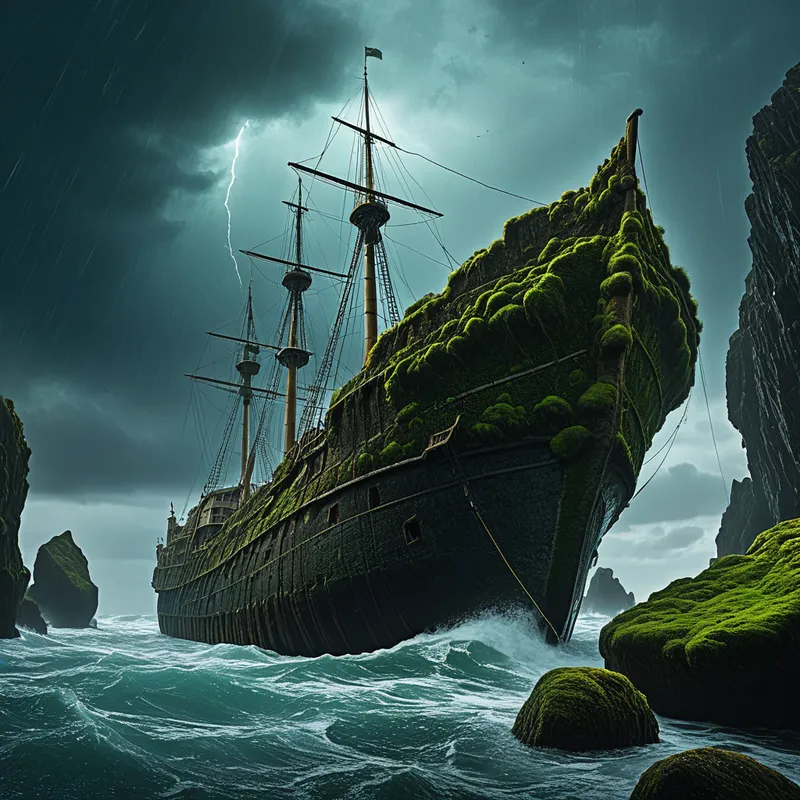
Hear now of the passage where the world itself holds its breath. Beyond the known straits, where the wine-dark sea grows cold and the winds carry whispers of older gods, there waited the Symplegades. They were not mere rocks, but living jaws of the earth, two mountainous islands of unforgiving stone that dwelled in a narrow, mist-shrouded channel. Their law was a terrible rhythm: they would lie still, deceptively calm, until a ship dared the passage. Then, with a sound like continents breaking, they would hurl themselves together, crushing timber and bone to splinters, before grinding apart to await the next fool.
This was the fate that hung over the Argonauts. Their quest for the Golden Fleece was ordained by the gods, yet the gods set the price. Athena herself had breathed divine skill into the ship Argo, but even her grace could not still the Clashing Rocks. The crew’s muscles ached from the oar, their eyes stung with salt, and a deep, primal dread settled in their guts as the thunderous boom echoed across the water, again and again, marking the death of hope for any who came before.
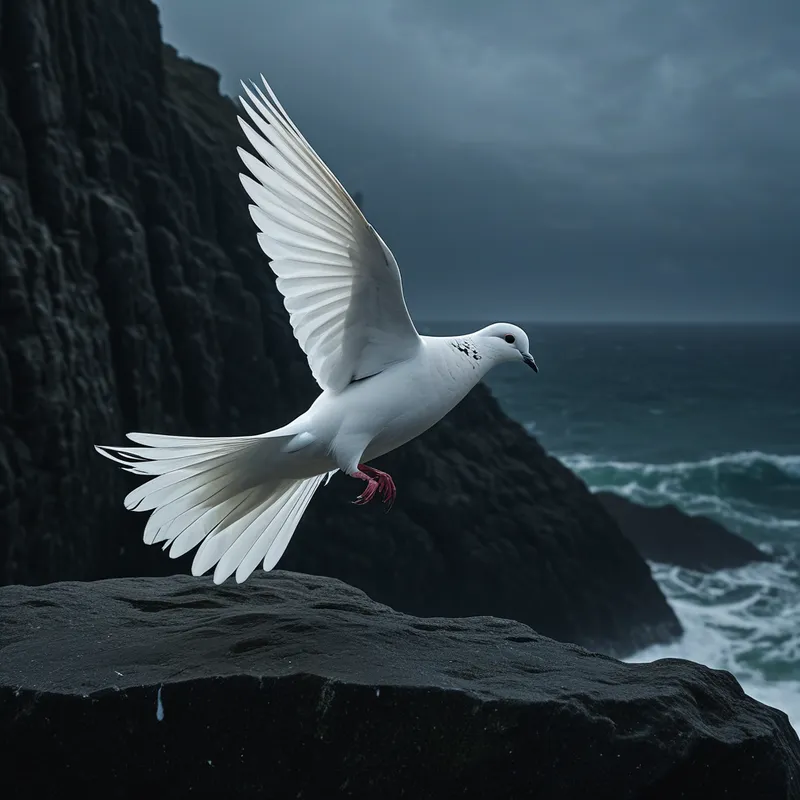
Their guide, the seer Phineus, his sight taken but his inner vision piercing, gave them the cruel key to survival. “You must send a dove through first,” he whispered, his voice dry as old parchment. “Watch its flight. If the rocks take its tail feathers, row with the fury of Poseidon’s storm. If they take the dove herself, turn back, for the gods have forsaken you.”
A hush fell upon the heroes. Jason chose a white dove. The bird burst from his hands, a speck of hope against the grey monoliths. The Argo followed, oars poised. The dove flew true, and the Symplegades awoke. The sound was not of stone, but of the sky tearing. The mountains rushed together, a tidal wave of air blasting ahead of them. A few white feathers spun in the vortex. The dove was through!
“NOW!” Jason’s cry was swallowed by the roar. Fifty oars bit the water as one. The Argo leapt forward, a wooden heart hurling itself into the closing maw. The suck of the closing channel pulled at them. They could see the barnacled, grinding faces of the rocks on either side, close enough to touch. The stern-post screamed as the rocks kissed it, shaving away the curling ornament. And then they were through, into the open, sun-dappled sea beyond, the catastrophic boom of the final, eternal closure thundering at their backs. The Symplegades, their test passed, froze forever in place, mere islands in the stream. The impossible passage was won.
Cultural Origins & Context
The myth of the Symplegades is woven into the grand tapestry of the Argonautica, a foundational saga of Greek exploration and identity. Told and retold by bards like Apollonius of Rhodes, it served as a mythic cartography for the dangerous edges of the known world—the Bosporus or similar treacherous straits. For a maritime culture, the story functioned as a profound navigation manual for the soul. It taught that the greatest physical perils have a ritual, almost liturgical structure: they require prophecy, sacrifice, perfect timing, and divine favor. The tale was not merely adventure, but a lesson in metis—cunning intelligence—and kairós, the critical, fleeting moment for decisive action. It reassured that even the most terrifying natural barriers could be transcended through a combination of human courage and heeding ancient, oracular wisdom.
Symbolic Architecture
The Symplegades are the ultimate archetype of the Threshold Guardian. They represent not a passive obstacle, but an active, intelligent, and ruthless testing mechanism of reality itself.
The Clashing Rocks are the psyche’s own immune response against the unready soul. They do not block the path; they annihilate the version of you that is not yet fit to walk it.
Psychologically, they embody the terrifying, binary crises that define a life: the make-or-break interview, the crucial confession, the leap into a new career or relationship. They are the point of no return, where hesitation or a misstep means catastrophic failure. The dove is the indispensable sacrifice of innocence—a piece of one’s old, safe self (its “tail feathers”) must be offered up to gauge the timing and price of passage. Its successful flight represents the guiding intuition, the “feeling” that the moment is right. The Argo, with its talking timber, is the embodied, crafted consciousness of the hero—the vessel of identity that must be risked entirely. The fact that the rocks are stilled forever after the Argonauts’ passage signifies a profound truth: once an initiatory threshold is truly crossed, its terror loses power; the obstacle becomes a monument to the transformation it facilitated.
The Dreamer's Resonance
When the Symplegades appear in modern dreams, they rarely manifest as literal rocks. The dreamer may find themselves in a hallway with walls that close in, attempting to board a train whose doors snap shut with lethal force, or trying to merge onto a highway where the lanes violently collide. The somatic experience is one of visceral constriction, breathlessness, and paralyzing suspense.
This dream motif signals that the dreamer’s psyche is processing a profound developmental threshold. The ego is approaching a necessary but terrifying transition—perhaps leaving a stagnant relationship, embracing a long-suppressed identity, or facing a consequence they have long avoided. The clashing mechanism represents the perceived cost of change: the annihilation of the current, familiar self. The dream is a rehearsal. The anxiety is not a sign to turn back, but an indicator of the passage’s significance. The question the dream poses is: What is your dove? What small, symbolic act of courage or release can you send ahead to test the timing?

Alchemical Translation
The ordeal of the Symplegades is a perfect allegory for the alchemical stage of separatio and the Jungian process of individuation. The prima materia of the unformed self must pass through a crushing, discriminating narrows to have its non-essential elements stripped away.
The voyage to the rocks is the conscious life approaching a necessary crisis. The dove is the sacrificium intellectus—the willingness to let go of purely logical, safe planning and trust a more subtle, intuitive guidance. The moment of rowing with all force is the total commitment of the will to the transformative process, even as the old self (the stern-post) is sheared away.
Individuation is not a gentle broadening but a violent focusing. The Symplegades force the soul into the narrow channel where it can no longer evade its own essence.
To emerge on the other side is to achieve a psychic coagulatio—a re-forming at a higher order of integration. The rocks, now still, become integrated into the map of the self as landmarks of triumph, not terror. The modern individual undergoing this internal rite learns that their most crushing pressures are often the very forces that define their unique shape and allow them to pass into a new, wider sea of being. The myth teaches that one does not avoid the clashing rocks; one learns the sacred timing required to move with their rhythm, and in so doing, stills them forever.
Associated Symbols
Explore related symbols from the CaleaDream lexicon: