Siege of Troy Myth Meaning & Symbolism
A decade-long war ignited by a goddess's vanity, a stolen queen, and a wooden horse, revealing the ruinous cost of pride, desire, and destiny's inescapable weave.
The Tale of Siege of Troy
Hear now the tale of the city that was built by gods and brought low by the hearts of men. It begins not with a sword’s flash, but with a wedding feast spoiled by a single piece of fruit—a golden apple, inscribed “To the Fairest,” tossed by the goddess of strife, Eris, into a celebration that knew no discord. Three mighty goddesses reached for it: Hera, the queenly power; Athena, the keen-eyed strategist; and Aphrodite, who moves the world with a sigh. They commanded a mortal, Paris, to judge. He was a shepherd-prince, raised among idyllic hills, now holding the fate of Olympus in his untested hands.
Hera offered empire. Athena offered glory in battle. But Aphrodite, with a smile that promised the dissolution of all oaths, offered the love of the most beautiful woman in the world: Helen, wife to Menelaus of Sparta. Paris, his heart ensnared by vision, gave the apple to Aphrodite. And so, guided by the goddess, he sailed to Sparta, was received as a guest, and in the dead of night, stole Helen away across the wine-dark sea to the high walls of Troy. The bonds of xenia were shattered. An insult to one king became an insult to all Greece.
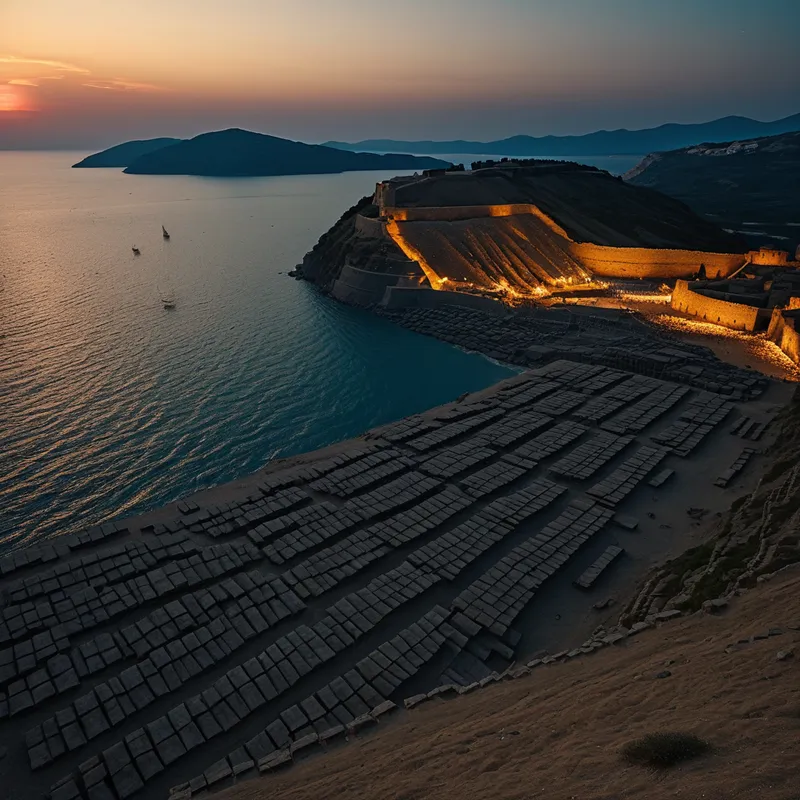
Thus the thousand ships were launched. For ten long years, the sands of the Troad grew heavy with blood and bronze. Before the Scaean Gates, heroes enacted their destinies. Achilles, swift and fatal, raged in his pride, withdrew, and returned to the field for vengeance, slaying the noble Trojan prince Hector and dragging his body through the dust. The gods themselves took sides, hurling thunderbolts and weaving deceptions, turning the plain into a chessboard of divine wills. The war became a grinding wheel, wearing down the spirit of an entire generation.
And then, the cunning of Odysseus conceived a final, terrible trick. The Greeks built a monstrous offering to Athena—a vast, hollow horse of wood. They filled its dark belly with their best warriors, burned their camp, and sailed away, as if in defeat and repentance. The Trojans, seeing the horse and the empty shore, debated. The seer Laocoön cried out in warning, “I fear the Greeks, even when they bring gifts!” but the sea sent serpents to silence him. Deceived by the lies of the Greek spy Sinon, and believing the horse a sacred talisman for their city, they breached their own walls to drag the colossal figure inside.
That night, while Troy slept in exhausted celebration, the trap sprang. The hidden Greeks slipped from the horse’s belly, opened the gates to their returned army, and the city was put to the torch. The streets ran with fire and slaughter. King Priam was slain at his own altar. The women, including Queen Hecuba, were led away into captivity. The proud towers, built by Poseidon’s own hand, crumbled into smoke and ash. All for a promise, an apple, and a face that launched those thousand ships into the unforgiving pages of time.
Cultural Origins & Context
This is the story of the Iliad and the Odyssey, epic poems attributed to the blind bard Homer. For the ancient Greeks, these were not mere stories but a foundational national history, a divine explanation for the world they knew. The tales were performed orally for centuries before being written down, likely in the 8th century BCE, by traveling rhapsodes who would recite them at festivals, weaving a shared identity for a disparate people.
The function of the myth was multifaceted. It served as a narrative anchor for the aristocratic warrior ethic, exploring the tensions between individual glory (kleos) and communal duty. It was a theological framework, illustrating the capricious yet inescapable influence of the gods on human affairs. It also provided an origin story for the Greek colonization of Ionia, framing the conflict as a pivotal, world-altering event that separated the heroic age from the historical present. The Siege was the ultimate canvas upon which the Greeks painted their ideals of heroism, their fears of fate, and their complex relationship with the divine.
Symbolic Architecture
At its core, the Siege of Troy is not a war between nations, but a war within the human soul. It is the psyche’s great civil war, where conflicting inner forces—pride, desire, reason, loyalty—battle for supremacy, often with catastrophic collateral damage.
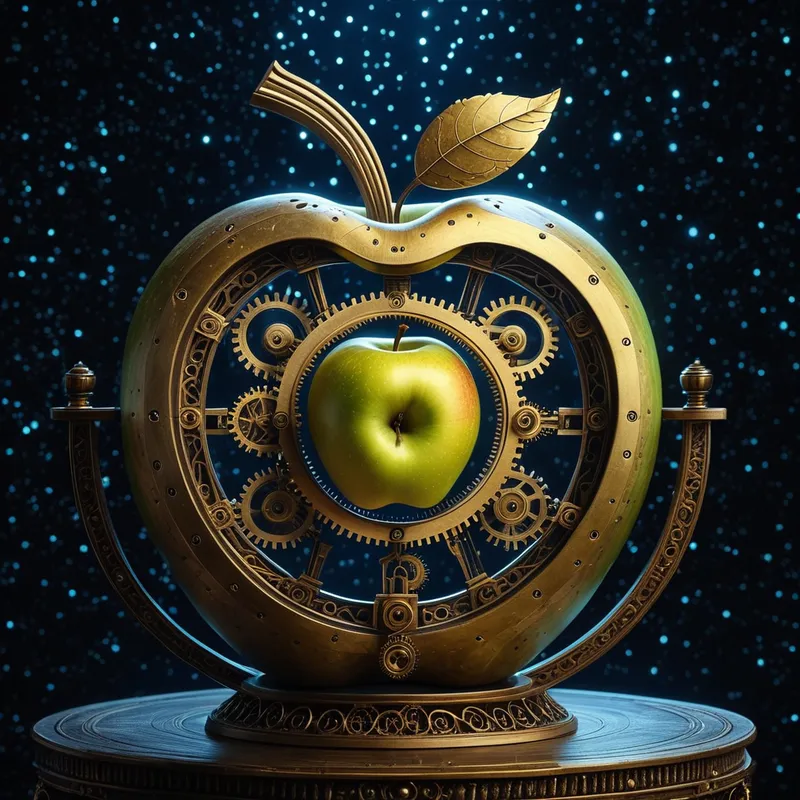
The Apple of Discord is the symbol of the inflamed ego. It represents the primal, divisive thought, the spark of “I am better” or “I deserve that” which, when left unintegrated, can unravel an entire internal kingdom. Paris’s judgment is the fateful choice of the immature psyche, prioritizing immediate, enchanting desire (Aphrodite) over enduring structure (Hera) or wise strategy (Athena).
The walls of Troy are the defenses of the conscious personality—proud, seemingly impregnable, but ultimately rigid. They keep threats out, but also trap the self within its own illusions.
The ten-year siege symbolizes the soul’s protracted, exhausting stalemate. It is the period of life where one is stuck, battling the same unresolved complexes, making no progress, wasting vital energy on a conflict whose original cause (Helen, the idealized anima) may no longer even be recognizable. The Trojan Horse is the masterpiece of the unconscious. It is the trickster’s solution, the symbol that the conscious mind (Troy) welcomes inside because it appears sacred, logical, or beneficial, but which contains the very forces that will dismantle it from within. It represents the repressed content, the brilliant yet destructive insight, or the adaptive cunning that finally ends a paralyzing neurosis.
The Dreamer's Resonance
When this myth stirs in the modern dreamer, it often manifests as a sense of being in a protracted, unwinnable conflict. You may dream of a fortified place you are either attacking or defending—a house, a castle, a walled garden. There is immense effort but no resolution. The somatic feeling is one of grinding exhaustion, clenched jaws, and a heavy heart.
Alternatively, you might dream of a deceptive gift: a beautiful box you feel compelled to open, a vehicle that seems safe but feels wrong, or a person who is charming yet makes your instincts flare. This is the Horse at the gate. The dream is signaling that a solution to a long-standing problem is presenting itself, but it carries a profound risk. It requires a sacrifice of your old defenses, your “walls.” The dream may also feature a figure like Paris, facing an impossible choice between compelling values (love, power, wisdom), reflecting a current life decision where all options feel fraught with loss.

Alchemical Translation
The alchemical journey modeled by Troy is the nigredo—the blackening, the long, dark night of the soul that precedes transformation. The ego (Troy) must fall. Its proud, rigid structures, built to protect a stolen or ill-gotten prize (an inflated self-image, a relationship based on fantasy, a life built on a foundational deceit), cannot stand.
The process begins with the discordia, the apple, which makes visible the latent conflicts within the self. The decade of war is the necessary, painful period of confronting these conflicts, of allowing the heroic but one-sided aspects of the self (Achilles’ rage, Hector’s duty) to play out and be spent. The pivotal moment of transmutation is the acceptance of the Horse.
Individuation requires the courage to let the seemingly dangerous, cunning, or unconscious solution (Odysseus’s mind, the Horse) inside the citadel of the conscious self. It is an act of supreme risk, trusting that the destruction it brings is not an end, but the only possible beginning.
The burning of Troy is not a failure, but the cathartic solutio—the dissolution of old forms. From these ashes, the soul, like Odysseus, begins its long voyage home (the circulatio), integrating the lessons of the war into a wiser, more complex wholeness. The prize is no longer the external, idealized Helen, but the hard-won knowledge of the self, earned through a decade of fire. The myth teaches that some cities must fall so that the soul can be free to journey.
Associated Symbols
Explore related symbols from the CaleaDream lexicon: