River Boyne Myth Meaning & Symbolism
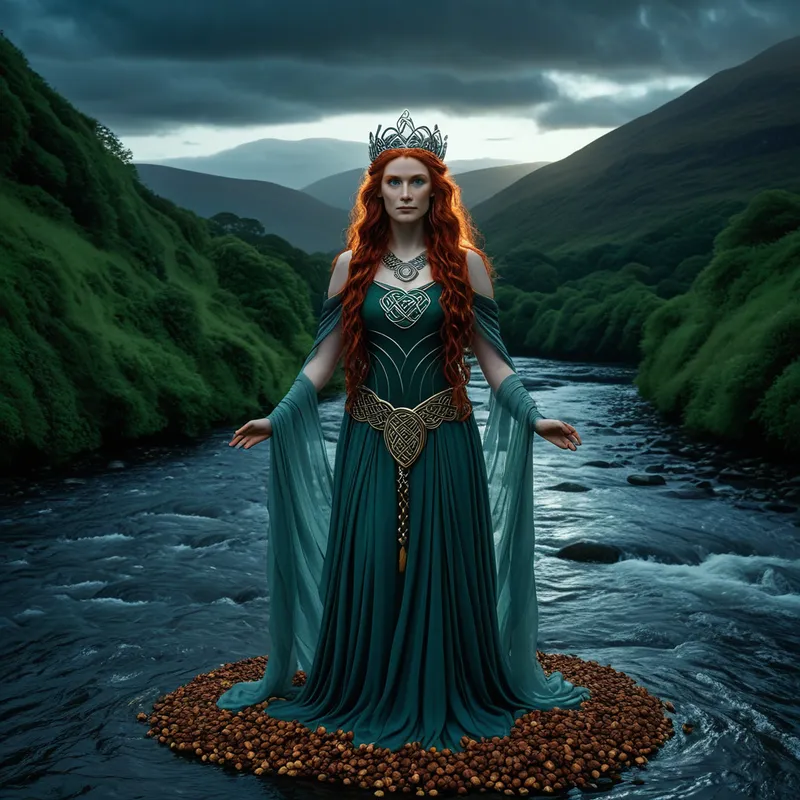
A goddess, transformed into a river, flees a jealous god to bring the waters of inspiration and wisdom to the mortal world.
The Tale of River Boyne
Listen, and let the old truth settle in your bones. Before it was a river, it was a woman. Before it was a woman, it was a secret.
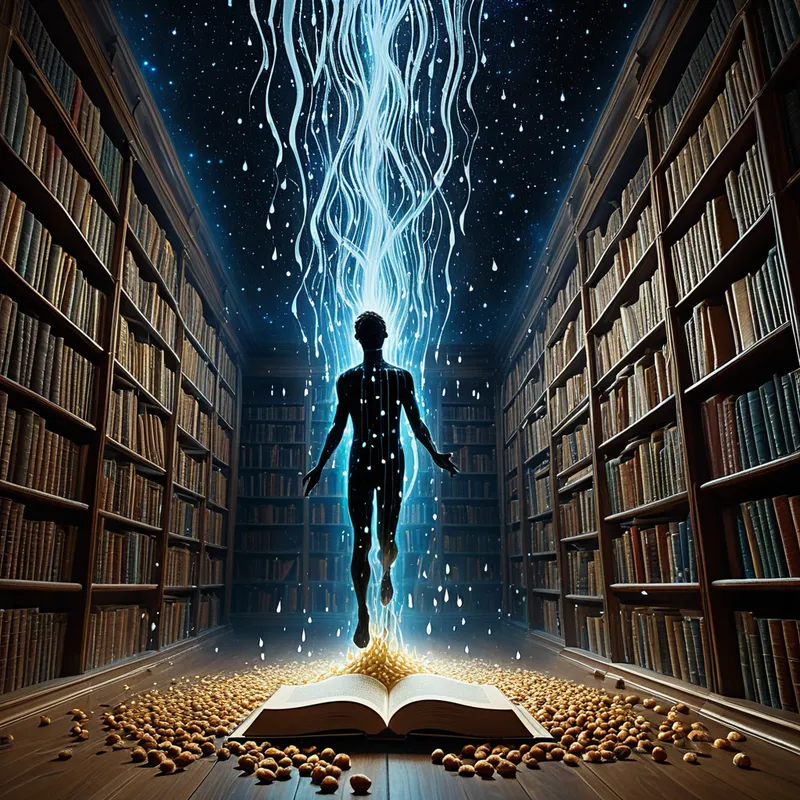
In the time before memory, when the world was raw and the gods walked close, there was a well. Not a simple hollow of earth and water, but Segais, the source. Nine sacred hazel trees of perfect wisdom grew over its dark, still surface. Their nuts, ripe with all the knowledge of the arts and sciences, would fall into the water with a sound like a bell struck in the deep earth. The salmon that swam in those depths ate the nuts, and their speckled skins became maps of all that is known and unknown.
The guardian of this well was Nechtan, a lord of profound and jealous power. None but he and his three cupbearers were permitted to approach its brink, for such wisdom was too terrible, too beautiful, for careless eyes.
But the well had another lover: Bóand. Her name meant “White Cow,” signifying bounty and the flowing, nourishing light. She was a goddess of the tribe of the Tuatha Dé Danann, radiant and curious. The silence of the forbidden well called to her. A thirst, not of the body but of the spirit, grew unbearable within her. What was this knowledge that must be so fiercely guarded?
One day, when Nechtan was far afield, defiance and longing overcame sacred law. Bóand walked to the edge of Segais. The air hummed. The water was black and perfect as a night without stars. She circled the well three times, counter to the sun’s path, a challenge to its order. And as she completed the third circuit, the waters did not lie still. They rose. They roared.
A great surge erupted from the depths, a wave of pure knowing and potent magic. It did not embrace her; it assaulted her. The water tore at her divine form. It stripped her of her wholeness. One eye was blinded, one arm withered, one leg crippled—the price for glimpsing the unguarded truth. But the wave did not stop. It continued to flow, and she, maimed and transformed, was carried with it.
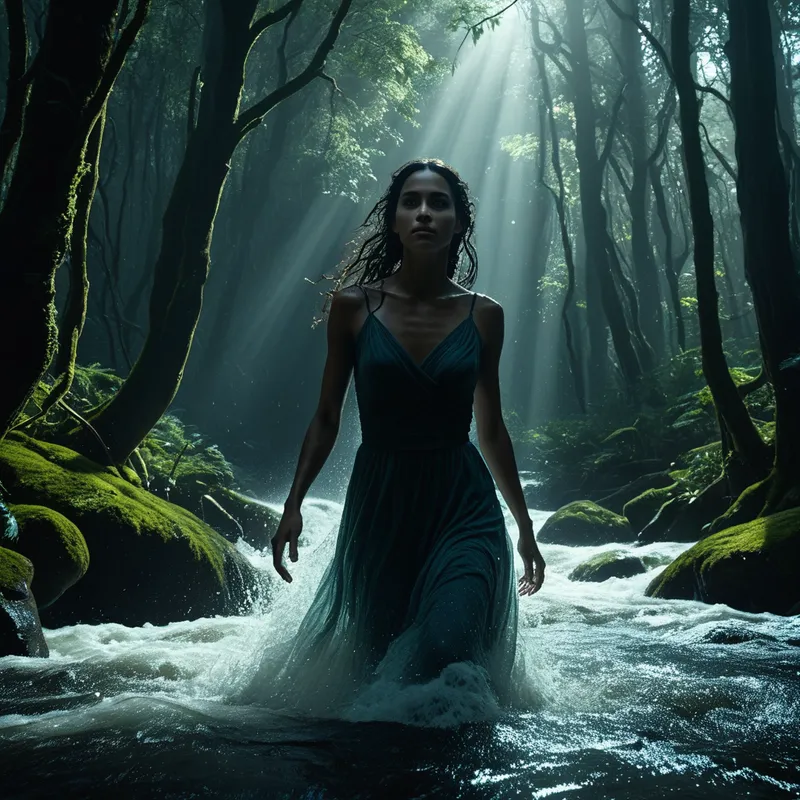
She became the wave. Her body was now the rushing, churning, desperate course of water. She fled from the well, from the sacred enclosure, from the wrath of Nechtan that she knew would follow. She flowed north and then east, carving a great path through the land of Ériu. Where she stumbled, a bend formed. Where she wept, a deep pool gathered. Her mutilated limbs shaped the river’s course—its rapids, its shallows, its quiet places.
And behind her came Nechtan, not as a pursuer through the woods, but as the very land itself rising to stop her. He sent his wife, the goddess Ériu, to stand in the way. But Bóand, the river-woman, could not be contained. She swept around the obstruction and flowed on. The land itself was reshaped by her flight, by her transformation.
She flowed until she could flow no more, pouring her new being into the wide embrace of the sea. The river was born, and they named it for her: the Boyne. And in its waters swam the salmon, now speckled with the wisdom of Segais, and on its banks grew the hazel, and in its sound echoed the secret she had stolen and become.
Cultural Origins & Context
This myth is preserved primarily in the Dindsenchas, the “Lore of Places,” a collection of medieval Irish texts that poetically explain the origins of hill, fort, and river names. It is a classic example of etiological myth, but to label it merely as such is to miss its profound cultural function. For the pre-Christian Celts of Ireland, the landscape was not inert. It was a manuscript written by the gods, every feature a chapter in a divine story.
The tale of Bóand was likely recited by the fili, the poet-seers, at sacred sites. To stand by the Boyne, especially near the great Neolithic passage tombs of Brú na Bóinne (the Palace of the Boyne), and hear this story was to understand the river as a living deity. It framed the river not as a resource, but as a divine ancestor, a goddess who sacrificed her static, perfect form to bring the waters of inspiration and fertility to the mortal realm. The myth sanctioned the river’s importance as a central artery of the kingdom of Mide, the “middle kingdom,” making it the spiritual and political heartland.
Symbolic Architecture
At its core, this is a myth about the catastrophic and creative nature of forbidden knowledge. Bóand’s journey is not a heroic quest but a transgressive awakening with irreversible consequences.
The well is the unconscious in its pristine, undifferentiated state—a pleroma of potential knowledge so potent it is paralyzing. The guardian, Nechtan, represents the psyche’s innate conservative principle, the force that seeks to keep this overwhelming totality contained and orderly.
Bóand is consciousness itself, the ego, drawn to the mystery. Her three counter-sunwise circuits are an act of symbolic rebellion, a ritual to invoke chaos and break the established order. The well’s violent response is the unconscious erupting into consciousness. The maiming—the loss of an eye, an arm, a leg—is the inevitable price. One cannot integrate the raw totality of the unconscious without being fundamentally altered, without sacrificing a part of one’s previous “perfect” self. The wisdom maims as it enlightens.
Her transformation into the river is the alchemy of this process. The static, contained “well” of secret knowledge becomes a dynamic, flowing “river” of accessible wisdom. She becomes the medium of transmission. The salmon in her waters are the individual insights now available; the hazel trees on her banks are the continued source. Her flight is the irreversible movement of consciousness once it has been awakened. There is no return to the ignorant paradise of before the well.
The Dreamer's Resonance
When this myth stirs in the modern soul, it often manifests in dreams of pursuit and metamorphosis. The dreamer may find themselves fleeing an overwhelming, often wrathful force (a parent, a boss, a shadowy figure) through a shifting landscape. Crucially, they are often changing as they flee—their body becoming liquid, their feet turning to water, their voice becoming the sound of rain.
This somatic experience points to a profound psychological process: the ego’s flight from a confronting truth that is simultaneously dismantling and re-constituting it. The “pursuer” is not merely an external threat, but the integrated weight of the new awareness itself, which feels alien and hostile to the old self. The transformation into water signifies the dissolution of rigid ego structures. The dreamer is not just running from something, but towards a new state of being, even if it feels like disintegration. The anxiety is the birth pang of a broader consciousness.
Alchemical Translation
For the individual on the path of individuation, the myth of Bóand is a precise map of the nigredo and solutio stages—the blackening and the dissolution.
The journey begins with a sacred discontent, a pull toward the forbidden well of one’s own depths—perhaps a repressed memory, a denied talent, or a shadow aspect. The conscious mind (Bóand) circles this deep content, provoking a crisis. The eruption from the well is the painful, often shocking confrontation with this material. The “maiming” is felt as depression, anxiety, or a sense of brokenness—the old personality is crippled by the truth.
The triumph is not in avoiding the flood, but in becoming the river. The psychic material that once threatened to drown the ego must be metabolized into the ongoing flow of life.
This is the alchemical solutio: the fixed, hidden thing (the secret well) is made fluid and moving (the river). The individual’s task is to stop resisting the transformation and to allow themselves to be reshaped by the flow. The wound—the blinded eye—becomes a new way of seeing. The crippled leg determines the unique, winding course of one’s life. The wisdom, once a terrifying secret, becomes the very current that carries you forward, nourishing the landscape of your world. You do not possess the wisdom; you are its passage. The goal is not to return to the guarded well, but to become, like the Boyne, a living conduit between the deep source and the waiting sea.
Associated Symbols
Explore related symbols from the CaleaDream lexicon: