Copia Myth Meaning & Symbolism
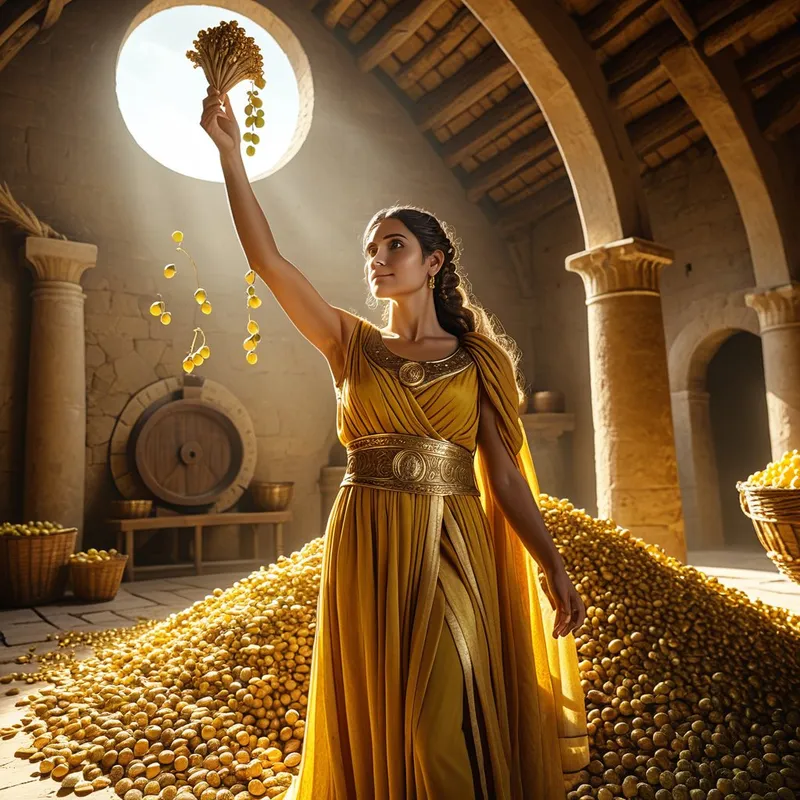
The story of Copia, goddess of abundance, whose overflowing cornucopia symbolizes the fertile union of disciplined cultivation and divine grace.
The Tale of Copia
Hear now the rustle of the full-eared wheat, and smell the rich, damp earth of the turning season. In the days when the world was younger and the gods walked closer to the furrows, there was a presence felt not in thunder, but in the weight of the olive branch and the heft of the grain sack. Her name was whispered with full mouths and grateful hearts: Copia.
She did not arrive with fanfare, but with fulfillment. The story is not one of battle, but of breath—the deep, satisfied sigh of the land itself. It begins in the storeroom, the horreum, where shadows once clung to empty corners. The air was thin, tasted of dust and want. The people labored, their prayers a dry rustle, their offerings meager, given more from fear than faith.
Then, a change, subtle as the first greening of the field. It was not a sudden miracle, but a slow, sure turning. The spring rains fell not in torrents that washed the soil away, but in gentle, persistent showers that drank deep into the earth. The sun’s gaze was warm, not scorching. The workers in the field would find their strength enduring, their backs not breaking but bending with a resilient grace. The seeds, once placed in the earth with doubt, pushed forth with a vibrant, undeniable will.
And as the harvest swelled, so did the presence. She was seen in the periphery—a glimpse of a flowing, grain-colored robe at the edge of the vineyard, the scent of ripe fruit and honeyed wine on a still afternoon. Her symbol, the cornucopia, was not a weapon she wielded, but a state of her being. Where she lingered, the basket meant for a few handfuls of grapes would brim and overflow. The grain, once threshed, would fill the sacks until their seams strained. The storeroom transformed. Shadows were banished by the gold of stacked wheat, the purple of clustered grapes, the rich brown of amphorae brimming with oil. The air grew thick and sweet with the perfume of plenty.
The conflict was the memory of scarcity, the ghost of hunger that haunted even the fullest belly. The triumph was its quiet exorcism. The people learned to pour the first libation not to avert wrath, but to honor the gift. Their prayers became songs of gratitude, their festivals—like the Opalia—a true celebration, not a desperate bargain. Copia asked for no temples of marble, only hearts of gratitude. Her altar was the full table, her hymn the contented silence after a shared meal. The resolution was not an end, but a cycle secured: the deep, trusting knowledge that the earth, when honored, gives back in measure beyond imagining.
Cultural Origins & Context
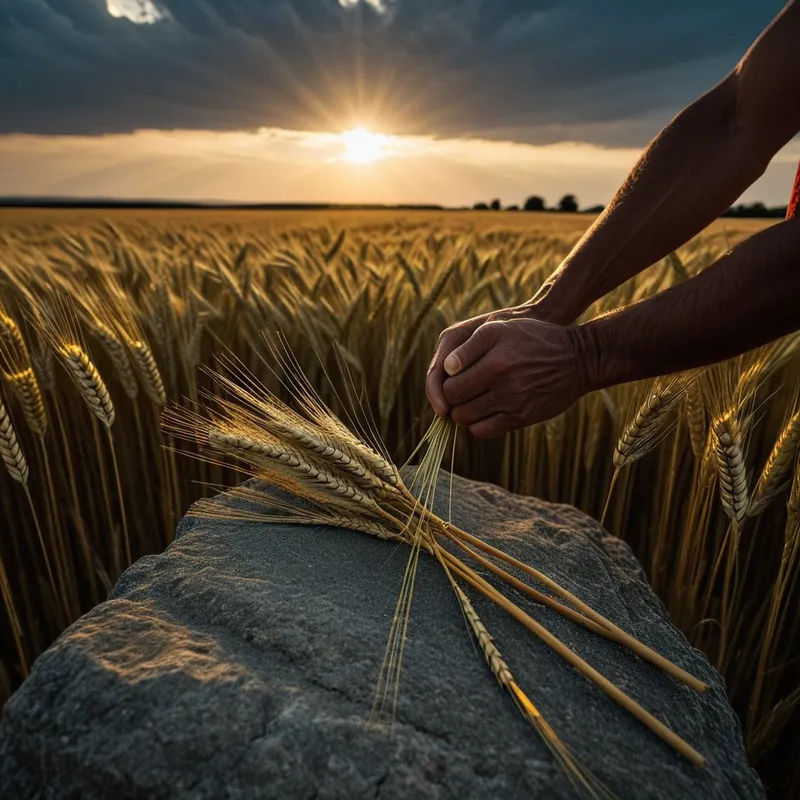
Copia was not a goddess of the lofty Capitoline Triad, but a divine numen of the hearth, the harvest, and the civic storehouse. Her roots are deeply pragmatic, emerging from the agricultural bedrock of Roman society. She was a personification, an abstraction made divine because her essence—abundant supply—was fundamental to survival and, by extension, to peace and prosperity (Pax and Salus).
She had no extensive, dramatic myth cycle like the Greek deities she was later associated with (such as Demeter or Plutus). Instead, her presence was woven into the fabric of daily ritual and annual festival. She was invoked by the paterfamilias overseeing his household stores, by the magistrates ensuring the grain supply (annona) for the city of Rome, and by farmers at each critical turn of the agricultural year. Her worship was a matter of civic and personal piety, a recognition that abundance was not merely luck, but the fruitful result of labor, right relationship with the land, and divine favor. She appears in literature, like the works of Ovid, and on coinage, a direct symbol of the empire’s wealth and its promise of provision to its people.
Symbolic Architecture
Copia represents the principle of overflow. She is not the goddess of enough, but of more than enough. This is her profound psychological core. She symbolizes the state where need is not just met, but transcended, creating a surplus that allows for generosity, security, and the flourishing of culture.
True abundance is not hoarded mass, but circulating vitality. The cornucopia must be held at an angle to pour, or its contents rot within.
Her primary symbol, the cornucopia, is an artifact of another myth—the broken horn of the river god Achelous, filled by the Terra or the Fortuna with nature’s bounty. This origin is critical: abundance arises from a break, a negotiation, a transformation of something wild (the river) into a vessel of nurture. It signifies that plenty is not primal chaos, but chaos shaped into a channel of giving. Psychologically, Copia represents the ego’s capacity to become a vessel—to structure the fertile, often chaotic energies of the unconscious (the instincts, creativity, the libido) into a sustainable, overflowing source of life.
The Dreamer's Resonance
When the archetype of Copia stirs in the modern psyche, it often manifests in dreams not of glittering wealth, but of profound, somatic satisfaction and unexpected generosity. A dreamer might find a room in their house they had forgotten, now filled with wholesome, nourishing food. They might be in a barren landscape where they kneel to dig, and their hands pull forth pure water or ripe roots. They may dream of feeding others, not from a place of duty, but from a bottomless pot or basket.
These dreams signal a psychological process moving from a mindset of scarcity—"there is not enough time, love, energy, opportunity for me"—to one of receptive fertility. The somatic feeling is one of fullness and ease, a relaxation of the anxious, grasping muscles of the psyche. It indicates the dreamer is, perhaps unconsciously, integrating parts of themselves that have felt barren or deprived, and is beginning to trust in an inner resource that does not deplete but replenishes through use. The conflict in the dream is often the dreamer’s own disbelief or their attempt to hoard the bounty, which causes it to vanish.
Alchemical Translation
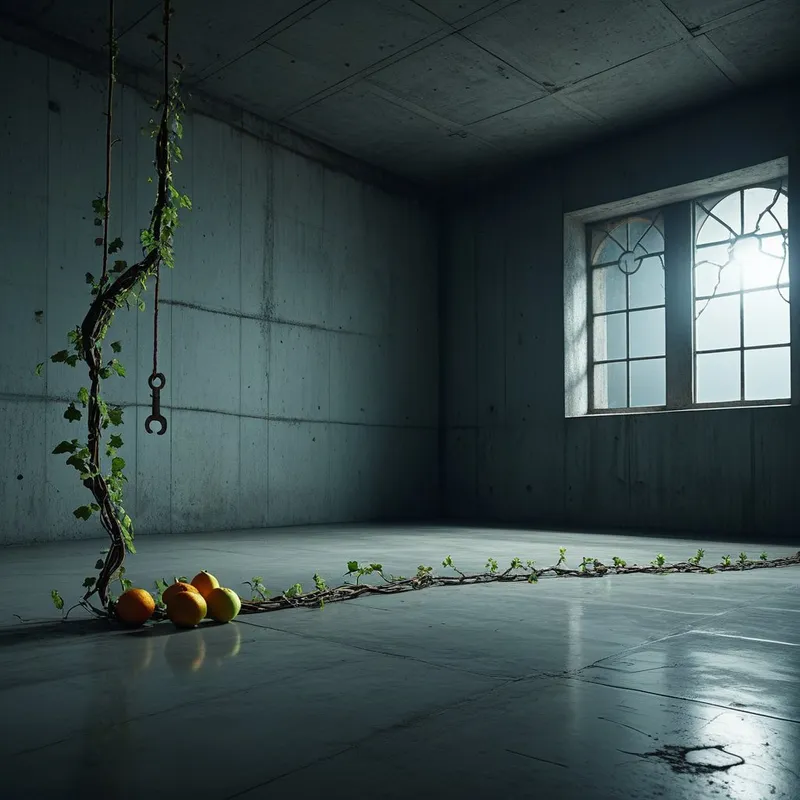
The individuation process modeled by Copia is the alchemy of gratitude as the catalyst for increase. The modern ego, often identified with striving, achieving, and securing, is akin to the empty Roman storeroom. It labors under the nigredo, the blackening, of scarcity consciousness. The first stage of transmutation is not to chase more, but to fully honor and utilize what is already present—to pour the "first libation."
This conscious, grateful use of existing resources (time, skill, attention, love) is the albedo, the whitening. It purifies the intention from one of lack to one of recognition. This act attracts the symbolic "sun and rain" of the unconscious—the supportive, fertilizing energies of the Self. The labor continues, but it is now in accord with these deeper rhythms, not a struggle against them.
The cornucopia overflows only when held in grateful hands; clenched in fear, it becomes a hollow shell.
The resulting citrinitas (yellowing) and rubedo (reddening) are the states of overflow and generativity. The individual becomes a vessel for abundance that extends beyond themselves. Their work becomes fertile, their relationships nourishing, their creativity prolific. They become, in their own sphere, a source of annona—the distributed sustenance for their world. The final transmutation is understanding that one does not own the abundance, but is its steward and channel. The psychic gold is not a static hoard, but the living, circulating process of grateful reception and generous release, the eternal, fruitful cycle that Copia embodies.
Associated Symbols
Explore related symbols from the CaleaDream lexicon: