Gullinbursti Myth Meaning & Symbolism
A golden boar forged by dwarves, a divine gift of light and fertility, born from rivalry and the sacred fire of creation.
The Tale of Gullinbursti
Hear now a tale not of thunder, but of the fire beneath the earth. A tale not of the spear’s clash, but of the hammer’s sacred song.
In the dawn of things, when the worlds were still weaving their destinies, a seed of discord was sown in the golden halls of Asgard. Loki, whose tongue was as sharp as his wit was deep, in pride and folly, made a wager he could not win. He had severed the glorious hair of Sif, wife of Thor, and to save his own skin from the thunderer’s wrath, he swore to replace it. Not with mere hair, but with living gold.
So did the shape-shifter descend, down the great roots of Yggdrasil, into the smoky depths of Svartalfheim. There, in caverns lit by molten rivers, he found the sons of Ivaldi. With honeyed words and hidden threats, Loki compelled them. And they wrought wonders: hair of spun gold that grew upon Sif’s head as if it were her own, and more—the ship Skidbladnir that always found a fair wind, and the terrible spear Gungnir.
Loki returned to Asgard, triumphant, the treasures gleaming. But his boasting was his undoing. “None can craft finer!” he declared. From the shadows of another forge, a voice like grinding stone answered. It was the dwarf Brokkr. “My brother Eitri</abbr) can make greater things. Shall we wager our heads on it?”
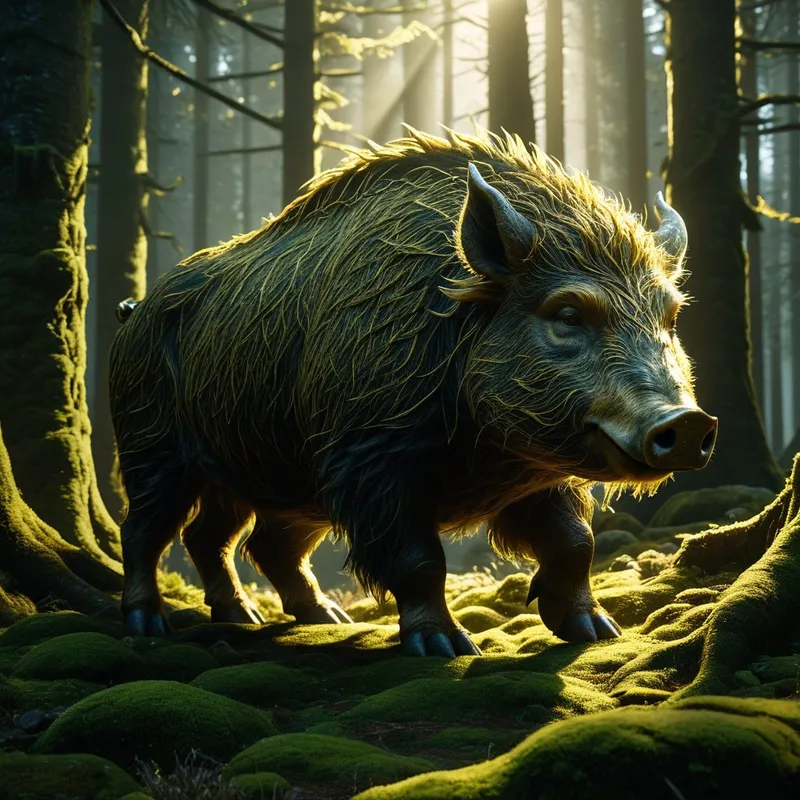
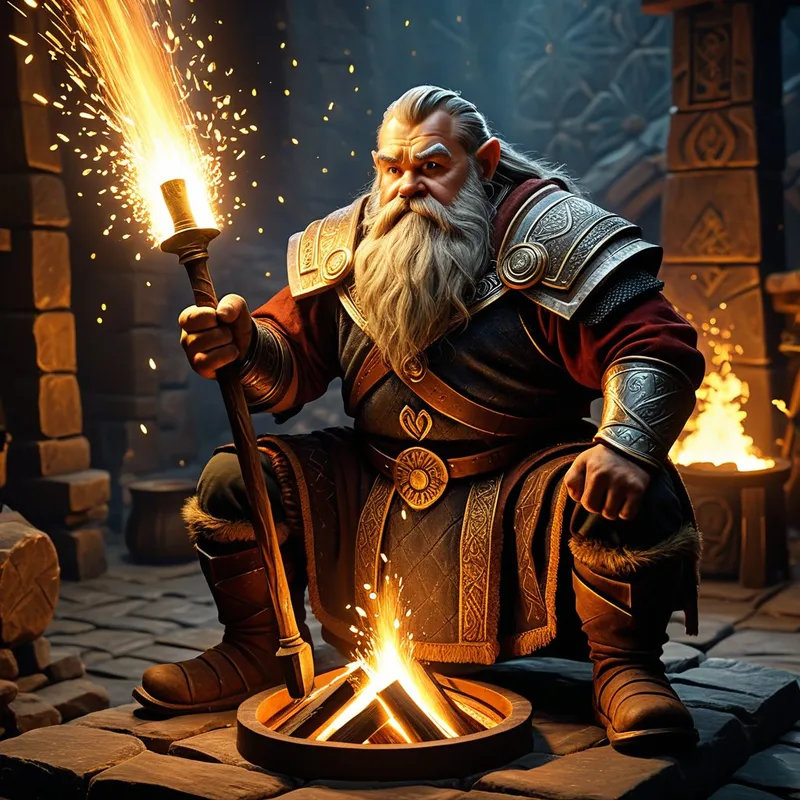
The gods agreed to judge. Loki, trapped, had to agree. But as Brokkr worked the bellows for his brother Eitri at the forge, Loki, in the form of a biting fly, sought to sabotage the work. Eitri first laid a pig’s skin in the hearth. “Do not cease blowing,” he commanded Brokkr, “until I return.” The bellows roared, the fire sang a white-hot song. Loki the fly landed on Brokkr’s hand and stung fiercely, but the dwarf did not flinch. From the forge, Eitri drew forth a living boar. Its bristles were not of hair, but of finest gold, and they shone with their own light, like the sun caught in a field of summer wheat. This was Gullinbursti. It could run through air and over water, faster than any horse, and its radiance lit the darkest path.
Twice more Eitri worked his magic, forging the golden ring Draupnir and the mighty hammer Mjolnir, each time with Loki stinging, and Brokkr holding fast. The gifts were presented. The gods judged: the boar for Freyr, the ring for Odin, the hammer for Thor. And all agreed: the dwarf’s works were the greatest. Loki had lost. His silver tongue barely saved him from the promised blow, but it could not save him from the dwarf’s needle and thread, sewing his lips shut—a silence, for a time, earned.
And so Gullinbursti came to Freyr, lord of Vanaheim. The golden boar became his steed, a creature of peace and plenty. Where it ran, the earth grew fertile; its light was a sun that traveled the hidden paths of the world, a promise of growth in the deep soil, of warmth in the long night.
Cultural Origins & Context
This myth is preserved primarily in the Skáldskaparmál of the Snorri Sturluson's Prose Edda, a work that sought to catalog and explain the complex kennings and references of Norse skaldic poetry for a Christian audience. The tale is a classic "dwarf-made treasures" narrative, a subgenre highlighting the Norse awe for craftsmanship (smíð) and the magical potency of objects created in the underworld forges.
Its societal function was multifaceted. On one level, it is an etiological myth, explaining the origins of the gods’ most famous attributes. On another, it reinforces core values: the sacredness of the oath and the wager, the dire consequences of pride (Loki's), and the supreme virtue of steadfastness (Brokkr's). The myth was likely told not just as entertainment, but as a metaphorical instruction on the nature of creation itself—that true, enduring value is born from focused effort, endurance under pressure, and a collaboration between the vision of the master (Eitri) and the unwavering support of the laborer (Brokkr). It places the source of divine power not solely in the heavens, but deep within the earth, forged by beings of immense skill and ancient knowledge.
Symbolic Architecture
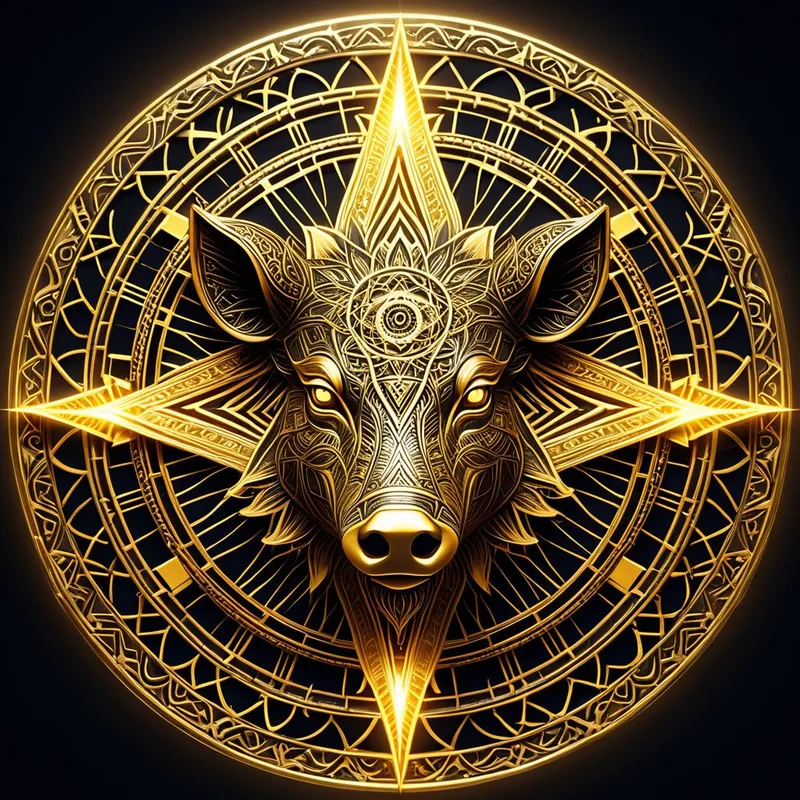
Gullinbursti is no mere animal or vehicle. It is a living symbol, a confluence of powerful archetypal forces. The boar itself is a primal symbol of fertility, strength, and untamed nature across Northern Europe. To cloak this raw, earthy power in gold is an act of profound alchemy.
The golden bristle is the point where the fertile darkness of the soil meets the illuminating light of consciousness.
The boar represents the instinctual, chthonic life force—the raw, rooting energy of growth and procreation. Gold represents the highest value, the solar principle, consciousness, and immortality. Gullinbursti is thus the instinct made sacred, the life force not denied or conquered, but refined, elevated, and put into the service of a higher order (Freyr's reign of peace and plenty). Its ability to run on all terrains symbolizes a vitality that is adaptable and all-pervasive, a light that can guide through any darkness, internal or external.
The myth’s crucible is the forge. The fly’s sting (Loki’s chaos, distraction, sabotage) is not a flaw in the process but an essential part of it. The perfect creation is only born through resistance, through the craftsman’s ability to hold the tension of the opposites—the intense, transformative fire and the disruptive, irritating sting.
The Dreamer's Resonance
When Gullinbursti emerges in the modern dreamscape, it heralds a profound engagement with the creative unconscious. To dream of a golden, radiant animal—especially one as grounded and powerful as a boar—suggests the dreamer is in a process of integrating a potent, instinctual energy into their conscious life in a new, valuable way.
This is not the eruption of a wild, destructive impulse. It is the cultivation of a deep, somatic intelligence. The dreamer may be experiencing a period where raw passion, a long-buried talent, or a fundamental life force is being "forged" by the pressures of their current circumstances (the "sting" of stress, conflict, or challenge). The golden boar is the promise that this process, however difficult, is leading to a new, luminous strength. It is the psyche’s symbol for the birth of a self-sustaining, illuminating power from within one’s own depths. Somatic signs might include a felt sense of warmth, solidity, or unexpected energy flowing from the lower body or gut center—the very areas the boar symbolizes.
Alchemical Translation
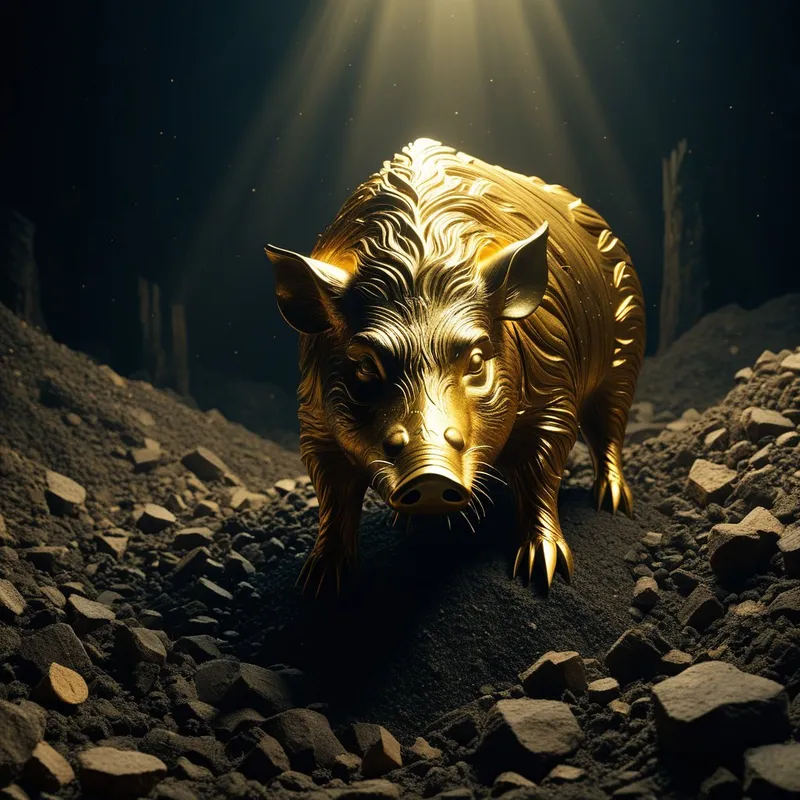
The myth of Gullinbursti is a perfect map for the alchemical stage of citrinitas, the yellowing or dawn that follows the blackening (nigredo) of dissolution. The black pig’s skin in the forge is the prima materia, the neglected, shadowy aspect of the self—our base instincts, our unrefined passions, our raw potential. The divine fire of attention and the unwavering breath of effort (Brokkr’s bellows) are applied.
Individuation is not about slaying one's inner beasts, but about learning to ride them into the light.
Loki’s sting represents the inevitable neurosis, doubt, and chaos that arise when we attempt this sacred work. The ego, threatened by the emergence of a more potent, autonomous power from the Self, attempts to sabotage the process. The triumph is in the endurance, in not ceasing to "blow," to maintain the transformative container. What emerges is Gullinbursti: the instinctual nature, now a vehicle of the Self (Freyr), capable of carrying consciousness with swiftness and illuminating the path ahead.
For the modern individual, this translates to the process of taking a raw, perhaps embarrassing, or "animal" part of oneself—a fierce temper, a sensual appetite, a stubborn will—and, through conscious discipline and creative application, forging it into a golden asset. The anger becomes unwavering conviction. The sensuality becomes a profound capacity for joy and connection. The stubbornness becomes incredible perseverance. The result is not a tamed beast, but a radiant, guiding companion, a source of inner light and fertile power that makes the journey through life’s dark forests not only possible, but glorious.
Associated Symbols
Explore related symbols from the CaleaDream lexicon: