The Planetary Week Myth Meaning & Symbolism
A myth where the seven wandering stars, personified as deities, establish cosmic order by creating the seven-day week, a rhythm woven into time itself.
The Tale of The Planetary Week
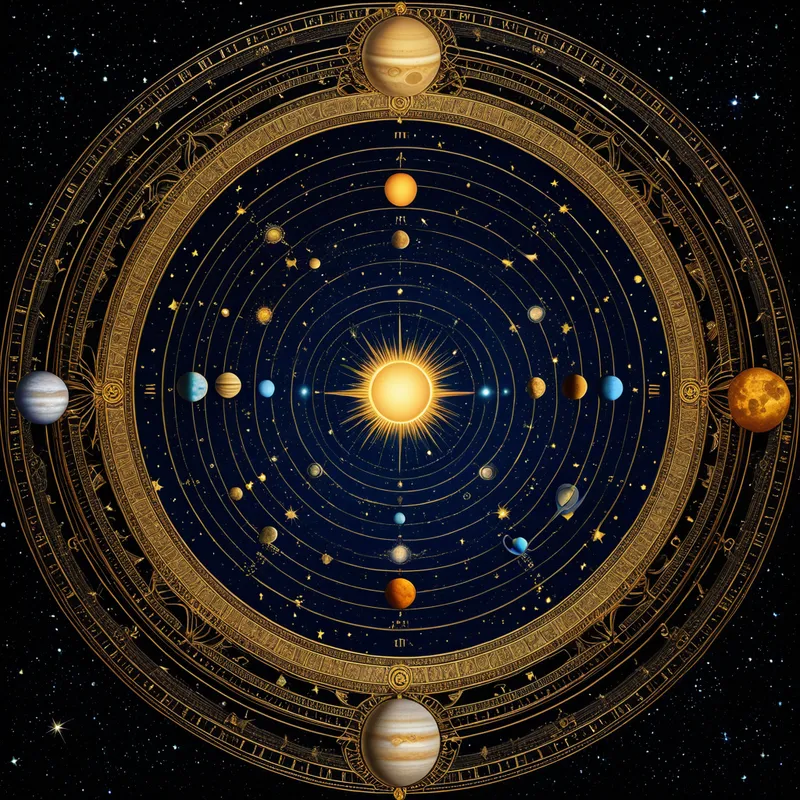
In the beginning, before the counting of days, the sky was a silent, magnificent chaos. The fixed stars held their eternal posts, a glittering, unmoving host. But seven were the wanderers, the bright ones who traced their own secret paths through the black velvet of night. They were not mere lights; they were souls, wills, deities. And in that timeless expanse, they knew only their own solitary journeys, a symphony of magnificent, discordant motion.
There was Saturnus, oldest and slowest, his gaze heavy with the weight of endless cycles. His path was a great, ponderous circle, the rim of the known world. Then came Iuppiter, blazing with regal light, his course expansive and confident. The red glare of Mars cut a swift, aggressive arc, while the glorious, life-giving Sol drove his chariot on a path of unwavering centrality. Venus, the morning and evening star, danced a graceful, looping retrograde, a beacon of desire. The quicksilver mind of Mercurius flickered back and forth with restless speed. And finally, the pale, reflective Luna cycled through her phases, closest to the earthly realm.
Their movements were beautiful, but they were noise. There was no measure, no cadence against which the breath of the world could fall. The earth below remained in a state of perpetual potential, seasons blurring, tides unsure, human hearts beating without a shared rhythm. The chaos was not of violence, but of profound isolation.
It was Saturnus, the elder, who first felt the weight of this endless, meaningless wandering. He ceased his movement at the farthest apex of his circle and called out, not with a shout, but with a deep, resonant silence that pulled at the fabric of the cosmos. One by one, the wanderers halted. They gathered in a silent congress, their lights casting intersecting beams in the void.
No words were spoken in any mortal tongue. Instead, they communed through the essence of their being. Sol offered constancy. Luna offered change. Iuppiter offered structure. Mars offered impetus. Venus offered attraction. Mercurius offered connection. And Saturnus, from the depth of his cyclical wisdom, offered the concept of the boundary, the end that makes a beginning possible.
Together, they performed the first great act of cosmic governance. Each deity, in an order of their perceived distance from the earthly sphere—Saturnus, Sol, Luna, Mars, Mercurius, Iuppiter, Venus—agreed to lend their name and essence to a segment of the flowing river of time. From Saturn’s day of contemplation and ending, to the Sun’s day of vitality and identity, to the Moon’s day of flux and feeling, through the days of Mars’ action, Mercury’s thought, Jupiter’s expansion, and Venus’s harmony, they forged a chain.
They did not create time. They gave it a heartbeat. They imposed a rhythm upon eternity, a repeating stanza of seven verses. As they resumed their journeys, they now moved within this newly established meter. Their celestial dance was no longer random; it was a stately, predictable procession. And as the first completed cycle of seven celestial influences washed over the world, the chaos stilled into order. Seasons found their pace. Tides learned their schedule. And in the hearts of sleeping humanity, the first unconscious anticipation of the morrow was born. The week was not invented; it was revealed, a sacred rhythm woven into the very soul of the cosmos.
Cultural Origins & Context
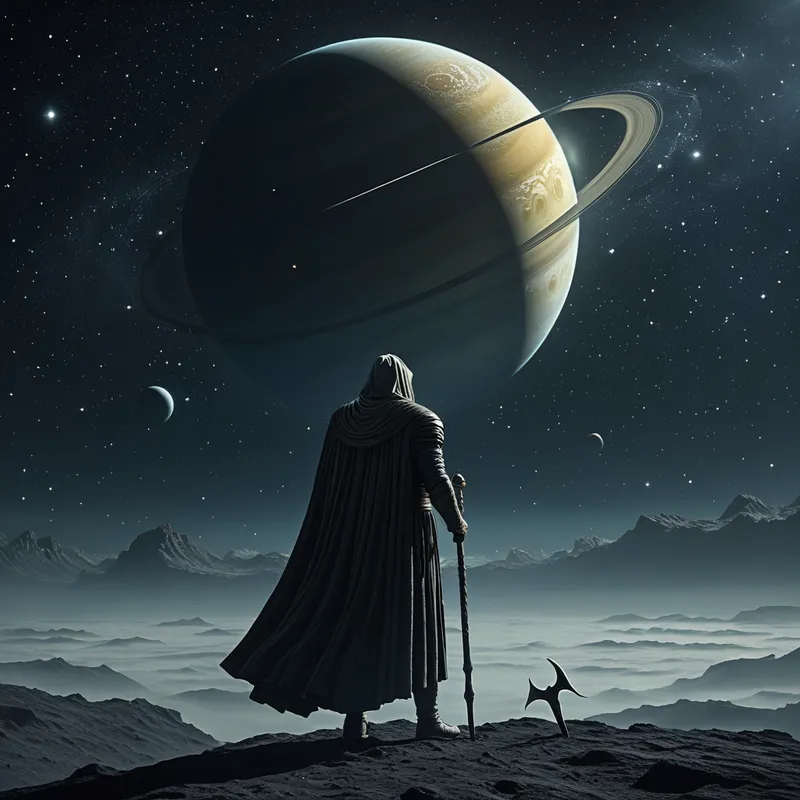
The myth of the Planetary Week is not found in a single epic poem but is woven into the fabric of Roman divinatio and cosmology. Its origins are a syncretic tapestry, borrowing heavily from earlier Babylonian astrological systems where the seven celestial wanderers were associated with gods. The Romans adopted and translated this framework, mapping their own pantheon onto these cosmic bodies.
This myth was not primarily a story told in the forum for entertainment. It was a functional, living doctrine propagated by priests, astrologers (astrologi), and philosophers. It was passed down through technical manuals, philosophical discourse, and the daily practice of the Fasti. Its societal function was profound: it provided a cosmological justification for the structure of time itself, linking the microcosm of human affairs to the macrocosm of divine movement. The day you were born, the day you married, the day you conducted business—all were seen as imprinted with the specific quality of its ruling planetary deity, creating a world deeply interwoven with celestial significance.
Symbolic Architecture
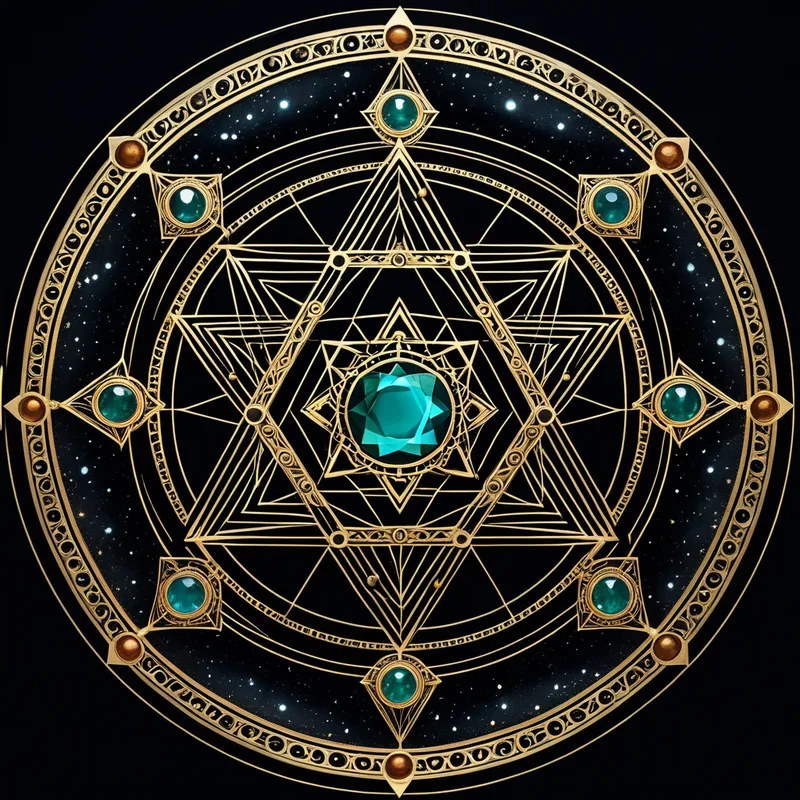
At its core, this myth is about the imposition of conscious order upon unconscious potential. The seven wanderers represent archetypal principles of the psyche in their raw, undifferentiated state. Saturn is the principle of limitation and structure; Jupiter, expansion and meaning; Mars, energy and assertion; Sol, consciousness and identity; Venus, relatedness and value; Mercury, intellect and communication; Luna, the unconscious and the body.
The week is the psyche’s first clock, measuring not hours, but the qualities of experience.
The chaotic sky symbolizes the inner world before the dawn of ego-consciousness—a swirl of drives, emotions, and potentials without sequence or priority. The act of creating the week is the act of the nascent ego beginning to organize these powerful inner forces. It is not about eliminating any of them, but about giving each a designated time and place, a rhythm that allows the whole system to function. The order of the days (Saturn, Sun, Moon, Mars, Mercury, Jupiter, Venus) reflects an ancient understanding of the descent of influence from the farthest, most structured principle (Saturn) to the most immediate and relational (Venus), a map of how cosmic principles manifest in lived reality.
The Dreamer's Resonance
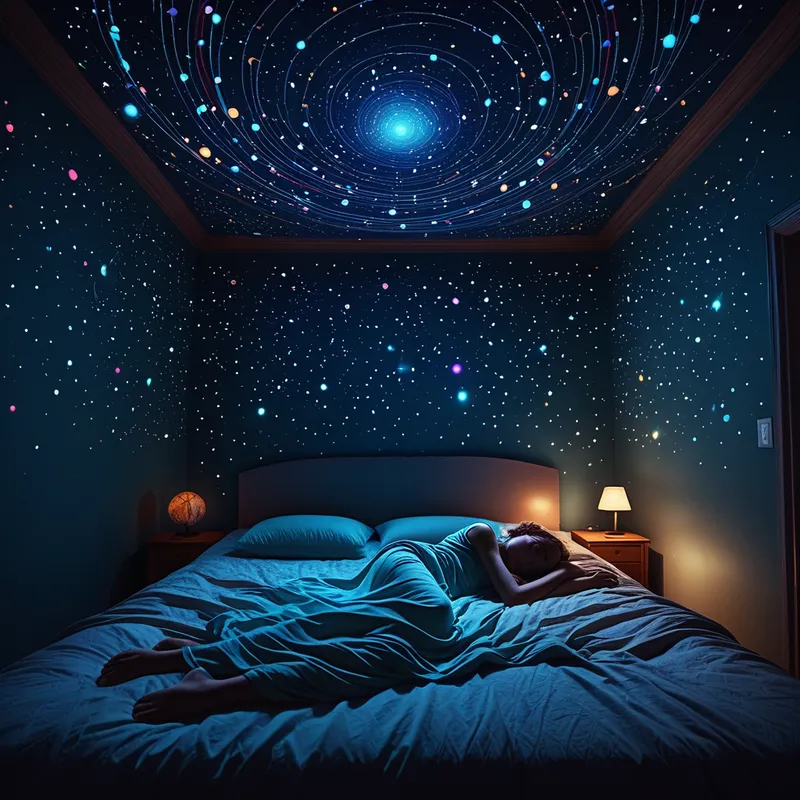
When this myth stirs in the modern unconscious, it often manifests in dreams of chaotic schedules, broken clocks, or weeks that have too many or too few days. One may dream of trying to catch seven different colored birds, each escaping in a different direction, or of a personal calendar where the pages are blank or illegible.
Somatically, this can correlate with a profound sense of internal dysregulation—sleep cycles disrupted, energy levels unpredictable, emotions flooding without pattern. The psyche is signaling a collapse of its inner periodos. The dream is not about managing a busy life, but about the loss of the foundational rhythm that allows the different parts of the self to have their rightful expression. The conflict is between the chaos of undifferentiated psychic energy and the deep, organic need for an ordering principle that honors all aspects of being.
Alchemical Translation
The individuation process modeled here is the Ordinatio—the Great Ordering. The modern individual must become the Saturnus of their own psyche. The first step is to "halt the wanderers"—to consciously observe the chaotic interplay of one’s inner drives (the relentless work ethic, the sudden passions, the intellectual obsessions, the need for relationship) without being identified with any single one.
To create your week is to become sovereign of your own time, which is to become sovereign of your own soul.
The alchemical work is to consciously assign these archetypal energies their "day." This is not literal, but psychological. It means creating intentional space for Saturnine reflection and boundary-setting, for Solar action and visibility, for Lunar rest and receptivity, for Martial assertion, Mercurial learning, Jovian planning, and Venusian connection. The triumph is not a rigid schedule, but the establishment of an inner rhythm where each part of the self is acknowledged, honored, and given its time to rule, ensuring no single aspect dominates and consumes the whole. The individual who successfully performs this inner ordering no longer feels tossed by chaotic inner weather, but moves through life with the dignified, predictable grace of a planet in its orbit, part of a cosmic harmony they have consciously helped to restore within themselves.
Associated Symbols
Explore related symbols from the CaleaDream lexicon: