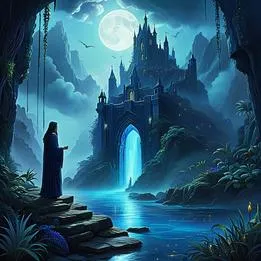
Avalon
The Oracle's Essence
A mythical island from Arthurian legend, often representing a spiritual paradise, eternal rest, or a place of healing and transformation.
Interpretive Themes
Modern Visibility
Often used metaphorically for utopian ideals, spiritual retreats, or unattainable perfection. Popular in fantasy literature and New Age spirituality.
Cultural Lenses
Jungian
Learn More →Represents the Self archetype—the integrated psyche's center. The island symbolizes wholeness achieved through individuation, with the Lady of the Lake as anima figure guiding to unconscious wisdom.
Freudian
Learn More →Symbolizes womb regression and death wish fulfillment. The island's inaccessibility represents repressed desires for maternal return, while the sword represents phallic power surrendered to unconscious drives.
Gestalt
Learn More →Represents the dreamer's need for wholeness and integration. Each element (mists, apples, sisters) are projections of fragmented self-aspects seeking reconciliation in a unified field of awareness.
Cognitive
Learn More →Manifestation of schema for 'perfect sanctuary.' Brain processes memories of safety, healing, and mystery to construct symbolic representation of problem-solving space for emotional or psychological issues.
Evolutionary
Learn More →Adaptive fantasy of protected resource-rich environment. Taps into ancestral memory of island refuges offering safety from predators, with apples representing reliable food source and mists as protective camouflage.
European
Learn More →Celtic Otherworld gateway blending pre-Christian paradise myths with medieval Christian imagery. Historically associated with Glastonbury's mystical landscape, evolving into Arthurian literary tradition of chivalric spiritual ideals.
Modern Western
Learn More →New Age spiritual retreat metaphor and pop culture fantasy trope. Represents escapism from modern stress, appearing in video games, films, and wellness retreat marketing as idealized healing space.
Global/Universal
Learn More →Archetypal blessed isle appearing worldwide as Tír na nÓg (Celtic), Dilmun (Sumerian), or Penglai (Chinese). Cross-cultural symbol of paradise inaccessible to ordinary mortals, often guarded by feminine spiritual beings.
East Asian
Learn More →Parallels Penglai Mountain—Daoist immortal's paradise with peach trees of longevity. In Japanese tradition, resembles Horai-san where time stands still, reflecting Buddhist concepts of enlightened realm beyond suffering.
Middle Eastern
Learn More →Echoes Islamic Jannah's garden paradise with flowing waters and eternal fruits. Also resonates with pre-Islamic Arabian Hawa's blessed islands—places of refuge and spiritual testing before reaching divine presence.
African
Learn More →Similar to Yoruba Orun (heavenly realm) or Akan Asamando (ancestral world). Represents community of ancestors in lush, peaceful land across waters, where healing knowledge is preserved for living descendants.
Latin American
Learn More →Resonates with El Dorado myths and Amazonian 'land without evil.' Blends indigenous paradise concepts with colonial-era search for utopian refuge from oppression, often featuring healing plants and hidden wisdom.
Contextual Nuances
Crossing water
Journey to transformation
Finding island
Discovering inner sanctuary
Leaving Avalon
Return to reality
Healing wound
Spiritual recovery process
Meeting guide
Encountering higher wisdom
Questions for Reflection
- "What part of yourself feels in need of healing or sanctuary?"
- "What 'mists' in your life currently obscure your spiritual path?"
- "What would you need to surrender (like Arthur's sword) to find peace?"
Related Weavings
The Portal is Always Open
Every dream is a personalized dispatch from the deep. Don't let yours fade into static.
Interpret Full Dream