Upyr Myth Meaning & Symbolism
The Upyr is the restless Slavic dead, a soul bound to earth by sin or trauma, feeding on life to sustain its unnatural, shadow-haunted existence.
The Tale of Upyr
Listen, and hear the rustle in the rye at midnight. Listen, and feel the chill that has no source, the one that slithers up your spine when the moon is a sliver of bone in the sky. This is not a story for the bright hearth, but for the space between breaths, for the shadow that moves when you do not.
In a village woven from forest and field, life was a covenant with the earth. To live was to sow, to reap, to honor the ancestors sleeping beneath the ognishche. To die was to return, to become quiet nourishment for the roots of the great oak. But sometimes, the covenant broke.
A soul would depart not in peace, but in a snarl—a life cut by violence, a death unblessed, a heart choked with a curse unspoken. Or perhaps the soul was simply too heavy, laden with a guilt so profound it could not ascend. This soul did not journey to Nav or Iriy. It shuddered, turned back, and clawed its way into the half-life of its own corpse.
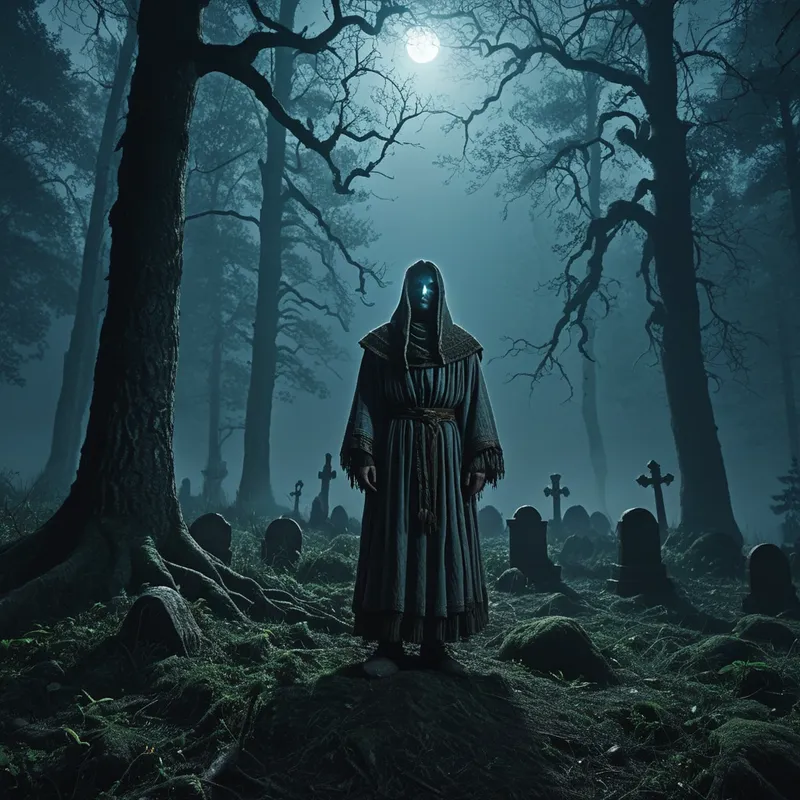
On the third night, the earth over the grave would stir. Not with the gentle push of a sprout, but with a slow, deliberate heave. From the soil, a figure would rise. It was the deceased, yet not. Its skin was the color of old wax, stretched tight over prominent bones. Its eyes held not memory, but a bottomless, intelligent hunger. This was the Upyr.
It did not sleep. It wandered the boundaries—the edge of the forest, the threshold of the home, the line between waking and dream. Its hunger was not for flesh, but for the very essence of life: breath, warmth, vitality. It would visit its own kin first, drawn by the tether of blood, and sit upon their chests as they slept, draining them slowly, leaving them pale and wasting. Cattle would sicken. The village well would taste of iron. A creeping malaise would blanket the community, a shared nightmare of fatigue and despair.
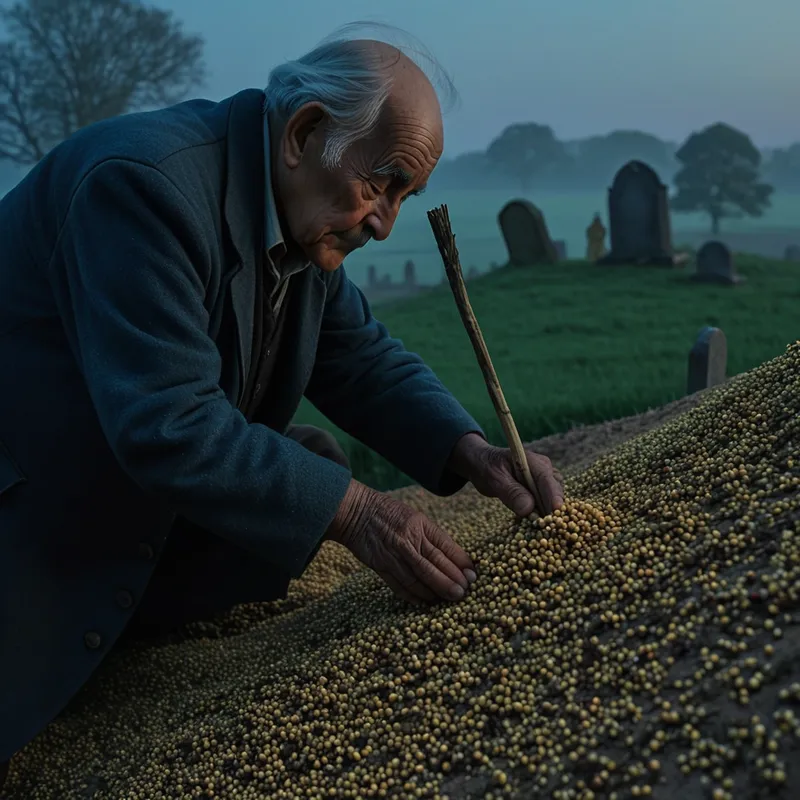
The people knew the signs. They would gather, not in panic, but in grim, ritual resolve. The elders would lead them to the suspect grave. If the earth was sunken or disturbed, they would exhume the body. And there it would lie—pliant, uncorrupted, lips stained dark, nails grown long and sharp like claws. This was the proof. The community, as one, would then perform the necessary, terrible mercy. A stake of aspen through the heart to pin the soul to the earth. The head severed and placed between the feet. The body burned, and the ashes scattered in running water. Only then would the hunger cease. Only then would the restless one finally, truly, rest.
Cultural Origins & Context
The myth of the Upyr is not mere superstition; it is a profound piece of Slavic folk theology and communal psychology. Emerging from the pre-Christian, animistic worldview of the Eastern Slavs, it represents a deep-seated anxiety about the proper order of life, death, and memory. The concept is ancient, with roots likely stretching back to Proto-Slavic and even Indo-European beliefs about the dangerous dead.
This was not a tale told by professional bards, but by babushkas and village elders around the fire on long winter nights. Its function was multifaceted: it was a cautionary tale about living a righteous life and dying a "good death" surrounded by ritual; it was a framework for explaining unexplained illnesses and community misfortune; and, most importantly, it was a ritual script. The story contained the cure. By narrating the Upyr's creation and its destruction, the community rehearsed the actions needed to maintain cosmic and social hygiene. The myth gave a name, a shape, and a procedure for dealing with the ultimate terror: the betrayal of the familiar, the loved one who returns not as a benevolent ancestor but as a predatory ghost.
Symbolic Architecture
The Upyr is the embodied unfinished business of the soul. It symbolizes any psychic content that is denied a proper death, a conscious integration. It is trauma that refuses to be processed, guilt that will not be absolved, a passion or rage that was buried alive instead of being expressed and released.
The Upyr is the ego's nightmare: the part of the self it tried to kill, returning not as a passive memory, but as an active, hungry creditor.
Its hunger for the life-force of its living kin is a perfect metaphor for how unintegrated shadow material drains our vitality. We expend enormous energy repressing, denying, and managing these "undead" parts of ourselves. The Upyr does not attack strangers; it preys on its own bloodline. Psychologically, our deepest wounds and denied traits always affect those closest to us first, in the form of projection, emotional vampirism, or the transmission of generational trauma.
The ritual destruction—staking, decapitation, burning, dispersal—is not mere violence. It is a symbolic, alchemical disassembly. Each act represents a different mode of finality: pinning down (concreting), separating thought from action (decapitation), purification by fire (transformation), and returning to the flow of life (water). It is the community forcing a completion that the individual soul could not achieve alone.

The Dreamer's Resonance
When the archetype of the Upyr stirs in the modern dreamscape, it signals a profound somatic and psychological process. You may dream of a familiar house that feels cold and draining, of a loved one whose embrace feels suffocating, or of being pursued by a figure that is both known and terrifyingly alien. You might dream of digging, of opening a grave, or of finding an uncorrupted body in a hidden basement.
These dreams point to a "hungry ghost" in the psyche—a complex that is feeding on your life energy. The somatic experience is often one of chronic fatigue, a feeling of being weighed down, or a tightness in the chest (the "sitting" of the Upyr). Psychologically, it is the process of a long-buried trauma, a silenced voice, or a disowned part of the personality (often tied to rage, sexuality, or profound grief) now demanding recognition. It has reached a critical mass of neglect and is now actively haunting the chambers of your inner world, disrupting sleep (the realm of the unconscious) and draining your waking vitality.

Alchemical Translation
The myth of the
The first step is Recognition and Exhumation. We must have the courage to go to the "sunken grave"—the depression, the addiction, the repeating relationship pattern—and acknowledge that something we thought dead is, in fact, undead and active. This is the difficult, often shameful work of bringing unconscious material into consciousness.
Individuation requires a sacred violence: the willingness to stake the wandering ghost of our past selves to the earth of present reality, so it may finally decompose into wisdom.
The second is the Ritual Disassembly. Staking the heart is the act of pinning down the truth—naming the complex concretely, without metaphor. Decapitation is the separation of the story we tell ourselves about this wound from the raw, feeling experience of it. Burning is the compassionate, yet fierce, engagement with the emotion—allowing the grief, rage, or fear to be fully felt and thus transformed. Scattering in water is the final release, allowing the processed experience to re-enter the flow of your life as insight, not as a stagnant, haunting entity.
The triumph of the myth is not the destruction of the Upyr, but the restoration of peace—for the village and for the soul. Translated, this is the peace that comes when we stop fighting our own shadows and instead perform the sacred, difficult rites of acknowledgment and integration. The hunger ceases not because the hungry part is annihilated, but because it is finally seen, heard, and given a proper place in the ecology of the self. The restless dead becomes a quiet ancestor, and its tomb becomes fertile ground for new growth.
Associated Symbols
Explore related symbols from the CaleaDream lexicon: