
Zephyrus Myth Meaning & Symbolism
The gentle West Wind, a deity of spring and renewal, whose sacred rivalry and transformative desire embody the soul's awakening to its own generative power.
The Tale of Zephyrus
Listen, and feel the air grow still. Before the thunder of the north or the dry breath of the south, there is a whisper from the world’s soft edge. He is Zephyrus, born of the starry Astraeus and the rosy-fingered Eos. His brothers are tempests and scorching gales, but Zephyrus carries the promise. His domain is the quarter where the sun sinks into the sea, painting the sky with the colors of ending and beginning.
He was a wind of solitude, a beautiful, capricious force. He watched the world from the high, cloud-strewn halls of his brother, Boreas, the North Wind, whose heart was ice and whose love was a violent abduction. Zephyrus saw this and felt a different hunger—not for possession, but for awakening.
His gaze fell upon Chloris, a nymph of the fields whose very touch coaxed green from the soil. She was the breath of the earth, and he was the breath of the sky. But desire, even gentle desire, can be terrifying to the unawakened. He pursued her, not with the brute force of Boreas, but with the insistent, enveloping pressure of a spring breeze—inescapable, pervasive. She fled, her feet light on the budding grass, her heart a frantic bird. He followed, his sigh stirring the leaves in a chorus of longing.
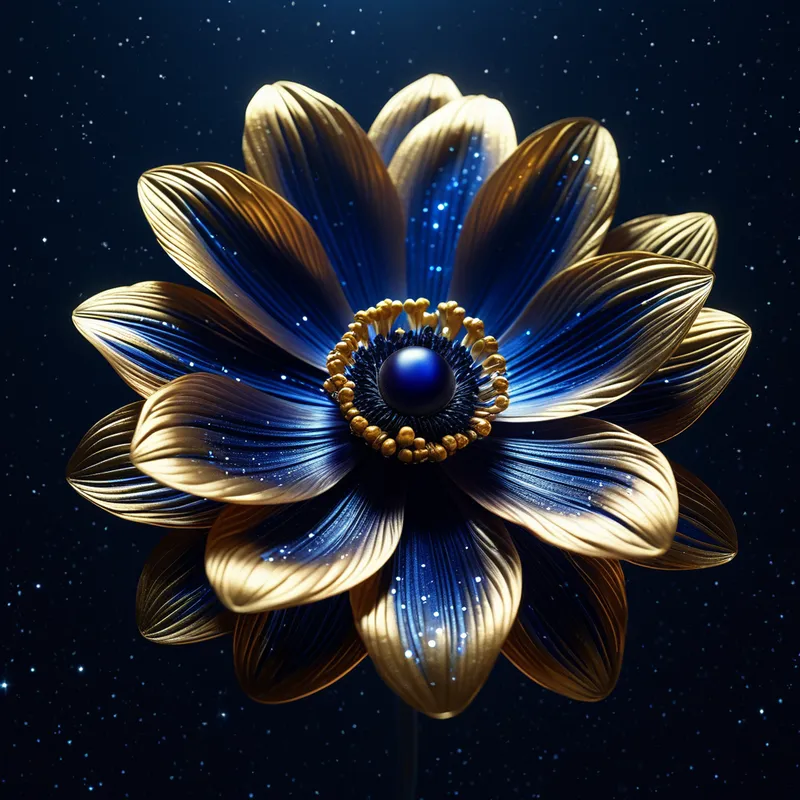
In a sun-dappled clearing, where the first wildflowers nodded, he reached her. Not with a grasp, but with an embrace of air. He surrounded her, and where his breath touched her skin, life erupted. From her lips, as she exhaled a final gasp of fear, tumbled a cascade of blossoms. Roses sprang from her fingertips, violets from her footprints. Her fear dissolved not into nothingness, but into fecundity. She was not taken; she was transformed. Chloris became Flora, the Lady of Flowers, and Zephyrus, her consort, became the acknowledged herald of spring. Their union was the sacred marriage of sky and earth, wind and flower.
Yet, every myth holds a shadow. Zephyrus’s gentle nature concealed a potent jealousy. He loved Hyacinthus, the radiant youth who also captured the heart of the sun god, Apollo. Watching them compete in the discus throw, their bodies gleaming under the sun’s own gaze, a bitter wind stirred in Zephyrus’s heart. As Apollo threw the discus, Zephyrus, in a moment of passionate spite, blew a gust that diverted its course. The heavy bronze struck Hyacinthus’s brow, felling him. From the youth’s spilled blood, where he wept, Apollo caused a new flower to spring—the hyacinth, its petals marked with the god’s cry of grief, “AI, AI.” Zephyrus’s gentle wind had become the instrument of a tragedy, a reminder that even the softest force can carry the seed of destruction when love turns to rivalry.

Cultural Origins & Context
The breath of Zephyrus was not merely a story; it was a lived reality for the ancient Greeks. His myth emerged from a profound animistic worldview where natural forces were divine persons. The winds, the <abbr title="Minor nature deities, often female, associated with specific locations">[nymphs](/myths/nymphs "Myth from Greek culture.")</abbr>, the very growth of crops were episodes in an ongoing divine drama. Zephyrus’s tales were woven into the fabric of seasonal ritual and agricultural life. His gentle arrival marked the safe return of sailing season, the end of winter’s stormy reign held by Boreas. Farmers prayed for his moist, life-giving breezes.
These stories were passed down through epic poetry, like Hesiod’s Theogony, which cataloged his divine lineage, and through local cults and art. Vase paintings often depicted him as a winged, handsome youth, sometimes with flowers. His myth served a societal function as an explanation for the benign and malevolent faces of nature. The same wind that tenderly opens the blossom can, in a fit of passion, shatter a life. He embodied the Greek understanding of the gods: immensely powerful, intimately connected to human life, yet possessing their own complex, often amoral, psychology.
Symbolic Architecture
Zephyrus is the archetype of the Gentle Force. He represents the principle that profound change does not always arrive with cataclysm, but often with a persistent, soft insistence. His pursuit of Chloris is not a rape myth in the violent style of Boreas; it is a myth of anima awakening. Chloris is the latent, fertile potential of the psyche (the soul, or in Jungian terms, the inner feminine in a male psyche, or the latent creative self in any psyche). Zephyrus is the activating spirit, the first stirring of desire or inspiration that feels initially like a pursuit, a disruption of peaceful stagnation.
The gentlest wind can erode the hardest stone, not through violence, but through constancy. So too does the soul’s calling begin—not as a shout, but as a whisper that will not be silenced.
His rivalry with Apollo over Hyacinthus unveils a deeper layer: the shadow of the Lover. Zephyrus is not just gentle love; he is possessive love, envious love. Apollo represents a higher, more spiritualized love (the arts, music, light), while Zephyrus embodies a more earthly, passionate attachment. The tragedy symbolizes the conflict between these two forms of love within a single psyche. The death of Hyacinthus—the beautiful, admired object of desire—is the inevitable result when possessive envy (Zephyrus’s redirected wind) sabotages the possibility of a purer connection (Apollo’s sport). The flower that springs from the blood is the symbol of beauty born from this painful recognition of one’s own destructive capacity.
The Dreamer's Resonance
When Zephyrus stirs in the modern dreamscape, he rarely appears as a winged god. He is felt as atmosphere, as process. To dream of a persistent, gentle wind that will not cease, that tousles hair and whispers secrets, signals the initial, often unsettling, arousal of a deep creative or emotional impulse. The dreamer may feel pursued, like Chloris, by a nameless yearning or a new idea that feels both compelling and frightening.
Dreams of causing accidental harm through a careless word or a slight, unintended action—a diverted “discus”—may echo the Hyacinthus narrative. This is the psyche working through the shadow side of one’s desires, the recognition of how one’s own unacknowledged jealousy or need for control can sabotage relationships or creative projects (the Apollonian pursuits). The somatic sensation is often one of breath—a tightness in the chest, a feeling of being gently suffocated or, conversely, of a long-held breath finally being released. It is the body sensing the psychic weather changing.

Alchemical Translation
The myth of Zephyrus models the alchemical stage of solutio—dissolution—but of the gentlest kind. It is not the drowning flood, but the slow, pervasive moisture that softens and prepares. The individual’s journey begins in a state of “Chloris”: latent, grounded potential, perhaps comfortable but unflowered. The arrival of the Zephyrus impulse—a new love, a vocation, an inspiration—feels like a disruption. The ego, identified with the stable ground, flees.
The alchemical work is to stop fleeing, to allow the enveloping wind to do its work. This is the surrender to the anima/animus or to the call of the Self. The transformation into “Flora” is the result: the latent potential becomes manifest creativity, beauty, and generative power. The individual becomes a source of life, not just a vessel.
The sacred marriage is not between two people, but between the conscious mind and the quickening spirit within. The blossom is the symbol of the integrated personality.
Yet, integration requires confronting the Hyacinthus within. The gentle lover must recognize his capacity for envy and sabotage. The alchemical “death” of Hyacinthus is the necessary sacrifice of the idealized, purely beautiful object of desire. It is the understanding that love, to be whole, must encompass both the gentle breeze and the gust of shadow. The new flower that grows—the unique, marked hyacinth of one’s own experience—is the true prize. It is a beauty tempered by grief, a creativity informed by the knowledge of one’s own destructive potential. Thus, Zephyrus guides us through the full cycle: from the first whisper of awakening, through the creative flowering, into the sobering wisdom born of sacred rivalry, completing the individuation process not as a flawless being, but as a whole one, capable of both gentle renewal and conscious responsibility for the storms we carry.
Associated Symbols
Explore related symbols from the CaleaDream lexicon: