
Aphrodite's Birth Myth Meaning & Symbolism
The goddess of love and beauty is born from the severed genitals of the sky god, cast into the sea, rising on a seashell amidst divine foam.
The Tale of Aphrodite's Birth
Before the world knew its name, there was only churning potential. The great sky, Uranus, lay heavy upon the earth, Gaia, in a suffocating embrace. From their union sprang monstrous beings and mighty Titans, but Uranus, fearing their power, thrust them back into the dark womb of the earth. Gaia groaned in agony, her fertile depths cramped with imprisoned children. From her pain, a plot was forged in adamantine.
She fashioned a great, jagged sickle and sought a liberator. Only Cronus, the most daring of her Titan sons, answered her call. He lay in ambush when Uranus descended to cover Gaia once more. With a roar that split the silence of the early cosmos, Cronus swung the sickle. A terrible, echoing scream filled the void as the sky was severed from the earth. From the wound, life-essence fell—not just blood, but the very creative seed of the sky god.
This divine ichor rained down upon the waiting sea. It mingled with the salt and the waves, and where it touched, the water began to churn and froth with a miraculous, pearlescent light. The foam, aphros, bubbled and swelled, a luminous, fermenting womb upon the deep. Time itself seemed to hold its breath.
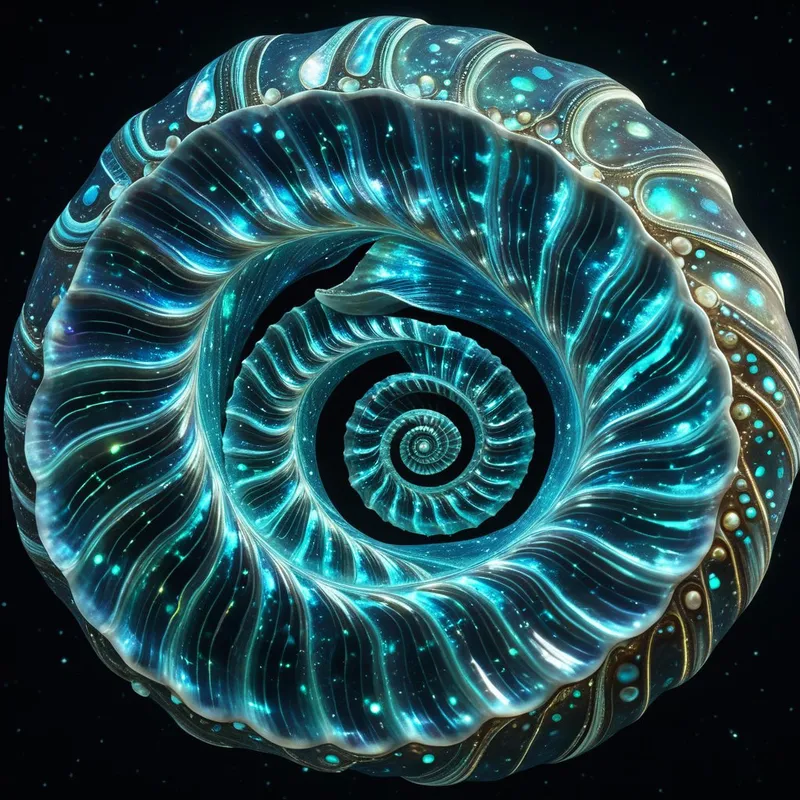
Then, from the heart of this radiant foam, a form began to rise. First, the curve of a shell, a giant scallop rising like a moon from the waves. Upon it stood a figure, a woman of such breathtaking beauty that the sea calmed and the winds stilled to behold her. She was Aphrodite, born full-grown and perfect. The Zephyrs breathed her tenderly towards the shore of Cyprus or sometimes Cythera. The Hours, daughters of Themis, awaited her on the flower-strewn beach. They clothed her in gossamer robes and adorned her with gold. Where her feet touched the sand, flowers sprang forth. She stepped onto the earth, and with that step, the world was forever changed. A new force had entered the cosmos: not brute strength, but the irresistible, binding power of desire and grace, born from a violent severance and the fertile, forgiving sea.

Cultural Origins & Context
The myth of Aphrodite’s birth is one of the oldest and most foundational stories in the Greek tradition, preserved primarily in Hesiod's Theogony (c. 700 BCE). Its origins likely reach back into pre-Greek, possibly Near Eastern or Cypriot, fertility cults, as her epithets "Cypris" and "Cytherea" point to strong cult centers on those islands. This was not a bedtime story for children, but a sacred narrative recited to explain the very architecture of reality. It functioned as a divine genealogy, situating Love not as a gentle beginning, but as a powerful, emergent force following a foundational act of cosmic rebellion and separation. In a culture that understood its gods as personifications of natural and psychological forces, this myth explained how Eros (Desire) came to be a prime mover in the affairs of gods and mortals alike. It was a story about order arising from chaos, beauty from violence, and the undeniable, life-generating power that enters the world once oppressive, stagnant unity is cut apart.
Symbolic Architecture
The birth of Aphrodite is an alchemical parable written in the language of the cosmos. It maps the genesis of consciousness itself.
The most profound beauty is not a beginning, but a resolution. It is what emerges when a long, painful unity is finally, violently, and necessarily severed.
The castration of Uranus represents the essential first act of creation: differentiation. Sky must be separated from Earth for life to exist in the space between. It is a painful but necessary divorce that creates the "container" of the world. The severed genitals are the primal, undifferentiated creative potential—pure, raw, unmanifested life force.
The sea is the great unconscious, the prima materia. It is the receptive, feminine, salty womb of all possibility. When the seed of sky falls into it, a miraculous fermentation begins. The foam, aphros, is the symbol of this psychic fermentation—the agitated, bubbling state where transformation occurs. It is not calm clarity, but a frothing, luminous confusion where new forms are brewed.
Aphrodite herself, born from this process, is the archetype of the anima, the principle of relatedness. She is not just physical beauty, but the force of eros that connects, attracts, harmonizes, and creates. She represents the psychic function that values relationship, beauty, pleasure, and synthesis. She emerges after the separation, as the power that will now govern the connections between all newly separated things.
The Dreamer's Resonance
When this myth stirs in the modern psyche, it often surfaces in dreams of profound, paradoxical emergence. You may dream of giving birth to something radiant and whole from a place of deep wounding or loss. You might find yourself in or near a vast, powerful body of water—an ocean, a turbulent sea—and witness something beautiful and terrifying rising from its depths. The dream imagery is often alchemical: foaming waters, iridescent bubbles, pearls forming around a grain of pain, seashells cradling a new self.
Somatically, this can correspond to a process of releasing a long-held, oppressive pattern—a "heavenly pressure" that has stifled your growth. The psychological process is one of necessary severance. It is the cutting away of an old identity, a toxic relationship, or a patriarchal inner voice (the internalized Uranus) that has lain heavy on your creative earth. The dream signals that this violent-seeming act is not an end, but the prerequisite for a new kind of life. The anxiety, grief, and agitation you feel are the "foam"—the fertile chaos from which a new capacity for love, self-worth, and creative connection is about to be born.

Alchemical Translation
For the individual on the path of individuation, the myth of Aphrodite’s birth is a master guide to psychic transmutation. It models the journey from a state of unconscious, enmeshed suffering to the conscious embodiment of one’s own creative and relational power.
The first, brutal step is the severance. This is the conscious decision to cut away what is overbearing and oppressive, even if it is a familiar part of your own psychic structure. It is the sacrifice of a stagnant unity for the chance of a dynamic life. This act releases the trapped, creative libido (the divine seed) back into your own psychic system.
The alchemical vessel is not the serene mind, but the churning, emotional body. The soul's gold is forged in the salty tears of experience, agitated by the winds of conflict.
You must then allow this raw material to fall into your own inner sea—the realm of feeling, intuition, and the unconscious. Here, it will not immediately become clear. It will cause a fermentation. This is a period of emotional turmoil, confusion, and seemingly unproductive agitation—the nigredo or dark night of the soul. This is the essential "foaming" stage.
Patience in this foam is everything. If you can tolerate the chaos without rushing to impose false order, the shell will rise. The "shell" is the new, protective form of your emerging self—a boundary that is both strong and beautiful, born from the depths. Upon it stands your own anima or animus—your capacity for deep connection, appreciation, and creative life-force. The final stage is not reaching shore, but being breathed toward it by gentler forces (the Zephyrs of insight) and being clothed in the gifts of your own matured qualities (the Hours). You step onto solid ground, no longer a victim of a primal drama, but an embodied source of the beauty that was forged within it.
Associated Symbols
Explore related symbols from the CaleaDream lexicon: