Andvari's Hoard Myth Meaning & Symbolism
A tale of cursed gold, a stolen ring, and a dragon's wrath, revealing the inescapable price of stolen power and the shadow that follows wealth.
The Tale of Andvari's Hoard
Listen, and hear the tale of gold that gleams with a serpent’s eye, of a curse woven in the deep places of the world. It begins not with kings, but with gods in need. Odin, the All-Father, and his brothers Thor and Hoenir, walked the world in mortal guise. Their journey brought them to a waterfall, whose thunderous voice hid a secret. There, they slew an otter, skinned it, and took its pelt for the night’s meal.
They sought shelter at the hall of Hreidmar, a lord of great cunning. But when Hreidmar saw the otter’s skin, a terrible cry escaped him. “You have slain my son, Otr, who took that form for his fishing!” From friends, the gods became captives, bound by the law of weregild—a blood-price must be paid.
Hreidmar’s demand was absolute: fill the otter-skin and cover it completely with gold. Only then would the debt be settled. Odin, keeper of secrets, knew where such wealth could be found. He sent Loki, the shape-shifter, to fetch it. Loki took the net of the sea-goddess Rán and descended to the river where the dwarf Andvari dwelt.
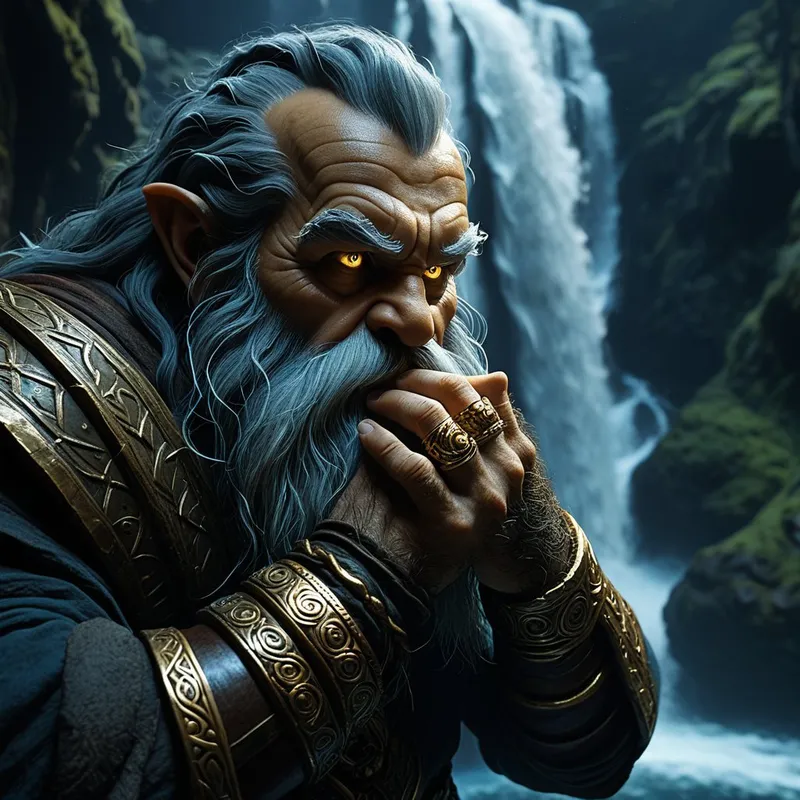
There, in the cold, dark currents behind the roaring fall, Loki found him. Andvari was a shape-shifter too, often a pike among the stones, guarding his glittering hoard—a lifetime’s work forged in fire and drawn from earth. With Rán’s net, Loki ensnared the dwarf-dweller. “Your life for your gold,” Loki declared. Andvari, helpless, surrendered his treasure. But as the last coin was gathered, a single ring of simple beauty remained on his finger. The Andvaranaut. Loki demanded it too.
A darkness fell upon Andvari’s face then, deeper than any cave. “Take the ring,” he hissed, his voice the grind of stone, “but know this: with it goes my curse. This gold and this ring shall be the doom of all who possess it. It will breed greed, fratricide, and a dragon’s heart.” He spoke the words of binding, and the curse sank into the metal like poison. Loki, shrugging off the warning, gathered the hoard and left.
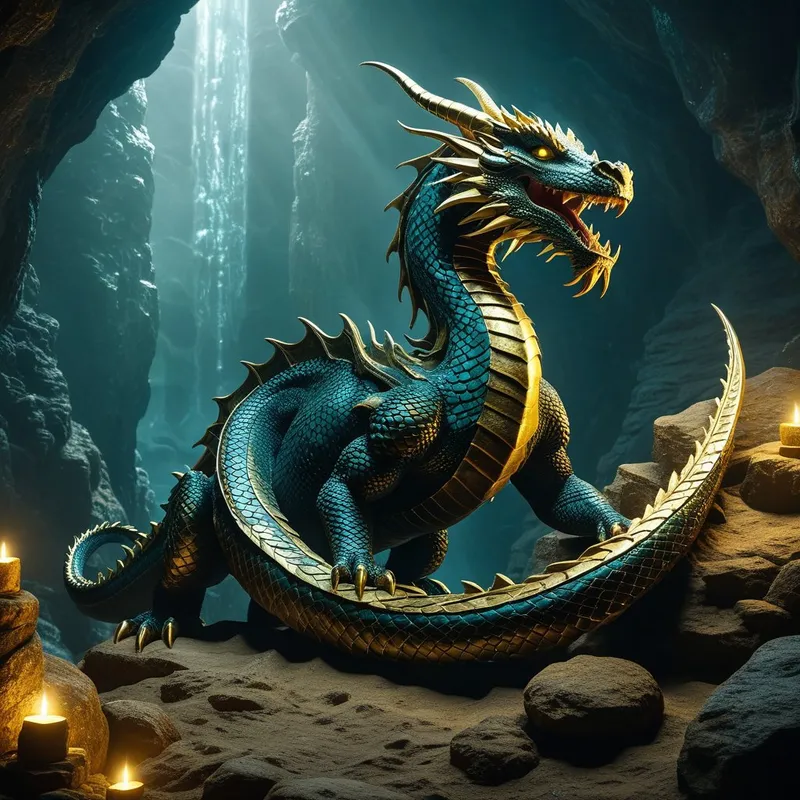
Back at Hreidmar’s hall, the gods stuffed the otter-skin with gold and piled it high. One whisker remained visible. Only the ring, the Andvaranaut, could cover it. When it was placed, the debt was paid, but the curse was now transferred. No sooner had the gods departed than the curse stirred. Hreidmar, gloating over his wealth, refused to share a single coin with his other sons, Fafnir and Regin. Greed, kindled by the cursed ring, turned to murder in the night. Fafnir slew his father and seized the hoard, driving Regin away. But possession did not bring peace; it brought a monstrous transformation. Fafnir, brooding alone on his ill-gotten gold, his heart calcifying with paranoia and avarice, slowly changed. His body swelled, scales erupted from his skin, and wings sprouted from his back. The man became the dragon, Fafnir, the ultimate guardian and prisoner of Andvari’s Hoard, lying on his treasure in the desolate place called Gnitaheid.
And there the dragon waited, and the ring waited, and the curse waited… for the hero Sigurd, who was yet to come.
Cultural Origins & Context
This cycle of tales, part of the wider Völsunga Saga and echoed in the Poetic Edda, was not mere entertainment. It was a foundational narrative for the Viking Age psyche, transmitted by skalds and storytellers in halls filled with the smoke of long-fires. It functioned as a profound cautionary tale about the nature of wealth, obligation, and fate.
In a culture governed by complex laws of honor, reciprocity, and blood feud, the concept of weregild was sacrosanct. The myth begins with its violation—an accidental killing that demands a price. Yet, the story brilliantly subverts this legalistic framework. The payment itself, because it is stolen and cursed, becomes a greater poison than the original crime. It reflects a deep-seated understanding that wealth obtained without honor or through force carries a spiritual stain. The myth also explores the transformation of the masculine psyche under the weight of isolated, hoarded power—the king (Hreidmar) becomes a miser, the warrior (Fafnir) becomes a monster. This was a vital lesson for a society of raiders, traders, and settlers constantly navigating the temptations of plunder.
Symbolic Architecture
At its heart, this is a myth of the Shadow in its most concrete form: gold. Gold is the condensed light of the sun, the symbol of highest value, consciousness, and the Self. But when this light is stolen from its rightful owner—from the earthy, creative depths represented by the dwarf Andvari—it becomes cursed. It transforms from a symbol of integrated value into an autonomous complex, a “treasure hard to attain” that instead attains you.
The curse is not an external magic, but the inevitable psychological law: that which is taken from the unconscious without acknowledgment or payment will eventually possess the taker.
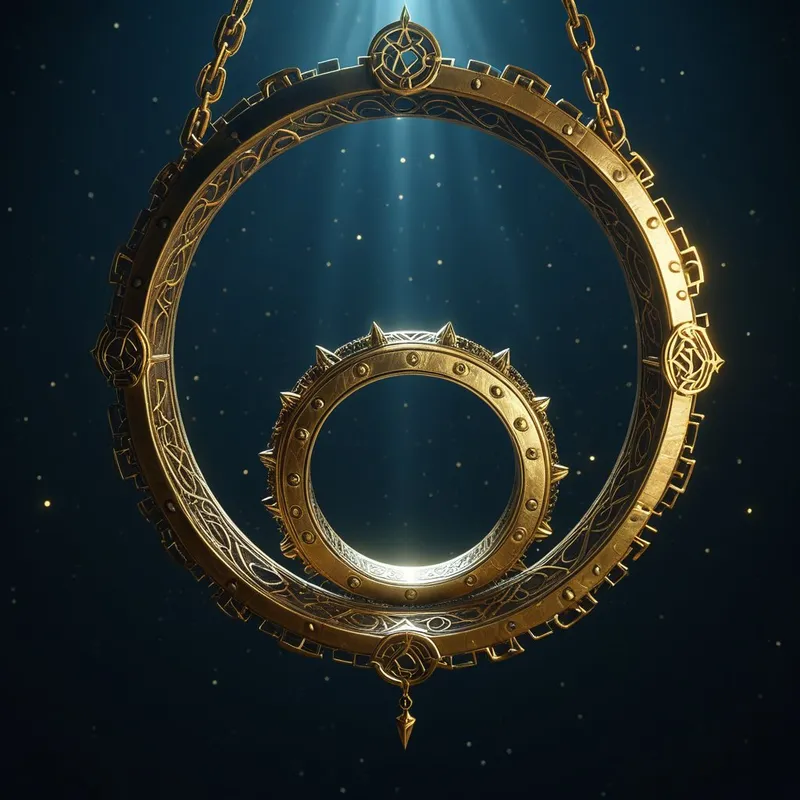
Andvari, the dwarf in the waterfall, represents the instinctual, chthonic (earthly) spirit of craft and natural wealth. He is the innate talent, the raw creative potential, the mineral resources of the psyche. Loki’s theft is the ego’s rapacious attempt to seize this potential for its own ends—to pay a debt, to solve a problem—without engaging in the slow, respectful work of relationship with the source. The ring, the Andvaranaut, is the focal point of this complex. It is the symbol of binding and attraction (“naut” implies gift or benefit), but now perverted. It attracts only more gold (more inflation, more obsession) and binds the owner to a fate of isolation and destruction.
Fafnir’s transformation is the central image of the myth’s psychological truth. The dragon is the embodied state of the possessed ego. He is not just greedy; he is identified with the hoard. His very body becomes the armor that guards it. This is the psyche in a state of pathological introversion, where all life energy (the gold) is withdrawn from the world and from relationship, to be guarded in a sterile, paranoid inner fortress. The dragon is the ultimate symbol of a potency that has turned in on itself and become self-cannibalizing.
The Dreamer's Resonance
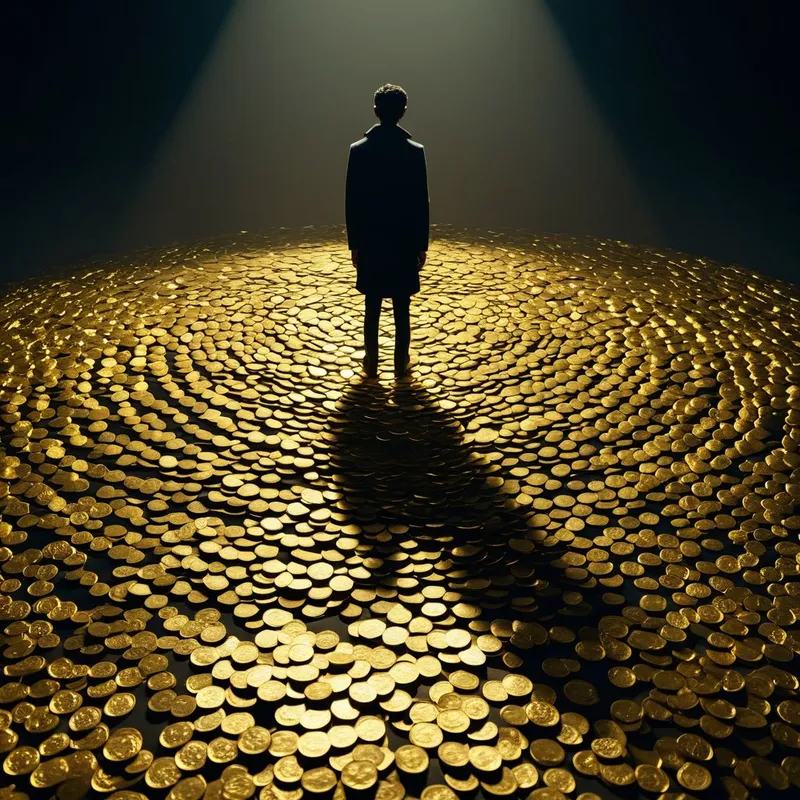
When this myth stirs in the modern soul, it often manifests in dreams of finding hidden treasure, winning lotteries, or discovering secret rooms filled with valuables. The initial feeling is one of exhilaration and power. But pay attention to the sequel. Does the gold begin to feel cold, heavy, or threatening? Does it start to move or transform? Does a figure—a previous owner, a threatening guardian—appear to reclaim it?
Such dreams signal a critical moment of negotiation with the personal Shadow. The “hoard” represents a burst of psychic energy—perhaps a newfound talent, a sudden insight, an inheritance, or a promotion—that has entered consciousness. The dreamer is at the Andvari moment: will this energy be integrated with respect for its origins (the hard work, the lineage, the unconscious source), or will it be “stolen”? The latter path leads to the Fafnir state: inflation. The ego, puffed up with this new energy, isolates itself. Relationships suffer as the dreamer becomes “guarded,” obsessed with protecting their new status or identity. Somatic signs may include a tight chest (the dragon’s armored heart), insomnia (the guardian who never sleeps), or a general sense of being burdened.
Alchemical Translation
The alchemical journey modeled here is not of attaining the gold, but of breaking the curse on the gold we already possess or are tempted by. It is the work of individuation through the redemption of stolen value.
The first stage is Nigredo: the blackening, represented by the murder of Otr and the subsequent curse. This is the recognition of the “original sin”—the moment we took something (credit, love, power) without full consciousness or payment, creating a karmic debt in the soul. The work begins by acknowledging this debt, this shadow on our wealth or success.
The second stage is the Coniunctio, or the sacred marriage, which here is tragically failed. The proper relationship between the conscious ego (Loki/Odin) and the dwarf of the depths (Andvari) is one of reciprocity, not theft. The alchemical translation demands we go back to the waterfall—to the source of our talent, our trauma, our inherited patterns—and engage with it consciously. We must ask: “What payment is due? What honor must be given to the source of this power?”
The slaying of the dragon by Sigurd is not the final goal for the modern individual; it is the necessary prelude. One must first stop being Fafnir—stop identifying with the hoard—before one can free the gold.
The final stage is Rubedo, the reddening or realization. This is achieved not by keeping the ring, but by understanding its nature and letting its curse work itself out consciously. It is to use the attracted energy (the gold) not for personal aggrandizement, but for a purpose that transcends the ego. In doing so, the curse loses its power. The gold loses its glittering, autonomous menace and becomes simply a tool, a resource, integrated into the fabric of a life lived in relationship. The dragon is not killed, but its energy is redeemed, transforming from a hoarding, paranoid force into a protective, wise one—the serpent of knowledge instead of the dragon of greed. The myth, therefore, is a map for turning fate into destiny, and cursed wealth into conscious worth.
Associated Symbols
Explore related symbols from the CaleaDream lexicon: