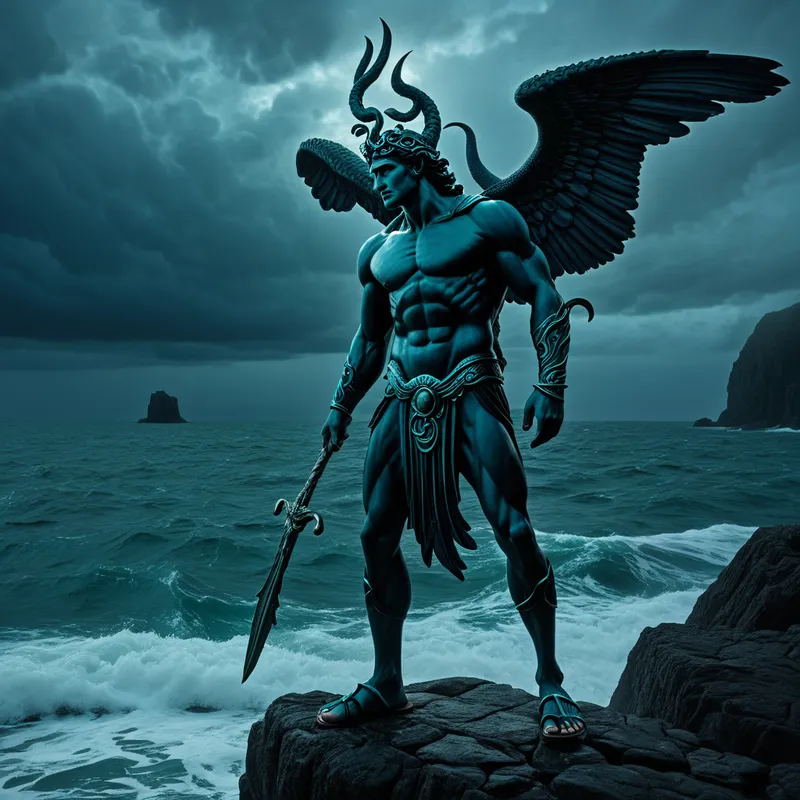
Perseus Myth Meaning & Symbolism
A son of Zeus, guided by gods, uses cunning and gifts to behead Medusa, rescue Andromeda, and fulfill a destiny foretold by prophecy.
The Tale of Perseus
Listen, and hear a story written in starlight and blood. In the city of Argos, a king trembled. An oracle had spoken: his daughter, Danaë, would bear a son who would one day kill him. In terror, the king sealed his radiant daughter in a bronze chamber, buried deep within the earth. But who can cage the sky? Zeus himself descended as a shower of gold, piercing the darkness, and Danaë conceived.
A boy was born—Perseus. Enraged, the king cast mother and infant into the sea in a wooden chest. For days they were tossed by Poseidon’s whims, a fragile ark upon the abyss, until the waves gentled and delivered them to the island of Seriphos. A fisherman, Dictys, drew them from the water, offering sanctuary.
Years passed. Perseus grew strong under the sun and salt air, while his mother’s beauty drew the covetous eye of the island’s king, Polydectes. Desiring Danaë for himself, the king devised a cruel ruse. He announced a bridal gift for another, demanding every man bring a horse. Perseus, poor in steeds but rich in pride, declared he would bring anything—even the head of the Gorgon Medusa. The king seized upon the boast, binding the youth to his deadly word.
Thus began the impossible quest. But the Fates weave more than one thread. Athena, who had turned Medusa into a monster, now offered her shield, polished to a mirror’s sheen. Hermes gave an adamantine sickle and directions to the Graeae, crones who knew the path. From them, through trickery and swiftness, Perseus learned the way to the nymphs of the north. From these radiant beings, he received the tools of his destiny: winged sandals to fly, the Cap of Darkness to hide, and a kibisis—a magical pouch to safely carry his grim trophy.
Guided by gods and gifts, he flew to the end of the world, to the Gorgons’ stony plain. There they slept, monstrous sisters with brass hands and golden wings, and among them, Medusa. Using the mirrored shield to see without being seen, Perseus hovered, a breath held in the silent air. In one fluid, terrible motion, guided by Athena’s hand, he swept the sickle down. From the severed neck sprang the winged horse Pegasus and the giant Chrysaor. Perseus seized the head, its serpent hair still hissing, and fled in the cloak of invisibility as the other Gorgons wailed into the empty sky.
His return was a journey of becoming. In Aethiopia, he found the princess Andromeda chained to a cliff, a sacrifice to a sea monster. With Medusa’s petrifying gaze, he turned the beast to stone, a new cliff upon the shore. He claimed Andromeda as his bride. Finally, he returned to Seriphos. There, in the king’s hall, he found his mother and Dictys in hiding, persecuted by Polydectes. Perseus strode into the feast, declared his return, and when the king and his courtiers laughed in disbelief, he raised the Gorgon’s head. In an instant, their mockery froze into a silent, permanent tableau of terror.
His destiny complete, Perseus gave the head to Athena, who set it upon her aegis. He returned to Argos with his mother and wife, not to kill his grandfather, but in a fateful accident during athletic games, a discus thrown by Perseus’s hand found its mark, fulfilling the prophecy. From exile and murder, a king was born, founding the line that would one day yield Heracles.
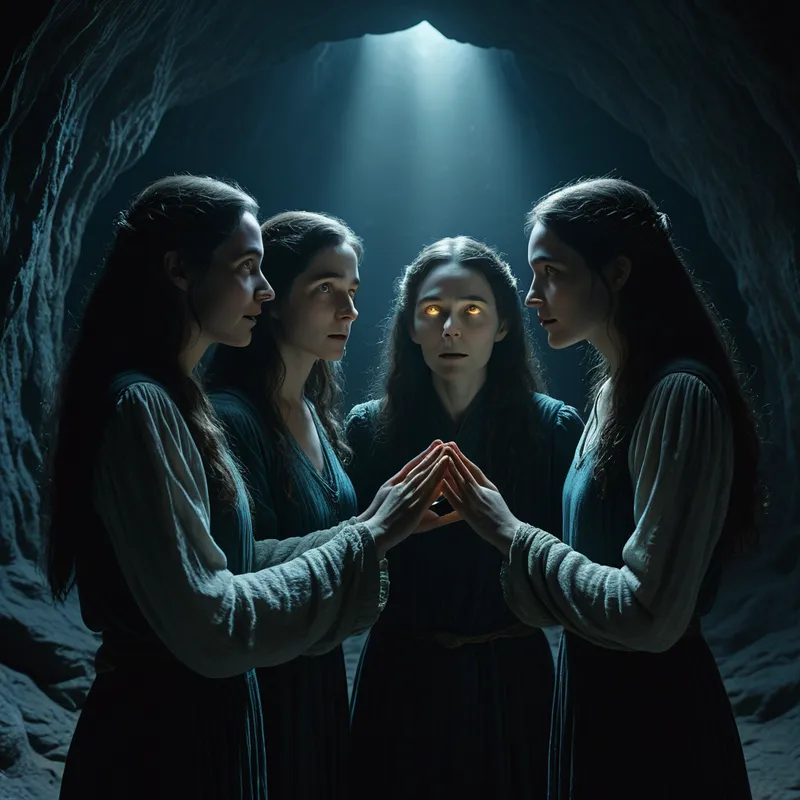
Cultural Origins & Context
The myth of Perseus is one of the oldest strata of Greek heroic narrative, predating even the Trojan Cycle. Its roots likely extend into the Mycenaean Bronze Age, with Argos and the surrounding regions of the Peloponnese as its probable heartland. Unlike the complex, tragic heroes of later epics, Perseus is a folktale hero, a pattern found across Indo-European cultures: the child of destiny cast adrift, the impossible task, the magical helpers, the triumphant return.
The story was not the property of a single poet like Homer but was woven into the fabric of local cults and family lineages. It was told to explain the origins of places—the petrified landscape features attributed to Medusa’s gaze—and to legitimize the ruling dynasties of cities like Mycenae, which Perseus was said to have founded. The myth functioned as a foundational charter, linking human kingship directly to divine favor and heroic action. It was performed in various media: in epic recitations, in choral poetry like that of Pindar, and vividly depicted on pottery, temple metopes, and in later Roman wall paintings, ensuring its passage through millennia.
Symbolic Architecture
At its core, the myth of Perseus is a masterful map of the psyche confronting its own deepest, most paralyzing fears. Medusa is not merely a monster; she is the ultimate embodiment of the petrifying face of the unconscious—the trauma, the shame, the unintegrated horror that stops us in our tracks, turning living potential into cold, dead stone.
The hero’s task is not to fight the shadow blindly, but to find the reflective surface that allows him to behold it without being destroyed by direct confrontation.
Every divine gift represents an essential psychic function. Athena’s mirrored shield is the capacity for conscious reflection and wisdom, allowing one to observe the terrifying content indirectly. Hermes’s sickle is the sharp, discerning intellect that can make the necessary cut. The sandals are the liberating mobility of spirit, the cap is the ability to withdraw and become invisible to the oppressive forces of the complex, and the pouch is the container that can safely hold the transformed power of what was once monstrous. The journey to the Graeae and the nymphs signifies that one must first consult the ancient, instinctual, and often neglected parts of the psyche (the crones, the nymphs) to acquire these inner resources.
The Dreamer's Resonance
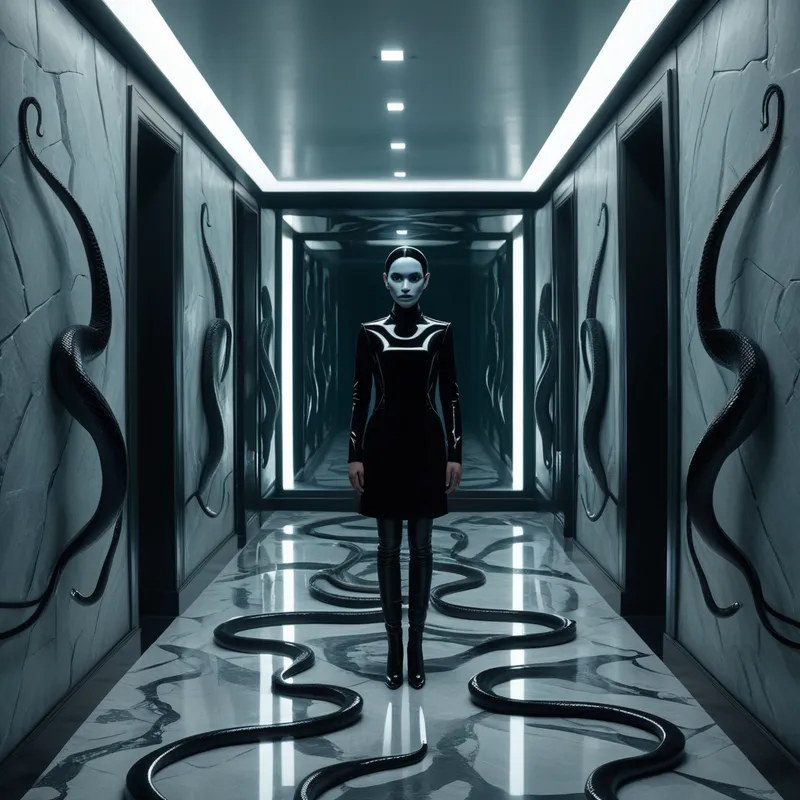
When the pattern of Perseus stirs in the modern dreamer, it often signals a profound encounter with the personal shadow. One might dream of being given an impossible task by a tyrannical authority figure (the internalized Polydectes, or a domineering parent complex). The setting is often a labyrinthine cave, a desolate shore, or a mirrored room.
The somatic experience is one of freezing—a literal feeling of being turned to stone, of paralysis in the face of a looming, snaky-haired fear. This is the psyche’s representation of a trauma response or a complex that has “petrified” a part of one’s emotional life. The dream may offer talismanic objects: a special bag, a pair of winged shoes, a polished surface. These are the nascent inner resources the dream-ego is beginning to assemble for the confrontation. The act of beheading in the dream is rarely violent; it is a precise, surgical separation, representing the difficult but necessary process of differentiating oneself from an identification with a monstrous, self-sabotaging pattern.
Alchemical Translation
The Perseus myth is a precise alchemical recipe for individuation. The prima materia, the base matter to be transformed, is the chaotic, terrifying energy of Medusa—the raw, unprocessed affect of rage, shame, or primal fear. The quest, initiated by the boast (the conscious ego’s commitment, however rash), sets the process in motion.
The Gorgon’s head, once a source of petrification, becomes the ultimate weapon of defense and the jewel upon the aegis of consciousness. This is the alchemical goal: not to destroy the shadow, but to harness its power.
The sequence is crucial. One does not face the Medusa with brute force. One first acquires the spiritus (Hermes’s guidance, the winged sandals of air), the aqua permanens (the wisdom of the nymphs, the reflective shield), and the vas (the cap of darkness as the sealed vessel, the pouch as the recipient). The beheading is the separatio, the crucial division of the useful from the useless, the liberation of the transcendent spirit (Pegasus) and the golden warrior (Chrysaor) from the monstrous form. Finally, using the transformed power to freeze the persecuting tyrant (Polydectes) represents the coniunctio—the integration where the once-debilitating complex is now under the command of the conscious self, used to solidify and render inert the other internal persecutors. The hero returns the head to Athena, completing the cycle: the raw power of the unconscious is now in service to the ordering, protective principle of wisdom. The individual is no longer a victim of fate but, through conscious engagement with the deepest terror, becomes an author of their own sovereignty.
Associated Symbols
Explore related symbols from the CaleaDream lexicon: