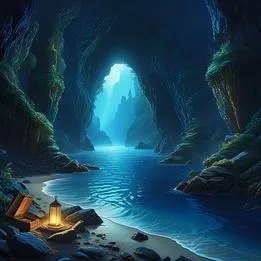
Cove
The Oracle's Essence
A small, sheltered bay or inlet, often representing hidden aspects of the self, emotional sanctuary, or transitional spaces between consciousness and the unconscious.
Interpretive Themes
Modern Visibility
In contemporary life, coves symbolize digital privacy, personal retreats from urban stress, and protected natural environments threatened by development.
Cultural Lenses
Jungian
Learn More →Represents the personal unconscious—a sheltered area where shadow aspects reside. The cove's shape suggests feminine containment (anima) and serves as threshold to collective unconscious. Modern analysis sees it as psychic safe space for integration work.
Freudian
Learn More →Symbolizes womb regression and birth fantasies. The enclosed water represents amniotic fluid and sexual fluids. Entering/exiting reflects Oedipal dynamics. Modern context: desire to return to pre-conscious state of undifferentiated pleasure.
Gestalt
Learn More →The cove is the dreamer—what part of yourself feels sheltered yet exposed? The water represents emotional flow. Modern interpretation: how do you create boundaries while remaining accessible to experience?
Cognitive
Learn More →Mental model for problem-solving—the cove represents cognitive schemas for retreat and protection. Dreaming of coves may process real-life needs for privacy or preparation. Modern: reflects information processing about safe spaces.
Evolutionary
Learn More →Evolutionary memory of coastal shelters providing survival advantages—protection from predators, access to resources. Modern manifestation: innate preference for enclosed spaces with visibility exits, reflecting ancestral safety mechanisms.
East Asian
Learn More →In Daoist tradition, represents yin principle—receptive, hidden wisdom. Japanese aesthetics value coves as 'ma' (negative space) for contemplation. Modern: feng shui principles applied to create harmonious private spaces.
South Asian
Learn More →In Hindu mythology, coves as places where rivers meet ocean symbolize samsara's edge. Buddhist meditation uses cove imagery for mental stillness. Modern: spiritual retreat spaces modeled after natural coves.
Middle Eastern
Learn More →Ancient Mesopotamian texts describe coves as places where fresh/salt waters mix—symbolizing life/death boundaries. Islamic gardens create sheltered spaces reflecting paradise. Modern: architectural courtyards as urban coves.
European
Learn More →Celtic traditions saw coves as thin places between worlds. Greek mythology associated coves with nymphs and transformation. Medieval Christian hermits sought coastal coves for asceticism. Modern: romanticized in literature as escape.
African
Learn More →Coastal West African traditions view coves as ancestral portals where land/sea spirits communicate. Ritual cleansing often occurs in sheltered waters. Modern: community fishing coves maintain cultural memory spaces.
North American
Learn More →Indigenous coastal nations see coves as birthing places for salmon, cyclical renewal symbols. Colonial narratives romanticized coves as untouched wilderness. Modern: environmental conservation focuses on coves as biodiversity refuges.
Latin American
Learn More →Mesoamerican cultures associated coves with Chaac (rain god) and fertility. Caribbean traditions view coves as maroon hideaways resisting colonialism. Modern: tourist development versus preservation of sacred coastal spaces.
Contextual Nuances
Discovering hidden cove
Revelation of inner resources.
Swimming toward cove
Seeking emotional sanctuary.
Leaving cove reluctantly
Fear of exposure.
Cove filling with water
Emotional overwhelm imminent.
Cove with crystal waters
Clarity in solitude.
Questions for Reflection
- "What aspects of yourself feel hidden or protected like a cove?"
- "When do you most need emotional sanctuary in your waking life?"
- "What treasures might be hidden in your personal 'cove' waiting to be discovered?"
Related Weavings
The Portal is Always Open
Every dream is a personalized dispatch from the deep. Don't let yours fade into static.
Interpret Full Dream