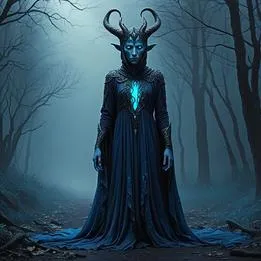
Changeling
The Oracle's Essence
A mythical creature substituted for a human child, often representing transformation, deception, or spiritual displacement.
Interpretive Themes
Modern Visibility
In modern psychology, it often symbolizes impostor syndrome or identity crises. Contemporary fantasy media frequently reinterprets changelings as misunderstood or hybrid beings.
Cultural Lenses
Jungian
Learn More →Represents the shadow self or a complex—an autonomous psychic fragment that feels alien. The changeling is the 'other' within, often carrying repressed traits or a different potential identity seeking integration.
Freudian
Learn More →Symbolizes repressed childhood trauma or a distorted self-image stemming from early family dynamics. It may represent the dreamer's own feelings of being a 'bad' or unwanted child, or anxieties about parenthood and legacy.
Gestalt
Learn More →Every part of the changeling dream represents an aspect of the dreamer. The 'real' child and the 'changeling' are conflicting parts of the self in dialogue—one perceived as authentic, the other as a false projection or adopted role.
Cognitive
Learn More →Manifests cognitive schemas related to impostor syndrome, fear of the unknown, or theory of mind issues. The brain processes social anxiety about belonging or threats to identity through this familiar narrative framework.
Evolutionary
Learn More →Taps into deep-seated adaptive fears: parental investment in a non-kin offspring (wasted resources) and threat detection regarding group members who may be deceptive or carry illness (the 'uncanny valley' response).
European
Learn More →Historically, a fairy or troll child left in place of a human infant, explaining illness or developmental differences. Rituals involved 'exposing' the changeling to force the fairies to return the true child. Modernly, a folkloric cautionary tale.
Modern Western
Learn More →Often a metaphor for adoption, neurodivergence, or LGBTQ+ identity—feeling like one was born into the wrong family or body. Also prevalent in fantasy genres as a trope for hidden heritage or magical potential.
East Asian
Learn More →Less common, but parallels exist with fox spirits (kitsune/huli jing) or other shapeshifters who impersonate family members to cause discord or steal vitality. Reflects anxieties about household harmony and ancestral line purity.
African
Learn More →In some traditions, linked to spirit children or abiku—souls who cycle between life and death, causing grief. The 'changeling' may be a child marked by the spirit world, requiring specific rituals for protection or acceptance.
Global/Universal
Learn More →A cross-cultural archetype addressing fundamental fears of substitution, loss of loved ones, and doubt about reality. Speaks to the human need to discern the authentic from the counterfeit in relationships and self-perception.
Middle Eastern
Learn More →Echoes in jinn lore, where jinn can steal or replace children. Represents the capriciousness of unseen forces and the vulnerability of the family unit. Protective measures often involve religious invocations and amulets.
North American
Learn More →In Indigenous narratives, may connect to stories of skin-walkers or other shape-shifters. In contemporary settler culture, heavily influenced by European folklore but often reinterpreted through psychological or speculative fiction lenses.
Contextual Nuances
Finding a child
Something feels wrong.
Child acting strange
Behavior is alien.
Trading a child
Forced supernatural exchange.
Discovering a swap
Realization of substitution.
Being the changeling
Feeling like an outsider.
Questions for Reflection
- "Where in your life do you feel like an imposter or outsider?"
- "What part of yourself feels 'exchanged' or hidden from others?"
- "Is there a relationship or situation where you fear the truth has been substituted with a deception?"
Related Weavings
The Portal is Always Open
Every dream is a personalized dispatch from the deep. Don't let yours fade into static.
Interpret Full Dream