The Druids Myth Meaning & Symbolism
The myth of the Druids is a story of sacred knowledge, the deep memory of the land, and the perilous journey to speak with the soul of the world.
The Tale of The Druids
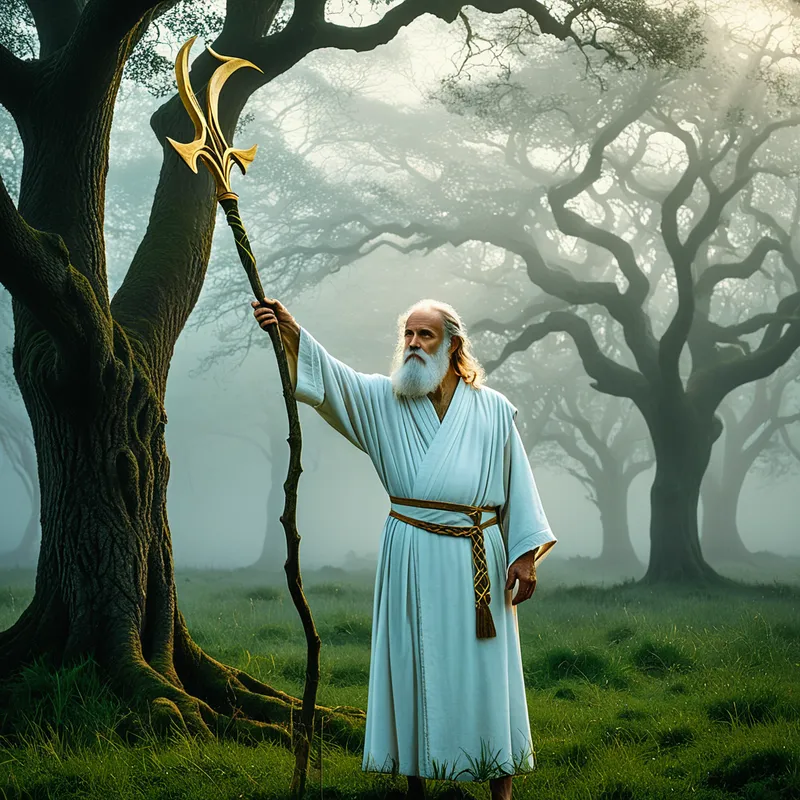
Listen. The wind in the oak leaves is not merely wind. It is the breath of the land, speaking in a tongue older than stone. In the time before roads cut the earth’s skin, when the world was a tapestry of forest and mist, they walked between the worlds. They were the Druids.
Their story does not begin with a birth, but with a calling—a pull in the blood as sure as the salmon returning upstream. A youth, marked by a dream of a white stag with antlers like bare branches, would leave the warmth of the hearth-fire and step into the green twilight of the nemeton, the sacred grove. For twenty years, they would vanish. The world would forget their face, but the land would remember their feet upon its moss.
In the perpetual dusk beneath the canopy, they learned the language of the world. They memorized the histories of the tribes, the lineages of kings, and the laws that bound people to each other and to the earth—all held in the vault of memory, never written. They studied the flight of birds, the entrails of a sacrificed bull, the crackle of a sacred fire, learning to read the future in the present’s grain. They learned the secret properties of plants: the mistletoe, the golden bough that was neither of the earth nor the sky; the oak, king of the forest, whose roots drank from deep wells of memory.
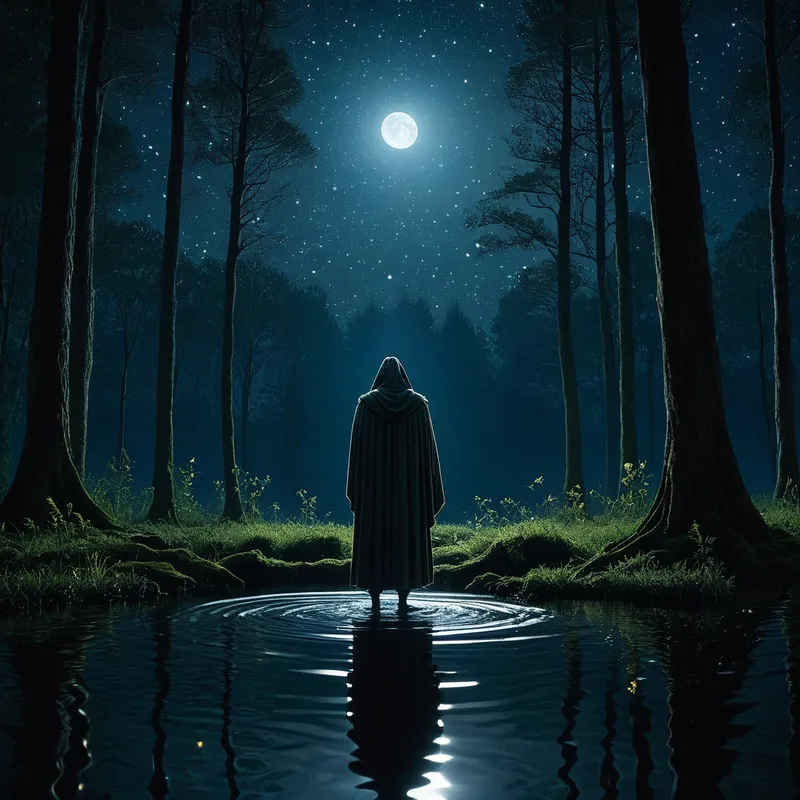
The great trial was not of strength, but of perception. The initiate was led to a pool, black as a moonless night. “Look,” the master would say. The initiate would see only their own anxious face, reflected. “Look again,” the voice would whisper, a rustle from the leaves. And if the heart was true and the mind still, the reflection would shift. The water would show not a face, but the swirling stars of the heavens, or the tangled roots of the great oak beneath the soil. To see the world in the water, and oneself in the world—this was the first true knowing.
Their power was a terrible responsibility. They could bless a king, making his reign fertile and just, or they could recite a satire so cutting it could raise boils on his face and blight his fields. They stood between the people and the gods, between the tribe and the chaos of the unseen. They officiated at the great fire festivals—Beltane, when the veils were thin and the cattle were driven between twin fires; Samhain, when the dead walked and the Druids tended the communal fire from which all hearths were relit.
Their story ends not with a death, but with a fading. As the new world of empire and a single god marched in with iron and parchment, the groves were cut down. The long memory was scattered. Yet, in the sigh of the wind through the last standing stone, in the persistent folk tale of the fairy mound, the whisper remains. The Druids did not die; they retreated into the bone of the land itself, becoming the knowing silence within the hill, the pattern in the frost, the old wisdom waiting to be heard again by those who learn to listen not with their ears, but with their blood.
Cultural Origins & Context
The figure of the Druid emerges from the complex tapestry of Iron Age Celtic cultures spanning from Gaul to Britain and Ireland. Unlike a singular myth with a fixed narrative, the “myth of the Druids” is a meta-narrative constructed from archaeological fragments, Greco-Roman commentaries (like those of Julius Caesar and Pliny the Elder), and the later, Christian-era vernacular literature of Ireland and Wales. They were not gods, but human intermediaries who occupied the highest echelon of a learned class.
Their knowledge was an oral canon, deliberately unwritten to protect its sanctity and potency. This transmission required immense feats of memory, creating a living library within the minds of the initiated. Their societal function was all-encompassing: they were theologians, legal arbiters, political advisors, historians, doctors, and masters of natural philosophy. They operated at the axis of the sacred and the secular, upholding the Fír, the cosmic order and truth. Their myth is, therefore, the story of sacred knowledge itself—its acquisition, its custodianship, and its vulnerability in the face of historical change.
Symbolic Architecture
The Druid is the archetypal embodiment of the awakened mind in right relationship with nature. They symbolize the human capacity to move beyond literal perception into a participatory, symbolic engagement with reality.
The Druid does not command nature, but converses with it. Their power lies not in domination, but in deep listening—hearing the law in the river’s flow and the prophecy in the crow’s call.
The twenty years of training in the forest represents the necessary incubation period for deep wisdom. It is a radical withdrawal from collective consciousness (the tribe) to commune with the objective psyche (the untamed forest, the anima mundi or world soul). The sacred grove (nemeton) is a temenos, a sacred precinct symbolizing the protected psychic space where transformation can occur. The oak tree is the axis mundi, the world pillar connecting the underworld (roots), the middle world (trunk), and the upper world (branches). The mistletoe, growing between earth and sky, is the symbol of the transcendent function—that mysterious third thing which emerges from the union of opposites (the earthly oak and the celestial bird that deposits the seed).
The trial of the pool is the quintessential symbol of introspection leading to a cosmic identification. To see the stars in one’s reflection is to achieve the unio mentalis, the mental union where the ego realizes its source in and connection to the vast, impersonal psyche of the universe. The Druid’s ultimate sacrifice was the forgoing of written record, a symbolic death to the literal, concrete world in service to the living, fluid world of memory and direct experience.
The Dreamer's Resonance
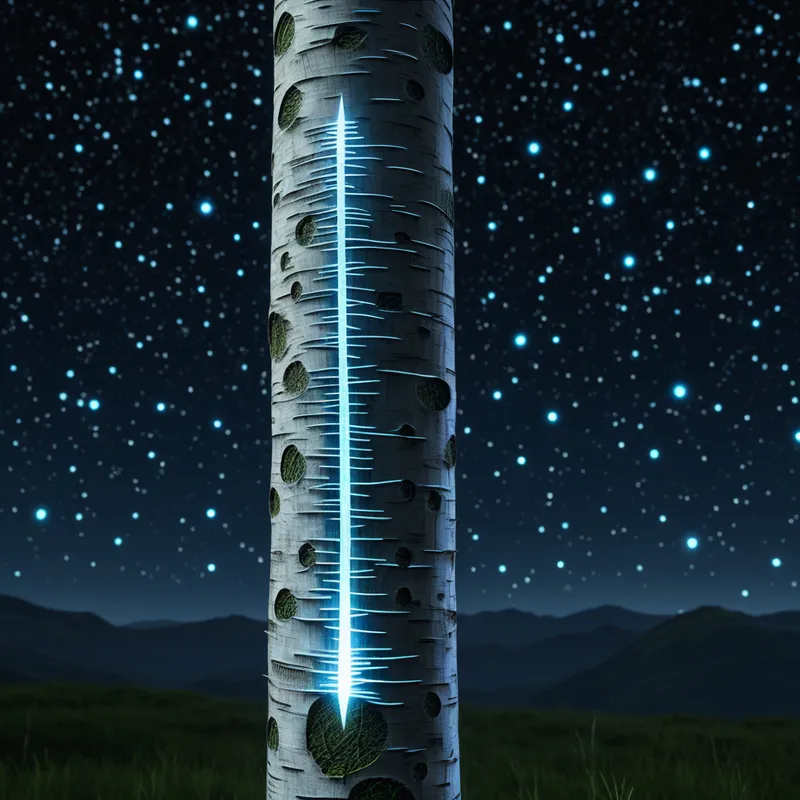
When the archetype of the Druid stirs in the modern dreamer, it often signals a profound crisis of meaning or a calling to a deeper, more authentic way of knowing. Dreaming of ancient groves, standing stones, or a robed figure who communicates without words points to a psyche yearning to reconnect with its own innate wisdom, divorced from the noise of external data and opinion.
Somatically, this may manifest as a feeling of being “uprooted,” disconnected from the body’s instincts and the rhythms of nature. The dream may arise during periods of burnout from hyper-rationality, where the intellect has been overused and the intuitive, symbolic function has been starved. The figure of the Druid in a dream can be a psychopomp, guiding the dreamer into their own internal nemeton—the often-neglected inner sanctuary of silence, reflection, and somatic awareness. To encounter this archetype is to be asked: Where have you outsourced your authority? What ancient knowledge within your own bones have you forgotten how to hear?

Alchemical Translation
The Druid’s path is a precise map for the alchemical process of individuation—the journey toward psychological wholeness. The initial call (the white stag) represents the stirring of the Self, the total psyche, which disrupts the comfortable but limited ego-consciousness (the hearth).
The withdrawal into the grove is the nigredo, the descent into darkness and the unconscious. It is the necessary, often painful, phase of separating from collective values to confront the raw, untamed contents of one’s own soul. The twenty-year study is the albedo, the whitening, where the ego diligently learns the languages of the unconscious—dreams, active imagination, body sensations, and synchronicities.
The initiate does not learn facts, but learns to see. The transmutation is not of lead to gold, but of perception from opacity to transparency.
The pool trial is the culmination of the albedo and the dawn of the rubedo, the reddening. Seeing the cosmos in one’s reflection is the coniunctio, the sacred marriage of the conscious mind with the unconscious. The ego realizes it is a participant in a much larger story. The Druid who returns from the grove embodies the result of the opus: the lapis philosophorum (philosopher’s stone). This is not a magical object, but a transformed attitude. The individuated person, like the Druid, becomes a conduit. They do not possess wisdom egotistically, but hold a space—a temenos—where the wisdom of the Self can manifest in the world through right judgment, healing words, and actions aligned with a deeper order. Their final “fading” into the land reminds us that true individuation is not about building a monumental ego, but about humbly reintegrating one’s hard-won consciousness back into the fabric of life, becoming a wise and silent nutrient for the world soul.
Associated Symbols
Explore related symbols from the CaleaDream lexicon: