The Summer Lands Myth Meaning & Symbolism
A myth of a radiant, eternal otherworld, reached through perilous journey, representing the soul's quest for wholeness beyond the veil of mortal life.
The Tale of The Summer Lands
Listen now, and let the hearth-fire grow dim. Let the wind outside carry the scent of salt and peat, and let your mind travel west, ever west, beyond the ninth wave, where the sun goes to rest but never truly dies. This is the tale of Tír na nÓg, the Land of the Young, the Summer Lands.
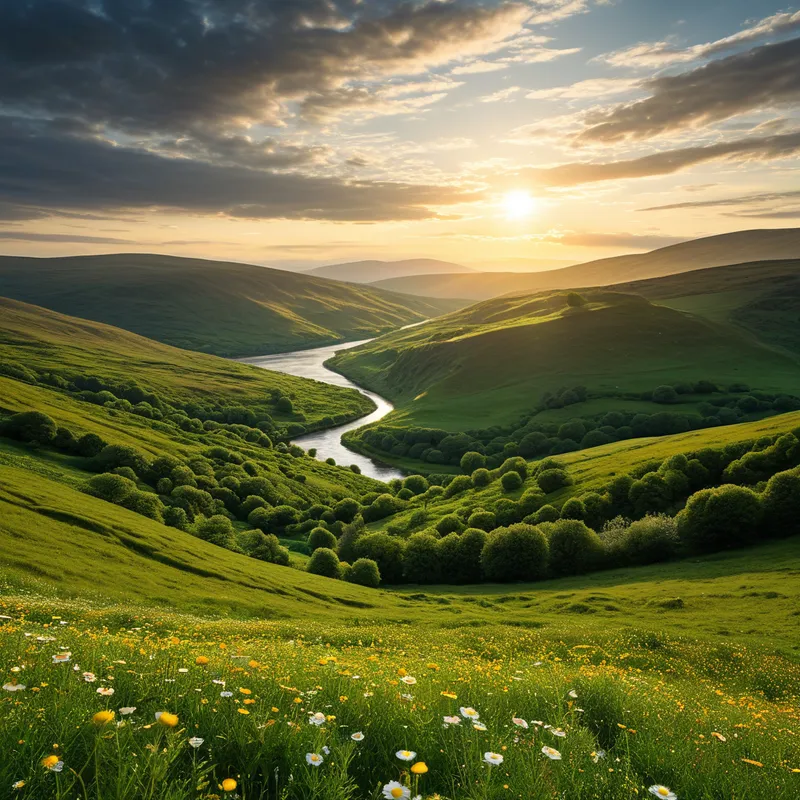
It is not a place for maps of vellum and ink, but for the maps of longing. It lies beyond the rim of the world, a realm of perpetual golden hour, where the grass is eternally emerald and soft underfoot. Rivers of mead and honey wine flow through valleys where the bile trees bear blossoms of silver and fruit that gleams like captured moonlight. There is no sickness there, no age, no sorrow—only the gentle hum of joy and the music of a harp that plays itself. Its king is Manannán mac Lir, who rides the foam-crested waves in his chariot, his cloak a shifting mist that hides the shores of his domain from mortal eyes.
To this land came Oisín, son of the warrior-leader Fionn mac Cumhaill. While hunting with his kin, he saw a figure approaching on a white horse that moved like water over the land. It was Niamh of the Golden Hair, whose eyes held the depth of the summer sky and whose beauty made the world seem faint. She spoke with a voice like a bell: "Oisín, I have crossed the sea for love of your name. Come with me to Tír na nÓg, where the trees bow with fruit, where conflict is unknown, and where we shall never know death or parting."
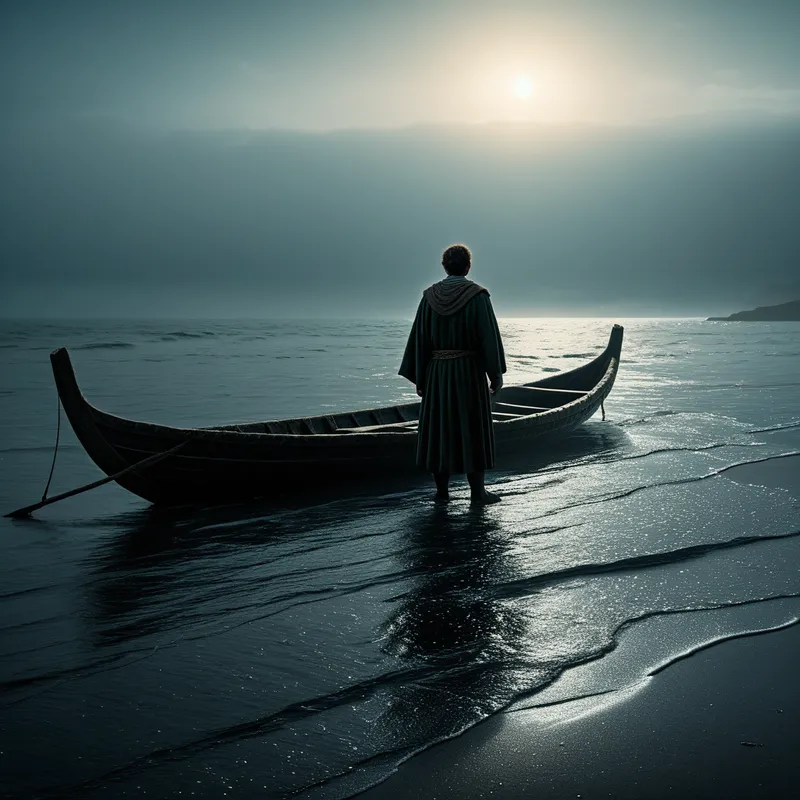
Love, swift and deep as a sword-thrust, took him. He mounted behind her on the magical horse, and it turned towards the roaring western sea. The waves did not wet its hooves; it galloped across the water as if on solid ground. The mist of Manannán closed around them, and for three days they traveled through a world of pearl-grey light and echoing silence, until suddenly, the mist parted.
They broke into the sun. The air was warm and sweet. Before them lay the Summer Lands in all their glory. Oisín was welcomed as a king. He feasted, he hunted strange, gentle beasts, he loved Niamh, and centuries passed like a succession of blissful, identical days. But a thorn had lodged in his heart—a longing for his father, Fionn, and the rough camaraderie of the Fianna on the green hills of Ireland. The joy of Tír na nÓg began to taste faintly of ash.
He begged Niamh to let him return, just for a day. Her eyes filled with a sorrow older than the hills. "The moment your foot touches the soil of Ireland, the centuries you have lived here will fall upon you at once. You cannot return." But his longing was a tide she could not hold back. She gave him the white horse with a terrible warning: "You must not dismount. You must not let your feet touch the earth."
The horse carried him back across the sea. But the Ireland he found was changed. The forts were smaller, the people seemed frail and strange. He asked for Fionn mac Cumhaill, and they spoke of him as a giant from a forgotten age. Despair gripped Oisín. Riding near the Giant's Causeway, he saw a group of men struggling to lift a great stone slab. Leaning from his saddle to help them, his grip slipped. He tumbled from the horse.
The moment he struck the earth, the weight of three hundred years crushed him. The handsome youth withered in an instant into a blind, ancient man, all skin and bone. The white horse gave a final, mournful cry and vanished into a mist, leaving Oisín alone on a foreign shore, the memory of the Summer Lands a cruel, beautiful dream from which he had awoken into dust.
Cultural Origins & Context
The myth of the Summer Lands is not a single, codified text, but a pervasive and shimmering concept woven through the tapestry of Celtic belief, primarily preserved in the later Irish manuscript tradition of the Tuatha Dé Danann and the Fenian Cycle. It is the pinnacle expression of the Celtic sídhe or otherworld—a realm not of the dead, but of the ever-living.
This myth was the province of the fili, the poet-seers. They were not mere entertainers but custodians of cosmic truth and tribal memory. By telling Oisín's tale, they performed a vital societal function: they mapped the geography of the soul. The story explained the palpable presence of the otherworld just beyond the veil of mist, offered a vision of an attainable paradise (for the worthy hero), and served as a profound meditation on the costs of transcendence and the immutable pull of earthly bonds. It was a narrative compass, orienting a culture deeply connected to land and ancestry towards the mysteries that lay beyond its shores.
Symbolic Architecture
At its core, the myth is a masterful depiction of the psyche's structure. The Summer Lands represent the state of psychic wholeness—the Self—where all opposites (joy/sorrow, youth/age, life/death) are harmonized in eternal potential. It is the bliss of undifferentiated consciousness, prior to the ego's birth.
The otherworld is not a place, but a condition of the soul. To reach it is to remember; to leave it is to be born.
Oisín is the human ego, lured by the promise of perfection embodied by Niamh (the anima, the soul-image). His journey is the initial, often ecstatic, phase of introversion and withdrawal from the world to commune with the inner depths. The white horse is the transcendent function, the psychic energy that can bridge the conscious and unconscious realms.
The fatal return and dismounting is the myth's crucial psychological truth. The ego cannot sustain permanent residence in the unconscious paradise. To become a complete individual, one must return to the mortal, imperfect, temporal world—the realm of the ego—and integrate what was found. Oisín's failure is his inability to do this; he seeks a literal return to a past that no longer exists (his old Ireland), rather than bringing the "summer" into his present. His aging is the sudden, catastrophic realization of time and consequence that occurs when an inflated consciousness, having tasted the divine, collapses back into reality without mediation.
The Dreamer's Resonance
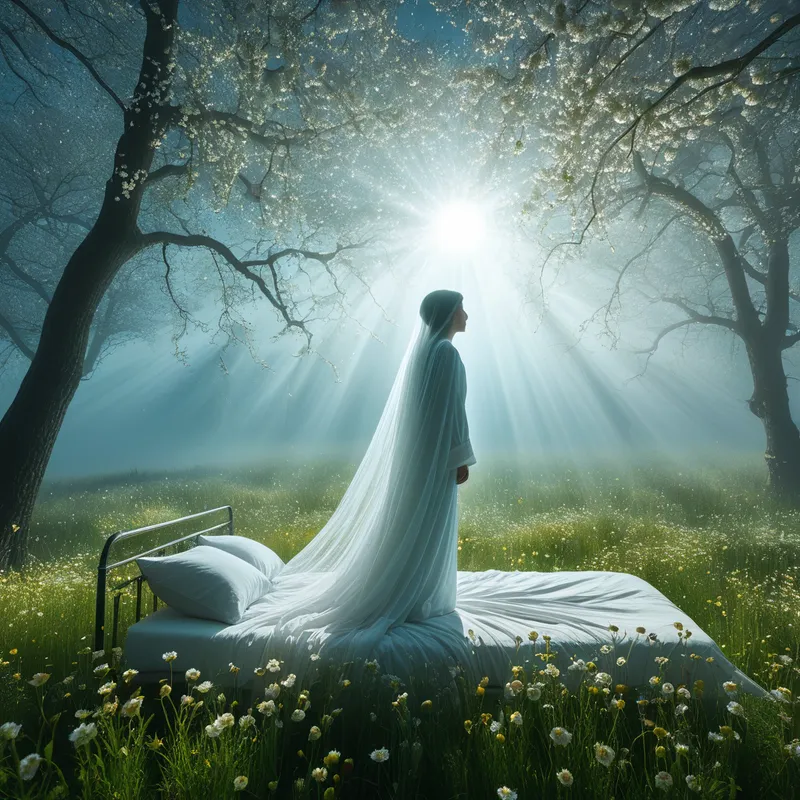
When this myth stirs in modern dreams, it rarely appears as a literal Celtic landscape. Its pattern manifests as dreams of luminous, peaceful places discovered behind a forgotten door; of reuniting with a radiant, all-loving partner in a perfect environment; or of finding a technological or spiritual utopia. The somatic feeling is one of profound relief, weightlessness, and oceanic bliss.
This dream signals a deep psychological process: a retreat from the complexities and conflicts of conscious life. The psyche is seeking respite, healing, and nourishment from the inner wellspring of the unconscious. It is a necessary, restorative phase. However, if such dreams become persistent and are accompanied by a growing dissatisfaction with waking life—a sense that "real life" is a grey, impoverished shadow—it indicates a potential "Oisín complex." The dreamer is in danger of identifying too fully with the inner paradise, using fantasy as an escape, and refusing the harder task of integrating that peace and creativity into their earthly existence. The dream is both a blessing and a warning: here is the wholeness you seek, but you cannot live here forever.
Alchemical Translation
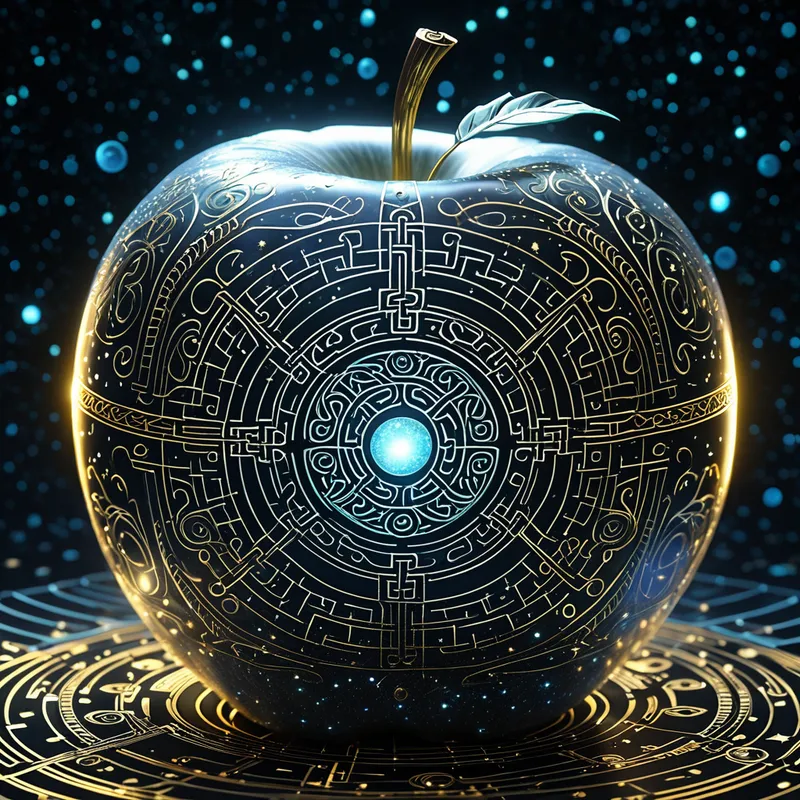
The alchemical journey mirrored in this myth is not about reaching the nigredo or the blackening, but about the peril of the albedo—the brilliant white state of lunar consciousness, of purified spirit. Tír na nÓg is the albedo achieved: the silver apple, the white horse, the radiant Niamh. It is a state of illumination, but it is static, outside of time.
Individuation is not achieved in the eternal summer, but in the courageous return to the autumn world, bearing its fruit.
True psychic transmutation requires the rubedo, the reddening. This is the return of the achieved spirit to the body, to passion, to blood, and to time. Oisín's tragedy is that he bypasses this final stage. The modern individuation process modeled here is a cycle: we must periodically journey inward to the Summer Lands of the Self to remember who we are beyond our roles and wounds. We must drink from that well. But then we must make the conscious, often painful choice to return—not to the past, but to our present life.
We must dismount the white horse of pure spirit carefully, by building a vessel—a creative work, a deepened relationship, a practical application of insight—that can carry the gold of the otherworld back across the sea. The goal is not to stay in the land of no shadows, but to learn how to let that eternal summer light fall upon the very specific, temporal, and shadowed landscape of our own lives, transforming it from within. The true Summer Land is not a destination, but a quality of soul that can, however briefly, illuminate a mortal world.
Associated Symbols
Explore related symbols from the CaleaDream lexicon: