
Orpheus's Lyre Myth Meaning & Symbolism
A musician's divine lyre charms all of creation, but fails to conquer the final law of death, leaving a legacy of transcendent, tragic song.
The Tale of Orpheus's Lyre
Hear now the song that once stilled the raging winds and made the oak trees dance. It begins not with a king, but with a gift from the gods. Apollo himself placed the first lyre into the cradle of his son, Orpheus, and the infant’s touch drew a sound so pure it hushed the birds in envy. Calliope, his mother, breathed into him the words to match the melody. Thus, Orpheus was born twice: of mortal blood and divine harmony.
When he played, the world forgot its nature. Wolves lay down with lambs, not in truce, but in rapturous wonder. Rivers ceased their flow to listen, and stubborn stones rolled gently to his feet, softening their edges. His music was not an entertainment; it was a temporary re-ordering of reality, a spell woven from longing and light. But the heart that conducted this symphony was a mortal one, and it fell utterly to a woman named Eurydice. Her beauty was not like that of the immortals—it was of the earth, quick and vibrant as a darting kingfisher. Their wedding song was his masterpiece, a melody so joyous it seemed to promise a life forever spring.
The promise shattered with a viper’s strike. In a sun-dappled meadow, Eurydice fled an unwanted advance and trod upon the serpent. Her life fled her body not with a cry, but with a sigh, descending to the realm of Hades.
Orpheus’s lyre fell silent. The world, once enchanted, now echoed only his despair. But silence, for him, was a deeper death. Driven by a love that refused the finality of the grave, he did the unthinkable. He walked the path no living soul may tread, descending through the cave of Tainaron into the land of perpetual twilight.
Before the throne of Hades and his queen, Persephone, Orpheus did not plead. He sang. He sang of Eurydice’s laughter, of the emptiness of the sun without her, of love’s right against cold law. His notes, thin and brave in that vast gloom, did what no weapon could. The wheel of Ixion halted. The thirst of Tantalus was forgotten. The Dread Judges wept tears of iron. For the first and only time, the dust of the underworld stirred with the memory of life.
Hades, moved by this impossible music, granted his wish. Eurydice could follow him back to the world of light, on one condition: he must not look back until both had reached the upper air. Hope, a more terrible master than despair, now guided him. Up the dark path they climbed, he listening for the faintest rustle of her step behind him. As the first grey hint of daylight filtered down, a madness of doubt seized him. Was she there? Had the gods tricked him? At the very threshold of life, he turned.
He saw her—for one final, heart-stopping moment. Her eyes held not accusation, but infinite sorrow. Then, like mist before the sun, she was drawn back into the depths, her whispered “Farewell” softer than the closing of a tomb. This time, there was no song left to bring her back.

Cultural Origins & Context
The myth of Orpheus is one of the most layered in the Greek tradition, emerging from the rich soil of Thracian cult practice and evolving through centuries of poetic retelling. It finds its most canonical forms in the works of Ovid and Virgil, but its roots are older and more mystical. Orpheus was considered a historical prophet-figure by some, the founder of the Orphic Mysteries—secret religious rites that promised initiates a better fate in the afterlife through purity and knowledge.
His story was not mere entertainment; it was a foundational narrative for cults that challenged the finality of death. The lyre was his sacred tool, a symbol of the cosmic harmony (harmonia) that, according to Orphic belief, underlay all creation and could, if accessed, influence even the gods of the dead. Bards and rhapsodes would recite his descent, performing a kind of sonic ritual that allowed listeners to vicariously confront the ultimate boundary. The myth served societal functions of exploring the limits of human art, the agony of loss, and the profound question of whether beauty alone can alter fate.
Symbolic Architecture
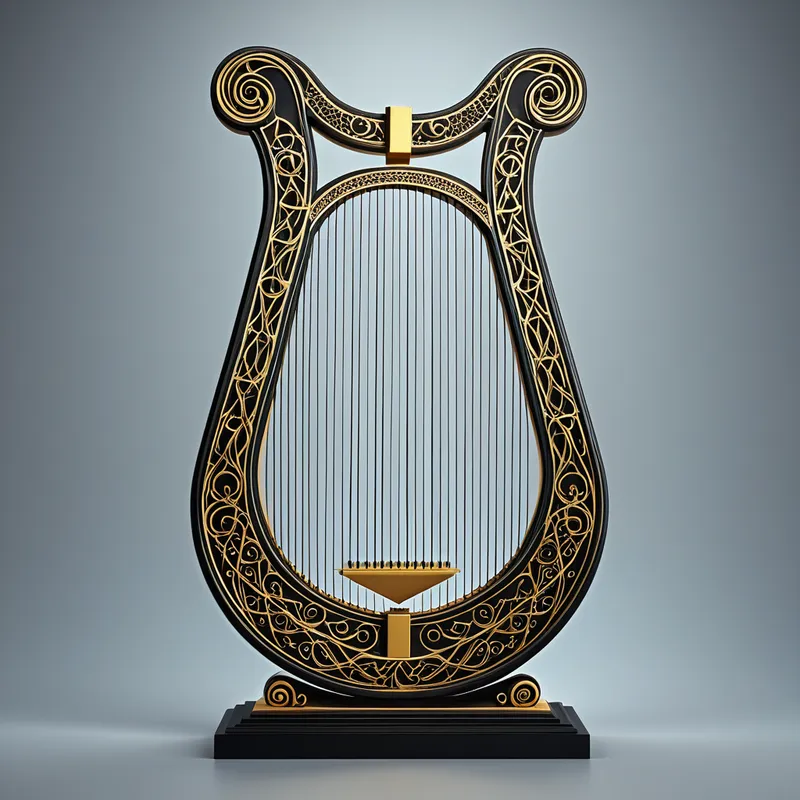
Orpheus’s lyre is the central symbol of the myth, representing the unifying power of consciousness—specifically, the conscious ego—to bring order to the chaos of the inner and outer worlds. Its music charms the beasts (the untamed instincts), moves stones (the inert complexes), and bends rivers (the flow of emotion). It is the force of culture, art, and reason.
The lyre does not destroy the wild; it temporarily suspends its laws, revealing a latent unity beneath apparent conflict.
His descent is the heroic ego’s journey into the unconscious, here figured as the underworld. He goes not to conquer, but to retrieve his anima, Eurydice, who represents the soul-connection to life, spontaneity, and eros that has been tragically lost. His success in moving Hades demonstrates the tremendous power of the directed, conscious mind (the song) to negotiate with the deepest, most autonomous structures of the psyche.
The fatal glance backward is the myth’s tragic core. It is not mere doubt, but the moment the conscious mind, unable to trust the process of unconscious integration, attempts to observe the retrieved content directly. This act of premature conscious scrutiny “kills” the nascent connection, sending it back into the depths. The law of Hades is the law of the unconscious: its contents can be integrated only through faith and indirect attention; stared at directly, they dissolve.
The Dreamer's Resonance
When this mythic pattern stirs in modern dreams, the dreamer is often in a profound state of psychic retrieval or delicate integration. Dreaming of a mesmerizing instrument whose music alters the environment suggests the dreamer is discovering or wielding a new capacity for emotional or creative expression that is harmonizing previously discordant parts of their life.
Dreams of a lost loved one who can be brought back only by following a strict, irrational rule point directly to the Orphic ordeal. The dreamer is attempting to recover a vital but lost aspect of themselves—a sense of joy, creativity, or passion (their Eurydice)—from the shadowy recesses of neglect or trauma. The somatic feeling is often one of intense, anxious hope coupled with a terrifying constraint. The critical moment in the dream—the turn, the glance, the sudden loss—manifests the psyche’s warning: the old, controlling habits of the conscious ego (doubt, analysis, impatience) threaten to sabotage a fragile, emerging wholeness. The ensuing grief upon awakening is not just for the dream image, but for the sensed opportunity for healing that feels, once again, out of reach.
Alchemical Translation
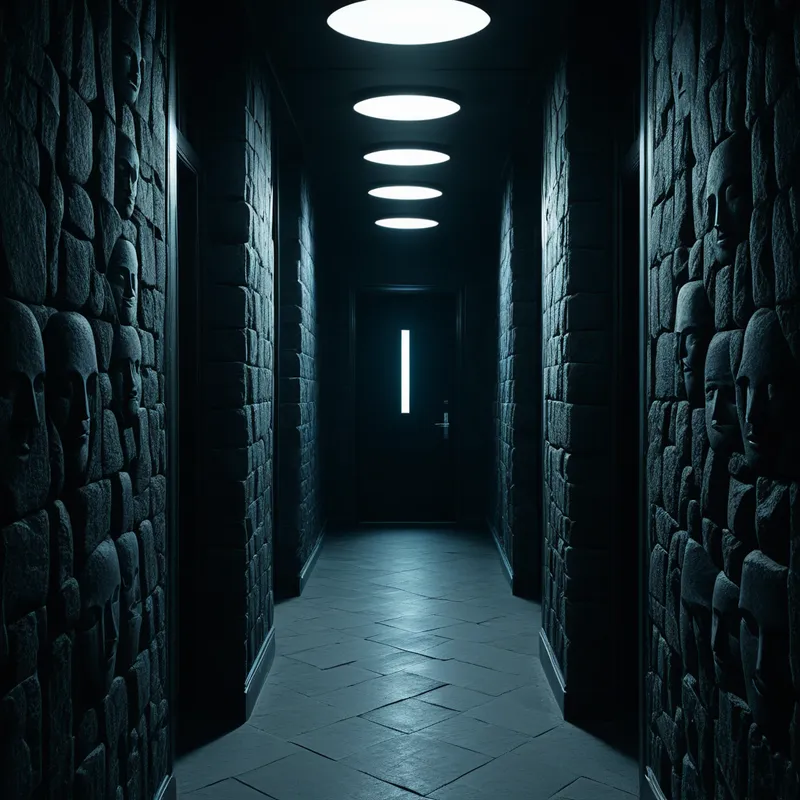
The alchemical process mirrored in Orpheus’s journey is the nigredo, the descent into darkness and putrefaction, followed by the failed but instructive albedo. Orpheus undergoes the ultimate nigredo: the loss of his soul-connection and his voluntary entry into the psychic abyss. His song in the underworld is the first stirring of the albedo—a whitening, a spiritualization of his grief into a power that can move the immovable.
His failure at the threshold is not the end of the work, but its most crucial lesson.
The true alchemical gold is not the retrieved beloved, but the transformed musician. The lyre that failed to keep Eurydice becomes the instrument that forever changes the one who played it.
After his loss, Orpheus’s music is forever altered. It is no longer merely charming but profoundly tragic, turning men’s hearts toward the mysteries of life and death. He becomes a prophet, a mystic. For the modern individual, the myth models that the goal of individuation is not the perfect, permanent retrieval of lost parts (which would be a kind of psychic imperialism), but the transformation of the conscious personality through the attempt. We are to make the descent, sing our song to our deepest wounds and complexes, and undertake the difficult ascent with what we have integrated. Even if we “look back” and fail a thousand times, the very engagement transmutes the raw lead of our suffering into the resonant gold of deeper understanding and compassion. Our lyre, though it may carry a note of eternal sorrow, gains a depth that can truly speak to the soul of the world.
Associated Symbols
Explore related symbols from the CaleaDream lexicon: