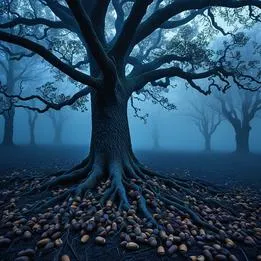
Oak
The Oracle's Essence
A symbol of strength, endurance, and deep-rooted stability, often representing inner fortitude and emotional resilience.
Interpretive Themes
Modern Visibility
In modern contexts, the oak is often seen as a symbol of environmental conservation and personal strength, representing durability in a fast-changing world.
◈ Mythological Resonance
Koschei the Deathless Myth Meaning & Symbolism
Slavic traditionThe ancient, steadfast world tree; it represents the deep-rooted, protective structures of tradition, family, and the unconscious that often hide our most precious secrets.
Cultural Lenses
Jungian
Learn More →Represents the Self archetype - wholeness and integration of personality. The oak's deep roots symbolize connection to the collective unconscious, while its height represents spiritual aspiration.
Freudian
Learn More →Phallic symbol representing masculine energy and paternal authority. The acorn may symbolize potential or seeds of thought, while the trunk represents erectile strength and vitality.
Gestalt
Learn More →Represents the dreamer's own qualities projected onto the tree. The oak's characteristics (strength, stability) reflect aspects of self the dreamer recognizes or aspires to embody.
Cognitive
Learn More →Mental schema for stability and reliability. The oak activates neural networks associated with durability, serving as cognitive metaphor for emotional resilience and problem-solving capacity.
Evolutionary
Learn More →Survival advantage symbol - represents reliable shelter, food source (acorns), and landmark. Triggers ancestral memory of safety and resource availability in natural environments.
European
Learn More →Sacred to Druids and Celts as a tree of wisdom and sovereignty. In Norse mythology, Yggdrasil connects worlds. Historically represents endurance and national identity in many European cultures.
North American
Learn More →Symbol of liberty and strength (Liberty Tree). For many Native American tribes, represents wisdom, with acorns as sustenance. Modern symbol of environmental conservation and heritage.
East Asian
Learn More →In Chinese tradition, represents strength and longevity, often associated with autumn. In Japan, sacred in Shinto shrines as dwelling place for kami (spirits), symbolizing divine protection.
Middle Eastern
Learn More →In Abrahamic traditions, represents God's strength and righteousness. In Islamic tradition, symbolizes steadfast faith. Historically, acorns were famine food, representing divine provision in hardship.
African
Learn More →In many traditions, represents ancestral connection and community gathering place. The baobab (African 'oak') symbolizes life, with hollow trunks used for rituals and meetings, representing communal wisdom.
Latin American
Learn More →In Mesoamerican cultures, the ceiba (sacred tree) connects underworld, earth, and heavens. In modern contexts, represents resistance and cultural endurance against colonial disruption.
Global/Universal
Learn More →Nearly universal symbol of strength, endurance, and wisdom across cultures. Represents the World Tree archetype connecting different realms of existence, from Norse Yggdrasil to Hindu Ashvattha.
Contextual Nuances
Climbing oak
Overcoming emotional obstacles.
Falling oak
Foundation being threatened.
Sitting under oak
Seeking emotional refuge.
Planting oak sapling
Nurturing new beginnings.
Oak in storm
Testing emotional resilience.
Questions for Reflection
- "Where in your life do you need more oak-like strength and stability?"
- "What emotional roots are you currently deepening or examining?"
- "How might this oak represent aspects of your personality or life journey?"
Related Weavings
The Portal is Always Open
Every dream is a personalized dispatch from the deep. Don't let yours fade into static.
Interpret Full Dream