Myrmidons Myth Meaning & Symbolism
A king's prayer for an army is answered by Zeus, who transforms a colony of pious ants into the fiercely loyal, disciplined Myrmidon warriors.
The Tale of Myrmidons
Hear now the tale of a land laid waste, a king in despair, and an army born not of woman, but of earth and ash.
The island of Aegina was once a jewel of the Aegean, blessed with laughing children and fields heavy with grain. But Zeus, in his passion for the nymph Aegina, had drawn the jealous gaze of his wife, Hera. Her wrath was a silent, creeping poison. She sent a pestilence upon the island, a mist that carried not life-giving dew, but the breath of the grave. It touched high-born and low, warrior and shepherd, until the streets echoed only with the dirge of funeral rites. The king, Aeacus, stood upon the citadel, a ruler with no one left to rule. The altars of the gods grew cold. The wind carried only the scent of cypress and decay.
In his utter desolation, Aeacus climbed to the highest sanctuary, a grove sacred to his father, Zeus. He did not bring grand offerings of gold or fattened bulls, for there were none. He brought only his broken sovereignty and a heart scraped raw by grief. He threw his arms around the altar of Zeus, its stone warmed by a sun that seemed to mock the death below. His prayer was not a petition, but a lamentation woven from dust and memory. "Father! If I am truly your son, restore my people, or take me into the earth with them! Let the stones cry out with life once more!"
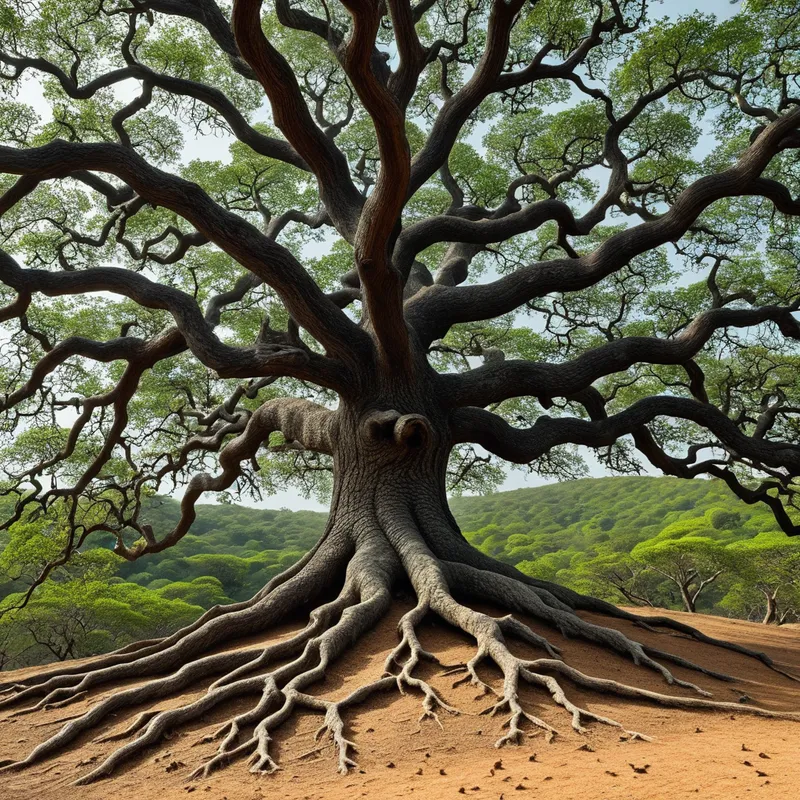
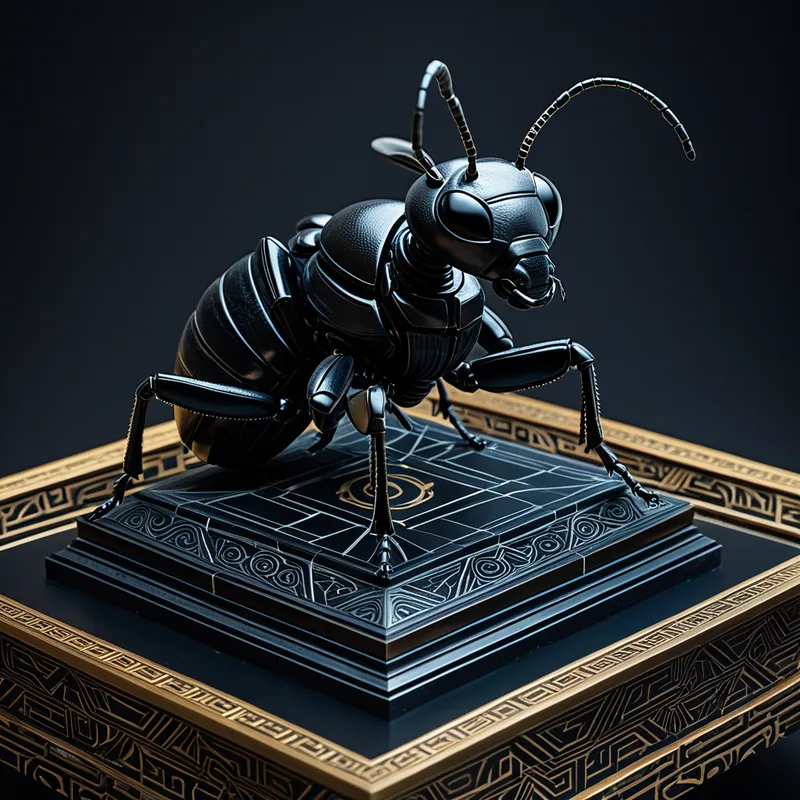
As his tears fell upon the roots of a great sacred oak, his eye was caught by a movement. A column of ants, countless in number, swarmed over the tree's bark. They were tireless, disciplined, each carrying a grain of sand ten times its size, working in perfect, silent unity for the life of their colony. A desperate, wild hope—a god-sent thought—pierced Aeacus’s despair. "O greatest Father," he whispered, his voice cracking, "grant me as many loyal subjects as these creatures upon your tree, to fill my empty city!"
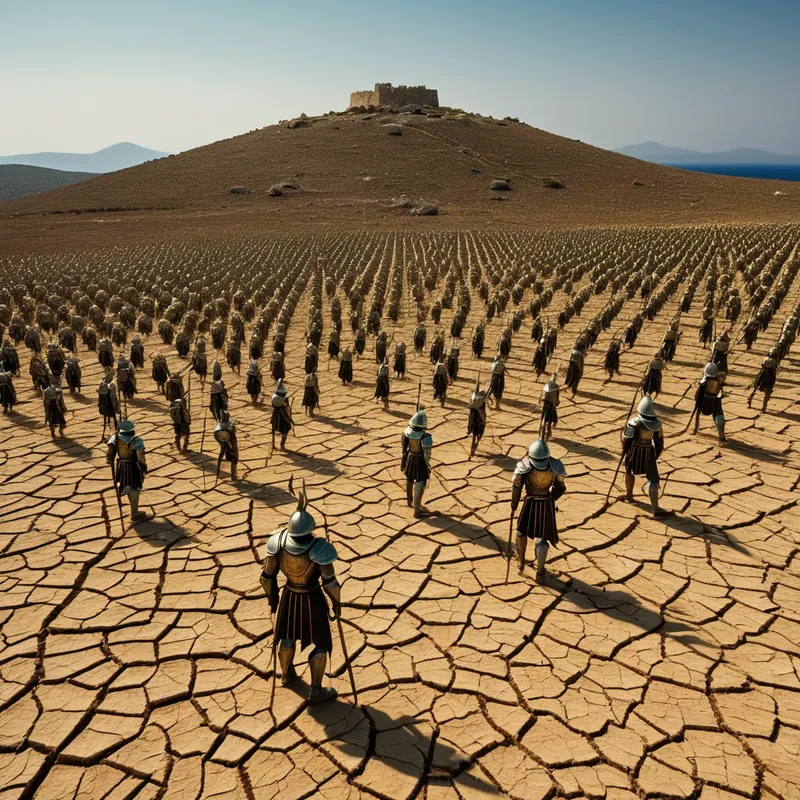
A peal of thunder, clear and singular, split the silent sky. No cloud marred the blue. It was an answer. That night, Aeacus dreamed of the oak tree, its branches now heavy not with leaves, but with the forms of men, curled like buds. At dawn, he was awakened by a sound he had forgotten: the murmur of a crowd. Rushing to his window, he saw the plain below stirring. The earth itself seemed to be giving birth. From the soil, from the roots of the sacred grove, men were rising. They shook the dirt from their hair, which was the color of dark soil. Their eyes were sharp and focused. They moved with a strange, precise economy, forming ranks without a word being spoken. They were strong, hardy, and looked to him, their king, with an instinctive, unwavering loyalty. They were his people, born anew from the ant—the myrmex—and so he named them Myrmidons.
And so the island lived again, not with its former careless joy, but with the fierce, industrious spirit of the colony. These new men built, fought, and obeyed with a unity that was both magnificent and unsettling. They became the most formidable of warriors, their legacy carried forth by Aeacus’s son, Peleus, and ultimately, by the greatest of their number, Achilles, whose personal band of warriors kept the name Myrmidon, a living echo of that miraculous, somber day when an army was prayed into being from the patient earth.
Cultural Origins & Context
The myth of the Myrmidons is primarily preserved in the works of the Latin poet Ovid in his Metamorphoses, a tapestry of transformation tales. While its Greek precursors are fragmentary, the story is deeply rooted in the Greek worldview, serving multiple societal functions. It operates as an aition—a mythic explanation for origins—accounting for the name and famed character of the historical Myrmidon tribe of Thessaly, known in the Homeric epics as the fiercely disciplined troops of Achilles.
The narrative validates leadership and social order. Aeacus, a just king and son of Zeus, is rewarded for his piety and desperate fidelity. His prayer is answered not with a resurrection of the old, disordered humanity, but with the creation of a new, ideal populace defined by loyalty and collective purpose. In a culture that prized civic duty and military cohesion, the Myrmidons represented the perfect citizen-soldier: instinctually obedient, resilient, and placing the good of the whole (the polis, the army) above the individual. The myth also reflects the Greek understanding of a deep, sacred connection between a people and their land—literally, being born from its soil and its creatures.
Symbolic Architecture
At its core, the Myrmidon myth is a profound allegory of psychic transformation under the pressure of catastrophic loss. The plague sent by Hera represents not merely divine punishment, but the inevitable descent of the conscious ego (the kingdom) into a state of utter annihilation, where all previous structures of identity and relationship are wiped out.
The most profound creations of the psyche are often born from the total ruin of what came before. The ego must be emptied to make room for the Self.
Aeacus’s prayer at the altar of Zeus symbolizes the ego’s surrender to a higher, paternal authority—the Self. He does not ask for a return to the past, but for a new form of life altogether. The ants are the perfect symbol of the raw material for this rebirth. They represent the unconscious, instinctual psyche in its most organized, pre-conscious form: all tireless labor, social programming, and survival intelligence, devoid of individual personality. Their transformation into men is the alchemical moment where raw instinct is humanized—infused with spirit (Zeus’s will) to create a new order of consciousness.
The resulting Myrmidons symbolize the persona—the adaptive, social mask—taken to an archetypal extreme. They are the collective identity forged in crisis: efficient, loyal, and powerful, but carrying the shadow of their origin. They lack individuality, spontaneity, and the messy vitality of the old, pre-plague humanity. They are the psyche’s army, formidable in service to a king or a cause (Achilles), but potentially tyrannical if that collective identity becomes the totality of the self.
The Dreamer's Resonance
To dream of the Myrmidons or their ant-like nature is to encounter the psyche’s process of rebuilding after a profound dissolution. This may follow a personal "plague": a job loss, the end of a relationship, a burnout, or any event that obliterates one's former sense of self and community.
Somatically, the dreamer may feel a sense of being an automaton, moving with precision but without joy, or conversely, may feel like a lone individual observing a terrifyingly efficient, faceless swarm. Psychologically, this dream pattern signals a phase where the unconscious is mobilizing immense resources for survival and reconstruction. The ego is being asked to adopt a disciplined, perhaps impersonal, mode of operation to get through a crisis. The shadow here is the danger of over-identifying with this "ant-man" persona—becoming nothing but a loyal soldier in one's own life, sacrificing all individuality, creativity, and emotional depth at the altar of pure function and duty. The dream asks: What has died in you? And what new, disciplined, but potentially soulless army is rising from its ashes?

Alchemical Translation
The individuation journey modeled by the Myrmidon myth is not one of glorious heroism, but of humble, collective transmutation. The prima materia is the shattered, plague-stricken kingdom of the old personality. The first stage (nigredo) is the despair of Aeacus, the total blackness of loss.
The king’s prayer represents the crucial turning point (albedo), a moment of pure, distilled intention directed toward the transcendent function (Zeus). He does not look back, but finds his symbol for new life in the here-and-now—the ants. This is the ego aligning with a pattern of instinctual intelligence already present within the unconscious.
The alchemical gold is not the glorious hero, but the functional, resilient community of the psyche, forged in the crucible of shared ordeal.
The transformation (citrinitas and rubedo) is the miraculous emergence of the Myrmidons. Psychically, this is the formation of a new, cohesive inner structure. The raw, swarm-like energies of the unconscious (drives, habits, neural pathways) are organized and raised to a conscious level, becoming a disciplined "army" of talents, routines, and resilient coping mechanisms that serve the reborn Self (the kingship of Aeacus).
For the modern individual, the triumph is not in becoming a singular Achilles, but in becoming a capable Aeacus—a ruler who can hold the tension between despair and hope, and midwife the emergence of a new, functional self from the raw materials of crisis. The final stage is integrating the lesson of the Myrmidon’s origin: to wield this formidable inner discipline and collective strength without forgetting the individual spark, the unique soul that must eventually emerge from the ranks to question, to feel, and to lead not just an army, but a fully human life.
Associated Symbols
Explore related symbols from the CaleaDream lexicon: