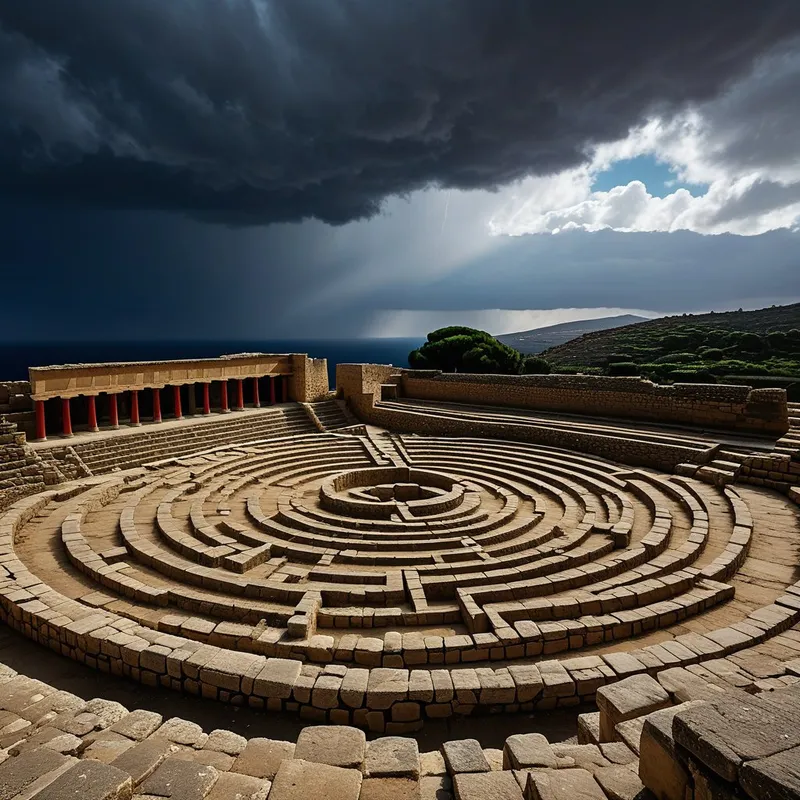
Daedalus's Labyrinth Myth Meaning & Symbolism
The myth of the master craftsman Daedalus, the monstrous Minotaur, and the inescapable Labyrinth he built, a story of genius, confinement, and the soul's descent and return.
The Tale of Daedalus's Labyrinth
Hear now of the fall of a god among men, and the prison he built from his own pride. In the sun-drenched halls of Knossos, where the sea’s salt kissed the air, there lived Daedalus, the master craftsman. His hands were blessed by Athena herself; they could coax flight from wood and trap beauty in stone. But genius is a double-edged sword. For aiding in a transgression against the king, he and his young son, Icarus, were cast into the very heart of his own creation: the island of Crete, ruled by the formidable King Minos.
And Minos had a secret, a shame born of divine wrath. His queen, Pasiphaë, had been cursed with a monstrous desire for a magnificent bull sent by Poseidon. From that unholy union was born a creature of nightmare—part man, part bull, all rage. They named him the Minotaur. The beast’s roars shook the palace foundations; its hunger could not be sated by ordinary means.
King Minos turned to his brilliant prisoner. “Daedalus,” he commanded, his voice like grinding stone, “build me a container for this chaos. A place from which it can never escape, and into which none who enter may return.” Not a simple prison, but a confession in architecture. Daedalus, his freedom the price, bent his mind to the task. He designed not walls, but a winding. Not a cage, but a convolution. The Labyrinth was born—a vast, stone puzzle where every corridor lied, every turn deceived. The path to its center was a secret known only to its maker. Into this stone intestine, the Minotaur was thrust, and the echoing bellows grew muffled, swallowed by endless, identical passages.
Yet the beast demanded tribute. To atone for the death of his son, King Minos of Athens sent seven youths and seven maidens each year into the Labyrinth’s maw, a harvest for the monster. The stone drank their terror. This was the world’s order, a brutal balance maintained by Daedalus’s terrible art.
Until a hero came. Theseus, prince of Athens, volunteered as tribute. But love, in the form of Minos’s daughter Ariadne, intervened. Seeing the hero, she sought Daedalus’s counsel. The craftsman, his heart perhaps weary of his creation’s purpose, gave her the answer: a simple skein of thread. “Tie one end to the entrance,” he whispered. “Let the ball unravel as you walk. The path in will become the path out.”
In the suffocating dark, Theseus played out the thread, a slender lifeline through insanity. The Minotaur’s hot breath found him in the heart of the maze. There was a clash of bronze and bestial fury, a triumph of focused will over primal chaos. Then, gripping the bloodied thread, the hero retraced his steps, leading the surviving Athenians from the belly of the stone beast, following the wisdom of the maze-maker back into the light.
And Daedalus? He watched his solution used to defeat his creation. Enraged, Minos sealed the artist and his son in a tower, a simpler prison. But a mind that outwitted a labyrinth cannot be caged by mere walls. Looking to the birds, Daedalus fashioned wings of feathers and wax. “Follow my path, son,” he warned Icarus. “Fly the middle course.” But that is a tale of another kind of fall. The Labyrinth remained, a silent, empty monument to a contained monster and the ingenious, trapped spirit who built it.
Cultural Origins & Context
The myth of Daedalus and the Labyrinth is not a single, frozen story but a living tradition woven through various strands of Greek culture. It appears most famously in the epic narratives of poets like Homer and later in the detailed compilations of writers such as Ovid and Apollodorus. It functioned as an etiological myth, explaining the origins of Athenian tributes to Crete and glorifying the heroic lineage of Athens through Theseus.
More profoundly, it resonated with the Greek architectural and spiritual imagination. The real, complex palaces of the Minoan civilization on Crete, with their sprawling, multi-roomed layouts, likely inspired the idea of the inescapable maze. The myth served as a cultural container for deep anxieties about the monstrous, the “other” within the self and the state, and the terrifying cost of divine displeasure. It was a story told to explore the limits of human ingenuity (Daedalus), the perils of hybris (Icarus, Pasiphaë), and the necessity of the heroic journey into the unknown (Theseus). It asked: What monstrous things do we create, and what must we descend into to destroy them?
Symbolic Architecture
The Labyrinth is the central symbol, and it is not a maze. A maze is a puzzle with false turns and dead ends designed to confuse. A classical labyrinth, like the Cretan Labyrinth, has a single, winding but unbranching path that leads inexorably to the center and back out again. It is a mandala of the psyche.
The Labyrinth is not a trap for the body, but a map for the soul. Its winding path is the circuitous journey of consciousness into the unconscious.
The Minotaur, named Asterion (“starry one”), represents the primal, untamed shadow—the bestial complex born from a denied or cursed instinct (Pasiphaë’s desire). It is not evil, but undifferentiated, raw energy confined in the dark center of the self. Daedalus is the archetypal Creator, the ego’s brilliant capacity to structure and contain the overwhelming contents of the psyche. Yet his creation imprisons him; the intellect, when in service to a tyrannical power (Minos), builds its own cage.
The thread of Ariadne is the symbol of relatedness, the connecting principle often associated with the feminine or the anima. It is not brute force, but insight, memory, and connection that guides the hero through the inner chaos.
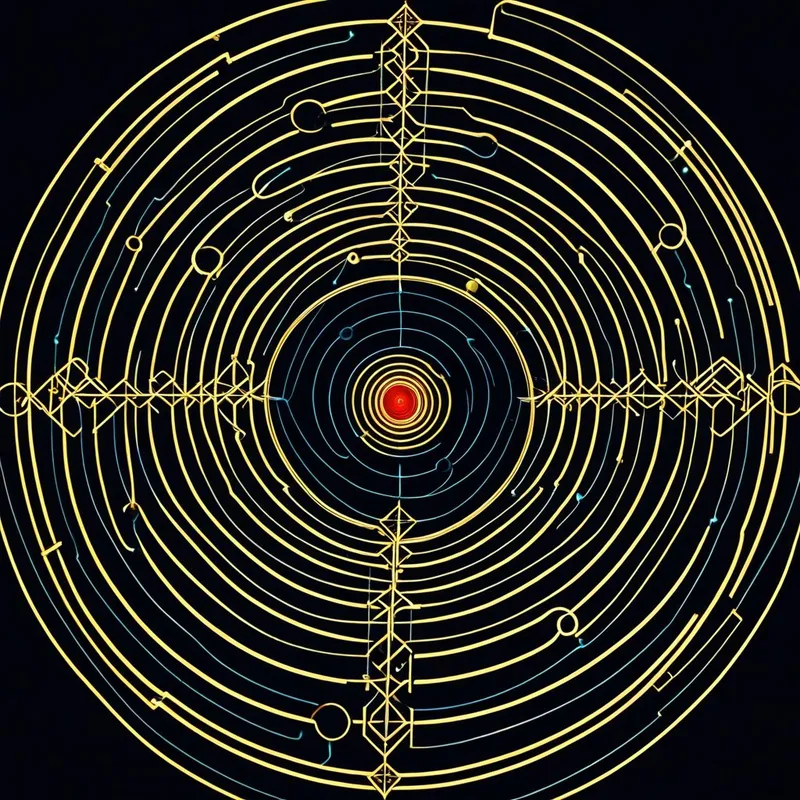
The Dreamer's Resonance
When the Labyrinth appears in modern dreams, it signals a profound encounter with the personal unconscious. The dreamer is not lost in a city, but in themselves. The somatic experience is often one of mounting anxiety, a tightening in the chest, a feeling of being turned around in a space that feels both vast and claustrophobic.
Dreaming of walking its passages suggests a necessary, if frightening, process of introspection—a descent into a complex problem, a repressed memory, or a tangled emotional state. The Minotaur in a dream is rarely a literal monster; it is the overwhelming feeling of rage, shame, desire, or grief we have walled away in the center of our being. To confront it is the work of the dream-Theseus. The dream may offer its own “thread”: a guiding voice, a remembered feeling of safety, or a sudden intuitive understanding of the path. To dream of building a labyrinth points to the ego’s attempt to over-structure, over-control, and ultimately imprison a vital part of the self.
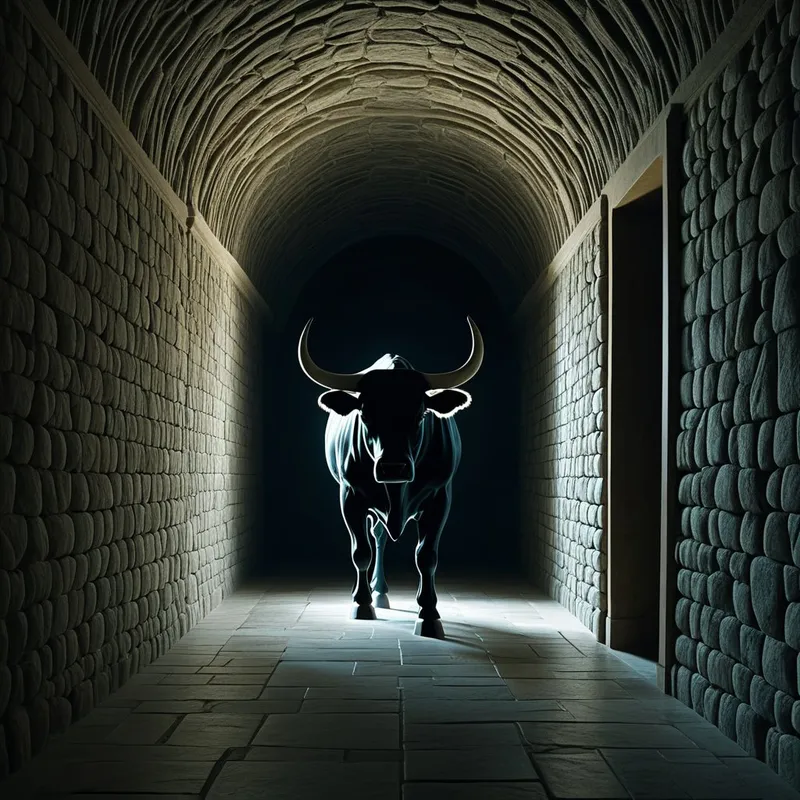
Alchemical Translation
The myth models the alchemical process of individuation—the journey toward psychic wholeness. The initial state is one of oppressive order (Minos’s rule) built upon hidden chaos (the Minotaur). The ego (Daedalus) is complicit in this repression, using its genius to create a sophisticated defense system (the Labyrinth).
The hero’s journey is not about slaying the monster, but about metabolizing it. Theseus does not reason with the Minotaur; he engages it fully, integrating its raw power into his conscious identity.
The call to adventure is the recognition that this containment is failing, causing suffering (the Athenian tributes). The descent into the Labyrinth is the nigredo, the dark night of the soul, where one confronts the shadow in its lair. Ariadne’s thread is the sustaining spark of consciousness or the therapeutic alliance that prevents dissolution. The confrontation and “slaying” are the violent but necessary breaking down of an old, autonomous complex.
The return, following the same thread, is the albedo—the bringing of that reclaimed energy back into the light of day, transforming the personal identity. Daedalus’s subsequent flight represents the next stage: the liberated creative spirit, having understood the dangers of both confinement (the Labyrinth) and unchecked ascension (Icarus’s flight), seeks a new, conscious relationship with the heavens. The empty Labyrinth remains, not as a active prison, but as a remembered structure—a testament to the path one had to walk to become whole.
Associated Symbols
Explore related symbols from the CaleaDream lexicon: