Pandora's Pithos Myth Meaning & Symbolism
A divine punishment brings a sealed jar to humanity. Its opening unleashes all evils, leaving only hope trapped within.
The Tale of Pandora's Pithos
In the beginning, after the great war of the gods, the world was young and men walked the earth without women. They lived free from sorrow and weary toil, free from the ravages of disease. This was the Age of Gold, a time of peace that vexed the king of the new gods. For Prometheus had dared to love these creatures of clay more than the dictates of Zeus, and for his theft of celestial fire, a terrible price would be exacted—not from the Titan, but from those he sought to protect.
So Zeus summoned the divine artisans. Hephaestus took earth and water, and with careful hands, he molded the first woman. He shaped her not from brute matter, but with a form of breathtaking beauty, equal to the immortal goddesses. Aphrodite breathed upon her, granting her grace and desire that would weaken the knees of men. Athena clothed her in a shimmering silvery gown and taught her skilled weaving. Hermes was given a final, fateful instruction: to plant in her heart a shameless mind and a deceitful nature, and to gift her with persuasive speech. They named her Pandora, "All-Gifted," for each Olympian had contributed to her making—a masterpiece of divine vengeance.
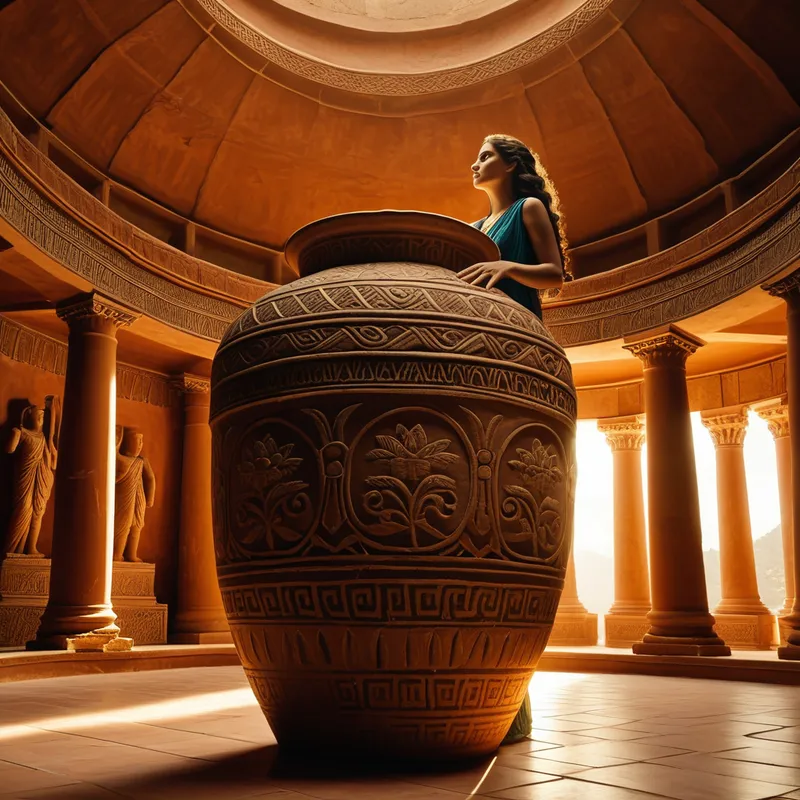
She was presented to Epimetheus, he who thinks after. Though his stolen brother had warned him to accept no gift from Zeus, Epimetheus was undone by her radiance. He welcomed her, and with her, she brought a dowry from the gods: a great pithos. It was not a small trinket, but a massive jar of baked clay, as tall as a man, its surface sealed tight with a heavy, fitted lid. A solemn charge accompanied it: This is not for you. It must never, ever be opened.
For a time, life continued. But the gift of Hermes worked within Pandora. A burning curiosity, a needling whisper, grew daily. What splendors lay within? What divine treasures had the gods sent for them, locked away? The sealed jar stood in their dwelling, a silent, immense presence. It seemed to hum with a promise, to cast a shadow that stirred her soul. The "why not" became a siren song louder than any warning.
One day, as Epimetheus was away, the whisper became a command. She approached the great jar. Her hands, skilled from Athena’s teaching, found the rim of the heavy lid. With a mix of terror and irresistible compulsion, she leaned her weight against it. The seal broke with a sound like a sigh.
It was not treasure that erupted.
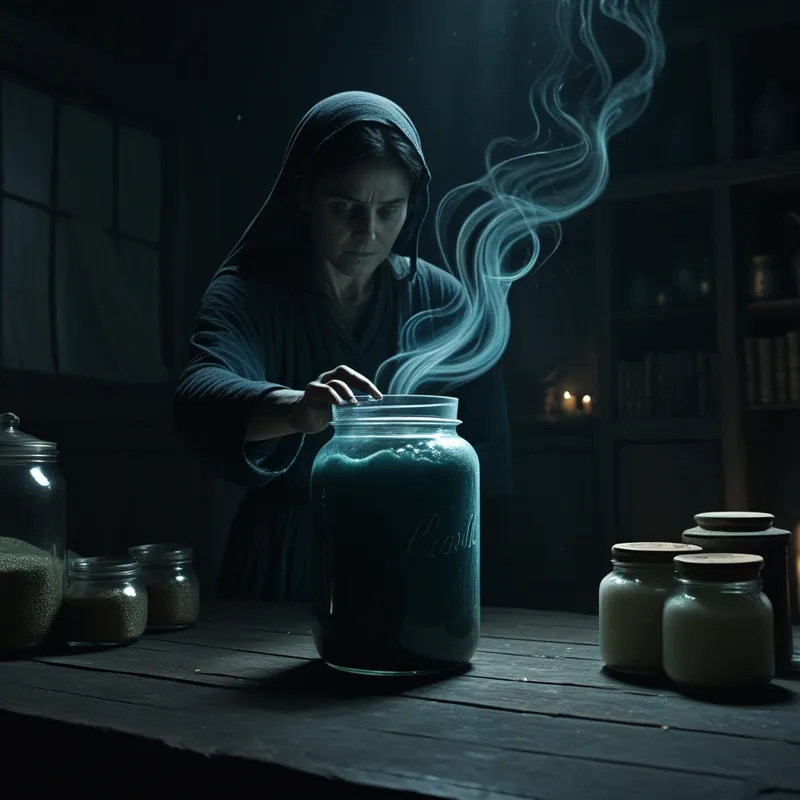
A hideous, shrieking vortex burst forth—a tangible miasma of all the sorrows the gods had crafted in secret. Grievous Toil and Pestilence took solid form, swirling into the air. Grief and Rage, sharp as blades, followed. Fright and Old Age poured out, along with countless other miseries with no name. They were not mere concepts but living shadows, spreading across the earth to find a home in the hearts of men for all time. The golden age was shattered in a single breath.
Terrified, Pandora slammed the lid back down. The chaos ceased. The room fell silent, but the world outside was forever changed. Only one thing remained, trapped under the heavy rim of the lid, too slow to escape: Elpis. And there, within the now-empty jar, it stayed.
Cultural Origins & Context
The myth of Pandora’s Pithos is a foundational aetiology for human suffering, primarily preserved in the epic poetry of Hesiod, a Greek poet of the 8th or 7th century BCE. He recounts it in two works: Theogony and, in greater detail, Works and Days. For Hesiod, a farmer living in a world of hard labor and injustice, the myth served a profound societal function. It was not mere entertainment but a sacred explanation for the human condition—why life is filled with back-breaking work, disease, and sorrow. It positioned these evils as an intrinsic part of the cosmic order, a divine punishment for Prometheus’s defiance.
The story was passed down orally by bards and rhapsodes before being codified by Hesiod. Its telling reinforced a patriarchal worldview, explaining the "origin" of women as a beautiful curse, a necessary evil for procreation that also brought trouble. The pithos itself was a familiar object in daily Greek life—a large storage jar for grain, oil, or wine. Its translation as a "box" came much later, from the 16th-century humanist Erasmus. This grounding in everyday reality made the myth’s supernatural terror more potent. It taught obedience to divine will (Zeus) and warned against the dangers of unchecked curiosity and the deceptive nature of beautiful gifts.
Symbolic Architecture
The myth is a dense symbolic blueprint of the human psyche and its relationship to the unknown. Pandora is not merely a character but the embodiment of Inquisitive Consciousness. Crafted by all the gods, she represents the totality of human potential—beauty, skill, cunning, and duplicity. She is the awakened mind that questions the imposed taboo.
The sealed pithos is the ultimate symbol of the Unconscious Container. It holds everything that is not known, everything that has been locked away by divine (or parental, or societal) decree. It promises wholeness but threatens chaos.
To open the vessel is to initiate consciousness, and consciousness is born in tandem with the recognition of suffering.
The evils that escape are the inevitable pains of embodied, aware existence: the knowledge of mortality (Old Age), the burden of responsibility (Toil), the capacity for emotional pain (Grief, Rage). They are not external invaders but latent potentials within the human condition, released the moment awareness dawns. Finally, Elpis, remaining inside, is the most complex symbol. Is Hope a merciful comfort, left to help humanity endure its newfound burdens? Or is Hope itself the final, cruelest evil—a false promise that keeps us striving in a world of suffering? The myth masterfully holds both interpretations in tension.
The Dreamer's Resonance
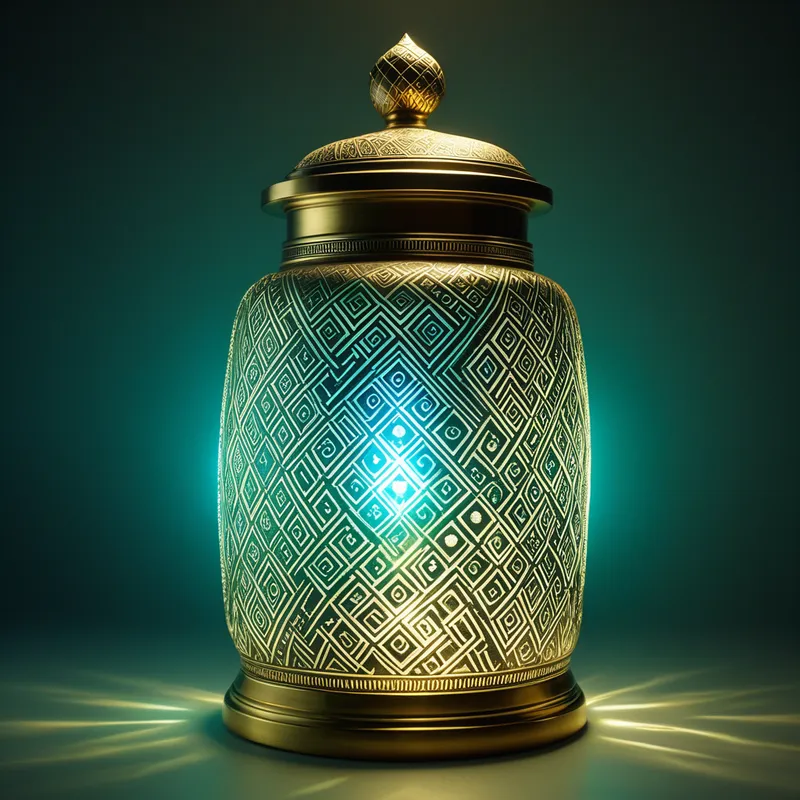
When this myth stirs in the modern dreamer, it often manifests as dreams of forbidden rooms, locked chests, or sealed containers that the dreamer feels compelled to open. There is a somatic quality of tense anticipation, a knot in the stomach alongside irresistible pull. The dreamer may stand before a door in their own home they never noticed, or hold a key that fits a forgotten lock.
Psychologically, this signals a critical moment of confrontation with the personal or collective shadow. The "pithos" is the dreamer’s own repressed material—traumas, unacknowledged desires, inherited pains, or creative potentials deemed too dangerous to release. The act of opening is the ego’s decision, however fraught, to engage with this material. The subsequent eruption in the dream—whether as monsters, black smoke, or a shocking revelation—mirrors the initial, often overwhelming, flood of awareness that comes with shadow-work. The dream may end with the dreamer desperately trying to close the container, representing the psyche’s initial resistance to integrating what has been seen. The presence of a single, remaining light or comforting object inside the now-empty vessel points directly to the ambiguous role of Elpis—the nascent, fragile sense of meaning or possibility that survives the traumatic awakening.

Alchemical Translation
The myth of Pandora’s Pithos models the indispensable, painful first phase of psychic transmutation: the Nigredo. Individuation cannot begin in the blissful ignorance of the Golden Age. It requires the catalytic act of opening the sealed vessel of the unconscious, an act that inevitably unleashes chaos.
The gift of suffering is the death of innocence, which is the birth of the authentic self.
Pandora’s curiosity, though framed as a flaw, is the hero’s impulse. It is the part of the psyche that refuses to live under an unexplored taboo. In our own lives, this is the moment we choose to examine a deep-seated family pattern, confront a addiction, or finally feel a grief we have numbed for years. We open our own pithos. The ensuing "evils"—depression, anxiety, rage, confusion—are the prima materia, the raw, blackened matter of the soul. They feel like a curse, a punishment for looking.
The work of alchemy is not to stuff these evils back into the jar. It is to endure their presence, to hold the lid open, and to finally turn one’s attention to what remains inside: Elpis. In the alchemical translation, Hope is not naive optimism. It is the Scintilla, the tiny, indestructible spark of the Self that persists at the center of the turmoil. It is the part of us that knows, even in despair, that this process has meaning. The empty jar, once a prison for potential, becomes a vessel that now contains only this single, guiding light. The individual is no longer a passive recipient of a divine curse but the steward of their own liberated and ambiguous hope, tasked with building a conscious life in a world where suffering is now known, and meaning must be forged.
Associated Symbols
Explore related symbols from the CaleaDream lexicon: