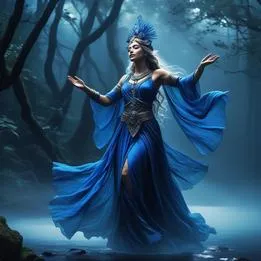
Goddess
The Oracle's Essence
The goddess symbolizes feminine power, divinity, and the nurturing aspects of life, embodying creation and wisdom.
Interpretive Themes
✧ Archetypal Essence
Creator
Dominant Influence ( 90%)
The Goddess embodies the primordial force of creation, birthing worlds from the void.
The Light
The Goddess embodies the primordial force of creation, birthing worlds from the void.
The Shadow
The Goddess embodies the primordial force of creation, birthing worlds from the void.
Modern Visibility
In today's world, goddess symbolism often intersects with themes of feminism, spirituality, and empowerment, inviting personal exploration.
◈ Mythological Resonance
Athena Myth Meaning & Symbolism
Global/Universal traditionBorn fully armored from Zeus's head, goddess of wisdom, strategy, and just warfare, patron of Athens and crafts.
Kali Myth Meaning & Symbolism
Hindu traditionThe fierce aspect of the Divine Mother, destroyer of evil and ignorance, representing time, change, and liberation.
Freyja Myth Meaning & Symbolism
Norse traditionGoddess of love, beauty, fertility, war, and seiðr (magic), who chooses half the slain warriors for her hall Fólkvangr.
Argos Myth Meaning & Symbolism
Greek traditionHera, whose will sets the tragedy in motion, representing the powerful, possessive, and vengeful aspects of the feminine divine.
Circe's Potions Myth Meaning & Symbolism
Greek traditionCirce as the powerful, autonomous feminine force of nature and magic, embodying the transformative, terrifying, and ultimately integrative power of the anima.
The SidheMounds Myth Meaning & Symbolism
Celtic traditionThe sovereign queen within the mound embodies the anima and the Self, the transformative, eternal feminine principle that confers meaning and depth.
Allat the Mother Goddess Myth Meaning & Symbolism
Arabian traditionThe myth centers on the eclipse of the divine feminine in her sovereign, fate-weaving aspect, representing a profound shift in cosmic and psychological order.
Aba-Khatun Earth Goddess Myth Meaning & Symbolism
Siberian traditionEmbodies the archetypal feminine principle of creation through sacrifice, nurturing containment, and the animation of the material world with soul.
Aganju Myth Meaning & Symbolism
Yoruba traditionRepresents the archetypal principle of nurturing, fluidity, and generative life that Yemoja embodies, which complements and completes the divine masculine.
Anahita Goddess of Water Myth Meaning & Symbolism
Persian traditionThe embodiment of the nurturing, creative, and ordering feminine principle, specifically as the source of sovereignty (farr) and cosmic legitimacy.
Apolaki Myth Meaning & Symbolism
Filipino traditionThe divine feminine principle embodied by Mayari, representing the intuitive, nurturing, and cyclical powers of the psyche that complement the solar masculine.
Ani Earth Goddess Igbo Myth Meaning & Symbolism
African traditionAni embodies the archetypal Goddess as the sovereign, ethical Earth Mother, a divine feminine principle that governs both natural cycles and moral order.
Axomamma Potato Goddess Myth Meaning & Symbolism
Incan traditionThe divine feminine principle in its aspect of self-sacrificing nourishment, representing the transformation of spiritual essence into tangible, life-sustaining matter.
Bari Gongju the Abandoned Princess Myth Meaning & Symbolism
Korean traditionBari Gongju's ultimate transformation into a divine psychopomp, representing the emergence of a transpersonal, guiding function from personal suffering.
Chesed Lovingkindness Myth Meaning & Symbolism
Kabbalistic traditionIn its receptive, flowing, and nurturing aspect, Chesed connects to the motherly, abundant face of the divine that gives without stint.
Chalchiuhtlicue Jade Skirt Goddess Myth Meaning & Symbolism
Aztec traditionThe divine feminine principle in its nurturing, sustaining, and ultimately transformative and devouring aspect, as embodied by Chalchiuhtlicue’s dual nature.
Coniraya and Cavillaca Myth Meaning & Symbolism
Incan traditionCavillaca as the archetypal pristine feminine, representing wholeness, self-containment, and the idealized image that must be shattered for deeper growth to occur.
Daikokuten Myth Meaning & Symbolism
Shinto traditionWhile male in form, Daikokuten's function is deeply connected to the fertile, generative, and nourishing principle often embodied by goddess figures.
Coyolxauhqui Moon Goddess Myth Meaning & Symbolism
Aztec traditionCoyolxauhqui as the divine feminine principle in its aspect of powerful rebellion against imposed change and the defense of a perceived sacred order.
Coya Raymi Moon Festival Myth Meaning & Symbolism
Incan traditionMama Quilla as the archetypal feminine sovereign, representing the power of receptivity, emotion, intuition, and the governance of the nocturnal soul.
Dewi Sri Myth Meaning & Symbolism
Indonesian traditionThe divine feminine personified as a force of fertility, sovereignty, and cyclical transformation within the natural and human world.
Diwata Myth Meaning & Symbolism
Filipino traditionThe Diwata as a localized, immanent manifestation of the divine feminine, embodying sovereignty, nurture, and the fierce protection of her domain.
Erzulie Freda Myth Meaning & Symbolism
African Diaspora traditionErzulie Freda as a divine archetype, embodying the transcendent aspects of love, beauty, and the feminine principle in its sovereign form.
Eridu the First City Myth Meaning & Symbolism
Sumerian traditionSpecifically Inanna, representing the archetypal force that takes the established order and translates it into dynamic life, power, and relationship.
Habaek the River God Myth Meaning & Symbolism
Korean traditionManifest in Yuhwa, she symbolizes the mediating, fertile, and connective principle that allows the raw power of the god to be integrated into human reality.
Hanan the Morning Goddess Myth Meaning & Symbolism
Filipino traditionThe archetypal feminine principle of creation, nurturing, and cyclical renewal, embodied by Hanan as the active force that births the new day from the womb of night.
Harpoon of the Sea Spirit Myth Meaning & Symbolism
Inuit traditionThe sovereign, non-human feminine power, Sedna, who governs the rhythms of life and death and demands ethical engagement from those who depend on her bounty.
Hine-ahu-one Myth Meaning & Symbolism
Maori traditionHine-ahu-one as the first manifestation of the divine feminine in human form, embodying the sacredness of matter and the vessel of life.
Hine-nui-te-po Myth Meaning & Symbolism
Maori traditionHine-nui-te-po represents the divine feminine in its most formidable aspect: as the ruler of transitions, the womb and tomb, the mother who ultimately receives all her children.
Haumea Goddess of Childbirth Myth Meaning & Symbolism
Hawaiian traditionThe divine feminine principle as an active, transformative force of nature, embodying both creation and the cyclical law of change that governs it.
Idiyanale Myth Meaning & Symbolism
Filipino traditionThe divine feminine principle as the animating force within diligent, creative, and nurturing work, guiding human hands toward harmony.
Iemanja in Brazil Myth Meaning & Symbolism
African Diaspora traditionShe is the divine feminine principle manifest as a specific, approachable deity who listens to personal prayers and participates in human emotional life.
Ix Chel Moon Goddess Myth Meaning & Symbolism
Mesoamerican traditionThe divine feminine principle embodied by Ix Chel, encompassing creation, sustenance, destruction, and the sovereignty of natural cycles.
Jaci Moon Goddess Myth Meaning & Symbolism
Amazonian traditionThe archetypal feminine creative principle, embodied by Jaci as a nurturer who brings forth life through indirect means and magnetic presence.
Kaulu the Trickster Myth Meaning & Symbolism
Hawaiian traditionThe divine feminine (often Hina) whom Kaulu aids by defeating Kuna, showing the trickster’s role in protecting and restoring creative, life-giving forces.
Kintu and Nambi Uganda Myth Meaning & Symbolism
African traditionEmbodied by Nambi, she is the active principle of love, curiosity, and connection who descends to initiate the entire human drama, representing the soul's call to the ego.
Kinabalu Spirit Myth Meaning & Symbolism
Filipino traditionWhile not the central figure, the earth that heaves to form the mountain can be seen as a maternal, chaotic force responding to the cosmic imbalance, a goddess of the land enacting a form of terrible birth.
Kongji and Patji Myth Meaning & Symbolism
Korean traditionThe heavenly grandmother who robes Kongji acts as a divine feminine benefactor, facilitating the final stage of transformation and empowerment.
Lada Myth Meaning & Symbolism
Slavic traditionThe divine feminine principle as the source of nurturing, connective, and creatively fertile energy.
Lakapati Myth Meaning & Symbolism
Filipino traditionThe divine feminine principle embodied by Lakapati, representing nurturing, creation, fertility, and the life-giving forces of the natural world.
Laka Goddess of the Hula Myth Meaning & Symbolism
Hawaiian traditionThe divine feminine principle as creator and source of artistic inspiration, representing the psyche's capacity to give birth to form from formless potential.
Lono God of Agriculture Myth Meaning & Symbolism
Hawaiian traditionReflected in Papa, the earth mother, as the essential, receptive counterpart to the sky father's fertilizing power, symbolizing the feminine principle of embodiment.
Loro Jonggrang Myth Meaning & Symbolism
Indonesian traditionLoro Jonggrang as the eternal feminine, transformed from a living woman into a static, worshipped icon, representing the soul made artifact.
Mago Primordial Goddess Myth Meaning & Symbolism
Korean traditionThe archetypal feminine as autogenetic source and sovereign, representing the psyche's inherent capacity for self-creation and nurturing order.
Manat Goddess of Fate Myth Meaning & Symbolism
Arabian traditionRepresents the divine feminine aspect of fate as an ancient, implacable, and generative force that measures, allots, and ends all life.
Mokosh Myth Meaning & Symbolism
Slavic traditionThe supreme feminine divine principle embodied by Mokosh, encompassing creation, sustenance, fate, and the sacredness of women's crafts and cycles.
Mayari Myth Meaning & Symbolism
Filipino traditionMayari as a specific archetypal expression of divine femininity, embodying sovereignty, nurturing protection, and wisdom born of sacrifice.
Mayahuel Goddess of Maguey Myth Meaning & Symbolism
Aztec traditionThe divine feminine principle, here specifically manifesting as the source of vegetative life, nourishment, and sacred intoxication, transitioning from a celestial to an earthly form.
Namakaokahai Sea Goddess Myth Meaning & Symbolism
Hawaiian traditionThe myth centers on the dynamic between two divine feminine forces, representing the dual aspects of creation and dissolution within the psyche and nature.
Nammu the Primordial Sea Myth Meaning & Symbolism
Sumerian traditionThe divine feminine as the foundational, autogenic cosmic power, preceding and birthing the patriarchal sky gods.
Ngai Creator God Kikuyu Myth Meaning & Symbolism
African traditionEmbodied in Mumbi and the nine daughters, representing the generative, life-bearing, and clan-founding feminine principle essential to creation and community.
Ninigi and the Descent from Heaven Myth Meaning & Symbolism
Shinto traditionAmaterasu as the supreme source, and Ame no Uzume as the mediator, representing the feminine divine as originator and facilitator of the sacred process.
Nuwa Repairs the Sky Myth Meaning & Symbolism
Taoist traditionNuwa embodies the divine feminine as creator, sustainer, and healer, representing the unconscious Self’s capacity to restore wholeness from fragmentation.
Nunavummiut Creation Myth Meaning & Symbolism
Inuit traditionThe ultimate form of Sedna, representing the integrated, powerful, and numinous feminine principle that governs the cycles of life, death, and provision from the unconscious.
Nyi Pohaci Rice Spirit Myth Meaning & Symbolism
Indonesian traditionThe divine feminine principle in its aspect of generative sacrifice, representing beauty, fertility, and the cyclical nature of life-through-death.
Ometecuhtli and Omecihuatl Myth Meaning & Symbolism
Aztec traditionThe generative, containing principle of divinity, representing the womb of all potential and the substance of creation.
Olosa Goddess of Lagoons Myth Meaning & Symbolism
West African traditionThe divine feminine principle as both creator and potential destroyer, representing the autonomous, cyclical power of nature and the unconscious that demands relationship, not domination.
Olokun Myth Meaning & Symbolism
Yoruba traditionEmbodies the feminine, receptive, and generative aspect of the deep, as Olokun is often revered as a maternal source of wealth and mystery.
Oya River Spirit Myth Meaning & Symbolism
West African traditionOya as a specific, powerful divine feminine force who commands respect and awe, governing a domain of raw, transformative power.
Oxum Goddess of Sweet Water Brazil Myth Meaning & Symbolism
African Diaspora traditionThe divine feminine principle as nurturer, reflector, and bestower of inner and outer wealth, embodied by Oxum's sovereignty over love, beauty, and sweet waters.
Palden Lhamo Myth Meaning & Symbolism
Tibetan Buddhist traditionThe divine feminine in its most fierce, active, and protective aspect, a force that maintains cosmic order through terrifying, compassionate means.
Poli'ahu Snow Goddess Myth Meaning & Symbolism
Hawaiian traditionPoli'ahu embodies the divine feminine principle in its aspect of serene sovereignty, clarity, and majestic, calm authority over a domain.
Pinga Goddess of the Hunt Myth Meaning & Symbolism
Inuit traditionThe divine feminine as ruler, judge, and sustainer, representing the ultimate moral and ecological authority that governs the cycle of life and death.
Samsin Halmoni Myth Meaning & Symbolism
Korean traditionThe divine feminine principle in its triple, nurturing, and fate-weaving aspect, presiding over the most profound of human transitions.
Samshin Goddess of Birth Myth Meaning & Symbolism
Korean traditionThe triune form of Samshin represents the divine feminine as a process of creation, sustenance, and wise guardianship, embodying the full cycle of care.
Songtsen Gampo Myth Meaning & Symbolism
Tibetan Buddhist traditionManifest in the two princesses as emanations of Tara, representing the active, compassionate feminine wisdom that guides the civilizing process.
Tala the Star Goddess Myth Meaning & Symbolism
Filipino traditionTala embodies the divine feminine as a creator, guide, and compassionate psychopomp, representing nurturing authority and celestial wisdom.
The Ashanti Creation Story Myth Meaning & Symbolism
West African traditionEmbodied in Asase Yaa, representing the divine feminine as the living, conscious planet, the source of fertility, sustenance, and final rest.
The Arab Horse Legend Myth Meaning & Symbolism
Arabian traditionThe creative, animating force of the South Wind (Janub) can be seen as a feminine generative power, birthing form from the womb of the atmosphere.
The Bull of Heaven
Babylonian traditionRepresented by Ishtar, symbolizing the awesome, capricious, and potentially devouring power of the feminine archetype when her sovereignty is challenged.
The Creation of Mankind Myth Meaning & Symbolism
Babylonian traditionSpecifically the Mother Goddess Mami, the shaper and womb, representing the nurturing yet fateful creative force that gives form to life according to a divine plan.
The Death of Dumuzi Myth Meaning & Symbolism
Sumerian traditionEmbodied by Inanna and Ereshkigal, representing the dual, transformative feminine power that commands both life-giving love and underworld judgment.
The Chosen Women Acllas Myth Meaning & Symbolism
Incan traditionThe Aclla, in her perfected state, becomes a human vessel of the divine feminine principle, weaving the fabric of reality and embodying sacred care.
The Descent of Nergal Myth Meaning & Symbolism
Babylonian traditionEreshkigal is the archetypal goddess of the absolute depths, representing the terrifying yet ultimately integrative power of the unconscious feminine.
The Descent of the Gods into the Underworld Myth Meaning & Symbolism
Babylonian traditionThe central figure of divine will and sovereignty undertaking a perilous journey, representing the conscious psyche's drive for wholeness and its confrontation with its own depths.
The Dogon Creation Myth Myth Meaning & Symbolism
African traditionWhile Amma is beyond gender, the cosmic egg and the placenta are profoundly feminine symbols of gestation, nourishment, and the primal womb of being.
The First Sunrise Myth Meaning & Symbolism
Filipino traditionThe primordial gray world and waters can be seen as the Great Mother in her undifferentiated, containing form, from which the solar hero must emerge to establish his own identity.
The Golden Woman Sorni Nai Myth Meaning & Symbolism
Siberian traditionThe divine feminine principle that prioritizes generative care, interconnectedness, and the nourishment of life over sovereign power or static glory.
The Great Inuit Flood Myth Meaning & Symbolism
Inuit traditionEmbodied as Sedna, she is the archetypal wounded feminine, the source of all nourishment who resides in darkness and demands ritual attention.
The Haenyeo Sea Women Spirits Myth Meaning & Symbolism
Korean traditionThe personified, numinous aspect of the deep Self (Jamsugut), who grants wisdom and bounty to those who approach with respect and courage.
The Iara River Maiden Myth Meaning & Symbolism
Amazonian traditionIara in her transformed state is a local, potent goddess figure, an embodiment of a specific aspect of nature's terrifying and beautiful power.
The Island of the Moon Myth Meaning & Symbolism
Incan traditionMama Killa as the archetypal expression of developed feminine power, not as mother or lover, but as sovereign ruler of an interior domain.
The Legend of Naupaka Myth Meaning & Symbolism
Hawaiian traditionReferencing Pele and the divine feminine authority that upholds the natural and social order, whose laws, though harsh, frame the sacred tragedy.
The Me Divine Laws Myth Meaning & Symbolism
Sumerian traditionRepresents Inanna, the active, desiring, and sovereign feminine principle that drives the quest for greater complexity and empowered being.
The Origin of Hangul Myth Meaning & Symbolism
Korean traditionThe archetypal feminine wisdom of the unconscious, the Samshin Halmoni, who provides the primordial patterns and facilitates birth from the formless.
The River of Milk Myth Meaning & Symbolism
Amazonian traditionThe personified, conscious aspect of the nourishing principle, Yara, who teaches that divinity is felt in the act of compassionate outflow.
The Seven Lucky Gods Myth Meaning & Symbolism
Shinto traditionEmbodied by Benzaiten, representing the essential feminine principle of flow, connection, artistry, and emotional intelligence required for balance.
The Tagalog Creation Story Myth Meaning & Symbolism
Filipino traditionAman Sinaya as a powerful, sovereign feminine creative principle, equal and opposite to the masculine sky god, essential for the act of world-making.
Tlazolteotl Myth Meaning & Symbolism
Aztec traditionTlazolteotl as a specific manifestation of the divine feminine in its terrifying, compassionate, and transformative aspect.
Twi Creation Myth Myth Meaning & Symbolism
West African traditionManifest as Asase Yaa, the divine feminine principle of immanence, fertility, and the sacredness of the natural, material world.
Uli Sorcery Goddess Myth Meaning & Symbolism
Hawaiian traditionThe impersonal, sovereign feminine principle that governs the laws of existence, representing ultimate accountability and the framework of reality itself.
Umai Goddess of Birth Myth Meaning & Symbolism
Mongolian traditionThe nurturing, life-giving aspect of the divine feminine, representing protection, fertility, and the intermediary force between heaven and earth.
Whatitiri Goddess of Thunder Myth Meaning & Symbolism
Maori traditionWhatitiri embodies the Goddess archetype in her sovereign, untamable aspect, representing the feminine principle as a foundational, creative, and destructive force of nature.
Wangu wa Makeri Kikuyu Legend Myth Meaning & Symbolism
African traditionThe numinous, sovereign feminine principle that Wangu channels, which is both creative and, when unbalanced, capable of provoking a systemic crisis.
Yhi the Sun Goddess Myth Meaning & Symbolism
Aboriginal Australian traditionThe feminine, generative, and nurturing creative power, positioning creation as an act of luminous invitation rather than violent imposition.
Yeshe Tsogyal Myth Meaning & Symbolism
Tibetan Buddhist traditionHer ultimate identity as the Great Bliss Queen, representing the fully actualized, sovereign feminine principle of enlightened wisdom and compassionate activity.
Ameno-Uzume Dance of Dawn
Shinto traditionThe divine feminine principle, here manifest as both the hidden source of light and the playful force that coaxes it into being.
Amaterasu's Cave
Shinto traditionThe archetypal feminine as source, nurturer, and sovereign, capable of profound withdrawal and majestic return.
Hina Moon Goddess Hawaiian
Hawaiian traditionThe divine feminine archetype embodied by Hina, representing creative power, wisdom, and nurturing authority.
Inanna and Enki
Sumerian traditionThe active, ambitious, and multifaceted feminine principle (Inanna) that executes the will to power and manifestation.
Inanna and the Huluppu Tree
Sumerian traditionThe divine feminine principle as active, willful creator and sovereign, embodying love, war, and the drive for manifestation.
Inanna and Shukaletuda
Sumerian traditionThe divine feminine principle in its full spectrum, embodying sovereign power, creative and destructive force, and the inviolable core of being that demands respect.
Mama Cocha Sea Goddess
Incan traditionThe divine feminine principle, manifesting as a sovereign, immanent power within nature, governing cycles of birth, life, death, and regeneration.
Mama Sara Maize Goddess
Incan traditionThe divine feminine principle, manifesting as creativity, intuition, nature, and the nurturing forces that sustain the cosmos and human life.
Mami Wata Sea Spirit
African traditionThe divine feminine principle in its potent, sovereign form, commanding respect and devotion as a source of both creation and destruction.
Maria Cacao
Filipino traditionThe manifest face of the archetypal feminine as a sovereign bestower of life, wealth, and natural law, demanding reverence and relationship.
Maria Sinukuan
Filipino traditionThe divine feminine principle in its complete, unsplit form, encompassing creation, sustenance, and the righteous reclamation of all things.
Maria Makiling
Filipino traditionThe divine feminine principle as immanent, local, and intimately connected to the cycles and bounty of the natural world.
Mazu Sea Goddess
Taoist traditionThe divine feminine principle manifest as compassionate protector and mediator, embodying nurturing power without domination.
Maui and Hine-nui-te-po
Maori traditionHine-nui-te-po as the sovereign feminine power of night, death, and transformation, an implacable natural force that governs cycles.
Naiman Eej Eight Mother Goddesses
Mongolian traditionThe manifested divine feminine, representing the multifaceted powers of nature, fate, and the sacred immanent in the world.
Oshun and the Sweetwater
Yoruba traditionThe divine feminine principle as a source of life, nurture, creativity, and the sovereignty to enact compassionate will.
Osun River Goddess Oshun
West African traditionThe divine feminine principle manifest, representing sovereignty, nurturing power, creative abundance, and sacred embodiment.
Oshun Saves the World
Yoruba traditionThe embodied archetype of the divine feminine, representing nurturance, creativity, immanence, and the life-giving forces of nature and psyche.
Oya at the Marketplace of the Dead
Yoruba traditionThe divine feminine principle as an active, powerful agent of change, protector of thresholds, and master of elemental forces.
Pele and Kamapua'a
Hawaiian traditionThe divine feminine manifest as a powerful, sovereign, and elemental force of nature, embodying both terrifying and generative aspects.
Sedna's Fingers Become the Sea Creatures
Inuit traditionThe divine feminine principle embodied in a specific, immanent, and emotionally complex power that governs the practical realities of survival.
The Exaltation of Inanna
Sumerian traditionThe dynamic, multifaceted feminine principle that actively seeks, claims, and embodies supreme authority, challenging static hierarchies.
The Mo'o Water Dragons
Hawaiian traditionThe divine feminine principle, embodying creativity, nature, sovereignty, and the cyclical powers of birth, death, and regeneration.
Cultural Lenses
East Asian
Learn More →Goddesses like Durga and Lakshmi embody various attributes of feminine power and universal law. Worship involves festivals dedicated to feminine energy and virtue. [South Asian] [Hindu] Cultivates understanding of life's cycles and feminine nature.
Middle Eastern
Learn More →Goddesses like Isis represented motherhood, wisdom, and magic. Worship and rituals focused on fertility and protection. [Ancient Egypt] Demonstrates rich traditions in goddess veneration.
European
Learn More →Goddesses like Athena were symbols of wisdom and war, exemplifying duality in feminine roles. Included public festivals and rituals to celebrate divine femininity. [Greek] Highlights varied representations of female power in mythology.
European
Learn More →Goddesses such as Brigid are revered for their roles in transition, healing, and inspiration. Traditions involve seasonal festivals celebrating the earth's cycles. [Celtic] Shows deep connections to cycles of life and death.
✦ The Oracle's Prediction
A profound inner awakening or discovery of a latent creative or intuitive power.
The deepening of an existing bond or the arrival of a significant, nurturing connection.
Contextual Nuances
Receiving wisdom from a goddess
Might represent seeking guidance or affirmation.
Participating in rituals honoring a goddess
Could signify personal growth or a connection to spirituality.
Witnessing a goddess in a natural setting
Indicates harmony with nature and recognition of personal power.
Fighting alongside a goddess
Represents courage and the fight for rights or values.
Feeling blessed by a goddess
Reflects appreciation for the blessings in life.
Integrative Mantra
"Affirmation"
Integration Ritual
Ritual Practice
On a small plate, arrange three objects that represent creation, wisdom, and power to you (e.g., a seed, a written quote, a small stone). Light a white candle. Hold each object, whispering its meaning, then place them around the candle. Sit in silence for five minutes, visualizing a nurturing light emanating from the center.
Questions for Reflection
- "What parts of my life reflect the energy or qualities of a goddess?"
- "How does my understanding of femininity impact my interactions with others?"
Related Weavings
The Portal is Always Open
Every dream is a personalized dispatch from the deep. Don't let yours fade into static.
Interpret Full Dream