
Valhalla's Mead Hall Myth Meaning & Symbolism
The god Odin, through cunning and sacrifice, steals the mead of poetry from the giants, securing inspiration for gods and mortals in his hall of slain heroes.
The Tale of Valhalla's Mead Hall
Listen, and hear of the theft that shaped the worlds. It begins not in the golden light of Asgard, but in the aftermath of a war, in the spittle of gods and giants mixed upon the earth. From that primal mud was born Kvasir, in whom all wisdom was distilled. His steps were a blessing, his answers a balm, until he was slain by envious dwarves. They poured his blood into three great vats, mixed it with honey, and brewed a mead of such power that whoever drank it would become a skald or a scholar, gifted with poetry and profound wisdom.
This mead passed into the clutches of a giant, Suttungr, who hid it deep within the heart of a mountain called Hnitbjorg. He set his daughter, Gunnlod, as its sole guardian. There it sat, a hoarded light in a stone womb, while the worlds thirsted for its inspiration.
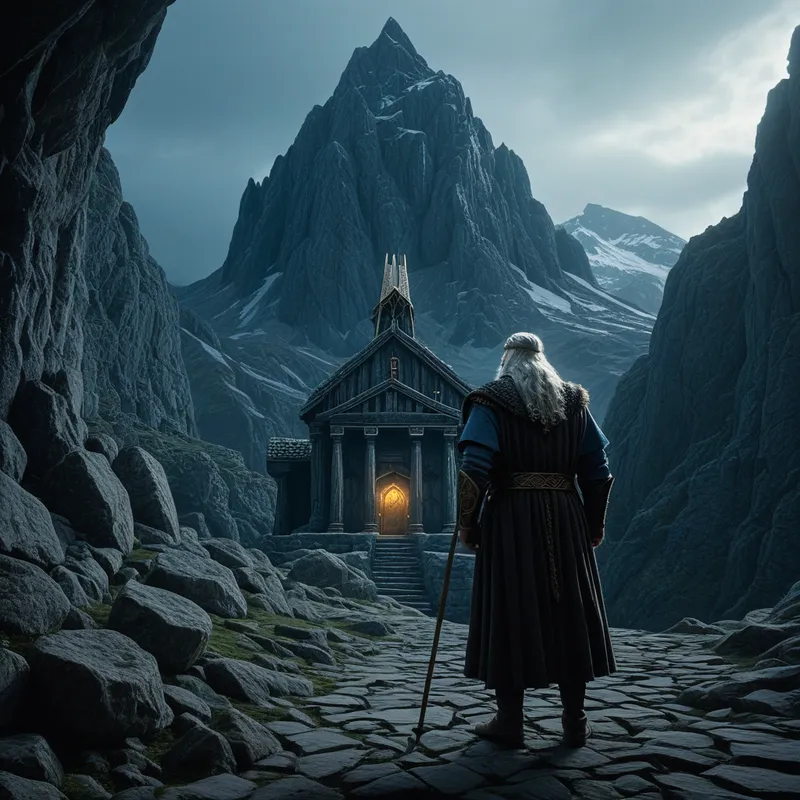
But one being felt its absence as a wound. Odin, the Allfather, whose single eye saw all that was and all that would be, knew this mead was the breath of the cosmos itself, stolen and buried. It could not remain so. Disguising himself as a weathered wanderer named Bölverk—the Worker of Misfortune—he descended from Asgard. His path led him to the farm of Baugi, Suttungr’s brother. With cunning words and a promise of labor, Odin convinced Baugi to bore a hole through the mountain stone, a tiny passage leading to the secret chamber.
But the hole was only a needle’s eye. So Odin, the shape-shifter, became a serpent. He slithered, scales scraping against raw rock, through the dark, suffocating tunnel, driven by a hunger deeper than any giant’s. He emerged into the cavern where Gunnlod kept her lonely vigil. For three nights, he shed his serpent skin and spoke to her not as a god or a thief, but as a traveler of profound sorrow and longing. He wooed her loneliness, and she, in turn, granted him three draughts of the sacred mead.
In one draught, he drained the first vat. In the second, the next. With the third, the final vessel was emptied. The mead, the distilled blood-wisdom of Kvasir, now burned within him. Transforming once more, now into a mighty eagle, he burst from the mountain, his feathers slick with the stolen essence. Behind him roared Suttungr, also in eagle form, a storm of vengeance on his tail.
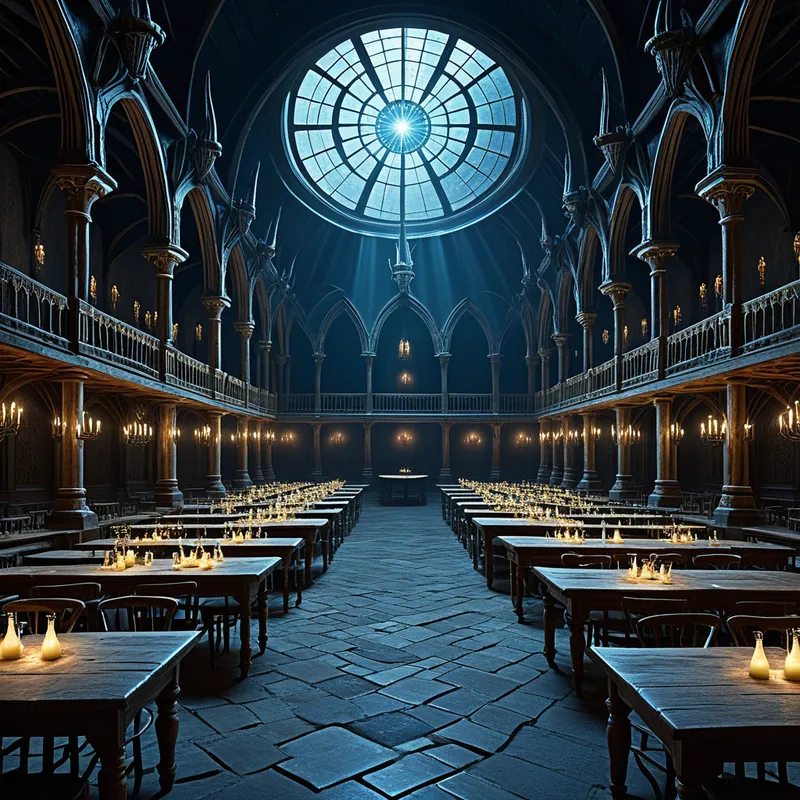
The chase tore across the sky, a tempest of beating wings and fury. As Odin neared the walls of Asgard, the gods saw their father returning, pursued, and rushed out with great vessels. Odin, the eagle, disgorged the mead into the waiting containers. But in his frantic haste, some drops fell backwards, spattering Midgard below. This, men call the poetaster’s share—the flawed, scattered inspiration. The pure, majority of the mead was saved. It was brought to Valhalla, Odin’s own mead hall, where it would forever flow for the Einherjar and inspire the gods.
Thus was the mead of poetry won: not by brute force, but by serpentine cunning, sacrificial wooing, and a desperate, soaring flight. It was a theft that gifted creation itself.
Cultural Origins & Context
This myth, primarily recorded in the Prose Edda of Snorri Sturluson and echoed in older skaldic poetry, was not a simple bedtime story. It was a foundational narrative for the Norse poetic tradition. Skalds—the court poets and historians—saw themselves as direct inheritors of Odin’s theft. To compose poetry was to partake in a divine, stolen substance.
The myth functioned on multiple societal levels. It explained the origin of poetic inspiration (ódhr, a word sharing its root with Odin’s own name), framing it as something dangerous, hard-won, and fundamentally other—coming from the realm of the giants (jötnar). It validated the role of the poet as a sacred figure, a vessel for a power that connected the human realm of Midgard to the divine machinations of Asgard. Furthermore, by placing the mead in Valhalla, it linked poetic glory directly to martial honor and the cosmic order Odin upheld, preparing for the final battle of Ragnarök.
Symbolic Architecture
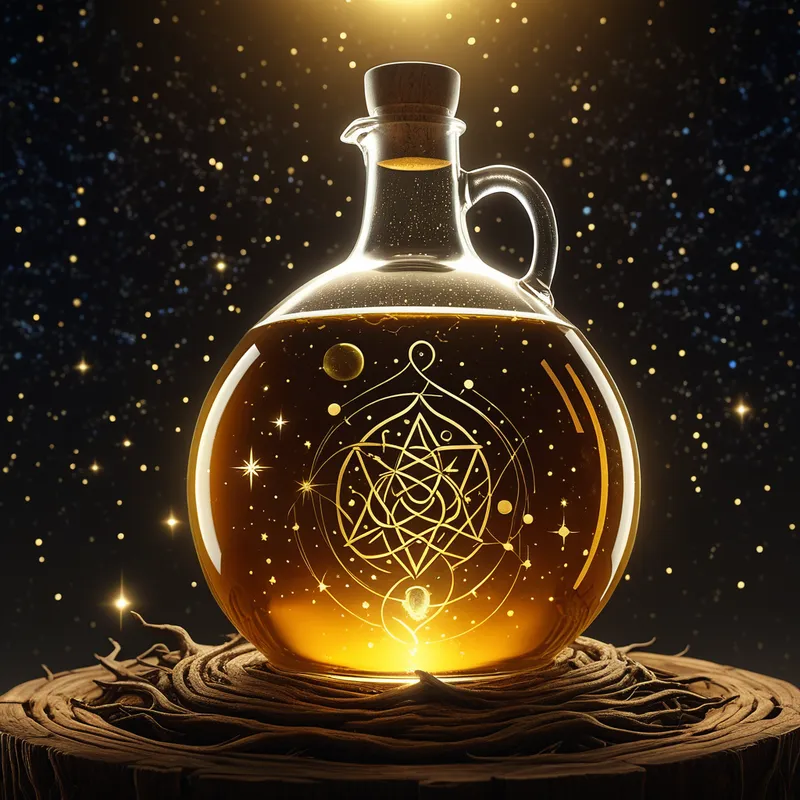
At its core, this is a myth of the Magician archetype in its rawest form: the quest to obtain and wield a transformative substance or knowledge. The mead is not merely alcohol; it is the liquefied essence of consciousness—wisdom, memory, and the creative word made manifest.
The journey for inspiration is always a descent into the underworld of the unconscious, a negotiation with the giants of our repressed contents, and a risky theft of their guarded treasure.
Odin’s transformations are key. As Bölverk, he is the strategic ego, willing to do hard, inglorious labor (the bargain with Baugi). As a serpent, he is the instinctive, chthonic psyche, moving through the narrow, terrifying birth canal of the mountain/mother to reach the treasure. As a lover, he engages the anima (Gunnlod), the soul-guardian of the treasure, not through conquest but through empathetic connection—a psychological necessity for accessing deep creative wells. Finally, as an eagle, he is the spirit, attempting to assimilate and elevate this hard-won content into the light of consciousness, pursued by the shadow (Suttungr) from which it was taken.
The Dreamer's Resonance
When this myth stirs in modern dreams, it seldom appears as a Viking feast. More likely, one dreams of being in a vast, important building (the hall) that feels empty or inaccessible. There is a sense of a precious resource—a liquid, a light, a book—being held just out of reach, often by a formidable or seductive figure. The dreamer might be digging, tunneling, or shapeshifting to get to it.
Somatically, this can correlate with feelings of creative constipation, intellectual dryness, or a profound sense that one’s authentic voice is trapped. The dream is signaling a necessary, if daunting, psychological process: the ego must make a pact with less-conscious parts of the self (the labor), willingly enter a confined, dark space of introspection (the serpent’s journey), and honestly engage with the inner figures that hold our creative potential captive (the wooing of Gunnlod). The chaotic flight and partial spillage reflect the anxiety and inevitable imperfection of bringing such deep material to light.
Alchemical Translation
The myth models the alchemical opus, the great work of psychic individuation. The base matter is the primal, unconscious conflict (the war-spittle). From it is formed the prima materia: Kvasir, the unified, wise Self. His murder is the necessary separatio, the breaking down of naive wholeness into a fermentable substance (the blood).
Individuation is not a gathering of comforts, but a sacred theft from the giants of our own nature. We must become the serpent, the lover, and the thief to claim our own mead.
Odin’s journey is the arduous process of solutio (dissolution in the mountain’s waters) and coagulatio (re-forming as eagle). He is the alchemist’s mind, performing the labor, undergoing the nigredo (the blackening, in the dark tunnel), engaging in the coniunctio (the sacred marriage with Gunnlod), and achieving the final sublimation—the flight to Asgard. The mead delivered to Valhalla represents the lapis philosophorum, the philosopher’s stone: the achieved state of enlightened consciousness, where one’s inner warriors (disciplined thoughts, honed skills) are perpetually nourished by the distilled wisdom of the Self. The spilled drops remind us that the process is never perfectly efficient; much is lost to the unconscious, but even that spillage fertilizes the broader world of our being.
Associated Symbols
Explore related symbols from the CaleaDream lexicon: