Daedalus Myth Meaning & Symbolism
The tragic tale of a genius inventor whose greatest creations—the Labyrinth and wings of wax—ensnare and liberate, revealing the double-edged sword of human ingenuity.
The Tale of Daedalus
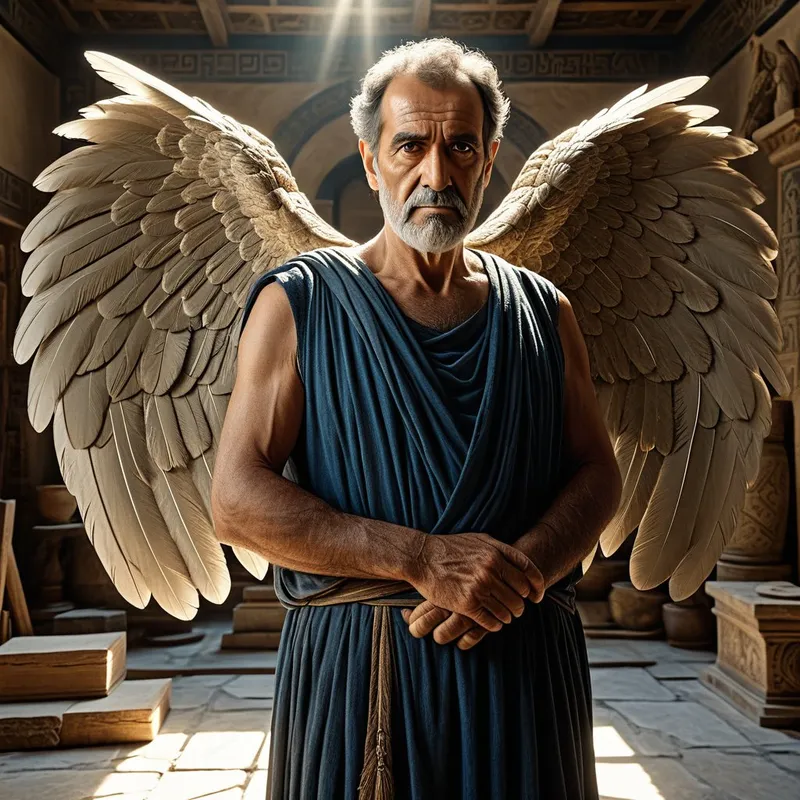
Hear now the tale of the man who could shape the world with his hands and his mind, a tale of soaring ambition and a fall that echoes through the ages. In the heart of Athens, there lived Daedalus, whose name itself means “cunningly wrought.” His genius was a fire, forging wonders from bronze and stone that seemed to breathe. But fire unchecked consumes. Fearing the rising talent of his own nephew, Talos, a shadow fell across Daedalus’s heart. In a moment of jealous dread, he cast the boy from the sacred heights of the Acropolis. The blood of kin stained Athenian soil.
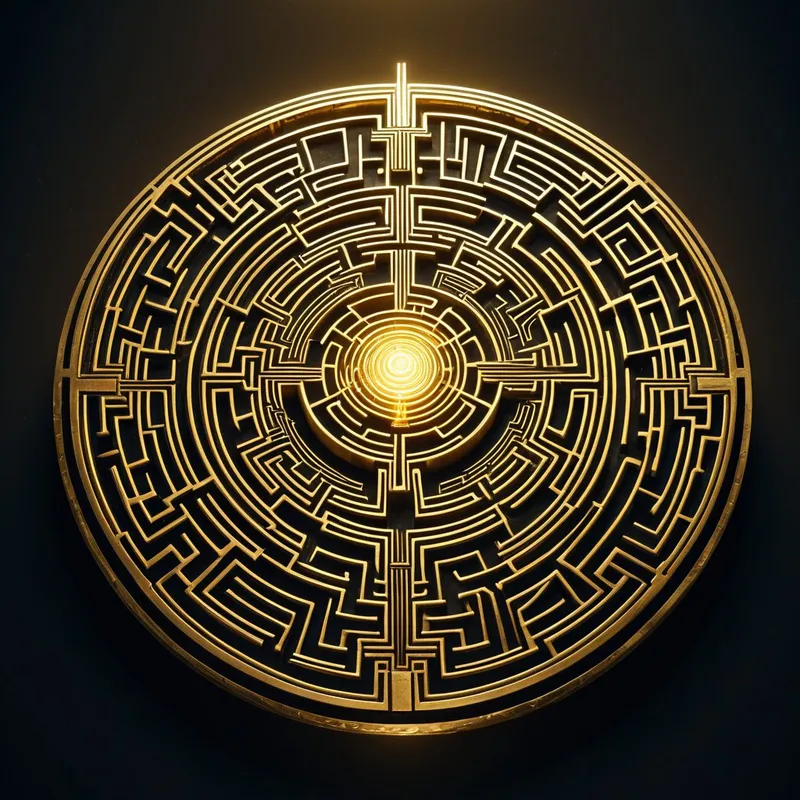
Banished, Daedalus found refuge on the island of Crete, in the court of the powerful and stern King Minos. Here, his genius was tasked with a dark commission: to build a prison so perfect, so bewildering, that the monstrous secret within—the Minotaur—could never escape. And so Daedalus built the Labyrinth. Its walls were high stone, its passages a twisting, turning madness where sound died and light played cruel tricks. It was his masterpiece of confinement, a monument to a king’s shame and a craftsman’s complicity.
But Daedalus himself became trapped. For helping the king’s wife, Pasiphaë, in her unnatural union, and later aiding the hero Theseus in slaying the beast and escaping the maze, Minos’s wrath fell upon him. The inventor and his young son, Icarus, were sealed within the very Labyrinth he had designed, the ultimate irony for the mind that conceived it.
The sea was a guard, the sky a prison. But Daedalus looked upward. “Minos may control the land and sea,” he declared, “but he does not control the air.” Gathering feathers fallen from gulls, he fastened them with thread and wax, crafting two pairs of magnificent wings. As he fitted them to his son’s shoulders, his voice was grave with warning. “Fly the middle course, Icarus. Do not sink too low, lest the sea’s damp clog your wings. Do not soar too high, lest the sun’s fire melt their binding.”
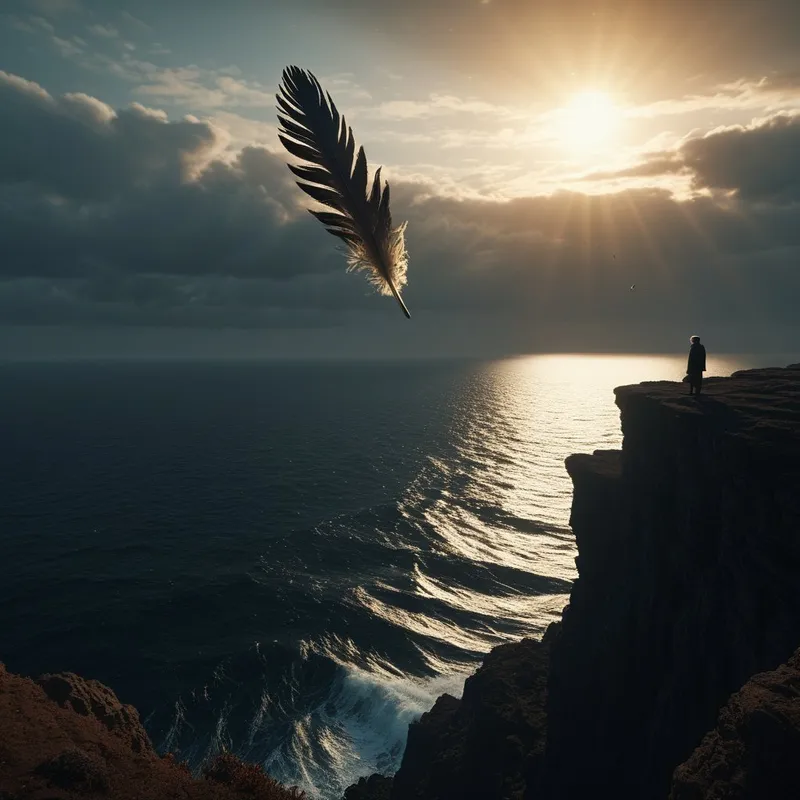
And then, the leap. The gasp of air, the terrifying lurch, and then the miracle of flight. They rose above the white walls of Crete, the labyrinth shrinking to a puzzling scratch on the earth. The world spread beneath them—a tapestry of blue and green. But Icarus, drunk on the ecstasy of freedom and the power of his own wings, forgot his father’s words. He climbed higher, chasing the glorious, blazing sun. The wax softened, wept, then failed. One feather, then a torrent, pulled free. A cry cut short by the deep, uncaring sea. Daedalus, the creator, could only watch as his greatest creation—his son—and his second greatest—the wings—were undone by the very principles he understood so well. He buried his boy on an island he named Icaria, and flew on, a soul forever weighted with grief, to a lonely sanctuary in Sicily. His genius had built cages and keys, had granted flight and witnessed the fall. Such is the double-edged gift of the maker.
Cultural Origins & Context
The myth of Daedalus is not the product of a single author but a story woven into the fabric of Greek myth over centuries. It appears in the works of historians like Herodotus and is vividly recounted in Ovid’s Metamorphoses, a primary source for the dramatic flight and fall. The tale functioned on multiple levels in Greek society. It was a foundational “just-so” story, explaining the naming of the Icarian Sea and islands. More profoundly, it served as a cultural parable about the limits of human techne.
In a culture that celebrated heroes of strength (Achilles) and cunning (Odysseus), Daedalus represented the archetype of the artisan-hero. His stories were likely told in workshops and at symposia, a cautionary and awe-inspiring narrative for a society intensely proud of its architectural and artistic achievements. The myth reinforced a core Greek value: that even the greatest human ingenuity must operate within the boundaries set by the gods (represented by the sun, Helios) and natural law. It explored the terrifying responsibility of creation and the inevitable consequences when innovation outpaces wisdom.
Symbolic Architecture
At its heart, the myth of Daedalus is a profound exploration of the psyche of the creator. Daedalus himself symbolizes the transcendent human intellect—the part of us that seeks to solve, to build, to overcome physical and existential limits through sheer ingenuity.
The Labyrinth is not just a prison for a monster; it is the architecture of a complex psyche, a maze of our own design where our inner Minotaur—the repressed, bestial, or shameful aspect of the self—is kept hidden.
His flight represents the ultimate aspiration of the spirit to break free from earthly confines, from the prisons of circumstance, regret, and limitation we build for ourselves. Yet, the tragedy is baked into the symbolism. The wings are bound by wax, a substance that flows and melts, representing the fragile, mortal, and impermanent nature of the human body and condition. They are a sublime but temporary fusion of nature (feathers) and human craft (wax, thread).
Icarus, then, is the embodiment of unchecked hubris, the youthful, impulsive spirit that, intoxicated by newfound power (be it intellectual, creative, or spiritual), ignores the necessary constraints (the “middle course”) required for sustainable existence. His fall is not a punishment from vengeful gods, but the inevitable result of a natural law: soar too close to the source of all light and life, and you will be consumed by it. The sun is both divine truth and annihilating fire.
The Dreamer's Resonance
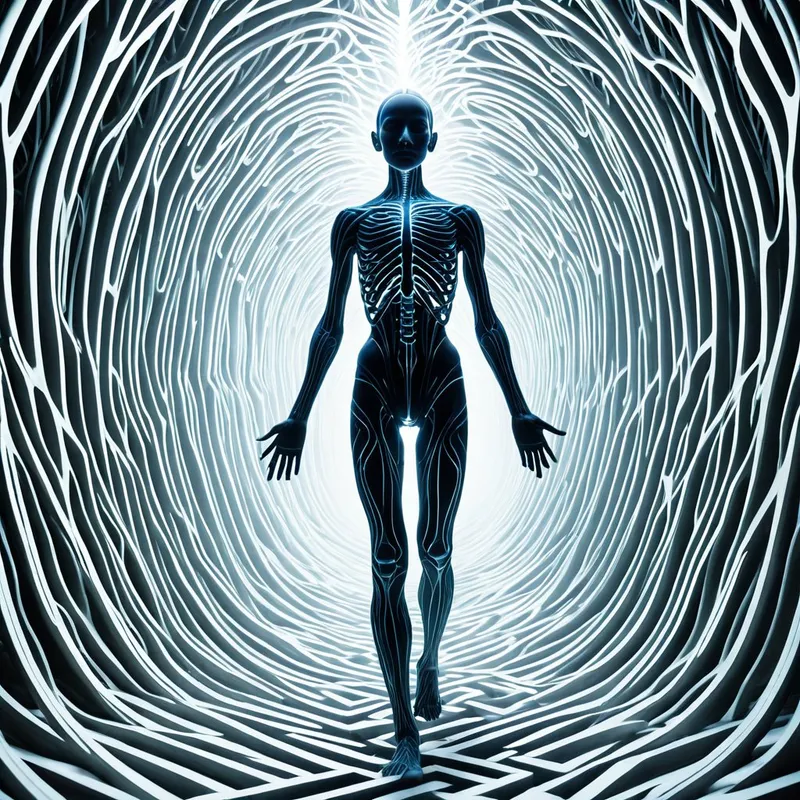
When the pattern of Daedalus and Icarus stirs in the modern dreamer, it signals a profound somatic and psychological process related to ambition, creation, and the fear of catastrophic failure. To dream of building intricate, inescapable structures (like a labyrinth) points to a psyche constructing complex defenses or intellectual rationalizations around a core wound or shame (the Minotaur). The dreamer may feel brilliantly trapped by their own mind.
Dreaming of crafting wings, or finding them, speaks to a burgeoning desire for liberation—from a job, a relationship, a self-concept. It is the psyche preparing for a great leap. But the dream of the falling figure, or of melting wax, is a critical somatic warning. The body, through the dream, is expressing the visceral terror that accompanies high-stakes transformation. It is the anxiety that one’s talents, one’s carefully constructed identity or project, is not enough to bear the weight of aspiration. It is the fear that reaching for one’s personal “sun”—ultimate success, enlightenment, fame, perfect creation—will lead not to apotheosis, but to dissolution and a profound, lonely grief.
Alchemical Translation
The myth models the entire alchemical process of psychic individuation, where the base materials of the unconscious are transmuted into the gold of a realized self. Daedalus begins in a state of nigredo—the blackening. His crime in Athens is the shadow act, the primal guilt that sets him wandering. His work for Minos represents the coagulatio—the embodiment of his genius in solid, complex form (the Labyrinth), but in service to a tyrannical power (the unresolved complex, the kingly ego).
The moment Daedalus looks to the sky, he initiates the sublimatio—the spiritualization. He turns from earth-bound solutions to an aerial, visionary one. This is the critical pivot in individuation: when analysis (dissecting the maze) gives way to synthesis (creating a new paradigm for escape).
Crafting the wings is the albedo—the whitening. It is the conscious, meticulous work of integrating disparate parts of the self (the gathered feathers of experience, the binding wax of will and intention) into a new, functioning whole capable of transcendence. The flight itself is the citrinitas—the yellowing, the dawning of a new consciousness, the exhilarating and terrifying freedom of seeing one’s life from a higher perspective.
Icarus’s fall is not a failure of the process, but its most painful, necessary ingredient. It represents the mortificatio—the death of the purely aspirational, inflated, and unconscious spirit. The part of us that must die for wisdom to be born. Daedalus’s grief and lonely flight to Sicily is the final stage, the rubedo—the reddening. It is the integration of this profound loss and limitation into a mature, sober consciousness. The genius is not destroyed, but humbled. He lands not as a triumphant hero, but as a sorrowful sage, carrying the full, tragic weight of his creative power. The individuated self is not the one who flies flawlessly, but the one who survives the flight, bearing the memory of the fall, and continues to create from a place of hard-won, wounded wisdom.
Associated Symbols
Explore related symbols from the CaleaDream lexicon:
- Pilot
- Ability
- Construction
- Shed
- Practice
- Device
- Brand
- Escape
- Suite
- Career
- Apt
- Rehearsal
- Outline
- Procedure
- Application
- Gaming Console
- Futuristic Cityscape
- Folding Paper
- Stacking Blocks
- Cosmic Space Station
- Illuminated Path
- Segway
- Monorail
- Termite Tunnel
- Clever Aphid
- Secretive Leafcutter Ant
- Fanciful Albatross
- Secret Lab
- Inventive Engineer
- Ambitious Entrepreneur
- Visionary Designer
- Crafty Woodworker
- Meticulous Architect
- Innovative Programmer
- Office Cubicle
- Pilot's Wings
- Architect's Blueprint
- Carpenter's Saw
- Aviator's Goggles
- Pilot's Flight Manual
- Architect's Model
- Kitesurfing Kite
- Game Controller
- Secret Level
- Miniature Golf Course
- Helicopter Toy
- Model Train Set
- Woodworking Bench
- Ceramic Tiles
- Mosaic Floor
- Dreamlike Stencil
- Enchanting Mural
- Modernist Architecture
- Art Deco Ornament
- Crafted Woodwork
- Encaustic Painting
- Ink Stained Hands
- Literary Labyrinth
- Fluffy Paint Roller
- Steampunk Gear
- Glass Cutter
- Tattered Blueprint
- Scaffolding
- Futuristic Lounge Chair
- Steampunk Bookshelf
- Fantasy Airship
- Blimp
- Child's Wooden Toy Train
- Video Game Cartridge
- Cordless Drill
- VR Gaming Room
- Gaming Mouse
- Graph Paper
- Drafting Compass
- Visionary Graph Paper
- Building Blocks
- Remote-Controlled Helicopter
- Constructivist Tower
- Experimental House
- Art Deco Building
- Asymmetrical Structure
- Cyberpunk Complex
- Futuristic Habitat
- Modern Art Museum
- Eclectic Building
- Clockwork Room
- Treetop Canopy Walk
- Fire Escape
- Construction Crane
- Secret Passageways
- Pragmatic Pathway
- Blueprint Outline
- Tessellated Floor
- Vintage Tile
- Shell Tools
- Beaver Dam
- Organelle
- Spandrel
- Molding
- Dovetail
- Opus
- Calibration
- Mosaic