Aquae Sulis Myth Meaning & Symbolism
The myth of the sacred hot springs where the Roman goddess Sulis Minerva presides, blending cultures and healing wounds in steaming, mineral-rich waters.
The Tale of Aquae Sulis
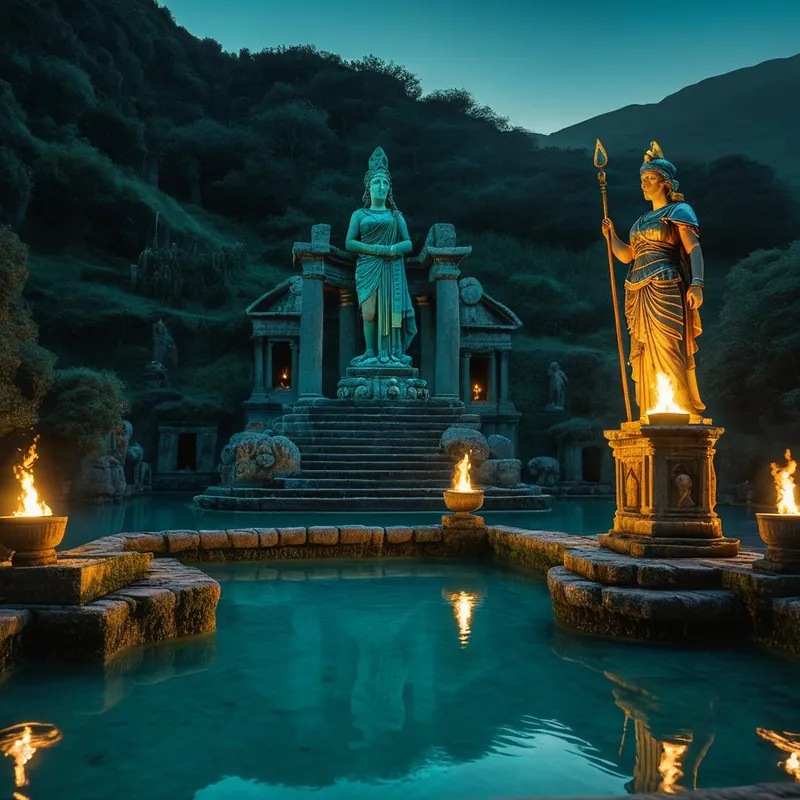
Listen, and let the steam of memory carry you. In the land of the Dobunni, where the green hills breathed a constant, warm mist, the earth herself wept. From a deep, hidden wound in the rock, she poured forth a river that was not cold, but hot as lifeblood, rich with the scent of minerals and secrets. The people knew this place. They called to Sulis in the old tongue, feeling her presence in the curative heat, in the way the waters smoothed pain from weary bones and cleared the fog from clouded eyes. This was a threshold, a place where the underworld’s fire met the surface world’s need.
Then came the eagles. The legions, with their straight roads and unwavering gods, marched into the damp green. They saw the steam rising like a signal and felt the power. But they did not hear Sulis. They heard Minerva. A goddess of wisdom, of strategy, of healing arts. The clash was not of swords, but of names. The Roman engineers, masters of channeling nature to human will, built a great temple and bath complex over the spring, a monument of stone and order. They prepared to claim the power for Rome.
Yet, when the first centurion stood at the spring’s source, libation cup in hand, the water did not still. It bubbled and churned, and the steam seemed to form shapes—not the clear owl of Minerva, but the swirling, radiant disc of a sun. A voice seemed to whisper on the vapors, not in Latin, but in a older, earthier rhythm. The priests were confounded. The goddess here would not be conquered; she would be met.
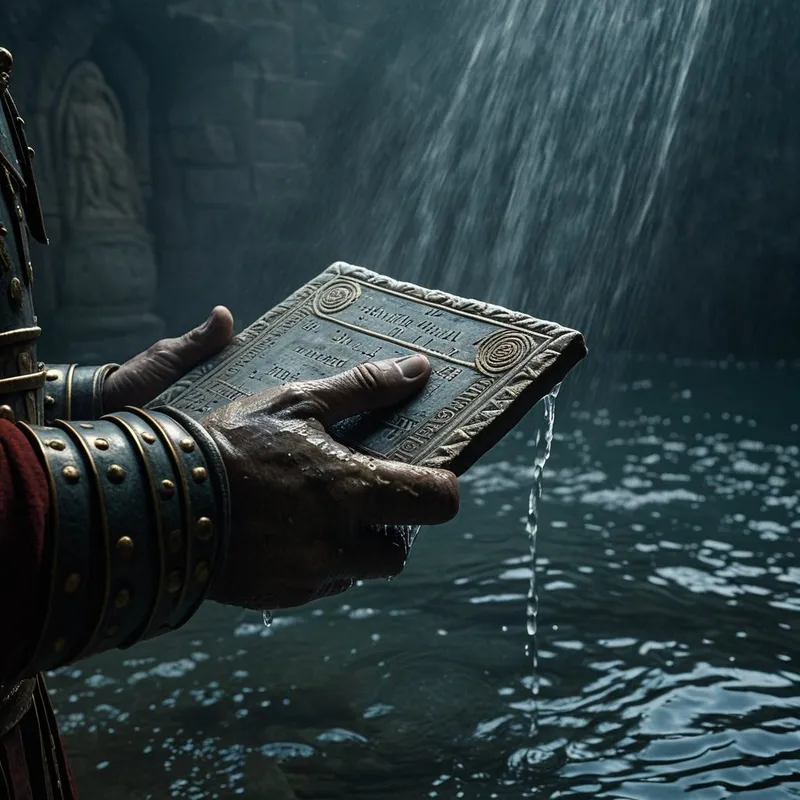
And so, a miracle of listening occurred. Instead of erasure, there was a blending. The temple rose, yes, but it was dedicated to Sulis Minerva. Her image held Minerva’s armor and stern gaze, but in her eyes was the ancient, knowing warmth of the spring. The sacred pool was not a cistern, but the very heart of the temple, left open to the sky, where the hot, sulphurous water continued its endless rise from the depths. Here, soldiers and natives alike would come. They would cast their leaden curse tablets into the water, whispering grievances to the goddess who heard all tongues. They would sink their aching bodies into the healing heat, offering prayers for restoration. The conflict found its resolution not in victory, but in a profound, steaming marriage. The wound in the earth became a font of integration, where two worlds met and were made whole in the rising mist.
Cultural Origins & Context
The story of Aquae Sulis is not a myth from a single scroll, but one written in stone, water, and lead. Its primary setting is the town of Aquae Sulis (modern-day Bath, England), a thriving Roman spa and religious site established in the 1st century AD. The “myth” is less a formal narrative and more the lived, archaeological reality of cultural syncretism. It was passed down not by bards, but by engineers, pilgrims, and the aggrieved.
The primary tellers were the Roman colonists and the subjugated (or allied) local Britons. For the Romans, the myth functioned as a validation of their interpretatio romana—the practice of equating foreign gods with their own. It demonstrated the empire’s divine right to absorb and administer all power, even the numinous power of the land. For the native population, the continued veneration of Sulis within the Roman framework was a form of cultural survival, a way to preserve the sacred essence of the land under a new name. The societal function was multifaceted: it provided a spiritual center for healing and pilgrimage, a legal venue (via curse tablets) for the disempowered to seek divine justice, and a powerful symbol of the Romano-British identity that was forming in the province. The myth was enacted every day in the ritual of the baths, a daily immersion in the blended divine.
Symbolic Architecture
At its core, the myth of Aquae Sulis is a profound symbol of the meeting between the conscious and the unconscious, between imposed order and deep, instinctual force.
The Roman temple complex represents the conscious mind: structured, logical, architectural, and strategic. It is the ego’s attempt to build a framework for understanding and controlling the world. The hot spring, however, is the unconscious: primal, chaotic, healing, vengeful, and eternally surging from a source far below the surface. It is the raw, affective life of the psyche, the place of wounds that also hold curative power.
The true healing begins not when the conscious mind builds walls around the unconscious, but when it leaves an opening in the floor to its steaming, mysterious source.
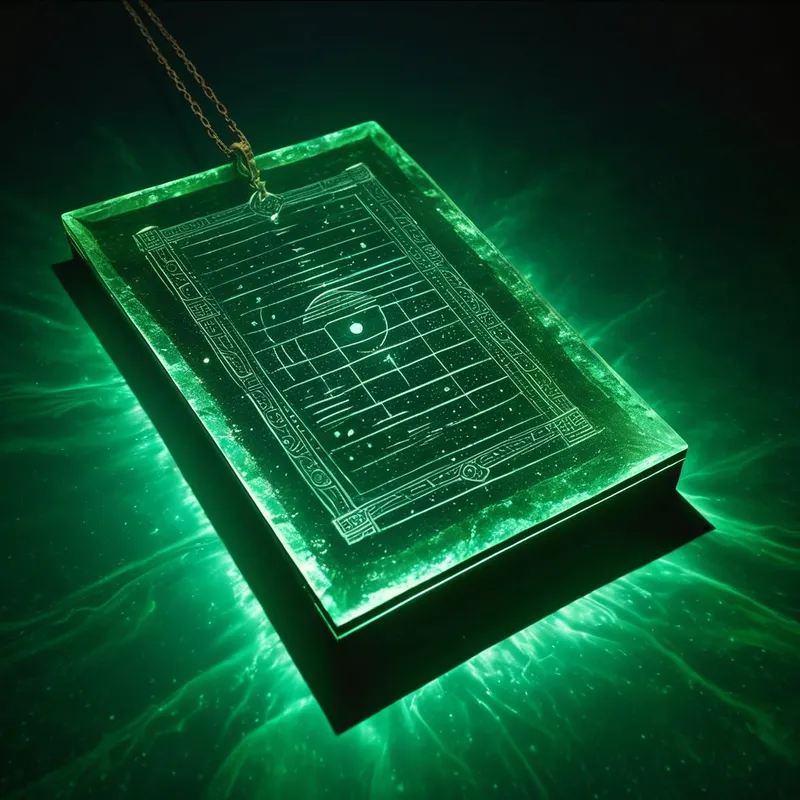
The hybrid deity, Sulis Minerva, is the symbol of the conjunctio oppositorum. She is the integrated Self. Her Minerva aspect brings wisdom, discernment, and the capacity for form. Her Sulis aspect brings the solar vitality, the deep healing, and the chthonic power of the earth itself. The curse tablets, thrown into her waters, symbolize the necessity of voicing the shadow—the repressed anger, betrayal, and hurt—and surrendering it to a process greater than oneself for transformation. The water does not refuse the poison of the curse; it accepts it and transmutes it through its own enduring, alchemical nature.
The Dreamer's Resonance
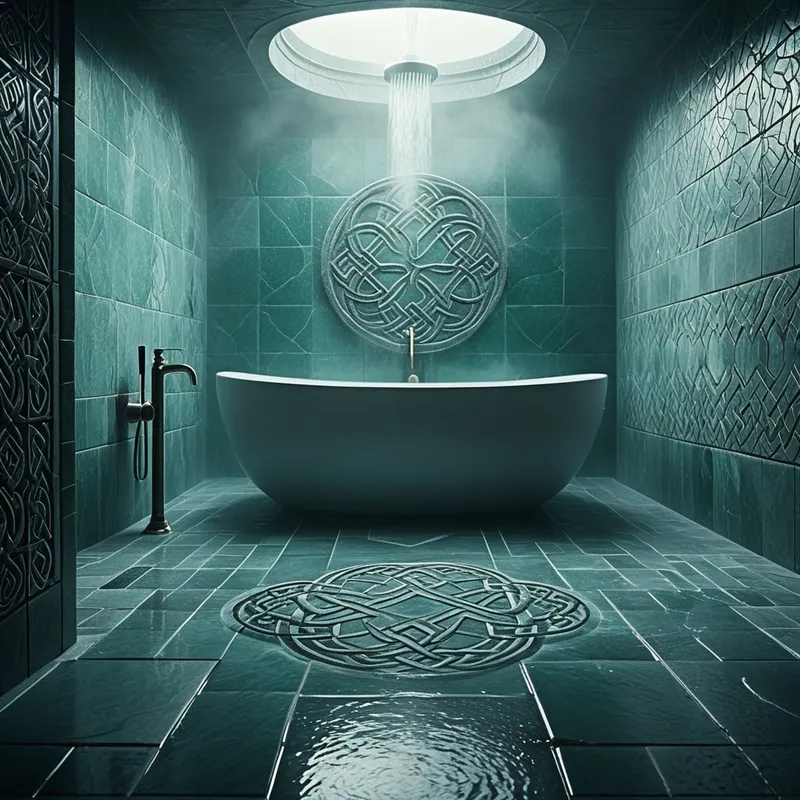
When this myth stirs in the modern dreamer, it often signals a somatic and psychological process of integration through immersion. One may dream of finding a hidden hot spring in a basement, a steaming crack in the floor of a modern office, or a bath that fills with strangely colored, warm water.
The somatic sensation is key: the feeling of heat, of being surrounded, of mineral heaviness in the water. This points to the body holding a memory or a wound that the conscious mind has tried to architect around. The psyche is indicating that the path to healing is not more analysis or structure (more temple walls), but a willing descent into the affective, messy, "hot" material. Dreaming of writing a grievance on a piece of metal and throwing it into such water mirrors the ancient ritual. It signifies the dreamer’s unconscious urging them to consciously acknowledge and "curse out" a deep-seated hurt, not to dwell in it, but to ritually release it to a larger, transformative process within themselves. The dream is an invitation to stop building over the wound and to instead learn to bathe in its waters.
Alchemical Translation
The alchemical process modeled here is the solutio—the dissolution. In the laboratory, this is the stage where solid matter is dissolved in liquid. In the psyche, it is the dissolution of rigid ego structures in the waters of the unconscious.
The modern individual often approaches their pain (the "wound") as the Romans first approached the spring: they want to build a temple of coping strategies, rationalizations, and personal narratives over it to contain and control its power. The Aquae Sulis myth shows that the path to individuation requires the courage to do the opposite: to let the hot, chaotic, mineral-rich waters of the primal affect rise up and dissolve those very structures.
Individuation is not the construction of a perfect temple-self, but the sacred practice of maintaining an open pool to the steaming, mysterious depths within.
The "alchemical translation" is the creation of the inner Sulis Minerva. It is the development of a psychic function that can hold both the disciplined, strategic awareness (Minerva) and the deep, intuitive, healing power of the instinctual self (Sulis). This is not a peaceful coexistence, but a dynamic, steaming interaction. The curse tablets are our neuroses, our resentments, our shadow material. The work is to inscribe them—to bring them to consciousness—and then to surrender them to the solutio, trusting that the alchemical waters of the Self have the power to transmute leaden grievances into something else. The goal is to become, like the sacred site itself, a place where what is deep, hot, and wounded rises continuously to the surface, not to destroy, but to heal and make whole.
Associated Symbols
Explore related symbols from the CaleaDream lexicon: