Gullinkambi Myth Meaning & Symbolism
A golden rooster perched in the gods' hall, whose crow shatters cosmic silence to herald the twilight of the gods and the dawn of a new world.
The Tale of Gullinkambi
Listen. There is a silence that is not empty, but full. It is the silence of Valhalla between battles, when the mead horns are drained and the einherjar sleep deeply on their benches, their dreams of glorious combat still echoing in the stone. It is the silence of the gods in council, when all words have been spoken and only the weight of destiny remains. It is the deep, green silence beneath the boughs of Yggdrasil, where the roots drink from wells of memory and wisdom.
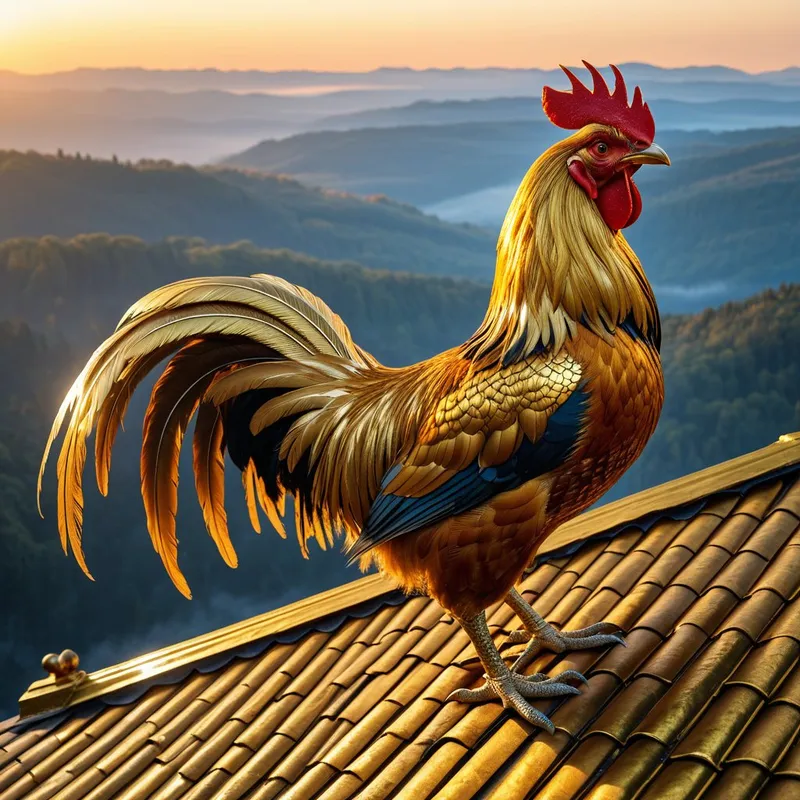
In this pregnant hush, perched upon the highest roof-tree of the gods' own hall, sits a creature of living metal and dawn. This is Gullinkambi. His feathers are not merely the color of gold; they are gold, hammered thin by divine smiths, each barb catching the first and last light. He is motionless, a statue, a fixture. The winds of the nine worlds may howl, but they do not ruffle him. He is waiting. He is always waiting.
Far below, in the murky realm of Midgard, another rooster, rust-red and named Fjalar, waits in the giant's yard. Deeper still, in the cold halls of Hel, a rooster so black it is a hole in the world, named unnamed, stands vigil. They are a trinity of alarm clocks wound by the Norns themselves.
The silence deepens. It becomes a pressure. In the east, beyond the mountains where the giants brood, the sky does not lighten with dawn, but sickens. A slow, bruise-colored stain spreads. The wolves Sköll and Hati run faster, their breaths hot on the heels of the sun and moon. The great serpent Jörmungandr stirs in the ocean deep, causing tidal waves of nausea across the worlds. The bonds that hold the trickster Loki begin to steam and crack.
And then—it comes.
Not a sound from the battlefield, not a war cry from the gods. It begins with a tension in the golden throat upon the roof. A vibration so subtle it is felt in the marrow of the world tree. Gullinkambi draws a breath that pulls light from the fading stars. His comb blazes. His neck arches.
His crow splits the universe.
It is a clarion of pure, piercing awareness. It is not a song; it is a shattering. That single, golden note fractures the sacred silence of Valhalla. It rings through the rafters, shakes the shields on the walls, and falls upon the ears of the sleeping einherjar and the watchful god, Odin. It is the ultimate reveille. Awake. The time is now. The long waiting is over.
As the note fades, it is answered. From Midgard, the rusty crow of Fjalar. From Hel, the hollow, chilling crow of the unnamed. The signal has been given. The chain reaction of doom is initiated. Doors burst open. Armor is donned. The Bifrost trembles. The final march begins. All because a golden bird on a rooftop fulfilled its one, terrible, beautiful purpose.
Cultural Origins & Context
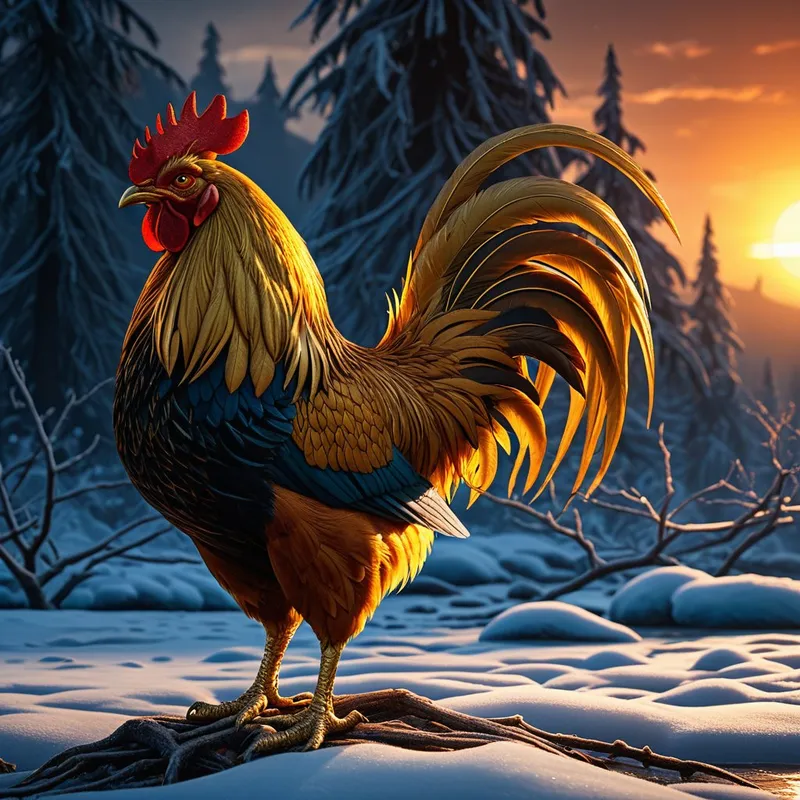
The myth of Gullinkambi is preserved primarily in the Völuspá ("The Prophecy of the Seeress"), the cornerstone of the Poetic Edda. Here, in the haunting words of a dead völva (seeress) addressing Odin, the entire cosmic drama of Ragnarok is laid bare. Gullinkambi's crow is a specific, poetic detail in this grand apocalyptic sequence.
This was not a children's bedtime story. It was eschatology—a sacred narrative about the end of things. It was recited and pondered in the long, dark winters of Scandinavia, a culture intimately acquainted with cycles of death and rebirth in nature. The myth served a crucial societal function: it framed destiny itself as inescapable yet orderly. Even the end of the gods is preceded by a sign, a protocol. The rooster's crow imposes a grim but necessary structure on chaos. It tells the listener that the universe, however brutal, operates on signals and observances. The watchman must crow; the warrior must heed it. This reinforced the Norse ideals of vigilance (vörðr) and fulfilling one's ordained role, even unto death.
Symbolic Architecture
Gullinkambi is not a actor in the drama but the herald of the script. He is the embodied alarm of fate. His symbolism is multifaceted:
- The Awakener to Inescapable Truth: He represents the moment of profound, disruptive realization. The truth he heralds is not personal but cosmic—the end of an age. Psychologically, he symbolizes that shocking insight or event that shatters our personal "silence" or denial, forcing a confrontation with a reality we have long sensed but avoided.
The call to consciousness is rarely gentle. It is a crow that shatters the comfortable dream, a golden blade of awareness cutting through the fog of sleep.
- The Messenger Between States: Perched on the roof of Valhalla, he exists at the boundary between the divine realm and the sky, between sleep and action, between the old world and the new. He is the threshold personified. His crow is the sound of the threshold being crossed.
- The Trigger of the Inevitable: In a cosmology woven with fate (ørlög), Gullinkambi is the catalyst. He does not cause Ragnarok; the causes are already in motion. He is the designated signal that the process has reached its point of no return. He is the "go" in the cosmic machinery.
The Dreamer's Resonance
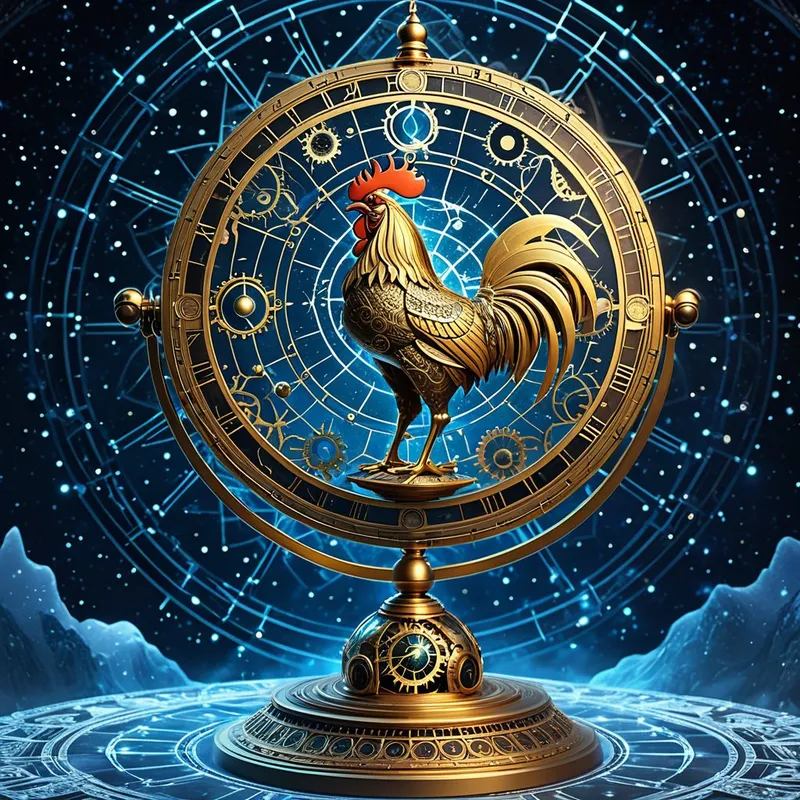
To dream of a rooster, especially one of radiant or metallic appearance, crowing with earth-shattering volume, is to experience the Gullinkambi pattern in the personal psyche. This is not a dream of gentle morning. It is an alarm dream.
Somatically, the dreamer may awaken with a start, a racing heart, or a feeling of profound urgency—the body resonating with the "crow." Psychologically, this dream marks a critical juncture. The "sleep" it interrupts is often a period of stagnation, willful ignorance, or repressed knowledge. The crow is the psyche's insistent, non-negotiable demand: You can no longer ignore this. The time for passive waiting is over. It often precedes a life crisis, a necessary ending, or a breakthrough that, while painful, is essential for growth. The dream is the self's herald, crowing to the ego that its current world—its habits, relationships, or self-image—is untenable and must now face its reckoning.

Alchemical Translation
The journey of Gullinkambi models a crucial, non-negotiable phase in the alchemy of individuation: the mortificatio or nigredo, the blackening. This is the death of the old, outmoded state of being.
In our personal psychology, we all have our "Valhalla"—a constructed inner realm of achieved ideals, defended identities, and cherished self-narratives where we rest, often in arrogant or weary slumber. Our "Gullinkambi" is that inner voice of deep, intuitive truth—the Self, not the ego. It waits, patient and golden, until the tension between our lived reality and our soul's purpose becomes unsustainable.
The psyche's dawn is often heralded by the death of what we thought was day.
Its crow is the moment of painful, luminous clarity. It is the realization that a marriage is over, a career path is a dead end, a long-held belief is a prison. This crow initiates our personal Ragnarok—the terrifying but necessary destruction of the inner pantheon (our ruling complexes and god-like assumptions). We are called to battle our own "Fenrir" of ravenous anxiety, our "Jörmungandr" of encircling depression.
The triumph of the myth is not in avoiding the battle, but in heeding the call. The alchemical gold is not in Gullinkambi himself, but in the awakened consciousness that rises because of his crow. To integrate this myth is to learn to listen for that golden, disruptive voice within—not with terror, but with the solemn respect of a warrior who knows a sacred duty is being announced. It is to understand that before any new world can be born, the rooster on the roof of our old world must crow, and we must have the courage to open our eyes.
Associated Symbols
Explore related symbols from the CaleaDream lexicon: