The Dusk of the Gods Myth Meaning & Symbolism
The final, cataclysmic battle where gods, giants, and monsters perish, leading to the world's destruction and subsequent rebirth from the sea.
The Tale of The Dusk of the Gods
Listen. The wind from the north carries a scent older than iron, colder than the grave. It is the breath of Jotnar, stirring in their long sleep. For three winters without summers, the world has shivered. Brothers turn to blades, all bonds of kinship frayed. The sun and moon, forever hunted, grow dim and weary in their celestial flight.
Then, a sound splits the roots of the world. A crowing, clear and terrible, that shakes the halls of the dead and stirs the sleep of gods. It is Gullinkambi. From the ironwood, the wolf Fenrir breaks his magical bonds, his jaws gaping wide enough to scrape sky and earth. The great serpent Jormungandr heaves his coils from the deep, poison flooding the seas as he surges toward land. The ship Naglfar, built from the uncut nails of the dead, is loosed, its helmsman a grinning, fiery figure.
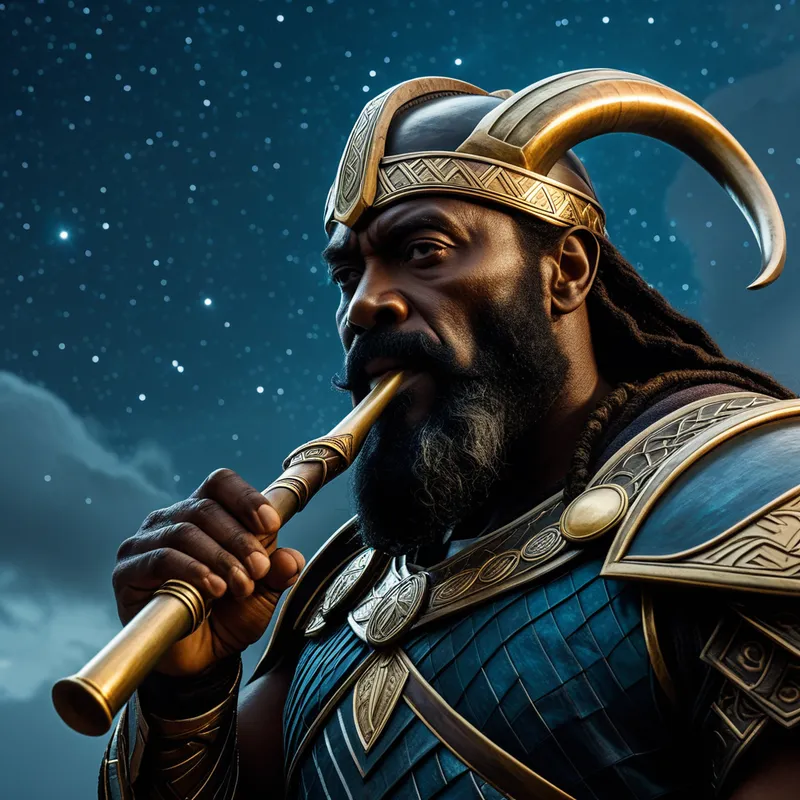
Heimdall sees all. He puts the mighty horn Gjallarhorn to his lips and blows a note that cracks the silence of ages. The gods, in Valhalla, set down their mead. They arm themselves, not for glory, but for an end written before their names were first spoken. They ride to Vigrid, the field of battle.
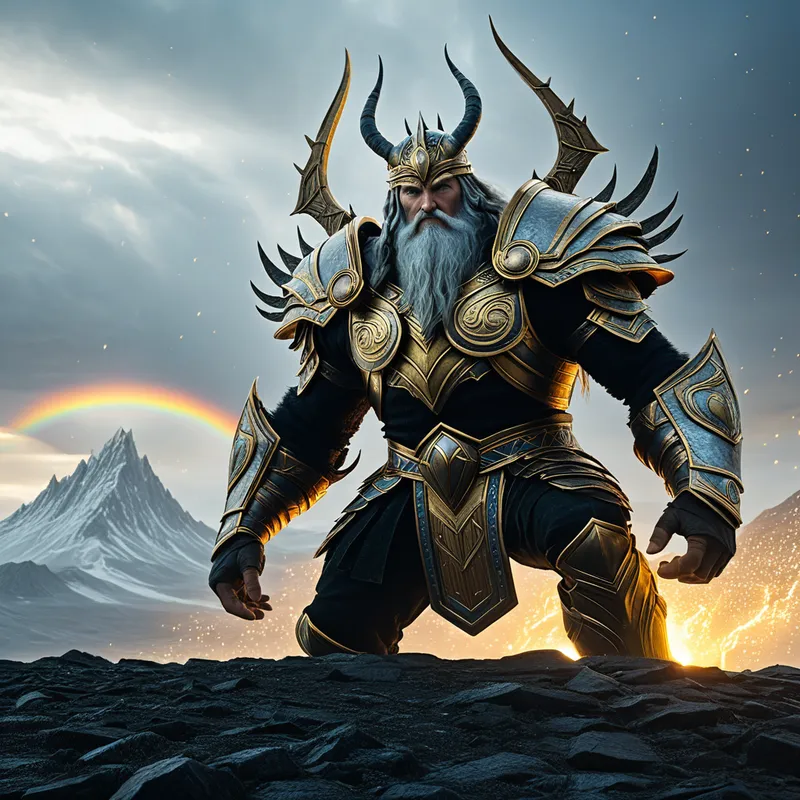
Here, the tapestry unravels. Odin, in his golden helm, rides to meet Fenrir. The wolf’s maw closes. The All-Father falls. His son Thor, mightiest of all, strides forth to face Jormungandr. With a thunderous blow from his hammer Mjolnir, he smites the serpent’s head, and staggers back nine steps, drowned in the beast’s venom, falling dead beside his foe. Loki, freed from his bonds, fights Heimdall, and they slay each other. The fire-giant Surt swings his flaming sword, and the world-tree Yggdrasil trembles. The stars go out. The earth sinks beneath the boiling sea.
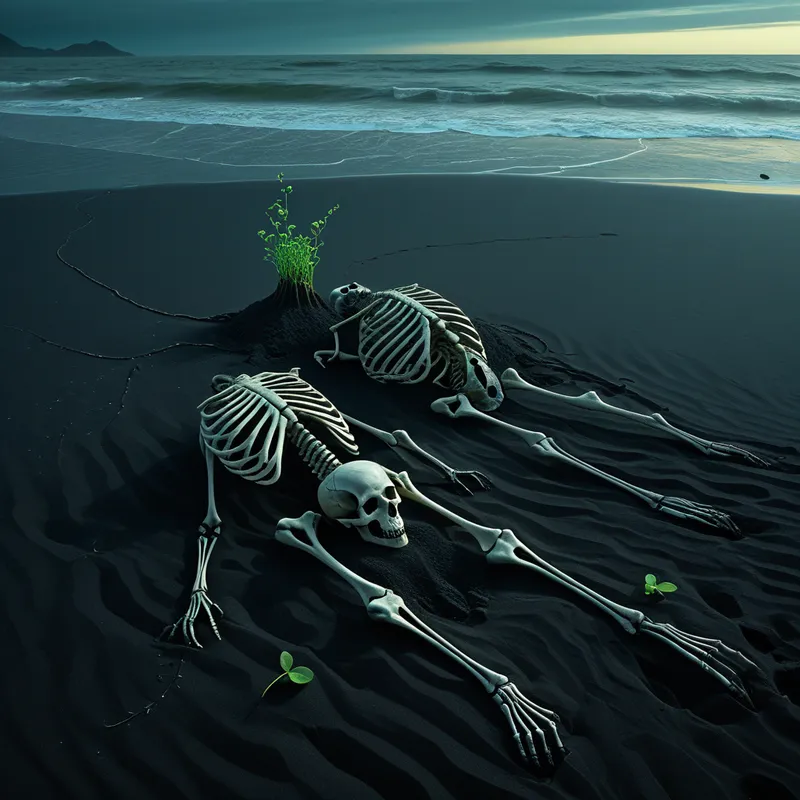
Silence. A wind over dark waters. Then, a stirring. From the deep, land rises again, green and fair. In a hall untouched by fire and flood, the gods Vidar and Vali stand. Magni and Modi find Mjolnir in the grass. Two human survivors, Lif and Lifthrasir, emerge from the wood of Hoddmimir. And in the sky, a daughter of the sun, brighter than her mother, begins her new journey.
Cultural Origins & Context
This prophecy of Ragnarök was not a distant fear but a deeply embedded cultural compass. It was preserved primarily in two 13th-century Icelandic texts, the Prose Edda of Snorri Sturluson and the older, poetic verses of the Poetic Edda. These were Christian-era recordings of a much older, oral tradition, the lifeblood of the Viking Age skalds.
The myth functioned as a cosmic anchor in a harsh, unforgiving world. It did not preach a happy ending or a final victory for the divine order. Instead, it presented an inescapable, noble tragedy. It taught that even the gods are subject to wyrd, and that the highest courage lies in facing a doomed fate with resolve. For a warrior culture, this provided a profound framework for understanding mortality, loss, and the cyclical nature of existence. The story was told not to inspire hope for salvation, but to instill the courage to meet one’s own "dusk" with dignity, knowing that from all ends, something new—though different—must emerge.
Symbolic Architecture
Ragnarök is not merely an apocalypse; it is the psyche’s most profound reckoning. It symbolizes the necessary death of an outworn psychic structure—a dominant consciousness, a ruling complex, a worldview that has become rigid and tyrannical.
The gods of Asgard represent an established, heroic ego-consciousness. Odin is the ruling principle of wisdom and order; Thor is the brute force of willpower and defense. Their antagonists—Fenrir, Jormungandr, Loki, Surt—are the repressed contents of the shadow and the collective unconscious: untamed instinct (the wolf), encircling poison from the depths (the serpent), chaotic trickster intelligence (Loki), and the purging, transformative fire (Surt). The long winter is a state of psychic stagnation, where life and growth (summer) are impossible.
The Dusk of the Gods is the ego’s confrontation with the fact that its reign is temporary, and that its destruction is written into the fabric of its own creation.
The battle is not good versus evil, but a collision between a dying order and the chaotic, vital forces it has tried to bind and control. The survival of Vidar, Vali, Magni, and Modi signifies that not all is lost; certain resilient qualities (silent strength, poetic justice, raw power, and courageous anger) are carried forward. The new sun is a consciousness reborn, purified of its previous limitations.
The Dreamer's Resonance
When this myth stirs in modern dreams, it announces a profound, often terrifying, psychological process. The dreamer may not see gods and giants, but they will feel the archetypal landscape.
Dreams of world-ending floods, collapsing buildings, or being pursued by immense, shadowy beasts echo the rising of Jormungandr and Fenrir. These are somatic experiences of the unconscious breaking its banks. A dream of a final, inevitable confrontation with a powerful father-figure or authority mirrors Odin’s fall. The somatic feeling is often one of immense pressure, dread, and a chilling certainty that a long-avoided ending has arrived.
This is the psyche’s "long winter." In waking life, it manifests as depression, existential crisis, the collapse of a career or relationship that once defined the self—a feeling that the old world is dying and nothing has emerged to take its place. The dreamwork of Ragnarök is the psyche preparing for a death-and-rebirth sequence, forcing the dreamer to stand on the Vigrid Plain of their own soul and face what must be destroyed so that life can continue.
Alchemical Translation
For the modern individual seeking wholeness, the path of individuation is a personal Ragnarök. The alchemical process mirrored here is nigredo—the blackening, the putrefaction, the utter dissolution of the old prima materia of the personality.
The first step is the Fimbulwinter, a conscious entry into a period of introspection, where the easy comforts and certainties of the old "summer" self are withdrawn. This is a voluntary chilling, a stripping away.
Next comes the Unbinding. This is the shadow-work: consciously confronting the Fenrir of one’s rage, the Jormungandr of deep-seated poison (shame, trauma), and the Loki of one’s own chaotic, creative, and destructive trickery. These are not enemies to be slain, but forces whose bonds must be loosened and acknowledged, even as they threaten to destroy the current ego-structure.
The Battle at Vigrid is the conscious, agonizing integration. It is allowing the old identity—the "god" you thought you were (the wise leader, the strong protector)—to die. This is the ultimate sacrifice of the ego to the greater Self.
The rebirth from the sea is not a return to the old self, but the emergence of a new consciousness, tempered by fire and flood, carrying forward only the essential, resilient fragments of what was.
The survivors—Lif and Lifthrasir ("Life" and "Life-Yearner")—represent the bare, essential spark of consciousness that remains after the cataclysm, ready to begin the world anew, not from a place of naive innocence, but from a place that has known and endured the Dusk. The individuated Self is not a perfect, static god in a shiny hall, but a being rooted in a world that remembers its own destruction, and is therefore truly, resiliently, alive.
Associated Symbols
Explore related symbols from the CaleaDream lexicon: