
Salmon of Wisdom Myth Meaning & Symbolism
A magical salmon gains all the world's knowledge. A young hero's quest to taste it reveals the perilous, transformative path to true wisdom.
The Tale of Salmon of Wisdom
Listen. The story begins not with a king, but with a pool. A deep, dark pool in the shadow of the nine sacred hazels of wisdom that grow beside the Well of Segais. From their branches fall purple nuts, bursting with the knowledge of all arts and sciences. They drop into the water, where they are consumed by a solitary, ancient salmon.
This salmon, the Bradán Feasa, swims in those shadowed depths, and with each nut consumed, it absorbs the wisdom of the world. It becomes not just a fish, but a living library, a swimming oracle. Its silver scales begin to hold a faint, inner luminescence. Its eye sees all that was, is, and will be.
The great poet and seer, Finnegas, knows of this salmon. For seven long years he has camped by the river Boyne, his nets cast, his spirit bent on one purpose: to catch this creature and consume its flesh, thereby claiming its omniscience for his own. His fire is always ready. His patience is the patience of stone and stream.
One day, the salmon comes. It is not caught by cunning, but perhaps by a destiny greater than the poet’s own desire. Finnegas hauls the radiant, thrashing creature onto the bank. Its light is almost blinding. He knows the ritual: he who cooks and eats the first piece shall gain the wisdom. He prepares the fire, spits the salmon, and turns to his young apprentice, a boy named Demne, later called Fionn.
“Watch this,” Finnegas commands, his voice tight with anticipation. “Do not touch it. Do not taste it. Its power is for me.”
The boy nods, his eyes fixed on the glorious fish as it sizzles over the flames. A bubble of hot fat rises on its skin, bursts, and sprays onto Fionn’s thumb. The burn is instant and searing. Without thinking, he jams his thumb into his mouth to soothe the pain.
In that moment, the world dissolves and reassembles. The taste of the salmon’s essence is not of flesh, but of lightning and river-song, of root-tangled earth and star-charted sky. Visions flood him: the battles of long-dead kings, the secret names of the wind, the sorrow in the heart of a doe, the mathematics of the tides. The wisdom of the hazelnuts, now housed in the salmon, flows into the boy.
Finnegas returns, sees the dazed, knowing light in the boy’s eyes, and understands. The great sigh he releases is not just of disappointment, but of a profound, weary acceptance of a prophecy fulfilled. He bids the boy eat the rest of the salmon, for its gift has chosen its vessel. From that day forward, whenever Fionn mac Cumhaill needs to access the deep wells of knowledge, he need only suck his thumb, and the wisdom of the salmon flows once more.

Cultural Origins & Context
This myth is a cornerstone of the Fenian Cycle of Irish mythology, preserved in medieval manuscripts like the Lebor na hUidre. It was not mere entertainment but a foundational narrative of sovereignty and poetic inspiration. The fili, the poet-seers, were the custodians of such tales. For them, the story of the Salmon was a map of their own vocation: the long apprenticeship (Finnegas’s seven-year vigil), the pursuit of a elusive, numinous source of knowledge (the hazelnuts, the well), and the recognition that true wisdom often bypasses the seeker to land, unexpectedly and irrevocably, on the prepared but innocent vessel.
The setting by the Boyne is critical, as this river was associated with the goddess Boann and was a sacred center of learning. The hazel tree was revered for its connection to wisdom and poetic insight. Thus, the myth encodes a sacred geography of knowledge, where landscape, flora, fauna, and human destiny are woven into a single, living tapestry of meaning.
Symbolic Architecture
The myth presents a profound symbolic system for the acquisition of wisdom. It is not a simple transfer of information, but a dangerous, alchemical process.
Wisdom is not found; it is ingested. It requires a vessel to be cooked in the fires of experience, and its transfer often happens through a wound.
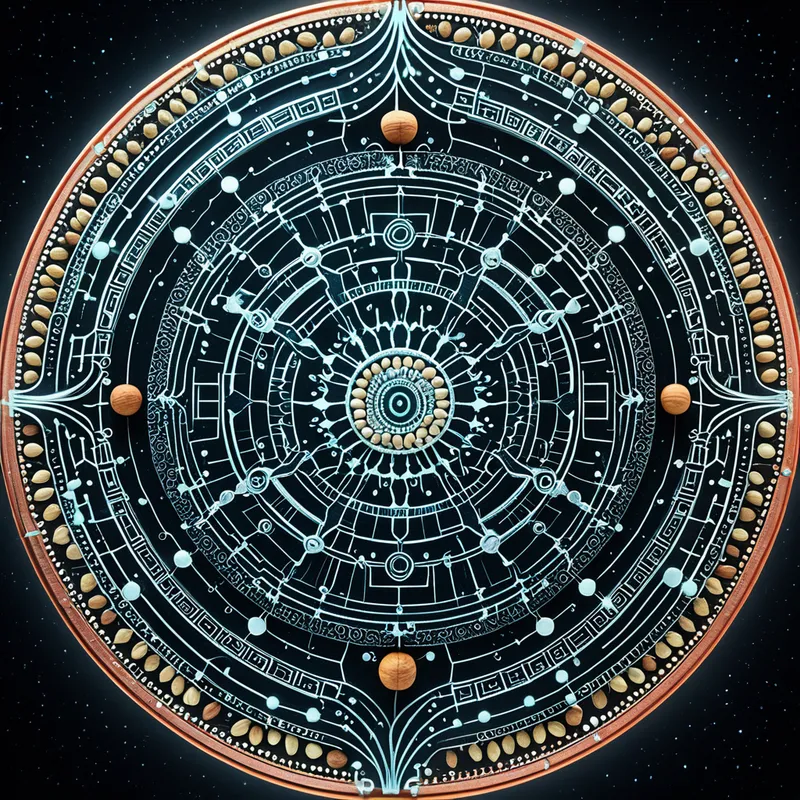
The Hazelnuts represent raw, potential knowledge—the facts and arts of the world in their pure, unintegrated form. The Well of Segais is the deep, unconscious source from which all creative and intellectual life springs. The Salmon is the transformative agent. It does not create wisdom but metabolizes it. It swims in the unconscious (the river), consuming raw knowledge and transmuting it into a form that can be carried—a living, embodied wisdom.
Finnegas symbolizes the ego’s directed, willful pursuit of enlightenment. His seven-year vigil is the disciplined path of the scholar or ascetic. Yet, his failure is instructive: wisdom cannot be captured solely by will. Fionn, the innocent apprentice, represents the receptive, unprepared Self. His acquisition of wisdom is accidental, born from a spontaneous reaction to pain. The burned thumb is the crucial symbol: the wound as the gateway. True, transformative knowledge always costs us something; it burns its way into our being.
The Dreamer's Resonance
When this myth pattern surfaces in modern dreams, it signals a profound psychic shift. Dreaming of a radiant or talking fish, especially a salmon swimming upstream, often points to an encounter with deep, instinctual knowledge rising from the unconscious. The dreamer may be on the verge of a significant insight that feels both destined and frightening.
Dreaming of burning one’s hand or mouth in the context of receiving something (food, a gift, a word) can mirror Fionn’s thumb. It suggests the dreamer’s psyche is processing the cost of a new awareness. The knowledge coming may be painful to integrate—a truth about oneself, a life direction, or a creative burden. The somatic feeling is often one of a shocking, electrifying infusion, followed by a sense of heavy responsibility. To dream of watching someone else cook a magnificent meal you are forbidden to eat speaks to the Finnegas complex: the frustration of the ego watching a destined gift prepare itself for a deeper part of the Self.

Alchemical Translation
For the modern individual, the myth models the process of individuation—the psychic transmutation into one’s true, wise Self.
The first stage is the Long Vigil (Finnegas). This is our conscious seeking: education, therapy, spiritual practice, the dedicated work of knowing ourselves. It is necessary but insufficient. It prepares the bank of the river and builds the fire.
The second is the Numinous Catch (The Salmon). This is the arrival of the unconscious content—the brilliant, autonomous symbol or insight that suddenly surfaces. It could be a powerful dream image, a synchronicity, a moment of inspiration, or a crushing life event that contains a hidden kernel of truth. We do not create it; we encounter it.
The alchemical fire is not for destroying, but for releasing the spirit trapped in matter. So the burn of insight releases the soul’s knowledge trapped in experience.
The third and crucial stage is the Accidental Ingestion (Fionn’s Thumb). This is the integration, which is never neat. It happens through a wound, a mistake, a moment of vulnerability. We “taste” the insight in a way that bypasses our intellectual defenses. It burns, and we instinctively put the wound to our mouth—we nurse it, we internalize it. This is the moment the raw, unconscious content becomes embodied wisdom, a part of our operating consciousness.
Finally, there is the New Faculty (The Sucking of the Thumb). The wisdom does not remain a one-time event. It becomes a reliable, somatic touchstone. For the integrated individual, accessing deep knowing is not an arduous intellectual retrieval but a turning inward to a felt sense, an intuition, a bodily knowing. The wound becomes the well. The scar becomes the conduit. The seeker, having been burned by the truth, becomes the sage, whose wisdom flows from the very place he was once hurt.
Associated Symbols
Explore related symbols from the CaleaDream lexicon: