Kama
The Oracle's Essence
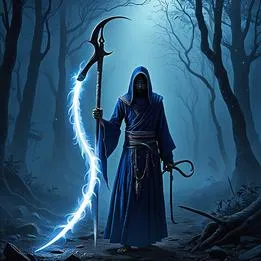
A ritual sickle or curved blade used in Hindu and Buddhist traditions, symbolizing the cutting of attachments and spiritual liberation.
Interpretive Themes
Modern Visibility
In contemporary spirituality, it's often viewed as a symbol of mindfulness and intentional action, while in popular culture it's sometimes confused with the deity of love.
◈ Mythological Resonance
Kamapua'a the Pig God Myth Meaning & Symbolism
Hawaiian traditionEchoing the root of his name, this symbolizes desire, attachment, and the generative urge that drives both creation and conflict.
Cultural Lenses
South Asian
Learn More →In Hindu and Buddhist traditions, the kama (ritual sickle) represents cutting attachments (kleshas) to achieve moksha. Used in tantric rituals, it symbolizes the union of wisdom and method, with modern yoga adapting it metaphorically.
Jungian
Learn More →The kama as an archetypal tool representing the active principle of consciousness cutting through unconscious complexes. It symbolizes the individuation process where the ego actively separates from psychic entanglements.
Freudian
Learn More →A phallic symbol representing aggressive masculine energy and the castration complex. The cutting action symbolizes separation anxiety from the mother and the development of individual identity through severance.
Gestalt
Learn More →Represents the dreamer's ability to make clear distinctions and boundaries. The kama is the self's tool for differentiating figure from ground, creating separation where there was fusion.
Cognitive
Learn More →A mental schema for problem-solving and decision-making. The kama represents cognitive processes that cut through ambiguity, helping the mind eliminate irrelevant information and focus on essentials.
Evolutionary
Learn More →An extension of early human tool use for survival, representing our species' unique ability to shape environment. Symbolizes the cognitive leap that allowed humans to actively modify their circumstances.
East Asian
Learn More →Similar to the Chinese lian dao (sickle), it represents agricultural cycles and the harvest. In Taoist context, it symbolizes cutting through worldly desires to achieve wu wei (effortless action).
Middle Eastern
Learn More →Resonates with the scimitar's symbolic meaning in Islamic art - divine justice and the separation of truth from falsehood. Represents the decisive action required in spiritual warfare (jihad al-akbar).
European
Learn More →Echoes the scythe of Father Time and the Grim Reaper, representing mortality and inevitable endings. In Celtic tradition, similar sickles were druidic tools for harvesting sacred plants.
African
Learn More →Similar to ritual knives in West African traditions used in initiation ceremonies. Represents the cutting away of childhood identity and the deliberate creation of adult social roles through ritual transformation.
Modern Western
Learn More →Often misunderstood as solely the love god, but in New Age spirituality represents 'cutting cords' of toxic relationships. In productivity culture, symbolizes decisive action and eliminating distractions.
Global/Universal
Learn More →A cross-cultural symbol of active transformation found in agricultural, martial, and spiritual contexts worldwide. Universally represents humanity's capacity to consciously shape reality through deliberate action.
Contextual Nuances
Holding kama
Ready for action.
Cutting vines
Freeing from bonds.
Receiving kama
Sacred responsibility given.
Losing kama
Powerlessness felt.
Sharpening kama
Refining intentions.
Questions for Reflection
- "What attachments in your life feel ready to be cut away?"
- "How do you wield your personal agency as a transformative tool?"
- "What would harvesting with this kama look like in your waking life?"
Related Weavings
The Portal is Always Open
Every dream is a personalized dispatch from the deep. Don't let yours fade into static.
Interpret Full Dream