Noatún Myth Meaning & Symbolism
The myth of Njörðr's hall, Noatún, a sanctuary by the sea, embodying the reconciliation of opposites and the soul's need for a sacred harbor.
The Tale of Noatún
Listen. Can you hear it? Beyond the crash of the surf and the cry of the gull, there is a place where the sea does not rage, but sings. A lullaby for the weary. They call it Noatún.
It was not won in battle, nor forged in fire. It was offered, a gift from the deep. For its master, Njörðr, came to the Æsir not as a conqueror, but as a hostage of peace. His hands, which once calmed storms and filled nets, were empty. His heart, which beat in time with the tides, was landlocked in the high halls of Asgard, where the air was sharp with ambition and the clang of swords.
He walked the golden paths, a stranger. The laughter of the gods was a dry wind to him, who knew the salt-spray's kiss. He missed the heave of the deck beneath his feet, the groan of timber, the vast, breathing horizon. In his dreams, he heard the seals calling. In his waking hours, he felt a hollow ache, a longing for the element that was his very breath.
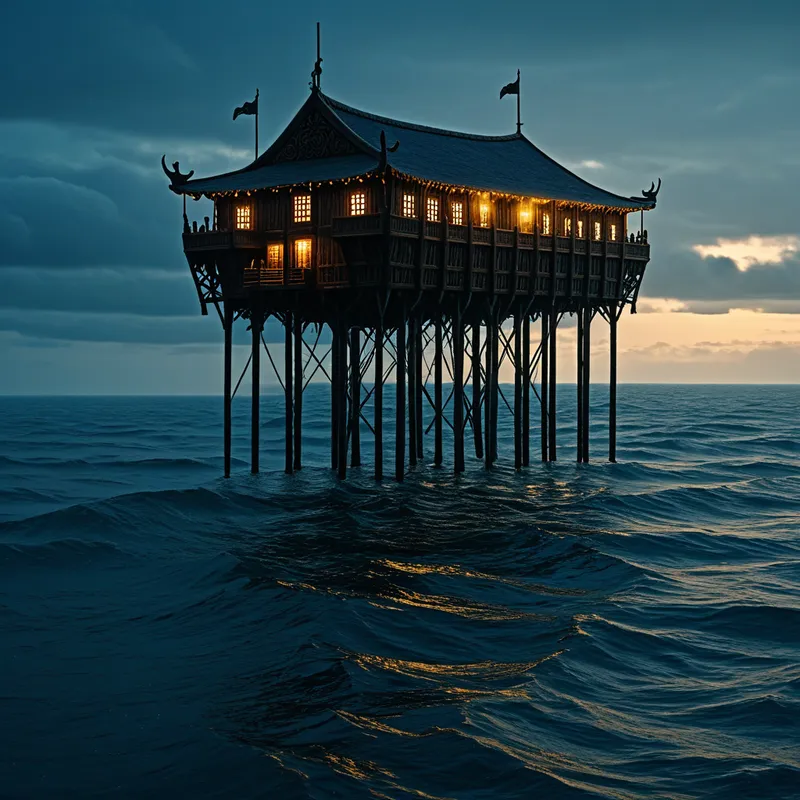
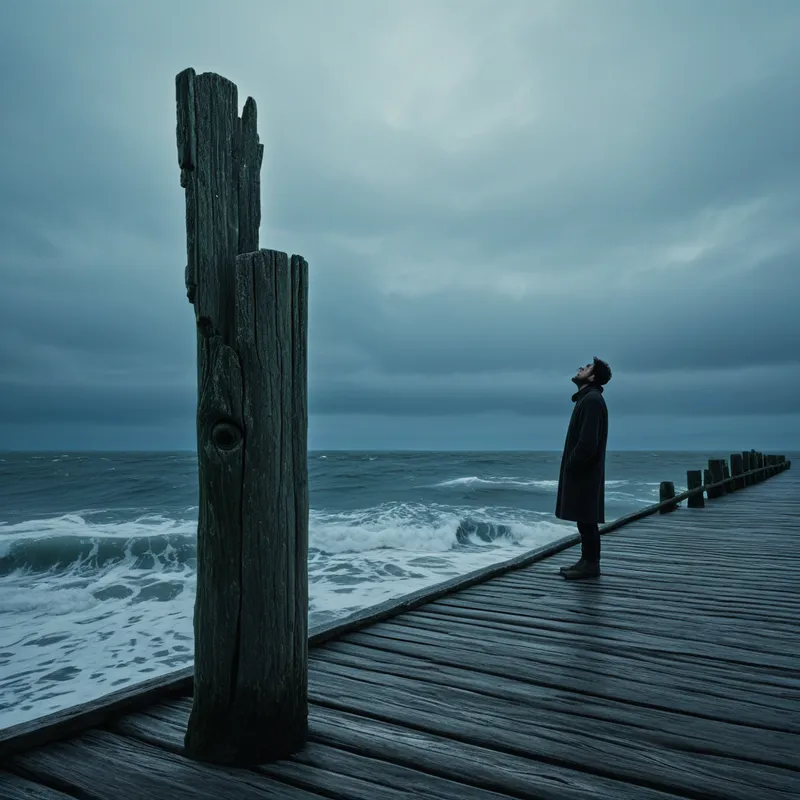
Then, in an act of reconciliation, the Æsir gave him a dwelling. Not within the walls of Asgard, but at the very edge of the world, where the solid land yearns for the sea. They built for him a hall unlike any other. Noatún was not raised on a mountain, but on pilings driven into the shallows. Its walls were of seasoned driftwood, silvered by time and tide. Its threshold was not stone, but a wooden jetty that reached out like an arm into the embrace of the water.
Here, Njörðr came home. Here, the wind in the ropes was his symphony. The lap of waves against the pillars was his heartbeat. From this sacred harbor, he could gaze inland to the world of men and gods, or outward to the trackless realm of Ægir and Rán. Noatún became the still point between the two great restless forces—the fertile, demanding land and the deep, unknowable sea. It was a place of safe anchorage, where ships, and souls, could find respite from their journeys. And from this hall of harmony, Njörðr ruled the winds that filled sails and the riches that washed ashore, a quiet god in his haven, listening always to the song of the deep.
Cultural Origins & Context
The myth of Noatún is preserved in the ancient eddic poetry, primarily within the Poetic Edda and referenced in Snorri Sturluson's later Prose Edda. Unlike the thunderous tales of Thor or the cunning schemes of Loki, the story of Njörðr and his hall is not one of dramatic action, but of atmosphere and placement. It is a myth of the coastline, born from a culture for whom the sea was both highway and grave, provider and destroyer.
Njörðr himself is a figure of the Vanir, older gods of earth and water who were, according to myth, incorporated into the Æsir pantheon after a great war. His presence in Asgard is a symbol of that hard-won integration. The telling of Noatún's tale would have resonated deeply with Norse sailors, traders, and farmers living at the mercy of the elements. It gave divine sanction to the human need for a safe harbor—a physical port, yes, but also a psychological home. The myth functioned as a spiritual map, charting a place of equilibrium between the known world and the terrifying, alluring unknown of the ocean, a necessary concept for a people perpetually poised between settlement and exploration.
Symbolic Architecture
Noatún is not merely a location; it is a living symbol of the temenos—the sacred, bounded precinct. Psychologically, it represents the Self's sanctuary, the consciously constructed inner space where opposing elements of the psyche can meet without annihilating each other.
Njörðr embodies the archetype of the mediator. He is the hostage who becomes the host, the sea-god on land. His longing is the soul's longing for its native element, for authenticity. Noatún is the resolution: a dwelling that is neither fully land nor fully sea, but a unique third thing born of their marriage.
The true sanctuary is not an escape from conflict, but the vessel that can hold it. It is the psychic structure that allows the stormy unconscious (the sea) to communicate with the structured ego (the land) without flooding it.
The hall itself is the symbol of this container. Built on pilings, it is rooted yet fluid, stable yet responsive. It is a "ship-enclosure," protecting the vessels of our journeys—our projects, relationships, and inner states—giving them space for repair and rest. This myth speaks to the profound human need to build an interior Noatún, a place within where we are not hostage to our inner conflicts, but sovereign in a self-made haven.
The Dreamer's Resonance
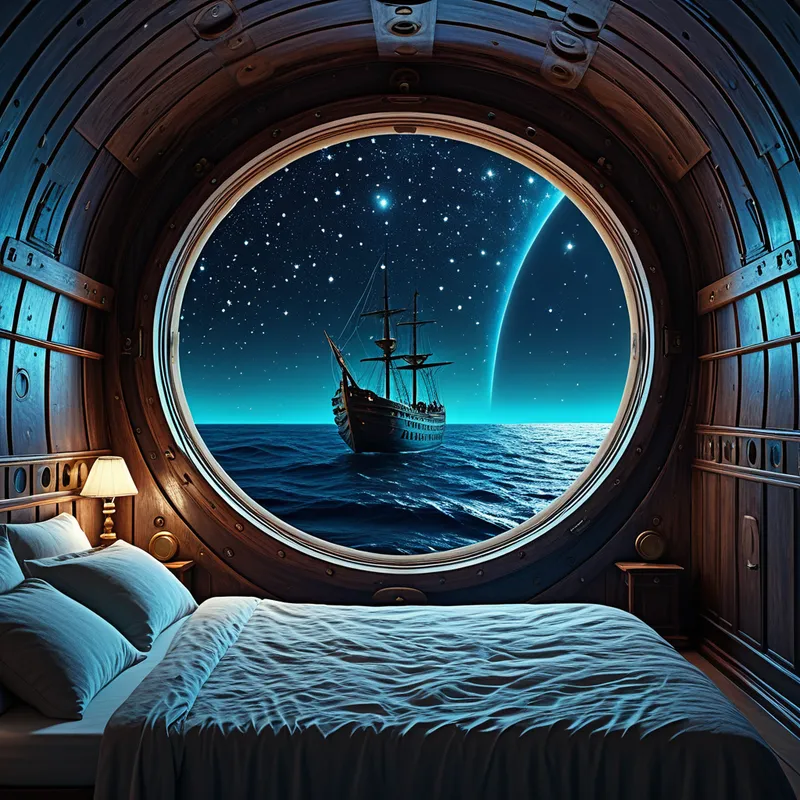
When the archetype of Noatún stirs in the modern dreamer, it often manifests as dreams of liminal architecture. You may dream of a house with a room that opens directly onto the ocean, a library that is also the hull of a ship, or a familiar apartment that has a new door leading to a silent, moonlit pier.
These dreams signal a somatic and psychological process of seeking harbor. The dream-ego is tired, perhaps from weathering emotional storms or navigating the complex currents of life. The appearance of this hybrid sanctuary indicates the psyche's innate drive to create a holding environment. It is the self's attempt to build a place of integration, where deep, fluid emotions (the sea) can be acknowledged and experienced safely within the structure of one's identity (the land). The feeling upon waking is often one of profound relief, calm, or a curious homesickness for a place you've never physically been—a sign that the inner sanctuary is being recognized or needs to be consciously built.
Alchemical Translation
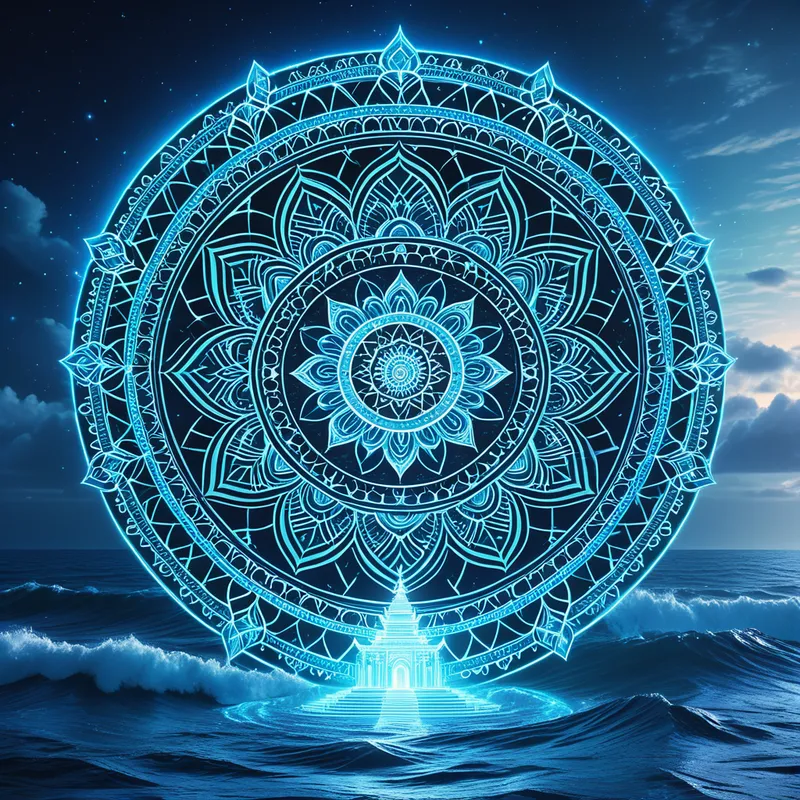
The alchemical process mirrored in the Noatún myth is that of the conjunctio oppositorum—the sacred marriage of opposites. For the modern individual on the path of individuation, the journey is not to defeat one's inner "sea" (the unconscious, emotion, the feminine) or to permanently reside on the "land" (the conscious, order, the masculine), but to construct a living space where both are honored.
The first step is Njörðr's longing: acknowledging the feeling of exile, of being a hostage to a one-sided life. The second is the gift of the hall: the conscious decision by the ego to grant space to that which feels other. The final, ongoing work is the dwelling itself.
Individuation is the daily practice of living in Noatún. It is maintaining the pilings of consciousness that keep us from drowning in the unconscious, while ensuring our foundations are open to its nourishing, terrifying, and necessary waters.
To translate this myth is to become the architect of your own soul's harbor. It is to identify what, for you, represents the restless sea of feeling and the solid ground of reason, and to deliberately build a practice—through art, ritual, relationship, or introspection—that allows them to converse. Your Noatún is that inner temple where you are no longer a stranger to any part of yourself, where you can gaze at both your depths and your horizons, finally at peace in the home you were always meant to build.
Associated Symbols
Explore related symbols from the CaleaDream lexicon: