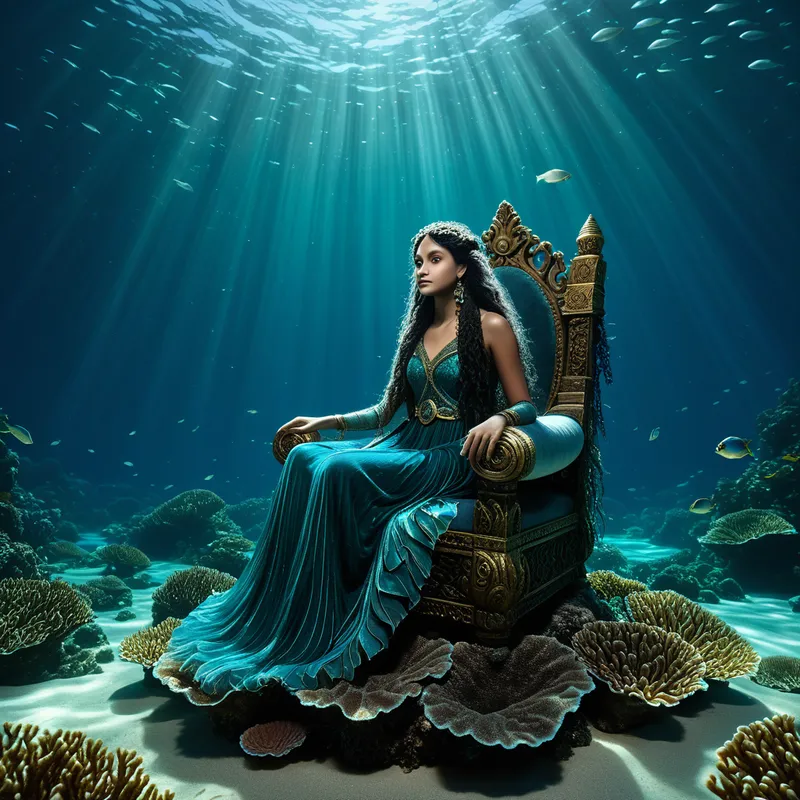
Tethys Myth Meaning & Symbolism
The myth of Tethys, the Titaness of the primal nourishing sea, embodies the hidden, generative source from which all life and consciousness flows.
The Tale of Tethys
Before the sun knew its path and the moon its phases, there was only the deep. Not the sea you know, with shores and tides, but the First Water—a silent, star-dusted expanse that was the womb of all things. In this boundless dark, where light was but a memory of what might be, the great forces stirred.
From the formless, Chaos, came Gaia, the solid ground, and she yearned for a counterpart. Her desire called forth Uranus, the starry vault, and together they pressed the world into being. And from their union sprang the Titans, colossal and ancient, whose bodies were the very substances of creation.
Among them was Oceanus, whose form was a river that had no beginning and no end, a liquid coil embracing the edges of the flat earth. And with him was his sister, Tethys. If Oceanus was the flowing boundary, Tethys was the nourishing depth within. She was not the tempestuous sea of later gods, but the sweet, life-giving water that wells up from the dark earth, the hidden springs, and the gentle rain. Her touch was not a crash upon rocks, but a seep, a saturation, a silent filling.
She and Oceanus joined, and from their union flowed the three thousand Oceanids, spirits of every stream, fountain, and cloud. And they birthed the three thousand Potamoi, the river-gods whose courses scored the face of Gaia. Tethys did not command these waters; she was their mothering source. She fed them from an inexhaustible cistern within her own being.
In the great war, the Titanomachy, when the younger gods rose up against the old order, Tethys and Oceanus remained apart. Their domain was too fundamental, too deeply woven into the fabric of things to be torn asunder. They watched from the primal deep as lightning fell and mountains were hurled, a silent, ancient pair holding the world in its liquid embrace.
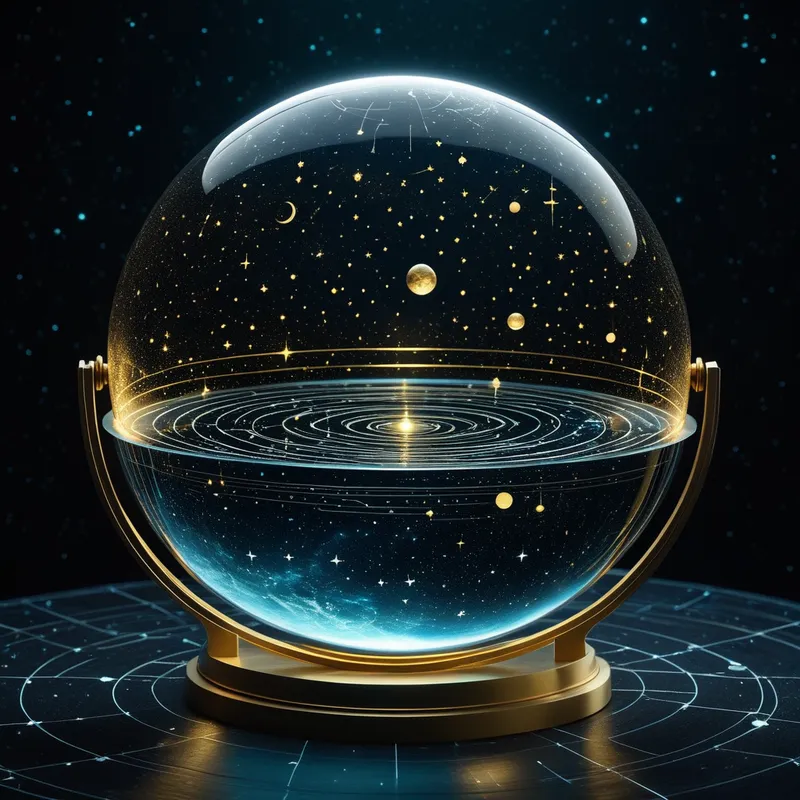
And when the new king, Zeus, established his reign, a new conflict arose in the heavens. The constellations, newly placed, wandered erratically across the night sky, chaotic and lawless. It was to the ancient Tethys, to the deep that remembers all patterns, that the gods appealed. She and Oceanus received the celestial bodies into their hidden, watery realm beneath the earth. In her dark, nurturing depths, she cooled their fiery ardor, taught them the rhythm of their circuits, and sent them forth again on orderly, predictable paths. She became the silent regulator, the deep memory that brings chaos into the circle of time.

Cultural Origins & Context
The figure of Tethys emerges from the very oldest layers of Greek cosmogonic poetry, most authoritatively from Hesiod’s Theogony (c. 700 BCE). Here, she is not the subject of adventurous epics but a foundational premise. She belongs to the generation of deities that are the environment, not merely rulers of it. As a Titaness, she predates the Olympian pantheon and represents a more impersonal, elemental force of nature.
Her myth was not one told around campfires for entertainment, but recited as sacred knowledge, a piece of the puzzle explaining how the world came to be structured as it is. Her primary function was etiological—explaining the origin of rivers and clouds, and crucially, the orderly motion of the stars. In a culture navigating by the seas and heavens, the idea of a divine, maternal depth that nourishes the world’s waters and steadies the cosmos was both a scientific and a theological concept. She was the answer to the question: “From where does the water come, and why do the stars turn?”
Symbolic Architecture
Tethys symbolizes the primal, feminine source. She is not the visible, surface ocean of drama and danger (Poseidon's domain), but the subterranean aquifer, the hidden wellspring from which all life ultimately drinks. Psychologically, she represents the deepest stratum of the unconscious—not the personal unconscious of repressed memories, but the collective, impersonal, and profoundly generative unconscious from which archetypal forms and instincts well up.
She is the background of being, the silent, nourishing matrix that precedes and supports all conscious activity.
Her marriage to Oceanus is the union of source and course, the generative depth and the defining boundary. Their children, the myriad river and cloud spirits, symbolize the manifestation of this hidden potential into the specific forms of the known world. Most profoundly, her role in taming the constellations translates this symbolism to the cosmos: she is the ordering principle within the chaos, the deep memory that imposes pattern and cycle. She is the psyche’s innate tendency toward organization, the Self that guides the chaotic contents of the unconscious into constellations of meaning.
The Dreamer's Resonance
When the archetype of Tethys stirs in the modern dreamer, it often manifests not as a person, but as an environment or a state. To dream of a perfectly calm, endless ocean beneath a starry sky, where the water is dark but not threatening, pure but profoundly deep, is to encounter her domain. Dreams of discovering a hidden spring in a cave, of drinking from a deep, clear well, or of watching celestial bodies reflect perfectly in a still pool all speak to her resonance.
Somatically, this might accompany a feeling of profound calm, coolness, or a quiet, expansive fullness. Psychologically, it signals a process of drawing nourishment from the deepest layers of the self. It is not an active quest, but a receptive immersion. The dreamer is being invited to connect with the impersonal, nourishing source within, to find the ground of being that exists before and beneath personal identity, trauma, or striving. It is the psyche’s way of healing by reconnecting to its own primordial, life-sustaining origin.

Alchemical Translation
The alchemical process mirrored in the myth of Tethys is the solutio—the dissolution. But this is not a destructive dissolution. It is the return to the prima materia, the original, undifferentiated state, for the purpose of regeneration. In the journey of individuation, this is the critical phase where the conscious ego, with all its rigid structures and identities, must allow itself to be dissolved back into the nourishing depths of the unconscious.
The triumph is not in conquest, but in the courageous surrender to the source, trusting it will return you to the world remade, your inner stars set on their proper courses.
The modern individual enacting this myth does not fight a battle or climb a mountain. Instead, they practice a deep, receptive allowing. This might be through meditation, profound rest, engaging with art or nature in a non-analytical way, or any practice that quiets the surface mind and allows the deeper, ordering intelligence of the Self to emerge. Like the chaotic stars plunged into Tethys’s waters, our fragmented thoughts, compulsions, and anxieties are immersed in the healing, re-ordering depths of the unconscious. We emerge not with a new weapon or trophy, but with a realigned inner cosmos—a sense of purpose, rhythm, and flow that comes from being rooted in the silent, nourishing source of one’s own being. Tethys models the truth that before we can truly create or rule our lives, we must first remember how to be nourished by the deep, forgotten waters within.
Associated Symbols
Explore related symbols from the CaleaDream lexicon: