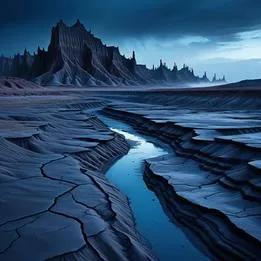
Badlands
The Oracle's Essence
A barren, eroded landscape symbolizing desolation, hardship, and spiritual testing. It represents harsh environments where survival is challenged.
Interpretive Themes
Modern Visibility
Often viewed as a metaphor for psychological barrenness or environmental degradation. In media, it can symbolize dystopian futures or personal wastelands.
Cultural Lenses
Jungian
Learn More โRepresents the shadow landscape of the psycheโbarren, repressed, or neglected aspects of the self. Historically seen in alchemical nigredo (blackening), it's a necessary stage of individuation where the ego confronts its desolation to find hidden gold.
Freudian
Learn More โSymbolizes psychic barrenness from repressed desires or trauma, often relating to sexual or aggressive impulses turned inward. The eroded terrain may represent psychological defenses worn down, exposing raw, unconscious material.
Gestalt
Learn More โRepresents unfinished business or emotional aridity in the present moment. The dreamer may project feelings of emptiness onto the landscape, asking what part of their life feels similarly barren or eroded.
Cognitive
Learn More โReflects schemas of threat, scarcity, or futility. The brain processes real-world stressors through this metaphor, highlighting cognitive patterns that perceive environments as hostile or resources as depleted.
Evolutionary
Learn More โTaps into ancestral fears of infertile environments threatening survival. The symbol activates adaptive anxieties about resource scarcity, prompting vigilance or migration urges in the dreamer's subconscious.
Global/Universal
Learn More โAcross cultures, barren landscapes symbolize spiritual testing grounds, places of exile, or purification. Historically, many traditions use deserts or wastelands for vision quests, reflecting a universal human experience of confronting emptiness.
East Asian
Learn More โIn Daoist and Buddhist contexts, badlands represent the illusion of samsara (cyclic existence)โbarren because of attachment. Historically, hermits sought such places for detachment; modernly, it may symbolize societal disconnection.
South Asian
Learn More โIn Hindu and Buddhist traditions, akin to the 'desert of the mind' where ego dissolves. Historically, sadhus (ascetics) meditate in harsh places; today, it may symbolize the austerity of modern life or karmic purification.
Middle Eastern
Learn More โEchoes desert motifs in Abrahamic faiths as places of divine testing (e.g., Exodus). Historically, prophets received revelations in barren lands; modernly, it can symbolize geopolitical or spiritual desolation.
European
Learn More โIn folklore, badlands are often cursed or haunted places, like the 'waste land' in Arthurian legend. Historically associated with famine or war; today, it may symbolize post-industrial decline or ecological crisis.
African
Learn More โIn many traditions, barren lands are seen as spiritually activeโplaces where ancestors or spirits dwell. Historically, used for initiation rites; modernly, may represent the erosion of cultural heritage or resilience.
North American
Learn More โIn Indigenous cultures, badlands are sacred sites of transformation and vision quests. Historically, settlers saw them as obstacles; today, they symbolize environmental exploitation or personal frontier struggles.
Contextual Nuances
Lost in badlands
Directionless struggle.
Crossing badlands
Purposeful endurance.
Observing from afar
Respect for harshness.
Finding oasis
Hope amid desolation.
Badlands expanding
Growing emptiness.
The Portal is Always Open
Every dream is a personalized dispatch from the deep. Don't let yours fade into static.
Interpret Full Dream