Puer Aeternus Myth Meaning & Symbolism
The myth of the divine, ever-youthful boy who embodies boundless potential and the perilous refusal of the mortal world's weight and time.
The Tale of Puer Aeternus
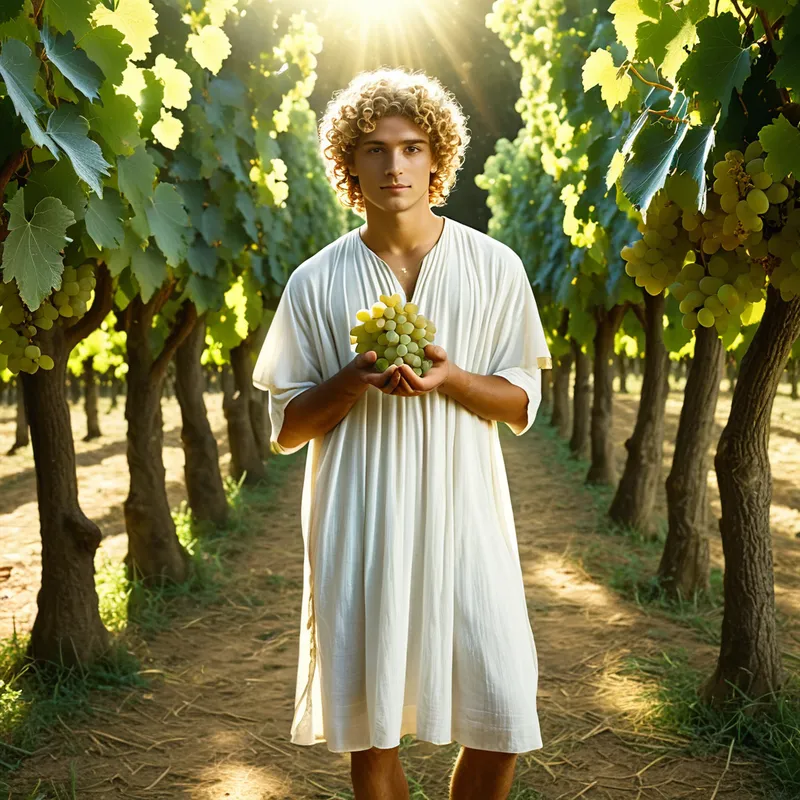
Listen, and let the veil between our time and the timeless part. In the golden age of the world, when the gods walked closer to the green earth, there was a boy. He was not born of woman, but sprung from the very essence of joy, a thought made flesh by Liber Pater himself. They named him Puer Aeternus, and he was beauty unbound by season.
His home was the sun-dappled glade, the vineyard heavy with promise, the wild hills where the goat-footed Fauni played their pipes. He knew no plough, no sword, no toil. His days were a dance of perpetual morning. He chased butterflies that were fragments of rainbows. He drank nectar that tasted of sunlight and sang with the birds in a language older than Latin. Mortals who glimpsed him felt a pang of forgotten paradise, a memory of a time before the weight of years settled on their shoulders.
But the world turns. The mortals in the valley below built walls, measured fields, buried their dead, and counted the passing years. They grew from children to parents, their faces etching stories of love and loss. The Puer watched from his grove, a silent spectator to this strange, solemn parade of becoming. He felt the pull of it—the deep, resonant hum of a life fully lived, with all its grief and glory. Yet, to step into that stream was to feel its current, to accept the cutting edge of time that shapes and, ultimately, dissolves.
A great conflict awoke within the eternal grove. It was not a clash of swords, but a terrible, quiet war between two loves. One love was for his own perfect, unchanging realm of potential, where every bud was forever on the cusp of bloom. The other was a new, aching love for the mortal realm in all its flawed, fleeting, fertile reality. To remain was to be forever a beautiful sigh on the wind. To descend was to risk the beautiful, terrible fate of being real.
The resolution came not with a thunderclap, but with a choice, whispered to the rustling leaves. The Puer Aeternus did not die, nor did he fully abandon his grove. Instead, he became its secret heart. He allowed a part of his boundless spirit to be woven into the very cycle he observed. His essence became the first, fierce green shoot of spring, defiant against the retreating frost. It became the unbridled laughter of a child, pure and free. He became the genius of the artist’s first, brilliant, and incomplete idea. He remained eternal, but now his eternity was not a prison of stasis, but a perennial seed, forever offered to the turning world, forever resisting the final form, yet forever feeding the process of life itself.
Cultural Origins & Context
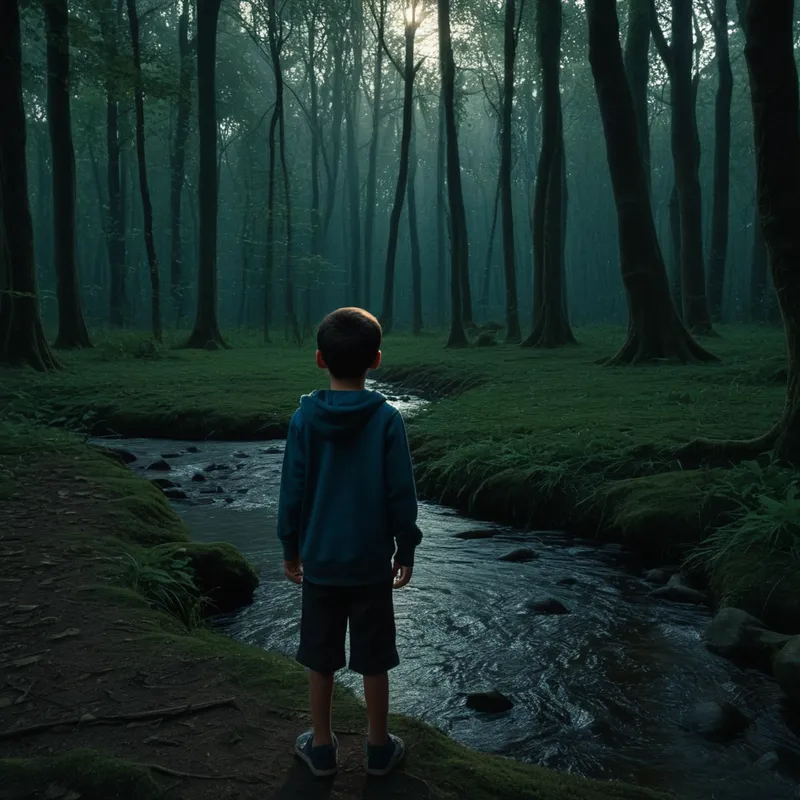
The figure of the Puer Aeternus is less a singular character from a standardized Roman myth than a potent theological and philosophical concept woven into the fabric of their worldview. He finds his most explicit home in the mystical, secretive rites of the Liberalia and in the philosophical interpretations of figures like the poet Vergil. He is the divine child, the puer aeternus, who appears in Sibylline prophecies and esoteric texts as a symbol of hope, renewal, and the unquenchable spirit of life.
This myth was not told around the campfire for mere entertainment; it was a living doctrine explored in mystery cults that promised initiates a symbolic rebirth. It addressed a core Roman anxiety and ambition: the tension between the desire for stable, enduring order (Roma Aeterna) and the recognition of life’s inherent flux and fragility. The Puer represented the raw, divine potential that must be both honored and harnessed for the city and the soul to thrive. He was the spirit of the Genius—the innate, guiding spirit of a person, place, or family—in its most primal, untamed form.
Symbolic Architecture
Psychologically, the Puer Aeternus is the archetype of the eternal adolescent, the aspect of the psyche that clings to potentiality over actuality. He symbolizes the glorious, necessary, and ultimately tragic refusal of the limitations imposed by reality, time, and embodiment.
He is the dream of the perfect novel unwritten, which is always superior to the flawed novel published. He is the fascination with endless possibility that paralyzes concrete choice.
His grove is the womb of the unconscious, a paradisiacal state of pre-conscious unity where all opposites are held in blissful suspension. The mortal world below represents consciousness, differentiation, and the opus of life—the hard, ethical work of building a character in time. The Puer’s conflict is the soul’s crisis of incarnation. To remain purely potential is to remain innocent, but also impotent and unrelated. To commit to a single, earthly form is to suffer, to be soiled, to know loss, but also to exist in a meaningful dialogue with the world.
The grapes he holds are not yet wine; they are sweet possibility. They must be crushed, fermented, and transformed to reveal their deeper spirit. This is the alchemy he instinctively resists, for the vessel must be broken for the wine to flow.
The Dreamer's Resonance
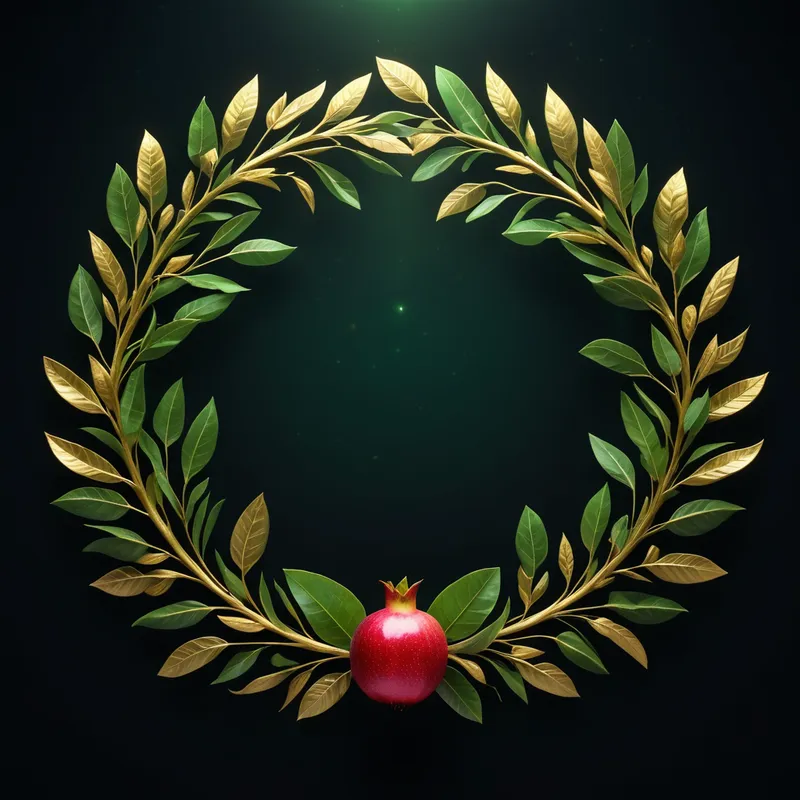
When the Puer pattern stirs in the modern dreamer, it manifests as a haunting, beautiful restlessness. One may dream of flying effortlessly, only to realize one cannot land. Of finding a mansion with infinite, unexplored rooms, but no furniture. Of being perpetually late for a crucial exam one never studied for. These are somatic dreams of weightlessness, of ungrounded potential.
The psychological process at work is a confrontation with the senex—the archetype of the old king, the rigid order, the crushing weight of responsibility and cynicism. The dreamer is caught in the tension between these two poles. The Puer dreams are a call from the soul, not to regress into childishness, but to recover the specific, divine spark of one’s unique potential before it was buried under duty and convention. They ask a terrifying question: "What glorious, foolish, authentic thing have you refused to become because it would mean getting your hands dirty, making a mistake, or leaving the safety of the imagined?"

Alchemical Translation
The myth of the Puer Aeternus provides the sacred blueprint for the alchemical stage of solutio—dissolution. The fixed, crystalline identity (the senex attitude of "this is who I am, this is my duty") must be dissolved back into the fluid state of potential. But the goal is not to remain dissolved. The true alchemical work is in the subsequent coagulatio—the conscious, willing re-solidification of that spirit into a new, more authentic form in the world.
The triumph is not in the Puer's flight, but in his choice to let his essence fertilize the earth. His immortality is transmuted from a static condition into a dynamic function.
For the modern individual, the individuation process modeled here involves a sacred sacrifice: the sacrifice of the perfect for the actual. It is the artist who finally releases the imperfect painting. The entrepreneur who launches the viable product, not the flawless one. The person who chooses a committed relationship with all its limitations, over the fantasy of a perfect soulmate. One must "kill" the divine child as a standalone god, not out of cynicism, but so that its divine spark can become the living spirit within a mortal life. The Puer’s grove becomes the inner sanctuary one visits for renewal, not the permanent residence. One learns to carry the grapes, and with conscious, often painful effort, to make them into wine.
Associated Symbols
Explore related symbols from the CaleaDream lexicon: