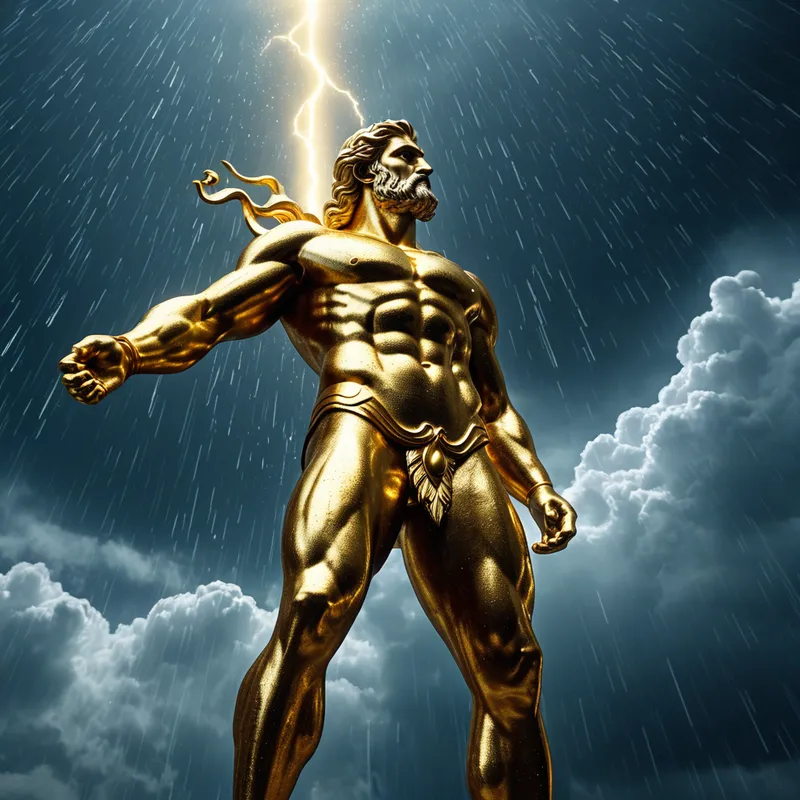
Ichor Myth Meaning & Symbolism
The golden, immortal blood of the Olympian gods, a sacred substance that separates the divine from the mortal and symbolizes the essence of eternal life.
The Tale of Ichor
Listen, and I will tell you of the substance that is not blood. In the high, cloud-wreathed halls of Olympus, where the air is nectar and the light has weight, the gods do not bleed as men bleed. When the spear of Diomedes, guided by the fury of Athena, found the flesh of Ares on the plains of Troy, it was not crimson that stained the earth. It was Ichor.
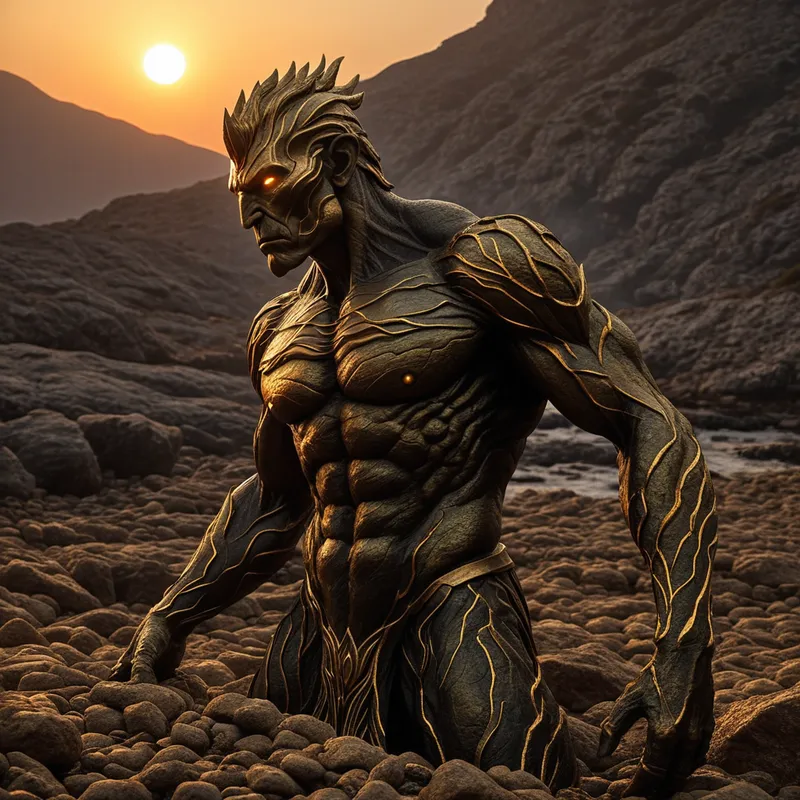
It fell not as a simple fluid, but as liquid sunlight, a distillation of the very essence of the eternal. It smelled of ambrosia and ozone, of a life force so potent it could scorch mortal soil. When the great Talos, guardian of Crete, had his single vein opened by the cunning of Medea, his life did not ebb away in a dark tide. From his bronze shell erupted a torrent of this blazing, golden sap, the divine ichor that animated his metal form, until it drained entirely and the giant fell, a hollow monument.
To wound a god was to release a fragment of their immortality into the mortal realm—a dangerous, sacred pollution. The scent of ichor on the wind was a sign of cosmic violation, a tear in the fabric that separated the deathless from the dying. It was the proof of their nature: they were not flesh, but something more—beings of concentrated myth and power, whose vital fluid was the antithesis of mortal decay. To see it was to witness the impossible: the life of eternity, spilled.
Cultural Origins & Context
The concept of ichor is not the centerpiece of a single, grand epic, but a vital piece of the Greek mythological lexicon, woven into the fabric of many stories. It appears most famously in Homer’s Iliad, a text that served as both national history and divine scripture for the ancient Greeks. Homer’s audiences would have understood ichor implicitly as a marker of absolute ontological difference. The gods could be wounded, could feel pain and rage, but they could not die. Ichor was the physical symbol of that unbridgeable gap.
This idea functioned as a powerful theological and social anchor. It reinforced the hierarchy of the cosmos: gods above, heroes in a liminal space, and mortals below. The spilling of ichor was a rare and catastrophic event, often precipitating divine retribution. It reminded mortals of their place while simultaneously fueling the heroic ambition to touch the divine, however perilously. The myth was passed down by rhapsodes and poets, not as a dry doctrine, but as a sensory detail that made the gods tangibly, yet unfathomably, other.
Symbolic Architecture
Ichor is the ultimate symbol of essence. It is not merely what flows in divine veins; it is the literal embodiment of their immortal nature. Psychologically, it represents the core, incorruptible Self that exists beyond the wounds and decays of the ego.
Ichor is the gold of the psyche—the indestructible, radiant core of being that persists beneath the leaden weight of our mortal anxieties and temporal sufferings.
In the wounding of Ares, we see a profound metaphor: even the archetypal forces within us (like War, Love, or Wisdom) can be injured in their engagement with the world, but their fundamental nature—their ichor—cannot be destroyed. It can only be revealed. The giant Talos represents a constructed identity, an armored, seemingly invincible persona animated by this divine essence. His fall signifies that when the source of that animation—the connection to the authentic Self—is severed, the entire structure collapses, leaving only the hollow shell.
The Dreamer's Resonance
When the symbol of ichor arises in modern dreams, it seldom appears as a classical god on a battlefield. More often, it manifests as a mysterious, luminous substance. A dreamer might find a golden, glowing sap leaking from a tree in a winter forest, or see their own reflection in a mirror with veins of light beneath the skin. They might discover a vial of iridescent metal fluid in a forgotten drawer.
These dreams point to a somatic and psychological process of essential recognition. The psyche is signaling that the dreamer is touching, or is wounded near, something fundamental and immortal within themselves. The "wound" is not necessarily a trauma, but any profound experience—a creative breakthrough, a moment of love, a devastating loss—that cracks open the persona and allows a glimpse of the inner gold. The somatic feeling is often one of awe mixed with anxiety, a sense of touching something too potent, too sacred. The dream is an invitation to acknowledge this essence, to recognize that within the mortal struggle flows a stream of something timeless.
Alchemical Translation
The myth of ichor provides a direct map for the alchemical process of individuation—the Jungian journey toward psychic wholeness. The prima materia, the base lead of our existence, is our mortal, suffering, ego-bound life. The goal of the alchemist was to transmute this lead into gold. Ichor is that gold.
The process begins with the wounding—the mortificatio. This is the necessary suffering, the Diomedes-spear thrust of life that pierces our inflated identities and defenses. For the modern individual, this could be a failure, an illness, a betrayal, or any event that humbles the ego. This wound, however painful, is the only way the ichor can be revealed. What flows out is not just pain, but the raw material of transformation.
The alchemical vessel is the conscious self, tasked with containing and witnessing the spill of golden essence without fleeing into denial or inflation.
The next stage is coagulatio—the gathering and integrating of this essence. One must not let the ichor simply stain the earth and evaporate. One must learn to recognize it as part of one's own inner divinity—not as a fantasy of godhood, but as the immutable core of value and meaning. This is the work of the individuation process: to acknowledge the mortal wound while consciously relating to the immortal substance it reveals. We are not gods, but we carry, in the depths of our psychic bloodstream, a drop of ichor—the symbol of our unique and eternal Self, waiting to animate our mortal journey with its transcendent light.
Associated Symbols
Explore related symbols from the CaleaDream lexicon: