Temple of Asclepius Myth Meaning & Symbolism
The myth of the healer-god Asclepius and his sanctuaries, where the sick sought divine cures through ritual, sacred sleep, and dream-visions from the god.
The Tale of the Temple of Asclepius
Hear now of the places where the veil between suffering and solace grew thin, where the breath of the divine stirred the still air of the sickroom. It begins not with a temple of stone, but with a cry of pain. In the shadow of mortal frailty, where fever burns and wounds fester, humanity’s prayers rose like smoke—a desperate offering to any god who would listen.
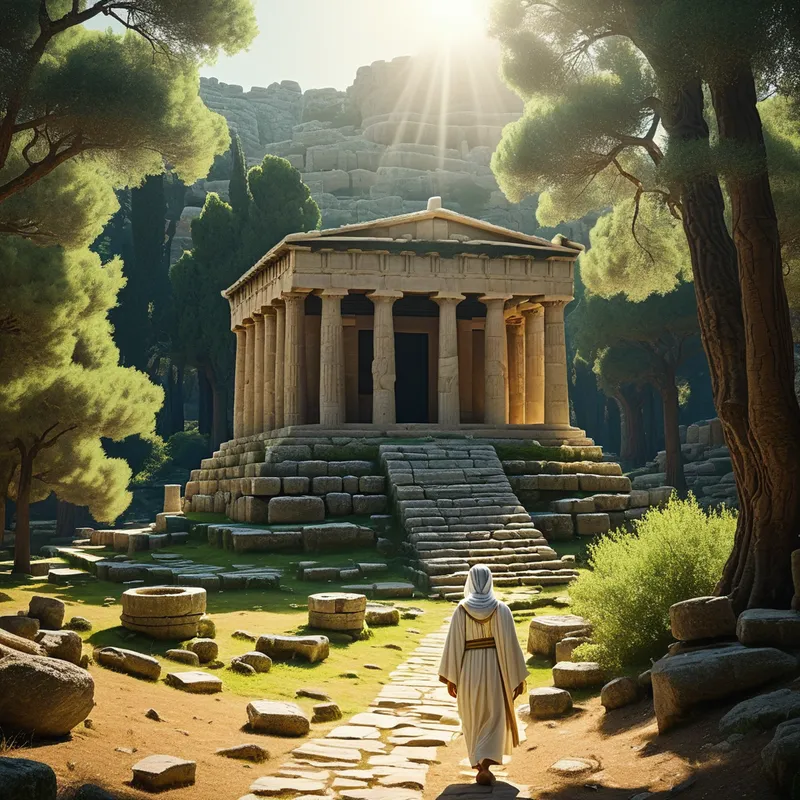
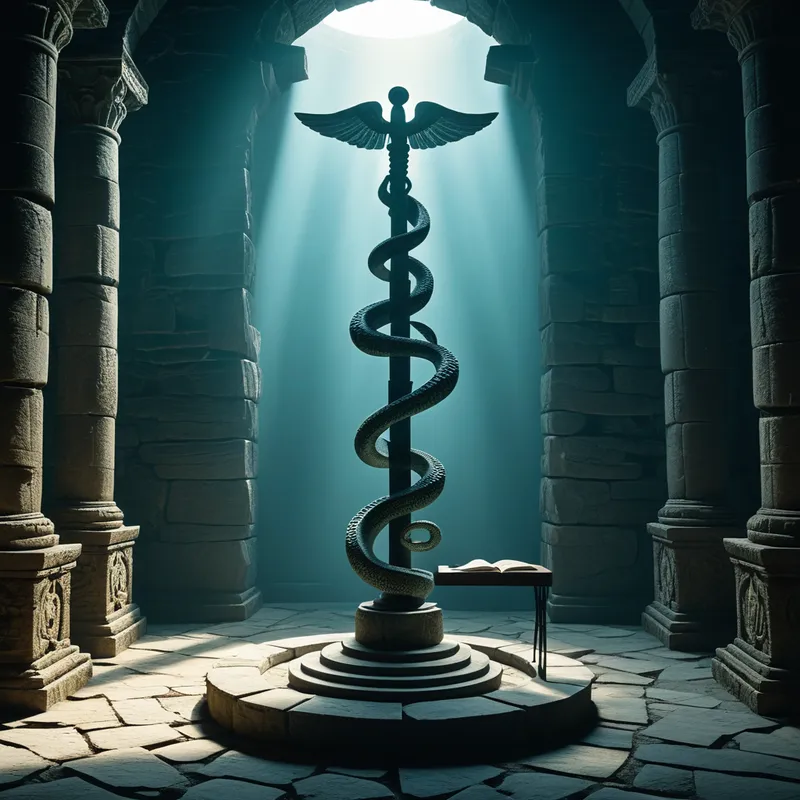
And one god heard. He was Asclepius, the Healer, whose lineage was both divine and tragic. His father was Apollo, the far-shooter, and his skill was such that he learned to draw the very breath of life back into stilled lungs. His symbol was the staff, and around it coiled the wise serpent, creature of the earth and of rebirth, whose venom could kill or cure. Where his presence was felt, sanctuaries arose—not in the crowded agora, but in high, clean places like Epidaurus, or on the slopes of the Acropolis in Athens. These were the Asclepieia.
The pilgrim arrived weary, soul and body cracked. The journey itself was a purification. They would bathe in cold, clear sacred springs, offer honey cakes and small clay models of their afflicted limbs—a thigh, an eye, a womb—to the god’s altar. The air smelled of incense and damp earth. Then, as dusk fell, they were led to the heart of the mystery: the abaton or enkoimeterion. Here, on the skins of sacrificed animals, they would lie down to sacred sleep.
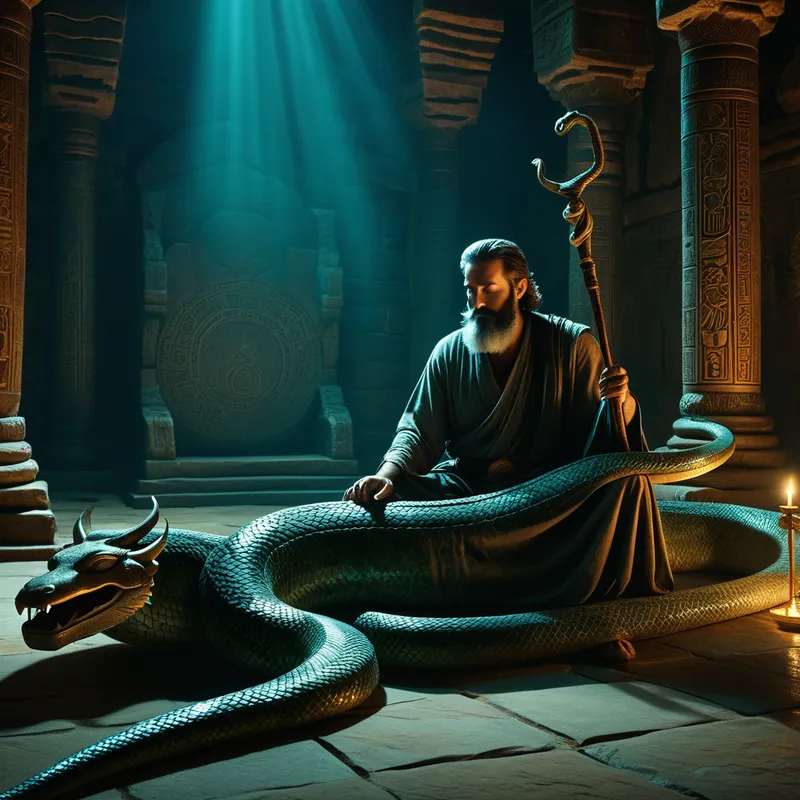
In the deep silence of the night, the temple dogs, sacred to the god, might nuzzle a hand. The non-venomous temple snakes might slither over a fevered brow. But the true visitation came in the dream-space. The god himself would appear—a calm, bearded figure, sometimes with his daughters Hygieia and Panacea. He would touch the wound, or perform a swift, painless surgery, or whisper a simple prescription: a herb to find at dawn, a change of diet, a prayer to speak. The dream was not a metaphor; it was the surgery. Upon waking, the supplicant would tell their dream to the temple priests, the Asclepiadae, who would translate the god’s nocturnal prescription into daytime action.
And sometimes, the lame walked. The blind saw. The barren conceived. Stone stelae recorded these miracles: “Ambrosia of Athens, blind in one eye… she saw the god in a dream cutting her diseased eye and pouring in a medicine. At daybreak, she walked out sound.” The temple was not a hospital of science, but a theater of divine grace, where the drama of healing played out in the silent, star-lit chamber of the soul.
Cultural Origins & Context
The cult of Asclepius emerged from a deep, pre-Homeric stratum of folk healing and hero worship, coalescing into a formal, pan-Hellenic institution around the 5th century BCE. This was not the medicine of Hippocrates, which sought natural causes, but its sacred predecessor. The myth of the healer-god provided a coherent, culturally sanctioned framework for understanding and enduring suffering in a world without antiseptics or anesthesia.
The temples functioned as the first integrated wellness centers, combining spiritual sanctuary, therapeutic ritual, community support, and what we might now call psychosomatic medicine. The stories of the cures were passed down orally by pilgrims and inscribed on stone for all to see, serving both as testimonials to the god’s power and as a form of medical literature. The rituals—purification, sacrifice, incubation—structured the chaotic experience of illness into a meaningful narrative with a beginning (the journey), a middle (the ritual and dream), and an end (the interpretation and cure or understanding). In a society where plague could strike without warning, the Asclepieion offered a protocol of hope.
Symbolic Architecture
At its core, the myth of the Temple of Asclepius is an elaborate, profound metaphor for the inner sanctuary of the Self where healing occurs. The temple complex itself is a map of the psyche.
The outer precincts, with their baths and gymnasiums, represent the initial, conscious work of preparation and purification—the ego’s efforts to get ready. The inner abaton, the forbidden, dark dormitory, is the unconscious itself. Here, in the vulnerable state of sleep, the conscious mind relinquishes control. The god who visits is the archetype of the Self, the inner healer that knows what the conscious personality does not.
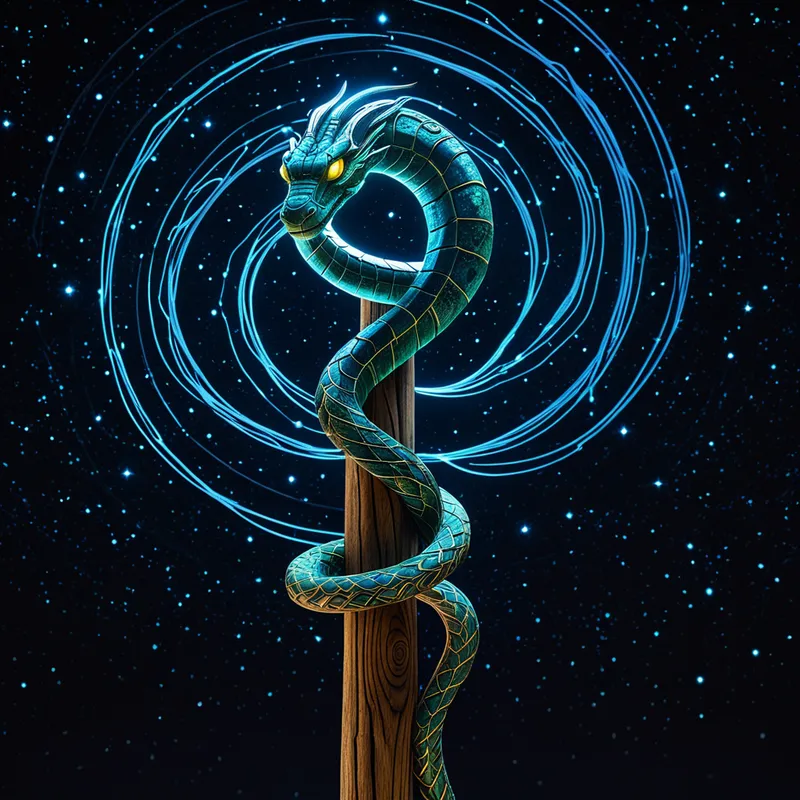
The serpent, shedding its skin beside the healer’s staff, is the ultimate symbol of the healing process: it is the poison that becomes the cure, the death of the old that permits the birth of the new, the chthonic wisdom that must be integrated for wholeness.
The sacred dogs and snakes are instinctual guides, emissaries from the deeper, animal layers of the psyche that offer comfort and connection beyond words. The dream is the direct, unmediated dialogue between the suffering part of the personality and the central, organizing intelligence of the psyche. The priest-interpreter represents the necessary bridge back—the function of consciousness that must receive, honor, and enact the symbolic directives from the deep.
The Dreamer's Resonance
When a modern dreamer finds themselves in a version of the Asclepieion—perhaps a strange clinic, a serene spa that feels ancient, or a library with a hidden sanatorium—a profound somatic and psychological process is underway. The psyche is attempting to initiate a self-healing sequence.
Somatically, the dream may coincide with periods of illness, burnout, or chronic stress, as the body’s cry for rest and rebalancing reaches the symbolic language of the unconscious. Psychologically, it signals a move from ego-led “fixing” to a surrender to a deeper process. The dreamer in the temple is often in a state of waiting, of passive receptivity. This is not laziness, but the essential incubation phase. To dream of the god-figure (who may appear as a wise doctor, a comforting stranger, or even a radiant animal) touching a wound is to experience, symbolically, the direct intervention of the Self. The prescription given—whether it’s a key, a plant, or an instruction to go to a certain place—is a task for the waking ego, a “homework assignment” from the soul to complete the cure.
Alchemical Translation
The myth models the alchemical process of psychic transmutation, or individuation, with exquisite precision. The base metal is the “morbid matter”—the illness, the neurosis, the soul-wound. The prima materia is the raw, suffering individual who makes the pilgrimage.
The purification rituals (bathing, fasting) are the nigredo, the acknowledgment of the problem and the burning away of impurities—the initial depression and confusion that often precedes deep work. The entry into the dark abaton is the descent into the solutio and mortificatio—dissolving into the unconscious and allowing the old, rigid ego-structures to “die” in sleep.
The dream-incubation is the sacred coniunctio, the marriage of the conscious mind with the unconscious healer. In this silent union, the new, reconciling symbol is conceived.
The dream-vision and prescription represent the albedo—the washing clean, the illuminating insight, the first dawning of a new understanding. The interpretation and enactment by the waking self is the citrinitas and rubedo—the integration of the insight into daily life, turning it into golden action and embodied, rubedo-red vitality. The healed pilgrim who leaves the temple is not merely patched up; they are psychically reconstituted, having established a living connection to their own inner Asclepius, the archetypal principle of regeneration and wholeness. The temple, therefore, is not a place one merely visits, but an inner structure one builds—a permanent sanctuary where the dialogue between wound and healer can forever take place.
Associated Symbols
Explore related symbols from the CaleaDream lexicon: