Persephone's Ascent Myth Meaning & Symbolism
The Queen of the Underworld emerges each spring, embodying the soul's journey through trauma into a hard-won, cyclical wholeness.
The Tale of Persephone's Ascent
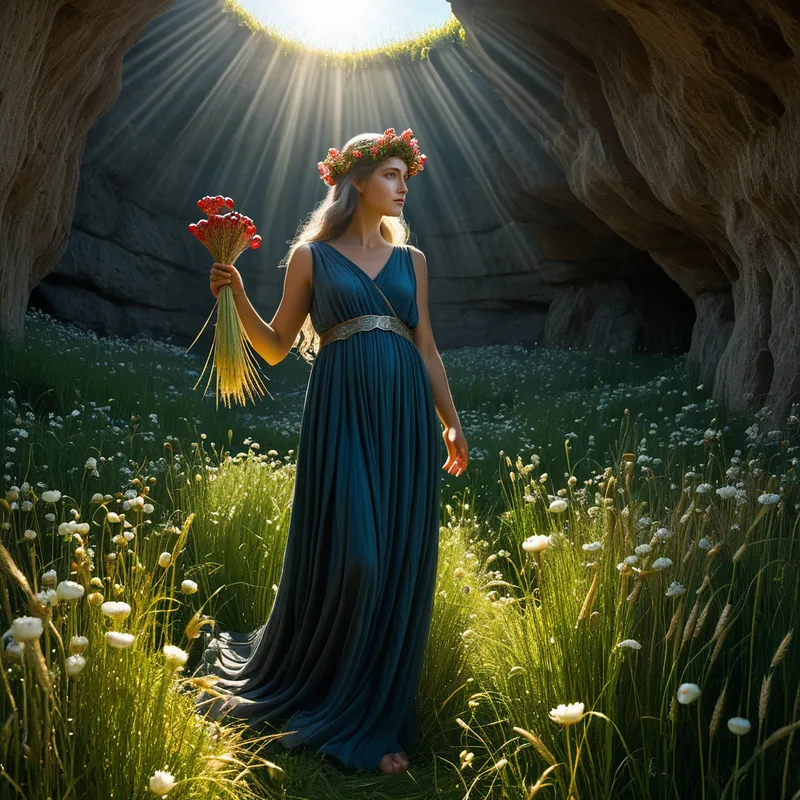
Hear now of the turning of the world, of the hinge between light and deep earth. In the time before time’s strict measure, the maiden Persephone danced in the Nysian meadow, a child of the sun. Her laughter was the sound of budding hyacinth, her steps the patterning of bees among asphodel. She was the unthinking joy of life, her mother Demeter’s singular light.
But the earth is not only surface. From a great fissure in the meadow, the black horses of Plouton erupted. The god of the unseen realms rose in his chariot of polished jet, and in one motion that was less a theft than a terrible, swift harvest, he gathered the shrieking maiden into the dark. The very ground sealed itself above them, leaving only a trampled circle of flowers and a silence so profound it stilled the birds.
Above, Demeter’s grief was a scythe. She cast off her divinity, roamed the earth as a crone, and in her anguish, she withheld her grace. The green world withered. The soil became iron, the seeds slept like stones, and the breath of life grew thin. A great famine gripped the world of mortals and gods alike.
Below, in the House of Hades, a different transformation began. Persephone did not merely languish. She was made queen. The initial terror, the starvation for sunlight, slowly fermented into a profound familiarity with the silent, weighty truths of the root-world. She walked the fields of Asphodel, her eyes adjusting to the light of ghostly meadows. The god of the dead offered her not cruelty, but a kingdom—a sovereignty carved from loss itself.
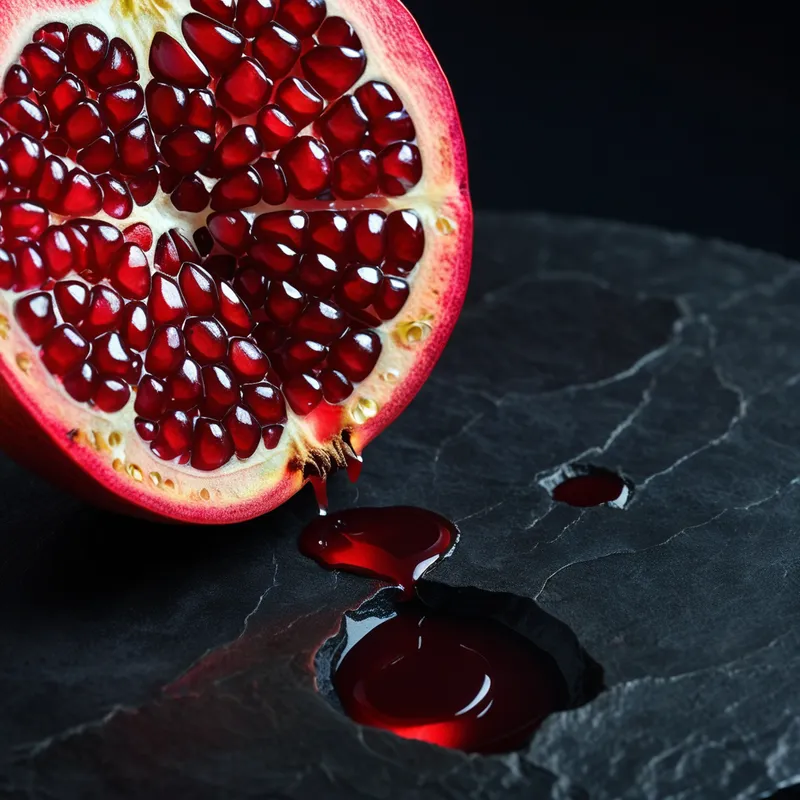
Yet, a thread remained. Through the intercession of Hermes, a pact was struck. If Persephone had eaten no food of the dead, she could return. But she had. Drawn by a deep, perhaps knowing hunger, she had consumed six pomegranate seeds. This was not a child’s mistake, but a queen’s choice, binding her to the depths.
Thus came the compromise that breathes through the ages. For each seed eaten, a month of rule in the sunless land. For the rest, an ascent. When Hermes led her up from the cleft in the earth, it was not the same maiden who emerged. She was a woman wearing two crowns: one of spring flowers, woven by her weeping, rejoicing mother, and one of polished obsidian, carried in the set of her jaw and the depth of her gaze. Her return was not an erasure, but a weaving. At her step, the iron ground softened, and life erupted not in innocence, but in fierce, knowing abundance.
Cultural Origins & Context
This core myth, known as the Homeric Hymn to Demeter, was not mere entertainment. It was the sacred narrative underpinning the Eleusinian Mysteries, the most famous and revered religious rites of the ancient Greek world. For nearly two millennia, initiates—from slaves to emperors—traveled to Eleusis to undergo a secret ritual process believed to guarantee a blessed lot in the afterlife.
The myth was performed, chanted, and enacted. Its function was multifaceted: it was an etiological story explaining the seasons, a theological narrative about the powers of life, death, and the gods, and, most importantly, a map of the soul’s journey. The promise of Eleusis was the promise of Persephone’s story: that a confrontation with the underworld—with death, loss, and the unseen—was not a final defeat, but a path to a different, more complete form of knowledge and power. It democratized the hope of renewal, making the goddess’s descent and return a pattern accessible to every initiate.
Symbolic Architecture
The myth’s power lies in its non-binary symbolism. Persephone is not a victim who escapes, but a consciousness that expands to encompass antithetical realms.
- The Abduction/Descent: This represents any involuntary, traumatic rupture in the conscious self—sudden loss, deep depression, a shattering betrayal, or any experience that plunges the psyche into its own shadow. It is the end of naïve, untested innocence.
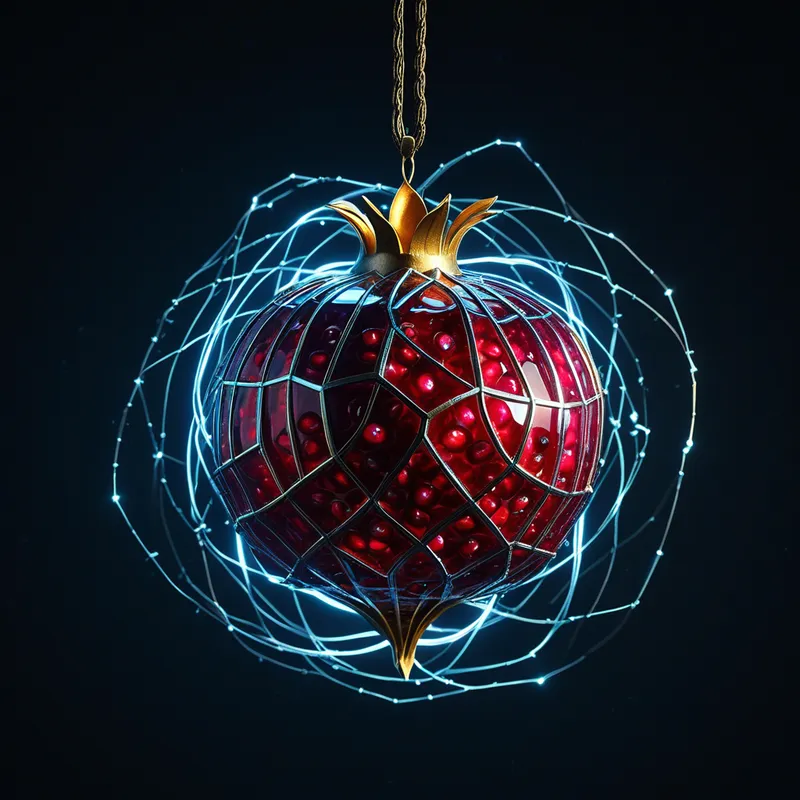
- The Pomegranate Seeds: The critical symbol of integration. To eat the food of a realm is to consent to belong to it. The seeds signify the soul’s unconscious assimilation of the truths of the underworld—of grief, limitation, and mortality. They are the indelible memories and learnings we carry back from our darkest times.
One does not simply visit the underworld; one must digest its truths to truly leave it.
- The Ascent & The Compromise: This is the myth’s genius. Persephone does not revert. She becomes dual, the Queen of the Dead and the Bringer of Spring. Her ascent is the return of consciousness to the world, but now informed, weighted, and authorized by the depths. The cyclical compromise models a psyche that no longer seeks to expel its dark periods but recognizes them as part of its sovereign territory.
The Dreamer's Resonance
When this myth stirs in modern dreams, it often signals a profound process of individuation. Dreaming of being pulled underground, of finding beauty in dark places, or of eating a strange, potent fruit (like pomegranate seeds) points to the psyche’s negotiation with a necessary descent.
Somatically, this may coincide with feelings of heaviness, hibernation, or a pull toward introspection. Psychologically, it is the process of “ composting” a trauma or a period of depression—not to forget it, but to allow it to transform into a nutrient for new growth. A dream of emerging from a cave or tunnel into light, especially if one feels older or different, mirrors Persephone’s ascent: it is the ego beginning to reintegrate, now carrying the hard-won authority of the queen who has seen the roots of existence.

Alchemical Translation
The alchemy of Persephone’s journey is the transmutation of passive experience (Kore) into active sovereignty (Persephone). For the modern individual, this models the path of nigredo—the blackening, the descent into despair or confusion—followed by the albedo and citrinitas that lead to a new synthesis.
The goal is not to rescue the maiden from the king, but to unite them within one psyche, creating a ruler who governs both the inner spring and the inner winter.
The “ascent” is thus misleading if seen as a return to a previous state. True ascent is the vertical integration of the self. The conscious personality (the world of Demeter and light) must acknowledge and make peace with the contents of the personal and collective unconscious (the realm of Hades). The pomegranate seeds are the symbolic commitments to this integration—the conscious choice to honor what was learned in the dark, to let it shape one’s values, compassion, and perspective.
Ultimately, Persephone’s myth offers a radical, cyclical model of wholeness. It assures us that our descents are not failures but initiations. We are not meant to live in perpetual spring, nor in endless winter. We are meant to be sovereigns of the entire cycle, our wisdom flowering from the very soil of our suffering, our compassion deepened by the memory of the dark. Her ascent is not an end, but a perennial return—a promise that the soul, once cracked open, knows how to flower again, and again, not in spite of the seeds it has swallowed, but because of them.
Associated Symbols
Explore related symbols from the CaleaDream lexicon: