Moirai Myth Meaning & Symbolism
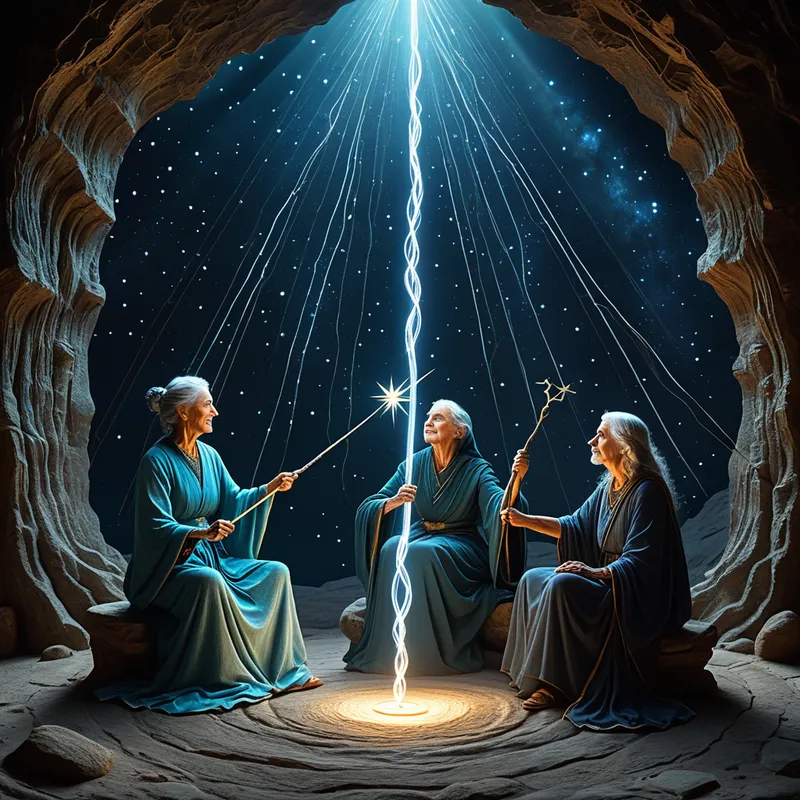
The three primordial sisters Clotho, Lachesis, and Atropos spin, measure, and cut the thread of life for every mortal and god, embodying the inescapable law of destiny.
The Tale of Moirai
Listen. Before the first sunrise stained the sky, before the gods drew breath on Olympus, there was the hum. A deep, resonant thrumming in the marrow of the world, in the dark where time itself was still unspun. It came from a place deeper than any cavern, a chamber where the roots of the great World-Tree drank from the waters of memory and possibility.
Here, in that primordial stillness, sat three sisters. They were not born; they simply were, as old as necessity itself. No fire lit their work, for the threads they handled were their own light.
The first sister, Clotho, was the weaver of beginnings. Her fingers, pale and swift as moonbeams, would reach into the swirling mist of what-could-be. With a whisper, she would draw forth a single, shimmering filament—raw, potent, and singing with latent life. She would set it to her spindle of polished ivory, and with a turn of her wrist, the hum would rise. The thread took form, a twisting cord of silver and blood and starlight, the essence of a soul drawn into the tangible world. The sound was the first cry, the first breath, the first thought given substance.
The thread passed to the second sister, Lachesis. Her eyes were the color of a deep, measureless lake, and in them danced the reflections of all paths, all choices, all summers and winters. She received the glowing thread from Clotho’s spindle without a word. In her hands lay a rod, not of wood or metal, but of solidified fate, etched with the symbols of every constellation and every earthly mile. With solemn care, she would measure the thread. This length for the hero, destined for glory and a sharp end. This shorter span for the child of the plague-stricken village. This long, complex coil for the sage whose life would be a slow unwinding of mystery. She allotted the portion—the length of the life, the nature of its trials, the measure of its joys. Her touch decided the thread’s texture, its strength, its knots and smooth stretches.
Then it came to the third sister, Atropos. She was the smallest, the oldest, and her gaze held the absolute finality of the closed tomb, the extinguished star. She did not smile. She did not frown. In her lap lay her shears, forged from a metal darker than oblivion, sharper than regret. She watched as Lachesis laid the measured thread across her knee. She observed the thread’s light flicker—with the fever of illness, the rush of battle, the slow dimming of age. She waited for the precise moment ordained by her sisters’ work. Then, without ceremony, without malice, and without the possibility of appeal, she would bring the shears together.
Snip.
The sound was not loud, but it echoed through the cosmos. On the earth above, a king gasped and fell from his throne. A soldier stumbled, his breath ceasing mid-charge. An old woman by a hearth sighed her last and became still. The severed thread’s light would vanish, absorbed back into the mist from whence it came, leaving only the memory of its pattern in the great tapestry that was and would ever be. And the hum would begin again, as Clotho’s fingers once more dipped into the well of potential, spinning the unending story of life and death under the silent, watchful gaze of necessity.
Cultural Origins & Context
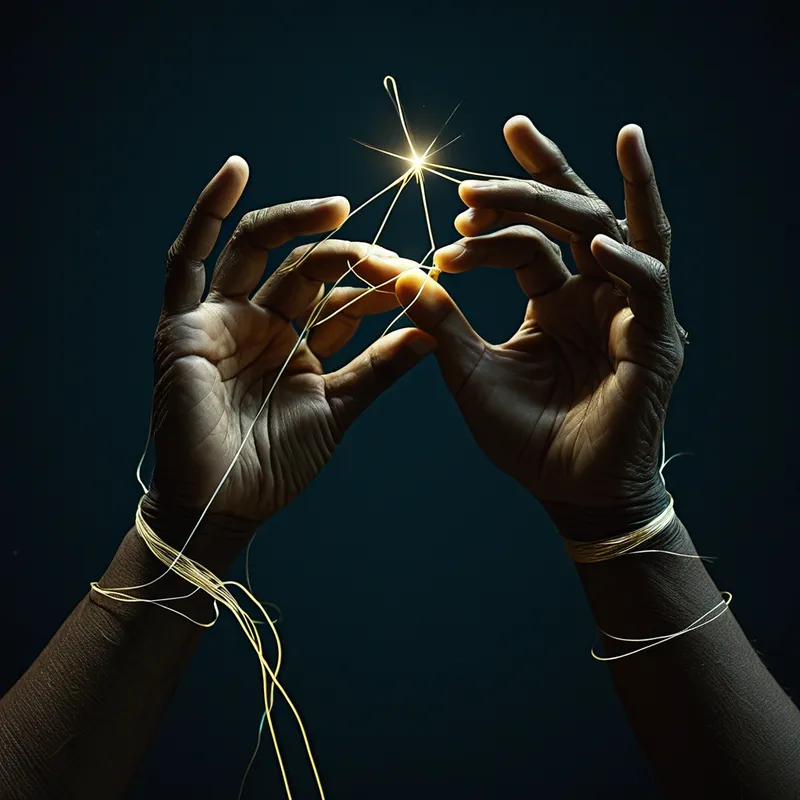
The Moirai, or Fates, were not mere deities in the Greek pantheon; they were the foundational principle of a universe governed by law. Their roots are pre-Olympian, likely emerging from a deep, pre-Hellenic understanding of natural order and limitation. Homer speaks of a singular Moira that even gods like Zeus hesitate to directly oppose. By the time of Hesiod’s Theogony, this concept had crystallized into the triple goddesses, daughters of primordial Nyx (Night), placing them among the first powers of creation, older and more fundamental than the Olympians.
They were worshipped not for favors—for what prayer could sway what is already fixed?)—but for reverence and understanding. Their cult was one of acknowledgment. In a world of chaos, capricious gods, and human striving, the Moirai represented the ultimate framework. They provided a terrifying but necessary comfort: that life had a shape, a limit, and a meaning woven into its very fabric. Storytellers, from epic poets to grandmothers at the loom, invoked them to explain the inexplicable—the sudden death of the strong, the prolonged suffering of the innocent, the strange twists of fortune. They were the answer to the question "why?" that resided beyond the whims of Zeus or the interventions of Apollo.
Symbolic Architecture
The Moirai are the archetypal embodiment of the principle of Ananke—inescapable necessity. They represent the psychic law of cause and effect, the pattern that underlies the chaos of conscious experience. They are not "evil" or capricious; they are impersonal, the executive function of the cosmos itself.
The spindle, the rod, and the shears are not tools of oppression, but instruments of definition. They transform the formless potential of the unconscious into the defined reality of a lived life.
Psychologically, they map onto the structure of time and identity. Clotho is the moment of conception, the spark of consciousness, the initial complex or idea that enters our psychic field. Lachesis is the unfolding of life in linear time—the choices made, the experiences allotted, the personality developed. She is the narrative we tell ourselves, the measured portion of our potential we actualize. Atropos is the necessary end, the dissolution of the ego, the completion of the pattern. She is the psychological truth that all states of being are temporary, that every identity must eventually be surrendered for transformation to occur.
Together, they symbolize the complete cycle of any psychic content: its emergence from the unconscious (Clotho), its development and integration into conscious life (Lachesis), and its eventual dissolution or transcendence (Atropos). To defy them is not to defy "destiny" in a superficial sense, but to refuse the natural cycle of one's own being.
The Dreamer's Resonance
When the pattern of the Moirai appears in modern dreams, it signals a profound encounter with the dreamer's sense of personal destiny, limitation, and the arc of their life. It is not a dream of external control, but of deep, internal patterning coming to awareness.
Dreaming of tangled, unspooling thread or a broken spindle (Clotho) may indicate a feeling of lost direction, a creative block, or a struggle with a new beginning—a sense that one cannot "get the thread" of one's life to cohere. Dreaming of measuring or being measured (Lachesis) often surfaces during life reviews—at midlife, after a major decision, or when weighing one's choices and their consequences. There is a somatic feeling of being assessed, of one's "allotted portion" being made conscious.
The most potent and often alarming resonance comes with Atropos. To dream of scissors, shears, or a sudden, clean cut in a cord of light is to confront the psyche's preparation for an ending. This is rarely literal death. It is the death of a phase, a relationship, a career, or a long-held identity. The somatic experience can be one of shocking release, a clean severance from something that has defined the dreamer. The psyche, through this symbol, performs its own necessary cut, making space for Clotho to spin anew.
Alchemical Translation
The individuation process, the alchemical work of becoming whole, is not a rebellion against fate but a conscious collaboration with it. The Moirai model the stages of this sacred work.
The first alchemical stage, Nigredo, is ruled by Atropos. One must allow the shears to fall on outworn aspects of the self—childish dependencies, inflated personas, defensive patterns. This is a voluntary surrender to the "cut," a dark night where the old thread is severed. Without this, no new material can be spun.
The second stage, Albedo, is the domain of Lachesis. Here, in the clarified light after the cut, one consciously measures the thread of one's true nature. What is my authentic length? What experiences are truly mine to live? This is a period of reassessment and conscious choice, aligning one's life with the measure of one's soul, not the expectations of others.
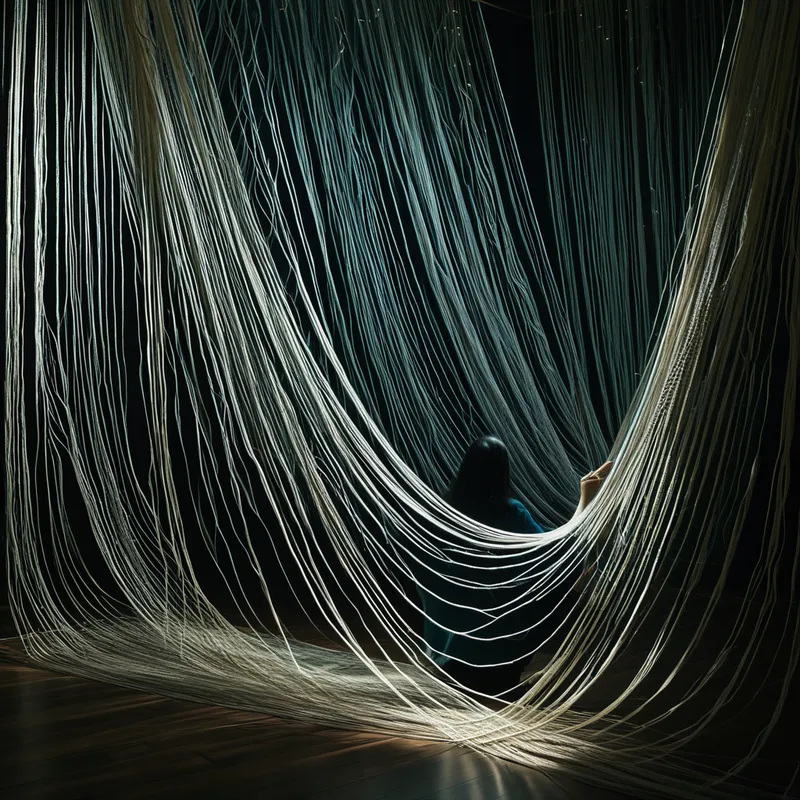
The final stage, Rubedo, belongs to Clotho. From the dissolved matter of the old self and the measured understanding of the new, the conscious ego now participates in the spinning. One takes up the spindle of one's own creativity and agency, weaving the golden thread of a life lived with purpose within the tapestry of fate.
To know the Fates is not to be paralyzed, but to be freed into responsibility. Your thread is yours to spin with quality, yours to measure with wisdom, and yours to surrender with grace when the final shears, which you now hold in your own hand, must perform their duty.
The ultimate alchemical translation of the Moirai myth is this: we move from being passive subjects of fate to becoming conscious co-weavers of our destiny. We honor Clotho by beginning again with courage, respect Lachesis by living our measure with integrity, and embrace Atropos by letting go of what must end, thus completing the sacred triad within our own soul.
Associated Symbols
Explore related symbols from the CaleaDream lexicon: