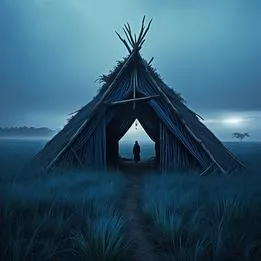
Savanna
The Oracle's Essence
A vast, open grassland ecosystem symbolizing primal origins, survival, and the balance between exposure and freedom.
Interpretive Themes
Modern Visibility
Often romanticized as a pristine wilderness, yet threatened by climate change and human expansion, representing a lost connection to nature.
Cultural Lenses
Jungian
Learn More →Represents the collective unconscious's memory of humanity's African origins, symbolizing the primal self before civilization. It connects to archetypes of the Great Mother (nurturing earth) and the Hero's journey through uncharted psychological terrain.
Freudian
Learn More →Symbolizes the id's raw, instinctual drives—hunger, thirst, sexual desire—unrestrained by societal superego. The open landscape may represent exposure of repressed wishes or a return to a pre-Oedipal, maternal unity with nature.
Gestalt
Learn More →The savanna is the 'ground' against which the 'figure' of the dreamer's current concerns emerges. It asks: What part of yourself feels vast yet exposed? How do you navigate between freedom and vulnerability in your waking life?
Cognitive
Learn More →Activates brain's evolutionary memory modules for spatial navigation and threat detection. The dream may process real-life feelings of being 'exposed' (e.g., at work) or seeking 'open space' from mental clutter, using ancient landscape templates.
Evolutionary
Learn More →Direct recall of ancestral environment where human cognition formed. Dreams of savannas may optimize survival circuits: scanning for resources/predators, wayfinding, and social bonding in open spaces, triggered by modern stressors mimicking ancestral challenges.
African
Learn More →In many African traditions, the savanna is sacred ancestral land, home to spirits and creation myths. Rituals often honor it as a living ancestor; modern context views it as both cultural heritage and a resource under pressure from development.
Global/Universal
Learn More →A cross-cultural symbol of wilderness and human origins, often evoking awe. Historically seen as a testing ground for survival; modernly, it represents biodiversity and climate concerns, yet remains a powerful metaphor for life's journey.
East Asian
Learn More →In Daoist/Buddhist thought, it may symbolize wu wei (effortless action) through its natural cycles. Historically less prominent than forests/mountains, but modernly associated with documentaries, evoking themes of impermanence and harmony in vastness.
Modern Western
Learn More →Romanticized through media (e.g., nature documentaries) as an Edenic wilderness. Represents escape from urban life, yet also colonial fantasies of 'empty' land. Modern context ties to conservation efforts and eco-tourism's idealized vision.
European
Learn More →Historically absent from European landscapes, it entered imagination through exploration/colonial narratives as an 'exotic' frontier. In modern psychology, it symbolizes the unknown psyche; in art, it evokes sublime terror and beauty of untamed nature.
Latin American
Learn More →Analogous to cerrado or pampas, seen as fertile yet challenging land. Indigenous views often spiritualize it; modern context includes agricultural use and conservation debates, symbolizing tension between tradition and progress.
Middle Eastern
Learn More →Echoes desert and steppe motifs in Islamic and pre-Islamic poetry—a place of trial, revelation, and solitude. Historically, trade routes crossed such landscapes; modernly, it may symbolize spiritual emptiness or patience in hardship.
Contextual Nuances
Walking alone
Self-reliance journey.
Being chased
Primitive threat response.
Watching sunset
Natural harmony moment.
Lost direction
Life path uncertainty.
Finding water
Essential need met.
The Portal is Always Open
Every dream is a personalized dispatch from the deep. Don't let yours fade into static.
Interpret Full Dream