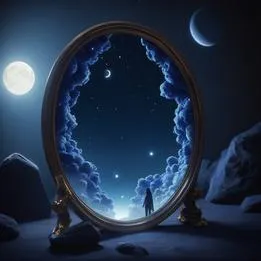
Mirror
The Oracle's Essence
Mirrors in dreams often symbolize self-reflection, identity, and the truth of one's inner self, revealing insights that may be hidden from conscious awareness.
Interpretive Themes
✧ Archetypal Essence
Sage
Dominant Influence ( 80%)
The still surface offers not just reflection, but the deep, sometimes unsettling, wisdom of self-knowledge.
The Light
The still surface offers not just reflection, but the deep, sometimes unsettling, wisdom of self-knowledge.
The Shadow
The still surface offers not just reflection, but the deep, sometimes unsettling, wisdom of self-knowledge.
Modern Visibility
In contemporary psychology, mirrors can represent self-examination and the struggle with one’s identity, often prompting individuals to explore personal truths and self-acceptance.
◈ Mythological Resonance
Reference Myth Meaning & Symbolism
Global/Universal traditionExplore the profound myth of Reference, the cosmic librarian who holds the universe's memory. Discover its psychological meaning for modern identity and the search for truth.
Bagua Myth Meaning & Symbolism
Chinese traditionThe Bagua itself functions as a cosmic mirror, reflecting the true structure of reality and the self, enabling profound self-reflection and divination.
Aphrodite/Venus Myth Meaning & Symbolism
Greek traditionThe tool of self-regard and vanity, but also a symbol of reflection, inviting one to see and acknowledge one’s own inherent beauty and desirability.
Circe's Potions Myth Meaning & Symbolism
Greek traditionThe reflective surface that would show the men their horrifying transformation, representing the shocking moment of self-recognition when we see our shadow possession.
Natyashastra Myth Meaning & Symbolism
Hindu traditionThe stated purpose of natya is to hold a mirror up to the world, reflecting all of life's conditions for the purpose of self-reflection and understanding.
Almas the Wild Man Myth Meaning & Symbolism
Mongolian traditionThe unsettling moment of recognition when one sees the wildness of Almas reflected in one's own potential, a confrontation with the inner other.
Aliguyon Myth Meaning & Symbolism
Filipino traditionRepresents Pumbakhayon as Aliguyon's perfect rival and shadow-self, reflecting back the hero's own unintegrated strength and identity.
Ahriman's Creation of Evil Myth Meaning & Symbolism
Persian traditionAhriman's mode of creation is a dark mirroring, a distorted reflection of the good; it symbolizes the genesis of evil through envy and perverse imitation.
Anhanga Spirit of the Forest Myth Meaning & Symbolism
Amazonian traditionThe moment of self-confrontation where the hunter sees his own inner distortion, serving as the catalyst for the entire transformative journey.
Barbelo the First Thought Myth Meaning & Symbolism
Gnostic traditionBarbelo as the perfect reflection of the Invisible Spirit; she is the surface upon which the unknowable first sees and knows its own nature.
Bayazid Bistami's Ascent Myth Meaning & Symbolism
Sufi traditionRepresents the final veil and the nature of reality; in the moment of union, the mirror reveals no other, for the seeker has become the pure reflection of the divine.
Badr Basim and the Sea Myth Meaning & Symbolism
Arabian traditionThe tool of self-reflection and soul-recognition, revealing not the surface ego but the deeper, destined image of the beloved or the Self.
Bon Creation Myth Myth Meaning & Symbolism
Tibetan Buddhist traditionThe luminous void of Künzhi acts as a perfect mirror, reflecting nothing until the gaze of awareness arises, creating the first duality of seer and seen.
Brer Rabbit the Trickster Myth Meaning & Symbolism
African Diaspora traditionReflects the function of the Tar Baby, showing the trickster (and the dreamer) their own reactive anger and frustration, which is the true source of their entrapment.
Calon Arang Myth Meaning & Symbolism
Indonesian traditionRepresented by Mpu Baradah's confrontation, which reflects Calon Arang's own actions and consequences back to her, enabling self-recognition and transformation.
Caipora Spirit of the Hunt Myth Meaning & Symbolism
Amazonian traditionCaipora acts as a mirror to the hunter, reflecting back his intentions, forcing self-confrontation and the seeing of one's own shadow.
Candomble Orixas in Brazil Myth Meaning & Symbolism
African Diaspora traditionThe attribute of Oxum, symbolizing self-reflection, vanity, deep self-knowledge, the surface of consciousness, and the beauty of the soul.
Coya Raymi Moon Festival Myth Meaning & Symbolism
Incan traditionRepresents Mama Quilla’s face and the ritual bowls of chicha, symbolizing the psyche’s capacity for self-reflection, vision, and receiving projections from the deeper self.
Dewa Ruci Myth Meaning & Symbolism
Indonesian traditionDewa Ruci himself acts as a living mirror, reflecting back to Bima not his external form, but his essential, divine nature and true identity.
Dhikr the Remembrance Ritual Myth Meaning & Symbolism
Sufi traditionThe human soul that must be polished clean of the rust of forgetfulness and ego to perfectly reflect the divine attributes.
Diwata Myth Meaning & Symbolism
Filipino traditionThe still pool or the Diwata's gaze, which reflects not our superficial image but our true role and responsibility within the web of life.
Dewi Ratih Myth Meaning & Symbolism
Indonesian traditionDewi Ratih as the moon mirrors the sun's light, symbolizing the reflective capacity of the soul and the unconscious to receive and manifest consciousness in a different form.
Dzogchen the Great Perfection Myth Meaning & Symbolism
Tibetan Buddhist traditionThe central symbol for the nature of mind in Dzogchen, reflecting all phenomena with perfect clarity without being stained or altered by them.
Engkanto Myth Meaning & Symbolism
Filipino traditionThe Engkanto itself acts as a mirror, reflecting the dreamer's deepest longing for beauty, perfection, and escape from temporal burdens.
Erzulie Freda Myth Meaning & Symbolism
African Diaspora traditionRepresents self-reflection, vanity, and the search for perfect beauty, as well as the painful gap between one's ideal self-image and reality.
Hafez and the Beloved Wine Myth Meaning & Symbolism
Sufi traditionThe polished heart that, once cleansed by the wine of love, perfectly reflects the face of the Beloved in all things.
Gumiho the Nine Tailed Fox Myth Meaning & Symbolism
Korean traditionThe object that often reveals the Gumiho's true form, symbolizing self-reflection, truth, and the shocking confrontation with one's hidden nature.
Hod Splendour Myth Meaning & Symbolism
Kabbalistic traditionThe shattered mirror reflects the fragmented state of divine intellect after the breaking, where each piece holds a true but partial reflection of the whole.
Helena and the Lost Soul Myth Meaning & Symbolism
Gnostic traditionHelena acts as the ultimate mirror, reflecting back to the Lost Soul its true, celestial image, shattered and forgotten within the confines of material existence.
Ibn Arabi's Mystical Visions Myth Meaning & Symbolism
Sufi traditionSymbolizes the heart of the Perfect Human and all of creation, which reflects the attributes of the Divine; to know oneself is to polish this mirror.
Iemanja in Brazil Myth Meaning & Symbolism
African Diaspora traditionOffered to Iemanja so she may admire herself, it symbolizes the quest for true self-reflection and authenticity when facing the deep, often hidden, waters of the soul.
Iblis the Fallen Angel Myth Meaning & Symbolism
Islamic traditionIblis's refusal acts as a mirror for humanity, revealing our own latent pride and forcing us to confront our capacity for conditional obedience.
Inua Spirit Within All Things Myth Meaning & Symbolism
Inuit traditionRepresents the reflective quality of a world where every entity is a conscious "thou," showing us our own capacity for relationship and respect in its gaze.
Iskandar Alexander in Islamic Tradition Myth Meaning & Symbolism
Islamic traditionThe reflective surface of the Water of Life, which ultimately shows the seeker not immortality, but the truth of their own mortal nature and limits.
Juha the Wise Fool Myth Meaning & Symbolism
Islamic traditionJuha’s tales act as mirrors held up to society and the individual, reflecting back not their image, but their hidden contradictions and hypocrisies.
Jamshid and the Jeweled Cup Myth Meaning & Symbolism
Persian traditionThe reflective function of the jeweled cup, showing the dreamer not what they wish to see, but the objective truth of their relationship to the world and the divine.
Junayd of Baghdad Myth Meaning & Symbolism
Sufi traditionThe polished heart in the state of baqa, which reflects the divine attributes clearly into the world, without the distortions of ego or the fog of ecstasy.
Khuvsgul Lake Spirit Myth Meaning & Symbolism
Mongolian traditionKhuvsgul Lake is renowned for its clarity, acting as a mirror to the soul and the heavens, symbolizing self-reflection and the union of opposites.
Kikimora of the Swamp
Slavic traditionRepresented by the still, black pools of the swamp, showing not a true reflection but the shadow-self, the face of the exiled or cursed identity one fears to acknowledge.
La Sirene Myth Meaning & Symbolism
African Diaspora traditionRepresents La Sirene’s tool of divination and allure, reflecting not just surface appearance but the soul’s deepest truths and desires.
Lake Manasarovar Myth Meaning & Symbolism
Tibetan Buddhist traditionThe essential quality of Lake Manasarovar, symbolizing pristine awareness that reflects reality without distortion, the goal of meditation and self-inquiry.
Lutung Kasarung Myth Meaning & Symbolism
Indonesian traditionThe test of perception; Purbalarang sees only surface reflection, while Purbasari’s compassion allows her to see the true reflection of essence within the distorted form.
Metztli the Moon Myth Meaning & Symbolism
Aztec traditionRepresents Metztli’s nature as a reflective body, showing us that our conscious identity is often an reflection of a deeper, unseen source, much like Tezcatlipoca’s smoking mirror.
Mavka Myth Meaning & Symbolism
Slavic traditionThe Mavka’s beautiful face reflects the dreamer's own unresolved grief and longing, while her hollow back reveals the terrifying truth behind the reflection.
Nasruddin Hodja Myth Meaning & Symbolism
Islamic traditionHodja himself acts as a mirror, reflecting the absurdities and contradictions of those he encounters, forcing self-recognition.
Nigihayahi Star God Myth Meaning & Symbolism
Shinto traditionThe tool of self-reflection and truth brought from the heavens, essential for seeing and integrating the realities of the earthly self.
Nav, Prav, and Yav Myth Meaning & Symbolism
Slavic traditionOften linked to Nav, it reflects the surface world of Yav but can reveal deeper, shadowy truths or serve as a portal to the other side.
Ninigi and the Descent from Heaven Myth Meaning & Symbolism
Shinto traditionThe Yata no Kagami, representing truth, self-reflection, wisdom, and the capacity to see things—and oneself—as they truly are.
Omoikane Deity of Wisdom Myth Meaning & Symbolism
Shinto traditionIn the myth, the Yata-no-Kagami is a key artifact of the plan, representing reflection, self-awareness, and the tool to attract hidden truth or light back into the world.
Olokun Myth Meaning & Symbolism
Yoruba traditionSymbolizes the moment of self-reflection, where Olokun's isolation is recognized, and the unconscious is made conscious through being seen and related to.
Orunmila Myth Meaning & Symbolism
Yoruba traditionThe Odu verses act as mirrors, reflecting the seeker's situation within an ancient, archetypal story, allowing for self-recognition and insight.
Oxum Goddess of Sweet Water Brazil Myth Meaning & Symbolism
African Diaspora traditionThe central tool of Oxum, symbolizing self-reflection, truth, consciousness, and the surface in which one discovers one's true value and beauty.
Pinga Goddess of the Hunt Myth Meaning & Symbolism
Inuit traditionPinga as the reflective surface showing the state of the human community in the abundance or scarcity of the natural world.
Popol Vuh Creation Myth Meaning & Symbolism
Mesoamerican traditionImplicit in the gods' desire for beings who could "see" and reflect their glory, representing self-awareness, memory, and the capacity for true recognition.
Qamar al-Zaman and Princess Budur Myth Meaning & Symbolism
Arabian traditionRepresents the perfect reflection and recognition between Qamar and Budur, the moment the soul sees itself in another, revealing ultimate truth.
Rabia al-Adawiyya Myth Meaning & Symbolism
Sufi traditionThe human heart, which Rabia sought to polish relentlessly so it could purely reflect the divine reality without the distortion of ego.
Root Work and Hoodoo Myth Meaning & Symbolism
African Diaspora traditionA tool for reflection, revealing hidden truths, capturing or deflecting spiritual energy, and symbolizing the need for self-examination in the work.
Si Kabayan Myth Meaning & Symbolism
Indonesian traditionHis literal interpretations act as a mirror to authority, reflecting back the absurdity and illogic inherent in its demands and procedures.
Simorgh the Divine Bird Myth Meaning & Symbolism
Persian traditionThe instrument of ultimate revelation, reflecting not an external deity but the integrated self, the shocking truth that the divine is within.
Tagamaling Forest Spirit Myth Meaning & Symbolism
Filipino traditionThe Tagamaling acts as a living mirror for the hunter, reflecting back the true intent and moral state of the human heart that stands before it.
The Abyss Da'ath
Kabbalistic traditionThe Abyss acts as a perfect mirror, reflecting not the seeker's face, but the totality of their unintegrated shadow and spiritual arrogance.
The Bektashi Path Myth Meaning & Symbolism
Sufi traditionThe polished heart that reflects the divine face, and the principle that the outer world is a reflection of one's inner state.
The Bunyip Myth Meaning & Symbolism
Aboriginal Australian traditionThe still surface of the billabong acts as a dark mirror, showing not the ego's reflection, but the shadowy truth lurking beneath.
The Black Stone of the Ka'ba Myth Meaning & Symbolism
Arabian traditionThe polished black surface of the stone, reflecting not an image of the face, but the state of the soul that approaches it.
The Bridge of Judgment Chinvat Myth Meaning & Symbolism
Persian traditionEmbodied by Daena, it represents unflinching self-reflection and the revelation of the true self, whether in beauty or in shadow.
The Chi Personal Spirit Igbo Myth Meaning & Symbolism
African traditionReflects the true self and potential; the Chi acts as a psychic mirror, showing the individual the face of their highest possibility.
The Cosmic Tree of the Sufi Myth Meaning & Symbolism
Sufi traditionThe polished surface of the seeker's heart that must be cleansed to reflect the light of the Tree, representing self-knowledge as the prerequisite for divine knowledge.
The Eternal Fox Trickster Siberian Myth Meaning & Symbolism
Siberian traditionReflecting the Fox's nature, representing self-reflection, the multiplicity of identity, and the trickster's ability to show us the illusions we hold about ourselves.
The Eternal Heaven Blue Sky
Mongolian traditionRepresents the reflective quality of lakes and eyes that capture the blue of heaven, symbolizing the act of introspection through which we perceive our own Sülde.
The Drop and the Ocean Myth Meaning & Symbolism
Sufi traditionThe Ocean acts as a mirror in which the Drop finally sees its true, boundless nature, shattering the illusion of separation.
The Divine Spark in Matter
Gnostic traditionThe material world and the human mind as a distorted reflection of the divine fullness, often showing the seeker only a false, trapped image of themselves.
The Exegesis of the Soul Myth Meaning & Symbolism
Gnostic traditionThe world of matter and the ego, which reflects a distorted, fragmented image of the true Self, but can also become a tool for self-recognition and gnosis.
The Fante Sea Spirits Myth Meaning & Symbolism
West African traditionThe surface of the calm sea, representing the threshold to the spirit world and the tool for self-reflection that reveals not just the self, but the faces of those who formed it.
The Duppy Spirit Jamaica Myth Meaning & Symbolism
African Diaspora traditionIn confronting a Duppy, one is forced to see a reflection of one’s own fragmented or denied history; the spirit acts as a dark mirror to what has been suppressed.
The First Dalai Lama Myth Meaning & Symbolism
Tibetan Buddhist traditionThe tool of recognition, reflecting the essential nature of consciousness from one life to the next, revealing the true face beneath the mask of form.
The Forty Rules of Love Myth Meaning & Symbolism
Sufi traditionThe core teaching tool of the rules, each one designed to reflect the seeker's inner state back to them, revealing both beauty and distortion.
The Garden of Truth Sanai Myth Meaning & Symbolism
Sufi traditionEach garden acts as a mirror, reflecting back to the seeker their own desires and attachments, which must be recognized and seen through.
The Gnostic Ascent of the Soul Myth Meaning & Symbolism
Gnostic traditionThe moment of Gnosis, where the soul sees its true divine reflection, shattering the illusion of its mortal identity.
The Hare Trickster East African Myth Meaning & Symbolism
African traditionRepresents self-reflection and confrontation with the shadow; the Lion's failure to recognize his reflection is the ego's failure to know itself.
The Iara River Maiden Myth Meaning & Symbolism
Amazonian traditionIara's perfect surface reflects the deepest desires and vulnerabilities of those who gaze upon her, showing them not her, but their own submerged selves.
The Island of the Moon Myth Meaning & Symbolism
Incan traditionThe myth’s core mechanism of revelation, representing the psyche’s capacity for self-reflection and the often-terrifying confrontation with the Shadow.
The Legend of Arang Myth Meaning & Symbolism
Korean traditionThe moment of confrontation where one is asked to “look upon” the reflected truth of one’s pain or injustice, a test of consciousness.
The Lover and the Beloved Myth Meaning & Symbolism
Sufi traditionThe created world and the human heart, which can only reflect fragments of the Beloved's beauty, reminding the Lover of the original unity.
The Mandaean Creation Myth Myth Meaning & Symbolism
Gnostic traditionThe physical world (Tibil) acts as a dim, distorted mirror of the World of Light, reflecting a flawed image of divine perfection that causes homesickness.
The Mirror of the Soul Myth Meaning & Symbolism
Sufi traditionThe central artifact representing the heart or consciousness, which must be cleansed to reflect the ultimate truth of one's divine origin and unity with the Beloved.
The Night of Power in Persian Lore Myth Meaning & Symbolism
Persian traditionThe function of the Night itself, which reflects the soul back to itself without the ego's filters, forcing a confrontation with true nature.
The Ocean of the Soul Myth Meaning & Symbolism
Sufi traditionThe reflective surface of self-examination, which can either show the ego's illusion or, when polished clean, reveal the Oceanic reality behind the image.
The Odu of Ifa Myth Meaning & Symbolism
Yoruba traditionThe divination tray and the Odu system itself function as a mirror, reflecting back to the individual the hidden patterns and potentials of their own soul and situation.
The Perfect Human Al-Insan al-Kamil Myth Meaning & Symbolism
Sufi traditionThe central symbol of Al-Insan al-Kamil, representing the human heart or consciousness as the pure reflector of divine attributes and cosmic reality.
The Qliphoth Shadow Tree Myth Meaning & Symbolism
Kabbalistic traditionThe essential function of the Qliphothic realms, which reflect a distorted, truthful image of the aspects of self the conscious mind has refused to see.
The Pneumatics Psychics and Hylics Myth Meaning & Symbolism
Gnostic traditionThe Psychic soul, which can either reflect the mud of the Hylic world or, if purified, reflect the light of the Pneuma from above.
The Queen Mother of the West Myth Meaning & Symbolism
Taoist traditionImplied in her assessing gaze, it represents the unflinching self-reflection required to see one's true motives and worth before the inner sovereign.
The Rabbit in the Moon Aztec Myth Meaning & Symbolism
Aztec traditionThe moon functions as a divine mirror, showing humanity not its own face, but the face of the ideal—the image of perfect, selfless offering.
The Serpent as Liberator Myth Meaning & Symbolism
Gnostic traditionThe fruit's effect, allowing the first true reflection of the self, revealing both divine spark and mortal clay, initiating the complex journey of identity.
The Seven Valleys of the Quest Myth Meaning & Symbolism
Sufi traditionRepresents the stage of Unity, where all creation is seen as a reflection of the Beloved, and the seeker recognizes the divine face in all things, including themselves.
The Sleeper Awakened Myth Meaning & Symbolism
Arabian traditionThe mechanism of the entire story, reflecting back a false image so convincingly that it forces a confrontation with the very nature of reflection and identity.
The Sufi Master and Student Myth Meaning & Symbolism
Sufi traditionThe master serves as a mirror, not to show the student who he is, but to reveal the illusion of who he thinks he is, until only the reflection of the divine remains.
The Snake Woman Siberian Myth Meaning & Symbolism
Siberian traditionThe surface of the pool reflects not just an image, but the true, soul-nature of the one who gazes into it, revealing the hidden self.
The Snow Lion of Tibet Myth Meaning & Symbolism
Tibetan Buddhist traditionReflects the Snow Lion's function as a symbol showing us our own innate, pure, and fearless Buddha-nature, if we have the clarity to see it.
The Sufi Master Niffari Myth Meaning & Symbolism
Sufi traditionThe heart or consciousness that, when polished clean of the dust of self, perfectly reflects the divine essence without distortion.
The Spirit Bear Myth Meaning & Symbolism
Inuit traditionThe bear's gaze acts as a perfect mirror, reflecting back not the hunter's persona, but his true, unadorned spiritual state.
The Tale of Panji Myth Meaning & Symbolism
Indonesian traditionRepresents self-reflection, recognition, and the moment of truth when the disguised self is seen for who it truly is, both by oneself and the beloved.
The Tao That Cannot Be Named
Taoist traditionRepresents the mind of the sage, which reflects reality perfectly without adding commentary, judgment, or names, remaining clear and unstained.
The Tavern of Love Myth Meaning & Symbolism
Sufi traditionThe polished heart or consciousness that, when cleansed by the wine, reflects not the ego’s image but the face of the Beloved.
The Thirteen Baktuns Myth Meaning & Symbolism
Mesoamerican traditionThe reflective surface used by the Maya for scrying, representing self-reflection, the true sight granted to the maize-people, and the revelation of hidden realities.
The Tree of Life Kabbalistic
Kabbalistic traditionEach Sephirah reflects the ones above and below, and the entire Tree is a reflection of the macrocosm in the human microcosm.
The Waq-Waq Tree Myth Meaning & Symbolism
Arabian traditionThe tree functions as a cosmic mirror, reflecting back not the seeker's face, but the hidden architecture of their soul and fate.
The Wheel of Life Myth Meaning & Symbolism
Tibetan Buddhist traditionThe Wheel itself acts as a mirror, perfectly reflecting the viewer's own mind, its realms, and its karmic propensities without distortion.
Tikbalang Myth Meaning & Symbolism
Filipino traditionThe Tikbalang's illusion acts as a distorting mirror to the traveler's psyche, reflecting back their own internal confusion and misplaced trust in external landmarks.
The Wine of the Mystics Myth Meaning & Symbolism
Sufi traditionIn the state of union, all shattered fragments of the self become mirrors reflecting the one true Reality, the face of the Beloved.
The Witch of Endor Myth Meaning & Symbolism
Hebrew traditionThe entire séance acts as a dark mirror, reflecting back to Saul the truth of his own abandoned state and impending doom with absolute, unforgiving clarity.
Tokoyo the Eternal Land Myth Meaning & Symbolism
Shinto traditionThe tool of self-reflection and shadow integration, crucial for passing the guardians of the threshold and seeing the divine within the monstrous.
Tohunga Keeper of Sacred Knowledge Myth Meaning & Symbolism
Maori traditionThe required purity and clarity of the keeper's soul, which must reflect knowledge without distortion from ego, fear, or desire.
Toba Lake Creation Myth Myth Meaning & Symbolism
Indonesian traditionThe surface of Lake Toba itself, reflecting the sky and the surrounding mountains, symbolizing self-reflection, the unconscious showing the ego its own transformed world.
Uli Sorcery Goddess Myth Meaning & Symbolism
Hawaiian traditionThe unflinching reflection of one's own actions and their inevitable consequences, revealing the true self beyond illusion.
Umbanda in Brazil Myth Meaning & Symbolism
African Diaspora traditionUsed in rituals and associated with spirit manifestation, it symbolizes reflection, the other side, the spirit world, and the act of seeing the self through the eyes of another consciousness.
Waiau Sacred Lake Myth Meaning & Symbolism
Hawaiian traditionThe surface of Waiau, reflecting the heavens; it symbolizes self-reflection, the revelation of the true soul, and the interface between the earthly and spiritual realms.
Yamantaka Myth Meaning & Symbolism
Tibetan Buddhist traditionRepresents the wisdom that reflects reality perfectly, showing Yama that his power is a reflection of the mind’s own projections, which Yamantaka’s realization shatters.
Womba the Mad Moon Myth Meaning & Symbolism
Aboriginal Australian traditionThe reflective surface that shows the absence of the beloved, representing the moment of traumatic realization that shatters the self-image.
Yaldabaoth Myth Meaning & Symbolism
Gnostic traditionThe flawed reflection of the Pleroma, representing the material world as a distorted image of true reality and the ego's perception based on that distortion.
Yeshe Tsogyal Myth Meaning & Symbolism
Tibetan Buddhist traditionThe core quality of her enlightened awareness, representing pristine cognition that reflects all phenomena perfectly without attachment or aversion.
Ameno-Uzume Dance of Dawn
Shinto traditionA tool of profound self-revelation, reflecting not mere appearance but the hidden essence, forcing a confrontation with one's true image.
Amaterasu's Cave
Shinto traditionThe tool of self-recognition, held by the community to reflect a hidden essence back to itself, breaking the spell of isolation.
Amaterasu and Susanoo
Shinto traditionA tool of illusion that reveals profound truth, reflecting not the superficial self but the latent, transcendent potential of the soul.
Aeons as Emanations of God
Gnostic traditionThe First Thought, Barbelo, as the perfect reflection of the Unknowable; the Aeons as reflections of divine attributes.
Al-Uzza the Goddess of Venus
Arabian traditionThe reflective quality of Venusian light, revealing the true, often contradictory, nature of one’s deepest desires and intentions.
Avalokiteshvara and Tibet
Tibetan Buddhist traditionThe wisdom of the thousand eyes, reflecting the true nature of suffering without distortion or judgment, enabling clear and precise compassionate action.
Boorong Astronomical Mythology
Aboriginal Australian traditionThe night sky as a reflective surface that shows the earth its own laws, cycles, and stories in a grand, archetypal form.
Buraq the Heavenly Steed
Islamic traditionReflects the purity of the soul that can become a vehicle for the divine; Buraq itself is a mirror of prophetic readiness.
Chang'e Flies to the Moon
Taoist traditionThe moon itself as a reflector of the sun’s light, symbolizing a consciousness that can only receive and reflect, never generate or embrace.
Cangjie Inventor of Writing
Taoist traditionThe mind of Cangjie, which does not merely reflect nature but reflects upon it, seeking the essential form within the apparent shape.
Eeyeekalduk Spirit of Medicine
Inuit traditionA tool for reflection and revelation, symbolizing Eeyeekalduk’s role in showing the true, often hidden, spiritual reflection of a physical ailment.
Enkidu in the Wilderness
Babylonian traditionEnkidu acts as the reflecting shadow for Gilgamesh, revealing the king’s untamed aspects and ultimately allowing both to see their whole selves.
Eshu at the Crossroads
Yoruba traditionA surface that reflects, revealing the self, truth, or illusion, and symbolizing self-examination, projection, and the duality of appearance versus reality.
Fana and Baqa Annihilation and Subsistence
Sufi traditionThe heart polished clean of selfish desires, perfectly reflecting divine attributes in the state of baqa.
Grim Reaper Jeoseung
Korean traditionThe reflective surface that reveals the unadorned truth of a completed life, held up by the Reaper’s impartial gaze and ledger.
Guru Rinpoche's Eight Manifestations
Tibetan Buddhist traditionReflecting all images without attachment or distortion, it embodies the mind’s innate clarity and the way phenomena arise and dissolve within awareness.
Huaca Sacred Places
Incan traditionA polished stone or calm pool at a huaca could serve as a mirror, reflecting the seeker and the sky, symbolizing self-reflection within the sacred context and the microcosm-macrocosm relationship.
Ifa Divination
Yoruba traditionA surface that reflects truth, revealing the inner nature of the seeker and the archetypal patterns that shape their current reality.
Ijiraq the Shape Shifter
Inuit traditionRepresents reflection, illusion, and self-examination; it can show truth or a distorted image, much like the Ijiraq’s deceptive forms.
Inari God of Rice
Shinto traditionReflecting truth and spiritual presence, often associated with Shinto shrines, and embodied in the rice paddy’s reflective surface that unites heaven and earth.
Inanna's Descent to the Underworld
Sumerian traditionEreshkigal acts as the ultimate mirror, reflecting back to Inanna not her glorious image, but the naked, powerless truth of her being when all adornments are gone.
Issatok Spirit of Open Water
Inuit traditionA surface for reflection, revealing the true self, often showing what is beneath the surface of conscious awareness.
Ishtar's Descent
Babylonian traditionThe instrument of reflection and confrontation, often revealing the shadow self or the true, unadorned state of being, as in the face-to-face meeting of sisters.
Ishtar and Tammuz
Babylonian traditionThe confrontation with one’s opposite or shadow self, as Ishtar meets Ereshkigal, revealing the hidden, necessary counterpart to one’s visible identity.
Izanami in Yomi
Shinto traditionThat which reveals the true, often hidden, state of things; in the darkness of Yomi, the lit torch acts as a mirror, showing the unvarnished truth of decay.
Kami Nature Spirits
Shinto traditionThe primary shintai in many shrines, representing purity of heart, self-reflection, and the vessel that holds the intangible presence of the divine.
Kether the Crown
Kabbalistic traditionA surface that perfectly reflects without altering, symbolizing Kether’s role as the pure, undistorted reflection of the Ain Sof into the realm of emanation.
Lei Gong Thunder God
Taoist traditionThe tool of ultimate revelation, reflecting not the surface image but the true, unadorned nature of things, exposing hidden faults and moral corruption.
Love as the Axis of Creation
Sufi traditionThe cosmos and the purified human heart as reflectors of divine beauty and attributes, revealing the hidden face of the creator.
Lilinoe Goddess of Mists
Hawaiian traditionBut a mirror clouded by breath, reflecting not a sharp image of the ego, but a softened, suggestive impression of deeper, more elusive truths.
Mami Wata Sea Spirit
African traditionRepresents self-reflection, truth, and illusion; the surface that shows the self, yet is a gateway to other realms and deeper layers of identity.
Maria Makiling
Filipino traditionHer nature as a reflection of human action; she shows humanity its own face, either in harmony with nature or in destructive arrogance.
Milarepa and the Demons
Tibetan Buddhist traditionThe nature of mind itself, empty and clear, capable of reflecting all appearances without being stained by them, revealing the illusory nature of demons.
Mictlantecuhtli Lord of the Dead
Aztec traditionA surface that reflects true, often hidden, nature; in the underworld, it shows the soul its essence stripped of life’s illusions.
Mount Kailash as Axis Mundi
Tibetan Buddhist traditionA surface for reflection, revealing the hidden unity between the outer world and the inner self, as the sacred lake reflects the mountain.
Nanuq and the Hunter
Inuit traditionNanuq’s eye, in which the hunter sees his own small, reflected self, confronting the truth of his place in the vast order.
Nanuq the Polar Bear Master
Inuit traditionAn object or encounter that reflects not just appearance, but the true state of one’s soul, revealing hidden truths, virtues, and flaws with unflinching clarity.
Nanna the Moon God
Sumerian traditionThe moon as a reflector of the sun's light, representing introspection, the nature of indirect knowledge, and the psyche's capacity for self-reflection.
Ongon Spirit Vessels
Mongolian traditionThe reflective function of the ongon, which externalizes and gives form to internal psychic complexes or spiritual relationships for conscious engagement.
Osun River Goddess Oshun
West African traditionA tool for self-reflection and true self-knowledge, symbolizing the clarity, vanity, and profound insight required to understand one’s own beauty and desires.
Oshun Saves the World
Yoruba traditionThe tool of self-reflection and truth, revealing not only surface appearance but the depths of one’s own beauty, flaws, and hidden nature.
Quechua Star Constellations
Incan traditionA surface that reflects truth, revealing the self, the soul, or the hidden reality of the cosmos, often showing not what is, but what lies beneath appearance.
Quetzalcoatl and Tezcatlipoca Rivalry
Aztec traditionThe surface of reflection that reveals not the outer appearance, but the inner truth, the shadow self, and the elusive nature of reality and identity.
Quetzalcoatl Feathered Serpent
Aztec traditionThe instrument of self-revelation and shadow confrontation, showing not what we wish to see, but the raw, often unsettling truth of our embodied existence.
Rigpa and the Nature of Mind
Tibetan Buddhist traditionThe pristine, reflective nature of primordial awareness, showing all things without distortion or attachment.
Rumi and Shams of Tabriz
Sufi traditionThe perfect symbol for their relationship, where each soul polishes the other to reflect only the face of the divine beloved.
Ryujin Dragon King of the Sea
Shinto traditionA symbol of reflection, truth, and self-knowledge, often revealing what is hidden on the surface.
Samael the Accuser
Hebrew traditionThe tool of ruthless reflection, showing the self not as it wishes to be, but as it has acted, without flattery or excuse.
Simon Magus
Gnostic traditionThe surface that reflects not truth, but the viewer’s own grandiose self-image, leading to the fatal error of mistaking the reflection for reality.
Sophia's Fall from the Pleroma
Gnostic traditionThe material world as a distorted reflection of the divine Pleroma, and the human soul as a mirror clouded by forgetfulness.
Sumpa the Oath Deity
Filipino traditionThe self-reflection forced by consequence, showing the gap between one’s sworn ideal and one’s actual deeds.
Sophia the Divine Wisdom
Gnostic traditionThe material world as a distorted reflection of the divine fullness; the ego’s perception that mistakes the reflection for reality.
Terma Hidden Treasure Texts
Tibetan Buddhist traditionThe pristine, non-dual awareness (rigpa) that is both the medium upon which the Terma is encoded and the faculty that recognizes and reflects it upon revelation.
The Apocryphon of John
Gnostic traditionThe instrument of self-recognition, reflecting not the mortal face but the hidden divine spark, facilitating the anamnesis of the soul.
The Annihilation of the Self
Sufi traditionThe heart that must be cleansed of the rust of selfish desire to purely reflect the attributes and beauty of God.
The Bardo Realms
Tibetan Buddhist traditionThe essential nature of the Bardo, where every deity and demon is a reflection of the mind’s own latent karma and pure awareness.
The Bamboo Cutter Kaguya-hime
Shinto traditionReflects not just beauty, but true nature; Kaguya-hime’s radiance acts as a mirror, revealing the inadequacy and pretense of those who seek to possess her.
The City of Brass Arabian
Arabian traditionA surface for reflection, revealing truth or illusion; the City of Brass acts as a dark mirror, showing the beholder the potential fate of their own worldly ambitions.
The Bridge Between Worlds
Sufi traditionThe bridge as a reflective surface showing the seeker nothing but their own essence, stripping away all projection and illusion.
The City of Brass
Islamic traditionThe city acts as a dark mirror for the explorer and the dreamer, reflecting back not their face, but the petrified potential of their own unlived hubris.
The Descent of Ishtar
Sumerian traditionEreshkigal’s gaze, which reflects not an image but the absolute reality of mortality, stripping away all illusion and leaving only the bare essence.
The Enchanted Islands Arabian
Arabian traditionThe reflective nature of the enchanted realm, which shows the traveler not the outer world, but the unvarnished truth of their own inner landscape.
The Dance of the Dead Amazon
Amazonian traditionA symbol of reflection, truth, self-knowledge, the soul, and the idea that other realms are precise yet inverted echoes of our own.
The Five Dhyani Buddhas
Tibetan Buddhist traditionThe essence of Akshobhya’s mirror-like wisdom, reflecting all phenomena perfectly without judgment or distortion, symbolizing pristine awareness.
The First Shaman Amazon
Amazonian traditionA tool for deep reflection, revealing not the surface image but the true nature of the soul or the spirit world.
The Fish and the World Below
Siberian traditionA surface that reflects, but may also serve as a portal to another world; symbolizes self-reflection, the shadow, and the idea that reality has a hidden, reversed dimension.
The Fox Kitsune
Shinto traditionThe tool of reflection and revelation, often the object that unveils the Kitsune’s true form, symbolizing the confrontation with authentic self behind the façade.
The Four Stations of the Heart
Sufi traditionThe heart as a reflector of divine attributes, polished through spiritual practice to ultimately cease reflecting and become one with the Light itself.
The Four Worlds of Kabbalah
Kabbalistic traditionA symbol for each world, which reflects the divine light according to its own capacity and clarity, from the perfect reflection of Atzilut to the obscured glass of Assiyah.
The Great Tree of Life Amazon
Amazonian traditionReflects the idea that every part of the Tree contains the pattern of the whole, and that to look deeply into nature is to see the self.
The Gospel of Philip
Gnostic traditionThe surface of reality that reflects either the illusion of the separate self or the true image of the divine origin, depending on the clarity of the perceiver.
The Heavenly Court
Jewish traditionThe unforgiving reflection of the soul’s true state, presented before the court of conscience and heaven.
The Hidden Treasure Hadith Qudsi
Sufi traditionThe created cosmos and the purified human heart, serving as the reflective surface in which the Hidden contemplates and knows its own beauty.
The Gospel of Thomas
Gnostic traditionThe sayings themselves act as mirrors, reflecting not an external image but the hidden light of the Father/true Self within the seeker.
The Hypostasis of the Archons
Gnostic traditionThe reflective surface of the material cosmos that captures and traps the image of the divine, initiating the drama of incarnation.
The Heart as the Throne of God
Sufi traditionThe essential nature of the purified heart, which must be cleansed of egoic distortion to perfectly reflect divine reality.
The Jade Emperor
Taoist traditionThe tool of divine judgment that reflects not the physical form, but the true nature and accumulated virtue of the soul, held up by the celestial bureaucracy.
The Jinn in Islamic Cosmology
Islamic traditionA surface that can capture or reveal the unseen; symbolizing the interface between worlds, the capacity for self-reflection that exposes hidden influences, and the jinn’s ability to mimic or reflect reality.
The Journey of the Soul Rumi
Sufi traditionThe polished heart that, when cleansed of the rust of worldly attachment, perfectly reflects the beauty and attributes of the Divine.
The Journey to the Self Sufism
Sufi traditionThe symbol of self-reflection, truth, and the polished soul capable of revealing the divine image hidden within.
The Liver Omen Divination
Babylonian traditionThe liver as a speculum that reflects not the face, but the state of the world and the will of the gods, a microcosm holding the image of the macrocosm.
The Logos as Redeemer
Gnostic traditionThe reflective quality of the Logos and the awakened soul, which holds the image of the divine fullness and allows for self-recognition.
The Lords of Xibalba
Mesoamerican traditionThe reflective surface of Xibalba’s deceptions, revealing not one's face but the true nature of the powers one faces, demanding perfect perception.
The Lotus Born Padmasambhava
Tibetan Buddhist traditionThe mind of the Buddha, reflecting all phenomena perfectly without attachment or distortion, a quality the practitioner seeks to realize.
The Mayan Underworld Xibalba
Mesoamerican traditionA surface of reflection and illusion, representing the deceptive nature of Xibalba’s reality and the need to see beyond false images.
The Mo'o Water Dragons
Hawaiian traditionA surface for reflection and revelation, showing not only the outer appearance but also the hidden, often truer, aspects of the self or reality.
The Naga Serpent Spirits
Tibetan Buddhist traditionThe Naga’s domain reflects the state of the seeker’s own psyche; calm waters indicate peace, while turbulent waves reveal inner conflict.
The Nag Hammadi Texts
Gnostic traditionThe instrument of self-knowledge, reflecting not the surface image but the hidden divine nature obscured by the ego.
The Origin of Divination
Yoruba traditionThe divination process, which reflects the true state of the seeker’s life and destiny, revealing what is obscured by forgetfulness or illusion.
The Palm Tree of Orunmila
Yoruba traditionA surface for reflection, revealing not just the outer visage but the inner truth, the self, and often, the nature of reality itself.
The Origin of the Stars Amazon
Amazonian traditionThe tool of self-reflection and consciousness that reveals the true nature of conflict and enables transformation.
The Polar Bear Creator
Inuit traditionThe threshold of self-awareness, revealing the true self and creating the duality necessary for consciousness and relationship to emerge.
The Rainbow Body
Tibetan Buddhist traditionThe nature of mind, reflecting all phenomena perfectly yet holding none, symbolizing the clarity and emptiness of pristine awareness (rigpa).
The Queen of Sheba Bilqis
Islamic traditionA surface for reflection and revelation, exposing truth or illusion, as the crystal floor revealed Bilqis’s own nature.
The Return of the Fallen Sophia
Gnostic traditionThe reflective surface of consciousness into which Sophia gazes, representing both the act of self-reflection that leads to error and the tool for self-recognition that enables redemption.
The Shaman's Drum
Mongolian traditionThe drum’s surface acts as a reflective portal, showing not the outer world but the inner landscapes of the spirit realms.
The Simurgh in Sufi Tradition
Sufi traditionThe instrument of self-reflection and revelation, where the seeker ultimately beholds not an other, but the true, unified image of their own divine essence.
The Sky Hole Legend
Mongolian traditionA surface that reflects not the outer form, but the inner state and one’s alignment with cosmic truth, demanding self-confrontation and clarity.
The Six Realms of Samsara
Tibetan Buddhist traditionThe mind that reflects and constructs the reality of each realm, showing the dreamer the nature of their own karmic projections.
The Storytelling Griot
African traditionThe griot’s function as a reflector of collective identity, showing a people not what they wish to see, but who they truly are in the light of their history.
The Swan Princess
Slavic traditionThe surface of the lake as a reflector, representing self-recognition, duality, and the moment one sees their true, other nature.
The Ten Sefirot
Kabbalistic traditionA surface that reflects reality, revealing the hidden or the reversed; symbol of self-knowledge, illusion, and the principle that the macrocosm is reflected in the microcosm.
The Thirty Two Paths of Wisdom
Kabbalistic traditionA surface that reflects, revealing the hidden correspondence between the macrocosm and the microcosm, the divine structure and the soul.
The Thousand and One Nights
Arabian traditionThe function of the tales, which reflect back to the king the multitudes of the human soul, allowing him to see himself and his actions in a new light.
The Three Games of the Gods
Mongolian traditionThe reflective surface in which the gods might see not their own faces, but the emerging pattern of the tapestry, symbolizing the elusive nature of perceiving fate.
The Three Worlds Above and Below
Siberian traditionA shamanic tool for divination and soul-work, reflecting not the physical world but the hidden realities of the other realms and the inner self.
The Three Sacred Treasures of Japan
Shinto traditionThe instrument of self-revelation and truth, reflecting not merely image but essence, capable of ending interior darkness.
The Three-Headed Eagle Siberian
Siberian traditionA tool for reflection and revelation, akin to each of the Eagle’s heads, which show a different, true aspect of reality.
The Thunder Perfect Mind
Gnostic traditionA surface that reflects not merely appearance, but the totality of the soul’s contradictions and hidden wholeness back upon itself.
The Twenty Two Letters of Creation
Kabbalistic traditionA surface that reflects, suggesting the relationship between the upper and lower worlds, where the divine letters are reflected in their earthly counterparts.
The Two Sabbath Angels
Jewish traditionA surface that reflects truth, revealing the inner state outwardly, forcing confrontation with one’s own image and condition.
The Valentinian Aeons
Gnostic traditionThe material world is a distorted mirror, a reflection of the divine patterns of the Pleroma, but fractured by ignorance.
The Winged Horse Buraq Arabian
Arabian traditionA surface for reflection, revealing not just the outer form but the inner truth, and sometimes acting as a portal to other realms of being.
The Yellow Springs Underworld
Taoist traditionThe unflinching reflector of truth in the courts of the dead, representing radical self-honesty and the dissolution of the persona.
Tzimtzum the Contraction of God
Jewish traditionThe created universe, which reflects the divine light in a fragmented, refracted manner, requiring the seeker to look through the cracks to perceive the source.
Wiraqocha's Tears Become the Stars
Incan traditionThe night sky that reflects the inner state of the god back to humanity, and humanity’s own sorrow back to itself in a shared, luminous language.
Yesod Foundation
Kabbalistic traditionA surface that receives and reflects an image without altering its source, symbolizing Yesod's role as the perfect reflector of divine energy into the world of form.
Yemoja
Yoruba traditionOffered to Yemoja to see into the depths, symbolizing self-reflection, the surface of consciousness over the unconscious, and the truth found in looking within.
Yetzirah the World of Formation
Kabbalistic traditionRepresents the reflective, intermediary quality of Yetzirah, which does not generate light but receives and shapes it into comprehensible images.
Yuki-onna Snow Woman
Shinto traditionShe reflects the frozen, beautiful, and terrifying aspects of the self that one encounters in isolation or deep introspection.
Zhuangzi and the Butterfly Dream
Taoist traditionReflects reality without attachment or distortion, representing the mind of the sage that holds all images (man, butterfly) without claiming any as the true self.
Cultural Lenses
Jungian
Learn More →Mirrors are seen as tools for self-discovery and reflection on the psyche. Used in therapeutic settings to facilitate self-exploration. Mirrors symbolize the shadow self and the journey to integrate all parts of one's identity.
East Asian
Learn More →Mirrors are traditionally used in Feng Shui to deflect negative energies and enhance protection. Placed strategically within homes for auspicious energy. [Chinese] Mirrors can symbolize clarity and insight, reflecting more than just physical appearance.
Middle Eastern
Learn More →Mirrors were associated with beauty and femininity, often used by women for self-adornment. Used in religious rituals and personal beautification practices. [Ancient Egypt] Mirrors were believed to reflect both the physical and spiritual realm, connecting identity with the divine.
East Asian
Learn More →Mirrors are sacred objects, often used in Shinto as a representation of purity and clarity. Housed in shrines, reflecting the divine and the virtuous. [Japanese] The mirror symbolizes the truth and sincerity of one’s heart.
Latin American
Learn More →Used by shamans for divination and to connect with unseen worlds. Integral in rituals that involve asking for guidance from the spirits. [Mesoamerican] Mirrors signify a gateway to understanding both the past and future, reflecting the cyclical nature of life.
✦ The Oracle's Prediction
A hidden aspect of your personality will demand recognition.
A relationship will serve as a mirror, revealing a truth about yourself.
Contextual Nuances
Looking into a broken mirror
This can represent fractured self-image or feelings of inadequacy, urging the dreamer to address underlying issues.
Seeing a reflection of someone else in a mirror
Indicates projection of feelings or traits onto others, exploring how the dreamer perceives relationships.
Mirror showing an aged version of oneself
Reflects concerns about aging or change, often indicating a fear of losing one's identity over time.
Walking through a mirror
Symbolizes transition to new phases in life, suggesting readiness to embrace change or new opportunities.
Mirror reflecting a distorted image
Expresses issues with self-acceptance and denial, encouraging the dreamer to confront uncomfortable realities.
Integrative Mantra
"Affirmation"
Integration Ritual
Ritual Practice
Light a candle in a dark room. Sit before a mirror with the candle placed so its flame is reflected. Gaze softly at your reflected eyes for three minutes, then write one true sentence about yourself you usually avoid on a piece of paper. Place the paper beneath the candle holder.
Questions for Reflection
- "What aspects of my identity am I currently questioning or neglecting?"
- "How do I perceive the relationship between my inner self and external appearances?"
- "In what ways can I use self-reflection to facilitate personal growth?"
✧ Community Dreams
Apr 13, 2026
"In my dream, I knew I was dreaming I was in the car with my old friends, Maddie and Aaron. I told them I was dreaming and that I could prove it. They didn’t believe me. To prove to them that I was dreaming, and that it wasn’t real. I turned my car off of the road and headed straight through some trees. I drove the car straight through the trees with no impact. I start laughing as the car keeps driving, and I turned to look at my friends and they’re not there and then in my rearview mirror, I see a car crash in the same tree as it just drove through"
Apr 10, 2026
"I was at my ex-wife's house, and she was wanting me to stay there even though we'd been divorced for quite a while. She also kept saying she was mad at me and couldn't help it. I went to the bathroom and looked into the mirror, but I didn't have a face. Then I would just have like these tiny eyes, but I still would have no face again. So my face just kept coming and going, but mostly just not being there. It was just like a flushed face with no features. When I came out, I tried to find paper to write down the dream, the dream with my face in the mirror, but I couldn't find any that wasn't written on or was just like a picture of some sort. It didn't seem right to write on the pictures of her and her new friends, even though she said I could. So I kept looking, and I finally found some paper to write down the dream, but then the paper got wet because I set it in a puddle, and it couldn't be written on. Eventually, I found a box with my old underwear and some other things in it, and it also had some paper. I was able to write down the dream, and I wrote down the dream of my face not being there in how I looked in the mirror."
Feb 24, 2026
"I was watching myself but I wasn’t me and someone was taking a burning match to my eyelids and burned them off "
Related Weavings
The Portal is Always Open
Every dream is a personalized dispatch from the deep. Don't let yours fade into static.
Interpret Full Dream