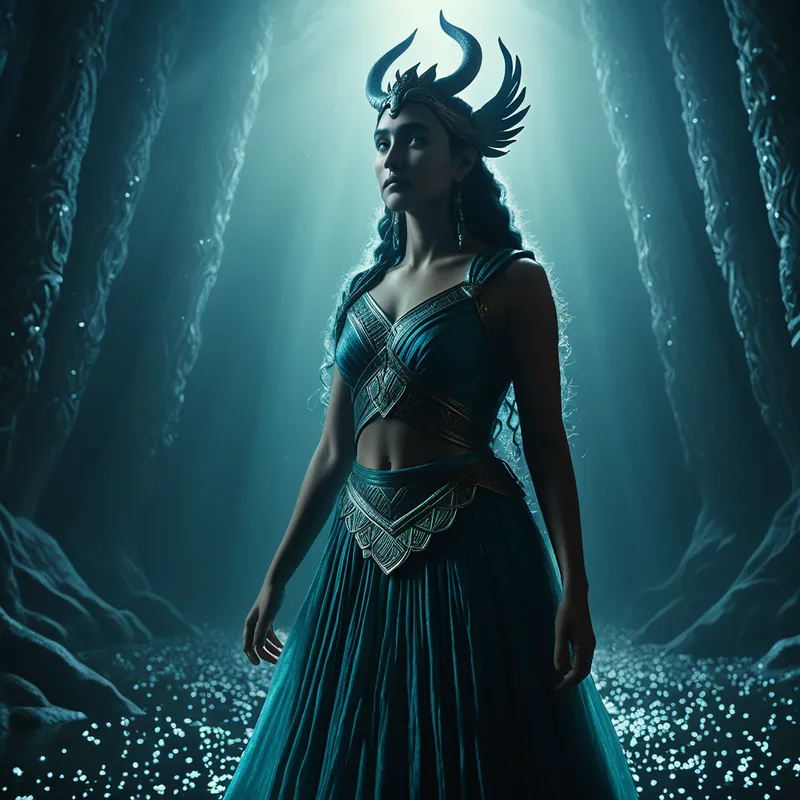
Guru Rinpoche's Eight Manifestations
The eight manifestations of Guru Rinpoche represent his enlightened activities across different realms, embodying wisdom, compassion, and transformative power in Tibetan Buddhist tradition.
The Tale of Guru Rinpoche's Eight Manifestations
In the dawn of the Dharma’s spread across the Land of Snows, a being of supreme realization took form not as one, but as eight. This was Guru Rinpoche, Padmasambhava, the Lotus-Born. He did not merely teach; he manifested his teachings, becoming the very embodiment of enlightened activity to tame the wild energies of Tibet and illuminate the minds of its people.
His journey began as Guru Tsokye Dorje, the Lake-Born Vajra. Emerging not from a womb but from a radiant lotus upon the waters of Lake Dhanakosha, he announced his primordial purity, unstained by the world. As a youth of wondrous power, he was taken to the court of King Indrabhuti, who, seeing the boy’s divine nature, adopted him as heir. Here, the Guru manifested as Guru Shakya Senge, the Lion of the Shakyas. Crowned and robed, he taught the king and his court the profound tantras, his royal demeanor symbolizing the sovereign rule of wisdom over the kingdom of samsara.
Yet, the call to tame untamed lands was strong. In the charnel grounds and wild places where malignant forces dwelled, he arose as Guru Nyima Özer, the Sunray Guru. His form blazed like the sun, dispelling the darkness of ignorance and subjugating hostile spirits with the fierce, illuminating warmth of his wisdom. To further transform the raw, chaotic energies of the world, he took the form of Guru Padmasambhava, the Lotus-Born, his primary aspect. Seated in serene meditation, he demonstrated how enlightenment blossoms from the mud of worldly existence, pure and radiant.
His work of pacification turned to wrathful transformation in the face of entrenched demonic obstructions. As Guru Dorje Drolö, the Fierce Vajra, he manifested in a terrifying dance. Riding a pregnant tigress, his body aflame with wrathful compassion, he crushed the arrogance of gods and demons alike, liberating their essence into the expanse of reality. For the specific taming of the arrogant mountain gods and earth-bound spirits of Tibet, he became Guru Senge Dradrok, the Lion’s Roar. His mighty proclamation of Dharma, like a lion’s roar silencing all lesser beasts, subjugated the local deities, binding them as oath-bound protectors of the teachings.
To establish the enduring legacy of these teachings, he manifested as Guru Loden Chokse, the Seeker of the Supreme. In this scholarly, discerning aspect, he traveled, debated, and composed, clarifying the view and practice of Vajrayana for future generations. Finally, to ensure these luminous instructions would not be lost but would ripen in destined times, he became Guru Pema Gyalpo, the Lotus King. In this regal, prophetic form, he concealed countless terma treasures in the landscape of Tibet—in rocks, lakes, and the very mind-streams of his disciples—sealing his promise to return in myriad forms to guide beings until the end of time.
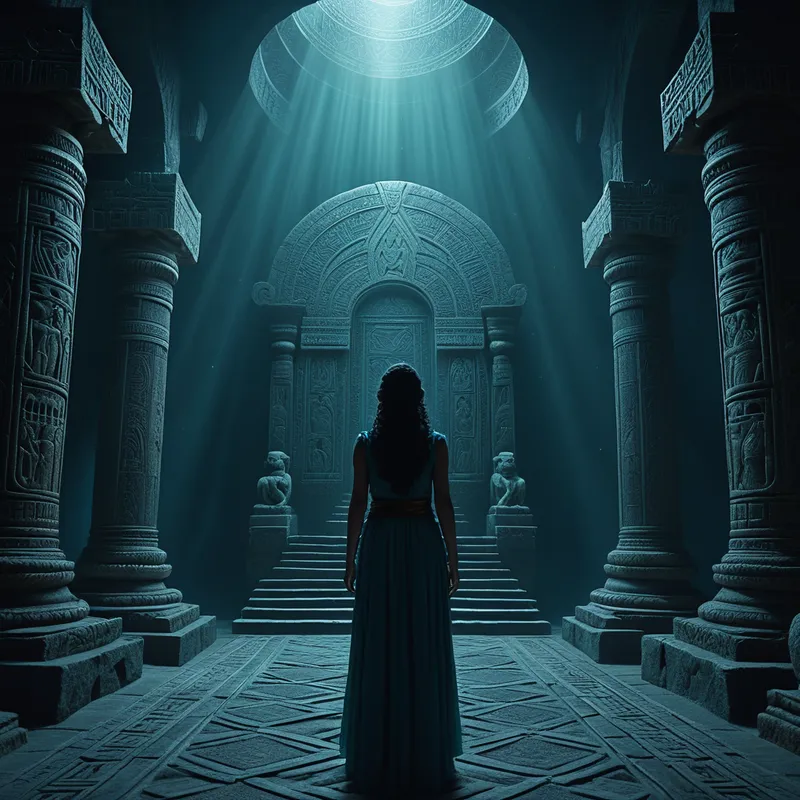
Cultural Origins & Context
The schema of the Eight Manifestations, or Guru Tsen Gye, crystallized within the Nyingma tradition, the primary lineage holder of Guru Rinpoche’s direct transmissions. It is not merely a biographical account but a liturgical and contemplative map. Emerging from the rich soil of terma revelations over centuries, this system organized the Guru’s boundless activities into a coherent mandala of enlightened function.
Each manifestation corresponds to a phase in the Guru’s sacred biography, a specific class of tantric practice, and a method for working with the practitioner’s own environment and psyche. In a culture where the landscape itself is alive with gods and spirits, Guru Rinpoche’s manifestations provided a Buddhist tantric framework for engaging with these forces. He did not destroy the indigenous Bon and folk deities; he transformed their roles, integrating them into a Buddhist cosmos as protectors. The Eight Manifestations thus represent the Vajrayana method par excellence: the alchemical transformation of all experience, whether peaceful, powerful, or terrifying, into the path of awakening.
Symbolic Architecture
The eight forms are not sequential masks worn by a single actor, but simultaneous rays of a single sun. They represent the dynamic, non-dual play of wisdom (the understanding of reality’s true nature) and compassionate means (the boundless activity that arises from it). The progression from the peaceful Lake-Born to the fiercely dancing Dorje Drolö is not a story of change, but a revelation of increasing intimacy with the world’s raw texture. The Guru meets chaos not with rejection, but with a form of equal intensity and greater wisdom, thereby liberating it.
The manifestations are a living grammar of enlightenment, where each “verb” of awakened activity—pacifying, enriching, magnetizing, destroying—finds its perfect “noun” in an iconic form.
This architecture serves the practitioner directly. In meditation, one may invoke Guru Shakya Senge to cultivate regal dignity on the path, or Guru Dorje Drolö to transmute inner demons of hatred and fear. Together, they assure that no aspect of life, from scholarly study to confrontation with death, lies outside the scope of transformative wisdom.
The Dreamer's Resonance
To the depth psychologist, the Eight Manifestations are a profound depiction of the complete Self, the archetype of wholeness as described by Carl Jung. Guru Rinpoche embodies the sage, but one who expresses his totality through a fluid constellation of sub-archetypes. He contains the divine child (Tsokye Dorje), the wise king (Shakya Senge, Pema Gyalpo), the fierce warrior (Dorje Drolö), and the mystical seeker (Loden Chokse).
For the modern dreamer or individual on an inner journey, this myth offers a liberating model. It suggests that psychological integration is not about achieving a monolithic, static state of “perfection.” Rather, it is about developing the enlightened flexibility to call upon the appropriate inner “manifestation” for the challenge at hand. One may need the illuminating clarity of Nyima Özer for confusion, the transformative ferocity of Dorje Drolö for entrenched neurosis, or the nurturing, concealing wisdom of Pema Gyalpo to let insights incubate until they are ripe. The ego, often rigid and singular, learns from this myth that the true Self is a dynamic, responsive, and multifaceted reality.
Alchemical Translation
The core alchemy here is the transmutation of perception itself. The myth teaches that the enlightened mind does not perceive a demon and then apply a remedy. It perceives the demon as the remedy, as the raw material for wisdom. Each hostile force, each personal obstacle, is met with a specific manifestation of enlightened mind that reveals the obstacle’s own empty, luminous nature. This is the ultimate “taming”—not annihilation, but recognition.
The process is not one of conquering the outer world, but of realizing that every outer encounter is a reflection of an inner capacity. The demon subdued is the ignorance within; the treasure revealed is the wisdom that was always there, hidden.
In psychological terms, this is the shift from “acting out” or repressing complex emotions to “acting as” the conscious container for them. Rage, encountered with the fearless compassion of Dorje Drolö, reveals itself as fierce energy for protection. Confusion, met with the scholarly precision of Loden Chokse, becomes the catalyst for deeper inquiry. The eightfold path of Guru Rinpoche is a roadmap for this most intimate alchemy, where the lead of our afflictions is turned into the gold of awakened qualities.
Associated Symbols
Explore related symbols from the CaleaDream lexicon:
- Lotus — Emerging pristine from muddy waters, it symbolizes primordial purity and the enlightened mind blossoming from the soil of samsaric experience.
- Mountain — Representing unshakable stability and the lofty heights of realization, it is the abode of deities and the anchor for Guru Rinpoche’s transformative work.
- Cave — A place of hidden treasure, solitary retreat, and profound inner revelation, where terma are concealed and the deepest wisdom is uncovered.
- Mirror — Reflecting all images without attachment or distortion, it embodies the mind’s innate clarity and the way phenomena arise and dissolve within awareness.
- Key — Unlocking hidden teachings, doors to realization, and the concealed potential within the heart, it represents the Guru’s role as the revealer of terma.
- Fire — The agent of purification and transformation, it symbolizes both the fierce wisdom that burns away obscurations and the passionate energy of compassionate activity.
- Dragon — A potent force of the earthly and watery depths, often tamed and converted into a protector, representing the raw, chaotic energies of the world mastered by wisdom.
- Mask — The donning of specific forms for specific purposes, representing the Guru’s skillful means and the idea that all manifestations are compassionate appearances.
- Journey — The perpetual movement of enlightened activity across realms and times, from Oddiyana to Tibet and into the future, guiding beings toward liberation.
- Transformation Cocoon — The process of metamorphosis where the practitioner, through the Guru’s blessings, undergoes a complete dissolution and re-emergence as an awakened being.
- Wisdom's Lantern — The illuminating knowledge that dispels the darkness of ignorance, carried by each manifestation to light the path for beings lost in confusion.
- Serpent Wisdom — The deep, primal, and transformative knowledge of the earth and the subtle energies of the body, often associated with the subjugation and integration of powerful forces.