
Samael the Accuser
A complex angelic figure in Hebrew tradition, Samael serves as the accuser who tests humanity, embodying the harsh aspect of divine judgment.
The Tale of Samael the Accuser
In the celestial courts of the Most High, where the light is a substance and silence a song, there stands a figure apart. He is Samael, the Venom of God. His wings are not of soft radiance but of dark, iridescent feathers that drink the light, and his eyes hold the cold fire of a distant star. While other angels sing in harmonious choirs, Samael’s voice is the sharpening of a blade on stone, the sound of a scroll being unsealed for judgment.
His tale is woven not in a single epic, but in the tense spaces between divine decrees. It is said that when the Holy One, blessed be He, considered the creation of humanity, the host of heaven was divided. Some sang praises at the prospect of a creature made in the divine image. Samael, however, approached the Throne. He did not sing. He spoke. “Sovereign of the Universe,” his voice echoed, a sound like cracking ice, “will You place in the garden a being of dust and spirit, who will surely turn from Your ways? I see their heart. It is a field where wheat and tares grow together from the first sowing. Let me be the one to test this heart, to sift its intentions. Let me be the Accuser.”
And so it was permitted. When Adam and Eve walked in Eden, Samael watched from the periphery, a shadow at the edge of perfection. He did not create the serpent, but he found in its cunning a fitting vessel, a tongue to voice the questions that already trembled in the human soul. He is the architect of the test, the one who makes the forbidden fruit gleam with the terrible light of choice. He is present in the question, “Did God truly say…?”—the first crack in the wall of innocent unity.
His work did not end at the garden gate. He is the prosecuting attorney in the heavenly tribunal. When a soul stands before the divine court, it is Samael who unrolls the scroll of its life. He does not lie. His power lies in devastating truth. He recounts every missed opportunity, every whispered malice, every kindness withheld. He holds up a mirror to the soul’s failures, not to damn, but to demand accountability. In the Book of Job, he is the one who walks to and fro on the earth, who stands among the sons of God and proposes the ultimate test of disinterested piety. “Does Job fear God for nothing?” he challenges. He is the instrument by which faith is tempered in the furnace of suffering, the necessary adversary who proves that devotion can survive even the withdrawal of blessing.
He is the angel who holds the cup of wrath, the one dispatched to execute severe judgments. In the whisper of the destroyer on the night of Passover, in the stern angel standing before Balaam’s donkey with a drawn sword, tradition sometimes glimpses Samael’s formidable aspect. He is law without cushion, justice without the immediate solace of mercy. He is the divine “No” that defines the sacred “Yes.”
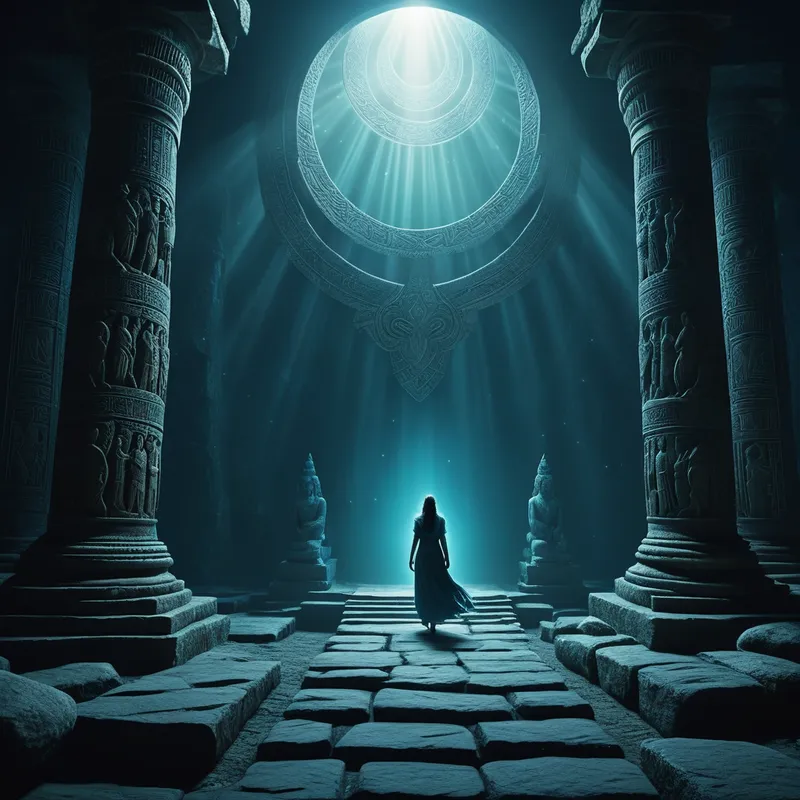
Cultural Origins & Context
Samael emerges from the rich and complex tapestry of post-biblical Hebrew thought, particularly within the realms of Kabbalah and Midrash. He is not a figure of the canonical Hebrew Bible in name, but his archetype permeates it—the satan (the adversary, the accuser) who appears in Job and Zechariah. Over centuries of theological and mystical exploration, this role crystallized into a distinct, named entity: Samael.
His name itself is telling. Often interpreted as “Venom of God” (Sam-El) or “Blind God” (Sameh-El), it encapsulates his paradoxical nature. He is of God, a divine agent, yet he carries a destructive or obfuscating quality. He is not a dualistic enemy of the Divine but an integral, if terrifying, aspect of its will. In some Kabbalistic systems, he is associated with the severe left-hand pillar of the Tree of Life, the sphere of Gevurah. Here, he is the executor of the necessary force of judgment and limitation, without which the boundless love of Chesed would be formless and ultimately meaningless.
He exists in a tense relationship with the angelic figure of Michael, the defender. Their eternal debate in the heavenly court mirrors the internal human struggle between self-condemnation and self-compassion, between the voice that catalogues our faults and the voice that pleads for our grace. Samael represents the uncompromising demand of the Law, the absolute standard against which human action is measured.
Symbolic Architecture
Samael is the living symbol of the divine attribute that cannot be bypassed: holy severity. He is the embodiment of the truth that love, to be real, must have boundaries, and that grace, to be meaningful, must follow an acknowledgment of debt. He is the cosmic principle of friction, the necessary resistance that allows for the development of ethical muscle and spiritual integrity.
He is the shadow cast by the Throne of Glory itself, proving that even absolute light, when it encounters an object, creates darkness. This shadow is not evil, but definition. It is the line that separates the sacred from the profane, the act that is chosen from the act that is refused.
In the human psyche, Samael is the internal critic raised to a cosmic principle. He is the hyper-developed superego, the voice of conscience that can tip from healthy self-assessment into relentless self-flagellation. He is the part of us that believes we must earn our worth, that love is conditional upon perfect performance. His rebellion is not against God, but against easy grace—against the notion that the profound mystery of existence and moral choice can be met with anything less than absolute seriousness.
He also symbolizes the painful but necessary role of the adversary in growth. Just as a muscle must tear to strengthen, the spirit often requires confrontation, challenge, and the searing light of uncomfortable truth to evolve. Samael is that confronting force on a cosmic scale, the divine agent of the difficult but necessary lesson.

The Dreamer's Resonance
To encounter Samael in the inner landscape of a dream or a moment of profound reflection is to meet the ultimate Judge within. He appears when we are at a crossroads of accountability, when we can no longer ignore the consequences of our actions or the dissonance between our ideals and our behavior. He is the dream figure of the stern father, the unforgiving teacher, the courtroom prosecutor who lays out an irrefutable case against us.
This encounter is rarely pleasant, but it is sacred. It signals a psyche grappling with the themes of guilt, responsibility, and the longing for moral purity. The figure of Samael challenges the dreamer to stop fleeing from their own shadow, to turn and face the record of their failures. The terror he inspires is the terror of being truly seen, with all our flaws illuminated. Yet, in the economy of the soul, this confrontation is a prerequisite for any authentic atonement or self-forgiveness. One cannot be pardoned for a crime one refuses to acknowledge. Samael forces the acknowledgment.

Alchemical Translation
The psychological alchemy of engaging with the Samael archetype involves the nigredo—the blackening, the descent into the dark night of self-judgment. This is the initial, painful stage where the base matter of the personality is broken down by the acid of honest self-appraisal. Samael is the alchemist who applies this corrosive solvent.
The work is to allow this accusatory voice its say, to let it recite the entire indictment, without fleeing into denial or collapsing into despair. Only when the list is complete, when the venom has been fully expressed, can its transformative potential be unlocked. The venom of the accuser, fully metabolized, becomes the antidote of self-knowledge.
The ultimate goal is not to slay Samael, but to integrate him. To transmute the harsh, external judgment into a clear, internal discernment. This is the movement from being accused to becoming accountable. The energy of rebellion against a harsh external law becomes the energy of conscious self-governance. The fierce fire of Gevurah, once experienced as punishing, is harnessed as the fire of discipline, focus, and the courage to set necessary boundaries. The Accuser, when his function is understood, becomes a severe but indispensable guide on the path to wholeness, ensuring that the journey toward light does not bypass the necessary work in the dark.
Associated Symbols
Explore related symbols from the CaleaDream lexicon:
- Judgmental Voice — The internalized prosecutor that catalogs faults and demands perfection, serving as the psychological echo of the divine accuser.
- Shadow — The repressed, denied, or unacknowledged aspects of the self that Samael’s accusing light seeks to bring into stark relief.
- Mirror — The tool of ruthless reflection, showing the self not as it wishes to be, but as it has acted, without flattery or excuse.
- Sword — The instrument of divine severance and discernment, cutting through illusion and pretense to separate truth from falsehood.
- Rebel — The archetype of one who challenges established order, here rebelling against complacency, easy forgiveness, and moral ambiguity.
- Duality Dance — The eternal, tense interplay between judgment and mercy, accusation and defense, severity and kindness that Samael embodies.
- Tower — The rigid structure of law and absolute principle, which can be a bastion of order or a site of devastating fall when its standards are not met.
- Stone — The unyielding tablet of the law, the hard truth, and the weight of conscience that cannot be easily moved or softened.
- Fire — The purifying, searing, and destructive aspect of divine judgment that tests and refines through ordeal.
- Key — That which unlocks the prison of self-deception, often held by the challenging figure who forces a confrontation with locked-away truths.
- Mask — The persona or false innocence that Samael’s accusations strip away, revealing the authentic, flawed face beneath.
- Thunder — The terrifying, awe-inspiring voice of divine rebuke and the shaking of foundations that accompanies profound judgment.