
Huaca Sacred Places
Huacas were sacred Incan sites where natural features became portals to the divine, connecting the physical world with spiritual realms.
The Tale of Huaca Sacred Places
In the beginning, the world was not separate from its makers. The primordial deities—Viracocha, the Pachamama, the Inti—did not merely shape the land; they became the land. Their breath was the wind in the high passes, their tears the rivers carving stone, their bones the granite spines of the Andes. But as the age of humans dawned, a silence threatened to grow between the realm of people and the realm of the gods. The cosmos felt distant, a story told in stars too far to touch.
Then came the understanding, not as a law but as a whispered revelation felt in the pulse of the earth: the divine had not left. It had paused. It had imbued itself into specific points of the living world—a peculiarly shaped boulder that seemed to watch the valley, a spring that wept from a cliff face, a mountain peak that pierced the clouds. These were not just beautiful places; they were places where the world’s skin was thin, where the essence of a deity or an ancestor had condensed and remained. The Inca called these points huacas.
A huaca was a conversation. A traveler, feeling a strange pull, might place a single coca leaf on a weathered stone outcrop, a gesture of recognition. A paqo (shaman-priest), reading the flow of energy or camay, might identify a new huaca where lightning had struck, sensing the arrival of Illapa's fierce power. The empire itself was woven into this sacred geography through the ceque* system, lines of spiritual force radiating from the Coricancha, the Sun Temple in Cusco, connecting hundreds of huacas in a vast, invisible web. Each line was a lineage, a calendar, and a prayer.
To approach a huaca was to step into a story older than memory. At the shrine of a spring, one might pour a libation of chicha, not to a vague spirit of water, but to the specific, localized manifestation of the feminine, life-giving force residing there. At a mountain apu, offerings of fine cloth and shell figurines were made, not to a generic mountain god, but to the specific, demanding consciousness of that peak, who was a lord, a protector, and a progenitor. The huaca was the locus where the universal—the sun, the moon, fertility, storm—became intimate, knowable, and addressable. It was the divine given a local address, and in that specificity, the entire cosmos could be engaged.
Cultural Origins & Context
The concept of the huaca predates and underpins the Inca Empire. It springs from an animistic worldview where the cosmos is alive, conscious, and camay—imbued with a generative, specific life force. Everything, from a grand mountain to a humble pot, could possess this force, but a huaca was where it was concentrated and potent. The Inca did not invent sacredness; they systematized it, mapping it onto their imperial theology to unify and control a vast, diverse territory.
This was a spirituality of immanence, not transcendence. The divine was not "out there" but right here, interwoven with the material world. The landscape was a text, a living library of myths and powers. By identifying, honoring, and linking huacas, the Inca performed a great act of cosmic ordering. The ceque system was both a spiritual map and a socio-political one, assigning the care of specific huacas along each line to particular royal lineages or ayllus. Ritual maintenance of these shrines was a sacred duty that reinforced social structure, calendrical cycles, and imperial cohesion. To tend a huaca was to maintain the very order of the world.
Symbolic Architecture
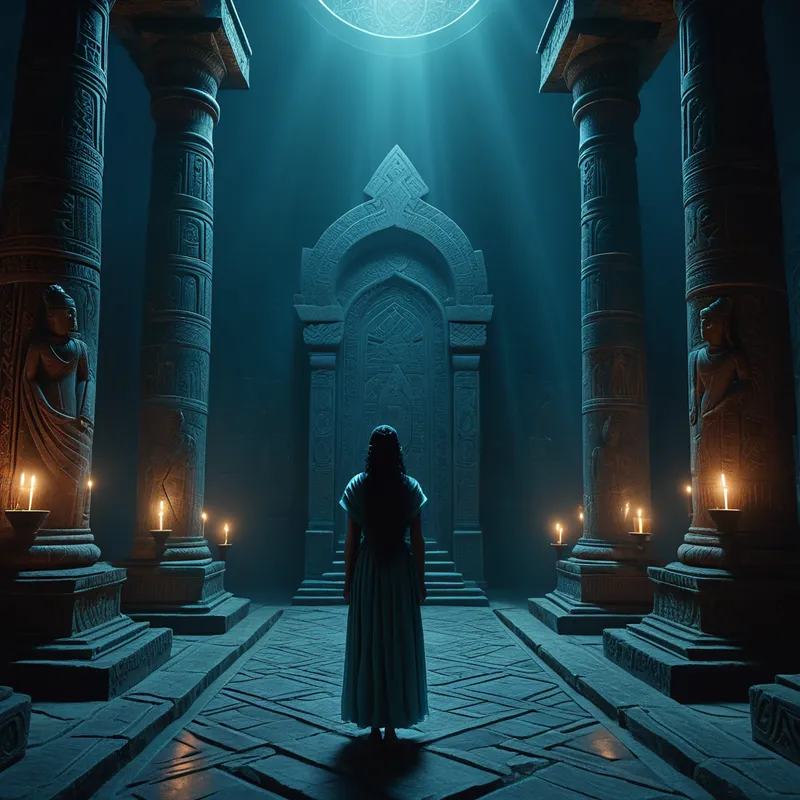
A huaca required no human-built temple to be sacred; its architecture was authored by geology, hydrology, and time. Its "design" was its inherent, anomalous power—a rock that resembled a puma, a tree split by lightning, a cave that exhaled mist at dawn. Human intervention was not to create the sacred but to frame it, to mark the spot where the veil parted.
The simplest shrine was often just a pile of stones, each added by a passerby—a cumulative testament of human recognition, building a small altar of collective witness around the natural wonder.
When more formal structures were built, such as the niches at Machu Picchu or the carved rock at Qorikancha, they served as focal points, mirrors, and amplifiers. A niche perfectly framed a distant sacred peak. A carved channel in stone directed spring water in a ritual flow. The architecture was a dialogue with the pre-existing sacred feature, a way to channel, honor, and perhaps gently direct the camay of the place. It was an act of collaboration with the genius loci, not an imposition upon it.
The Dreamer's Resonance
To the depth psychologist, the huaca is a profound symbol of the numinous erupting into ordinary reality. It represents those points in the psyche—in dreams, in memories, in sudden moments of awe—where the personal unconscious touches the transpersonal, the archetypal. It is the strangely shaped "rock" of a recurring dream image, the "spring" of a sudden emotion whose source feels ancient and deep.
The Inca’s practice of making offerings—mullu (shell), llama fat, finely woven cloth—mirrors the psychological necessity of paying attention. To acknowledge a huaca in the landscape is akin to acknowledging a powerful complex or archetypal image within oneself: not to worship it blindly, but to engage with it respectfully, to "feed" it with conscious attention so it may reveal its meaning and integrate into the wholeness of the Self. The ceque system, then, becomes a model for the inner network of psychic associations, the lines of force that connect our central consciousness (the Coricancha of the ego) to the myriad powerful, often autonomous, complexes (the huacas) that populate our inner world. A balanced psyche, like a balanced empire, maintains these connections through ritual—through active imagination, journaling, or art—preventing the sacred inner sites from becoming neglected, hostile, or silent.
Alchemical Translation
The alchemy of the huaca is the transformation of perception. It is the opus of seeing the world not as dead matter but as a constellation of living, meaningful presences. The base material—stone, water, mountain—is not transcended; it is revealed as already gold, already divine. The process is one of recognition, not refinement.
The pilgrim’s journey to a huaca is the alchemical circumambulatio: walking the sacred lines (ceques), one moves around the center, encountering the diverse manifestations of the One. Each offering is a solve et coagula—dissolving the boundary between self and spirit, then coagulating a new relationship through ritual act.
This is the alchemy of immanence. The goal is not to escape the world but to discover the world as sanctuary. The huaca teaches that the Philosopher’s Stone is not a distant object to be obtained, but a mode of seeing to be awakened. It is the realization that every place, potentially, holds a sacred secret, waiting for the respectful gaze that can perceive its inherent camay and engage in the eternal conversation between the human and the more-than-human.
Associated Symbols
Explore related symbols from the CaleaDream lexicon:
- Mountain — The ultimate huaca, an Apu or mountain lord embodies divine authority, permanence, and the bridge between earth and sky.
- Stone — The primary physical form of many huacas, representing the enduring, condensed presence of ancestral or divine consciousness within the landscape.
- Spring — A liquid huaca, symbolizing the emergent, life-giving, and often feminine spiritual force that flows from the earth’s depths.
- Temple — The human-built frame for the huaca, representing the structured ritual and reverence that channels and honors raw, natural sacredness.
- Ritual Offerings — The essential act of reciprocity at a huaca, symbolizing the exchange of energy, respect, and dialogue between humanity and the divine.
- Bridge — The huaca itself functions as a bridge between realms; the ceque lines are conceptual bridges connecting a network of sacred power.
- Earth — As Pachamama, the Earth is the foundational and all-encompassing huaca, the living body from which all specific sacred sites arise.
- Vision — The perceptual shift required to recognize a huaca, representing the sacred sight that sees the animating spirit within the material form.
- Root — The huaca is rooted in a specific place, drawing its unique power from the deep, local history and geology of that spot.
- Circle — Represented in the radial ceque system and the ritual circumambulation of sacred spaces, symbolizing wholeness, connection, and the cyclical nature of worship.
- Mirror — A polished stone or calm pool at a huaca could serve as a mirror, reflecting the seeker and the sky, symbolizing self-reflection within the sacred context and the microcosm-macrocosm relationship.
- Dream — The intuitive, non-rational knowing that often identifies a huaca, paralleling the way sacred insights emerge from the depths of the unconscious.