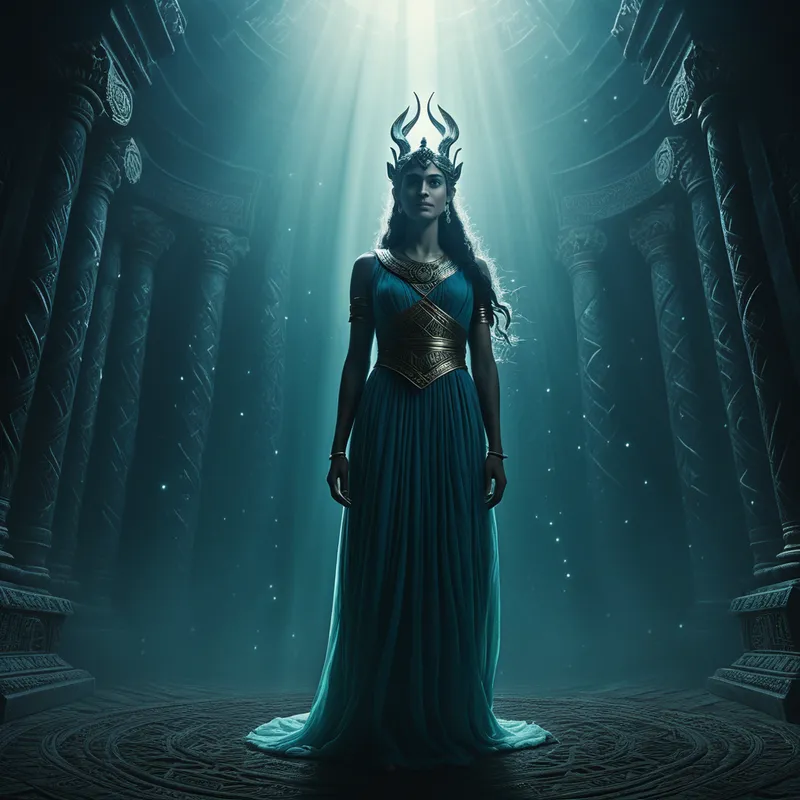
The Annihilation of the Self
A Sufi mystical concept where the ego dissolves to achieve union with the divine, representing spiritual rebirth through self-negation.
The Tale of The Annihilation of the Self
There is no single tale, no linear epic of a hero’s quest. The Annihilation of the Self is a story written in the silent grammar of the heart, a narrative that unfolds not in the world, but in the innermost chamber of the seeker. It begins with a profound weariness—not of the body, but of the soul. The seeker, having tasted all the world’s honey and found it dust upon the tongue, turns inward. The clamor of “I”—“I want,” “I fear,” “I possess,” “I am”—which once seemed the very engine of life, now rings like a prison bell.
This is the start of the journey: a turning away from the marketplace of the ego toward the desert of contemplation. The seeker, under the guidance of a Murshid, embarks on a path of remembrance (Dhikr) and ascetic discipline. With each prayer, each breath spent in the name of the Beloved, a subtle erosion begins. It is not a violent destruction, but a patient wearing away, as water smoothes stone. The attributes of the lower self—the Nafs al-Ammara—its pride, its anger, its greed, are confronted not as enemies to be slain, but as illusions to be seen through.
The central drama is one of increasing transparency. The seeker strives to become a clear vessel. In the ecstasy of prayer or the depths of meditation, moments arrive where the boundary between the one who prays and the One prayed to grows thin. These are flashes of Sukr, drunkenness on divine wine, where the “I” is momentarily forgotten. But the path demands more than fleeting ecstasy; it demands Sahw, a sober abiding in that reality.
The climax of this tale is the state of Fana. It is not death, but a death before death. The drop does not fight the ocean; it realizes it has always been the ocean. The moth is not consumed by the flame; it understands it was never separate from the light. The individual self, with all its histories, desires, and fears, dissolves like a grain of salt in a vast sea. What remains is not nothingness, but pure, unmediated existence: the Divine Presence. In this annihilation, a paradox blooms: true selfhood is found only in self-loss. From this state may arise Baqa, where the seeker returns to the world, but now as a conduit of divine will, acting not from personal motive but as an instrument of grace. The tale ends where it began—in the marketplace, by the river, in the home—but everything is transformed, for the seeker sees with the Eye of the Heart, and hears the universe singing one endless name.
Cultural Origins & Context
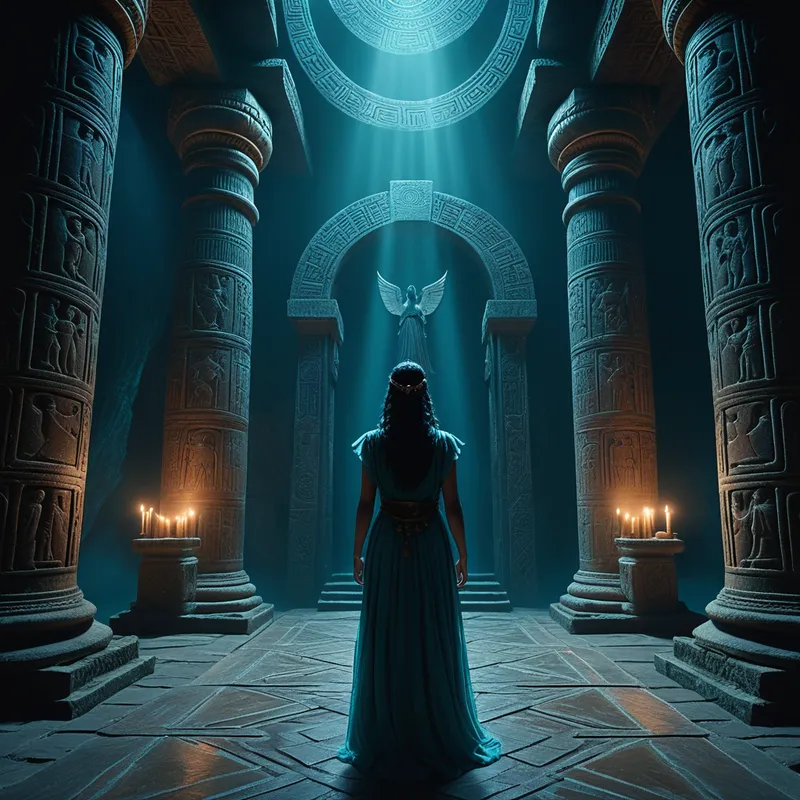
The Annihilation of the Self is the beating heart of Sufism, the mystical dimension of Islam that emerged in the 8th and 9th centuries CE. It is not a myth from a forgotten age, but a living, experiential doctrine rooted in the Quranic verse: “Everything upon the earth will perish, and there will remain only the Face of your Lord, Owner of Majesty and Honor” (55:26-27). Sufis interpreted this not merely as an eschatological truth, but as an immediate spiritual possibility.
This concept was systematized by great masters like Al-Junayd of Baghdad (9th century), who spoke of Fana with cautious precision, wary of the antinomian excesses of some ecstatics. It found its most famous poetic expression in the works of Jalaluddin Rumi, who wrote, “I died as mineral and became a plant, I died as plant and rose to animal, I died as animal and I was Man… Yet once more I shall die as Man, to soar with angels blessed; but even from angelhood I must pass on.” For Rumi, annihilation was the necessary death at each stage of an ever-ascending journey toward the Absolute.
The context is one of rigorous spiritual psychology. Sufi orders (Tariqas) developed elaborate methodologies of purification to facilitate this annihilation. The relationship with the Murshid is paramount, for the ego cannot be trusted to annihilate itself; it requires a guide who has traversed the path. Thus, the myth is enacted within the container of a lineage, a chain of transmission (Silsila) stretching back to the Prophet Muhammad, grounding this radical inner experience in orthodox tradition.
Symbolic Architecture
The symbolism of Annihilation is a lexicon of vanishing and fusion. The most potent symbol is Wine and Drunkenness. The seeker becomes intoxicated on the divine reality, losing the sobriety of egoic separation. The tavern is the heart, and the Cupbearer is the divine presence itself.
“The wine is pure, the cup is pure, the drinker is pure. What need is there for a ‘you’ or an ‘I’ in this circle? All is One.”
The Moth and Flame is another enduring image. The moth’s love for the flame is so absolute that it must immolate itself to achieve union. The ego is the moth’s fragile wings; the Divine Beauty is the irresistible flame. Annihilation is not a punishment, but the ultimate consummation of love.
The Ocean and the Drop speaks to the metaphysics of the process. The drop (the individual soul) fears losing its identity, not realizing its true nature is oceanic. Annihilation is the drop’s awakening to its own vastness. Similarly, the Mirror is central: the heart must be polished clean of the rust of ego so that it may purely reflect the divine attributes. The self is not destroyed; its distorting tarnish is removed, allowing it to become a perfect mirror for the Divine.
The Dreamer's Resonance
To the modern psyche, steeped in the cult of self-actualization and individual identity, the call to annihilation can sound like a threat, a pathological self-erasure. Yet, in the depths of the collective unconscious, it resonates with a profound and universal longing. It is the echo of the oceanic feeling described by mystics and psychologists alike—the desire to return to a state of undifferentiated wholeness, to be free from the exhausting burden of maintaining a separate “I.”
Psychologically, Fana mirrors the process of ego-dissolution that can occur in deep therapy, profound grief, or transformative crisis. It is the experience of the constructed self—with its defenses, narratives, and masks—falling away, revealing a more authentic, grounded state of being. The Sufi path offers a container for this potentially terrifying dissolution, framing it not as a breakdown but as a breakthrough to a higher order of consciousness. It speaks to the part of us that is weary of the persona, the “false self” we present to the world, and yearns for the relief of absolute honesty, of being nothing so that we might truly be.

Alchemical Translation
The alchemical opus is a precise parallel to the Sufi journey. The Nigredo, the blackening, is the dark night of the soul where the ego’s structures break down—the seeker confronts their shadow, their base nature (the Nafs). This is a necessary putrefaction.
“You must become nothing, a zero, before you can become an agent of the One.”
The Albedo, the whitening, is the purification of the heart through discipline and remembrance, polishing the mirror. The Citrinitas, the yellowing, is the dawning of divine light and knowledge in the heart. Finally, the Rubedo, the reddening, is the achievement of Fana and Baqa—the annihilation of the egoic self and the birth of the true Self, the Philosopher’s Stone, which can then act to transform the world. The base metal of the egoic soul is transmuted into the gold of the spirit. The furnace is the heart; the fire is divine love; the alchemist is the grace of God, working upon the patient matter of the seeker’s being.
Associated Symbols
Explore related symbols from the CaleaDream lexicon:
- Ocean — The boundless, all-encompassing Divine Reality into which the individual self, the drop, must merge and lose its separate existence.
- Fire — The transformative and purifying love of the Divine that consumes the dross of the ego, leaving only essential truth.
- Mirror — The heart that must be cleansed of the rust of selfish desire to purely reflect the attributes and beauty of God.
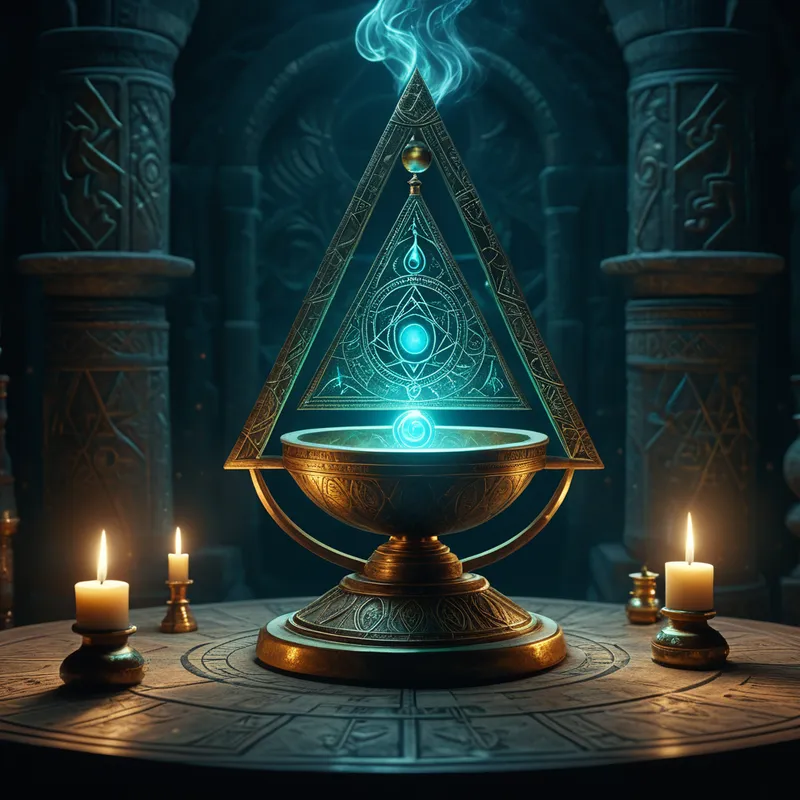
- Cup — The vessel of the heart that holds the intoxicating wine of divine knowledge and love, leading to the ecstasy of self-forgetting.
- Journey — The inward path of ascension through spiritual stations, moving from the periphery of the ego to the center of divine presence.
- Death — The necessary mystical death of the lower self, a voluntary surrender that precedes spiritual rebirth and true life.
- Rebirth — The state of Baqa, or subsistence in God, where one is “reborn” to act in the world with a consciousness purified of ego.
- Shadow — The lower self or Nafs, with its commanding passions and illusions, which must be confronted and integrated on the path to annihilation.
- Love — The ultimate motive force; a passionate, all-consuming love for the Divine Beloved that makes the annihilation of the lover in the Beloved the highest joy.
- Door — The threshold between the world of separation and the realm of union; the heart itself is the door that opens inward to the divine chamber.
- Light — The divine essence or presence that illuminates the seeker, revealing the illusory nature of the ego and guiding the soul to its source.