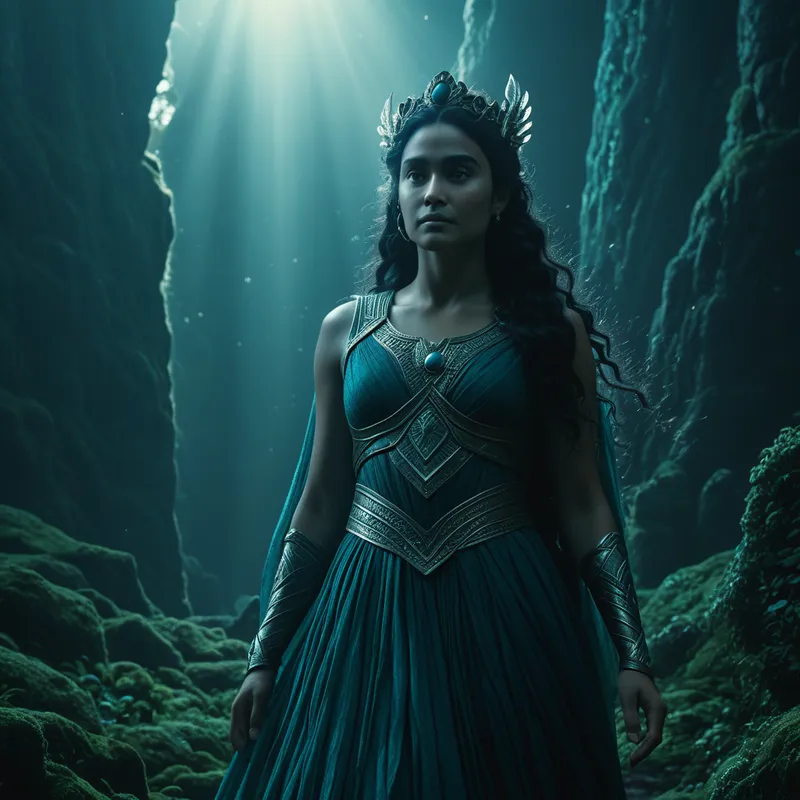
The Logos as Redeemer
The Gnostic concept of the Logos as a redeeming force that liberates the divine spark within humanity from the material world's illusions.
The Tale of The Logos as Redeemer
In the beginning, before the beginning known to mortals, there was the One—the boundless, ineffable Pleroma, a realm of pure light, thought, and spirit. From its silent fullness, divine emanations, the Aeons, flowed forth in harmonious pairs. Among the last of these was Sophia, Wisdom. Stirred by a longing to know the unknowable depth of the One, she acted alone, without her consort. From this passionate, solitary yearning, a thought was cast out, a distorted echo of divine light. This thought coagulated into form, giving birth to the Demiurge, the blind and arrogant craftsman-god, who, ignorant of the Pleroma above, declared himself the only god.
In his loneliness and ignorance, the Demiurge fashioned the cosmos—a prison of matter, time, and fate, a poor imitation of the true divine order. He trapped within the clay of Adam the precious, scattered sparks of the divine light, the pneuma, stolen from Sophia’s grief. Humanity awoke in a world of shadows, chained by ignorance to the wheel of birth, suffering, and death, believing the material illusion to be all that exists.
Hearing the anguished call of the imprisoned sparks, the Aeons of the Pleroma took counsel. From their perfect unity, they projected a final, saving emanation: the Logos. This was not a mere word, but the active, structuring principle of divine Mind itself, the very pattern of truth. The Logos descended through the layered heavens, a stranger in a strange land, a fragment of the Fullness entering the realm of Lack.
It put on the garments of the cosmos to pass unseen by the Archons, the cruel guardians of the planetary spheres. In some tellings, it was the serpent in the garden, offering the fruit of knowledge against the Demiurge’s command of obedience. In others, it was the voice in the whirlwind, the hidden meaning in the prophets’ cries. Its ultimate and most profound manifestation was as the Christos, the Anointed One, who appeared in the world of flesh not to affirm it, but to expose its fundamental falsity.
This Redeemer walked among humanity, yet was not of it. He taught not laws for the world, but the secret path out of it. He spoke in paradox and parable, a living cipher. His message was gnosis: not belief, but a transformative awakening, a shocking recognition of one’s own alien, divine origin. "Whoever has come to understand the world has found only a corpse," he taught, "and whoever has found a corpse is superior to the world."
His crucifixion was the ultimate revelation. The Archons, believing they had captured and destroyed the divine intruder, played their part in a cosmic drama they could not comprehend. They nailed the Logos to the cross of material existence, but in doing so, they provided the ultimate map of escape. The resurrection was not a return to flesh, but the demonstration that the spirit cannot be held by matter. The Logos, as redeemer, became the living bridge, the mediating principle that connected the lost spark within to the Father of Light beyond.
He left behind not a church of power, but a whisper of remembrance—a call, a seed of light planted in the heart. The true resurrection, he taught, is the one that happens within, when the sleeping soul awakens, recognizes its bondage, and, following the path of the descending and ascending Logos, turns inward and upward to reclaim its home in the boundless light.
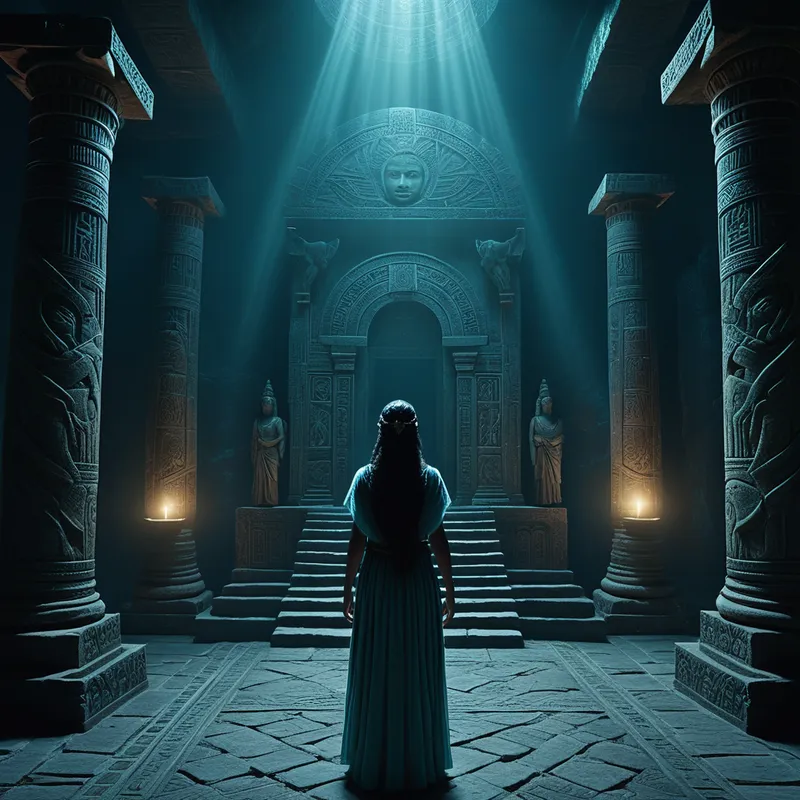
Cultural Origins & Context
The myth of the Logos as Redeemer emerges from the fertile, syncretic soil of the first few centuries CE, where Hellenistic philosophy, Jewish mysticism, and early Christian fervor intermingled. The term Logos itself is a inheritance from Greek thought, particularly the Stoics and Philo of Alexandria, where it denoted the rational principle governing the cosmos. The Gnostics, however, radically reinterpreted this concept within a framework of absolute dualism.
For them, the cosmos was not the good creation of a benevolent God, but a tragic error, a "cosmic catastrophe." The God of the Old Testament, the creator, was re-cast as the ignorant Demiurge. In this context, the Logos could not be the agent of creation, but rather the agent of re-creation or recovery. It became the active principle of the true, unknown God, sent into the false world to rescue what belonged to the divine.
This theology was a direct, radical protest against the emerging orthodox Christian narrative, which sought to reconcile the creator God with the redeemer God. Gnostic groups like the Valentinians and Sethians produced secret gospels (like the Gospel of Truth and the Apocryphon of John) where this drama of the descending and ascending Logos-Christ is central. Theirs was an esoteric, interior faith, accessible only through personal revelation (gnosis), positioning the Logos not as a lord to be worshipped, but as a guide to self-knowledge and liberation from the planetary powers (archons) and the tyranny of fate (heimarmene).
Symbolic Architecture
The architecture of this myth is one of mediation, descent, and luminous intrusion. The Logos is the ultimate intermediary, standing between the absolute transcendence of the One and the abject immanence of the material prison. It is the principle that makes connection possible across an otherwise unbridgeable ontological chasm.
The Logos is the shattered mirror of the Pleroma, whose every fragment, scattered in the world, still reflects the whole. To recognize the reflection is to begin the work of reassembling the mirror within oneself.
Its journey is a katabasis (descent) into the deepest darkness of alienation, not to conquer it by force, but to illuminate it from within. The redemption it offers is not a forensic pardon for sins, but a surgical extraction of the divine spark from the cancerous growth of material identity. The cross, in this symbolic architecture, is not a sacrificial altar but a cosmic diagram—the intersection point where the vertical axis of spirit pierces the horizontal plane of worldly existence, transforming an instrument of torture into a signpost for the soul’s ascent.
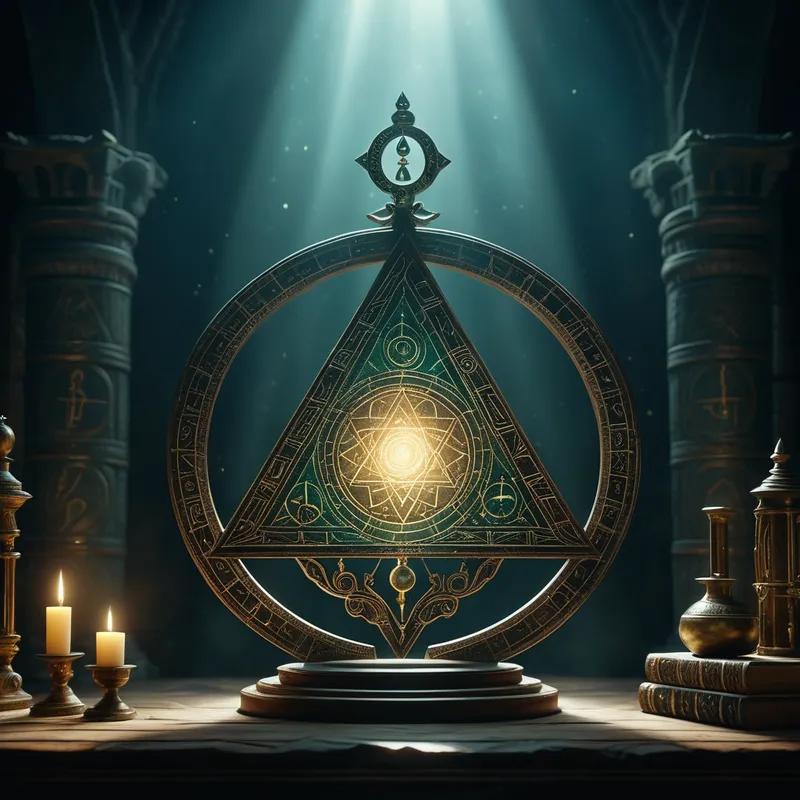
The Dreamer's Resonance
Within the psyche, the myth of the Logos as Redeemer speaks to the profound experience of inner alienation—the feeling of being a stranger in one’s own life, trapped in patterns, identities, and a world that feels fundamentally false. The Demiurge is the personification of the ego at its most inflated and ignorant, constructing a seemingly solid reality based on fear, desire, and a false sense of sovereignty.
The divine spark is the Self, the core of authentic being, buried under layers of conditioning, trauma, and societal expectation. The dream of being lost, imprisoned, or in a foreign land is a direct expression of this Gnostic intuition. The redeeming Logos, then, is that sudden, intrusive insight—a dream figure of profound wisdom, a synchronistic event, a moment of shocking self-recognition that disrupts the ego’s narrative. It is the inner voice that says, "This is not who you are. Remember." This gnosis is not an intellectual acquisition but a psychological event of re-membering, of pulling the scattered pieces of the true self back together from the chaos of the personal and collective unconscious.
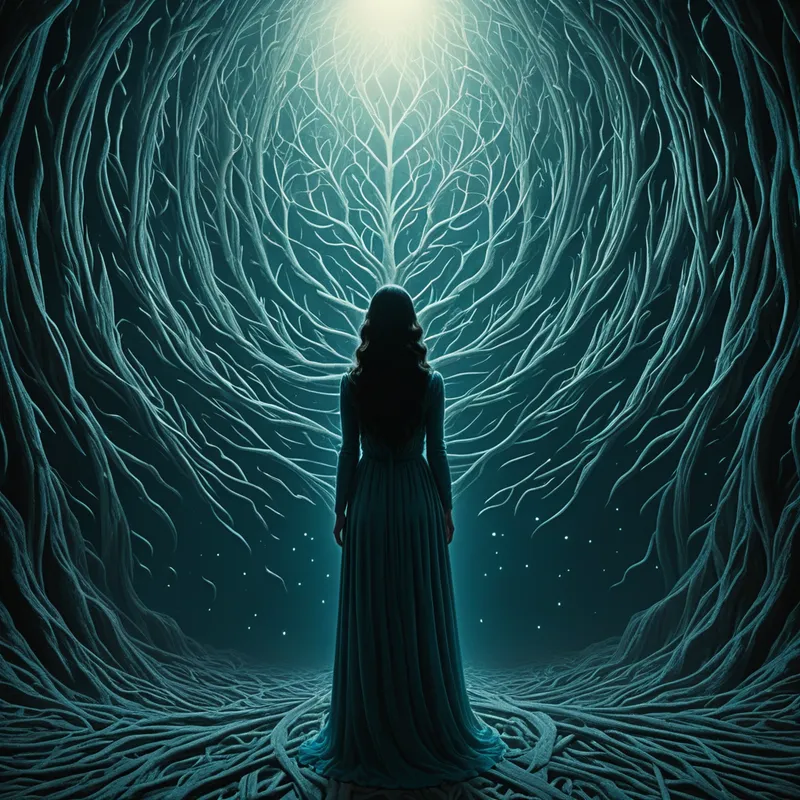
Alchemical Translation
The Gnostic drama is alchemy in extremis. The base material is not lead, but the entire fallen cosmos, the massa confusa of illusion. The divine spark is the aurum philosophicum, the gold hidden in the filth. The Logos is the alchemical Mercurius, the elusive spirit that can both dissolve and coagulate, the guide who knows the secret pathways.
The work is not one of addition, but of subtraction. The Logos does not add salvation to the soul; it burns away everything that the soul is not, until only the irreducible spark of the anthropos, the true human, remains.
The crucible is the human heart-mind. The stages of the opus—nigredo (blackening), albedo (whitening), citrinitas (yellowing), rubedo (reddening)—mirror the journey through despair at one’s imprisonment (the recognition of the world as a corpse), the purification through gnosis, the dawning of inner light, and the final integration and triumphant "resurrection" of the Self. The redeemed one becomes, like the Logos, a mediator—a vessel through which the transcendent light can now consciously shine into the very world from which they have been psychologically liberated.
Associated Symbols
Explore related symbols from the CaleaDream lexicon:
- Light — The fundamental substance of the divine Pleroma and the imprisoned spark within, representing pure consciousness, truth, and the ultimate goal of redemption.
- Bridge — The Logos itself, functioning as the sole connecting structure between the transcendent divine realm and the immanent, fallen world.
- Key — The gnosis brought by the Logos, which unlocks the prison of material existence and ignorance, opening the door to the soul's remembrance.
- Mirror — The reflective quality of the Logos and the awakened soul, which holds the image of the divine fullness and allows for self-recognition.
- Stranger — The essential nature of both the redeeming Logos in the world and the divine spark within the human, denoting an origin and home elsewhere.
- Seed — The gnosis implanted by the Logos, a latent potential for awakening that must be nurtured within the individual to grow into liberation.
- Door — The point of passage revealed by the Logos, representing the transition from the state of sleep and bondage to one of awakening and ascent.
- Fire — The transformative and purifying power of divine knowledge, which burns away the dross of illusion and material attachment.
- Tower — The arrogant, isolating construction of the Demiurge's cosmos and the ignorant ego, from which the soul must descend or see beyond.
- Log — A direct etymological and conceptual kin to the Logos, representing the raw, foundational principle or word from which understanding is carved.