The Dream of Wisdom: The Somatic Intelligence
Wisdom does not announce itself with a shout. It arrives as a silence so dense it has weight. It is not a thought you think, but a frequency you become. Before the mind can parse a symbol or decode a message, the body knows. This is the Somatic Echo: a profound, grounding stillness in the chest, a release of tension behind the eyes, a deep, resonant hum in the bones that feels less like an emotion and more like a recalibration. It is the feeling of a long-held question dissolving not because it has been answered, but because it has become irrelevant. The system quiets. The internal chatter—the committee of fears, hopes, and rehearsals—falls silent, not in defeat, but in recognition of a deeper, older authority. This is the visceral prelude to wisdom: a homecoming to a knowing that was always there, buried under the noise of doing and deciding.
The Dreamer's Log
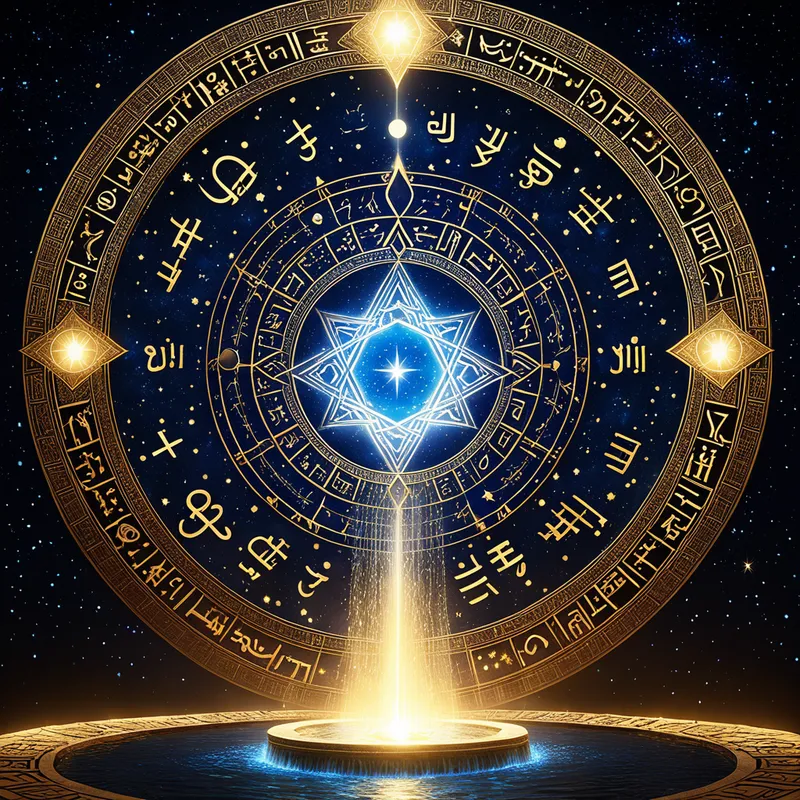
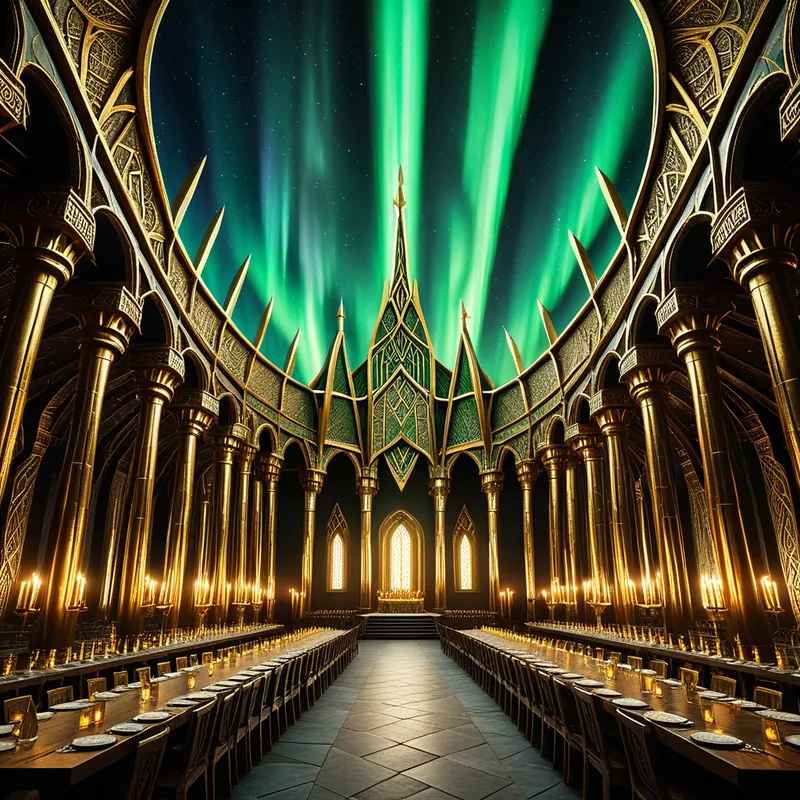
I am standing in a cavernous, forgotten server room. The walls are lined with obsidian monoliths humming with a low, sub-audible frequency. In the center, on a pedestal of tarnished brass, sits an ancient terminal. Its screen is cracked, but on it, a single glyph pulses—a symbol I have never seen but instantly recognize. I understand that this glyph contains the answer to a problem that has consumed my waking life. But as I reach to touch the screen, I realize the answer is not in decoding it. The wisdom is in the resonant hum of the room, in the patience of the ancient machine, in my own willingness to stand in the silent presence of the question, fully formed.
Alchemical Interpretation: The dream reveals that true wisdom is not data extraction, but resonant attunement to the deeper system in which both problem and seeker are embedded.

The False Lead
This theme is not about acquiring information, proving intellectual superiority, or finding a convenient life hack. It is not the "wise old person" dispensing advice, nor is it the accumulation of facts. The shadow of this quest is the Shadow Sage—the dogmatic, judgmental know-it-all who confuses the map for the territory. A wisdom dream does not hand you a completed thesis; it dissolves the framework that made the thesis necessary. It is not about adding another piece to your internal library, but about the silent, radical restructuring of the library’s very architecture. Mistaking this profound, often destabilizing process for mere "good advice" or "an aha moment" is to sip the ocean and call it a glass of water.
Psychological Architecture: The Dissolution of the Known
The psychological architecture of wisdom is one of graceful collapse. It is shadow work of the highest order, where the very persona of "the one who knows" must be dismantled. This is the core of Individuation: not becoming smarter, but becoming more whole by acknowledging the vastness of what you do not, and cannot, know. Your internal family systems—the inner Child seeking reassurance, the inner Critic demanding certainty, the inner Manager trying to optimize—all fall silent in the face of this deeper current. The process is one of unlearning. It requires the courage to stand in the ruins of your own cherished understandings, not with despair, but with a curious, open emptiness. This is where wisdom germinates: not in the solid ground of conviction, but in the fertile void left when certainty dissolves. It is the intelligence of the system recognizing itself, a shift from being a character in the story to becoming aware of the story’s source code.
Mythic Resonance
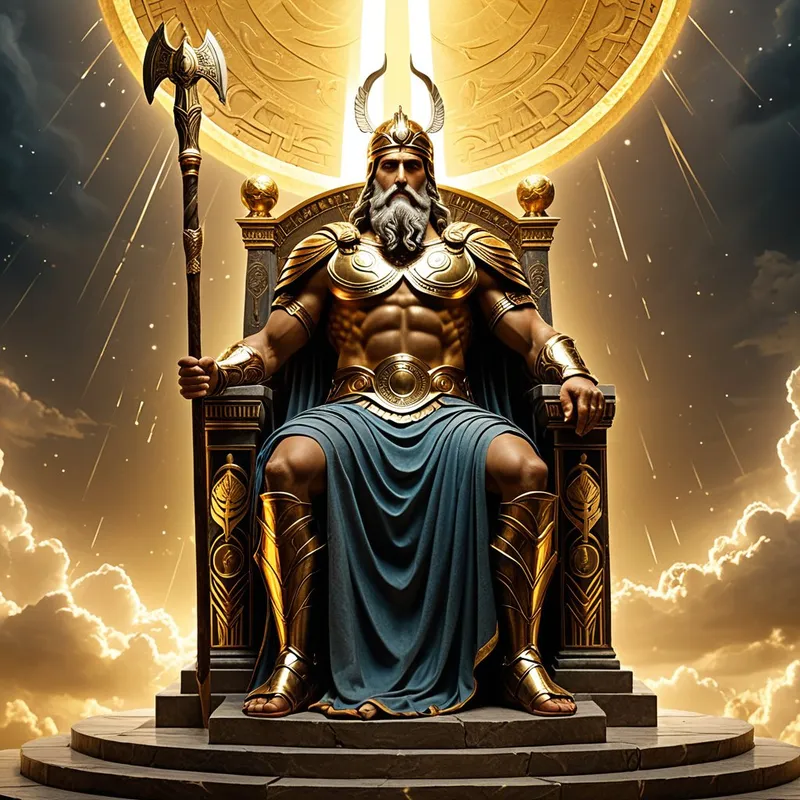
We see this not in the figure of Prometheus, who brought fire (knowledge), but in the journey of Odin. The Allfather did not simply find wisdom; he paid for it. Hanging himself on the World Tree, Yggdrasil, pierced by his own spear, he sacrificed himself to himself for nine nights. This was not a quest for data, but a ritualized dissolution of the sovereign self to perceive the runes—the underlying structures of reality. The wisdom he gained was inseparable from the agony of the process, the price of his eye. Similarly, in the Gnostic myth of Sophia, wisdom is not a possession but a principle of yearning and sometimes tragic creativity that births consciousness from the void. These are not stories of acquisition, but of transformative, often painful, communion with the fundamental ground of being.
Symbolic Nodes
- Ancient or Impossible Libraries: Containing books in forgotten languages or living texts that change.
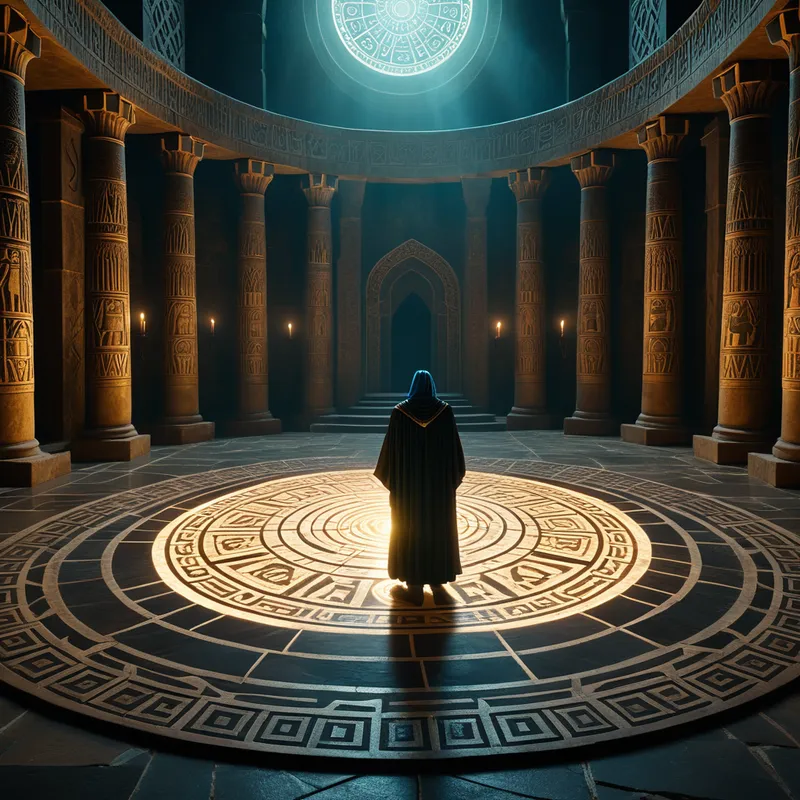
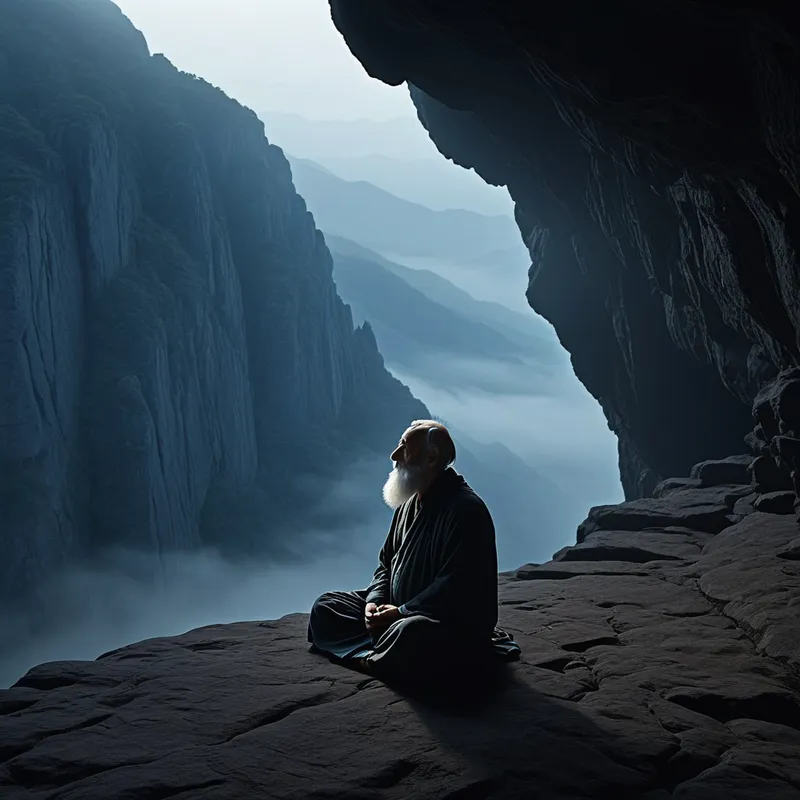
- Silent, Vast Spaces: Empty temples, deep caves, deserted observatories, or soundproof rooms.
- Non-Sentient Teachers: A talking river, a wise tree, a guiding stone, or a machine that communicates through vibration.
- The Indecipherable Glyph or Equation: A symbol that feels profoundly meaningful but resists logical translation.
- The Dissolving Map or Blueprint: A plan that melts, fades, or rearranges itself as you look at it.
- The Weightless Key: An object that unlocks nothing, but whose possession changes everything.
Archetypal Resonance
The core energy here is that of The Sage Archetype. But the dream often calls forth the Sage not in its mature, teaching form, but in its nascent, seeking state—or it reveals the shadow to be integrated. The somatic echo of stillness is the Sage’s native climate: a space of observation beyond reaction. The alchemical potential lies in the Sage’s drive to understand the fundamental principles, not just the surface symptoms. However, the dream’s wisdom often emerges precisely when the ego’s version of the Sage—the dogmatic, judgmental knower—is humbled. Thus, the dream may present the Shadow Sage as a figure of rigid intellect that must be bypassed or dissolved to access the true, fluid intelligence beneath. The theme’s core energy is the Sage’s journey from seeking knowledge outside (the Shadow’s dogma) to embodying understanding within (the integrated Sage’s compassionate insight).
The Alchemical Process: The Pressure of the Paradox
The alchemical vessel for wisdom is the human psyche stretched across a paradox. The prima materia is your accumulated experience—both trauma and triumph—not as narrative, but as raw, undigested sensation and emotion. The heat is applied by the tension between two unbearable truths: the profound longing to know, and the simultaneous, humbling realization that ultimate knowledge is impossible for the separate self. This is the nigredo, the blackening. You must hold the grief of your own limitation and the terror of the vast unknown without fleeing into easy answers or cynical withdrawal.
The transmutation occurs when this heat cooks the raw material of experience down to its essence—not a fact, but a quality of being. The pressure forces a phase change: from seeking wisdom as an object to becoming a vessel for intelligence. The silver of intellectual understanding is transmuted into the gold of embodied knowing. The key is surrender, not to passivity, but to a deeper form of attention—a listening with the whole body, a perception that includes the perceiver. The sovereign self that emerges is not a king with all the answers, but a clear, calm space within which the complexities of life can arise and pass without needing to be permanently solved.

The Integration Protocol
Question 1: Where in my life am I insisting on an answer, when what is being asked of me is to deepen my relationship with the question itself?
Question 2: What cherished belief or piece of "knowledge" about myself would be the most liberating to let dissolve, like a sandcastle before the tide?
Question 3: If my body, not my mind, held the wisdom I seek, what sensation would it be and where would I feel it?
Action 1 (Somatic Stillness): For five minutes, sit in silence and focus only on the physical sensation of "not knowing." Locate it in the body. Is it a tightness? A hollow space? A vibration? Do not try to change it. Simply give it your full, curious attention as you would listen to a distant, familiar sound.
Action 2 (Unstructured Writing): Set a timer for ten minutes. Write from the perspective of the "Silent Space" in your dream (the empty temple, the humming server room). Let it describe what it sees in you, not in words of advice, but in statements of observation. What patterns move through it? What does it hold without judgment?
Action 3 (Ritual of Dissolution): Write a single sentence that encapsulates a current "certainty" you hold about your life, yourself, or a problem. Hold it in your hands. Then, through fire (safely), water (letting the ink run), or earth (burying it), physically dissolve the medium. The action is not to destroy the idea, but to ceremonially separate the fluid truth from the rigid form you gave it.
Final Validation
This path is not for those who wish to remain comfortably certain. It asks you to trade the solid ground of what you think you know for the living, shifting ground of what you are. That exchange is the most disorienting courage. Yet, in that very disorientation lies the promise: you are not being made emptier, but more vast. You are not losing your mind, but gaining your entirety. The wisdom that dreams whisper of is not a trophy to be won, but the native language of the soul, remembered. It was always there, echoing in your bones, waiting for the noise to stop so you could finally hear yourself.