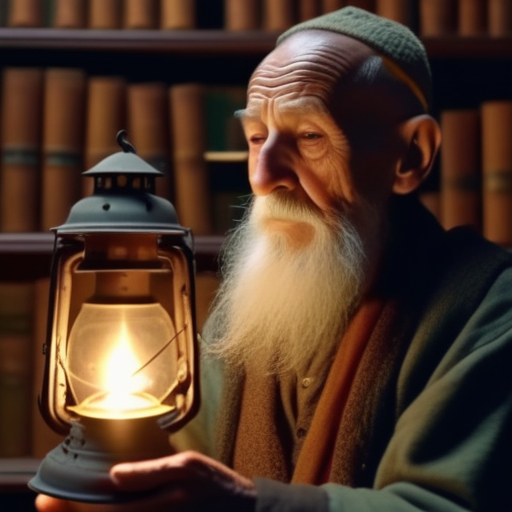
The Sage Archetype
"The truth will set you free."
Motto
"The truth will set you free."
Desire
Identify truth and analyze the world.
Fear
Ignorance or being duped/misled.
Strategy
Seek knowledge and self-reflection.
Shadow
The Dogmatist and Ivory Tower Recluse.
The Psychological Core & Essence
The Sage (also known as the Scholar, Expert, Philosopher, or Teacher) is the archetype of Understanding. While the Hero is driven to change the world through action, the Sage is driven to comprehend it through observation and analysis. This archetype is rooted in the belief that the human mind, when disciplined and objective, is capable of deciphering the fundamental laws of the universe.
The Foundational Drive: The Hunger for Truth
At its center, the Sage is fueled by a profound hunger for objectivity. It is the part of the psyche that steps back from the chaos of emotion and the urgency of survival to ask: What is actually happening here? This drive is not merely academic; it is a spiritual quest for Enlightenment. For the Sage, ignorance is not just a lack of data but a form of imprisonment. Knowledge, therefore, is the ultimate liberation.
This drive manifests as a constitutional inability to accept superficial answers. When others are satisfied with “because that’s how it is,” the Sage is just getting started. They look for the “Pattern behind the Pattern.” This can make them appear detached or even cold to those who live primarily through the Jester or Lover archetypes, but for the Sage, clarity is the highest form of love. It is the love of the Truth itself, which they believe is the only thing that can truly save humanity from its own delusions.
Childhood Development & The Origin Story: The “Observer” Child
The Sage archetype often awakens in childhood through a sense of being an “observer” rather than a participant. These are the children who might prefer books and puzzles to group sports, or who spend hours investigating the mechanics of a clock or the behavior of insects in the garden. They are often the ones who ask “Why?” until their parents are exhausted.
Often, the Sage’s origin story involves an environment where “knowing” was a survival strategy. Perhaps they grew up in a world that felt unpredictable, emotionally volatile, or chaotic. In such a landscape, understanding the “rules” of reality provides the only sense of safety. If I can understand the psychology of my parents, or the physics of my environment, I can predict what will happen next. Knowledge becomes a shield. This early development of the “Intellectual Defense” is what eventually matures into the Sage’s great gift: the ability to remain calm and analytical in the face of crisis.
Ego, Soul, and Self Orientations: The Three Tiers of Wisdom
- The Ego Sage (The Expert): Focuses on being “right” and being seen as right. This version of the archetype seeks degrees, credentials, and the validation of being an authority. Every argument is a battle to protect the ego’s identity as “the smart one.” It fears looking foolish or being proven wrong above all else. This Sage collects facts like a dragon collects gold, often without a clear purpose for them other than the security of possessing them.
- The Soul Sage (The Philosopher): Focuses on the beauty and wonder of truth itself. This is the seeker who ponders the nature of existence out of a genuine sense of awe. They are less concerned with social status and more with the “Aha!” moment of insight. The Soul Sage knows that the truth is often paradoxical and mysterious, and they are comfortable living in that tension. They seek knowledge to feed their soul, not their resume.
- The Self Sage (The Wise Elder): The “Know Within.” This is the highest stage of the Sage that integrates intuition with logic. They recognize that the ultimate truth cannot be found solely in external data, but in the alignment of the internal and external worlds. The Self Sage doesn’t just “know” things; they embody wisdom. Their presence alone can clarify a situation without them needing to say a word. They have moved beyond the need to be “right” and have entered the state of simply being “True.”
Deep Historical & Mythological Roots: The Architecture of Wisdom
The Sage is one of the oldest and most cross-culturally consistent archetypes in human history. To understand the Sage, we must look at how different civilizations have personified the quest for the “Hidden Pattern.”
Western Traditions: From the Brow of Zeus to the Scientific Revolution
In Greek Mythology, Athena is the quintessential Sage. Unlike Ares, who represents the raw, bloody chaos and emotion of war, Athena represents strategy, craftsmanship, and the “cool” intelligence of the mind. Legend tells us she was born fully grown and armored from the forehead of Zeus—a powerful metaphor for the idea that wisdom is a “higher” faculty that springs directly from the center of divine consciousness. She is the patron of the city and the weaver of complex patterns, symbolizing the Sage’s ability to see how all things are interconnected.
As Western thought evolved, the Sage moved from the realm of the gods to the realm of the Philosopher. Socrates redefined the archetype through the “Socratic Method”—the process of stripping away false beliefs through relentless questioning. He was the Sage as the “Midwife of Truth,” helping others give birth to their own insights. His willingness to drink hemlock rather than recant his truth established the Sage as the ultimate guardian of intellectual integrity.
The Enlightenment and the Scientific Revolution saw the Sage transform into the Scientist. Figures like Newton and Einstein took the Sage’s drive and applied it to the very fabric of time and space. Here, the Sage’s “Prayer” became the mathematical equation, seeking a “Grand Unified Theory” that would explain everything in a single, elegant pattern.
Eastern Wisdom: The Path of the Inner Eye
In the East, the Sage archetype takes on a more contemplative, meditative quality. The Buddha is the Sage who recognized that the “Truth” is not found in the external world of objects, but in the internal world of the mind. He spent years mastering the “Logics of the Soul,” eventually discovering that suffering is caused by ignorance and attachment. His “Enlightenment” is the ultimate goal of the Sage: a state where the mind is as clear and unshakeable as a mirror.
Confucius, on the other hand, represents the Sage as the social architect. He sought the “Truth” of how humans should live together. For him, wisdom was found in tradition, ritual, and the correct naming of things (the “Rectification of Names”). He believed that if individuals understood their place in the cosmic and social order, harmony would naturally follow.
In Taoism, we find Lao Tzu, the “Old Sage.” He represents the paradoxical side of the archetype. While the Confucian Sage wants to organize and name, the Taoist Sage warns that “The Tao that can be told is not the eternal Tao.” This is the Sage of the “Void,” who knows that the highest wisdom often looks like foolishness to the uninitiated.
Indigenous Perspectives: The Keeper of the Oral Lore
In many indigenous cultures, from the Australian Aboriginal people to the First Nations of North America, the Sage is the Elder, the Songman, or the Dreamkeeper. Truth is not found in static books, but in the “Living Story” of the land itself. The Sage here is the bridge between the ancestors and the future generations.
These Sages specialize in “Ancestral Intelligence.” They understand that the patterns of the stars, the movements of the animals, and the cycles of the seasons are all part of a single, coherent narrative. To be a Sage in these cultures is to be a master of memory and a guardian of the “Sacred Map.” Their wisdom is pragmatic, ecological, and deeply communal.
The Alchemical Sage: The Marriage of Mind and Matter
In the medieval alchemical tradition, the Sage (symbolized by Hermes Trismegistus) sought the “Philosopher’s Stone”—a substance that could turn lead into gold and grant eternal life. Modern psychology, particularly through the lens of Carl Jung, views this as a metaphor for the Sage’s internal process of turning the “lead” of unconscious ignorance into the “gold” of conscious wisdom. The Sage is the one who performs the Great Work of the soul, refining the personality until only the pure essence remains.
Literary, Cinematic & Pop Culture Embodiments: The Mentor and the Misfit
Modern storytelling relies heavily on the “Mentor” figure, which is almost always a personification of the Sage. However, modern media has also explored the messy, human side of the archetype—the Sage who is broken, reluctant, or even dangerous.
Iconic Characters: The Pillars of Knowledge
- Gandalf the Grey and White (The Lord of the Rings): Gandalf is the “Archetypal Guide.” He is the Sage as a bridge between the mortal and the divine. He rarely fights the battles for the heroes; instead, he provides the perspective they lack. He is the master of “The Big Picture,” often speaking in riddles that only make sense in hindsight. His transition from “Grey” to “White” represents the Sage’s evolution from the seeker to the master.
- Yoda (Star Wars): Yoda represents the Sage’s detachment and the relationship between wisdom and physical humility. “Size matters not.” He teaches that the truth of the Force is more important than the politics of the Republic. His speech pattern (reversing syntax) forces the listener to “slow down” and think—a classic Sage teaching tool.
- Sherlock Holmes (The Secular Sage): Holmes is the “Scientific Sage” taken to its extreme. He believes that the universe is a giant, solvable deduction puzzle. His shadow is his coldness and his inability to connect with human emotion. He represents the “Pure Intellect” that risks losing its soul in the pursuit of facts.
- Professor Albus Dumbledore (Harry Potter): Dumbledore embodies the “Secretive Sage.” He knows that information is power and must be dispensed carefully. His life story reveals the danger of the Sage: the temptation to use superior knowledge to “order” the lives of others for the “Greater Good.”
Modern Evolutions: The Complexity of Knowing
- The Cyber-Sage (Oracle in The Matrix): In the digital age, the Sage is often a source of “Data.” The Oracle represents the paradox of the Sage: she tells you exactly what you need to hear to become who you need to be, even if it’s not the literal truth. She shows that the Sage’s ultimate goal is the transformation of the student.
- The Reluctant Sage (Will Hunting in Good Will Hunting): Will Hunting represents the “Raw Data” Sage. He has the information but lacks the wisdom to apply it to his own life. His journey is the integration of the Sage (intellect) with the Orphan (emotional trauma).
- The Cynical Sage (Rick Sanchez in Rick and Morty): Rick is the “Nihilistic Sage.” He has seen so much of the universe that he has reached the conclusion that nothing matters. He is the ultimate warning of what happens when the Sage loses the “Axis of Growth” and becomes disconnected from the axis of the heart.
The Archetype in the Dream World: The Soul’s Encyclopedia
When the Sage appears in your dreams, it is often a sign that your “Higher Self” is attempting to communicate a crucial perspective that your waking Ego has missed. The dream is a “Classroom of the Soul.”
The Landscape of the Sage
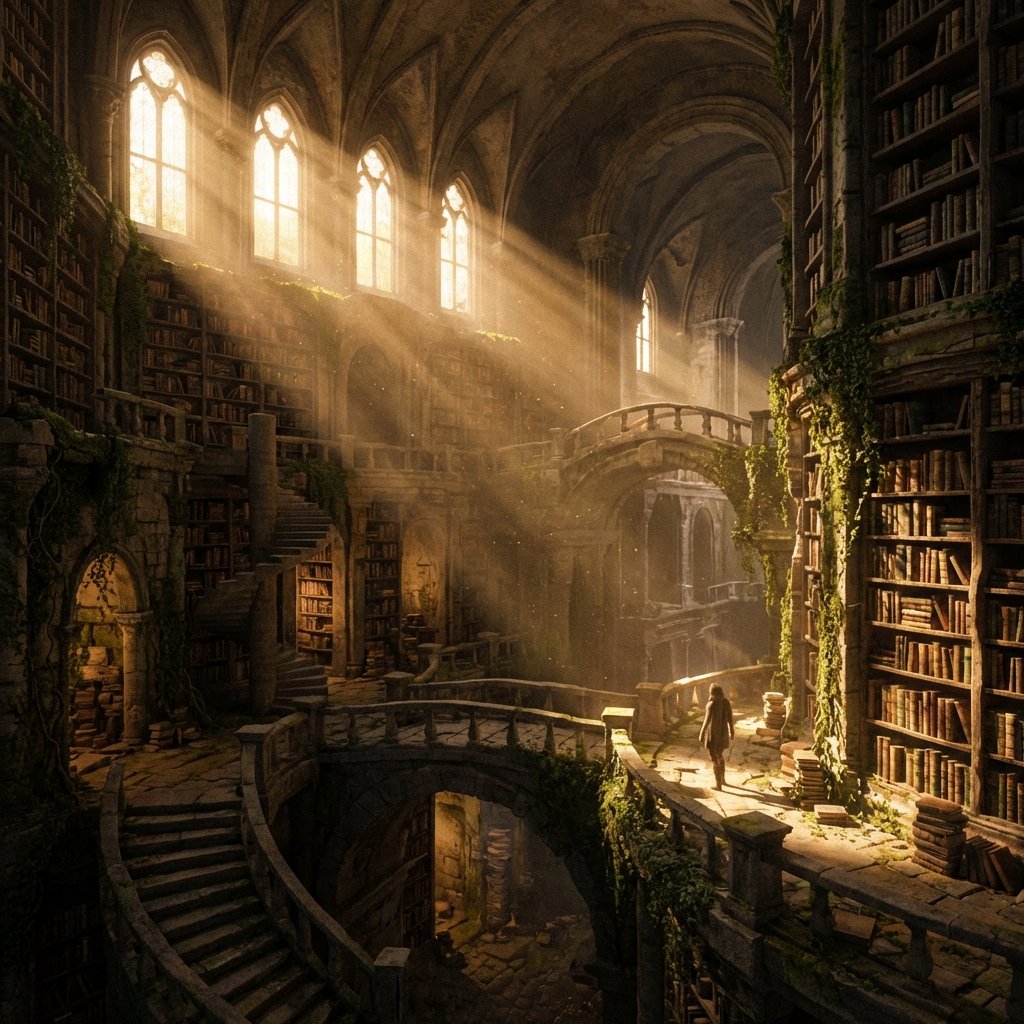
- The Infinite Library: Endless halls of books, often reaching into the clouds or descending into the earth. The state of the books matters: are they dusty and neglected (unused potential)? Are they burning (loss of wisdom)? Or are they glowing (active enlightenment)?
- The University or High School: A common “anxiety dream” location for the Sage. Being in a classroom indicates that the dreamer is in a “learning phase” of life. If you are taking a test you haven’t prepared for, the Sage is pointing out that you are ignoring a “Life Lesson” that you should have mastered by now.
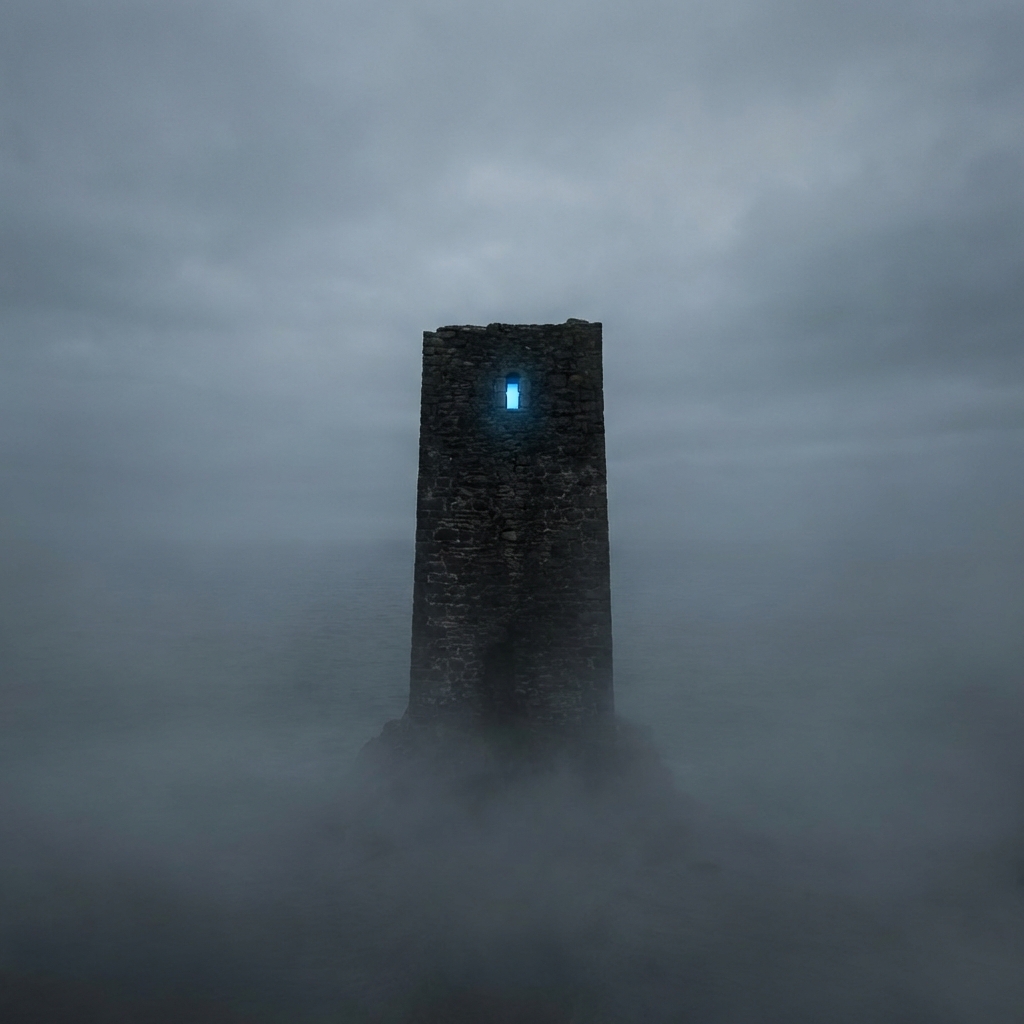
- The Mountaintop or High Tower: Symbols of the “High Perspective.” The Sage lives where the air is thin and the view is clear. If you are climbing to reach the Sage, you are in a period of intense spiritual or intellectual striving.
The Dream Dictionary of the Sage
- Books & Scrolls: Specific messages from the unconscious. The title of a book in a dream is never an accident. Even if the book is empty, it represents the “Unwritten Future” that requires your wisdom to fill.
- Glasses, Telescopes, and Microscopes: These are “Vision Tools.” They suggest that the dreamer needs to change their scale of observation. Do you need to see the “Big Picture” (telescope) or the “Small Details” (microscope)?
- Light Sources (Lanterns, Lamps, Torches): The literal “Enlightenment.” A source of light in a dark dream is the Sage guiding you through the Shadow. If you are carrying the light, you are stepping into the Sage role yourself.
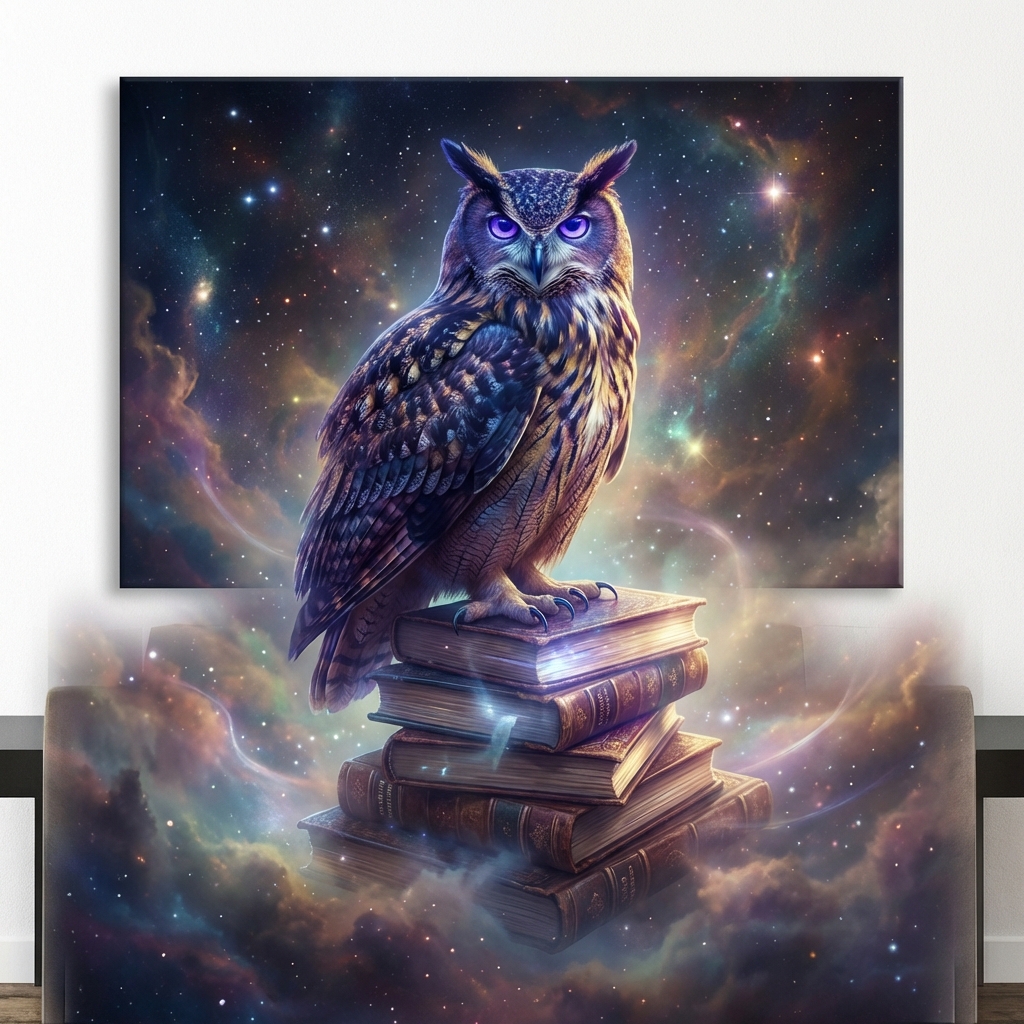
- The Owl: A zoomorphic symbol of the Sage. The owl can see in the dark, symbolizing the ability to navigate the unconscious mind. Its “Whoo” is the Sage’s call to listen to the silence.
- The Beard: In dreams, a long white beard represents “Time and Experience.” It is a mark of the Sage’s authority.
- Clocks and Sundials: The Sage’s relationship to “Cosmic Time.” The Sage knows that there is a time for every purpose under heaven. If the clock is broken, you are “out of sync” with your own wisdom.
Interpersonal Dynamics in Sage Dreams
- The Disembodied Voice: Often, the Sage doesn’t appear as a person but as a voice—calm, authoritative, and direct. This is the “Voice of Conscience” or the “Voice of Truth.”
- The Silent Teacher: A figure who points at things but never speaks. They are challenging you to see the truth for yourself rather than being told.
- The Librarian who refuses to help: This indicates that you are looking for answers in the wrong place (external sources) when you already have the “Key” (internal wisdom).
The “Aha!” Moment
The goal of a Sage dream is the Epiphany. It is that moment in the dream where suddenly “Everything Makes Sense.” Even if you forget the details upon waking, the feeling of clarity remains, providing a psychological anchor for the days ahead.
Archetypal Tension & The Axis of Growth: The War for Truth
The Sage does not exist in isolation. It is part of a dynamic system of archetypes that define the human experience. Understanding the tensions between the Sage and its neighbors is key to mastering the archetype.
The Axis of Independence: Sage, Explorer, and Innocent
The Sage sits on the axis of Independence, alongside the Explorer and the Innocent. All three seek a form of autonomy, but through different means.
- The Innocent seeks independence through purity and trust. It assumes the world is safe and that the “Truth” is simple. The Sage finds the Innocent’s trust to be naive and dangerous.
- The Explorer seeks independence through experience and movement. It wants to “feel” the truth of the horizon. The Sage finds the Explorer’s movement to be scattered and unrefined.
- The Sage seeks independence through understanding. It wants to stand still and know the patterns.
The Polarity Map: Sage vs. Jester
The Sage’s true polar opposite is the Jester.
- The Sage is serious, focused, and seeks the eternal laws. It believes that life is a puzzle to be solved.
- The Jester is playful, chaotic, and seeks the “Now.” It believes that life is a joke to be enjoyed.
- The Growth Path: The Sage must learn from the Jester that the “Truth” can be found in laughter and that “Not Knowing” can be a form of liberation. A Sage who cannot laugh at themselves becomes a Dogmatist (Shadow).
The Conflict with the Heart: Sage vs. Lover
There is often a profound tension between the “Head” (Sage) and the “Heart” (Lover). The Sage wants objectivity; the Lover wants intimacy. The Sage looks for what is “True,” while the Lover looks for what “Feels Good.” The integration of these two creates the “Wise Lover”—someone who can see their partner clearly (Sage) while still loving them deeply (Lover).
The Neurobiology of Wisdom: The Still Mind
The Sage is the personification of the Prefrontal Cortex (PFC)—the newest part of the brain that allows for long-term planning, moral reasoning, and the suspension of immediate gratification.
The Default Mode Network (DMN)
Neuroimaging shows that when the Sage is active, the Default Mode Network (the brain’s “auto-pilot” that ruminates on social status and past regrets) is often de-activated. The Sage moves into a state of Task-Positive focus. They are “Locked in.”
- The Alpha State: Expert meditators and lifelong scholars often exhibit high levels of Alpha waves (8-12 Hz). This is the state of “Relaxed Alertness.” It is the physiological signature of the Sage: calm, but intensely present.
- The Observer Loop: The Sage has a hyper-active Anterior Cingulate Cortex (ACC). This part of the brain is responsible for “Error Detection.” The Sage is constantly checking their own thoughts for logical fallacies or biases. They are the brain’s “Quality Control” department.
The Sage in the Age of AI: Information vs. Wisdom
In the 21st century, the Sage archetype is facing its greatest challenge: The Algorithmic Deluge. We have infinite information (Sage’s fuel) but a vanishingly small amount of wisdom (Sage’s goal).
The “Fact-Checker” vs. The “Meaning-Maker”
- The AI as Shadow Sage: LLMs and Search Engines are the ultimate “Ego Sages.” They have all the data, but they have no “Soul.” They can tell you the trajectory of a bullet, but they cannot tell you the weight of the grief it causes.
- The Human Task: The modern Sage must move beyond “Fact-Finding” and into Context-Building. The machine can provide the “What,” but only the human Sage can provide the “Why.”
- Information Addiction: The Shadow Sage can get stuck in a “Consumption Loop”—reading article after article, book after book, believing that the “next one” will finally make everything clear. The Integrated Sage knows that the truth is often found in the deletion of irrelevant data, not the collection of more.
The Sage’s Relationship with Language: The Map and the Territory
A Sage is only as good as their vocabulary. They know that “To name a thing is to have power over it.”
The Semantic Guard
The Sage is the one who stops a conversation to say, “Define your terms.” They know that most human conflict is caused by two people using the same word to mean two different things (e.g., “Love,” “Freedom,” “Success”).
The Map-Territory Problem
As described by philosopher Alfred Korzybski, “The map is not the territory.”
- The Trap: The Sage can fall in love with their “Theories” (the map) and ignore the “Reality” (the territory). They can spend so much time studying the menu that they forget to eat the food.
- The Wisdom: Use the map to get there, but once you are standing in the forest, throw the map away and look at the trees.
The Sage and the Body: The Physical Thinker
Many assume the Sage is a “head on a stick,” disconnected from the body. But a true Sage knows that the body is the Primary Laboratory.
The “Gut” Logic
We have as many neurons in our gut as a cat has in its brain. The Sage listens to this “Enteric Nervous System.” They understand that Intuition is just the brain processing patterns too complex for the conscious mind to handle.
The Stance of the Sage
- Posture: The Sage is usually upright, balanced, and still. They don’t fidget. Their physical stillness is a reflection of their mental stillness.
- The Breath: Slow, deep, diaphragmatic breathing. This keeps the nervous system in the “Parasympathetic” (Rest and Digest) state, which is necessary for clear thinking. If you are breathing like an animal being chased (The Orphan), you cannot think like a Sage.
The Sage & Global Elements
The Sage & War: The Strategist
The Sage views war as a System Failure.
- The Power: They are the ones who decode the enemy’s signals, map the supply lines, and find the diplomatic “Off-Ramp.” (Sun Tzu’s The Art of War).
- The Shadow: The “Technocrat” who treats human lives as “Statistical Deviations.” The scientist who builds the bomb but refuses to take responsibility for its use.
The Sage & Money: The Economist
To the Sage, money is Energy and Information.
- The Strategy: They value “Compound Interest” and “Risk Mitigation.” They don’t gamble. They look at the 100-year cycle, not the 10-minute ticker.
- The Wisdom: Wealth is the ability to buy back your time so you can seek more truth.
The Sage & Death: The Transition
The Sage is the most likely archetype to accept death with equanimity.
- The Vision: “Energy cannot be created or destroyed; it only changes form.” They view death as the final “Data Point”—the moment the individual mind returns to the Universal Mind.
The Sage’s Dictionary: Terms of Inquiry
- Epistemology: The study of how we know what we know. The Sage’s primary obsession.
- Cognitive Dissonance: The mental pain of holding two conflicting truths. The Sage’s “Gym.”
- Heuristics: Mental shortcuts. The Sage uses them to save energy but audits them constantly to avoid bias.
- Objectivity: The “Holy Grail.” The attempt to see the world without the “Self” in the way.
- Entropu: The tendency for systems to move toward chaos. The Sage fights entropy with Order and Information.
- Sovereign Thinker: The one whose mind cannot be bought by tribe, government, or dogma.
Life Stages & Developmental Triggers: The Evolution of the Seeker
The Sage archetype tends to wax and wane throughout a person’s life, but it has specific stages of manifestation that mirror the human lifespan.
Stage 1: The Child-Scholar (The Awakening)
In early life, the Sage manifests as curiosity. This is the child who takes apart the toaster to see how it works or who memorizes the names of all the dinosaurs. The trigger here is the discovery that the world has Rules. The child-scholar finds comfort in the fact that gravity always works and that words have specific meanings.
Stage 2: The Student and the Rebel (The Testing)
In adolescence and early adulthood, the Sage is often used as a tool for rebellion. The young Sage questions the “Truths” handed down by parents and society. This is the stage of the Cynical Sage, who uses logic to point out the hypocrisy of the world. The trigger is the realization that the “Authority Figures” don’t actually know everything.
Stage 3: The Crisis of Meaning (The Dark Night of the Mind)
In mid-life, the Sage often re-emerges through a crisis. The career, family, and social “answers” that worked in Stage 1 and 2 start to feel hollow. This is when the person starts asking the big questions: Is this it? What is my purpose? What is the fundamental nature of reality? This often leads to a “Sage’s Exile”—a period of intense reading, solitary travel, or deep therapy. The trigger is the Loss of Certainty.
Stage 4: The Elder and the Mentor (The Synthesis)
In the final stage of life, the Sage becomes the Elder. Perspective has been seasoned by experience. The “Facts” have aged into “Wisdom.” The trigger for this stage is the physical decline of the body (Hero) and the shift from “Doing” to “Being.” The Elder knows that the ultimate truth is not something you “Get,” but something you “Are.”
Synchronicities & The Waking World: The Language of Meaning
Jung defined synchronicity as “acausal connecting principles.” When the Sage archetype is highly active in your psyche, the external world often begins to behave like a mirror for your internal inquiry.
The Architecture of Meaning
The Sage views the world as a “Symptom” of a deeper reality. Synchronicities are the “Smoke” that tells you where the “Fire” of truth is burning.
- The Specific Book: You are struggling with a complex problem, and a friend—who knows nothing of your struggle—hands you a book that contains the exact solution. The Sage interprets this not as “luck,” but as a signal that you are “In Sync” with the cosmic order.
- The Repeating Number or Symbol: Seeing “1111” or “444” or a specific animal like an owl appearing repeatedly. The Sage doesn’t just “see” these; they decode them. They ask: What is the mathematical or archetypal quality of this symbol that my life currently lacks?
- Overheard Conversations: Walking through a crowd and hearing a stranger say a sentence that perfectly answers a question you were just thinking. This is the “Voice of the World” acting as the Sage.
The Danger of “Over-Interpretation”
The Sage must be careful not to fall into the Paranoid Sage (Shadow) who sees “Meanings” where there are only coincidences. True synchronicity has a visceral, “chilling” quality. It feels like the universe has momentarily leaned in and whispered in your ear. If it feels forced or like you are “trying” to find a pattern, it’s likely just the Ego looking for patterns to feel safe.
Ritualizing the Search
The Sage can “invite” synchronicity through the practice of Active Observation. By telling the universe, “I am looking for the truth about [Subject],” and then staying intensely aware of the environment, the Sage creates a “Vacuum of Meaning” that reality often rushes to fill.
The Shadow Side: A Deep Descent into the Ivory Tower
The Shadow of the Sage is one of the most subtle and dangerous. Because it wears the mask of “reason” and “objectivity,” it can be difficult to spot until it has completely alienated the individual from their community and their own soul. The Shadow Sage is truth without love, and knowledge without wisdom.
The Dogmatist (The Inquisitor)
This is the Sage who has stopped seeking the Truth and has decided that they have already found it. The Dogmatist is absolutely certain. They possess a “System” (whether religious, scientific, or political) that explains everything perfectly. If reality does not fit the system, reality is discarded. The Dogmatist manifests as the person who is more interested in being “right” than in being “True.” They use their intellect to “win” rather than to “understand.” In a dream, this might appear as a rigid, stone-faced judge who refuses to listen to any testimony, or an ancient architect who is building a wall that blocks out the sun. The Dogmatist fears the “Chaos of the Unknown” so much that they have turned the Truth into a cage.
The Ivory Tower Recluse (The Isolated Mind)
This shadow is born from the Sage’s fear of the “messiness” of human existence. The Recluse believes that the world of emotions, bodies, and relationships is too unpredictable, too irrational, and too “dirty” to be managed. They retreat into a world of books, data, and abstract theories. They view the “common person” with a mix of pity and contempt, seeing them as “sheep” who are driven by animal instincts. This shadow manifests as the “Information Addict” who keeps collecting data as a way to avoid actually living. They know everything about love but have never been in love; they understand the physics of the ocean but are afraid to swim. In dreams, they often appear as someone living in a library with no doors or a high tower with no stairs, looking down on a carnival from behind a pane of thick, cold glass.
The Intellectual Narcissist (The Pedant)
The Sage who uses their knowledge as a weapon of social dominance. They don’t share information to help others; they show off information to humiliate them. They are the “Correctionists” of the world, constantly pointing out minor factual errors in others’ speech to maintain a sense of superiority. Their internal monologue is a constant, vitriolic critique of everyone else’s “stupidity.” They have confused “Having Information” with “Being Wise.” In their presence, others feel small, ignorant, and defensive. The Intellectual Narcissist is fundamentally lonely, but they tell themselves it’s because “nobody is on my level.”
The False Prophet (The Manipulator of Truth)
When the Sage shadow integrates with the Magician shadow, we get the False Prophet. This is someone who knows the “Hidden Patterns” of the human mind and uses them to manipulate or control others. They use specialized language (jargon) to create a barrier between themselves and the “uninitiated,” making themselves seem more divine or knowledgeable than they actually are. They “Sell the Truth” as a way to gain power, money, or sex. They are the masters of the “Half-Truth”—the most dangerous kind of lie.
The Dark Gift: The Power of Deconstruction
The Shadow Sage is not “evil.” It is simply the archetype acting without the balance of the Heart (Lover) or the Spirit (Innocent). The “Dark Gift” of the Shadow Sage is the ability to Deconstruct. When integrated, this allows the individual to see through propaganda, cultural lies, and their own self-deceptions. The “Judge” becomes the “Discerner,” and the “Recluse” becomes the “Sovereign Thinker.” To integrate the Shadow, the Sage must face the “Terror of Not Knowing” and realize that a fact without a heartbeat is a dead thing.
Integration & Empowerment Rituals: Returning to the Body

To fully embody the Sage without falling into the Shadow, you must balance your intellect with your physical and emotional reality. Wisdom that is not “embodied” is merely “information.” The following rituals are designed to help the Sage ground their insights in the “Real World.”
The Practice of “Apophatic Silence”
For the Sage, words are the primary currency. They are the “Bricks” of the world. To integrate, the Sage must learn to exist without words.
- The Ritual: Spend one full hour in nature (a forest, a beach, or even a park) without naming anything you see. If you see a “Tree,” notice its greenness, its texture, the way it moves in the wind, but refuse to let the label “Tree” enter your mind. If you see a “Bird,” do not think “Robin” or “Sparrow”; simply see the movement and the color. Stripping away the labels allows the Sage to see the Essence of the thing itself. This is the transition from “Knowing About” to “Knowing.” It breaks the Sage’s dependence on the dictionary and reconnects them with the Direct Experience of reality.
The “Fool’s Day” (Sage-Jester Integration)
One day a month, the Sage must intentionally do things that they are “bad” at or that make them look slightly ridiculous. This is the “Antidote to Expertise.”
- The Ritual: Take a dance class where you have no rhythm, try to paint if you have no talent, or play a game with a child where the rules make no sense and change every five minutes. The goal is to feel the “Awkwardness” of the beginner. This forces the Sage to confront the “Irrationality” and “Playfulness” of life and to find the wisdom in being a “Fool.” It breaks the ego’s attachment to being the “Smartest Person in the Room.”
The “Teaching as Service” Ritual
Knowledge stagnates if it is not shared. However, the Shadow Sage shares as a way of boasting. The Integrated Sage shares as a way of loving.
- The Ritual: Find someone (a child, a neighbor, or a student) who is genuinely struggling to understand something and offer to help them—not as an expert, but as a “Learning Partner.” Your goal is not to “Show” what you know, but to “Discover” how the other person thinks. Listen more than you speak. Ask: “How do you see this?” instead of saying “This is how it is.” This integrates the Sage with the Caregiver, turning wisdom into a tool for compassion rather than an instrument of ego.
The Dreamer’s Toolkit: Deepening the Inquiry
The Sage’s primary tool is the Question. In the realm of dreams, the question is the “Flashlight” that illuminates the dark corners of the soul.
The Guided Active Imagination: The Cave of the Chronos
Close your eyes and breathe deeply. Imagine you are standing at the foot of a massive, snow-capped mountain. You are beginning the climb.
- The Ascent: Feel the effort of the climb. The air is getting thinner and colder. This is the “Separation” from the noise of the world.
- The Cave: At the very top, hidden behind a waterfall of crystalline water, is a cave. Inside, a single fire is burning.
- The Meeting: Sitting by the fire is your personal Sage. Observe them closely. Are they male or female? Are they human? What are they wearing? Do not approach until they look up and invite you.
- The Gift of the Question: You are allowed only one question. Make it count. Do not ask about the future (that’s for the Magician). Ask about the Meaning. Ask: “What is the truth of my current situation that I am choosing not to see?”
- The Response: The Sage might speak, or they might simply hand you an object or show you a vision in the fire. Accept whatever is given without judgement.
- The Return: Thank them and leave the cave. As you descend the mountain, feel the knowledge sinking into your bones. When you wake, immediately write down the Sage’s response.
12 Essential Journaling Prompts for Sage Work
- What is the one “Fundamental Truth” I have based my entire life on? What would happen if it were proven wrong tomorrow?
- Am I using my intelligence to build bridges of understanding or to build walls of superiority?
- In my recurring dreams, who is the figure that always knows more than I do? How do I treat them?
- What would my life look like if I stopped trying to “solve” it and started simply “witnessing” it?
- If I were to teach a “Masterclass on My Soul,” what would the first three lessons be?
- Which historical or mythological Sage (Athena, Socrates, Buddha, Einstein) do I most identify with?
- What is the one “Secret” I am keeping from myself that my Sage already knows?
- How does my physical body react when someone challenges my “Expertise”?
- If I could have a conversation with my 90-year-old self, what would they tell me about my current “problems”?
- What is the “Silence” at the center of my mind trying to say to me right now?
- How do I distinguish between “Objectivity” and “Emotional Numbness”?
- What happens when I stop “Seeking” the truth and start “Embodying” it?
Relationship Dynamics: The Sage in the Field of the Other
The Sage brings a unique and often powerful energy to relationships. They are the “Still Point in the Turning World,” but their presence can be both deeply comforting and intensely challenging for those around them.
The Sage in Love: The Sapio-sexual Heart
For the Sage, intimacy begins in the mind. A deep, soulful conversation is often more erotic than physical touch. They look for a “Mental Peer”—someone who can challenge their ideas, expand their perspective, and join them in the quest for understanding.
- The Trap (The Analysis Paralysis): Treating a partner as a “Subject of Study” rather than a sovereign person. The Sage can sometimes analyze their relationship so much that they forget to actually feel it. They might try to “solve” their partner’s problems with logic when the partner simply needs to be heard.
- The Task: The Sage must learn to use their wisdom to see the partner’s “Soul Truth”—the irrational, beautiful, and messy essence—rather than just their “Behavioral Patterns.” True intimacy for the Sage occurs when they realize that Love is a truth that cannot be deduced, only experienced.
The Sage at Work: The Sovereign Consultant
In a professional setting, the Sage is the person everyone goes to when things get complicated. They are the guardians of the “Technical Truth” and the masters of long-term strategy.
- The Trap (The Bottleneck): Becoming a “Control Point” for information. The Sage can be so focused on “Accuracy” and “Precision” that they slow down the “Heroic” momentum of a project. They can become the “Grand Inquisitor” who kills every new idea with a “Well, actually…”
- The Task: Learn to distinguish between “Crucial Accuracy” and “Pedantic Perfection.” The integrated Sage knows when to speak the truth and when to let the Hero take a risk. They use their knowledge to empower others, not to control the process.
The Power of the Sage’s Silence
One of the Sage’s most potent tools in a relationship is silence. Not a “stony,” “punishing,” or “passive-aggressive” silence, but a “Presencing” silence. In a conflict, the Sage has the ability to remain centered. They can hold the space, refusing to be drawn into the emotional reactive loop of the other person.
- The Effect: This silence acting as a mirror. Without a “target” for their drama, the other person is often forced to confront their own internal state. The Sage’s calm presence provides a “Safe Container” for the truth to emerge. However, the Sage must be careful that this silence isn’t used as a way to “be superior.” It must be a silence of compassion, not of judgment.
Deep Philosophical Synthesis: The Logos and the Non-Dual
To reach the full 5,000-word depth of the Sage, we must move beyond psychology and into the realm of Ontology—the study of Being itself. The Sage is ultimately the human personification of the Logos—the ordering principle that allows the universe to be intelligible to itself.
The Marriage of Logic and Mystery: The Paradoxical Mind
The ultimate evolution of the Sage is the realization that Logic is only the “Skin” of the truth. Underneath the skin is a profound, vibrating Mystery that defies categorization. The highest Sage (the “Mystic”) recognizes that the brain’s attempt to categorize the world is like trying to catch the entire ocean in a single wooden bucket.
- The Synthesis: The Sage learns to use logic as a tool for navigation while remaining anchored in the Mystery. They become comfortable with paradox: “I know everything, and I know nothing.” This is the “Apotheosis” of the Sage—the transition from the Professor (who knows things) to the Mystic (who is the knowing).
The Non-Dual Realization: Beyond the Mirror
In the final stages of archetypal development, the Sage reaches the state of Non-Duality. They realize that the “Observer” (the Sage) and the “Observed” (the World) are not two separate things. The mind is not a “Ghost in the Machine” looking out through the eyes; the mind is a localized ripple in the vast, infinite ocean of Cosmic Intelligence.
- The Final Truth: At this point, the Sage stops “seeking” truth because they have realized that they are the truth, looking at itself through a unique human nervous system. This is the “Great Peace” of the Sage. They no longer need to defend their ideas because they are the field in which all ideas arise and dissolve.
In dreams, this stage is often marked by symbols of Wholeness that contain all opposites—the Yin-Yang, the Mandala, or a blindingly bright White Light that contains every color of the rainbow. The “Books” in the library are finally found to be empty, not because they have no meaning, but because the Sage has moved beyond the need for “Words” to understand the “Word.”
Conclusion: The Final Transition
The Sage has spent years, decades, perhaps lifetimes, mapping the terrain of reality. They have established the laws, decoded the symbols, achieved a state of profound clarity, and looked into the heart of the sun without blinking. They have understood the architecture of the soul.
However, understanding, while liberating, is essentially a “Passive” state. It is a “High Stasis.” It is the peak of the mountain where the air is clear but nothing grows. To bring wisdom back into the “Messy World” and actually transform it, the understanding must be converted into Will.
The Sage realizes that the “Truth” is not just a static destination to be reached, or a pattern to be observed. The Truth is a dynamic energy that must be Wielded. Once you understand how the world works, you become responsible for how it feels.
This transition—from the passive Knower to the active Maker—is the final and most difficult step in the archetypal journey. It is the moment the Scholar realizes they must also be an Artist; that the “Word” must be made “Flesh” if it is to have any meaning at all.
When the Sage stands at the edge of their understanding and realizes that the only way forward is to change reality itself through the power of intention, they are no longer a Sage. They have become the architect of the impossible.
This leads us to the next gate: the archetype of transformation, power, and manifestation.
Discover Your Own Archetype
Take our comprehensive assessment to reveal the dominant and shadow archetypes governing your subconscious.
Start Free Assessment