The Alchemy of Redemption: When the Dream Offers a Second Chance
The Somatic Echo
Before the story forms, before the images clarify, redemption announces itself in the body as a profound and paradoxical ache. It is not the sharp sting of fresh guilt, but the deep, resonant thrum of an old sorrow finally being heard. It feels like a weight in the chest, not of burden, but of density—a gravity well pulling forgotten fragments back toward a center. There is a tightness in the throat, the somatic memory of all the words swallowed, the apologies unspoken, the truths choked back. And beneath it all, a strange, quiet warmth begins to spread, like blood returning to a limb that has long been numb. This is the echo of a circuit closing, a psychic loop seeking completion. It is the body remembering a wholeness it has not known, a premonition of a burden about to be laid down. The mind may rush to label it regret, but the soma knows it as the first tremor of a coming release.
The Dreamer's Log
The platform is endless, slick with a rain that smells of ozone and old stone. I’ve missed this train a thousand times, watched its red taillights vanish into a tunnel of static. But tonight, it waits. The conductor, his face a blur of shifting light, holds the door. He doesn’t speak, but I know: this is the last run. I step inside, and the door seals with a sigh of pressurized air. The seats are empty, but they feel warm, as if just vacated by friendly ghosts. We begin to move, not into the tunnel, but upward, through the roof of the station and into a sky streaked with the colors of a healing bruise—indigo, gold, violet.
This dream is not about catching a train; it is the psyche’s announcement that the long exile of a punished part of the self is over, and the journey toward integration can finally begin.

The False Lead
Redemption is not the erasure of a mistake. It is not a cosmic "Control-Z" that retroactively sanitizes the past, nor is it the shallow comfort of being absolved by an external authority. To mistake it for mere forgiveness is to remain passive, a recipient of grace rather than an agent of your own transformation. It is also not the grandiose fantasy of the martyr’s sacrifice, where one spectacular act of atonement magically balances all scales. That is the shadow narrative, a drama that often perpetuates the very cycle of guilt and punishment it seeks to escape. True redemption is far more humble and infinitely more demanding: it is the slow, deliberate work of metabolizing experience—all of it—into the substance of your being.
Psychological Architecture
The architecture of redemption is built in the shadowlands of the self, in the wing of the psyche we have condemned and abandoned. Here resides the exiles of our internal family: the part that failed, the part that was cruel, the part that was too weak, the part that chose wrong. We brick them into memory-vaults, hoping the mortar of shame will hold. A redemption dream is the sound of that mortar cracking. It signals that the central Self, the core consciousness, can no longer tolerate this internal civil war. The process of individuation—becoming a whole, self-governing entity—requires a reintegration of these lost citizens.
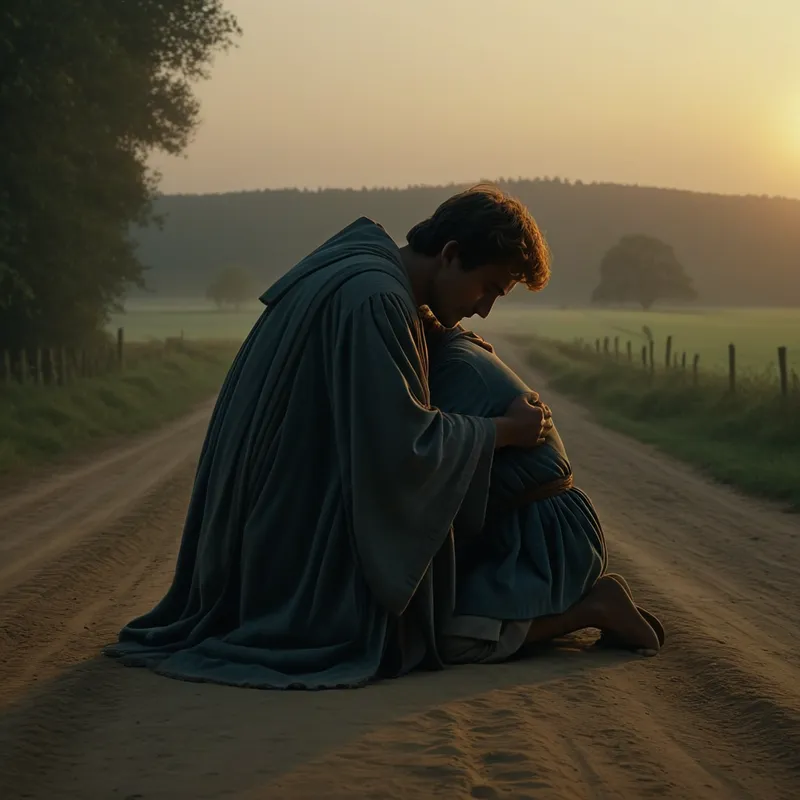
This is the deepest Shadow work. It is not about fighting a monster, but about recognizing the monster as a wounded, frozen version of you, tasked with a terrible protection it never asked for. To redeem is to reclaim. It is to approach that exiled one in the dream-dungeon, not with a sword, but with the question, "What are you protecting me from?" The answer is never what you expect. It is usually love. The fear of it, the loss of it, the unworthiness for it. The act of redemption is the act of extending love, first and most fiercely, to the parts of yourself you deemed most unlovable. In that act, the internal hierarchy of tyrant and victim dissolves. Sovereignty is not claimed by the victor, but emerges from the ceasefire.
Mythic Resonance
We see this eternal process in the myth of the Fisher King, ruler of a land that mirrors his own inner wound—a barren, lifeless waste. His redemption does not come from a knight slaying an external beast, but from a fool, Percival, asking a simple, compassionate question: "What ails you?" The question itself is the key. It bypasses the saga of the wound, the story of how the kingdom fell, and addresses the present, living reality of the sufferer. The healing of the king and the greening of the land are one and the same event; the inner state is made manifest. Redemption here is an ecological act, the restoration of a system to its natural, flowing state.
Similarly, in the Eastern tale of the Buddha and the bandit Angulimala, redemption is framed as a radical change of course. Angulimala, a murderer with a necklace of fingers, is stopped not by force, but by the Buddha’s unwavering recognition of his true, unbuddha-nature beneath the atrocities. The Buddha calls him by his birth name, "Ahimsaka" (the non-violent one). In that moment of being seen as he could be, rather than as he had been, the psychic structure of the killer collapses. His redemption is instant in spirit but lifelong in practice, a daily walking of a new, fragile path. The myth tells us that the name we are called can be a prison or a liberation.
Symbolic Nodes
- Missing a Vehicle That Then Waits: Buses, trains, planes departing without you, only to return or pause specifically for you.
- Healing a Fractured Object: Mending a broken vase, soldering a severed wire, gluing a split page.
- Receiving a Key or Code: Being given a physical key, a numerical sequence, or a password to a previously locked room or terminal.
- Cleansing Waters or Rains: Bathing in a river, standing under a waterfall, or a gentle rain that washes away grime or blood.
- An Empty but Welcoming Space: A clean room, a prepared meal at an empty table, a lit path through a dark forest.
- Returning Something Stolen: Placing an object back on a shelf, returning a book to a library, giving back a jewel.
Archetypal Resonance
The energy of redemption vibrates most powerfully with The Orphan Archetype—not in its shadow state of perpetual victimhood, but in its mature, integrated form as the Realist and the Survivor. The Orphan knows, better than any other archetype, the raw terrain of loss, abandonment, and existential loneliness. It has no illusions about life’s capacity to wound. The redemption dream is the Orphan’s ultimate journey: the movement from being subject to fate (the abandoned child) to being the author of meaning from that fate (the resilient survivor). The somatic echo of density and returning warmth is the Orphan feeling, for the first time, the solid ground of self-understanding beneath its feet. The alchemical potential lies in its brutal honesty; it is the only archetype that can look at the ruins of its past without flinching, and in that clear-eyed gaze, find the first raw materials for rebuilding. Its redemption is not a return to a lost innocence, but the hard-won creation of a wisdom that could not exist without the fall.
The Alchemical Process
The alchemy of redemption is the Transmutation of Leaden Narrative into Golden Narrative. The lead is the frozen story: "I am the one who failed," "I am unworthy," "I am forever defined by that mistake." This story has a crystalline, imprisoning structure in the psyche. The required heat is the nearly unbearable intensity of conscious, non-judgmental remembrance. You must, with the courage of the Orphan-Survivor, re-enter the memory-scene not as the actor or the ashamed observer, but as a compassionate witness to your own past self. Feel the feelings you suppressed then. Hear the thoughts you censored.
The pressure is radical responsibility without blame. This is the critical, fiery point. It is taking full authorship of your actions and their consequences ("I did that. I caused that pain.") while simultaneously releasing the identity of being "the villain." You hold the deed, but you release the defining curse. In this crucible of heat and pressure, the crystalline structure of the old narrative dissolves. It does not vanish; it changes state. From the molten remains, you are tasked with forging a new narrative: "I am the one who learned from that failure." "My worth is deepened by my understanding of frailty." "I am defined not by the mistake, but by the meaning I forged in its aftermath." The lead of shame becomes the gold of earned wisdom. The sovereignty gained is not over others, but over the meaning of your own history.

The Integration Protocol
Question 1: In the dream, what or who was being redeemed? Was it an object, a place, an animal, a version of you, or someone else? What quality did it regain (freedom, wholeness, cleanliness, purpose)?
Question 2: If the redeemed element in the dream were a part of your own psyche, what function has it been exiled from performing? What gift or capacity have you been denying yourself by keeping it locked away?
Question 3: What is the oldest, heaviest sentence you carry about yourself? If you were to rewrite that sentence not to excuse the past, but to describe the strength forged in its fire, what would the new sentence be?
Action 1 (Somatic Amnesty): For five minutes, sit quietly and place a hand over your heart. Do not seek a feeling. Instead, mentally repeat the phrase, "I grant safe passage to the past." Notice any tension, tightness, or warmth that arises in your body. Simply breathe into those spaces. This is the grounding of the ceasefire in your own flesh.
Action 2 (Narrative Alchemy): Perform an "Unsent Letter" ritual. Write a detailed, raw letter to the person or situation connected to your sense of unredeemed past (this could be a past version of yourself). Say everything. Then, write a reply from them to you, not as they would, but as your most compassionate, wise Self would. Finally, burn or shred the first letter. Keep the second.
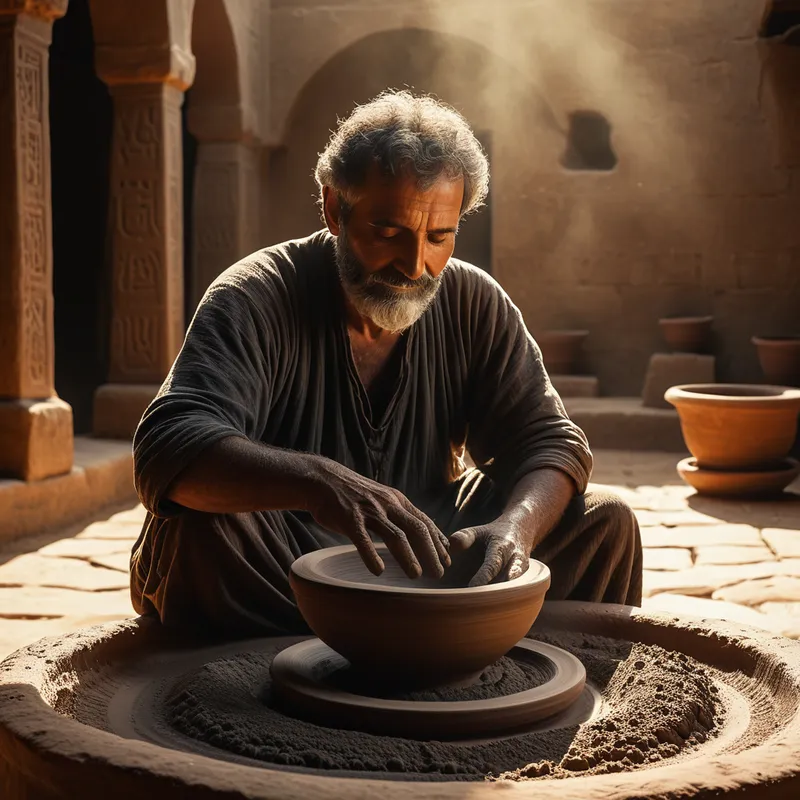
Action 3 (Creative Reclamation): Using any medium—clay, collage, digital art, even arranged stones—create a small shrine or monument to your "Orphan-Survivor." Do not make it pretty or heroic. Let it be stark, strong, and honest. Incorporate an element that represents the old wound and an element that represents the newfound ground it stands upon. Place it where you will see it, a testament to your own capacity for integration.
Final Validation
The path of redemption is the most demanding pilgrimage the soul can undertake, for it requires you to walk back into the heart of your own storm with open eyes. It is far easier to live in the mansion of blame or the hovel of shame than to do the devastating, liberating work of dismantling both. Honor the difficulty. The very fact that this theme visits you in the sovereign realm of dreams is proof of a readiness you may not yet feel in the waking light. Your psyche is not torturing you with phantoms of the past; it is presenting you with the keys to your own future. It is offering you the most profound power there is: not the power to change what was, but the power to change what it means, and in doing so, to reclaim every exiled piece of your story. The train is waiting. The door is open. The conductor is you.