
Century Myth Meaning & Symbolism
A mythic cycle of divine judgment and human history, where a hundred-year span becomes a crucible for collective destiny and spiritual reckoning.
The Tale of Century
Listen. The wind does not blow; it counts. Each gust across the desert is a breath exhaled from the ledger of heaven, a subtraction from an allotted sum. The story is not of one hero, but of a span—a weight, a measure, a vessel poured out upon the earth. It is the tale of a Century.
In the beginning is the Word, and the Word sets the boundary. The Holy One, whose name is a breath held too long to utter, speaks to the prophets in the language of seasons and sums. He shows them a vision not of a beast or a king, but of a number: one hundred. It is a perfect measure, ten times ten, the fullness of earthly generations. He declares, “For the iniquity of the Amorites is not yet full.” The Century is the cup into which their transgressions drip, slow and terrible, until the brim is touched.
The stage is all of history, from the brick pits of Egypt to the hanging gardens of Babylon. The players are nations—Israel, a stiff-necked people bound by covenant; Assyria and Babylon, the rods of divine anger. The conflict is not clashing swords, but the silent, accumulating weight of choices. A king turns his heart to pride, and a grain of sand falls. A people forget the covenant, and the hourglass trembles.
The rising action is a slow crescendo of warning. The prophets—Isaiah with his coals, Ezekiel lying on his side for days that stretch into years—become living calendars. They enact the Century. They speak of seventy years of exile, a truncated century, a Sabbath for the land that had been forced to bear fruit without rest. Time itself becomes an actor, patient and inexorable. The walls of Jerusalem do not fall in a day; they erode under the gaze of a hundred winters, awaiting the precise moment when the measure is full.
The resolution is neither neat nor kind. It is the crash of the temple stones, the bitter salt of tears by the rivers of Babylon. The Century is fulfilled. The cup is drained. But in the draining, a space is made. The resolution is also the edict of Cyrus, the unexpected end of the seventy years, the return. The empty cup is not shattered; it is cleansed, turned upright, and set to be filled anew. The Century closes, and in the silence after the final grain falls, a new count begins.
Cultural Origins & Context
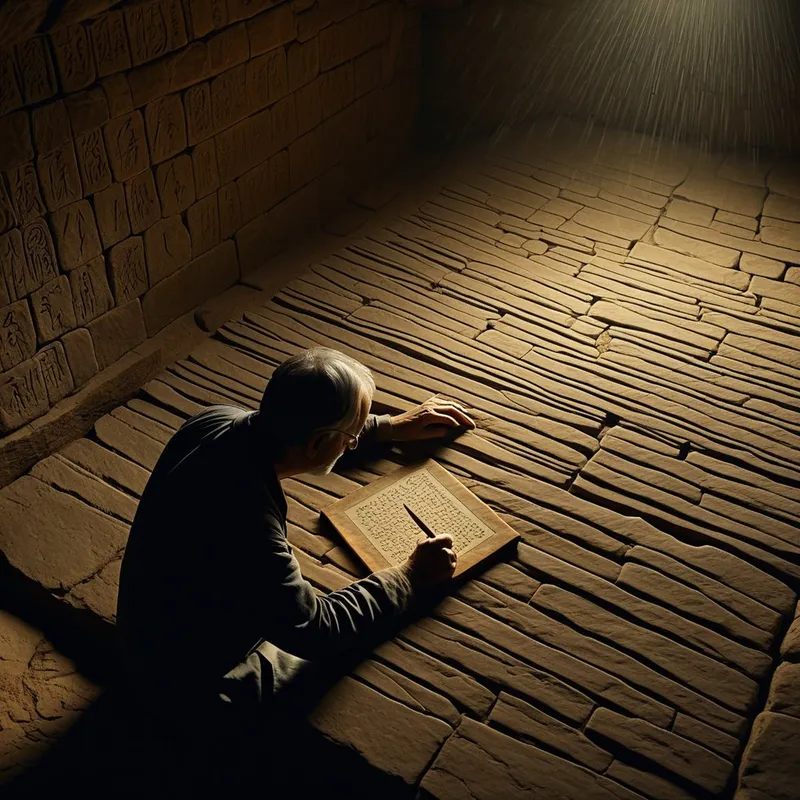
The concept of the mythic Century is woven not from a single narrative thread, but from the entire tapestry of Biblical prophetic and wisdom literature. It emerges from a culture deeply preoccupied with covenant, law, and the moral governance of history. For the ancient Hebrews, time was not a neutral, linear progression but a theological medium—the stage upon which divine faithfulness and human fidelity were tested.
This myth was passed down by the prophets and the scribal schools that preserved their oracles. It was told in lamentations over fallen cities, in the genealogical lists of Genesis and Chronicles that meticulously charted ten generations, and in the apocalyptic symbolism of books like Daniel. Its societal function was dual: it was a theodicy, explaining the trauma of conquest and exile as part of a larger, divinely-measured process, and a pedagogy, teaching that collective actions have consequences that mature across generational time. It answered the agonizing question, “How long, O Lord?” with a solemn, terrifying measure.
Symbolic Architecture
Psychologically, the Century represents the archetypal cycle of consequence and the maturation of the psychic shadow. It is the incubation period required for any pattern—personal or collective—to reach its ultimate conclusion and reveal its true nature.
The Century is the universe’s patience. It is the time it takes for a whispered lie to become a world’s truth, or for a buried seed of justice to break the foundation of a palace.
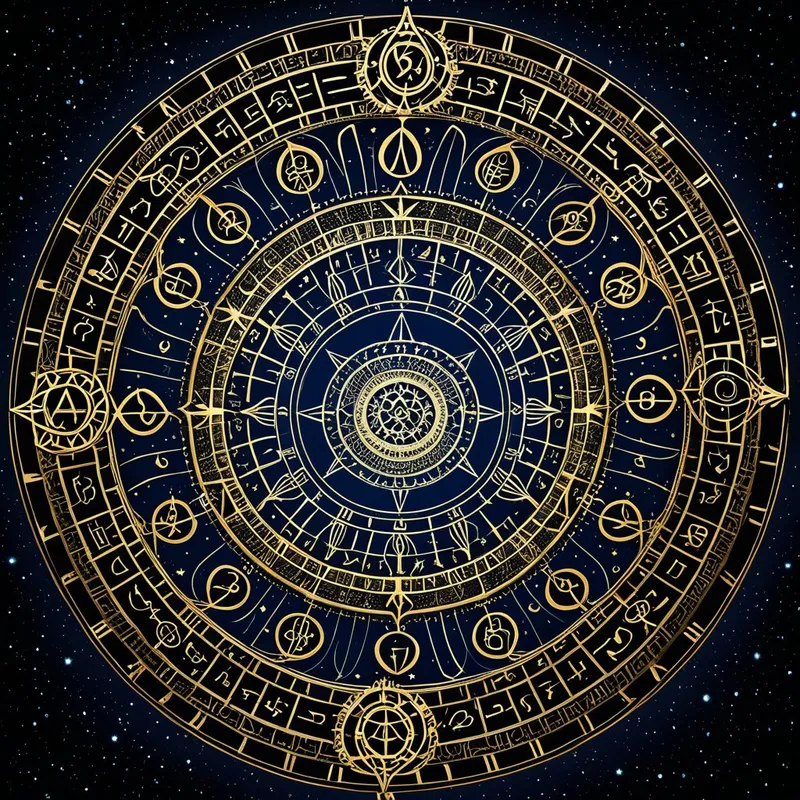
The number one hundred symbolizes completeness on the human scale, the full lifespan and legacy. The deities or forces are twofold: the Law of Measure, and the Soul of the People. The conflict is between the immediate desires of the ego (the king who wants more now) and the slow, inevitable judgment of the Self (the full cup that must be dealt with). The exile represents the necessary, painful period of introspection and deprivation that follows when one’s conscious identity has been built on unsustainable foundations.
The Dreamer's Resonance
When the myth of the Century appears in modern dreams, it rarely manifests as a literal hundred years. Instead, it surfaces as the somatic experience of awaiting a reckoning or the psychological process of a long-deferred culmination.
A dreamer may find themselves in an endless government office, waiting for a verdict on a forgotten application. They may be tending a garden where a strange, significant plant is promised to bloom, but they cannot remember when it was planted. They may hear a slow, deep ticking from within the walls of their childhood home. These dreams carry a quality of profound patience laced with anxiety. Somatically, the dreamer might awaken with a feeling of weight in the chest or a sense of being watched by time itself. Psychologically, this indicates that a long-running pattern—a habit, a relationship dynamic, a buried trauma—is approaching its natural, inevitable conclusion. The unconscious is signaling that the incubation period is over; the harvest, whether of wisdom or of crisis, is at hand.

Alchemical Translation
The alchemical process modeled by the Century is that of calcination and solution stretched across the timeline of a life. It is the slow burn that reduces the dross of illusion to ash, followed by the dissolving waters of exile that wash it away, leaving only the essential salt.
For the modern individual, individuation is not always a heroic sprint. Often, it is the patient endurance of a cycle. The Century myth teaches that some transformations cannot be rushed. A toxic family pattern may require a full generational span to be recognized and ended. A creative genius may need decades of silent gestation. The first step in this alchemy is to identify the measuring cup—what long-term pattern or debt is slowly being filled by your actions or inactions? The second is to accept the exile—the necessary period of alienation from old comforts and identities that the culmination will demand.
The triumph is not in stopping the clock, but in becoming conscious of what is being measured. To stand at the end of a Century of one’s own making, and to decree the return, is to claim sovereignty over time itself.
The return from exile, the new edict, is the conscious integration of the lesson learned across the long span. It is the psyche, having allowed a destructive pattern to run its complete course and witness its full consequences, now free to rebuild on a foundation of hard-won truth. The fulfilled Century does not lead to a happy ending, but to a clear beginning. The sand settles. The cup is empty. And in that stillness, you are finally free to choose what to pour into the next measure.
Associated Symbols
Explore related symbols from the CaleaDream lexicon: