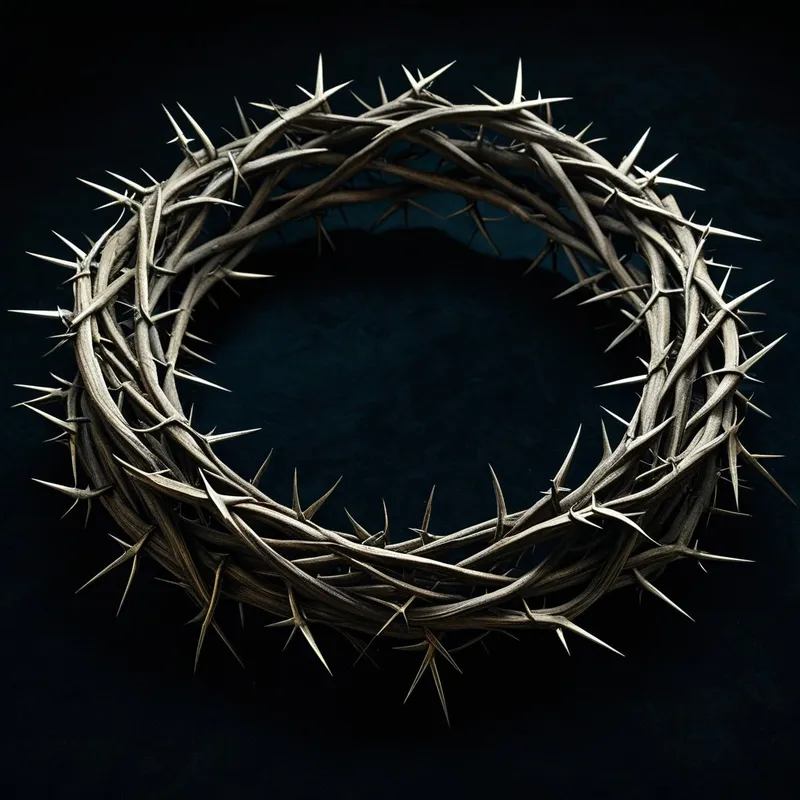
Crown of Thorns Myth Meaning & Symbolism
A crown of suffering becomes the paradoxical emblem of a king whose throne is a cross, transforming agony into a symbol of ultimate love.
The Tale of Crown of Thorns
Listen. The air in the Praetorium is thick with the scent of fear, sweat, and cold stone. The crowd’s roar is a living beast, pounding against the walls: “Crucify him!” In the center stands a man, stripped of his garments, his back a map of recent agony. The soldiers, bored and brutal, have a game. They need a king for their mockery.
They find a discarded robe, scarlet and threadbare, and drape it around his shoulders. Someone fetches a reed, places it in his limp hand—a scepter for a fool. But a king needs a crown. Their eyes scan the barren courtyard, and they see it: a pile of discarded branches from a nearby Christ’s Thorn Jujube. The branches are cruel, studded with thorns as long as a man’s thumbnail, sharp enough to tear flesh from bone.
With rough, laughing hands, they weave. There is no artistry here, only haste and malice. The thorns bite their own fingers, drawing beads of blood they do not notice. They twist the branches into a crude circlet, a parody of the laurel wreaths of Caesar. They approach the silent man.
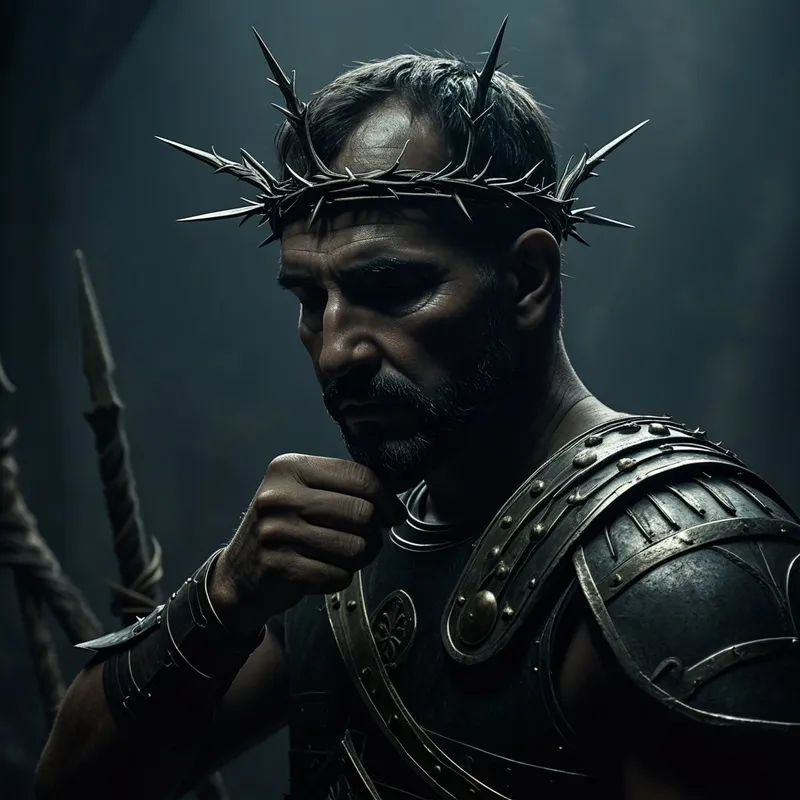
He does not flinch as they loom over him. They press the crown down upon his head. It is not a gentle placement. It is an act of violence, a final seal of humiliation. The thorns, resistant and sharp, scrape against his scalp before finding purchase. They pierce the skin, driven deeper by the force of the blow from the soldier’s hand that follows, driving the crown home. Rivulets of blood, warm and insistent, begin their slow descent. They trace paths through the dust on his forehead, mingle with the sweat in his brows, drip into his eyes—a crimson baptism.
The soldiers kneel, not in reverence, but in grotesque parody. “Hail, King of the Jews!” they spit, their laughter echoing in the hall. The crown, an instrument of torture, is now his only regalia. He is led away, this scarred king, through the streets toward the hill of the skull, the crown a blazing, painful halo. The people see not a monarch, but a condemned man wearing his sentence upon his brow. At the place of execution, the crown remains. It is not removed. It becomes part of the crucifixion, a detail in the terrible geometry of the cross. The blood from his head mixes with the blood from his hands and feet. The crown, born of mockery, becomes the ultimate, paradoxical symbol of his claim. As his life ebbs, the thorns remain, whispering a terrible truth: this is what a crown looks like in a world turned upside down by love.
Cultural Origins & Context
The story of the Crown of Thorns is embedded in the Passion narratives of the four Gospels. It is a detail found in three of them (Matthew 27:29, Mark 15:17, and John 19:2), a specific, visceral point of suffering amidst the broader narrative of betrayal and execution. Its historical context is the brutal reality of Roman occupation and penal practice, where mockery and psychological torment were standard facets of public execution, designed to shatter dignity and deter dissent.
The myth was passed down not as a isolated symbol, but as an integral, painful stitch in the fabric of the Passion story, recited in liturgies, depicted in the Via Dolorosa, and contemplated in prayer. Its societal function was multifaceted: for the early persecuted Church, it was an image of shared humiliation and ultimate vindication. For medieval Christendom, it became a focal point for intense devotion to the suffering humanity of Jesus, inspiring mystics like Julian of Norwich to see God’s love in the wounds. It served as a stark reminder that the path of the Christian hero-king was one of voluntary, radical self-emptying, in direct contrast to the oppressive, glittering crowns of earthly power.
Symbolic Architecture
The Crown of Thorns is perhaps the most potent paradox in Christian symbolism. It is a dense knot of meanings where opposites collide and are held in terrible, creative tension.
The crown is the ultimate symbol of the coincidentia oppositorum—the coincidence of opposites. Majesty and misery, sovereignty and servitude, life and death are fused into a single, painful artifact.
First, it is the Crown of Paradox. It takes the universal symbol of sovereign power, victory, and divine right (the crown) and marries it to the symbol of curse, barrenness, and pain (thorns). In the Book of Genesis, thorns are a direct consequence of the fall, a mark of a fractured world (Genesis 3:18). Here, the king willingly takes that curse upon his own head, absorbing the world’s brokenness into his own body. His sovereignty is defined not by domination, but by bearing the weight of what dominates others.
Psychologically, it represents the assimilation of the shadow. The thorns are the sharp, painful, rejected aspects of existence—suffering, humiliation, mortality. The heroic consciousness does not avoid these thorns; it allows them to pierce the seat of identity (the head/crown). This is not masochism, but a profound recognition that wholeness requires integrating the painful, "thorny" parts of life and self that we would rather cast out.
The Dreamer's Resonance
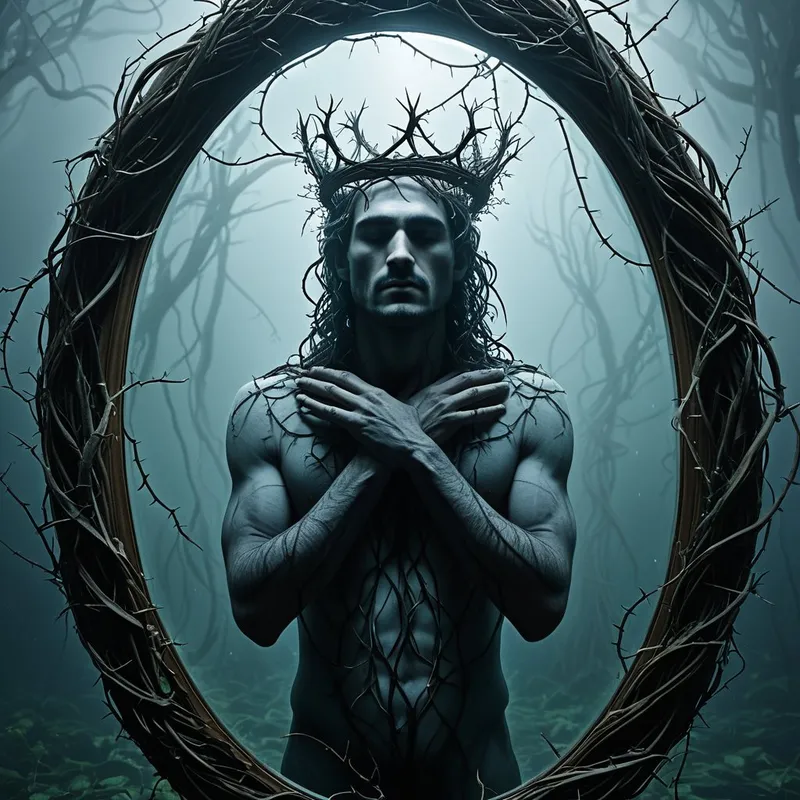
When the Crown of Thorns appears in a modern dream, far from doctrinal context, it signals a profound psychological initiation. The dreamer is likely in a state of acute crisis where their identity or highest ideals (the crown) are being painfully challenged by harsh, piercing realities (the thorns).
Somatically, one might dream of a pressure or piercing pain on the head, or of bleeding from the brow. Psychologically, this dream pattern speaks to a crisis of vocation or integrity. Perhaps the dreamer feels their hard-won achievements (their "crown") are now a source of suffering. Maybe a role they occupy—leader, parent, caregiver—has become a torturous burden, filled with "thorny" responsibilities that wound. The dream presents the image of sacred suffering, asking: What ideal or identity are you trying to protect that is causing you this pain? Is the crown one of egoic ambition, now being rightfully punctured? Or is it a true calling, which necessarily involves bearing the painful thorns of sacrifice and misunderstanding?
The dream is an unconscious enactment of the alchemical mortificatio—the killing of the old, inflated king so a more conscious, integrated ruler can emerge. The dreamer is being crowned, not with laurels, but with the painful awareness of their own limits and the cost of their commitments.
Alchemical Translation
The myth models the individuation process as a sacred enthronement via ordeal. The ego’s initial desire is for a crown of gold—recognition, success, untroubled mastery. The Self, the inner guiding totality, proposes a different coronation.
The first stage is the weaving of the crown. This is the life phase where circumstances—failures, illnesses, betrayals, deep responsibilities—twist together into a painful, confounding burden. We ask, “Why is this happening to me?” We see only random thorns.
The second stage is the terrible coronation. This is the moment of conscious acceptance. It is the decision to stop resisting the thorny crown, to stop trying to be the kind of king the world applauds, and to instead allow this painful identity to settle onto us. This is the sacrifice of the ego: the willingness to be seen as a fool, to bleed for a truth others mock, to let our highest ideal be wounded.
The alchemical gold is not found by avoiding the leaden weight of suffering, but by submitting to the furnace of its transformation. The crown becomes golden only after it has drawn blood.
The final stage is transmutation. The thorns, once symbols of curse and pain, are revealed as the very instruments of connection. Each piercing is an opening. The blood that flows is life offered, not life lost. The crown of suffering becomes the crown of compassion, connecting the wearer to all who suffer. The ego, dethroned and pierced, makes space for the sovereignty of the Self—a king who rules from a throne of conscious, embodied love, whose power is made perfect in vulnerability. The individual is no longer a person trying to avoid thorns, but one who understands that their crown, their unique identity and purpose, is inextricably and beautifully woven from them.
Associated Symbols
Explore related symbols from the CaleaDream lexicon: